Naar de inhoud

Romenu

Over literatuur, gedichten, kunst en cultuur
akke.beakke.be

Berichten van 16 november 2010 tot 17 november 2010

Auberon Waugh, Dahlia Ravikovitch, Rebecca Walker
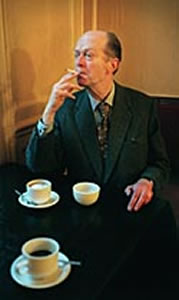
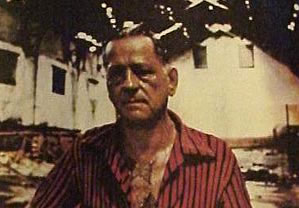
De Britse schrijver, journalist en polemist Auberon Alexander Waugh werd geboren op 17 november 1939 in Dulverton, Somerset. Hij is bekend geworden door zijn satirische essays en om zijn conservatieve opvattingen over politiek en religie. Met zijn provocerende snobisme keerde hij zich tegen de veramerikanisering van het Verenigd Koninkrijk en in het bijzonder tegen de gevaren van de hamburger. Auberon Waugh (bijnaam "Bron") was het tweede kind en de oudste zoon van Evelyn Waugh en zijn tweede vrouw. Hij werd opgeleid aan het Benedictijner college van Downside en aan Christ Church (Oxford), waar hij zonder diploma vertrok om zijn heil te zoeken in de journalistiek en de literatuur. Zijn eerste roman, The Foxglove Saga, verscheen in 1960, toen hij net 20 jaar was geworden. Hij begon als verslaggever van de Daily Telegraph en in de lange en vruchtbare carrière die volgde schreef hij voor The Spectator, New Statesman en andere bladen, zoals de Daily Mirror, Daily Mail, de Evening Standard en The Independent. Van 1981 tot 1990 bekleedde hij een belangrijke post in de Sunday Telegraph. Zijn vaste column in Private Eye, vanaf het begin van de jaren 1970 tot 1986, maakte van hem een beroemdheid. Van 1986 tot aan zijn dood was hij redacteur van de Literary Review en stelde hij mede de Bad Sex in Fiction Award in om elk jaar de slechtste seksscène van de hedendaagse literaire fictie te belonen.


Uit: Will This Do? An Autobiography


„On one occasion, just after the war, every child in Britain was to be allowed one banana each from the first consignment to arrive here for years.

Neither I, nor Teresa, nor my sister Margaret who was born in 1942, had ever eaten a banana but we had heard all about them as the most delicious taste in the world.

The great day arrived when my mother came home with three bananas. All three were put on my father's plate and, before the anguished eyes of his children, he poured on cream and sugar, which was heavily rationed, and ate all three.

It would be absurd to say that I never forgave him, but he was permanently marked down in my estimation from that moment in ways which no amount of sexual transgression would have achieved.

In light of our inability to amuse him, it was thought better that we should be sent away as much as possible.

My fate was to be left in a boarding school on January 28, 1946, two months after my sixth birthday.

During my first term there, when I was still very nervous, he played one of his best practical jokes on me.

He told me he proposed to change our family name and that, when he had done so, the headmaster would summon the school together and say: "Boys, the person you have hitherto called Waugh will in future be called Stinkbottom."

I understood perfectly well that he was joking, but one never knew how far he would be prepared to go with his jokes.

Every morning at school assembly, I felt a slight tightening of the chest as the headmaster came forward to make his daily announcements.

Teresa was also at boarding school and my father's undisguised glee at the prospect of getting rid of his children was apparent at the end-of-holiday dinner parties which became a rigid institution.

On these occasions, Papa would dress in white tie and tails with his military medals glittering on his chest - in a gallant war seeing action in four theatres and spending months behind enemy lines in Yugoslavia, he had acquired a fair display of them.

His speech was always some variation on the theme of how delighted he was that we were going back to school.“


785540-8ba2b767b09b9a0f41a5fb2c054dcec0.jpg
Auberon Waugh (17 november 1939 -16 januari 2001)


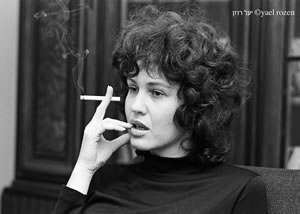
De Israëlische dichteres en schrijfster Dahlia Ravikovitch werd geboren op 17 november 1936 in een voorstad van Tel Aviv. Zie ook mijn blog van 17 november 2006 en ook mijn blog van 17 november 2007 en ook mijn blog van 17 november 2008 en ook mijn blog van 17 november 2009.


The Second Trying


If I could only get hold of the whole of you,  

How could I ever get hold of the whole of you,  

Even more than the most beloved idols,  

More than mountains quarried whole,  

          More than mines  

          Of burning coal,  

Let’s say mines of extinguished coal  

And the breath of day like a fiery furnace.  


If one could get hold of you for all the years,  

How could one get hold of you from all the years,  

How could one lengthen a single arm,  

Like a single branch of an African river,  

As one sees in a dream the Bay of Storms,  

As one sees in a dream a ship that went down,  

The way one imagines a cushion of clouds,  

Lily-clouds as the body’s cushion,  

But though you will it, they will not convey you,  

Do not believe that they will convey you.  


If one could get hold of all-of-the-whole-of-you,  

If one could get hold of you like metal,  

Say like pillars of copper,  

Say like a pillar of purple copper  

(That pillar I remembered last summer)—

And the bottom of the ocean I have never seen,  

And the bottom of the ocean that I can see  

With its thousand heavy thickets of air,  

A thousand and one laden breaths.  


If one could only get hold of the-whole-of-you-now,  

How could you ever be for me what I myself am?  


Vertaald door Chana Bloch en Chana Kronfeld


785540-9365dfdce62ce8d0ad746686abfeb27f.jpg
Dahlia Ravikovitch (17 november 1936 – 21 augustus 2005)


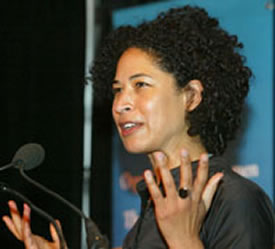
De Amerikaanse schrijfster, uitgeefster en politiek activiste
Rebecca Walker werd geboren op 17 november 1969 in Jackson, Mississippi.  Walker (eig. Rebecca Leventhal) is de dochter van Afrikaans-Amerikaanse feministe Alice Walker, auteur van de roman "The Color Purple" en de joods-Amerikaanse advocaat Melvyn Leventhal. Na de scheiding van haar ouders woonde ze tijdelijk bij haar moeder en soms bij haar vader en op 18-jarige leeftijd nam ze haar moeders naam aan. Ze studeerde cum laude af in 1992 aan de Yale University. Sinds 1989 is ze co-redacteur en schrijfster voor het tijdschrift Ms. I 1999 was zij mede-oprichter van de Third Wave Action Foundation. Het concept van de derde feministische golf wordt toegeschreven aan Walker.  Walker is de auteur van talrijke artikelen in verschillende tijdschriften, zij trad op bij CNN en MTV, en  heeft talloze onderscheidingen ontvangen voor haar werk, waaronder de Women of Distinction Award van de National Association of University Women


Uit: Black, White, and Jewish: Autobiography of a Shifting Self


„On my first birthday I am given my favorite foods: chitterlings and chocolate cake. Daddy goes to Estelle's, the soul food place on the other side of town where he is the only white customer, and brings me home a large order of the pig intestines. Mama puts me in my big wooden high chair with the smooth curved piping, and then feeds me one slimy pale gray glob after another while Daddy sits at the table, grinning.
After I have eaten all of the chitterlings, Mama has to peel my tiny fingers from the container to make me let it go. Then she sets a chocolate cake with a big number one candle sticking up from the middle down in front of me, singing "Happy Birthday" softly, so that only I can hear. For a few seconds Mama and Daddy wait, expectant and wide-eyed, to see what I'll do. I giggle, squeal, look at them, and then dig into the cake with my bare hands, smearing the sticky sweetness all over my face and pushing what's left into my mouth. I rub cake in my hair, over my eyes. I slap my hands on the high chair, putting some cake on it, too.
My parents laugh out loud for a few seconds; then my father wraps his arm around my mother's waist, patting her hip with a cupped hand. For a few seconds we are frozen in time. Then my father pushes his chair out from the table, cuts himself a piece of the chocolate cake, and goes to work.

You may want to ask about the story of your birth, and I mean down to the tiniest details. Were you born during the biggest snowstorm your town had seen in fifty years? Did your father stop at the liquor store on the way to the hospital? Did you refuse to appear, holding on to the inside of your mother's womb for days? Some sinewy thread of meaning is in there somewhere, putting a new spin on the now utterly simplistic nature-nurture debate. Your job is to listen carefully and let your imagination reconstruct the narrative, pausing on hot spots like hands over a Ouija board.“


 785540-ad8895964cd0e10534ef89f50299d5ce.jpg

Rebecca Walker (Jackson, 17 november 1969)


Zie voor nog meer schrijvers van de 17e november ook mijn vorige blog van vandaag.
Geschreven door Romenu om 19:43 Reageer op dit bericht

Joost van den Vondel, Christopher Paolini, Pierre Véry, Max Barthel

De Nederlandse dichter en schrijver Joost van den Vondel werd geboren op 17 november 1587 in Keulen. Zie ook mijn blog van 17 november 2006 en ook mijn blog van 17 november 2008 en ook mijn blog van 17 november 2009.


Uit: Lucifer


Het Tweede Bedryf


LUCIFER.

Ghy, snelle Geesten, houdt nu stant met onzen wagen:

Al hoogh genoegh in top Godts Morgenstar gedragen;

Al hoogh genoegh gevoert: ’t is tijt, dat Lucifer

Nu duicke, voor de komst van deze dubble star,

Die van beneden rijst, en zoeckt den weg naer boven,

Om met een’ aertschen glans den hemel te verdooven.

Borduurt geen kroonen meet in Lucifers gewaet;

Vergult zijn voorhooft niet met eenen dageraet

Van morgenstarre en strael, waer voor d’ Aertsenglen nijgen;

Een andre klaerheit komt in ’t licht der Godtheit stijgen,

En schijnt ons glansen doot; gelijck de zon by daegh

De starren dooft, voor ’t oogh der schepselen, om laegh.

’t Is nacht met Engelen en alle hemelzonnen:

De menschen hebben ’t hart des Oppersten gewonnen,

In ’t nieuwe Paradijs: de mensch is ’s hemels vrient:

Ons slaverny gaet in. Gaet heene, viert en dient

En eert dit nieuw geslacht, als onderdane knapen:

De menschen zijn om Godt, en wy om hen geschapen.

’t Is tijt, dat ’s Engels neck hun voeten onderschraegh’,

Dat ieder op hun passe, en op de handen draegh’,

Of op de vleugels voere, in d’ allerhooghste troonen:

Onze erfenis komt hun, als uitverkore zoonen.

Ons eerstgeboorte leit nu achter, in dit Rijck.

De zoon des zesten daghs, den Vader zoo gelijck

Geschapen, strijckt de kroon. Met recht is hem gegeven

De groote staf, waer voor alle eerstgeboornen beven

En sidderen. Hier gelt geen tegenspraeck: ghy hoort

Wat Gabriël bazuint voor ’s hemels goude poort.


 785532-52f73f6c3b0a01aa9d58b0fe0032a31e.jpg

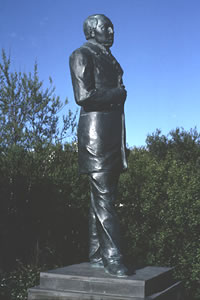
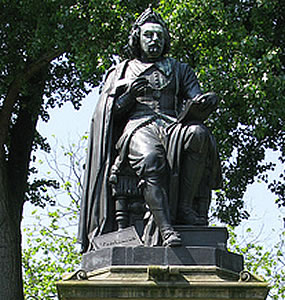
Joost van den Vondel (17 november 1587 – 5 februari 1679)

Standbeeld in het Vondelpark, Amsterdam


De Amerikaanse schrijver Christopher Paolini werd geboren in Los Angeles County, California, op 17 november 1983. Zie ook mijn blog van 17 november 2008 en ook mijn blog van 17 november 2009.


Uit: Eragon


„Eragon knelt in a bed of trampled reed grass and scanned the tracks with a practiced eye. The prints told him that the deer had been in the meadow only a half-hour before. Soon they would bed down. His target, a small doe with a pronounced limp in her left forefoot, was still with the herd. He was amazed she had made it so far without a wolf or bear catching her.

The sky was clear and dark, and a slight breeze stirred the air. A silvery cloud drifted over the mountains that surrounded him, its edges glowing with ruddy light cast from the harvest moon cradled between two peaks. Streams flowed down the mountains from stolid glaciers and glistening snowpacks. A brooding mist crept along the valley’s floor, almost thick enough to obscure his feet.

Eragon was fifteen, less than a year from manhood. Dark eye­brows rested above his intense brown eyes. His clothes were worn from work. A hunting knife with a bone handle was sheathed at his belt, and a buckskin tube protected his yew bow from the mist. He carried a wood-frame pack.

The deer had led him deep into the Spine, a range of untamed mountains that extended up and down the land of Alagaësia. Strange tales and men often came from those mountains, usually boding ill. Despite that, Eragon did not fear the Spine—he was the only hunter near Carvahall who dared track game deep into its craggy recesses.

It was the third night of the hunt, and his food was half gone. If he did not fell the doe, he would be forced to return home empty­handed. His family needed the meat for the rapidly approaching winter and could not afford to buy it in Carvahall.“


 785532-4dec3e720b7f33d94439865cf90a5041.jpg

Christopher Paolini (Los Angeles County, 17 november 1983)


De Franse schrijver Pierre Véry werd op 17 november 1900 in Bellon geboren. Zie ook mijn blog van 17 november 2009.


Uit: L'Inconnue du terrain vague


„A l'approche de Xuan, une femme tenta de se dissimuler derrière la palissade du terrain vague. Mais, à sa taille, le cuisinier avait reconnu Mme Perchamp : elle était plus petite même que Dam-Van. Son visage pointu, ses façons vives et silencieuses faisaient songer à une  belette.
Le terrain vague vivait d'une vie sournoise, délictueuse. Il était plein de sons furtifs : chuchotements, glissements, passages d'ombre. On eût dit un lieu de complots, un rendez-vous de conjurés. Ce n'étaient que des amoureux attirés par la curiosité à cause des deux meurtres. La pensée du sang criminellement répandu là, si près, à deux reprises, devait ajouter du piment à leurs confidences, à leurs serments, à leurs caresses. Des bruits de baisers soulevaient doucement le silence...
A l'autre bout du terrain vague, Xuan croisa Mme Perchamp.
- Mademoiselle Dam-Van est-elle chez elle ?
- Oui, maître.
On dansait chez Malissart, et des rafales de rires s'échappaient de la salle de cinéma, où passait ce film comique qu'avait interdit le maire.“


785532-055f56aaa3e3cdead7b84d8febbb155d.jpg
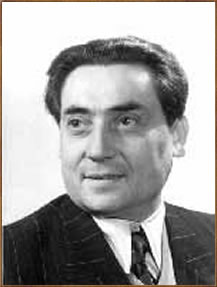
Pierre Véry (17 november 1900  -  12 oktober 1960)


De Duitse dichter en schrijver Max Barthel werd geboren in Dresden-Loschwitz op 17 november 1893. Zie ook mijn blog van 17 november 2008.


Erwachen der Stadt


Der Traum zerschlägt sich an den Steinen

Der Groϐstatdt und wird kühne Tat

Die Stunde der Erlösung naht,

Da Schein und Leben sich vereinen.


Das Leben gilt! O wildes Ringen

Mit Schaum und Schmutz der langen Nacht!

Die Schiffen laden neue Fracht,

Das Ziel vor Abend zu bezwingen.


O Morgenschrei! O erstes Glänzen!

Erglühe, selig Morgenrot,

Die Arbeitsstrirnen zu bekränzen.

Was wir ergreifen, wird zu Brot!


785532-4983b4fbb7610602eea006275da75881.jpg
Max Barthel (17 november 1893 – 28 juni 1975)

Geschreven door Romenu om 19:24 Reageer op dit bericht

José Saramago, Craig Arnold, Renate Rubinstein, Danny Wallace, Anton Koolhaas

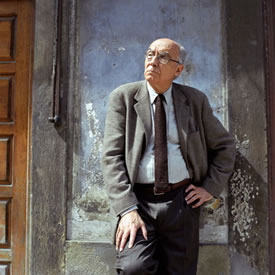
De Portugese schrijver José Saramago werd geboren op 16 november 1922 in het dorpje Azinhaga in de provincie Ribatejo. Zie ook mijn blog van 16 november 2006 en ook mijn blog van 16 november 2008 en ook mijn blog van 16 november 2009.


Uit: Blindness (Vertaald door Giovanni Pontier)


„The amber light came on. Two of the cars ahead accelerated before the red light appeared. At the pedestrian crossing the sign of a green man lit up. The people who were waiting began to cross the road, stepping on the white stripes painted on the black surface of the asphalt, there is nothing less like a zebra, however, that is what it is called. The motorists kept an impatient foot on the clutch, leaving their cars at the ready, advancing, retreating like nervous horses that can sense the whiplash about to be inflicted. The pedestrians have just finished crossing but the sign allowing the cars to go will be delayed for some seconds, some people maintain that this delay, while apparently so insignificant, has only to be multiplied by the thousands of traffic lights that exist in the city and by the successive changes of their three colours to produce one of the most serious causes of traffic jams or bottlenecks, to use the more current term.

The green light came on at last, the cars moved off briskly, but then it became clear that not all of them were equally quick off the mark. The car at the head of the middle lane has stopped, there must be some mechanical fault, a loose accelerator pedal, a gear lever that has stuck, problem with the suspension, jammed brakes, breakdown in the electric circuit, unless he has simply run out of gas, it would not be the first time such a thing has happened. The next group of pedestrians to gather at the crossing see the driver of the stationary car wave his arms behind the windshield, while the cars behind him frantically sound their horns. Some drivers have already got out of their cars, prepared to push the stranded vehicle to a spot where it will not hold up the traffic, they beat furiously on the closed windows, the man inside turns his head in their direction, first to one side then the other, he is clearly shouting something, to judge by the movements of his mouth he appears to be repeating some words, not one word but three, as turns out to be the case when someone finally manages to open the door, I am blind.“


 784799-3d53001fbd9210f1d2875110e83b8049.jpg

José Saramago (Azinhaga, 16 november 1922)


De Amerikaanse dichter Craig Arnold werd geboren op 16 november 1967 in Temple,Californië. Zie ook mijn blog van 16 november 2008 en ook mijn blog van 16 november 2009.


Bird-Understander


Of many reasons I love you here is one


the way you write me from the gate at the airport

so I can tell you everything will be alright


so you can tell me there is a bird

trapped in the terminal      all the people

ignoring it       because they do not know

what do with it       except to leave it alone

until it scares itself to death


it makes you terribly terribly sad


You wish you could take the bird outside

and set it free or       (failing that)

call a bird-understander

to come help the bird


All you can do is notice the bird

and feel for the bird       and write

to tell me how language feels

impossibly useless


but you are wrong


You are a bird-understander

better than I could ever be

who make so many noises

and call them song


These are your own words

your way of noticing

and saying plainly

of not turning away

from hurt


you have offered them

to me       I am only

giving them back


if only I could show you

how very useless

they are not


 784799-d75c840e6814d53850b2668b51652266.jpg

Craig Arnold (Temple, 16 november 1967)


De Nederlandse schrijfster en journaliste Renate Rubinstein werd geboren op 16 november 1929 in Berlijn. Zie ook mijn blog van 16 november 2006 en ook mijn blog van 16 november 2007 en ook mijn blog van 16 november 2008 en ook mijn blog van 16 november 2009.


Uit: Van Geel


“Maar het beste uit deze bundel vind ik het korte stuk van Vasalis, die er, zonder één gedicht te ‘analyseren’, in slaagt om de toon te zetten voor het begrijpen van de meeste. Ze gebruikt geen woord teveel, wat het citeren nog weer extra-moeilijk maakt, maar deze passage was voor mij een sleutel tot Van Geels poëzie: ‘In alle andere z.g. natuurgedichten is heel wat anders aan de gang, iets dat als je het goed leest behoorlijk angstaanjagend èn hunkeringwekkend is. Dat merk je pas aan de opluchting die je ervaart bij b.v. Thee drenken, Wijde regen, en Zwanen bij nacht, waarin je diepe wens “dat het terecht komt” kortstondig wordt verhoord. Geen happy end - geen end tenminste, maar een toestand van gelijkheid en wederkerigheid, waarin de eenzaamheid beëindigd wordt zonder dat er een fusie plaats vindt waarbij één van de twee elementen te gronde gaat. Het hardnekkig streven naar een vereniging die geen vernietiging inhoudt, dat de oorsprong van vele van zijn gedichten vormt, is een zó oude en diepe drang, dat niemand er na zijn 1e jaar op de wereld aan ontkomt, of en hoe hij het ook probeert onder te brengen: al naar zijn aard en levensgeschiedenis in mystiek, religie, politiek, wetenschap, kunst, liefde, geweld.’

Ze eindigt met te betreuren dat haar proza te zwaar rust op een poëzie die juist nooit ‘zwaar’ is, maar zoals zij schrijft: ‘ton sur ton, geen leringen, abstracties, conclusies’. (Dat ‘ton sur ton’ vind ik nog beter gezegd dan het ‘kleurloos grijs’ waar Van Geel het in een brief over heeft.)

En om duidelijk te maken wat ze bedoelt, besluit ze haar stuk met 5 gedichten uit Van Geels laatste bundel (Enkele Gedichten). Ik kies er daarvan twee, ter illustratie, zowel van ‘dat het terecht komt’ als van ‘een vereniging die geen vernietiging inhoudt’.


Thee drenken


Nacht in een theepot

waar water blad,

blad water koestert,

een lichte damp

de tuit verlaat.”


784799-4735ab0d73222a4b6b8bc79769ab70d6.jpg
Renate Rubinstein (16 november 1929 – 23 november 1990)


De Schotse schrijver, humorist, radio-en televisie presentator Daniel Frederick Wallace werd geboren op 16 november 1976 in Dundee. Zie ook mijn blog van 16 november 2008 en ook mijn blog van 16 november 2009.


Uit: Friends Like These


„The changes started without me noticing. But like birds escaping the trees at the first flicker of a distant earthquake, the signs had been there ever since I'd moved to my smart new home in a smart new area of North London. It was an area which was going places.

An area where everyone was married and did brunch and drank lattes and dined at Latvian restaurants. Where the men wore trendy little oblong glasses and the ladies wore skinny jeans, ate croissants and read the papers on a Sunday morning in a place with a battered leather sofa.

What ridiculous cliched thirtysomethings, I thought, as I sat dipping my croissant in my brunchtime latte. What must they make of me here? I'm a maverick. A free-spirited 29-year-old. And my glasses only trendy and oblong.

But then came the morning that my wife, Lizzie, witnessed something terrifying. 'What are you doing?' she said, wideeyed, as she watched me walking into the kitchen.

'I'm just taking this mug to the sink,' I said.

There was silence. And then, as we realised what was happening  -  what this signified  -  how this was the first time in my life I had ever taken a mug to the sink within two days of finishing my tea, I stopped dead in my tracks and we simply stared at each other in horror.

We had felt the first tremors of the earthquake. It was getting closer.

Soon, the evidence began to pile up. The fridge was my early warning system. Gone were the Herta frankfurters and processed cheese of just a year or two before, when I was single. In were skimmed milk and hummus, and baby carrots and fresh spinach. We'd gone organic, we were buying Fairtrade, we had crisp white wine instead of cans of Stella.

Clubs had become bars, nights down the pub had slowly morphed into intimate dinners with close friends. I ate low-fat pretzels with crushed rock salt where once Wotsits would have done.

How had this happened? Could it actually be true? At 29, was I really on the brink of finally, undeniably, irrefutably becoming an adult? “


784799-e59278273edb428e80dae5c3db87f32a.jpg
D
anny Wallace (Dundee, 16 november 1976)


De Nederlandse schrijver
Anton Koolhaas werd op 16 november 1912 in Utrecht. Zie ook mijn blog van 17 november 2006 en ook mijn blog van 17 november 2008 en ook mijn blog van 16 november 2009.


Uit: Een pak slaag


“Ze schudden dan met het hoofd, maar doorgaans doen ze wel als de bliksem wat hij zegt. Het heeft dan ook nog iets van een orakel. De legende van de oude Kees, die het bedrijf groot maakte, blijft op die manier springlevend.

Men zou kunnen denken dat het voor Hein Slotter wel eens benauwend moet zijn, als zoiets gebeurt. Want eigenlijk had hij die brainwave moeten hebben. Maar dat is niet zo. Hein krijgt de tranen in de ogen, als Kees II iets geweldigs zegt. En hij doet het meteen, als het een voorstel is. Hein houdt van de oude Slieps. Niemand weet hoeveel en niemand ziet ook die tranen ooit, omdat niemand er op komt, dat het tranen zouden kunnen zijn omdat Hein Slotter zo veel van Slieps houdt.

De volgende dag kan de oude dan wel weer volkomen vertrokken zijn. Somds wordt er dezelfde avond al weer naar de politie gebeld om mijnheer te zoeken.

Ans is lelijk. Lelijk zegt niets. Ze is dik en rose, maar niet van gezondheid, doch van jachterigheid en zenuwen en huidvlammen. Ze is boos. Ze kan iets niet verkroppen, maar ze weet niet wat. Ze is gemelijk en achterdochtig. Ze eet veel en ze snoept veel en in ieder gezelschap is ze een gevaarlijke roserode kuil, die niet is te dempen en waar iedereen voor oppast.

‘Zou die Hein geen goeie vrijer voor je zijn?’heeft haar vader ooit eens tegen haar gezegd en zeven jaar later kreeg ze de eerste kinderwagen van een nieuw model: Sliep Sleeper, vooral in Engeland een kraker. Kees heette het kindje natuurlijk, hoewel Heins vader ook een Hein was, althans een Hendricus. Onder het kussentje in de wagen lag bij de aanbieding een pakketje aandelen met een blauw lintje erom. Voor Keesje van Kees II.“


784799-f037613a2248e88e7ac09f2f9e62da9a.jpg
Anton Koolhaas (16 november 1912 – 16 december 1992)


Zie voor nog meer schrijvers van de 16e november ook mijn vorige blog van vandaag.
Geschreven door Romenu om 00:00 Reageer op dit bericht

Chinua Achebe, Hugo Dittberner, Andrea Barrett, Henri Charrière, Jónas Hallgrímsson, Max Zimmering, Birgitta Arens

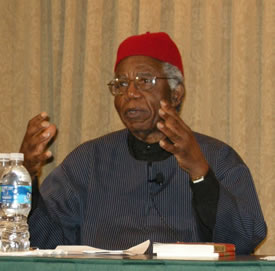
De Nigeriaanse dichter en schrijver Chinua Achebe werd geboren op 16 november 1930 in Ogidi. Zie ook mijn blog van 16 november 2006 en ook mijn blog van 16 november 2008 en ook mijn blog van 16 november 2009.


Agostinho Neto


Agostinho, were you no more

Than the middle one favored by fortune

In children's riddle; Kwame

Striding ahead to accost

Demons; behind you a laggard third

As yet unnamed, of twisted fingers?

No! Your secure strides

Were hard earned. Your feet

Learned their fierce balance

In violent slopes of humiliation;

Your delicate hands, patiently

Groomed for finest incisions,

Were commandeered brusquely to kill,

Your gentle voice to battle-cry.


Perhaps your family and friends

Knew a merry flash cracking the gloom

We see in pictures but I prefer

And will keep that sorrowful legend.

For I have seen how

Half a millennium of alien rape

And murder can stamp a smile

On the vacant face of the fool,

The sinister grin of Africa's idiot-kings

Who oversee in obscene palaces of gold

The butchery of their own people.


Neto, I sing your passing, I,

Timid requisitioner of your vast

Armory's most congenial supply.

What shall I sing? A dirge answering

The gloom? No, I will sing tearful songs

Of joy; I will celebrate

The man who rode a trinity

Of awesome fates to the cause

Of our trampled race!

Thou Healer, Soldier and Poet!


784789-13a52c998042b23cf1f006a9b0dd7bab.jpg
Chinua Achebe (Ogidi, 16 november 1930)


De Duitse schrijver, dichter en essayist Hugo Dittberner werd geboren op 16 november 1944 in Gieboldehausen. Zie ook mijn blog van 16 november 2006 en ook mijn blog van 16 november 2008 en ook mijn blog van 16 november 2009.


Uit: Das See-Vokabularium


„Ein »He, du!« hörte ich im Radio rufen, aber Torges Läuten an der Haustür mußte ich überhört haben.

Denn nun arbeitete er schon an der alten Drehklingel und ließ gleich mehrmals das lange Ratschen mit dem folgenden kurzen Klingeln ertönen.

Als ich öffnete, stand er, noch immer »jung und prompt«, wie wir gesagt hatten, vor der Tür, obwohl

dreißig Jahre vergangen waren. Torge war der jüngere Bruder meines Studienfreundes Rainer Frederking. Eine Weile hatte er wie wir in Göttingen studiert und es damals nur schwer verwunden, daß er in unserer Freundschaft keine Rolle spielen sollte. Später hatte ich ihn noch ein, zwei Mal im Haus der Eltern an der See gesehen, als ich Rainer besuchte; und es schien nicht so, daß er Lust hätte, mit mir ins Gespräch zu kommen. So war ich gespannt, warum er mich, wie er telefonisch kurz angekündigt hatte, auf der Durchreise sprechen wollte.

Er kam gleich, als wartete der nächste Zug, zur Sache.

»Mir war immer klar, daß Rainer ein besonderer Mensch war!« betonte er: »Als Bruder kann ich das

wohl beurteilen!«

»Nun«, sagte ich, noch immer empfindlich bei seinen Übertreibungen, »ich will dir nicht widersprechen, Torge.«

Er erinnerte mich an den Tag, als Rainer nach Oldenburg gefahren war, um aus einer kanadischen

Altkleidersammlung die Elchlederjacke zu fischen, die er dann ewig trug, und wie sehr das ein Signal

war für alles, was kam.

Die Elchlederjacke war in der Tat Rainers besonderes Merkmal bei vielen unserer Unternehmungen

gewesen. Rainers »Wahrzeichen« hatten wir sie genannt. Ich sah ihn vor mir, und ich sah ihn vor mir,

wie er seinem Vater in dem Haus am Meer Rede und Antwort zu stehen hatte, ein erwachsener Sohn in den Zwanzigern! Wir waren am Meer gewesen und hatten über Rainers neues Lied gesprochen. Jünglinge, die am Meer wandern und Pfefferminz lutschen, Arme und Beine schlenkernd, hieß das beim zornigen Vater. Den hatte erbost, daß Rainer in dieser Elchjacke, in seinen Stiefeln und den lose darum schlenkernden gestreiften Hosen als ein Fremder in der Familie umherging, provokant wie ein Westernoder Freizeit-Held.“


 784789-878663e85ebcb16dd83d21a56ad8e3ec.jpg

Hugo Dittberner (Gieboldehausen, 16 november 1944)


De Amerikaanse schrijfster
Andrea Barrett werd geboren in Cape Cod, Massachusetts op 16 november 1954. Zie ook mijn blog van 16 november 2008
en ook mijn blog van 16 november 2009.


Uit: The Voyage of the Narwhal


„In tiny, skin-covered kayaks the strangers darted among the icebergs; their legs were hidden inside the boats, their arms extended by two-bladed paddles. Flash, flash: into the ocean and out again, water streaming silver from the blades. The paddles led to tight hooded jackets; the jackets merged into oval skirts connecting the men at their waists to the boats -- like centaurs, Erasmus thought. Boat men, male boats. It was all a blur, he couldn't see their faces.

Sean Hamilton tossed them bits of biscuit and Erasmus revised his first opinion: This was where the journey began, with this first sight of the arctic men he'd read about for so long. That these Greenlanders had traded with whalers for two centuries, been colonized by the Danes and converted by Moravian and Lutheran missionaries, made them less strange: but they were still new to him. On the first night in port, over a dinner of eider ducks at the huge-chimneyed home of the Danish inspector, he looked alternately at a bad engraving of four Greenlanders captured near Godthaab and brought to Copenhagen and, out the window next to the portrait, at the jumble of wooden huts and sealskin tents into which the mysterious strangers disappeared.“


 784789-dcdc215fa59a9ae2801de4009338d851.jpg

Andrea Barrett (Cape Cod, 16 november 1954)


De Franse schrijver Henri Charrière werd geboren op 16 november 1906 in Saint-Étienne-de-Lugdarès. Zie ook mijn blog van 16 november 2008.


Uit: Papillon (Vertaal door Walter B. Michaels)


“The prosecutor was Magistrate Pradel. He had the grim reputation of being the "number one" supplier to the guillotine and to the domestic and colonial prisons as well.

Pradel was the personification of public vengeance: the official accuser, without a shred of humanity. He represented law and justice, and he would do everything in his power to bend them to his will. His vulture's eyes gazed intently down at me-down because he sat above me, and down also because of his great height. He was at least six foot three-and he carried it with arrogance. He kept on his red cloak but placed his cap in front of him and braced himself with hands as big as paddles. A gold band indicated he was married, and on his little finger he wore a ring made from a highly polished horseshoe nail.

Leaning forward a little, the better to dominate me, he seemed to be saying, "Look, my fun-loving friend, if you think you can get away from me, you're much mistaken. You don't know it, but my hands are really talons and they're about to tear you to pieces. And if I'm feared by the lawyers, it's because I never allow my prey to escape.

"It's none of my business whether you're guilty or innocent; my job is to use everything that's available against you: your bohemian life in Montmartre, the testimony extorted from the witnesses by the police, the testimony of the police themselves. With the disgusting swill the investigator has collected, I must make you seem so repulsive that the jury will cast you out of the society of men."

Was I dreaming or was he really speaking to me? Either way I was deeply impressed by this "devourer of men."

"Don't try to resist, prisoner. Above all, don't try to defend yourself. I'm going to send you down the road of the condemned anyway. And I trust you have no faith in the jury. Have no illusions in that quarter. Those twelve know nothing of life.“


 784789-e6b53de9aeb2aeb188a529a9eb205b63.jpg

Henri Charrière (16 november 1906 – 29 juli 1973)


De IJslandse dichter en natuurwetenschapper Jónas Hallgrímsson werd geboren op 16 november 1807 in Öxnadalur. Zie ook mijn blog van 16 november 2008.


At an Old Grave, 1841


Hardship! though your unhappy son

lies here secure in nature's keeping,

clad in eternal night and sleeping ---

his soul's enduring weal is won.


 Glazed is your eye --- how free from guile,

how kind in my young estimation!

It made me sigh with admiration,

seeing the triumph of your smile!


Stilled are your thin, deft hands (how high

their art had been! our envy lingers),

agile as winsome maidens' fingers

laying white linen out to dry.


Bide here, my old friend, in your bed

until the golden tones of seven

trumpets remold the earth and heaven!

Iceland was cold, oh Kjærnested.


Artistry knows her cue to cry:

wintertime snows lay waste the flowers,

waiting to close their tale of hours ---

the reddest rose is first to die.


Vertaald door Dick Ringler


784789-7572d361b6d41c5a840f654803cdf825.jpg
Jónas Hallgrímsson (16 november 1807 – 26 mei 1845)

Standbeeld van Einar Jónsson in Reykjavik


De Duitse dichter en schrijver Max Zimmering werd geboren op 16 november 1909 in Pirna (Sachsen). Zie ook mijn blog van 16 november 2006. 


Klopfen an der Tür

Es klopfte an der Tür, ein zages Klopfen,
als wenn der Wind ein Blatt ans Fenster schnellt,
wie ein verirrter Sonnenregentropfen,
der dir im Garten auf die Zeitung fällt.

So zögernd war der Laut, der mich gerufen -
so zögernd war der Blick, der mich empfing:
Ein kleines Mädchen nahe an den Stufen,
schon fluchtbereit, ein blasses, schmales Ding.

Erst auf die dritte Frage, sanft gesprochen,
bat sie mich um Wasser, da sie durstig sei.
Mir war's, als hört ihr Herz ich leise pochen.
"Und hungrig?" fragte ich wie nebenbei.

War es Verachtung, war's ein Mitleidsschimmer
im Kinderauge, das mich musterrnd maß?
"Zu trinken nur, denn hungrig bin ich immer..."
Sie leerte gierig das gereichte Glas.


 784789-294e183f1675c9cfde45453768c801f5.jpg

Max Zimmering (16 november 1909 - 15 september 1973)


Zie voor onderstaande schrijvers ook mijn blog van 16 november 2008.


De Duitse schrijfster Birgitta Arens werd geboren op 16 november 1948 in Oeventrop.

Geschreven door Romenu om 00:00 Reageer op dit bericht

Meer van Romenu

↑ Terug naar de berichten