Naar de inhoud

Romenu

Over literatuur, gedichten, kunst en cultuur
seniorennet.beseniorennet.be

Isaac Bashevis Singer, Marilyn French, Margriet de Moor, Kerstin Preiwuß, Veza Canetti, Freya North
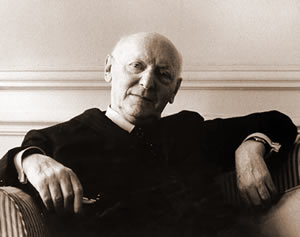
De Amerikaans-Poolse schrijver Isaac Bashevis Singer werd geboren op 21 november 1904 als Isaac Hertz Singer in Radzymin, Polen. Zie ook alle tags voor Isaac Bashevis Singer op dit blog.


Uit: Der Büßer (Vertaald door Gertrud Baruch)


„Im Jahre 1969 hatte ich zum ersten Mal Gelegenheit, die Klagemauer zu sehen, über die ich schon so viel gehört hatte. Sie sah etwas anders aus als die auf den Holzdeckel meines Gebetbuches geschnitzte Klagemauer. Da waren Zypressen zu sehen, hier jedoch konnte ich keinen einzi­gen Baum entdecken. Jüdische Soldaten bewachten den Zugang. Es war hellichter Tag, und zahlreiche Juden ver­schiedenster Art hatten sich hier eingefunden. Aschkena­sim und Sefardim waren da. Jugendliche mit schulterlan­gen Schläfenlocken, bekleidet mit Kniehosen, rabbini­schen Hüten und flachen Schuhen, unterhielten sich in ungarisch gefärbtem Jiddisch miteinander. Umringt von Neugierigen, hielt ein weiß gekleideter sefardischer Rabbi­ner in hebräischer Sprache eine Predigt über den Messias. Manche Besucher sagten das Totengebet auf, manche psalmodierten das Achtzehngebet. Einige schlangen sich Gebetsriemen um den Arm, andere wiegten den Ober­körper, während sie Psalmen rezitierten. Bettler baten mit ausgestreckter Hand um Almosen, manche feilschten sogar mit ihren Wohltätern. Vierundzwanzig Stunden am Tag betrieb hier der Allmächtige sein Geschäft.
Ich stand da und betrachtete die Mauer und die benach­barten, von Arabern bewohnten Straßen. Die Häuser, so schien es mir, hielten sich wie durch ein Wunder aufrecht, eins überragte das andere, und alle reckten sich und drän­gelten, um eine bessere Aussicht auf die Steinmauer zu haben, die als Erinnerung an den heiligen Tempel stehen­geblieben ist. Die Sonne brannte, er herrschte eine trockene Hitze, und überall roch es nach Wüste, uralter Zerstörung und jüdischer Ewigkeit.

Plötzlich kam ein schmächtiger Mann, der einen Kaftan und einen Samthut trug, auf mich zu. Dort, wo sein Man­tel auseinanderklaffte, war ein breiter Gebetsschal zu se­hen, dessen Fransen ihm fast bis zu den Knien reichten. Er hatte einen weißlichen Bart, aber ein jugendliches Ge­sicht. Seine Augen, so dunkel wie schwarze Kirschen, bezeugten, daß er ein junger, früh ergrauter Mann war.“


 1036617-f36dbf04f10e1ce554c64e16a45a85af.jpg

Isaac Bashevis Singer (21 november 1904 – 24 juli 1991)

Portret door Sylvia Ary, 1935


De Amerikaanse schrijfster en literatuurwetenschapster
Marilyn French werd geboren op 21 november 1929 in New York. Zie ook mijn blog van 21 november 2007  en ook mijn blog van 21 november 2008
en ook mijn blog van 21 november 2009 en ook mijn blog van 21 november 2010.

Uit: Tochter ihrer Mutter  (Vertaald door Cornelia Holfelder)


„MEINE MUTTER IST alt geworden, obwohl sie immer behauptet hat, sie werde jung sterben. Während meiner ganzen Kindheit erklärte sie mir immer wieder warnend - drohend? -, daß sie wegen ihres schwachen Herzens dieses Jammertal frühzeitig verlassen werde; mein robuster, bäurischer Vater hingegen werde ewig leben, die Erinnerung an die von ihr mit soviel Mühe zubereiteten Mahlzeiten in Schweinefleisch und Bohnen aus der Dose ertränken und es sich dabei nicht minder schmecken lassen. Als ich mit fünfzehn eines Nachmittags heimlich in den Schubladen ihrer Kommode stöberte - wohl in der Hoffnung, irgendeinen Hinweis darauf zu finden, was ich ihr bedeutete -, stieß ich auf einen versiegelten Umschlag mit der Aufschrift "nach meinem Tode zu öffnen". Ich riß ihn zornig auf, förderte ein Blatt Schreibpapier daraus zutage und erfuhr, daß ihr Limoges-Service für acht Personen (das nicht mehr ganz vollständig war), ihre fünf kristallenen Wassergläser (eines war kaputtgegangen) sowie ihr Tafelsilber, ebenfalls für acht Personen, zu gleichen Teilen an meine Schwester und mich übergehen sollten. Noch immer wütend, zündete ich das Blatt an, und als es in Flammen aufging, warf ich es in meiner Panik ins Klo. Weil das Papier weiterbrannte, warf ich hastig den Klodeckel zu, ohne zu bedenken, daß er aus Plastik und folglich leicht entflammbar war. Als die Klobrille zu brennen anfing, rief ich die Feuerwehr.“


 1036617-419601e8f8c5c11ae924a176dca36733.jpg

Marilyn French (New York, 21 november 1929 – 2 mei 2009)


De Nederlandse schrijfster Margriet de Moor werd als Margaretha Maria Antonetta Neefjes op 21 november 1941 in Noordwijk geboren. Zie ook mijn blog van 21 november 2008 en ook mijn blog van 21 november 2009 en ook mijn blog van 21 november 2010.


Uit: De virtuoos


‘De a,’ – hij gaat tot handelen over – ‘is open en rond van vorm.’

Deze kus is een overmeestering. Mijn stomme gelukskreet (ah!) bestaat ook uit verbazing. Deze beslistheid? Deze mannelijkheid? Zelfs niet op het moment, een uur geleden, of twee uur, wie let er nou op de tijd, toen ik zijn verlangen dan toch domweg begon te zien…

Hij fluistert boven mijn lippen: ‘Je moet niet alleen je mond wijd opendoen, maar ook, en vooral, je keel. Wil je deze belangrijke klinker maken dan moet je, zeg ik je, je tong plat neerleggen.’

Ik gehoorzaam. Ik leer. Mijn hoofd wordt op het kussen gedrukt.

Hij dringt aan: ‘Platter, veel passiever, hoor eens, je mag op geen enkele andere sensatie uit zijn…’

Ademhaling, Stilte en verstikte keelklanken. O!

(Lippen rond, de ruimte vanbinnen intact…) Dat de geheimste hoeken van mijn mond worden doorzocht, afgetast en tot leven gebracht – punten, bogen, akkoord: deze koepel denk je je in als de koepel van een immens gewelf –, brengt mij in een sfeer van ijver en aandacht die ik tot diep in mijn binnenste voel.

Maar persoonlijk zou ik, als de les toch doorgaat, nu liever wat afdwalen.“


 1036617-d88eec209f09b5d3137a7e1b98346bd3.jpg

Margriet de Moor (Noordwijk, 21 november 1941)


De Duitse dichteres en schrijfster Kerstin Preiwuß werd geboren op 21 november 1980 in Lübz en groeide op in Plau am See en Rostock. Zie ook mijn blog van 21 november 2008 en ook mijn blog van 21 november 2009 en ook mijn blog van 21 november 2010


altweibertag


angst zeichnet die wand ab
hinter der ich sitze
draußen verfällt regen
messbares kichern der nymphen
oder der sirenen
höre ich sie weil ich innendrin selig bin?

das glaube nicht
was unentwegt klingt
sind wörter, schnell
wachsende weiden
wund von innen
nach außen gekrümmt

liegt's brustbein offen
klafter in den bäumen
borke übersprungener knochen

sieh mich an
sieh mich an bis zum grund
du kannst mich einsehen bis zum grund
bloß hab ein einsehen mit mir:
niemand, der es verdient
nicht geborgen zu sein


 1036617-1f7092ae0e4a16e70a480e1767b21d11.jpg

Kerstin Preiwuß (Lübz, 21 november 1980)


De Oostenrijkse schrijfster en vertaalster
Veza Canetti werd als Venetiana Taubner-Calderon geboren op 21 november 1897 in Wenen.
Zie ook mijn blog van 21 november 2008 en ook mijn blog van 21 november 2009 en ook mijn blog van 21 november 2010 

Uit: Briefe an Georges


„Und was die beiden anderen Autoren anlangt, er kennt vielleicht zehn Seiten Kafka und zwanzig Seiten Joyce, der Vortrag wird dennoch glänzend sein, was ich nur fürchte – das sind Hörer, ich fürchte die Fragen. Bei Proust kann man sie nicht beantworten, das sind keine einfachen Sätze und Andeutungen. Weisst Du was, er gab mir Proust vom zweiten Band an zu lesen, der erste fehlte, er sagte das ist ganz egal und natürlich verstand ich dieses herrliche Werk nicht. Ich schreib ihm jetzt eigens immer darüber ums ihm schmackhaft zu machen, so Szenen wie bei den Guermantes, das regt ihn auf. Bitte sei wieder lieb zu ihm und schrei nicht mit ihm, einmal bin ich Dir sogar

dankbar, denn das gibt ihm doch zu denken, und wie Du recht hast mit dem Plan! wie das richtig ist! Wie Du ihn retten könntest wenn er den Plan noch macht! Hier hab ich monatelang sekkiert, arbeit an den Vorträgen, es ist nicht die 50 Pfund es sind tausende Pfund. Er kann sie hier im Land zehn Mal wiederholen, auch im B.B.C., ich übersetze sie indessen, er kann damit im Kontinent reisen, er kann sie drucken, er kriegt hier ein Vermögen für ein Essay, nichts wird hergegeben und dann fall ich zusammen. Ich bin bestimmt ein Melancholiker der aber sehr manische Zeiten hat, wie jetzt, wo ich

hundert Dinge unternommen hab von denen etliches wieder gelingen wird, wie das mit Deutschland, das ich hinter seinem Rücken machte, der Verlag war ihm zu unbekannt! Mach ihn bekannt, schrie ich! Der bekannte Verlag Knopf hat nichts für ihn erreicht weil er es nicht nötig hatte sich einzusetzen, geht das Buch nicht gehn hundert andere. Dieser unbekannte Verlag muss sich einsetzen, denn er hat noch keine grossen Autoren. Dieser Kampf, diese Streitigkeiten, dan war er überglücklich dass die Dramen endlich in Buchform herauskommen. Dem deutschen Verleger musst ich schreiben Du hast die Lebensbeschreibung geschickt, ich konnt ihn nicht desavouieren, ich folge Dir und sandte nur die Daten.“


 1036617-23f3345a2df3022a03d6729b56fba82a.jpg

Veza Canetti (21 november 1897 – mei 1963)


De Britse schrijfster
Freya North werd geboren op 21 november 1967 in Londen. Zie
ook mijn blog van 21 november 2008 en ook mijn blog van 21 november 2009 en ook mijn blog van 21 november 2010.


Uit: Pip


“There’s really not that much difference between lap dancing and doing what I do,’ Pip proclaimed in a very matter-of-fact way over a robust but imaginative dinner that her uncle Django had spent the afternoon preparing in celebration of his three nieces’ weekend visit home to Derbyshire. Django spooned a large portion of something alarmingly beige on to his plate and appeared to contemplate it at length. In fact, he was considering his eldest niece’s words, wondering if he’d misheard, wondering if Pip had changed jobs; wondering, basically, what on earth he was going to do with her. Pip’s two younger sisters, Fen and Cat, sniggered into their semolina. Django had proudly called in ‘polenta’. But that was imaginative both with the truth and with the ingredients of the dish itself.
The Three sisters tactfully referred to it as ‘polenta’ because they, too, were being imaginative with the truth as well as heedful of the chef’s sensitivities. Having been brought up single-handedly by their uncle Django, the McCabe girls were well accustomed to his eccentricities and loved him all the more because of them. He devoted the same imaginative attention to idiosyncratic detail in his dress sense as to his cooking. The sisters saw nothing untoward about pea soup with tuna and stilton, or rhubarb crumble with Jelly Babies instead of rhubarb. They had never gone hungry and their taste buds had developed a commendable and valuable robustness. Nor did they think it odd that a man in his late sixties should dress in the souvenirs of his colourful past. Today, as Django dollaped polenta on to his plate and enlivened it with a hearty slosh of Henderson’s Relish, he tucked his paisley cravat (he’d partied with the Kinks in the 1960′s) into his cambric shirt, and loosened the enormous buckled belt he’d acquired at some free festival or other, currently holding a pair of jeans Clint Eastwood would have coveted for a Spaghetti Western.”


 1036617-5b4de2ae1a769bfc74b38b3b8b44a842.jpg

Freya North (Londen, 21 november 1967)


Zie voor nog meer schrijvers van de 21e november ook mijn vorige blog van vandaag.
Geschreven door Romenu om 19:20 Reageer op dit bericht
Reageer op dit bericht

Reageer op dit bericht

Een titel of je eigen website toevoegen

De blogger leest alles eerst na: je tekst verschijnt zodra die goedgekeurd is.

Heinrich von Kleist, Arthur Quiller-Couch, Wilhelm Waiblinger, Voltaire, Franz Hessel

Vandaag precies 200 jaar geleden stierf de Duitse dichter en schrijver Heinrich von Kleist. Kleist schoot op die dag bij de Kleine Wannsee in het zuidwesten van Berlijn eerst zijn vriendin Henriette Vogel en daarna zichzelf dood. Zie ook alle tags voor Heinrich von Kleist op dit blog


Das letzte Wort an Ulrike


An Ulrike von Kleist, 21. November 1811.


An Fräulein Ulrike von Kleist Hochwohlgeb. zu Frankfurt a. Oder.


Ich kann nicht sterben, ohne mich, zufrieden und heiter, wie ich bin, mit der ganzen Welt, und somit auch, vor allen Anderen, meine theuerste Ulrike, mit Dir versöhnt zu haben. Laß sie mich, die strenge Äußerung, die in dem Briefe an die Kleisten enthalten ist laß sie mich zurücknehmen; wirklich, Du hast an mir gethan, ich sage nicht, was in Kräften einer Schwester, sondern in Kräften eines Menschen stand, um mich zu retten: die Wahrheit ist, daß mir auf Erden nicht zu helfen war. Und nun lebe wohl; möge Dir der Himmel einen Tod schenken, nur halb an Freude und unaussprechlicher Heiterkeit dem meinigen gleich: das ist der herzlichste und innigste Wunsch, den ich für Dich aufzubringen weiß.


Stimmings bei Potsdam.

    d. – am Morgen meines Todes.  Dein Heinrich.


 1036612-d05a9d5d046f79a09d6f1d06881d20c5.jpg

Heinrich von Kleist (18 oktober 1777 - 21 november 1811)

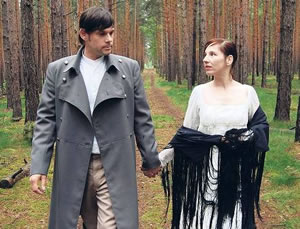
Alexander Beyer (Kleist) en Meret Becker (Henriette Vogel) in de tv-film Die Akte Kleist


De Engelse schrijver en crticus
Sir Arthur Thomas Quiller-Couch werd geboren op 21 november 1863 in Bodmin, Cornwall. Zie ook mijn blog van 21 november 2008
en ook mijn blog van 21 november 2009 en ook mijn blog van 21 november 2010.


Uit: On the Art of Writing


„LET me begin to-day, Gentlemen, with a footnote to my last lecture. It ended, as you may remember, upon an earnest appeal to you, if you would write good English, to study the Authorised Version of the Scriptures; to learn from it, moreover, how by mastering rhythm, our Prose overcame the capital difficulty of Prose and attuned itself to rival its twin instrument, Verse; compassing almost equally with Verse man’s thought however sublime, his emotion however profound.   1   Now in the course of my remarks I happened—maybe a little incautiously—to call the Authorised Version a ‘miracle’; using that word in a colloquial sense, in which no doubt you accepted it; meaning no more than that the thing passed my understanding. I have allowed that the famous forty-seven owed an immense deal to earlier translators—to the Bishops, to Tyndale, to the Wyclif Version, as themselves allowed it eagerly in their preface:—

              Truly (good Christian reader) wee never thought from the beginning that we should needs to make a new Translation, nor yet to make of a bad one a good one … but to make a good one better, or out of many good ones one principall good one, not justly to be excepted against: that hath bene our indeavour, that our marke.

   2   Nevertheless the Authorised Version astounds me, as I believe it will astound you when you compare it with earlier translations. Aristotle (it has been said) invented Chance to cover the astonishing fact that there were certain phenomena for which he found himself wholly unable to account. Just so, if one may compare very small things with very great, I spoke of the Authorised Version as a ‘miracle.’ It was, it remains, marvellous to me.   3   Should these deciduous discourses ever come to be pressed within the leaves of a book, I believe their general meaning will be as clear to readers as I hope it is to you who give me so much pleasure by pursuing them—almost (shall I say?) like Wordsworth’s Kitten with those other falling leaves:—

            That almost I could repine

            That your transports are not mine.

But meanwhile certain writers in the newspapers are assuming that by this word ‘miracle’ I meant to suggest to you a something like plenary inspiration at once supernatural and so authoritative that it were sacrilege now to alter their text by one jot or tittle.“


1036612-44ec174dcdfa986231ea8596fe892398.jpg
Arthur Quiller-Couch (21 november 1863 – 12 mei 1944)


De Duitse dichter en schrijver Wilhelm Friedrich Waiblinger werd geboren op 21 november 1804 in Heilbronn. Zie ook mijn blog van 21 november 2008 en ook mijn blog van 21 november 2009 en ook mijn blog van 21 november 2010.


Boccaccio


Laß in den Garten mich ein, wo deine Versammlung erzählet,

Immer hab' ich ja gern lustige Schwänke gehört;

Glücklich sind die, so dir lauschen, gewiß der olympische Vater

Schämte sich nicht und mit Lust hört' ein Histörchen er an.

Glücklich sind sie. Doch über den Alpen versteht man die Späße

Nicht mehr, in Deutschland ist man allzu gebildet und fein.

Man erröthet, man spricht von Moral, und hat sie im Munde,

Aber im Herzen ist man, aber im Leben ihr Feind.

Doch so ist's immer. Man trieb in Eden Alles in Unschuld,

Und nach dem Sündenfall kam erst der Teufel in Ruf.


Carneval


Wie, du wunderst dich, Freund, wie so urplötzlich ein Volk sich

Wochenlang wie toll, närrisch und albern beträgt?

O mein Teurer, du irrest dich sehr, schilt keinen, der heut sich

Auf dem Corso herum wie ein Besessener treibt,

So erscheint mir am wahrsten der Mensch, dies Carneval steht ihm,

Aber das Schlimmere folgt, wenn er kein Mäskchen mehr hat.


1036612-51ef9cea965e142fad4e4a2085c13563.jpg
Wilhelm Waiblinger (21 november 1804 – 17 januari 1830)


De Franse schrijver
Voltaire, (pseudoniem van François-Marie Arouet) werd werd op 21 november 1694 geboren in Parijs. Zie ook alle tags voor Voltaire op dit blog.  


Uit: Candide (Vertaald door Tobias Smollett)


„In the country of Westphalia, in the castle of the most noble Baron of Thunder-ten-tronckh, lived a youth whom Nature had endowed with a most sweet disposition. His face was the true index of his mind. He had a solid judgment joined to the most unaffected simplicity; and hence, I presume, he had his name of Candide. The old servants of the house suspected him to have been the son of the Baron's sister, by a very good sort of a gentleman of the neighborhood, whom that young lady refused to marry, because he could produce no more than threescore and eleven quarterings in his arms; the rest of the genealogical tree belonging to the family having been lost through the injuries of time.

The Baron was one of the most powerful lords in Westphalia, for his castle had not only a gate, but even windows, and his great hall was hung with tapestry. He used to hunt with his mastiffs and spaniels instead of greyhounds; his groom served him for huntsman; and the parson of the parish officiated as his grand almoner. He was called "My Lord" by all his people, and he never told a story but everyone laughed at it.

My Lady Baroness, who weighed three hundred and fifty pounds, consequently was a person of no small consideration; and then she did the honors of the house with a dignity that commanded universal respect. Her daughter was about seventeen years of age, fresh-colored, comely, plump, and desirable. The Baron's son seemed to be a youth in every respect worthy of the father he sprung from. Pangloss, the preceptor, was the oracle of the family, and little Candide listened to his instructions with all the simplicity natural to his age and disposition.

Master Pangloss taught the metaphysico-theologo-cosmolonigology. He could prove to admiration that there is no effect without a cause; and, that in this best of all possible worlds, the Baron's castle was the most magnificent of all castles, and My Lady the best of all possible baronesses.“


 1036612-8ec29da2d2d2a0c960f4bb746dead737.jpg

Voltaire (21 november 1694 – 30 mei 1778)

Buste in het Musée d'Art et d'Histoire de Toul


De Duitse schrijver en vertaler Franz Hessel werd geboren op 21 november 1880 in Stettin. Zie ook alle tags voor Franz Hessel op dit blog.  


Uit: Heimliches Berlin


„Clemens Kestner, außerordentlicher Professor der Philologie an der Universität Berlin, kam gegen Mittag aus dem Kolleg heim. Vor dem grauen Eckhaus am Kanalufer nahe dem Lützowplatz hockte das Portiertöchterchen und zeichnete mit Kreide drei Rechtecke auf das Pflaster. Kestner blieb stehen und sah dem Kinde zu, das in das erste Feld „Himmel“, in das zweite „Hölle“ malte. Bei dem dritten zögerte es.

„Was kommt denn da hinein“, fragte Kestner,

„‚Welt‘ vielleicht?“

„Nein, ‚Tempelhof ‘ oder ‚Lichterfelde‘ –“

Über diese Antwort war der Professor so entzückt, daß er in seine Aktentasche griff und der Kleinen die Tüte Bonbons schenkte, die für sein eigenes Kind bestimmt war. Dann nahm er vor der Mutter, die aus ihrer Loge sah und deren blasses Gesicht ihm immer eine Art Ehrfurcht einflößte, seinen breitrandigen Hut ab. Dabei hoben sich einige seiner Haarsträhnen, die voll und weich, nicht eben grau, sondern eher wie erblaßt um eine beginnende Tonsur lagen.

Treppaufsteigend lachte er noch einmal über die Antwort des Kindes. Davon bekam sein sonst trotz bartloser Glätte etwas sorgenvolles Gesicht eine kindliche Verklärtheit. Als er die Wohnungstür aufgeschlossen hatte, sprang ihm der kleine Erwin entgegen, blieb aber bei des Vaters Anblick mitten im Laufen stehen.

„Ach, du bist es, Papa, ich dachte, die Mama kommt.“

Dann gab er artig die Hand.

„Ist denn die Mama nicht zu Hause?“

Oda, die Schwägerin, kam hinzu: „Sie ist heute morgen plötzlich fortgegangen, ohne mir etwas zu

sagen, und hat in ihrem Zimmer die Tücher ihres Kostüms von gestern wirr herumliegen lassen, was

sonst nicht ihre Art ist. Ich bin in Sorge um Karola. Sie hatte gestern nacht noch so lange Licht, und ich habe sie auf und ab gehen hören.“

„Sie wird zu ihrer bewunderten Margot gegangen sein; die hat heut in aller Frühe, als ich fortging, mit

ihr telephoniert. Aber du, Oda, bist blaß.“

„Ich habe mich so angestrengt. Der kleine Prinz, Mister Russells Besuch, ist plötzlich krank geworden.“

„Was fehlt ihm denn?“


 1036612-9f68f00ceb52030bbb393fe96859b19a.jpg

Franz Hessel (21 november 1880 – 6 januari 1941)

Geschreven door Romenu om 19:11 Reageer op dit bericht

Gerard Koolschijn

De Nederlandse schrijver en vertaler Gerard Koolschijn werd op 21 november 1945 in Den Haag geboren. Al in zijn vroege gymnasiumjaren begon Koolschijn met de vertaling van klassieke werken, wat in 1971 resulteerde in de publicatie van een vertaling van de Anabasis/Tocht der tienduizend van Xenophon (samen met Tjit Reinsma). Hij studeerde klassieke talen en rechten (beide aan de Rijksuniversiteit Leiden). Hij werkte van 1975 tot 1990 - met onderbreking van één jaar voor een medewerkerschap straf- en strafprocesrecht aan de RU Leiden - in het voortgezet onderwijs als leraar op verschillende Haagse scholen en als rector van het Haagse gymnasium Sorghvliet. Behalve vertalingen publiceerde hij Het democratische beest. Plato's tegenstander (1990). Ook maakte hij een toneelbewerking van Homerus' Ilias (1993). Koolschijns toneelvertalingen zijn van 1985 tot heden vele malen door de grote Nederlandse toneelgezelschappen op de planken gebracht.


Uit: Plato, schrijver, Teksten gekozen en vertaald door GK


'Nu wordt er wel eens gezegd,' zei zij, 'dat liefde het zoeken naar de eigen helft is, maar volgens mijn theorie is liefde niet gericht op een helft, en ook niet op een geheel, zolang die niet—dat moet je je goed realiseren—waardevol zijn. Want zelfs hun eigen handen en voeten zijn mensen bereid te laten afsnijden als zij het idee hebben dat iets van henzelf schadelijk is. Dat iets bij jezelf hoort is op zichzelf beslist geen reden tot tevredenheid, of het moest zijn dat je zonder meer van alle waardevolle dingen zegt dat ze bij jezelf horen en van jezelf zijn, en dat je met waardeloze dingen niets te maken hebt. Het enige wat mensen werkelijk begeren is: waardevolle dingen, dingen waar ze wat aan hebben.

[...] Kijk, Socrates, ieder mens is vruchtbaar en heeft een bepaalde potentie, zowel lichamelijk als geestelijk, en wanneer hij op een bepaalde leeftijd is gekomen verlangt onze natuur te baren en te verwekken. Het is een goddelijke gebeurtenis en in een sterfelijk wezen is dat het onsterfelijke element: zwangerschap en verwekking.“


1104087-8add942908112eb23618fa607c142d0f.jpg
Gerard Koolschijn (Den Haag, 21 november 1945)

Geschreven door Romenu om 00:00 Reageer op dit bericht

Nadine Gordimer, Viktoria Tokareva, Don DeLillo, Thomas Chatterton

De Zuidafrikaanse schrijfster Nadine Gordimer werd geboren op 20 november 1923 in Springs. Zie ook alle tags voor Nadine Gordimer op dit blog.


Uit: The Moment Before the Gun Went Off


“Marais Van der Vyver shot one of his farm labourers, dead.

An accident. There are accidents with guns every day of the week: children playing a fatal game with a father's revolver in the cities where guns are domestic objects, and hunting mishaps like this one, in the country. But these won't be reported all over the world. Van der Vyver knows his will be. He knows that the story of the Afrikaner farmer - a regional Party leader and Commandant of the local security commando - he, shooting a black man who worked for him will fit exactly their version of South Africa. It's made for them. They'll be able to use it in their boycott and divestment campaigns. It'll be another piece of evidence in their truth about the country. The papers at home will quote the story as it has appeared in the overseas press, and in the back-and-forth he and the black man will become those crudely-drawn figures on anti-apartheid banners, units in statistics of white brutality against the blacks quoted at United Nations - he, whom they will gleefully call 'a leading member' of the ruling Party.People in the farming community understand how he must feel. Bad enough to have killed a man, without helping the Party's,  the government's, the country's enemies, as well.They see the truth of that. They know, reading the Sunday papers, that when Van der Vyver is quoted saying he is 'terribly shocked', he will 'look after the wife and children', none of those Americans and English, and none of those people at home who want to destroy the white man's power will believe him. And how they will sneer when he even says of the farm boy (according to one paper, if you can trust any of those reporters), 'He was my friend. I always took him hunting with me: Those city and overseas people don't know it's true: farmers usually have one particular black boy they like to take along with them in the lands: you could call it a kind of friend, yes, friends are not only your own white people, like yourself, you take into your house, pray with in church and work with on the Party committee. But how can those others”


 1035840-ce180834e6df138bce1a64f098b4b2c8.jpg

Nadine Gordimer (Springs. 20 november 1923)


De Russische schrijfster en scenariste Viktoria Tokareva werd geboren op 20 november 1937 in Leningrad (Sint Petersburg). In 1958 voltooide zij haar studie piano aan het Conservatorium van Leningrad. In 1969 behaalde ze een graad draaiboek schrijven aan het Statelijk Instituut voor Cinematografie. Tijdens het werken als zanglerares aan een muziekschool voor kinderen en later als een televisie-editor begon ze te schrijven. Haar eerste verhaal „Dag zonder liegen“ werd gepubliceerd in 1964. Als gevolg hiervan werd haar aangeboden om een script voor een filmproject te schrijven. In 1968 verscheen haar eerste film Literatuuruur (Урок литературы). Meer verhalen zijn gepubliceerd in de volgende jaren in de toonaangevende Sovjet-literaire tijdschrift Novy Mir en Junost. In 1969 kwam haar eerste boek, „Over wat er niet was“ uit. In de eerste 15 jaar na de ineenstorting van het Sovjet-systeem werden meer dan 10 bundels gepubliceerd met oude en nieuwe verhalen.


Uit: Alle meine Feinde und andere Erzählungen (Vertaald door Angelika Schneider)


„Alle meine Feinde

Eines Morgens setzte ich mich an meinen Schreibtisch, nahm ein Blatt Papier und schrieb an den oberen Rand: Alle meine Feinde. Dann konzentrierte ich mich und zählte meine Feinde mit Namen auf.

anka

tanka

wanka

Ich dechiffriere:

Anka – das ist meine Haushälterin.

Tanka – das ist die Frau meines Vaters.

Wanka – das ist mein Nachbar auf der Datscha.

Anka – ist ein Feind im Inneren des Hauses.

Tanka – ist ein Feind außerhalb des Hauses.

Wanka – ist ein Feind direkt hinterm Zaun.

Meine Feinde sind mir ganz nah. Irgendwas ist da wohl schiefgelaufen. Man muss etwas tun. Aber was?

Soll ich in den Wald laufen zu den Partisanen? Und meine Feinde der Reihe nach umlegen?

Heutzutage ist es Mode, zum Psychoanalytiker zu gehen. Aber wozu die Zeit und das Geld aufwenden? Ich kann das selbst auseinandernehmen, ich bin meine eigene Psychoanalytikerin.

›Na dann los‹, sag ich mir, ›fangen wir an, schön einer nach dem anderen …‹


anka

Meine Tochter hat ein Kind geboren, »Vater anonym«, wie sie amtlich hat eintragen lassen. Es ist vom ›Erstbesten‹, sozusagen. Sie hat mir erklärt, dass das alles nach ihrer Mittlere-Reife-Prüfung passiert sei. Sie hat also noch eine zweite Art Reifeprüfung gemacht, die Prüfung zur Erwachsenen.

Meine Tochter verändert sich nur wenig. Ich erinnere mich noch genau an sie als Säugling, als Krabbelkind und als Sechsjährige. Jetzt ist sie achtzehn, hat noch immer ein Kindergesicht und einen Blick, der ins Nirgendwo gerichtet ist, als ob sie irgendwohin blickt, aber nichts sieht.“


 1035840-8f9c739ff1718baa60945575a63155d7.jpg
Viktoria Tokareva (Leningrad, 20 november 1937)


De Amerikaanse schrijver Don DeLillo werd op 20 november 1936 geboren in New York City als zoon van Italiaanse immigranten. Zie ook mijn blog van 20 november 2008 en ook mijn blog van 20 november 2009 en ook mijn blog van 20 november 2010.


Uit: Point Omega


„There was a man standing against the north wall, barely visible. People entered in twos and threes and they stood in the dark and looked at the screen and then they left. Sometimes they hardly moved past the doorway, larger groups wandering in, tourists in a daze, and they looked and shifted their weight and then they left.

There were no seats in the gallery. The screen was freestanding, about ten by fourteen feet, not elevated, placed in the middle of the room. It was a translucent screen and some people, a few, remained long enough to drift to the other side. They stayed a moment longer and then they left.

The gallery was cold and lighted only by the faint gray shimmer on the screen. Back by the north wall the darkness was nearly complete and the man standing alone moved a hand toward his face, repeating, ever so slowly, the action of a figure on the screen. When the gallery door slid open and people entered, there was a glancing light from the area beyond, where others were gathered, at some distance, browsing the art books and postcards. The film ran without dialogue or music, no soundtrack at all. The museum guard stood just inside the door and people leaving sometimes looked at him, seeking eye contact, some kind of understanding that might pass between them and make their bafflement valid. There were other galleries, entire floors, no point lingering in a secluded room in which whatever was happening took forever to happen.


The man at the wall watched the screen and then began to move along the adjacent wall to the other side of the screen so he could watch the same action in a flipped image. He watched Anthony Perkins reaching for a car door, using the right hand. He knew that Anthony Perkins would use the right hand on this side of the screen and the left hand on the other side. He knew it but needed to see it and he moved through the darkness along the side wall and then edged away a few feet to watch Anthony Perkins on this side of the screen, the reverse side, Anthony Perkins using the left hand, the wrong hand, to reach for a car door and then open it.

But could he call the left hand the wrong hand?“


 1035840-a8276a0947015aa19c020c791c44a188.jpg

Don DeLillo (New York City, 20 november 1936)


De Engelse dichter en schrijver Thomas Chatterton werd geboren op 20 november 1752 in Bristol als zoon van een koster. Zie ook mijn blog van 20 november 2008 en ook mijn blog van 20 november 2009 en ook mijn blog van 20 november 2010.


Picture of Autumn


When autumn, bleak and sun-burnt, do appear,

With his gold hand gilting the falling leaf,

Bringing up winter to fulfil the year,

Bearing upon his back the riped sheaf;

When all the hills with woody seed are white,

When levying fires, and lemes, do meet from far the sight:

When the fair apple, rudde as even sky,

Do bend the tree unto the fructile ground.

When juicy pears, and berries of black dye,

Do dance in air and call the eyne around;

Then, be the even foul, or even fair,

Methinks my hearte's joy is stained with some care.


On Happienesse


MAIE Selynesse on erthes boundes bee hadde?

Maie yt adyghte yn human shape bee founde?

Wote yee, ytt was wyth Edin's bower bestadde,

Or quite eraced from the scaunce-layd grounde,

Whan from the secret fontes the waterres dyd abounde?

Does yt agrosed shun the bodyed waulke,

Lyve to ytself and to yttes ecchoe taulke?

All hayle, Contente, thou mayde of turtle-eyne,

As thie behoulders thynke thou arte iwreene,

To ope the dore to Selynesse ys thyne,

And Chrystis glorie doth upponne thee sheene.

Doer of the foule thynge ne hath thee seene;

In caves, ynn wodes, ynn woe, and dole distresse,

Whoere hath thee hath gotten Selynesse.


 1035840-71aa035a16d4a7a5ec02b3e4842665bc.jpg

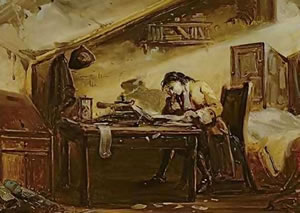
Thomas Chatterton (20 november 1752  - 5 augustus 1770)
Chatterton in zijn mansarde door John Joseph Barker


Zie voor nog meer schrijvers van de 20e november ook mijn vorige blog van vandaag.
Geschreven door Romenu om 18:38 Reageer op dit bericht

Sheema Kalbasi, Ursula Ziebarth, Zinaida Hippius, Selma Lagerlöf

De Iraanse dichteres, vertaalster en mensenrechten-advocate Sheema Kalbasi werd geboren op 20 november 1972 in Teheran. Zie ook mijn blog van 20 november 2008 en ook mijn blog van 20 november 2009 en ook mijn blog van 20 november 2010.


Lessen one: A patient dies


Today in my morning round,

Another patient died.

Waiting so patiently for Him to arrive

I saw him leave the bed

With no color on his wings

Another angel at his side.

To the so called bridge of death

Distant vista.


Bleating cries within my sad heart.

Me and my body standing cold

the white uniform crying for cure

no light and the sound of secrets.

All the lectures, all the nursing clams.

the grace of death, pointing at the flying waves.


Bleached with sadness, I walked through the hall.

Deeply I cry, not for the first time

Although it is the first I meet Death.


The rest of the day minding every inch of my bones,

My eyes not clear, but filled with trembling fireflies

Softly we come, softly we go,

Mute path? Not too eager?

For the farewell is on our side!


1 and 9


Stars


are shining close


the taste of a summer night...
a quiet night


on the skin
is the light kiss of a fallen leaf


I, barefoot and warm am walking naked.


 1035834-8c1f2954b0643c9833e8aba13b76f012.jpg

Sheema Kalbasi (Teheran, 20 november 1972)


De Duitse schrijfster Ursula Ziebarth werd geboren op 20 november 1921 in Berlijn. Haar relatie en correspondentie met Gottfried Benn behoort tot de Duitse literatuurgeschiedenis. Zij studeerde 1940-1945 in Berlijn, Heidelberg, Straatsburg en dan weer in Berlijn Geschiedenis, Kunstgeschiedenis en Germanistiek. In het najaar van 1947, begin 1948 verhuisde ze naar Worpswede. In mei 1955 werd zij via bemiddeling door Benn, lectrice bij de Keulse uitgeverij Winkler, waar zij echter weer meteen ontslag nam. Van 1955-1986 werkte ze bij het ​​Duitse Instituut voor Economisch Onderzoek in Berlijn. In 1949 publiceerde ze een gedicht in het tijdschrift Merian, 1955, een verhaal in accenten, 1976, een boek bij Neske, heksen dineren met Benn-sectie (Het is leuk om te denken van Orpheus), 1979 bij Piper Ein Kinderspiel, 1991 bij S. Fischer Een vrouw van goud.

Uit: Ein Kinderspiel


»SPIEGEL: noch nie hat jemand wissend beschrieben, was ihr in euerem Wesen seid.

Ihr, wie mit lauter Löchern von Sieben erfüllten Zwischenräume der Zeit.

Ihr, noch des leeren Saales Verschwender -, wenn es dämmert, wie Wälder weit ... Und der Lüster geht wie ein Sechzehn-Ender durch eure Unbetretbarkeit. Manchmal seid ihr voll Malerei Einige scheinen in Euch gegangen -, andere schicktet ihr scheu vorbei.«' In Jericho, vor zehntausend Jahren, mußten Menschen sich über Wasser beugen um ein zerfließendes, schon von ihrem Atem bewegbares Bild von sich selbst zu erblicken, ihren eigenen Augen zu begegnen, zu erstaunen vor sich. In der Menschheit ältester Stadt, in eben diesem Jericho, haben Archäologen keine Spiegel gefunden. Zweitausend Jahre später (achttausend Jahre vor uns ist das immer noch) lebten im anatolischen (^atalhüyük Menschen städtisch zusammen, und diese Städter hinterließen Spiegel, aus Obsidian gemachte, das ist schwarzes vulkanisches Naturglas, man polierte es in (^atalhüyük so fein, daß jeder sich in ihm entgegensehen konnte und im finsteren Glanz der blank geriebenen Erdausspeiung eine dunkle Wahrnehmung von seinem Gesicht gewann.

Perser, Ägypter, Juden besaßen polierte Metallscheiben, um sich zu spiegeln, Homer berichtet von Spiegelflächen aus Gold, es gab also Menschen, die sich in ihren Spiegeln entrückt in den Sonnenschimmer des Goldes sahen. Römer hatten Bronzespiegel, in Schottland fand man zu Spiegeln polierte Steinplatten der jüngeren Steinzeit. Der Mensch bedarf der Spiegel als einem Mittel der Erkenntnis, er will ein Bild von sich sehen können.

Wir Heutigen haben silberhintergossene Glasspiegel. Mit einer Versilberungs- und einer Reduktionsflüssigkeit wird chemisch Silber hinter Glas gebracht, nur 1/16000 Millimeter beträgt der Durchmesser des Silberhauches, der das Spiegelwunder bewirkt.“


1035834-56ed1acd2f0a5e5fec42c572265c9064.jpg
Ursula Ziebarth (Berlijn, 20 november 1921)


De Russische dichteres en schrijfster
Zinaida Nikolaevna Hippius
werd als kind van uit Duitse familie geboren op 20 november in Beljov bij Tula. Zij was sinds 1888 met de filosoof Dmitri Merezjkovski getrouwd. Hun huwelijk duurde, hoewel blijkbaar niet fysiek voltrokken, 52 jaar. Ze publiceerde ook onder het pseudoniem Anton Krainy. Voor een lange tijd stond Hippius in de schaduw van haar man, die zelfs als kandidaat voor de Nobelprijs voor de Literatuur beschouwd werd. Net als vele andere schrijversvrouwen maakte ze haar eigen behoeften ondergeschikt aan die van haar man. Overal, waar het echtpaar langer verbleef, opende het een literair salon en werd het al snel het middelpunt van een kring van jonge schrijverstalenten. Hippius was een dappere intellectuele die niet terugschrok voor strenge esthetische oordelen. Haar artikel schreef ze onder een pseudoniem, of ondertekende zij met S. Hippius om het geslacht van de auteur te verbergen. Die tragedie van een schrijver om te wonen en te werken in ballingschap vormde een constante in haar werk.


Stille

Auf den Straßen weiße Stille.
Und ich hör mein Herz nicht mehr.
Herz, ist Schweigen nun dein Wille?
Weiße Stille, stille Stille…

Weiße Stadt im Schnee – erstehe!
Mond – mit Blut befleckte Schild.
Was nun kommt, ob ich’s verstehe?...
Herz, mein Herz, ersteh, erstehe!

Aufersteheung – nicht für alle.
Still und weiß, wie tot, der Schnee.
Sünde hüllt die Stadt – ich balle
Lei die Faust und wein – um alle.


Niet-liefde


Je beukt mijn luiken, als wind en regen,

Als nachtwind zing je: "Je bent van mij!"

Ik ben de chaos, jou toegenegen,

Je vriend van vroeger: "Doe open jij!"


Ik wil de luiken niet openmaken,

Mijn angst verbergend houd ik ze dicht.

Ik hoed en koester en blijf bewaken:

Mijn laatste liefde, mijn laatste licht.


De chaos schatert; hij roept, de blinde:

"Je sterft in boeien, trek ze toch stuk!

Je weet, in vrijheid is 't heil te vinden,

Niet-liefde, vrijheid - dat is geluk."


Steeds kouder wordend zeg ik gebeden,

Om liefde smeek ik, een zwak gebed...

Mijn handen beven als 'k moegestreden

Mijn vensterluiken wijd open zet.


Vertaald door M. Wiebes en M. Berg


 1035834-d3596ce37a20e3931d512d4f2891c659.jpg

Zinaida Hippius (20 november 1869 - 9 september 1945)

Portret door Ilja Repin, 1884


De Zweedse schrijfster Selma Lagerlöf werd geboren op 20 november 1858 in Östra Emterwik in Zweden. Zie ook alle tags voor Selma Lagerlöf op dit blog.


Uit: Niels Holgersson's wonderbare reis (Vertaald door Margaretha Meijboom) 


„Buiten was het allerheerlijkst lenteweer. ’t Was nog niet later in ’t jaar dan de 20ste Maart, maar de jongen woonde in de gemeente West Vemmenhög, heel in ’t zuiden van Skaane, en daar was de lente al in vollen gang. De boomen waren nog niet groen, maar alles stond frisch en vol knoppen. Er was water in alle greppels, en het hoefblad stond in bloei aan den kant van den greppel. Al ’t kreupelhout, dat op het steenen walletje om den akker groeide, was bruin en glanzend geworden. Het beukenbosch in de verte stond als ’t ware te zwellen, en werd ieder oogenblik dichter. De hemel was hoog en helder blauw. De huisdeur stond op een kier, zoodat men in de kamer de leeuweriken hoorde zingen. De kippen en ganzen liepen in den tuin, en de koeien, die zelfs in den stal de lentelucht voelden, begonnen nu en dan te loeien. De jongen las en knikkebolde, en streed tegen den slaap.

“Neen, ik wil niet slapen,” dacht hij, “want dan kom ik er den heelen morgen niet door.”

Maar hoe dat nu kwam—hij sliep in.

Hij wist niet, of hij lang of kort geslapen had, maar hij werd wakker door een licht gedruisch achter hem. Op de vensterbank recht voor den jongen stond een spiegeltje, en daarin kon hij bijna de heele kamer zien. Juist toen nu de jongen het hoofd oplichtte, keek hij toevallig in den spiegel, en toen zag hij, dat de deksel van Moeders kist openstond.

Nu had Moeder een groote, zware, met ijzer beslagen eikenhouten kist, die nooit iemand anders dan zijzelf mocht opendoen. Daar bewaarde Moeder alles, wat zij van haar moeder geërfd had, en waar zij bizonder goed op paste. Daar lagen een paar ouderwetsche boerinnenpakjes van rood laken met korte lijfjes en geplooide rokken, en met kralen versierd borststuk. Daar waren gesteven witte hoofddoeken en zware zilveren broches en kettingen. De menschen wilden nu zooiets niet meer dragen, en Moeder had er al vaak aan gedacht, die oude dingen weg te doen, maar zij had het niet over haar hart kunnen verkrijgen.

Nu zag de jongen in den spiegel heel duidelijk, dat de deksel van die kist open stond. Hij kon niet begrijpen hoe dat gekomen was, want Moeder had de kist afgesloten, eer ze heenging. ’t Zou Moeder niet overkomen, dat zij de kist open liet, als hij alleen thuis was.

Hij vond het griezelig. Hij was bang, dat een dief de kamer was binnengeslopen. Hij durfde zich niet verroeren, maar zat stil in den spiegel te staren.“


 1035834-1a8b8dd34b523f5009fb8cab417f1f29.jpg

Selma Lagerlöf (20 november 1858 – 16 maart 1940)

Op een 20 Kronen biljet

Geschreven door Romenu om 18:33 Reageer op dit bericht

Sharon Olds, Mark Harris, Christoph Wilhelm Aigner, Anna Seghers

De Amerikaanse dichteres Sharon Olds werd geboren op 19 november 1942 in San Francisco. Zie ook alle tags voor Sharon Olds op dit blog.


The Borders


To say that she came into me,
from another world, is not true.
Nothing comes into the universe
and nothing leaves it.
My mother—I mean my daughter did not
enter me. She began to exist
inside me—she appeared within me.
And my mother did not enter me.
When she lay down, to pray, on me,
she was always ferociously courteous,
fastidious with Puritan fastidiousness,
but the barrier of my skin failed, the barrier of my
body fell, the barrier of my spirit.
She aroused and magnetized my skin, I wanted
ardently to please her, I would say to her
what she wanted to hear, as if I were hers.
I served her willingly, and then
became very much like her, fiercely
out for myself.
When my daughter was in me, I felt I had
a soul in me. But it was born with her.
But when she cried, one night, such pure crying,
I said I will take care of you, I will
put you first. I will not ever
have a daughter the way she had me,
I will not ever swim in you
the way my mother swam in me and I
felt myself swum in. I will never know anyone
again the way I knew my mother,
the gates of the human fallen.


Primitive


I have heard about the civilized,
the marriages run on talk, elegant and honest,

rational. But you and I are
savages. You come in with a bag,
hold it out to me in silence.
I know Moo Shu Pork when I smell it
and understand the message: I have
pleased you greatly last night. We sit
quietly, side by side, to eat,
the long pancakes dangling and spilling,
fragrant sauce dripping out,
and glance at each other askance, wordless,
the corners of our eyes clear as spear points
laid along the sill to show
a friend sits with a friend here.


 1035142-55209180df8680c2170796ee221fc746.jpg

Sharon Olds (San Francisco, 19 november 1942)


De Amerikaanse schrijver en literaire biograaf
Mark Harris (eig. Mark Harris Finklestein) werd geboren op 19 november 1922 in Mount Vernon, New York. Zie ook mijn blog van 19 november 2010.


Uit: The Southpaw


"I have seen many a pitcher, but there's few that throw as beautiful as Pop. He would bring his arm around twice and then lean back on 1 leg with his right leg way up in the air, and he would let that left hand come back until it almost touched the ground behind, and he looked like he was standing on 1 leg and 1 arm and the other 2 was in the air, and then that arm would come around and that other leg would settle down toward the earth, and right in about there there was the least part of a second when his uniform was all tight on him, stretched out tight across his whole body, and then he would let fly, and that little white ball would start on its way down the line toward Tom Swallow, and Pop's uniform would get all a-rumple again, and just like it was some kind of a magic machine, the split-second when the uniform would rumple up there would be the smack of the ball in Tom's mitt, and you realized that ball had went 60 feet 6 inches in less than a second, and you knowed that you seen not only Pop but also a mighty and powerful machine, and what he done looked so easy you thought you could do it yourself because he done it so effortless, and it was beautiful and amazing, and it made you proud."


 1035142-eb1be8d2f354ccf491e672db1811b407.jpg

Mark Harris (19 november 1922 - 30 mei 2007) 


De Oostenrijkse dichter, schrijver en vertaler Christoph Wilhelm Aigner werd geboren op 18 november 1954 in Wels. Zie ook mijn blog van 19 november 2009 en ook mijn blog van 19 november 2010.


In den See


Leise wie eine Katze
der Lichtstraße des Monds entlang

Aufs eigene Spiegelbild legen

Das Wasser macht einen Schluck
seine Haut durchlaufen Kreise


Verführungen


Wieder stochern Blitze am Horizont
bleibt einer hängen und macht die blühende Flamme
Das zieht ich laufe komm an bei der Asche
Hab doch noch nie einen Phönix gesehn


Wie man das Ende einer Zuneigung spürt


Es ist wie
über flüssige
Stufen gehen


1035142-1be473c03aa106675f907ab2187a24b1.jpg
Christoph Wilhelm Aigner (Wels, 18 november 1954)


De Duitse schrijfster Anna Seghers werd op 19 november 1900 geboren in Mainz als Anna Reiling. Zie ook alle tags voor Anna Seghers op dit blog.


Uit: Das siebte Kreuz


“Das ist das Land, von dem es heisst, dass die Geschosse des letzten Krieges jeweils die Geschosse des vorletzten aus der Erde wühlen. Diese Hügel sind keine Gebirge. Jedes Kind kann Sonntags zu Kaffee und Streuselkuchen sein, Verwandten im jenseitigen Dorf besuchen und zum Abendläuten zurück sein. Doch diese Hügelkette war lange der Rand der Welt – jenseits begann die Wildnis, das unbekannte Land. Diese Hügel entlang zogen die Römer den Limes. So viele Geschlechter waren verblutet, seitdem sie die Sonnenaltäre der Kelten hier auf den Hügeln verbrannt hatten, so viele Kämpfe durchgekämpft, dass sie jetzt glauben konnten, die besitzbare Welt sei endgültig umzäunt und gerodet. Aber nicht den Adler und nicht das Kreuz hat die Stadt dort unten im Wappen behalten, sondern das keltische Sonnenrad, die Sonne, die Marnets Äpfel reift. Hier lagerten die Legionen und mit ihnen alle Götter der Welt, städtische und bäuerliche, Judengott und Christengott, Astarte und Isis, Mithras und Orpheus. Hier riss die Wildnis, da, wo jetzt Ernst aus Schmiedtheim bei den Schafen steht, ein Bein vorgestellt, einen Arm in der Hüfte, und ein Zipfelchen seines Schal steht stracks ab, als wehe beständig ein Wind. In dem Tal in seinem Rücken, in der weichen verdunsteten Sonne, sind die Völker gargekocht worden. Norden und Süden, Osten und Westen haben ineinandergebrodelt, aber das Land wurde nichts von alledem und behielt doch von allem etwas. Reiche wie farbige Blasen sind aus dem Land im Rücken des Schäfers Ernst herausgestiegen und fast sofort zerplatzt. Sie hinterliessen keinen Limes und keine Triumphbögen und keine Heerstrassen, nur ein paar zersprungene Goldbänder von den Fussknöcheln ihrer Frauen. Aber sie waren so zäh und unausrottbar wie Träume. Und so stolz steht der Schäfer da, so vollkommen gleichmütig, als wüsste er all das und stünde nur darum so da, und vielleicht, wenn er auch nichts davon weiss, steht er wirklich darum so da. Dort, wo die Chaussee in die Autobahn mündet, wurde das Frankenheer gesammelt, als man den Übergang über den Main suchte. Hier ritt der Mönch herauf zwischen Mangolds und Marnets Gehöft, hinein in vollkommene Wildnis, die von hier aus noch keiner betreten hatte, ein zarter Mann auf einem Eselchen, die Brust geschützt mit dem Panzer des Glaubens, gegürtet mit dem Schwert des Heils, und er brachte die Evangelien und die Kunst, Äpfel zu okulieren.”


 1035142-73711ac50358b36db7fe4bf04a71924f.jpg

Anna Seghers (19 november 1900 – 1 juni 1983)


Zie voor nog meer schrijvers van de 19e november ook mijn vorige blog van vandaag.
Geschreven door Romenu om 19:15 Reageer op dit bericht

Allen Tate, Girolamo de Rada, Elise Bürger, Veronika Aydin

De Amerikaanse dichter Alan Tate werd geboren op 19 november 1899 in de buurt van Winchester, Kentucky. Zie ook alle tags voor Alan Tate op dit blog.


Aeneas At Washington


I myself saw furious with blood

Neoptolemus, at his side the black Atridae,

Hecuba and the hundred daughters, Priam

Cut down, his filth drenching the holy fires.

In that extremity I bore me well,

A true gentleman, valorous in arms,

Distinterested and honourable. Then fled

That was a time when civilization

Run by the few fell to the many, and

Crashed to the shout of men, the clang of arms:

Cold victualing I seized, I hoisted up

The old man my father upon my back,

In the smoke made by sea for a new world

Saving little—a mind imperishable

If time is, a love of past things tenuous

As the hesitation of receding love.


(To the reduction of uncitied littorals

We brought chiefly the vigor of prophecy,

Our hunger breeding calculation

And fixed triumphs)


I saw the thirsty dove

IN the glowing fields of Troy, hemp ripening

And tawny corn, the thickening Blue Grass

All lying rich forever in the green sun.

I see all things apart, the towers that men

Contrive I too contrived long, long ago.

Now I demand little. The singular passion

Abides its object and consumes desire

In the circling shadow of its appetite.

There was a time when the young eyes were slow,

Their flame steady beyond the firstling fire,


I stood in the rain, far from home at nightfall

By the Potomac, the great Dome lit the water,

The city my blood had built I knew no more

While the screech-owl whistled his new delight

Consecutively dark.


Stuck in the wet mire

Four thousand leagues from the ninth buried city

I thought of Troy, what we had built her for.


1035135-30c2f59297155db1e58e73c085eeffd7.jpg
Allen Tate (19 november 1899 – 9 februari 1979)


De Italiaanse-Albanese dichter en schrijver Girolamo de Rada werd geboren op 19 november 1814 in Macchia Albanese. Zie ook mijn blog van 19 november 2008 en ook mijn blog van 19 november 2010.


Can a kiss be sweeter?


It was Sunday morning

And the son of the noble matron
Went to visit the fair maid

To ask for a drop of water,

For he was dying of thirst.

He found her alone by the hearth

Braiding her hair.

They loved one another, but spoke not of their love,

The maiden with a smile on her lips:

'Why must you fly off like the wind?'

'They're awaiting me for discus throwing.'

'Wait a moment, I've kept

Two ripe apples for you.'

Holding her combed hair

With one raised hand

Over her pale ears,

She plunged the other into her bodice

And pulled out the apples,

Placing them in his hands,

Blushing with embarrassment.

Tell me, oh lovers,


Vertaald door Robert Elsie


 1035135-1c3ffffefa64cae5a922c3c0efcfd45f.jpg

Girolamo de Rada (19 november 1814 – 28 februari 1903)


De Duitse schrijfster en actrice Christiane Marie Elisabeth "Elise" Bürger, (eig. Hahn) werd geboren op 19 november 1769 in Stuttgart. Zij publiceerde haar werken anoniem en onder het pseudoniem Pilgerin nach dem Heimatlande. In 1790 werd zij de derde vrouw van de schrijver Gottfried August Bürger.Ze was enthousiast over de dichtkunst van Gottfried Bürger, en schreef hem op de leeftijd van 20 jaar in 1789 een gedicht in 13 strofen, waarin ze hem haar liefde verklaarde en hem vroeg om ​​haar man te worden. Hoewel in augustus 1791 hun eerste zoon geboren werd bedroog Elise haar echtgenoot sinds het begin van het huwelijk. Ze werd beschouwd als spilziek en eigenwijs en verslaafd aan verstrooiing, terwijl ze zich zelf door Bürger misbruikt voelde als "Putzmamsell". Elise Bürger verliet het huis in februari 1792 en op 31 maart werd door de rechter de scheiding uitgesproken. Kort daarna begon zij een succesvolle loopbaan als actrice en ook kreeg zij succes met haar literaire werk.


Elise an Bürger (Fragment)


O Bürger, Bürger, edler Mann,

Der Lieder singt, wie Keiner kann

Vom Rhein an bis zum Belt,

Vergebens berg' ich das Gefühl,

Das mir bei deinem Harfenspiel

Den Busen schwellt!


Mein Auge sah von dir sonst nichts

Als nur die Abschrift des Gesichts,

Und dennoch – lieb' ich dich!

Denn deine Seele, fromm und gut,

Und deiner Lieder Kraft und Muth

Entzückten mich.


So füllt' im ganzen Musenhain

Von allen Sängern, groß und klein,

Noch Keiner mir die Brust.

Sie wogt' empor wie Flut der See;

Es kämpften stürmend Lust und Weh

Und Weg und Lust.


 1035135-71d34dfa1a6af60fa6c50cf7c296252c.jpg

Elise Bürger (19 november 1769 - 24 november 1833)

Hier in 1805 als Cleopatra in August von Kotzebues Octavia.


Onafhankelijk van geboortedata:


De Duitse schrijfster Veronika Aydin werd in 1961 in Emmerich geboren. Zie ook mijn blog van 19 november 2009 en ook mijn blog van 19 november 2010.


Uit: Tempelhüpfen


„Sie wirft den Stein. Hebt das Bein und springt hinein.

Hinein in die Felder, die lebendig machen.
Sie erspäht die einzelnen Bereiche, konzentriert sich und verlässt sich auf ihre Geschicklichkeit. Grenzen nimmt sie wahr. Die müssen übersprungen werden. Auf sie treten, das darf sie nicht. Einfach wegwischen, das geht nicht.
Bevor sie den ersten Sprung macht - einbeinig, unsicher, wackelnd - wandert ihr Blick.
Eins, zwei, drei, gespreizt ...
und dann ein Feld zum Ausruhen. Da hinten!
Hinein!
Das ist zu schaffen. Sie will es schaffen!


Sie wirft den Stein. Hebt das Bein und springt hinein.


Gleich ins zweite Feld.


Manchmal ist die Liebe warm.
Dann umhüllt sie wie ein wollener Mantel, in den man sich kuscheln darf und aus Zärtlichkeit ist der Gürtel, der als Band sich um zwei Menschen schlingt.
An solchen Tagen tut es gut, ihn auf dem Sofa sitzen zu sehen. Er liest ein Buch. Er döst in den Sonnenstrahlen, die durchs Fenster fallen und seine Nase kitzeln. Er setzt sich an den Schreibtisch, um zu arbeiten. Er ist da. Er ist nah.
Zwei Herzen klopfen im gleichen Rhythmus. Die Begierde schlummert im Wattebett und schickt nur ab und an ein Traumbild, das sie Kribbeln macht.
Nein, keine Fragen.“


 1035135-c0f3f8c55388f5df306527e13e241a6b.jpg

Veronika Aydin (Emmerich, 1961)

Geschreven door Romenu om 19:14 Reageer op dit bericht

Joost Zwagerman, Toon Tellegen, Klaus Mann, Seán Mac Falls, Richard Dehmel

De Nederlandse dichter en schrijver Joost Zwagerman werd geboren in Alkmaar op 18 november 1963. Zie ook alle tags voor Joost Zwagerman op dit blog.


Uit: De houdgreep


“Het gezin Rafferty was niet echt vermogend maar had toch genoeg geld om een au pair in huis te nemen. Zij kwam uit Nederland en heette Adriënne. Meneer en mevrouw Rafferty vonden haar soms wat onhandig en verward. Twee welwillende maar onnozele Oostenrijkse meisjes waren haar voorgegaan, zodat de Rafferty’s Adriënne’s kleine tekortkomingen voor lief namen.
Haar ijver en vooral haar oprechte genegenheid voor de dochtertjes Rafferty wogen ruimschoots op tegen dat kleine beetje verwarring en onhandigheid. Bovendien deelde Adriënne tot mevrouw Rafferty’s vreugde twee van haar meest dierbare liefhebberijen:lezen en spelletjes doen.

(…)


Voor Adriënne was niets vanzelfsprekend, dus ook de werkelijkheid niet. Zou ze een goede fotografe kunnen worden? Ze had geen zin meer om te luisteren. ‘De foto als metafoor.’ Ha! Zijn het niet juist metaforen - die grillige, onbeheersbare diabolo’s waarmee schrijvers, schilders en smachtende pubers lopen te goochelen- die almaar verhullen en redeloze vragen oproepen? Nee, aan Adriënne’s lijf geen kunstenmakerspolonaise. Wat ze wilde was eenvoudig: als Londen dan niet te veroveren viel kon ze nog altijd infiltreren, en de pocketcamera was haar handzaam excuus.
De cursusleider wees naar buiten.
‘Die muur daar,’ zei hij, ‘die heeft iets te zeggen. De topfotograaf ís de muur, zoals hij alles is wat hem omringt. Maar jij, meisje, jij moet om te beginnen een hele goeie vertolker, een monnik worden, a monk with a camera.’


 1034448-97fdfd020bd07a4e8da53469b0bf59c6.jpg

Joost Zwagerman (Alkmaar, 18 november 1963)


De Nederlandse dichter Toon Tellegen werd geboren op 18 november 1941 te Brielle. Zie ook alle tags voor Toon Tellegen op dit blog.


Twee


Twee mensen
De een is aardig, de ander is aardiger.
De een haalt de waarheid boven water,
de ander haalt de waarheid boven water en wringt haar uit.
De een verbergt zich, de ander verbergt zich en is onvindbaar.
De een valt, de ander valt en staat weer op en valt opnieuw.
De een klampt zich aan de ander vast,
de ander klampt zich aan de een vast en krabt hem, bijt hem,
knijpt zijn keel dicht, laat hem niet meer los.
De een denkt aan zijn liefste,
de ander denkt aan zijn liefste en aan de wereld
en aan de congruentie der dingen en de Heilige Augustinus
en hoog oplaaiend vuur.
De een is alleen,
maar zo eenzaam als de ander
is alleen een hond, in een hok, verkommerd.


Ik werd geboren


Ik werd geboren
en iemand kwam aansjokken, zette een ladder
tegen mij aan en klom naar boven
met op zijn rug mijn ziel en mijn gedachten.

Het begon te regenen
en hij sprong naar beneden, holde weg
om te schuilen, riep nog over zijn schouder:
'Wees gelukkig! Wees maar gelukkig!'

De zon verscheen,
maar er klom niemand meer naar boven.
Niemand legde uit hoe ik mijn gedachten
moest gebruiken,
niemand bracht schaduw,
niemand haalde de ladder weg,
niemand zei dat er niemand meer zou komen.


 1034448-5ff268e1c8aa35f6df1464226fdc172b.jpg

Toon Tellegen (Brielle, 18 november 1941)


De Duitse schrijver Klaus Mann werd op 18 november 1906 geboren als oudste zoon van Thomas en Katia Mann. Zie ook alle tags voor Klaus Mann op dit blog.


Uit: Das zwölfhundertste Hotelzimmer


“Zwölfhundertstes Hotelzimmer – sei mir gegrüßt!

Sei mir gegrüßt, mit mäßig gutem Bett, Spiegelschrank, Kommode, wackeligem Schreibtisch;

Mit rosa Nachttischlampe, abgeschabtem Teppich, Wasserkaraffe, Briefpapier, Kofferständer.

Sei gegrüßt, Heimat seit einer halben Stunde, Heimat für zwei, drei oder vierzehn Tage –:

Wirst du mir freundlich gesinnt sein? Werde ich bei dir ausruhen dürfen?

Oder gibt es gleich Aerger, weil der Kellner mich neun geschlagene Minuten warten läßt, seit ich nach meinem Frühstück geklingelt habe?

Neun bittere Minuten, die ich, zornig summend, zwischen Bett und Waschtisch spazierengehe;

Neun verfl uchte Minuten, zwischen Aufstehen und Café complet, die nicht mehr zur Nacht, noch nicht zum Tage gehören;

Was kann ein Tag bringen, der so beginnt?

Schlechte Heimat! Schon ist das Vertrauen dahin, das ich dir zunächst entgegenbrachte. –

Werde ich nach Kleiderhölzern, Tinte, Aschenbecher, Papierkorb erst verlangen müssen, oder ist alles zur Stelle? (Was für eine Heimat wäre denn das, ohne Tinte und ohne Papierkorb!)

Versuchest du ihn zu bluffen oder zu verblüffen, deinen Gast, deinen Schutzbefohlenen –

Oder trachtest du vielmehr danach, sachlich für ihn zu sorgen?

(Bluff scheint mir, wenn ich drei Glocken übereinander angebracht fi nde, für Kellner, Hausburschen, Zimmermädchen – noch dazu mit neckisch erläuternden Bildern, komisch flatterndem Frack des Kellners, Zimmermädchen, sich niedlich machend mit Besen: Es ist aber gleichgültig, auf welche Klingel man drückt, immer erscheint der Angestellte, der gerade nichts andres zu tun hat.)

Wie ist der Nachtportier?

Gestattet er mir, meinen Besuch mit aufs Zimmer zu nehmen, schaut höfl ich beiseite, wenn ich, mit gemachter Selbstverständlichkeit, vorbeischlendere an seiner Loge?

Oder spielt er den Strengen – «bitte sich ins Schreibzimmer zu bemühen, gibt es noch was zu besprechen.»

Wie verhält sich das Bett?”


 1034448-10a14f2274770fb602ddca653fdae3f8.jpg

Klaus Mann (18 november 1906 – 21 mei 1949)

Eind jaren 1920


De Iers-Amerikaanse dichter Seán Mac Falls werd geboren op 18 november 1957 in Boston. Zie ook alle tags voor Seán Mac Falls op dit blog.


The Blue Falcon

The Blue Falcon, cross the spire,
Waits in the gables of the white
House. Wounded in youth by crush
Of air, spent, a wisp perched
In the aerie dark with a view of mountains
Blue as ice under glacier. The wooden
Church from the other side clutches
The sky but the Falcon blue is lost
In a tuft of cloud that bobs but never
Kills. On this strike he is sheathed in stealth
The dull talons slip as they dry
In the tented air, the songbirds at play
In the high-ground underneath warble
And chide but the Falcon cannot hear
The Falcon near. His heart is soft
And muted in the breast, his ears
Are dumb to their tickling-songs.


Before the Falcons time, over
The tilling fields, dropped his world
In the spoils where splendour burst in green,
Rain meant the feathers ran and the woods,
A banquet of game, were bounty's breach
Fording blue currents he was
A fisher in the sun, but the sun
Sank in his drowning sky no store
From plateau to quarry the drought of days
Moved a castle felled in the dancing
Dust, his wings broke in the shuttered
Eye of the sun and etched his form
Into grey silhouette.

Now, the Blue Falcon, jeered
In the branches of the rooted air
Above the yellowed grass, under the pines
And a great blue mountain, stirs a Druid
Shape, vaporous, in the cauldron
Of the attic in the white house
A throw of stones crossways from
The sacred yews of the steeple spire.

.


 1034448-e4daa9d77b3067306b0a0dc87b3ba374.jpg

Seán Mac Falls (Boston, 18 november 1957)


De Duitse dichter Richard Dehmel werd geboren op 18 november 1863 in Wendisch-Hermsdorf. Zie ook alle tags voor Richard Dehmel op dit blog.


Stromüber


Der Abend war so dunkelschwer,
und schwer durchs Dunkel schnitt der Kahn:
die Andern lachten um uns her,
als fühlten sie den Frühling nahn.

Der weite Strom lag stumm und fahl,
am Ifer schoß ein schwankend Licht,
die Weiden standen starr und kahl.
Ich aber sah dir ins Gesicht

und fühlte deinen Atem stehn
und deine Augen nach mir schrein
und - eine Andre vor mir stehn
und heiß aufschluchzen: Ich bin dein!

Das Licht erglänzte nah und mild;
im grauen Wasser, schwarz, verschwand
der starren Weiden zitternd Bild.
Und knirschend stieß der Kahn ans Land.


Ruhe

Nach Verlaine

Auf die Nachricht vom Tode des Dichters


Ein großer schwarzer Traum

legt sich auf mein Leben;

Alles wird zu Raum,

Alles wird entschweben.


Ich kann nichts mehr sehn,

all das Gute, Schlimme;

kann dich nicht verstehen,

o du trübe Stimme.


Eine dunkle Hand

schaukelt meinen Willen,

glättet mein Gewand,

still im Stillen.


 1034448-2d3c1cc37ec623b943fb98d0793d05ec.jpg

Richard Dehmel (18 november 1863 – 9 februari 1920)
Portret door Max Liebermann, 1909


Zie voor nog meer schrijvers van de 18e november ook mijn vorige blog van vandaag.

Geschreven door Romenu om 19:30 Reageer op dit bericht

Eugenio Montejo, Jaap Meijer, Margaret Atwood, William Gilbert, Hans Reimann, Mireille Cottenjé

De  Venezolaanse dichter en schrijver Eugenio Montejo werd geboren in Caracas op 18 november 1938. Zie ook mijn blog van 18 november 2008 en ook mijn blog van 18 november 2009 en ook mijn blog van 18 november 2010.


Earthdom


To be here a few years on earth
with the clouds that arrive, with the birds
dangling from fragile hours.
On the edge, almost adrift,
closer to Saturn, more distant,
while the sun revolves and drags us with it
and the blood circles once more through the depths of its universe
more sacred than the stars.

To be here on earth; no more distant than a tree,
no more inexplicable;
thin in autumn, laden in summer,
with what we are and are not, with shadow,
memory, longing, until the end
(if there is one) voice to voice,
from house to house,
whoever it may be who carries the earth, if they carry it,
or whoever hopes for it, if they keep watch,
each time dividing our common bread
in two, in three, in four,
without forgetting the share for the ant
who is still travelling from remote stars
to be here on time at our table
even though the crumbs are bitter.


Vertaald door Peter Boyle


1034447-1407f108b3c99d13f62c0c2c45c4072d.jpg
Eugenio Montejo (18 november 1938 - 5 juni 2008)


De dichter (pseudoniem Saul van Messel) en historicus Jakob (Jaap) Meijer werd geboren in Winschoten op 18 november 1912. Zie ook mijn blog van 18 november 2008 en ook mijn blog van 18 november 2010.


Boetnbainder


Onwereg blad
woar komstoe heer
boom dij doe zöchst
staait hier nait meer


Zègt blad: is jou
din nait bekind
hou lös ik leef
aan waai'n wind


juli 1945


herkregen vrijheid

maar op zicht

ik wil terug

mijn kamp is dicht


salzburgerf festspiele


een felle vrouw

kijkt mij aan

instinctief voel ik

of mijn jodenster

wel goed zit


 1034447-e70c79581c9ac2697de8c71f9c6e19f5.jpg

Jaap Meijer (18 november 1912 - 9 juli 1993)


De Canadese schrijfster Margaret Atwood werd geboren in Ottawa op 18 november 1939. Zie ook mijn blog van 18 november 2008 en ook mijn blog van 18 november 2010.


Uit: Alias Grace


„About this time I began to notice a change in Mary. She was often late coming to bed; and when she did come, she no longer wanted to talk. She did not hear what I said to her, but appeared to be listening to something else; and she was constantly looking out through doorways, or windows, or over my shoulder. One night when she thought I was asleep, I saw her hiding something away in a handkerchief, under the floorboard where she kept her candle-ends and matches; and when I looked the next day, she being out of the room, I found that it was a gold ring. My first thought was that she had stolen it, which would be more than she'd ever stolen before, and very bad for her if she was caught; though there was no talk in the house of a missing ring.

But she did not laugh and fun as before, nor did she attend to her work in her usual brisk manner; and I became worried. But when I questioned her, and asked if there was some trouble, she would laugh, and say she did not know where I was getting such ideas. But her smell had changed, from nutmegs to salt fish.

The snow and ice began to melt, and a few birds returned, and they began to sing and call; so I knew it would soon be spring. And one day in late March, as we were carrying the clean wash up the back stairs in baskets, to hang it in the drying room, Mary said she was ill; and she ran downstairs and out into the back yard, behind the outbuildings. I set down my basket and followed her, just as I was, without my shawl; and I found her on her knees in the wet snow near the privy, which she had not had time to reach, as she had been overcome by a violent sickness.

I helped her up, and her forehead was damp and clammy, and I said she should be put to bed; but at that she became angry, and said it was something she'd eaten, it must have been yesterday's mutton stew, and now she was rid of it. But I'd eaten the very same thing myself, and felt perfectly well. She made me promise not to speak of it, and I said I would not. But when the same thing happened a few days later, and then again the next morning, I was truly alarmed; for I had seen my own mother in that condition very often, and I knew the milky smell of it; and I was well aware of what was wrong with Mary.“


 1034447-eaedb527a2ac4a653b24f46e3ac6be62.jpg

Margaret Atwood (Ottawa, 18 november 1939)


De Engelse toneelschrijver, librettist en illustrator Sir William Schwenck Gilbert werd geboren in Londen op 18 november 1836. Zie ook mijn blog van 18 november 2008 en ook mijn blog van 18 november 2010.


A Manager's Perplexities


Were I a king in very truth,

And had a son - a guileless youth -

In probable succession;

To teach him patience, teach him tact,

How promptly in a fix to act,

He should adopt, in point of fact,

A manager's profession.

To that condition he should stoop

(Despite a too fond mother),

With eight or ten "stars" in his troupe,

All jealous of each other!

Oh, the man who can rule a theatrical crew,

Each member a genius (and some of them two),

And manage to humour them, little and great,

Can govern a tuppenny-ha'penny State!


Both A and B rehearsal slight -

They say they'll be "all right at night"

(They've both to go to school yet);

C in each act MUST change her dress,

D WILL attempt to "square the press";

E won't play Romeo unless

His grandmother plays Juliet;

F claims all hoydens as her rights

(She's played them thirty seasons);

And G must show herself in tights

For two convincing reasons -

Two very well-shaped reasons!

Oh, the man who can drive a theatrical team,

With wheelers and leaders in order supreme,

Can govern and rule, with a wave of his fin,

All Europe and Asia - with Ireland thrown in!


 1034447-6e6cf642426c14faa29eb718da38e9d8.jpg

William S. Gilbert (18 november 1836 – 29 mei 1911)


De Duitse schrijver en satircus Albert Johannes (Hans) Reimann werd geboren op 18 november 1889 in Leipzig. Zie ook mijn blog van 18 november 2010.


Uit: Die sächsische Lorelei. Sächsische Miniaturen


“In einem Gymnasiom gibt där Härr Konräktor in Onterprima Litäratorgäschichte. »Nathan där Weise« wird gäläsen, kommäntiert, teilweise gälärnt ond von dän Prämanern in Aufsätzen wieder ärbrochen. Ond das sächs Wochen lang. Ändlich ist där Härr Konräktor färtig, ond zosammenfassänd fragt är einen Schölär:


 »Möller, wälchen Eindrock hat ›Nathan där Weise‹ auf Sie gämacht?« -


»Einen tiefen!« - »Falsch! Sätzen Sie sich! Wär mössen sagen: Einen sähr tiefen!«


- Öberschrift: »Der Lährer«.


1034447-793ec6687cbf61936709dfe6e06c0f4f.jpg
Hans Reimann (18 november 1889 – 13 juni 1969)


De Belgische schrijfster Mireille Cottenjé werd geboren in Moeskroen op 18 november 1933. Zie voor onderstaande schrijvers ook mijn blog van 18 november 2008. 


Uit: Vijf jaar geleden overleed Mireille Cottenjé (Interview door Ronny de Schepper en Johan de Belie voor De Rode Vaan)


“TEVEEL SEKS?

- een TV-toestel houdt u buiten de deur vanwege de kinderen, maar u kent waarschijnlijk wel Jan Lenferink, die heeft een programma over kunst, cultuur, seks en wetenschap. Waarmee zouden we dit interview beginnen?

Mireille Cottenjé: Ik ga elimineren, hé. Dus alleszins geen wetenschap, geen kunst, geen cultuur. (Gelach)

- U wordt nogal eens verweten dat er teveel seks in uw boeken zit. Nu is dat bij heel veel mannelijke auteurs het geval, maar dat wordt blijkbaar zonder meer geaccepteerd. Waarom ligt dat voor een vrouw anders?

M.C.: Ik denk dat dit cultuurhistorisch te verklaren is. Nog tot voor twintig, dertig jaar was een vrouw een a-seksueel wezen. Voor Kinsey was men er zich absoluut niet van bewust dat er ook zoiets als vrouwelijke seksualiteit bestond. Mensen die met hun tijd zijn meegegaan weten nu heel goed dat een vrouw net zo goed een seksbeest is als een man. Maar een heleboel mensen zijn blijkbaar nog in die 19-de eeuwse mentaliteit blijven zitten van “seks, dat is uitsluitend voor mannen”. En dat verklaart dan wel sommige reacties.

- Heeft u het gevoel dat u als vrouwelijke auteur in Vlaanderen een speciale positie inneemt? Speciaal ook tegenover de mannen?

M.C.: Ik ervaar dat niet zozeer, ik zal zeker nooit beweren dat ik discriminerend behandeld word. Wel vind ik dat ik vaak het slachtoffer word van erg persoonlijke aanvallen in verband met bepaalde passages uit mijn boeken, maar misschien is dat ook het geval met mannelijke auteurs die in verband met seks ook geen blad voor hun mond nemen. Hoe dan ook, die aanvallen komen niet alleen van oudere mensen die nog helemaal in die Victoriaanse mentaliteit vastgeroest zitten, maar ook van jongeren. Ik heb net een lezing gegeven in de hoogste klassen van een technische school en de allereerste vraag daarna was: waarom gebruikt u in uw boeken zoveel vuile woorden. Nu, bij zo’n vraag val ik omver. Ik zeg: “Vuile woorden, ge moet me eerst eens goed uitleggen wat een vuil woord is, want ik weet dat niet. Wat ik wel weet is dat er vuile dingen bestaan in de wereld. Stront bijvoorbeeld, da’s vuil, dat stinkt en dat is vies, maar het woord stront, daar wil ik aan rieken, dat wil ik eventueel zelfs opvreten, dat doet mij niets.”


1034447-525bd401a21d1f106acfdf7f661b8f04.jpg
Mireille Cottenjé (18 november 1933 - 9 januari 2006)

Geschreven door Romenu om 19:24 Reageer op dit bericht

Auberon Waugh, Dahlia Ravikovitch, Rebecca Walker

De Britse schrijver journalist en polemist Auberon Alexander Waugh werd geboren op 17 november 1939 in Dulverton, Somerset. Zie ook mijn blog van 17 november 2010.


Uit: Auberon Waugh's hilarious memories of the family mansion now for sale


“Returning to my home in Wiltshire after lunch with friends on Easter Day 1966, I found a policeman waiting outside the door with a long face.

Was I Auberon Alexander Waugh of this address?

For a terrible moment, I thought that something had happened to the children, left behind with our help Lolita who spoke no English.

It came as a relief when he said that my father, then 62, had died suddenly at Combe Florey House, the Waugh family home in Somerset.

It transpired that after a Latin mass in the parish church at nearby Wiveliscombe, he had failed to turn up at lunch and been found dead of a heart attack in the downstairs lavatory.

When I arrived at Combe Florey towards midnight, the house still smelled strongly of paraldehyde, the foul substance he took as a sleeping draught. In the heightened awareness of the moment, that familiar, revolting smell seemed to have the odour of sanctity.

That night there was a fire in the house. Somebody had left a door of the Aga in the kitchen open and it became hot, setting various things alight.

Firemen tramped through Combe Florey, squirting things, before being given glasses of Guinness and sent away. My mother Laura, the widow Waugh as she became from that moment, remained in her bedroom and did not emerge through all the night's alarms and excursions.

In the days that followed, my father's body lay in the library, boxed up in a coffin to await burial and attended in shifts by members of the family.

My feeling of relief on hearing of his death remained an ingredient in the mixture of emotions.

In his last year at Combe Florey, he had many of his teeth drawn, choosing to have it done without anaesthetic, for some impenetrable reason of his own (the vulgar new school of literary biographer attributed it to some strain of sexual masochism, but I am not persuaded by this).

In the event, his teeth seem to have been drawn not only physically but also metaphorically. Where before he had been gloomy, bad tempered and on occasions aggressive, he became benign and affectionate, but still his death lifted a great brooding awareness not only from Combe Florey but from the whole of existence.”


 1033862-be8b6c56b7465f51bcce027482dea7b4.jpg

Auberon Waugh (17 november 1939 -16 januari 2001)


De Israëlische dichteres en schrijfster Dahlia Ravikovitch werd geboren op 17 november 1936 in een voorstad van Tel Aviv. Zie ook alle tags voor Dahlia Ravikovitch op dit blog.


THE WINDOW


So what did I manage to do?
Me – for years I did nothing.
Just looked out the window.
Raindrops soaked into the lawn,
year in, year out.
That lawn was soft grass, high class.
Blackbirds strolled across it.
Later, tiny flowers blossomed, fine strings of beads,
most likely in spring.
Later tulips,
English daffodils,
snapdragons,
nothing special.
Me – I didn’t do a thing.
Winter and simmer revolved among blades of grass.
I slept as much as possible.
That window was as big as it needed to be.
Whatever was needed
I saw in that window.


FROM DAY TO NIGHT


Every day I rise from sleep again
as if for the last time.
I don’t know what awaits me,
perhaps it follows logically, then,
that nothing awaits me.
The spring on its way
is like the spring gone by.
I know about the month of May
but pay it no mind.
For me there’s no border between night and day,
just that night is colder
though silence is equal to them both.
At dawn I hear the voices of birds.
I fall asleep easily
out of affection for them.
The one who is dear to me is not here,
perhaps he simply is not.
I cross over from day to night
from day to day
like a feather
the bird doesn’t feel as it falls away.


 1033862-9365dfdce62ce8d0ad746686abfeb27f.jpg

Dahlia Ravikovitch (17 november 1936 – 21 augustus 2005)


De Amerikaanse schrijfster, uitgeefster en politiek activiste Rebecca Walker werd geboren op 17 november 1969 in Jackson, Mississippi. Zie ook mijn blog van 17 november 2010.


Uit: Baby Love


“I’m pregnant.

 I just got off the phone with the nurse from Dr. Lowen’s office. I picked up the old brown Trimline phone that’s been in this retreat cabin of my mother’s forever, and a woman’s voice asked for me and I said, This is she, and the voice said, It’s Becky from Dr. Lowen’s office. And I said, Uh-huh. Then Becky said, The result from the latest test was positive, and I said, Positive? And she said, Yes, you are no longer borderline pregnant.

No longer borderline pregnant? I thought I might fall over. I looked out the window at the leaves of the poplar trees shimmering in the breeze. My eyes settled on a vulture falling from the sky in a perfect spiral. He was flapping then gliding, flapping then gliding as he descended, and I thought to myself: I will remember this moment and that vulture for the rest of my life. I thought to myself: That vulture is a sign. A part of me is dying.


And then the nurse said, Hello? And I said, Yes, I am here. Are you sure I am pregnant? And she said, Yes. And I said, Really? Areyou sure? You’re not going call me back in two hours and say you made a mistake? She said, No. And I said, Well, how do you know? She sighed. It was a ridiculous question, but since she had been telling me for a week that after three blood draws they still couldn’t tell if I was really pregnant, I felt justified. So I pushed. Well, what do you know today that you didn’t yesterday? And she said, The HCG levels are definitely going up. HCG levels? Yes, in the last twenty-four hours the pregnancy hormone count has risen from 700 to over 2,300, and that usually means a healthy, robust beginning.”


1033862-7e355f368685fbd79cb062371ff75cc9.jpg
Rebecca Walker (Jackson, 17 november 1969)


Zie voor nog meer schrijvers van de 17e november ook mijn vorige blog van vandaag.

Geschreven door Romenu om 20:42 Reageer op dit bericht

Joost van den Vondel, Christopher Paolini, Max Barthel, Pierre Véry

De Nederlandse dichter en schrijver Joost van den Vondel werd geboren op 17 november 1587 in Keulen. Zie ook Zie ook alle tags voor Joost van den Vondel op dit blog.


Op Amstelredam


Het IJ en d'Amstel voeren de hoofdstad van Europe,
Gekroond tot Keizerin, des nabuurs steun en hope,
Amstelredam, die 't hoofd verheft aan 's hemels as,
En schiet, op Pluto's borst, haar wortels door 't moeras.
Wat waatren worden niet beschaduwd van haar zeilen?
Op welke markten gaat zij niet haar waren weilen?
Wat volken ziet ze niet beschijnen van de maan,
Zij die zelf wetten stelt de ganse Oceaan?
Zij breidt haar vleugels uit, door aanwas veler zielen,
En sleept de wereld in, met overladen kielen.
De welvaart stut haar Staat, zo lang d'aanzienlijkheid
Des Raads gewetens dwang zijn boze wil ontzeit.


Zomermaand


Bedaagde Zomermaand, men laat geen schaap verlegen;
Indien het gaat vermast, zo neem het op uw schoot:
Maar scheert gij ’t om de wol, zo scheer het niet te bloot,
En was het wit als sneeuw, dat u de Hemel zegen’.
Drijf, vroeg en spa, de kudde in ’t veld, en naar het hok:
Zij loont u met haar melk, en spier, en ruige lok.


Klachten des Poëets


Wat ramp, wat ongeluk plaagt nog mijn grijze haren!
Wat schande moet mij nog, eilacy! wedervaren!
Wat droefheid, wat verdriet, wat leed komt mij nog aan,
In dees mijn wintertijd, die haast zou zijn gedaan!
Wanneer ik overdenk èn ’tgeen ik was vóór dezen,
En wat ik, tot mijn smaad, moet tegenwoordig wezen;
Wanneer ik mij bezie in dees mijn hoogste nood,

Mijn lijden is te zwaar, mijn ongeluk te groot.
Maar doch, indien mij ’t leed, indien de hoge stromen
Van zo veel lijdens mij zal moeten overkomen,
Ik lijd ze, zo ik kan, ik wacht ze met geduld,
Ik voeg mij na de tijd, hoe ’t ongeval ook brult.
Maar gij, Mary! en gij, o rei der Heil’ge Maagden!
Die ’t al, èn lijf èn goed, ook voor de Godsdienst waagden,
Ai, ziet mij gunstig aan, hebt achting op mijn druk
Hebt meelij met mijn lot, en dit mijn ongeluk!
U heb ik toevertrouwd, U heb ik, al mijn dagen,
Nadat ik ben verlicht, mijn liefde toegedragen;
’k Heb U mij toegewijd, en U ik mij nog geef
Ai, maakt weer (want gij kunt), dat ’k eeuwig met U leef!


1033859-111fdbcc08cc627ac7adf0cf20699283.jpg
Joost van den Vondel (17 november 1587 – 5 februari 1679)

Borstbeeld door Lucas Hoek


De Amerikaanse schrijver
Christopher Paolini werd geboren in Los Angeles County, California, op 17 november 1983. Zie ook mijn blog van 17 november 2008 en ook mijn blog van 17 november 2009 en ook mijn blog van 17 november 2010.


Uit:
Eragon


“Eragon stood with quiet assurance in the dusky moonlight, then strode into the forest toward a glen where he was sure the deer would rest. The trees blocked the sky from view and cast feathery shadows on the ground. He looked at the tracks only occasionally; he knew the way.

At the glen, he strung his bow with a sure touch, then drew three arrows and nocked one, holding the others in his left hand. The moonlight revealed twenty or so motionless lumps where the deer lay in the grass. The doe he wanted was at the edge of the herd, her left foreleg stretched out awkwardly.

Eragon slowly crept closer, keeping the bow ready. All his work of the past three days had led to this moment. He took a last steadying breath and—an explosion shattered the night.

The herd bolted. Eragon lunged forward, racing through the grass as a fiery wind surged past his cheek. He slid to a stop and loosed an arrow at the bounding doe. It missed by a finger’s breadth and hissed into darkness. He cursed and spun around, instinctively nocking another arrow.

Behind him, where the deer had been, smoldered a large circle of grass and trees. Many of the pines stood bare of their needles. The grass outside the charring was flattened. A wisp of smoke curled in the air, carrying a burnt smell. In the center of the blast radius lay a polished blue stone. Mist snaked across the scorched area and swirled insubstantial tendrils over the stone.

Eragon watched for danger for several long minutes, but the only thing that moved was the mist. Cautiously, he released the tension from his bow and moved forward. Moonlight cast him in pale shadow as he stopped before the stone. He nudged it with an arrow, then jumped back. Nothing happened, so he warily picked it up.”


1033859-4dec3e720b7f33d94439865cf90a5041.jpg
Christopher Paolini (
Los Angeles County, 17 november 1983)


De Duitse dichter en schrijver
Max Barthel werd geboren in Dresden-Loschwitz op 17 november 1893. Zie ook mijn blog van 17 november 2008 en ook mijn blog van 17 november 2010.


Der sterbende Soldat


Ich hungerte stets vor den tragenden Stufen
vor dem Tor, das zur Erfüllung führt -
da hat mich der Krieg zu sich gerufen
und hat mich mit allem Hass geschürt. [...]
Verdammt, so ein Hund mit schwarzer Mähne
schlug mir aufbrüllend den Schädel entzwei.
Das Blut quoll bitter durch meine Zähne
ich gurgelte im wehen Geschrei.


1033859-4983b4fbb7610602eea006275da75881.jpg
Max Barthel (17 november 1893 – 28 juni 1975)


Zie voor onderstaande schrijver ook
mijn blog van 17 november 2010.


De Franse schrijver
Pierre Véry werd op 17 november 1900 in Bellon geboren. Zie ook mijn blog van 17 november 2009.

Geschreven door Romenu om 20:36 Reageer op dit bericht

José Saramago, Craig Arnold, Renate Rubinstein, Danny Wallace

De Portugese schrijver José Saramago werd geboren op 16 november 1922 in het dorpje Azinhaga in de provincie Ribatejo. Zie ook alle tags voor José Saramago op dit blog.


Uit: Die portugiesische Reise (Vertaald door Karin en Nicolai von Schweder-Schreiner)


„Der Grenzbeamte kann sich nicht erinnern, so etwas schon einmal erlebt zu haben. Dieses ist der erste Reisende, der mitten auf dem Weg den Wagen anhält, mit dem Motor schon in Portugal, aber dem Tank noch in Spanien, und auf genau dem Zentimeter aus dem Fenster sieht, auf dem die unsichtbare Grenze verläuft. Und nun hört man über den dunklen, tiefen Wassern, zwischen den hohen Felswänden, die das Echo hin und her werfen, die Stimme des Reisenden, der zu

den Fischen im Fluss predigt:

«Kommt her, Fische, ihr vom rechten Ufer, die ihr aus dem Rio Douro stammt, und ihr vom linken Ufer aus dem Rio Duero, kommt alle her und sagt mir: Welche Sprache sprecht ihr, wenn ihr die Unterwassergrenzen kreuzt? Und habt auch ihr dort unten Pass und Stempel? Hier stehe ich

und blicke von der Talsperre hier oben zu euch herab, und ihr hinauf zu mir, die ihr in diesen sich mischenden Wassern lebt und bald auf der einen, bald auf der anderen Seite seid, eine große Bruderschaft von Fischen, die einander fressen, weil sie hungrig sind, und nicht, weil es der Patriotismus verlangt.

Erteilt mir, Fische, eine klare Lektion, auf dass ich sie nicht beim zweiten Schritt, den ich auf dieser meiner Reise nach Portugal tue, vergesse, denn ihr müsst wissen: Von Ort zu Ort will ich darauf achten, was gleich ist und was verschieden, mit der Einschränkung, die nur allzu menschlich und

auch euch Fischen nicht fremd ist, dass auch der Reisende Vorlieben und Sympathien hat und nicht der universellen Liebe verpflichtet ist, welche das auch nicht von ihm verlangt.

Von euch schließlich, Fische, möchte ich mich verabschieden, bis irgendwann einmal, lebt euer Leben, solange die Fischer nicht vorbeikommen, schwimmt glücklich umher und wünscht mir eine gute Reise, auf Wiedersehen, Adieu.»


1033163-0f927e4ff1861124be63f4afb8b51d6c.jpg
José Saramago (Azinhaga, 16 november 1922)


De Amerikaanse dichter
Craig Arnold werd geboren op 16 november 1967 in Temple,Californië. Zie ook mijn blog van 16 november 2008 en ook mijn blog van 16 november 2009 en ook mijn blog van 16 november 2010.


Made Flesh


FALL creeps like a slow flame
over a maple   limb by limb
leaves that once fanned their hands
open   wanting to put themselves
all over everything   begin to glow
brave vermillion and lively yellow
let at last their fingers curl
into the palm   and let go

The same fire is touching us
around the edges   licking wrinkles
into the corners of our eyes
making the skin inside our elbows
silky as old coins
      And when we lie
together   and I feel your bones
blaze    and the rose of your face unfolds
and the incandescence of your skin
crackles   like the paper at the tip
of a drawn-on cigarette   and dies
in a final fluttering of ash

Then   then we feel death
as the deepest coming   then we ease unhurried
into the bud of body   then we learn
little by little   to relinquish
gracefully   and less afraid
each time   to let each other slip
slowly out of our clasp   made
fire   made flower   made flesh.


1033163-09d2ab94b39f1c75856aeda86e16ca0e.jpg
Craig Arnold (16 november 1967 – 27 april 2009)


De Nederlandse schrijfster en journaliste Renate Rubinstein werd geboren op 16 november 1929 in Berlijn. Zie ook alle tags voor Renate Rubinstein op dit blog.


Uit: Van Geel


„Ik ben natuurlijk geneigd te denken dat speciaal ik te dom ben om niet uit mijzelf te begrijpen wat Vasalis zo goed toelicht. Maar ik zie, ik ben de enige niet. Anthonie Donker, toch zelf eens een dichter, meent in zijn stuk dat in RAAM staat, dat Van Geel zozeer alleen over de natuur schrijft dat hij zelf wel natuur geworden lijkt. Hij citeert van Van Geel:


Ik hoorde lopen in de bladeren

 of vechten om elkander vast te houden?

 Stilzwijgende ronde nooit buiten adem.


En schrijft dan: ‘Er is in deze verzen geen verkeer meer met mensen en zelfs nauwelijks meer met zichzelf’. Het kost mij, na wat Vasalis schreef, geen moeite meer om te zien dat ook deze regels weer over mensen gaan en over een toestand in de dichter zelf.

Voor een vrolijke noot in dit nummer zorgt Wiel Kusters, in een stuk dat, ongewild, een Nabokoviaanse pastiche op de poëzieduider lijkt: een man die, koste wat koste, elk gedicht en bij voorkeur het minst toepasselijke, interpreteren wil naar zijn eigen idee fixe. Want Van Geel heeft bij uitzondering ook eens een gedicht geschreven dat niet over een dier of plant gaat, maar over een vrouw. Het heet dan ook ‘Portret’. ‘Een zangeres uit volle borst’, ‘Een gouden bromtol is ze die de lucht omspint, een egel van muziek’, etc. En juist van dit gedicht toont Kusters nu aan, met eindeloze weerlegging van elke tegenstrijdigheid, dat het helemaal niet over een vrouw gaat, maar alweer over een plant, de Lange Zonnedauw of Drosera angelica, een insektenetend heideplantje. Intussen houd je, als toeschouwer van deze merlijnse akrobatiek wel je hart vast, want de vrouw uit dit Portret, wordt ook nog genoemd ‘een vrolijk spinrok’ (wat Kusters ziet als een bevestiging van zijn duiding, omdat een spin immers insekten eet) en de bundel waar het gedicht in staat heet ‘Spinroc en andere verzen’ en is tot overmaat van ramp ook nog opgedragen aan Thérèse Cornips, wat omgekeerd gelezen Spinroc is. Dat is pijnlijk voor die man, straks wijst iemand hem erop. Overbodige fijngevoeligheid. Want in een voetnoot aan het eind van zijn stuk, geeft Kusters er blijk van dit nu ook te weten, omdat iemand van het Limburgs Dagblad het hem verteld heeft, maar het kan hem niet bommen: ‘Het is echter niet mijn bedoeling biografische gegevens, wanneer dit hier al zou kunnen, in mijn interpretatie te betrekken’. Sommige mensen zijn wel erg moeilijk te ontmoedigen.“


 1033163-4735ab0d73222a4b6b8bc79769ab70d6.jpg

Renate Rubinstein (16 november 1929 – 23 november 1990)


De Schotse schrijver, humorist, radio-en televisie presentator Daniel Frederick Wallace werd geboren op 16 november 1976 in Dundee. Zie ook mijn blog van 16 november 2008 en ook mijn blog van 16 november 2009 en ook mijn blog van 16 november 2010.


Uit: Yes Man


"Ian...I'm trying to tell you about my life-changing moment, and you're going on about Jesus in a pound shop."

"Sorry, go on. So there was this bloke on a bus last week, who wasn't a deity or a son of God, and then there was also your diary?"

Yes. There was also my diary. High up on the list, right under the bus, was my diary. A diary I had only started because I was afraid I would forget all the wonderful things I was doing. All the dazzling, crazy, hazy times. The important times, the carefree times, the times I'd look back on as the times of my life. Only when I flicked through it did I realise there was nothing to forget. Or, rather, nothing worth remembering.

Things had been different last year. Last year was a year of adventure. Of fun. Of friends. Six months into a new year I'd slowly begun to realise that all my stories were about last year. All my memories, too. I'd been cruising on past glories, dining out on better times. Well, that's not strictly true. Not true at all. I'd been dining in on them.

For a number of months I'd been labouring under the impression that everything in my life was fine. I was a single man in his midtwenties, living in one of the most exciting cities in the world. Turns out I was a single man in his pants, sitting in his flat.

It had happened to me once before, this strange sense of midtwenties crisis, but it had happened when I'd lacked direction. These days I had direction. Plenty of it. But the direction was down.

In my mind I was one of London's young, thrusting urbanites. In my mind I was always on the go, always had somewhere to be, always in the thick of things. I thought I was like something out of an advert. I probably even thought I had a moped.

I couldn't have been more wrong. Especially about the moped.

And this is what I would finally realise after I got home from talking to the man on the bus.

I'd ended up talking to the man on the bus quite by chance.

It was, until that moment, just another day working in the West End, followed by just another dash to the Tube station in what was just another hopeless attempt to beat the rush hour and get home without spending an hour on a crowded train with my cheeks pressed up against a stranger's nipples, receiving severe paper cuts every time they turned a page of their book.


 1033163-40f0e525d7a873b2f2d0d438dd8cab7f.jpg

Danny Wallace (Dundee, 16 november 1976)


Zie voor nog meer schrijvers van de 16e november ook mijn vorige blog van vandaag.
Geschreven door Romenu om 21:11 Reageer op dit bericht

Anton Koolhaas, Chinua Achebe, Hugo Dittberner, Andrea Barrett, Henri Charrière, Jónas Hallgrímsson, Max Zimmering, Birgitta Arens

De Nederlandse schrijver Anton Koolhaas werd op 16 november 1912 in Utrecht. Zie ook alle tags voor Anton Koolhaas op dit blog.


Uit: Alle dierenverhalen


„Nu greep hij toe en op hetzelfde ogenblik was het water van de rivier van bodem tot oppervlakte in heftige beweging.

Hij greep Strilnok krakend en schurend in een zij, zodat dit beest, als zat het aan een staaldraad die hem zegevierend boven water trok, met een wrikkende beweging van zijn staart zich naar boven stootte. Uit het water schoot recht omhoog een groot deel van het lijf van Strilnok met de muil van Stroenil in de geelachtige flank gebeten. Zo hoog schoot het beest uit het water, dat ook van Stroenil een goed deel boven de oppervlakte verscheen, midden in het wilde golvende en spattende water. Van Stroenil stak echter nog een groter stuk onder water dan van het beest dat hij klem had, zodat hij met een wervelende beweging van zijn staart groter kracht kon zetten dan de ander. Hij boog zich vlug met zijn kop weer naar het water toe en wendde daarbij het lijf van zijn tegenstander met de andere zijkant naar onderen in het water terug en begon nu met zijn kop te schudden om

de flank van Strilnok open te scheuren, intussen zijn kaken klemmend met een verschroeiende kracht.

Nu wierp Strilnok zich opnieuw op en hij schudde het lijf om de kaken van Stroenil te verwrikken. Hij kon ineens gebruik maken van het feit dat op die manier de ogen van Stroenil binnen het bereik van zijn voorpoten kwamen. Hij plantte een nagel met zoveel kracht in een oog van Stroenil dat deze nu

los moest laten, wilde hij het niet verspelen. Strilnok wendde zich snel en dook omlaag om toe te bijten en nu grepende twee muilen in elkaar en begon een meting van rukken en schudden en bijten en doorklemmen van die beesten, die vervaarlijke kolkingen in de rivier tevoorschijn riep en ineens de hele omgeving met een sissend en daverend lawaai vervulde, alsof er twee brokken gloeiend staal werden gekoeld.“


 1033158-c189f305c6ab3b8c10e7903d1c25dae4.jpg

Anton Koolhaas (16 november 1912 – 16 december 1992)

Hier met Mies Bouwman in Mies en scène in 1968


De Nigeriaanse dichter en schrijver Chinua Achebe werd geboren op 16 november 1930 in Ogidi. Zie ook alle tags voor Chinua Achebe op dit blog.


Butterfly

Speed is violence
Power is violence
Weight is violence

The butterfly seeks safety in lightness
In weightless, undulating flight

But at a crossroads where mottled light
From trees falls on a brash new highway
Our convergent territories meet

I come power-packed enough for two
And the gentle butterfly offers
Itself in bright yellow sacrifice
Upon my hard silicon shield.


 1033158-e034b51e03af88a21a23786a0b97b1e7.jpg

Chinua Achebe (Ogidi, 16 november 1930)


De Duitse schrijver, dichter en essayist Hugo Dittberner werd geboren op 16 november 1944 in Gieboldehausen. Zie ook alle tags voor Hugo Dittberner op dit blog.


In Märkischer Schweiz?

Mit dem Kalauer Altbrecht
zum Gipfel gebracht
such ich Blumen und Wolken
im schön gehaltenen Ausblick

Das Ich ist noch da
und gedenkt der Expeditionen
mit großen Verwandten
Namen klirren im Off

Ein Leider nimmt Maß
das erbärmliche Telefon
Sofort kommt die Laune
ins Finale Schlägt sich zum Wind

Ich hätte abnehmen müssen
sagt wer Den Hörer und all das
In einer Welt ohne Geschwister
vertraut er Gewässern

Jetzt lockt Wiederholung
die Schönheit vom Steg.


1033158-f5464dd3c2c5d357b2d59b6d0d4db59f.jpg
Hugo Dittberner (Gieboldehausen, 16 november 1944)


Zie voor onderstaande schrijvers ook mijn blog van 16 november 2010.


De Amerikaanse schrijfster Andrea Barrett werd geboren in Cape Cod, Massachusetts op 16 november 1954. Zie ook mijn blog van 16 november 2008
en ook mijn blog van 16 november 2009.


De Franse schrijver Henri Charrière werd geboren op 16 november 1906 in Saint-Étienne-de-Lugdarès. Zie ook mijn blog van 16 november 2008.


De IJslandse dichter en natuurwetenschapper Jónas Hallgrímsson werd geboren op 16 november 1807 in Öxnadalur. Zie ook mijn blog van 16 november 2008.


De Duitse dichter en schrijver Max Zimmering werd geboren op 16 november 1909 in Pirna (Sachsen). Zie ook mijn blog van 16 november 2006. 


Zie voor onderstaande schrijvers ook mijn blog van 16 november 2008.

De Duitse schrijfster Birgitta Arens werd geboren op 16 november 1948 in Oeventrop.


Geschreven door Romenu om 21:01 Reageer op dit bericht

80 Jaar Jan Terlouw, 75 Jaar Wolf Biermann, Gerhard Hauptmann, Heinz Piontek, J. G. Ballard, Liane Dirks


80 Jaar Jan Terlouw


De Nederlandse schrijver, fysicus en voormalig politicus voor Democraten 66
Jan Terlouw werd geboren in Kamperveen op 15 november 1931. Jann Terlouw viert vandaag zijn 80e verjaardag. Zie ook mijn blog van 15 november 2010.


Uit: Oorlogswinter


„Wat was het toch allemachtig donker.

Voetje voor voetje, met één hand tastend voor zich uit, zocht Michiel zijn weg over het verharde fietspad, dat naast het karrenpad liep. In zijn andere hand droeg hij een katoenen tas, met twee flessen melk erin. ‘Nieuwe maan én zwaar bewolkt,’ mompelde hij. ‘Hier moet de boerderij van Van Ommen zijn.’ Hij tuurde naar rechts, maar hoe hij zich ook inspande, hij zag niets. De volgende keer gá ik niet meer als ik de knijpkat niet mee krijg, dacht hij. Dan zorgt Erica maar, dat ze om halfacht thuis is. ’t Is geen doen zo.

De gebeurtenissen gaven hem gelijk. Hoewel hij niet sneller liep dan een halve kilometer per uur, stootte hij met de tas tegen een van de paaltjes die hier en daar stonden, zodat de boerenwagens

niet over het fietspad konden rijden. Verdorie! Voorzichtig voelde hij met zijn hand. Nat! Een van de flessen was gebroken. Wat zonde van die kostelijke melk. Danig uit zijn humeur, maar nog behoedzamer dan eerst, ging hij verder. Mensenlief, wat zie je weinig als het zo donker is. Vijfhonderd meter van huis was hij en hij kende bij wijze van spreken iedere steen. En toch zou hij de grootste

moeite hebben om voor achten binnen te zijn.

Wacht eens even, daar zag hij een uiterst flauw lichtschijnsel. Juist, het huis van Bogaard. Die namen het niet zo nauw met de verduistering. Jammer genoeg hadden ze niet veel meer om te verduisteren

dan het licht van een kaars. Enfin, er waren nu geen paaltjes meer tot de straatweg, wist hij, en als hij eenmaal daar was, ging het gemakkelijker. Daar waren meer huizen en op de een of andere manier kwam er toch meestal wel wat licht uit. Jasses, er droop melk in zijn klomp. Liep daar iemand? Onwaarschijnlijk, ’t was op slag van achten. En om acht uur mocht er niemand meer op straat zijn. Hij voelde dat hij ander wegdek onder zijn voeten kreeg. De straatweg. Nu rechtsaf en oppassen dat hij niet in de sloot terechtkwam. Zoals hij al gedacht had, ging het nu beter. Heel, heel vaag zag hij de omtrekken van de huizen. De Ruiter, juffrouw Doeven, Zomer, de smederij, het gebouwtje van het

Groene Kruis, hij was er bijna.“


1032497-d28e0c6d67b078e9f3560b3ff5be13c8.jpg
Jan Terlouw (Kamperveen, 15 november 1931)


75 Jaar Wolf Biermann


De Duitse zanger, dichter en schrijver
Wolf Biermann werd geboren op 15 november 1936 in Hamburg. Zie ook alle tags voor Wolf Biermann op dit blog.
Wolf Biermann viert vandaag zijn 75e verjaardag.


Warte nicht auf beßre Zeiten


Manchen hör ich bitter sagen
"Sozialismus - schön und gut
Aber was man uns hier aufsetzt
Das ist der falsche Hut!"
Manchen seh ich Fäuste ballen
In der tiefen Manteltasche
Kalte Kippen auf den Lippen
Und in den Herzen Asche

Wartest du auf beßre Zeiten
Wartest du mit deinem Mut
Gleich dem Tor, der Tag für Tag
An des Flusses Ufer wartet
Bis die Wasser abgeflossen
Die doch ewig fließen

Manche raufen sich die Haare
Manche seh ich haßerfüllt
Manche seh ich in das Wolltuch
Des Schweigens eingehüllt
Manche hör ich abends jammern
"Was bringt uns der nächste Tag
An was solln wir uns noch klammern
An was? An was? An was?"

Wartest du auf beßre Zeiten
Wartest du mit deinem Mut
Gleich dem Tor, der Tag für Tag
An des Flusses Ufer wartet
Bis die Wasser abgeflossen
Die doch ewig fließen

Manche hoffen, daß des Flusses
Wasser nicht mehr fließen kann
Doch im Frühjahr, wenn das Eis taut
fängt es erst richtig an
Manche wollen diese Zeiten
wie den Winter überstehn
Doch wir müssen Schwierigkeiten
Bestehn! Bestehn! Bestehn –

Warte nicht auf beßre Zeiten
Warte nicht mit deinem Mut
Gleich dem Tor, der Tag für Tag
An des Flusses Ufer wartet
Bis die Wasser abgeflossen
Die doch ewig fließen

Viele werden dafür sorgen
daß der Sozialismus siegt
Heute! Heute, nicht erst morgen!
Freiheit kommt nie verfrüht
Und das beste Mittel gegen
Sozialismus (sag ich laut)
Ist, daß ihr den Sozialismus
AUFBAUT!!! Aufbaut! (aufbaut)

Wartet nicht auf beßre Zeiten
Wartet nicht mit eurem Mut
Gleich dem Tor, der Tag für Tag
An des Flusses Ufer wartet
Bis die Wasser abgeflossen
Die doch ewig fließen
die doch ewig fließen


1032502-dda99ab7362380c41a5ecc187400813c.jpg
Wolf Biermann (Hamburg, 15 november 1936)


De Duitse schrijver
Gerhart Hauptmann werd geboren in Obersalzbrunn (Neder-Silezië) op 15 november 1862. Zie ook mijn blog van 15 november 2008 en ook mijn blog van 15 november 2009 en ook mijn blog van 15 november 2010.


Uit:
Bahnwärter Thiel


„Allsonntäglich saß der Bahnwärter Thiel in der Kirche zu Neu-Zittau, ausgenommen die Tage, an denen er Dienst hatte oder krank war und zu Bette lag. Im Verlaufe von zehn Jahren war er zweimal krank gewesen; das eine Mal infolge eines vom Tender einer Maschine während des Vorbeifahrens herabgefallenen Stückes Kohle, welches ihn getroffen und mit zerschmettertem Bein in den Bahngraben geschleudert hatte; das andere Mal einer Weinflasche wegen, die aus dem vorüberrasenden Schnellzuge mitten auf seine Brust geflogen war. Außer diesen beiden

Unglücksfällen hatte nichts vermocht, ihn, sobald er frei war, von der Kirche fernzuhalten.

Die ersten fünf Jahre hatte er den Weg von Schön-Schornstein, einer Kolonie an der Spree, herüber nach Neu-Zittau allein machen müssen. Eines schönen Tages war er dann in Begleitung eines schmächtigen und kränklich aussehenden Frauenzimmers erschienen, die, wie die Leute meinten, zu seiner herkulischen Gestalt wenig gepaßt hatte. Und wiederum eines schönen Sonntag Nachmittags reichte er dieser selben Person am Altare der Kirche feierlich die Hand zum Bunde fürs Leben. Zwei Jahre nun saß das junge, zarte Weib ihm zur Seite in der Kirchenbank; zwei Jahre blickte ihr hohlwangiges, feines Gesicht neben seinem vom Wetter gebräunten in das uralte Gesangbuch --; und plötzlich saß der Bahnwärter wieder allein wie zuvor.

An einem der vorangegangenen Wochentage hatte die Sterbeglocke geläutet: das war das Ganze.

An dem Wärter hatte man, wie die Leute versicherten, kaum eine Veränderung wahrgenommen. Die Knöpfe seiner sauberen Sonntagsuniform waren so blank geputzt als je zuvor, seine roten Haare so wohl geölt und militärisch gescheitelt wie immer, nur daß er den breiten, behaarten Nacken ein wenig gesenkt trug und noch eifriger der Predigt lauschte oder sang, als er es früher getan hatte. Es war die allgemeine Ansicht, daß ihm der Tod seiner Frau nicht sehr nahe gegangen sei; und diese Ansicht erhielt eine Bekräftigung, als sich Thiel nach Verlauf eines Jahres zum zweiten Male, und zwar mit einem dicken und starken Frauenzimmer, einer Kuhmagd aus Alte-Grund, verheiratete.


1032497-63c4bb7b438d024b6b2b0d3a4ecb0eab.jpg
Gerhart Hauptmann (15 november 1862 - 6 juni 1946)

Portret door Lovis Corinth, 1900


De Duitse dichter en schrijver
Heinz Piontek werd geboren op 15 november 1925 Kreuzburg (Opper-Silezië). Zie ook mijn blog van 15 november 2009 en en ook mijn blog van 15 november 2010.


Bäume

für Alfred Focke


Ihr ja ihr.

Ruhig auf der dunklen
Erde fußend.

Doch verwundbar
wie wir,

die wir uns vorwärts-

kämpfen müssen.

Nützlich oder
einfach schön

und immer etwas
Neues bedeutend.

So wachsen:

in die Höhe,
in die Tiefe

und mit

ausgebreiteten Armen.


1032497-7fdc1a630c238af0815181f9faa190f5.jpg
Heinz Piontek (15 november 1925 – 26 oktober 2003)


De Britse dichter en schrijver
James Graham Ballard werd geboren in Shanghai op 15 november 1930. Zie ook
mijn blog van 15 november 2008 en ook mijn blog van 15 november 2009 en ook mijn blog van 15 november 2010.


Uit:
The Dying Fall


„Three years have passed since the collapse of the Tower of Pisa, but only now can I accept the crucial
role that I played in the destruction of this unique landmark. Over twenty tourists died as the thousands of tons of marble lost their grasp on the air and collapsed to the ground. Among them was my wife Elaine, who had climbed to the topmost tier and was looking down at me when the first visible crack appeared in the tower's base. Never were tragedy and triumph so intimately joined, as if Elaine's pride in braving the worn and slippery stairs had been punished by the unseen forces that had sustained this unbalanced mass of masonry for so many centuries.

I realise now that another element — farce — was present on that day. By chance a passing tourist on the steps of the cathedral had taken a photograph of the tower as the crack reached the third floor and a tell-tale section of cornice began its fall to earth. The photograph, endlessly published throughout the world, clearly shows the four startled tourists on the uppermost deck. Three of them are leaning back on their heels, hands raised to grip the sky, aware that the ancient campanile has moved under their feet.

Elaine, alone, has already seized the rail, and is staring at the grass waiting for her nearly two hundred feet below. Using a magnifying glass, one can see that, true to her quirky and mocking character, she shows almost no alarm. Her eyes have noticed the falling cornice, and I like to think that she is already planning to sue the municipality of Pisa for neglecting the safety of its tourists, and is collecting evidence that in due course she will present to her lawyers.

The dozen or so tourists visible on the lower floors are still making their way around its canted decks, groping past the narrow columns as they climb the 300 steps to the roof. A father and his young daughter wave to the tourists below them, two Italian sailors in uniform play the fool for their girl-friends, feigning an attack of giddiness, and an elderly couple pause to rest after climbing to the first floor, determined to complete the ascent. None of them sees the falling cornice and the fine cascade of powdered mortar.“


1032497-02d0e4df763cf7692a0331244b4a68c9.jpg
J. G. Ballard (15 november 1930 - 19 april 2009)


De Duitse dichteres en schrijfster
Liane Dirks werd geboren op 15 november 1965 in Hamburg. Zie ook alle tags voor Liane Dirks op dit blog.


Uit:
Und die liebe?frag ich sie


“Nun hab ich schon so viel gefragt, all die langen Nächte.

Sie ist müde darüber geworden und grau, der Körper sackt zusammen.

An ihren Händen trägt sie noch immer die bunten Ringe und Reifen aus Silber und künstlichem Gold. Ihr Haar ist glatt und gepflegt. Sie hat wie immer Puder aufgelegt.

Auf dem Tisch stehen ein Tee- und ein Cognacglas, mein kleines schwarzes Tonband dazwischen.

Die Vorhänge sind offen, noch ist es hell.

Die Liebe, wiederholt sie.

Ja, sage ich.

Wir werden aufhören danach, nicht wahr?

Ja, sage ich. Bitte! Noch die Liebe. Es wird das letzte sein.

Sie strafft sich, spannt die Muskeln an. Sie stöhnt erneut.

Gut, sagt sie, es gab sie. Und ich drücke den roten Aufnahmeknopf vom Tonband.

Es gab eine Nacht, ich erzähl sie dir, aber es wird unser letztes Band.

Es gab eine Nacht. Ich habe es noch nie erzählt, und ich mache es nur einmal.

Der Anfang war leicht.

Ich kam durch einen Tunnel und sah sie in der Ferne sitzen. Wie eine junge Frau auf einem Mäuerchen, die Beine übereinandergeschlagen, der linke Fuß wippte. Sie trug einen Plisseerock in den Farben Sand und Grau. Ihr Haar war kinnlang, dick und schwer, neben ihr stand ein Mann, mit dem sie kokettierte.

Das Licht war klar an jenem Tag, als hätte ich es mitgebracht von meiner Reise, und warme Luft umstrich noch meinen Körper, der mager war, und meine Seele, die wußte, daß etwas begann.

Darf ich euch vorstellen? fragte der Mann.

Sie lächelte, ich habe schon von Ihnen gehört.

Das wunderte mich, denn von mir gab es noch nicht so viel zu hören.

Wir lasen gemeinsam Texte in einer Schule vor.

Sie von einem Arbeitslosen, der sich bei der Stellenvermittlung als Schwein bewarb, ich irgend etwas in meiner Erinnerung eher Pathetisches von einer Frau, die für immer wegfahren wollte. Was ja schon ein Widerspruch in sich ist, »immer« und »weg«, weil man nicht immer weg sein kann, höchstens und bestenfalls immer da. Den Text hab ich später zerrissen.”


1032497-5a14d195661c06837c8168e0c91685b9.jpg
Liane Dirks (Hamburg, 15 november 1965)


Zie voor nog meer schrijvers van de 15e november ook mijn vorige blog van vandaag.
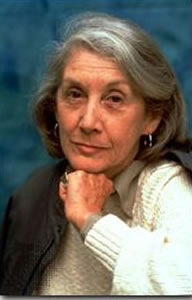
Geschreven door Romenu om 19:46 Reageer op dit bericht

Marianne Moore, Antoni Słonimski, Elizabeth Arthur, Carlo Emilio Gadda, Janus Secundus, Richmal Crompton, Emmy von Rhoden, Madeleine de Scudéry, José de Lizardi

De Amerikaanse dichteres Marianne Moore werd geboren op 15 november 1887 in Kirkwood, Missouri. Zie ook mijn blog van 15 november 2008 en ook mijn blog van 15 november 2009 en ook mijn blog van 15 november 2010.


Roses Only


You do not seem to realize that beauty is a liability rather

than

an asset - that in view of the fact that spirit creates form

we are justified in supposing

that you must have brains. For you, a symbol of the

unit, stiff and sharp,

conscious of surpassing by dint of native superiority and

liking for everything

self-dependent, anything an


ambitious civilization might produce: for you, unaided, to

attempt through sheer

reserve, to confuse presumptions resulting from

observation, is idle. You cannot make us

think you a delightful happen-so. But rose, if you are

brilliant, it

is not because your petals are the without-which-nothing

of pre-eminence. Would you not, minus

thorns, be a what-is-this, a mere

perculiarity? They are not proof against a worm, the

elements, or mildew;

but what about the predatory hand? What is brilliance

without co-ordination? Guarding the

infinitesimal pieces of your mind, compelling audience to

the remark that it is better to be forgotten than to be re-

membered too violently,

your thorns are the best part of you.


 1032489-01550674d88514cae211321527f3da8a.jpg

Marianne Moore (15 november 1887 – 5 februari 1972)


De Poolse dichter en schrijver Antoni Słonimski werd geboren op 15 november 1895 in Warschau. Zie ook mijn blog van 15 november 2009 en ook mijn blog van 15 november 2010.


Uit: On Jewish Sensivity (Vertaald door Mariusz Wesolowski)


“One of the cardinal and predominant characteristics of the Jewry is the contempt for the greatest achievements of the human spirit. The Jews disdain everything: they butcher the language they speak, they ignore the purity of speech, body and heart, while attaching an irrational value to money. "An important difference!" - one hears this silly phrase from every other Israelite in the street. To say "Rataj cigarettes" instead of "Seraj cigarettes" is a detail not worth the slightest attention. This disdain for language precipitates the disdain for literature. A realistically thinking merchant says to a non-realistically thinking salesman, "Go read Sienkiewicz!"

A similar attitude is also noticeable in the Polish society, but among the Jews it is significantly more pronounced. I doubt if one can find in any other milieu the type of a poet who does not believe in the existence of poetry and thinks that writing good poems is just a matter of flashy technique and conforming to current fashions. A certain young writer of this kind quite seriously asked me to tell him the secret of creating poems that would be easy to publish and which would be "much talked about later".

The Jewish indifference to physical insults - I have witnessed Jews in coffee shops slapping one another's faces and then resume their business without even getting up - is related to their contempt for physical labour. Hard manual work is good only for the "roughnecks". Physical laborers are almost non-existent among the Jews, because theirs is a non-productive nation, active by and large in commerce and middlemanship. Ninety per cent of the white-slave traffickers are Jewish. In reply to such accusations they typically state that it is the result of the conditions in which they are forced to live. Perhaps the Jews are oppressed and barred from many positions of employment but certainly not to such a degree that they would have to engage in white slavery.”


 1032489-60dddefbbd1aa107375a54353064052b.jpg

Antoni Słonimski (15 november 1895 – 4 juli 1976)


De Amerikaanse schrijfster Elizabeth Arthur werd geboren op 15 november 1953 in New York. Zie ook mijn blog van 15 november 2009 en ook mijn blog van 15 november 2010.


Uit: Bring Deeps


„I walked, and thought. Tried not to think of Bastian, although I thought of little else. Though I was angry, still, I longed for him, and wanted him beside me as I walked the streets of Kirkwall. I felt defenseless in the face of all these new impressions, which I drew in as if I were a sponge, attached to firth-bound rocks, and water-hungry. On doors and windows, I saw notices of funerals. And not just on the doors of flower shops, or undertakers, but on the windows of the grocers, bakers. On the same windows, there were notices of celebrations, revels; the daily paths of life announced the dying. I longed for Bastian to explain, to point things out, to bring me fully to this place he'd brought me. As he was not there in his body, I tried to think what he might say about these things. I thought of how the people whom Sebastian studied had had no fuels like coal and peat; in that way, too, their time was different. They had no written language, no notices announcing death, and as for fuel, just wood which drifted onto Orkney's shores, or oil derived from whales and seals and fishes. All surface things, however. Nothing to burn which came from down below them.

And what had that been like? To live upon an earth whose skin had never once been torn? Where only shallow plows had tickled it, and little spades had nudged it, to let it take into itself the seed of things to come? The world had been, I thought, quite like an infant child, kept dry by its earth swaddling cloths, and those who'd walked upon it had never dreamed that this would change, any more than they had dreamed that after they were gone there would be written language. Then everything had changed. Then bronze had come, not quite as strong as iron, but still drawn forth out of the body of the earth as copper. And no coincidence, perhaps, that as the bronze had come, the climate changed, and peace and plenty vanished. As people tried to move to better land, the people who lived already on that land built stone towers — brochs — to stand within and fight, and those stone brochs, signs of the age when neighbor had fought neighbor, still stood in many places in Orkney. All that because of changing winds, and bronze, torn out of secret places in the virgin body of the earth, just like the peat and coal that blew above me.“


 1032489-88e0f7c59aca4e2136e46508eda61dcf.jpg

Elizabeth Arthur (New York, 15 november 1953)


De Italiaanse schrijver Carlo Emilio Gadda werd geboren op 15 november 1893 in Milaan. Zie ook mijn blog van 15 november 2008 en ook mijn blog van 15 november 2009 en ook mijn blog van 15 november 2010.


Uit: That Awful Mess on the via Merulana (Vertaald door William Weaver)


„The tight garters, curled slightly at the edges, with a clear, lettuce-like curl: the elastic of lilac silk, in that hue that seemed in itself to give off a perfume, to signify at the same time the frail gentleness both of the woman and of her station, the spent elegance of her clothing, of her gestures, the secret manner of her submission, transmuted now into the immobility of an object, or as if of a disfigured dummy. Taut, the stockings, in a blond elegance like a new skin, given to her (above the created warmth) by the fable of our years, the blasphemy of the knitting machines: the stockings sheathed the shape of the legs with their light veil, modeling of the marvelous knees: those legs slightly spread, as if in horrible invitation. Oh! the eyes! where, at whom were they looking? The face! . . . Oh, it was scratched, poor object! Under one eye, on the nose! Oh that face! How weary it was, weary, poor Liliana, that head in the cloud of hair that enfolded it, those strands performing a final work of mercy. Sharpened in its pallor, the face: worn, emaciated by the atrocious suction of Death.

A deep, a terrible red cut opened her throat, fiercely. It had taken half the neck, from the front toward the right, that is, toward her left, the right for those who were looking down: jagged at its two edges, as if by a series of blows, of the blade or point: a horror! You couldn't stand to look at it. From it hung red strands, like thongs, from the black foam of the blood, almost clotted already; a mess! with some little bubbles still in the midst. Curious forms, to the policemen: they seemed holes, to the novice, like red-colored little maccheroni, or pink. "The trachea," murmured Ingravallo, bending down, "the carotid, the jugular! . . . God!"


1032489-245c39357ab3843996b7eb5f52724ff2.jpg
Carlo Emilio Gadda (15 november 1893 – 21 mei 1973)


De Nederlandse humanistische dichter Janus Secundus (eigenlijk Jan Everaerts) werd geboren in werd geboren in Den Haag op 15 november 1511. Zie ook mijn blog van 15 november 2009 en ook mijn blog van 15 november 2010.


Het II. kvsken

Bij Douza


Mocht ick (o liefsten) eens uw welgedrongen hals

In mijnen armen zulx bestricken,

Oft ghij mij met de uw zo nauw bekruypen, als

Men om den Elst het loof ziet quicken

Des wijngarts, oft de klijf wutwendich om zijn micken

Nieu wegen met zijn telgen sporen,

Zo wild' ick zonder rust, deed kuskens stadich slicken

Oick deur gheen lust van dranck oft koren,

Oft, dat de zoete vaeck ons d'oghen mocht bekoren,

Mij van uw keel niet laten rucken

Och oft mij Venus eens in dezen wou verhoren,

End ons zodaenen bandt mocht lucken,

Bandt, welck noch Hel, noch Doot konst ummer slaen in stucken

Maer kleevend' aen malcander zouwen,

Zulx als wij zyn gemaickt, een ewighe vreucht plucken,

End' onbeschreumt van Charons snauwen

Met d'algemeijne Schuijt ons over laten stauwen

De swarte Phlegetonsche Veeren.

Van waer wij wouden voorts de zalighe Landouwen

Des Elysijnsche Velts passeren.

Aldaer heur' oude liefd noch naer haer doot hanteren

De vorighe Amoreuze Hanßen

Elck met zyn bruijt gepairt; niet doende dan hoveeren,

Met zoenen, zinghen, ende danßen.


 1032489-af50c4ece77c54123c40d1b2db2d5970.jpg

Janus Secundus (15 november 1511 - 1536)


Zie voor onderstaande schrijvers ook mijn blog van 15 november 2010.


De Engelse schrijfster Richmal Crompton Lamburn werd geboren op 15 november 1890 in Lancashire. Zie ook mijn blog van 15 november 2008.


De Duitse schrijfster Emmy von Rhoden (eig. Emilie Auguste Karoline Henriette Friedrich geb. Kühne)  werd geboren op 15 november 1829 in Magdeburg. Zie ook mijn blog van 15 november 2009.


De Franse schrijfster Madeleine de Scudéry werd geboren op 15 november 1607 in Le Havre. Zie ook mijn blog van 15 november 2008 en ook mijn blog van 15 november 2009.


De Mexicaanse dichter en schrijver José Joaquín Fernández de Lizardi werd geboren in Mexico-stad op 15 november 1776. Zie ook mijn blog van 15 november 2008.

Geschreven door Romenu om 19:33 Reageer op dit bericht

Astrid Lindgren, P.J. O'Rourke, Jonathan van het Reve, Karla Schneider, Jurga Ivanauskaitė

De Zweedse schrijfster Astrid Lindgren werd als Astrid Ericsson geboren op 14 november 1907 en groeide op op de boerderij Näs in Vimmerby in Småland. Zie ook alle tags voor Astrid Lindgren op dit blog.


Uit: Pippi Langstrumpf (Vertaald door Cäcilie Heinig)


„Am Rand der kleinen, kleinen Stadt lag ein alter verwahrloster Garten. In dem Garten stand ein altes Haus und in dem Haus wohnte Pippi Langstrumpf. Sie war neun Jahre alt und sie wohnte ganz allein dort. Sie hatte keine Mama und keinen Papa, und eigentlich war das sehr schön, denn so gab es niemanden, der ihr sagen konnte, dass sie schlafen gehen sollte, wenn sie gerade mitten im schönsten Spiel war, und niemand, der sie zwingen konnte, Lebertran zu nehmen, wenn sie lieber Bonbons essen wollte.

Prinzessin Pippi Früher hatte Pippi mal einen Papa gehabt, den sie schrecklich lieb hatte. Ja, sie hatte natürlich auch eine Mama gehabt, aber das war so lange her, dass sie sich gar nicht mehr daran erinnern konnte. Die Mama war gestorben, als Pippi noch ein ganz kleines Ding war, das in der Wiege lag und so furchtbar schrie, dass es niemand in ihrer Nähe aushalten konnte. Pippi glaubte, dass ihre Mama nun oben im Himmel war und durch ein kleines Loch auf ihr Mädchen runterguckte, und Pippi winkte oft zu ihr hinauf und sagte:

"Hab keine Angst um mich! Ich komm immer zurecht!"

Ihren Papa hatte Pippi nicht vergessen. Er war Kapitän und segelte über die großen Meere, und Pippi war mit ihm auf seinem Schiff gesegelt, bis er einmal bei einem Sturm ins Meer geweht worden und verschwunden war. Aber Pippi war ganz sicher, dass er eines Tages zurückkommen würde. Sie glaubte überhaupt nicht, dass er ertrunken sein könnte. Sie glaubte, dass er auf einer Insel an Land geschwemmt worden war, wo viele Eingeborene wohnten, und dass ihr Papa König über alle Eingeborene geworden war und jeden Tag eine goldene Krone auf dem Kopf trug.“


 1031807-e0b39d51ad109f08cfb4e7e55027f260.jpg

Astrid Lindgren (14 november 1907 -  28 januari 2002)

Standbeeld in Stockholm


De Amerikaanse journalist en schrijver P.J. O'Rourke werd geboren op 14 november 1947 in Toledo, Ohio. Zie ook alle tags voor P.J. O'Rourke op dit blog.

Uit: Parliament of Whores


„What is this oozing behemoth, this fibrous tumor, this monster of power and expense hatched from the simple human desire for civic order? How did an allegedly free people spawn a vast, rampant cuttlefish of dominion with its tentacles in every orifice of the body politic?
The federal government of the United States of America takes away between a fifth and a quarter of all our money every year. That is eight times the Islamic zakat, the almsgiving required of believers by the Koran; it is double the tithe of the medieval church and twice the royal tribute that the prophet Samuel warned the Israelites against when they wanted him to anoint a ruler:
This will be the manner of the king that shall reign over you. . . . He will take the tenth of your seed, and of your vineyards. . . . He will take the tenth of your sheep. . . . And ye shall cry out in that day because of your king. . ..
Our government gets more than thugs in a protection racket demand, more even than discarded first wives of famous rich men receive in divorce court. Then this government, swollen and arrogant with pelf, goes butting into our business. It checks the amount of tropical oils in our snack foods, tells us what kind of gasoline we can buy for our cars and how fast we can drive them, bosses us around about retirement, education and what’s on TV; counts our noses and asks fresh questions about who’s still living at home and how many bathrooms we have; decides whether the door to our office or shop should have steps or a wheelchair ramp; decrees the gender and complexion of the people to be hired there; lectures us on safe sex; dictates what we can sniff, smoke and swallow; and waylays young men, ships them to distant places and tells them to shoot people they don’t even know.
The government is huge, stupid, greedy and makes nosy, officious and dangerous intrusions into the smallest corners of life—this much we can stand. But the real problem is that government is boring. We could cure or mitigate the other ills Washington visits on us if we could only bring ourselves to pay attention to Washington itself. But we cannot.“


 1031807-8850856c014ea13e59f1173c3aab7ff0.jpg

P.J. O'Rourke (Toledo, Ohio,  14 november 1947)


De Nederlandse schrijver en columnist Jonathan van het Reve werd geboren op 14 november 1983 in Amsterdam. Zie ook mijn blog van 14 november 2008 en ook mijn blog van 14 november 2009 en ook mijn blog van 14 november 2010.


Uit: De boot en het meisje


“We gaan aan tafel zitten. Ik pak de wijn en maak hem open, terwijl Rosa de coquilles bakt.
'Kan ik je ergens mee helpen?' roept Bart.
'Ja, eigenlijk wel, heel graag.' roept Rosa uit de keuken.
Bart staat op en laat mij alleen met Rachel.
Ze kijkt ietsje minder bang dan daarnet, maar helemaal op haar gemak lijkt ze nog niet.
'Lekkere wijn,' zegt ze.
'Ja,' zeg ik. Ik draai een beetje met mijn glas. 'Hij ruikt naar noten, vind je niet?'
'O, ik heb echt totaal geen verstand van wijn hoor! Ik vind hem gewoon lekker smaken. Ik zou echt niet weten wat voor wijn dit is.' Ze kijkt naar het etiket. 'Ik koop normaal altijd wijn in de supermarkt, en dan weet ik nog niet wat ik moet kopen. Ik ken ook geen namen van wijnen. Maar ik weet wel wat ik lekker vind.'
'Wat dan?'
'Nou, dit dus. Maar ik haat Chardonnay. Chileense wijn vind ik wel lekker.'
'O ja. Ik weet er ook niet zo veel van, hoor.' Ik neem een slokje. 'Wat doe je eigenlijk?'
'Rietveld, laatste jaar.'
'Wat voor richting?'
'Voorheen Audio-Visueel.'
'Gekke naam is dat toch. Wanneer is de eindtentoonstelling?'
'Volgende maand al.' Haar ogen worden groot. 'Echt stressen nog. Ik moet nog heel veel monteren.'
'Wat voor filmpje heb je gemaakt?'
'Ja, het is een beetje raar hoor, maar het gaat over imperialisme, of misschien wel over heel veel dingen. Het komt erop neer dat ik een stuk steen van het Colosseum in Rome meeneem naar Madison Square Garden in New York. Daarom waren wij daar ook. Om aan te geven dat de Amerikanen een beetje de Romeinen van deze tijd zijn. Qua politiek dan. En hoe ze hun cultuur opdringen aan de rest van de wereld.'
'Hoe heet het?'
'Romans through the time. A rock's quest of entertainment now and then.' “


 1031807-97241b2f5cd7ed24e7c925ea673cdcd7.jpg

Jonathan van het Reve (Amsterdam, 14 november 1983)


De Duitse schrijfster Karla Schneider werd op 14 november 1938 geboren in Dresden. Zie ook mijn blog van 14 november 2008 en ook mijn blog van 14 november 2009 en ook mijn blog van 14 november 2010.


Uit: Glückskind


„Mitten in der Rechenstunde klopfte es an die Tür der Klasse 4a.

Voller Freude über die Unterbrechung legten alle Schüler und Schülerinnen ihre Füller hin. Nur Frau

Spalteholz, die Lehrerin, war nicht begeistert. Sie hasste Unterbrechungen. Hinterher hatten die

Schüler immer alles vergessen, was sie ihnen vor der Unterbrechung erklärt hatte.

Die Tür wurde schwungvoll aufgerissen und über die Schwelle trat der Direktor. In seiner Begleitung

befand sich eine Frau. Sie war nicht mehr jung, aber auch nicht direkt alt. Ihr Rock fegte den Boden.

Ihre Haare hingen offen bis zum Gürtel und waren blond mit schon vielen grauen Strähnen. Ein bisschen sah sie aus wie eine Fee. Aber auch ein bisschen wie eine Hexe.

»Darf ich euch Frau Fortuna vorstellen«, sagte der Direktor. »Sie hat sich eure Klasse ausgesucht,

umeine kleine Befragung durchzuführen. Ich hoffe, ihr gebt Frau Fortuna auf ihre Fragen klare und

deutliche Antworten.«

»Und ich hoffe, es wird nicht allzu lange dauern«, fügte Frau Spalteholz hinzu. »Die Klasse kann

es sich nicht erlauben, eine Mathestunde einzubüßen.« Dann zog sie sich ans Fenster zurück und verschränkte die Arme zu einer Brezel.“


 1031807-4a0b093ea9706c7a4c69cc18de65eb90.jpg

Karla Schneider (Dresden, 14 november 1938)

Dresden bij avond 


De Litouwse schrijfster Jurga Ivanauskaitė werd geboren in Vilnius op 14 november 1961. Zie ook mijn blog van 14 november 2008 en ook mijn blog van 14 november 2009 en ook mijn blog van 14 november 2010.


Uit: The Red Dress (Vertaald door Kristina Sakalavičiūtė)


„This is how Nora fell into the classical situation of Cinderella. Many stars of the stage, according to theater critics, got their start this way. Needless to say, Nora was anxious and paced back and forth in Elegija's dressing room. She walked up to the window many times and looked out into the yard, where children were noisily chasing a bright-red ball through yellow leaves. Snapping her fingers rhythmically, she would then go back to the closet, where the dress hung on a door handle, and caress it with the palm of her hand before returning to the window.

Eventually, Nora sat down in the swivel chair, upholstered in yellow plush. She looked around to see if anyone was watching and began to rummage through Elegija's dressing table drawers. She took out the Salome script; it was stained with something red. Sniffing it, Nora decided against it being wine. She thumbed through the pages, of which several had cigarette burns. Elegija's comments, question marks and exclamation points, made with felt markers of varying colors, filled the text. In the other drawer, Nora found a small book covered in newspaper. She opened it to where a candy wrapper marked the page and read aloud, unconsciously imitating Elegija's intonations, a paragraph underlined in red pencil:

—"I am the Alpha and the Omega, the very first and the very last, the beginning and the end. Blessed are those who wash their clothes in the Blood of the Lamb to gain power from the tree of life and pass through the gates into the city. Outside there are scoundrels, sorcerers, shameless cretins, murderers, idolaters and all who love and live by lies..."

She closed the book, irritated and dissatisfied because the underlined phrase was full of meaning, but just as equally senseless. Even though Nora had secretly expected the book to explain the mystery of Elegija's disappearance, it was no help at all. She opened another drawer and smiled, catching herself looking for one more clue to Elegija's disappearance. In the drawer was a desiccated plant with a note tied to it with a red ribbon. Nora, of course, read it: "To Elegija—the Touch-Me-Not (cf. The Soviet Lithuanian Encyclopedia)—from the 21st Graduating Class of the Donelaitis School." In the same drawer, several tubes of lipstick rolled about and Nora painted her lips with one of them. She looked at the mirror, first puckering her lips, then stretching them wide, and finally smiling. At last she frowned because the color was so unbearably bloody. She darted a glance at the dress and realized at once that the lipstick was the same color and Elegija had bought it especially for the performance.“


 1031807-83152b5631ff8eae4f9c33027b1984e1.jpg

Jurga Ivanauskaitė (14 november 1961 - 17 februari 2007)


Zie voor nog meer schrijvers van de 14e november ook mijn vorige blog van vandaag.
Geschreven door Romenu om 18:23 Reageer op dit bericht

Fondane Benjamin, Eric Malpass, Taha Hussein, Aleardo Aleardi, Adam Oehlenschläger, Herbert Zand, Jakob Schaffner

De Roemeens-Franse dichter, toneelschrijver, literair criticus, regisseur en vertaler Fondane Benjamin (eig. Benjamin Wechsler) werd geboren op 14 november 1898 in Iaşi. Zie ook mijn blog van 14 november 2010.


Préface en prose (Fragment)


C’est à vous que je parle, homme des antipodes,

Je parle d’homme à homme,

avec le peu en moi qui demeure de l’homme

avec le peu de voix qui me reste au gosier,

mon sang est sur les routes, puisse-t-il, puisse-t-il

ne pas crier vengeance !

L’hallali est donné, les bêtes sont traquées,

laissez-moi vous parler avec ces mêmes mots

que nous eûmes en partage –

il reste peu d’intelligibles !


Un jour viendra, c’est sûr, de la soif apaisée,

nous serons au-delà du souvenir, la mort

aura parachevé les travaux de la haine,

je serai un bouquet d’orties sous vos pieds,

- alors eh bien sachez que j’avais un visage

comme vous. Une bouche qui priait, comme vous.


Quand une poussière entrait, ou bien un songe,

dans l’oeil, cet oeil pleurait un peu de sel. Et quand

une épine mauvaise égratignait ma peau,

il y coulait un sang aussi rouge que le vôtre !

Certes, tout comme vous j’étais cruel, j’avais

soif de tendresse, de puissance, d’or, de plaisir, de

douleur.

Tout comme vous j’étais méchant et angoissé

solide dans la paix, ivre dans la victoire,

et titubant, hagard, à l’heure de l’échec !


Oui, j’ai été un homme comme les autres hommes,

nourri de pain, de rêve, de désespoir. Eh oui, j’ai

aimé, j’ai pleuré, j’ai haï, j’ai souffert,

j’ai acheté des fleurs et je n’ai pas toujours

payé mon terme. Le dimanche j’allais à la

campagne pêcher, sous l’oeil de Dieu, des poissons

irréels,

je me baignais dans la rivière

qui chantait dans les joncs et je mangeais des frites

le soir. Après, après, je rentrais me coucher

fatigué, le coeur las et plein de solitude,

le coeur plein de pitié pour moi,

plein de pitié pour l’homme,

cherchant, cherchant en vain sur un ventre de

femme cette paix impossible que nous avions

perdue naguère, dans un grand verger où fleurissait

au centre, l’arbre de la vie …


1031803-013bcee73fbc2afad67c4ea2578d6973.jpg
Fondane Benjamin (14 november 1898 - 2e of 03 oktober 1944)

Portret door Victor Brauner


De Engelse schrijver Eric Lawson Malpass werd geboren op 14 november 1910 in Derby. Zie ook mijn blog van 14 november 2010.


Uit: Morgens um sieben ist die Welt noch in Ordnung (Vertaald door Brigitte Roeseler)


„Morgendämmerung und ein Himmel wie kalter Haferbrei. In den Winkeln des Daches noch

ein paar Flecken nassen Schnees.

In dem großen, weitläufigen Haus lag die Familie im sonntagmorgendlichen Winterschlaf,

eingekuschelt gegen die Kälte und den kommenden Tag.

Aber Gaylord war gegen Kälte unempfindlich. Der junge Gaylord Pentecost war gegen die

meisten Dinge unempfindlich. Gleich nach dem Aufwachen hopste er erst mal ein bisschen auf

dem Bett herum. Als ihm das langweilig wurde, zog er die Schlafanzughose auf seine nicht vorhandene Taille herauf und machte sich auf eine Besuchstour durch das Haus.

Zuerst war Opa an der Reihe. In seinem Zimmer war es noch dunkel. Gaylord zog die Vorhänge

auf. Die Vorhänge hingen an Messingringen. Wenn andere sie zurückzogen, klapperten

sie wie Kastagnetten. Wenn Gaylord sie zurückzog, klang es wie eine Maschinengewehrsalve.

Opa öffnete nicht einmal die Augen. «Verschwinde, zum Teufel noch einmal», sagte er.

Opa wirkte unter der Bettdecke wie ein massiver, kleiner runder Berg. Gaylord nahm einen

Anlauf und landete mitten auf dem Berg. «Ich bin ein Ritter», schrie er. «Und du bist mein

Schlachtross.»

«Ich bin kein Schlachtross», sagte Opa. «Ich bin ein alter Mann, der seine Ruhe haben will.

Herrgott nochmal.»

Neugierig berührte Gaylord mit dem Finger eins der faltigen Augenlider. Er schob das Lid

nach oben und betrachtete nachdenklich das gelbe, Unheil verkündende Auge. Er ließ das

Lid wieder herunterklappen. «Soll ich dir eine Tasse Tee machen?»

«Wenn du recht lange dazu brauchst, ja»,

sagte Opa. Gaylord kletterte von ihm herunter.

«Geht wie der Blitz», antwortete er vergnügt.

«Bitte, lass dir Zeit», sagte Opa.

Gaylord spazierte weiter zu Großtante Marigold.

«Willst du eine Tasse Tee haben?», schrie er von der Tür her.“


 1031803-4a3f1d53818abb43f0284366122a64b3.jpg

Eric Malpass (14 november 1910 - 16 oktober 1996)


De Egyptische schrijver Taha Hussein werd geboren in Al Minya in Egypte op 14 november 1889. Zie ook alle tags voor Taha Hussein op dit blog.


Uit: The Days


“From that day our lad's outlook on life was completely changed. He really knew God and was at great pains to draw near to Him by every possible means, from alms-giving to earnest prayer and the recitation of the Qur'an... From that day the lad knew what night vigils were, for many a time he would spend the dark hours of a whole night, either thinking about his brother or reciting Surat al-Ikhlas [chapter of Qur'an] thousands of times.

(…)


They start the Zikr sitting in silence. Then they begin to move their heads and raise their voices a little. Then a shudder runs through their bodies and lo! they are all standing, having leapt into the air like jacks-in-the-boxes. . The sheikhs move about the circle, reciting the poetry of Ibn Farid and similar poems.”

(…)


Now the connection of the family with one of the Sufi sects was strong and lasting. It left among them many lasting traces in the way of information, stories and talk about miracles and supernatural events.”


1031803-003bfb487867ab63504c559124d57ebd.jpg
Taha Hussein (14 november 1889 – 28 oktober 1973)


De Italiaanse dichter Aleardo Aleardi werd geboren op 14 november 1812 in Verona. Zie ook alle tags voor Aleardo Aleardi op dit blog.


Cowards


In the deep circle of Siddim hast thou seen,
Under the shining skies of Palestine,
The sinister glitter of the Lake of Asphalt?
Those coasts, strewn thick with ashes of damnation,
Forever foe to every living thing,
Where rings the cry of the lost wandering bird
That on the shore of the perfidious sea
Athirsting dies,--that watery sepulchre
Of the five cities of iniquity,
Where even the tempest, when its clouds hang low,
Passes in silence, and the lightning dies,--
If thou hast seen them, bitterly hath been
Thy heart wrung with the misery and despair
Of that dread vision!
                      Yet there is on earth
A woe more desperate and miserable,--
A spectacle wherein the wrath of God
Avenges Him more terribly. It is
A vain, weak people of faint-heart old men,
That, for three hundred years of dull repose,
Has lain perpetual dreamer, folded in
The ragged purple of its ancestors,
Stretching its limbs wide in its country's sun,
To warm them; drinking the soft airs of autumn
Forgetful, on the fields where its forefathers
Like lions fought! From overflowing hands,
Strew we with hellebore and poppies thick
The way.


 1031803-27072218ce5d82c37136ebdbb0e1cb6e.jpg

Aleardo Aleardi (14 november 1812 – 17 juli 1878)

Standbeeld in Verona 


De Deense dichter en schrijver Adam Gottlob Oehlenschläger werd geboren op 14 november 1779 in Vesterbro, Kopenhagen. Zie ook mijn blog van 14 november 2009 en ook mijn blog van 14 november 2010.


Christ's Birth


Each year when vapours melt and wane,

Child Jesus Christ is born again;

The Angel in air, in grove, in sea.

It is the Saviour, it is He.

Wherefore all Nature, with serene

Rejoicing, buds in hopeful green.


Now the young stainless shepherd lads.

Watching the stars' high myriads,

See God's angels in fields of night

Assemble, trembling in cool moonlight.

"To-day a Saviour is born," they sing,

"From gentle Mary's womb, from spring.


"His only drink is the earliest dew.

His eyes gaze heavenward into the blue,

His hands reach heavenward; they are bound

With garlands of roses to the ground.

His cry is the breeze, in the straw he lies,

Blue heaven mirrored in his eyes.


"Ah shepherds, go to Bethlehem;

Seek the cold-hearted, counsel them

To go into the fields, and find

The laughing Child, green grass-entwined,

And hear his voice, and see his smile.

That heaven may lift the earth awhile."


The hovering angels reascend.

To Bethlehem the shepherds wend.

And tell their happy news, but they

Are scorned, and mocked, and turned away

Back to the meadows, where the sod

Blooms with the new-born Child of God.


The stars stretch forth their silver hands

And beckon the kings of the eastern lands ;

The rays come singing with holy sound

And humbly sink to the living ground.

Praising the Lord made manifest.

Who smiles from the Mother's lovely breast.


They rise again from the darkened mould

In petals of purple, crimson, and gold,

Innocent children, devout and fair.

Half-lifted, half-bent to the earth in prayer,

Holding their yellow urns astir

With the sweetness of frankincense and myrrh.


 1031803-ef5b4abd7cc331161698d8e9ec219a5e.jpg

Adam Oehlenschläger (14 november 1779 – 20 januari 1850)


Zie voor onderstaande schrijvers ook mijn blog van 14 november 2010.


De Oostenrijkse dichter, schrijver, essayist en vertaler Herbert Zand werd geboren op 14 november 1923 in Knoppen. Zie ook mijn blog van 14 november 2008.


De Zwitserse schrijver Jakob Schaffner werd geboren op 14 november 1875 in Basel. Zie ook mijn blog van 14 november 2008.

Geschreven door Romenu om 18:14 Reageer op dit bericht

Chloe Aridjis

De Engels-Mexicaanse schrijfster Chloe Aridjis werd geboren in New York op 14 november 1971. Zij groeide op in Mexico City en Nederland, waar haar vader werkzaam was als ambassadeur van Mexico. Aridjis studeerde vergelijkende literatuurwetenschap aan Harvard en promoveerde aan de Universiteit van Oxford. Haar boek essays over magie en poëzie in negentiende-eeuws Frankrijk werd uitgebracht in 2005. Ze publiceerde in tijdschriften en kranten in Engeland en Mexico en woont na vijf jaar in Berlijn momenteel in Londen, waar ze werkt aan een roman en een verhalenbundel. Haar eerste roman "Book of Clouds" werd gepubliceerd in 2009. In november 2009 won haar Book of Clouds de Prix du Premier Roman Etranger in Frankrijk.


Uit: Book of Clouds


„I saw Hitler at a time when the Reichstag was little more than a burnt, skeletal silhouette of its former self and the Brandenburg Gate obstructed passage rather than granted it. It was an evening when the moral remains of the city bobbed up to the surface and floated like driftwood before sinking back down to the seabed to further splinter and rot.

 Berlin was the last stop on our European tour — we'd worked our way up from Spain, through France, Belgium and the Netherlands — and soon we would be flying home, back across the Atlantic, to start the new school year. My two brothers, still thrumming with energy, lamented that we had to leave. In every town and city they'd wandered off into the night and not returned until breakfast, answering in cranky monosyllables, between sips of coffee, whenever anyone commented on the amount of money being wasted on hotel rooms. My two sisters, on the other hand, weighed down by stories and souvenirs, were desperate to unload, and my parents too felt weary and ready for home. Not to mention that we'd used up 60 percent of the money we'd just inherited from my grandfather, and the remaining 40 had allegedly been set aside for our ever-expanding deli.

 On our final evening, after an early dinner, our parents announced they were taking us to a demonstration against the Berlin Wall to protest twenty-five years of this "icon of the Cold War." Wherever you went in Berlin, sooner or later you would run into it, even on the day we visited Hansa Studios where Nick Cave and Depeche Mode used to record, or the secondhand shop that sold clothes by the kilo. No matter where you went — east, west, north, south — before long you hit against the intractable curtain of cement and were able to go no further. That was our impression, anyway, so we figured that we too might as well protest against this seemingly endless structure that limited even our movement, though we were just seven tourists visiting the city for the first time.“


 1114687-065367745196f1f5b2778025e99cd880.jpg

Chloe Aridjis (New York, 14 november 1971)
Geschreven door Romenu om 00:00 Reageer op dit bericht

José Carlos Somoza, Peter Härtling, Inez van Dullemen, Timo Berger, Hadjar Benmiloud

De Spaanse schrijver José Carlos Somoza werd geboren in Havana, Cuba op 13 november 1959. Zie ook alle tags voor José Carlos Somoza op dit blog.


Uit: The Athenian Murders (Vertaald door Sonia Soto)


"Your report, Physician?"

The doctor, Aschilos, took his time to answer, not even looking up at the captain. He disliked being addressed as "Physician," even more when the speaker seemed contemptuous of every man save himself. Aschilos might not be a soldier, but he came from an old aristocratic family and had had a most refined education: He was conversant with The Aphorisms, observed the Hippocratic oath, and had spent long periods on the island of Cos, studying the sacred art of the Asclepiads, disciples and heirs of Asclepius. He was not, therefore, someone a captain of the border guard could easily humiliate. And he already felt insulted: He had been awakened by soldiers in the dark hours of the early morning and called to examine, in the middle of the street, the corpse of the young man brought down on a litter from Mount Lycabettus. And he was no doubt expected to draw up some kind of report. But as everyone well knew, he, Aschilos, was a doctor of the living, not the dead, and he believed that this shameful task discredited his profession. He lifted his hands from the mangled body, trailing a mane of bloody humors. His slave hurriedly cleansed them with a cloth moistened with lustral water. He cleared his throat twice and said, "I believe he was attacked by a hungry pack of wolves. He's been bitten and mauled . . . The heart is missing. Torn out. The cavity of the hot fluids is partially empty."

The murmur, with its long mane, ran through the crowd.

"You heard him, Hemodorus," one man whispered to another. "Wolves."

"Something must be done," his companion replied. "We will discuss the matter at the Assembly."

"His mother has been informed the captain announced, the firmness of his voice extinguishing all comments. "I spared her the details; she knows only that her son is dead. And she is not to see the body until Daminus of Clazobion arrives. He is the only man left in the family, and he will determine what is to be done." Legs apart, fists resting on the skirt of his uniform, he had a powerful voice, accustomed to imposing obedience. He appeared to address his men, but also evidently enjoyed having the attention of the common people. "As for us, our work here is done!"

He turned to the crowd of civilians and added, "Citizens, return to your homes! There is nothing more to see! Sleep if you can . . . Part of the night remains!"


 1031197-4680841f380d2cb5a0e402914075473c.jpg

José Carlos Somoza (Havana, 13 november 1959)


De Duitse dichter en schrijver Peter Härtling is geboren op 13 november 1933 in Chemnitz. Zie ook alle tags voor Peter Härtling op dit blog.


Ein Balkon aus Papier


Ein Balkon aus Papier,

handtellergroß,

für jeden Morgen.

Das ist kein Kinderspeil.

Diese ein wenig

fahrige Mühe,

den Tag zu gewinnen,

dem ersten Satz zu trauen,

ohne ich auzusprechen,

Sonnenflecken zu zählen,

den Atem zu hören,

und den Eauch der Zigarette

gegen die offene Hand

zu blasen.

Jeder Morgen

Könnte mir fehlen.


Christian Wagner in seinem Haus


Die Stube geweißnet,
die Sätze ausgeschickt, alle,
die Geiß gemolken,
den Himmel übers Haus gespannt,


jetzt
kann er die Antworten
einsammeln
und unter die Türschwelle
legen:
Ihr seid alle
willkommen.


Windgedicht


Ein Pubs
ist ein Wind,
mein Kind,
der schwer aus dem Bauche find'
und darum
knallt oder knattert -
was alle andern verdattert.


1031197-486684df8d0686ebfee96e0581b2e329.jpg
Peter Härtling (Chemnitz, 13 november 1933)


De Nederlandse schrijfster 
Inez van Dullemen werd op 13 november 1925 in Amsterdam geboren. Zie ook alle tags voor Inez van Dullemen op dit blog.


Uit: Het land van rood en zwart.


‘ ‘We moeten slapen, Kayum.’ ‘Ja.’ ‘Wat heb je daar?’ ‘De bijbel.’ ‘Wat moet je daarmee?’ Kayum ging overeind zitten, sloeg het boek open en tikte met zijn wijsvinger op een opengeslagen pagina: ‘Ik ken nu de waarheid. Die lees ik in dit boek...’ ‘En wat mag die waarheid dan wel zijn?’ vroeg ze. ‘Als mijn vader ziek is en copal brandt voor K'ák, de god van vuur en koorts, dan wordt hij niet beter, maar als ik bid tot Jesucristo dan word ik beter. Jesucristo houdt van mij.’ In de plechtstatige klank van zijn stem herkende zij die van de protestantse missionaris die de Lacandones van Lacanjá gekerstend had zodat deze nu om strijd een transistorradiootje aan hun oor klemden om toch maar het toverwoord  Jesucristo op te kunnen vangen te midden van die brij van vreemde woorden uit onbekende plaatsen buiten hun oerwoud. Jesucristo, Jesucristo, hij komt, komt... alsof zij een kosmonaut van een verre planeet verwachtten die hun maïs, bonen, eeuwigdurende gezondheid, munitie en lekkernijen zou brengen, en ja, bij voorkeur ook nog een truck... Maar wat voor zin zou het hebben met Kayum in discussie te gaan? ‘Kom, wij moeten slapen.’ ’


 1031197-002f427984f332323c680e888d6bd90a.jpg

Inez van Dullemen (Amsterdam, 13 november 1925)


DeDuitsedichter,schrijverenvertalerTimo Berger werdgeborenop 13 november1974in Stuttgart. Zie ook mijn blog van 13 november 2010.


Botanischer Garten


Kein Papageiengespött, kein nackter

Wilder, die ersten Bilder von der Stadt

am Januarfluss stellen sich mit leichtem

Rotstich ein: Giselle und ihre Auto


Liebe: ein landeifarbener Käfer trägt

die Nouvelle Vague heiser schnurrend

durch die Kurven: in dieses Gefährt

macht mir kein Taxi-Boy Flecken


Gegen den Rückspiegel klatscht Elvis

The King, aus Hartgummi, ein Sex

Versprechen, während sich hinter uns

eine weiß gelackte Schranke senkt


Der erste Sicherheitsring, wir leben

sagt Giselle, auf der Habenseite

der Stadt, die unten in den Tälern

jede Nacht die Nacht überfällt


Naherholung


Lagune. Der lange Lauf zur Schönheit

der Jogger am Ufer


Saum sonntags. Der einstudierte Hüftschwung

im Aerobic-Areal. Hula-Hoop


An der Salzwasserscheide. Männer mit nackten Brüsten

und ausgeworfenen Netzen


Mützen von Hering. Man fischt für den Stadtteil-Grill

oder die Polaroids der Greencard-Gringos


 1031197-7b45c5f81e1a009cf9256ce22e45c9ce.jpg

Timo Berger (Stuttgart, 13 november 1974)


De Nederlandse schrijfster, columniste en radiopresentatrice Hadjar Benmiloud werd geboren in Amsterdam op 13 november 1989. Zie ook mijn blog van 13 november 2010.


Uit: Nepmamma


„Sinds kort is mijn fiets uitgerust met eenkinderzitje. Niet omdat ik tienermoeder ben geworden, maar omdat er delaatste tijd zo onwaarschijnlijk veel fietsen van me zijn gejat, dat ikhet nut van peperdure hangsloten niet meer inzie. Nu woon ik in hetpauperige Amsterdam Oost, en dan ook nog recht tegenover het Leger desHeils, dus op een beetje fietsendiefstal was ik wel voorbereid. Maardat ik bijna vaker de deur uit moest voor een nieuwe tweewieler danvoor voedsel, werd toch behoorlijk irritant. Vandaar het kinderzitjedus, een fraai exemplaar met olifantjes, dat ik op advies van eenvindingrijke vriendin op mijn bagagedrager schroefde.
Misschien hebben junks kleinere hartjes dan gedacht envinden ze het zielig als moeders hun kinderen niet naar school kunnenbrengen. Waarschijnlijker is dat ze simpelweg geen brood (of crack)zien in fietsen met kinderzitjes, omdat hun klantenkring voornamelijkuit studenten bestaat. De aanpak lijkt hoe dan ook te werken: ik rijdal weken op dezelfde fiets. Maar niet alleen is het vrolijke stoeltjeboefafstotend, het komt ook praktisch goed van pas. Zo hoef ik nu nooitmeer mijn longen uit mijn lijf te trappen met een luie donder achterop,want de gemiddelde bilomvang van mijn vrienden is minstens twéékinderzitjes.“


 1031197-57a0bff0154e129b3b10db3090271eaf.jpg

Hadjar Benmiloud (Amsterdam, 13 november 1989)


Zie voor nog meer schrijvers van de 13e november ook mijn vorige blog van vandaag en eveneens mijn eerste blog van vandaag.

Geschreven door Romenu om 19:26 Reageer op dit bericht

Nico Scheepmaker, Stanisław Barańczak, Humayun Ahmed, Dacia Maraini

De Nederlandse dichter, journalist en columnist Nico Scheepmakerwerd geboren in Amsterdam op 13 november 1930. Zie ook alle tags voor Nico Scheepmaker op dit blog.


Dommepraat


Ik lees nog wel zo lief een detective
als de memoires van Nadjezda Mandelstam.
Een mens wordt wel eens moe van het gedram
waarmee zo’n boek de mensheid wil gerieven.

En dat geldt idem dito voor de beelden
waarmee de televisie ons ontwricht.
Met uppercuts slaat zij de ogen dicht
van wie zich bij Mies Bouwman niet verveelden.

Natuurlijk is dit dommepraat. En rechts.
Ik ben het ook oneens met wat hier staat
zolang het om het een óf ander gaat.

Het werkelijke leven ken je slechts
als je behalve Mandelstams memoires
ook onderkent dat Pietje Keizer waar is.


Een blijvertje


Het feit dat ik in Holland ben geboren,
en bovendien precies in Amsterdam,
bewijst toch wel dat ik ben uitverkoren:
ik kreeg de hamvraag en ik won de ham.

Een ander wordt geboren in Vietnam
of raakt bij voorbaat in Algiers verloren,
maar ik, die zo terloops ter wereld kwam,
mag rustig tot de blijvertjes behoren.

En ook het tijdstip was perfect gekozen:
te jong voor crisis, oorlog en verzet.
Wat dat betreft zat ik dus ook op rozen,
want niemand gaf mij later een brevet
van onvermogen in het goede of boze.

Mijn leven is een aangenaam verpozen,
een ander krijgt de schillen en de dozen.


 1031191-3b1348a7dbd736f60105186daa988d22.jpg

Nico Scheepmaker (13 november 1930 - 5 april 1990)


De Poolse dichter, vertaler en literatuurwetenschapper Stanisław Barańczak werd geboren op 13 november 1946 in Poznań. Zie ook mijn blog van 13 november 2008 en ook mijn blog van 13 november 2009 en ook mijn blog van 13 november 2010.


Uit: Garden Of Amzing Delights (Bespreking van Unattainable Earth van Czeslaw Milosz.)


„On the other hand, Mr. Milosz's certainty that the earth is something real and tangible is coupled with his incessant awareness that the earth is ''unattainable,'' ''too huge to be grasped.'' We humans have our share in it, but we are separated from its essence by the dim screens of our imperfect senses, our fallible memory, our limited language: Consciousness enclosed in itself every separate birch And the woods of New Hampshire, covered in May with green haze. The faces of people are in it without number, the courses Of planets, and things past and a portent of the future. Then one should extract from it what one can, slowly, Not trusting anybody. And it won't be much, for language is weak. Even what is enclosed in our consciousness can be only partly expressed, since our human consciousness is ''weak'' and limited itself. We are able to perceive solely the external surface of things, and we only vaguely sense the existence of its ''other side'': Fat and lean, old and young, male and female, Carrying bags and valises, they defile in the corridors of an airport. And suddenly I feel it is impossible. It is the reverse side of a Gobelin And behind there is the other which explains everything.

Here we encounter the metaphysical and religious poet, one who is able to note down, apparently with an approving nod, this statement from the philosopher Rene Le Senne: ''For me the principal proof of the existence of God is the joy I experience any time I think that God is.'' But Mr. Milosz is also able to record this thought: ''A decent man cannot believe that a good God wanted such a world.'' That is because the world - both the world of nature and the world of human history - is tainted by the constant presence of evil. In other words, the earth is unattainable to our imperfect senses, intellect or language; it is unattainable because the coexistence of a good God and unwarranted suffering is something beyond our comprehension.“


 1031191-1a4ea80dba0c15863f1eaa9fdf7d0a93.jpg

Stanisław Barańczak (Poznań, 13 november 1946)

V.l.n.r. Wojciech Wołyński, Stanisław Barańczak, Adam Zagajewski, Josif Brodski, Barbara Toruńczyk


De Bengaalse schrijver Humayun Ahmed werd geboren op 13 november 1948 in Kutubpur in het toenmalige Oost-Pakistan, nu Bangladesh. Zie ook mijn blog van 13 november 2008 en ook mijn blog van 13 november 2010.


Uit: Now Cloud, Now Sunshine


„Village. Jorina and her mother. Jorina has sat to eat rice. She has placed her doll beside her.

There is rice on Jorina’s plate. She passed some rice to the empty plate in front of the doll.

Mother: That’s enough Jorina! Playing with the doll is not same as doting on her.

Mother took back the rice from the doll’s plate to Jorina’s plate.

Mother (grunting): Like father like daughter! The girl is just like her father.

Jorina: Is my father dotty?

Mother: You dote on your doll whereas your dad dotes on his flute. Spending time in the woods

with flute and hoping to conjure up a fairy from the sky! He would flirt with the fairy!

Jorina: Father is not in the woods now. He has gone to Dhaka.

Mother: Don’t be so insolent. He has redeemed me by going to the city! No word from him,

neither any money.

Jorina: You left the village too.

Mother: Did I have an option? You want me to gorge myself with the soil of our village home?

Jorina: Hu!

Mother: What did you say?

Jorina: The two of us yearn to go to Shuvopur.

Mother (surprised): The two of you? Who is the other one?

Jorina: My doll. She cries for going to Shuvopur.

[Mother is staring in utter astonishment]


2

Daytime. Village. Rafik has come to village. He got puzzled after entering into his house. Empty

house. No one’s around.

Rafik: Jorina? Where are you all?

A little boy from the neighboring house showed up.

Little Boy: They are gone.

Rafik: Where?

Little Boy: I don’t know.

Bedazzled Rafik sat down.“


 1031191-b84595b20efee45e6ef0a04120fb82e1.jpg

Humayun Ahmed (Kutubpur, 13 november 1948)


De Italiaanse schrijfster Dacia Maraini werd geboren op 13 november 1936 in Fiesole. Zie ook mijn blog van 13 november 2008 en ook mijn blog van 13 november 2009 en ook mijn blog van 13 november 2010.


Uit My Husband (Vertaald door Vera F. Golini)


„My husband is blond, has a receding hairline, white teeth and light skin, with big brown freckles. My husband is elegant, dresses with care, and always scents his hair with cologne. He oversees the

work of tellers in a bank and earns a good monthly salary.

W h e n e ver my husband speaks I listen carefully. His voice is soft, velvety, and a bit tense. The things he says are always very precise and correct. I’ve never heard him say anything out of place or foolish.

My husband is loved by his friends and respected by superiors; whenever he wishes he can also be a man of the world. He can sit right in the centre of a circle of people and just talk or discuss things. He defends the truth and checks his friends’ enthusiasm, driven as he always is by perfectly

good sense.

My husband is a man of class, but he loves practical jokes. Sometimes I find a toad in my bed, or jam in my slippers. Once he even served me a dessert he’d made with a dead mouse inside.

My husband is a stamp collector. Sometimes he steals the neighbours’ mail and cuts out the stamps for his collection. He has two albums, thick as phone books, stuffed with valuable stamps. He says some day he’ll sell his stamps and with the money he’ll build us a house in the country.

In those albums, besides the stamps, my husband keeps new banknotes fresh from the mint. He says that the first of a new issue brings good luck. So he sneaks them from the cash box, slips them into small transparent light blue envelopes, and affixes them to the pages of the album with Scotch tape.

His colleagues think he’s very wise and intelligent, so they come to the house to confide in him, ask his advice. They come on Sundays for the most part, and I’m usually the one who answers the door. When I fin d myself staring at a stuffed and dumb face, eyes rolling nervously around, I know it’s one of Mario’s colleagues and immediately show him to the living room.


 1031191-053b0a92fbbc6d90fd40223d3d5aac89.jpg

Dacia Maraini (Fiesole, 13 november 1936)

Geschreven door Romenu om 19:18 Reageer op dit bericht

Meer van Romenu

↑ Terug naar de berichten