Naar de inhoud

Romenu

Over literatuur, gedichten, kunst en cultuur
seniorennet.beseniorennet.be

Cecil Day Lewis, Mary Wollstonecraft, Hans Bemmann, August Wilson, Fethullah Gülen, Martin Gray
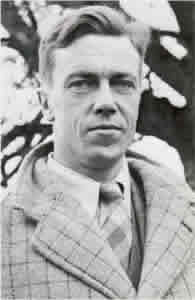
De Brits-Ierse dichter Cecil Day Lewis werd geboren in Ballintogher, Ierland, op 27 april 1904. Zie ook alle tags voor Cecil Day Lewis op dit blog.


My Mother’s Sister


I see her against the pearl sky of Dublin

Before the turn of the century, a young woman

With all those brothers and sisters, green eyes, hair

She could sit on; for high life, a meandering sermon


(Church of Ireland) each Sunday, window-shopping

In Dawson Street, picnics at Killiney and Howth…

To know so little about the growing of one

Who was angel and maid-of-all work to my growth!


- Who, her sister dying, took on the four-year

Child, and the chance that now she would never make

A child of her own; who, mothering me, flowered in

The clover-soft authority of the meek.


Who, exiled, gossiping home chat from abroad

In roundhand letters to a drift of relations –

Squires’, Goldsmiths, Overends, Williams’ – sang the songs

Of Zion in a strange land.  Hers the patience


Of one who made no claims, but simply loved

Because that was her nature, and loving so

Asked no more than to be repaid in kind.

If she was not a saint, I do not know


What saints are…Buying penny toys at Christmas

(The most a small purse could afford) to send her

Nephews and nieces, sh’d never have thought the shop

Could shine for me one day in Bethlehem splendour.


Exiled again, after ten years, my father

Remarrying, she faced the bitter test

Of charity – to abdicate in love’s name

From love’s contentful duties.  A distressed


Gentle woman housekeeping for strangers;

Later, companion to a droll recluse

Clergyman brother in rough-pastured Wexford,

She lived for all she was worth – to be of use.


She bottle plums, she visited parishioners.

A plain habit of innocence, a faith

Mildly forbearing, made her one of those

Who, we were promised, shall inherit the earth


…Now, sunk in one small room of a Rathmines

Old people’s home, helpless, beyond speech

Or movement, yearly deeper she declines

To imbecility – my last link with childhood.


The battery’s almost done: yet if I press

The button hard – some private joke in boyhood

I teased her with – there comes upon her face

A glowing of the old, enchanted smile.


So, still alive, she rots.  A heart of granite

Would melt at this unmeaning sequel, Lord,

How can this be justified, how can it

Be justified?


 1381576-800b68eeec95d6755976122ae78be112.jpg

Cecil Day Lewis (27 april 1904 – 22 mei 1972)


De Engelse schrijfster en feministe Mary Wollstonecraft werd geboren in Hoxton (nu Londen) op 27 april 1759. Zie ook mijn blog van 27 april 2009 en ook mijn blog van 27 april 2010.


Uit: Maria, or the Wrongs of Woman


“Abodes of horror have frequently been described, and castles, filled with spectres and chimeras, conjured up by the magic spell of genius to harrow the soul, and absorb the wondering mind. But, formed of such stuff as dreams are made of, what were they to the mansion of despair, in one corner of which Maria sat, endeavouring to recall her scattered thoughts!

Surprise, astonishment, that bordered on distraction, seemed to have suspended her faculties, till, waking by degrees to a keen sense of anguish, a whirlwind of rage and indignation roused her torpid pulse.

One recollection with frightful velocity following another, threatened to fire her brain, and make her a fit companion for the terrific inhabitants, whose groans and shrieks were no unsubstantial sounds of

whistling winds, or startled birds, modulated by a romantic fancy, which amuse while they affright; but such tones of misery as carry a dreadful certainty directly to the heart. What effect must they then have produced on one, true to the touch of sympathy, and tortured by maternal

apprehension!

Her infant's image was continually floating on Maria's sight, and the first smile of intelligence remembered, as none but a mother, an unhappy mother, can conceive. She heard her half speaking half cooing, and felt the little twinkling fingers on her burning bosom--a bosom bursting with the nutriment for which this cherished child might now be pining in vain. From a stranger she could indeed receive the maternal aliment, Maria was grieved at the thought--but who would watch her with a

mother's tenderness, a mother's self-denial?”


 1381576-c4b23624dad35bdfb1ebb6d1144bc14f.jpg

Mary Wollstonecraft (27 april 1759 – 10 september 1797)

Portret door John Opie, 1797


De Oostenrijkse schrijver
Hans Bemmann werd geboren op 27 april 1922 in Groitzsch nabij Leipzig. Zie ook mijn blog van 27 april 2009.


Uit: Stein und Flöte


“Aber er fragte sich auch, wohin man geraten mochte, wenn man an der Verlässlichkeit seines eigenen Verstandes zu zweifeln begann. Wonach sollte man sich richten, wenn nirgends eine greifbare Wegmarke den Horizont in messbare Abschnitte gliederte? Das würde sein, als ritte man ohne Weg und Ziel über die grenzenlose Steppe, und selbst dort gab es ja noch das ewig kreisende Muster der Gestirne, das dem Kundigen die Richtung wies, wenn er bereit war, sich den Gesetzen ihrer Bewegung anzuvertrauen. Was aber, wenn diese Lichtpunkte einmal ihre geregelte Bahn verlassen sollten? Wer sagt einem, dass sie dies nicht schon längst getan hatten, ohne dass man es hätte merken können?”


 1381576-5a3ca13be08c69c9169c799230b20543.jpg

Hans Bemmann (27 april 1922 – 1 april 2003)


De Amerikaanse toneelschrijver August Wilson (eig. Frederick August Kittel) werd geboren op 27 april 1945 in Pittsbugh. Zie ook alle tags voor August Wilson op dit blog.

Uit: Fences


“Okay, Troy...you're right. I'll take care of your baby for you...cause...like you say...she's innocent...and you can't visit the sins of the father upon the child. A motherless child has got a hard time. From right now...this child got a mother. But you a womanless man.”

(…)


“Don't you think I ever wanted other things? Don't you think I had dreams and hopes? What about my life? What about me. Don't you think it ever crossed my mind to want to know other men? That I wanted to lay up somewhere and forget about my responsibilities? That I wanted someone to make me laugh so I could feel good? You not the only one who's got wants and needs. But I held on to you, Troy. I took all my feelings, my wants and needs, my dreams...and I buried them inside you. I planted myself inside you and waited to bloom. And it didn't take me no eighteen years to find out the soil was hard and rocky and it wasn't never gonna bloom.”


 1381576-182628786761f0d689253654512ba4e8.jpg

August Wilson (27 april 1945 – 2 oktober 2005)

Scene uit „Fences“ met Danzel Washington en Viola Davis, Broadway, 2010 


De Turkse prediker, schrijver en dichter Fethullah Gülen werd geboren in Korucuk, Erzurum, op 27 april 1941 Zie ook alle tags voor Fethullah Gülen op dit blog.


Dawn Comes in Dreams


The spirit wanders through the night
To find a way out
Toward that which it seeks and longs for
Travels with the hope of recovering what is lost

Travels from the reason to the heart
To bereft of power
To distinguish the hopeful
from among the hopeless causes
There’s a cold war between realities and imaginings

Dawn comes in dreams
When everything turns pale in the dead hours of the night
Dawn comes in dreams

Dreams are always vivid
Full of color
There when a man looks deep
Into unfathomed oceans
Beholds the past
The far future and what is near to come
What is old about to be replaced or renewed?

Dawn comes in dreams
When realities are too dark to endure
Dawn comes in dreams

In darkness a man suffers
The extreme of loneliness
When mouths are tight-lipped
As if zip-fastened
He wishes to sprout wings and fly
To the realms beyond and fly

Dawn comes in dreams
When events begin to drive me to give up hope
Dawn comes in dreams


 1381576-3dadb6c39a30dc613ec3c9cf6f4b6807.jpg

Fethullah Gülen (Korucuk, 27 april 1941)


De Poolse schrijver
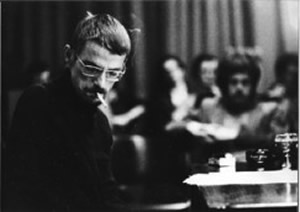
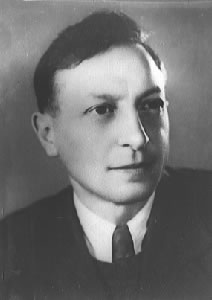
Martin Gray werd geboren als Mietek Grayewski in Warschauop 27 april 1922. Zie ook alle tags voor Martinn Gray op dit blog.

Uit: Au Nom de Tous les Miens


“Parfois, nous allions vers la Vistule en suivant les Allées de Jérusalem jusqu'au pont Poniatowski. Nous traversions les jardins Krasinski. Des Juifs marchandaient entre eux. Ils me semblaient toujours vêtus des mêmes pardessus noirs, ils étaient pauvres. Mais je ne savais pas ce qu'était la pauvreté. Je ne savais même pas vraiment que nous étions juifs. Nous célébrions les grandes fêtes mais nous avions des catholiques dans notre famille. Nous étions entre les deux religions et mon père, grand, droit, avec sa main forte, me paraissait être à lui seul le début du monde. Nous rentrions, je traînais dans l'Ogrod Saski, les derniers jardins avant la rue Senatorska. Chez nous. Mon père ouvrait la porte : je me souviens encore d'une odeur douce, des cris de mes deux frères. Ma mère était là et la table mise. C'était avant ma naissance, bien avant, une époque de beau temps qui s'acheva avec l'été 1939.
Brusquement, la guerre. Mon père est en uniforme d'officier, il me prend par les épaules et je me rends compte que je suis presque aussi grand que lui. Nous laissons ma mère et mes deux frères à la maison et nous partons, tous les deux, vers la gare. Dans les rues tout est déjà différent : des soldats en groupes, des camions, les premières queues devant les magasins. Nous marchons côte à côte sur la chaussée, épaule contre épaule, il ne me tient plus par la main : je suis un homme. Il m'a crié quelque chose de la fenêtre de son wagon que je n'ai pas entendu et je me suis retrouvé seul dans la rue. Il me semble que c'est ce jour-là que nous avons eu le premier bombardement : j'ai regardé les bombardiers argentés à croix noire qui volaient bas, en formation de trois.
- Rentre ici.
Un policier polonais hurlait dans ma direction depuis un porche où s'agglutinaient des passants affolés.
Je me suis mis à courir dans la rue déserte : il faut que je rentre chez moi, je n'obéis à personne.”


1381576-e229471db8d30af2e17cdf2b16bbeb66.jpg
Martin Gray (Warschau, 27 april 1922)
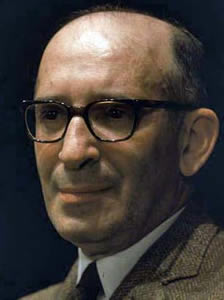
Geschreven door Romenu om 14:11 Reageer op dit bericht
Reageer op dit bericht

Reageer op dit bericht

Een titel of je eigen website toevoegen

De blogger leest alles eerst na: je tekst verschijnt zodra die goedgekeurd is.

Bernard Malamud, Vincente Alexandre, Leo Stilma, Hannelies Taschau, Theun de Vries

De Amerikaanse schrijver Bernard Malamud werd op 26 april 1914 in Brooklyn, New York, geboren. Zie ook alle tags voor Bernard Malamud op dit blog. 


Uit: The Tenants


“Lesser catching sight of himself in his lonely glass wakes to finish his book. He smelled the living earth in the dead of winter. In the distance mournful blasts of a vessel departing the harbor. Ah, if I could go where it's going. He wrestles to sleep again but can't, unease like a horse dragging him by both bound legs out of bed. I've got to get up to write, otherwise there's no peace in me. In this regard I have no choice. "My God, the years." He flings aside the blanket and standing unsteadily by the loose-legged chair that holds his clothes slowly draws on his cold pants. Today's another day.Lesser dresses unwillingly, disappointing surprise, because he had gone to bed in a fire of desire to write in the morning. His thoughts were sweet, impatient for tomorrow. He goes to sleep in anticipation and wakes resistant, mourning. For what? Whom? What useless dreams intervene? Though he remembers none although his sleep is stuffed with dreams, Lesserreveries one touched with fear: Here's this stranger I meet on the stairs."Who you looking for, brother?" "Who you callin brother, mother?"Exit intruder. Yesterday's prowler or already today's? Levenspiel in disguise? A thug he's hired to burn or blow up the joint? It's my hyperactive imagination working against the grain. Lesser makes things hard for himself for certain reasons. That's a long tale but right now it means he doesn't know how to end his book. Nor why the ending, this time, is so hard to come by if you've invented every step that leads to it, though some crumble when you look hard at them. Still, it's bound to come, it always has. Maybe it's some kind of eschatological dodge? Like an end is more than I can stand? Each book I write nudges me that much closer to death? As soon as he ends one he begins another.Now that the imagination is imagining Lesser imagines it done, the long labor concluded at last. Relief, calm, mornings in bed for a month. Dawn on the sea, rose lighting the restless waves touching an island waking, breathing the fresh breath of its trees, flowers, bayberry bushes, seashells.”


 1381053-6a8ac3d3ab965c2eae0feecb27895467.jpg

Bernard Malamud (26 april 1914 – 18 maart 1986)


De Spaanse dichter
Vincente Aleixandre (eig. Vicente Pío Marcelino Cirilo Aleixandre y Merlo) werd geboren op 26 april 1898 in Sevilla. Zie ook alle tags voor Vincente Aleixandre op dit blog. 


On the Way to School


I rode my bicycle to school.
Along a peaceful street that ran through the center of the noble,
   mysterious city.
I rode by, surrounded by lights, and the carriages made no noise.
They passed, majestic, pulled by distinguished bays or chestnuts
   that moved with a proud bearing.
How they lifted their hooves as they went along, like gentlemen,
   precise,
not disdaining the world, but studying it
from the sovereign grace of their manes!
And inside, what? Old ladies, scarcely a little more than lace,
silent ornaments, stuck-up hairstyles, ancient velvet:
a pure silence passing, pulled by the heavy shining animals.

I rode my bicycle, I almost had wings, I was inspired.
And there were wide sidewalks along that sunny street.
In the sunlight, some sudden butterfly hovered over the carriages
   and then, along the sidewalks,
over the slow strollers made of smoke.
But they were mothers taking their littlest children for a walk.
And fathers who, in their offices of glass and dreams...
I looked as I went by.
I sailed through the sweet smoke, and the butterfly was no stranger.
Pale in the iridescent winter afternoon,
she spread herself out in the slow street as over a sheltered,
   sleepy valley.
And I saw her swept up sometimes to hang suspended
over what could as well have been the pleasant bank of a river.
Ah, nothing was terrible.
The street had a slight grade and up I went, driven on.
A wind swept the hats of the old ladies.
It wasn't hurt by the peaceful canes of the gentlemen.
And it lit up like an imaginary rose, a little like a kiss, on the
   cheeks of the children.
The trees in a row were a motionless vapor, gentle
suspended under the blue. And by now nearly up in the air,
I hurried past on my bicycle and smiled...
and I remember perfectly
how I folded my wings mysteriously on the very threshold of the
   school.


Vertaald door Stephen Kessler


 1381053-d889ea5fa96583465a23291218f5dc5d.jpg

Vicente Aleixandre (26 april 1898 – 14 december 1984)


De Nederlandse dichter Leo Stilma werd geboren op 26 april 1953 in Hilversum. Zie ook alle tags voor Leo Stilma op dit blog.  


OUD WORDEN


Waar ik bang voor ben

is niet

de tijd dat ik kwijlen ga

mijn benen al bij bewegen

breken, dat ik gezichten even

snel verwissel als de dagen


en mijn stoel een schuilplaats

is tegen de boze wereld buiten.


Het is niet voor de tijd

dat mijn vrienden alleen

op oude foto’s lachen

de telefoon steeds rinkelt

voor rouw en berichten

over gladde natte straten

en afbrokkelende botten


het is voor de tijd

dat niemand meer

mijn voornaam weet


waar ik bang voor ben.


 1381053-ea97fe5d54c5f969b5ac02459e66e292.jpg

Leo Stilma (Hilversum, 26 april 1953)

Hilversum, het Raadhuis van Dudok


De Duitse dichteres en schrijfster Hannelies Taschau werd geboren op 26 april 1937 in Hamburg. Zie ook alle tags voor Hannelies Taschau op dit blog. 


ICH WERDE WACH ICH SEHE


sofort die Sterne und denke daran
zu bleiben
Was trennt mich von Euch Junge
Sterne sind kühler und strahlen
mehr infrarotes als sichtbares
Licht ab Was trennt mich von
euch es kann nicht wichtiger sein
als das was uns verbindet
Was die Entstehung eines Sterns
auslöst ist noch nicht bekannt


Der letzte


wird der erste Tag

Wir haben uns mehrmals um

Heute gedreht in tiefer

Befriedigung Gleich will man

dass alles so bleibt

Mit Trotz statt Gewissheit

Pilze gegessen

Durstlöschendes Wette


 1381053-2c1cf379f57d6a9a1eb07f32325a110c.jpg

Hannelies Taschau (Hamburg, 26 april 1937)


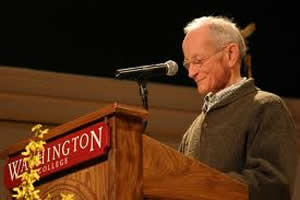
De Nederlandse dichter en schrijver
Theun de Vries werd geboren in Veenwouden op 26 april 1907. Zie ook alle tags voor Theun de Vries op dit blog. 


Terugkeer


De groote rust en de bezinning zinken

in mij als regens in een dooden tuin.

Na dezen waanzin en dit zelfverminken

keer ik terug. Nog ligt de droom in puin,


maar buiten waar men bruggen bouwt, wijd bogend,

en waar de stroom versnelt tot vurig licht,

word ik van nieuwe liefde en trots almogend -

En ik vergeet en wandel opgericht.


Nu eindlijk valt het masker van de dagen

en de verbijstrende eenzaamheid vergaat.


Zij kwam van ver. De blindelingsche vlagen

van wanhoop stierven aan mijn hart, verzaad.


Een vrouw wier handen in de mijne lagen

riep met éen lach den dood uit mijn gelaat.


Praeludium


Onder donkere vrouwenoogen

ben ik verwonderd ontwaakt;

een licht had den nachttuin doorvlogen

en smetteloos vervolmaakt.


Van een eenzaam stormachtig leven

geleid in verneedring en schuld

werd de laatste schemer vergeven

en een uiterste droom is vervuld:


Tusschen heldere horizonnen,

omringd van zee en wind,

is een goddelijk glanzen begonnen

over wereld en menschenkind.


 1381053-31095f4917e1541c970ae2854ac651f0.jpg

Theun de Vries (26 april 1907 – 21 januari 2005)

Portret door Joop Sjollema, 1970


Zie voor nog meer schrijvers van de 26e april ook mijn blog van 26 april 2011 deel 1 en eveneens deel 2

Geschreven door Romenu om 15:40 Reageer op dit bericht

Ted Kooser, James Fenton, Walter de la Mare, Ross Franklin Lockridge Jr., Richard Anders

De Amerikaanse dichter Ted Kooser werd geboren op 25 april 1939 in Ames, Iowa. Zie ook alle tags voor Ted Kooser op dit blog.


In the Basement of the Goodwill Store


In musty light, in the thin brown air   

of damp carpet, doll heads and rust,   

beneath long rows of sharp footfalls   

like nails in a lid, an old man stands   

trying on glasses, lifting each pair

from the box like a glittering fish   

and holding it up to the light

of a dirty bulb. Near him, a heap   

of enameled pans as white as skulls   

looms in the catacomb shadows,   

and old toilets with dry red throats   

cough up bouquets of curtain rods.


You’ve seen him somewhere before.   

He’s wearing the green leisure suit   

you threw out with the garbage,   

and the Christmas tie you hated,   

and the ventilated wingtip shoes   

you found in your father’s closet   

and wore as a joke. And the glasses   

which finally fit him, through which   

he looks to see you looking back—

two mirrors which flash and glance—

are those through which one day

you too will look down over the years,   

when you have grown old and thin   

and no longer particular,

and the things you once thought   

you were rid of forever

have taken you back in their arms.


Untitled [Each time I go outside]


Each time I go outside

the world is different.

This has happened all my life.


*


The clock stopped at 5:30

for three months. Now it's always time to quit work,

have a drink, cook dinner.


*


"What I would do for wisdom,"

I cried out as a young man.

Evidently not much. Or so it seems.

Even on walks I follow the dog.


*


Old friend,

perhaps we work too hard

at being remembered.


1380592-ffcec97a97b2cb264fda7f34fd709c03.jpg
Ted Kooser (Ames, 25 april 1939)


De Engelse dichter, schrijver, criticus en letterkundige James Fenton werd geboren op 25 april 1949 in Lincoln. Zie ook alle tags voor James Fenton op dit blog.


A German Requiem (Fragment)


The better for the widow, that she should not live in fear of surprise,
The better for the young man, that he should move at liberty between the armchairs,
The better that these bent figures who flutter among the graves
Tending the nightlights and replacing the chrysanthemums
Are not ghosts,
That they shall go home.
The bus is waiting, and on the upper terraces
The workmen are dismantling the houses of the dead.

*

But when so many had died, so many and at such speed,
There were no cities waiting for the victims.
They unscrewed the name-plates from the shattered doorways
And carried them away with the coffins.
So the squares and parks were filled with the eloquence of young cemeteries:
The smell of fresh earth, the improvised crosses
And all the impossible directions in brass and enamel.

*

'Doctor Gliedschirm, skin specialist, surgeries 14-16 hours or by appointment.'
Professor Sarnagel was buried with four degrees, two associate memberships
And instructions to tradesmen to use the back entrance.
Your uncle's grave informed you that he lived in the third floor, left.
You were asked please to ring, and he would come down in the lift
To which one needed a key...


 1380592-a514ed2e321ae84c5d1ce9f866e50655.jpg

James Fenton (Lincoln, 25 april 1949)


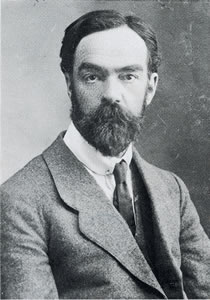
De Engelse dichter Walter John de la Mare werd geboren op 25 april 1873 in Charlton, Kent. Zie ook alle tags voor Walter John de la Mare op dit blog.


All But Blind


All but blind
In his chambered hole,
Gropes for worms
The four-clawed mole.

All but blind
In the burning day,
The barn owl
Blunders on her way.

And blind as are
These three to me,
So blind to someone
I must be.


Alone


The abode of the nightingale is bare,
Flowered frost congeals in the gelid air,
The fox howls from his frozen lair:
Alas, my loved one is gone,
I am alone:
It is winter.

Once the pink cast a winy smell,
The wild bee hung in the hyacinth bell,
Light in effulgence of beauty fell:
I am alone:
It is winter.

My candle a silent fire doth shed,
Starry Orion hunts o'erhead;
Come moth, come shadow, the world is dead:
Alas, my loved one is gone,
I am alone;
It is winter.


 1380592-2aca572dc0581cf4358e24b900dd7805.jpg

Walter John de la Mare (25 april 1873 – 22 juni 1956)

Portret door William Rothenstein 


De Amerikaanse schrijver
Ross Franklin Lockridge Jr. werd geboren op 25 april 1914 in Bloomington, Indiana. Zie ook alle tags voor Ross Franklin Lockridge Jr.op dit blog.


Uit: Raintree County


“ --The wisdom of the mythmakers is still with us, Professor. The profoundest mystery in the world is the existence of Another. Erotic love is the intense awareness of this Other, a Sacred Place. The lover bears the golden bough of godlike appetite and mysterious power and passes through the dismal wood that lies at the portals of Tartarus. Among the gibbering shades, he presses in with mortal thrust, making the boat of Charon heavy with his unusual weight. He bears the golden bough to the inmost shrine of the earth-goddess where he repeats the ancient frenzy. As you say, this rite is not unconnected with blood and death, for the renewal of form is possible only by the destruction of form. Love is a sweet death. A million die that one may reach the mark.
     He beheld the fading beauty of the day over Waycross. Now the roofs of the town were drenched in a last red bath of fire. A few rays thrust through to paint the green body of a nymph and touch the pooled and spouting fountain with golden light. The children were little blind swimmers in the valley of the day's receding brightness. Corn filled the earth with blind roots. All things were bathed in light and longing.
     --We'll never go any farther than those broken stones beside the inland ocean, the Perfessor said. The corn god is gone, and we have --behold!--only the corn.
     He took a long pull at his bottle, coughed, and sighed.
     --The world is still full of divinity and strangeness, Mr. Shawnessy said. The scientist stops, where all men do, at the doors of birth and death. He knows no more than you and I why a seed remembers the oak of twenty million years ago, why dust acquires the form of a woman, why we behold the earth in space and time. He hasn't yet solved the secret of a single name upon the earth. We may pluck the nymph from the river, but we won't pluck the river from ourselves: this coiled divinity is still all murmurous and strange. There are sacred places everywhere. The world is still man's druid grove, where he wanders hunting for the Tree of Life.”


 1380592-c7b73dc2387067a43643890063737d39.jpg

Ross Franklin Lockridge Jr. (25 april 1914 – 6 maart 1948)

Hier met vriend Malcolm Correll (rechts) in 1937 


De Duitse dichter en schrijver
Richard Anders werd geboren op 25 april 1928 in Ortelsburg, tegenwoordig Szczytno, Polen. Zie ook alle tags voor Richard Anders op dit blog.


Dreißig Jahre danach


Pans Stunde in Berlin, die Bewohner

vor der Mittsagshitze in die Wälder,

an die Seen geflohn, endlich wieder Stille

in der abgedunkelten Wohnung.


Durch einen Spalt im Vorhang flimmert

Durch die Jahre, die lauten, nach der Kindheit

Ein anderer Sommer, der tiefer

Die Baumschatten schwärzt.


Und drüben an der Wand, wo kein Geräusch

Durch das Bildglas kommt, steht ein alter Himmel

Über dem Feldweg, der Wiese,

die nie aufhört zu grünen, als wäre


auf die Vergangenheit in jenem Januar

kein Schnee gefallen, kein Schnee auf

alle früheren Sommer, und die Stille

nicht gebrochen von Geschützdonner.


Traum hat keine Zeit. Jeder Baum im Stadtpark

Ist aus dem Paradies verpflanzt, wo

Jemand spielt, der vielleicht schon tot ist,

ein Kind mit Greisenfalten, dessen Photo vergilbt.


1380592-dd8d99ca100960ef5d8bbb245fa3d9a3.jpg 

Richard Anders (Ortelsburg, 25 april 1928)
Ortelsburg (Szczytno)


Zie voor nog meer schrijvers van de 25e april ook mijn blog van 25 april 2012 deel 2.

Geschreven door Romenu om 18:53 Reageer op dit bericht

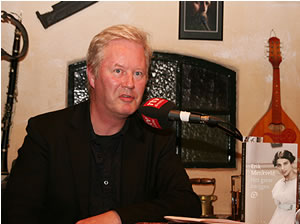
Erik Menkveld

De Nederlandse dichter Erik Menkveld werd geboren op 25 april 1959 in Eindhoven. Zijn vader werkte bij Philips, die radiofabrieken startte in verre landen. Vandaar dat zijn lagere schooljaren in Tanzania en Ghana plaatsvonden. Hij sprak toen Engels, waar hij later profijt van had. In Doorn bezocht hij daarna de middelbare school. Na zijn studie Nederlands in Amsterdam was Menkveld van 1987 tot 1998 fondsredacteur van Uitgeverij De Bezige Bij. Sinds 1998 was hij stafmedewerker bij Poetry International te Rotterdam. Met ingang van jaargang 2000 was hij redacteur van het literaire tijdschrift Tirade.Samen met Margaretha H. Schenkeveld bezorgde hij de briefwisseling tussen A. Roland Holst en diens oom en tante Richard en Henriëtte Roland Holst (verschenen in de reeks Privé Domein bij De Arbeiderspers, 1989). In 1995 verscheen bij de bibliofiele uitgeverij De Lange Afstand Erik Menkvelds poëziedebuut “Koebeest en vrouwdier”. Deze bundel werd in 1996 gevolgd door “Lente”, eveneens bij De Lange Afstand. Officieel debuteerde Erik Menkveld als dichter in 1997 bij Uitgeverij De Bezige Bij met de bundel “De karpersimulator”, waarin beide genoemde bibliofiele bundels zijn opgenomen. “De karpersimulator” werd in 1998 bekroond met de C. Buddingh'-prijs voor het beste Nederlandstalige debuut, en met de Van der Hoogtprijs. Ook werd de bundel dat jaar genomineerd voor de VSB Poëzieprijs. Nieuw werk van Erik Menkveld verscheen in tijdschriften als Raster, De Revisor en De Gids. Najaar 2000 verscheen zijn tweede bundel “Schapen nu!”, in 2005 gevolgd door “Prime time”.


Boerenbui

Hevige aandrang te eggen of te gieren?
Een tractor te kopen? Nuchtere
kalveren voor de mesterij?

Red één ongeschoren schaap
bij nacht en ontij uit de sloot, bekijk
het liefste varken op worstkwaliteit, eet

twaalf sneeën zelfverbouwd roggebrood.
En vergeet niet bij rooien of poten
op klompen te lopen en overal bij.

Meestal waait het dan wel over.
En anders ben je onherroepelijk
geboren voor de boerderij.


Alles mag je worden

Het springzaad knapt, de brempeulen
knallen open en jij ligt er in je wieg
als een popelend boontje bij.

Alles mag je worden van mij: zeeman,
boswachter, archeoloog. Of -
als je leven ingewikkelder loopt –

gesponsord ontdekker van aangroei
werende stoffen voor scheepsverf,
alleenstaand paddenstoelenfotograaf,

pacht- en beestenlijstenonderzoeker
van verdwenen Drentse keuterijen…
Behalve ongelukkig. Beloofd?


 1574946-ed31875d5fd024158ff6b36c86ac7674.jpg
Erik Menkveld (Eindhoven, 25 april 1959)

Geschreven door Romenu om 00:00 Reageer op dit bericht

Frans Coenen, Eric Bogosian, Robert Penn Warren, Michael Schaefer, Carl Spitteler

De Nederlandse schrijver, essayist en criticus Frans Coenen werd in Amsterdam geboren op 24 april 1866. Zie ook alle tags voor Frans Coenen op dit blog.


Uit: Verveling


“Boven onder 't dak was 't al broeiheet, met een benauwden reuk van versch hout en door de zon gestoofd lood. Een heen-en-weer geklos over den vloer, en de hooge stem van fräulein Böhmer, de eigenares van 't hôtel, klonken uit een kamer aan het eind van een middengangetje.

‘Da sind Sie endlich!’ riep 't fräulein Henriette toe, haar vriendelijk lachend aanziend, in de groote, bruine, uitpuilende oogen, een schalke vogelachtige uitdrukking.

Zij had over 't geheel veel van een oud-verweerd spekpoppetje op een trumeau, met haar kleine lijfje onder 't groote eironde hoofd, rood en zon-verbrandend, met glanzend zwart haar.

‘Na, was sagen Sie jetz! ist's nicht hübsch geworden hier?! Wird ihre Freundin hier nicht ganz heimisch sein? ging zij voort en wees in 't rond op 't nieuw hardblauw behang en de tullen gordijntjes, met de roodlinten embracetjes voor 't raam.

Henriette knikte vriendelijk van ja. Zij was pas drie dagen geleden uit Holland gekomen, doch al op heel goeden voet met de eigenares, die haar overal brjriep waar wat te zien was.

In haar huiselijke omgeving in Amsterdam, stond Henriette de Wal anders niet bekend als iemand, die gauw vertrouwelijk was. Haar donkere oogen, onder de fljne wenkbrauwen, zagen gewoonlijk hoog en onverschillig uit 't witte smalle gezicht en om de smalle bloedelooze lippen van haar kleinen mond was een trotsche, afwijzende trek.

Maar thans gloeide er iets innigs, een zachte dankbaarheid in den blik, waarmee zij naar buiten tuurde en haar mond was droomerig even-geopend.

Zoo luisterde zij met schijnbare belangstelling naar 't levendig zelfbehagelijk geratel van fräulein Böhmer, een lang relaas van alles wat er hier en in 't hoofdgebouw nog aan de kamers moest gedaan worden,.... van buiten, vochtig en koel, kwam 't onregelmatig, frisch geplas van de fontein tot hen,... toen 't kleine menschje op eens zich zelf onderbrak:

‘Aber jetz musz ich eilen, sonst wird mein diner nicht fertig,... gehen Si mit, fräulein?’


 1380190-6f5efd8740d29dfc13b85f7b6a91f564.jpg

Frans Coenen (24 april 1866 - 23 juni 1936)


De Amerikaanse schrijver en acteur Eric Bogosian werd geboren op 24 april 1953 in Woburn, Massachusetts. Zie ook alle tags voor Eric Bogosian op dit blog.


Uit: Mall


"MAL!" Mary's voice cut like an airhorn through the aging ranch house. Past the framed needlepoint-by-numbers, past the mute upright piano, past the dusty royal blue-and-gold Encyclopedia Americana, past the dripping bathroom faucet, over the wall-to-wall rugs flat with beaten paths, past the circa-1962 pole lamp, down the dark hallway, under the door of the TV den and into Mal's ear.

"Malcolm! You want your dinner now?"

Mal was as still as a lizard on a warm rock, pupils dilated, absorbing the TV images across the close air of the darkened room.

Mal knew how concerned his mother was regarding his relationship with food. She had discussed his problem with the doctors and the therapists and they had informed her that one way to tell if Mal was abusing any mood elevators was if he had no appetite or if he was particularly active. Clutching this inside information close to her chest Mary felt she had the upper hand. But Mal knew something neither his mom nor the doctors knew: A) if necessary, he could force himself to eat; and B) sometimes when he was speeding on crystal meth he didn't move at all. Instead he directed all his energy into his thoughts and became pure consciousness. Which was what he had been doing for the past three months. Mary thought he had been watching TV or sleeping. But she was wrong. For ninety days, Mal had been thinking and planning, his thoughts as convoluted as a fever patient's nightmare.

Even now, Mal jammed one more conceptual log into the inferno of his brainpan, a memory. The tan brick church embraced by its tiny lawn; the bone white Mary weeping over bloody geraniums; the darkly shellacked doors agape. Inside the cool, frankincense-infused building, Father Donleavy, no, Father Donahue, no, Father Donavon, no, Father Fuckface, that's it, Father Fuckface with the scraped-red cheekskin, is blabbing: Jesus said this and Jesus said that.”


1380190-b26eccc28295b900fcedef8327de7144.jpg 

Eric Bogosian (Woburn, 24 april 1953)


De Amerikaanse dichter en schrijver Robert Penn Warren werd geboren op 24 april 1905 in Guthrie, Kentucky. Zie ook alle tags voor Robert Penn Warren op dit blog.


Dead Horse In Field


In the last, far field, half-buried
In barberry bushes red-fruited, the thoroughbred
Lies dead, left foreleg shattered below knee,
A .30-30 in heart. In distance,
I now see gorged crows rise ragged in wind. The day
After death I had gone for farewell, and the eyes
Were already gone—that
The beneficent work of crows. Eyes gone,
The two-year-old could, of course, more readily see
Down the track of pure and eternal darkness.

A week later I couldn’t get close. The sweet stink
Had begun. That damned wagon mudhole
Hidden by leaves as we galloped—I found it.
Spat on it. As a child would. Next day
The buzzards. How beautiful in air!—carving
The slow, concentric, downward pattern of vortex, wing-glint
On wing-glint. From the house,
Now with glasses, I see
The squabble and pushing, the waggle of wattle-red heads.

At evening I watch the buzzards, the crows,
Arise. They swing black in nature’s flow and perfection,
High in sad carmine of sunset. Forgiveness
Is not indicated. It is superfluous. They are
What they are.

How long before I go back to see
That intricate piece of
Modern sculpture, white now,
Assuming in stasis
New beauty! Then,
A year later, I’ll see
The green twine of vine, each leaf
Heart-shaped, soft as velvet, beginning
Its benediction.

It thinks it is God.

Can you think of some ground on which that may be gainsaid?


 1380190-3ca24b55dbc7f75e59b51c3959831812.jpg

Robert Penn Warren (24 april 1905 – 15 september 1989)
Portret door Conrad A. Albrizio, 1935


De Duitse schrijver Michael Schaefer werd geboren op 24 april 1976 in Bielefeld. Zie ook alle tags voor Michael Schaefer op dit blog.


Uit: Touch me, Coach!


„Das Martyrium beginnt Stolz streicht Evan sein T-Shirt mit dem Aufdruck „SV Bergfeld“ und dem stilisierten „B“ als Zeichen des Sportclubs glatt. Ursprünglich wollte er in den Elite-Sportverein im Nachbarort Gotteshagen eintreten. Seine sportlichen Leistungen hätten Evan ohne Weiteres für den Elite-Club qualifiziert. Aber Evan hatte diese Pläne über Bord geworfen, als er einen Brief von einem alten Freund bekam. Der acht Jahre ältere Julian zog damals von Frankreich nach Deutschland, nachdem sein Vater in der Großstadt Stuttgart einen Job als Manager einer großen internationalen Firma angenommen hatte. Julian zog in die Villa neben Evan und stellte sich bei seinen neuen Nachbarn vor.

Damals war Evan gerade sechs Jahre und Julian vierzehn. Als Evan Julian das erste Mal sah, glaubte er, ihm stehe ein Mädchen gegenüber. Julians Gesicht war kindlich gezeichnet und seine weichen, blonden Haare trug er halblang. Sein schüchternes und strahlendes Lächeln war nicht von dieser Welt. Evan fühlte sofort eine tiefe Verbundenheit zu diesem Jungen. Julian kümmerte sich auch wirklich intensiv um ihn. Er half ihm in der Schule, ging oft mit ihm draußen spielen und war für Evan sein bester Freund.

Nachdem Evans Vater bei einem Autounfall ums Leben kam, kümmerte sich Julian nicht nur um Evan, sondern nahm auch Evans Mutter viel Arbeit ab. In dieser Zeit bewies Julian sein unheimliches Talent für Haushalt und Reinlichkeit, und dass er sich aus Evan und seiner Mutter viel machte. Evans Mutter konnte die Villa allerdings nicht weiter finanzieren und musste sie ein halbes Jahr später verkaufen. Evan zog mit seiner Mutter in das rund 300 km entfernte Bergfeld in ein kleineres Haus. Dort arbeitet sie bis heute halbtags im Sekretariat des Schulzentrums von Bergfeld. Bevor sie aber Stuttgart verließen, hatte Julian Evan erzählt, dass er später Lehrer werden möchte.“


 1380190-df0517778271e9a386d642a9b4c5f2b1.jpg

Michael Schaefer (Bielefeld, 24 april 1976)

Cover


De Zwitser dichter, schrijver, essayist en criticus Carl Friedrich Georg Spitteler (eig. Carl Felix Tandem) werd geboren op 24 april 1845 in Liestal bij Basel. Zie ook alle tags voor Carl Spitteler op dit blog.


Satyr


Ich schritt mit einer jungen hübschen Frau und schwieg,

Weil mir ein ander Frauenbild vor Augen stieg.


Da kam ein Satyrschmetterling, vom Glanz betrogen,

Mit Ungestüm auf meinen Ärmelknopf geflogen;

Und ob er da auch weder Saft noch Honig fand,

Pocht' er mit ausgestrecktem Rüssel unverwandt.


"Haben Sie je," begann ich, "gnäd'ge Frau, geseh'n

Solch ein verbohrtes, eigensinnig Nichtversteh'n?

Müht sich das Tier und pocht mit stets erneuter Frist,

Um Honig zu erzwingen da, wo keiner ist!"


""Ein Herr,"" versetzte sie ""ist gleichwohl mir bekannt,

Mit dessen Unverstand ist's schlimmer noch bewandt.

Da er, von keinem Mißerfolge je belehrt,

Jahraus jahrein zu zweien Augen wiederkehrt

Und Spott und Klatsch verzeiht und seinen Wert vergißt,

Um Liebe zu ersingen da, wo keine ist.""


Was tun? - - Sie aber schmunzelte vergnügt und heiter:

""Und nun? - Was haben Sie? Erzählen Sie doch weiter!""


 1380190-d4244e470e56d54a2b9db07509a14a74.jpg

Carl Spitteler (24 april 1845 – 29 december 1924)


Zie voor nog meer schrijvers van de 24e april ook mijn blog van 24 april 2012 deel 2 en ook deel 3.

Geschreven door Romenu om 19:26 Reageer op dit bericht

William Shakespeare, Andrey Kurkov, Pascal Quignard, Peter Horst Neumann, Christine Busta

De Engelse dichter en schrijver William Shakespeare werd geboren in Londen op, vermoedelijk, 23 april 1564. Zie ook alle tags voor William Shakespeare op dit blog.


Uit: Othello


“ACT I

SCENE I. Venice. A street.

Enter RODERIGO and IAGO

RODERIGO

Tush! never tell me; I take it much unkindly

That thou, Iago, who hast had my purse

As if the strings were thine, shouldst know of this.

IAGO

'Sblood, but you will not hear me:

If ever I did dream of such a matter, Abhor me.

RODERIGO

Thou told'st me thou didst hold him in thy hate.

IAGO

Despise me, if I do not. Three great ones of the city,

In personal suit to make me his lieutenant,

Off-capp'd to him: and, by the faith of man,

I know my price, I am worth no worse a place:

But he; as loving his own pride and purposes,

Evades them, with a bombast circumstance

Horribly stuff'd with epithets of war;

And, in conclusion,

Nonsuits my mediators; for, 'Certes,' says he,

'I have already chose my officer.'

And what was he?

Forsooth, a great arithmetician,

One Michael Cassio, a Florentine,

A fellow almost damn'd in a fair wife;

That never set a squadron in the field,

Nor the division of a battle knows

More than a spinster; unless the bookish theoric,

Wherein the toged consuls can propose

As masterly as he: mere prattle, without practise,

Is all his soldiership. But he, sir, had the election:

And I, of whom his eyes had seen the proof

At Rhodes, at Cyprus and on other grounds

Christian and heathen, must be be-lee'd and calm'd

By debitor and creditor: this counter-caster,

He, in good time, must his lieutenant be,

And I--God bless the mark!--his Moorship's ancient.

RODERIGO

By heaven, I rather would have been his hangman.”


 1379641-878365806d5b83d52e0ccae0a0611e78.jpg

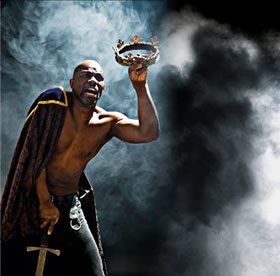
William Shakespeare (23 april 1564 – 23 april 1616)

John Douglas Thompson als Othello (Shakespeare & Company, Lenox, Massachusetts, 2009)


De Oekraïense schrijver Andrey Kurkov werd geboren op 23 april 1961 in Leningrad. Zie ook alle tags voor Andrey Kurkov op dit blog.


Uit: Death and the Penguin (Vertaald door George Bird)


“First, a stone landed a metre from Viktor’s foot. He glanced back. Two louts stood grinning, one of whom stooped, picked up another from a section of broken cobble, and bowled it at him, skittler-fashion. Viktor made off at something approaching a racing walk and rounded the corner, telling himself the main thing was not to run. He paused outside his block, glancing up at the hanging clock: 9.00. Not a sound. No one about. He went in, now no longer afraid. They found life dull, ordinary people, now that entertainment was beyond their means. So they bowled cobbles.

As he turned on the kitchen light, it went off again. They had cut the power, just like that. And in the darkness he became aware of the unhurried footfalls of Misha the penguin.

Misha had appeared chez Viktor a year before, when the zoo was giving hungry animals away to anyone able to feed them. Viktor had gone along and returned with a king penguin. Abandoned by his girlfriend the week before, he had been feeling lonely. But Misha had brought his own kind of loneliness, and the result was now two complementary lonelinesses, creating an impression more of interdependence than of amity.

Unearthing a candle, he lit it and stood it on the table in any empty mayonnaise pot. The poetic insouciance of the tiny light sent him to look, in the semi-darkness, for pen and paper. He sat down at the table with the paper between him and the candle; paper asking to be written on. He he been a poet, rhyme would have raced across the white. But he wasn’t. He was trapped in a rut between journalism and meagre scraps of prose. Short stories were the best he could do. Very short, too short to make a living from, even if he got paid for them.

A shot rang out.

Darting to the window, Viktor pressed his face to the glass. Nothing. He returned to his sheet of paper. Already he had thought up a story around that shot. A single side was all it took; no more, no less. And as his latest short short story drew to its tragic close, the power came back on and the ceiling bulb blazed. Blowing out the candle, he fetched coley from the freezer in Misha’s bowl.”


 1379641-f811da7e146d926ae41a01a1e2f134ca.jpg

Andrey Kurkov (Leningrad, 23 april 1961)


De Franse schrijver Pascal Quignard werd geboren op 23 april 1948 in Verneuil-sur-Avre. Zie ook alle tags voor Pascal Quignard op dit blog.


Uit: Sur le jadis


“Dans son trou le vieux répondit à son fils :
— C’est l’un des trois secrets du jadis. C’est facile. Il s’agit du secret de la succession des rotations célestes. Tisse une très belle corde. Mets-la sur une pierre plate. Va au palais avec ta pierre et ta corde.
Demande au seigneur qu’il te donne du feu de son âtre.
Brûle-la sous ses yeux.
Le fils fit comme son père avait dit. Le seigneur fut étonné mais il offrit en récompense au fils une corde neuve avec au bout un bœuf.
Le fils les ramena chez lui. Il alla trouver son père.
Il lui exprima sa gratitude. Il lui dit :
— Que veut dire la corde de cendres ?
— Que jadis nous incinérions nos guerriers en les couchant sous des pierres quand ils étaient morts au cours du combat qu’ils avaient mené pour défendre le village.


*

Un an passa.
Au début de l’année qui suivit le roi du pays fit venir Corde de Cendres. Il lui montra au milieu de la grand-salle un tronc d’arbre qui avait été coupé, qui était tout noir, le fût parfaitement rond, l’ensemble entièrement poli.
Le seigneur se tourna vers Corde de Cendres et lui dit :
— Demain matin tu me diras de quel côté se trouve la racine de cet arbre ou tu mourras.
Le fils pieux fut rempli de perplexité. Il regarda longtemps et silencieusement le fût noir et lisse qui brillait au milieu de la salle du palais. Il rentra dans sa cabane. Quand la nuit fut tombée il alla trouver son père dans le champ de derrière, derrière son buisson de ronces.”


1379641-e57ceeb26ab32bdbd6351a49814db801.jpg 

Pascal Quignard (Verneuil-sur-Avre, 23 april 1948)


De Duitse dichter, essayist en literatuurwetenschapper
Peter Horst Neumann werd geboren op 23 april 1936 in Neisse. Zie ook alle tags voor Peter Horst Neumann op dit blog.


Als sie nach einer Sommerreise ihren Garten wiedersah

Die unter Wunden
aufgesteckte Brombeerhecke
wuchs über sich hinaus,
mit Stachelschlangen
sind die Wege überschossen,
dein Fleiß vergessen,
deine Ordnung überlebt.

Verbrüdert wuchert Kresse
zwischen Bohnen, die Zwiebeln
haben sich mit Wicken
überworfen, der kleine Kürbis
stieg den Baum hinaus,
läßt sein Kugeln bei den Äpfeln
leuchten.

Sich zu verwüsten -
Lust der Gärten. Wenn
du dich freuen könntest,
Gärtnerin. Die Bombe
vom Tomatenstrauch
fällt weich.


1379641-5162e9b13afe1c176889bcbd2fd4d629.jpg
Peter Horst Neumann (23 april 1936 – 27 juli 2009)


De Oostenrijkse dichteres Christine Busta werd geboren op 23 april 1915 in Wenen. Zie ook alle tags voor Christine Busta op dit blog.


Am Rande


Manchmal auf einer Schwelle sitzen,
ausruhn vom Gehn, das nicht ankommt,
die Türe hinter dir und nicht klopfen.

Alle Geräusche wahrnehmen
und keines verursachen.
Das Leben, das dich nicht annimmt, erhören:
im Haus, auf der Straße,
das Herz der Maus und des Motors,
die Stimmen von Luft und Wasser,
die Schritte des Menschen, der Sterne,
das Seufzen von Erde und Stein.

Manchmal setzt sich das Licht zu dir
und manchmal der Schatten,
treue Geschwister.
Staub will nisten auf dir
und unbetretbarer Schnee.

Langsam unter der Zunge
wärmt sich dein letztes Wort.


Die Wand


Du warst die Wand, an die ich mich lehnte,
und die Wand, an der ich mich stieß.
Dann begannst du zurückzuweichen.
Jetzt bist du unerreichbar geworden.
 
Aber ich weiß, zuletzt
wirst du die Wand sein, die auf mich zukommt,
und ich werde durch dich hindurchgehn,
ohne dass wir einander verletzen.


 1379641-99f2cc06333bea4681f7cbf1fa455dcf.jpg

Christine Busta (23 april 1915 – 3 december 1987)

Wenen, Prater


Zie voor nog meer schrijvers van de 23e april ook mijn blog van 23 april 2012 deel 1 en ook deel 2.

Geschreven door Romenu om 19:11 Reageer op dit bericht

Vladimir Nabokov, Jan de Hartog, Björn Kern, Chetan Bhagat, Peter Weber, Gert W. Knop, Madame de Staël

De Rüssisch-Amerikaanse schrijver Vladimir Vladimirovic Nabokov werd geboren in St. Petersbürg, op 22 april 1899. Zie ook alle tags voor Vladimir Nabokov op dit blog.


Üit: Lolita


“I attended an English day school a few miles from home, and there I played rackets and fives, and got excellent marks, and was on perfect terms with schoolmates and teachers alike. The only definite sexual events that I can remember as having occurred before my thirteenth birthday (that is, before I first saw my little Annabel) were: a solemn, decorous and purely theoretical talk about pubertal surprises in the rose garden of the school with an American kid, the son of a then celebrated motion-picture actress whom he seldom saw in the three-dimensional world; and some interesting reactions on the part of my organism to certain photographs, pearl and umbra, with infinitely soft partings, in Pichon's sumptuous La Beauté Humaine that I had filched from under a mountain of marble-bound Graphics in the hotel library. Later, in his delightful debonair manner, my father gave me all the information he thought I needed about sex; this was just before sending me, in the autumn of 1923, to a lycée in Lyon (where we were to spend three winters); but alas, in the summer of that year, he was touring Italy with Mme. de R. and her daughter, and I had nobody to complain to, nobody to consult.

Annabel was, like the writer, of mixed parentage: half-English, half-Dutch, in her case. I remember her features far less distinctly today than I did a few years ago, before I knew Lolita. There are two kinds of visual memory: one when you skillfully recreate an image in the laboratory of your mind, with your eyes open (and then I see Annabel in such general terms as: "honey-colored skin," "thin arms," "brown bobbed hair," "long lashes," "big bright mouth"); and the other when you instantly evoke, with shut eyes, on the dark innerside of your eyelids, the objective, absolutely optical replica of a beloved face, a little ghost in natural colors (and this is how I see Lolita).”


 1378931-678e739dc52cf0c298d5be22fc9fcbd3.jpg

Vladimir Nabokov (22 april 1899 - 2 jüli 1977)

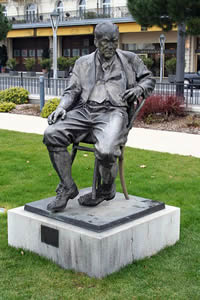
Standbeeld in Montreux


De Nederlandse schrijver Jan de Hartog werd geboren in Haarlem op 22 april 1914. Zie ook alle tags voor Jan de Hartog op dit blog.


Uit: Hollands Glorie


“De ‘Fortuna’, verlamd, dreigt dwars op de zee te komen liggen en wanneer dat gebeurt is het uit. Maar Jan Wandelaar is, met een lijn om de borst, overboord gesprongen en heeft het touw doorgehakt; hij wordt, meer dood dan levend, aan boord teruggehesen en de raderen draaien weer. Waarom hij het gedaan heeft weet hij niet, toen hij te water ging was hij blind en toen aan hem getrokken werd zo bang als hij nooit iemand vertellen zal; maar wanneer hij beseft, dat hij in de kajuit ligt en dat de schipper zelf een borrel voor hem inschenkt en dat de schuit behouden is door hem en door hem alleen, dan is hij zo trots, dat hij het niet harden kan en inslaapt uit zelfverweer.

Zeventien October staat matroos Wandelaar voor den ouden heer van Munster en hoort dat hij op kosten van de maatschappij voor stuurman mag leren wegens heldhaftige onderscheiding; achttien October zit hij in de schoolbanken, stijf en ongelukkig; twintig October huilt hij in een portiek, snikkend: ‘Ik kan het niet, ik kan het niet!’ terwijl Nellie Dijkmans, het dochtertje van den sluiswachter, hem tracht te sussen met: ‘je kan het best....’ erg zenuwachtig, omdat er ieder ogenblik iemand langskomen kan, die zal blijven staan en vragen wat dien jongen mankeert.

Twintig December loopt hij wanhopig langs de haven, tot diep in de nacht, en wanneer er een schip zou zijn uitgevaren voor de lange trip zou hij zich aan boord verstoken hebben, want morgen komt zijn eerste rapport los en dan zal hij wel weer matroos moeten worden.”


1378931-053e7200be0c76546618d05980c4fb99.jpg
Jan de Hartog (22 april 1914 – 22 september 2002)
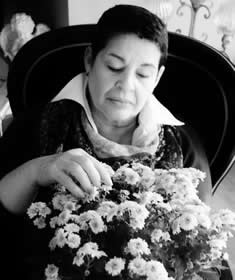
Cover van de tv-serie op DVD 


De Duitse schrijver
Björn Kern werd geboren op 22 april 1978 in Lörrach (Baden). Zie ook alle tags voor Björn Kern op dit blog.


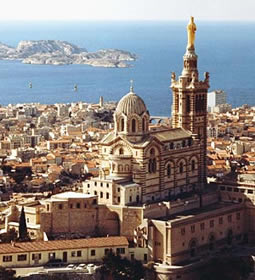
Uit: Einmal noch Marseille


“Das Telefon klingelte an einem Donnerstagmorgen, den ich mit meiner Freundin im Bett verbrachte. Ich hatte nicht im geringsten vor, den Hörer abzunehmen, aber meine Freundin sagte: Geh dran, du weißt schon. Sie entzog sich mir, ich schüttelte den Kopf und lief zum Telefon.

Wir haben die Diagnose, sagte mein Vater.

Guten Morgen, sagte ich.

Es ist keine Arthrose.

Mir wurde kalt.

Es ist keine Arthrose, hörst du?

Mein Vater fing an zu weinen, ich hätte nicht gedacht, daß er das kann. Als er sich schnäuzte, fragte ich: Soll ich morgen kommen? Erst morgen, murmelte er und legte dann auf.

Ich ging zurück zu meiner Freundin ins Bett. Sie lag nackt auf den Laken, glatt und perfekt. Sie schaute mich fragend an, ich sagte: Hat Zeit, sie sagte: Wenn du meinst, und dann liebten wir uns.

Ich weiß nicht, welche Rolle ich dabei spiele, sagte ich meiner Freundin beim Frühstück, aber du spielst am besten gar nicht erst mit. Es ist meine Mutter, und es ist ihre Krankheit. Du hast damit rein gar nichts zu tun. Meine Freundin wollte widersprechen, ich schob ihr ein Marmeladenbrot in den Mund und sagte: Nein.

Wie jedes Jahr rief meine Mutter Anfang November an und fragte: Aber Weihnachten bist du doch bei uns? Ich haßte dieses Telefonat, ich sagte jedesmal: Nein, dieses Jahr kann ich nicht kommen, und am Ende kam ich dann doch.”


 1378931-16c89d62383a7d25275373d482371e32.jpg

Björn Kern (Lörrach 22 april 1978)
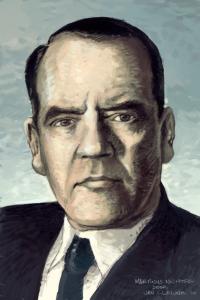


De Indiase schrijver
Chetan Bhagat werd geboren op 22 april 1974 in New Dehli Zie ook alle tags voor Chetan Bhagat op dit blog.


Uit: The 3 Mistakes of my Life


“I pointed to the monitor.
“Businessman?” she said as she finished reading the mail. She looked shaken up, too.
“And it is from Ahmedabad,” I said, “that is all we know.”
“You sure this is real?” she said, a quiver in her voice.
“This is not spam,” I said. “It is addressed to me.”
My wife pulled a stool to sit down. I guess we really did need some extra chairs.
“Think,” she said. “We got to let someone know. His parents may be.”
“How? I don’t know where the hell it came from,” I said. “And who do we know in Ahmedabad”
“We met in Ahmedabad, remember?” Anusha said. Pointless statement, I thought. Yes, we’d been classmates at IIMA years ago.
“So?”
“Call the institute. Prof. Basant or someone,” She sniffed and left the room. “Oh no, the daal is burning.”
There are advantages to having a wife smarter than you. I could never be a detective.
I searched the institute numbers on the Internet and called. An operator connected me to Prof. Basant’s residence. I checked the time, 10:00am in Singapore, 7:30am in India. It is a bad idea to mess with a Prof early morning.
“Hello?” a sleepy voice answered. Had to be the prof.
“Prof. Basant, Hi. This is Chetan Bhagat calling. Your old student, remember?”
“Who?” he said with nil curiosity. Bad start.
I told him about the course he took for us, and how we had voted him the friendliest prof.
“Oh that Chetan Bhagat,” he said, like he knew a million of them.
“You are a writer now, no?”


1378931-4527d038aade6afae0cc060adcccc92b.jpg 

Chetan Bhagat (New Dehli, 22 april 1974)


De Zwitstserse schrijver en müsicüs Peter Weber werd geboren op 22 april 1968 in Wattwil / Toggenbürg. Zie ook alle tags voor Peter Weber op dit blog.


Uit: Die Schweiz ist eine Stadt die deutsche Sprache ein Geschehen


“Mit dem Hochgeschwindigkeitszug der Deutschen Bahn - einer Frischluftzelle - durch die Deutschschweiz Richtung Hamburg, ich durchreise verschiedene Dialektzonen des Mittellands, gewisse Dialekte sind unsingbar, andere sind nur Gesang, hätte ich vom Zug aus behauptet, Sprachmelodie sei relativ zu verstehen, erklärt mir ein Linguist in Aarau, der die Computer zum Lesen bringt und Sprachmelodien erkundet: Es singen in unseren Ohren immer die anderen. Nach Basel schlafe ich die Rheinebene, Mittelwellen, Schwarzwald und Vogesenhügel, schlafe Weinberge, döse Frankfurt, Göttingen, erwache in Wohlklang: Wenn der Zug vor Hannover ins Flache gleitet, in den Hamburger Himmel, ins Immerblau, in den Immerniesel, verändert sich das Sprechgeschehen, Norddeutsch schwingt flacher, scheint horizontal gegliedert, schwingt unendliche Horizonte entlang, in langen Wellen, stimmhafte Konsonanten, sonor und weich, während die Vokale mit den Konsonanten verschliffen und gleichförmig gehalten sind, besonders schön klingts in meinen Ohren am fernen Nordende des Sprachraumes. Deutsch ist eine arbeitende Sprache, ein entstehendes Element, durch die unendliche Bindungs- und Fügungsfreiheit, durch die Möglichkeit, Neufügungen beliebig umzuschmelzen, zusammengesetzte Adjektive in Verben, Verben in Substantive, erhält sie höchste Lebendigkeit, nimmt unterschiedliche Strömungen in sich auf, zwischen Nord und Süd etwa findet reger Klangaustausch statt, in Norddeutschland beginne ich schnell und flacher zu sprechen, rechne dabei etwas viel Langsameres, in ganz anderer Weise Fliessendes um: Mein Dialekt ist eine Mischsprache zwischen dem Sanktgallischen und dem Mitteltoggenburgischen, diese beiden Dialekte sind sich ähnlich und unterscheiden sich deutlich, beide sind Formen des Alemannischen.”


1378931-61ee2d436a6606cdd59e0dc8c3fafee0.jpg 

Peter Weber (Wattwil, 22 april 1968)


De Duitse dichter, graficus en illustrator Gert W. Knop werd geboren op 22 April 1943 in Darmstadt.Zie ook alle tags voor Gert W. Knop op dit blog.


Zerbrechlich


Augenblicke zerinnen
in Einsamkeit,
zerbrechlich,
Hauch des Zweifels,
zerbrechlich,
wie Meißner Porzellan,
vergangener Tage.

Hingestreute Gedanken,
verloren in kurzen Sätzen,
Vergangenes ausgestreut
und vergessen.
Zerbrechliche Zukunft,
lautloser Horizont,
Meeresstille im Windschatten.

Vergangene Tage,
zerbrechlich wie Morgentau.
Gegenwart aufgeschlagen
im Buch der Stille,
Tagträume,
vergessen im Abendrot


 1378931-c255233e93a31d8c8735a1e2c176b1c5.jpg

Gert W. Knop (Darmstadt, 22 April 1943)


De Franse schrijfster Madame de Staë lwerd in Parijs geboren op 22 april 1766. Zie ook alle tags voor Madame de Staël op dit blog.


Uit: De l'Allemagne


„Mais, pour manifester cette existence toute intérieure, il faut qu'une grande variété dans les faits présente sous toutes les formes les nuances infinies de ce qui se passe dans l'ame. Si de nos jours les beaux-arts étoient astreints à la simplicité des anciens, nous n'atteindrions pas à la force primitive qui les distingue, et nous perdrions les émotions intimes et multipliées dont notre ame est susceptible. La simplicité de l'art, chez les modernes, tourneroit facilement à la [288] froideur et à l'abstraction, tandis que celle des anciens étoit pleine de vie. L'honneur et l'amour, la bravoure et la pitié sont les sentiments qui signalent le christianisme chevaleresque; et ces dispositions de l'ame ne peuvent se faire voir que par les dangers, les exploits, les amours, les malheurs, l'intérêt romantique, enfin, qui varie sans cesse les tableaux. Les sources des effets de l'art sont donc différentes à beaucoup d'égards dans la poésie classique et dans la poésie romantique; dans l'une, c'est le sort qui règne, dans l'autre, c'est la Providence: le sort ne compte pour rien les sentiments des hommes, la Providence ne juge les actions que d'après les sentiments. Comment la poésie ne créeroit-elle pas un monde d'une toute autre nature, quand il faut peindre l'œuvre d'un destin aveugle et sourd, toujours en lutte avec les mortels, ou cet ordre intelligent auquel préside un être suprême, que notre cœur interroge, et qui répond à notre cœur!”


 1378931-5f450c1f4ea9cd25ba8fa9066e182cd8.jpg

Madame de Staël (22 april 1766 – Parijs, 14 juli 1817)

Portret door Vladimir Borovikovski,  1812


Zie voor nog meer schrijvers van de 22e april ook mijn blog van 22 april 2012 deel 1 en ook deel 2 en eveneens deel 3.

Geschreven door Romenu om 19:15 Reageer op dit bericht

Charlotte Brontë, Michael Mann, Patrick Rambaud, John Mortimer, Gerrit Wustmann

De Britse schrijfster Charlotte Brontë werd geboren in Thornton op 21 april 1816. Zie ook alle tags voor Charlotte Brontë op dit blog.


Uit: The Correspondence of Charlotte Brontë


“Charlotte's reply to Robert Southey
16 March 1837

Sir—… At the first perusal of your letter I felt only shame and regret that I had ever ventured to trouble you with my crude rhapsody; I felt a painful heat rise to my face when I thought of the quires of paper I had covered with what once gave me so much delight, but which now was only a source of confusion; but after I had thought a little, and read it again and again, the prospect seemed to clear. You do not forbid me to write. You only warn me against the folly of neglecting real duties for the sake of imaginative pleasures; of writing for the love of fame... You kindly allow me to write poetry for its own sake, provided I leave undone nothing which I ought to do, in order to pursue that single, absorbing, exquisite gratification. . .
Following my father's advice—who from my childhood has counselled me, just in the wise and friendly tone of your letter—I have endeavoured not only attentively to observe all the duties a woman ought to fulfill, but to feel deeply interested in them. I don't always succeed, for sometimes when I'm teaching or sewing I would rather be reading or writing; but I try to deny myself; and my father's approbation amply rewarded me for the privation. Once more allow me to thank you with sincere gratitude. I trust I shall never more feel ambitious to see my name in print; if the wish should rise, I'll look at Southey's letter, and suppress it.”


 1378374-39eac6577583c17c477b942373250461.jpg

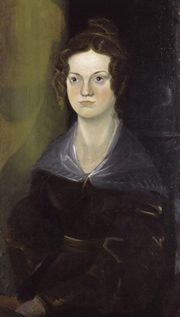
Charlotte Brontë (21 april 1816 – 31 maart 1855)

Portret door haar broer Patrick Branwell Brontë


De Duitse literatuurwetenschapper en musicus
Michael Mann werd als jongste kind van Thomas en Katia Mann geboren op 21 april 1919 in München. Zie ook alle tags voor Michael Mann op dit blog.


Uit: Als Michael Mann geboren wurde: München 1919 (Lezing door Wolfgang Frühwald)


“Den Studenten Ernst Toller, der seit dem 8. April Vorsitzender des Zentralrats der bayerischen Arbeiter-, Bauern- und Soldatenräte war und wenig später (seit Juli 1919 in einer fünfjährigen Festungshaft) ein weltberühmter Dramatiker und Lyriker wurde, haben seine kommunistischen Gegner damals spöttisch, aber auch ein wenig mit Respekt, den „König von Südbayern“ genannt. Nicht  nur Thomas Mann mokierte sich über den „Schwabinger Kunst-Einschlag“ des von den Kommunisten „Scheinräterepublik“ genannten anarchistischen Räteregimes, in dem Gustav Landauer, die viel verleumdete, aber integre Führungsfigur des deutschen Anarchismus, als Volksbeauftragter für Volksaufklärung amtierte. So konnte es nicht ausbleiben, dass am 13. April, das heißt am Palmsonntag 1919, die Münchner Garnison gegen die von Toller geführte Räteregierung putschte. Einige ihrer führenden Mitglieder, darunter der Schriftsteller Erich Mühsam und der vermutlich geisteskranke Volksbeauftragte für Äußeres Franz Lipp, wurden verhaftet und nach Nordbayern entführt. Der Münchner Hauptbahnhof fiel in die Hand der Putschisten.

Im Gegenzug rissen nun die Kommunisten die Macht an sich, ihr Anführer Eugen Leviné leitete seit dem 14. April, an demrote Truppen den Bahnhof zurückeroberten, eine kommunistische Räteregierung. Kommandant der Roten Armee wurde Rudolf Eglhofer, ein Matrose, der schon am Aufstand der deutschen Flotte im November 1918 teilgenommen hatte. In Thomas Manns

Tagebuch ist an diesem 14. April die bürgerliche Innensicht der Münchner Wirren bewahrt: „Post und Läden geschlossen, das Telephon gesperrt, sodass wir Maßnahmen für den Fall überlegen, dass die Geburt einsetzt, Katias Mutter kam zu Fuß in großer Aufregung. Auch die Trambahnen gehen natürlich nicht. Am Bahnhof die Oberleitung zerstört. Kämpfe für den heutigen Tag wahrscheinlich.”


 1378374-8c2d74af6d03c6a7d4ba72f58c6a6dce.jpg

Michael Mann (21 april 1919 - 1 januari 1977)


De Franse schrijver
Patrick Rambaud werd geboren op 21 april 1946 in Parijs. Zie ook alle tags voor Patrick Rambaud op dit blog.


Uit Il neigeait


“Devant, ils entendaient jurer. Le capitaine lança son trognon de pomme que des bâtards efflanqués se disputèrent en jappant, puis, de la main gauche, avec un geste noble, il dirigea sa monture minuscule dans l'embouteillage.
La voiture bâchée d'une cantine, en travers sur la chaussée, perturbait le flux. Un poulet survivant, ficelé par les pattes au châssis, perdait ses plumes en se débattant ; une bande de conscrits sales le reluquait avec des yeux de rôtisseurs. La cantinière et son cocher se lamentaient. L'un des chevaux de trait s'était effondré d'un coup ; des voltigeurs aux uniformes déchirés avaient posé leurs armes par terre pour le détacher du brancard.
D'Herbigny s'approcha. La carcasse était maintenant dételée mais les soldats, malgré leur nombre et leurs efforts, n'arrivaient pas à la pousser sur le bas-côté.
- Faudrait deux percherons bien costauds, disait le cocher.
- Y'en a pas, disait un voltigeur.
- Il suffit d'une corde solide, avança d'Herbigny sur un ton d'évidence.
- Et après, mon capitaine ? S'ra toujours aussi pesant, l'animal.
- Foutre non ! Vous l'attachez par les paturons et vous vous y mettez à dix pour le haler.
- On n'est pas plus valides que les chevaux, répondit un jeune sergent à la mine pâle.
D'Herbigny se retroussa les moustaches, il se gratta l'aile du nez, qu'il avait long et fort. Il s'apprêtait à diriger l'opération de déblaiement quand une immense clameur l'en empêcha. Cela venait de tout là-bas, vers l'horizon, au virage de la route. La clameur persistait, s'installait, formidable et soutenue. La horde ralentie par l'accident de la cantine se figea. Les visages se tournaient ensemble vers le vacarme.”


 1378374-1969c733b04f897783fa4956d75d4799.jpg

Patrick Rambaud (Parijs, 21 april 1946)


De Engelse schrijver John Mortimer werd geboren op 21 april 1923 in Londen. Zie ook alle tags voor John Mortimer op dit blog.


Uit: Rumpole and the Brave New World


“Despite all this I did reasonably well in criminal law with the help of useful little text books such as Murder in a Nutshell and All You Need to Know About Offences Against the Person

I did learn one important lesson. I had become addicted to the college sherry and as a ridiculous and useless gesture I boasted that I could drink a tankard full of it. I did so and fell to the ground and found the religious character who shared my rooms kneeling beside me in silent prayer. Since then I have resolutely refused sherry.

Looking back on it I am grateful for Hilda's persistence. If we hadn't gone to the concert I would have missed an occasion which led, through a tangle of possibilities, to one of the most curious and unusual crimes in the Rumpole history.

So there I was, wondering why old Handel or his scriptwriter couldn't say a thing once and let it go at that. Every line in The Messiah seemed to be repeated again and again. I looked around the crowded auditorium and was curious to see so many children all below undergraduate age assembled. There was a certain amount of giggling and pinching between them, but on the whole they sat quietly until the music came to an end.

During the interval a woman came on to the stage and asked for further contributions to "Music in Oxford". "I've only got folding money." "Of course you'll give them folding money, a £10 note will be adequate," Hilda told me. So I pulled out my wallet and parted with the cash. I only tell you this because of what happened when we were leaving the hall.”


 1378374-80c66b52824d4834b87e0b321a415876.jpg

John Mortimer (21 april 1923 – 16 januari 2009)

De schrijver met de acteur Leo McKern als Rumpole (rechts)


Onafhankelijk van geboortedagen:


De Duitse dichter Gerrit Wustmann werd in 1982 in Keulen geboren. Hij studeere Oriëntalstiek, politicologie en geschiedenis in Keulen en Bonn. Sinds 2006 werkt hij als freelance journalist en redacteur voor gedrukte en online media. Hij behoort ook tot het creatieve kernteam van deonafhankelijke filmmaatschappij Skyroad Films. Sinds 2001 publiceert hij poëzie en proza ​​in literaire tijdschriften en bloemlezingen, waaronder De Deutsche Lyrikkalender en Versnetze en in internationale media. Zijn gedichten zijn vertaald in het Engels, Italiaans, Turks en Perzisch.
In 2011 verscheen “Beyoglu Blues”, het eerste deel van een driedelige tweetalige gedichtencyclus over Istanbul. Wustman is samensteller van de bloemlezing “Hier ist Iran! Persische Lyrik im deutsch­sprachigen Raum”, dat het eerste uitgebreide overzicht van het werk van Iraanse dichteressen in Duitse ballingschap biedt. Hij ontving de postpoetry.NRW Poëzieprijs 2012.


berlin II


der stuhl auf dem du sitzt
vor dem spiegel in dem
die vorhänge entlichtet sind
es ist ein leiser stuhl
er lässt deine haut
rascheln die lehnen streicheln
deine hände die
nicht wissen wohin
deinen händen
entgleiten die wörter setzen sich fest
in den rillen und nischen
bis irgendeiner
sie findet


yağmur


das stete rauschen des regens
in beyoğlu der nasse glanz
auf leeren straßen und katzen
die wie du in hauseingängen
sitzen im widerschein der lichter
in den fenstern in den augen
der nacht der nachtgesänge
der stadt in deiner stimme
yağmur in deinen augen


 1378374-10e4f121668a132a08016e05ff456222.jpg

Gerrit Wustmann (Keulen, 1982)


Zie voor nog meer schrijvers van de 21e
april ook
mijn vorige blog van vandaag.

Geschreven door Romenu om 18:51 Reageer op dit bericht

Peter Schneider, Meira Delmar, Alistair MacLean, Népomucène Lemercier, María Elena Cruz Varela

De Duitse schrijver Peter Schneider werd geboren in Lübeck op 21 april 1940. Zie ook alle tags voor Peter Schneider op dit blog.


Uit: Rebellion und Wahn


“Man habe so vieles unterschrieben und versucht, eine irgendwie noch mögliche Balance zu halten ... "Aber solche schönen Überraschungen", schloss er seine Geschichte, die er sichtlich nicht zum ersten Mal preisgab, "können einem passieren, wenn man Äpfel klaut!"

In das anschließende Schweigen habe ich hineingefragt: "Und wie viele Patienten haben Sie damals nicht gesundgeschrieben?"

Halblaut wies mein Vater mich zurecht: "Hast du eigentlich kein anderes Thema im Moment?"

Der Wahrheit am nächsten kommt wohl der Befund, dass wir, die Schüler des Berthold-Gymnasiums in Freiburg, über die "dunklen Jahre" wenig wussten und auch nicht viel darüber wissen wollten. Wir vermissten dieses Wissen nicht. Erst der Eichmannprozess in Jerusalem und der nachfolgende Auschwitzprozess in Frankfurt öffneten mir die Augen. Danach war die Welt nicht mehr dieselbe.

Im Frühjahr 1966 zogen L. und ich in einer Hinterhofwohnung in Schöneberg zusammen. Die Wohnung bestand aus zwei großen Zimmern ohne Küche und Bad. Wir bauten eine Dusche ein, die Küche blieb ein Provisorium. L. hatte ihren Job an der FU aufgegeben und eine Arbeit in einem Antiquitätengeschäft angenommen.

Eines Abends, als sie von der Arbeit zurückkam, fragte sie mich, ob ich etwas dagegen hätte, wenn sie die Einladung eines ihrer Kunden zum Abendessen annähme. Ich erfuhr, dass dieser Kunde, ein distinguierter Mann im Blazer und mit Schnallenschuhen, sich einige Minuten vor dem Schaufenster herumgedrückt und die englischen Möbel und wohl auch die Verkäuferin inspiziert hatte, bevor er sich entschloss, das Geschäft zu betreten. Dann allerdings habe er den halben Laden leergekauft und L. in seine Villa irgendwo am Wannsee eingeladen.

"Und deine Antwort?", fragte ich.

Sie zuckte die Schultern. Der Kunde entstamme natürlich einer anderen Welt, genauer gesagt sei er ein Kapitalistenschwein, aber er habe erstaunlich gute Manieren an den Tag gelegt, bilde sich nichts auf seinen Reichtum ein und sei überhaupt ganz anders, als man ihn sich vorstelle ...”


1378371-4a0b093ea9706c7a4c69cc18de65eb90.jpg 

Peter Schneider (Lübeck, 21 april 1940)


De Columbiaanse dichteres
Meira Delmar (eig. Olga Isabel Chams Eljach) werd geboren in Barranquilla op 21 april 1922. Zie ook alle tags voor Meira Delmar op dit blog.


Returnings


I want to go back to what once upon
a time we all called our house,
to go up the old staircase,
to open the doors, the windows.

I want to stay there for a while, a while
listening to that same rain –  
I never knew for certain
if it was water or music.

I want to go out on the balconies
where a girl leaned out
to see the swallows arrive
that came back in December.

Maybe I can still find it
my eyes fixed on that time,
with a flame of distances
burning on the small forehead.

I want to cross the tepid patio
of sun and roses and grasshoppers,
to touch the whitewashed walls,
the absent echo of the cages.

Perhaps the doves are still
flying around it,
to show me the way
fading in the shadows.

I want to know if what I look for
is in a dream or in my childhood.
For I am lost and I must find myself,
face and soul, in another place.


Vertaald door Nicolás Suescún


 1378371-1d5f651e7ce2ed13a08c3018cbab08e6.jpg

Meira Delmar (21 april 1922 - 18 maart 2009)


De Schotse schrijver Alistair Stuart MacLean werd geboren op 21 april 1922 in Glasgow. Zie ook alle tags voor Alistair MacLean op dit blog.


Uit: Island


“They are only shadows and echoes, the animals a child's hands make on the wall by lamplight, and the voices from the rain barrel; the cuttings from an old movie made in the black and white of long ago.

    I first became conscious of the boat in the same way and at almost the same time that I became aware of the people it supported. My earliest recollection of my father is a view from the floor of gigantic rubber boots and then of being suddenly elevated and having my face pressed against the stubble of his cheek, and of how it tasted of salt and of how he smelled of salt from his red-soled rubber boots to the shaggy whiteness of his hair.

    When I was very small, he took me for my first ride in the boat. I rode the half-mile from our house to the wharf on his shoulders and I remember the sound of his rubber boots galumphing along the gravel beach, the tune of the indecent little song he used to sing, and the odour of the salt.

    The floor of the boat was permeated with the same odour and in its constancy I was not aware of change. In the harbour we made our little circle and returned. He tied the boat by its painter, fastened the stern to its permanent anchor and lifted me high over his head to the solidity of the wharf. Then he climbed up the little iron ladder that led to the wharf's cap, placed me once more upon his shoulders and galumphed off again.

When we returned to the house everyone made a great fuss over my precocious excursion and asked, "How did you like the boat?" "Were you afraid in the boat?" "Did you cry in the boat?" They repeated "the boat" at the end of all their questions and I knew it must be very important to everyone.”


 1378371-32d20da7002edf7f9a52ef600de9c751.jpg

Alistair MacLean (21 april 1922 - 2 februari 1987)


De Franse dichter en schrijver
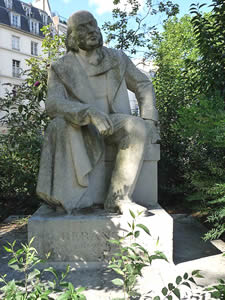
Népomucène Lemercier werd geboren op 21 april 1771 in Parijs. Zie ook alle tags voor Népomucène Lemercier op dit blog.


Uit: Pinto, ou la Journée d'une conspiration


“LE DUC.

Alvare , eh bien ! où sont nos chasseurs ?

ALVARE.

Fort loin. Le bois est coupé de fondrières , de torrens, et je n'ai pu les atteindre.

MADAME DOLMAR.

Les insensés ! n'avoir pas seulement fait halte avec nous : c'est ce comte de Commines qui les pousse.

LE DUC

Quelle joyeuse vie on mène au château d'Almada ! Nulle langueur, nul moment perdu. Chasse, jeux, festins, fêtes, de bons amis, des femmes, et la vie d'Epicure — Vivent l'indépendance et la joie !

ALVARE.

La notre sera bientôt troublée.

MADAME DOLMAB.

Pourquoi ?

ALVARE.

Le duc part demain pour Madrid.

LE DUC.

Demain , oui ; je pars demain.

MADAME DOLMAR.

La duchesse ne devait-elle pas vous faire ici ses adieux?

LE DUC.

Je l'attends : le trajet qui sépare ce lieu de la ville n'est pas long , et je ne veux pas donner matière aux discours par ma présence à Lisbonne. Ma prudence confondra la malignité”.


1378371-64582d7ba826247a67a6f886c5d4f497.jpg 

Népomucène Lemercier (21 april 1771 – 7 juni 1840)

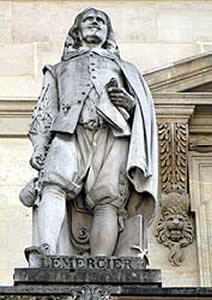
Standbeeld in Parijs


Onafhankelijk van geboortedagen:


De Cubaanse dichteres María Elena Cruz Varela werd in 1953 geboren in Colón. Zie ook alle tags voor María Elena Cruz Varela op dit blog.


Testament


My mother has arrived sprinkling my threshold

with holy water. I see her act.


I smile still. It’s no use. I say. In silence. 


My mother, her hands. For more than three decades

they nested tenderness among my clothes.

Now they loosen my hair. Hurried. Now they want to save me.


It’s no use. I say. In silence.


Through here everyone passes by without staying.

Through here they are passing by;

my mother, tenacious witness to my agony.


My mother. The one who never read Miguel Hernandez.

The one who drank Vallejo in my verses.

Without knowing she was drinking. And she wants to speak to

                                                                             God.

To present him with a writ of Habeas Corpus

while she walks back and forth, her eyes everywhere

sprinkling my chastity with holy water.


It’s no use. I say. In silence.


Poor mother, my mother.

She breaks her fury against everything. Magnificent attack.

She knows there are no remedies to cure my wrongs.

But she prays. The drops she scatters in my bedroom

seem more like tears of rage. She wants to battle

all the demons. Strip me of evil.


And I let her. It’s no use. I say. In silence.


And she is talking to God as if to a neighbor:

she wants to convince him with a dim allegation

that proves my innocence. And I see her.


I am rising in my flight;


“There is, Madre, in the world a place called . . .”

I don’t remember. I am a prisoner who forgets.

In the end it’s all the same; she keeps rotating,

ties the little knots of the shawl where is exposed

her mad hopes. And I let her.


“There is, Madre, in the world a place . . .

Maybe there we may meet again.” 


Vertaald door Mairym Cruz-Bernal en Deborah Digges


1378371-1995b3e7289b55d123e5565bcb48b528.jpg
María Elena Cruz Varela (Colón, 1953)

Geschreven door Romenu om 18:45 Reageer op dit bericht

Martinus Nijhoff, Jan Cremer, Jean Pierre Rawie, Sebastian Faulks, Jozef Deleu,Steve Erickson

De Nederlandse dichter, toneelschrijver en essayist Martinus Nijhoff werd geboren in Den Haag op 20 april 1894. Zie ook alle tags voor Martinus Nijhoff op dit blog.


Het uur U (Fragment)


Het was zomerdag.

De doodstille straat lag

te blakeren in de zon.

Een man kwam de hoek om.

Er speelde in de verte op de stoep

een groep kinderen, maar die groep

betekende niet veel,

maakte, integendeel,

dat de straat nog verlatener scheen.

De zon had het rijk alleen.

Zelfs zij, wier tweede natuur

hen bestemde, hier, op dit uur,

te wandelen: de student,

de dame die niemand kent,

de leraar met pensioen,

waren van hun gewone doen

afgeweken vandaag;

men miste, miste hen vaag.

Sterker: de werkman die

nog tot een uur of drie

voor bomen in 't middenpad

de kuilen gegraven had,

had zijn schop laten staan

en was elders heen gegaan.

Maar vreemder, ja inderdaad

veel vreemder dan dat de straat

leeg was, was het feit

der volstrekte geluidloosheid,

en dat de stap van de man

die zojuist de hoek om kwam

de stilte liet als zij was,

ja, dat zijn gestrekte pas

naarmate hij verder liep

steeds dieper stilte schiep.


De jongen


Hij zat in nachtgoed voor het raam en liet
Willoos het hoofd hangen op het kozijn -
Hij zag den landweg langs de heuvels zijn
Kronkel wegtrekken naar het blauw verschiet.


Hij dacht weer aan den ouden vreemdeling
Die ‘s middags in het herbergtuintje sliep -
Zij stoeiden om hem heen, en iemand riep
Hem wakker, en hij zat dwaas in hun kring.


Zijn verre blik zwierf langs hun ogen weg.
Hij zei: – (zijn baard was om den glimlach grijs)
‘Jongens, het leven is een vreemde reis,
maar wellicht leert een mens wat onderweg.’


Toen was het of een deur hem open woei
En hij de verten van een landschap zag,
Hij zag zichzelf daar wand’len in een dag
Zwellend van zomer en van groenen groei.


De weg buigt om en men keert nooit terug -
Hij kon zijn hart als voor ‘t eerst horen slaan,
Hij heeft zijn schoenen zacht weer aangedaan
En sloop door ‘t tuinhek naar de kleine brug.


 1377751-9830bc034e9994a017ee5a3b6012dc1f.jpg

Martinus Nijhoff (20 april 1894 – 26 januari 1953)


De Nederlandse schrijver en beeldend kunstenaar Jan Cremer werd geboren in Enschede op 20 april 1940. Zie ook alle tags voor Jan Cremer op dit blog.


1377751-27777822f46b410e2edf40b68771d559.jpg 

Tulpen, 1998


Uit: Ik Jan Cremer


“Ik bietste een piek en ging dan naar het nachtcafé. Het binnenkomertje nam ik voor eigen rekening, maar ik werd altijd lazerus. Van het knobelen, pokeren en bamzaaien. De vrouw van de kastelein (hoe heette ze nou toch?), ontzag me want ze had een oogje op me. Ze had een paar vreselijke kanjers. Als ze haar b.h. losknoopte golfde het roze vlees eruit. Ze had tieten als vulkanen, ze hingen tot haar navel. Wat ’n vleesmassa! Haar tepels waren knalrood; al haar bloed vloeide in die punten die ook weer vulkanen waren. Als ze aan de bar een gebroken bierviltje onder m’n neus duwde betekende het dat ik de volgende middag langs moest komen. Om drie uur. En als dan de geraniums voor het raam stonden was de kust veilig en kon ik de trap op. Ze zat dan altijd toevallig in bad. Dan moest ik haar rug afboenen met een spons. ‘Harder, harder,’ kreunde ze. Of ik moest op haar rug krabben. ‘Kom er ook in!’ zei ze. Maar ik keek wel uit: het was een bad met een elektrische installatie. En ik zou niet de eerste zijn die vanwege een klein foutje of kortsluitinkje paarsblauw en verstijfd uit de kuip getild moest worden.”


 1377751-159bfaaa62880dca70c004856c20fefb.jpg

Jan Cremer (Enschede, 20 april 1940)

Met Karel Appel (links) in 1963 in Parijs


De Nederlandse dichter en vertaler
Jean Pierre Rawie werd geboren op 20 april 1951 in Scheveningen. Zie ook alle tags voor Jean Pierre Rawie op dit blog.


Ten leste


Ik weet niet welke weg je neemt;
de sterren gaan hun baan ten einde
en straks is mij het dichtstbijzijnde,
het langst gewetene weer vreemd.

Maar wat bestond aan zon en maan
en wisseling van de getijden,
het was alleen opdat wij beiden
elkander niet zouden ontgaan.

Wij worden nu nog slechts door tijd
en ruimte van elkaar gescheiden,
maar sta mij aan het eind terzijde
als ik de einder overschrijd.

Wij hebben alles nog te goed
wat ons het leven heeft ontnomen:
uit welke verten ook, wij komen
elkaar ten leste tegemoet.


Bezit


Waar ik mijn hart aan heb verpand
in mijn verspild verleden,
het ging voorbij, het hield geen stand,
het is als zand vergleden.

Ik heb mij steeds het meest gehecht
aan sterfelijke zaken,
aan dingen die ik nimmer echt
tot mijn bezit kon maken.

Maar alles wat zo dierbaar was
dat ik het heb verloren,
is mij sinds ik het kwijt ben pas
voorgoed gaan toebehoren.


 1377751-1d2d3fc874aa51f500cc9e678b9d9bb8.jpg

Jean Pierre Rawie (Scheveningen, 20 april 1951)


De Britse schrijver en journalist Sebastian Faulks werd geboren op 20 april 1953 in Newbury. Zie ook alle tags voor Sebastian Faulks op dit blog.


Uit: Engleby


„I 'd better explain. It's October, the beginning of my final year. I left off this story all of a sudden because I had to do some work for exams. They didn't go as well as I'd hoped, but that doesn't matter.

This does matter, though.

In the summer vacation, I worked in my father's old paper mill for four weeks to make money. The work was boring (I pushed a rubber-wheeled wagon round the factory floor), but it wasn't hard. At some time the union had agreed that in return for deferring a pay rise, the workforce would have a ten minute break each hour ? excluding lunch and tea and the official tea breaks of fifteen minutes and the five-minute two-hourly toilet breaks. You could roll all the minutes up, if you liked, and leave an hour early. As a casual, I wasn't officially in the union, but I followed their rules and got paid in cash in a crinkly grey envelope on Friday afternoon.

Jennifer was going to Ireland to make a film with some people from Trinity. The director was called Stewart Forres and there were maybe thirty or so people, cast and crew an a few hangers-on, girlfriends, boyfriends, going to a large old country house near Tipperary.”


 1377751-6f9f3bf6b09c91554cd0f60ca3c04982.jpg

Sebastian Faulks (Newbury, 20 april 1953)


De Vlaamse dichter en schrijver
Jozef Hugo Maria Deleu werd geboren in Roeselare op 20 april 1937. Zie ook alle tags voor Jozef Deleu op dit blog.


Zaterdagmiddag


1

Zaterdagmiddag

niets gaat boven de tuin

de zonen en de zon.


Zij praat

gehaast in de gebaren

lacht verlegen -

het is zo voorbij


het sprokkelen van zomer

voor de winter, de herinnering

voor morgen als ze

ver weg zijn.


De moeder de vrouw

tot in de kruin van de haren

aanwezig.


2

In het avondlicht

verzamelt zij

zichzelf


tot een gedicht

dat languit

in de schemer ligt.

De rimpels


ongeschminkt

het leven

onbelogen

wachtend


tot alles

zingt

van onvermogen.


 1377751-8ff41d35b3186579e09bfbdb0f298f36.jpg

Jozef Deleu (Roeselare, 20 april 1937)


De Amerikaanse schrijver, essayist en criticus Steven Michael Erickson werd geboren op 20 april 1950 in Los Angeles. Zie ook alle tags voor Steven Erickson op dit blog.


Uit: Zeroville


8.

Afterward, he makes his way farther west along Sunset before cutting up to Hollywood Boulevard. Where once was the Moulin Rouge nightclub at the corner of Vine is now a psychedelic club called the Kaleidoscope. Vikar really has no idea what a psychedelic club is. Along Hollywood Boulevard are shabby old jewelry shops, used bookstores, souvenir stands, porn theaters. He's startled there are no movie stars walking down the street. Still hungry from having sacrificed his French dip sandwich at Philippe's, he orders a chicken pot pie at Musso & Frank, where Billy Wilder used to lunch with Raymond Chandler while they were writing Double Indemnity, both drinking heavily because they couldn't stand each other.


 1377751-db3e390a79ac05a7269e81f723dbb293.jpg

Steve Erickson (Los Angeles, 20 april 1950)


Zie voor nog meer schrijves van de 20e april ook mijn vorige blog van vandaag.

Geschreven door Romenu om 14:08 Reageer op dit bericht

Arto Paasilinna, Michel Leiris, Emmanuel Bove, Henry de Montherlant, Charles Maurras

De Finse schrijver Arto Paasilinna werd geboren op 20 april 1942 in Kittilä in Lapland. Zie ook alle tags voor Arto Paasilinna op dit blog.


Uit: The Year of the Hare (Vertaald door Herbert Lomas)


“The journalist sat on the edge of the ditch, holding the hare in his lap, like an old woman with her knitting on her knees, lost in thought. The sound of the car engine faded away. The sun set.

The journalist put down the hare on the grass. For a moment he was afraid it would try to escape; but it huddled in the grass, and when he picked it up again, it showed no sign of fear at all. 'So here we are,' he said to the hare. 'Left.'

That was the situation: he was sitting alone in the forest, in his jacket, on a summer evening. No disputing it—he'd been abandoned.

What does one usually do in such a situation? Perhaps he should have responded to the photographer's shouts, he thought. Now maybe he ought to find his way back to the road, wait for the next car, hitch a ride, and think about getting to Heinola, or Helsinki, under his own steam. The idea was immensely unappealing. The journalist looked in his briefcase. There were a few banknotes, his press card, his health insurance card, a photograph of his wife, a few coins, a couple of condoms, a bunch of keys, an old May Day celebration badge. 

And also some pens, a notepad, a ring. The management had printed on the pad Kaarlo Vatanen, journalist. His health insurance card indicated that Kaarlo Vatanen had been born in 1942.

Vatanen got to his feet, gazed at the sunset's last redness through the trees, nodded to the hare. He looked toward the road but made no move that way. He picked up the hare off the grass, put it tenderly in the side pocket of his jacket, and left the clearing for the darkening forest.”


1377749-06c2b2498faec73b5ec5fc7dcaf621db.jpg 

Arto Paasilinna (Kittilä, 20 april 1942)


De Franse dichter, schrijver en etholoog Michel Leiris werd geboren in Parijs op 20 april 1901. Zie ook alle tags voor Michel Leiris op dit blog.


Pase de Pecho


Niveau des cuisses

Niveau des reins

Niveau de la poitrine

Degrés des côtes recourbées en loggias

Gradins des muscles

O niveaux

Pour quel spectacle

Le corps entasse-t-il ces strates

Sédiments taraudés

Coulées de laves successives

Creusées en plaza de toros


Halètement de la terre harassée de minéraux

La série de passes naturelles se termine

Par une passe de poitrine

Au ras du cœur


A hauteur de sanglots


Avare


M’alléger

Me dépouiller


Réduire mon bagage à l’essentiel


Abandonnant ma longue traîne de plumes

De plumages

De plumetis et de plumets


Devenir oiseau avare

Ivre du seul vol de ses ailes


 1377749-328052dbe52542f453d8e63c970846e4.jpg

Michel Leiris (20 april 1901 – 30 september 1990)
Portret door Man Ray


De Franse schrijver
Emmanuel Bove (eig. Emmanuel Bobovnikoff) werd geboren op 20 april 1898 in Parijs. Zie ookalle tags voor Emmanuel Bove op dit blog.


Uit: Pages de journal

“19 octobre 1936

Arrivé hier, vers cinq heures et demie, à Paris. C'était ma troisième sortie après maladie. Les deux premières avaient été d'une dizaine de minutes. Raymond est venu nous chercher en taxi. Fin d'après-midi radieuse d'automne. (Radieux signifie qui a des rayons de lumière.) Soleil sur la campagne. C'était merveilleux.

Le soleil n'avait pas de chaleur. Il n'y avait pas de vent. La journée semblait être sortie du temps, à un moment heureux, et y avoir laissé toutes ses imperfections quotidiennes. L'arrivée à Paris a été plus extraordinaire encore.

Les grandes avenues. Les lumières naissantes, les phares des autos sans force. Il y avait eu alerte contre les avions la veille et les becs de gaz étaient encore bleus. Toutes les couleurs dans le ciel.

Cela, c'est la description sèche. Je voudrais montre ces nuances extraordinaires. Il faut attendre l'inspiration. Une fin d'après-midi de printemps.

La vie renaît. Des parfums enivrants vous frôlent une seconde.

C'est la belle saison qui s'annonce. Ce n'était pas cela, hier, le 19 octobre et pourtant, c'est la même avidité en moi. Elle a pour cadre, pour but, autre chose : les richesses de l'hiver, les désirs, les secrets. Lu aujourd'hui le Carnet vert de Dabit, dans la N.R.F. Tristesse. Je pense à notre déjeuner à l'Hôtel du Nord. Quel garçon étrange et plein de charme, étrange parce qu'incompréhensible, insaisissable ! Pas de classes sociales. Dans la partie de son cerveau où s'élaborait son oeuvre, il n'y en avait pas. J'en suis certain. C'est peut-être cela qui donnait à tous ses gestes, à tous ses actes, cette aisance, cette absence complète de gêne. Il voyait tout du point de vue des sentiment.”


 1377749-2833a5513c49199fc6f393e49e58efed.jpg

Emmanuel Bove (20 april 1898 – 13 juli 1945)

Met dochtertje


De Franse schrijver
Henry de Montherlant werd geboren op 20 (en niet op 21) april 1896 in Parijs Zie ook alle tags voor Henry de Montherlant op dit blog.


Uit: La Reine morte


“Au milieu de ce tumulte, on apporte sur une civière Inès morte, pendant que des cloches sonnent. Le tumulte à l'instant s'apaise. En silence, tous s'écartent du cadavre du Roi étendu sur le sol, se massent du côté opposé de la scène autour de la litière, à l'exception de Dino del Moro qui, après un geste d'hésitation, est resté un genou en terre auprès du Roi. A ce moment apparaît don Pedro; il se jette contre la litière en sanglotant. Le lieutenant Martins entre à son tour, portant un coussin noir sur lequel repose la couronne royale. Pedro prend la couronne et la pose sur le ventre d'Inès. Puis il se tourne vers l'officier des gardes; celui-ci dégaine; tous les gardes font de même et présentent l'épée. Alors Pedro force par son regard l'assistance à s'agenouiller; le Prince de la Mer ne le fait qu'à regret. Pedro s'agenouille à nouveau, et, la tête sur le corps d'Inès, il sanglote. L'assistance commence à murmurer une prière. A l'extrême droite, le corps du roi Ferrante est resté étendu, sans personne auprès de lui, que le page andalou agenouillé à son côté. Le page se lève avec lenteur, regarde longuement le cadavre, passe avec lenteur vers la civière, hésite, se retourne pour regarder encore le Roi, puis, se décidant, va s'agenouiller avec les autres, lui aussi, auprès de la civière. Le cadavre du Roi reste seul.”


 1377749-30b07d58b926f3c7aed5d819dc63df10.jpg

Henry de Montherlant (20 april 1896 – 21 september 1972)


De Franse schrijver Charles Maurras werd geboren op 20 april 1868 in Martigues Zie ook alle tags voor Charles Maurras op dit blog.


Uit: Un sage voyageur


« Il ne serait pas difficile de déduire des cruautés et des immoralités de cette éducation les trois quarts des maux qui affligent la jeunesse contemporaine. C’est à elle autant qu’aux familles, aux maîtres et aux savants que M. de Coubertin a destiné cet album de croquis qu’il a pris sur le vif de l’autre côté de la Manche.

Je ne veux pas résumer cet album. Je le recommanderais de toutes mes forces, si cela était nécessaire. Peut-être une paire de niais s’accordera-t-elle à traiter l’auteur d’anglomane. Dans tous les cas, son style est très français, son observation également — profonde sous un air léger. Rien du pédant. Il y a des divisions, des séparations de chapitres pour le plaisir des yeux.

M. de Coubertin a nettement marqué les deux points par lesquels l’âme anglaise s’affirme dans la méthode d’éducation — esprit d’individualisme et tendance à s’associer : ces deux traits sont loin de s’exclure.

Qu’est-ce qui fait la personne humaine ? Est-ce un peu plus ou moins d’idées dans le cerveau? Mais ceci est à tout le monde, monnaie courante qu’on acquiert, qu’on perd, qu’on peut rattraper. L’homme vrai (non le pantin logique de Cousin et consorts), c’est une volonté recouverte de muscles élastiques et durs. Il faut qu’il soit capable de se poser devant les autres, de leur résister ou d’agir sur eux. Et quel est le but de la vie ? Les Anglais pensent que c’est l’action. Savoir en vue de pouvoir : la devise est née en France, mais eux s’y conformaient avant qu’on la formulât chez nous.”


1377749-74a55af3dbb10111319ef81d0c2a9135.jpg 

Charles Maurras (20 april 1868 – 16 november 1952)


Zie voor nog meer schrijvers van de 20e april ook mijn vorige blog van vandaag.

Geschreven door Romenu om 14:03 Reageer op dit bericht

Herman Bang, Henry Tuckerman, Aloysius Bertrand, Pietro Aretino, Dinah Craik

De Deense schrijver Herman Bang werd geboren op 20 april 1857 in Asserballe. Zie ook alle tags voor Herman Bang op dit blog.


Uit: Katinka (Vertaald door Tiina Nunnally)


“She stepped out of the train car, down onto the platform, and she allowed herself to be kissed by Bai, and Marie took her things, and she had only one thought: to get inside the house - inside.
      It seemed to her that Huus had to be inside, waiting.
      And she went on ahead and opened the door to the parlor whicb was waiting, clean and nice; to the bedroom; to the kitchen where everything shone; clean and - empty.
     "My God, how thin the mistress has become," began Marie, who was lugging the bags.
      And then she really got started, while Katinka, pale and tired, collapsed into a chair - about the whole area. About  what had been happening and what was being said. Over at the inn thev had had summer guests who came with bedsteads and everything, and at the parsonage there were visitors right up to the rafters.
      And Huus, who had left ... all of a sudden…
      "Well, I thought so ... Because he was down here on that last evening and it seemed to me just like he was going around saying goodbye to everything - he sat in the parlor alone - and out in the garden ... and out here on the steps with the doves.''
      "When did he leave?" asked Katinka.
      "It must be about two weeks ago."
      "Two weeks ...
      Katinka carmly got up and went out into the garden. She walked along the pathway, over to the roses, down to the elder tree. He had been here to say goodbye to her - at every spot, in every place. She had no tears. She felt almost a quiet solemnity.
      There was a happy shout out on the road. She heard Agnes's voice in the midst of a great chorus. She practically jumped up. She didn't want to see them there just now, Agnes rushed at her like a big dog to welcome her, so that she almost fell over; and the entire party from the parsonage came in for hot chocolate, and a table was set in the garden beneath the elder, and they all stayed untill the 8 o'clock train.
      The train reared off, and they were gone again - you could hear them talking noisily along the road. Peter, the station hand, had taken the milk cans away, and Katinka was sitting alone on the platform.”


1377747-d1995cf53a1433d566be1e7b97e8c462.jpg 

Herman Bang (20 april 1857 – 19 januari 1912)


De Amerikaanse dichter, schrijver, essayist en criticus Henry Theodore Tuckerman werd geboren op 20 april 1813 in Boston, Massachusetts. Zie ook alle tags voor Henry Tuckerman op dit blog.


Ode


Shroud the banner! rear the cross!

Consecrate a nation's loss;

Gaze on that majestic sleep;

Stand beside the bier to weep;

Lay the gentle son of toil

Proudly in his native soil;

Crowned with honor, to his rest

Bear the prophet of the West.


How cold the brow that yet doth wear

The impress of a nation's care;

How still the heart, whose every beat

Glowed with compassion's sacred heat;

Rigid the lips, whose patient smile

Duty's stern task would oft beguile;

Blood-quenched the pensive eye's soft light;

Nerveless the hand so loth to smite;

So meek in rule, it leads, though dead,

The people as in life it led.


O let his wise and guileless sway

Win every recreant today,

And sorrow's vast and holy wave

Blend all our hearts around his grave!

Let the faithful bondmen's tears,

Let the traitor's craven fears,

And the people's grief and pride,

Plead against the parricide!

Let us throng to pledge and pray

O'er the patriot martyr's clay;

Then, with solemn faith in right,

That made him victor in the fight,

Cling to the path he fearless trod,

Still radiant with the smile of God.


Shroud the banner! rear the cross!

Consecrate a nation's loss;

Gaze on that majestic sleep;

Stand beside the bier to weep;

Lay the gentle son of toil

Proudly in his native soil;

Crowned with honor, to his rest

Bear the prophet of the West.


1377747-b5ac4ca4b9fd7595790f2153446dca6d.jpg
Henry Tuckerman (20 april 1813 – 17 december 1871)
Portret door Daniel Huntington


De Franse dichter Aloysius Bertrand werd geboren op 20 april 1807 in Ceva, Piemont, Italië. Zie ook alle tags voor Aloysius Bertrand op dit blog.


Le soir sur l'eau


La noire gondole se glissait le long des palais de marbre,
comme un bravo qui court à quelque aventure de nuit, un
stylet et une lanterne sous sa cape.

Un cavalier et une dame y causaient d'amour : - " Les
orangers si parfumés, et vous si indifférente ! Ah !
signora, vous êtes une statue dans un jardin !

- Ce baiser est-il d'une statue, mon Georgio ? pourquoi
boudez-vous ? - Vous m'aimez donc ? - Il n'est pas au
ciel une étoile qui ne le sache et tu ne le sais pas ?

- Quel est ce bruit ? - Rien, sans doute le clapotement
des flots qui monte et descend une marche des escaliers
de la Giudecca.

- Au secours ! au secours ! - Ah ! mère du Sauveur, quel-
qu'un qui se noie ! - Écartez-vous ; il est confessé ",
dit un moine qui parut sur la terrasse.

Et la noire gondole força de rames, se glissant le long
des palais de marbre comme un bravo qui revient de quelque
aventure de nuit, un stylet et une lanterne sous sa cape.


1377747-c1d08beb5721f09801f9ff1f0bf40ae8.jpg 

Aloysius Bertrand (20 april 1807 – 29 april 1841)

Buste in Dijon 


De Italiaanse schrijver Pietro Aretino werd geboren in Arezzo op 20 april 1492. Zie ook alle tags voor Pietro Aretino op dit blog.


Narcissus


Narcissus was a very silly boy:

He looked into a pool and fell in love

With his own image; I am not above

Narcissus’ folly, as my glances toy

With what my lips would like well to enjoy:

Before the lancers come, with thrust and shove

Of amorous war, I, like a billing dove,

Survey the scene of bellicose employ.

For this is what I live for, if you’d know —

Dearest, the mystery is solved at last;

I’ll whisper it, before I turn to dust.

Lie still and listen till your blood runs slow,

Till flowers are withered, ecstasy is past;

And then, too late! you’ll know the answer: Lust.


Vertaald door Samuel Putnam


 1377747-dca0ca540884faf485d0e602f7d3da89.jpg

Pietro Aretino (20 april 1492 - 21 oktober 1556)


De Engelse dichteres en schrijfster
Dinah Maria Craik werd geboren op 20 april 1826 in Stoke-on-Trent. Zie ook alle tags voor Dinah Craik op dit blog.


A German Student’s Funeral Hymn


WITH steady march across the daisy meadow,
And by the churchyard wall we go;
But leave behind, beneath the linden shadow,
One, who no more will rise and go:
Farewell, our brother, here sleeping in dust,
Till thou shalt wake again, wake with the just.

Along the street where neighbor nods to neighbor,
Along the busy street we throng,
Once more to laugh, to live and love and labor,--
But he will be remembered long:
Sleep well, our brother, though sleeping in dust:
Shalt thou not rise again--rise with the just?

Farewell, true heart and kindly hand, left lying
Where wave the linden branches calm;
'T is his to live, and ours to wait for dying,
We win, while he has won, the palm;
Farewell, our brother! But one day, we trust,
Call--he will answer Thee, God of the just.


 1377747-21b5b5bff8c916247a5dea69680d4072.jpg

Dinah Craik (20 april 1826 - 12 oktober 1887)

Geschreven door Romenu om 13:59 Reageer op dit bericht

Manuel Bandeira, n. c. kaser, Veniamin Kaverin, Pierre-Jean de Béranger, Louis Amédée Achard, Werner Rohner

De Braziliaanse dichter, schrijver en vertaler Manuel Carneiro de Souza Bandeira Filho werd geboren op 19 april 1886 in Recife. Zie ook alle tags voor Manuel Bandeira op dit blog.


English Sonnet No. 1


When death close my blank eyes --
Hard from so much vain torment,
What thoughts will fill your young bosom
Of all my sad moments?

I see you now distracted and distant:
More than distant - withdrawn. And I predict,
already now I predict, the exact moment
When your desire will no longer turn to another man

For you will have nothing, but your loneliness,
Left, abandoned! One day I shall leave
I shall sleep the ultimate sleep.
On that day you will cry… What matters? Cry.

Then I will feel much closer
To me, your uncertain heart.


Vertaald door Mariza G Goes


Naked


When you are dressed,
Nobody imagines
The worlds hidden
Under your clothes.

(Thus, in the day light,
We do not have notion
Of the stars that shine
In the deep sky.

But naked is the night
And naked in the night,
Vibrate your worlds
And the worlds of the night.

Your knees shine.
Your navel shines,
Shines all your
Abdominal lyre.

Your exiguous bosoms
- As two small fruits
in the firmness
Of your firm torso

- Your bosom shines)
Ah! Your hard nipples!
Your back!
Your flanks!
Ah, your shoulders!

When naked, your eyes
Become naked also:
Your gaze lingers longer,
Slower, more liquid.

Then, within those eyes,
I float, swim, jump,
Lower in a perpendicular
Diving!

I dive to the depths
Of your being, there where
Your soul smiles at me,
Naked, naked, naked.


1377421-3b0caf786129d454b3d3a2c1b0bb5444.jpg 

Manuel Bandeira (19 april 1886 – 13 oktober 1968)


De Zuidtiroolse dichter norbert c. kaser werd geboren op 19 april 1947 in Brixen. Zie ook alle tags voor norbert c. kaser op dit blog.


der hahn


wenn der hahn sich erhebt

an jedem morgen

seinen kamm neu stellt

rot voller blut und fleisch

da werfe ich ihm steine nach

an jedem morgen

dem hahn in

seine federn


wenn der hahn sich erhebt

an jedem abend

seinen kamm noch stellt

wo er doch schlafen soll

da werfe ich ihm sand ins lid

an jedem abend

dem hahn daß

er schlafe


drohung


ob faust

oder erhobener zeigefinger

die geste bleibt gleich

solange du die hand

nicht auftust


laß fallen

die drohung

den inhalt deiner hand


leere haende sind

        voll guter dinge


 1377421-28f9373613ba2ae623ec5f339089c5db.jpg

n. c. kaser (19 april 1947 – 21 augustus 1978)


De Russische schrijver
Veniamin Kaverin werd geboren op 19 april 1902 in Pskov. Zie ook alle tags voor Veniamin Kaverin op dit blog.


Uit: Two captains (Vertaald door Bernard Isaacs)


“And he started to swear.

Had I  known what was to happen within the hour, I should have tried to remember what he said, although just the same I could not  have repeated his words to anybody. He went on swearing for quite a time, and even spat in the fire  and gnashed his teeth.  Then  he fell silent, his head thrown back and knees clasped  in his  hands. I  stole a  glance at him and could have  felt sorry for him had he not been so unpleasant.

     Suddenly the man sprang  to his  feet. In  a few  minutes he was on the pontoon bridge, which  the soldiers had recently put across the river, and I caught a last glimpse of him on the opposite bank before he disappeared.

     My fire  had  gone out, but  even without  it I could see  clearly that there wasn't a single blue crab among my  catch, and a pretty  good catch it was. Just ordinary black crabs, none too big either-they went for a kopeck a pair at the local pub.

     A  cold wind began  to  draw  from  somewhere  behind  me. My  trousers billowed out and I began to feel cold. It was time to go home. I was casting my line,  baited with meat, for the last time when I saw the watchman on the opposite bank  running down the  slope. Spassky  Tower  stood high above the river  and the  hillside  leading down to the river bank was  littered  with stones.  There  was no sign of anybody on  the hillside, which  was  lit  up brightly by the moon, yet for some reason the watchman unslung this rifle as he ran.

     "Halt!"

     He did not fire, but just  clicked the bolt, and, at that very moment I saw the man  he  was after on  the pontoon bridge.  I am  choosing  my words carefully, because even now I am not quite certain it  was the man, who,  an hour ago, had  been sitting by my fire. But I can still see the scene before my eyes:  the  quiet  banks,  the widening  moon path on the  water  running straight from where I was to the  barges of the pontoon  bridge, and on  the bridge the long shadows of two running figures.”


1377421-1296197b0828d77a3fa7e1aab54c185f.jpg 

Veniamin Kaverin (19 april 1902 – 4 mei 1989)


De Franse dichter en schrijver van liedteksten Pierre-Jean de Béranger werd geboren op 19 april 1780 in Parijs. Zie ook alle tags voor Pierre-Jean de Béranger op dit blog.


LA BACCHANTE

Air : Fournissez un canal au ruisseau


Cher amant, je cède à tes désirs :
De champagne enivre Julie.
Inventons, s’il se peut, des plaisirs ;
Des Amours épuisons la folie.
Verse-moi ce joyeux poison ;
Mais sur-tout bois à ta maîtresse :
Je rougirais de mon ivresse,
Si tu conservais ta raison.

Vois déjà briller dans mes regards
Tout le feu dont mon sang bouillonne.
Sur ton lit, de mes cheveux épars,
Fleur à fleur vois tomber ma couronne.
Le cristal vient de se briser :
Dieux ! Baise ma gorge brûlante,
Et taris l’écume enivrante
Dont tu te plais à l’arroser.

Verse encor ! mais pourquoi ces atours
Entre tes baisers et mes charmes ?
Romps ces nœuds, oui, romps-les pour toujours :
Ma pudeur ne connaît plus d’alarmes.

Presse en tes bras mes charmes nus.
Ah ! je sens redoubler mon être !
À l’ardeur qu’en moi tu fais naître
Ton ardeur ne suffira plus.

Dans mes bras tombe enfin à ton tour :
Mais, hélas ! tes baisers languissent.
Ne bois plus, et garde à mon amour
Ce nectar où tes feux s’amortissent.
De mes désirs mal apaisés,
Ingrat, si tu pouvais te plaindre,
J’aurai du moins pour les éteindre
Le vin où je les ai puisés.


1377421-038aeed1bd0b7524b1efc15cff56c239.jpg 

Pierre-Jean de Béranger (19 april 1780 – 16 juli 1857)
Standbeeld in Parijs


De Franse schrijver Louis Amédée Achard werd geboren op 19 april 1814 in Marseille Zie ook alle tags voor Louis Amédée Achard op dit blog.


Uit: Madame Rose


“Georges était arrivé à la Maison-Blanche vers la fin d'avril avec Pétronille, Jacob et Tambour. Trois ou quatre grandes caisses remplies de livres l'avaient suivi; il avait acheté un canot, un fusil, des vareuses, tout cet attirail de chasse et de pêche sans lequel les jours à la campagne peuvent paraître longs, même les jours d'hiver, et bientôt on avait vu s'élever dans le bûcher une pile de bois propre à braver les neiges de décembre et les pluies de janvier.

On sait qu'à Paris un changement de domicile met dans les relations des barrières plus infranchissables que n'en mettait jadis entre les Capulet et les Montaigu la haine héréditaire de deux familles: en partant pour la campagne, Georges était donc parti pour l'exil. Deux ou trois de ses amis se souvenaient seuls qu'il habitait Maisons. Il vivait avec Tambour et causait avec ses livres. Ses habitudes étaient les plus régulières du monde; il ne savait jamais la veille ce qu'il ferait le lendemain. Il se couchait tard ou tôt, selon le temps, un jour avec le soleil, et le jour d'après avec la lune. S'il partait avec l'intention de lire dans quelque coin du bois, on le surprenait ramant sur la Seine avec l'ardeur inquiète d'un contrebandier. Il déjeunait tantôt chez lui, tantôt à l'auberge, ce qui, pour le dire en passant, faisait le désespoir de Pétronille, obligée de l'attendre auprès d'une côtelette qui noircissait sur le gril.”


 1377421-433ecc2aaba5edb8061dd172d8f79eb9.jpg

Louis Amédée Achard (19 april 1814 – 24 maart 1875)

Marseille


Onafhankelijk van geboortedata:


De Zwitserse schrijver Werner Rohner werd in 1975 geboren in Zürich. Zie ook alle tags voor Werner Rohner op dit blog.


Uit: Lektionen im Größenwahn


„Einmal, auf einer nicht ganz legalen Substanz, habe ich sogar geglaubt, ich sei Jesus. Ich fand das sehr romantisch, und vielleicht ginge es der Welt besser, wenn mehr Menschen glauben würden, sie seien Jesus. Andererseits, gäbe es wirklich mehrere Jesus (im Zeitalter des Klonens und der großen Anzahl gut erhaltener Jesushaare ist das gar nicht so unwahrscheinlich), so wäre es nicht auszuschließen, dass sie sich bloß gegenseitig taub predigen, die Schuld aus den Schuhen schieben oder gar bekriegen würden, wie man das von anderen Größenwahnsinnigen kennt. Aber genau um diesen Größenwahn geht es: Er ist unabdingbar fürs Schreiben. Man muss sich schon selbst Flügel verleihen, wenn man fliegen will. (Und wenn sie gegen innen wachsen, legt man sich einfach auf die Erdstrahlung, denn auch die trägt – das habe ich letzthin geträumt – und man muss nicht mehr albern mit den Armen flattern.) Den einen oder anderen Absturz wird man zwar nicht überleben (zum Beispiel, wenn man plötzlich nicht mehr unterscheiden kann zwischen dem Geschriebenen und der Erinnerung; oder wenn man Jahre an einem Manuskript arbeitet, um es am Ende nicht einmal mehr gut genug für die Schublade zu finden), aber für Kinder Gottes sollte das mit der Auferstehung kein allzu großes Problem darstellen. (Und es ist ja kein Geheimnis, dass Gott die Welt nach Jesus' Tod den Schriftstellern überlassen hat, seinen eigentlichen Söhnen und Töchtern.) Und auch Jesus ist doch nur so bekannt, weil er sich nach der Krise am Kreuz wieder aufgerappelt hat. Weil er glaubte, es würde ihm sein Leiden erleichtern, wenn er es teilen, mitteilen könnte, damit die Menschen begreifen, wie schwer er wirklich trägt; er war einfach sehr einsam. Einsamkeit und Größenwahn. Und vielleicht noch die Welt (mit der eigenen Erfindung) verändern wollen und glauben, man richte damit nicht nur Schaden an. Das sind nicht die schlechtesten Voraussetzungen zum Schreiben. Wenn man sich nicht selbst zum Gott erklärt, tut es niemand.”


 1377421-2362b3b481189e7d365602b0a6101030.jpg

Werner Rohner (Zürich, 1975)

Geschreven door Romenu om 20:56 Reageer op dit bericht

Marjoleine de Vos

De Nederlandse dichteres en schrijfster Marjoleine de Vos werd geboren in Oosterbeek op 19 april 1957 De Vos is redacteur kunst bij NRC Handelsblad (anno 2008). Ze schrijft over kunst, literatuur en koken, en heeft een tweewekelijkse column op de opiniepagina. Een selectie uit deze columns werd gebundeld in “Nu en altijd: bespiegelingen” (2000) en “Het is zo vandaag als altijd” (2011). Ze schrijft ook een column voor het opinieweekblad VolZin. In 2000 verscheen haar eerste poëziebundel “Zeehond graag”, in 2003 gevolgd door “Kat van sneeuw”. “Zeehond graag” werd genomineerd voor de VSB Poëzieprijs 2002. In het voorjaar van 2008 verscheen haar bundel “Het waait.”


Kinderspel

Zou je liever doof of blind of niet
meer voelen, zonder reuk of snoep?
Viel ooit de neus, is dat nu jammer.
Hij ruikt zo lekker soep en hoe vergeeld papier
hij weet de wierookgeur van Griekenland
snuift liefde, kerstboom, haring.
Dus nee hij niet, liever het oog dan
dat alle rimpels kent in het gezicht
de kleur van zalm en winteravondlucht?
Te erg dit spel voor wie met volle hand
het ongemengde deeg in duikt, vervuld
van botergeur en eierstruif en Bachs
verliefde alt: Bist du bei mir, gaan we
nog niet naar het einde maar vrolijk verder
kreeften eten en van elkaar het zachte vel.
Geen pink kan hier gemist, geen oogopslag.
Elk zintuig kent ons tot de puntjes
baant ons een weg de wereld in
en leidt ons tot verslaving.


Vluchteling

Vertel ik mijzelf steeds weer mijn leven
een verhaal verreisd door mijn woorden
ik hoorde nooit ergens, ik sprak mijn geen thuistaal
kijk lege portretten, ik ken geen verlangen
dan zijn in het heden volmaakt als een merel

zijn lijfje een peertje, niet groter
met veren
en zingen om niet.


 1576060-8ae26b6d8e909fb922ef657e0a07b9dd.jpg
Marjoleine de Vos (Oosterbeek, 19 april 1957)

Geschreven door Romenu om 00:00 Reageer op dit bericht

Bas Belleman, Clara Eggink, Kathy Acker, Joy Davidman, Richard Harding Davis, Henry Kendall

De Nederlandse dichter Bas Belleman werd in Alkmaar geboren “op een heldere ochtend in april” (Rottend Staal) van het jaar 1978. Zie ook alle tags voor Bas Belleman op dit blog.


Saturnus


het ruisen van de ringweg, je hoort
het niet meer. pas als het verstilt
en zelfs dan is het water op handen:
je voelt het niet verdampen.

vergeet niet hoe mijn liefde ruist.
de tuin is de tuin zonder liefde niet,
ik doe de afwas niet om borden schoon
te krijgen; wees in alle rust zwanger.

niets is zo'n vervuiling als gewenning,
iedere afslag voert naar nieuwbouw.
ik dompel mijn akkers in tact,
ik houd me vruchtbaar.

vruchtbaar is me soms te vruchtbaar.
toch houd ik me groot in babywinkels,
een vreedzame Saturnus, ik houd me vol,
leid alle gruis in een boog

om me heen. Ik knijp het oog van de orkaan
dicht. ik hoor alleen wat ruisen
en dat is houden van.
ik hoef nergens naar te luisteren.


Uit: Hout


een boom
en nog een boom
en nog een en nog een en nog een.


mijn ziel, waar ben je gebleven?
ik zwerf langs de stammen van de slaap
en kom je nergens tegen,
word wakker als een aap.


een bos is een boom
en nog een boom
en nog een en nog een en nog een.


de ziel is een droom
en nog een droom
en nog een en nog een en nog een.


Sonnet 76


Waarom is mijn gedicht verstoken van modes?
Zo zonder wending of plotselinge spurten?
Waarom kan ik in deze tijd niet flirten
Met vreemde elementen en nieuwe methodes?
Waarom ik telkens één en hetzelfde beraam,
En mijn ideeën hul in bekende patronen,
Zodat elk woord haast ritselt van mijn naam,
Om zo zijn oorsprong en zijn lot te tonen?
O lieve schat, het gaat mij steeds om jou,
En jij en liefde zijn mijn onderwerp.
Met al mijn talent pas ik een nieuwe mouw
Aan oude taal, en werp wat men verwerpt.
    De zon is elke dag zo oud, zo jong;
    Steeds zingt mijn liefde wat al eerder zong.


(William Shakespeare, vertaald door Bas Belleman.)


 1376758-d73bf275a0f623b37f4d41dedbd927f7.jpg

Bas Belleman (Alkmaar, april 1978)


De Nederlands dichteres en schrijfster Clara Eggink werd geboren in Utrecht op 18 april 1906. Zie ook alle tags voor Clara Eggink op dit blog.


Gebonden


Laat het niet uit zijn, God, na dezen dood
In leven en ellende om noodzakelijk brood.
Want waartoe gaaft gij dan uw bosschen, heiden,
Uw luchten, wateren en ruime weiden
Den mensch als lokaas van zijn plichten weg?
Het is het woord van velen dat ik zeg.
Er zijn er meer die snakken naar ontkomen,
Wier hart uw zeeën meedraagt in hun droomen.
Maar gij geeft traag getob en kleinen strijd
En waait er over met een wind van eeuwigheid.


 1376758-29a9a10082a9b64d0779aad03818be26.jpg

Clara Eggink (18 april 1906 - 3 maart 1991)


De Amerikaanse schrijfster, essayiste en feministe
Kathy Acker werd op 18 april 1947 in New York geboren als Karen Alexander. Zie ook alle tags voor Kathy Acker op dit blog.


Uit: Blood and Guts in High School


“That night, for the first time in months, Janey and her father sleep together because Janey can’t get to sleep otherwise. Her father’s touch is cold, he doesn’t want to touch her mostly ‘cause he’s confused. Janey fucks him even though it hurts her like hell ‘cause of her Pelvic Inflammatory Disease.

(…)


Johnny returned home (what is home?) and told Janey he had been drinking with Sally...She lay down on the filthy floor by his bed, but it was very uncomfortable: she hadn’t slept for two nights. So she asked him if he wanted to come into her bed.

The plants in her room cast strange, beautiful shadows over the other shadows. It was a clean, dreamlike room. He fucked her in her asshole cause the infection made her cunt hurt too much to fuck there, though she didn’t tell him it hurt badly there, too, cause she wanted to fuck love more than she felt pain .

(…)


Mr. Fuckface: You see, we own the language. Language must be used clearly and precisely to reveal our universe.

Mr. Blowjob: Those rebels are never clear. What they say doesn’t make sense.

Mr. Fuckface: It even goes against all the religions to tamper with the sacred languages.

Mr. Blowjob: Without language the only people the rebels can kill are themselves.”


1376758-61af1764fc16958501bdbe517ed2650f.jpg 

Kathy Acker (18 april 1947 – 30 november 1997)


De Amerikaanse dichteres en schrijfster
Joy Davidman werd geboren op 18 april 1915 in New York. Zie ook alle tags voor Joy Davidman op dit blog.


Amulet


I am a serpent that will suck your blood,

Sting your bare eyes, or pleasurably drain

Sweet fiery thought and honey from your brain,

And find the savor of your heartstrings good.


I will unclothe your spirit of your skin,

If I can take your body in the snare

That out of flowers and my flowering hair

And idle night these incantations spin.


1376758-4528fe6f8fed3082efc3883697331e88.jpg

Joy Davidman (18 april 1915 – 13 juli 1960)


De Amerikaanse journalist en schrijver Richard Harding Davis werd geboren op 18 april 1864 in Philadelphia. Zie ook alle tags voor Richard Harding Davis op dit blog.

Uit: Once Upon A Time


“Of the school of earnest young writers at whom the word muckraker had been thrown in opprobrium, and by whom it had been caught up as a title of honor, Everett was among the younger and less conspicuous. But, if in his skirmishes with graft and corruption he had failed to correct the evils he attacked, from the contests he himself had always emerged with credit. His sincerity and his methods were above suspicion. No one had caught him in misstatement, or exaggeration. Even those whom he attacked, admitted he fought fair. For these reasons, the editors of magazines, with the fear of libel before their eyes, regarded him as a "safe" man, the public, feeling that the evils he exposed were due to its own indifference, with uncomfortable approval, and those he attacked, with impotent anger. Their anger was impotent because, in the case of Everett, the weapons used by their class in "striking back" were denied them. They could not say that for money he sold sensations, because it was known that a proud and wealthy parent supplied him with all the money he wanted. Nor in his private life could they find anything to offset his attacks upon the misconduct of others. Men had been sent to spy upon him, and women to lay traps. But the men reported that his evenings were spent at his club, and, from the women, those who sent them learned only that Everett "treats a lady just as though she is a lady."

Accordingly, when, with much trumpeting, he departed to investigate conditions in the Congo, there were some who rejoiced.”


1376758-803ccaf3137300ab9ad445a11b1539d6.jpg 

Richard Harding Davis (18 april 1864—11 april 1916)


De Australische dichter Henry Kendall werd geboren op 18 april 1839 in Milton. Zie ook alle tags voor Henry Kendall op dit blog.


The Austral Months


April

The darling of Australia’s Autumn—now
Down dewy dells the strong, swift torrents flow!
This is the month of singing waters—here
A tender radiance fills the Southern year;
No bitter winter sets on herb and root,
Within these gracious glades, a frosty foot;
The spears of sleet, the arrows of the hail,
Are here unknown. But down the dark green dale
Of moss and myrtle, and the herby streams,
This April wanders in a home of dreams;
Her flower-soft name makes language falter. All
Her paths are soft and cool, and runnels fall
In music round her; and the woodlands sing
For evermore, with voice of wind and wing,
Because this is the month of beauty—this
The crowning grace of all the grace that is.


1376758-ce5a7d067974b8aeeee7ef73ca234e31.jpg
Henry Kendall (18 april 1839 – 1 augustus 1882)

Monument in Kendall


Zie voor nog meer schrijvers ook mijn blog van 18 april 2012 deel 1 en ook deel 2.

Geschreven door Romenu om 19:08 Reageer op dit bericht

Antoon Coolen, Ida Boy-Ed, Nick Hornby, Thornton Wilder

De Nederlandse schrijver Antoon Coolen werd geboren in Wijlre in Zuid-Limburg op 17 april 1897. Zie ook alle tags voor Antoon Coolen op dit blog.


Uit:Dorp aan de rivier


“Daar had hij lange jaren zijn geweldige hoogmoed over gehad, maar eens, toen het wekenlang regende en het water geweldig waste, toen er ook binnendijks huizen aan moesten geloven, ja, toen was Janus de Mert ook overstroomd geweest. Toen zat hij grif afgesloten, er waren koeien en varkens van hem verdronken, hij zat in de grote opkamer van angst te klagen, sindsdien had hij een noodklok op de nok van zijn zwaar rieten dak. Hij dacht, als het weer gebeurt, dan zal ik die noodklok luiden, dan kannen ze mij komen redden. Want Janus de Mert, dat mocht nou voor zijn doen in deze omgeving een flinke boer zijn, hij mocht zijn grootspraak hebben, hij had een hazenhart, hij was schrikkelijk laf en bang als het om zijn lijf en leden ging. Daar heeft hij later nog angst en ellende genoeg over gehad, toen was hij te zwak geworden om de noodklok te luiden. Ge hadt hier ook Cis de Dove, die woonde in een klein arkje op de Maas, dat had hij een beetje buiten het dorp achter het veer liggen. Hij had het zelf blinkend groen geverfd, en de spijlen van de ruitjes had hij blinkend wit geschilderd. Daar had hij pleizier in, in die heldere dingen. Hij had gordijnen van bloemen, zozeer als hij geraniums, foksia's en floxen voor het raam had staan, omdat hij daar zo'n pleizier in had. In het warm, klein, planken inwendige van zijn drijvende huis, hoe was het daar gesteld. Tegen de planken zoldering hingen honderden hazenstrikken bijeengekluwd. Cis zat daaronder dicht bij zijn dubbelloops jachtgeweer, en zijn petroleum-

[p. 10]

stel, dat gaf als het brandde 's avonds voor de koffie, die Cis ging zetten, nog op zekere zin gezelligheid. En Cis zijn onsterfelijke witte, bruingevlekte hondje, dat kefte als ge binnenkwaamt en het sprong voor geweld, om Cis, die zo doof was als een hout, te waarschuwen.”


1376134-e49302c3ddf012356b2bd073c0cafcf4.jpg

Antoon Coolen (17 april 1897 – 9 november 1961)


De Duitse schrijfster Ida Boy-Ed werd geboren op 17 april 1852 in Bergedorf (Hamburg). Zie ook alle tags voor Ida Boy-Ed op dit blog.


Uit: Um ein Weib


„Den Geburtstag des Bürgermeisters feierten Amtsrichter Dr. Fritz Haldenwang und Frau Antoinette mit einem Frühstück. Es war ein Sonntag im September. Die kleine Schar der Gäste saß im vollen Sonnenschein, der durch die Fenster der Veranda hereinkam und alle weinheißen Gesichter etwas zu rücksichtslos beleuchtete. Man hatte gut gegessen und getrunken.

Seit Bürgermeister Mandach mit imposanter Majestät und doch auch mit schmunzelndem Wohlwollen hier als Stadtvater wirkte, war in dem engeren Kreis, dem er gleich wie von selbst vorsaß, ein lebemännischer Ton aufgekommen. Wie lange der Bürgermeister sich in dem Amt behaupten würde, darauf war er selbst objektiv neugierig. Im allgemeinen war er nicht gut mit sich umgegangen. Er sagte es selbst, teils aus wirklicher Erkenntnis, teils aus einer gewissen grandiosen Art heraus, die sich lieber selbst scharf kritisiert, als daß sie die scharfe Kritik anderer abwartet.

Im Grunde genommen fiel es aber niemandem ein, ihn scharf zu beurteilen. Er trug ja seine eigene Haut zu Markte. Und selbst die alten Freunde, die wohl hier und da einige Schulden für ihn bezahlt hatten, rechneten ihm ihre Großmut nicht an, was doch gewiß bedeutsam war.

Erst hatte er ein paar Semester studiert, und von jener Zeit her stammte seine Freundschaft mit Amtsrichter Dr. Haldenwang. Sie waren beide Rhenanen und hatten in Freiburg unvergeßliche Zeiten zusammen durchbummelt. Dann, als Leutnant der Reserve, ging ihm bei einem köstlichen Manöver sein Soldatenherz auf. Es war das reinste Lustspielmanöver gewesen, im Stil des seligen Gustav von Moser. Herrliches Wetter, großartige Quartiere, bezaubernde Schloßfräuleins, Vorgesetzte von gutem Humor. Mandach kapitulierte. Aber als er ein paar Jahre die Einförmigkeit des Rekrutendrillens genossen und seine Finanzen derartig verworren wurden, daß seinen guten Freunden die Haare zu Berge standen – seine eigenen Kopfnerven waren nicht so reizbar –, nahm er seinen Abschied mit dem Titel eines Hauptmanns z.D. Wovon er dann lebte, bis ihm, dank der geradezu leidenschaftlichen Bemühungen seiner Freunde, die Bürgermeisterstelle in Wachow zufiel, war niemandem ganz klar.”


 1376134-6a3c0ad930ed56bd2745d85995bb0a1b.jpg

Ida Boy-Ed (17 april 1852 – 13 mei 1928)

Bergedorf, haven


De Engelse schrijver Nick Hornby werd geboren op 17 april 1957 in Redhill. Zie ook alle tags voor Nick Hornby op dit blog.


Uit: About a Boy


'Mushroom omelette and fries, please. And a Coke,' said Marcus.
'I'll have the swordfish steak,' said Will. 'No vegetables, just a side salad.'
Fiona was having difficulty deciding.
'Why don't you have the swordfish steak?' said Marcus.
'Ummm...'
He tried to get his mother's attention across the table without Will noticing. He nodded hard, once, and then he coughed.
'Are you all right, sweetie?'
He just felt it would help if his mum ordered the same food as Will. He didn't know why. It wasn't like you could talk for ages about swordfish steak or anything, but maybe it would show them that they had something in common, that sometimes they thought the same way about things. Even if they didn't. 'We're vegetarian,' said Marcus. 'But we eat fish.'
'So we're not really vegetarian.'


1376134-e80f6fa584352f4a1267b8314dbfd397.jpg

Hugh Grant en Nicholas Hoult in de film ‘About a boy” uit 2002


'We don't eat fish very often though. Fish and chips sometimes. We never cook fish at home, do we?'
'Not often, no.'
'Never.'
'Oh, don't show me up.'
He didn't know how saying she never cooked fish was showing her up - did men like women who cooked fish? Why? - but that was the last thing he wanted to do.
'All right,' he said. 'Not never. Sometimes.'
'Shall I come back in a couple of minutes?' said the waiter.
Marcus had forgotten he was still there.
'Ummm....'
'Have the swordfish,' said Marcus.
'I'll have the penne pesto,' said his mother. 'With a mixed salad.'


 1376134-8fb42070d3b5c4ff8ad5c282f876851a.jpg

Nick Hornby (Redhill, 17 april 1957)


De Amerikaanse schrijver Thornton Niven Wilder werd geboren op 17 april 1897 in Madison, Wisconsin. Zie ook alle tags voor Thornton Wilder op dit blog.


Uit: The Eighth Day


“For almost twenty years these ladies were in and out of one another’s house, as were their children. They got on well together without one vibration of sympathy. Beata Ashley lacked the imagination or freedom of attention to penetrate the older woman’s misery. (John Ashley was well aware of it but did not speak.) One art they shared in common: both were incomparable cooks; one condition: both were far removed from the environment that had shaped their early lives.

For these two families the first ten years went by without remarkable event: pregnancies, diapers, and croup; measles and falling out of trees; birthday parties, dolls, stamp collections, and whooping cough. George was caught stealing Roger’s three-sen stamp; Roger had his mouth washed out with soap and water for saying “hell.” Felicite, who aspired to be a nun, was discovered sleeping on the floor in emulation of some saint; Constance refused to speak to her best friend Anne for a week. You know all that.”


 1376134-4a6c9b2341a203731c168cf7d7391160.jpg

Thornton Wilder (17 april 1897 – 7 december 1975)


Zie voor nog meer schrijvers van de 17e april ook mijn blog van 17 april 2012 deel 2 en ook   mijn blog van 17 april 2011 deel 2 en eveneens deel 3.

Geschreven door Romenu om 19:20 Reageer op dit bericht

Vincent Corjanus

De Nederlandse dichter Vincent Daniel Corjanus werd geboren op 17 april 1995 in Zwolle. Toen hij nog maar 8 jaar oud was probeerde hij al woorden te vangen op papier. Zijn grote inspiratiebron is Frank Boeijen. Zijn eerste bundel “Woorden wonen in huizen” verscheen in 2012. In 2013 verscheen de tweede bundel “De Zichtbare Ziel.” Corjanus nam deel aan diverse evenementen als Dichters op het Erf in Den Andel en Poetry Musica in Amsterdam


Liefde online

Een foto van liefde
op de achtergrond van je telefoon.
Een tweet op mijn timeline,
een kus in een discotheek.
#lovehim #love.

Op facebook je ‘’vrienden’’
overtuigen dat het allemaal zo mooi en gezellig was.

Liefde online.
De liefdesbrieven zijn digitaal.
Een pot inkt gesmeten naar je beeldscherm.

Een slecht toneelstuk
in een afgebrand theater.
Romeo en Julia door de slechtste acteurs, geacteerd.
Liefde ingeblikt
in het internet.


 1561341-db18f9be17a4386e0d6d8bc76f4a93f6.jpg
Vincent Corjanus (Zwolle, 17 april 1995)

Geschreven door Romenu om 00:00 Reageer op dit bericht

Kingsley Amis, Patricia De Martelaere, Sarah Kirsch, Tristan Tzara, Ewald Vanvugt, Jan Luyken

De Engelse schrijver Kingsley Amis werd geboren op 16 april 1922 in Londen. Zie ook alle tags voor Kingsley Amis op dit blog.


Uit: Lucky Jim


“He and Welch might well be talking about history, and in the way history might be talked about in Oxford and Cambridge quadrangles. At moments like this Dixon came near to wishing that they really were. He held on to this thought until animation abruptly gathered again and burst in the older man, so that he began speaking almost in a shout, with a tremolo imparted by unshared laughter:

'There was the most marvellous mix-up in the piece they did just before the interval. The young fellow playing the viola had the misfortune to turn over two pages at once, and the resulting confusion ... my word ...'

Quickly deciding on his own word, Dixon said it to himself and then tried to flail his features into some sort of response to humour. Mentally, however, he was making a different face and promising himself he'd make it actually when next alone. He'd draw his lower lip in under his top teeth and by degrees retract his chin as far as possible, all this while dilating his eyes and nostrils. By these means he would, he was confident, cause a deep dangerous flush to suffuse his face.

Welch was talking yet again about his concert. How had he become Professor of History, even at a place like this? By published work? No. By extra good teaching? No in italics. Then how? As usual, Dixon shelved this question, telling him­self that what mattered was that this man had decisive power over his future, at any rate until the next four or five weeks were up. Until then he must try to make Welch like him, and one way of doing that was, he supposed, to be present and conscious while Welch talked about concerts. But did Welch notice who else was there while he talked, and if he noticed did he remember, and if he remembered would it affect such thoughts as he had already? Then, abruptly, with no warning, the second of Dixon's two predicaments flapped up into consciousness. Shuddering in his efforts to repress a yawn of nervousness, he asked in his flat northern voice: 'How's Margaret these days ?'


 1375517-c50550490304fdefec3674a830f6805c.jpg

Kingsley Amis (16 april 1922 – 22 oktober 1995)

Kingsley en zijn zoon Martin Amis in 1992


De Vlaamse schrijfster, filosofe, hoogleraar en essayiste Patricia De Martelaere werd geboren in Zottegem op 16 april 1957. Zie ook alle tags voor Patricia de Martelaere op dit blog.


Uit: Een verlangen naar ontroostbaarheid


“Zelfmoord is ‘in’. Meer en meer mensen denken erover, meer en meer mensen doen het, meer en meer mensen proberen het ook eens een keertje. Maar meest van al nog wordt er over zelfmoord gesproken - door psychologen, sociologen en filosofen, door dokters en priesters, door critici, moralisten en sympathisanten, door sekteleiders, begeleiders en weifelende vertwijfelden.

Bij dit alles is reeds vaak gewezen, vanuit diverse hoeken, op een merkwaardige band die zou bestaan tussen de zelfmoord en het kunstenaarschap, meer in het bijzonder het schrijverschap. Tal van studies zijn gewijd aan het suïcidaal gedrag van schrijvers als Sylvia Plath, Cesare Pavese en Fernando Pessoa, aan het bestendige gevecht tegen de verlokking van zelfmoord dat het leven van een onnoemelijk aantal andere schrijvers karakteriseerde, en aan de uitgesproken cultus van het literaire zelfmoordideaal in de romantische - en later de dadaïstische - kunstconceptie. Ondanks dit alles is de band tussen het schrijven en de zelfmoord relatief onopgehelderd gebleven. Want niettegenstaande hun manifeste, latente of onbewuste zelfmoordobsessies blijft het een feit dat de meeste schrijvers het hebben volgehouden tot ze een natuurlijke dood stierven, vaak zelfs op onbetamelijk hoge leeftijd, en dat ze zich intussen vrij succesvol en comfortabel met hun schrijverschap hebben weten te verzoenen. Weliswaar zijn er kunstenaars, uit heden en verleden, die te kennen geven dat ‘de kunst en zij alleen’ hen van de zelfmoord heeft weerhouden. Maar waarom de kunst, en niet bijvoorbeeld het pottenbakken, het kleiduifschieten of het postzegelverzamelen? Wat is er in het schrijven dat een mens, in plaats van hem tot zelfmoord te drijven - wat aannemelijker zou zijn -, juist van de zelfmoord doet afzien?”


1375517-5c198a20a8297424d2da43c72467d826.jpg 

Patricia De Martelaere (16 april 1957 – 4 maart 2009)


De Duitse schrijfster en dichteres Sarah Kirsch (eig. Ingrid Hella Irmelinde Kirsch) werd geboren op 16 april 1935 in Limlingerode. Zie ook alle tags voor Sarah Kirsch op dit blog.


THE LAST OF NOVEMBER


Erst in die Wechselstuben am Zoo

die letzten silbernen Pferdchen aus allen

Manteltaschen

Umtausch – ein toller Kurs

es blieb noch was übrig

Der Wind, der Wind, unhimmlisches Kind

blies uns im schönen Kabriolett an den Reichstag

Schneebeeren rieselten

kleines Getier raschelte an dem furchtbaren Ort

stellenweis grüner Kalk

das ist die Mauer

Türmchen und Aussichtspodeste hüben und drüben

alles registrieren sagt er

wie Hemingway auf dem Rückzug in Spanien

das stinkende Pferd

wir fuhren und flogen dreimal um den frisch

vergoldeten Engel

trafen unsere töten Dichter in ihren Wagen

die flogen schneller und schöner als wir.


Die Luft riecht schon nach Schnee

Die Luft riecht schon nach Schnee, mein Geliebter
Trägt langes Haar, ach der Winter, der Winter der uns
Eng zusammenwirft steht vor der Tür, kommt
Mit dem Windhundgespann. Eisblumen
Streut er ans Fenster, die Kohlen glühen im Herd, und
Du Schönster Schneeweißer legst mir deinen Kopf in den Schoß
Ich sage das ist
Der Schlitten der nicht mehr hält, Schnee fällt uns
Mitten ins Herz, er glüht
Auf den Aschekübeln im Hof Darling flüstert die Amsel


 1375517-d643384bbb76bb7535e7327ca7284c1b.jpg

Sarah Kirsch (Limlingerode, 16 april 1935)


De Franse dichter, dadaïst en surrealist Tristan Tzara werd op 16 april 1896 in de Roemeense plaats Moinesti geboren als Samuel Rosenstock. Zie ook alle tags voor Tristan Tzara op dit blog.


(DADAist eine jungfräuliche Mikrobe)


DADAist eine jungfräuliche Mikrobe
Dada ist gegen das teure Leben
Dada
Aktiengesellschaft für die Ausbeutung von Ideen
Dada hat 391 verschiedene Haltungen und Farben je nach
dem
Geschlecht des Vorsitzenden
Es wandelt sich um – behauptet – sagt zugleich das
Gegenteil –
ohne Bedeutung – brüllt – angelt.
Dada ist das Chamäleon der schnellen und interessierten
Veränderung.
Dada ist gegen die Zukunft. Dada ist tot. Dada ist idiotisch.
Es lebe Dada. Dada ist keine literarische Schule, brüllt


 1375517-b34158e624d63db1da1c060799c261de.jpg

Tristan Tzara (16 april 1896 – 24 december 1963)

Cartoon door David Baldinger 


De Nederlandse schrijver Ewald Vanvugt werd geboren op 16 april 1943 in 's-Hertogenbosch. Zie ook alle tags voor Ewald Vanvugt op dit blog.


Uit: Roofgoed


“Bijna de hele golvende buitenwand is van glas: de hoge zalen en hallen kijken uit op de polder waar ’s zomers vette koeien in het groen grazen en ’s winters soms de lokale bevolking door de sneeuw voorbij schaatst. De negen ranke witte palen van de windmolens die de energie voor het gebouw opwekken, staan in drie rijen van drie achter de parkeerplaatsen. Binnen durven de ruime vitrines de zwevende vormen van het gebouw te herhalen.

Het silhouet van het Europees Museum van het Wereldgeheugen is nu al een internationaal bekend beeldmerk van Amsterdam. En sinds de opening blijft het nieuwe schouwpaleis hoge aantallen bezoekers naar de stad trekken, de positiefste voorspellingen nog overtreffend.

Net als in elk mammoetmuseum - het Louvre, de Hermitage, de Uffizi, het British Museum, het Museum van het Vaticaan – kan een bezoeker in het Europees Museum in veel galerijen temidden van het massale aanbod vaak niet kiezen welke verbazingwekkende schepping het eerst nauwkeuriger te bekijken. Hij of zij dreigt te verdrinken of is al ondergegaan in de overvloed aan beelden, voorwerpen, schilderingen, documenten. Overweldigd door de veelheid glijdt de aandacht vluchtig over de meeste spullen en deze onderdompeling in de cultuurgoederen geeft een geweldig plezier omdat we delen in de scheppingskracht van de vele vaklui en kunstenaars.”


1375517-be87c83a57367c78686b9bc7ee85e35a.jpg 

Ewald Vanvugt (’s-Hertogenbosch, 16 april 1943)


De Nederlandse dichter en etser
Jan Luyken werd geboren in Amsterdam op 16 april 1649. Zie ook alle tags voor Jan Luyken op dit blog.


Het Kind Gewaarschouwd


Die Oog, en Ooren heeft gemaakt,

Denkt, dat hy hoord, en dat hy waakt.

Het Kind en moet het niet vergeeten,

Dat alles wat van hem geschied,

Schoon zyne Oud'ren dat niet weeten,

Dat Onzen Lieven Heer dat ziet;

Die 't al kan zien, en al kan hooren,

Van alle die'er zyn gebooren.


De Boog


Schiet niet in 't wild; maar, doeld op 't wit.

Daar Eeuwig voordeel achter zit.

Elk rekt (als 't Kind) zyn spanning uit,

En schiet, na 't geen, dat niet beduid:

Maar and'ren, die wat meer beoogen,

Die schieten (om een groote vrucht)

Na God, met eene scherpe zucht,

Van haar gespannen herte Boogen.


  1375517-0b49687b71815471ad0a7ffc2435f8eb.jpg

Jan Luyken (16 april 1649 – 5 april 1712)

Illustratie bij De Boog


Zie voor nog meer schrijvers van de 16e april ook mijn blog van 16 april 2012 deel 2 en ook mijn blog van 16 april 2011 deel 3.

Geschreven door Romenu om 17:55 Reageer op dit bericht

Tomas Tranströmer, Henry James, Daniël Samkalden, Jérôme Lambert, Benjamin Zephaniah, Wilhelm Busch, Ina Boudier-Bakker

De Zweedse dichter en schrijver Tomas Tranströmer werd geboren in Stockholm op 15 april 1931. Zie ook alle tags voor Tomas Tranströmer op dit blog.


The Indoors is Endless


It’s spring in 1827, Beethoven
hoists his death-mask and sails off.

The grindstones are turning in Europe’s windmills.
The wild geese are flying northwards.

Here is the north, here is Stockholm
swimming palaces and hovels.

The logs in the royal fireplace
collapse from Attention to At Ease.

Peace prevails, vaccine and potatoes,
but the city wells breathe heavily.

Privy barrels in sedan chairs like paschas
are carried by night over the North Bridge.

The cobblestones make them stagger
mamselles loafers gentlemen.

Implacably still, the sign-board
with the smoking blackamoor.

So many islands, so much rowing
with invisible oars against the current!

The channels open up, April May
and sweet honey dribbling June.

The heat reaches islands far out.
The village doors are open, except one.

The snake-clock’s pointer licks the silence.
The rock slopes glow with geology’s patience.

It happened like this, or almost.
It is an obscure family tale

about Erik, done down by a curse
disabled by a bullet through the soul.

He went to town, met an enemy
and sailed home sick and grey.

Keeps to his bed all that summer.
The tools on the wall are in mourning.

He lies awake, hears the woolly flutter
of night moths, his moonlight comrades.

His strength ebbs out, he pushes in vain
against the iron-bound tomorrow.

And the God of the depths cries out of the depths
‘Deliver me! Deliver yourself!’

All the surface action turns inwards.
He’s taken apart, put together.

The wind rises and the wild rose bushes
catch on the fleeing light.

The future opens, he looks into
the self-rotating kaleidoscope

sees indistinct fluttering faces
family faces not yet born.

By mistake his gaze strikes me
as I walk around here in Washington

among grandiose houses where only
every second column bears weight.

White buildings in crematorium style
where the dream of the poor turns to ash.

The gentle downward slope gets steeper
and imperceptibly becomes an abyss.


Vertaald door Robin Fulton


1374749-65c0ec6c33a8fd43ba0a29956cda4a59.jpg 

Tomas Tranströmer (Stockholm, 15 april 1931)

In 1965


De Amerikaanse schrijver Henry James werd geboren in New York op 15 april 1843. Zie ook alle tags voor Henry James op dit blog.


Uit: Italian Hours


“It is a great pleasure to write the word; but I am not sure there is not a certain impudence in pretending to add anything to it. Venice has been painted and described many thousands of times, and of all the cities of the world is the easiest to visit without going there. Open the first book and you will find a rhapsody about it; step into the first picture-dealer's and you will find three or four high-coloured "views" of it. There is notoriously nothing more to be said on the subject.

Every one has been there, and every one has brought back a collection of photographs. There is as little mystery about the Grand Canal as about our local thoroughfare, and the name of St. Mark is as familiar as the postman's ring. It is not forbidden, however, to speak of familiar things, and I hold that for the true Venice-lover Venice is always in order. There is nothing new to be said about her certainly, but the old is better than any novelty. It would be a sad day indeed when there should be something new to say. I write these lines with the full consciousness of having no information whatever to offer. I do not pretend to enlighten the reader; I pretend only to give a fillip to his memory; and I hold any writer sufficiently justified who is himself in love with his theme.”


 1374749-c823f4b4e6040c0ff68c0a8a27a31dbb.jpg

Henry James (15 april 1843 - 28 februari 1916)

Portret door Jacques-Émile Blanche


De Nederlandse schrijver, columnist, kleinkunstenaar en zanger
Daniël Samkalden werd geboren op 15 april 1979 in Naarden. Zie ook mijn blog van 15 april 2011.


Uit: Straf (Column)


“Ik heb mijn fraaie Apple-laptop vernietigd. Een fatale afloop van een reeks broeierige dagen sinds uit het niets de ‘enter’-toets van mijn toetsenbord het voor gezien hield en losbrak in redeloze anarchie. De ‘enter’-toets deed het in deze nieuwe boosaardige realiteit niet óf de ‘enter’-toets deed het onophoudelijk. In het ene geval kon ik geen regels meer openlaten, niet meer chatten, geen zoekopdrachten meer uitsturen. In het andere geval klonk een ziek geratel en zeilden mijn teksten weg over een eindeloos aantal lege pagina’s, werden wachtwoorden en pincodes te vroeg bekrachtigd, accounts onbruikbaar verklaard en passen geblokkeerd. Pure hysterie. Hysterie die ik een halt probeerde toe te roepen door met mijn rechterhand op de ‘enter’-toets te slaan. Soms ging het dan even goed en was de orde hersteld, maar steeds sneller ging het weer mis. Eerst sloeg ik nog met een zeker respect voor de geniale techniek die ik niet kon doorgronden. Gaandeweg sloeg ik harder en harder, als straf. Als straf voor de ongehoorzaamheid. Als represaille voor het onacceptabele getreiter van mijn computer. ’s Nachts voelde ik in mijn duim het bloed kloppen en de pijn zeuren als ik de tv had uitgezet en wachtte tot ik in slaap viel. ’s Ochtends zag ik het bijproduct van deze pijn als ik mijn laptop opende en schrok van een steeds dieper wordende holte, een vallei, rechts van het toetsenbord. “Per ongeluk laten vallen”, zei ik toen een vriend mij vroeg wat er in godsnaam was gebeurd en ik hield voor me dat een sadistisch machtsspel gaande was.”


1374749-f027cdeaf006b9484550fb2d9f715abf.jpg 

Daniël Samkalden (Naarden, 15 april 1979)


De Franse schrijver Jérôme Lambert werd geboren op 15 april 1975 in Nantes. Zie ook alle tags voor Jérôme Lambert op dit blog.


Uit: J'aime pas le lundi


“Ce qui me dérange, c'est quand le tyran qui règne sur ses sujets en profite et exige de chacun un peu plus chaque jour. J'ai toujours peur que les gens se perdent eux même, qu'ils ne se retrouvent plus et ne comprennent que des années plus tard, enfin libérés, à quel point ils furent malheureux. Sans parler du nombre d'années supplémentaires pour soigner tout ça, se restaurer, se reconstruire vraiment. Je crois que les mécanismes qui régissent nos cœurs sont beaucoup plus fragiles qu'on ne se le figure.

(…)


Les cailloux me paraissaient les êtres les plus enviables de la Création. D'abord parce qu'ils ne s’embarrassent pas de savoir s'ils sont heureux ou non. Ils sont. Point barre. Ensuite parce qu'ils sont toujours bien là où le destin les a posés. Un caillou ne dépare jamais son environnement. Même un galet de plage qui se retrouverait par un concours de circonstances au milieu d'une forêt aurait toujours l'air à sa place. Il ne serait ni trop plat, ni trop salé, ni trop joli. Et je suis sûr que les autres cailloux de la forêt l'accueilleraient sans préjugés. Les cailloux ne jugent pas, les cailloux ne se plaignent pas.”


1374749-3f9d1e683b55ec4110ccf9b6aaef9ca2.jpg 

Jérôme Lambert (Nantes,15 april 1975)


De Engelse dichter en schrijver
Benjamin Zephaniah werd geboren op 15 april 1958 in Handsworth, Birmingham. Zie ook alle tags voor Benjamin Zephania op dit blog.


Fair Play


Mirror mirror on the wall
Could you please return our ball
Our football went through your crack
You have two now
Give one back.


Vegan Steven


There was a young vegan
Called Steven,
Who just would not kill for no reason,
This kid would not eat
No cheese or no meat
And he hated the foxhunting season.


1374749-b1a8183fe4a05cf22f2fc3bac727583a.jpg 

Benjamin Zephaniah (Handsworth, 15 april 1958)


De Duitse dichter en tekenaar Wilhelm Busch werd geboren in Wiedensahl op 15 april 1832. Zie ook alle tags voor Wilhelm Busch op dit blog.


Armer Haushalt


Weh, wer ohne rechte Mittel

    Sich der Poesie vermählt!

Täglich dünner wird der Kittel,

    Und die Milch im Hause fehlt.


Ängstlich schwitzend muß er sitzen,

    Fort ist seine Seelenruh,

Und vergeblich an den Zitzen

    Zupft er seine magre Kuh.


Der Wetterhahn


Wie hat sich sonst so schön der Hahn

Auf unserm Turm gedreht

Und damit jedem kundgetan,

Woher der Wind geweht.


Doch seit dem letzten Sturme hat

Er keinen rechten Lauf;

Er hängt so schief, er ist so matt,

Und keiner schaut mehr drauf.


Jetzt leckt man an den Finger halt

Und hält ihn hoch geschwind.

Die Seite, wo der Finger kalt,

Von daher weht der Wind.


 1374749-fd7e759014f3f87ecf4a586ac8dd1f5f.jpg

Wilhelm Busch (15 april 1832 - 9 januari 1908)


De Nederlandse schrijfster Ina Boudier-Bakker werd geboren in Amsterdam op 15 april 1875. Zie ook alle tags voor Ina Boudier-Bakker op dit blog.


Uit: 't Vrindje


‘Ga nou Frits!’

‘Ja, 't is al bij tweeën!’

‘Als je nou niet gaat, denken ze, dat je niet meer komt.’

De jongen, verveeld, hing tegen de vensterbank naar buiten te kijken, in de zonnige stille straat.

Zijn moeder kwam naast hem staan, haar hand op zijn schouder.

‘Toé nou jongen, denk eens, die menschen doe je d'r nog een beetje plezier mee.’

De jongen zuchtte.

Hij wist wel, zijn moeder stónd erop, en hij wou ook wel, och jawel, als hij er maar niet zoo láng hoefde te zitten, en er nou niet net heenmoest op dien éénen dag, dat hij voor 't eerst eens van kostschool thuis was - zijn heele middag weg... en 't was er ook zoo náár...’

‘Dan ga ik maar,’ zei hij lusteloos.

Buiten lag de straat in blakende zonnehitte - stille zondagstraat van klein provincie-stadje. Maar het was den jongen, of na die vier weken op kostschool buiten, alles hier in blijde herkenning tegen hem opsprong .. de huizen, de menschen.. kijk, ouwe Kees van den bakker altijd nog als een dooie mol op de stoep!... en een gelukkig gevoel, iets, om opeens te willen hollen, schreeuwen, pretmaken, barstte in hem los.

‘Hé! Frits!!’ hoorde hij achter zich gillen, toen een langgerekt gefluit. Mèt bleef hij staan, keek om.

Achter hem kwamen hard aanloopen Jan en Barend Keg, met Hannes van Slooten, zijn speciale vrienden. Rood van verwachting rende hij terug, op hen toe.”


1374749-ae1deb8fff0312a4019d646ae48d2109.jpg 

Ina Boudier-Bakker (15 april 1875 - 26 december 1966)


Zie voor nog meer schrijvers van de 15e april ook mijn blog van 15 april 2012 deel 1 en ook deel 2 en eveneens deel 3.

Geschreven door Romenu om 18:37 Reageer op dit bericht

Mieke van Zonneveld

De Nederlandse dichteres Mieke van Zonneveld werd op 5 april 1989 geboren in Hilversum. Zij bezocht de International School in haar geboorteplaats en studeerde Nederlands, literatuurwetenschap en Latijn op de VU in Amsterdam. Van Zonneveld schreef recensies voor Recensieweb en publiceerde eerder werk in De tweede ronde en in het ambachtelijk gedrukte Avantgaerde en op Tzum.


Hemel, zei hij

Hemel, zei hij
en ik schreef het op
irreëel decorgeschilder
waardeloos gebazel
over lichtval
waar ik in hing
als een spin

Zijdezachte draden die de wind
niet wilde breken en een weke
warme glimlach, het vertrouwen
van een kind

dat vlinder wilde zijn

Alle acht mijn ogen
werden glimlachend bedrogen
Alle acht mijn ogen
hebben in het licht geloofd

Hemel, zegt hij
en ik schud mijn hoofd


 1544771-10ec75e1d7ac295ab5cd05fb1e7657bc.jpg
Mieke van Zonneveld (Hilversum, 5 april 1989)

Geschreven door Romenu om 00:00 Reageer op dit bericht

Meer van Romenu

↑ Terug naar de berichten