Naar de inhoud

Romenu

Over literatuur, gedichten, kunst en cultuur
seniorennet.beseniorennet.be

Juana de Ibarbourou, Harry Thürk, Heinar Kipphardt, Eric Linklater, Jan Potocki, Dominic Angeloch

De Uruguayaanse dichteres en schrijfster Juana de Ibarbourou werd geboren op 8 maart 1892 als Juana Fernández Morales in Melo, Cerro Largo. Zie ook alle tags voor Juana de Ibarbourou op dit blog.


The four wings of the bee

I've come back from our date with four bee-wings
pressed on my lips. Four bee-wings
gilded and red-hot.

Miracle like that of the beard of Dionysus,
The sweet-voiced god! The beard of Dionysus
that has four bee-wings instead of curls.

Your lips on my lips spill their honey
and the wings burst out. They spill their honey
and you have the sweetness of honeycomb on your skin.

Don't laugh. The four wings of the bee can't be seen
but they are felt on the mouth. The wings can't be seen,
but sometimes - amazing! - they buzz right into my head.

And yet still further inside. The sweet wings hum
right into my heart. The sweet wings hum
and free my soul of all anguish and care.

But if one day they stopped flying and buzzing...
If they turned to ash ... If it ceased, the hum
of wings that made my lips flower...

How sad death is! What lamenting black wings
then will bud forth! What black wings of grief
would replace the transparent wings of the bee!


Vertaald doorLiz Henry


 1562103-f7c3e0f2e535f606b5a04be27c48d620.jpg
Juana de Ibarbourou (8 maart 1892 – 15 juli 1979)


De (Oost)Duitse schrijver Harry Thürk werd geboren op 8 maart 1927 in Zülz, Oberschlesien. Zie ook alle tags voor Harry Thürk op dit blog.

Uit: Die Stunde der toten Augen

„Während sie sich gebückt durch das Buschwerk auf das Bahnwärterhäuschen zu bewegten, merkte Bindig, daß sie nur sechs waren, und er erinnerte sich daran, daß die anderen zwei inzwischen an dem Häuschen standen. Es kann nichts passieren, dachte er. Es ist alles genau ausgeklügelt. Wenn das in dem Häuschen vorbei ist, haben Zado und ich Ruhe bis morgen nacht. Alles Weitere machen die anderen.
Timm ging zwischen ihnen. Er zog sie dicht zu sich heran und erklärte ihnen im Gehen: »Das Häuschen hat an jeder Seite ein Fenster. Man könnte es einfach von draußen machen, durch die Fenster. Aber das ist zu laut. Zwei werden an den Fenstern stehenbleiben. Wenn ihr Pech habt, werden sie schießen. Aber ihr dürft kein Pech haben. Man weiß nicht, ob nicht doch irgendwo einer was hört. Übereilt euch nicht. Macht erst die Tür zu, wenn ihr drin seid. Sie sind verschlafen. Sie werden euch in den Mänteln und in den Mützen nicht gleich erkennen. Das sind die entscheidenden Sekunden für euch.«
Die anderen umstanden das Häuschen, als Zado und Bindig die Tür aufstießen und eintraten. Sie lauschten, die Pistolen in den erhobenen Händen. Timm hatte den einen Soldaten vom Fenster weggeschoben und sich selbst dort aufgestellt. Er sah die beiden eintreten in ihren braunen Mänteln, mit den Pelzmützen über den geschwärzten Gesichtern. Er beobachtete ihre Bewegungen und die Bewegungen der Schläfer. Er hatte die Pistole in der Hand, aber er brauchte sie nicht. Die Schüsse in dem Häuschen knallten kurz und trocken. Sie waren ein paar Meter weiter nicht mehr zu hören. Als Timm sich von dem Fenster abwandte, dachte er: Sie sind die besten Pistolenschützen aus dem ganzen Haufen. Tadellose Soldaten hat Deutschland hervorgebracht. Sie beißen sich nicht einmal auf die Lippen, wenn sie töten. Jung und kalt. Sie töten wie die Schlächter.”


 1562103-a9a2af4653fcf22b950e15a227f56acf.jpg
Harry Thürk (8 maart 1927 – 24 november 2005)


De Duitse schrijver Heinrich 'Heinar' Mauritius Kipphardt werd geboren in Heidersdorf op 8 maart 1922.. Zie ook alle tags voor Heinar Kipphardt op dit blog.

Uit: In der Sache J. Robert Oppenheimer

„..Garrison: „Wenn es um Tatsachen ginge, wenn es um Argumente ginge. Es geht um Sie als politisches Exempel.“ Oppenheimer: „Warum dann nicht McCarthy, sondern dieses Hearing?“ Marks: „Du bist der Bock, der übersprungen werden muss, die Unterwerfung der Wissenschaft unter die Militärs zu erzwingen, die Einschüchterung der Leute, die einen Ochsen einen Ochsen nennen, trotz McCarthy.“ Garrison: „Wenn der Chef von Los Alamos, wenn Oppie ein Verräter, ein verkappter Kommunist ist, dann kann man niemandem trauen, dann muss hier endlich jeder überwacht und durchleuchtet werden.“
(…)

„Ja, ich finde das nicht unnatürlich. Es gab eine Zeit, da das sowjetische Experiment eine große Anziehungskraft auf alle diejenigen ausübte, die den Zustand unserer Welt nicht befriedigend fanden, und ich denke, er ist wirklich nicht befriedigend. Heute, da wir das sowjetische Experiment ohne Illusionen betrachten, heute, da uns Russland als eine feindliche Weltmacht gegenübersteht, verurteilen wir die Hoffnungen, die viele Menschen an den Versuch geknüpft hatten, vernünftigere Formen menschlichen Zusammenlebens mit größerer sozialer Sicherheit zu finden. Das scheint mir unweise, und es ist unzulässig, sie dieser Ansicht wegen herabzusetzen und verfolgen zu wollen.“


 1562103-5e2fa94ab0226a44daa79686a9b77545.jpg
Heinar Kipphardt (8 maart 1922 - 18 november 1982)
Cover


De Schotse schrijver Eric Robert Russell Linklater werd geboren op 8 maart 1899 in Dounby, Orkney. Zie ook alle tags voor Eric Linklater op dit blog.

Uit: The Wind on the Moon

‘Weren’t you a giraffe when you were born?’ asked Dinah.
‘Indeed I wasn’t,’ said Mr Parker indignantly. ‘I was one of the most beautiful babies in England. I took first prize at a Baby Show! Then I grew up and became a detective. I was one of the best detectives in the world. I used to capture murderers by the dozen, forgers by the score, and hundreds of burglars. But one day when I was trying to look over a very high wall — craning up and up, stretching my legs and stretching my neck — a strange thing happened. Suddenly I found that I could see over it quite easily. I had become enormously tall! And there, on the other side of the wall, there was a burglar burying a lot of silver plate in a flower-bed. “I arrest you!” I shouted, but my voice sounded strange, and when the burglar looked up he uttered an exclamation of intense surprise.’
‘You had become a giraffe,’ said Dinah.
‘I had,’ said Mr Parker sadly.”


 1562103-3fbb2a5ff9f8e019a444d62baa0b1a62.jpg
Eric Linklater (8 maart 1899 – 7 november 1974)


De Poolse schrijver, geschiedkundige en ontdekkingsreiziger graaf Jan Nepomucen Potocki werd geboren op 8 maart 1761 in Pikov. Zie ook alle tags voor Jan Potocki op dit blog.

Uit: The Manuscript Found in Saragossa (Vertaald door Ian MacLean)

“At the time of which I speak, the Count of Olivarez had not yet established new settlements in the lowering mountain range of the Sierra Morena, which separates the provinces of Andalusia and La Mancha. They were then only inhabited by smugglers, bandits and some gypsies who were said to murder travellers and then eat them: which is the origin of the Spanish proverb ‘Las gitanas de la Sierra Morena quieren carne de hombres.’
But that was not all. Travellers who ventured into that wild country found themselves assailed, it was said, by countless terrors which would make even the stoutest of hearts tremble. Piteous wailing could be heard above the roar of the torrents and the howling of the storm; travellers were lured from their path by will-of-the-wisps, and invisible hands propelled them towards bottomless abysses.
There were in fact a few ventas or isolated hostelries scattered along that calamitous route, but ghosts who were even more diabolical than the innkeepers themselves had forced these last to flee and to leave them in control. Such ghosts struck bargains with the innkeepers, who retired to more peaceful parts of the country where they were disturbed only by the pangs of their consciences. The innkeeper at Andújar swore by St James of Compostella to the truth of these fantastic stories; he went on to say that the constables of the Holy Inquisition had refused to undertake any expedition into the Sierra Morena, and that travellers took the road through Jaen or Estramadura.”


 1562103-4b53a32d1d8c9ee7ebd61cd446c9ecc7.jpg
Jan Potocki (8 maart 1761 – 2 december 1815)
Anoniem portret, 1785


Onafhankelijk van geboortedata:

 De Duitse dichter en schrijver Dominic Angeloch werd in 1979 in Stuttgart geboren. Zie ook alle tags voor Dominic Angeloch op dit blog.


Mneme

Oder ist es so wie wenn wir manchmal
aufschrecken aus dampfenden Betten,
vielleicht ein fremdes Geräusch, unsicher,
ob noch diesseits dieses bis zur Unsicht-

barkeit transparenten Traums, und alles
zusammenweht zu einem schaukelnden
Schatten, einem Mobile aus klammen Echos,
etwas, das körperlos über uns schwebend

hart an unseren Namen kreuzt. Dann
ein Husten hinter den Wänden, ganz
deutlich, ein verschlucktes Schluchzen,
nein, ein verhaltenes Seufzen –

oder sind es die Möbel, die da ächzen,
das Singen der Leitungen, das Vorsich-
hinarbeiten der Materialien? Auch damit
kennen wir uns nicht mehr aus, sind wir

denn bedrängt oder ist das nur die ganze
Wahrheit. Rasch versuchen wir, uns zu
evakuieren, ins Traumlose zu verlöschen,
während draußen die letzten der Verspäteten

unter viel zu schnell ziehenden Wolken
und einem unfertigen Mond auf Straßen,
die der Wind wiegt, nach Hause hasten,
haarrißgeäderte Bilder, bereit zu bersten
.  


 1562103-554f26cafa919dbb75ed2662cefb24ae.jpg
Dominic Angeloch (Stuttgart, 1979)

Geschreven door Romenu om 18:18 Reageer op dit bericht
Reageer op dit bericht

Reageer op dit bericht

Een titel of je eigen website toevoegen

De blogger leest alles eerst na: je tekst verschijnt zodra die goedgekeurd is.

Bret Easton Ellis, Jürgen Theobaldy, Georges Perec, Abe Kōbō, Jan Frederik Helmers, Reinhard Kaiser

De Amerikaanse schrijver Bret Easton Ellis werd geboren op 7 maart 1964 in Los Angeles. Zie ook alle tags voor Bret Easton Ellis op dit blog.

Uit: American Psycho

“It was a vision so clear and real and vital to me that in its purity it was almost abstract. This was what I could understand, this was how I lived my life, what I constructed my movement around, how I dealt with the tangible. This was the geography around which my reality revolved: it did not occur to me, ever, that people were good or that a man was capable of change or that the world could be a better place through one's taking pleasure in love or kindness. Nothing was affirmative, the term "generosity of spirit" applied to nothing, was a cliche, was some kind of bad joke. Sex is mathematics. Individuality no longer an issue. What does intelligence signify? Define reason. Desire-meaningless. Intellect is not a cure. Justice is dead. Fear, recrimination, innocence, sympathy, guilt, waste, failure, grief, were things, emotions, that no one really felt anymore. Reflection is useless, the world is senseless. Evil is its only permanence. God is not alive. Love cannot be trusted. Surface, surface, surface was all that anyone found meaning in...this was civilization as I saw it, colossal and jagged...
(...)

“I stare into a thin, web-like crack above the urinal's handle and think to myself that if I were to disappear into that crack, say somehow miniaturize and slip into it, the odds are good that no one would notice I was gone. No... one... would... care. In fact some, if they noticed my absence, might feel an odd, indefinable sense of relief. This is true: the world is better off with some people gone. Our lives are not all interconnected. That theory is crock. Some people truly do not need to be here.”


 1561404-9dc915f8fedf23f97da5edf2f66d1418.jpg
Bret Easton Ellis (Los Angeles, 7 maart 1964)


De Duitse dichter en schrijver Jürgen Theobaldy werd geboren op 7 maart 1944 in Straatsburg. Zie ook alle tags voor Jürgen Theobaldy op dit blog


Ein Tag hebt an

Die eher junge Frau, ein wenig stämmig,
das schwarze Kleid geschürzt
und die gebräunten Beine bis zum Knöchel
im klaren, kaum bewegten Wasser,

die hinunter auf das Kind sieht,
so klein, daß es nicht stehen kann,
steht so allein mit sich und ihm
am Rand der Kiesel, die der See freigibt,

daneben ihre Badematte, die Tasche samt
den Kindersachen und dem Badezeug,
der dunkle Flaschenhals des Thujabaums
beim Strandcafé, das noch geschlossen hat.

So steht sie da, inmitten einer Welt,
die hier hereinscheint, in die Zeilen,
vergegenwärtigt nur in ihr, wenn sie
sich sagen wird, wer sie dort war,

als eher junge Frau, ein wenig stämmig,
das schwarze Kleid geschürzt
und die gebräunten Beine bis zum Knöchel
im klaren, kaum bewegten Wasser,

wo sie hinunter auf das Kind sah,
das so allein mit sich und ihr
nun aufgestanden ist und weggegangen
in ein andres Jahr, ein andres Ja.


 1561404-5e13e6535176e38b7b9540ea80173904.jpg
Jürgen Theobaldy (Straatsburg, 7 maart 1944)
Straatsburg


De Franse schrijver Georges Perec werd geboren op 7 maart 1936 in Parijs. Zie ook alle tags voor Georges Perec op dit blog.

Uit: Les choses

“Jérôme avait vingt-quatre ans, Sylvie en avait vingt-deux. Ils étaient tous les deux psychosociologues. Ce travail, qui n'était pas exactement un métier, ni même une profession, consistait à interviewer des gens, selon diverses techniques, sur des sujets variés. C'était un travail difficile, qui exigeait, pour le moins, une forte concentration nerveuse, mais il ne manquait pas d'intérêt, était relativement bien payé, et leur laissait un temps libre appréciable.
Comme presque tous leurs collègues, Jérôme et Sylvie étaient devenus psychosociologues par nécessité, non par choix. Nul ne sait d'ailleurs où les aurait menés le libre développement d'inclinations tout à fait indolentes. L'histoire, là encore, avait choisi pour eux. Ils auraient aimé, certes, comme tout le monde, se consacrer à quelque chose, sentir en eux un besoin puissant, qu'ils auraient appelé vocation, une ambition qui les aurait soulevés, une passion qui les aurait comblés. Hélas, ils ne s'en connaissaient qu'une: celle du mieux-vivre, et elle les épuisait. Etudiants, la perspective d'une pauvre licence, d'un poste à Nogent-sur-Seine, à Château-Thierry ou à Etampes, et d'un salaire petit, les épouvanta au point qu'à peine se furent-ils rencontrés - Jérôme avait alors vingt et un ans, Sylvie dix-neuf - ils abandonnèrent, sans presque avoir besoin de se concerter, des études qu'ils n'avaient jamais vraiment commencées. Le désir de savoir ne les dévorait pas; beaucoup plus humblement, et sans se dissimuler qu'ils avaient sans doute tort, et que, tôt ou tard, viendrait le jour où ils le regretteraient, ils ressentaient le besoin d'une chambre un peu plus grande, d'eau courante, d'une douche, de repas plus variés, ou simplement plus copieux que ceux des restaurants universitaires, d'une voiture peut-être, de disques, de vacances, de vêtements.”


 1561404-f467a74bcc0accfd8476584d629793e0.jpg
Georges Perec (7 maart 1936 – 3 maart 1982)


De Japanse schrijver Abe Kōbō werd geboren op 7 maart 1924 in Tokyo. Zie ook alle tags voor Abe Kōbō op dit blog.

Uit: The Woman in the Dunes (Vertaald door E. Dale Saunders)

“ONE day in August a man disappeared. He had simply set out for the seashore on a holiday, scarcely half a day away by train, and nothing more was ever heard of him. Investigation by the police and inquiries in the newspapers had both proved fruitless.
Of course, missing persons are not really uncommon. According to the statistics, several hundred disappearances are reported every year. Moreover, the proportion of those found again is unexpectedly small. Murders or accidents always leave some clear piece of evidence, and the motives for kidnapping are normally ascertainable. But if the instance does not come under some such heading, clues—and this is especially true in the case of missing persons—are extremely difficult to come by. Many disappearances, for example, may be described as simple escape.
In the case of this man, also, the clues were negligible. Though his general destination was known, there had been no report from the area that a body had been discovered. By its very nature, it was inconceivable that his work involved some secret for which he might have been abducted. His quite normal behavior had not given the slightest hint that he intended to vanish.
Naturally, everyone at first imagined that a woman was involved. But his wife, or at least the woman he lived with, announced that the object of his trip had been to collect insect specimens. The police investigators and his colleagues felt vaguely disappointed. The insect bottle and net were hardly a feint for a runaway trip with a girl.
Then, too, a station employee at S— had remembered a man getting off the train who looked like a mountain climber and carried slung across his shoulders a canteen and a wooden  box, which he took to be a painting set The man had been alone, quite alone, the employee said, so speculation about a girl was groundless.”


 1561404-b4892c36ae71ee20b190150c71d47617.jpg
Abe Kōbō (7 maart 1924 – 22 januari 1993)


De Nederlandse dichter en schrijver Jan Frederik Helmers werd geboren op 7 maart 1767 in Amsterdam. Zie ook alle tags voor Jan Frederik Helmers op dit blog.


De eerste korrel

Eén graankorl, achteloos in een vruchtbre grond bedolven,
Zien we, als een zwangre halm, ras op de luchtstroom golven,
Hij schudt zijn vruchten af, rijpende in de grond,
In halmen opslaan, waar eerst ruigte en heester stond:
Dan duizendvoud herteeld en duizendvoud herboren,
Doorgolft een gans gewest een gouden zee van koren:
En 't land, eerst naakt en woest, nu rijk en mild gevoed!
Dankt blij aan 't eerste korl zijn vrucht en overvloed.


 1561404-466370f4185ba4c7434f05ede889acf3.jpg
Jan Frederik Helmers (7 maart 1767 – 26 februari 1813)
Gravure door P. H. L. van der Meulen, z.j.


De Duitse schrijver Reinhard Kaiser werd geboren op 7 maart 1950 in Viersen. Zie ook alle tags voor Reinhard Kaiser op dit blog.

Uit: Der kalte Sommer des Doktor Polidori

„Als Polidori aus der Entfernung auf einer blauen Markise die Aufschrift »Librairie« entzifferte, fiel ihm ein Vorsatz ein, den er noch in England gefaßt hatte: auf dieser Reise seine Bibliothek durch das eine oder andere Stück zu ergänzen. Allerdings nur in bescheidenem Umfang und nach sorgfältiger Auswahl, denn allzu leicht wurden Bücher zur Beschwernis und einer empfindlichen Belastung für das Gepäck. Aber Bücher von der Art, wie Polidori sie sammelte, waren auf dem Festland nun einmal viel leichter erhältlich und in größerer Zahl vorrätig als auf den Britischen Inseln. Das wußte in England jeder. Und während er die Auslagen im Kasten vor der Ladentür und in dem kleinen Schaufenster in Augenschein nahm, kam es Polidori so vor, als habe er, seit er seinem Zimmer im Gasthof entflohen war, kein anderes Ziel gehabt als diese Buchhandlung. Er schüttelte die Nässe so gut es ging von seinem Regenschirm ab, legte ihn zusammen und trat ein.
Dunkle Buchrücken bis unter die hohe Decke. Ein rechteckiger Büchertisch gegenüber dem Eingang. Rechts drei Stühle im Halbkreis um einen runden Tisch. Darauf, aus einer Schicht Zeitungen sich erhebend, ein Kerzenhalter aus Messing. Auf der anderen Seite des Tisches eine mit Leder bezogene Bank, deren Rückenlehne an die hölzerne Verblendung des kleinen Schaufensters stieß. Die hintere Wand des Ladens wurde von zwei wuchtigen Regalen gebildet, die, versetzt gegeneinander, von beiden Seiten in den Raum vorstießen, das linke etwas weiter als das rechte. Sie waren zugleich Vorhang und Kulisse für den Auftritt des Buchhändlers, der nun in der Öffnung zwischen ihnen erschien. Er musterte Polidori, als sei noch zu entscheiden, ob dem Kunden der fernere Zutritt zum Sortiment überhaupt gestattet werden solle.“


 1561404-bbda17fc19cff5598a3ab10258560447.jpg
Reinhard Kaiser (Viersen, 7 maart 1950)


Zie voor nog meer schrijvers van de 7e maart ook mijn blog van 7 maart 2012 deel 2 en ook mijn blog van 7 maart 2011 deel 2.

Geschreven door Romenu om 18:22 Reageer op dit bericht

Robert Harris

De Britse schrijver en journalist Robert Dennis Harris werd geboren op 7 maart 1957 in Nottingham.
Harris studeerde aan Selwyn College, Universiteit van Cambridge, Engels literatuur. Daarna werkte hij als BBC-verslaggever, als politiek redacteur bij de krant The Observer en als columnist voor de Daily Telegraph. Momenteel werkt hij als vaste columnist voor de Sunday Times. Zijn eerste roman “Fatherland” werd gepubliceerd in 1992. “Vaderland” speelt in 1964 in het Berlijn speelt van een nazi-Duitsland, dat, volgens de fictie van de auteur, de Tweede Wereldoorlog niet heeft verloren. Het verscheen reeds in Duitse vertaling bij de Zwitserse Haffmans Verlag in 1992, maar in Duitsland zelf, kon aanvankelijk door de als problematisch ervaren thematiek geen uitgever voor het boek gevonden worden. Pas in 1996 werd de roman in München uitgegeven door de Heyne Verlag.
“Vaderland” was de eerste bestseller van Robert Harris, vertaald in 30 talen en met een oplage van meer dan zes miljoen stuks. Ook in zijn andere romans nam Harris historische gebeurtenissen als basis voor actie en mengde hij fictie en realiteit. Zo gaat het in “Imperium” over het levensverhaal van Cicero. Harris streeft naar zoveel mogelijk feitelijke juistheid. “Ghost”, een roman over de ghost writer van een politicus werd beschouwd als een afrekening met de voormalige Britse premier Tony Blair, waarmee Harris lange tijd bevriend was. De regisseur Roman Polanski verfilmde de roman in 2010 met Ewan McGregor als de ghostwriter en Pierce Brosnan in de rol van de politicus Adam Lang.

Uit: Fatherland

“Thick cloud had pressed down on Berlin all night, and now it was lingering into what passed for the morning. On the city's western outskirts, plumes of rain drifted across the surface of Lake Havel like smoke.
Sky and water merged into a sheet of gray, broken only by the dark line of the opposite bank. Nothing stirred there. No lights showed.
Xavier March, homicide investigator with the Berlin Kriminalpolizei — the Kripo — climbed out of his Volkswagen and tilted his face to the rain. He was a connoisseur of this particular rain. He knew the taste of it, the smell of it. It was Baltic rain from the north, cold and seascented, tangy with salt. For an instant he was back twenty years, in the conning tower of a U-boat, slipping out of Wilhelmshaven, lights doused, into the darkness.
He looked at his watch. It was just after seven in the morning.
Drawn up on the roadside before him were three other cars. The occupants of two were asleep in the drivers' seats. The third was a patrol car of the Ordnungspolizei — the Orpo, as every German called them. It was empty.
Through its open window came the crackle of static, sharp in the damp air, punctuated by jabbering bursts of speech. The revolving light on its roof lit up the forest beside the road: blue-black, blue-black, blue-black.
March looked around for the Orpo patrolmen and saw them sheltering by the lake under a dripping birch tree. Something gleamed pale in the mud at their feet. On a nearby log sat a young man in a black tracksuit, SSinsignia on his breast pocket. He was hunched forward, elbows resting on his knees, hands pressed against the sides of his head — the image of misery.
March took a last draw on his cigarette and flicked it away. It fizzed and died on the wet road.
As he approached, one of the policemen raised his arm.


 1638856-c39f7ae27997241dae5a0c7d9db0830c.jpg
Robert Harris (Nottingham, 7 maart 1957)

Geschreven door Romenu om 00:00 Reageer op dit bericht

Gabriel García Márquez, Günter Kunert, Clark Accord, Elizabeth Barrett Browning, Stéphane Hoffmann, Michelangelo, Teru Miyamoto

De Colombiaanse schrijver Gabriel García Márquez werd op 6 maart 1928 in de kustplaats Aracataca geboren. Zie ook alle tags voor Gabriel García Márquez op dit blog.

Uit: Memories of My Melancholy Whores (Vertaald door Edith Grossman)

“The year I turned ninety, I wanted to give myself the gift of a night of wild love with an adolescent virgin. I thought of Rosa Cabarcas, the owner of an illicit house who would inform her good clients when she had a new girl available. I never succumbed to that or to any of her many other lewd temptations, but she did not believe in the purity of my principles. Morality, too, is a question of time, she would say with a malevolent smile, you’ll see. She was a little younger than I, and I hadn’t heard anything about her for so many years that she very well might have died. But after the first ring I recognized the voice on the phone, and with no preambles I fired at her:
“Today’s the day.”
She sighed: Ah, my sad scholar, you disappear for twenty years and come back only to ask for the impossible. She regained mastery of her art at once and offered me half a dozen delectable options, but all of them, to be frank, were used. I said no, insisting the girl had to be a virgin and available that very night. She asked in alarm: What are you trying to prove? Nothing, I replied, wounded to the core, I know very well what I can and cannot do. Unmoved, she said that scholars may know it all, but they don’t know everything: The only Virgos left in the world are people like you who were born in August. Why didn’t you give me more time? Inspiration gives no warnings, I said. But perhaps it can wait, she said, always more knowledgeable than any man, and she asked for just two days to make a thorough investigation of the market.
I replied in all seriousness that in an affair such as this, at my age, each hour is like a year. Then it can’t be done, she said without the slightest doubt, but it doesn’t matter, it’s more exciting this way, what the hell, I’ll call you in an hour.
I don’t have to say it because people can see it from leagues away: I’m ugly, shy, and anachronistic. But by dint of not wanting to be those things I have pretended to be just the opposite. Until today, when I have resolved to tell of my own free will just what I’m like, if only to ease my conscience. I have begun with my unusual call to Rosa Cabarcas because, seen from the vantage point of today, that was the beginning of a new life at an age when most mortals have already died.”


 1560827-d1075569909792e7143ced93112562f6.jpg
Gabriel García Márquez (Aracataca, 6 maart 1928)


De Duitse dichter en schrijver Günter Kunert werd geboren op 6 maart 1929 in Berlijn. Zie ook alle tags voor Günter Kunert op dit blog.


Ikarus

Es sind ein paar Federn geblieben
nach seinem tiefen Sturz.
Höhenflüge dauern eben kurz
und werden zur Warnung beschrieben
gegen Übermütigkeiten. Doch die Geschichte
behält Gestalten des Scheiterns im Sinn.
In Clios Hauptbuch verzeichnet Gewinn
die dürftigsten Berichte.
Der Untergang als letzter Akt
ist dem Vergessen entzogen.
Und steigt aus des Alltags Katarakt
wie ein seltsamer Regenbogen.


Neue Geologie

Kriechen in tiefste Gräben
bis zum Magma hinab.
Nächte, die nie mehr enden,
nie zum Tag sich wenden,
im basaltgesicherten Grab.

Fliegen zu den Planeten
und weiter hinaus in den Raum.
Betreten doch keinmal die Sterne
in unbarmherziger Ferne,
ungreifbar wie aller Traum.

Leiden an fremden Leiden,
wie es uns glaubhaft schien.
Kleiden und nähren die Armen
durch simuliertes Erbarmen -
ein Abschied von Utopien.

Vergehen im sinnlosen Treiben,
versinken in Meeren von Gift.
Bleiben von dieser Erde,
im Reigen des Stirb und Werde,
kann nichts, was uns betrifft.


 1560827-298ca62190ebb2f52a8b01c440da2351.jpg
Günter Kunert (Berlijn, 6 maart 1929)


De Surinaamse schrijver Clark Accord werd op 6 maart 1961 geboren in de Surinaamse hoofdstad Paramaribo. Zie ook alle tags voor Clark Accord op dit blog.

Uit: Tussen Apoera en Oreala

“Ze heten Sathobang en Kolâsji, die twee blauwe kikkers op het blad. Ze wonen in het regenwoud in de omgeving van Oreala. Wat je ziet is een onderdeel van het paringsritueel. Laat je geen zand in de ogen strooien door hun houding. Alhoewel het vrouwtje haar rug naar het mannetje heeft toegekeerd, houden ze zielsveel van elkaar. Dat is haar manier om zijn lust op te wekken. ….Maar dat is een lang verhaal. Een verhaal over de liefde. Ze houden zoveel van elkaar dat ze elkaar het leven onmogelijk maken. Maar het komt uiteindelijk toch nog goed met hen.”
(…)

Op Lokobja’s hoofd prijkte de van arendveren gemaakte tooi, het symbool van de Hariwari, ten teken dat hij een groot tokotsji was, de machtige priester van de Arowak en tevens boodschapper van Adjali, die als enige levend deze wereld had verlaten.
(…)

“Sathobang lag rustig in de hangmat te slapen. Die ochtend had ze het kind bij een min laten zogen, waardoor haar borsten als overrijpe broodvruchten vooruit stonden, klaar om bij de geringste aanraking hun witte vruchtsap naar buiten te persen. Als een fijnmazig netwerk waren de blauwe aderen onder haar huid zichtbaar. Niets aan haar gelaatsuidrukking deed vermoeden dat ze last had van de stuwing van haar borsten.”


 1560827-718c838e4798b6a15c14599f4c3651e3.jpg
Clark Accord (6 maart 1961 – 11 mei 2011)


De Engelse dichteres Elizabeth Barrett Browning werd op 6 maart 1806 geboren in Durham, Engeland. Zie ook alle tags voor Elizabeth Barrett Browning op dit blog.


De Profundis

I
The face, which, duly as the sun,
Rose up for me with life begun,
To mark all bright hours of the day
With hourly love, is dimmed away—
And yet my days go on, go on.

II
The tongue which, like a stream, could run
Smooth music from the roughest stone,
And every morning with ' Good day'
Make each day good, is hushed away,
And yet my days go on, go on.

III
The heart which, like a staff, was one
For mine to lean and rest upon,
The strongest on the longest day
With steadfast love, is caught away,
And yet my days go on, go on.

IV
And cold before my summer's done,
And deaf in Nature's general tune,
And fallen too low for special fear,
And here, with hope no longer here,
While the tears drop, my days go on.


 1560827-9b67a3584ec7ddcfb794e73bf2b9b3a1.jpg
Elizabeth Barrett Browning (6 maart 1806 – 29 juni 1861)
Portret doorSir William Charles Ross, z.j.


De Franse schrijver Stéphane Hoffmann werd geboren op 6 maart 1958 in Saint-Nazaire. Zie ook alle tags voor Stéphane Hoffmann op dit blog.

Uit: Des garçons qui tremblent

„Son mari, c'est Armand-Pierre. Armand-Pierre Foucher. Habit gris souris, gilet gris perle, bleuet. Empesé. Ridicule et froid. Il me regarde à peine. Sait-il que Camille a passé la nuit chez moi ? Il m'avait à la bonne, pourtant, il y a quelques mois. En attendant sa fiancée, il fait des mines aux mémères. Les pépères lui tapent dans le dos, comme s'il venait de marquer un but. Pas encore, les gars, peut-être ce soir. Sa mère se dandine. Son chapeau l'empêche d'embrasser, c'est exprès. Elle a son air supérieur. C'est la mère supérieure, sous son abat-jour. Toutes les filles sont moches. Par politesse, je suppose, pour laisser la beauté à la mariée, qui est en retard, on dit qu'elle a pleuré. Dès qu'Armand-Pierre me voit, dans mon costume qui penche et mes souliers qui couinent, il a son rictus. Cet air méprisant que je connais si bien. Cet air qui vous envoie en exil. Je soutiens son regard. Je t'emmerde, Armand-Pierre Fou-cher, petit combinard de mes deux. Amen. Laus tibi, Domine, Rex aeternae gloriae.
C'est pas moi qui dis ça, c'est le prêtre. Un drôle de zig. Il n'est pas habillé comme un curé de chez nous. Un curé de chez nous a, sur les épaules, comme une nappe ronde avec, au milieu, un trou dans lequel il passe la tête. Ça s'appelle une chasuble et ça change de couleur selon les saisons. Des fois vert, des fois rouge, des fois violet. Il paraît que ça a un sens, mais moi je n'en trouve aucun, je n'y crois pas et je me mets à faire la messe buissonnière, parce que je dessèche d'ennui à leurs messes et que l'ennui, c'est l'enfer. Ce curé ne porte pas une nappe, mais comme un tapis brodé.“


 1560827-9582edf8f0b881ac661f4c7314f9f77b.jpg
Stéphane Hoffmann (Saint-Nazaire, 6 maart 1958)


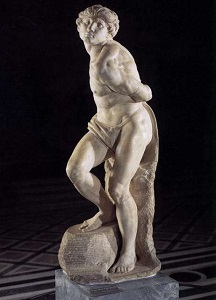
De Italiaanse beeldhouwer, schilder, architect en dichter Michelangelo werd geboren op 6 maart 1475 in Caprese. Zie ook alle tags voor Michelangelo op dit blog.


Love's Justification

YES! hope may with my strong desire keep pace,
And I be undeluded, unbetrayed:
For if of our affections none find grace
In sight of Heaven, then wherefore hath God made
The world which we inhabit? Better plea
Love cannot have, than that in loving thee
Glory to that eternal peace is paid,
Who such divinity to thee imparts
As hallows and makes pure all gentle hearts.
His hope is treacherous only whose love dies
With beauty, which is varying every hour;
But, in chaste hearts uninfluenced by the power
Of outward change, there blooms a deathless flower,
That breathes on earth the air of paradise.


Vertaald door William Wordsworth


 1560827-1c0b95b87c5c92eca5cc5dce72fc6f66.jpg
Michelangelo (6 maart 1475 – 18 februari 1564)
Opstandige slaaf door Michelangelo, 1513 (Louvre, Parijs)


De Japanse schrijver Teru Miyamoto werd geboren op 6 maart 1947 in Kobe. Zie ook alle tags voor Tery Miyamoto op dit blog.

Uit: Kinshu: Autumn Brocade (Vertaald door Roger K Thomas)

“Yamagata was cloudy. Feeling somewhat disappointed, I sat in the cab from Yamagata Station to Zaô. Hot Spring and looked up at the sky. Suddenly I realized this was the second time I had visited this northeastern region. I remembered setting out for Towada from Lake Tazawa in Akita Prefecture on our honeymoon. Kiyotaka and I stayed at the inn in the hot spring resort. The strong smell of sulfur made it difficult to breathe, and the overflowing hot water was running down channels on both sides of the street. Clouds covered the night sky, without a sliver of moon or any stars visible, but the mountain air was bracing. For the first time my son and I were on a trip, and we were in a buoyant mood. The next morning it was clear. Holding his crutches in front of him, Kiyotaka didn't want to waste a minute getting to the gondola, so immediately after breakfast we set off for the gondola platform in the dahlia garden. To think that we should board the same gondola halfway up Mount Zaô at the same time as you-one of countless gondolas going up and down the mountain in such an out-of-the-way place as Yamagata! It sends a shiver down my spine just to think about such a coincidence. Several groups of people were waiting to get on the lift, but after two or three minutes we boarded. The attendant opened the gondola door, lifted Kiyotaka and his crutches, and set him inside. Then I got on. I heard the attendant announce that he could take one more, and a man in a light brown coat boarded the cramped gondola and sat down opposite us. The door closed, and the moment the lift lurched forward I realized it was you.”


 1560827-1c184beb8fc5360619ce67c330edaddb.jpg
Teru Miyamoto (Kobe, 6 maart 1947)


Zie voor nog meer schrijvers van de 6e maart ook mijn blog van 6 maart 2012 deel 2.

Geschreven door Romenu om 18:27 Reageer op dit bericht

Marijke Hanegraaf

De Nederlandse dichteres Marijke Hanegraaf werd op 6 maart 1946 geboren in Tilburg, waar zij ook opgegroeide en waar haar vader een houthandel had. Aanvankelijk leerde ze voor analiste, maar uiteindelijk bleek het schrijven haar beter te liggen. Door een gelukkig toeval kwam ze terecht bij het jeugdblad Taptoe. Taptoe was voor haar een fantastische leerschool; schrijven voor kinderen betekent dat je de dingen gewoon moet zeggen, niet kinderachtig maar wel duidelijk. Ze schreef voor Taptoe informatieve artikelen, reportages en ook verhalen. Tegenwoordig is ze freelance bureauredacteur. Pas tegen haar vijftigste legde ze zich toe op poëzie. Dat resulteerde in 2001 in haar debuutbundel “Veerstraat”, uitgegeven bij De Arbeiderspers. De bundel werd in 2002 genomineerd voor de Buddinghprijs. In 2006 kwam haar tweede bundel, “Proefsteen”, uit en in 2010 de derde, “Restruimte”.


Stokgooier en lezer

Arm als de grond, met rondom
het zuigend moeras van ziekte
geen grond was zo arm als ziekte

en daarin kwam hij en las.
Gericht in zichzelf bracht hij zich voort
hij vocht om de letter.

Hij was een lezer.
Wie was hij zonder.
Wat was hij geworden.

Hij las bij zwak licht.
Die duistere kamers, dat huis met het ijzige
trapgat en de ijzeren spiegel
de stinkende plee

liever het veld
hij hield van een stok die hij vond
sneed, sloeg, joeg
zie hem zwiepen en klieven.

Kracht! De zijne!
Een stok is een bliksem
droog en donker

geloof in het ongewone.
Dat was het wonder.
Hij was een stokgooier en een lezer.


Thuis

Als ik dan 's morgens vroeg de deur uitga
en samen met het weer de straat in fiets
waarheen? Ik weet het niet meteen.

Gelukkig weet mijn lichaam beter
voor alles van belang gaat het vanzelf
linksaf, rechts en lang rechtdoor

de vroege ochtend in als niemand nog.
Mijn lijf komt samen met mijn fiets
al jaren wonderlijk op tijd, waarvoor.

Eraan vooraf dronk ik mijn koffie zwart
ontwaakte in de dingen van de ochtend
koos jam alsof ik het nooit eerder koos.

Wat drijft me voort, met deze daden
van vergeefsheid, wat maakt me
denk ik nooit als ik het brood smeer.


 1634669-c8bc13fa55908f45e1e1af2622da4f46.jpg
Marijke Hanegraaf (Tilburg, 6 maart 1946)

Geschreven door Romenu om 00:00 Reageer op dit bericht

Aschermittwoch (Clara Müller-Jahnke)


Bij Aswoensdag


 1560243-0153fbaebe52b3f5c34d99e09f33405b.jpg
Het gevecht tussen Carnaval en Vasten (detail) door Pieter Brueghel de Oude, 1559


Aschermittwoch

Nun fällt der tollen Narrenwelt
das bunte Kleid in Lumpen, -
und klirrend auf den Estrich schellt
der Freude voller Humpen.
Lautkrachend springt ins Schloß das Tor,
kein Lichtschein mehr am Fenster -
ein grauer Morgen kriecht empor,
der Morgen der Gespenster.

Da ist im tiefen Straßenstaub
ein stolzes Weib gestanden -
von ihrem Odem rauscht das Laub,
des Meeres Wogen branden.
Sie reckt sich in die Frühlingspracht
mit herrischer Gebärde:
mein ist, was blüht und weint und lacht -
mein ist die ganze Erde!

Was bimmelt ihr vom Kirchenturm
und predigt Reu und Buße?
Ihr seid das Sandkorn vor dem Sturm,
der Staub mir unterm Fuße.
Was schiert mich eurer Sünde Scham
und eurer Hölle Flammen?
Ich blas den ganzen Maskenkram
mit einem Hauch zusammen.

Mir gilt die Dirne unterm Tor,
das Hündlein in der Gossen
mehr als der schönste Damenflor
in euren Staatskarossen.
Und Blumen und Konfettischlacht?
Wie jäh verstummt die Harfe,
versprüht der Witz, verblaßt die Pracht,
löst meine Hand die Larve.

Mir gilt des Bettlers hohle Hand
und gramzerfressne Miene
mehr als der Fürstenhöfe Tand
und blutige Hermeline. -
Und tobt im Ost der Schwertertanz,
und saust das Blei, das rasche -
auf aller Kronen Faschingsglanz
streu ich die Handvoll Asche!

Ob Kirchen- oder Festungssturm,
sie wanken beid auf Erden
und werden einst vom Wirbelsturm
zu Staub zerblasen werden.
Und reißt der letzten Narretei
der bunte Rock in Fetzen,
dann soll die Menschheit, nackt und frei,
sich an die Tafel setzen.


 1560242-1840ffe12966bb1419d0bcc00a8c4768.jpg
Clara Müller-Jahnke (5 februari 1860 - 4 november 1905)


Zie voor de schrijvers van de 5e maart ook mijn vorige blog van vandaag en ook mijn blog van 5 maart 2012 deel 1 en eveneens mijn blog van 5 maart 2011 deel 2.


Geschreven door Romenu om 15:43 Reageer op dit bericht

Pier Paolo Pasolini, Arthur van Schendel, Koos van Zomeren, Jurre van den Berg, Danny King

De Italiaans filmregisseur, dichter en schrijver Pier Paolo Pasolini werd geboren in Bologna op 5 maart 1922. Zie ook alle tags voor Pier Paolo Pasolini op dit blog.


Prayer to my mother

It’s so hard to say in a son’s words
what I’m so little like in my heart.

Only you in all the world know what my
heart always held, before any other love.

So, I must tell you something terrible to know:
From within your kindness my anguish grew.

You’re irreplaceable. And because you are,
the life you gave me is condemned to loneliness.

And I don’t want to be alone. I have an infinite
hunger for love, love of bodies without souls.

For the soul is inside you, it is you, but
you’re my mother and your love’s my slavery:

My childhood I lived a slave to this lofty
incurable sense of an immense obligation.

It was the only way to feel life,
the unique form, sole color; now, it’s over.

We survive, in the confusion
of a life reborn outside reason.

I pray you, oh, I pray: Do not hope to die.
I’m here, alone, with you, in a future April…


Vertaald door Norman MacAfee


Späte Einsichten

Ich weiß wohl, ich weiß wohl, daß ich mit einem Bein im Grabe stehe;
daß alles, was ich berühre, bereits von mir berührt worden ist;
daß ich Gefangener eines unanständigen Verlangens bin;
daß jede Rekonvaleszenz einem Rückfall gleicht;
daß die Gewässer stillstehn und daß alles abgestanden schmeckt;
daß auch der Humor nur Teil einer unaufhebbaren Blockade ist;
daß ich nichts anderes tue, als das Neue zum Alten zurückzuführen;
daß ich immer noch nicht die Absicht habe, anzuerkennen, wer ich bin;
daß mir sogar die alte Goldmachergeduld abhandengekommen ist;
daß das Alter, ungeduldig wie es ist, nur die Misere sichtbar macht;
daß ich niemals von hier wegkommen werde, auch wenn ich noch so viel lächle;
daß ich von allen Saiten, die da wären, am Ende immer nur die eine anreiße;
daß ich mich gerne mit Schlamm besudele, denn Schlamm ist Materie, arm, also rein;
daß ich das Licht nur dann liebe, wenn es ohne Hoffnung ist.


Vertaald door Theresia Prammer


 1560237-42bf1952e1a3649856a39b6ffb2af2a2.jpg
Pier Paolo Pasolini (5 maart 1922 – 2 november 1975)


De Nederlandse schrijver Arthur van Schendel werd geboren op 5 maart 1874 in Batavia. Zie ook alle tags voor Arthur van Schendel op dit blog.

Uit: De mensch van Nazareth

“Een ganschen morgen hoorde het kind Jezus het ruischen van het water en de stemmen der moeders, een ganschen morgen zag hij zijn makkertjes en den klaren hemel. En als zijn moeder hem riep om huiswaarts te keeren volgde hij aan haar kleed, denkend wat lekkernij het zijn zou in de zachte woning aan het eind des wegs, want hij was een kind in de zaligheid der kindervreugden van spel en zoetigheid, een dadel of een vijg. In den middag speelde hij weder waar de anderen speelden. Wanneer hij opkeek zag hij een man of een vrouw en hij staarde hun schoonheid aan, hoe de gezichten der grooten straalden en de oogen openden in hun glans. Soms stond hij stil om te denken waar zijn moeder was, en als hij zocht was zij daar. Ook zat hij aan het muurtje van de werkplaats en zag toe hoe zijn vader een balk over zijn schouder nam en op de bank legde of het een kind was, hoe hij een stok nam om te meten en houtskool om te teekenen, hoe hij zaagde en schaafde en den balk glad maakte, en zich het voorhoofd veegde. Zoo zag hij de bezigheid en voelde hij de vermoeienis, tot hij insliep in de zon.
Maar in den zaaitijd ging een ieder naar zijn akker. Wanneer de opziener de deuren was langs geweest en allen de verloting wisten, kwamen zij waar de oudste voor de samenkomst zat en een kind de loten nam; de mannen die hun deel ontvingen liepen bij tweeën met de snoeren heen, en als de velden afgemeten waren kwamen zij met de ezels en de ploegen. Daar was spel voor de knapen om de steenen weg te dragen tot een afscheiding van een ieders veld. Het zaad viel over de aarde, de wolken gingen aan den hemel, en na de avondgebeden zong de vreugde in het dorp over het komende gewas. Het kind Jezus hoorde het gezang.”


 1560237-1bdc382abcbe35acd846e7bcb85e36bc.jpg
Arthur van Schendel (5 maart 1874 – 11 september 1946)


De Nederlandse schrijver, columnist en dichter Koos van Zomeren werd geboren in Velp op 5 maart 1946. Zie ook alle tags voor Koos van Zomeren op dit blog.

Uit: Naar de natuur. Journaal

“29 juni Warnsborn. In één kastje bijna allemaal dooie koolmeesjes, twee, drie dagen oud. Des te groter de verrassing bij een ander kastje: een complete verzameling, uiterst vieve jongen, hard op weg naar het uitvliegen. ‘Zo,’ zei ik geïmponeerd, ‘dat wordt wel wat met jullie.’
De vier eitjes uit dat ene bontevliegenvangersnestje heb ik nu maar mee naar huis genomen. In mijn sigarenkoker. Onderweg was in één schaal een barstje ontstaan. Toen ik dat eitje openmaakte – daar had je een heel klein uitsmijtertje van kunnen bakken. Bij de aanblik van dat dooiertje de gedachte: en misschien is dat nog maar het beste, gewoon een kloddertje materie blijven, gewoon niet aan het leven beginnen. Maar dus niet bedorven.
Afijn, doordat dat ene eitje was gaan lekken, waren de andere kleverig geworden. Droogwrijven ging niet, maar als je ze ergens neerlegde, lijmde je ze in feite vast aan de ondergrond. Dus twee andere zijn stukgegaan toen ik ze wou verleggen. Nu ligt er nog één, waarvan het blauw door de inwerking van struif inmiddels danig verbleekt is. Zo zie je maar hoe delicaat die dingetjes in het nest zijn.

30 juni Met pa naar Herwijnen. Twee duttende lepelaars bij een plasje, ingeklemd tussen a15 en Betuwelijn. Ecologische Hoofdstructuur?
Merkwaardig, juist die smetteloos witte vogels herinnerden me aan het verfomfaaide kauwtje, gisteren op de stoep op het Marktplein bij Hilvers. Broodmager, kale nek – het leek wel een kip uit de bio-industrie. Maar hij leefde nog. Sterker nog: hij probeerde in leven te blijven. Duidelijk op zoek naar voedsel. Duidelijk vermoeid ook – hij wou eigenlijk niet aan de kant voor voorbijgangers.”


 1560237-6255adc0c1e28d919cf4c01640c34594.jpg
Koos van Zomeren (Velp, 5 maart 1946)


De Nederlandse dichter Jurre van den Berg werd geboren in Thesinge op 5 maart 1986. Zie ook alle tags voor Jurre van den Berg op dit blog.


Statistiek voor alfa's

De kans bestaat
dat je dit niet weten wilt, maar ik

bespaar je Griekse letters als granaten
in je verslapen linker hersenhelft.

Het was toevallig dat ik in je steekproef zat.
Dat je me meenam was een keuze:

je verwierp H0 en hield me,
ik ben de alternatieve hypothese.

Misschien had ik het bij een ander
(significantieniveau) niet gered.

Dat wil dit eigenlijk zeggen:
ik was toevallig geen toeval

met toevallig als niets anders
dan de uitzondering op

de regel die we -net als toeval-
niet willen zijn.

Die kans bestaat.


 1560237-7cb26968fa4d2b481f97998ea8a5d46c.jpg
Jurre van den Berg (Thesinge, 5 maart 1986)


De Britse schrijver Danny King werd geboren op 5 maart 1969 in Slough, Berkshire. Zie ook alle tags voor Danny King op dit blog.

Uit: The Pornographer Diaries

“Well, if you_d never seen lust before, I suppose it would be easy to confuse one for the other. Maybe this was why we all assumed they were being made to take their clothes off. Certainly, none of them looked happy about it. Also, I guess we just couldn_t imagine a lady taking her clothes off and letting herself be photographed voluntarily. I mean, why would they? No, there had to be a room somewhere, somewhere where they kept ladies and made them take their clothes off and the ladies had no choice. All they could do was what they were told to do and scowl at the camera. Remember that song? _There's a place in France where the naked ladies dance, There's a hole in the wall where the men see it all._ I just assumed there must be a place in England similar to the one in France, probably in London, where girls slouched in chairs in the nude and generally looked fucked off about not being allowed to go home. And this was the proof. I_m ashamed to admit it but far from feeling sorry for these ladies and wishing they could be reunited with their families and friends, I just wanted to be able to visit this room and watch the girls being made to take their clothes off. Well, a room like this was probably a good thing wasn_t it? A great thing even. This was just what I thought back then, you understand. Though_ no, no, I_m not going to go there.”


 1560237-627cdc81c833a645fb0201d179ac41b9.jpg
Danny King (Slough, 5 maart 1969)


Zie voor nog meer schrijvers van de 5e maart ook mijn blog van 5 maart 2012 deel 1 en ook mijn blog van 5 maart 2011 deel 2.

Geschreven door Romenu om 15:30 Reageer op dit bericht

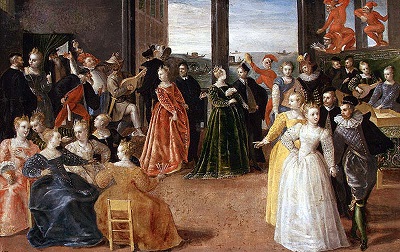
Carnaval (Théophile Gautier)


Bij Carnaval


 1559837-3a8b1e8aa22bcb45123efc1c2d60ea20.jpg
Caranaval in Venetië door Hieronymus Francken (1540-1610)


Carnaval


Venise pour le bal s'habille.
De paillettes tout étoilé,
Scintille, fourmille et babille
Le carnaval bariolé.

Arlequin, nègre par son masque,
Serpent par ses mille couleurs,
Rosse d'une note fantasque
Cassandre son souffre-douleurs.
Battant de l'aile avec sa manche
Comme un pingouin sur un écueil,
Le blanc Pierrot, par une blanche,
Passe la tête et cligne l'oeil.

Le Docteur bolonais rabâche
Avec la basse aux sons traînés;
Polichinelle, qui se fâche,
Se trouve une croche pour nez.

Heurtant Trivelin qui se mouche
Avec un trille extravagant,
A Colombine Scaramouche
Rend son éventail ou son gant.

Sur une cadence se glisse
Un domino ne laissant voir
Qu'un malin regard en coulisse
Aux paupières de satin noir.

Ah! fine barbe de dentelle,
Que fait voler un souffle pur,
Cet arpège m'a dit : C'est elle !
Malgré tes réseaux, j'en suis sûr,

Et j'ai reconnu, rose et fraîche,
Sous l'affreux profil de carton,
Sa lèvre au fin duvet de pêche,
Et la mouche de son menton.


 1559837-fcd075e5e517119a44b09d5fcd438b55.jpg
Théophile Gautier (31 augustus 1811 – 23 oktober 1872)


Zie voor de schrijvers van de 4e maart ook mijn vorige blog van vandaag.


Geschreven door Romenu om 18:37 Reageer op dit bericht

Khaled Hosseini, Robert Kleindienst, Kristof Magnusson, Irina Ratushinskaya, Alan Sillitoe, Ryszard Kapuściński

De Afghaanse schrijver Khaled Hosseini werd geboren op 4 maart 1965 in Kabul. Zie ook alle tags voor Khaled Hosseini op dit blog.

Uit: En uit de bergen kwam de echo (Vertaald door W. Hansen)

“Najaar 1952
Vader had Abdullah nooit eerder geslagen. Dus toen hij het wel deed, toen hij de zijkant van Abdullahs hoofd raakte, vlak boven het oor, hard en onverhoeds en met de vlakke hand, sprongen er tranen van verbazing in Abdullahs ogen.
Hij knipperde ze snel weg.
‘Naar huis,’ zei vader knarsetandend.
Abdullah hoorde boven zich Pari in snikken uitbarsten.
Toen sloeg vader hem opnieuw, harder, ditmaal op zijn linkerwang. Abdullahs hoofd kantelde opzij. Zijn gezicht schroeide, en er kwamen meer tranen. Zijn linkeroor suisde. Vader bukte zich zo ver voorover dat zijn donkere, gerimpelde gezicht de woestijn en de bergen en de lucht helemaal verduisterde.
‘Ik zei je dat je naar huis moest gaan, jongen,’ zei hij met een gepijnigde blik.
Abdullah gaf geen kik. Hij slikte luid en gluurde naar zijn vader, terwijl hij met zijn ogen knipperde achter de hand die de zon afschermde.
Vanaf de kleine, rode kar gilde Pari zijn naam, terwijl ze beefde van angst. ‘Abollah!’
Vader hield hem met een strenge blik op afstand en sjokte terug naar de kar. Op de bodem ervan strekte Pari haar handen uit naar Abdullah. Abdullah gaf hun een voorsprong.
Toen veegde hij zijn ogen af met de muis van zijn hand en volgde hen.
Even later gooide vader een steen naar hem, zoals kinderen in Shadbagh stenen gooiden naar Shuja, de hond van Pari – zij het dat de kinderen Shuja wilden raken om hem pijn te doen. De steen van vader kwam een meter van Abdullah op de grond terecht, machteloos. Hij wachtte, en toen vader en Pari zich weer in beweging zetten, ging Abdullah opnieuw achter hen aan.”


 1559832-4566cda0b2c72c728d1e719507fff68b.jpg
Khaled Hosseini (Kabul, 4 maart 1965)


De Oostenrijkse dichter en schrijver Robert Kleindienst werd geboren op 4 maart 1975 in Salzburg. Zie ook alle tags voor Robert Kleindienst op dit blog.


verwegene männer am wegrand

wer sagt es
(um: wie deplaziert
am rand zu stehn,
mit aufgerissenem gesicht,
blutmondaugen,
nein, nicht zu sprechen vom
hals im luftschaft,
davon, wiederum, hielten
nur wenige mehr)
wer,
wer sagt es


im moment liegt vergangenes näher

dieser punkt der
erhofft und erwartet
pikiert von der unmenge nebensächlichkeiten
zweifelhaftes liedgut
unsingbar
wie zuvor gleich
einer parabel an nebensächlichkeiten
gleich
dem so nicht sagbaren nichts
unsingbares andeutungsweise
um verstehen zu geben
es wäre doch: mehr
des gesagten mehr
eines untrennbar mit dem autor
verbundenen gefühl des staunens
der verachtung
der geringfügigen hochschätzung und
doch passiert nichts
wiederholt:
nichts: hier
hier
beim soeben erdachten


 1559832-b711232e21b1e4e62a2e514911bf581e.jpg
Robert Kleindienst (Salzburg, 4 maart 1975)


De Duitse schrijver Kristof Magnusson werd geboren op 4 maart 1976 in Hamburg. Zie ook alle tags voor Kristof Magnusson op dit blog.

Uit: Summer of Love (Vertaald door Mike Mitchell)

“I was told there was no supermarket there and was sent instead to Bolinas People’s Store.
There I had just put a bottle of Calistoga Water and some fairtrade Save-the-Rainforest chocolate in my shopping basket when my attention was caught by a woman at the back of the shop who was absentmindedly twirling a stand with indigo jeans. When she noticed me looking at her she seemed to wake from a trance, let go of the stand and walked past me to the bread shelf. Sunglasses pushed back on her forehead kept her shoulder-length hair from falling over her face.
She picked up one of the loaves with pumpkin seeds, weighed it in her hand a few times, squeezed it, stuck her thumb and forefinger in, tore off a piece and tasted it. Then she put the loaf back, took the one behind it and tested that one too. She settled on the second loaf and went to pay at the till. Now she concentrated on her money, looking at every note as if she were wondering which one she could best be parted from. I remembered that in America one-dollar bills were called singles, but she had paid and left before I’d managed to make a pun on it.
I followed her out. She pulled her sunglasses down and chucked the loaf through the open window of her Volkswagen New Beetle. Then she leant against the mudguard. I looked at her. And she looked in my direction, though because of the sunglasses it was difficult to say whether she was really looking at me. Once I thought I could feel her eyes on me and tried a smile, but there was no response. However, she didn’t look away either.”


 1559832-4e402d34a41778a8d5455ee7792ec249.jpg
Kristof Magnusson (Hamburg, 4 maart 1976)


De Russische dichteres en dissidente Irina Ratushinskaya werd geboren op 4 maart 1954 in Odessa. Zie ook alle tags voor Irina Ratushinskaya op dit blog.


Some people's dreams pay all their bills

Some people's dreams pay all their bills,
While others' gild an empty shell..
But mine go whimpering about a velvet dress,
Cherry-red and sumptuous as sin.
O, inaccessible! Not of our world!
Nowhere to get you, or to put you on...
But how I want you!
Against all reason's reproaches -
There, in the very narows of the heart's
Recesses – flourishes the poison
Of heavy folds, and obscure embroidery...
The childish, flouted right
To beauty! Not bread, not domicile -
But unbleached, royal lace,
Enspiralled rings, sly ribbons – but no!
My day is like a donkey, bridled, laden,
My night deserted, like the prison light.
But in my soul - it’s no good! I am guilty! -
I keep on sewing it, and in my mind I make
The thousandth stitch, as I do up my anorak
And try on my tarpaulin boots.


No, I.m not afraid

No, I'm not afraid: after a year
Of breathing these prison nights
I will suryive into the sadness
To name which is escape.

The cockerel will weep freedom for me
And here - knee-deep in mire -
My gardens shed their water
And the northem air blows in draughts.

And how am I to cary to an alien planet
What are almost tears, as though towards home..
It isn't true, I am afraid, my darling!
But make it look as though you haven’t noticed.


Vertaald door David McDuff


 1559832-262eccf6c2d1ac38514fe13a31bce264.jpg
Irina Ratushinskaya (Odessa, 4 maart 1954)


De Engelse schrijver Alan Sillitoe werd geboren op 4 maart 1928 in Nottingham. Zie ook alle tags voor Alan Sillitoe op dit blog.

Uit: The Loneliness of the Long-Distance Runner

“If the In-laws are hoping to stop me making false moves they're wasting their time. They might as well stand me up against a wall and let fly with a dozen rifles. That's the only way they'll stop me, and a few million others. Because I've been doing a lot of thinking since coming here. They can spy on us all day to see if we're pulling our puddings and if we're working good or doing our 4 athletics' but they can't make an X-ray of our guts to find out what we're telling ourselves. I've been asking myself all sorts of questions, and thinking about my life up to now. And I like doing all this. It's a treat. It passes the time away and don't make Borstal seem half so bad as the boys in our street used to say it was. And this long-distance running lark is 'the best of all, because it makes me think so good that I learn things even better than when I'm on my bed at night. And apart from that, what with thinking so much while I'm running I'm getting to be one of the best runners in the Borstal. I can go my five miles round better than anybody else I know.
So as soon as I tell myself I'm the :first man ever to be dropped into the world, and as soon as I take that first flying leap out into the frosty grass of an early morning when even birds haven't the heart to whistle, I get to thinking, and that's what I like. I go my rounds in a dream, turning at lane or footpath corners without knowing I'm turning, leaping brooks without knowing they're there, and shouting good morning to the early cow-milker without seeing him.”


 1559832-21d20d4d8a88303b1c1addeaa29a25b0.jpg
Alan Sillitoe (4 maart 1928 - 25 april 2010)
Cover


De Poolse schrijver dichter en journalist Ryszard Kapuściński werd geboren in Pinsk, Polen (thans Wit-Rusland), op 4 maart 1932. Zie ook alle tags voor Ryszard Kapuściński op dit blog.

Uit: The Shadow of the Sun (Vertaald door Klara Glowczewska)

“The street is a roadway delineated on both sides by an open sewer. There are no sidewalks. Cars mingle with the crowds. Everything moves in concert—pedestrians, automobiles, bicycles, carts, cows, and goats. On the sides, beyond the sewer, along the entire length of the street, domestic scenes unfold. Women are pounding manioc, baking taro bulbs over the coals, cooking dishes of one sort or another, hawking chewing gum, crackers, and aspirin, washing and drying laundry. Right out in the open, as if a decree had been issued commanding everyone to leave his home at 8 a.m. and remain in the street. In reality, there is another reason: apartments are small, cramped, stuffy. There is no ventilation, the atmosphere inside is heavy, the smells stale, there is no air to breathe. Besides, spending the day in the street enables one to participate in social life. The women talk nonstop, yell, gesticulate, laugh. Standing over a pot or a washbasin, they have an excellent vantage point. They can see their neighbors, passersby, the entire street; they can listen in on quarrels and gossip, observe accidents. All day long they are among others, in motion, and in the fresh air.
A red Ford with a speaker mounted on its roof passes through the streets. A hoarse, penetrating voice invites people to attend a meeting. The main attraction will be Kwame Nkrumah—Osagyefo, the prime minister, the leader of Ghana, of Africa, of all downtrodden peoples.There are photographs of Nkrumah everywhere—in the newspapers (every day), on posters, on flags, on ankle-length percale skirts. The energetic face of a middle-aged man, either smiling or serious, at an angle meant to suggest that he is contemplating the future.”


 1559832-aafb6a91f2ca39d9bd7c8cd13edc53a2.jpg
Ryszard Kapuściński (4 maart 1932 - 23 januari 2007)


Zie voor nog meer schrijvers van de 4e maart ook mijn blog van 4 maart 2012 deel 1 en ook deel 2.

Geschreven door Romenu om 18:33 Reageer op dit bericht

Carnaval (Toon Hermans)


Bij Carnaval


 1559248-0c651f017ae1f755666f6f3589c3d74c.jpg
Carnavalsparade door Pierre Bergaigne (1652 – 1708)


Carnaval

er is geen aangenamer val
dan een carnaval
je valt namelijk naar boven
het is een val in de blijheid

het duffe snoer
dat je bindt
aan het monotone
springt kapot

je vat een pint
je vat er twee, drie, vier
je vat een vat
en de sleur heeft geen vat meer op je

het spettert muziek
in de smalle straten
het regent zoenen
in het warme café

je danst, je doet, je dartelt als een kind
je bent zigeuner of prins
potkachel of schemerlamp
en je bent... jezelf

je ontdekt de zin van de onzin
en als je niet oppast
heb je zodra de vasten begint
vaste verkering

ik heb na dit carnaval
zo’n bierlucht in mijn jekker
die snuif ik telkens op
en denk: wat was dát lekker!


 1559248-c8e5d4b1d5e7e4eefa476d7461802ecc.jpg
Toon Hermans (17 december 1916 - 22 april 2000)


Zie voor de schrijvers van de 3e maart ook mijn vorige blog van vandaag en eveneens mijn blog van 3 maart 2013 deel 2.

Geschreven door Romenu om 18:21 Reageer op dit bericht

Manfred Flügge, Hans Verhagen, James Merrill, Kola Boof, Clifton Snider, Josef Winkler, Gudrun Pausewang

De Duitse schrijver Manfred Flügge werd geboren op 3 maart 1946 in Kolding, Denemarken. Zie ook alle tags voor Manfred Flügge op dit blog.

Uit: Heinrich Mann

„Die väterliche Ahnentafel der Manns verweist nach Rostock und Nürnberg sowie in die Schweiz, die mütterliche nach Lübeck und Südamerika. Insgesamt waren es lauter ernste Leute, Kaufmänner, Handwerker und Farmer, aber keine Künstler. Im Jahr 1775 war ein Johann Siegmund Mann als vierzehnjähriger Lehrling von Rostock nach Lübeck gekommen, wo er 1790 die Firma «Johann Siegmund Mann, Commissions- und Speditionsgeschäfte» gründete, die vor allem Getreidehandel betrieb. Er heiratete eine gebürtige Hamburgerin, gründete eine Familie, war als Kaufmann erfolgreich und starb 1848 nach einem Schlaganfall. Er hinterließ nicht nur eine angesehene Firma, sondern auch die Tradition, auf den letzten leeren Seiten einer Bibel in knapper Form die Fakten der Familiengeschichte schriftlich festzuhalten oder manches Ereignis daraus in kleinen Broschüren zu erzählen.
Sein Sohn, ebenfalls Johann Siegmund Mann mit Namen, geboren 1797, führte die Firma, deren Juniorchef er wurde, zu hoher Blüte. Er konnte das Firmenvermögen verzwanzigfachen. Aus seiner ersten Ehe mit Emilie Wunderlich hatte Johann Siegmund der Jüngere fünf Kinder.
Fünf Jahre nach dem Tod von Emilie heiratete er 1837 in zweiter Ehe Elisabeth Marty, eine wesentlich jüngere Frau aus einer Lübecker Kaufmannsfamilie, deren Vorfahren aus der Schweiz zugewandert waren; auch aus dieser Ehe gingen fünf Kinder hervor. Von seinem Schwiegervater Marty übernahm Johann Siegmund Titel und Amt des «Königlich Niederländischen Konsuls». Seit 1848 saß er in der Bürgerschaft von Lübeck. Im November 1841 erwarb er von Verwandten seiner Frau ein großes Haus in der Mengstraße 4. Im Frühjahr 1842 wurde es zum Firmensitz und zur Familienresidenz. Johann Siegmund starb 1863 an Lungentuberkulose.
Der älteste Sohn aus der zweiten Ehe, Thomas Johann Heinrich, Rufname Heinrich, wurde 1840 geboren und begann 1855 eine Lehre in der väterlichen Firma. Eine lange Schulausbildung war niemandem in der Familie vergönnt. Die erwünschte Lehrzeit im Ausland verbrachte er 1859 in Amsterdam.“


 1559231-17f9018f6f5ec018079409a456964c9b.jpg
Manfred Flügge (Kolding, 3 maart 1946)


De Nederlandse dichter en journalist Hans Verhagen werd geboren in Vlissingen op 3 maart 1939. Zie ook alle tags voor Hans Verhagen op dit blog.


Ze begrepen er de ballen van

Ze begrepen er de ballen van,
dat wij geen zin hadden
om tegen hen te vechten.

Nadat ze alles - dachten ze -
van ons hadden afgepakt
waren ze verbijsterd dat we lachten
toen er door zo'n omgevallen boekenkast
werd opgemerkt, dat het erop leek,
dat we ons hele leven
voor niets hadden gewerkt.

Gewerkt? Voor niets? Ons hele leven?
In onze filosofie is niets niet niets.
Voor niets is niet voor niets, niets is
voor niets; niets bestaat niet. Niets
bestaat niet voor niets niet.

Nadat we waren uitgegiecheld
stonden we meerstemmig op en zongen
Let it bleed.


Zo menig zinnebeeld

Zo menig zinnebeeld heb ik bespeeld,
zo hevig en zo & zo vaak,
dat het leven zich niet langer liet bedwingen -
tot op het bot gekerfd door krenkingen
lag ik lange tijd gedoodverfd,
mijn emotionele gronden braak,
waar eerder ik als groot sujet flaneerde.


 1559231-2252970f8e3c286ab0fc8822a95c40ea.jpg
Hans Verhagen (Vlissingen, 3 maart 1939)


De Amerikaanse dichter James Merrill werd geboren op 3 maart 1926 in New York. Zie ook alle tags voor James Merrill op dit blog.


Lost in Translation (Fragment)
For Richard Howard

Mademoiselle does borders. Straight-edge pieces
Align themselves with earth or sky
In twos and threes, naive cosmogonists
Whose views clash. Nomad inlanders meanwhile
Begin to cluster where the totem
Of a certain vibrant egg-yolk yellow
Or pelt of what emerging animal
Acts on the straggler like a trumpet call
To form a more soph”isticated unit.
By suppertime two ragged wooden clouds
Have formed. In one, a Sheik with beard
And flashing sword hilt (he is all but finished)
Steps forward on a tiger skin. A piece
Snaps shut, and fangs gnash out at us!
In the second cloud—they gaze from cloud to cloud
With marked if undecipherable feeling—
Most of a dark-eyed woman veiled in mauve
Is being helped down from her camel (kneeling)
By a small backward-looking slave or page-boy
(Her son, thinks Mademoiselle mistakenly)
Whose feet have not been found. But lucky finds
In the last minutes before bed
Anchor both factions to the scene’s limits
And, by so doing, orient
Them eye to eye across the green abyss.
The yellow promises, oh bliss,
To be in time a sumptuous tent.


 1559231-fb20c83d90c3cd1a4f6fc9d75174fa1f.jpg
James Merrill (3 maart 1926 – 6 februari 1995)


De Amerikaanse dichteres en schrijfster Kola Boof werd (naar eigen zeggen) geboren als Naima Bint Harith op 3 maart 1972 in Omdurman, Soedan. Zie ook alle tags voor Kola Boof op dit blog.

Uit: The Sexy Part of the Bible

„You may as well know everything. That there are white men in Africa who no longer come to bring us the word of Jesus Christ, but come instead to bring back the dead. In fact, the man who brought me back to life, the only man I've ever trusted, the man who undid my virginity and now lies here dying, his head sweating profusely in my lap, is one of them. He is the tall Ron-Howard-as-Richie-Cunningham-from-Happy-Days one in our clinic whose given name from his white people is Stevedore. He is the one who makes me read books and teaches me how to better convince people that I am the character I'm playing. Surely I don't have to tell you how terribly young and liberal these foreign scientists are. How they bathe naked in the river with the Oluchi tribesmen, play American hip-hop music, and hang pictures of white dog-haired women in strips of cloth on their walls while they drip the DNA of dead people into flat, red-bottomed cups they call a "culture" ... and cook food in this thing, the microwave. But what I do have to tell you about—and perhaps eventually the whole world—is how I have worshipped him so magnetically for all the nineteen years I've been alive again; and yet just this late afternoon, even as he is dying and my vision is blinded by sheets and sheets of tears, there is now nothing but the most silent betrayal and fascinating disbelief between us. It's because I know at last that the worst is true. The things we blacks have been whispering about in West Cassavaland since King Reagan was in the White House—that our dead are being cloned by foreign AIDS scientists.”


 1559231-526f93ee56db891ea37b0853e83774c1.jpg
Kola Boof (Omdurman, 3 maart 1972)


De Amerikaanse dichter, schrijver en criticus Clifton Mark Snider werd geboren op 3 maart 1947 in Duluth, Minnesota. Zie ook alle tags voor Clifton Snider op dit blog.


Indian Summer In New Mexico

The high desert sky
nearly cloudless
the day before the clocks fall back,
sun bright as an atomic flash,
cottonwoods, aspens, maple, willows–
leaves falling like they never do
back home in Southern California,
a day to walk on roads
whose dust rises with every pickup
& Prius that passes,
& as you watch a northern flicker
with red mustache
perch on a slender stump
two dogs cross the field
and the creek bed
and join you on the road–
you shoo them off
& happily they scamper away
& you walk down a quiet residential street,
one house a junk yard of old cars & trucks
stuffed with all shapes of rusted metal & tubes,
further up a majestic modern adobe,
unoccupied for the season,
kids jump on a trampoline in another yard
while grandma and grandpa sit in the shade–
then back to your casita & for once
you leave the door open.


 1559231-d4eb438d5fab79dc16314581819da7d0.jpg
Clifton Snider (Duluth, 3 maart 1947)


De Oostenrijkse schrijver Josef Winkler werd geboren op 3 maart 1953 in Kamering, Kärnten. Zie ook alle tags voor Josef Winkler op dit blog.

Uit: Roma, città aperta

„Sein kleinerer Bruder - auf seine Socken waren hochspringende, gelbschwarze Tiger eingestickt - schloß seinem verlegen mit altmodischer Leibwäsche bekleideten Vater, der an seinem rechten Unterarm ein Kreuz, am linken Unterarm eine nackte langhaarige Frau eintätowiert hatte, die Ledersandalen. An seinem Wohnungsschlüssel, mit dem er immer wieder gelangweilt klimperte, hing ein kleiner, weinender Kinderkopf aus Lapislazuli. Ein kahlgeschorener, vierzehnjähriger Knabe drückte - der Latz seiner aufgeknöpften roten Lederhose, auf die ein Edelweiß aufgenäht war, hing auf seine nackten Unterschenkel hinunter - seinen Kopf auf das Schlüsselbein eines ein paar Jahre älteren Jungen, auf dessen weitgeschnittenes kurzärmeliges Leibchen der Kopf eines Indianerhäuptlings abgebildet war. Als der größere, der sich offenbar bedrängt fühlte, seinen Arm hob, um den Knaben wegzudrängen, und der jüngere dabei neugierig in seine vor Schweiß glitzernde schwarzbehaarte Achselhöhle schaute, begannen sie beide vor einem verbissen Kreuzworträtsel lösenden und immer wieder mißmutig und eifersüchtig auf die beiden Jungen blickenden Mädchen zu lachen und zu scherzen. Im Vorbeigehen schaute ein schwarzgekleideter Prete mit langem, von seinen Hüften pendelnden Rosenkranz in die weite Hosenröhre eines schönen, schwarzgelockten, Melone essenden, seinen Kopf an die Schulter seines Vaters lehnenden und auf dem Boden sitzenden Jungen hinein, der mit einer weitgeschnittenen Unterhose bekleidet war.“


 1559231-4cb72938ee8bb12eb0db816830e748e7.jpg
Josef Winkler (Kamering, 3 maart 1953)


De Duitse schrijfster Gudrun Pausewang werd geboren op 3 maart 1928 in Wichstadt. Zie ook alle tags voor Gudrun Pausewang op dit blog.

Uit Reise im August

»Jetzt haben wir wieder eine ganze Flasche voll Wasser«, murmelte David schlaftrunken.
»Abgerechnet drei Schlucke«, ergänzte Ruben. »Die hat uns Ruth erlaubt. Und wie viel Wasser hast du bekommen?«
Alice dachte an ihre drei Schlucke und fühlte, dass sie jetzt rot wurde. »Unsere Flasche ist ja kaputt«, sagte sie unsicher, »und in der Thermoskanne ist noch Kaffee - «
»Dacht ich mir's doch«, sagte Ruben finster. »Jetzt wird dir Ruth wieder von unserem Wasser abgeben.«
»Behaltet euer Wasser«, sagte Alice heftig. Dann schob sie die Tasche zwischen sich und die Mandels, lehnte sich an sie und hatte die Mandels im Rücken, die Toten vor sich. Sie hatte so wenig Platz, dass sie die Beine ganz dicht an den Körper ziehen musste. Hinter sich hörte sie Rebekka leise mit Ruhen schimpfen.
»Ist doch wahr!«, hörte sie Ruben trotzig antworten.
Alice fühlte sich sehr allein. Gedankenverloren begann sie ihr Haar in zwei Hälften zu teilen. Sie nahm die eine Hälfte, ordnete sie in drei Stränge und begann zu flechten.“


 1559231-c3976624eb9412c07db164b42503c447.jpg
Gudrun Pausewang (Wichstadt, 3 maart 1928)


Zie voor nog meer schrijvers van de 3e maart ook mijn blog van 3 maart 2013 deel 2.

Geschreven door Romenu om 18:13 Reageer op dit bericht

Berliner Fasching (Kurt Tucholsky)


Bij Carnaval


 1558670-d6331005c4ca26dfd3f653490818a14f.jpg
Carnevalsbal door Pierre Bergaigne (1652 – 1708)


Berliner Fasching

Nun spuckt sich der Berliner in die Hände
und macht sich an das Werk der Fröhlichkeit.
Er schuftet sich von Anfang bis zu Ende
durch diese Faschingszeit.

Da hört man plötzlich von den höchsten Stufen
der eleganten Weltgesellschaft längs
der Spree und den Kanälen lockend rufen:
"Rin in die Eskarpins!"

Und diese Laune, diese Grazie, weißte,
die hat natürlich alle angesteckt;
die Hand, die tagshindurch Satin verschleißte,
winkt ganz leschehr nach Sekt.

Die Dame faschingt so auf ihre Weise:
gibt man ihr einmal schon im Jahr Lizenz,
dann knutscht sie sich in streng geschlossnem Kreise,
fern jeder Konkurrenz.

Und auch der Mittelstand fühlts im Gemüte:
er macht den Bockbierfaßhahn nicht mehr zu,
umspannt das Haupt mit einer bunten Tüte
und rufet froh: "Juhu!"

Ja, selbst der Weise schätzt nicht nur die hehre
Philosophie: auch er bedarf des Weins!
Leicht angefüllt geht er bei seine Claire,
Berlin radaut, er lächelt ...
Jeder seins.


 1558670-ad52ddfa221f5a51d0cf1fe2de755fb9.jpg
Kurt Tucholsky (9 januari 1890 - 21 december 1935)


Zie voor de schrijvers van de 2e maart ook mijn vorige twee blogs van vandaag.

Geschreven door Romenu om 18:00 Reageer op dit bericht

Godfried Bomans, Multatuli, Thom Wolfe, John Irving, Michael Salinger

De Nederlandse schrijver Godfried Bomans werd geboren in Den Haag op 2 maart 1913. Zie ook alle tags voor Godfried Bomans op dit blog.

Uit: Erik of Het klein insectenboek

“De kleine Erik lag, juist op het ogenblik dat dit boekje begint, in het oude bed van grootmoeder Pinksterblom met den troonhemel en -de zijden kwasten, en keek over den rand van het blanke laken de schemerige kamer in.
Het was het uur waarop de kleine mensen naar bed gaan, het uur waar de grote mensen niet van weten: alle vertrouwde dingen van den muur vervagen zoetjes aan in het groeiende duister, en de wereld wordt stil, zo stil dat zij zelfs niet meer ademt... Buiten stapt nog iemand voorbij: stap, stap, zo klinkt het, en in de verte roept een jongetje hoog en fijn naar een ander jongetje. Zijn stem klinkt in den avond en je denkt- daar is toch een jongetje op de wereld dat nog niet in bed ligt...
Erik lag stil te.kijken naar het raam in de verte en naar de schemerende portretten van den muur. "Het is net," dacht hij, "of er iets gebeuren gaat. En misschien gaat er ook wel iets gebeuren?" En hij besloot om nu eens niet, gelijk op andere avonden. in slaap te vallen, maar goed op te letten of er misschien , @iets gebeuren ging". Nu was daar een goed middel voor. Want onder zijn hoofdkussen lag een boekje, "Solrns' Beknopte Natuurlijke Historie" geheten, en Erik moest daar voor morgen alle insecten uit kennen. Hij had er dezen helen Woensdagmiddag uit zitten leren en was tot aan de meikevers gekomen. Morgenochtend, onder het speelkwartier, zou hij de meikevers er bij nemen.
"Laat eens kijken," mompelde Erik, "hoeveel poten heeft een wesp ook al weer? Zes. De ogen zijn apart verstelbaar e 'n staan voor in den kop. Mooi. Zij leven niet in korven, gelijk de bijen, maar - ja, waar leven zij dan? Zij zullen apart leven, denk ik Nu, dat doet er ook niet toe. Zij behoren tot de familie der vliesvleugeligen en hebben geknikte sprieten.
En hoe staat het met de vlinders? De vlinder verbaast den aandachtigen natuurliefhebber door haar fraaie kleurenpracht. (Erik zei dezen zin twee keer, zo mooi vond hij hem.) Wij kunnen hen rekenen onder de zogenaamde nuttige insecten, maar de kinderen die zij krijgen - welke rupsen worden genoemd - kunnen zeer schadelijk zijn.”


 1558667-0bdbe21cf016f6c1fc66aeec3379ff24.jpg
Godfried Bomans (2 maart 1913 - 22 december 1971)
Hier eind jaren 1960 op de basisschool die hij zelf bezocht


De Nederlandse schrijver Multatuli (pseudoniem van Eduard Douwes Dekker werd geboren in Amsterdam op 2 maart 1820. Zie ook alle tags voor Multatuli op dit blog.

Uit: De geschiedenis van Woutertje Pieterse

“Zou dat nu staan of liggen? dacht-i. De arme jongen beet de tanden slee op z'n grift, en 't grift tot gruis... maar och, 't ging niet. Hy was 'n oogenblik verwaand geweest, en werd daarvoor zwaar gestraft, want nu begon hy te gelooven dat z'n moeder gelyk had, toen ze zeide: ‘dat er van dien jongen nooit iets komen zou.’
Hy vraagde aan Leentje, of zy wist wat liggende en staande regels waren? En daar zy 't ook niet wist, besloot hy ‘morgen eens weêr te probeeren. Misschien zou 't dan beter gaan.’ Dit vond Leentje ook.
- My wel, zei de moeder, maar denk er aan dat je me niet veraffrenteert voor jufvrouw Laps... want ik heb gezeid dat je 't kon... en de man is jarig woensdag over acht dagen... dus veel tyd heb je niet.
Wouter ging naar de aschpoort, zocht het brugje, en begon daar bitter te schreien.
- Ga eens kyken wat dat jongetje scheelt, hoorde hy 'n vrouw zeggen tot een meisje van veertien, zestien jaren, 't kind heeft zeker iets verloren.
- Heb je wat verloren, jonge-heer?
Wouter zag op, en schrikte. Want het was hem of-i dat gelaat herkende. 't Deed hem denken aan Fancy.
- O, nu is alles goed... nu gy daar zyt! Ik heb zoo naar u verlangd...
- Naar my, jonge-heer?
- Ja, ja, ja! Ik wist niet dat ik verlangde... maar nu weet ik het: O, zeg het my toch spoedig... wat staande regels zyn, en hoe ik m'n vers moet maken?
Het meisje, dat met hare moeder waschgoed te bleeken legde op 't gras, keek Wouter gek aan. Ze liep terug naar de moeder, en zei niet te weten wat dat kind mankeerde. Maar dat er iets aan haperde was zeker.”


 1558667-95c5c3ec21d2686ead97b530bd6051ed.JPG
Multatuli (2 maart 1820 - 19 februari 1887)
Woutertje Pieterse en Femke door Frits Sieger, 1971, Noordermarkt, Amsterdam


De Amerikaanse schrijver John Irving werd geboren op 2 maart 1942 in Exeter, New Hampshire. Zie ook alle tags voor John Irving op dit blog.

Uit: Until I Find You

“According to his mother, Jack Burns was an actor before he was an actor, but Jack’s most vivid memories of childhood were those moments when he felt compelled to hold his mother’s hand. He wasn’t acting then.
Of course we don’t remember much until we’re four or five years old — and what we remember at that early age is very selective or incomplete, or even false. What Jack recalled as the first time he felt the need to reach for his mom’s hand was probably the hundredth or two hundredth time.
Preschool tests revealed that Jack Burns had a vocabulary beyond his years, which is not uncommon among only children accustomed to adult conversation — especially only children of single parents. But of greater significance, according to the tests, was Jack’s capacity for consecutive memory, which, when he was three, was comparable to that of a nine-year-old. At four, his retention of detail and understanding of linear time were equal to an eleven-year-old’s. (The details included, but were not limited to, such trivia as articles of clothing and the names of streets.)
These test results were bewildering to Jack’s mother, Alice, who considered him to be an inattentive child; in her view, Jack’s propensity for daydreaming made him immature for his age.
Nevertheless, in the fall of 1969, when Jack was four and had not yet started kindergarten, his mother walked with him to the corner of Pickthall and Hutchings Hill Road in Forest Hill, which was a nice neighborhood in Toronto. They were waiting for school to be let out, Alice explained, so that Jack could see the girls.
St. Hilda’s was then called “a church school for girls,” from kindergarten through grade thirteen — at that time still in existence, in Canada — and Jack’s mother had decided that this was where Jack would begin his schooling, although he was a boy. She waited to tell him of her decision until the main doors of the school opened, as if to greet them, and the girls streamed through in varying degrees of sullenness and exultation and prettiness and slouching disarray.”


 1558667-8726381692513218337bbe0e622276e6.jpg
John Irving (Exeter, 2 maart 1942)
Hier met zijn zoon Colin


De Amerikaanse schrijver en journalist Tom Wolfe werd geboren op 2 maart 1930 in Richmond, Virginia. Zie ook alle tags voor Thomas Wolfe op dit blog.

Uit: The Bonfire of the Vanities

“To Sherman, as he headed out onto the sidewalk holding Campbell's hand, she was a vision. She was a vision anew each morning. Her hair was a luxuriance of soft waves like her mother's, but lighter and more golden. Her little face—perfection! Not even the gawky years of adolescence would alter it. He was sure of that. In her burgundy school jumper, her white blouse with its buttercup collar, her little nylon backpack, her white knee-high socks, she was an angel. Sherman found the very sight touching beyond belief.
The morning-shift doorman was an old Irishman named Tony. After opening the door for them, he stepped outside under the awning and watched them depart. That was fine . . . fine! Sherman liked to have his fatherhood observed. This morning he was a serious individual, representing Park Avenue and Wall Street. He wore a blue-gray nailhead worsted suit, custom-tailored in England for $1,800, two-button, single-breasted, with ordinary notched lapels. On Wall Street double-breasted suits and peaked lapels were considered a bit sharp, a bit too Garment District. His thick brown hair was combed straight back. He squared his shoulders and carried his long nose and wonderful chin up high.
"Sweetheart, let me button your sweater. It's a little chilly."
"No way, José" said Campbell.
"Come on, sweetie, I don't want you to catch cold."
"N O, Séjo, N O." She jerked her shoulders away from him. Séjo was José backward. "N-n-n-n Ohhhhh." So Sherman sighed and abandoned his plan to save his daughter from the elements. They walked on a bit.
"Daddy?"
"Yes, sweetheart?"
"Daddy, what if there isn't any God?"


 1558667-12ceef4ac468d4501e2347312dabadd4.jpg
Tom Wolfe (Richmond, 2 maart 1930)
Begin jaren 1960


De Amerikaanse dichter en performer Michael Salinger werd geboren op 2 maart 1962 in Cleveland, Ohio. Zie ook alle tags voor Michael Salinger op dit blog.


Two wheels that go around

Two wheels that go around
Two pedals for my feet
Two handles on a bar
One chain
One seat
One bell to let you know
I am coming up fast
Ring ring ring ring ring
Watch out
While I pass!


Hardware Store

Hammer hammer hammer hammer
Hammer hammer
Drill
All purpose
Heavy duty
Wood filler, roto tiller, screws
Saw blades, wing nuts, steel toed shoes
Half off
Items on this shelf
Do it
Do it
Do it
Do it
Do it yourself.


 1558667-dfb5fe9076e31c9acb797b59a12281fb.jpg
Michael Salinger (Cleveland, 2 maart 1962)


Zie voor nog meer schrijvers van de 2e maart ook mijn vorige blog van vandaag.

Geschreven door Romenu om 17:39 Reageer op dit bericht

János Arany, Jevgeni Baratynski, Sholom Aleichem, Olivia Manning, Pascal Rannou, Gerhard von Halem

De Hongaarse dichter János Arany werd geboren op 2 maart 1817 in Nagyszalonta. Zie ook alle tags voor János Arany op dit blog.


Uit: Toldi (Fragment)

But no, he does not care how it sifts the road
from end to end - through a tower of dust erected
by the wind, proud weapons glitter, proud troops
ascend. A cloud of sighs rises from his heart like
those hazy troops. And bending forward, he stares
and stares as though heart and soul were fixed
in his eyes.

'Neat Hungarian cavaliers, shining knights! How beat
and bitter am I to see you. Where are you bound? How
far? Into battle? To gather flowers for a wreath of
glory? Are you riding against Tatars, Turks? To bid
them good night forever? Ah, if I too, I too were
only riding. Neat Hungarian cavaliers, shining knights!'

These were the thoughts that furrowed into Miklós
Toldi's soul. His head churned, and his heart was
wrung with sadness because he too was the son of a
knight. György, his false brother, was reared as
a companion of the royal heir. He lives it up in
the royal court while Miklós mows and rakes with
the hired hands.

Here they come, the mounted men of the Palatine
Laczfi, and at the head of his proud troops Endre
Laczfi himself. He sits with martial bearing on
his fallow horse, braids of gold on his robe. In
his train dashing young men ride in fancy saddles
on stamping stallions. Miklós stares and stares,
not knowing his eyes are sore for staring so hard.


 1558630-1f9a85eec02c946a919e38d42ccdc4fe.jpg
János Arany (2 maart 1817 – 22 oktober 1882)
Portret door Barabás Miklós, 1856


De Russische dichter Jevgeni Baratynski werd geboren op 2 maart 1800 in Sint Petersburg. Zie ook alle tags voor Jevgeni Baratynski op dit blog.


Last Poet (Fragment)

The age proceeds along its iron path,
All hearts a brim with greed; and every hour
Our common dreams grow ever more obsessed
With shameless profit and mundanity.
And in the light of learned reason
All childish dreams of poetry dissolve.
Devoted to industrious pursuits
The young no longer heed them.

Hellas is awake once more
To triumphant liberty,
Gathered are its citizens
And upraised are its capitals;
Science flourishes there once more,
The Pont teem once again with trade
But no more are the lyre's sounds heard
Within the Muses' ancient heav'n.
The winter of the world enfeebled now doth shine
And shine! Mankind grows stern and pale;
But Homer's land is blooming forth,
Hills, forests, and the banks of azure lakes.
Parnassus blooms! Below it, as before,
Castalian waters rush in streams;
Unheralded child of Nature's dying strength,
Behold a Poet -- he strolls and sings.

With simple heart he sings
Of love and beauty,
And science disobedient
Is thin and vain for him:
He cures our temporary sufferings
With his lighthearted play.
'tis better, mortals, for the earth
To feel delight in ignorant days.

Cruel laughter answers him; his hands
Lie motionless upon his lyre,
His lips, once parted, now press closed,
Though his proud head bends not:
In thought he aims his step
Into the wordless, empty wild; but the world's
no more an empty cave,
No lonely place remains.


 1558630-e1c13de1ad2285bbeb12454db7a43411.jpg
Jevgeni Baratynski (2 maart 1800 – 11 juli 1844)
Poetry 2006 door Frederick Hart


De Russisch-joodse schrijver Sholom Aleichem werd geboren in Pereyslav bij Kiev op 2 maart 1859. Zie ook alle tags voor Sholom Aleichem op dit blog.

Uit: Elijah the Prophet

“Daddy put on his best kapoteh [ritual prayer garment] and went to daven in shul. Mama says to me: “You know what? Lie down. Get some sleep. Then you can sit through the Seder. Then you can ask Daddy the Fir Kashyas ["Four Questions"]. What, am I meshugeh? I should go to sleep before the Seder? “Remember this, on Paysach one must not sleep at the Seder. If God forbid you should fall asleep at the Seder, then Eli Novi goes about and looks for those sleeping at the Seder and takes them away in his sack.” Ha, ha. I should fall asleep at the Seder? Me? If they should sit the whole night? Even if it were till the light of morning? What happened last year mama? “Last year, you went to sleep right after Kiddush.” “Then why didn’t Eli Novi come for me then with his sack?” “Then you were a kleinitschke. Now, you’re bigger. Tonight, you must ask daddy the Four Questions. Tonight, you must say with Daddy, Avodim Hayinu [Passover passage from haggadah]. Tonight, you must eat fish and soup and kneidlach with us…shah, Daddy’s coming back from shul.
“Gut yontof."
“Gut yontof.”
Thank God. Daddy finished up the Kiddush. Me too. Daddy drank up the first cup. Me too. A full one too and to the very bottom. “Look, to the very bottom,” says Mama to Daddy. She says to me: “A whole cup of wine? You’ll fall asleep.” Ha, ha. Me? If they should sit the whole night? Even till the light of morning? Ah, nu, ask Daddy, how did I rattle off the Four Questions? How did I say the hagodeh? How do I shuckle over the siddur and sing with Daddy Avodim Hayinu? Mama keeps her eye on me, smiles and says to me: “You’ll fall asleep, fall asleep.” Ach, Mama, Mama. It seems to me that even with eight heads, one would still fall asleep from these words alone. Ah, nu, let them sit down by you and sing in your ear: “Fall asleep, fall asleep.”


 1558630-d8be0a7c7c443566b505da4958bf0c4f.jpg
Sholom Aleichem (2 maart 1859 - 13 mei 1916)


De Britse schrijfster Olivia Manning werd geboren op 2 maart 1908 in Portsmouth. Zie ook alle tags voor Olivia Manning op dit blog.

Uit: The Balkan Trilogy (The spoilt city)

“His tone was conclusive: he stood upright, preparing to depart.
David moved forward. “In my opinion,” he said, “this could have been helped.”
“Indeed!” The chairman paused in surprise.
“We lost this country months ago through a damn-fool policy of supporting Carol at no matter what cost to the rest of the community. The better elements here refused to serve under such a rule. Maniu and the other liberals would have been with us, but we had no use for them. We kept a pack of scoundrels in power. No wonder the country was divided against itself.”
“Ah!” Sir Brian was non-committal: a just man, he was prepared to hear all sides. “And what are the facts, as you see them?”
Wheeler rubbed his brow in a despairing way.
Speaking authoritatively, all diffidence gone now, David said: “A united Rumania—a Rumania, that is, who’d won the loyalty of her minorities by treating them fairly—could have stood up to Hungarian demands. She might even have stood up to Russia. If she’d remained firm, Yugoslavia and Greece would have joined with her; perhaps Bulgaria, too. A Balkan entente! Not much perhaps, but not to be sneezed at. With the country solid, enjoying a reasonable internal policy, the Iron Guard could never have regained itself. It could never have risen to power in this way.”
Sir Brian, hands together on his umbrella-handle as on a gun-butt, stood upright, head bowed at the neck in an attitude of mourning.
Wheeler cleared his throat, preparing to arrest this indictment, but David was not easily arrested. “And,” he persisted, “there were the peasants—a formidable force, if we’d chosen to organise them. They could have been trained to revolt at any suggestion of German infiltration.”


 1558630-773a3d5f940a6037f6d6a82b8ca25cfc.jpg
Olivia Manning (2 maart 1908 - 23 juli 1980)
Zelfportret 


De Franse schrijver en letterkundige Pascal Rannou werd geboren op 2 maart 1958 in Laval. Zie ook alle tags voor Pascal Ramou op dit blog.

Uit: Tristan Corbière, visionnaire excentrique du pays de Morlaix

“Le nom de Tristan Corbière est depuis longtemps familier aux oreilles des morlaisiens, ne serait-ce que parce qu'il désigne leur lycée. Ce n'est pourtant pas un patronyme breton. De fait, le grand-père du poète était originaire de l'Aquitaine. Militaire, il caserna à Brest, où naquit son fils Édouard. Ce dernier, après une carrière maritime mouvementée, créa en 1839 la liaison par bateau entre Le Havre et Morlaix, où il séjourna de plus en plus, pour finir par s'y installer et y fonder famille. C’est donc en premier lieu grâce à Édouard que le nom des Corbière fut connu. Notable respecté, auteur de romans maritimes à succès, membre du conseil municipal, président de la Chambre de commerce, cet infatigable homme d'action fit installer dans sa cité le pont tournant et l'éclairage au gaz, et créa par ailleurs les régates de Locquénolé. L'ironie de la postérité fait que le père survit aujourd'hui grâce au fils, auteur d'un recueil poétique unique et visionnaire : Les Amours jaunes. La presse de l'époque ne signala pourtant qu'à peine la mort de Tristan...”


 1558630-7a9e1ec5b16171b9dc091fd70b0f1e89.jpg
Pascal Rannou (Laval, 2 maart 1958)


De Duitse dichter en schrijver Gerhard Anton von Halem werd geboren op 2 maart 1752 in Oldenburg. Zie ook alle tags voor Gerhard von Halem op dit blog.


Aphorismen

Nie aus der Wahrheit ist so viel Gutes erwachsen,
Als aus der Wahrheit Schein Böses erwächst in der Welt.

*

Wohl zu besänftigen ist die Leidenschaft. Doch Überzeugung, grub sie Verstand ins Gemüth, bleibt unvertilgbar der Zeit.

*

Da herrscht ewig Friede, wo über die Seele Vernunft herrscht.


 1558630-49d2742f092b1638ba634d9f75d1b3e0.jpg
Gerhard von Halem (2 maart 1752 – 4 januari 1819)

Geschreven door Romenu om 17:37 Reageer op dit bericht

Jan Eijkelboom, Franzobel, Jim Crace, Franz Hohler, Lytton Strachey

De Nederlandse dichter, vertaler en journalist Jan Eijkelboom werd op 1 maart 1926 in Ridderkerk geboren. Zie ook alle tags voor Jan Eijkelboom op dit blog.


21 november 1981

Je liep daar naast mij in je gouden jack.
Ik liep je nog te leren kennen,
jij moest nog aan de oorlog wennen
die ik nog niet had afgelegd.
Wij gingen tegendraads de mensen tegemoet
die als een kalme waterval
vanaf de hoge bruggen kwamen.
Het was de allereerste stoet
die ik ooit zag waarin de namen
van allen waren uitgewist
en waarin elk gezicht
toch toebehoren bleef
aan wie daar samen waren.

Geen leus kwam uit de vele monden,
alleen ging keer op keer de donder,
de zachte donder van de vrede door
de gelederen die niet marcheerden.

Wij gingen stroomopwaarts over de Rozengracht,
legden soms aan en dronken om de naam
likeuren die op andre dagen
te zoet zijn zouden voor een keel
die meer op rauw geweld
was ingesteld, maar die nu mede
te fluisteren begon, wat
allengs aanzwol tot de donder,
de zachte donder van de vrede.

Jij stond daar naast me in je gouden jack.
Het oproer bleef uitbundig stromen.
Ik heb mijn ransel afgenomen
en achteloos opzijgelegd.


De omgekeerde zuilen van Venasque

Na lange wandeling over cols, door ravijnen
dronken wij op het dorpsplein de wijn
met volle teugen, als was dit het water
door de waard uit de ronde fontein
in het midden gehaald.

Ik behoorde nog tot de gelukzaligen
die zich laven en het er dan bij laten.
In het uit de rotsen gehouwen kerkje
zagen wij toen antieke zuilen
ondersteboven geplaatst:

kapiteel op de grond, voet tegen 't plafond.
Wisten die christenen veel van de Ouden -
en zouden wij zelf ook niet zo willen leven:
omgekeerd, achterstevoren, andersom
als het kon?


 1558084-61636a06deafd8eec168bbf62763e4ef.jpg
Jan Eijkelboom (1 maart 1926 – 28 februari 2008)
Cover


De Oostenrijkse schrijver, dichter en schilder Franzobel werd geboren op 1 maart 1967 in Vöcklabruck. Zie ook alle tags voor Franznobel op dit blog.

Uit: Was die Männer so treiben, wenn die Frauen im Badezimmer sind

„Es gibt Tage, sie müssen nicht einmal besonders kalt sein, Tage, an denen es nicht zwitschert und nicht tiriliert, nicht piepst und zirpt, Tage, an denen niemand in den Bäumen raschelt, niemand auf den Stromkabeln und Fenstersimsen sitzt, der Himmel leergeräumt, ja, leergeträumt ist, Tage, an denen keiner über Felder hüpft und niemand in der Erde nach Würmern oder Larven pickt, Tage, an denen der Himmel vom Himmel gefallen scheint und mit ihm die Vögel.
Tage, die uns ganz normal erscheinen. Niemandem nämlich, niemandem außer den Katzen und ein paar verrückten Ornithologen, fällt es an solchen Tagen auf, dass die Vögel verschwunden sind. Vielleicht wundern sich die Käfer, Würmer und Mäuse, dass ihre Population so gut gedeiht. Sonst aber merkt es keiner.
Natürlich können die Vögel nicht einfach so ihre Tage haben und verschwinden, wenigstens nicht alle, nicht die Singvögel und Nachplappervögel aus ihren Käfigen, nicht die Legehennen und Truthähne aus ihren Gefängnissen und auch nicht die Brathühner aus den Grillstationen und Gefrierfächern, aber alle anderen sind an diesen Tagen einfach weg. Doch niemandem fällt es auf, weil alle so mit sich beschäftigt sind, dass sie auf so etwas nicht mehr achten. Ich auch.
Man muss schließlich einmal Hauptsache sein, nicht immer nur die anderen. Man muss auch einmal sagen, das hat man sich verdient. Man muss sich auch einmal was gönnen.
Aber ich gönne mir nichts, ich bin auf der Flucht. Gelandet in einem kleinen, nach Desinfektionsmittel riechenden Zimmer Rosa geblümte Decke, fadenscheinige Lampenschirme und ein weinrotes Doppelbett mit Spannbezügen. Da sitze ich in diesem Zimmer, das mich an die Schlafkammer der Großmutter erinnert: rosa Vorhänge, blutroter Teppichboden, geblümte Tapete, zerschlissener Fauteuil – genau wie bei Oma, nur die Blumentöpfe und der Nippes fehlen. Keine Schälchen aus Orangenhaut und keine Schächtelchen mit Muscheln oder Schneckengehäusen. Keine Schnupftabakdöschen, keine Stalin-Bilder und auch keine Kanister mit Frittieröl.“


 1558084-4f6f65a3f43ca7a2e289e4ed1cb1c257.jpg
Franzobel (Vöcklabruck, 1 maart 1967)


De Engelse schrijver Jim Crace werd geboren op 1 maart 1946 in St. Albans, Hertfordshire. Zie ook alle tags voor Jim Crace op dit blog.

Uit: Harvest

“Two twists of smoke at a time of year too warm for cottage fires surprise us at first light, or they at least surprise those of us who've not been up to mischief in the dark. Our land is topped and tailed with flames. Beyond the frontier ditches of our fields and in the shelter of our woods, on common ground, where yesterday there wasn't anyone who could give rise to smoke, some newcomers, by the luster of an obliging reapers' moon, have put up their hut— four rough and ready walls, a bit of roof— and lit the more outlying of these fires. Their fire is damp. They will have thrown on wet greenery in order to procure the blackest plume, and thereby not be missed by us. It rises in a column that hardly bends or thins until it clears the canopies. It says, New neighbors have arrived; they've built a place; they've laid a hearth; they know the custom and the law. This first smoke has given them the right to stay. We'll see.
But it is the second twist of gray that calls us close, that has us rushing early from our homes on this rest day toward Master Kent's house. From a distance this smoke is pale. No one has added greenery to darken it. But the blaze itself is less faint- hearted. It is rackety. It is a timber fire, for sure. But ancient wood. Long- felled. The years are in its smell. We fear it is the manor house that burns and that we will be blamed for sleeping through. We'd best prepare excuses now. So, if we heard the cracking of its rafters and its beams in our slumbers this morning, we must have mistaken it for the usual busying of trees and wind, or for the toiling of dreams, or for the groaning of our bones. Yesterday was harvest end, the final sheaf. We were expecting to sleep long and late this morning, with heavy shoulders naturally but with buoyant hearts. Our happiness has deafened us, we'll say. It was only when we heard Willowjack, the master's fancy sorrel mare, protesting at the smoke with such alarm, that we awoke and went to help, as help we must, for no one wants to lose the manor house.”


 1558084-8754248bd37dad2a2674fbc22bb0196f.jpg
Jim Crace (St. Albans, 1 maart 1946)


De Zwitserse dichter, schrijver, cabaretier en liedjesmaker Franz Hohler werd geboren op 1 maart 1943 in Biel. Zie ook alle tags voor Franz Hohler op dit blog.

Uit: Die Torte

“Wer vom Bahnhof in Locarno zur Altstadt hinuntergeht, kommt nach wenigen Schritten an einer Passage vorbei, in welcher junge Leute in farbigen Mützen und T-Shirts sitzen, vor sich Kartonschachteln mit Pommes frites und Becher mit Coca-Cola. Die metallenen Tische und Stühle sind über verschiedene Stufen verteilt, die nicht ganz zur Fast Food-Stimmung passen, und wer genauer hinsieht, merkt auch, warum. Es sind die Stufen, die zum Garten des alten Grand Hotels hinaufführen, zum Grand Hotel Locarno, das wie der Traum einer andern Zeit im Hintergrund steht, umgeben von Zypressen, Palmen und üppigen Rhododendronbüschen, mit seiner mächtigen Mittelterrasse, auf der zwischen Säulen mit Blumenschalen Figuren zu Stein erstarrt sind, als sei soeben die Tanzmusik eines Kurorchesters zu Ende gegangen. Wollen Sie weitergehen zur Piazza Grande, oder haben Sie einen Moment Zeit, eine Geschichte zu hören, die in diesem Hotel ihren Anfang genommen hat? Erfahren habe ich sie in einem Gebäude, das aus derselben Zeit stammt und dem Grand Hotel nicht einmal unähnlich sieht, einem Altersheim in einem der Täler hinter Locarno. Etwas bescheidener der Bau, der Mitteltrakt hinter zwei Ecktürme zurückversetzt, mit einem großen gepflästerten Platz davor, der in eine Glyzinienpergola mündet, aber oben, wo in Locarno der Name des Hotels in auswechselbaren Leuchtbuchstaben prangt, steht beim Altersheim in unvergänglicher Mosaikschrift der Name des Stifters. In dieses Altersheim führte mich letztes Jahr eine private Angelegenheit. Der Kanton Tessin hatte begonnen, die Parzellierung der unzähligen Grundstücke zu vereinfachen und den Besitzern Vorschläge zur Zusammenlegung oder zu Abtäuschen zu machen, und da ich auf einer Alp ein kleines Stück Land mit einem Stall besitze, in dem wir gerne ein paar Sommertage verbringen, kam auch an mich eine solche Anfrage, und ich beschloß, den Besitzer des Nachbargrundstücks aufzusuchen. Der lebte seit kurzem in diesem Altersheim, wir kannten uns, und er freute sich über meinen Besuch, klagte über sein abnehmendes Augenlicht und über seine Zuckerkrankheit, die ihm in die Beine fahre, so daß er kaum mehr gehen könne, kurz, über das ganze zusammenbrechende System seines Körpers, für das man auch das einfache Wort Alter benutzen kann.“


 1558084-72b940fbc5fafba9f69e86d83c3793f4.jpg
Franz Hohler (Biel, 1 maart 1943)


De Britse schrijver Giles Lytton Strachey werd geboren op 1 maart 1880 in Londen. Zie ook alle tags voor Lytton Strachey op dit blog.

Uit: Florence Nightingale

“Everyone knows the popular conception of Florence Nightingale. The saintly, self-sacrificing woman, the delicate maiden of high degree who threw aside the pleasures of a life of ease to succour the afflicted, the Lady with the Lamp, gliding through the horrors of the hospital at Scutari, and consecrating with the radiance of her goodness the dying soldier’s couch—the vision is familiar to all. But the truth was different. The Miss Nightingale of fact was not as facile fancy painted her. She worked in another fashion, and towards another end; she moved under the stress of an impetus which finds no place in the popular imagination. A Demon possessed her. Now demons, whatever else they may be, are full of interest. And so it happens that in the real Miss Nightingale there was more that was interesting than in the legendary one; there was also less that was agreeable.      
Her family was extremely well-to-do, and connected by marriage with a spreading circle of other well-to-do families. There was a large country house in Derbyshire; there was another in the New Forest; there were Mayfair rooms for the London season and all its finest parties; there were tours on the Continent with even more than the usual number of Italian operas and of glimpses at the celebrities of Paris. Brought up among such advantages, it was only natural to suppose that Florence would show a proper appreciation of them by doing her duty in that state of life unto which it had pleased God to call her—in other words, by marrying, after a fitting number of dances and dinner-parties, an eligible gentleman, and living happily ever afterwards. Her sister, her cousins, all the young ladies of her acquaintance, were either getting ready to do this or had already done it. It was inconceivable that Florence should dream of anything else; yet dream she did. Ah! To do her duty in that state of life unto which it had pleased God to call her!”


 1558084-596de8e86ab134b3b247b0da94eebf4c.jpg
Lytton Strachey (1 maart 1880 – 21 januari 1932)
Portret door Vanessa Bell,1911


Zie voor nog meer schrijvers van de 1e maart ook mijn vorige twee blogs van vandaag.

Geschreven door Romenu om 17:08 Reageer op dit bericht

Robert Lowell, Jacques Chessex, Ryūnosuke Akutagawa, Sabina Lorenz, Richard Wilbur Ralph Ellison

De Amerikaanse dichter Robert Traill Spence Lowell werd geboren op 1 maart 1917 in Boston. Zie ook alle tags voor Robert Lowell op dit blog.


The Ruins Of Time

(Quevedo, Mire los muros de la partia mia and
Buscas en Roma a Roma, (!)O peregrino!)

I

I saw the musty shingles of my house,
raw wood and fixed once, now a wash of moss
eroded by the ruin of age
furning all fair and green things into waste.
I climbed the pasture. I saw the dim sun drink
the ice just thawing from the boldered fallow,
woods crowd the foothills, sieze last summer's field,
and higher up, the sickly cattle bellow.
I went into my house. I saw how dust
and ravel had devoured its furnishing;
even my cane was withered and more bent,
even my sword was coffined up in rust—
there was no hilt left for the hand to try.
Everything ached, and told me I must die.


II

You search in Rome for Rome? O Traveller!
in Rome itself, there is no room for Rome,
the Aventine is its own mound and tomb,
only a corpse recieves the worshipper.
And where the Capitol once crowned the forum,
are medals ruined by the hands of time;
they show how more was lost by chance and time
the Hannibal or Ceasar could consume.
The Tiber flows still, but its waste laments
a city that has fallen in its grave—
each wave's a woman beating at her breast.
O Rome! Form all you palms, dominion, bronze
and beauty, what was firm has fled. What once
was fugitive maintains its permenance.


 1558063-0ee9b587d97f9998afa35f2ba4c6ce96.jpg
Robert Lowell (1 maart 1917 - 12 September 1977)
Cover


De Franstalige, Zwitserse schrijver Jacques Chessex werd geboren op 1 maart 1934 in Payerne. Zie ook alle tags voor Jacques Chessex op dit blog.

Uit: Le vampire de Ropraz

“Ici on n’a pas de grands commerces, d’usines, de manufactures, on n’a que ce qu’on gagne de la terre, autant dire rien. Ce n’est pas une vie. On est même si pauvres qu’on vend nos vaches pour la viande aux bouchers des grandes villes, on se contente du cochon et on en mange tellement sous toutes ses formes, fumé, écouenné, haché, salé, qu’on finit par lui ressembler, figure rose hure rougie, loin du monde, par combes noires et forêts. (…) La misère sexuelle, comme on la nommera plus tard, s’ajoute aux rôderies de la peur et de l’imagination du mal. Solitaire, on surveille la nuit, ébats d’amour de quelques nantis et de leur râlante complice, frôlement du diable, culpabilité vrillée dans quatre siècles de calvinisme imposé. Sans répit déchiffrer la menace venue du fond de soi et du dehors, de la forêt, du toit qui craque, du vent qui pleure ; de l’au-delà, d’en haut, de dessous, d’en bas : la menace venue d’ailleurs. On se barricade dans son crâne, son sommeil, son cœur, ses sens, on se verrouille dans sa ferme, le fusil prêt, l’âme hantée et affamée. L’hiver attise ces violences sous la longue neige amie des fous, les ciels rouges et bistre entre aube et nuit déshéritée, le froid et la mélancolie qui tend et ronge les nerfs. Ah j’oubliais l’effarante beauté des lieux.”
(…)

On dit le vampire de Ropraz, note Maihain dans le registre de ses observations, c’est une simplification pour le violeur, le nécrophage, l’épouvantable mangeur de morts. Dans ces déserts, le symptôme du vampire durera tant que cette société sera victime de la crasse primitive : saleté des corps, promiscuité, isolement, alcool, inceste et superstitions qui infestent ces campagnes et créeront d’autres foyers d’exactions sexuelles et d’horreur sans merci.”


 1558063-eff9f08b307937485f40edc7e18b80ae.JPG
Jacques Chessex (1 maart 1934 – 9 oktober 2009)


De Japanse dichter en schrijver Ryūnosuke Akutagawa werd geboren op 1 maart 1892 in Tokio. . Zie ook alle tags voor Ryūnosuke Akutagawa op dit blog.


Haiku

The day autumn began
I had a cavity in my tooth
filled with silver.


Wintry gusts:
on the sardine still lingers
the ocean's color.


Vertaald door Ueda


Winter wind--
sardine's still
ocean-colored.


Vertaald door Lucien Stryk


 1558063-9921dc88e4a13366475da704c1d224c2.jpg
Ryūnosuke Akutagawa (1 maart 1892 – 24 juli 1927)


De Duitse schrijfster en dichteres Sabina Lorenz werd geboren op 1 maart 1967 in München. Zie ook alle tags voor Sabine Lorenz op dit blog,

Uit: Aufhellungen

„Sara ist verwandelt. Sie ist weiß. Weiß hat keine Worte. Weiß ist nur da und still. „Warum sagst du nichts?“ Sara lächelt weiß. Sie dreht einen unsichtbaren Schlüssel vor ihrem Kehlkopf. Dabei bewegt sie die Lippen, ohne zu sprechen. Aus irgendeinem Grund hat jemand den Ton abgestellt.
„Hast du deine Stimme eingesperrt?“ Sara lächelt. Das Mädchen hofft, ihr Lächeln würde vergehen wie eine weiße Wolke und nicht liegen bleiben wie weißes Eis. „Schlafen. Richtig schlafen, ich schlafe doch nicht falsch. Gut schlafen?“
Sie will diese ganze Weißheit nicht. Sara ist rot. Manchmal hellrot, manchmal orange, hin und wieder auch dunkelrot, aber weiß war sie noch nie, und das Kind versteht nicht, wie aus so viel Rot auf einmal Weiß werden kann.
„Warum sagst du nichts!“ Sara runzelt die Stirn und zeigt ihre Handflächen. Das heißt: Punktausbastaschluss. Dann macht sie: Komm, aufstehen, essen. Was einfach zu verstehen ist. Das Mädchen rutscht vom Bett und öffnet die Tür. „Schau, es hat geschneit!“ Die weiße Frau nickt weißweich. Das Schweigen ist wie Wasser, in dem jedes Wort ertrinkt. Sie sieht Sara zu, die sich mit weißer Zahnpasta ihre weißen Zähne putzt und fragt und fragt sich, wie Sara sich innerhalb einmal Schlafens verfärben konnte.
Als es noch nicht schneite, hat Sara noch gesprochen. Als es noch nicht schneite, hat Sara sie mit Worten erstochen. Doch wie kann der Schnee weiß und schön und Sara weiß und beängstigend sein?
Weil das Wesen des Schnees weiß ist. Darum ist er schön. Weil Weiß dort hingehört. Und das Wesen von Sara ist rot. Weshalb Weiß an ihr beängstigend ist. Weil es dort nicht hingehört. Das ist, als ob es mitten im August im Caravan während des Abendessens zu schneien begänne. Alle würden durcheinander reden, alle würden sich wundern. Und gewiss würde niemand glauben, dass es tatsächlich Schnee ist, der da herunterkommt. Weil er nicht
in den Caravan gehört. Weil er dort am falschen Platz ist. Und auch noch zur falschen Zeit.“
 

 1558063-771af815919d56882e41bef4109d9578.jpg
Sabina Lorenz (München, 1 maart 1967)


De Amerikaanse dichter Richard Wilbur werd geboren op 1 maart 1921 in New York. Zie ook alle tags voor Richard Wilbur op dit blog.


The Death Of A Toad

A toad the power mower caught,
Chewed and clipped of a leg, with a hobbling hop has got
To the garden verge, and sanctuaried him
Under the cineraria leaves, in the shade
Of the ashen and heartshaped leaves, in a dim,
Low, and a final glade.

The rare original heartsbleed goes,
Spends in the earthen hide, in the folds and wizenings, flows
In the gutters of the banked and staring eyes. He lies
As still as if he would return to stone,
And soundlessly attending, dies
Toward some deep monotone,

Toward misted and ebullient seas
And cooling shores, toward lost Amphibia^Rs emperies.
Day dwindles, drowning and at length is gone
In the wide and antique eyes, which still appear
To watch, across the castrate lawn,
The haggard daylight steer.


Parable

I read how Quixote in his random ride
Came to a crossing once, and lest he lose
The purity of chance, would not decide

Whither to fare, but wished his horse to choose.
For glory lay wherever turned the fable.
His head was light with pride, his horse's shoes

Were heavy, and he headed for the stable.


 1558063-5aa2aa1134f9264d77f86a88cdd2137d.jpg
Richard Wilbur (New York, 1 maart 1921)
In de jaren 1980


De Afro-Amerikaanse schrijver Ralph (Waldo) Ellison werd geboren in Oklahoma City op 1 maart 1913. Zie ook alle tags voor Ralph Ellison op dit blog.

Uit: Invisible Man

„The laughter hung smokelike in the sudden stillness. I opened my eyes, puzzled. Sounds of displeasure filled the room. The M.C. rushed forward.
They shouted hostile phrases at me. But I did not understand.
A small dry mustached man in the front row blared out, "Say that slowly, son!"
"What sir?"
"What you just said!"
"Social responsibility, sir," I said.
"You weren't being smart, were you, boy?" he said, not unkindly.
"No, sir!"
"You sure that about 'equality' was a mistake?"
"Oh, yes, sir," I said. "I was swallowing blood."
"Well, you had better speak more slowly so we can understand. We mean to do right by you, but you've got to know your place at all times. All right, now, go on with your speech."
I was afraid. I wanted to leave but I wanted also to speak and I was afraid they'd snatch me down.
"Thank you, sir," I said, beginning where I had left off, and having them ignore me as before.
Yet when I finished there was a thunderous applause. I was surprised to see the superintendent come forth with a package wrapped in white tissue paper, and, gesturing for quiet, address the men.
"Gentlemen, you see that I did not overpraise this boy. He makes a good speech and some day he'll lead his people in the proper paths. And I don't have to tell you that that is important in these days and times. This is a good, smart boy, and so to encourage him in the right direction, in the name of the Board of Education I wish to present him a prize in the form of this . . ."


 1558063-02da9fa0f1cbfcc5cde4e45556edaff9.jpg
Ralph Ellison (1 maart 1913 – 16 april 1994)
Begin jaren 1950 


Zie voor nog meer schrijvers van de 1e maart ook mijn vorige blog van vandaag.


Geschreven door Romenu om 16:37 Reageer op dit bericht

Jean-Edern Hallier, Steven Barnes, Mercedes de Acosta, Marcel Cabon, William Dean Howells

De Franse schrijver Jean-Edern Hallier werd geboren op 1 maart 1936 in Saint-Germain-en-Laye. Zie ook alle tags voor Jean-Edern Hallier op dit blog.

Uit: Carnets Impudiques

«… Sans les femmes, je ne serais rien. Je suis rassuré de l’entendre. - Jean-Edern, viens, viens… Je suis venu, et en me redressant, je suis allé me regarder dans la glace du cabinet de toilette, les cheveux hirsutes, le poil dru sur le menton, entre des plaques espacées de peau douce, qui sont toujours restées imberbes depuis mes blessures d’enfance, lors du siège de Budapest, en 1945. J’ai les paupières lourdes, les cernes sous les yeux, rimmelisé d’épuisement, acteur et unique spectateur de mon théâtre intime, je deviens à la fois Auguste le clown, et Auguste l’empereur, dont Suétone racontait qu’au dernier jour de sa vie, réclamant un miroir, il demandait à ses proches « s’il avait bien joué jusqu’au bout la farce de sa vie ».
(…)

"Je lui passe le volant à 150, 180, 190, elle appuie sur l’accélérateur.
- Et si nous avions un accident d’amour ? me dit-elle.
- Quand tu veux, mais après une dernière nuit... Pensais-je, sans lui dire, en la contemplant de profil. Elle était presque redevenue belle : pas encore assez nue sous sa robe, peut-etre. Ca ne m’empechait pas de la regarder exprès dans les virages, à son grand désespoir, pour voir si elle était mieux que la mort."


 1558047-bb0595487ecf57b3c935a503e2fc6dc9.jpg
Jean-Edern Hallier (1 maart 1936 – 12 januari 1997)


De Mauritiaanse dichter, schrijver en journalist Marcel Cabon werd geboren op 29 februari 1912 in Curepipe. Zie ook alle tags voor Marcel Cabon op dit blog.

Uit: Namasté

“He likes this atmosphere of Saturday night, the movement of customers, those mixed smells, - of salted fish, spices, arak ( he who hated strong alcohol), those humble stalls which were set uo under the banian tree for the afternoon: the vegetable sellers, the old Minatchi who sold peanuts ( her mouth was all red with betel leaves)m Soukdeo who sold chili cakes, the barber...
It was payday and Cassim was there too. He had come to fetch money from his customers.... And unruly Manilal, holding a stick and an umbrella, emblems of his rank, and the large watch which he incessantly pulled out of his jacket to show his importance.
He was the sirdar, who cammanded in the field. Sirdar also by his moustache and his belly. As soon as he appeared, everyone was warned from far ahead...“


 1558047-d8bb70237d1b9dc19dcd98ad09961dff.jpg
Marcel Cabon (29 februari 1912 – 31 januari 1972)


De Amerikaanse dichter, schrijver en criticus William Dean Howells werd geboren op 1 maart 1837 in Martinsville, Ohio. Zie ook alle tags voor William Dean Howells op dit blog.


The Bewildered Guest

I WAS not asked if I should like to come.
I have not seen my host here since I came,
Or had a word of welcome in his name.
Some say that we shall never see him, and some
That we shall see him elsewhere, and then know
Why we were bid.
How long I am to stay
I have not the least notion. None, they say,
Was ever told when he should come or go.
But every now and then there bursts upon
The song and mirth a lamentable noise,
A sound of shrieks and sobs, that strikes our joys
Dumb in our breasts; and then, some one is gone.
They say we meet him. None knows where or when.
We know we shall not meet him here again.


Judgment Day

Before Him weltered like a shoreless sea
The souls of them that had not sought to be,
With all their guilt upon them, and they cried,
They that had sinned from hate and lust and pride,
“Thou that didst make us what we might become,
Judge us!” The Judge of all the earth was dumb;
But high above them, in His sovereign place,
He lifted up the pity of His face.


 1558047-65251efa301e9b9496aa24a9f1f64c7d.jpg
William Dean Howells (1 maart 1837 – 11 mei 1920)
Portret door Lilla Cabot Perry, 1912


De Amerikaanse schrijver Steven Barnes werd geboren op 1 maart 1952 in Los Angeles. Zie ook alle tags voor Steven Barnes op dit blog.

Uit: Firedance

“The Chevrolet passenger skimmer destabilized as it struck an air pocket. The pilot regained control in 1.47 seconds. Subadequate. Made a note: Manipulate Father into replacing her. Father made a short, sucking sound. Fear. Distaste. He said, “I hate these things.”
Response mode: teasing. “Daddy, you are such a wimp.” I thrust out my tongue, waved it side to side. Approximately eighty percent probability of a state change. I returned to the raveled cuff seam. Simple cross-stitch. Oddly soothing. Mira taught me.
“Leslie…” Father raised his right hand and swatted fast. Vision strobed. Visual faded to kino mode. Felt vector, danced to Father’s blind spot. Evaded hand.
Question: Should I have evaded? Would causing me pain have reduced Father’s stress level? Cost/benefit analysis: Judging by air pressure, effect would have been light pain, no damage. Father/subject Aubry Knight harbors subthreshold sadistic tendencies. Control tight. Likelihood of additional stress if Father/subject believes he has injured me.
I ducked in to kiss his cheek, making the sound they call giggling. Father’s cheek is generally stubbled by thirteen hundred hours. His testosterone level is approximately 140 percent of average. Note: Is Father XYY? Scan files. Satisfy curiosity.
Scent strong, musk-based. His melanin content is thirty percent higher than mine. If my growth patterns follow projection, I will have his bone structure, modified for estrogen levels. Will have Mother’s Polynesian cheeks and epicanthic folds. Ideal material for seductive subversion.”


 1558047-09e8f20215c75e4c9eb0b643f174653c.jpg
Steven Barnes (Los Angeles, 1 maart 1952)


De Spaans-Amerikaanse schrijfster en dichteres Mercedes de Acosta werd geboren op 1 maart 1893 in New York. Zie ook alle tags voor Mercedes de Acosta op dit blog.

Uit: Here Lies the Heart

“I looked around. Squatting on the floor or sitting in the Buddha posture or lying prostrate face down, a number of Indians prayed - some of them reciting their mantras out loud. Several small monkeys came into the hall and approached Bhagavan. They climbed onto his couch and broke the stillness with their gay chatter. He loved animals and any kind was respected and welcomed by him in the ashram. They were treated as equals of humans and always addressed by their names. Sick animals were brought to Bhagavan and kept by him on his couch or on the floor beside him until they were well. Many animals had died in his arms. When I was there he had a much-loved cow who wandered in and out of the hall, and often lay down beside him and licked his hand. He loved to tell stories about the goodness of animals. It was remarkable that none of the animals ever fought or attacked each other.
After I had been sitting several hours in the hall listening to the mantras of the Indians and the incessant droning of flies, and lost in a sort of inner world, Guy Hague suggested that I go and sit near the Maharshi. He said, "You can never tell when Bhagavan will come out of samadhi. When he does, I am sure he will be pleased to see you, and it will be beneficial for you, at this moment, to be sitting near him."


 1558047-c2c37820de497968af26f519c0e2d672.jpg
Mercedes de Acosta (1 maart 1893 – 9 mei 1968)

Geschreven door Romenu om 16:15 Reageer op dit bericht

Martin Suter, Yórgos Seféris, Marin Sorescu, Howard Nemerov, John Byrom, Saul Williams

De Zwitserse schrijver Martin Suter werd geboren op 29 februari 1948 in Zürich. Zie ook alle tags voor Martin Suter op dit blog.

Uit: Ein perfekter Freund

„Er tastete seinen Arm ab. Am linken Vorderarm stieß er auf ein He∫p¬aster, dann auf einen Infusionsschlauch.
Fabio spürte Panik hochkommen. Aber noch immer weigerte er sich, die Augen zu öΣnen. Zuerst mußte er sich erinnern, weshalb er im Krankenhaus lag.
Er befühlte seinen Kopf. Die Haare auf der fremden Häl∫e fühlten sich seltsam an. Wie eine Mütze. Ein Verband? Auch auf der linken Seite stimmte etwas nicht. Am Hinterkopf klebte ein P¬aster über einer schmerzenden Stelle. Hatte man ihn am Kopf operiert?
Hatte man ihm einen Tumor entfernt? Und mit ihm die Erinnerung daran, daß er einen gehabt hatte?
Er riß die Augen auf. Der Raum war abgedunkelt. Er konnte eine Infusions¬asche erkennen, die neben dem Bett an einem verchromten Ständer hing. An der Wand stand ein Tisch mit einem Blumenstrauß, darüber ein Kruzi⁄x. Über seinem Kopf hing ein HaltegriΣ. Ein Kabel wand sich darum mit einer Klingel, auf die er jetzt panisch drückte.
Nach einer Ewigkeit wurde die Tür geöΣnet. Eine Gestalt zeichnete sich im Neonlicht des Ganges ab, näherte sich, knipste eine Nachttischlampe an.
»Ja, Herr Rossi?«
Die Kissen und das schräg gestellte Kopfteil zwangen Fabio in eine halb sitzende Position. Die dünne Frau an seinem hohen Bettrand war fast auf Augenhöhe. Sie trug eine lose blaue Baumwollbluse über einer Hose aus dem gleichen Material. Und ein Namensschild, das Fabios Augen noch nicht entzffern konnten. Sie fühlte seinen Puls und fragte, ohne ihre Uhr aus den Augen zu lassen: »Wo sind Sie?«


1557896-755d8a5410ed1fa20c26a647511f62ef.jpg
Martin Suter (Zürich 29 februari 1948)


De Griekse dichter Yórgos Seféris werd geboren in Smyrna (nu Izmir, in Turkije) op 29 februari 1900. Zie ook alle tags voor Yórgos Seféris op dit blog.


Our Sun

This sun was mine and yours; we shared it.
Who's suffering behind the golden silk, who's dying?
A woman beating her dry breasts cried out; `Cowards,
they've taken my children and torn them to shreds, you've
killed them
gazing at the fire-flies at dusk with a strange look,
lost in blind thought.'
The blood was drying on a hand that a tree made green,
a warrior was asleep clutching the lance that cast light
against his side.

It was ours, this sun, we saw nothing behind the gold
embroidery
then the messengers came, dirty and breathless,
stuttering unintelligible words
twenty days and nights on the barren earth with thorns only
twenty days and nights feeling the bellies of the horses
bleering
and not a moment's break to drink rain-water.
You told them to rest first and then to speak, the light had
dazzled you.
They died saying `We don't have time', touching some rays
of the sun.
You'd forgotten that no one rests.

A woman howled `Cowards'. like a dog in the night.
Once she would have been beautiful like you
with the wet mouth, veins alive beneath the skin,
with love.

This sun is ours; you kept all of it, you wouldn't follow
me.
And it was then I found about those things behind the
gold and the silk:
we don't have time. The messengers were right.


1557896-48f03fed46ca7516207455fab22349bb.jpg
Yórgos Seféris (29 februari 1900 - 20 september 1971)
Rechts, bij de uitreiking van de Nobelprijs in 1963


De Roemeense dichter Marin Sorescu werd geboren op 29 februari 1936 in Bulzeşti. Zie ook alle tags voor Marin Sorescu op dit blog.


The Sea Shell

I have hidden inside a sea shell
but forgotten in which.

Now daily I dive,
filtering the sea through my fingers,
to find myself.
Sometimes I think
a giant fish has swallowed me.
Looking for it everywhere I want to make sure
it will get me completely.

The sea-bed attracts me, and
I’m repelled by millions
of sea shells that all look alike.
Help, I am one of them.
If only I knew, which.

How often I’ve gone straight up
to one of them, saying: That’s me.
Only, when I prised it open
it was empty.


Vertaald door Michael Hamburger


Menu

For breakfast a thin buttered slice
Of life.
With it we take water which rises incessantly
(Last night it covered three-quarters of the globe}
And boil it sterile of microbes.

For lunch we eat well and substantially
Three courses of earth:
Black earth, loess and clay.

We don't usually have a cooked dinner.
We take
Either a star with a bit of honey
Or if it isn't finished
Some happiness (which in fact we keep
For Sundays)
And whatever else is left over.


Vertaald door Constantin Roman en Timothy J.L. Cribb


1557896-abc7813c4a2bbd52e8d317a3939b6eaf.jpg
Marin Sorescu (29 februari 1936 – 8 december 1996)
Standbeeld in Craiova 


De Amerikaanse dichter en literatuurdocent Howard Nemerov werd geboren op 29 februari 1920 in New York. Zie ook alle tags voor Howard Nemerov op dit blog.


On an Occasion of National Mourning

It is admittedly difficult for a whole
Nation to mourn and be seen to do so, but
It can be done, the silvery platitudes
Were waiting in their silos for just such
An emergent occasion, cards of sympathy
From heads of state were long ago prepared
For launching and are bounced around the world
From satellites at near the speed of light,
The divine services are telecast
From the home towns, children are interviewed
And say politely, gravely, how sorry they are,
And in a week or so the thing is done,
The sea gives up its bits and pieces and
The investigating board pinpoints the cause
By inspecting bits and pieces, nothing of the sort
Can ever happen again, the prescribed course
Of tragedy is run through omen to amen
As in a play, the nation rises again
Reborn of grief and ready to seek the stars;
Remembering the shuttle, forgetting the loom.


1557896-b265aaeb32f281d41a86706ffa0ea53f.jpg
Howard Nemerov (29 februari 1920 – 5 juli 1991)


De Amerikaanse dichter, schrijver, acteur, rapper en musicus Saul Stacey Williams werd geboren in Newburgh, New York op 29 februari 1972. Zie ook alle tags voor Saul Williams op dit blog.

Uit: Coded Language (Fragment)

“Equate rhyme with reason, Sun with season Our cyclical relationship to phenomenon has encouraged scholars to erase the centers of periods, thus symbolizing the non-linear character of cause and effect Reject mediocrity! Your current frequencies of understanding outweigh that which as been given for you to understand. The current standard is the equivalent of an adolescent restricted to the diet of an infant. The rapidly changing body would acquire dysfunctional and deformative symptoms and could not properly mature on a diet of apple sauce and crushed pears Light years are interchangeable with years of living in darkness. The role of darkness is not to be seen as, or equated with, Ignorance, but with the unknown, and the mysteries of the unseen. Thus, in the name of: ROBESON, GOD'S SON, HURSTON, AHKENATON, HATHSHEPUT, BLACKFOOT, HELEN, LENNON, KHALO, KALI, THE THREE MARIAS, TARA, LILITHE, LOURDE, WHITMAN, BALDWIN, GINSBERG, KAUFMAN, LUMUMBA, Gandhi, GIBRAN, SHABAZZ, SIDDHARTHA, MEDUSA, GUEVARA, GUARDSIEFF, RAND, WRIGHT, BANNEKER, TUBMAN, HAMER, HOLIDAY, DAVIS, COLTRANE, MORRISON, JOPLIN, DUBOIS, CLARKE, SHAKESPEARE, RACHMNINOV, ELLINGTON, CARTER, GAYE, HATHOWAY, HENDRIX, KUTL, DICKERSON, RIPPERTON, MARY, ISIS, THERESA, PLATH, RUMI, FELLINI, MICHAUX, NOSTRADAMUS, NEFERTITI, LA ROCK, SHIVA, GANESHA, YEMAJA, OSHUN, OBATALA, OGUN, KENNEDY, KING, FOUR LITTLE GIRLS, HIROSHIMA, NAGASAKI, KELLER, BIKO, PERONE, MARLEY, COSBY, SHAKUR, THOSE STILL AFLAMED, AND THE COUNTLESS UNNAMED We claim the present as the pre-sent, as the hereafter.”


1557896-79be4e80244bf66974c5f7d968bbd11a.jpg
Saul Williams (Newburgh, 29 februari 1972)


De Engelse dichter John Byrom werd geboren op 29 februari 1692 in Manchester. Zie ook alle tags voor John Byrom op dit blog.


Epigram III

A Heated Fancy, or Imagination,
May be mistaken for an Inspiration -
True; but is this Conclusion fair to make,
That Inspiration must be all mistake?
A pebble Stone is not a Diamond - true;
But must a Di'mond be a Pebble too.


Epigram IV

He is a Sinner, you are pleas'd to say;
Then love him for the sake of Christ, I pray,
If on his gracious Words you place your trust,
-'I came to call the sinner; not the just,'-
Second his Call; which if you will not do,
You'll be the greater sinner of the two.


1557896-9352a032b9d7c9859cd8f6ea3c698e94.jpg
John Byrom (29 februari 1692 – 26 september 1763)
 

Geschreven door Romenu om 10:37 Reageer op dit bericht

In Memoriam Hugo Brandt Corstius


In Memoriam Hugo Brandt Corstius


De Nederlandse schrijver en taalwetenschapper Hugo Brandt Corstius is gisteren op 78-jarige leeftijd overleden. Hugo Brandt Corstius werd geboren in Eindhoven op 29 augustus 1935. Bekend werd hij ook onder de pseudoniemen Piet Grijs, Stoker, Raoul Chapkis en Battus. Zie ook alle tags voor Hugo Brandt Corstius op dit blog.

Uit: Nieuwe Missiereizen van Pater Key (als Raoul Chapkis)

“Hij verlaat het strand en neemt de bus naar de hoofdstad. Daar komt hij langs het huis van de kantonrechter en hoort de vrouw van de kantonrechter naar beneden roepen:
‘Liefje, kom je slapen?’. ‘Nee, vrouw ik moet nog wat stukken doornemen, ik heb er maar twee weken de tijd voor, en er is heel wat aan door te nemen’ is het harteloze antwoord. Voor hem op tafel ligt een ets van de heer A. Veldhoen waarop een fragment van een coïtus is afgebeeld. De kantonrechter neemt dit stuk aandachtig door. Zijn vrouw boven bijt in het kussen. Key loopt mistroostig door. Deze reis is het al te gek. Hij heeft veel meegemaakt. Een dag sudderen in een kookpot waar de inboorlingen vergeten hebben zout in te doen, Het gezelschap van de doorzichtige uitwerpselen der Worstelbormen. Het treiteren van brandnetels en viooltjes. Alles had hij verdragen. Maar deze toestanden werkten hem op de zenuwen. Gezonde volwassen mensen die zich door kledings- en gerechtelijke stukken laten weerhouden van hun natuurlijke functies, het vervult Key met weerzin.
Ten einde raad neemt hij de trein naar 's-Hertogenbosch en belt aan bij monseigneur Bekkers, de bisschop die al zoveel priesters uit hun gewetensnood heeft verlost, dat het niet onwaarschijnlijk is dat hij een zoon is van God, door Hem in de gedaante van een priester naar de aarde gezonden om de priesters te verlossen. Key vertelt Bekkers de laatste negen hoofdstukken. Ze gaan samen naar de televisiestudio van de K.R.O. en hier houdt monseigneur Bekkers een opzienbarende toespraak. ‘Gelovigen’ zegt hij ‘uw grote nood is mij ter ore gekomen. Ik heb goed nieuws voor u: van nu af aan kunt u er mee ophouden. Ik hou er zelf ook mee op. Niet alleen de Jezuieten laat ik vrij, allemaal wordt u losgelaten. Laat de kruisbeelden maar hangen, anders komt er zo'n lelijke plek op het behang, maar denk er verder niet meer aan. Het is mooi geweest. U bent van alles af.’ Pater Key mag met vacantie naar Tristan da Cunha. Maar dat hoort thuis in het volgende hoofdstuk.”


 1557872-33f7e21d5118ac4152a8d9d55c80aa29.jpg
Hugo Brandt Corstius (29 augustus 1935 – 28 februari 2014)

Geschreven door Romenu om 10:12 Reageer op dit bericht

Stephen Spender, Bart Koubaa, Luc Dellisse, John Montague, Marcel Pagnol, Raphaële Billetdoux

De Engelse dichter, essayist en schrijver Stephen Spender werd geboren op 28 februari 1909 in Londen. Zie ook alle tags voor Stephen Spender op dit blog.


On The Third Day

On the first summer day I lay in the valley.
Above rocks the sky sealed my eyes with a leaf
The grass licked my skin. The flowers bound my nostrils
With scented cotton threads. The soil invited
My hands and feet to grow down and have roots.
Bees and grass-hoppers drummed over
Crepitations of thirst rising from dry stones,
And the ants rearranged my ceaseless thoughts
Into different patterns for ever the same.
Then the blue wind fell out of the air
And the sun hammered down till I became of wood
Glistening brown beginning to warp.

On the second summer day I climbed through the forest's
Huge tent pegged to the mountain-side by roots.
My direction was cancelled by that great sum of trees.
Here darkness lay under the leaves in a war
Against light, which occasionally penetrated
Splintering spears through several interstices
And dropping white clanging shields on the soil.
Silence was stitched through with thinnest pine needles
And bird songs were stifled behind a hot hedge.
My feet became as heavy as logs.
I drank up all the air of the forest.
My mind changed to amber transfixed with dead flies.

On the third summer day I sprang from the forest
Into the wonder of a white snow-tide.
Alone with the sun's wild whispering wheel,
Grinding seeds of secret light on frozen fields,
Every burden fell from me, the forest from my back,
The valley dwindled to bewildering visions
Seen through torn shreds of the sailing clouds.
Above the snowfield one rock against the sky
Shaped out of pure silence a naked tune
Like a violin when the tune forsakes the instrument
And the pure sound flies through the ears' gate
And a whole sky floods the pool of one mind.


To my Daughter

Bright clasp of her whole hand around my finger,
My daughter, as we walk together now.
All my life I’ll feel a ring invisibly
Circle this bone with shining: when she is grown
Far from today as her eyes are far already.


 1557534-a09cf84f04b7425951d868c244ddd70b.jpg
Stephen Spender (28 februari 1909 – 16 juli 1995)
Portret door Lucian Freud, 1940


De Vlaamse schrijver Bart Koubaa (pseudoniem van Bart van den Bossche) werd geboren op 28 februari 1968 in Eeklo. Zie ook alle tags voor Bart Koubaa op dit blog.

Uit: Maria van Barcelona

“...Een flits, niet meer dan een flits was het! En toen ik mijn camera liet zakken, was hij weg. Ik boog mijn hoofd en stond op het punt dit te aanvaarden. Ik stond op het punt mij te verzoenen met dit einde; punt, streep eronder, een nieuw hoofdstuk. Maar de machiavellistische zee en wind daagden me uit en ik stapte voorzichtig naar de reling, op mijn hoede voor de doodstrijd die zich mogelijk onder mijn voeten afspeelde. Ik hoorde geen gekerm, ik hoorde niemand stuiptrekken of bidden. Er was alleen mist en jodium en een leeg blikje dat op de wind over de promenade stuiterde: geen spoor van Lukas.
Ik liep langs de schuine helling naar beneden en kwam met een versnelde beweging op het uitgestrekte strand terecht. De pier, rechts van mij, was niet meer dan een krijtstreepje dat overging in de doffe dreun van een misthoorn, een hond die door het mulle zand rende, hijgde als de wind die mijn gezicht bekogelde met snijdende zandkorrels. Ik sluierde mezelf met mijn rood-blauwe sjaal en stapte kromgebogen op een blinkende golfbreker tot in het schuimende water. Ik liep op het water en speurde de horizon af naar de sloep, naar de fontein van de potvis die hem had opgeslokt. Ik weet niet hoe lang ik daar gestaan heb als een vissersvrouw, als een bedoeïen vol ongeloof, als een dronken kapmeeuw, als zeewier.
Ik was hem kwijt en liep rillend terug naar de promenade. Boven de stad, in een vage verte antwoordde het rode bayer op de monotone flitsen van de vuurtoren. Voor ik de trappen op liep, trok ik mijn slipje tot over mijn knieën en hurkte tussen twee strandcabines. De kille wind verleidde mijn zinderende geslacht, ik bakende mijn territorium af. Weer boven ging ik naar de plaats waar ik de foto had gemaakt. Ik hield mijn camera voor mijn oog; zocht tevergeefs.”


 1557534-28406809dc0ec0a379800aaacf4a1366.jpg
Bart Koubaa (Eeklo, 28 februari 1968)


De Belgische-Franse dichter, schrijver, essayist, dramaturg en scenarioschrijver Luc Dellisse werd geboren op 28 februari 1953 in Brussel. Zie ook alle tags voor Luc Delisse op dit blog.


Escalier

Un amour qui remonte aux sources du rêve
Qui marche dans le vide
Une bouche de craie qui s’appuie sur la
Blessure, une bouche de poudre
Une longue brûlure en forme de feuille
Une jungle où tous les oiseaux sont morts
Où les serpents d’arbres se dénouent
Et où se love la gangrène
Un amour qui descend l’enfer en riant.


Zénith

C’était si bien le jardin aux yeux verts
Les portes ouvertes de la beauté
Le tremblement de la main de l’amour
Et l’espoir d’arriver à temps pour l’orage
C’était si bien le chemin dessiné
Avec le doigt sur la paume
Les lignes de vie, le signe du sourire
La profondeur de l’aiguille aimantée
C’était si bien dans le soleil un accident
D’oiseaux, le bruit aérien de la laine
Les tissus froissés, les ventres dénudés
Les plumes du génie de ta voix
C’était si bien la grandeur de la nuit
L’écriture rapide de nos spasmes
La prosodie du plaisir, fléchissant,
Remontant, le feu, le feu, le feu
C’était si bien nos enfants courant sur le lit
Le bruit de la clé dans la porte
Et le visage qui se relève et le choc
Sans fin du retour de l’éternité.


 1557534-aa0d1d250cb9244259b76c34e471e623.jpg
Luc Dellisse (Brussel, 28 februari 1953)


De Ierse dichter John Montague werd geboren in New York op 28 februari 1929. Zie ook alle tags voor John Montague op dit blog.


Intimacy

“Mother, mother,” I whisper,
over the years we had won
to a sweet intimacy together.
She would come with me often
to Fintona’s first picturehouse,
rigged out like a girlfriend
in her evening finery, snug
in the best seats, munching
soft centred chocolates. Naturally
we chose romances, Sir Laurence
stalking the cliffs in Rebecca,
Leslie Howard defending the South,
courteous through cannonsmoke,
and I thought I might bring her
to some sad story of Brookyln,
the bridge’s white mirage shining
over broken lives like her own,
but she wept, and dabbed her eyes:
“I hate films about real life.”

Melancholy destiny, indeed.
Young love, then long separation.
After our drive across Ireland,
my father stood in the kitchen,
surrounded by his grown sons
and the wife he had not seen
for almost two decades, spirit
glass in hand, singing ‘Slievenamon’
or Molly Bawn, why leave me pining,
his eyes straying in strangeness
to where she sat, with folded
hands, grey hair, aged face,
Alone, all alone by the wave
washed strand, still his Molly Bawn,
wrought by time to a mournful crone.

Six years later, he was gone,
to a fairer world than this,
and we sat in television darkness,
searching from channel to channel
while the badmen came riding in,
guns glinting in the prairie sun,
or the pretty nurse fell in love
with the subtle handed surgeon
as the emergency was wheeled in –
tho’ lonely my life flows on –
and she laughed, reaching down
for the brandy by her side, or
excitedly darting snuff, dust
settling on her apron . . . .


 1557534-e16ae51dfbb0c0598c7f15dcf2289367.jpg
John Montague (New York, 28 februari 1929)
Jaren 1960 


De Franse dichter, schrijver, dramaturg en regisseur Marcel Pagnol werd geboren op 28 februari 1895 in Aubagne, Bouches-du-Rhône. Zie ook alle tags voor Marcel Pagnol op dit blog.


La cigale

Le soleil fendille la terre,
Aucun bruit ne trouble les champs ;
On n'entend plus les joyeux chants
Des oiseaux qui chantaient naguère.
Tous par la chaleur assoupis
Sous les buissons se sont tapis.
Seule une cigale est sur l'aire.

Son ventre sonore se meut ;
Sur une gerbe elle est posée ;
Seule elle n'est point épuisée
Par l'astre à l'haleine de feu.
Et la chanteuse infatigable
Jette dans l'air brûlant et bleu
Sa ritournelle interminable.


À Albert Cohen

Déjà l’aurore au loin glace le ciel de rose
L’horizon est empli de frais rayonnements
Déjà dans le bois noir s’éveille toute chose
Chasse le lourd sommeil et les rêves moroses
Et courons dans les frais ravins joyeusement.

Nous irons nous asseoir dans une grotte sombre
Que la mousse tapisse et que le lierre épais
Voile d’un frais rideau vivace aux fraîches ombres
Nous y ferons vibrer l’écho de chants sans nombre
Dans la douceur tranquille et molle de la paix.

Tandis que les vieux boucs bêlant sous les yeuses
Brouteront le cytise odorant et le thym
Viens, courons tous les deux l’âme jeune et joyeuse
Dans l’ivresse légère et douce des matins.


 1557534-2898360e2d2c680c05f1dc5b82ca44be.jpg
Marcel Pagnol (28 februari 1895 – 18 april 1974)
Rond 1915 


De Franse schrijfster Raphaële Billetdoux werd geboren op 28 februari 1951 in Neuilly sur Seine. Zie ook alle tags voor Raphaële Billetdoux op dit blog.

Uit: C'est encore moi qui vous écris

“Je conçois une sorte de honte devant tout ce que je viens d'écrire quand le but premier est une requête. C'est si peu proportionné, en valeur, que cela semble une hypocrisie, ou déjà une plaidoirie.
C'était pour justifier ce sentiment de culpabilité qui n'est dû, je crois, qu'à la grande inquiétude que je sens pour moi en toi. C'était pour te dire qu'au loin, personne ne me gouverne que votre gouvernement, que je ne me disperse pas dans les autres, que j'écoute, plus que je ne me manifeste, et que c'est ce que je recherche dans la compagnie des autres.
Je peux tout vous rapporter à la maison avec une assurance de moi plus grande alors, parce que je les ai compris et que cela m'a forcée à avoir, devant eux, une tenue qui soit réelle, et à m'exprimer comme je le voudrais, car je voudrais plaire tout en restant vraie. Je sais qu'ils estiment aussi mon silence. Ils me respectent.
Quoi qu'il en soit et sans plus disserter, je suis invitée pour le weekend, papa, au château de Ravenel, car c'est l'anniversaire à la fois de Jean-Pierre S. et de son ami l'Absolu, ils vont faire une petite fête en créant des feux et de la cuisine comme on entend dire parfois avec un ton qui me fait rêver. Ils viendraient me chercher en voiture samedi, dans l'après-midi, et me rapporteraient le lendemain avec le même soin...
Si je te savais quelque tristesse à mon sujet je te prierais de m'en faire part.
Pour ces demandes, j'en serais bien restée à maman, car cela m'ennuie d'infiltrer des questions de ce genre dans cette vie qui est la tienne, ô toi que j'embrasse.”


 1557534-aaa52b97a18dffb95c1df9eebe77cada.jpg
Raphaële Billetdoux (Neuilly sur Seine, 28 februari 1951)


Zie voor nog meer schrijvers van de 28e februari ook mijn blog van 28 februari 2013 en ook mijn blog van 28 februari 2012 deel 2.

Geschreven door Romenu om 15:38 Reageer op dit bericht

Meer van Romenu

↑ Terug naar de berichten