Naar de inhoud

Romenu

Over literatuur, gedichten, kunst en cultuur
seniorennet.beseniorennet.be

Thomas Mann, Hans-Ulrich Treichel, Anthony Swofford, Stefano Benni, Marcellus Emants

Op 12 augustus 1955 overleed de Duitse schrijver Dat is vandaag precies 60 jaar geleden. Thomas Mann. Zie ook mijn blog van 12 augustus 2010 en eveneens alle tags voor Thomas Mann op dit blog.

Uit: Tagebücher

„Geburtstag am D-Day
06.06.1944
Pacif. Palis., Dienstag den 6. Juni 1944. Invasion Frankreichs
Mein 69. Geburtstag. Stand ½ 9 auf. Es war neblig-aufklärend. Wurde von K. und der Schwarzen, die sang, empfangen. Während K. mir ihre Geschenke zeigte (Armstuhl fürs Schlafzimmer, Schlafrock, Platten, Ledernützlichkeiten, Seife, Süßigkeiten) rief Mrs. Meyer aus Washington an, von der ich, bevor ich die Zeitungen gesehen, erfuhr, dass die Invasion Frankreichs bei Caen, Calais, Le Havre begonnen hat. Eigentümliches Zusammentreffen. Beim Frühstück die Zeitungsnachrichten. Die Meyer erklärte, befriedigende direkte Nachrichten aus dem Kriegsministerium zu haben. Spannung auf coordinierte Aktionen der Russen. Telephon mit Franks. Man erwartet eine weitere Ansprache des Präsidenten. – Schrieb am Schluss des XVII. Kapitels. Besuch von Revy mit altem Goethe-Bändchen. Mittags auf der Promenade. Viel Post, Briefe von Kahler, Auerheimer. Nach Tische Gottlieb und Guggenheim mit Cigarren.


 1801228-9d2bfeb4d285475955ae66f0e2caec96.jpg
De villa die Thomas Mann liet bouwen in Pacific Palisades


Zum Thee Neumanns, ebenfalls mit Blumen und den rar gewordenen Cigarren. Telephon mit Heinrich. Blumen-Arrangements von der Meyer. 7 Uhr Werfels und Franks mit französ. Champagner, großer Ascheschale, Abendessen zu sechsen mit Champagner. Nach dem Kaffee auf Werfels Wunsch Vorlesung aus dem Roman: da Schleppfuß fehlte, das Kapitel mit Adrians Brief. Gespräch über die Welt des Buches. Nach Wefels Weggang liest Frank die für mich geschriebene Kino-Novelle. Gut gemacht. – Hörten 11 Uhr ausführliche Invasionsnachrichten aus Hollywood und London. – Blumentelegramme von Oprechts-Giese, Bermanns.“


 1801228-64ff53fb8e3660f64c72c96184474ec2.jpg
Thomas Mann (6 juni 1875 - 12 augustus 1955)


De Duitse dichter en schrijver en germanist Hans-Ulrich Treichel werd geboren op 12 augustus 1952 in Versmold. Zie ook alle tags voor Hans-Ulrich Treichel op dit blog en ook mijn blog van 12 augustus 2010.

Uit: Frühe Störung

„Im Gegenteil.
Die Bewilligung sei eher ein Indiz dafiir, dass es gut um mich stehe. Und gut heiße vor allem, dass ich eine gute Prognose hätte. Die wirklich schlimmen Fälle seien die mit der schlechten Prognose, und deren Therapie würde eher nicht von der Kasse bezahlt. Er habe beispielsweise einmal einen schwer krebskranken Patienten gehabt, den er wegen seiner Angstzustände behandeln wollte, worauf die Krankenkasse die Ubernahme der Behandlung wegen der schlechten Prognose des Patienten abgelehnt und die Angstzustände des Patienten zudem als durchaus normale, geradezu gesunde Reaktion bewertet babe, die zwar bedauerlich, aber nicht behandlungsbedürftig sei. Einerseits freute mich die Auskunft des Psychoanalytikers über meinen eigenen Gesundheitszustand, andererseits enttäuschte sie mich. Wenn ich kein schwerer Fall war, dann war ich offenbar ein leichter Fall. Ich wollte aber lieber ein schwerer als ein leichter Fall sein, und das sagte ich dem AnaIytiker auch, worauf er nur erwiderte, dass ich weder Ieicht noch schwer, sondern genau richtig sei. »Sie sind genau richtig«, sagte er, dies aber in einem Ton, der deutlich machte, dass er das Thema nicht weiter vertiefen wollte.
lch fügte mich und nahm mir vor, mit dem Analytiker keine Diskussionen mehr darüber zu führen, ob ich zu Recht oder zu Unrecht auf seiner Couch lag und ob die Kasse zu Recht oder zu Unrecht dafür bezahlte. Das zu beurteilen war ja schließlich auch nicht meine Sache, das wäre ja noch schöner, dass der Patient sich selbst beurteilt. Offenbar stand es mir zu, dass ich mich hier jahrelang auf die Couch legte und über meine Mutter redete.“


 1801228-970aada9cd774b651deacac433e4d556.jpg
Hans-Ulrich Treichel (Versmold, 12 augustus 1952)


De Amerikaanse schrijver Anthony Swofford werd geboren op 12 augustus 1970 in Fairfield, California. Zie ook alle tags voor Anthony Swofford op dit blogen ook mijn blog van 12 augustus 2010.

Uit: Jarhead

“During the few months Troy had been back home, he’d told his friends about us, and so we quickly eased into the conversation as though we’d all known each other for many years. They embarrassed us with great thanks for having served overseas. They recounted combat events Troy had told them, and we realized by the context of their stories that Troy had made us heroes for his friends because we’d been heroes to him. At this point I was the saddest I’d yet been over Troy’s passing, because the true friend from war is the friend who obliterates his own story by telling the stories of others.”
(…)

“Now I often think of the first time I received artillery fire, and the subsequent obliteration of the enemy observation post. I'll never know how many men manned the OP, but in memory I fix the number at two, and though at the time I was angry that the pompus captain took the handset from me and stole m y kills, I have lately been thankful he insisted on calling the fire mission, ans sometimes when I am feeling hopeful or even religious, I think that buy taking my two kills the pompous captain handed me life, some extra moments of living for myself or that I can offer others, though I have no idea to use or disuse these extra moments, or if I've wasted them already.”


 1801228-e0eccab8d68058f88e89db9cbdd5491d.jpg
Anthony Swofford (Fairfield, 12 augustus 1970)
Jake Gyllenhaal in de verfilming van Jarhead uit 2005


De Italiaanse schrijver, satiricus en journalist Stefano Benni werd geboren op 12 augustus 1947 in Bologna. Zie ook alle tags voor Stefano Benni op dit blogen ook mijn blog van 12 augustus 2010.

Uit:The Story of First-Aid and Beauty Case (Vertaald door Chad Davidson Marella Morris)

“Two: when Beauty Case sat down, she'd cross her legs like not even the toppest of the top models could do. She crossed them such that one leg caressed the other. And she had some great legs with slender ankles and tiny red heels that would pierce right into your heart.
Three: When Beauty Case licked her ice cream, the entire neighborhood stopped in its tracks. You remember in the film when Snow White sings in the forest, and she's surrounded by all the little bunnies and deer and turtle doves and sandflies who sing with her? Well, the scene was exactly the same, with Beauty Case in the middle licking her mixed-flavor, ninety-nine-cent ice cream while all around her little boys, tough guys, old men moved their tongues in unison with hers, because all the thoughts in the world came to them, from the nearly chaste to the nearly illegal.
So, we were saying that it was one of the first nights of summer and the sparrows were perched in the trees without twittering since the racket from First's motorcycle made that a lost cause. In the distance you heard his famous acceleration in four tempi: cruising, troubled, lively, fired-up, and then First arrived on the little pathway in the park driving with no hands and with one foot dragging on the ground. Otherwise, it just wouldn't have been dangerous enough. He saw Beauty Case and braked like he had never braked before. Actually, he didn't really brake at all since, out of principle, First never used his brakes. The first thing he did when souping up a motorcycle was to take the brakes off. "That way, I'll never be tempted," he'd say.”


 1801228-f3f6537291672537524d9c603c43bd0e.jpg
Stefano Benni (Bologna,12 augustus 1947)


De Nederlandse schrijver Marcellus Emants werd op 12 augustus 1848 in Voorburg geboren. Zie ook alle tags voor Marcellus Emants op dit blog en ook mijn blog van 12 augustus 2010.

Uit: Een nagelaten bekentenis

“En toch is 't waar.... even waar, ais dat ik met de grootste leukheid het gejammer van mijn schoonouders heb aangehoord, dat ik volmaakt kalm naast de oude man en tegenover mijn, zwager, door de voile straten been, achter Anna's lijk naar het kerkhof ben gereden, dat ik met droge oogen de kist in het graf heb zien neerdalen, de verpletterde vader naar zijn diep bedroefde vrouw terugkeeren en dat ik nu weer 't huh. .... in dit huis, waar alles nog van haar spreekt.... zonder smart, zonder wroeging en ook zonder blijdschap, zonder hoop omdool.... alleen maar bang, bang voor elk geluid, bang vooral voor mijn eigen stem.
Soms — bijv. 's nachts, of wanneer ik me verbeeld, dat iemand achter de deur me beluistert — meet ik hardop uitroepen: ik heb haar vermoord! Trillend van angst en plotseling doorkild open ik dan dadelijk alle deuren, doorzoek ik alle kasten om zeker te zijn, dat mijn geheim nog altijd niet verraden is.
Vind ik dan zelf mijn daad zóó buitengewoon, zóó ongehoord, zóó vreeselijk ? Ach neen; daarvoor heeft zich alles veel te geleidelijk aaneengeschakeld.
Sluit ik mijn oogen en leef ik mijn leven nog eenmaal in gedachten door, dan is 't me volkomen duidelijk, hoe ik allengs zoover ben gekomen. Ik heb zoo’n dwingende lust dit eens te vertellen, dat ik 't voor de veiligheld maar op zal schrijven.
Het móet er uit I Misschien zal ik 't dan beter kunnen zwijgen en.... mogelijk zijn er menschen, of zullen er menschen komen, wie mijn levensproces belang inboezemt. wie weet hoevelen net als ik zijn, die ’t pas beseffen zullen, wanneer zij zich aan mij hebben gesplegeid.
Om te doen begrijpen, hoe versehillend ik me zelf voorkom van d overgroote meerderheld der menschen, is 't niet genoeg, dat mijn bekentenis aanvangt met de dag, waarop ik mijn overleden vrouw leerde kennen.”


 1801228-c68dbb5ef301d6f3d677879752ea175c.jpg
Marcellus Emants (12 augustus 1848 – 14 oktober 1923)
Hier met zijn vrouw Jenny en dochter Eva geschilderd door Floris Arntzenius


Zie voor de schrijvers van de 12e augustus ook mijn blog van 12 augustus 2011 deel 1 en eveneens deel 2.

Geschreven door Romenu om 19:07 Reageer op dit bericht
Reageer op dit bericht

Reageer op dit bericht

Een titel of je eigen website toevoegen

De blogger leest alles eerst na: je tekst verschijnt zodra die goedgekeurd is.

Naoki Higashida

De Japanse dichter, romancier en essayist Naoki Higashida werd geboren op 12 augustus 1992 in Kimitsu. Bij Higashida werd op de leeftijd van 5 jaar autisme gediagnosticeerd. Hij was niet in staat om zichzelf verstaanbaar te maken aan mensen om hem heen en zijn gedrag werd als grillig beschouwd. Ondanks zijn handicap leerde Higashida snel de Japanse karakters. Door het bezoeken van een nabijgelegen instelling voor naschools onderwijs slaagde hij erin om zich beter uit te drukken. Snel begon hij Japanse karakters te schrijven met de hulp van volwassenen. Hij was in staat om een ​​aantal van zijn emoties te uiten. Higashida's moeder merkte hoe expressief hij zich kon uiten en moedigde hem aan om gedichten en korte verhalen schrijven. Op de leeftijd van 11, en opnieuw toen hij 12 was, won de eerste prijs Higashida in de Sprookjes van Grimm wedstrijd in het schrijven van verhalen. Sinds 2004 heeft Higashida meer dan twintig boeken van fictie en non-fictie gepubliceerd. "Waarom ik soms op en neer spring " werd in 2007 gepubliceerd als boek met 58 vaak gestelde vragen over zijn autisme en zijn openhartige, soms verrassende antwoorden daarop. Het boek was een groot succes in Japan, maar de ontdekking en de daaropvolgende Engelse vertaling door David Mitchell, die woonde in Japan en een Japanse vrouw heeft, bereikte het mainstream-publiek over de hele wereld.

Uit:The Reason I Jump (Vertaald door David Mitchell)

“What’s the reason you jump?
What do you think I’m feeling when I’m jumping up and down clapping my hands? I bet you think I’m not really feeling anything much beyond the manic glee all over my face.
But when I’m jumping, it’s as if my feelings are going upward to the sky. Really, my urge to be swallowed up by the sky is enough to make my heart quiver. When I’m jumping, I can feel my body parts really well, too—my bounding legs and my clapping hands—and that makes me feel so, so good.
So that’s one reason why I jump, and recently I’ve noticed another reason. People with autism react physically to feelings of happiness and sadness. So when something happens that affects me emotionally, my body seizes up as if struck by lightning.
“Seizing up” doesn’t mean that my muscles literally get stiff and immobile—rather, it means that I’m not free to move the way I want. So by jumping up and down, it’s as if I’m shaking loose the ropes that are tying up my body. When I jump, I feel lighter, and I think the reason my body is drawn skyward is that the motion makes me want to change into a bird and fly off to some faraway place.
But constrained both by ourselves and by the people around us, all we can do is tweet-tweet, flap our wings and hop around in a cage. Ah, if only I could just flap my wings and soar away, into the big blue yonder, over the hills and far away”
Why do you memorize train timetables and calendars?
Because it’s fun! We get a real kick out of numbers, us people with autism. Numbers are fixed, unchanging things. The number 1, for example, is only ever, ever the number 1. That simplicity, that clearness, it’s so comforting to us.
Whoever reads any given timetable or calendar, it’s always, always the same. You can easily understand all of them by following the same set of rules. And when it comes to our favorite things, we can memorize these as easily as if they were jumping straight into our heads. Invisible things like human relationships and ambiguous expressions, however, these are difficult for us people with autism to get our heads around."


 1803551-5ac379c5f80b62a1c783ade92fa05f61.jpg
Naoki Higashida (Kimitsu, 12 augustus 1992)

Geschreven door Romenu om 00:00 Reageer op dit bericht

Hugh MacDiarmid, Ernst Stadler, Yoshikawa Eiji, Fernando Arrabal, Andre Dubus, Alex Haley

De Schotse dichter Hugh MacDiarmid werd geboren op 11 augustus 1892 als Christopher Marray Grieve in Langholm. Zie ook alle tags voor Hugh MacDiarmid op dit blog.


Stony Limits (Fragment)
(In Memoriam: Charles Doughty, 1843-1926)

Under no hanging heaven-rooted tree,
Though full of mammuks' nests,
Bone of old Britain we bury thee
But heeding your unspoken hests
Naught not coeval with the Earth
And indispensable till its end
With what whom you despised may deem the dearth
Of your last resting-place dare blend.
Where nature is content with little so are you
So be it the little to which all else is due.

Nor in vain mimicry of the powers
That lifted up the mountains shall we raise
A stone less of nature's shaping than of ours
To mark the unfrequented place.
You were not filial to all else
Save to the Dust, the mother of all men,
And where you lie no other sign needs tells
(Unless a gaunt shape resembles you again
In some momentary effect of light on rock)
But your family likeness to all her stock.

Flowers may be strewn upon the grave
Of easy come easy go.
Fitly only some earthquake or tidal wave
O'er you its red rose or its white may throw
But naught else smaller than darkness and light
—Both here, though of no man's bringing!—
And as any past time had been in your sight
Were you now from your bed upspringing,
Now or a billion years hence, you would see
Scant difference, eyed like eternity.


 1801044-fb89a431602fdc93c6fea016c43bf717.jpg
Hugh MacDiarmid (11 augustus 1892 – 9 september 1978)
Portret door Charles Pulsford, ca. 1975


De Duitse dichter Ernst Stadler werd geboren op 11 augustus 1883 in Colmar (Kolmar). Zie ook alle tags voor Ernst Stadler op dit blog.


Die Flucht
Worte

Man hatte uns Worte vorgesprochen, die von nackter Schönheit und Ahnung und zitterndem Verlangen übergiengen.
Wir nahmen sie, behutsam wie fremdländische Blumen, die wir in unsrer Knabenheimlichkeit aufhiengen.
Sie versprachen Sturm und Abenteuer, Überschwang und Gefahren und todgeweihte Schwüre –
Tag um Tag standen wir und warteten, daß ihr Abenteuer uns entführe.
Aber Wochen liefen kahl und spurlos, und nichts wollte sich melden, unsre Leere fortzutragen.
Und langsam begannen die bunten Worte zu entblättern. Wir lernten sie ohne Herzklopfen sagen.
Und die noch farbig waren, hatten sich von Alltag und allem Erdwohnen geschieden:
Sie lebten irgendwo verzaubert auf paradiesischen Inseln in einem märchenblauen Frieden.
Wir wußten: sie waren unerreichbar wie die weißen Wolken, die sich über unserm Knabenhimmel vereinten,
Aber an manchen Abenden geschah es, daß wir heimlich und sehnsüchtig ihrer verhallenden Musik nachweinten.


Gegen Morgen

Tag will herauf. Nacht wehrt nicht mehr dem Licht.
O Morgenwinde, die den Geist in ungestüme Meere treiben!
Schon brechen Vorstadtbahnen fauchend in den Garten
Der Frühe. Bald sind Straßen, Brücken wieder von Gewühl und Lärm versperrt –
O jetzt ins Stille flüchten! Eng im Zug der Weiber, der sich übern Treppengang zur Messe zerrt,
In Kirchenwinkel knien! O, alles von sich tun, und nur in Demut auf das Wunder der Verheißung warten!
O Nacht der Kathedralen! Inbrunst eingelernter Kinderworte!
Gestammel unverstandner Litanein, indes die Seelen in die Sanftmut alter Heiligenbilder schauen . .
O Engelsgruß der Gnade . . ungenannt im Chor der Gläubigen stehn und harren, daß die Pforte
Aufspringe, und ein Schein uns kröne wie vom Haar von unsrer lieben Frauen.


 1801044-ee13b93675f74a020fccda937ffb315b.jpg
Ernst Stadler (11 augustus 1883 – 30 oktober 1914)


De Japanse schrijver Yoshikawa Eiji werd geboren op 11 augustus 1892 in de prefectuur Kanagawa. Zie ook alle tags voor Yoshikawa Eiji op dit blog.

Uit: Musashi (Vertaald door Werner Peterich)

„Zerknirscht entschuldigte er sich immer und immer wieder. Die ersten Male hatte Takezo das einfach mit einem "Schon gut!" beiseite gefegt. Als sie schließlich doch haltmachten, um sich auszuruhen, platzte er heraus: "Schau! Ich bin es, der um Verzeihung bitten müßte, denn schließlich war ich es, der dir all dies eingebrockt hat, oder? Weißt du nicht mehr, wie ich dich in meinen Plan eingeweiht habe, endlich etwas zu unternehmen, was Eindruck auf meinen Vater gemacht hätte? Ich habe mich nie damit abfinden können, daß er bis zum letzten Atemzug überzeugt war, aus mir würde nie was Rechtes werden. Und nun wollte ich es ihm beweisen. Ha!"
Takezos Vater, Munisai, hatte einst unter Fürst Shimmen von Iga gedient. Als Takezo hörte, daß Ishida Mitsunari eine Armee aufstellte, war er überzeugt, endlich sei die Chance seines Lebens gekommen. Sein Vater war Samurai gewesen. War es da nicht selbstverständlich, daß auch aus ihm ein Samurai wurde? Alles in ihm verlangte schmerzlich danach, endlich in die Schlacht zu ziehen, seinen Mut zu beweisen und dafür zu sorgen, daß sich die Nachricht, er habe einem feindlichen General den Kopf abgeschlagen, mit Windeseile in seinem Heimatort verbreitete. Verzweifelt hatte er gewünscht, beweisen zu können, daß er jemand sei, dem man Achtung entgegenzubringen habe, und daß er nicht nur ein Tunichtgut war, dem man nichts weiter zutraute, als Unruhe im Dorf zu stiften.
An all dies erinnerte Takezo Matahachi, und der Freund nickte. "Ich weiß, ich weiß. Aber mir war genauso zumute."
Takezo fuhr fort: "Ich wollte, daß du mitkommst, denn schließlich haben wir immer alles gemeinsam gemacht.“


 1801044-8bd8fe3c24775147856b6fef68f19da0.jpg
Yoshikawa Eiji (11 augustus 1892 – 7 september 1962)
Cover


De Spaanse schrijver, dichter, dramaturg en cineast Fernando Arrabal werd geboren in Melila, Spaans Marokko op 11 augustus 1932. Zie ook alle tags voor Fernando Arrabal op dit blog.

Uit: The Burial of the Sardine (Vertaald door Patrick Bowles)

“XXXVI

When Lis arrived, Altagora had already gone. Before I had even opened my mouth she sat down and began smoking a cigarette. She set it exactly half-way across her lips; it looked as if it were fixed there. She wasn t really smoking, but a wisp of smoke kept rising from the end She didn't move. Then she put a kind of crest on her head which jutted out like a horn or an enormous finger-nail. She didn't move; I saw the tears start into her eyes but she didn't seem to be crying.
And I spoke to her, but she didn't reply.
After a few moments she took off her clothes. There was a kind of mask drawn on her belly and the lips were those of her sex. There in the middle as if it were fixed there she placed the cigarette she had had in her mouth and the wisp of smoke kept rising.
And I spoke to her, but she didn't reply.
After a few minutes she extinguished the cigarette and carefully undressed me. Then she took some carnations out of her bag and laid them on my back, below the kidneys. And I saw that tears were falling from her eyes which were not crying.”


 1801044-d5d9c8247b074fafe338ee70bac8914a.jpg
Fernando Arrabal (Melila, 11 augustus 1932)


De Amerikaanse schrijver en essayist Andre Dubus werd geboren op 11 augustus 1936 in Lake Charles, Louisiana. Zie ook alle tags voor Andre Dubus op dit blog.

Uit: Dancing After Hours

“Its sound in her soul was a distant fast train. Love did not bring happiness, it did not last, and it ended in pain. She did not want to believe this, and she was not certain that she did; perhaps she feared it was true in her own life, and her fear had become a feeling that tasted like disbelief.”
(…)

“There were three of these women, separated by short intervals of pain, remorse, and despair. When he and the last one had their final quarrel - she threw the breadboard - he was nearly fifty-five, and he gave up on love, save the memory of it. Always his aim had been marriage. He had never entered what he considered to be an affair, something whose end was an understood condition of its beginning. But he had loved and wanted for the rest of his life women who took him in their arms, and even their hearts, but did not plan to keep him. He had known that about them, they had told him no lies about what they wanted, and he had persisted, keeping his faith: if he could not change their hearts, then love itself would.”


 1801044-c0545efb715d01c3abad583c7b1a2c2f.jpg
Andre Dubus (11 augustus 1936 -  24 februari 1999)
Cover


De Amerikaanse schrijver Alexander Palmer Haley werd geboren in Ithaca (New York) op 11 augustus 1921. Zie ook alle tags voor Alex Haley op dit blog en ook mijn blog van 11 augustus 2010.

Uit: The Shadowland of Dreams

« Many a young person tells me he wants to be a writer. I always encourage such people, but I also explain that there’s a big difference between “being a writer”and writing. In most cases these individuals are dreaming of wealth and fame, not the long hours alone at a typewriter. “You’ve got to want to write,”I say to them, “not want to be a writer.”
The reality is that writing is a lonely, private and poor-paying affair. For every writer kissed by fortune there are thousands more whose longing is never requited. Even those who succeed often know long periods of neglect and poverty. I did.
When I left a 20-year career in the Coast Guard to become a freelance writer, I had no prospects at all. What I did have was a friend in New York City, George Sims, with whom I’d grown up in Henning, Tenn. George found me my home, a cleaned-out storage room in the Greenwich Village apartment building where he worked as superintendent. It didn’t even matter that it was cold and had no bathroom. I immediately bought a used manual typewriter and felt like a genuine writer.
After a year or so, however, I stil l hadn’t gotten a break and began to doubt myself. It was so hard to sell a story that I barely made enough to eat. But I knew I wanted to write. I had dreamed about it for years. I wasn’t going to be one of those people who die wondering, What if?
I would keep putting my dream to the test — even though it meant living with uncertainty and fear of failure. This is the Shadowland of hope, and anyone with a dream must learn to live there.
Then one day I got a call that changed my life. It wasn’t an agent or editor offering a big contract. It was the opposite — a kind of siren call tempting me to give up my dream. On the phone was an old acquaintance from the Coast Guard, now stationed in San Francisco. He had once lent me a few bucks and liked to egg me about it.
“When am I going to get that $15, Alex?” he teased.“


 1801044-3b3e8159585bc6f9829a2c447ab46694.jpg
Alex Haley (11 augustus 1921 - 10 februari 1992)


Zie voor nog meer schrijvers ook mijn blog van 11 augustus 2011 deel 2.

Geschreven door Romenu om 00:00 Reageer op dit bericht

Kees van Kooten, Alfred Döblin, Moses Isegawa, Mark Doty, Jerzy Pilch

De Nederlandse schrijver en cabaretier Kees van Kooten werd geboren op 10 augustus 1941 in Den Haag. Zie ook mijn blog van 10 augustus 2010 en eveneens alle tags voor Kees van Kooten op dit blog.

Uit: Droomvakantie (Het groot bescheurboek)

“Onze stewardess was alleraardigst (we kregen de man twee snoepjes voor het opstijgen), alle koffers kwamen onbeschadigd uit het vliegtuig, we mochten zondermeer doorlopen van de douane, de taxichauffeur was een schat die een schijntje rekende en zo'n mooi hotel hadden we nog nooit gezien.
De bedden waren om nooit meer uit op te staan, alles dééd het in de badkamer en het ontbijt leek wel een diner!
Het hotelpersoneel weigerde fooien aan te nemen, het gebruik van de overdreven gevulde 300 liter-koelkast op de kamer was gratis en als je 's avonds je zwemvliezen voor de deur zette, bleken ze 's ochtends gepoetst!
Wij waren drie weken lang de enigen op het zes kilometer lange, goudgele zandstrand; de ligstoelen, parasols, waterfietsen en sorbets waren gratis; terwijl de zeeëgels een stukje opzij zwommen als ze je zagen aankomen, zodat je niet in ze zou trappen.
Als je terugkwam op je kamer lag het verschoonde bed al opengeslagen, met een bos rozen op je kussen. Er hingen nieuwe schilderijen en op de televisie kon je de hele wereld ontvangen.
We hebben elkaar wel tot zes uur 's ochtens stomdronken op de hotelgang achterna gezeten, zonder dat iemand er iets van zei; de receptionist aan de balie schreef desgewenst de ansichtkaarten naar huis en in het verwarmde zwembad mocht je gewoon dwars door je badpak heen plassen.
's Avonds aan het diner kwam er een gitarist met gewoon zijn gitaar nog in het foudraal langs alle tafeltjes, om te zeggen dat hij, gratis, niet zou spelen.
Autochtoon dansen deden ze daar niet, dus kwam er niemand vragen of je mee wilde doen en daar werden ook nog eens geen foto 's van genomen, die de volgende dag niet voor tien gulden te verkrijgen waren.
Op zondag waren alle winkels, café's, postkantoren, banken en doktoren open. Alleen de begrafenisondernemers waren dicht, dus dan sloegen we die gewoon een dagje over.
Ze hebben daar af en toe een wind die omgevallen glazen weer overeind zet en kranten precies op de goede pagina's openblaast. Drie keer woei er zomaar een prachtig hoedje op mijn hoofd!”


 1800446-2d581d767c9bb40c14dbdf9193b2e444.jpg
Kees van Kooten (Den Haag, 10 augustus 1941)


De Duitse schrijver Alfred Döblin werd op 10 augustus 1878 geboren in Stettin. Zie ook alle tags voor Alfred Döblin op dit blog en ook mijn blog van 10 augustus 2010

Uit: Berlin Alexanderplatz

“Da war ein Haus, er nahm den Blick weg von dem Pflaster, eine Haustür stieß er auf, und aus seiner Brust kam ein trauriges brummendes oh, oh. Er schlug die Arme umeinander, so mein Junge, hier frierst du nicht. Die Hoftür öffnete sich, einer schlürfte an ihm vorbei, stellte sich hinter ihn. Er ächzte jetzt, ihm tat wohl zu ächzen. Er hatte in der ersten Einzelhaft immer so geächzt und sich gefreut, daß er seine Stimme hörte, da hat man was, es ist noch nicht alles vorbei. Das taten viele in den Zellen, einige am Anfang, andere später, wenn sie sich einsam fühlten. Dann fingen sie damit an, das war noch was Menschliches, es tröstete sie. So stand der Mann in dem Hausflur, hörte das schreckliche Lärmen von der Straße nicht, die irrsinnigen Häuser waren nicht da. Mit gespitztem Munde grunzte er und ermutigte sich, die Hände in den Taschen geballt. Seine Schultern im gelben Sommermantel waren zusammengezogen zur Abwehr.
Ein Fremder hatte sich neben den entlassenen Sträfling gestellt, sah ihm zu. Er fragte: »Ist Euch was, ist Euch nicht gut, habt Ihr Schmerzen?«, bis der ihn bemerkte, sofort mit dem Grunzen aufhörte. »Ist Euch schlecht, wohnt Ihr hier im Haus?« Es war ein Jude mit rotem Vollbart, ein kleiner Mann im Mantel, einen schwarzen Velourshut auf, einen Stock in der Hand. »Ne, hier wohn ich nich.« Er mußte aus dem Flur, der Flur war schon gut gewesen. Und nun fing die Straße wieder an, die Häuserfronten, die Schaufenster, die eiligen Figuren mit Hosen oder hellen Strümpfen, alle so rasch, so fix, jeden Augenblick eine andere.
Und da er entschlossen war, trat er wieder in einen Hausflur, wo man aber die Tore aufriß, um einen Wagen durchzulassen. Dann rasch ins Nachbarhaus in einen engen Flur neben dem Treppenaufgang. Hier konnte kein Wagen kommen. Er hielt den Geländerpfosten fest. Und während er ihn hielt, wußte er, er wollte sich der Strafe entziehen (o Franz, was willst du tun, du wirst es nicht können), bestimmt würde er es tun, er wußte schon, wo ein Ausweg war.”


 1800446-bcdc158657fd45cbe0b31f7e1940fffc.jpg
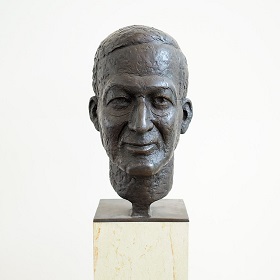
Alfred Döblin (10 augustus 1878 – 26 juni 1957)
Borstbeeld door Siegfried Wehrmeister, 1992


De Oegandese schrijver Moses Isegawa (pseudoniem van Sey Wava)werd geboren op 10 augustus 1963 in Kawempe in Oeganda. Zie ook alle tags voor Moses Isegawa op dit blog en ook mijn blog van 10 augustus 2010.

Uit: Abyssinian Chronicles

“The exodus of wives, relatives, friends and hangers-on had left a big howling lacuna which wrapped the homestead in webs of glorious nostalgia. The fifties and sixties were spanned by that nostalgia and provided us with stories pickled, polished and garnished by memory. Every migrant soul was now a compact little ghost captured in words, invoked from the lacuna by the oracle of Grandpa and Grandma and made to inject doses of old life into our present truncated existence. The hegemony of lacuna'd ghosts in their stories was broken only when the characters, like resurrected souls, braved the dangerous slopes of Mpande Hill and the treacherous papyrus swamps to come and state their case in person. The Fiddler never returned, but was most prevalent because he was immortalized by the poor rendition of his songs Grandpa showered on his homestead as he shaved, as he toured his coffee plantation—the shamba—to supervise work, as he reminisced in the shade and as he wondered how to get a young girl with an old soul to see him through his last days.
Late in the sixties, no one ’5 visit was awaited more eagerly than Uncle Kawayida’s: the man was a wizard, a gold mine full of fascinating and sometimes horrifying tales, a fantastic storyteller endowed with a rare patience who answered my often tedious questions with a cheerful, reassuring face. When he stayed away too long, I became restless and worked out the days and months he was most likely to come. On such days I would climb into the branches of my favorite tree, the tallest jackfruit in the three homesteads, and fix my eyes on the distant Mpande (“Manhood”) Hill. If I was lucky, I would see his motorbike, a blue-bellied eagle encased in silver flashes, glide down the notoriously steep slope and disappear into the umbrella-shaped greenery of the papyrus swamp below. With “ Uncle Kawayida, Uncle Kawayida!” on my tongue, I would speed down the tree-dry, sharp sticks pricking my skin, the sweet hypnotic smell of jackfruit in my nose-and rush into Grandma’s courtyard to break the good news.”


 1800446-890d3be56458b53906876ae79308a083.jpg
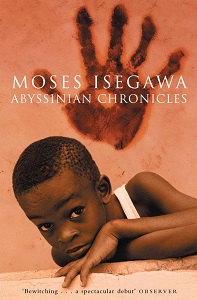
Moses Isegawa (Kawempe, 10 augustus 1963)
Cover 


De Amerikaanse dichter en schrijver Mark Doty werd geboren op 10 augustus 1953 in Maryville, Tennessee. Zie ook alle tags voor Mark Doty op dit blog en ook mijn blog van 10 augustus 2010.


Atlantis

2. REPRIEVE

I woke in the night
and thought, It was a dream,

nothing has torn the future apart,
we have not lived years

in dread, it never happened,
I dreamed it all. And then

there was this sensation of terrific pressure
lifting, as if I were rising

in one of those old diving bells,
lightening, unburdening. I didn’t know

how heavy my life had become—so much fear,
so little knowledge. It was like

being young again, but I understood
how light I was, how without encumbrance,—

and so I felt both young and awake,
which I never felt

when I was young. The curtains moved
—it was still summer, all the windows open—

and I thought, I can move that easily.
I thought my dream had lasted for years,

a decade, a dream can seem like that,
I thought, There’s so much more time ...

And then of course the truth
came floating back to me.

You know how children
love to end stories they tell

by saying, It was all a dream? Years ago,
when I taught kids to write,

I used to tell them this ending spoiled things,
explaining and dismissing

what had come before. Now I know
how wise they were, to prefer

that gesture of closure,
their stories rounded not with a sleep

but a waking. What other gift
comes close to a reprieve?

This was the dream that Wally told me:
I was in the tunnel, he said,

and there really was a light at the end,
and a great being standing in the light.

His arms were full of people, men and women,
but his proportions were all just right—I mean

he was the size of you or me.
And the people said, Come with us,

we’re going dancing. And they seemed so glad
to be going, and so glad to have me

join them, but I said,
I’m not ready yet. I didn’t know what to do,

when he finished,
except hold the relentless

weight of him, I didn’t know
what to say except, It was a dream,

nothing’s wrong now,
it was only a dream.


 1800446-ea4d93a073007616191ab909adb7ec31.jpg
Mark Doty (Maryville, 10 augustus 1953)


De Poolse schrijver Jerzy Pilch werd geboren op 10 augustus 1952 in Wisla. Zie ook alle tags voor Jerzy Pilch op dit blog en ook mijn blog van 10 augustus 2010.

Uit: His Current Woman (Vertaald door Bill Johnston)

“Or at the very least I should have a serious heart-to-heart with her. I mean, during these few weeks we’ve never really had a decent talk. I told one lie afier another and shewent on and on about literature, Kohoutek admits to himself.
What’s to be done? Where can I put her? A hotel is out of the question, since everyone would know all about it at once. The entire town, inhabited as it is exclusively by adherents of the Lutheran faith, would know the whole story immediately. Maybe- the glimmer of a vague notion brightens Kohoutek’s mind-maybe she could be passed off as a vacationer, and maybe they could be persuaded to rent out a room to her? After all, for years there’s beenm talk of the money to be made from renting out rooms; every year hundreds of summer visitors ask if there are rooms to rent and are met with a sneering rebuff. Every time there’s someone who won’t agree to it, either Kohoutek’s folks, or Oma, or Miss Wandzia’s mother-though she rents a room herself, she’s opposed to the other rooms being rented. But no one will agree, thinks Kohoutek, to my current woman.When they see her in that little curio of a hat, as one man they’ll all be opposed to her renting a room even for an hour. What’s to be done? thinks Kohoutek feverishly. Howlong will she be staying in the attic? I mean, she needs certain comforts; she has to wash, use the bathroom. How will I be able to handle all that? How could she do this to me?
All at once the floor creaked and Kohoutek sat bolt upright, because he thought he saw his current woman standing at the foot of his bed.“


 1800446-bda85d3c51ebcbbc20ee88b5c33b037c.jpg
Jerzy Pilch (Wisla, 10 augustus 1952)


Zie voor nog meer schrijvers van de 10e augustus ook mijn blog van 10 augustus 2014 deel 2 en eveneens deel 3.

Geschreven door Romenu om 18:35 Reageer op dit bericht

Luuk Gruwez, Philip Larkin, Gerrit Kouwenaar, Henk Romijn Meijer, Linn Ullmann

De Vlaamse dichter, prozaïst en essayist Luuk Gruwez werd geboren op 9 augustus 1953 te Kortrijk. Zie ook alle tags voor Luuk Gruwez op dit blog.


De feestelijke verliezer

Ik had het fijnste gaas van het verlangen lief
zoals een zachte bries het lichaam van de baadster
en waar ik mij begaf, omgaf er mij een waas
van angstaanjagend aangenaam verwelken.
En een seizoen lang werd het avond.

En toen - het hart hoog op de wind -
verlangen zich bezeerde aan begeerte,
hoe lief had ik dan niet dat feestelijk verlies,
alsof een hartstocht mij verloren blies,
al werd ternauwernood gezoend

de monstrans van één enkele mond.
En elke avond werd het herfst.

En telkens als de sierlijkste der herfsten
mij in de wind een onderkomen bood,
vond ik in ruisen en in beven
een huis om dakloos in te zijn.


Oma's memo

zij ruimt de rommel op die niet meer dient:
een fotolijst, een hoornen bril,
verlovingsjurk van anno dertig,
de prullenkraam van een bestaan
dat eens vol meesterwerken was.

haar mooiste meesterwerk ben ik,
haar mausoleum voor een dochter,
de hare, die mij baarde en toch stierf,
de missing link die ons verbindt,
gemis dat vlees werd, stof en as.

uit alles blijkt dat zij zich traint in blijven,
in voortbestaan, inpakken van wat was.
en met een stem vol moederschap
laat zij een opdracht aan de planten na:
wees daar, eis water, als ik niet meer ben.

alles wat weerloos is en eindigt
verdient een voortbestaan. geen ding.
zo eindigt ook haar kunstgebit
met gouden stift, dat nu nog elke avond
in een glaasje gaat, straks in een kist.


Kanker I

God, herstel deze vrouw. zij is nog niet
voltooid. zij moet mij nog ten grave dragen.
o, leg haar straks, al stijf van ouderdom,
met beide borsten in een kist.

ik weet dat u soms voorkomt in het wild
naast aasgier, lynx en tijgerkat:
fouileer haar niet tot op het bot
of daar nog ergens kanker zat.

ook ik lijd honger aan haar lijf.
wees niet bekommerd om uw maal:
ik wil een ander kwijt in ruil voor haar.
ik wil een ander kwijt, of minstens mij.


 1799978-ce27606908acb8db74e9ddd22ed28c3f.jpg
Luuk Gruwez (Kortrijk, 9 augustus 1953)


De Engelse dichter Philip Larkin werd op 9 augustus 1922 geboren in Coventry. Zie ook mijn blog van 9 augustus 2010 en eveneens alle tags voor Philip Larkin op dit blog


Mr. Bleaney

This was Mr Bleaney's room. He stayed
The whole time he was at the Bodies, till
They moved him.‘ Flowered curtains, thin and frayed,
Fall to within five inches of the sill,

Whose window shows a strip of building land,
Tussocky, littered. 'Mr Bleaney took
My bit of garden properly in hand.‘
Bed, upright chair, sixty-watt bulb, no hook

Behind the door, no room for books or bags
l'll take it.‘ So it happens that I lie
Where Mr Bleaney lay, and stub my fags
On the same saucer-souvenir, and try

Stuffing my ears with cotton-wool, to drown
The jabbering set he egged her on to buy.
I know his habits - what time he came down,
His preference for sauce to gravy, why

He kept on plugging at the four aways
Likewise their yearly frame: the Frinton folk
Who put him up for summer holidays,
And Christmas at his sisters house in Stoke.

But if he stood and watched the frigid wind
Tousling the clouds, lay on the fusty bed
Telling himself that this was home, and grinned,
And shivered, without shaking off the dread

That how we live measures our own nature,
And at his age having no more to show
Than one hired box should make him pretty sure
He warranted no better, I don't know.


 1799978-4dd91fb6cde09f58ab1b3bb64da18517.jpg
Philip Larkin (9 augustus 1922 – 2 december 1985)


De Nederlandse dichter Gerrit Kouwenaar werd op 9 augustus 1923 in Amsterdam geboren. Hij is vandaag dus 85 jaar geworden. Zie ook mijn blog van 9 augustus 2010 en eveneens alle tags voor Gerrit Kouwenaar op dit blog.


De taal

De taal behoort aan de vogels
ik ben te mens om te vliegen
ik sta als een huis op de wereld
gebouwd en dik uit aarde

ik ben ongeveer degene
die schuilgaat binnen de muren
en uitvloeit achter de ramen
van de blauwe achterkamer

het geurt er naar mest en naar liefde
er staat een plant in een kooi
de taal behoort aan de vogels
de mens schuilt weg in het woord -


A happy childhood

Vergeet je wel eens je vaders klok op te winden?
Ja, ik vergeet wel eens mijn vaders tijd te vergeten

draag je wel eens een strohoed een ooglap een vadermoorder?
nee, ik draag een gedicht op, een zomer van bladgoud

schrijf je wel eens de laatste lippen om te verwoorden?
ja, ik ontcijfer een kus van bemodderde rozen

loop je wel eens door gras dat nodig gemaaid moet?
nee, ik sta stil in gras dat niemand gezaaid heeft –


Een Herfst

Men is vandaag ontzettend onsterfelijk
het is eindelijk de echte heldere herfst
die er haast nog niet is

de bladeren vergelen, nog betrekkelijk groen
de wind is nog blauw, wijst geen enkele richting
de grond ligt nog onder het gras

men rookt de zwarte sigaar van de dokter
men raakt bezweet door het werpen met darts
men drinkt zijn zevende glas

in een ligstoel later men stippelt
onder het genot van dit tijdstip
een reis uit

de reis voor de komende heldere winter
en men vindt met de pink weer die heldere weg
naar dat denkbeeldige eindpunt -


 1799978-3147f3e3656a9708318f566aad96618e.jpg
Gerrit Kouwenaar (9 augustus 1923 - 4 september 2014)


De Nederlandse schrijver en taalkundige Henk Romijn Meijer werd geboren in Zwolle op 9 augustus 1929. Zie ook alle tags voor Henk Romijn Meijer op dit blog.

Uit: Toen Reve nog Van het Reve was

“Er zijn waarschijnlijk weinig schrijvers die in hun werk zo gul omspringen met ontboezemingen over hun persoonlijke situatie als Gerard Reve. Zijn ‘geliefd publiek’ komt niet alleen aan de weet hoe hij denkt over religie, erotiek, politiek en veel wat daarmee verband houdt, maar ook met wie hij zijn leven deelt, hoe hij zijn dagen doorbrengt, welke mensen hij ontmoet en wat hij van hen vindt, welk voedsel zijn voorkeur heeft en door welke herinneringen hij wordt bezocht (in beide betekenissen van het woord). Wie daar nog niet genoeg aan heeft, kan terecht bij de ontelbare interviews waaraan hij zich met verbazingwekkende bereidwilligheid blijft onderwerpen. Op grond daarvan zou men zich kunnen afvragen of het zin heeft dat een ander het allemaal nog eens dunnetjes komt overdoen. Eerlijk gezegd denk ik om allerlei redenen van wel.
Ten eerste hoeft de voorstelling die iemand van zichzelf heeft of aan de buitenwereld toont, lang niet altijd samen te vallen met de indruk die hij op anderen maakt. Dat geldt eens te meer voor een schrijver als Reve die er, aangespoord door een barokke fantasie en een niet minder barok gevoel voor humor, een bijna satanisch behagen in schept, mensen op een dwaalspoor te brengen door zich te omspinnen met een web waarin feiten en verzinsels kunstig zijn verweven tot een moeilijk te ontraadselen geheel.
Ten tweede betreft het in dit geval geen willekeurige babbelkous die zich interessant probeert te maken op rekening van andermans roem, maar een schrijver van naam met een solide literaire reputatie.
Daaruit vloeit onmiddellijk de derde reden voort: de lezers worden niet onthaald op een ratjetoe van leutige voorvallen en dubieuze achterklap noch op de aan blinde bewondering ontlokte lofzangen die even welgemeend als dodelijk vervelend zijn. Ze maken daarentegen kennis met een heldere en in veel opzichten verhelderende visie op Reve als mens en schrijver.”


 1799978-83e57c4352815c1ccc3f45690a9ad137.jpg
Henk Romijn Meijer (9 augustus 1929 – 23 februari 2008)
Cover


De Noorse schrijfster Linn Karin Beate Ullmann werd geboren op 9 augustus 1966 in Oslo. Zie ook alle tags voor Linn Ullmann op dit blog.

Uit: A Blessed Child

“He wanted to leave it to grow. There was no one to cut it for, he said, but in order to restore the mutually preferred silence between them, they reached a compromise. In summer, the crown of Isak's head was blank and glossy and as blue as the globes he had presented to each of his three daughters, Erika, Laura, and Molly, on her fifth birthday; in the winter, he let his hair grow free, giving him an aspect of towering grayish white, which in combination with his handsomely lined, aging face suggested the beginnings of a rauk, one of those four-hundred-million-year-old island outcrops in the sea, so characteristic of Hammarsö.
Erika seldom saw her father after he had moved to the island, but Simona had sent her two photographs. One of a long-haired Isak and one of the almost bald Isak. Erika liked the long-haired one better. She ran her finger over the picture and kissed it. She imagined him on the stony beach on Hammarsö with arms stretched aloft, hair streaming out, and that long, fake beard he would wear when rehearsing his lines as Wise Old Man for the 1979 Hammarsö Pageant.
Rosa — Isak's second wife and Laura's mother — died of a degenerative muscle-wasting disease in the early 1990s. It was Rosa's death that prompted Isak's return to Hammarsö. In the twelve years the house had stood empty, there had been only occasional visits from Simona. She had swept up the insect life that forced its way in every summer and lay dead on the windowsills all winter; she had the locks changed after a minor break-in and mopped up when the pipes burst and water leaked all over the floor. But she could do nothing about the water damage and rot if Isak was not prepared to pay for workmen to come in and fix them.
"It's going to get run-down whatever I do," she said in one of their brief telephone conversations. "You'll either have to sell it, do it up, or start living in it again."
"Not yet. I'm not making any decisions yet," Isak said.
But then Rosa's body let her down, and though her heart was strong and wouldn't stop beating, Isak and a colleague agreed in the end that Rosa should be spared. After the funeral, Isak made it plain to Erika, Laura, and Molly that he intended to kill himself. The pills had been procured, the deed carefully planned. And yet, he moved back to the house.”


 1799978-02ddd4b9ef83dbd2bd324c08dcadb99a.jpg
Linn Ullmann (Oslo, 9 augustus 1966)


Zie voor nog meer schrijvers van de 9e augustus ook mijn vorige blog van vandaag.

Geschreven door Romenu om 11:44 Reageer op dit bericht

P. L. Travers, Pierre Klossowski, Daniel Keyes, Leonid Andreyev, John Oldham, Izaak Walton

De Australische schrijfster Pamela Lyndon Travers werd als Helen Lyndon Goff op 9 augustus 1899 geboren in Maryborough in Australië. Zie ook alle tags voor P. L. Travers op dit blog en eveneens mijn blog van 9 augustus 2009 en ook mijn blog van 9 augustus 2010

Uit: Mary Poppins

“And she led the way towards the staircase, talking all the time, without stopping once. And because she was doing that Mrs Banks did not notice what was happening behind her, but Jane and Michael, watching from the top landing, had an excellent view of the extraordinary thing the visitor now did.
Certainly she followed Mrs Banks upstairs, but not in the usual way. With her large bag in her hands she slid gracefully up the banisters, and arrived at the landing at the same time as Mrs Banks. Such a thing, Jane and Michael knew, had never been done before. Down, of course, for they had often done it themselves. But up — never! They gazed curiously at the strange new visitor.
“Well, that’s all settled, then.” A sigh of relief came from the children’s Mother.
“Quite. As long as I’m satisfied,” said the other, wiping her nose with a large red and white bandanna handkerchief.
“Why, children,” said Mrs Banks, noticing them suddenly, “what are you doing there? This is your new nurse, Mary Poppins. Jane, Michael, say how do you do! And these”—she waved her hand at the babies in their cots—“are the Twins.”
Mary Poppins regarded them steadily, looking from one to the other as though she were making up her mind whether she liked them or not."


 1799975-ecc56ef89b813c1f8d71b6986357f2a6.jpg
P. L. Travers (9 augustus 1899 – 23 april 1996)
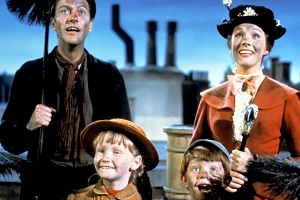
Scene uit de film uit 1964 met o.a. Dick Van Dyke en Julie Andrews


De Franse schrijver, vertaler en schilder Pierre Klossowski werd geboren op 9 augustus 1905 in Parijs. Zie ook alle tags voor Pierre Klossowski op dit blog en eveneens mijn blog van 9 augustus 2009 en ook mijn blog van 9 augustus 2010

Uit: La Monnaie vivante

« Depuis le milieu du siècle dernier, les anathèmes ont été lancés au nom de la vie affective contre les ravages de la civilisation industrielle.
Imputer aux moyens de production de l'industrie une action pernicieuse sur les affects, c'est, sous prétexte de dénoncer son emprise démoralisante, lui reconnaître une puissance morale considérable. D'où lui vient cette puissance ?
Du seul fait que l'acte même de fabriquer des objets remet en question sa finalité propre : en quoi donc l'usage des objets ustensilaires diffère-t-il de l'usage de ceux que produit l'art, «inutiles» à la subsistance ?
Nul ne songerait à confondre un ustensile avec un simulacre. A moins que ce ne soit qu'en tant que simulacre qu'un objet en est un d'usage nécessaire. »
(…)

Que l'on imagine une régression apparemment impossible : soit une phase industrielle où les producteurs ont le moyen d'exiger, à titre de paiement, des objets de sensation de la part des consommateurs. Ces objets sont des êtres vivants.”


 1799975-2e6a3686e7cd304c13f8c08ffbd675b9.jpg
Pierre Klossowski (9 augustus 1905 – 12 augustus 2001)


De Amerikaanse schrijver Daniel Keyes werd geboren in Brooklyn, New York op 9 augustus 1927. Zie ook alle tasgs voor Daniel Keyes op dit blog en ook mijn blog van 9 augustus 2009 en ook mijn blog van 9 augustus 2010.

Uit: Flowers for Algernon

“April 6—Today, I learned, the comma, this is, a, comma (,) a period, with, a tail, Miss Kinnian, says its, importent, because, it makes writing, better, she said, somebody, could lose, a lot, of money, if a comma, isnt in, the right, place, I got, some money, that I, saved from, my job, and what, the foundation, pays me, but not, much and, I dont see how, a comma, keeps, you from, losing it,
But, she says, everybody, uses commas, so Ill, use them, too,,,,

April 7—I used the comma wrong. Its punctuation…Miss Kinnian says a period is punctuation too, and there are lots of other marks to learn.
She said; You, got. to-mix?them!up: She showd? me” how, to mix! them; up, and now! I can. mix (up all? kinds of punctuation— in, my. writing! There” are lots, of rules; to learn? but. Im’ get’ting them in my head:
One thing? I, like: about, Dear Miss Kinnian: (thats, the way? it goes; in a business letter (if I ever go! into business?) is that, she: always; gives me’ a reason” when—I ask. She”s a gen’ius! I wish? I could be smart-like-her;
Punctuation, is? fun!”


 1799975-612b232035679aa255e153e215c3039b.jpg
Daniel Keyes (New York, 9 augustus 1927)
Scene uit een toneelopvoering in Sherman Oaks.2010


De Russische schrijver Leonid Andreyev werd geboren op 9 augustus 1871 in Orjol. Zie ook alle tags voor Leonid Andreyev op dit blog en eveneens mijn blog van 9 augustus 2010 en eveneens mijn blog van 9 augustus 2009.

Uit: Lazarus (Vertaald door Abraham Yarmolinsky)

“Not merely Lazarus' face, but his very character, it seemed, had changed; though it astonished no one and did not attract the attention it deserved. Before his death Lazarus had been cheerful and careless, a lover of laughter and harmless jest. It was because of his good humour, pleasant and equable, his freedom from meanness and gloom, that he had been so beloved by the Master. Now he was grave and silent; neither he himself jested nor did he laugh at the jests of others; and the words he spoke occasionally were simple, ordinary and necessary words--words as much devoid of sense and depth as are the sounds with which an animal expresses pain and pleasure, thirst and hunger. Such words a man may speak all his life and no one would ever know the sorrows and joys that dwelt within him.
Thus it was that Lazarus sat at the festive table among his friends and relatives--his face the face of a corpse over which, for three days, death had reigned in darkness, his garments gorgeous and festive, glittering with gold, bloody-red and purple; his mien heavy and silent. He was horribly changed and strange, but as yet undiscovered. In high waves, now mild, now stormy, the festivities went on around him. Warm glances of love caressed his face, still cold with the touch of the grave; and a friend's warm hand patted his bluish, heavy hand. And the music played joyous tunes mingled of the sounds of the tympanum, the pipe, the zither and the dulcimer. It was as if bees were humming, locusts buzzing and birds singing over the happy home of Mary and Martha.”


 1799975-5db5208bb0acf69318e1834065430cc6.jpg
Leonid Andreyev (9 augustus 1871 – 12 september 1919)
Zelfportret 


De Engelse dichter en vertaler John Oldham werd geboren in Shipton Moyne (Gloucestershire) op 9 augustus 1653. Zie ook alle tags voor John Oldham op dit blog en eveneens mijn blog van 9 augustus 2010 en eveneens mijn blog van 9 augustus 2009.


A Satire, In Imitation Of The Third Of Juvenal (Fragment)

Though much concern'd to leave my dear old friend,
I must however his design commend
Of fixing in the country: for were I
As free to choose my residence, as he;
The Peak, the Fens, the Hundreds, or Land's End,
I would prefer to Fleet Street, or the Strand.
What place so desert, and so wild is there
Whose inconveniences one would not bear,
Rather than the alarms of midnight fire,
The falls of houses, knavery of cits,
The plots of factions, and the noise of wits,
And thousand other plagues, which up and down
Each day and hour infest the cursed town?
As fate would hav't, on the appointed day
Of parting hence, I met him on the way,
Hard by Mile End, the place so fam'd of late,
In prose, and verse for the great faction's treat;
Here we stood still, and after compliments
Of course, and wishing his good journey hence
I ask'd what sudden causes made him fly
The once lov'd town, and his dear company:
When, on the hated prospect looking back,
Thus with just rage the good old Timon spake.


 1799975-f99e8e180b46ebe18832410157f8bbe3.jpg
John Oldham (9 augustus 1653 - 9 december 1683)
St. John the Baptist's Church, Shipton Moyne


De Engelse schrijver Izaak Walton werd geboren in Stafford op 9 augustus 1593. Zie ook alle tags voor Izaak Walton op dit blog en eveneens mijn blog van 9 augustus 2010 en eveneens mijn blog van 9 augustus 2009.


An Elegie upon Dr. Donne (Fragment)

Did his youth scatter _Poetry, wherein
Was all Philosophy? was every sinne,
Character'd in his _Satyrs? Made so foule
That some have fear'd their shapes, and kept their soule
Safer by reading verse? Did he give dayes_
Past marble monuments, to those, whose praise
He would perpetuate? Did he (I feare
The dull will doubt these at his twentieth year?
But, more matur'd; Did his full soule conceive,
And in harmonious-holy-numbers weave
A Crown of sacred sonnets, fit to adorne
A dying Martyrs brow: or, to be worne
On that blest head of Mary Magdalen,
After she wip'd Christs feet, but not till then?
Did hee (fit for such penitents as shee
And he to use) leave us a Litany,
Which all devout men love, and sure, it shall,
As times grow better, grow more classicall?
Did he write Hymnes, for piety, for wit,
Equall to those, great grave Prudentius writ?
Spake he all Languages? knew he all Lawes?
The grounds and use of _Physick; but because
'Twas mercenary, wav'd it? Went to see
That blessed place of Christs nativity?
Did he returne and preach him? preach him so
As since S. Paul none did, none could? Those know,
(Such as were blest to heare him) this is truth.
Did he confirm thy aged? convert thy youth?


 1799975-2ed7deabb3df68a3488b4f7dec2a7ff9.jpg
Izaak Walton (9 augustus 1593 - 15 december 1683)
Portret door George Perfect Harding, ca. 1800 

Geschreven door Romenu om 11:42 Reageer op dit bericht

Nina Berberova, Marjorie Kinnan Rawlings, Zofia Kossak-Szczucka, Hitomi Kanehara, Flavia Bujor, Franco Biondi, Reinhold Hauschka

De Russische schrijfster Nina Nikolaevna Berberova werd geboren op 8 augustus 1901 in Sint Petersburg. Zie ook alle tags voor Nina Berberova op dit blog en ook mijn blog van 8 augustus 2010

Uit: The Resurrection of Mozart (Vertaald door Marian Schwarz)

“Yes, it was exactly a year ago today that Nevelsky dies. He knew a lot of this was coming. He predicted so much of it.”
“Well, he couldn’t have picked a better time to die. At least he doesn’t have to see what we see. If he were resurrected he’d either spit in disgust or break down and cry.”
Facing the hostess, at the opposite end of the table, sat a Frenchman brought along by Chabarov but whom no one else really knew. Simply, and without any fussy apology, he asked them to translate what they were all saying.
“Monsieur Daunou, we were talking about the dead, and what they would say if they were resurrected and saw what’s going on now,” replied Maria Leonidovna Sushkova.
Daunou took his black pipe out of his mouth, furrowed his brow, and smiled.
“Is it worth waking the dead?” he said, looking his hostess straight in the eye. “I suppose I might well invite Napoleon to come and have a look at our times, but I’d certainly spare my parents the pleasure.”


 1799678-aef16fcb33e23738aadfdf9ea9e1ae47.JPG
Nina Berberova (8 augustus 1901 – 26 september 1993)


De Amerikaanse schrijfster Marjorie Kinnan Rawlings werd geboren op 8 augustus 1896 in Washington. Zie ook alle tags voor Marjorie Kinnan Rawlings op dit blog en ook mijn blog van 8 augustus 2010

Uit: The Yearling

"There'll come a little old drizzly rain before night-fall," he thought.
The down grade tempted him to a lope. He reached the thick-bedded sand of the Silver Glen road. The tar-flower was in bloom, and fetter-bush and sparkleberry. He slowed to a walk, so that he might pass the changing vegetation tree by tree, bush by bush, each one unique and familiar. He reached the magnolia tree where he had carved the wildcat's face. The growth was a sign that there was water nearby. It seemed a strange thing to him, when earth was earth and rain was rain, that scrawny pines should grow in the scrub, while by every branch and lake and river there grew magnolias. Dogs were the same everywhere, and oxen and mules and horses. But trees were different in different places.
"Reckon it's because they can't move none," he decided. They took what food was in the soil under them.
The east bank of the road shelved suddenly. It dropped below him twenty feet to a spring. The bank was dense with magnolia and loblolly bay, sweet gum and gray-barked ash. He went down to the spring in the cool darkness of their shadows. A sharp pleasure came over him. This was a secret and a lovely place.
A spring as clear as well water bubbled up from nowhere in the sand. It was as though the banks cupped green leafy hands to hold it. There was a whirlpool where the water rose from the earth. Grains of sand boiled in it. Beyond the bank, the parent spring bubbled up at a higher level, cut itself a channel through white limestone and began to run rapidly down-hill to make a creek. The creek joined Lake George, Lake George was a part of the St. John's River, the great river flowed northward and into the sea. It excited Jody to watch the beginning of the ocean. There were other beginnings, true, but this one was his own. He liked to think that no one came here but himself and the wild animals and the thirsty birds.”


 1799678-0122b53c1c5f4ca2b8a8ae36b9e6a484.jpg
Marjorie Kinnan Rawlings (8 augustus 1896 – 14 december 1953)
Cover 


De Poolse schrijfster Zofia Kossak-Szczucka werd geboren op 8 augustus 1890 in Kośmin.  Zie ook alle tags voor Zofia Kossak-Szczucka op dit blog en ook mijn blog van 8 augustus 2010

Uit: Protest

„Confronted with such suffering, quick death seems to be an answer. The executioners have foreseen it. All the drugstores in the ghetto have been closed, to avoid supplying with a poison. There are no guns. The only solution is to jump down out of the window to the street. Therefore a lot of convicts choose to "escape" their executioners in this way.
The same that is happening in the Warsaw Ghetto, has been happening for half a year in hundreds of smaller or larger Polish towns and cities. The total number of murdered has already exceeded one million and the number grows each day. All perish. Poor and rich, old, women, men, youngsters, infants, Catholics dying with the name of Jesus and Mary together with Jews. Their only guilt is that they were born to the Jewish nation condemned to extermination by Hitler.
The world is looking at these atrocities, the most horrible throughout the whole history of mankind, and is silent. Slaughter of the millions of people is happening in ominous silence.”


 1799678-526d85a1696dbd12943d48968bfffad1.jpg
Zofia Kossak-Szczucka (8 augustus 1890 – 9 april 1968)


De Japanse schrijfster Hitomi Kanehara werd geboren op 8 augustus 1983 in Tokyo. Zie ook alle tags voor Hitomi Kamehara op dit blog en ook mijn blog van 8 augustus 2010

Uit: Snakes and Earrings

“My thing until now has been earrings. And to describe my earrings, I guess I should begin by telling you how they're measured. The thickness of body jewelry is generally measured in gauges; the lower the number, the larger the hole. Starter earrings are usually either 16g or 14g, which is about 1.5mm wide. After 0g comes 00g, which is about 9.5mm wide. Anything over a centimeter wide is measured in fractions of gauges. But to be honest, once you go over 00 you look like a member of some kind of tribe and it's no longer really a question of looking good or not. As for me, I have two 0g earrings in my right ear, and my left ear is lined with 0g, 2g, and 4g earrings from the bottom up. As you can imagine, it was painful enough stretching the holes in my ears; I couldn't begin to imagine how much it would hurt to do the same to my tongue.
I used to wear 16g earrings until I met a girl two years older than me named Eri at a club one night and I fell in love with her 00g earrings. When I told her how cool her earrings looked, she gave me dozens of her old ones, ranging from 12g to 0g, saying, 'Once you go this far, you can't wear smaller ones anymore.' Going from 16 to 6 was easy, but going from 4 to 2 and then 2 to 0 was a real stretch. Blood oozed from the hole and my earlobes became swollen and red. The constant, thumping pain lasted for two or three days. I also inherited Eri's philosophy of not using expanders, so it took me three months to get down to a 0g. I was just thinking of moving on to 00g the night I met the guy with the forked tongue. I was addicted to stretching, and I guess that fueled my interest in his talk of tongue splitting. I noticed that he seemed to be enjoying himself too.”


1799678-db356b91707d90b77b379f1c9003df60.jpg
Hitomi Kanehara (Tokyo, 8 augustus 1983)


De Franse schrijfster Flavia Bujor werd geboren op 8 augustus 1988 in Roemenië. Zie ook alle tags voor Flavia Bujor op dit blog.

Uit: The Prophecy of the Stones

"Fourteen years have passed much too quickly," murmured the duke in weary resignation. Then he left the room.
The old man stared at the flames blazing in the hearth. The Prophecy would he fulfilled. Now it was only a matter of days. He had waited for this moment, had longed for it impatiently. Soon all his questions would be answered. He shivered. It was foolish of him to have become attached to the child; he shouldn't have done that. The Prophecy had taken on another meaning: in those obscure pages where he had tried so hard to read the future and to understand the upheaval that was to come, he no longer saw anything except the fate of a girl named Jade.
That same girl was lying sprawled across her bed. She was feeling much too restless to read the book in her hands, and there was a faraway look in her eyes. Roused from her reverie by a sudden knock at the door, she leaped to her feet, calling, "Come in!"
A servant opened the door a crack, and said, "Your father wishes to speak to you. Will you receive him now?"
Surprised that her father was not busy at that hour, Jade gave her consent, and the servant retired.
Jade smoothed down her long black hair, then tossed it over her shoulders. She looked in the mirror and approved of what she saw. True, her smile revealed teeth with slight gaps between them; her eyelashes were perhaps a bit too thick; and she was constantly brushing back a few rebellious stray locks. Whenever she became irritated (which happened often), her cheeks grew red and she lost the self-conscious expression she usually wore. However, she knew she was tall, slender, and beautiful, and she always dressed with care. She was sure of herself. She knew that whatever she wanted, she could get.”


 1799678-04719d7edac17bc323443ee459e32654.jpeg
Flavia Bujor (Roemenië, 8 augustus 1988)


De Duitstalige schrijver Franco Biondi werd geboren op 8 augustus 1947 in Forli in Italië. Zie ook alle tags voor Franco Biondi op dit blog.

Uit: Karussellkinder

„Auf dem Weg zum Dodge beklagte Moro die Trockenheit seiner Kehle. Er schob das Zeug zum Dodgeeingang und sagte: Eigentlich müsste ich dich ins Bett verfrachten, aber ich muss meinen Schlund unbedingt anfeuchten, sonst wird mir die Nacht zur Hölle. Und wenn ich ehrlich bin, mag ich auch nicht alleine in der Osteria sitzen. Ja, Dario, ich vermisse meine Freunde. Schaffst du es noch, kurz mit mir in die Osteria zu gehen? Oder soll ich dich ins Bett begleiten und gehe alleine fort? Ich will mitgehen!
Ich sehe, du schaffst es nicht, aber doch, gehe mit! Es war ein erfolgreicher Abend, heute! Wir haben so viel einkassiert wie drei Tage Piantachiodi! Schade nur, dass der Platzverwalter einer Beschwerde nachgehen musste! Dario blickte Babbo verständnislos an. Babbo fuhr fort. Du weißt ja, wie das mit den Karten ist. Mit den Dreihütchen
ist es auch so. Hasardspiele sind nicht erlaubt, und das mit dem Würfelspiel ist ein Grenzfall, das geht nur mit Sondergenehmigung. Weißt du, wir haben Glück gehabt, jemand von den Carabinieri hat uns gesehen und ist zum Platzverwalter gerannt, der Carabinieri hat Mitleid mit dem Kind gehabt, das die Würfel so leidenschaftlich geschüttelt hat, und wollte die Sondergenehmigung sehen. Der Verwalter wusste von der Sondergenehmigung nichts, daraufhin hat der Carabiniere mit der Hand abgewinkt und ist gegangen.
Erzählend betraten Vater und Sohn die Osteria. Als der Mezzolitro für Moro und die Limonade für seinen Sohn an den Tisch gebracht wurden, schlief Dario längst, das Gesicht auf die Tischplatte gelegt.“


 1799678-1d25655297dae0c910fbae48b2772296.jpg
Franco Biondi (Forli, 8 augustus 1947)


De Duitse dichter en schrijver Reinhold Hauschka werd geboren op 8 augustus 1926 in Aussig in Bohemen. Zie ook alle tags voor Reinhold Hauschka op dit blog.

Uit: Aphorismen


„Wer im Geld schwimmt, hält einen Rettungsring für eine Zumutung.“


’’ Wir hoffen immer auf den nächsten Tag, wahrscheinlich erhofft sich der nächste Tag einiges von uns.“


„Die kalte Schnauze eines Hundes ist erfreulich warm gegen die Kaltschnäuzigkeit mancher Mitmenschen.“


 1799678-485852c413e815efb995f41ae3e7f8ef.jpg
Reinhold Hauschka (8 augustus 1926 – 29 mei 2012)

Geschreven door Romenu om 13:27 Reageer op dit bericht

Jostein Gaarder, Klaus Ebner, Birgit Vanderbeke, Gernot Wolfram, Sara Teasdale, Donald Davidson, Hieronymus van Alphen

De Noorse schrijver Jostein Gaarder werd geboren op 8 augustus 1952 in Oslo. Zie ook alle tags voor Jostein Gaarder op dit blog.

Uit: The Orange Girl (Vertaald door James Anderson)

“Imagine that you were on the threshold of this fairytale, sometime billions of years ago when everything was created. And you were able to choose whether you wanted to be born to a life on this planet at some point. You wouldn’t know when you were going to be born, nor how long you’d live for, but at any event it wouldn’t be more than a few years. All you’d know was that, if you chose to come into the world at some point, you’d also have to leave it again one day and go away from everything. This might cause you a good deal of grief, as lots of people think that life in the great fairytale is so wonderful that the mere thought of it ending can bring tears to their eyes. Things can be so nice here that it’s terribly painful to think that at some point the days will run out. What would you have chosen, if there had been some higher power that had gave you the choice? Perhaps we can imagine some sort of cosmic fairy in this great, strange fairytale. What you have chosen to live a life on earth at some point, whether short or long, in a hundred thousand or a hundred million years? Or would you have refused to join in the game because you didn’t like the rules? (...) I asked myself the same question maybe times during the past few weeks. Would I have elected to live a life on earth in the firm knowledge that I’d suddenly be torn away from it, and perhaps in the middle of intoxicating happiness? (...) Well, I wasn’t sure what I would have chosen. (...) If I’d chosen never to the foot inside the great fairytale, I’d never have known what I’ve lost. Do you see what I’m getting at? Sometimes it’s worse for us human beings to lose something dear to us than never to have had it at all.”


 1799687-324125d77fa657c896fa06a873ca32d1.jpg
Jostein Gaarder (Oslo, 8 augustus 1952)


De Oostenrijkse schrijver Klaus Ebner werd geboren op 8 augustus 1964 in Wenen. Zie ook alle tags voor Klaus Ebner op dit blog.

Uit: Der Trinker

„Mit den härteren Geschäften, wie er es nannte, hatte er begonnen, als ihm der Konsum dieser doch weichen und sehr saftreichen Lebensmittel allmählich billig erschien und eine Stillung seines immer unersättlicher fordernden Durstes nicht in Sicht war. Es ging das Gerücht, dass eine Buche, an deren Stamm er sich gelehnt hatte, um etwas auszuruhen, den Anfang machte. Eher spielerisch denn überzeugt hatte er den Halm an die Rinde gelegt und daran gezogen, weil ihm eben nichts Besseres in den Sinn kam. Etwas erstaunt über den unerwartet süßen Geschmack hatte er schließlich so lange daran gesaugt, bis von der Buche nichts mehr übrig war und er dem Besitzer jenes Fleckens zwei Tage später verlegen erklären musste, was aus seinem fünfzigjährigen Baum geworden war, der noch dazu, inzwischen in mehr als zwei Metern Höhe, ein Herzchen und die geritzten Namen des Besitzers selbst und dessen erster Liebe getragen hatte.
Danach entstanden jene Geschichten, die sich mit der Zeit zu den Mythen unseres Dorfes entwickelten. Laternen am Beginn der Dämmerung zu trinken zählte noch zu den einfachen Übungen, denn viel lieber machte er sich an den Dachziegeln der Häuser zu schaffen, schlürfte gerade so viel weg, dass er mit einem Auge in die Schlafzimmer lugen und das mitunter bunte Treiben darin beobachten konnte, so lange, bis die Hausbewohner ihm auf die Schliche kamen und ihn unter Androhung schwerer Prügel vertrieben und nur dann, wenn dies nicht gelang, einfach keinen Sex mehr miteinander hatten. Mit besonders dreistem Spaß trank er die Mützen und Hüte seiner Mitmenschen, wenn diese ihm Ärger bereitet hatten oder auch völlig überraschend seinen Weg kreuzten. Als von einem der Höfe nächtens ein Kettenhund verschwand, sprachen viele sich dafür aus, ihn für immer aus unserer Gegend zu vertreiben, doch soweit ich mich erinnere, konnte niemals bewiesen werden, dass tatsächlich der Trinker hinter dem Verschwinden des Tieres stand.
Während seiner allabendlichen Auftritte in der Weinstube gefiel es ihm, vom Genuss zahlreicher exotischer Getränke zu berichten, angefangen vom Rohrspatzenteich im benachbarten und längst leer stehenden Herrenschloss über elektrische Weidenbegrenzungsdrähte und modrige Bootskiele hin zur stolzen Lokomotive des Heimatmuseums, deren tiefatmiges Schnaufen den meisten der Bauern noch aus der Kindheit in guter Erinnerung war.“


 1799687-991374a169a6517ff5ad7c1e7a4d52c3.jpg
Klaus Ebner (Wenen, 8 augustus 1964)


De Duitse schrijfster Birgit Vanderbeke werd geboren op 8 augustus 1956 in Dahme. Zie ook alle tags voor Birgit Vanderbeke op dit blog.

Uit: Abgehägt

„Ich nahm das Buch über Ingrid Bergman und ging damit in die Küche, um es wegzuwerfen. Ich hatte wegen der Nazis noch nie ein Buch weggeworfen, obwohl ich schon manchmal Lust gehabt hatte, aber ich hatte es nie getan, nicht einmal die Unmengen Bücher, die mir Vira vor Jahren geschenkt hat, als sie beschlossen hatte, nicht mehr Christine zu heißen, sondern Vira, weil eine indische Göttin ihr im Traum erschienen war und ihr diesen neuen Namen gegeben hatte, und Vira gab mir anschließend alle Bücher, die sie auf Geheiß der indischen Göttin anschaffte und verbreitete und in denen stand, wie man an Körper und Seele ganzheitlich heilen und gesund werden kann, wenn man es macht, wie die Göttin es einem erklärt. Nicht einmal die hatte ich weggeworfen, obwohl es nichts gewesen wäre, was die Nazis verbrannt hätten, und jetzt finge ich damit an: Das Buch über Ingrid Bergman würde jetzt gleich in den Abfall wandern, und es wäre nicht das letzte, weil schließlich kein Mißverständnis und kein Irrtum und auch nicht die Nazis uns zwingen könnten, unsere Wohnung in ein Bücherlager voller goldener Kühe und Schweine verwandeln zu lassen.
Das Buch war schon im Müll, da erinnerte ich mich, daß es zwei seltene Fotos enthielt, die ich noch nicht gekannt hatte, eines zeigt Ingrid Bergman bei ihrer Ankunft in Rom '49 und eines sie und die Zwillingsbabies drei Jahre später. An den Fotos hatte mich gerührt, daß sie glücklich aussah, viel glücklicher als je in einem Film und viel glücklicher, als die Autorin des Buches je würde aussehen können, von der auch ein Foto hinten drin war, und ich überlegte, was wohl im Abfall wäre und ob die Chance bestünde, das Buch einigermaßen unbesudelt herauszuholen, um die Fotos retten zu können.
Das Telefon traf mich in den Rücken. Es war der Apparat im Flur, und ich dachte zum hundertsten Mal, man sollte den Flurapparat wenigstens nicht so nah an Simmys Zimmer hängen haben. Wenn überhaupt. Für den Fall, daß Simmy schon schliefe, ging ich ran.“


 1799687-b6fcc30f82e3736d0c087263b87095c6.jpg
Birgit Vanderbeke (Dahme, 8 augustus 1956)


De Duitse schrijver en journalist Gernot Wolfram werd geboren op 8 augustus 1975 in Zittau. Zie ook alle tags voor Gernot Wolfram op dit blog.

Uit: Der Fremdländer

„L. setzte sich gegen neun Uhr aufs Bett, hörte einige Minuten die Nachrichten im Deutschlandfunk und begann dann zu suchen. In dem Heft, das in der Nachttischschublade lag, hatte er sich wie in einem akustischen Herbarium die Frequenzen der bereits aufgestöberten Sender notiert. Schwedische, finnische, polnische, griechische, rätoromanische Sender waren seine Lieblinge aus der Anfangszeit. Später kamen die Stimmen der baltischen Radiostationen dazu, ein bretonischer Folklorekanal, eine spanische Nachrichtenstation, eine ungarische Ökonomiebasis. Manchmal wechselte er schnell von einem zum anderen Sender, weil ihm die Vorstellung gefiel, dass er in so kurzer Zeit ganze Kulturkreise durchqueren und nur durch die Kraft seines Zuhörens verbinden konnte.
Der Radiohörende, glaubte er, obgleich er zweifellos ein Reisender ist, darf sich nicht bewegen. Er darf, wenn er es mit seiner Beschäftigung ernst meint, nichts anderes tun als still dasitzen, sich konzentrieren und wach sein. Er muss sich gegen alles wenden, was ihn stören könnte. Die Fenster müssen geschlossen sein, kein Wasserhahn darf tropfen, das Telefon muss für einige Stunden ausgesteckt werden. L. war überzeugt, dass eine wirkliche Passion, auch wenn sie alltäglich ist und im Grunde nichts bedeutet, die Notwendigkeiten des religiösen Rituals enthalten müsse.
Besonders aufschlussreich fand er bei seinen Radio-expeditionen das Musikprogramm eines korsischen Senders, das ihm schon nicht mehr zu Europa zu gehören schien.“


 1799687-8fbd0984fc3ace4f5e355a9a73098e6b.jpg
Gernot Wolfram (Zittau, 8 augustus 1975)


De Amerikaanse dichteres Sara Teasdale werd geboren op 8 augustus 1884 in St. Louis. Zie ook alle tags voor Sara Teasdale op dit blog.


Advice To A Girl

No one worth possessing
Can be quite possessed;
Lay that on your heart,
My young angry dear;
This truth, this hard and precious stone,
Lay it on your hot cheek,
Let it hide your tear.
Hold it like a crystal
When you are alone
And gaze in the depths of the icy stone.
Long, look long and you will be blessed:
No one worth possessing
Can be quite possessed.


There Will Come Soft Rain

There will come soft rain and the smell of the ground,
And swallows circling with their shimmering sound;

And frogs in the pools singing at night,
And wild plum trees in tremulous white;

Robins will wear their feathery fire,
Whistling their whims on a low fence-wire;

And not one will know of the war, not one
Will care at last when it is done.

Not one would mind, neither bird nor tree,
If mankind perished utterly;

And Spring herself, when she woke at dawn
Would scarcely know that we were gone.


Barter

Life has loveliness to sell,
All beautiful and splendid things,
Blue waves whitened on a cliff,
Soaring fire that sways and sings,
And children's faces looking up,
Holding wonder like a cup.

Life has loveliness to sell,
Music like the curve of gold,
Scent of pine trees in the rain,
Eyes that love you, arms that hold,
And for your spirit's still delight,
Holy thoughts that star the night.

Spend all you have for loveliness,
Buy it and never count the cost;
For one white singing hour of peace
Count many a year of strife well lost,
And for a breath of ecstasy
Give all you have been, or could be.


 1799687-98b4a4040114ecb7e2fd11db45b18217.jpg
Sara Teasdale (8 augustus 1884 – 29 januari 1933)


De Amerikaanse dichter, essayist en literair criticus Donald Davidson werd geboren 8 augustus 1893 in Campbellsville, Giles County, Tennessee. Zie ook alle tags voor Donald Davidson op dit blog.


Censored

Into a crock of gold he’d set some weeds,
Behold swart devils in the sunniest weather;
He would lump the saint and the courtesan together,
Most miserably jangling all the creeds.

The prurient multitude heard he was mad,
Yet nosed his books for some pornography.
The censors doubted his virginity,
And secretly conned the works that they forbade.

Reporters found this dangerous oddity
In rusty pantaloons, mowing the green,
And wondered how so dull a wretch could have seen
A naked Venus disturbing an alien sea.

He watched their backs receding down the street,
Raked up the grass, and suddenly had a vision
Of how Venus, bathing, saw with amused derision
Behind the bushes peeping satyrs’ feet.


 Donald_Davidson_1956.jpg
Donald Davidson (8 augustus 1893 - 25 april 1968)


De Nederlandse dichter en schrijver Hieronymus van Alphen werd op 8 augustus 1746 geboren te Gouda. Zie ook alle tags voorHieronymus van Alphen op dit blog.


Het hondje

Hoe dankbaar is mijn kleine hond
Voor beentjes en wat brood!
Hij kwispelstaart, hij loopt in 't rond,
En springt op mijnen schoot.
 
Mij geeft men vleesch, en brood, en wijn,
En dikwijls lekkernij;
Maar, kan een beest zoo dankbaar zijn,
Wat wacht men niet van mij!


De haas
 
Kijk, pietje! kijk, een haas! o, die zoo gauw kon loopen!
Neen, zei de slimme piet,
Wilt gij een haasje zijn, ik niet:
'k Wil liever langzaam gaan,dan 't met den dood bekoopen.
 
***
 
Hij, die altoos weltevreden
Met vermogens die hij heeft,
Vergenoegd en dankbaar leeft,
Kan zijn gaven wel besteden,
Maar dat hij, die altoos kniest
En wat and'ren zijn wil wezen,
Zelfs hetgeen hij heeft, verliest,
Heb ik meer dan eens gelezen.


 1799687-25dd4f64d10ce592bf9ded959047b795.jpg
Hieronymus van Alphen (8 augustus 1746 – 2 april 1803)
Illustratie bij De haas


Zie voor meer schrijvers van de 8e augustus ook mijn vorige blog van vandaag.

Geschreven door Romenu om 00:00 Reageer op dit bericht

John Birmingham, Diana Ozon, Vladimir Sorokin, Michael Roes, Cees Buddingh’, Joachim Ringelnatz

De Australische schrijver John Birmingham werd geboren op 7 augustus 1964 in Liverpool, Engeland. Zie ook mijn blog van 7 augustus 2010 en eveneens alle tags voor John Birmingham op dit blog.

Uit: Stalin's Hammer

“Harry dug a thumb into the man’s biceps to emphasize just who was controlling this negotiation.
“You won’t get a chance to tell anybody anything until you get to a safe house, and I’m not taking you anywhere until I know whether it’s worth it. Quite frankly, comrade, there’s a very good chance I’m going to get my arse shot off tonight.
It’s a fine-looking arse too. I spend a lot of time keeping it in trim and my girlfriend will be jolly fucking upset if some filthy Smedlov shoots a big bloody hole in it. So before we go anywhere, before you begin the first day of your new life as a pampered turncoat on some beach in bloody Australia, you’re going to tell me everything you know. Just. In. Case.”
The businessman grinned, or at least tried to. It was a weak, unconvincing effort. His eyes shifted left and right, and he jumped a little as the fire-exit door suddenly opened.
“Still looks clear out here, guv,” reported St. Clair.
“Thanks, Viv.”
“Don’t thank me, Your bloody Highness. Just make sure they pay my invoice promptly when I send it for this little bit of freelancing. Seven-day terms.”
“Your check is in the mail.”
Harry laid his gaze back on the quivering Sobeskaia, allowing the Russian to see the smile in his eyes die when he turned away from his old friend.
“Is complicated, and much difficulty,” blurted Sobeskaia.
“Much I do not know, much I have to tell. This is not place and, really, we must go now. I can tell all, later.”
“Aggregate it for me, Comrade Huff Po.”


 1799403-9fb13961d1ca9560632279f7272bcf58.jpg
John Birmingham (Liverpool, 7 augustus 1964)


De Nederlandse dichteres Diana Ozon (pseudoniem van Diana Groenveld) werd geboren in Amsterdam op 7 augustus 1959. Zie ook alle tags voor Diana Ozon op dit blog.


Mobiele vogel

De beginakkoorden van
Für Elise
De merel kent ze

Inspireerde zijn voorouders
de componist en zijn ze eeuwen
op drift vanuit Wenen

of groeide hij op in West
nabij een elektronische
sample van Beethoven

De mobiele vogel met
zijn GSM-zangstem
neemt mij in de maling

Die vogel imiteert
werkelijk te gek maar
ze hebben mij gebeld

Mijn displaytje meldt:
'een gemist gesprek'


 1799403-a08bcb76970bef2eda2a6a87cfece605.jpg
Diana Ozon (Amsterdam, 7 augustus 1959)


De Russische schrijver Vladimir Sorokin werd geboren op 7 augustus 1955 in Bykovo bij Moskou. Zie ook mijn blog van 7 augustus 2010 en eveneens alle tags voor Vladimir Sorokin op dit blog.

Uit: Day of the Oprichnik (Vertaald door Jamey Gambrell)

“Now I remember everything. Fedka removes the tray and kneels, holding his arm out. Leaning on it, I rise. Fedka smells worse in the morning than in the evening. That's the truth of his body, and there's nothing to be done about it. Birch branches and steam baths won't help. Stretching and creaking, I walk over to the iconostasis, light the lampion, and kneel. I say my morning prayers, bow low. Fedka stands behind me; he yawns and crosses himself. Finishing my prayers, I rise, leaning on Fedka again. I go to the bath. I wash my face in the well water Fedka has prepared with floating slivers of ice. I look at myself in the mirror. My face is slightly puffy, the flare of my nostrils covered with blue veins; my hair is matted. The first touch of gray streaks my temples. A bit early for my age. But such is our job—nothing to be done about it. Having taken care of my business, large and small, I climb into the Jacuzzi, turn it on, and lean back against the warm, comfortable head support. I look at the mural on the ceiling: girls picking cherries in a garden. It's soothing. I look at the girlish legs, at the baskets of ripe cherries. Water fills the bath, foaming and gurgling around my body. The vodka inside and the foam outside gradually bring me to my senses. After a quarter hour, the gurgling stops. I lie there a bit longer. I press a button. Fedka enters with a towel and robe. He helps me climb out of the Jacuzzi, covers me with the towel, and wraps me in the robe. I move on into the dining room. Tanyusha is already serving breakfast. The news bubble is on the far wall. I give the command: "News!" The bubble flashes and the sky blue, white, and red flag of the Motherland with the gold two-headed eagle unfurls; the bells of the church of Ivan the Great ring. Sipping tea with raspberries, I watch the news: departmental clerks and district councils in the North Caucasus section of the Southern Wall have been stealing again. The Far Eastern Pipeline will remain closed until petition from the Japanese. The Chinese are enlarging their settlements in Krasnoyarsk and Novosibirsk. The trial of the moneychangers from the Urals' Treasury continues. The Tatars are building a smart palace in honor of His Majesty's anniversary. Those featherbrains from the Healer's Academy are completing work on the aging gene. The Muromsk psaltery players will give two concerts in our Whitestone Kremlin. Count Trifon Bagrationovich Golitsyn beat his young wife. In January there will be no flogging on Sennaya Square in St. Petrograd.“


 1799403-3cc23851e82fb25077ec948695dd10a4.jpg
Vladimir Sorokin (Bykovo, 7 augustus 1955)


De Duitse dichter, schrijver en filmmaker Michael Roes werd geboren op 7 augustus 1960 in Rhede. Zie ook mijn blog van 7 augustus 2010 en eveneens alle tags voor Michael Roes op dit blog.

Uit: Die Laute

“Ich sitze ganz am Rand, mit freiem Blick auf die offene Klaviatur. Neben mir eine Dame mit einem dezenten und zweifellos teuren Parfum, das mir schon nach wenigen Minuten Kopfschmerzen verursacht. Die sechs Kristallleuchter strahlen ein zu warmes, zu behagliches Licht aus, zumindest für Gegenwartsmusik. Mein Opernauszug müsste eigentlich unter sengender südlicher Sonne aufgeführt werden.
Auch meine vier Rivalen sitzen in dieser für uns reservierten Reihe, alle älter als ich, in unauffälligen Jacketts über schwarzen Rollkragenpullovern. Ich fühle mich in meinem von Adam geliehenen Anzug und dem weißen Hemd vollkommen fehl am Platz und bin froh, dass nach einigen, offenbar launischen Begrüßungsworten, denn das Parkett bebt vor Gelächter, endlich das Wettbewerbsprogramm beginnt.
Ich sehe sehr genau, was meine Mitstreiter spielen, höre mit den Augen, ihre atonalen Cluster, ihre postseriellen Dissonanzen, ein ständiges Bemühen, die Begrenzungen des Instruments zu sprengen, ohne die Sprengung am Ende zu wagen. Auch mir täte es leid um den schönen Blüthner. Also verfolge ich ihre Versuche mit Nachsicht.
Sie kommen mir wie Übersetzungsversuche vor. Gescheiterte Übersetzungsversuche. So wie Programmmusiker vergangener Jahrhunderte den Klang von Flüssen, Viehherden oder Jahrmärkten in Orchesterinstrumente zu übersetzen versuchten, mühen sich meine Kollegen nun mit Hüttenwerken und Straßenbahndepots ab. Warum zwingen sie dieses altehrwürdige Instrument dazu, alles, für das es geschaffen wurde, aufzugeben und nur noch Lärm zu erzeugen? Warum nehmen sie ihn nicht direkt auf der Straße oder in den Maschinenhallen auf und spielen ihn hier ab?

Diese Versuche einer Ästhetik des Hässlichen stehen in einem verstörenden Gegensatz zur Schönheit dieses Konzertsaals, in dem ich mir eigentlich Musik von Orlando di Lasso oder Palestrina gespielt wünschte. Wenn es den hörenden Zuhörern ähnlich geht, wird auch mein Beitrag sie kaum glücklicher stimmen.“


 1799403-8e2c811c2a39c67810f28cd8f97daaaf.jpg
Michael Roes (Rhede, 7 augustus 1960)


De Nederlandse dichter en prozaïst Cees Buddingh’ werd op 7 augustus 1918 geboren in Dordrecht.Zie ook mijn blog van 7 augustus 2010 en eveneens alle tags voor Cees Budding’ op dit blog.


Luchtverkeer

het moet lente ’35 geweest zijn:
we speelden uit, met dfc-a,
tegen de alblasserdam-junioren:
het was een rommelige wedstrijd, met veel
gehaak en gejoel – op een zeker moment
raakte de vader van onze linksbuiten
(als toeschouwer meegekomen) haast slaags
met twee forse boeren, nadat de rechtsback
zijn lieve zoontje de grond in boorde;
maar juist toen een algemeen klopfestijn dreigde
kwam eensklaps de hindenburg aangezweefd:
daar stonden wij, de alblasserdammers
in oranje shirts met de witte baan
en witte broeken, wij in het rood,
ook met witte broeken, de scheidsrechter keurig
in ’t zwart op het sappige groene veld,
en boven ons hoofd, door de koelblauwe lucht,
gleed de zeppelin, precies zoals hij
steeds zo mooi in de kranten beschreven werd:
een lange slanke zilveren sigaar
(zij het dan wel zonder bandje)

we keken allemaal even omhoog
in de stilte, die plotseling viel, die vreemde
stilte, een stilte zoals ik die
alleen uit zondagsschoolboekjes kende

daarna ging het spel rustig verder, we wonnen
met 4 – 2 uiteindelijk, (ik maakte twee goals)


 1799403-4586394c226f9d94cd08632485e0c31d.jpg
Cees Buddingh’ (7 augustus 1918 - 24 november 1985)


De Duitse dichter, schrijver, cabaretier en schilder Joachim Ringelnatz (eig. Hans Bötticher) werd geboren op 7 augustus 1883 Wurzen bij Leipzig. Zie ook mijn blog van 7 augustus 2010 en eveneens alle tags voor Joachim Ringelnatz op dit blog.


Der Bücherfreund

Ob ich Biblio- was bin?
Phile? „Freund von Büchern“ meinen Sie?
Na, und ob ich das bin!
Ha! und wie!

Mir sind Bücher, was den anderen Leuten
Weiber, Tanz, Gesellschaft, Kartenspiel,
Turnsport, Wein und weiß ich was, bedeuten.
Meine Bücher — wie beliebt? Wieviel?

Was, zum Henker, kümmert mich die Zahl.
Bitte, doch mich auszureden lassen.
Jedenfalls: viel mehr, als mein Regal
Halb imstande ist zu fassen.

Unterhaltung? Ja, bei Gott, das geben
Sie mir reichlich. Morgens zwölfmal nur
Nüchtern zwanzig Brockhausbände heben —
Hei ! das gibt den Muskeln die Latur.

Oh, ich mußte meine Bücherei,
Wenn ich je verreiste, stets vermissen.
Ob ein Stuhl zu hoch, zu niedrig sei,
Sechzig Bücher sind wie sechzig Kissen.

Ja natürlich auch vom künstlerischen
Standpunkt. Denn ich weiß die Rücken
So nach Gold und Lederton zu mischen,
Daß sie wie ein Bild die Stube schmücken.

Äußerlich? Mein Bester, Sie vergessen
Meine ungeheure Leidenschaft,
Pflanzen fürs Herbarium zu pressen.
Bücher lasten, Bücher haben Kraft.

Junger Freund, Sie sind recht unerfahren,
Und Sie fragen etwas reichlich frei.
Auch bei andern Menschen als Barbaren
Gehen schließlich Bücher mal entzwei.

Wie ? – ich jemals auch in Büchern lese??
Oh, sie unerhörter Ese—
Nein, pardon! – Doch positus, ich säße
Auf dem Lokus und Sie harrten
Draußen meiner Rückkehr, ach dann nur
Ja nicht länger auf mich warten.
Denn der Lokus ist bei mir ein Garten,
Den man abseits ohne Zeit und Uhr
Düngt und erntet dann Literatur.

Bücher – Nein, ich bitte Sie inständig:
Nicht mehr fragen! Laß dich doch belehren!
Bücher, auch wenn sie nicht eigenhändig
Handsigniert sind, soll man hochverehren.

Bücher werden, wenn man will, lebendig.
Über Bücher kann man ganz befehlen.
Und wer Bücher kauft, der kauft sich Seelen,
Und die Seelen können sich nicht wehren.


 1799403-3d86349c21981bf4f96b2f848a83d5bd.jpg
Joachim Ringelnatz (7 augustus 1883 – 17 november 1934)
Borstbeeld door Wolfgang Peuker 1998


Zie voor nog meer schrijvers van de 7e augustus ook mijn blog van 7 juli 2011 deel 1 en eveneens deel 2.

Geschreven door Romenu om 16:57 Reageer op dit bericht

Othon III de Grandson

Onafhankelijk van geboortedata

De Franstalige dichter en ridder Othon III de Grandson werd geboren tussen 1340 en 1350. Hij was een achterneef van Othon I. de held van de kruistochten, die werd begraven in 1328 in de kathedraal Notre Dame van Lausanne. Hij stond bekend vanwege zijn moed tijdens de Honderdjarige Oorlog en werd benoemd tot kapitein aan het Engelse hof. Hij stond ook bekend als dichter: zijn balladen en klaagzangen met "elegisch" karakter wekten de interesse van Chaucer, schrijver van de Canterbury Tales, en de charmante Franco-Venetiaanse Christine de Pisan. Vervolgens kwam hij onder de hoede Amadeus VII van Savoye.Helaas stierf Amadeus aan een infectie,opgedaan na de val van een paard, iets dat echter op dat moment als vergiftiging werd geïnterpreteerd. Een arts beschuldigde, na gemarteld te zijn, Othon van moord op zijn beschermer. Voor Gandson bleef maar een ​​uitweg over: vluchten naar Engeland en de bescherming van de koning zoeken. Tijdens zijn tijd in ballingschap schreef hij de mooiste verhalen waar het hele middeleeuwse Europa enthousiast over was. Toch keerde hij enige tijd later naar het Waadtland terug om bij de baronnen die zijn goederen in beslag genomen hadden gerechtigheid te eisen. Om zijn goederen terug te krijgen begint hij in 1397 een duel tegen een van zijn buren, Gérard d'Estavayer, die een slechte reputatie had. Zijn tegenstander was echter veel jonger dan hij zelf en Othon kon zich niet goed verdedigen en werd gedood in dit duel.
Valentijnsdag, het feest van de verliefden werd in die tijd vooral in de Angelsaksische landen gevierd en Othon III was een van de eerste die deze gewoonte in de Latijnse wereld invoerde, maar vooral aan het hof van Savoye. Bijna 30% van zijn werken zijn gewijd aan dit onderwerp. Het vermelden waard zijn: “La Complaincte de Saint Valentin”, “La Complaincte amoureuse de Sainct Valentin Gransson”, “Le Souhait de Saint Valentin” en “Le Songe de Saint Valentin”. Charles d'Orléans, die ook over dit onderwerp schreef, maakte zijn werd bekend aan het Franse hof.


Balade amoureuse IV

Il a passé des ans sept et demi
Que je vous ai pour ma dame choisie,
Et aujourd'hui derechef vous choisis
Four une fois et pour toute ma vie.
Et sais si bien que de vous me dois mie
Etre choisi comme pour votre per '.
Mais s'il vous plaît, belle, bonne et plaisant
Choisissez-moi comme votre servant
Qui loyaument -' vous veut servir et plaire.
Et si merci vous requiers trop avant
Pardonnez-moi, besoin me le fait faire.

Besoin me fait quérir votre merci
Mais de l'avoir humblement je vous prie.
Car je sais bien plusieurs y ont failli
Qui mieux que moi l'avaient desservie.
Et non pourtant, belle, quoi que je die '
Chaque homme doit son meilleur désirer.
De l'autrui fait n'ai-je rien à parler.
Fors que du mien qui m'est le plus pesant.
Pour ce viens-je devers vous à garant
Car d'autre part ne me veux ni dois taire
Et si je dis trop en moi complaignant
Pardonnez-moi, besoin me le fait faire.

Votre beauté trépasse si parmi
Le cœur de moi, belle, je vous affie,
Qu'il ne lui chaut * ni de moi ni de lui
Fors que de vous, où il a s'étudie.
Tout ce qu'on voit devant mes yeux oublie
Mais nuit et jour lui faut imaginer
De vous servir, obéir et doubter *
Plus que celles toutes qui sont vivant '.
Si merci n'ai dont je suis désirant,
Tant le désir que je ne m'en puis taire.
C'est malgré moi que je vous en dis tant ;
Pardonnez-moi, besoin me le fait faire.


 1877344-eeb05781be4d1c7832f0c966c567bdd0.jpg
Othon III de Grandson (1340-1350 - 7 augustus 1397)
Cover

Geschreven door Romenu om 00:00 Reageer op dit bericht

Kjell Westö, Diane DiPrima, Alfred Lord Tennyson, Paul Claudel, Yacine Kateb, Jean Carrière

De Finse schrijver Kjell Westö werd geboren op 6 augustus 1961 in Helsinki. Zie ook mijn blog van 6 augustus 2010 en eveneens alle tags voor Kjell Westö op dit blog.

Uit: Das Trugbild (Vertaald door Paul Berf)

„(Mittwoch, der 16. November)
Als Frau Wiik an diesem Morgen nicht zur Arbeit erschien, reagierte er zunächst gereizt.
Möglicherweise hing seine Gereiztheit aber auch noch ein wenig mit seiner misslungenen Fahrt nach Kopparbäck am Vorabend zusammen. Um Jary nicht zu verletzen, hatte er seine Gedanken für sich behalten und anschließend die ganze Nacht grübelnd wach gelegen. Schließlich war er zwei Stunden früher als üblich in die Kanzlei gegangen.
Er war schlichtweg übermüdet. Das Clubtreffen am Abend empfand er als Bürde, und auf seinem Schreibtisch türmte sich die Arbeit. Drei neue Klienten innerhalb von zwei Wochen, ein komplizierter Fall vor dem Amtsgericht, unbezahlte Rechnungen, unklare Formalitäten bezüglich Rolles Ausscheiden, Briefe, die diktiert und ins Reine geschrieben und versandt werden mussten: Ohne Frau Wiik kam er nicht weiter.
Er war bereits um halb acht ins Büro gekommen. Sonst war er nur selten vor neun da, weil er lieber bis in den späten Abend hinein arbeitete. Dennoch wusste er, dass Frau Wiik stets um Punkt acht eintraf, auch samstags.
Sein Ärger hielt sich, während er darauf wartete, dass sie auftauchte, und rumorte selbst dann noch in ihm, als es halb neun wurde und ihm der Gedanke kam, dass er sie vielleicht anrufen und sich erkundigen sollte, ob sie sich das Bein gebrochen oder eine Mandelentzündung zugezogen und ihre Stimme verloren hatte oder etwas in der Art.
Als er ihre Nummer das erste Mal wählte, war er unkonzentriert. Während er darauf wartete, dass sie an den Apparat ging, dachte er an das abendliche Treffen und an Dinge, die er mit den anderen hinter verschlossenen Türen besprechen wollte.
So würde er Arelius bitten, es künftig zu unterlassen, seine politischen Ansichten in Gegenwart seiner Mutter Esther zu kritisieren. Aber vor allem musste er mit Lindemark über Jogi Jary sprechen: Es musste doch irgendetwas geben, was sie tun konnten.“


 1799168-6e2645a0cd118a6480d24b344d3ae69f.jpg
Kjell Westö (Helsinki, 6 augustus 1961)


De Amerikaanse dichteres en schrijfster Diane DiPrima werd geboren op 6 augustus 1934 in New York. Zie ook mijn blog van 6 augustus 2010 en eveneens alle tags voor Diane DiPrima op dit blog.


Some Lies About The Loba

that she is eternal, that she sings
that she is star-born, that she gathers crystal
that she can be confused with Isis
that she is the goal
that she knows her name, that she swims
in the purple sky, that her fingers are pale & strong

that she is black, that she is white
that you always know who she is
when she appears
that she strides on battlements, that she sifts
like stones in the sea
that you can hear her approach, that her jewelled feet
tread any particular measure

that there is anything about her
which cannot be said
that she relishes tombstones, falls
down marble stairs
that she is ground only, that she is not ground
that you can remember the first time you met
that she is always with you
that she can be seen without grace

that there is anything to say of her
which is not truth


 1799168-879422124f100aaadf584c20afb01afb.jpg
Diane DiPrima (New York, 6 augustus 1934)


De Engelse dichter Alfred, Lord Tennyson werd geboren op 6 augustus 1809 in Somersby, Lincolnshire, England. Zie ook mijn blog van 6 augustus 2010 en eveneens alle tags voor Alfred Tennyson op dit blog.


The Sailor Boy

He rose at dawn and, fired with hope,
Shot o'er the seething harbour-bar,
And reach'd the ship and caught the rope,
And whistled to the morning star.

And while he whistled long and loud
He heard a fierce mermaiden cry,
"O boy, tho' thou are young and proud,
I see the place where thou wilt lie.

"The sands and yeasty surges mix
In caves about the dreary bay,
And on thy ribs the limpet sticks,
And in thy heart the scrawl shall play."

"Fool," he answer'd , "death is sure
To those that stay and those that roam,
But I will nevermore endure
To sit with empty hands at home.

"My mother clings about my neck,
My sisters crying, ‘Stay for shame;'
My father raves of death and wreck,-
They are all to blame, they are all to blame.

"God help me! save I take my part
Of danger on the roaring sea,
A devil rises in my heart,
Far worse than any death to me."


Love and Sorrow

O maiden, fresher than the first green leaf
With which the fearful springtide flecks the lea,
Weep not, Almeida, that I said to thee
That thou hast half my heart, for bitter grief
Doth hold the other half in sovranty.
Thou art my heart's sun in love's crystalline:
Yet on both sides at once thou canst not shine:
Thine is the bright side of my heart, and thine
My heart's day, but the shadow of my heart,
Issue of its own substance, my heart's night
Thou canst not lighten even with thy light,
All powerful in beauty as thou art.
Almeida, if my heart were substanceless,
Then might thy rays pass thro' to the other side,
So swiftly, that they nowhere would abide,
But lose themselves in utter emptiness.
Half-light, half-shadow, let my spirit sleep
They never learnt to love who never knew to weep.


 1799168-b3de37d3de832dba178493c340563107.jpg
Alfred Tennyson (6 augustus 1809 – 6 oktober 1892) 


De Franse dichter, schrijver en diplomaat Paul Claudel werd geboren op 6 augustus 1868 in Villeneuve-sur-Fère. Zie ook mijn blog van 6 augustus 2010 en eveneens alle tags voor Paul Claudel op dit blog.


L’aube de juin

Le dernier rêve s’est enfui,
Une lune sans couleur
Trépasse au fond de la nuit.
Qu’ai-je fait de la douleur?
Le jour nouveau, il a lui !
Vite, levons-nous sans bruit !
Quelle est cette divine odeur?
Le dernier rossignol s’est tu
Turlututu !
Il est cinq heures du matin.
Un ange chante en latin.
Juin pendant que je dormais
S’est mis à la place de mai.
C’est lui qui vient de m’octroyer
Cette rose de pleurs noyée.
La terre a reçu le baptême.
Bonjour, mon beau soleil, je t’aime !
Un peu mouillé mais tout neuf,
Le voici qui sort de son œuf,
Rouge comme un coquelicot.
Cocorico !
Tant de gaîté, tant de rire,
La caille qui tirelire,
Le bœuf et le gros cheval
Qu’on mène chez le maréchal,
Comme un enfant à mon cou
Le baiser du vent sur ma joue,
Tant de clarté, tant de mystère,
Tant de beauté sur la terre,
Tant de gloire dans les cieux,
Que plein de larmes le vieux
Poète reste à quia
Alléluia !


 1799168-69e609c147b14e30740cdc22b7b49082.jpg
Paul Claudel (6 augustus 1868 – 23 februari 1955)
Borstbeeld door Camille Claudel, 1905 


De Algerijnse schrijver Yacine Kateb werd geboren op 6 augustus 1929 in Zighout-Youcef. Zie en ook alle tags voor Yacine Kateb op dit blog.

Uit: Nedjma

« Et voilà, pense Mourad, le charme est passé, je redeviens le manoeuvre de son père, elle va reprendre sa course à travers le terrain vague comme si je la poursuivais, comme si je lui faisais violence rien q'en me promenant au même endroit qu'elle, comme si nous ne devion jamais nous trouver dans le même monde, autrement que par la bagarre et le viol. Et voilà. Déjà elle me tutoie, et le me dit de la laisser, comme si je l'avais prise à la taille, surprise et violentée, de même que les paysans sont cencés l'avoir surprise et l'avoir violentée rien que par le fait de l'avoir vue, elle qui n'est pas de leur monde ni du mien, mais d'une planète à part, sans manoeuvres, sans paysans, à mois qu'ils ne surgissent ce soir même dans ses cauchemars... »


 1799168-90071c8e3e749c1bb2c0321a0cbf2efd.jpg
Yacine Kateb (6 augustus 1929 – 28 oktober 1989)


De Franse schrijver en essayist Jean Carrière werd geboren op 6 augustus 1928 in Nîmes. Zie ook alle tags voor Jean Carrière en ook mijn blog van 6 augustus 2010.

Uit: La Caverne des pestiférés

« Les amateurs de sensations fortes et les partisans de l'agitation sociale étayèrent l’hypothèse du tocsin, les premiers pour des raison obscures qui renvoyaient à toute une gamme d'anxiétés ou de démêlés personnels avec la vie normale et l'ordre établi sur des principes contraires à leur besoins, les seconds parce qu'ils nourrissaient l’espoir de voir le choléra reprendre en main la révolution que le parti de la résistance leur avait carottée sous le nez. Ils bordèrent, certifiant que des hordes affamées et furieuses allaient par ces régions stupéfies, pillant les magasins ou les appartements des bourgeois, assaillant les bureaux d'octroi, saccageant ceux des contributions indirectes, mettant à sac les dépôts d'armes et de munitions, brûlant les calvaires et les oratoires, comme au cours des émeutes de 1831 et 1832. »  


1799168-e2ecec8f836aaa9bc8b8f30ea8f19dd1.jpg
Jean Carrière (6 augustus 1928 – 7 mei 2005)


Zie voor nog meer schrijvers van de 6e augustus ook mijn blog van 6 augustus 2011 deel 1 en eveneens deel 2 en ook deel 3.

Geschreven door Romenu om 21:25 Reageer op dit bericht

Dolce far niente, Frouke Arns, Richard Preston, Conrad Aiken, Wendell Berry, René Puthaar


Dolce far niente


 1798765-f50386a3e6ea1b6bdb59fc76fea67c39.jpg
Gezicht op Nijmegen vanaf Lent door Eugène Lücker, 1933


Liefdesliedje voor Nimma

Wij waren het eindpunt genaderd, maar hadden het niet gemerkt
jouw lichaam was tegen mij aan in slaap gevallen
en ik weet nog dat ik aan Doornroosje dacht
vlak voordat ook ik vertrok.

Op de spoorbrug schrik ik wakker. Geratel en een stem.
Ik versta bestemming en of we niets vergeten willen.
De Waal buigt zich als een aanzoek langs de kade,
en de stad houdt het antwoord voor zichzelf.

Iemand vouwt zijn krant tot hoed tot boot tot vogel
en vliegt op. Wij stappen uit. Slaapdronken nog
gapen we de maan in onze mond. Een late man
speelt piano op het perron. Weer thuis,

weer terug. Hoe waar dat ik je zo vaak verliet,
maar je nooit verlaten kon. Het geeft niet
dat ik een van velen ben. Het is genoeg
je kalme hart te voelen kloppen aan mijn rug.


 1798765-2e730c57402b844b5bfc1762ae63c794.jpg
Frouke Arns (Handorf, 1964)
Frouke Arns is momenteel stadsdichter van Nijmegen


De Amerikaanse schrijver Richard Preston werd geboren op 5 augustus 1954 in Cambridge, Massachusetts. Zie ook mijn blog van 5 augustus 2010 en eveneens alle tags voor Richard Preston op dit blog.

Uit:The Hot Zone

« The seats are narrow and jammed together on these commuter airplanes, and you notice everything that is happening inside the cabin. The cabin is tightly closed, and the air recirculates. If there are any smells in the air, you perceive them. You would not have been able to ignore the man who was getting sick. He hunches over in his seat. There is something wrong with him, but you can’t tell exactly what is.
He is holding an airsickness bag over his mouth. He coughs a deep cough and regurgitates something into the bag. The bag swells up. Perhaps he glances around, and then you see that his lips are smeared with something slippery and red, mixed with black specks, as if he has been chewing coffee grounds. His eyes are the color of rubies, and his face is an expressionless mass of bruises. The red spots, which a few days before had started out as starlike speckles, have expanded and merged into huge, spontaneous purple shadows: his whole head is turning black-and-blue. The muscles of his face droop. The connective tissue in his face is dissolving, and his face appears to hang from the underlying bone, as if the face is detaching itself from the skull. He opens his mouth and gasps into the bag, and the vomiting goes on endlessly. It will not stop, and he keeps bringing up liquid, long after his stomach should have been empty. The airsickness bag fills up to the brim with a substance know as the vomito negro, or the black vomit. The black vomit is not really black; it is a speckled liquid of two colors, black and red, a stew of tarry granules mixed with fresh red arterial blood. It is hemorrhage, and it smells like a slaughterhouse.
The black vomit is loaded with virus. It is highly infective, lethally hot, a liquid that would scare the
daylights out of a military biohazard specialist. The smell of the vomito negro fills the passenger cabin.
The airsickness bag is brimming with black vomit, so Monet closes the bag and rolls up the top. The bag is bulging and softening threatening to leak, and he hands it to a flight attendant.”


 1798765-d042630774ae19daf1213624e48bcfed.jpg
Richard Preston (Cambridge, 5 augustus 1954)


De Amerikaanse schrijver en dichter Conrad Potter Aiken werd geboren in Savannah, Georgia op 5 augustus 1889. Zie ook mijn blog van 5 augustus 2010 en eveneens alle tags voor Conrad Aitken op dit blog.


Zudora

Here on the pale beach, in the darkness;
With the full moon just to rise;
They sit alone, and look over the sea,
Or into each other's eyes. . .

She pokes her parasol into the sleepy sand,
Or sifts the lazy whiteness through her hand.

'A lovely night,' he says, 'the moon,
Comes up for you and me.
Just like a blind old spotlight there,
Fizzing across the sea!'

She pays no heed, nor even turns her head:
He slides his arm around her waist instead.

'Why don't we do a sketch together--
Those songs you sing are swell.
Where did you get them, anyway?
They suit you awfully well.'

She will not turn to him--will not resist.
Impassive, she submits to being kissed.

'My husband wrote all four of them.
You know,--my husband drowned.
He was always sickly, soon depressed. . .'
But still she hears the sound

Of a stateroom door shut hard, and footsteps going
Swiftly and steadily, and the dark sea flowing.

She hears the dark sea flowing, and sees his eyes
Hollow with disenchantment, sick surprise,--

And hate of her whom he had loved too well. . .
She lowers her eyes, demurely prods a shell.

'Yes. We might do an act together.
That would be very nice.'
He kisses her passionately, and thinks
She's carnal, but cold as ice.


 1798765-f23bb5410da6c3df9b927219dff9b3d1.jpeg
Conrad Aiken (5 augustus 1889 – 17 augustus 1973)
Savannah, Forsyth fountain in het Forsyth Park


De Amerikaanse dichter, schrijver, essayist en criticus Wendell Berry werd geboren op 5 augustus 1934 in Henry County, Kentucky. Zie ook mijn blog van 5 augustus 2010 en eveneens alle tags voor Wendell Berry op dit blog.


Water

I was born in a drouth year. That summer
my mother waited in the house, enclosed
in the sun and the dry ceaseless wind,
for the men to come back in the evenings,
bringing water from a distant spring.
veins of leaves ran dry, roots shrank.
And all my life I have dreaded the return
of that year, sure that it still is
somewhere, like a dead enemys soul.
Fear of dust in my mouth is always with me,
and I am the faithful husband of the rain,
I love the water of wells and springs
and the taste of roofs in the water of cisterns.
I am a dry man whose thirst is praise
of clouds, and whose mind is something of a cup.
My sweetness is to wake in the night
after days of dry heat, hearing the rain.


Enemies

If you are not to become a monster,
you must care what they think.
If you care what they think,

how will you not hate them,
and so become a monster
of the opposite kind? From where then

is love to come—love for your enemy
that is the way of liberty?
From forgiveness. Forgiven, they go

free of you, and you of them;
they are to you as sunlight
on a green branch. You must not

think of them again, except
as monsters like yourself,
pitiable because unforgiving.


 1798765-336a6cb4403c2721eb7030de8a1b00da.jpg
Wendell Berry (Henry County, 5 augustus 1934)


Onafhankelijk van geboortdata

De Nederlandse dichter René Puthaar werd geboren in Deventer in 1964. Zie ook alle tags voor René Puthaar op dit blog.


Het zijn de automaten van de nacht

Het zijn de automaten van de nacht.
Een zender die frequenties zoekt, zomaar
een stem, het suizen van een stegennet
waarin het craquelé van angstkreten,
luchtdicht verpakt, het kinderlijk gejank
van katten, asfalt lispelend onder
een man die omvalt en naar adem snakt.

Gekrabbeld, dat ik in het gras de zon
trotseerde en alles wat zweefde zocht,
ontsnapt en al ontwijkend in het licht

en niets meer zag, maar af en toe gerucht
hoorde dat iets van reuzenvleugels had,
standvastig wentelend terwijl ik lag.

Een inktpatroon, de zwarte schittering
van water, in de straat een oude kluis
die gapend op een vroege vogel wacht,
de schaduwen van wat geslecht kan zijn
en in het raam, verraden door de lamp,
een hoofd waarvan de holen niemand zien.
Het zijn de automaten van de nacht


 1798765-0c57a13d126bdd95069be89d1cbac547.jpg
René Puthaar (Deventer, 1964)


Zie voor de schrijvers van de 5e augustus ook mijn blog van 5 augustus 2012 en ook mijn blog van 5 augustus 2011 deel 1 en eveneens deel 2.
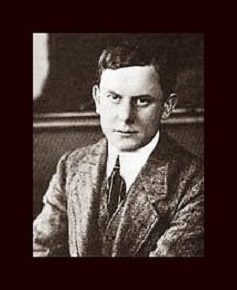
Geschreven door Romenu om 17:18 Reageer op dit bericht

Dolce far niente, Kees van Beijnum, Rutger Kopland, Rudi van Dantzig, Percy Bysshe Shelley, Liao Yiwu


Dolce far niente


 1798461-14bb9f2a4013ce78747e37e1f400860e.jpg
De Oudezijds Kapel aan de Zeedijk door Cornelis Springer, 1880


Uit: Dichter op de zeedijk

“Het grootste deel van zijn leven had Constant Wegman onder het biljart doorgebracht. Daar, in dat schemerige hol, bereikten de stemmen en de muziek hem als het holle gerommel van een schelp. Soms versmolten de mannen en vrouwen in het café voor zijn ogen tot een groot, drinkend, grommend en rokend wezen met tientallen koppen en handen die hun best deden de dorst van het monster te lessen. Een andere keer, zoals nu, trok juist een enkel paar benen zijn aandacht; de bedachtzame wijze waarop ze voor zijn hol langs schoven maakte hem onrustig, zonder dat hij precies begreep waarom.
(…)

Zijn grootmoeder belde vanaf de paardenkoers, een avondkoers in de buurt van Den Haag, om te vertellen, zeg maar gerust in zijn oor te brullen, dat ze samen met Gijs van Mexico City de ‘doorslag van haar leven’ had gehad. Ze was nogal opgewonden, struikelde over haar woorden. Het kostte hem moeite om uit het warrige verhaal over inzetten, startnummers, een op de baan debuterende merrie die Tosca M heette en een tipgever met de naam Drosse of Drossel af te leiden dat ze veertienduizend gulden had gewonnen. Ze was in de zevende hemel, zei ze, en moest het gewoon even aan hem kwijt. Hij vermoede dat zij die zevende hemel niet op eigen kracht had bereikt. Zo te horen had de brandewijn haar een eindje op weg geholpen.
‘Veertienduizend gulden,’ herhaalde ze. ‘We gaan van de week een bootje voor je kopen. Hoe lijkt je dat?
Hij wist geen boe of ba te zeggen.
‘Hoor je me,’ schreeuwde ze, ‘een bootje.’
‘Ja, ja,’ zei hij, ‘een bootje. Geweldig!
‘Het mooiste bootje van de gracht, voor mijn eigen jongen.’ Haar ademhaling stokte, na een seconde of wat volgde een diepe zucht. Hij meende te horen dat ze een slok nam. ‘Over drie kwartier is het hier afgelopen en dan komen we naar huis. Ga nog niet naar bed, blijf wachten tot ik er ben. Je hoeft morgen niet naar school . Ik wil jou en iedereen zien, dan maken we er nog een leuke avond van. Goed?’


 1798461-7a8c2abf4dd31f528c7771dfdf2e9d41.jpg
Kees van Beijnum (Amsterdam, 21 maart 1954)
Danshal, Zeedijk, Amsterdam door Isaac Israels ca.1892-1893


De Nederlandse dichter en schrijver Rutger Kopland (eig. Rutger Hendrik van den Hoofdakker) werd geboren in Goor op 4 augustus 1934. Zie ook mijn blog van 4 augustus 2010 en ook alle tags voor Rutger Kopland op dit blog.


Water

Als met water zelf, met de gedachte
spelen dat je ooit en eindelijk
zult weten wat het is.

Het is regen geweest, een rivier, een zee,
hier was het, hier heb ik het gezien

en zie ik water en weet niet wat het is.


Een lege plek om te blijven

Geef mij maar de brede, trage rivieren,
de bewegingen die je niet ziet maar vermoedt,
de drinkende wilgen, de zinloze dijken,
een doodstille stad aan de oever.

Geef mij maar de winter, het armoedige
landschap, de akker zonder het teken van
leven, de kracht van de krakende heide.

Geef mij maar de kat als hij kijkt voor
hij springt, om te vechten, te vluchten,
te paren, te jagen, als hij kijkt.

Geef mij maar een paard in galop, maar
op zijn zij in het gras. Geef mij

maar een vraag en geen antwoord.


Tuin II

Dit is het heden, ik zie het, ik zit hier:
voor het raam en zie het heden waarnaar
ik ben teruggekeerd, naar wat er altijd
geweest is - al die tijd waarin ik er niet was

er is niets gebeurd zegt de tuin in het raam
de bomen, de vogels, de zacht waaiende
struiken, het gras, het bleef allemaal zijn
wat het was, er is geen verleden hier
wat er gebeurde is deze tuin.


 1798461-2e8e591d09cbc260eaf3661936528c8f.jpg
Rutger Kopland (4 augustus 1934 – 11 juli 2012)


De Nederlandse choreograaf, balletdanser en schrijver Rudi van Dantzig werd geboren in Amsterdam op 4 augustus 1933. Zie ook alle tags voor Rudi van Dantzig op dit blog.

Uit: Herinneringen aan Sonia Gaskell

“De vrouw die ik gadesla loopt bij me vandaan, het einde van het korte huizenblok tegemoet. Ik zie haar op de rug. Ze beweegt zich noncha-lant, maar lijkt zich toch duidelijk van haar verschijning bewust te zijn. Een geïsoleerde figuur, ‘alleen’-heid uitstralend; een vrouw die niet lijkt te passen in deze straat, niet in deze buurt, niet in deze tijd. Maar waar is ze naar op weg, naar wie, wat gaat ze doen? Heeft ze hier, ergens in dit woonblok een familieleven, een gezin, een vriendenkring, of is ze bij toeval, of vergissing, in deze buurt beland? Ze zou, heel prozaïsch, op weg kunnen zijn naar een winkel, maar mogelijk posteert ze zich straks rustig op een tramhalte, of stapt ze iets verderop in een bus om weer te verdwijnen uit deze voornaam-nonchalante straat. Dat alles is mogelijk, maar terwijl ik haar zo gadesla lijkt geen enkele alledaagse handeling te passen of voor de hand te liggen bij de manier waarop ze zich voortbeweegt en gedraagt. Ze is een wandelend raadsel.
De vrouw heeft een lichte zomermantel losjes over haar schouders geslagen, de rok die ze draagt is van een dunne, soepele stof – het bo-vendeel van de rok sluit nauw om haar heupen, het onderste deel is wijd en waait bij vlagen wat omhoog; het toont een gebloemd patroon op een donkere ondergrond.
Ik kijk hoe ze haar lichaam beweegt, het hoofd licht naar het trottoir gebogen, alsof ze in gedachten is verzonken. Piekert ze over iets? Haar heupen zijn fors en zwaar, monumentaal bijna, als van een goed onder-houden raspaard, soepel en zelfbewust bewegend. Een tengere indruk maakt ze niet, eerder voluptuous.”


 1798461-a9559019d178019f520e857ff3d1423a.jpg
Rudi van Dantzig (4 augustus 1933 – 19 januari 2012)
Hier met de danser Clint Farha.(links)


De Engelse dichter Percy Bysshe Shelley werd op 4 augustus 1792 geboren in Field Place, Sussex. Zie ook alle tags voor Percy Bysshe Shelley op dit blog.


Ozymandias

I met a traveller from an antique land
Who said: `Two vast and trunkless legs of stone
Stand in the desert. Near them, on the sand,
Half sunk, a shattered visage lies, whose frown,
And wrinkled lip, and sneer of cold command,
Tell that its sculptor well those passions read
Which yet survive, stamped on these lifeless things,
The hand that mocked them and the heart that fed.
And on the pedestal these words appear --
"My name is Ozymandias, king of kings:
Look on my works, ye Mighty, and despair!"
Nothing beside remains. Round the decay
Of that colossal wreck, boundless and bare
The lone and level sands stretch far away.'


A Lament

O World! O Life! O Time!
On whose last steps I climb,
Trembling at that where I had stood before;
When will return the glory of your prime?
No more -Oh, never more!

Out of the day and night
A joy has taken flight:
Fresh spring, and summer, and winter hoar
Move my faint heart with grief, but with delight
No more -Oh, never more!


Good-night

Good-night? ah! no; the hour is ill
Which severs those it should unite;
Let us remain together still,
Then it will be good night.

How can I call the lone night good,
Though thy sweet wishes wing its flight?
Be it not said, thought, understood --
Then it will be -- good night.

To hearts which near each other move
From evening close to morning light,
The night is good; because, my love,
They never say good-night.


 1798461-001f0831cebbadfa93b9a45a2510ca10.jpg
Percy Bysshe Shelley (4 augustus 1792 – 8 juli 1822)
Percy Bysshe Shelley Memorial in Oxford


De Chinese schrijver , journalist , musicus en dichter Liao Yiwu (ook bekend als Lao Wei) werd geboren op 4 augustus 1958. Zie ook alle tags voor Liao Yiwu op dit blog.

Uit: Voices from the Bottom Rung of Society (The Public Toilet Manager)

“Grandpa Zhou has handled human waste for almost all his life, first as an employee of the state in charge of cleaning public toilets and now as an independent toilet manager under contract with the city government of Chengdu to manage a large public toilet in the northwestern part of the city. “It’s serious business,” says Grandpa Zhou. He’s about seventy years old, but he looks pretty energetic.
I had known of Grandpa Zhou for quite some time. His toilet stands almost next door to my mother’s teahouse. But we were simply nodding acquaintances. One night I summoned up enough courage to get over my concerns about losing my social status as an intellectual and started a conversation with him.
GRANDPA ZHOU
Are you coming in to use the toilet or not? It’s already past midnight. Based on our rules I need to charge you extra. How else can I pay my taxes to the city’s Environment and Hygiene Department? But since you’re a regular client, I’ll waive the extra charge.
LIAO YIWU
I’m not here to use the toilet. I want to take you out for tea.
ZHOU
You don’t have to bother. I’m only a public toilet guard.
LIAO
Let’s go over to the teahouse, Grandpa Zhou.
ZHOU
You’re too nice. Is your mom’s teahouse still open? Actually, the more her customers drink, the better for my business. When their bladders are full they come to my place. It’s mutually beneficial.”


 1798461-0aacd0ac9327eb06d81bcb48f4d6ee08.jpg
Liao Yiwu (Sichuan, 4 augustus 1958)


Zie voor nog meer schrijvers van de 4e augustus ook mijn blog van 4 augustus 2013 en ook mijn blog van 4 augustus 2011 deel 1 en ook deel 2 en eveneens deel 3.

Geschreven door Romenu om 17:19 Reageer op dit bericht

Frouke Arns


Onafhankelijk van geboortedata

De Nederlandse dichteres, schrijfster en vertaalster Frouke Arns werd geboren in 1964 in Handorf in Duitsland. Zij groeide tweetalig op en studeerde Engelse Taal- en Letterkunde in Nijmegen. Haar gedichten werden gepubliceerd in diverse Nederlandse en Vlaamse tijdschriften, kranten en verzamelbundels, zoals Het Liegend Konijn, de Poëziekrant, Schrijven Magazine Het Parool en NRC next . Frouke viel met haar werk meermalen in de prijzen. Zo won ze onder andere de Meander Dichtersprijs, de literaire prijs van de Stad Harelbeke , de Rinke Tolman Poëzieprijs en de jury- en publieksprijs van de Nijmeegse editie van Aan het woord! In 2011 won ze met een kort verhaal de Literaire Prijs van de provincie Gelderland. In 2013 verscheen haar debuutbundel ‘Mensen die je misschien kent’ bij uitgeverij Marmer. Twee van haar gedichten zijn opgenomen in de bundel ‘De 100 beste gedichten’ voor de VSB-poëzieprijs. Frouke treedt regelmatig op; ze was ze te zien op Onbederf’lijk Vers, Dichters in de Prinsentuin, het Wintertuinfestival, het Boekenfeest en het Gedichtenbal. In 2015 werd zij stadsdichter van Nijmegen.


Vergeten groente

Hij is een man van eindeloze jaren,
hoofd vol buitelende beelden,
lichaam vol geschiedenis.
Elke nacht zit de oorlog aan zijn bed
om te horen of hij niets vergeten is.

Het kraken van de schorseneren
klinkt oorverdovend in zijn mond.
Hij luistert naar de regen op zijn zonne-
panelen en ’s avonds ligt hij dwars
in bed. Alsof ze er nog is.

Hij schuifelt door zijn dagen en houdt zich
wankel vast aan alles wat hem niet ontviel.
Zijn vrienden gingen hem al voor.
Soms gebruikt hij ‘s middags pas
zijn stem.


hotspot

je kunt met lettervermicelli uit de soep
vertellen hoe hier op romeinse resten
een stiefselkeet uit as herrees

hoe een fabriek de wijk nam en alles veranderde
aan de lopende band; de ketels verdampten
net als de jongens en meiden met witte mutsjes

hoe achter deze muren nieuwe mensen nu
de handen uit de mouwen steken, hoe het bruist
in dit complex van dromen en bedrijvigheid

je kunt, als deze woorden straks gesloopt zijn
en hier een toekomst huizenhoog verrijst, steeds
opnieuw de verhalen niet verloren laten gaan


 2057009-2e730c57402b844b5bfc1762ae63c794.jpg
Frouke Arns (Handorf, 1964)

Geschreven door Romenu om 00:00 Reageer op dit bericht

Jojo Moyes

De Britse schrijfster en journaliste Jojo Moyes werd geboren op 4 augustus 1969 in Londen. Zij groeide op als enig komd van gescheiden ouders. Zij werkte na de middelbare school in diverse beroepen voordat zij zowel aan Bedford College als aan Royal Holloway, allebei Colleges van de University of London sociologie ging studeren. Met een studiebeurs gefinancierd door The Independent, die ze ontving in 1992, was ze uiteindelijk in staat om succesvol te journalistiek te studeren aan de City University in Londen. Met de uitzondering van een jaar in 1994, in Hong Kong schrijvend voor de Sunday Morning Post, werkte Moyes werkte vervolgens bijna tien jaar bij The Independent in verschillende functies. Met de roman “Sheltering Rain” debuteerde Moyes 2002 als schrijfster. Voortaan concentreerde ze zich volledig op het schrijven en was zij slechts sporadisch actief als columniste, waaronder voor The Daily Telegraph. Met haar tweede roman “Foreign Fruit” won ze haar eerste Romantic Novel of the Year Award van de Britse Romantic Novelists' Association. In 2011 ontving zij de prijs voor de tweede keer, iets wat weinig schrijvers gelukt is, en wel voor de roman “The Last Letter From Your Lover”. Haar grootste succes tot nu toe was echter de roman “Me Before You” uit 2012. Het boek werd in meer dan 31 talen vertaald. Filmstudio MGM kocht in januari 2013 de filmrechten voor “Me Before You” jaar. Moyes verzet zich tegen de betiteling van haar werk als Chicklit.

Uit: Me Before You

“When he emerges from the bathroom she is awake, propped up against the pillows and flicking through the travel brochures that were beside his bed. She is wearing one of his T-shirts, and her long hair is tousled in a way that prompts reflexive thoughts of the previous night. He stands there, enjoying the brief flashback, rubbing the water from his hair with a towel.
She looks up from a brochure and pouts. She is probably slightly too old to pout, but they've been going out a short enough time for it still to be cute.
"Do we really have to do something that involves trekking up mountains, or hanging over ravines? It's our first proper holiday together, and there is literally not one single trip in these that doesn't involve either throwing yourself off something or"—she pretends to shudder—"wearing fleece."
She throws them down on the bed, stretches her caramel-colored arms above her head. Her voice is husky, testament to their missed hours of sleep. "How about a luxury spa in Bali? We could lie around on the sand . . . spend hours being pampered . . . long relaxing nights . . ."
"I can't do those sorts of holidays. I need to be doing something."
"Like throwing yourself out of airplanes."
"Don't knock it till you've tried it."
She pulls a face. "If it's all the same to you, I think I'll stick with knocking it."
His shirt is faintly damp against his skin. He runs a comb through his hair and switches on his mobile phone, wincing at the list of messages that immediately pushes its way through to the little screen.
"Right," he says. "Got to go. Help yourself to breakfast." He leans over the bed to kiss her. She smells warm and perfumed and deeply sexy. He inhales the scent from the back of her hair, and briefly loses his train of thought as she wraps her arms around his neck, pulling him down toward the bed.
"Are we still going away this weekend?"
He extricates himself reluctantly. "Depends what happens on this deal. It's all a bit up in the air at the moment. There's still a possibility I might have to be in New York. Nice dinner somewhere Thursday, either way? Your choice of restaurant." His motorbike leathers are on the back of the door, and he reaches for them.”


 1830161-ea43902ffe8aff1b2f86358e579a391c.jpg
Jojo Moyes (Londen, 4 augustus 1969)

Geschreven door Romenu om 00:00 Reageer op dit bericht

Dolce far niente, Anna Enquist, Rupert Brooke, Radek Knapp, P. D. James, Marica Bodrozic, Leon Uris


Dolce far niente


 1798087-9ca0dfc798d5cb0799a1c2a26603c8f3.jpg
Gezicht op het Centraal Station en het IJ door Jan Korthals, 1966


MONUMENT

'Deze metro gaat richting Centraal Station'
Het galmt. Mijn kleinzoon straalt. 'Oma,
ze zeggen het!' Het brandpunt van zijn wereld
ligt aan 't IJ. Roltrap. We stijgen op.

Hoofd in zijn korte nek, hand in mijn hand.
De treinen, trams, de bussen. Kleurige stenen,
torens met hun klokken, beelden en gouden slingers
aan de wand. Zo wordt de glorie van de stad

zijn hersens in geprent. Ik zie een pronkend
bouwsel dat de vluchtweg naar het water bruut
blokkeert. Sloopkogel, bomkanon? Kijk naar
zijn glad gezicht, aanvaard dit monument.


 1798087-5514cd9f25560459e419d7d29c7306be.JPG
Anna Enquist (Amsterdam, 19 juli 1945)
Het IJ bij het centraal station Amsterdam door Cornelis de Bruin (1870 – 1940)
Anna Enquist is momenteel stadsdichter van Amsterdam


De Britse dichter Rupert Brooke werd geboren in Rugby, Engeland, op 3 augustus 1887. Zie ook mijn blog van 3 augustus 2010 en eveneens alle tags voor Rupert Brooke op dit blog.


Het begin

Eens zal ik opstaan, weg van vrienden gaan
en jou gaan zoeken tot de grens van ons bestaan,
jou die ik steeds de mooiste vond,
(geur van je haren, zachtheid van je mond)
de enige die ‘k destijds heb aanbeden.
Mijn voeten dragen mij naar dat verleden,
hoewel verzuurde jaren, en hun pijn
jou anders maakten. Maar toch zal ik weten
(hoe kan ik wie ik liefhad ooit vergeten?)
hoe jij er uitzag in de schemering,
je oog dat nog een laatste lichtstraal ving.
En vind ik jou dan in dat laatste land,
dan grijp ik woordeloos je hand,
kijk naar je leeftijd en je grijze haren,
vervloek wie jij eens was in vroeger jaren,
want alles is veranderd, bleek en oud
(je lippen waren rood, je haar was goud!).
Ik hield van jou toen jij zo wijs niet was,
de vlam van jeugd nog in je ogen las,
˗mijn hart is ziek om alles wat eens was.


Vertaald door Fred van Enske


Safety
 
Dear! of all happy in the hour, most blest
He who has found our hid security,
Assured in the dark tides of the world at rest,
 
And heard our word, ‘Who is so safe as we?’
We have found safety with all things undying,
The winds, and morning, tears of men and mirth,
The deep night, and birds singing, and clouds flying,
And sleep, and freedom, and the autumnal earth.
We have built a house that is not for Time's throwing.
We have gained a peace unshaken by pain for ever.
War knows no power. Safe shall be my going,
Secretly armed against all death's endeavour;
Safe though all safety's lost; safe where men fall;
And if these poor limbs die, safest of all.


Veiligheid
 
Lief! 't zaligst is van wie gelukkig zijn
hij, die in 's werelds wee de heimlijkheid
van onze rust vond, onze zekerheid,
en hoorde' ons woord; ‘Wie kan zóó veilig zijn?’
Wij leven veilig in de eeuw'ge dingen:
de wind, de morgen, menschenlach en traan,
de nacht, jagende wolken, vogelzingen,
slaap, vrijheid en de herfstelijke maan.
 
't Huis dat wij bouwden kan de Tijd niet sloopen.
Wij wonnen vreê, voor altijd onaantastbaar.
Oorlog is machtloos; zie mijn veilig loopen,
gij Dood, heimlijk bewapend, ongenaakbaar;
veilig temidde' onveiligheid. Als 'k val,
als dit arm lichaam sterft, 't veiligst van al.


Vertaald door Johan de Molenaar


 1798087-53b4131ad9606fd5cffb60968ba78868.jpg
Rupert Brooke (3 augustus 1887 – 23 april 1915)
Beeld op Skyros, getiteld "aan de eeuwige poëzie" ter herinnering aan Rupert Brooke


De Pools-Oostenrijkse schrijver Radek Knapp werd geboren op 3 augustus 1964 in Warschau. Zie ook alle tags voor Radek Knapp op dit blog.

Uit: Herrn Kukas Empfehlungen

„Herr Kuka hatte recht. Uns Ostler faszinieren Dinge, die nicht in den Reiseführern stehen. Als unser Bus zwei Stunden später in Wien einfuhr, stach mir als erstes die Sauberkeit ins Auge. Dabei bin ich kein Sauberkeitsfanatiker wie meine Mutter, die jedem neuen Besen einen menschlichen Namen gibt, aber auf der Straße lag nichts, nicht einmal ein zufällig fallen gelassenes Papiertaschentuch. Als wäre gerade vor einem Moment ein riesiger Staubsauger vorbeigefahren und hätte alles, was nicht niet- und nagelfest war, in sich aufgesaugt.
Als nächstes fielen mit die Bäume auf, die entlang der Straße wuchsen. Sie waren gerade wie Laternen, und um jeden Baum herum war im Asphalt fein säuberlich ein Quadrat ausgeschnitten, in dem Erde und Dünger lagen, damit sich der Baum fühlte, als sei er im Wald. Daß aber diese Bäume nie einen Wald gesehen hatten, merkte man allein an ihren Ästen. Sie standen im rechten Winkel vom Stamm, was so ungefähr jedem Naturgesetz widersprach. Dafür aber fügten sie sich ideal in die allgemeine Symmetiie der Häuser, Schilder und Litfaßsäulen.“


 1798087-f3843ccc12ac5eab6c4608e9ceb2b9df.jpg
Radek Knapp (Warschau, 3 augustus 1964)


De Engelse schrijfster P. D. James (eig. Phyllis Dorothy James) werd geboren op 3 August 1920 in Oxford. Zie ook alle tags voor P. D. James op dit blog.

Uit: Death Comes to Pemberley

“It was generally agreed by the female residents of Meryton that Mr. and Mrs. Bennet of Longbourn had been fortunate in the disposal in marriage of four of their five daughters. Meryton, a small market town in Hertfordshire, is not on the route of any tours of pleasure, having neither beauty of setting nor a distinguished history, while its only great house, Netherfield Park, although impressive, is not mentioned in books about the county's notable architecture. The town has an assembly room where dances are regularly held but no theatre, and the chief entertainment takes place in private houses where the boredom of dinner parties and whist tables, always with the same company, is relieved by gossip.
A family of five unmarried daughters is sure of attracting the sympathetic concern of all their neighbours, particularly where other diversions are few, and the situation of the Bennets was especially unfortunate. In the absence of a male heir, Mr. Bennet's estate was entailed on his nephew, the Reverend William Collins, who, as Mrs. Bennet was fond of loudly lamenting, could turn her and her daughters out of the house before her husband was cold in his grave. Admittedly, Mr. Collins had attempted to make such redress as lay in his power. At some inconvenience to himself, but with the approval of his formidable patroness Lady Catherine de Bourgh, he had left his parish at Hunsford in Kent to visit the Bennets with the charitable intention of selecting a bride from the five daughters. This intention was received by Mrs. Bennet with enthusiastic approval but she warned him that Miss Bennet, the eldest, was likely to be shortly engaged. His choice of Elizabeth, the second in seniority and beauty, had met with a resolute rejection and he had been obliged to seek a more sympathetic response to his pleading from Elizabeth's friend Miss Charlotte Lucas. Miss Lucas had accepted his proposal with gratifying alacrity and the future which Mrs. Bennet and her daughters could expect was settled, not altogether to the general regret of their neighbours.”


 1798087-c823f4b4e6040c0ff68c0a8a27a31dbb.jpg
P. D. James (3 augustus 1920 -27 November 2014)


De Duitse dichteres en schrijfster Marica Bodro¸ić werd geboren op 3 augustus 1973 in Zadvarje in het toenmalige Joegoslavië. Zie ook mijn blog van 3 augustus 2010 en eveneens alle tags voor Marica Bodro¸ić op dit blog.

Uit:Mein weißer Frieden

“Das Leben ist eine Reise, die sich selbst überschreibt, jeder Gedanke, jede Empfindung ist ein neuer Weg, der den eigenen Kern freilegt und die Sinne ver feinert. In Bewegung zu sein, das war, in der Obhut des Südens, schon in frühester Kindheit ein natürlicher Zustand für mich. Auch jetzt, auf meiner Reise zurück zum Kern des Kerns, zu jenen Landschaften, Orten und Menschen, die mich geprägt, geformt, geknetet und geliebt haben, erscheint mir nichts so normal wie das Unterwegssein zu i hnen. Jedes Mal, wenn ich einen Koffer packe, spricht aber auch die Erinnerung mit, sie weiß um Krieg und Frieden, um Glück und Unglück, ist immer die stille Mitschreiberin. Auf allen Umwegen, die meine Wege sind, arbeitet sie der inneren Zeit zu. Es ergeben sich dabei neue Kreise, innere und äußere Ränder eines Lebenslabyrinths, die sich an Stellen miteinander berühren, an denen ich es am wenigsten erwarte, wie damals in der Kindheit, als mein Vater mir die Sterne erklärte.
Das Kreuz des Südens, sagte er, und seine Hand zeigte ehrfurchtsvoll nach oben, es liegt inmitten des hellen Bandes der Milchstraße und beschützt uns hier unten. Dich und mich, fragte ich, oder die ganze Erde? Er nickte, sagte, alles, dich und mich, unseren Planeten, den Mandel- und den Walnussbaum, die Maulbeere, den Hof, das Pferd, die Garage, den geräucherten Schinken, den Esel (den ganz besonders), die Katzen und die Hühner und deine Tante Anastazija, ihre Träume, wenn sie schläft. Das bewegte jede Faser in mir. Auch wenn das Kreuz des Südens nicht zu sehen war, hatten meine Augen ein neues Ziel. Mein Körper hatte einen neuen Ort. Meine Vorstellungskraft hatte eine neue Heimat. Das ganze Universum, die kosmische Melancholie, sie gehörte jetzt mir wie das Maiwetter, wie Heiligabend, die Wolken, das »Vater Unser« an den Sonntagen. Mit der Vorstellungskraft kamen aber auch die Fragen in meinen Kopf. Die Schönheit der nie zu Ende erklärten Lücken hat mich stets zu neuen Erkundungen geführt.“


 1798087-57727354b85723fa1045f2a9603cd0e6.jpg
Marica Bodro¸ić (Zadvarje, 3 augustus 1973)


De Duitse dichter Mirko Wenig werd geboren op 3 augustus 1977 in Gera. Zie ook mijn blog van 3 augustus 2010 en eveneens alle tags voor Mirko Wenig op dit blog.


Ein Dorf

Ein Dorf: hier ist die Erde
eine Scheibe & der Mensch droht
über den Rand zu kippen.

Ein Dorf, & wieder zweifelst du:
ist diese Erde rund?
Muh Muh, du hast vier Ecken.

Ein schwarzes Pferd steht quer im Kopf,
der Schwanz zeigt steil gen Osten. Die Sonne
ist ein Strohhut, der Fisch
am Schweif der Angel.

Ein junger Hund liegt ausgestreckt,
wo Stirn & Moos, wo Bauch
& Ufer rücklings lauern.
Links rechts schlingern die Ohren,

geflochten ins Ruder, in
Hals- und Nasenströmungen.
Wau Wau, mein lieber Schwan,
Flussauf, Schluck
R   
 U  
  N
 T  
  E
 R
   !  


 1798087-3ceb12c4c994447a9097c697e43a9e5c.jpg
Mirko Wenig (Gera, 3 augustus 1977)


De Amerikaanse schrijver Leon Uris werd geboren in Baltimore op 3 augustus 1924. Zie ook mijn blog van 3 augustus 2010 en eveneens alle tags voor Leon Uris op dit blog.

Uit: Exodus

“Mark leaned against the counter and sipped a steaming cup of black coffee … “Welcome to Cyprus … welcome to Cyprus” … he couldn’t for the life of him remember.
“Say!” a voice boomed out. “I thought I recognized you on the plane. You’re Mark Parker! I bet you don’t remember me.”
Fill in one of the following, Mark thought. It was: Rome, Paris, London, Madrid (and match carefully); Jose’s Bar, James’s Pub, Jacques’s Hideaway, Joe’s Joint. At the time I was covering: war, revolution, insurrection. That particular night I had a: blonde, brunette, redhead (or maybe that broad with two heads).
The man stood nose to nose with Mark, gushing on all eight cylinders now. “I was the guy who ordered a martini and they didn’t have orange bitters. Now do you remember me?” Mark sighed, sipped some coffee, and braced for another onslaught. “I know you hear this all the time but I really enjoy reading your columns. Say, what are you doing in Cyprus?” The man then winked and jabbed Mark in the ribs. “Something hush-hush, I bet. Why don’t we get together for a drink? I’m staying at the Palace in Nicosia.” A business card was slapped into Mark’s hand. “Got a few connections here, too.” The man winked again.
“Oh, Mr. Parker. Your car is ready.”
Mark put the cup down on the counter. “Nice seeing you again,” he said, and walked out quickly. As he departed he dropped the business card into a trash basket."


 1798087-18b568f12518e0117d29c41cfdfffcfa.jpg
Leon Uris (3 augustus 1924 – 21 juni 2003)
Scene uit de film “Exodus” uit 1960 met o.a. Sal Mineo en Jill Hayworth


Zie voor nog meer schrijvers van de 3e augustus ook mijn blog van 3 augustus 2013 en ook mijn blog van 3 augustus 2012 en eveneens mijn blog van 3 augustus 2011 deel 2.

Geschreven door Romenu om 17:05 Reageer op dit bericht

Leo J. Kryn

De Vlaamse schrijver, uitgever en boekhandelaar Leo Jan-Baptist Kryn werd geboren in Antwerpen op 3 augustus 1878. Na de humaniora te hebben doorlopen aan het Koninklijk Atheneum in Antwerpen, waar hij onder meer Pol De Mont als leraar had, werd hij bediende bij De Nederlandsche Boekhandel. Hij werd bevriend met heel wat jonge schrijvers en kunstenaars, onder meer met Willem Elsschot. In 1901 verhuisde hij naar Brussel en opende er in 1904 de eerste volledig Nederlandstalige boekhandel onder de naam De Vlaamsche Boekhandel. Hij werd ook uitgever en publiceerde werk van onder meer Lodewijk De Raet, Lodewijk Dosfel en Frank Baur. In 1914 vluchtte hij naar Engeland met zijn Engelse vrouw Katie Dickinson (1874-1954). Na zijn terugkeer stichtte hij de uitgeverij Onze Tijd. Hij gaf onder meer de eerste Nederlandse uitgave uit van de Belgische Grondwet. Hij publiceerde ook enkele fantastische verhalen waarvan hij de auteur was. In 1929 was hij medeoprichter van de Vereniging ter Bevordering van het Vlaamse Boekwezen. Hij was er van 1931 tot aan zijn dood de voorzitter van. Hij was van 1929 tot 1940 ook redacteur bij het Beknopt Verslag van de Belgische Senaat. Na zijn dood werd zijn uitgeverij overgenomen door Angèle Manteau. Zij stichtte, samen met Katie Dickinson, in 1942 de Leo J. Krynprijs voor literatuur.

 Uit: De man met den baard

“Zoowat dertig, veertig jaar geleden, woonde er te Antwerpen een man, en die had een baard. Maar
't was geen gewone baard zoo-als men er dagelijks zag: het was een heele fijne, een heel bijzondere, een hoogst fatsoenlijke baard.
Het is dus zeer natuurlijk dat iedereen dien man bewonderde, hem en zijn baard, dat de vrouwen verliefd naar hem keken en de mannen hem benijdden. Velen dezer laatsten hadden dan ook hun onbenullige baardjes laten afscheren bij het zien van dien glorierijken baard; en vele vrouwen hadden den lust gevoeld den Man om den hals to vliegen, zoo midden op straat, zijn baard te kussen en met volle handen te woelen~ in het gouden haar.
Het was den Man aan te zien dat hij volkomen bewust was van de gevoelens die hij in de harten van anderen deed ontvlammen, want hij wandelde altijd fier en erg voornaam, zijn baard wuivend voor zich uitdrijvend. Grootmoedig, ietwat beschermend en aanmoedigend, zag hij veer op de vele vrouwen en meisjes die hem lonkend voorbij gingen; maar zijn glimlach bleef altijd statig, zoo-als dat paste aan een man met zoo'n baard.
Toentertijd woonden er ook twee tooverheksen in Antwerpen. De eerste van die twee woonde in een groot huis met dubbele koetspoort in de Huidevettersstraat, en daar ontving zij haar talrijke aanbidders. Zij was niet mooi, maar door haar helsche middelen gelukte zij erin zich te doen liefhebben door al wie in haar behagen stond. En nu had zij besloten het hart van den Man met den Baard te winnen, en het spreekt vanzelf dat dit haar moest gelukken, vermits zij een tooverheks was.
Maar onder al de meisjes die op den Man met den Baard verliefd geraakten, was er een dat al gedaan had wat welvoeglijklaeidshalve kon gedaan worden om de aandacht van den grooten Man te trekken. Maar zij slaagde niet. Hij was toch zoo gewoon dat alle vrouwen naar hem opkeken als naar een god, dat er waarlijk geen reden was waarom hij meer zou gelet hebben op de smachtende, doch eerbiedige blikken van deze juffrouw.”


 1835442-f42c834abd358053fe0f2ec6ffcb6d2e.jpg
Leo J. Kryn (3 augustus 1878 - 4 april 1940)

Geschreven door Romenu om 00:00 Reageer op dit bericht

Dolce far niente, Albert Verwey, James Baldwin, Isabel Allende, Philippe Soupault


Dolce far niente


 1797732-75b3c5aa978c6ac20a4dfb9ed3eef30e.jpg
Zeelandschap in de morgen, Simon de Vlieger, 1640-45


De Noordzee

De Noordzee doet zijn gore golven dreunen
En laat ze op 't strand in lange lijnen breken.
Zijn voorjaarswater marmren groene streken
En schuim en zwart waaronder schelpen kreunen

Zie van 't balkon mij naar den einder leunen
Met ogen die sinds lang zo wijd niet keken:
Een droom in 't hart is me eer ik 't wist ontweken
En 't oog wil buiten me op iets komends steunen.

Hoe ben ik altijd weer vervuld, verlaten:
Vervuld van liefde en hoop en schoon geloven;
Verlaten als mijn dromen mij begeven.

Maar dan komt, o Natuur, langs alle straten,
Uw kracht, uw groei, uw dreiging, uw beloven -
Hoe klopt mijn hart van nieuw, van eeuwig leven.


 1797732-b3b0c92fb4144172cf23337a02969e64.jpg
Albert Verwey (15 mei 1865 - 8 maart 1937)
Zicht op de Montelbaanstoren te Amsterdam, gezien vanaf de Sint Antoniesluis
door Cornelis Vreedenburgh, 1920. Verwey werd geboren in Amsterdam


De Amerikaanse schrijver James Baldwin werd op 2 augustus 1924 in Harlem, New York, geboren. Zie ook mijn blog van 2 augustus 2010 en eveneens alle tags voor James Baldwin op dit blog.

Uit: Go Tell It on the Mountain

“The morning of that day, as Gabriel rose and started out to work, the sky was low and nearly black and the air too thick to breath. Late in the afternoon the wind rose, the skies opened, and the rain came. The rain came down as though once more in Heaven the Lord had been persuaded of the good uses of a flood. It drove before it the bowed wanderer, clapped children into houses, licked with fearful anger against the high, strong wall, and the wall of the lean-to, and the wall of the cabin, beat against the bark and the leaves of trees, trampled the broad grass, and broke the neck of the flower. The world turned dark, forever, everywhere, and windows ran as though their glass panes bore all the tears of eternity, threatening at every instant to shatter inward against this force, uncontrollable, so abruptly visited on the earth.”
(…)

“Yes, he had heard it all his life, but it was only now that his ears were opened to this sound that came from darkness, that could only come from darkness, that yet bore such sure witness to the glory of the light. And now in his moaning, and so far from any help, he heard it in himself--it rose from his bleeding, his cracked-open heart. It was a sound of rage and weeping which filled the grave, rage and weeping from time set free, but bound now in eternity; rage that had no language, weeping with no voice--which yet spoke now, to John's startled soul, of boundless melancholy, of the bitterest patience, and the longest night; of the deepest water, the strongest chains, the most cruel lash; of humility most wretched, the dungeon most absolute, of love's bed defiled, and birth dishonored, and most bloody, unspeakable, sudden death. Yes, the darkness hummed with murder: the body in the water, the body in the fire, the body on the tree. John looked down the line of these armies of darkness, army upon army, and his soul whispered: Who are these? Who are they? And wondered: Where shall I go?”


 1797732-61260f3c60849e77828a287c9ec91e99.jpg
James Baldwin (2 augustus 1924 – 1 december 1987)
Fotoportret door Carl Van Vechten, 1955


De Chileense schrijfster Isabel Allende werd geboren in Lima op 2 augustus 1942. Zie ook alle tags voor Isabel Allende op dit blog en ook mijn blog van 2 augustus 2010.

Uit: Paula

“Nothing had prepared my mother for motherhood. In those days, such matters were discussed in whispers before unwed girls, and Memé had given no thought to advising her about the libidinous preoccupations of the birds and the flowers because her soul floated on different planes, more intrigued with the translucence of apparitions than the gross realities of this world. Nevertheless, as soon as my mother sensed she was pregnant, she knew it would be a girl. She named her Isabel and established a dialogue that continues to the present day. Clinging to the creature developing in her womb, she tried to compensate for the loneliness of a woman who has chosen badly in love. She talked to me aloud, startling everyone who saw her carrying on as if hallucinating, and I suppose that I heard her and answered, although I have no memory of the intrauterine phase of my life.
My father had a taste for splendor. Ostentation had always been looked upon as a vice in Chile, where sobriety is a sign of refinement. In contrast, in Lima, the city of viceroys, swagger, and swash is considered stylish. Tomás installed himself in a house incommensurate with his position as second secretary in the embassy, surrounded himself with Indian servants, ordered a luxurious automobile from Detroit, and squandered money on parties, gaming, and yacht clubs, without anyone's being able to explain how he could afford such extravagances. In a short time he had managed to establish relations with the most illustrious members of Lima's political and social circles, had discovered the weaknesses of each, and, through his contracts, heard a number of indiscreet confidences, even a few state secrets. He became the indispensable element in Lima's revels. At the height of the war, he obtained the best whiskey, the purest cocaine, and the most obliging party girls; all doors opened to him. “


 1797732-5d7482eba900999994b58cada8381427.jpg
Isabel Allende (Lima, 2 augustus 1942)


De Franse dichter en schrijver Philippe Soupault werd geboren op 2 augustus 1897 in Chaville bij Parijs. Zie ook alle tags voor Philippe Soupault op dit blog en ook mijn blog van 2 augustus 2010.


Aux Assassins les mains pleines

Suis-je un assassin
Je n’ai qu’à fermer les yeux
pour m’emparer d’un revolver
ou d’une mitraillette
et je tire sur vous
vous tous qui passez près de moi

Je ferme les yeux
et je tire
à perdre haleine
de toute mes forces
et je vous atteins tous
connus et inconnus
tous sans exception

Je ne sais même pas si vous mourrez
je ne vous entends pas
je tire en fermant les yeux
et vous tombez sans un cri
et vous tombez nombreux comme des souris
comme des poux
je vous abats
car je tire dans le tas
vous n’avez même pas le temps de rire
je tue tous ceux qui se présentent
sans même savoir leurs noms
ni apercevoir leurs visages
je tue tout le monde sans distinction
La nuit m’appelle à l’affût
je n’ai même pas besoin de bouger
et toute la compagnie dégringole
je tue aussi un à un
ou deux par deux
selon les nuits
ou lorsqu’il fait très noir
mais je ne me tue jamais
j’écoute les coups de revolver
et je continue
je ne rate jamais personne
et je ne perds pas mon temps
je ne vois pas le sang couler
ni les gestes des moribonds
je n’ai pas de temps à perdre
je tire et vous mourez


 1797732-39daa079168c75da203068c406816634.jpg
Philippe Soupault (2 augustus 1897 – 12 maart 1990)
Portret door Robert Delaunay, 1922


Zie voor nog meer schrijvers van de 2e augustus ook mijn blog van 2 augustus 2014 en ook mijn blog van 2 augustus 2012 en eveneens mijn blog van 2 augustus 2011 deel 2.

Geschreven door Romenu om 18:00 Reageer op dit bericht

Kristine Bilkau

De Duitse schrijfster Kristine Bilkau werd geboren op 2 augustus 1974 in Hamburg, Zij studeerde geschiedenis in Hamburg en New Orleans. In 2008 was zij finaliste in de literaire competitie Open Mike in Berlijn. In 2009 ontving zij een beurs van de schrijverswerkplaats van het Literair Colloquium Berlin (LCB). In 2010 ontving zij een beurs van het kunstenaarsdorp Schöppingen. In 2013 kreeg zij de Hamburg Literatuurprijs. In het voorjaar van 2015 publiceerde ze haar eerste roman, "Die Glücklichen" en werd een van de meest succesvolle debutanten van het jaar. Bilkau ontving de Klaus-Michael Kuehne-prijs en de Franz-Tumler Literatuurprijs en werd genomineerd voor de aspekte-literatuurprijs.. Zij woont met haar gezin in Hamburg.

Uit:Die Glücklichen

“Es ist dunkel und der Abendverkehr schiebt sich langsam durch die Straße vor dem Haus, die Lichter der Autos schimmern hinter dem Plastikvorhang, die gesamte Außenwelt verschwimmt hinter der Plane und dem Baugerüst. Ein Zustand, der sie nicht son­ derlich stört, im Gegenteil, der gar nicht so schlecht ist, wie die Nachbarn finden, die im Treppenhaus nörgeln, wie lange denn noch. Die milchige Hülle macht die Wohnung zu einem verborgenen Raum, sie verbreitet ein Höhlenge­ fühl. Tagsüber filtert sie das Licht und lässt es geschwächt in die Zimmer, nachts ist sie wie ein schützender Man­ tel. Isabell stellt sich ihren Ahornbaum hinter dem Gerüst vor. Die feinen Anzeichen der Jahreswechsel bemerkt sie an ihm zuerst; wenn sich an den Zweigen Knospen bilden und Tage später hellgrüne Spitzen, wenn sich die Blätter rot und gelb färben und nach drei, vier stürmischen Näch­ ten die Äste kahl sind, und sie Georg mitteilen kann: Wir haben Frühling; bald ist Winter. Während sie die Plane be­ trachtet, sieht sie den Baum in all seinen Details vor sich. Das handtellergroße, gezackte Ahornblatt löst sich wie zu­ fällig von seinem Zweig und fällt langsam, kreiselnd, vom Wind getragen. Sie hat ihre Straße vor dem Auge, die Fas­ saden in Hellblau, Lindgrün und aufreizendem Himbeer­ rot mit weißen Ornamenten, nach und nach herausgeputzt während der letzten Jahre. Dazwischen, wie kümmerliche Provisorien, Häuser aus stadtschmutzigem Gelbklinker. Gegenüber die Hutmacherei und der Feinkostladen mit seinem Bistro, daneben das kleine Geschäft, in dem es überteuerte, schöne Dinge gibt: Rosenseife aus ­Portugal, Alpaka-Decken aus Norwegen, Strickpullis einer südfran­ zösischen Manufaktur. Die hohen Fenster des Yogastudios im ersten Stock, darin am späten Nachmittag die ­Umrisse der Körper, ihre synchronen Bewegungen im warmen Licht. Die Zweige der hochgewachsenen Bäume über den Dächern der parkenden Autos. Alles, ihr Zuhause.
Sie reißt einen kleinen Zettel in Hälften und beginnt zu schreiben.
Meine Hände werden nicht zittern.
Mit geschwungener Schrift notiert sie den Satz. Das Ganze hat etwas Lächerliches, Kindisches, aber sie kann nicht anders."


 1884732-ec6c6ff82e664653c8593df4063ae7fd.jpg
Kristine Bilkau (Hamburg, 2 augustus 1974)

Geschreven door Romenu om 00:00 Reageer op dit bericht

Jussi Adler-Olsen

De Deense schrijver Carl Henry Valdemar Jussi Adler-Olsen werd geboren op 2 augustus 1950 in Kopenhagen. Jussi Adler-Olsen, zoon van een psychiater. Hij studeerde geneeskunde, sociologie, politicologie en geschiedenis en filmwetenschap en werkte in diverse functies, waaronder als Managing Director bij uitgeverijen, als redacteur en alscomponist. Vervolgens werkte hij als coördinator van het Deense vredesbeweging, in het bestuur van DK Technologies A / S in Kopenhagen en avn Solarstocc AG in Kempten. In 1997 verscheen zijn eerste thriller Alfabethuset die in Nederland als Het Alfabethuiswerd uitgebracht (2000) en dat veel bestsellerlijsten veroverde. Hetzelfde geldt voor zijn twee internationaal georiënteerde thrillers “And She Thanked the Gods” en “The Washington Decree”. De doorbraak in zijn geboorteland Denemarken kwam in 2007 met de roman “Kvinden i Buret” ("De vrouw in de kooi"), de eerste zaak voor Carl Mørck van de speciale afdeling Q. Sinds de verschijning van de bestseller Fasandræberne (“Defazantenmoordenaars”), de tweede aflevering van de serie rond Mørck wordt Adler-Olsen beschouwd als de best verkopende Deense misdaadschrijver. Zijn boeken zijn in meer dan 40 talen vertaald met een totale oplage van meer dan 10 miljoen exemplaren.
 

Uit:The Hanging Girl (Vertaald door William Frost)

“November 20th, 1997
She saw grey hues everywhere. Flickering shadows and gentle darkness covered her like a blanket and kept her warm.
In a dream, she had left her body, hovering in the air like a bird. No, even better, like a butterfly. Like a multicolored fluttering piece of art, put in the world only to spread happiness and wonder. Like a hovering being high up between heaven and earth whose magic dust could awaken the world to endless love and happiness.
She smiled at the thought. It was so beautiful and pure.
Now the ceaseless darkness above her fought with dim glints like distant stars. It felt good, almost like a pulse conducting the sound of wind and rustling leaves.
She couldn’t move at all but she didn’t want to anyway or she’d wake from the dream, and reality would suddenly kick in, and then the pain would come and who would want that?
Now a myriad of images appeared from life-giving times. Small glimpses of her and her brother hopping out over the sand dunes, parents shouting that they should stop. Stop!
Why was it always stop? Wasn’t it there in the dunes that she’d felt free for the first time?
She smiled as beautiful beams of light slid under her like streams of mareel. Not that she had ever seen the milky sea effect before, but it must be like that. Mareel or liquid gold in deep valleys.
Where was it she’d come to?
Wasn’t it a thought of freedom? Yes, that must be it because she’d never felt as free as she did just now. A butterfly that was simply its own master. Light and inquisitive with beautiful people around who didn’t tell her off. Creative hands in all directions, pushing her forward and only wishing the best for her. Songs that lifted her and which had never been sung before.
She sighed momentarily and smiled. Allowed her thoughts to take her everywhere and nowhere all at once.
Then she remembered school and the bike, the icy cold morning and not least her chattering teeth.
And just in that moment, when reality rushed in, and her heart finally gave up, she also remembered the crack when the car hit her, the sound of bones breaking, the branches of the tree that caught her, the meeting that . . .“


 1826900-a2825194abe5e018d92bb189643df950.jpg
Jussi Adler-Olsen (Kopenhagen, 2 augustus 1950)

Geschreven door Romenu om 00:00 Reageer op dit bericht

Meer van Romenu

↑ Terug naar de berichten