Naar de inhoud

Romenu

Over literatuur, gedichten, kunst en cultuur
seniorennet.beseniorennet.be

Hein Boeken

De Nederlandse dichter en schrijver  Hein (Hendrik Jan) Boeken werd geboren in Amsterdam op 2 december 1861. Boeken studeerde klassieke talen te Amsterdam en promoveerde in 1899. Daarna ga hij les in oude talen en werd directeur van de Brinioschool te Hilversum. Boeken kwam al op jonge leeftijd in aanraking met De Nieuwe Gids, waarin hij in 1887 zijn eerste sonnetten publiceerde en waarvan hij vervolgens tot aan zijn dood redactielid bleef. Hij was een ‘leerling’ en levenslange vriend van Willem Kloos, die hij al kende uit zijn studietijd en voor wie hij in alle opzichten veel heeft gedaan. In 1916 stond Boeken terecht voor moord op zijn vrouw. Hij had haar geholpen uit het leven te stappen op het moment dat ze in een psychiatrische inrichting zou worden opgenomen. Hij werd echter vrijgesproken. Boeken was in zijn tijd vermaard als gelegenheidsdichter die bij elke feestelijkheid een sonnet voordroeg. Zijn literaire verzen zijn van belang omdat Boeken, evenals Albert Verwey, al vroeg experimenteerde met vrij ritme en polymetrie.


Late herfst


Geel is het blad, geel zijn de lichte bladeren,
Ver is de lucht, - 'k durf haast niet dat ik 't zeg -
Niet blauw, niet wit, wèl licht, - het snelle raderen
Van waagnen hoor 'k op blad-bestrooide weg.

Maar angstig is mijn hart, want in mijn aderen
Voel 'k 't leven leven, wetend dat ik weg
Eens moet, en dat ik mee-weg-dorrend leg
Onder de grond, - weg, al die lichte bladeren.

O blaadren die zo schoon zijt in uw dunheid,
Schoonst nu gij dun zijt, schoner dan de zomer,
Al-licht, dóór-licht, gans ín-schijn van de zon,

Gij sterft, de zon blijft - durf ik zo, ik dromer?
Ik die niet weet dan licht-, dan fijn-, dan dun-heid,
En dat ik loop in 't wondre licht der zon.


Een stad


Schoon is 't geslacht der mensen, daar ze lopen,
Hoge gestalten door de straten voort,
En vrouwen dalen naar de brede boord
Van de rivier in 't midden, dompel dopen

De kannen in het water, hel omdropen
Van 't schitterende vocht, - een enkel woord
Wordt helper-vliegend door de lucht gehoord, -
En heel de stad ligt vol van zonlicht open.

En kindren leren 't leve' in spel en zangen,
Schoon opgebloeide menschen lieflijkheid,
En leren trouw de eerwaardige geboden.

En knapen voelen naar al 't ver verlangen,
Meisjes der zuchten geheimzinnigheid,
En horen 's nachts de aanwezigheid der goden.


 901848-6b08e41c3e787885e77d6d1a684e50b7.jpg

Hein Boeken (2 december 1861 – 19 oktober 1933)
Portret door Jan Veth, rond 1890

Geschreven door Romenu om 00:00 Reageer op dit bericht
Reageer op dit bericht

Reageer op dit bericht

Een titel of je eigen website toevoegen

De blogger leest alles eerst na: je tekst verschijnt zodra die goedgekeurd is.

Frédéric Leroy, Botho Strauss, Ann Patchett

De Vlaamse dichter Frédéric Leroy werd geboren op 2 december 1974 in Blankenberge. Zie ook mijn blog van 2 december 2006 en mijn blog van 24 november 2007 en ook mijn blog van 2 december 2007 en ook mijn blog van 2 december 2008 en ook mijn blog van 2 december 2009.


Heiden


De zon scheen vaker. Aan de dingen kleefden
nog de namen, uitnodigend, uitwisselbaar
als losse plaatjes, zodat ik rozenstruiken
krokodillen ging noemen, mezelf krijger.


Wreedheid was een deugd, rauw geweld
iets voor helden (dat wat heerste onder
de zomerzon, triomfeerde, regenwormen
in stukken hakte). Ik lachte vaker toen.


In een wereld van gras en pluizen was ik
heidens blond, wist van god noch gebod
maar hield van het witgekalkte kapelletje
verderop - plukte plechtig kruisspinnen.


Ik schiep een pantheon van gedrochten,
krioelend in glazen confituurpotten.


Dagelijks brood


zondag


1.


Sluit de heilige boeken en weet
liefste, dat voor een openbaring
deze homp op de keukentafel,
hier en nu, voor ons, eenzaam
addergebroed, genoeg kan zijn


want vergis je niet in eenvoud,


dit gebroken boerenbrood is
volmaakt als de middagzon.


Dodenmars


En draal niet en maal niet maar sta

nu smalend uit de doden op en klop

de nacht uit loden lakens. Gooi de luiken

open, stap de kamer uit en zet de pas erin,

maar kijk niet om, niet om, nooit om, en ga

niet na of kruimels door harpijen worden opgepikt,

vergeet hoe uit de verte een geliefde je naam roept,

tel je stappen maar herval niet in stilstand, word

geen zoutpilaar, treur niet om afgehakte vingerkootjes,

weggeworpen sieraden, kledingstukken bij elke hellepoort,

vergeet hoe lijken in zee werden gegooid, bijeengeraapt,

hoe klauwen werden geplant in de zwakste van de kudde,

in het weke deel, je weekste vlees, je hagedissenstaart,

je pars pro toto.


 797543-a566b29f5bc64f1b84a44ba8e2a71a74.jpg

Frédéric Leroy (Blankenberge, 2 december 1974)


De Duitse schrijver Botho Strauß werd geboren op 2 december 1944 in Naumburg an der Saale. Zie ook mijn blog van 2 december 2007 en ook mijn blog van 2 december 2008 en ook mijn blog van 2 december 2009.


Uit: Kalldewey Farce


“Der Schlaf der Liebe gebiert Ungeheuer


Dunkle Bühne. Ein Lichtkegel. DER MANN und DIE FRAU im Profil einander gegenüber. Er im Frack des Orchestermusikers, die Querflöte in der Hand. Sie im Abendkleid, die Geige in der Hand.


DER MANN

So vieles, was ich dir noch sagen wollte

DIE FRAU

Man fürchtet sich vor dem, der das letzte Wort behält

DER MANN

Ich will es nicht sein

DIE FRAU

Ich auch nicht

Pause

DIE FRAU

Ich liebe dich. Schau mich an

DER MANN

Ich danke dir

DIE FRAU

Bleib mir gut

DER MANN

Noch stehst du vor mir

Du wirst gehen und es wird

plötzlich alles was war / sein

DIE FRAU

Ich werde nichts vergessen, nichts

DER MANN

Durch diese Wunde sieht man alles

DIE FRAU

Und will dir alles geben: wer ich bin und was ich hab

DER MANN

Und will dir alles geben: wer ich bin und was ich hab

DIE FRAU

Adieu, meine Liebe, mein Leben. Behalt mich im Her-

zen. Es war die schönste Zeit. Gott schütze dich.

Sie entfernt sich langsam

DER MANN

Wo sind wir gewesen, Geliebte?

Wo sind wir denn nur gewesen?

DIE FRAU

Schlaf, schlaf

Nicht anrufen!”


797543-2609975d7cc39c0c60e38224f1adfad2.jpg
Botho Strauß (Naumburg, 2 december 1944)


De Amerikaanse schrijfster Ann Patchett werd geboren in Los Angeles op 2 december 1963. Zie ook mijn blog van 2 december 2007 en ook mijn blog van 2 december 2008 en ook mijn blog van 2 december 2009.


Uit: Truth and Beauty


“The thing you can count on in life is that Tennessee will always be scorching hot in August. In 1985 you could also pretty much count on the fact that the U-Haul truck you rented to drive from Tennessee to Iowa, cutting up through Missouri, would have no air-conditioning or that the air-conditioning would be broken. These are the things I knew for sure when I left home to start graduate school. The windows were down in the truck and my stepsister, Tina, was driving. We sat on towels to keep our bare legs from adhering to the black vinyl seats and licked melted M&Ms off our fingers. My feet were on the dashboard and we were singing because the radio had gone the way of the air conditioner. "Going to the chap-el and we're—gonna get mar-ar-aried." We knew all the words to that one. Tina had the better voice, one more reason I was grateful she had agreed to come along for the ride. I was twenty-one and on my way to be a fiction writer. The whole prospect seemed as simple as that: rent a truck, take a few leftover pots and pans and a single bed mattress from the basement of my mother's house, pack up my typewriter. The hills of the Tennessee Valley flattened out before we got to Memphis and as we headed north the landscape covered over with corn. The blue sky blanched white in the heat. I leaned out the window and thought, Good, no distractions.
I had been to Iowa City once before in June to find a place to live. I was looking for two apartments then, one for myself and one for Lucy Grealy, who I had gone to college with. I got a note from Lucy not long after receiving my acceptance letter from the Iowa Writers' Workshop. She said that initially when she heard I had gotten into the workshop she was sorry, because she had wanted to be the only student there from Sarah Lawrence. But then our mutual friend Jono Wilks had told her that I was going up early to find housing and if this was the case, would I find a place for her as well?“


797543-9a7872385b2b2719d9f3559cfd21c841.jpg
Ann Patchett (Los Angeles, 2 december 1963)


Zie voor nog meer schrijvers van de 2e december ook
mijn vorige blog van vandaag.

Geschreven door Romenu om 00:00 Reageer op dit bericht

T. C. Boyle, Iakovos Kampanellis, George Saunders, Jacques Lacarrière, Eric L. Harry

De Amerikaanse schrijver Thomas Coraghessan Boyle werd geboren op 2 december 1948 in Peekskill, New York. Zie ook mijn blog van 2 december 2009.


Uit: The Tortilla Curtain


„Afterward, he tried to reduce it to abstract terms, an accident in a world of accidents, the collision of opposing forces--the bumper of his car and the frail scrambling hunched-over form of a dark little man with a wild look in his eye--but he wasn't very successful.  This wasn't a statistic in an actuarial table tucked away in a drawer somewhere, this wasn't random and impersonal.  It had happened to him, Delaney Mossbacher, of 32 Piñon Drive, Arroyo Blanco Estates, a liberal humanist with an unblemished driving record and a freshly waxed Japanese car with personalized plates, and it shook him to the core.  Everywhere he turned he saw those red-flecked eyes, the rictus of the mouth, the rotten teeth and incongruous shock of gray in the heavy black brush of the mustache--they infested his dreams, cut through his waking hours like a window on another reality.  He saw his victim in a book of stamps at the post office, reflected in the blameless glass panels of the gently closing twin doors at Jordan's elementary school, staring up at him from his omelette aux fine herbes at Emilio's in the shank of the evening.
        The whole thing had happened so quickly.  One minute he was winding his way up the canyon with a backseat full of newspapers, mayonnaise jars and Diet Coke cans for the recycler, thinking nothing, absolutely nothing, and the next thing he knew the car was skewed across the shoulder in a dissipating fan of dust.  The man must have been crouching in the bushes like some feral thing, like a stray dog or bird-mauling cat, and at the last possible moment he'd flung himself across the road in a mad suicidal scramble.  There was the astonished look, a flash of mustache, the collapsing mouth flung open in a mute cry, and then the brake, the impact, the marimba rattle of the stones beneath the car, and finally, the dust.  The car had stalled, the air conditioner blowing full, the voice on the radio nattering on about import quotas and American jobs.  The man was gone.  Delaney opened his eyes and unclenched his teeth.  The accident was over, already a moment in history.
        To his shame, Delaney's first thought was for the car (was it marred, scratched, dented?), and then for his insurance rates (what was this going to do to his good-driver discount?), and finally, belatedly, for the victim.  Who was he?  Where had he gone?  Was he all right?  Was he hurt?  Bleeding?  Dying?  Delaney's hands trembled on the wheel.“


797541-69640ef0498556052d1a8888364d32a2.jpg
T. C. Boyle (Peekskill, 2 december 1948)


De Griekse dichter en schrijver
Iakovos Kampanellis werd geboren op 2 december 1922 in Hora op het eiland Naxos. Kambanelis is momenteel een van de meest populaire Griekse kunstenaars. Als overlevende van concentratiekamp Mauthausen schreef hij een cantate met muziek van Mikis Theodorakis. Hij ook auteur van ten minste 12 films, waarvan hij er twee zelf regisseerde. Daarnaast is hij bekend als songwriter.


Das Hohelied (Asma ton Asmaton) 
 
Wie schön doch meine Liebste ist
In ihrem Alltagskleid,
Mit einem Kamm im Haar.
Es wußte keiner, daß sie so schön ist.


Ihr Mädchen aus Auschwitz,
Ihr Mädchen aus Dachau,
Habt ihr meine Liebste nicht gesehn?


Wir sahen sie auf einer langen Reise,
Sie trug ihr Kleid nicht mehr,
Auch keinen Kamm im Haar.


Wie schön doch meine Liebste ist,
Umhegt von der Mutter
Und auch vom Bruder beschützt.
Es wußte keiner, daß sie so schön ist.


Mädchen aus Mauthausen,
Mädchen aus Bergen-Belsen,
Habt ihr meine Liebste nicht gesehn?


Auf einem zugigen Platz sahn wir sie,
Mit einer Nummer auf dem nackten Arm,
Mit einem gelben Stern auf ihrer Brust.


Vertaald door Ina en Asteris Kutulas


 797541-41bca70bc386d525106c39223e601adc.jpg

Iakovos Kampanellis (Hora, 2 december 1922)


De Amerikaanse schrijver George Saunders werd geboren op 2 december 1958 in Chicago. Zie ook mijn blog van 2 december 2007 en ook mijn blog van 2 december 2008 en ook mijn blog van 2 december 2009.


Uit: The Brief and Frightening Reign Phil begins...


„It’s one thing to be a small country, but the country of Inner Horner was so small that only one Inner Hornerite at a time could fit inside, and the other six Inner Hornerites had to wait their turn to live in their own country while standing very timidly in the surrounding country of Outer Horner.
Whenever the Outer Hornerites looked at the hangdog Inner Hornerites crammed into the Short-Term Residency Zone, they felt a little sick, and also very patriotic. They were glad they weren’t Inner Hornerites. Inner Hornerites were pathetic and whiny and grasping, unlike them, the Outer Hornerites, who for many years had been demonstrating their tremendous generosity by allowing the Inner Hornerites to overflow into the Short-Term Residency Zone. Not that the Inner Hornerites appreciated it. No, they never wept with gratitude anymore, only stood glaring resentfully at the Outer Hornerites, who, having so much room, had no need to stand very close together, and in fact could often be seen drinking coffee at the spacious Outer Horner Cafe with their legs thrown out in the aisles, causing the Inner Hornerites to wonder: Jeez, couldn’t those jerks spare us a couple hundred extra square yards of that vast unlimited country?
For their part, the Outer Hornerites felt that, yes, okay, their country was pretty big, but it wasn’t infinitely big, which meant they might someday conceivably run out of room. Besides, what if they gave more of their beloved country to Inner Horner and some other crummy little countries came around demanding bits of Outer Horner?“


797541-c04ae6ca4c117da4aadebcb033ea1b25.jpg
George Saunders (Chicago, 2 december 1958)


De Franse schrijver Jacques Lacarrière werd geboren op 2 december 1925 in Limoges.  Lacarrière bracht zijn jeugd door in Orleans. Hij studeerde klassieke literatuur aan de Sorbonne en daarnaast modern Grieks en Hindi aan de École des Langues Orientales. Een reis met een groep studenten drama van de Sorbonne naar Griekenland in 1947 legde de basis voor zijn levenslange interesse in dit land, dat hij tussen 1952 en 1966 regelmatig bezocht Het boek L'ete grec, dat in 1976 in de Terre Humaine serie verscheen maakte hem bekend als schrijver. Hij schreef een aantal andere geschriften over het oude en het moderne Griekenland en publiceerde vertalingen van o.a.  Pausanias, Herodotus en Sophocles. Hij droeg ook met vertalingen bij aan de bekendheid van hedendaagse Griekse auteurs als Costas Taktsis, Giorgos Seferis, Odysseas Elytis, Yannis Ritsos, Andreas Pantelis en Prevelakis Frangias.


Uit: Un rêve eveillé


« Après Les Bacchantes d’Euripide jouées en français dans une traduction de Maurice Clavel et une mise en scène de Michel Cacoyannis, la tragédie grecque revient à l’Odéon avec deux spectacles : Prométhée enchaîné d’Eschyle et Les Phéniciennes d’Euripide.
Le programme indique que ces œuvres sont jouées en langue grecque. Si je pouvais parier avec le lecteur, je gagnerais une fortune en lui demandant : “Quelle langue grecque ?” Car immanquablement il répondrait : “Mais en grec ancien !” Eh bien, non. Aucune tragédie antique n’est jouée en Grèce dans sa langue d’origine. Lire Eschyle, Sophocle ou Euripide en grec ancien est déjà d’une difficulté notoire même pour le plus grand spécialiste de la Grèce antique. Mais les écouter – et les comprendre – dans le texte original n’est à la portée d’aucun Grec. Les auteurs tragiques et comiques de l’Antiquité sont joués en Grèce en langue grecque moderne. Mais laquelle ?
Car le problème, là encore, continue : jusqu’en 1976 il y avait officiellement deux langues en Grèce, la pure et la démotique. Bien entendu, la langue pure apparut au début comme convenant mieux aux auteurs anciens. Elle n’avait qu’un inconvénient : à part les puristes, nul ne la comprenait. C’est pourquoi en 1903 un auteur et metteur en scène, Sotiriadis, décida de passer outre et présenta L’Orestie d’Eschyle en grec démotique ! Épouvante ! Le sang des puristes ne fit qu’un tour et ces derniers envahirent la scène, entamèrent un pugilat contre les comédiens, pugilat qui se poursuivit dans la rue pendant deux jours (la population se mêlant à l’émeute pour des raisons qui n’avaient plus rien de linguistiques) et les combats firent quatre morts.
La vraie tragédie de la Grèce se joua alors dans la réalité bien plus que sur la scène mais la cause fut néanmoins gagnée. Les Grecs acquirent ainsi chèrement le droit de jouer – et de comprendre – leurs ancêtres dans la langue d’aujourd’hui.
Reste le principal : comment les jouer, justement aujourd’hui ? Depuis sa création, en 1930, le Théâtre national d’Athènes a choisi ce que j’appellerai la voie médiane : pas d’archéologie rebutante ni de reconstitution périmée, mais pas, non plus, d’innovation majeure, de réflexions sur ce qu’est aujourd’hui le tragique.“


 797541-14e4cae9631fa994ccab2c774581bbab.jpg

Jacques Lacarrière (2 december 1925 - 17 september 2005)


Zie voor onderstaande schrijver ook mijn blog van 2 december 2009.

De Amerikaanse schrijver Eric L. Harry werd geboren op 2 december 1958 in Ocean Springs, Mississippi. Zie ook mijn blog van 2 december 2007.

Geschreven door Romenu om 00:00 Reageer op dit bericht

Tahar Ben Jelloun, Daniel Pennac, Billy Childish, Henry Williamson

De Marokkaanse romanschrijver, dichter en essayist Tahar Ben Jelloun werd geboren in Fez op 1 december 1944. Zie ook mijn blog van 1 december 2007 en ook mijn blog van 1 december 2008 en ook mijn blog van 1 december 2009.


Je suis un enfant qui se moque


Je suis un enfant qui se moque de l’innocence

J’ai été nourri au lait du sphinx
et tôt porté l’araignée dans le foie à voix basse

J’ai engendré la ville des ténèbres humiliées
et tourné sur moi-même
serpent sans tête fidèle au soleil

J’ai provoqué l’astre obscène du maître et de l’imam
et l’ai entaché de sang dans la cour des miracles
l’astre des sables qui s’est éteint au matin
et me suis retrouvé avec le Livre à l’envers

J’ai pris le train pour fomenter des troubles dans l’eau stagnante
du sommeil ancestral
j’ai secoué des chênes
et j’ai vu rire la mort voilée devant le spectacle des têtes
qui tombaient

Ma voix rompue s’arrêtait en tracé désespéré de l’absence
nulle la parole
quand nos mères nous portaient sur le dos
dans les champs
et jusqu’au cimetière
nos mères résignées cherchaient en nous l’enfance

Nus dans notre solitude
nous faisions des trous dans l’asphalte
jusqu’au jour où le temps s’arrêta sur la pointe de notre réveil.


Femme


Femme
terre tendre
remuée par les vents
sur ton corps
la trace d’un visage
que l’oubli a ouvert
dans ta voix
le souvenir d’un lit saccagé
par l’exil d’un sommeil profond.


796537-5c2bee415b5e969a08b0fb977ece8ec7.jpg
Tahar Ben Jelloun (Fez, 1 december 1944)


De Franse schrijver Daniel Pennac werd geboren in Casablanca op 1 december 1944. Zie ook mijn blog van 1 december 2007 en ook mijn blog van 1 december 2008 en ook mijn blog van 1 december 2009.


Uit: Schulkummer (Vertaald door Eveline Passet)


Beginnen wir mit dem Epilog: mit meiner beinahe hundertjährigen Mama, die sich einen Film über einen Autor anschaut, den sie gut kennt. Umgeben von seinen Büchern ist der Autor in seiner Bibliothek in Paris zu sehen, die auch sein Arbeitszimmer ist. Das Fenster geht auf einen Schulhof hinaus. Pausenlärm. Der Zuschauer erfährt, dass der Autor ein Vierteljahrhundert lang Lehrer war und er sich diese an zwei Pausenhöfe grenzende Wohnung ein bisschen wie ein Bahner ausgesucht hat, der seinen Alterssitz über einem Rangierbahnhof wählt. Dann sieht man den Autor in Spanien und Italien, wo er mit seinen Übersetzern diskutiert und mit venezianischen Freunden scherzt, als Nächstes auf dem Hochplateau des Vercors, wo er allein durch die Gebirgsnebel wandert und über seinen Beruf spricht, über Sprache und Stil, über die Struktur von Romanen und fiktionale Gestalten … Ein zweites Arbeitszimmer, diesmal mit prächtigem Blick auf die Alpen. In diese Szenen eingeschnitten sind Interviews mit Künstlern, die der Autor bewundert und die wiederum von ihrer Arbeit sprechen: der Filmemacher und Schriftsteller Dai Sijie, der Zeichner Sempé, der Sänger Thomas Fersen und der Maler Jürg Kreienbühl.

Mama ist fast hundert Jahre alt und immer noch skeptisch

Zuletzt wieder Paris: der Autor sitzt jetzt vor seinem Computer. Inmitten von Nachschlagewerken. Seine Leidenschaft, wie er sagt. Der Zuschauer erfährt noch – und damit endet der Film –, dass der Autor in ein solches Nachschlagewerk, den Robert, aufgenommen worden ist, unter dem Buchstaben P, P wie Pennac, dass aber sein richtiger Name Pennacchioni lautet, Daniel Pennacchioni.

Mama schaut sich also diesen Film an, neben ihr mein Bruder Bernard, der ihn für sie aufgenommen hat. Sie schaut sich den Film an, von der ersten bis zur letzten Minute, mit unverwandtem Blick, reglos in ihrem Sessel, mucksmäuschenstill, während es draußen Abend wird.

Ende des Films.

Abspann.

Stille.

Dann, während sie sich langsam zu Bernard hindreht:

„Glaubst du, dass er es eines Tages schafft?“

Ich war nämlich ein schlechter Schüler, und davon hat sie sich nie ganz erholt. Heute, da ihr hochbetagtes Bewusstsein sich allmählich von den Gestaden der Gegenwart zurückzieht, um ferne Gedächtnisarchipele zu umspülen, erinnern sie die ersten Riffe, die zum Vorschein kommen, an diese Furcht, die sie während meiner ganzen Schulzeit nicht verlassen hat.

Sie heftet ihren bangen Blick auf mich und fragt langsam:

„Und was machst du so, im Leben?“


 796537-6ed14388e1a5e60edd0f66ba0eb20bd7.jpg

Daniel Pennac (Casablanca, 1 december 1944)


De Britse dichter, schrijver, schilder, zanger en producer Billy Childish (echte naam William Charlie Mand) werd geboren op 1 december 1959 in Chatham, Kent. Zijn eerste band, de punkband The Pop Rivets, richtte hij in 1977op.  Internationaal succes had hij in de jaren 1980 en 1990 met zijn bands The Milkshakes, Thee Mighty Caesars, Thee Headcoats en The Buff Medways. Billy Childish treedt vaak naar buiten als muziek-producent, o.a. voor Holly Golightly en exploiteert het Hangman Records label. Zijn commerciële succes is altijd bescheiden gebleven, waarschijnlijk omdat hij zich fel tegen de commerciële muziek-industrie keert. Ook weigert hij interviews op MTV en in muziekbladen, en hij publiceert  uitsluitend op onafhankelijke labels. In 2005 maakte de regisseur Larry Clark een film, gebaseerd op zijn autobiografie „My Fault.“


i am their damaged megaphone


dead artists speak to me
and thru me
youd do very smartly to listen
they speak to me
with voices filled with mud and clay
and decay
people feel violated by the stench of their breath
they are not desert prophets
or nessissary sat next to god or the devil
but i am sat smack in the midst of them
their rotting teeth wispering
black thorts in my ear


i am their damaged megaphone
barking out across the nite
calling for
art without art
love without love
hate without hate
lite without lite
and
youed do very smartly
to shut up and listen


 796537-54e1946edc6a23ac5b14a5d1ced7467a.jpg

Billy Childish (Kent, 1 december 1959)


De Britse schrijver Henry Williamson werd geboren op 1 december 1895 in Londen. Het landelijk gebied waar hij opgroeide leidde er toe dat hij in de kindertijd een liefde voor de natuur ontwikkelde die zijn literaire werken sterk zou beïnvloeden. De Eerste Wereldoorlog schokte hem en maakte van hem een pacifist. Deze indrukken werden opgenomen in zijn werk, vooral in A Chronicle of Ancient Sunlight (1951-1969), een reeks van boeken die het leven van het fictieve personage Philip Maddison, een soort alter ego, beschrijven vanaf zijn geboorte en die een soort autobiografie van de auteur zijn. In 1927 publiceerde hij zijn beroemdste boek, Tarka de Otter. Het verhaal werd met succes verfilmd in 1979.


Uit: The Wet Flanders Plain


„Flatness of green fields, no tall trees anywhere, clusters of red-tield, red-bricked farms and houses, and a dim village-line on the far horizon, only very slightly higher, it seems, than the green flatness everywhere–that is the Salient to-day. Yet for years these few square miles were shapeless as the ingredients of a Christmas pudding while being stirred. Not even worms were left after the bombardments–all blasted to shreds, with the bricks of ruins, stumps of trees, and metalling of roads. We used to say it could never be reclaimed: that in fifty years it would be the same dreadful morass.
Mankind suffered over a million casualties within the dish, double-rimmed with inner and outer “ridges,” of the Salient. It had the outline of a skull, the teeth trying to crack Ypres–so the Germans, with grim humour, drew it during the War. A fit man can easily walk round the skull’s outline in a day; but in ’17, could he have walked without human interference, he would ahve dropped, exhausted, before he had floundered a hundredth part of the way, and been drowned with his face under the thin top mud. The bombardments broke the bekes, or brooks, draining this land, which was once covered by the sea; and the pudding became porridge, a-swim with icy water.

The only way over the morass was by the wooden tracks that serpentined over the mud–baulks of teak and beech laid side by side, looking like the sloughs, cast by monsters of the primeval slime. Always at night the tracks glowed and glared with fire and smoke and dreadful crashes; sections would rise splintered into the air, wagons, horses, mules with them; the mud bordering the tracks was piled with old broken and swelled things. The young German gunner cadets were trained in night-firing on these tracks, which were visible along their ribbed and winding lengths by day. Now if you would recall 1917 to your memory, you must stay away from this fine agricultural district.“


796537-bf8ddfb94d5c71f9068f39feab3c3573.jpg
Henry Williamson (1 december 1895 - 13 augustus 1977)


Zie voor nog meer schrijvers van de 1e december ook mijn vorige blog van vandaag.

Geschreven door Romenu om 22:59 Reageer op dit bericht

Mihály Vörösmarty, Valery Bryusov, Ernst Toller

De Hongaarse dichter Mihály Vörösmarty werd geboren op 1 december 1800 in Puszta-Nyék. Zie ook mijn blog van 1 december 2006 en ook mijn blog van 1 december 2008 en ook mijn blog van 1 december 2009.


Die Menschen


Schweigt, der Gesang soll nicht erklingen,

die Welt ihr Wort beginnt,

und es erfrieren mit glühenden Schwingen

der Regen und der Wind:

Tränenguß, den der Gram auslöst,

Seufzer, den bang das Herz ausstößt.

Geist, Sünde, Tugend, nichts hat mehr Gewicht:

Hofft länger nicht!


Die Völker voreinst hatten Väter,

tat euch die Märe kund,

die Väter wurden Missetäter,

das Volk ging dran zugrund:

Was übrig blieb, schrie nach Gesetzen:

Nun sind sie's, die das Recht verletzen.

Über das Gute hält der Mord Gericht.

Hofft länger nicht!


Heroen dann: Gewaltig traten

das Recht sie in den Staub.

Arbeit gabs viel da: Eisentaten!

Und Ruhm, und Lorbeerlaub.

Zerbrach dann so ein Alexander,

verbiß das Volk sich ineinander.

Und Ruhm? Ein Blitz die Elendsnacht durchbricht:

Hofft länger nicht!


Und langer Frieden, und erschreckend

wächst sich die Menschheit aus,

vielleicht den Tisch der Pest nur deckend

zu üppigerem Schmaus.

Der Mensch schmachtet den Himmel an,

da er die Erde nicht gewann.

Im Grabe noch erdrückt ihn ihr Gewicht.

Hofft länger nicht!


Wie ist die Erde reich, und Menschenhände

mehrn ihren Reichtum noch,

und dennoch martern Plagen ohne Ende,

lastet der Knechtschaft Joch.

Ists ein Gebot? Ists kein Gebot?

Wenn nicht, warum solch zähe Not?

Ob es an Tugend? obs an Kraft gebricht?

Hofft länger nicht!


Vernunft und Bosheit, sie gesellen

sich zum verruchten Bund,

machen die Wut der Dummheit schwellen,

der Kriege letzten Grund.

Tier, Teufel, Zorn, Vernunft, was siegt

von euch: Der Mensch ists, der erliegt.

Der Wahnsinnsschlamm mit Gottesangesicht!

Hofft länger nicht!


Nach so viel Kriegs- und Friedensmühen:

Des Bruderhasses Mal

bleibt auf der Stirn des Menschen blühen,

er ist der Erde Qual;

ihr glaubt er lernt, da er voll List

die schlimmste Missetat ermißt.

Aus Drachenzähnen trat der Mensch ans Licht.

Hofft länger nicht!

Hofft länger nicht!


Vertaald door Franz Fühmann


 796528-72849c9d3ddc2fcee54e122a1134f851.jpg

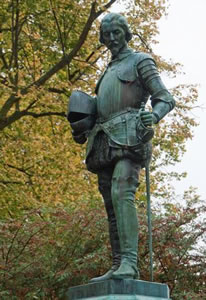
Mihály Vörösmarty (1 december 1800 – 19 november 1855)

Monument in Boedapest


De Russische dichter en schrijver Valery Bryusov werd geboren op 1 december 1873 in Moskou. Zie ook mijn blog van 1 december 2006 en ook mijn blog van 1 december 2008 en ook mijn blog van 1 december 2009.


Saint Sebastian 


On slow and smoky fire thou burn'st and art consumed,

O thou, my soul!

On slow and smoky fire thou burn'st and art consumed,

With hidden dole.


Thou droopest like Sebastian, pierced with pointed arrows,

Harassed and spent.

Thou droopest like Sebastian, pierced with pointed arrows,

Thy flesh all rent.


Thy foes encircle thee and watch with gleeful laughter

And bended bow.

Thy foes encircle thee and watch with gleeful laughter

Thy torments slow.


The embers burn, and gentle is the arrow's stinging

'Neath the evening sky.

The embers burn, and gentle is the arrow's stinging

When the end draws nigh.


Why hastens not thy dream unto thy lips now pallid

With deadly drouth?

Why hastens not thy dream unto thy lips now pallid

To kiss thy mouth?


Vertaald door Abraham Yarmolinsky


796528-90c32526719a90c89e7c74db1e0b4db3.jpg
Valery Bryusov
(1 december 1873 - 9 oktober 1924)


De Duitse dichter en schrijver
Ernst Toller werd geboren op 1 december 1893 in Samotschin (tegenwoordig Szamocin). Zie ook mijn blog van 1 december 2006 en ook mijn blog van 1 december 2008 en ook mijn blog van 1 december 2009.


Unser Weg


Die Klöster sind verdorrt und haben ihren Sinn verloren,
Sirenen der Fabriken überschrillten Vesperklang,
Und der Millionen trotziger Befreiungssang
Verstummt nicht mehr vor klösterlichen Toren.


Wo sind die Mönche, die den Pochenden zur Antwort geben:
"Erlösung ist Askese weltenferner Stille ...?"
Ein Hungerschrei, ein diamantner Wille
Wird an die Tore branden: "Gebt uns Leben!"


Wir foltern nicht die Leiber auf gezähnten Schragen,
Wir haben andern Weg zu Gott gefunden,
Uns sind nicht stammelndes Gebet die Stunden,


Das Reich des Friedens wollen wir zur Erde tragen,
Den Unterdrückten aller Länder Freiheit bringen -
Wir müssen um das Sakrament der Erde ringen.


Die Mauer der Erschossenen


Wie aus dem Leib des heiligen Sebastian,

Dem tausend Pfeile tausend Wunden schlugen,

So Wunden brachen aus Gestein und Fugen,

Seit in den Sand ihr Blut verlöschend rann.


Vor Schrei und Aufschrei krümmte sich die Wand,

Vor Weibern, die mit angestoßnen Knien "Herzschuß!" flehten,

Vor Männern, die getroffen sich wie Kreisel drehten,

Vor Knaben, die um Gnade weinten mit zerbrochner Hand.


Da solches Morden raste durch die Tage,

Da Erde wurde zu bespienem Schoß,

Da trunkenes Gelächter kollerte von Bajonetten,


Da Gott sich blendete und arm ward, nackt und bloß,

Sah man die schmerzensreiche Wand in großer Klage

Die toten Menschenleiber an ihre steinern Herze betten.


 796528-6574eb5b7a6ef5cc59b2a75f42b58153.jpg

Ernst Toller (1 december 1893 – 22 mei 1939)

Geschreven door Romenu om 19:32 Reageer op dit bericht

Herinnering aan Ramses Shaffy

Herinnering aan Ramses Shaffy


Nederlands grootste chansonnier Ramses Shaffy is vandaag precies een jaar geleden op 76-jarige leeftijd overleden.


De Nederlandse chansonnier en acteur Ramses Shaffy werd op 29 augustus 1933 geboren in de Parijse voorstad Neuilly-sur-Seine als zoon van een Egyptische diplomaat en een Poolse gravin van Russische afkomst.


Laat me


Ik ben misschien te laat geboren,
Of in een land met ander licht.
Ik voel me altijd wat verloren,
Al toont de spiegel mijn gezicht.
Ik ken de kroegen en kathedralen,
Van Amsterdam tot aan Maastricht.
Toch zal ik elke dag verdwalen,
Dat houdt de zaak in evenwicht.

Laat me Laat me
Laat me m'n eigen gang maar gaan
Laat me Laat me
Ik heb 't altijd zo gedaan


Ik zal m'n vrienden niet vergeten,
Want wie mij lief is blijf me lief.
En waar ze wonen moest ik weten,
Maar ik verloor hun laatste brief.
Ik zal ze heus wel weer ontmoeten,
Misschien vandaag of volgend jaar.
Ik zal ze kussen en begroeten,
Het komt vanzelf weer voor elkaar.
(refrein)

Ik ben gelukkig niet veranderd,
Soms woon ik hier, soms woon ik daar.
Ik heb mijn leven niet verkankerd,
'k heb geen bezit en geen bezwaar.
Ik hou van water en van aarde,
Ik hou van schamel en van duur.
D'r is geen stuiver die ik spaarde,
Ik leef gewoon van uur tot uur.
(refrein)

Ik zal ook wel een keertje sterven,
Daar kom ik echt niet onderuit.
Ik laat mijn liedjes dan maar zwerven,
En verder zoek je het maar uit.
Voorlopig blijf ik nog je zanger,
Je zwarte schaap, je trouwe fan.
Ik blijf nog lang, en liefst nog langer,
En laat me blijven wie ik ben.


796506-61153c0f9f1cb81408a22a2808d6ba5f.jpg
Ramses Shaffy (29 augustus 1933 – 1 december 2009)


Geschreven door Romenu om 19:12 Reageer op dit bericht

David Nicholls, Lee Klein, Adeline Yen Mah, Reinier de Rooie

De Engelse schrijver David Nicholls werd geboren op 30 november 1966 in Eastleigh, Hampshire. Zie ook mijn blog van 30 november 2008 en ook mijn blog van 30 november 2009.


Uit: One Day


„Friday 15TH July 1988
Rankeillor Street, Edinburgh
'I suppose the important thing is to make some sort of difference,' she said. 'You know, actually change something.'
'What, like "change the world", you mean?'
'Not the whole entire world. Just the little bit around you.'
They lay in silence for a moment, bodies curled around each other in the single bed, then both began to laugh in low, pre-dawn voices. 'Can't believe I just said that,' she groaned. 'Sounds a bit corny, doesn't it?'
A bit corny.'
'I'm trying to be inspiring! I'm trying to lift your grubby soul for the great adventure that lies ahead of you.' She turned to face him. 'Not that you need it. I expect you've got your future nicely mapped out, ta very much. Probably got a little flow-chart somewhere or something.'
'Hardly.'
'So what're you going to do then? What's the great plan?'
'Well, my parents are going to pick up my stuff, dump it at theirs, then I'll spend a couple of days in their flat in London, see some friends. Then France-'
Very nice-'
'Then China maybe, see what that's all about, then maybe onto India, travel around there for a bit-'
'Traveling,' she sighed. 'So predictable.'
'What's wrong with travelling?'
'Avoiding reality more like.'
'I think reality is over-rated,' he said in the hope that this might come across as dark and charismatic.
She sniffed. 'S'alright, I suppose, for those who can afford it. Why not just say "I'm going on holiday for two years"? It's the same thing.'
'Because travel broadens the mind,' he said, rising onto one elbow and kissing her.
'Oh I think you're probably a bit too broad-minded as it is,' she said, turning her face away, for the moment at least. They settled again on the pillow. 'Anyway, I didn't mean what are you doing next month, I meant the future-future, when you're, I don't know...' She paused, as if conjuring up some fantastical idea, like a fifth dimension. '...Forty or something. What do you want to be when you're forty?'
'Forty?' He too seemed to be struggling with the concept. 'Don't know. Am I allowed to say "rich"?'
'Just so, so shallow.'
'Alright then, "famous".' He began to nuzzle at her neck. 'Bit morbid, this, isn't it?'
'It's not morbid, it's...exciting.'


 795709-361944839168c10239ac1b891c10fabf.jpg

David Nicholls (Hampshire, 30 november 1966)


De Amerikaanse dichter, schrijver en essayist Lee Klein werd geboren op 30 november 1965 in New York. Zie ook mijn blog van 30 november 2008 en ook mijn blog van 30 november 2009.


Uit: The Poetics of Removable Presence in the Work of Damian Loeb


„In the virtual office space of today quickly becoming tomorrow and both quickly becoming yesterday, we are all removable. The staff, the employed cadre of individuals presently before our eyes, is removable. Though their presence has at some point been requested or solicited or made possible by their own devices (if they are the party in need), they are in any context the human contents of such space and are each replaceable by their attainable commensurate. Furthermore, so too removable in all probability is the company they are in as this firm may only be fulfilling a momentary need in a temporary economy (or only a perceived need at that). Both the actors and the location are replaceable and are easily removed. The painter Damian Loeb in his young career has taken these occupational precepts and played an aesthetic variation of the vocational conditions, thereby rendering him the poet/painter of a world in which both everyone and everywhere is but a key stroke or a mouse click from being photoshopped away.


 795709-ab81c9f0b4014b71b6edaa1b6f27bb6a.jpg

 Damian Loebb, The Shadow


This simulated type of human environ (taken to its comic extreme in Peter Weir's 1998 film The Truman Show) far from being a new phenomenon had its origins in the socio-economic landscape created by an arbitrary; invisible, and omni present creative force (the creation known as Utopia by its architect Sir Thomas More). The simulated quality of our lives is so pronounced that it seems that people vanish like browsed web pages. When people step off the stage of existence the human mind in this era of epic replication may be only able to register them as if they were in an ongoing movie. This may lead people to begin to question whether other people even existed in the material world at all. Is it all just film, the predominant metaphor of our age?

In Loeb's first exhibition at the uptown space of dealer Mary Boone in 2000, the then twenty-something painter offered a series of canvases whose environs were settings mostly lifted from other's photos and populated by actors of the painter's choosing. Subsequently, in his second exhibition (again at Mary Boone's Fifth Avenue space) he offered a narrative featuring a young Asian woman on-the-run traveling across a series of canvases whose scenery was of prefabricated origin. (These and all other Damian Loeb paintings may be seen on the web site www.damianloeb.com.) „


795709-3c817c72b93550294e476511928e06fd.jpg
Lee Klein (New York, 30 november 1965)


De Chinese schrijfster Adeline Yen Mah werd geboren op 30 november 1937 in Tianjin. Zie ook mijn blog van 30 november 2008 en ook mijn blog van 30 november 2009.


Uit: Falling Leaves


„My eldest brother Gregory had a sunny personality and the infectious ability to turn ordinary occasions into merry parties. His joie de vivre endeared him to many people. Being the eldest Son in China meant that he was the favourite of Father as well as of our grandparents. I remember him, full of mischief, gazing with rapt fascination at a long, black hair blowing in and out of the right nostril of snoring Ye Ye one hot afternoon. Finally Gregory could no longer resist the temptation. Skilfully, he pinched the hair ever so tightly between his thumb and index finger during the next exhalation. There was a tantalizing pause. Ye Ye finally inhaled while Gregory doggedly hung on. The hair was wrenched from its root and Ye Ye awoke with a yell. Gregory was chased by Ye Ye brandishing a feather duster but managed, as usual, to escape.

On the whole, Gregory ignored James and me because we were too young to be interesting playmates. He was always surrounded by friends his own age. He did not enjoy studying but, like Grandmother, excelled in games of chance such as bridge. Good with numbers, he occasionally taught us younger ones neat mathematical tricks, roaring with laughter at his own cleverness.

Of all my siblings, it was Edgar I feared the most. He bullied James and me and used us as punchbags to vent his frustration. He ordered us around to perform his errands and grabbed our share of toys, candies, nuts, watermelon seeds and salted plums. He did not distinguish himself at school and was deeply insecure, though he possessed enough fortitude to maintain a passing grade.


My san ge (third elder brother) James was my hero and only friend. We used to play together for hours and developed a telepathic closeness, confiding to one another all our dreams and fears. With him, I could discard my vigilance and I needed that haven desperately. Throughout our childhood, it was immensely comforting to know that I could always turn to him for solace and understanding.“


 795709-6ca5f107ed6a661ecb9bf48920ff452d.jpg

Adeline Yen Mah (Tianjin, 30 november 1937)


De Nederlandse dichter Reinier de Rooie werd geboren op 30 november 1961 in Hengelo. In de jaren ’80 en ’90 publiceerde hij drie dichtbundels: De vreemdeling verlangt, Het lied van de kinderlokker en Wederiks ingewand. Momenteel werkt hij aan een vierde bundel: Nanoen. N een afwezigheid van 25 jaar is hij in 2006 weer teruggekeerd naar Hengelo, waar hij werkzaam is als beheerder en programmamaker van de Kunst sociëteit Lambooijhuis. In dat kader was hij organisator van de poëziemanifestatie Hengelo (O) Hoort!. Hij liet talrijke dichters naar Hengelo komen om uit hun werk voor te dragen. Hij treedt geregeld op bij poëziemanifestaties en publiceert gedichten in verschillende literaire tijdschriften. Hij was in 2007 initiator van het Stadsdichterschap Hengelo


nachtblad


dat de hel ons aanvaardt ondermaans

principieel tegendraads

en van armoe doorlucht

staat vervat in de krant als een hoedje

‘s ochtends vroeg van plezier op de mat


ik ontwaak en beschouw

de woorden van confucius

hoe waar en wat zich paart

mits strottenhoofd klaar kronkelt

rond de knal van een koperen k

of o

de oever van wat stroomt omvat


de leugenaars zijn onder ons zo alledaags

onschuldig als het lam vallend blad

tot humus van nerf en nevel

waarop het kind zijn taal vergaard

tot zich uit in een kras langs de kim


 795709-faf0201411f772e9328a4d27add1b9ee.jpg

Reinier de Rooie (Hengelo, 30 november 1961)


Zie voor nog meer schrijvers van de 30e november ook mijn vorige blog van vandaag en eveneens mijn eerste blog van vandaag.
Geschreven door Romenu om 19:53 Reageer op dit bericht

Jan G. Elburg, Mark Twain, Jonathan Swift

De Nederlandse dichter en schrijver Jan G. Elburg werd geboren op 30 november 1919 te Wemeldinge. Zie ook mijn blog van 30 november 2006 en ook mijn blog van 30 november 2007 en ook mijn blog van 30 november 2008 en ook mijn blog van 30 november 2009.


Niets van dat alles


Zoals matrozen zingen...
maar matrozen zingen niet:
zij spugen in de zee,
zij kennen de achterkanten van steden
en de voorkant van de koude wind;
matrozen zingen niet.
 
zoals de vogels vrolijk...
maar hun vrolijkheid is vluchten:
zij zijn beschoten,
hun jong is dood.
(zij kennen geen droefheid ook).
 
zoals de zon...
maar zie het rode stof rond boekarest.
wolken? zijn koude mist.
de klaproos? onkruid.
zand: zand.
water: water.
 
een mens weet nauwlijks wat de mens is.
de dichter weet alles van niets.


Willen


Ik neem mijn buik op en wandel,

ik heb mijn ogen open,

ik heb mijn borst als kennisgeving aangeslagen,

ik zou die punboomhouten paal in mij

vertikaal willen treffen met licht:

een lang lemmet licht om de dagen te turven.

Ik zou een rood totem willen snijden

waarom mijn hartstocht zich als wingerd slingert,

een beeld voor alledag, waaraan de vingers leven.

Ik heb te nemen.


Ik zou een mens willen maken uit wrok

en afgeslagen splinters: een winterman

met een gezicht van louter ellebogen.

En bomen zouden stampen bij zijn langsgaan

en had hij één minuut te leven,

rood zou hij zijn en rood van kindertranen

en rood.


Ik pak mijzelf als altijd weer tezamen,

ik zie het water aan,

ik neem mijn hongerige maag en wandel,

ik zie een eetsalon voor twintig standen:

wanden zijn er genoeg; hij vloekt

van een doorvoeld gemis aan ramen.


795701-361d472227b9a981e62611fca5fd2fc8.jpg
Jan G. Elburg (30 november 1919 – 13 augustus 1992)


De Amerikaanse schrijver
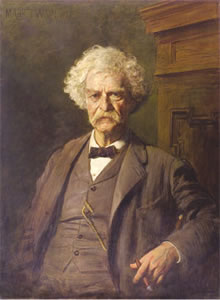
Mark Twain (pseudoniem van Samuel Langhorne Clemens) werd geboren op 30 november 1835 te Florida. Zie ook mijn blog van 30 november 2006 en ook mijn blog van 30 november 2008 en ook mijn blog van 30 november 2009.


Uit: Adventures of  Huckleberry Finn


„After supper she got out her book and learned me about Moses and the Bulrushers; and I was in a sweat to find out all about him; but by-and-by she let it out that Moses had been dead a considerable long time; so then I didn't care no more about him; because I don't take no stock in dead people.

Pretty soon I wanted to smoke, and asked the widow to let me. But she wouldn't. She said it was a mean practice and wasn't clean, and I must try to not do it any more. That is just the way with some people. They get down on the thing when they don't know nothing about it. Here she was a bothering about Moses, which was no kin to her, and no use to anybody, being gone, you see, yet finding a power of fault with me for doing a thing that had some good in it. And she took snuff too; of course that was all right, because she done it herself.

Her sister, Miss Watson, a tolerable slim old maid, with goggles on, had just come to live with her, and took a set at me now, with a spelling-book. She worked me middling hard for about an hour, and then the widow made her ease up. I couldn't stood it much longer. Then for an hour it was deadly dull, and I was fidgety. Miss Watson would say, "Don't put your feet up there, Huckleberry"; and "don't scrunch up like that, Huckleberry- set up straight"; and pretty soon she would say, "Don't gap and stretch like that, Huckleberry- why don't you try to behave?" Then she told me all about the bad place, and I said I wished I was there. She got mad, then, but I didn't mean no harm. All I wanted was to go somewheres; all I wanted was a change, I warn't particular. She said it was wicked to say what I said; said she wouldn't say it for the whole world; she was going to live so as to go to the good place. Well, I couldn't see no advantage in going where she was going, so I made up my mind I wouldn't try for it. But I never said so, because it would only make trouble, and wouldn't do no good.

Now she had got a start, and she went on and told me all about the good place. She said all a body would have to do there was to go around all day long with a harp and sing, forever and ever. So I didn't think much of it. But I never said so. I asked her if she reckoned Tom Sawyer would go there, and, she said, not by a considerable sight. I was glad about that, because I wanted him and me to be together.“


795701-76251c5d8c0b2141ada4e0446340949c.jpg
Mark Twain (30 november 1835 – 21 april 1910)


De Engelse schrijver
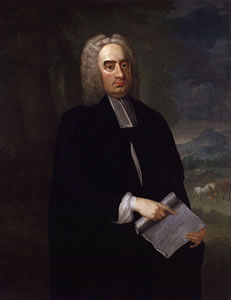
Jonathan Swift werd op 30 november 1667 in Dublin geboren uit Engelse ouders. Zie ook mijn blog van 30 november 2006 en en ook mijn blog van 30 november 2008 en ook mijn blog van 30 november 2009.


Uit: Gulliver's Travels


„Soon after my return from Leyden, I was recommended by my good master Mr. Bates, to be surgeon to the Swallow, Captain Abraham Pannell commander; with whom I continued three years and a half, making a voyage or two into the Levant, and some other parts. When I came back, I resolved to settle in London, to which Mr. Bates, my master, encouraged me; and by him I was recommended to several patients. I took part of a small house in the Old-Jury; and being advised to alter my condition, I married Mrs. Mary Burton, second daughter to Mr. Edmond Burton, hosier, in Newgate-street, with whom I received four hundred pounds for a portion.
But, my good master Bates dying in two years after, and I having few friends, my business began to fail; for my conscience would not suffer me to imitate the bad practice of too many among my brethren. Having therefore consulted with my wife, and some of my acquaintance, I determined to go again to sea. I was surgeon successively in two ships, and made several voyages, for six years, to the East and West-Indies; by which I got some addition to my fortune. My hours of leisure I spent in reading the best authors, ancient and modern; being always provided with a good number of books; and when I was ashore, in observing the manners and dispositions of the people, as well as learning their language; wherein I had a great facility by the strength of my memory.
The last of these voyages not proving very fortunate, I grew weary of the sea, and intended to stay at home with my wife and family. I removed from the Old-Jury to Fetter-lane, and from thence to Wapping, hoping to get business among the sailors; but it would not turn to account. After three years expectation, that things would mend, I accepted an advantageous offer from Captain William Prichard, master of the Antelope, who was making a voyage to the South-Sea. We set sail from Bristol, May 4th, 1699, and our voyage at first was very prosperous.“


795701-5e5e6b8c73a93b577667476804c662eb.jpg
Jonathan Swift (30 november 1667 – 19 oktober 1745)

Portret door Francis Bindon

Geschreven door Romenu om 19:43 Reageer op dit bericht

Philip Sidney, John McCrae, Winston Churchill, Lucy Maud Montgomery, Rudolf Lavant, John Bunyan, Sergio Badilla Castillo, David Mamet, Wil Mara

De Engelse schrijver Sir Philip Sidney werd geboren op 30 november 1554 in het  kasteel van Penshurst in het graafschap Kent. Zie ook mijn blog van 30 november 2006 en ook mijn blog van 30 november 2008 en ook mijn blog van 30 november 2009.


The Bargain


My true love hath my heart, and I have his,

By just exchange one for another given:

I hold his dear, and mine he cannot miss,

There never was a better bargain driven:

My true love hath my heart, and I have his.


His heart in me keeps him and me in one,

My heart in him his thoughts and senses guides:

He loves my heart, for once it was his own,

I cherish his because in me it bides:

My true love hath my heart, and I have his.


795685-d45ba0b6d96ffc1cc0c8a24d8d11d487.jpg
Sir Philip Sidney (30 november 1554 – 17 oktober 1586)

Standbeeld in Shrewsbury


De Canadese dichter, arts, auteur, kunstenaar, militair John Alexander McCrae werd geboren in Guelph (Ontario) op 30 november 1872. Zie ook mijn blog van 30 november 2008 en ook mijn blog van 30 november 2009.


Anarchy 


I saw a city filled with lust and shame,

Where men, like wolves, slunk through the grim half-light;

And sudden, in the midst of it, there came

One who spoke boldly for the cause of Right.


And speaking, fell before that brutish race

Like some poor wren that shrieking eagles tear,

While brute Dishonour, with her bloodless face

Stood by and smote his lips that moved in prayer.


"Speak not of God! In centuries that word

Hath not been uttered! Our own king are we."

And God stretched forth his finger as He heard

And o'er it cast a thousand leagues of sea.


The Night Cometh


Cometh the night. The wind falls low,
The trees swing slowly to and fro:
Around the church the headstones grey
Cluster, like children strayed away
But found again, and folded so.

No chiding look doth she bestow:
If she is glad, they cannot know;
If ill or well they spend their day,
Cometh the night.

Singing or sad, intent they go;
They do not see the shadows grow;
"There yet is time," they lightly say,
"Before our work aside we lay";
Their task is but half-done, and lo!
Cometh the night.


 795685-a9cc8a11fcd483d8a4e38ec542589a47.jpg

John McCrae (30 november 1872 - 28 januari 1918)

McCrae in 1912


De Britse staatsman en schrijver Sir Winston Leonard Spencer Churchill werd geboren in Woodstock op 30 november 1874. Zie ook mijn blog van 30 november 2007 en ook mijn blog van 30 november 2008  ook mijn blog van 30 november 2009.


Uit: The River War


„The north-eastern quarter of the continent of Africa is drained and watered by the Nile. Among and about the headstreams and tributaries of this mighty river lie the wide and fertile provinces of the Egyptian Soudan. Situated in the very centre of the land, these remote regions are on every side divided from the seas by five hundred miles of mountain, swamp, or desert. The great river is their only means of growth, their only channel of progress. It is by the Nile alone that their commerce can reach the outer markets, or European civilisation can penetrate the inner darkness. The Soudan is joined to Egypt by the Nile, as a diver is connected with the surface by his air-pipe. Without it there is only suffocation. Aut Nilus, aut nihil!

The town of Khartoum, at the confluence of the Blue and White Niles, is the point on which the trade of the south must inevitably converge. It is the great spout through which the merchandise collected from a wide area streams northwards to the Mediterranean shore. It marks the extreme northern limit of the fertile Soudan. Between Khartoum and Assuan the river flows for twelve hundred miles through deserts of surpassing desolation. At last the wilderness recedes and the living world broadens out again into Egypt and the Delta. It is with events that have occurred in the intervening waste that these pages are concerned.“


795685-b14a6464d68fbbf7e650433e7686215a.jpg
Winston Churchill (30 november 1874 - 24 januari 1965)

Churchill in 1914 


Zie voor onderstaande schrijvers ook mijn blog van 30 november 2009.


De Canadese schrijfster Lucy Maud Montgomery werd geboren in Clifton op 30 november 1874. Zie ook mijn blog van 30 november 2008.


De Duitse dichter en schrijver Rudolf Lavant (eig. Richard Cramer) werd geboren op 30 november 1844 in Leipzig. Zie ook mijn blog van 30 november 2008.


De Engelse dichter en schrijver John Bunyan werd geboren op 30 november 1628 in Harrowden bij Bedford. Zie ook mijn blog van 30 november 2006 en ook mijn blog van 30 november 2008.

De Chileense dichter en schrijver Sergio Badilla Castillo werd geboren in Valparaíso op 30 november 1947. Zie ook mijn blog van 30 november 2008.


De Amerikaanse toneelschrijver en filmregisseur David Mamet werd geboren op 30 november 1947 in Chicago. Zie ook mijn blog van 30 november 2008.


De Amerikaanse schrijver Wil Mara werd geboren op 30 november 1966 in de buurt van Long Beach Island, New Jersey. Zie ook mijn blog van 30 november 2008.


Geschreven door Romenu om 00:00 Reageer op dit bericht

Mario Petrucci, Carlo Levi, Jean-Philippe Toussaint, C.S. Lewis, Silvio Rodríguez

De Engelse dichter en schrijver Mario Petrucci werd geboren op 29 november 1958 in Londen. Zie ook mijn blog van 29 november 2008 en ook mijn blog van 29 november 2009.


Ambient


How easy for me, your son,

youthful lungs trawling in one sweep -


cigar smoke, omelette, the girl

next door. One day I told you


how in physics we'd calculated

each lungful held billions of atoms Galileo'd inhaled.


It took a full week

for you retort - as always


off the nail. Must be I've used it all then -

from Siberia to Antarctica,


slack-pit to spire.

That's why each draw's so bloody hard.


Left me speechless.

Till, catching you that night at the foot


of your Jacob's Ladder, ascending

to the one bulb of the landing toilet,


I told you how I'd checked with sir:

You can't use it all, I piped


not in a hundred million years.

You'll get better dad, just wait and see.


Your mouth a slur, suspended

over your chest. Fist


white on the rail.

Don't hold your breath son, you said.


Feeling For Eggs


You have given, and given, until giving has grown

into habit - so that you move to the stove

without thought, without word, the moment

the green of my jacket stipples your window:

ladle the soup that is always ready, rearrange

the condiments, or slop eggs for the beaten track

of an omelette. Sometimes, I can almost believe

you pass the day moving from stove to telly and back

again; or taking the one leather bag to the shops

for the loaf, the eggs you stow as though they might

ignite, two words with the butcher: was tender; was tough.

The odd hour spent in the husbandry of bills.

You hoard your knowledge of the man who died, left you

with sons: onion skin copies with their own

lives. You keep that knowledge safe, as though telling

might erase it. The pruning of decades takes your words

beyond the graft of mine. So, you listen, tolerate

the electric hotplate, the central heating;

were happier with the sooted cauldron twenty of you

could have your fill from, the firewood chopped

by your father, brought by donkey. You grew

maize from seed, knew how to feel

for an egg in the chicken. We sit in silence now,

with English tea to sip, some soup, until I have

to go. You follow as far as the empty drive, wave

as you stoop for a windfall branch,

add it to the wood pile you keep in the garage

that year by year inches towards the eaves.


 794817-e2655a975324a3810e6c2d8c60e836d8.jpg

Mario Petrucci (Londen, 29 november 1958)


De Italiaanse schrijver, schilder, arts en politicus Carlo Levi werd geboren op 29 november 1902 in Turijn. Zie ook mijn blog van 29 november 2008 en ook mijn blog van 29 november 2009.


Uit: Christus kwam niet verder dan Eboli (Vertaald door Margriet Agricola)


„In deze sacrale sfeer bracht ik mijn dagen door, ‘s nachts beschermd door de engelen en overdag door de heksenwijsheden van Giulia. Ik behandelde de zieken, ik schilderde, ik schreef wat en ik las veel, temidden van een door geesten en dieren bewoonde eenzaamheid. Ik deed mijn best zoveel mogelijk uit de buurt te blijven van de vetes en de dorpsintriges, en door zoveel mogelijk thuis te blijven lukte mij dat redelijk. ‘s Ochtends kwam ik ze echter altijd tegen, de heren, als ik naar het gemeentehuis moest om mijn handtekening te zetten. Dan kwam ik langs het balkon van de school waar don Luigino in hemdsmouwen en met de aanwijsstok in zijn hand zat te roken. Ook na de lunch, als ik koffie ging drinken bij dokter Milillo, kon ik ze niet ontwijken. Maar vooral kwam ik ze tegen als ´s avonds de hele dorpsbevolking zich verzamelde in afwachting van het uitdelen van de post en de kranten.

Ook de maand oktober met al zijn eendere dagen was voorbij en de eerste koude dagen hadden we al gehad. De eerste regens trouwens ook, maar zonder dat het landschap opeens groen was geworden – het zag er nog precies eender uit met zijn geelwitte bleekheid. Op mooie dagen trok ik er vaak op uit om te schilderen, maar ik werkte vooral thuis, in het atelier of op het terras. Ik schilderde veel stillevens en soms liet ik ook de kinderen poseren die inmiddels regelmatig bij mij over de vloer kwamen en dan de hele dag om mij heen hingen. Graag had ik ook portretten van de boeren gemaakt, maar de mannen hadden altijd wat te doen op hun land, en de vrouwen reageerden afwerend, hoezeer zij zich ook gevleid voelden door mijn verzoeken. Ook Giulia had nooit tijd als ik haar vroeg om te poseren, en ik begreep dat er een of andere duistere reden moest zijn die het haar belette. Giulia beschouwde mij als haar baas en ze zou geen enkel verzoek van mij weigeren; het was zelfs zo dat zij op heel vanzelfsprekende wijze karweitjes deed die ik nooit zelf van haar gevraagd zou hebben. Zo had ik uit Bari een geëmailleerde gietijzeren badkuip laten komen om ‘s ochtends een bad te kunnen nemen. Ik had hem in mijn slaapkamer gezet en als ik een bad nam, sloot ik de deur naar de keuken waar zij met haar zoontje bezig was. Giulia vond het maar vreemd. Op een dag kwam ze de slaapkamer binnenstormen, en zonder zich iets aan te trekken van mijn naaktheid, vroeg ze mij hoe het mogelijk was een bad te nemen zonder dat iemand mijn rug inzeepte en mij hielp met afdrogen.“


794817-00149b54493a59f9f2a6cb3e98311aae.jpg
Carlo Levi
(29 november 1902 – 4 januari 1975)


De Belgische schrijver Jean-Philippe Toussaint werd op 29 november 1957 geboren in Brussel. Zie ook mijn blog van 29 november 2006 en ook mijn blog van 29 november 2007 en ook mijn blog van 29 november 2008 en ook mijn blog van 29 november 2009.


Uit: La salle de bain


„Nous avons fait le tour de l’appartement vide. Nous bu du bordeaux assis sur le parquet. Nous avons vidé les caisses, déficelé les cartons, défait les valises. Nous avons ouvert les fenêtres pour faire disparaître l’odeur des anciens locataires. Nous étions chez nous ; il faisait froid, nous nous querellions au sujet d’un chandail que nous voulions tous les deux de revêtir.
38) La crémaillère fut pendue. Le couple que nous avions invité arriva très en avance. C’était des amis d’enfance d’Edmondsson. Ils s’installèrent dans le canapé, nettoyèrent leurs lunettes en soufflant sur les verres. Pendant l’apéritif, je me retrouvai seul avec ces jeunes gens, Edmondsson ayant dû s’absenter pour préparer le dîner. Ils gardaient le silence. Ils se croisaient les jambes, regardaient les murs autour d’eux. Après m’avoir adressé quelques sourires polis, ils se désintéressèrent de moi et commencèrent à converser ensemble à voix basse. Sans plus me prêter d’attention, ils évoquaient des soirées récentes, des souvenirs de vacances, leur dernier séjour aux sports d’hiver. Puis, comme Edmondsson ne revenait pas, ils prirent des magazines qui se trouvaient à leur portée. Ils les feuilletaient, se montraient mutuellement les photos. Je me levais, mis un disque et allai me rasseoir."


794817-adf481fc2534ee727cae190f6c4e91ee.jpg
Jean-Philippe Toussaint (Brussel, 29 november 1957)


De Ierse schrijver C.S. Lewis werd geboren op 29 november 1898 in Belfast. Zie ook mijn blog van 29 november 2006 en ook mijn blog van 29 november 2008 en ook mijn blog van 29 november 2009.


Uit: Till We Have Faces


“But, Sister, you will follow me soon. You don’t think any mortal life seems a long thing to me tonight? And how would it be better if I had lived? I suppose I should have been given to some king in the end—perhaps such another as our father. And there you can see again how little difference there is between dying and being married. To leave your home—to lose you, Maia, and the Fox—to lose one’s maidenhead—to bear a child—they are all deaths. Indeed Orual, I am not sure that this which I go to is not the best.” “What had I to look for if I lived? Is the world—this palace, this father—so much to lose? We have already had what would have been the best of our time. I must tell you something, Orual, which I never told to anyone, not even you.”...“What is it?” said I, looking down at her lap where our four hands were joined. “This,” she said, “I have always—at least, ever since I can remember—had a kind of longing for death.” “Ah, Psyche,” I said, “have I made you so little happy as that?” “No, no, no,” she said. “You don’t understand. Not that kind of longing. It was when I was happiest that I longed most. It was on happy days when we were up there on the hills, the three of us, with the wind and the sunshine… where you couldn’t see Glome or the palace. Do you remember? The colour and the smell, and looking across at the grey mountain in the distance? And because it was so beautiful, it set me longing, always longing. Somewhere else there must be more of it. Everything seemed to be saying, Psyche come! But I couldn’t (not yet) come and I didn’t know where I was to come to. It almost hurt me. I felt like a bird in a cage when the other birds of its kind are flying home.”
"Orual," she said, her eyes shining, "I am going, you see, to the mountain. You remember how we used to look and long? And all the stories of my gold and amber house, up there against the sky, where we thought we should never really go? The greatest King of all was going to build it for me. If only you could believe it, Sister! No, listen. Do not let grief shut up your ears and harden your heart –“


794817-5c3fa2a6b5baab2fac7e0ca2b71ed36b.jpg
C.S. Lewis (29 november 1898 – 22 november 1963)

Standbeeld in Belfast


De Cubaanse dichter en singer-songwriter Silvio Rodríguez Domínguez werd geboren in San Antonio de Los Baños op 29 november 1946. Zie ook mijn blog van 29 november 2008 en ook mijn blog van 29 november 2009.


Pourvu que (Ojala)


Pourvu que les feuilles ne touchent pas ton corps en tombant,

pour que tu ne puisses pas les transformer en cristal.

Pourvu que la pluie cesse d'être un miracle qui

descend sur ton corps.

Pourvu que la lune puisse se lever sans toi.

Pourvu que la terre ne baise pas tes pas.


Pourvu que disparaissent ton regard constant,

ta parole précise, ton sourire parfait.

Pourvu qu'il arrive quelque chose qui t'efface soudainement,

une lumière aveuglante, une bourrasque de neige.


Pourvu au moins que la mort m'emporte,

pour ne plus te voir autant, pour ne plus te voir tout le temps.

A chaque seconde, à chaque vision.

Pourvu que je ne puisse même plus te toucher en chansons


Pourvu que l'aurore ne pousse pas de cris dans mon dos.

Pourvu que cette voix oublie ton nom.

Pourvu que les murs ne retiennent pas le bruit de tes pas

fatigués.

Pourvu que le désir s'en aille avec toi,

vers ton vieux gouvernement de défunts et de fleurs.


Pourvu que disparaissent ton regard constant,

ta parole précise, ton sourire parfait.

Pourvu qu'il arrive quelque chose qui t'efface soudainement,

une lumière aveuglante, une bourrasque de neige.


Pourvu au moins que la mort m'emporte,

pour ne plus te voir autant, pour ne plus te voir tout le temps.

A chaque seconde, à chaque vision.

Pourvu que je ne puisse même plus te toucher en chansons.


794817-368b07719e7089a4bf89db28d56fa504.jpg
Silvio Rodríguez (San Antonio de Los Baños, 29 november 1946)


Zie voor nog meer schrijvers van de 29e november ook mijn vorige blog van vandaag en eveneens mijn eerste blog van vandaag.

Geschreven door Romenu om 18:04 Reageer op dit bericht

Louisa May Alcott, Wilhelm Hauff, Ludwig Anzengruber, Madeleine L'Engle

De Amerikaanse schrijfster Louisa May Alcott werd geboren op 29 november 1832 in Germantown, Pennylvania. Zie ook mijn blog van 29 november 2006  en ook mijn blog van 29 november 2008 en ook mijn blog van 29 november 2009.


Uit: Little women (Onder moedervleugels, vertaling door Almine, Amsterdam 1876)


"Als je "dédain" bedoelt, dan moest je dat zeggen en niet over "étain" praten, alsof Vader een tinnen peperbus was," spotte Jo lachend.

"Ik weet heel goed, wat ik zeggen wil, en je hoeft er niet zoo "satiriek" over te zijn. Het is heel goed om juiste uitdrukkingen te gebruiken en zoo je "vocabulaire" te verrijken," zeide Amy deftig.

"Nu, vlieg elkaar maar niet aan, kinderen! Zou jij niet willen, Jo, dat we al het geld nog hadden, dat Vader verloor, toen we nog klein waren? Hè, wat zouden we gelukkig en goed zijn, als we niets hadden, wat ons hinderde," zei Meta, die zich betere dagen herinnerde.

"En gisteren heb je nog gezegd, dat je ons veel gelukkiger vond dan de kinderen King, omdat die altijd vochten en kibbelden, niettegenstaande ze zooveel geld hebben."

"Dat heb ik ook gezegd, Bets; en ik geloof ook wel, dat het waar is, want al moeten wij ook werken, we hebben toch pret onder elkaar, en zijn een "moppig" troepje, zou Jo zeggen."

"Jo gebruikt ook zulke platte uitdrukkingen," zei Amy en zag afkeurend naar de lange gestalte op het haardkleed. Jo ging dadelijk rechtop zitten, stak de handen in de zakken van haar schort en begon te

fluiten.

"Doe het toch niet, Jo, 't is zoo jongensachtig."

"Daarom doe ik het juist."

"Ik heb het land aan ruwe, onbeschaafde meisjes."

"En ik aan gemaakte, opgeprikte nuffen."

"Ieder vogeltje zingt, zooals het gebekt is," zei Bets, de vredestichtster, met zulk een grappig gezichtje, dat de beide scherpe stemmen zich in lachen oplosten en het "aanvliegen" voor 't oogenblik

gedaan was.

"Kinderen, jullie hebt beiden schuld," zei Meta, en begon als oudste zuster de les te lezen. "Jo, je bent nu oud genoeg om die jongensmanieren af te schaffen en je verstandig te gedragen. Het kwam

er niet zooveel op aan, toen je nog een klein meisje was, maar nu je zoo lang bent geworden en je haar opgestoken draagt, moet je bedenken dat je langzamerhand een dame wordt."


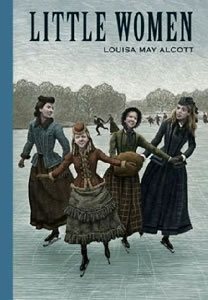
 794805-fd6d049d1581f0bc6b5ad32122ac6df9.jpg

Louisa May Alcott (29 november 1832 – 6 maart 1888)

Boekomslag


De Duitse dichter en schrijver Wilhelm Hauff werd geboren in Stuttgart op 29 november 1802. Zie ook mijn blog van 29 november 2006 en ook mijn blog van 29 november 2008 en ook mijn blog van 29 november 2009.


Sehnsucht (Lied aus der Ferne)


Ihr Töne meiner Saiten,
Ihr tönt so sanft, so mild,
Mit Träumen ferner Freuden
Habt ihr mein Herz erfüllt.
Des Liebchens Kuß, des Liebchens Blick,
Führt mir der sanfte Ton zurück,
Der eurem Hauch entquillt!
O lispelt leise, leise!
Dann träum ich schönre Zeiten
Und meiner Liebe Bild.

Wenn auf der Berge Höhen
Der Strahl des Morgens fällt,
Möcht ich mit Windeswehen
Zu meiner Jugendwelt,
Möcht eilen mit des Morgens Strahl
Zum blauen Berg, zum fernen Tal,
Das sie umfangen hält.
Vergebens, ach vergebens!
Mir blüht kein Wiedersehen
In meiner Jugendwelt.


Amor der Räuber

Nach dem Italienischen

Die Unschuld saß in grüner Laube,
Sie hielt ein Täubchen in dem Schoß;
Und Amor kam: »Gib mir die Taube;
Ein Weilchen nur gib deine Taube«,
Die Unschuld ließ sie lächelnd los,
Doch hielt sie Täubchen an dem Band,
Das sich um Täubchens Flügel wand.

Doch kaum hat er die weiße Taube;
So schneidet er den Faden ab;
Und höhnisch lachend mit dem Raube
Entflieht der Räuber aus der Laube
Und nimmer kehrt der lose Knab.
Und als ihr Täubchen nimmer kam,
Ward sie dem Räuber ewig gram.


 794805-e8967042039c3f6e62232f64e073db5a.jpg

Wilhelm Hauff  (29 november 1802 - 18 november 1827)

Monument in Lichtenstein-Honau


De Oostenrijkse schrijver Ludwig Anzengruber werd geboren op 29 november 1839 in Wenen. Zie ook mijn blog van 29 november 2006 en ook mijn blog van 29 november 2008 en ook mijn blog van 29 november 2009.


Der gute Hirte


Als jüngstens beim Spazierengehen

Nach allen Seiten meine Augen irrten,

Da hab' ich einen Schild gesehen

Vor einer Fleischerbank, »zum guten Hirten«.


»Der gute Hirte«, die Parabel

Thut mit viel Lehrnis in der Bibel stehen,

Doch leider darf bei keiner Fabel,

Noch irgend sonst, bis auf den Grund man gehen.


Den guten Hirten immer denn in Ehren,

Er sucht in Liebe das verirrte Lamm,

Er rastet nicht und bringt's zurück dem Herren.


Wozu er aber sich die Mühe nahm?

Je nun, 's ist Hirtenpflicht. Das Lamm indessen

Es wird geschoren und dann aufgefressen.


Der Kapitalisten Notschrei


Die Zeit ist reich, wie man's so nennt,
Wir armen Kapitalisten,
Wir geben Geld zu ein Prozent,
Um nur das Leben zu fristen.
Der Reiche wird zum armen Mann,
Die Revenue ist zum Darben,
Ein Elend, das sich kleiden kann
Nur noch in glänzende Farben,
So daß der Bettler sie durchguckt,
Wenn auch der Firnis noch blanke;
Und wie das Haupt der Hydra zuckt
Empor der grause Gedanke:
Vor dieses Unheils mächt'gem Prall
Da bricht zusammen zu Staube
Der Menschheit letztes Ideal,
Ans Geld der heilige Glaube!


 794805-3e400a8bfaf1432b1b88cbfa3f2f60fd.jpg

Ludwig Anzengruber (29 november 1839 – 10 december 1889)

Monument in Wenen


De Amerikaanse schrijfster Madeleine L'Engle werd geboren in New York op 29 november 1918. Zie ook mijn blog van 29 november 2008 en ook mijn blog van 29 november 2009.


Uit: The Joys of Love


„The Summer Theatre was on a pier that jutted off from the boardwalk over the sand. Sometimes when there was a storm and the tide was unusually high the actors could hear the soft swish of water underneath the stage; and the assistant stage manager, one of whose duties was to sweep the stage, was always in a rage at the sand which blew up between the floorboards and through the canvas floorcloth so that ten minutes after he had swept there would be a soft white dust over everything.

On the warm summer nights after the curtain had come down on the evening’s performance, the actors would hurry out of costume and makeup and stroll down the boardwalk, stopping for ice cream or Cokes, or drifting into town where there were restaurants and nightclubs. The apprentices, who

served as ushers, would walk along in their bright summer evening clothes, and in the ice cream parlors would talk loudly of the evening’s performance and of the problems of acting, so that everybody would know that they belonged to the theatre.

Sometimes, if Elizabeth had received a tip, she would go with the other apprentices; sometimes she would walk into town to a midnight movie with Ben Walton, the assistant stage manager, who was also an apprentice actor; but usually she stayed backstage, doing odd jobs for any of the professional actors who needed anything, waiting for a word or a gesture from Kurt Canitz.

Kurt Canitz was the director at the theatre, but occasionally he would take a role that appealed to him and then he would have Elizabeth cue him.When he grew tired of that, he would say, “I’m sick of working. Come and talk with me, Elizabeth.”

And then he would take her to the restaurant in his hotel, the Ambassador, and talk to her for hours about the theatre, about the productions he had directed on Broadway, about Elizabeth’s own talent as an actress. I have never lived before, Elizabeth thought. Until this summer I did not know what it was to be alive.“


794805-99ce69cfa7b1bed0946fb990fc34b293.jpg
Madeleine L’Engle (29 november 1918 – 6 september 2007)

Geschreven door Romenu om 17:53 Reageer op dit bericht

Franz Stelzhamer, Antanas Škėma, Andrés Bello, Maurice Genevoix

De Oostenrijkse dichter en schrijver Franz Stelzhamer werd geboren in Großpiesenham op 29 november 1802. Zie ook mijn blog van 29 november 2008 en ook mijn blog van 29 november 2009.


Winterwanderung


Da liegt sie, die große Pastete,

Die weite Landschaft vor mir,

Herr Winter, der wack’re Konditor,

Versah sie mit Schmuck und Zier.


Daß er so viel Zucker streute,

Geschah den Kindern zulieb,

Doch was er mit glitzernder Reimschrift

Darauf und darüber schrieb -


Das ist für den Wanderer,

Das ist für mich, für mich,

Und ich deut’ und entziff’re

Die Schrift auch Strich für Strich.


Das nichtigste Ding erglänzet

Im Strahl des Sonnenlichts,

Was macht nach diesem Exempel

Manch Einer aus seinem Nichts!


Drauf krächzt die heisere Dohle,

Ich nick’ und lache dazu,

Im Thale wirds trüb und neblig,

Es ballt sich der Schnee am Schuh -


Und gleich kommt ein and’rer Gnome

Mit melancholischem Gesicht,

Behaucht sich mit warmen Athem

Die frierenden Hände und spricht:


Du mußt dich begraben lan,

Ein in’s Leichentuch dreh’n,

Auf daß neugeboren dann

Du wieder magst aufersteh’n!


Doch kaum ist der Fröstler verschwunden

Im grauen Nebelduft,

Erschüttert Schellengeklingel

Und schallendes Schäckern die Luft.


Gottlob, die »Dreikönig« vorüber,

Es winkt schon der Karneval,

Fünf Schlitten mit munterem Völklern

Kutschieren in’s Städtchen zum Ball.


Mag sein, auch Hochzeitleute,

Wer weiß das so genau,

Es spielen ja Kinder schon gerne

Das Spiel von »Herr und Frau«.


Doch sieh, hintenauf was hockt doch?

Das Mäulchen zum Spotte gespitzt,

Ein kicherndes, zappelndes Gnömchen

Und horch, was singt es itzt?


Allimmer und ewig auf Fasching

Fiel Fasten, auf Freude folgt Leid,

Doch glaubt mir, ihr glücklichen Thoren,

Ihr bleibt stets so froh wie ihr seid.


D’rauf huscht das Fuhrwerk von dannen,

Geklingel und Knallen verhallt,

Ein leises eisiges Lüftchen

Durchschauert Feld und Wald.


Ei Winter, ei Winter, wie lehrreich

Wie lustig und launig du bist,

Wer aus deinen nur scheinbar blanken,

Blühweißn Blättern liest.


 794793-2e4d8515271aa94cfd93038b1e9c1c42.jpg

Franz Stelzhamer (29 november 1802 – 14 juni 1874)

Standbeeld in Ried im Innkreis


De Litouwse dichter en schrijver Antanas Škėma werd op 29 november 1910 geboren in Lodz in Polen. Zie ook mijn blog van 29 november 2008 en ook mijn blog van 29 november 2009.


SECOND REQUEST


I grew in the north.

Summers are short there.

I never saw a winter.

As a child, every Sunday,

I assisted in the Mass.

I never heard an organ.

My last love was in my youth.

I never loved a woman.

I never commited suicide.

Once I wanted to jump from the fifth floor.

A pregnant woman walked along the pavement.

How could I frighten her?

Write me letters. Write to me.

How shall we live?


Vertaald door Aldona en Robert Page


794793-1b250c9704f518c3387bc180cd7da14a.jpg
Antanas Škėma (29 november 1910 – 11 augustus 1961)


De Chileens-Venezolaanse dichter, wetgever, filosoof, politicus, diplomaat, wetenschapper, humanist en taalkundige Andrés Bello werd geboren in Caracas, Venezuela,  op 29 november 1781. Zie ook mijn blog van 29 november 2008 en ook mijn blog van 29 november 2009.


Miserere


Mercy, mercy, my God!

That your mercy may come to my aid!

According to the fullness

Of your mercies, erase by faults.


From my iniquities

Clean me more and more, so that my depraved

Heart may be cleaned

Of the horrifying spot of sin.


Because, Lord, I know

All the ugliness of my offense,

Any my own conscience

Accuses me and raises its hue and cry.


Against you only have I sinned;

Before you I worked evil; so that

Your justice may shine, and defeated

The one who judges trembles and kneels down.


Object of your wrath

I was born, of iniquities stained,

And in the maternal womb

The shadow of sin covered my being.


You delight in truth

And to my greater shame and affront,

You showed me treasures

Of hidden celestial wisdom.


But with the hyssop

I will be sprinkled, and no slight spot

Will I then have. You will clean me,

And I will be whiter than snow.


In my ears will sound the accents

Of your consolation and of peace

And heavenly joy

Will move my bones.


Depart, then, Depart

Your face from me, oh God! from my horrible wickedness

Remnant of fault ignited by your wrath.


In my entrails it raises

A heart that with ardent desire

Looks for you; a pure soul,

In love with the just and the right.


From your sweet presence,

Into which the tearful sinner you receive,

Cast me not out angry

Nor deprive me of your holy inspiration.


Restore me in your grace,

Which the health of the soul; life and happiness;

And instill in this weak breast

The breath of a royal and noble soul:

I see to it that the unjust man

By reason shall know he has strayed;

I will show your footpath to him,

And to your Holy Law the impious shall return.


But free me of blood,

My God, my Savior! Great fount

Of mercy! And my tongue

Shall praise your justice eternally.


You will untie my lips,

If holiness does reach a sinner who cries,

And joyfully my tongue shall declare

Your praises to all peoples.


If victims were pleasing

To you, you would immolate them in time;

But it is not sacrifice, which consumes

The fire which brings you delight.


A suffering heart,

Is the expiation which pleases your justice

The victim which you accept,

Is a contrite and humbled soul.


Return your blessings upon Sion,

Your main face, and your loving mercy

And lift up the humble walls

Of Jerusalem, Lord,


And pure offerings,
Shall overwhelm your altars, and

Propitious you will receive that day

The great immaculate sacrifice.


 794793-48ff3dfe692c93ddfc693b1f787645fd.jpg

Andrés Bello (29 november 1781 - 10 oktober 1865)

Portret door Raymond Monvoisin.


Uit: Les Eparges

"Le colonel Boisredon a téléphoné une fois de plus: " Trois cents tués au régiment; un millier de blessés;
plus de vingt officiers hors de combat, dont dix tués; des tranchées vides, ou du moins "tactiquement"
vides; la crête perdue si les Boches contre-attaquent encore... " Le colonel Tillien a répondu: "
Qu'ils tiennent. Qu'ils tiennent quand même, coûte que coûte. "

Comme s'ils savaient, les Boches répondent eux aussi. Et , c'est pire, au long du temps martelé d'obus
énormes, de chutes sombres et multipliées. Le grand caporal a éteint son réchaud: il est parti, les autres
avec lui. On redevient ce qu'on était hier, cette nuit, un peu plus las encore, sans étonnement d'être si las.
Et malgré cette fatigue dont nous avons les reins brûlés, une lucidité vibrante rayonne de nous sur le
monde, touche doucement et nous donne d'un seul coup toutes les choses que nous percevons, nous
les impose entières, si totalement que nous souffrons surtout de cela, de ce pouvoir terrible et nouveau
qui nous oblige à subir ainsi, continuellement et tout entières, la laideur et la méchanceté du monde.
Elles sont infimes, par les gouttes de la bruine, par les écorchures de nos mains gercées, par le
tintement d'une gamelle qu'on heurte, par la respiration imperceptible de Lardin ; mais si grandes, si
monstrueuses qu'elles soient par l'étalement ignoble des cadavres, par le fracas sans fin des plus lourdes
torpilles, elles ne peuvent l'être assez pour dépasser notre force de sentir, pour l' étouffer enfin, aidant
notre immense fatigue. Plus nous sommes fatigués, plus notre être s'ouvre et se creuse, avide malgré
nous, odieusement, de toute laideur et de toute méchanceté. Que tombent encore ces milliers d'obus, et
pour n'importe quelle durée ! Entre les 77, les 150 et les 210, notre ouïe distingue au plus lointain les
éclatements. Qu'ils sifflent plus raide encore! Que tout arrive ! Que tous ceux qui doivent être blessés le
soient dans cet instant, et s'en aillent ! Que tous ceux qui doivent être tués cessent enfin d'être
condamnés !“


Geschreven door Romenu om 17:47 Reageer op dit bericht

Erwin Mortier, Sherko Fatah, Alberto Moravia, Rita Mae Brown, Julian Randolph Stow

De Vlaamse dichter en schrijver Erwin Mortier werd geboren in Nevele op 28 november 1965. Zie ook mijn blog van 28 november 2006 en ook mijn blog van 28 november 2007 en ook mijn blog van 28 november 2008 en ook mijn blog van 28 november 2009.


Uit: Godenslaap


“Natuurlijk was ik jaloers, en ik ben het nog steeds. Jaloers op de schilders, op hun woordenschat van coloriet. Jaloers omdat ik de taal niet kan fijnstampen in een mortier en naar goeddunken vloeiend of pasteus kan maken door er olie doorheen te mengen, noch een nieuwe kleur kan scheppen door wat poeder van het ene woord aan wat poeder van het andere toe te voegen. Jaloers ook, omdat er geen taal bestaat waarmee je eerst een ondergrond kunt aanbrengen, die door het kleurenweefsel dat je erbovenop legt heen blijft schemeren. Jaloers omdat ik een taal zou willen die geen betekenis draagt, maar bovenal intensiteit, een betekenis die aan de betekenis ontstijgt, en die je niet zozeer zou moeten lezen, als wel bezien, met de geletterdheid van het oog, de eruditie van het netvlies.”

(…)


“Het was zonder meer een vredig tafereel, en een even vredige, melancholieke septemberochtend, en voor de zoveelste keer verwonderde ik me erover hoe snel we, na slechts enkele uren voordien voor de vleugels van het noodlot te hebben geschuild de alledaagsheid als een taai kleed over de kraters en de doden wierpen- en ik weet nog steeds niet of ik zulks een vorm van genade vond, een teken van onverzettelijkheid, of een soort zelfverdoving, de kalmte van een schaap dat in de nabijheid van een roedel wolven te dichtbij om ze te kunnen ontvluchten, een glorieus fatalisme over zich afroept en zijn fatum kalm in de ogen blikt. “

(...)


“We hebben zerken nodig, iets tastbaars dat de dode toedekt, ons de toegang tot de Hades verspert, een offertafel of een wierookschaal waarin we het gevoelen van schuld kunnen verbranden nadat we de doden, die al een keer gestorven zij n, in de spelonken van onze geest nog een tweede keer in de rug hebben geschoten, om ver de kunnen. “(Dit is een metaforische manier van aanduiden hoe we met de doden uit een oorlog moeten omgaan.)


 794132-0c3331be0a5a14e9dbf2487fecf5187b.jpg

Erwin Mortier (Nevele, 28 november 1965)


De Duitse schrijver Sherko Fatah werd geboren op 28 november 1964 in Oost-Berlijn. Zie ook mijn blog van 28 november 2008 en ook mijn blog van 28 november 2009.


Uit: Im Grenzland


„Als der zugereiste Gast von dem Trauerfall hörte, war der Schmuggler schon seit Tagen unterwegs. Ohne vom nunmehr offiziell bestätigten Tod seines Sohnes zu wissen, hatte sich der Mann auf den Weg gemacht. Vorher jedoch verließ er den Rest seiner Familie, seine Frau und die beiden halbwüchsigen Kinder. Als ahnte er etwas vom Bevorstehenden, hatte der Schmuggler begonnen, die Brücken hinter sich abzubrechen.

Die letzten Tage vor seinem Aufbruch übernachtete er im Hause seiner älteren Schwester, einer stillen, kleinen, aber in allem, was sie tat, beharrlichen Frau, die mehrfach versuchte herauszufinden, was mit ihm geschehen war. Aber der Schmuggler schwieg, und wahrscheinlich tröstete sie sich damit, daß es sich nur um eine vorübergehende Krise handele. Mit der Nachricht vom lange zurückliegenden Tod des Jungen hatte sich nun alles in nicht abzuschätzender Weise verschlimmert.

Der Gast sah seine ihm bis dahin nur aus Erzählungen bekannte Tante, bei der er für die kurze Zeit seines Aufenthaltes wohnte, wie einen Geist durch das Haus huschen. Wie sie fragte er sich, was der Schmuggler tun würde, wenn er zurückkäme und das erführe, was er seit Jahren befürchtet hatte.

Er ging zum Haus des Schmugglers, um dessen Frau zu kondolieren. Es war ein offenes Haus, in das er kam; die Tür war angelehnt. Jeder konnte hineingehen, nicht nur um sein Beileid auszusprechen, sondern um eine Zeitlang mitzutrauern. Er schob die Tür auf und bahnte sich einen Weg durch Haufen von Schuhen wie im Vorraum einer Moschee. Um sie leichter wiederzufinden, zog er seine Schuhe erst aus, als er schon zwischen den männlichen Trauergästen stand, denen das Untergeschoß

vorbehalten war. Sie lehnten an den Wänden, hockten am Bo- den, und ihr gedämpftes Sprechen erfüllte die Zimmer. Er arbeitete sich gleich zur Treppe durch, ohne einen Blick in den Hauptraum zu werfen, da er von den Gästen hier ohnehin niemanden kannte.“


 794132-7597c3ed900a030c8ebb250cc5d53a85.jpg

Sherko Fatah (Oost-Berlijn, 28 november 1964)


De Italiaanse schrijver
Alberto Moravia werd geboren in Rome op 28 november 1907. Zie ook mijn blog van 28 november 2006 en ook mijn blog van 28 november 2008 en ook mijn blog van 28 november 2009.


Uit: Die Römerin (Vertaald door Michael von Killisch-Horn)


„Mit sechzehn war ich eine wirkliche Schönheit. Mein Gesicht war ein vollkommenes Oval, schmal an den Schläfen und unten etwas breiter, mit lang gezogenen, großen, sanften Augen, einer geraden Nase, die eine Linie mit der Stirn bildete, und einem großen Mund mit schönen roten, vollen Lippen,

die, wenn ich lachte, regelmäßige und strahlend weiße Zähne zeigten. Die Mama sagte, ich sähe wie eine Madonna aus. Ich stellte fest, dass ich einer Filmschauspielerin ähnlich sah, die damals sehr beliebt war, und begann mich wie sie zu frisieren.

Die Mama sagte, ich hätte zwar ein schönes Gesicht, mein Körper sei aber noch hundertmal schöner; einen Körper wie meinen, sagte sie, finde man in ganz Rom nicht noch einmal. Ich kümmerte mich damals nicht um meinen Körper, für mich lag die Schönheit allein im Gesicht, aber heute glaube ich,

dass die Mama Recht hatte. Ich hatte gerade, kräftige Beine, runde Hüften, einen langen, in der Taille schmalen Rücken und breite Schultern. Und ich hatte schon immer einen leicht gewölbten Bauch; den Bauchnabel sah man fast nicht, so sehr war er ins Fleisch gebettet, aber die Mama sagte, das mache

mich nur noch schöner, ein Bauch müsse sich vorwölben und dürfe nicht flach sein, wie es heute Mode sei. Auch mein Busen war üppig, aber er war hoch und straff, sodass ich keinen Büstenhalter benötigte; auch von ihm sagte die Mama, wenn ich mich über seine Größe beklagte, dass er wunderschön sei, die Brüste der heutigen Frauen könnten sich damit nicht messen.

Nackt wirkte ich, wie man mir später sagte, groß und füllig wie eine Statue, angezogen jedoch sah ich aus wie ein kleines Mädchen, und niemand ahnte, wie mein Körper wirklich war. Der Maler, dem ich Modell zu stehen begann, erklärte, das läge an den Proportionen meines Körpers.

Die Mama hatte diesen Maler für mich gefunden: Bevor sie geheiratet hatte und Hemdennäherin geworden war, hatte sie als Modell gearbeitet; als ein Maler ihr Hemden in Auftrag gegeben

hatte, hatte sie sich an ihren alten Beruf erinnert und ihm vorgeschlagen, mich als Modell zu beschäftigen. Als ich den Maler zum ersten Mal aufsuchte, wollte die Mama mich unbedingt begleiten, obwohl ich protestierte. Ich schämte mich, nicht so sehr, weil ich mich zum ersten Mal in meinem Leben vor einem Mann ausziehen sollte, sondern vor allem weil ich ahnte, was die Mama sagen würde, um den Maler zu überreden, mich posieren zu lassen.“


794132-aff132ebca8b95a3440869d89a87523f.jpg
Alberto Moravia (28 november 1907 – 26 september 1990)


De Amerikaanse schrijfster Rita Mae Brown werd geboren in Hanover, Pennsylvania op 28 november 1944. Zie ook mijn blog van 28 november 2008 en ook mijn blog van 28 november 2009.


Uit: Hounded to Death


„Rose twilight lingered over Shaker Village in central Kentucky, which, this Saturday, May 24, was hosting the Mid-America Hound Show.

Jane Arnold, master of Jefferson Hunt Hounds in Virginia, drove alongside dry-laid stone walls, quietly relishing the village’s three thousand well-tended acres of land. It was as if the spirits of the Shakers hovered everywhere. Sister Jane, as she was known, respected the sect’s unswerving devotion to equality, peace, and love, qualities that suffused those past lives like the rose-lavender tinted twilight suffused the rolling pastures with ethereal beauty.

Pared-down functionalism, the essence of Shaker design, pure as fresh rainwater, prefigured later architectural and furniture development. Sister admired the care and intelligence the Shakers used to build their houses while fortifying their spirits with song and hard work.

Much as she admired their clean straight lines, she herself felt more at home in a mix of eighteenth-century exuberance allied with modern comfort.

She laughed to herself that her nickname, Sister Jane, meant she’d fit right in if only she could slip back in time to work alongside the Shakers. However, she’d soon have run afoul of the sisters and brothers as they did not practice sex, which had eventually resulted in the extinction of the sect. No one had ever accused Sister of being celibate.

Shaker ideas and ideals lived after them. Perhaps most people hope to leave something behind, usually in the form of progeny. But some are able to also impart inventions, artistic achievements, or new ways of seeing the same old problems. What Sister hoped to leave behind was a love of the environment, belief in the protection of American farmland, and respect for all living creatures. Foxhunting was one of the best ways to do that because a person could inhale the best values while having more fun than the legal limit.“


794132-871ce3291b63d226298e55f8e6777367.jpg
Rita Mae Brown (Hanover, 28 november 1944)


De Australische dichter en schrijver Julian Randolph Stow werd geboren in Geraldton in het westen van Australië op 28 november 1935. Julian Randolph Stow overleed op 29 mei van dit jaar op 74-jarige leeftijd. Zie ook mijn blog van 28 november 2008  en ook mijn blog van 28 november 2009.


As he lay dying


As he lay dying, two fat crows

        Sat perched above in a strangling vine,

             And one crow called to the other:

                     “Brother,

              Harvest his eyes, his tongue is mine.”


 As he lay dying, two lithe hawks

            Caressed the wind and spied two crows;

                   And one hawk hissed to the other:

                      “Brother,

                 Mine is the sleekest one of those.”


 As he lay dying, two eagles passed

           And saw two hawks that hung in flying,

                And one said soft to the other:

                        “Brother,

               Mark your prey.” As he lay dying.


794132-cde19be0b4ad1913d86672742c843347.jpg
Julian Randolph Stow (28 november 1935 – 29 mei 2010)


Zie voor nog meer schrijvers van de 28e november ook
mijn vorige blog van vandaag en eveneens mijn eerste blog van vandaag.


Geschreven door Romenu om 19:22 Reageer op dit bericht

Philippe Sollers, Hugo Pos, Nancy Mitford, Stefan Zweig, Dawn Powell

De Franse schrijver Philippe Sollers werd geboren op 28 november 1936 in Bordeaux. Zie ook mijn blog van 28 november 2008 en ook mijn blog van 28 november 2009.


Uit: Un vrai roman. Mémoires


„(François Mauriac)

Il écrit son «Bloc-Notes» assis sur un petit lit, Mauriac, papier sur ses genoux, à l'écoute. Il est incroyablement insulté à longueur de temps, et il y répond par des fulgurations et des sarcasmes (ressemblance avec Voltaire, après tout). Il est très drôle. Méchant? Mais non, exact. Sa voix cassée surgit, très jeune, la flèche part, il se fait rire lui-même, il met sa main gauche devant sa bouche. Homosexuel embusqué ? On l'a dit, en me demandant souvent, une lueur dans l'œil, si à mon égard, etc. Faribole. Mauriac était très intelligent et généreux, voilà tout. Fondamentalement bon. Beaucoup d'oreille (Mozart), une sainte horreur de la violence et de sa justification, quelle qu'elle soit. Les sujets abordés, après les manipulations, les mensonges et les hypocrisies de l'actualité? Proust, encore lui, et puis Pascal, Chateaubriand, Rimbaud. Les écrivains sont étranges: avec Ponge, je suis brusquement contemporain de Démocrite, d'Epicure, de Lautréamont, de Mallarmé. Avec Mauriac, de saint Augustin, des «Pensées», d'«Une saison en enfer».

(...)


(Alain Robbe-Grillet)

Dans les péripéties malheureuses et confuses entre cinéma et littérature, l'échec le plus révélateur est quand même celui de Robbe-Grillet. Au début du «nouveau roman», il écrit contre toute image «la Jalousie», ascèse ennuyeuse mais intéressante. Ensuite, il veut filmer ses fantasmes érotiques, et c'est le kitsch. Une telle bouffée de laideur méritait bien une élection à l'Académie française.“


 794131-a65567d99aaa2e24c543e2f46c118c67.jpg

Philippe Sollers (Bordeaux, 28 november 1936)


De Surinaamse schrijver, dichter en jurist
Hugo Pos werd geboren in Paramaribo op 28 november 1913. Zie ook mijn blog van 28 november 2008 en ook mijn blog van 28 november 2009.


Uit: In Triplo. Op weg naar Tokio I


„Ik bevond mij in Tarakan toen Japan op 15 augustus 1945 capituleerde en kreeg de opdracht om me per vliegtuig naar Brisbane te begeven. Vandaar zou het eerste schip met de omineuze naam de Van Heutz met een paar honderd militairen en burgerpersoneel naar Java vertrekken. Dat vertrek ging met een paar moeilijkheden gepaard, omdat de Australische havenarbeiders na het uitroepen van de Republiek door Soekarno weigerden Nederlandse schepen te laden. Omdat staken in Australië zelfs tijdens de oorlog een veel voorkomend verschijnsel was werd dat nogal gelaten opgevat. Het betekende wel dat het schip door de troepen zelf moest worden geladen. Ondanks deze vertraging begaven we ons welgemoed aan boord. Onder de passagiers bevond zich ook kolonel Spoor, toen nog geen generaal, het hoofd van de nefis, de militaire inlichtingendienst. Die dienst was blijkbaar beter op de hoogte van de situatie in de buitengewesten dan van die op Java, waar ze tijdens de oorlog geen voet aan de grond heeft kunnen krijgen. In ieder geval begon de luchthartige stemming aan boord om te slaan toen de radioberichten vanuit Batavia steeds verontrustender luidden. In plaats van een hartelijk welkom voor de bevrijders van Indië - en dat waren we toch - moesten we op een vijandige ontvangst rekenen.

Dat laatste viel nogal mee. In Tandjong Priok, waar we op 4 oktober aankwamen, wapperden weliswaar overal de roodwitte vlaggen van de Republiek op de daken, maar er werd niet op ons geschoten. De verwarring in Batavia-Djakarta was groot, het rood-wit en het rood-wit-blauw gaven aan welke gebouwen al dan niet door de aanhangers van de Republiek bezet waren.“


794131-511c7e57ab3ebe384d60a71e2d924ccb.jpg 

Hugo Pos (28 november 1913  - 11 november 2000)


De Oostenrijkse schrijver Stefan Zweig werd op 28 november 1881 in Wenen. Zie ook mijn blog van 28 november 2006 en ook mijn blog van 28 november 2008 en ook mijn blog van 28 november 2009.


Uit: Der Partner


„Die Lokomotive schrie heiser auf: Der Semmering 1 war erreicht. Eine Minute rasteten die schwarzen Wagen im silbrigen Licht der Höhe, warfen ein paar bunte Menschen aus, schluckten andere ein, Stimmen gingen geärgert hin und her, dann schrie vorne wieder die heisere Maschine und riss die schwarze Kette rasselnd in die Höhle des Tunnels hinab. Rein ausgespannt, mit klaren, vom nassen Wind reingefegten Hintergründen lag wieder die hingebreitete Landschaft.

Einer der Angekommenen, jung, durch gute Kleidung und eine natürliche Elastizität des Schrittes sympathisch auffallend, nahm den andern rasch voraus einen Fiaker zum Hotel. Ohne Hast trappten die Pferde den ansteigenden Weg. Es lag Frühling in der Luft. Jene weißen, unruhigen Wolken flatterten am Himmel, die nur der Mai und der Juni hat, jene weißen, selbst noch jungen und flattrigen Gesellen, die spielend über die blaue Bahn rennen, um sich plötzlich hinter hohen Bergen zu verstecken, die sich umarmen und fliehen, sich bald wie Taschentücher zerknüllen, bald in Streifen zerfasern und schließlich im Schabernack den Bergen weiße Mützen aufsetzen. Unruhe war auch oben im Wind, der die mageren, noch vom Regen feuchten Bäume so unbändig schüttelte, dass sie leise in den Gelenken krachten und tausend Tropfen wie Funken von sich wegsprühten. Manchmal schien auch Duft vom Schnee kühl aus den Bergen herüberzukommen, dann spürte man im Atem etwas, das süß und scharf war zugleich. Alles in Luft und Erde war Bewegung und gärende Ungeduld. Leise schnaubend liefen die Pferde den jetzt niedersteigenden Weg, die Schellen klirrten ihnen weit voraus.“


794131-130438d927722c783a5e255b8b5952dc.jpg
Stefan Zweig (28 november 1881 – 22 februari 1942)

Hier staande, met zijn broer Alfred, Wenen, 1900


De Engelse schrijfster Nancy Mitford werd geboren op 28 november 1904 in Londen. Zie ook mijn blog van 28 november 2008 en ook mijn blog van 28 november 2009.


Uit: Love in a Cold Climate


„I am obliged to begin this story with a brief account of the Hampton family, because it is necessary to emphasise the fact once and for all that the Hamptons were very grand as well as very rich. A short session with Burke or with Debrett would be quite enough to make this clear, but these large volumes are not always available, while the books on the subject by Lord Montdore’s brother-in-law, Boy Dougdale, are all out of print. His great talent for snobbishness and small talent for literature have produced three detailed studies of his wife’s forebears, but they can only be read now by asking a bookseller to get them at second hand. (The bookseller will put an advertisement in his trade paper, The Clique: “H. Dougdale, any by.” He will be snowed under with copies at about a shilling each and will then proudly inform his customer that he has “managed to find what you want,” implying hours of careful search on barrows, dirt cheap, at 30/- the three.) Georgiana Lady Montdore and Her Circle, The Magnificent Montdores and Old Chronicles of Hampton, I have them beside me as I write, and see that the opening paragraph of the first is:

 “Two ladies, one dark, one fair, both young and lovely, were driving briskly towards the little village of Kensington on a fine May morning. They were Georgiana, Countess of Montdore and her great friend Walburga, Duchess of Paddington, and they made a delightfully animated picture as they discussed the burning question of the hour—should one or should one not subscribe to a parting present for poor dear Princess Lieven?”

 This book is dedicated, by gracious permission, to Her Royal Highness, the Grand Duchess Peter of Russia, and has eight full-page illustrations.

 It must be said that when this trilogy first came out it had quite a vogue with the lending-library public.

 “The family of Hampton is ancient in the West of England, indeed Fuller, in his Worthies mentions it as being of stupendous antiquity.”


794131-8fc22dfcb5159d0c946607303a775db1.jpg
Nancy Mitford (28 november 1904 – 30 juni 1973)

Portret door Mogens Tvede


De Amerikaanse schrijfster Dawn Powell werd geboren op 28 november 1896 in Mount Gilead, Ohio. Zie ook mijn blog van 28 november 2008 en ook mijn blog van 28 november 2009.


Uit: The Golden Spur


„Only eighteen hours in New York, and he loved everything, every inch of it. Ah, the square! He crossed Waverly and stood at the corner by the playground. He beamed at the ferociously determined child aiming a scooter straight at him, and jumped out of the way of a chain of girl roller-skaters advancing rhythmically toward him. An enormous-busted, green-sweatered girl with a wild bush of hair, black skin-tight pants outlining thick thighs and mighty buttocks, came whooping along, clutching the legs of a screaming bearded young man she bore on her shoulders.

"Let me down, now! Now you let me down!" he yelled, waving his arms. A short muscular girl with ape face and crew-cut, in stained corduroy shorts and red knee socks, ran behind, shouting with laughter.

"Didn't I tell you that Shirley is the strongest dyke in Greenwich Village?"

The big gorilla girl stopped abruptly, letting the young man fall headlong over her shoulders and sprawl crabwise over the green.

"Don't you dare call me a dyke!" she shouted, shaking the smaller girl by the shoulders.

The lad snatched the moment to pick himself up, with a sheepish grin at Jonathan, and tore down the street, combing his long, sleek locks as he ran.

"Go ahead, Shirley, pick up this one, go ahead!" the small girl yelled, pointing at Jonathan while she wriggled neatly out of her attacker's hands. Too startled to move for a few seconds, Jonathan saw the big girl's eye fall on him with a speculative smile. He clutched his briefcase and ran, the girls howling behind him. He made for the fenced-in space where the smallest kiddies, drunk with popsicles, were wobbling on teeter-totters or reeling behind their buggies. He knocked one of these live dolls over and quickly snatched it up in his arms as Big Shirley came toward him.

"Look out, he's going to throw the kid at you, Shirley!" the short girl yelled warning. "Come on, let's go."

They loped away, stopping for the younger ape to leap expertly onto Shirley's back. With a sigh of relief, Jonathan set down the howling child carefully.

"Thank you very much, sir," he said to the child, picking up the raspberry Good Humor his savior had dropped and restoring it to the open red mouth. He remembered that he hadn't had anything to eat since last night's hamburger in the station and he was ravenous. A benign white-haired old gentleman, wide-brimmed black hat on lap, black ribbons fluttering from his spectacles, sat on a bench reading a paperback copy of The Dance of Life. Reassured by the title, Jonathan coughed to get his attention.“


794131-2306e8076bf71451e9347a3eacdf4ba7.jpg
Dawn Powell (28 november 1896 – 14 november 1965)

Geschreven door Romenu om 19:15 Reageer op dit bericht

Dennis Brutus, Alexander Blok, William Blake, Carl Jonas Love Almqvist, Yves Thériault

De Zuidafrikaanse dichter en (oud-)verzetsstijder Dennis Brutus werd geboren op 28 november 1924 in Harare in Zimbabwe. Zie ook mijn blog van 28 november 2008 en ook mijn blog van 28 november 2009.


Prayer

O let me soar on steadfast wing
that those who know me for a pitiable thing
may see me inerasably clear:

grant that their faith that I might hood
some potent thrust to freedom, humanhood
under drab fluff may still be justified.

Protect me from the slightest deviant swoop
to pretty bush or hedgerow lest I droop
ruffled or trifled, snared or power misspent.

Uphold—frustrate me if need be
so that I mould my energy
for that one swift inenarrable soar

hurling myself swordbeaked to lunge
for lodgement in my life’s sun-targe—
a land and people just and free.


Sequence for South Africa

1.

Golden oaks and jacarandas
flowering:
exquisite images
to wrench my heart.

2.

Each day, each hour
is not painful,
exile is not amputation,
there is no bleeding wound
no torn flesh and severed nerves;
the secret is clamping down
holding the lid of awareness tight shut—
sealing in the acrid searing stench
that scalds the eyes,
swallows up the breath
and fixes the brain in a wail—
until some thoughtless questioner
pries the sealed lid loose;

I can exclude awareness of exile
until someone calls me one.


 794125-70ac35cd933483289e38e23e6864c244.jpg

Dennis Brutus (28 november 1924 – 26 december 2009)


De Russische schrijver en dichter Alexander Blok werd geboren op 28 november 1880 in St. Petersburg. Zie ook mijn blog van 28 november 2006 en ook mijn blog van 28 november 2008 en ook mijn blog van 28 november 2009.


Der Dichter im Exil, im Zweifel


Der Dichter im Exil, im Zweifel
Steht an der Kreuzung zweier Wege.
Die nächtlichen Visionen weichen,
Der bleiche Morgen scheint entlegen.

Kein Hinweis hilft aus dem Vergangnen,
Was will er, wohin soll er gehn?
Und er, im Zweifel, in Verbannung
Bleibt plötzlich auf dem Wege stehn.

Doch scheint im Auge Hoffnung wieder,
Die der Verstand nicht greifen kann,
Der Tag erwacht, hebt seine Lider,
Und in die Weite blickt er dann.


Du lebtest mehr, ich sang dafür …

für N. Gun


Du lebtest mehr, ich sang dafür …
Das Leid, das Leben dich beschäftigt.
Ein Geist flog unsichtbar zu mir,
Der mir ein Meer von Klang eröffnet …

Schon längst liegt deine Seel vertaut;
Er rührten Wirbel sie und Sturm;
Meine ist frei: so feiner Staub
Fliegt mit dem Wind rauf zum Azur.

Mein Freund, ich spüre es schon längst,
Dass bald auch mich berührt das Leben …
Im Boden wird das Herz versenkt
Und kann sich niemals mehr erheben!

Wenn wir ermüden auf dem Weg
Und uns das Nebeldunkel deckt,
Dann komm, um auszuruhn, zu mir,
Wie ich, ersehnter Freund, zu dir!


Vertaald door Eric Boerner


794125-6fc7950c72dcdb76db6eba5eecbfc713.jpg
Alexander Blok (28 november 1880 – 7 augustus 1921)


De Engelse schrijver, dichter en schilder William Blake werd geboren op 28 november 1757 in Londen. Zie ook mijn blog van 28 november 2006 en ook mijn blog van 28 november 2008 en ook mijn blog van 28 november 2009.


To The Evening Star


Thou fair-hair'd angel of the evening,

Now, whilst the sun rests on the mountains, light

Thy bright torch of love; thy radiant crown

Put on, and smile upon our evening bed!

Smile on our loves, and while thou drawest the

Blue curtains of the sky, scatter thy silver dew

On every flower that shuts its sweet eyes

In timely sleep. Let thy west wind sleep on

The lake; speak silence with thy glimmering eyes,

And wash the dusk with silver. Soon, full soon,

Dost thou withdraw; then the wolf rages wide,

And then the lion glares through the dun forest:

The fleeces of our flocks are cover'd with

Thy sacred dew: protect them with thine influence!


 794125-3c4bfb93b0c1e86668a60e25db8d564e.jpg

William Blake (28 november 1757 – 12 augustus 1827)

Satan Exulting over Eve, door William Blake


De Zweedese dichter, schrijver, criticus en reiziger Carl Jonas Love Almqvist werd geboren in Stockholm op 28 november 1793. Zie ook mijn blog van 28 november 2008.


God's War


His mighty weapon drawing,

God smites the world he loves;

Thus, worthy of him growing,

She his reflection proves.

God's war like lightning striking,

The heart's deep core lays bare,

Which fair grows to his liking

Who is supremely fair.


Escapes no weakness shame,

No hid, ignoble feeling;

But when his thunder pealing

Enkindles life's deep flame,

And water clear upwelleth,

Flowing unto its goal,

God's grand cross standing, telleth

His truth unto the soul.

Sing, God's war, earth that shakes!

Sing, sing the peace he makes!


794125-eba4df9d3a5db38c74d14cc1f8c88c5f.jpg
Carl Jonas Love Almqvist (28 november 1793 - 26 september 1866)


De Canadese schrijver Yves Thériault werd geboren op 28 november 1915 in Quebec. Zie ook mijn blog van 28 november 2008.


Uit: Agaguk


„Or, il n'y avait qu'un seul animal capable de créer ce tableau. Le Grand Loup Blanc? Le seul qui pouvait faire tache pâle sur l'ombre.

Agaguk, rivé au sol, complètement immobile, mais le fusil bien en joue, attendit que l'animal vint encore plus près. Bientôt l'odeur en fut si forte qu'il en ressentit de la nausée. Et ce n'était plus une tache, mais la forme bien identifiée d'un loup rampant sur le ventre. Lui aussi à l'affût de sa proie, cherchant à retrouver la silhouette d'Agaguk maintenant écrasée sur le sol, comme fondue dans la nuit.

L'homme en face de la bête, deux ruses s'affrontant.

Si le loup venait assez proche, Agaguk lâcherait le coup, la balle tuerait l'animal.

Et s'il le manquait?

Une hélée de distance. Puis la distance d'un lancer, et finalement cent pas, cinquante... Le loup était presque à portée de la main. Seulement, il se dirigeait droit sur Agaguk, une cible étroite, difficile à déterminer dans le noir.

Agaguk colla l'œil sur la mire, la bête bien en joue contre le soleil de minuit à l'horizon.

Dix pas. C'était alors le temps ou jamais. Tout dépendait d'un geste, la pression rapide sur la gâchette, le coup, la balle... L'instant d'une seconde, et moins encore. Un destin fixé. La mort du loup? La mort de l'homme?

Agaguk pressa la détente.“


 794125-28aec4eabfff62afae6f5bdfc2c0aae6.jpg

Yves Thériault (28 november 1915 – 20 oktober 1983)

Geschreven door Romenu om 19:07 Reageer op dit bericht

Navid Kermani, James Agee, Philippe Delerm, Nicole Brossard

De Duits-Iraanse schrijver en islamist Navid Kermani werd geboren op 27 november 1967 in Siegen. Zie ook mijn blog van 27 november 2008 en ook mijn blog van 27 november 2009.


Uit: Du sollst


“– Sag nicht, daß du mich liebst.
Er sah, daß sie sah, daß er den Atem anhielt. Eine Sekunde, ihre fragenden braunen Augen, zwei Sekunden, die Kontraktion ihrer Scheide, drei, ihr offener Mund. Als er ausatmete, hatte sie es nicht gesagt.
Nie sagten sie sich, daß sie sich liebten. Er wollte das nicht, er hatte es ihr verboten. Seine Liebe hatte er erklärt, indem er erklärte, niemals von Liebe zu sprechen.
– Ich werde niemals sagen, daß ich dich liebe, und versprich mir, daß du es auch nie sagst, noch mich danach fragst.
– Wie bitte?
– Ich werde niemals sagen, daß ich dich liebe, und versprich mir, daß du es auch nie sagst, noch mich danach fragst.
– Was soll das? Was meinst du?
– Versprich es mir einfach.
Weil sie nichts sagte, legte er seine rechte Hand um ihren Hals und küßte sie zum ersten Mal. Er küßte sie auf den Mund. Das war gefährlich, denn sie hatte noch nicht versprochen, von Liebe nicht zu sprechen. Ihm fiel auf, daß ihre Lippen trocken waren. Seine waren es nicht. Ihm fiel auf, wie seine Lippen die ihren benetzten. Er öffnete die Augen, die Lippen noch immer auf ihrem Mund, die Zunge darinnen, und blickte auf ihre gesenkten Lider, in denen sich Äderchen wie gehaucht verästelten. Sein Blick spazierte auf der oberen Hälfte ihres Gesichts umher. Wie schön sie war, dachte er, das Gesicht so schmal, daß er es mit beiden Augen umarmte. Er spürte ihre Wangenknochen, die sich sanft erhoben. Eine braune Linie entdeckte er in der Narbe, die sie auf der Stirn trug, fingerkuppenlang. Es war keine spontane Entscheidung gewesen, sie zu küssen. Er hatte es sich für den Fall ihres Zögerns überlegt. Wenn er sie küßte, so hatte er gedacht, würde sie ihm seine Liebe glauben, ohne daß er sie aussprach, und er brächte sie vielleicht dazu, das Versprechen abzugeben, ohne es zu verstehen. Erklären konnte er es nicht. Sie mußte es unbesehen versprechen: nicht zu reden, über alles zu reden, aber nicht darüber. Unscharf wegen der Nähe, beobachtete er, wie sich im Winkel ihres rechten Auges eine Träne bildete.”


793442-68e6140a5f21c8a90ef384227f5545b1.jpg
Navid Kermani (Siegen, 27 november 1967)


De Amerikaanse dichter en prozaïst James Agee werd geboren in Knoxville, Tennessee.op 27 november 1909. Zie ook mijn blog van 27 november 2006 en ook mijn blog van 27 november 2008.en ook mijn blog van 27 november 2009.


Uit: Knoxville summer of 1915


„We are talking now of summer evenings in Knoxville Tennessee in that time that I lived there so successfully disguised to myself as a child.
... It has become that time of evening when people sit on their porches, rocking gently and talking gently and watching the street and the standing up into their sphere of possession of the tress, of birds' hung havens, hangars. People go by; things go by. A horse, drawing a buggy, breaking his hollow iron music on the asphalt: a loud auto: a quiet auto: people in pairs, not in a hurry, scuffling, switching their weight of aestival body, talking casually, the taste hovering over them of vanilla, strawberry, pasteboard, and starched milk, the image upon them of lovers and horsemen, squared with clowns in hueless amber. A streetcar raising its iron moan; stopping; belling and starting, stertorous; rousing and raising again its iron increasing moan and swimming its gold windows and straw seats on past and past and past, the bleak spark crackling and cursing above it like a small malignant spirit set to dog its tracks; the iron whine rises on rising speed; still risen, faints; halts; the faint stinging bell; rises again, still fainter; fainting, lifting, lifts, faints foregone: forgotten. Now is the night one blue dew.

Now is the night one blue dew, my father has drained, he has coiled the hose.
Low on the length of lawns, a frailing of fire who breathes...
Parents on porches: rock and rock. From damp strings morning glories hang their ancient faces.
The dry and exalted noise of the locusts from all the air at once enchants my eardrums.

On the rough wet grass of the back yard my father and mother have spread quilts. We all lie there, my mother, my father, my uncle, my aunt, and I too am lying there... They are not talking much, and the talk is quiet, of nothing particular, of nothing at all in particular, of nothing at all. The stars are wide and alive, they seem each like a smile of great sweetness, and they seem very near. All my people are larger bodies than mine, ... with voices gentle and meaningless like the voices of sleeping birds. One is an artist, he is living at home. One is a musician, she is living at home. One is my mother who is good to me. By some chance, here they are, all on this earth; and who shall ever tell the sorrow of being on this earth lying on quilts, on the grass, in a summer evening, among the sounds of the night. May God bless my people, my uncle, my aunt, my mother, my good father, oh, remember them kindly in their time of trouble; and in the of hour of their taking away.
After a little I am taken in and put to bed. Sleep, soft smiling, draws me unto her; and those receive me, who quietly treat me, as one familiar and well-beloved in that home; but will not, oh, will not, not now, not ever; but will not ever tell me who I am.“


 793442-d2a31df21199159a6b02893aeacadc90.jpg

James Agee (27 november 1909 - 16 mei 1955)

Foto door Walker Evans, Old Field, Long Island, New York, zomer 1937


De Franse schrijver Philippe Delerm werd geboren op 27 november 1950 in Auvers-sur-Oise. Zie ook mijn blog van 27 november 2008 en ook mijn blog van 27 november 2009.

Uit: Les amoureux de l'Hôtel de Ville

“Le baiser de l’Hôtel de Ville. Je n’aimais pas cette photo. Tout ce noir et ce blanc, ce gris flou, c’était juste les couleurs que je ne voulais pas pour la mémoire. L’amour happé au vol sur un trottoir, la jeunesse insolente sur fond de grisaille parisienne bien sûr… Mais il y avait la cigarette que le garçon tenait dans sa main gauche. Il ne l’avait pas jetée au moment du baiser. Elle semblait presque consumée pourtant. On y sentait qu’il avait le temps, que c’était lui qui commandait. Il voulait tout, embrasser et fumer, provoquer et séduire. La façon dont son écharpe épousait l’échancrure de sa chemise trahissait le contentement de soi, la désinvolture ostentatoire. Il était jeune. Il avait surtout cette façon d’être jeune que je n’enviais pas, mais qui me faisait mal, pourquoi ? La position de la fille était émouvante : son abandon à peine raidi, l’hésitation de son bras droit surtout, de sa main le long du corps. On pouvait la sentir à la fois tranquille et bouleversée, offerte et presque réticente. C’était elle qui créait le mystère de cet arrêt sur image. Lui, c’était comme s’il bougeait encore. Mais elle, on ne la connaissait pas. Il y avait son cou fragile, à découvert, et ses paupières closes –moins de plaisir que de consentement, moins de volupté que d’acquiescement… au bonheur, sans doute. Mais déjà le désir avait dans sa nuque renversée la crispation du destin ; déjà l’ombre penchée sur son visage recelait une menace. Je trichais, évidemment ; je mentais, puisque je les connaissais. Enfin, je croyais les connaître.
L’homme au béret, la femme aux sourcils froncés donnaient à la scène une tension qui en faisait aussi le prix. Et puis il y avait Paris, une table, une chaise de café, l’Hôtel de Ville, la calandre d’une automobile. Dans la rumeur imaginée, le gris brumeux, il y avait la France aussi, toute une époque. Trop. C’était beaucoup trop facile, la photo de Doisneau, beaucoup trop à tout le monde. On la trouvait partout. Le Baiser de l’Hôtel de Ville. 1950. Comme on eût dit L’Embarquement pour Cythère ou Le Déjeuner sur l’herbe.“


793442-00053ed78a6f79456577dc5b3a81cd4f.jpg
Philippe Delerm (Auvers-sur-Oise, 27 november 1950)


De Canadese dichteres en schrijfster Nicole Brossard werd geboren op 27 november 1943 in Montreal (Quebec). Zie ook mijn blog van 27 november 2006 en ook mijn blog van 27 november 2007 en ook mijn blog van 27 november 2008 en ook mijn blog van 27 november 2009.


Uit: Vertige de l'avant-scène


beaucoup de mots s’emparent de nos vies
à notre insu
le présent nous garde en équilibre
au bord du futur à force de caresses
nous vivons nos meilleurs moments
l’étrange disparition très douce de la nuit dans un miroir
sans image pour la retenir


*


notre vie bien remplie
de Sibérie, Antilles, e-mail
au futur un vaste goût de soudain
entre nos yeux fous de virtuel et l’étrange
vraie vie de griffes et de quotidien
notre humanité violente
masse d’eau et de silence
je dis
souvent votre nudité déplace
ma vie bien remplie


 793442-33e8e04c570d459649a3311a945bb31d.jpg

Nicole Brossard (Montreal, 27 november 1943)


Zie voor nog meer schrijvers van de 27e november ook mijn vorige blog van vandaag.
Geschreven door Romenu om 19:54 Reageer op dit bericht

Jacques Godbout, Klara Blum, Jos. Habets, Friedrich von Canitz, Dennis Gaens

De Canadese dichter, schrijver, essayist en filmmaker  Jacques Godbout werd geboren op 27 november 1933 in Montreal, Quebec. Zie ook mijn blog van 27 november 2008 en ook mijn blog van 27 november 2009.


Uit: Les Têtes à Papineau


„Nous sommes venus au Royal Victoria Hospital rencontrer le Dr Gregory B. Northridge, autrefois attaché à l'institut des anciens combattants de Vancouver (B.C.). C'est lui qui nous a aimablement invités à le faire, par téléphone, il y a de cela plusieurs semaines. Il devait de toute manière se rendre à Montréal. Il avait entendu parler de nos deux têtes. Il affirmait connaître le sujet, notre situation lui était familière. Il désirait procéder à quelques examens dont il avait seul le secret, et peut-être par la suite allait-il nous offrir une intervention chirurgicale définitive ? Définitive.

Les anciens combattants sont tous tellement anciens aujourd'hui qu'ils ont dépassés depuis longtemps l'âge des défis. C'est pourquoi notre jeunesse l'intéresse. Nous sommes une aventure.

Nous nous serions présentés plus tôt à son bureau, mais nous avions des problèmes personnels qui nous en empêchaient.

Par la suite ce fut au Dr Northridge d'être empêché. Vous savez ce que c'est. Il avait été mandé au chevet du shah d'Iran, à New-York, à propos d'un cancer de l'oesophage et d'une rate trop dilatée . Les chefs d'État n'ont pas que des plaisirs. Le Dr Northridge est reconnu aux USA où il s'est spécialisé en diverses chirurgies. Il est diplômé, si l'on peut dire, de la célèbre Clinique Mayo. C'est un cas intéressant : cette clinique est célèbre parce que des gens célèbres y amènent leurs viscères . De là la rate du sha. A. Mayo, le Dr Northridge était aussi capitaine de l'équipe de basket. Il porte ses cheveux ambre coupés dru et court depuis cette époque. C'est un chirurgien hors pair. Il a opéré le monarque qui a pu subséquemment se retirer à Panama, dans les bras de sa chatte. Cela se passait au cours de l'automne de l'année mille neuf cent soixante-dix-neuf.“


 793439-0bb176423930aa04d4ae53da33715b90.jpg

Jacques Godbout (Montreal, 27 november 1933)


De Duitstalige, joodse, Oostenrijkse, Russische en Chinese schrijfster Klara Blum werd geboren op 27 november 1904 in Czernowitz in de Bukowina. Zie ook mijn blog van 27 november 2006 en ook mijn blog van 27 november 2008 en ook mijn blog van 27 november 2009.


Uit: Wie aus Klara Blum Dhsu Bai-Lan wurde (Fragment)


Mutter

Du glaubst, dass mich nur Puppen interessieren.

Du hältst mich für ein Kind. Du kennst mich schlecht ...

Du willst vom Vater weg, du willst studieren,

Ich merk es wohl und finde: du hast recht.


Ich bin acht Jahre alt. Ich sitz und spiele,

Doch meine Meinung mach ich mir allein,

Es kommen Gäste, dicke, dumme, viele,

Die streicheln mich und schwatzen auf mich ein.


Sie sitzen im Salon und spielen Karten.

Baron Griborcza schnalzt bei jedem Stich,

Die Gouvernante weint versteckt im Garten –

Das alles hier ist nichts für dich und mich.


Lass sie dich Blaustrumpf nennen mit Gekicher,

Ich spiele still und merk mir jedes Wort.

Zeig mir die Bilder deiner vielen Bücher

Und denk dir aus: wie kommen wir hier fort ?


Du musst mir alles vom Prozess jetzt sagen.

Vom Richter ist das eine Schweinerei,

So zu entscheiden, ohne mich zu fragen.

Egal. Wir sind geflüchtet, wir sind frei.


Darum sagt er, muss ich beim Vater bleiben ?

Was heißt „wirtschaftlich stärker?“ Heißt das reich?

Die Polizei versucht mich aufzutreiben ?

Nun, Wien ist groß, sie finden uns nicht gleich.


Wir sind hier unter deinem Mädchennamen,

Ich weiß schon, Mutter, ich versteh dich glatt,

Ich sage niemandem, woher wir kamen:

„Aus Czernowitz ? Ja gibt’s denn diese Stadt ?“


So schön sind hier in der Pension die Zimmer,

So kahl, so frei, so einfach und so klein.

Du wirst studieren dort beim Lampenschimmer,

Wirst die gescheiteste Studentin sein.


793439-d9b0592d7beed2fa0150b2f32a55ea27.jpg
Klara Blum (27 november 1904 - 4 mei 1971)


De Nederlandse schrijver, priester en archivaris Joannes Josephus (Jozef) Habets werd geboren in Oirsbeek op 27 november 1829. Hij wordt beschouwd als een grondlegger van de Limburgse archeologie­ en geschiedbeoefening. Zijn hoofdwerk, de Geschiedenis van het bisdom Roermond, vormde voor historici vaak de eerste kennismaking met de Limburgs historie tot de Franse tijd. Na zijn opleiding te Rolduc werd hij in 1856 tot priester gewijd. In 1880 werd Jos Habets lid van de Koninklijke Nederlandse Akademie van Wetenschappen te Amsterdam. Van het het Oudheidkundig Genootschap in Limburg was hij president. In deze hoedanigheid redigeerde hij de "Publications du Limbourg". Ook schreef hij eigen bijdragen. Ook was hij een van de schrijvers van het tijdschrift de Maasgouw. Dit tijdschrift dat 2 keer per maand verscheen ging over limburgse geschiedenis, taal en letterkunde. Jos Habets was schrijver van vele artikelen en teksten zoals onder ander "Een Valkenburgsch Dorp in 1789", "levensschets van Egidius Slanghen", en "Levensbericht van Martinus Joseph Jansen".


Uit: Levensbericht van Martinus Joseph Jansen


„Reeds in zijne vroege jeugd had Jansen den lust gekregen om bijzonderheden aan te teekenen en boeken te verzamelen betrekkelijk dit gedeelte van Limburg, hetwelk vroeger tot het hertogdom Gulik heeft behoord. Wij herinneren ons daarvan den volgenden trek. In 't begin des jaars 1867 - Jansen was toen nog maar een jongeling - had eene boekverkooping plaats ten sterfhuize van den WelEerwaarden Heer J.W. Smeets, pastoor te Limbricht. Deze waardige geestelijke stond bekend als een bijzonder liefhebber en kenner van boeken en kunstvoorwerpen; hij bezat onder anderen eene merkwaardige verzameling schilderijen en gravuren, en in zijne rijke bibliotheek was het vak onzer provinciale geschiedenis bij uitstek goed vertegenwoordigd. Wij waren daar met eenige liefhebbers vergaderd om 't een of ander voor eigen gebruik aan te koopen. Zulks lukte evenwel maar half. Wie daár de duurte in de boeken bracht was een jongeheer die, per fas et nefas alle Limburgensia, waarop wij onze aandacht gevestigd hadden tot de hoogste prijzen opdreef. Deze heer was niemand anders dan Martin Jansen. Wij maakten met hem na afloop van de verkooping kennis, en uit die kennismaking is onze latere vriendschap geboren.

De werkkring, dien zich Jansen tijdens zijn verblijf te Sittard tot bijzonder veld zijner historische studiën had gekozen, bepaalde zich tot het voormalig ambt Borne en de overige plaatsen van Limburg, die vroeger deel hebben gemaakt van het hertogdom Gulik. Het ambt Borne lag tusschen de Maas, het Bovenkwartier van Gelderland, het land van Valkenburg en de heerlijkheid Heinsberg. De voornaamste plaatsen van dit gebied waren Borne, Sittard, Susteren en Limbricht. In de middeleeuwen bevonden er zich eigen heeren aan het hoofd, die behoorden tot de geslachten van Borne, Valkenburg, Heinsberg-Loon, Salm en Wied.“


 793439-c7776d2c5b431e49f7a33fa2a84060ab.jpg

Jos. Habets (27 november 1829 - 22 juni 1893)

Oirsbeek (Geen portret beschikbaar)


De Duitse dichter, schrijver en diplomaat Friedrich Ludwig Rudolf Freiherr von Canitz werd geboren op 27 november 1654 in Berlijn. Canitz studeerde vanaf 1671 in Leiden en Leipzig rechten en reisde naar Italië, Frankrijk, Engeland en Nederland. Keurvorst Friedrich III. benoemde hem tot staatraad in 1697 en vervolgens tot geheim staatsraad. In 1698 werd hij verheven tot rijksbaron. Hij was in diplomatieke dienst en nam in 1699  als gevolmachtigd minister in Den Haag deel aan de onderhandelingen over de Spaanse Successieoorlog.  Von Canitz schreef gedichten als ook vertalingen uit het Franse Classicisme (Nicolas Boileau), die eigenlijk niet bedoeld waren voor publicatie. Beroemd is zijn rouwgedicht om de dood van zijn vrouw Doris.


Das Neue Jahr


So bleibt auf ewig nun das alte Jahr zurücke.

Wie teilt der Sonnen Lauf so schnett die Zeiten ab!

Wie schleppet und so bald das Alter in das Grab!

Das heißt wohl schlecht gelebt die wenig Augenblicke,


In welchen viel Verdruß vermischt mit schlechtem Glücke

Und lauter Unbestand sich zu erkennen gab!

Das heißt wohl schlecht gewohnt wenn uns der Wanderstab

Nie aus den Händen kömmt, wenn wir durch List und Stricke


Hinstraucheln in der Nacht, da wenig Licht zu sehn

Und Licht, dem allemal nicht sicher nachzugehn.

Denn so der Höchste nicht ein eignes Licht will weisen,


Das, wenn wir uns verirrt, uns Sinn und Auge rührt,

Ist alles Licht ein Licht, das zur Verdammnis führt.

O gar zu kurze Zeit! O gar zu schweres Reisen!


793439-ea85671b00b60adde89a1126cd499788.jpg
Friedrich von Canitz (27 november 1654 - 11 augustus 1699)


Dennis Gaens nieuwe stadsdichter van Nijmegen


De Nederlandse dichter Dennis Gaens wordt de nieuwe stadsdichter van Nijmegen. Dat is gisterenavond op het Wintertuinfestival bekendgemaakt door wethouder van Cultuur van Nijmegen Henk Beerten. Per 1 januari 2011 zal hij de vorige stadsdichter, Jaap Robben, opvolgen. Zie ook mijn blog van 1 juni 2009 en ook mijn blog van 1 juni 2010.


De besluitvorming hier


Zo'n wereld is toe aan eindelijk
weer een beslissing. Ik (bijvoorbeeld)
duur te lang zoals ik ben.


Eenvoudige oplossingen verwijzen
vaak naar de breekbaarheid van
bepalende kenmerken, bijvoorbeeld:
kaaklijnen, cd-collecties en herinneringen.


Ter voorbereiding maak ik lijstjes, mixtapes
en schetsen. Monteer ze op de muur
met vier verschillende soorten plakband en
probeer aantrekkelijke patronen te ontwaren.


De manier waarop ik nieuwe kleren draag
grenst aan zelfvertrouwen, mijn haar houd
ik overtuigend op mijn hoofd en elke ochtend
was ik mijn gezicht, is er koffie bij het ontbijt.


Mijn mondhoeken stijgen en dalen met mijn
sneller wordende hartslag. Mijn botten maken
klikgeluiden, alsof ze aftellen. Er staat iets
te gebeuren. Locatie: in mijn schoenen.


 793439-24304ff1e340e4580e42a3bd2f4b8d5d.jpg

Dennis Gaens (Susteren, 1982)

Dennis Gaens op het terras van Lux in Nijmegen

Geschreven door Romenu om 00:00 Reageer op dit bericht

Eugène Ionesco, Marilynne Robinson, William Cowper, Louis Verbeeck, Luisa Valenzuela, René Becher

De Frans-Roemeense schrijver Eugène Ionesco werd geboren op 26 november 1912 in Slatina, Roemenië. Zie ook mijn blog van 26 november 2006 en ook mijn blog van 26 november 2007 en ook mijn blog van 26 november 2008 en ook mijn blog van 26 november 2009.


Uit: The Bold Soprano


„SCENE: A middle-class English interior, with English armchairs. An English evening. Mr. Smith, an Englishman, seated in his English armchair and wearing English slippers, is smoking his English pipe and reading an English newspaper, near an English fire. He is wearing English spectacles and a small gray English mustache. Beside him, in another English armchair, Mrs. Smith, an Englishwoman, is darning some English socks. A long moment of English silence. The English clock strikes 17 English strokes.

MRS. SMITH: There, it's nine o'clock. We've drunk the soup, and eaten the fish and chips, and the English salad. The children have drunk English water. We've eaten well this evening. That's because we live in the suburbs of London and because our name is Smith.

MR. SMITH [continues to read, clicks his toungue.]

MRS. SMITH: Potatoes are very good fried in fat; the salad oil was not rancid. The oil from the grocer at the corner is better quality than the oil from the grocer across the street. It is even better than the oil from the grocer at the bottom of the street. However, I prefer not to tell them that their oil is bad.

MR. SMITH [continues to read, clicks his tongue.]

MRS. SMITH: However, the oil from the grocer at the corner is still the best.

MR. SMITH [continues to read, clicks his tongue.]

MRS. SMITH: Mary did the potatoes very well, this evening. The last time she did not do them well. I do not like them when they are well done.

MR. SMITH [continues to read, clicks his tongue.]

MRS. SMITH: The fish was fresh. It made my mouth water. I had two helpings. No, three helpings. That made me go to the w.c. You also had three helpings. However, the third time you took less than the first two times, while as for me, I took a great deal more. I eat better than you this evening. Why is that? Usually, it is you who eats more. It is not appetite you lack.

MR. SMITH [clicks his tongue.]

MRS. SMITH: But still, the soup was perhaps a little too salt. It was saltier than you. Ha, ha, ha. It also had too many leeks and not enough onions. I regret I didn't advise Mary to add some aniseed stars. The next time I'll know better.“


 792657-1278c655fee1f362ed4309d2e8d383a4.jpg

Eugène Ionesco (26 november 1912 – 28 maart 1994)


De Amerikaanse schrijfster Marilynne Robinson werd geboren in Sandpoint, Idaho op 26 november 1943. Zie ook mijn blog van 26 november 2008 en ook mijn blog van 26 november 2009.


Uit: Housekeeping


“My name is Ruth. I grew up with my youngersister, Lucille, under the care of my grandmother, Mrs.Sylvia Foster, and when she died, of her sisters-in-law,Misses Lily and Nona Foster, and when they fled, ofher daughter, Mrs. Sylvia Fisher. Through all thesegenerations of elders we lived in one house, my grandmother'shouse, built for her by her husband, EdmundFoster, an employee of the railroad, who escaped thisworld years before I entered it. It was he who put usdown in this unlikely place. He had grown up in theMiddle West, in a house dug out of the ground, withwindows just at earth level and just at eye level, so thatfrom without, the house was a mere mound, no more ahuman stronghold than a grave, and from within, theperfect horizontality of the world in that place foreshortenedthe view so severely that the horizon seemedto circumscribe the sod house and nothing more. Somy grandfather began to read what he could find oftravel literature, journals of expeditions to the mountainsof Africa, to the Alps, the Andes, the Himalayas,the Rockies. He bought a box of colors and copied amagazine lithograph of a Japanese painting of Fujiyama.He painted many more mountains, none of them identifiable,if any of them were real. They were all suavecones or mounds, single or in heaps or clusters, green,brown, or white, depending on the season, but alwayssnowcapped, these caps being pink, white, or gold, dependingon the time of day. In one large painting he hadput a bell-shaped mountain in the very foreground andcovered it with meticulously painted trees, each of whichstood out at right angles to the ground, where it grewexactly as the nap stands outon folded plush. Every treebore bright fruit, and showy birds nested in the boughs,and every fruit and bird was plumb with the warp in theearth. Oversized beasts, spotted and striped, could beseen running unimpeded up the right side and unhasteneddown the left. Whether the genius of thispainting was ignorance or fancy I never could decide.“


792657-ecfc3d54d305d975bc2288906a11ed16.jpg
Marilynne Robinson (Sandpoint, 26 november 1943)


De Argentijnse schrijfster Luisa Valenzuela werd geboren op 26 november 1938 in Buenos Aires. Zie ook mijn blog van 26 november 2009.


Uit: I'm your horse in the night (Vertaald door Deborah Bonner)


„The doorbell rang: three short rings and one long one. That was the signal, and I got up, annoyed and a little frightened; it could be them, and then again, maybe not; at these ungodly hours of the night it could be a trap. I opened the door expecting anything except him, face to face, at last.

He came in quickly and locked the door behind him before embracing me. So much in character, so cautious, first and foremost checking his - our - rear guard. Then he took me in his arms without saying a word, not even holding me too tight but letting all the emotions of our new encounter overflow, telling me so much by merely holding me in his arms and kissing me slowly. I think he never had much faith in words, and there he was, as silent as ever, sending me messages in the form of caresses.

We finally stepped back to look at one another from head to foot, not eye to eye, out of focus. And I was able to say Hello showing scarcely any surprise despite all those months when I had no idea where he could have been, and I was able to say

I though you were fighting up north

I thought you'd been caught

I thought you were in hiding

I thought you'd been tortured and killed

I thought you were theorizing about the revolution in another country.

Just one of many ways to tell him I'd been thinking of him. I hadn't stopped thinking of him or felt as if I'd been betrayed. And there he was, always so goddamn cautious, so much the master of his actions.

"Quiet, Chiquita. You're much better off not knowing what I've been up to."

Then he pulled out is treasures, potential clues than at the time eluded me: a bottle of cachaca and a Gal Costa record. What had he been up to in Brazil? What was he planning to do next? What had brought him back, risking his life, knowing they were after him? Then I stopped asking myself questions (quiet, Chiquita, he'd say). Come here Chiquita, he was saying, and I chose to let myself sink into the joy of having him back again, trying not to worry. What would happen to us tomorrow, and the days that followed?“


792657-63909a250b7933a2b5dd6107442a65c8.jpg
Luisa Valenzuela (Buenos Aires, 26 november 1938)


De Engelse dichter William Cowper werd geboren op 26 november 1731 in Berkhamstead, Herford. Zie ook mijn blog van 26 november 2006 en ook mijn blog van 26 november 2008 en ook mijn blog van 26 november 2009.


Retirement


Far from the world, O Lord, I flee,

From strife and tumult far;

From scenes where Satan wages still

His most successful war.


The calm retreat, the silent shade,

With prayer and praise agree;

And seem, by Thy sweet bounty made,

For those who follow Thee.


There if Thy Spirit touch the soul,

And grace her mean abode,

Oh, with what peace, and joy, and love,

She communes with her God!


There like the nightingale she pours

Her solitary lays;

Nor asks a witness of her song,

Nor thirsts for human praise.


Author and Guardian of my life,

Sweet source of light Divine,

And, -- all harmonious names in one, --

My Saviour! Thou art mine.


What thanks I owe Thee, and what love,

A boundless, endless store,

Shall echo through the realms above,

When time shall be no more.
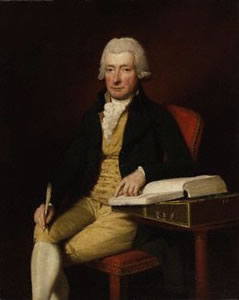


 792657-6acd4999b57fd58181272196bfacc6d3.jpg

William Cowper (26 november 1731 – 25 april 1800)

Portret door Lemuel Francis Abbott, 1792


De Vlaamse dichter en schrijver Louis Verbeeck werd geboren in Tessenderlo op 26 november 1932. Zie ook mijn blog van 26 november 2009.


Opa


Er was eens een grootvader op een portret,
Die vroeger veel bloempjes had buitengezet,
hij hing aan de schouw en soms dacht hij met spijt
Nog even terug aan die heerlijke tijd. 


De heerlijke tijd van de sjarreleston,
die niemand kon dansen gelijk hij dat kon.
Soms welde er dan fluks een traan naar zijn oog,
maar hij kon niet huilen: portretten staan droog.


Soms kijkt men naar hem en men murmelt heel zoet:
“Ach ach, wat was opa toch braaf en toch goed!”
Dan heeft hij veel last om zijn lach in te houden,
want ze hebben hem nooit gekend voor hij trouwde.


 792657-da32900c97604f34f234e403c8a16aa8.jpg

Louis Verbeeck (Tessenderlo, 26 november 1932)

Foto: Theo Klerkx, Hasselt


Onafhankelijk van geboortedata:


De Duitse schrijver René Becher werd geboren in 1977 in Bayreuth. Zie ook mijn blog van 26 november 2009.


Uit: Schreien


„Dann haben mir die Schweine auch noch die Elfi weggenommen. Ich saß gerade an meiner Novelle, auf meiner sandfarbenen Couch, stand vor dem tuberkulösen Spiegel im Bad, da musste es passiert sein. Diese Saftsäcke! Wo sie mir doch bereits im Juli des vorangegangenen Jahres den toten Säugling Sven von der Terrasse stibitzt hatten. Ich erinnere mich noch gut: Ich ließ die Rollläden ab, in der Ferne sah ich Leuchtraketen in den Himmel steigen, sie hatten gewonnen. Wollte schon schreien. Die Wurstigkeit hatte sich endgültig Bahn gebrochen, wie auch Bärbel jetzt sagen würde, wäre sie verdammtnochmal hier.

Und was hätte ich dem Sven nicht noch alles beibringen können? Ich hätte ihm vielleicht Geschichten vorgetragen. Die wahnwitzigen Räuberpistolen eines Wilhelm Hauff beispielsweise, als das Wünschen noch half, und Sven hätte gewiehert vor Glück und ich hätte mit ihm gelacht, hätte ihm Sprache beigebracht (vielleicht), ihm gezeigt, wie man schreibt (wohl eher nicht).

Im vergangenen Jahr beschäftigte ich mich noch mit Büchern. Ich nahm ein Buch aus dem Regal (wahrscheinlich den Pascal, den Storm, das Autorenlexikon, und ich vergewisserte mich, dass im Zeichen des Zwillings geborene Schriftsteller die allerschlimmsten sind) und stellte es wieder zurück.

Das Bücherregal in der Ecke meines Wohnzimmers. Darin Bücher, die in zweiterdritter Reihe parkten, Zettel zwischen Seite 112/113.

Zettelwirtschaft auf meinem Schreibtisch, zum Kotzen! Also verschob ich die Bücher, ordnete sie dem Alphabet nach, säuberte daraufhin meinen Schreibtisch, trat einen Schritt zurück und beguckte, was ich da eben angerichtet hatte.“


 792657-c7d69eecaa6fa12ee5d3dd9f16effa14.jpg

René Becher (Bayreuth, 1977)
Geschreven door Romenu om 00:00 Reageer op dit bericht

Maarten 't Hart, Connie Palmen, Alexis Wright, Arturo Pérez-Reverte

De Nederlandse schrijver Maarten 't Hart werd geboren op 25 november 1944 in Maassluis. Zie ook mijn blog van 25 november 2006 en ook mijn blog van 25 november 2008 en ook mijn blog van 25 november 2009.


Uit: De som van misverstanden: De wilde ganzen van Selma Lagerlöf


“Nooit kan ik in voor- of najaar wilde ganzen zien overtrekken zonder aan de wonderbare reis van Niels Holgersson te denken. Maar dat is niet altijd zo geweest. Als kind wilde ik het boek over Niels Holgersson niet lezen. Ik had gehoord dat er sprekende dieren in voorkwamen en daarvan had ik vanaf mijn prilste jeugd een grote afkeer. Hoe ik aan dat ongelukkige en eigenaardige vooroordeel kwam weet ik niet maar ik weet wel dat ook Niels Holgerssons wonderbare reis taboe voor me was om die reden. Maar omdat ik vaak, noodgedwongen, bij gebrek aan boeken die ik echt graag wilde lezen soms moest uitwijken naar boeken die ik graag had dicht gelaten (maar het verlangen om te lezen was altijd sterker dan het slechtste boek) kwam er een zondag waarop ik het boek leende van een neef die niets anders voor me had en wrevelig begon ik te lezen. Het is vreemd dat die wreveligheid op zondag zo merkwaardig harmonieerde met het begin van Niels Holgersson. Daardoor leek het wel alsof ik over mij zelf las en dat gevoel werd nog versterkt toen ik de naam Maarten (zo heet immers de tamme ganzerik) aantrof. Als kind - en ik denk dat dat voor alle kinderen geldt en het is iets omrekening mee te houden als men een kind een boek cadeau geeft - vond ik niets zo heerlijk als het feit dat een persoon uit een boek Maarten heette en ik heb het altijd maar moeilijk kunnen verkroppen dat ik niet één kinderboek kende met een Maarten als hoofdpersoon. Zelfs De Waterman van Van Schendel, later, kon dat niet meer goedmaken.
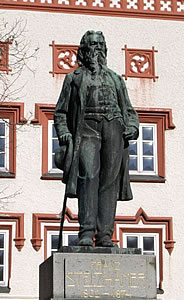
Lezend in Niels Holgersson bemerkte ik al spoedig dat de dieren zich erin gedroegen zoals zij zich in werkelijkheid, al naar hun aard gedragen. Selma Lagerlöf heeft zich bijzonder precies gehouden aan hetgeen rond 1900 bekend was over het gedrag van dieren. Daar zij uit eigen waarneming en op grond van vrij uitgebreide studies goed op de hoogte was van het gedrag van dieren, is een werk ontstaan waarin maar heel weinig feitelijke onjuistheden voorkomen.”


791690-de89f3aa34b0f1f445de20cb285870a7.jpg 

Maarten ’t Hart (Maassluis, 25 november 1944)


De Nederlandse schrijfster Connie Palmen werd op 25 november 1955 geboren in Sint Odiliënberg. Zie ook mijn blog van 25 november 2006 en ook mijn blog van 25 november 2007 en ook mijn blog van 25 november 2008 en ook mijn blog van 25 november 2009.


Uit: Luzifer (Vertaald door Hanni Ehlers)


“Das Wissen um den Tod ist ein Wissen, das mit anderen geteilt werden muss. Es ist zu schwer, als dass man es allein tragen könnte, und zu sensationell, um es zu verschweigen. So, wie sich ein Schauspieler auf die Wirkung bestimmter Passagen auf sein Publikum freut, freuen sich die Lebenden auf den Eindruck, den eine unerwartete Todesnachricht auf einen noch Unwissenden machen wird. Das ist nicht schlimm, das ist menschlich. Jemand, der sich nicht an so einer Neuigkeit weiden möchte und aus Pietät schweigt, macht sich zum Außenseiter. Nur die nächsten Angehörigen des Toten würden gerne schweigen, um mit ihrem Lieben auch im Tod innig allein zu sein, jeder andere möchte den Tod mitteilen, am liebsten als Erster. Er möchte die Bestürzung hervorrufen, die er selbst empfunden hat, als ihn die Todesbotschaft erreichte. Er möchte die Tiefe des Schauderns und der Erschütterung ausloten, um immer wieder darin einzutauchen. So oft und so lange wie möglich möchte er diesen freien Fall wiederholen. Deshalb reisen schlechte Nachrichten schnell. Das hat nichts damit zu tun, dass man sich am Leiden weidet, sondern was lockt, ist die Gemeinschaft des Schauderns, in ihr wollen sich alle zusammenfinden. Und in dieser Gemeinschaft ist der ehrfurchtgebietende Tod König, und vor diesem einsamen Herrscher verneigt man sich demütig.“

(...)


„... er schaut ängstlich und fasziniert die wilde Bekümmerung von Mica van Hoorn an. Je lauter sie weint, desto herzloser und kälter kommt er sich vor, als kühler Beobachter, der Verhalten, Bewegungen und Laute registriert, um sie irgendwann einmal in einem Theaterstück verwenden zu können. Zu Emotionen, wie er sie hier zu sehen glaubt, hält er sich selbst nicht für fähig. Weil er sich zu lauten, exaltierten Frauen hingezogen fühlt, hat sich bei ihm der Irrglaube festgesetzt, seine Ruhe und sein stummes Zusehen sprächen für seine Gefühlsarmut.“


791690-546154f7de472daa7b9ab92061826274.jpg
Connie Palmen (Sint Odiliënberg, 25 november 1955
)


De Australische (Aboriginal) schrijfster Alexis Wright werd geboren op 25 November 1950 in de Gulf of Carpentaria. Zie ook mijn blog van 25 november 2008 en ook mijn blog van 25 november 2009.


Uit : Carpentaria


„This tidal river snake of flowing mud takes in breaths of a size that is difficult to comprehend. Imagine the serpent's breathing rhythms as the tide flows inland, edging towards the spring waters nestled deeply in the gorges of an ancient limestone plateau covered with rattling grasses dried yellow from the prevailing winds. Then with the outward breath, the tide turns and the serpent flows back to its own circulating mass of shallow waters in the giant water basin in a crook of the mainland whose sides separate it from the open sea.

To catch this breath in the river you need the patience of one who can spend days doing nothing. If you wait under the rivergum where those up-to-no-good Mission-bred kids accidentallyhanged Cry-baby Sally, the tip of the dead branch points to where you will see how the serpent's breath fights its way through in a tunnel of wind, creating ripples that shimmer silver, similar to the scales of a small, nocturnal serpent, thrashing in anger whenever the light hits its slippery translucent body, making it writhe and wrench to escape back into its natural environment of darkness.

The inside knowledge about this river and coastal region is the Aboriginal Law handed down through the ages since time began. Otherwise, how would one know where to look for the hidden underwater courses in the vast flooding mud plains, full of serpents and fish in the monsoon season? Can someone who did not grow up in a place that is sometimes underwater, sometimes bone-dry, know when the trade winds blowing off the southern and northern hemispheres will merge in summer? Know the moment of climatic change better than they know themselves? Who fishes in the yellowcoloured monsoonal runoff from the drainages, with sheets of deep water pouring into the wide rivers swollen over their banks, filling vast plains with flood waters? The cyclones linger and regroup, the rain never stops pouring, but the fat fish are abundant.“


791690-dd1adcdc2d001b91047798483d839e82.jpg
Alexis Wright (Gulf of Carpentaria, 25 November 1950)


De Spaanse schrijver
Arturo Pérez-Reverte werd geboren op 25 november 1951 in Cartagena. Zie ook mijn blog van 25 november 2008 en ook mijn blog van 25 november 2009.


Uit: Purity Of Blood (Vertaald door Margaret Sayers Peden)


“That day there were bullfights in the Plaza Mayor, but constable Martín Saldaña’s festive fire had been doused. A woman had been found in a sedan chair in front of the church of San Ginés, strangled. In her hand was a pouch containing fifty escudos and a handwritten, unsigned note bearing the words, For masses for your soul.

A pious old woman on her way to early church had found the body. She advised the sacristan, and he had informed the parish priest who, after a hurried absolution, sub conditione, made a report to the authorities. By the time the chief constable showed up to make his token appearance in the small plaza of San Ginés, local residents and curious bystanders were milling around the sedan chair. The chair and its contents had become the object of a local pilgrimage, and a number of Saldaña’s catchpoles were needed to hold back the crowd while the judge and the scribe drew up their documents and Martín Saldaña made his cursory examination of the corpse.

The chief constable set about his task in the most leisurely fashion, as if he had time to burn. Perhaps it was because of his history as a former soldier—he had served in Flanders before his wife (at least it was said it had been she) obtained his present position for him. In any case, Madrid’s chief constable went about his duties at a pace that a certain satiric poet—the gifted-in-wealth-as-well-as-talent Ruiz de Villaseca—had described in a poisonous décima as paso de buey, an ox’s pace. It was a clear allusion to the lethargy with which the chief constable picked up his staff of office, or attempted to parry the staffs his wife welcomed. In any case, if it is true that Martín Saldaña was slow in certain things, he was definitely not so when it came to drawing his sword, or dagger, or poniard, or the well-oiled pistols he was wont to wear in his waistband—all of which clanged like sounds issuing from a smithy.”


791690-17b5af739b16f26c0744122beb76b4ae.jpg
Arturo Pérez-Reverte (Cartagena, 25 november 1951)


Zie voor nog meer schrijvers van de 25e november ook mijn vorige blog van vandaag.
Geschreven door Romenu om 18:04 Reageer op dit bericht

Augusta de Wit, Joseph Zoderer, Ba Jin, Isaac Rosenberg, José Eça de Queiroz, Lope de Vega

De Nederlandse schrijfster Augusta de Wit werd geboren in Sibolga (Sumatra) op 25 november 1864. Zie ook mijn blog van 25 november 2008 en ook mijn blog van 25 november 2009.


 Uit: Orpheus in de dessa


“Hij wachtte, elken voorbijtrekkenden toon naluisterend, of de vlucht van geluiden zich niet zou schikken tot een melodie. Maar éen voor éen kwamen ze nog steeds er aan scheren, elk op zich zelf in zijn eigen zuivere volheid uitklinkend. Geen die door een vorig getemperd werd, geen die in een volgend vervloeide; zonder merkbare modulatie of maat.

Als vallende droppels.

Nu! nu op dien hoogen, langaangehouden toon die trilde, of hij nog even stil wilde blijven, voor hij opschietend de hoogte invloog! Nu moest de melodie beginnen!

Maar het daalde weer, daalde, bleef een lange seconde hangen, en begon dan op en neer te wiegelen, op en neer, in langzame zwevingen.

Als het gemurmel van een beek, die voort wil over de steenen, en soms, met een iets sterkere golf, stroomt zij er overheen, en soms, weer neergezegen, vloeit zij er langs, er komt geen bruisen, er komt geen stokken, er komt geen eind aan het kabbelend geklok; zoo vloeide het fluitedeuntje voort, in effen bestendigheid, onwillekeurig, onaandoenlijk, zichzelven onbewust - een natuurgeluid kabbelend over menschelijke lippen, waar de slag in beeft van het purperen hart.

De instinctief-gevoelde tegenstelling lokte den luisteraar met de bekoring, waarmede het onbegrijpelijke ons lokt, - elk onbegrijpelijk ding, ook het schijnbaar nietigste - een duizelige schrede nader lokt tot die afgrond-diepe onbegrijpelijkheid van het eigen bestaan.

Maar hij meende dat 't slechts nieuwsgierigheid was naar den onzichtbaren fluitspeler, die hem den nacht in trok.

‘Waar mag hij wel zitten?’

Hij tuurde of hij niet ergens een donkere gedaante ontwaarde.

Het was zoo licht, dat op het tuinpad elk wit kiezelsteentje afzonderlijk blonk. Het bamboe-boschje, doorgloord van manelicht, vervloot in nevelige glanzen en doorschijnende donkerheid. Luchtig als een wolk hing het boven het nauw-beschaduwde gras.

Daarbuiten, langs het stille fabrieksplein, schemerden de woningen der employés met witte pilaren door de looverduisternis der tuintjes.

Hij ging den landweg op, die langs de rivier loopt; de tamarinden van den oever wierpen er luchtige grijze teekeningen over.”


 791687-be3a3c0dfc8ce44103bad283c38bea1d.jpg

Augusta de Wit (25 november 1864 - 9 februari 1939) 

Sibolga, Sumatra


De Duitstalige (Italiaanse) dichter en schrijver
Joseph Zoderer werd geboren op 25 november 1925 in Meran in Zuid-Tirol. Zie ook mijn blog van 25 november 2008 en ook mijn blog van 25 november 2009.


Uit: Liebe auf den Kopf gestellt


Klebt demnächst dein Atem/ von Blütenstaub/
     ist es nicht das Angstblut/ der vergangenen
Nacht/ Greif in das Gelb/ der Forsythien/ tarne
     dich/ mit der Lust des Aprils/ bald
kannst du deine Winterlügen/ mit Apfelblüten
     zudecken/ Vielleicht nimmt dich/ ein
grippekranker Kormoran mit/ in sein Krankenbett


Vor deiner nimmersatten Hingabe/ verfällt
     meine Zerstreutheit ins Hüsteln/ Ich könnte
wie du öffentlich oder geheim/ saftigen Waldklee
     kauen/ dieses Wundermittel gegen Ängstlichkeit/
und die Fichtennadeln - grün oder braun -/helfen die
   gegen das unerlaubte Gähnen/ der Phantasie?/
Was wenn jeder Kuß/ eine Narbe hinterläßt/ auf
     der Innenseite der Haut?/ Vergiß nicht
die Tiefe/ aus der das Hüsteln steigt/ Unergründlich
     das Dunkel und doch rationiert/ wie Milch
und Brot zur Kriegszeit/ Wir werden uns eindecken
     müssen/ auf dem Schwarzmarkt der Liebe


Drei oder vier Gitarrensaiten/ es sind doch meine?/
     hängen/ zwischen Lunge und Leber mir/ ich
bin nicht gar so musikalisch/ aber die Mauersegler
     wippen daran/ als hätten sie Seile/ zum Musizieren/
Ich liege auf dem Rücken/ weit weg vom letzten Sommer/
     Zwischen der einen und der anderen Gitarrensaite
schiebt sich/ ein Schiffskiel durch die Häuserwände/
     Die Mauersegler schmeicheln/ jedem Frauenmund/
in meinen Träumen/ Der letzte Sommer/ hat noch nicht begonnen


 791687-3a203fbbc8862a98f2ffde883a36026a.jpg

Joseph Zoderer (Meran, 25 november 1935)


De Chinese schrijver Ba Jin werd op 25 november 1904 geboren in Chengdu. Zie ook mijn blog van 25 november 2006 en ook mijn blog van 25 november 2008 en ook mijn blog van 25 november 2009.


Uit: A Battle For Life


“I believe that this film will be well made because I discovered that the writer of the scenario also came to love his hero. One evening when I met the writer in the hospital, both of us stood on the veranda outside the window of the isolation ward. The light was very bright in the room and the doctor was dropping a new kind of medicine on Lao Chiu's right leg. Lao Chiu lay on the bed and was in such pain that his whole body trembled. My heart was very sad indeed. As I looked at the writer I noticed that he was almost weeping. Later the doctor gave a sedative injection and Lao Chiu gradually began to fall asleep. When the writer and I were leaving the hospital we stood again outside the window of the patient's room for a while. The lights were low inside now and the patient was lying silently on the bed.

A joint consultation of medical and surgical specialists was held that evening on the roof garden outside the isolation ward and the consultation was not concluded until midnight. This was already 36 days after Lao Chiu's admission to the hospital. His condition appeared to be worse this day. His right leg had become seriously infected. The polymyxin applied hitherto could no longer control the bacillus pyocyaneus which had developed a strong resistance to polymyxin. On the same afternoon a new kind of bacteriophage had been given a trial. This kind of medicine was made experimentally by the professors and students of the No. 2 Medical College specially for Lao Chiu. It was very effective when it was tested in the tube, destroying a culture of the bacillus pyocyaneus from Lao Chiu's body. But the doctors were not certain whether it would be effective when used clinically. These twenty-four hours were a critical period for Lao Chiu. When the doctors who participated in the consultation were leaving, not a smile appeared on any face. Everybody seemed to pin his hope on "tomorrow."


 791687-bd7307a7f13f6c1cc9f24a1e2bea36e5.jpg

Ba Jin (25 november 1904 – 17 oktober 2005)


De Engelse dichter Isaac Rosenberg werd geboren in Bristol op 25 november 1890. Zie ook mijn blog van 25 november 2006 en ook mijn blog van 25 november 2008 en ook mijn blog van 25 november 2009.


Break of Day in the Trenches


The darkness crumbles away

It is the same old druid Time as ever,

Only a live thing leaps my hand,

A queer sardonic rat,

As I pull the parapet's poppy

To stick behind my ear.

Droll rat, they would shoot you if they knew

Your cosmopolitan sympathies,

Now you have touched this English hand

You will do the same to a German

Soon, no doubt, if it be your pleasure

To cross the sleeping green between.

It seems you inwardly grin as you pass

Strong eyes, fine limbs, haughty athletes,

Less chanced than you for life,

Bonds to the whims of murder,

Sprawled in the bowels of the earth,

The torn fields of France.

What do you see in our eyes

At the shrieking iron and flame

Hurled through still heavens?

What quaver -what heart aghast?

Poppies whose roots are in men's veins

Drop, and are ever dropping;

But mine in my ear is safe,

Just a little white with the dust.


791687-c4c28ac3fdb6409231c114cbe2ae9634.jpg
Isaac Rosenberg (25 november 1890 – 1 april 1918)

Zelfportret


Zie voor onderstaande schrijvers ook mijn blog van 25 november 2008.


De Portugese schrijver José Maria Eça de Queiroz werd geboren op 25 november 1845 in Póvoa de Varzim. Zie ook mijn blog van 25 november 2006.


De Spaanse dichter en schrijver
Lope de Vega werd geboren op 25 november 1562 in Madrid. Zie ook mijn blog van 25 november 2006.

Geschreven door Romenu om 17:58 Reageer op dit bericht

Meer van Romenu

↑ Terug naar de berichten