Naar de inhoud

Romenu

Over literatuur, gedichten, kunst en cultuur
seniorennet.beseniorennet.be

Sascha Anderson, Linton Kwesi Johnson, Johan Fabricius, Paulo Coelho, Arthur West, Alexander McCall Smith

De Duitse dichter en schrijver Sascha Anderson werd geboren op 24 augustus 1953 in Weimar Zie ook mijn blog van 24 augustus 2010 en eveneens alle tags voor Sascha Anderson op dit blog.


IWANOWO. ODER:


Sie trug ihr Kleid, wie alle tausend Rosen des Abends ihre Kleider

auch. Ich weiß,

Der Tag zieht aus, er macht sie nackt und stellt sie in die Vase,

allein, die Dunkelheit verhüllt die Nacht. Nur umgekehrt

Wird nichts daraus. Es klingt prosaisch,

auf dem falben Grund der von Blütenblättern übersäten Seide,

In die ich sie gewickelt sah, begegneten sich unvermittelt

früher Herbst und spätes Frühjahr.


Soviel zu Yin und Yang, zu den Problemen der Vielzahl

kinderloser Schwestern, zu Vätern und Söhnen, zum Antagonismus

Zwischen Oben und Unten, Morgen und Gestern


Wir schreiben nicht oft gedichte


wir schreiben nicht oft gedichte, die
mit niemandem sprechen. wir
schweigen mitunter ein leben
länger als gut
ist, ein gedicht, ist ein bild
das nichts von sich weiß
wie eine maske aus nektarinen
schalen, fleisch
und blutleeres gemäuer
frontal ins genick, so sahst du mich an.
ich weiß ich seh nichts als eine
demonstration gegen
uns, das wir, ist ein schwarzes schwitzendes
messer schärfer als deine augenbraue gezeichnet.


 1447108-875038b2516f6c136a62e535e621c974.jpg

Sascha Anderson (Weimar, 24 augustus 1953)


De Britse dichter en musicus Linton Kwesi Johnson werd geboren in Chapelton (Jamaica) op 24 augustus 1952. Zie ook mijn blog van 24 augustus 2010 en eveneens alle tags voor Linton Kwesi Johnson op dit blog.


Sonny's Lettah


Dear Mama
Good day
I hope that when these few lines reach you
They may find you in the best of health

I doun know how to tell ya dis
For I did mek a solemn promise
To tek care a lickle Jim
An try mi bes fi look out fi him

Mama, I really did try mi bes
But none a di less
Sorry fi tell ya seh, poor lickle Jim get arres
It was de miggle a di rush hour

Hevrybody jus a hustle and a bustle
To go home fi dem evenin' shower
Mi an Jim stan up waitin' pon a bus
Not causin' no fuss

When all of a sudden a police van pull up
Out jump tree policemen
De whole a dem carryin' baton
Dem walk straight up to me and Jim

One a dem hold on to Jim
Seh dem tekin' him in
Jim tell him fi leggo a him
For him nah do nutt'n

And 'im nah t'ief, not even a but'n
Jim start to wriggle
De police start to giggle

Mama, mek I tell you wa dem do to Jim?
Mek I tell you wa dem do to 'im?

Dem thump him him in him belly and it turn to jelly
Dem lick 'im pon 'im back and 'im rib get pop
Dem thump him pon him head but it tough like lead
Dem kick 'im in 'im seed and it started to bleed

Mama, I jus couldn't stan up deh, nah do nuttin'

So mi jook one in him eye and him started fi cry
Me thump him pon him mout and him started fi shout
Me kick him pon him shin so him started fi spin
Me hit him pon him chin an him drop pon a bin
An crash, an dead

More policeman come dung
Dem beat me to the grung
Dem charge Jim fi sus
Dem charge mi fi murdah

Mama, doan fret
Doan get depress an downhearted
Be of good courage till I hear from you
I remain
Your son
Sonny


 1447108-ac27531967edbed8819c8fc77416c06b.jpg

Linton Kwesi Johnson (Chapelton, 24 augustus 1952)


De Nederlandse schrijver Johan Johannes Fabricius werd op 24 augustus 1899 in Bandoeng in Nederlands-Indië geboren. Zie ook mijn blog van 24 augustus 2010 en eveneens alle tags voor Johan Fabricius op dit blog.


Uit: De scheepsjongens van Bontekoe


“Daar stond Peter Hajo, leerling in de hoefsmederij ‘De IJzeren Man’. Daar lag de bout die hij zo meteen weer moest vasthouden; daar hing de balg... Twee jaren nog zou hij tussen grauwe wanden en smerige ruitjes de blaasbalg moeten trekken en bouten vasthouden. Twee jaren zou hij, in plaats van de zeewind die hem het bloed deed bonzen, ijzerlucht en de stank van geschroeide paardehoeven moeten opsnuiven. Peter Hajo, ‘wilde’ Hajo: een meeuw in een kooi, een haai in een boerensloot...

Stil! Wat hoorde hij daar! Buiten op straat kwam een troepje jongens voorbij, lachend, door elkaar heen schreeuwend en met veel geklepper van klompen over de straatkeien.

Peter Hajo wist dat ze in de haven zouden gaan botkloppen. En hij? Hij...!!

 Toen meester Wouter enige ogenblikken later de smederij weer binnenkwam, zette hij grote ogen op.

‘Satanse jongen!’ mompelde hij. Grimmig pakte hij de bout op; de hamer viel met het geweld van een donderslag op het gloeiende ijzer.

Peter Hajo was verdwenen.


Buiten heerste december.

Peter Hajo trok de muts over de oren, stak zijn handen en polsen in de zak, klemde de armen tegen het lijf en draafde zo'n beetje om warm te worden. In de zeventiende eeuw was een winter nog een winter!

Al gauw kreeg hij de groep jongens in het oog. Daar had je Lange Leen, die natuurlijk weer de leider van de troep zou zijn. Peter Hajo zou hem zodra de gelegenheid zich voordeed eens ongezouten aframmelen, want Leen keek altijd zo minachtend op je neer en zou zich op den duur wat te veel gaan verbeelden.”


1447108-83630fc5b49c0717da4cc65682beceed.jpg

Johan Fabricius (24 augustus 1899 – 21 juni 1981)


De Braziliaanse schrijver Paulo Coelho werd geboren in Rio de Janeiro op 24 augustus 1947. Zie ook mijn blog van 24 augustus 2010 en eveneens alle tags voor Paulo Coelho op dit blog.


Uit: Eleven Minutes


“This scene was repeated month after month; Maria, who hated studying and whose only other distraction in life was television, began to wish that the days would pass quickly; she waited eagerly for each journey to school and, unlike other girls her age, she found the weekends deadly dull. Given that the hours pass more slowly for a child than for an adult, she suffered greatly and found the days far too long simply because they allowed her only ten minutes to be with the love of her life and thousands of hours to spend thinking about him, imagining how good it would be if they could talk.
Then it happened.
One morning, on the way to school, the boy came up to her and asked if he could borrow a pencil. Maria didn't reply; in fact, she seemed rather irritated by this unexpected approach and even quickened her step. She had felt petrified when she saw him coming toward her, terrified that he might realize how much she loved him, how eagerly she had waited for him, how she had dreamed of taking his hand, of walking straight past the school gates with him and continuing along the road to the end, where—people said—there was a big city, film stars and television stars, cars, lots of cinemas, and an endless number of fun things to do.”


1447108-71c3778401f3c82682030484a9146b40.jpg 

Paulo Coelho (Rio de Janeiro, 24 augustus 1947)


De Oostenrijkse dichter, schrijver en politiek journalist Arthur West werd geboren op 24 augustus 1922 in Wenen. Zie ook mijn blog van 24 augustus 2010 en eveneens alle tags voor Arthur West op dit blog.


Lied im Spätherbst


Jahre gehäuft schon zu vielen Jahrzehnten-
vor uns statt Jahrzehnten nur Jahre
Und was wir erhofften, erträumten, ersehnten,
bekam längst- und gleich uns – schon weiße Haare.


Wir lassen uns kaum unter Feiernden sehen
und keuchen ganz schön auf den Stiegen
Und wenn wir noch Freunde besuchen gehen
dann meist, wo sie aufgebahrt liegen


Unsere Kinder sind groß
unsere Welt wird recht klein
Geliebte, wie könnt es denn anders sein?


1447108-b0033a60cf599318a3617bf40ff0eaa6.jpg
Arthur West (24 augustus 1922 - 16 augustus 2000)


De Schotse schrijver en jurist Alexander McCall Smith werd geboren in Bulayawo in het toenmalige Rhodesië (nu Zimbabwe) op 24 augustus 1948. Zie ook mijn blog van 24 augustus 2010 en eveneens alle tags voor Alexander McCall Smith op dit blog.


Uit: Blue Shoes and Happiness


“When you are just the right age, as Mma Ramotswe was, and when you have seen a bit of life, as Mma Ramotswe certainly had, then there are some things that you just know. And one of the things that was well known to Mma Ramotswe, only begetter of the No. 1 Ladies' Detective Agency (Botswana's only ladies' detective agency), was that there were two sorts of problem in this life. Firstly, there were those problems-and they were major ones-about which one could do very little, other than to hope, of course. These were the problems of the land, of fields that were too rocky, of soil that blew away in the wind, or of places where crops would just not thrive for some sickness that lurked in the very earth. But looming greater than anything else there was the problem of drought. It was a familiar feeling in Botswana, this waiting for rain, which often simply did not come, or came too late to save the crops. And then the land, scarred and exhausted, would dry and crack under the relentless sun, and it would seem that nothing short of a miracle would ever bring it to life. But that miracle would eventually arrive, as it always had, and the landscape would turn from brown to green within hours under the kiss of the rain. And there were other colours that would follow the green; yellows, blues, reds would appear in patches across the veld as if great cakes of dye had been crumbled and scattered by an unseen hand.”


 1447108-c3afa5a23b83a919a8edda3cbf6ec5e8.jpg

Alexander McCall Smith (Bulayawo, 24 augustus 1948)
Geschreven door Romenu om 13:33 Reageer op dit bericht
Reageer op dit bericht

Reageer op dit bericht

Een titel of je eigen website toevoegen

De blogger leest alles eerst na: je tekst verschijnt zodra die goedgekeurd is.

John Green

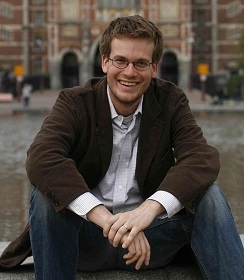
De Amerikaanse schrijver John Green werd geboren in Indianapolis, Indiana, op 24 augustus 1977. Green ging op vijftienjarige leeftijd naar een kostschool in Birmingham. Hij studeerde Engels en godsdienstwetenschappen en besloot dat hij priester wilde worden in de Anglicaanse Kerk. Hij werkte enkele maanden als aalmoezenier in een kinderziekenhuis in Ohio, waar hij veel kinderen zag sterven. Daar besloot hij dat hij een boek wilde schrijven over mensen die moeten leren leven met de dood van iemand die ze liefhadden. Green recenseerde voor Booklist en maakte radioprogramma's, voordat hij zich fulltime richtte op het schrijven van boeken. In 2011 heeft hij via het Nederlands Letterenfonds twee maanden in Amsterdam doorgebracht om zijn laatste boek "The Fault In Our Stars" te voltooien. Green ontving in 2006 de Printz Award voor zijn debuutroman “Looking for Alaska”. Green is tevens bekend van een internetproject op YouTube waarin hij met zijn broer Hank Green het gehele jaar 2007 slechts communiceerde in de vorm van Videoblogs. Samen met Hank vormt John de Vlogbrothers. Hun YouTube project, waar zij om beurten al meer dan 1000 video's maakten, bestaat nog. Hun video's werden door inmiddels meer dan twee miljoen mensen bekeken.

Uit: Looking for Alaska

“Before I got here, I thought for a long time that the way out of the labyrinth was to pretend that it did not exist, to build a small, self-sufficient world in a back corner of the endless maze and to pretend that I was not lost, but I was home. But that only led to a lonely life accompanied only by the last words of the already-dead, so I came here looking for a Great Perhaps, for real friends and a more-than-minor life. And then I screwed up and the Colonel screwed up and Takumi screwed up and she slipped through our fingers. And there's no sugar-coating it: she deserved better friends.
When she fucked up, all those years ago, just a little girl terrified into paralysis, she collapsed into the enigma of herself. And I could have done that, but I saw where it led for her. So I still believe in the Great Perhaps, and I can believe in it in spite of having lost her.
Because I will forget her, yes. That which came together will fall apart imperceptibly slowly, and I will forget, but she will forgive my forgetting, just as I forgive her for forgetting me and the Colonel and everyone but herself and her mom in those last moments she spent as a person. I know now that she forgives me for being dumb and scared and doing the dumb and scared thing.
And here's how I know:
I thought at first she was just dead. Just darkness. Just a body being eaten by bugs. I thought about her alot like that, like someone's meal. What was her - green eyes, half a smirk, the soft curves of her legs - would soon be nothing, just the bones I never saw. I thought about the slow process of becoming bone and then fossil and then coal that will, in millions of years, be mined by humans of the future, and how they would heat their homes with her, and then she would be smoke billowing out of a smokestack, coating the atmosphere. I still think that, sometimes, I think that maybe "the afterlife" is just something we made up to ease the pain of loss, to make the time in the labyrinth bearable. Maybe she was just matter, and matter gets recycled.
But ultimately I do not believe that she was just matter. The rest of her must be recycled, too. I believe now that we are greater than the sum of our parts. If you take Alaska's genetic code and you add her life experiences and the relationships she had with people, and then you take the size and shape of her body, you do not get her. There is something else entirely. There is a part of her greater than the sum of her knowable parts. And that part has to go somewhere, because it cannot be destroyed.”


 1614050-052c9566b02e2a970778a6fe3df2840c.jpg
John Green (Indianapolis, 24 augustus 1977)

Geschreven door Romenu om 00:00 Reageer op dit bericht

Albert Alberts, Charles Busch, Ilija Trojanow, Willy Russell, Gustav Ernst, Ephraïm Kishon

De Nederlandse schrijver en vertaler Albert Alberts werd op 23 augustus 1911 in Haarlem geboren. Zie ook mijn blog van 23 augustus 2010 en ook alle tags voor Albert Alberts op dit blog.


Uit: De vergaderzaal


“Hij ging met een schok rechtop zitten. Ze waren weg. Hij keek naar de overkant. Ze zaten niet tegen de dijk. Hij bleef kijken en hij zag dat hun hoofden langzaam boven de ringdijk kwamen uitsteken. Hij zei zacht: Kom hier. Komen jullie toch alsjeblieft hier.

(…)


Ik heb een zaklantaarn bij me, zei de ander. (...) De bundel viel recht op meneer Dalem. Meneer Dalem bleef onbeweeglijk staan. Hij staarde naar de grond en haalde een paar maal diep adem. De man liet het licht voor zich uitschijnen.

(...)


Hij liet het licht van zijn zaklantaarn schijnen over de voeten van meneer Dalem, daarna wat hoger langs diens broekspijpen en het onderste deel van zijn jas. Zo bleven ze een ogenblik tegenover elkaar staan. (...) Meneer Dalem zag het licht verdwijnen, het witte schijnsel en het rode achterlichtje. Hij sprong naar voren. Hij riep: Hé! Verdomde loodgieter! Verdomde tuinier! Verdomde kruidenier! Haha, kruidenier, die is goed.”


1446750-486bb6013e3149bfdfb821d1dedef750.jpg 

Albert Alberts (23 augustus 1911 – 16 december 1995)


De Amerikaanse schrijver en acteur Charles Busch werd geboren op 23 augustus 1954 in New York. Zie ook mijn blog van 23 augustus 2010 en ook alle tags voor Charles Busch op dit blog.


The last time I saw Paris


A lady known as Paris, Romantic and Charming

Has left her old companions and faded from view

Lonely men with lonely eyes are seeking her in vain

Her streets are where they were, but there's no sign of her

She has left the Seine


The last time I saw Paris, her heart was warm and gay,

I heard the laughter of her heart in every street cafe‚

The last time I saw Paris, her trees were dressed for spring,

And lovers walked beneath those trees and birds found songs to sing.

I dodged the same old taxicabs that I had dodged for years.

The chorus of their squeaky horns was music to my ears.


The last time I saw Paris, her heart was warm and gay,

No matter how they change her, I'll remember her that way.

I'll think of happy hours, and people who shared them

Old women, selling flowers, in markets at dawn

Children who applauded, Punch and Judy in the park

And those who danced at night and kept our Paris bright

'til the town went dark


 1446750-9db4374284769f71f1d4ccd738d629a4.jpg

Charles Busch (New York, 23 augustus 1954)

Hier Charles Busch als Angela Arden in Die, Momie, Die! 


De Duitse schrijver en uitgever Ilija Trojanow werd geboren in Sofia, Bulgarije, op 23 augustus 1965. Zie ook mijn blog van 23 augustus 2010 en ook alle tags voor Ilija Trojanow op dit blog.


Uit: Der Weltensammler


“Mit weniger als zwölf Dienern kann ich den Haushalt nicht organisieren, hatte Naukaram beteuert. Burton hatte ihm daraufhin erlaubt, zwölf Diener auszusuchen und vorzuführen. Wer weiß schon, wie und wo er sie aufgetrieben hat. Es interessierte ihn nicht. Er hatte beschlossen, Naukaram bis auf weiteres gewähren zu lassen. Er akzeptierte sie, die zwölf unbekannten, dunklen Gestalten, die ins Zimmer glitten, wortlos ihre Arbeit verrichteten und ansonsten in kaum sichtbarer Unterwürfigkeit verharrten, die Handflächen übereinandergelegt, der Blick auf Burton fixiert. Manchmal vergaß er sie und erschrak, wenn sie ein Geräusch verursachten. Er teilte die Tage im Bungalow mit ihnen; die hellen Tage, die heißer und zäher wurden, saß er am Schreibtisch, hinter Jalousien, die das Draußen abblendeten. So konnte er lesen und schreiben, einigermaßen bequem, einigermaßen erträglich. Was sollte er sonst tun? Er brachte einer beliebig rekrutierten und miserabel motivierten Truppe das Alphabet des Exerzierens bei, in den Stunden nach dem Morgengrauen, und es hätte einiges an Verblendung bedurft, in der Ausbildung dieser imperialen Hosenträger eine bedeutsame Aufgabe zu sehen. Die Sicherheitslage im Umkreis dieses Außenpostens gab zu keiner Sorge Anlaß, die Einheimischen verhielten sich ruhig, die letzten Verluste lagen schon einige Jahre zurück, als bei einer Parade im Palast des Maharaja ein Elefant außer Rand und Band geraten war und einige der Sepoy niedergetrampelt hatte. Ansonsten herrschte eine solche Stille, er meinte den Pulsschlag der Borniertheit zu hören. Er ekelte sich vor dem klebrigen Stumpfsinn eines Lebens, das dem Billard und dem Bridge gewidmet war, er weigerte sich, seine Dienstdauer zu durchwarten, versunken in Polstern, so tief wie muffig, einen starren Blick auf Fingernägel gerichtet, in denen sich Sand und Staub ansammelte. Es gab nur eine Möglichkeit, sein Leben nicht zu verplempern: Sprachen lernen. Sprachen waren Waffen. Mit ihnen würde er sich von den Fesseln der Langeweile befreien, seine Karriere anspornen, anspruchsvolleren Aufgaben entgegensehen.”


 1446750-f2176866177a1d575ec298c5a3d6b60d.jpg

Ilija Trojanow (Sofia, 23 augustus 1965)


De Engelse dichter, schrijver, dramaturg en componist Willy Russell werd geboren op 23 augustus 1947 in Whinston bij Liverpool. Zie ook mijn blog van 23 augustus 2010 en ook alle tags voor Willy Russell op dit blog.


Uit: The Wrong Boy


“And everybody in the classroom started laughing, even the teacher!

But I don't care about them now. I don't care about Spegga Spanswick and Barry Tucknott and Mustapha Golightly and all that lot. Hilarious bastards! Because I'm grateful really. It was because of people like Steven Spanswick and Jackson and all those other pathetic persons that I wrote my first ever lyric. It was called 'I Don't Care'.


I don't care
If you pull my hair
I don't care if you laugh at me
I don't care
If you point and stare
I don't care if you throw crap at me
I don't care
If you strip me bare
I don't care if you say I'm fat
I don't care
If you rob my share
I don't care if you call me twat
I don't care
I don't care
I don't care
Because I'm not there.


Looking back on it now it seems deadeningly didactic and somewhat simplistic. In fact it's highly embarrassing, predictable and derivative. But every artist has to start somewhere and the important thing is that despite what my lyrics were like, I had at least started writing them. Oh shit, what's the Greasy-Gobbed Get saying to me now . . . ?”


 1446750-8908cb3440f958ea21e48008d6498518.jpg

Willy Russell (Whinston, 23 augustus 1947)


De Oostenrijkse schrijver Gustav Ernst werd geboren in Wenen op 23 augustus 1944. Zie ook mijn blog van 23 augustus 2010 en ook alle tags voor Gustav Ernst op dit blog.


Uit: Grundlsee


“In der Früh, ich möchte noch schlafen, kommen die Kinder zu uns ins Bett. Ich möchte noch schlafen, sage ich. John legt sich auf meine Brust. Er ist sieben. Papa, bitte kitzeln, sagt er. Hast du nicht gehört, sagt meine Frau, Papa will noch schlafen. Kitzeln kann er mich ja trotzdem, sagt John. Aufpassen, sagt meine Frau, Lili schläft noch. Die ist sicher tot, sagt John.

(…)


Aber alle kommen aus verschiedenen Welten, die Eltern, die Kinder – man sieht es daran, wie verschieden sie sind, so wie unsere drei verschieden gewesen sind – treffen sich zufällig und verbringen eine gewisse Zeit miteinander, um dann, wenn sie die Zeit fertig miteinander verbracht haben, in ihren verschiedenen Weiten wieder zu verschwinden. Wenn man zusammen ist, denkt man, man kann nur ewig zusammenbleiben. Wenn man gegangen ist, denkt man das nicht mehr.”


 1446750-567a1f1681b93d5162da7f59252fb34a.jpg

Gustav Ernst (Wenen, 23 augustus 1944)


De Hongaars/Israëlische schrijver Ephraïm Kishon werd op 23 augustus 1924 in Boedapest geboren. Zie ook mijn blog van 23 augustus 2010 en ook alle tags voor Ephraïm Kishon op dit blog.


Uit: The Silver Frenzy


“On one of those hot sand-swept mornings, my wife heaved a deep sigh and said:

What a heat! This reminds me that our kerosene stove is so rust-eaten that I always feel like sinking into the ground whenever we have guests.

I did not answer the woman, because a jabbering man is like a leaking bucket at a barn fire. Instead it flashed through my mind that here was an opportunity to make my wife a pleasant surprise: I'd give that stove a good coat of silver paint.

Naturally, I decided to do the job myself, because right now that is very fashionable.

In a Jaffa paintshop I bought a huge can of fireproof silver aluminum paint, manufactured in Kibbutz Tushia, and a me­dium brush, so that my work should not be hampered for lack of technical means.

Next morning, with the khamsin going as strong as ever, I feigned sleep until my wife had left for the office to earn our daily income tax, then got up, opened the tin, mixed the glittering silvery liquid according to pre­scription, and made a beautiful job of the stove. The coat of paint fitted as if it had come straight from Dior's hands, covering the dirt and soot as if they had never been there. Being a modest man, I must however confess that any college graduate could have done as well with aluminum paint, which has such properties that one simply cannot help doing a good job with it.

If you have never tried, I warmly recommend it to your attention. You'll never touch any other paint.

I enjoyed my work tremendously and simply could not wait until first coat dries properly before applying second,as some benighted bureaucrat had written on the can, but immediately applied a second coat, and, to be on the safe side, a third as well. Seeing that the faucets had become somewhat tarnished, I restored their silvery sheen, then reasoned as follows:

My hands are stained anyway and the can is open. Why not look around? There might be something else in need of restoration.


 1446750-ce74bc5dced843efc48049133fa11e34.jpg

Ephraïm Kishon (23 augustus 1924 – 29 januari 2005)


Zie voor nog meer schrijvers van de 23e augustus ook
mijn vorige blog van vandaag.

Geschreven door Romenu om 19:12 Reageer op dit bericht

Annie Proulx, Dorothy Parker, Willem Arondeus, Krijn Peter Hesselink, Jeroen Theunissen, Gorch Fock

De Amerikaanse schrijfster en journaliste Annie Proulx werd geboren op 22 augustus 1935 in Norwich, Connecticut. Zie ook alle tags voor Annie Proulx op dit blog.


Uit: Brokeback Mountain


“In 1963 when he met Jack Twist, Ennis was engaged to Alma Beers. Both Jack and Ennis claimed to be saving money for a small spread; in Ennis's case that meant a tobacco can with two five-dollar bills inside. That spring, hungry for any job, each had signed up with Farm and Ranch Employment -- they came together on paper as herder and camp tender for the same sheep operation north of Signal. The summer range lay above the tree line on Forest Service land on Brokeback Mountain. It would be Jack Twist's second summer on the mountain, Ennis's first. Neither of them was twenty.
They shook hands in the choky little trailer office in front of a table littered with scribbled papers, a Bakelite ashtray brimming
with stubs. The venetian blinds hung askew and admitted a triangle of white light, the shadow of the foreman's hand moving into it. Joe Aguirre, wavy hair the color of cigarette ash and parted down the middle, gave them his point of view.


1446244-49d2857449ce1d6a75a34e800858a60a.jpg

Scène uit de film Brokeback Mountain


"Forest Service got designated campsites on the allotments. Them camps can be a couple a miles from where we pasture the sheep. Bad predator loss, nobody near lookin after em at night. What I want, camp tender in the main camp where the Forest Service says, but the HERDER" -- pointing at Jack with a chop of his hand -- "pitch a pup tent on the q.t. with the sheep, out a sight, and he's goin a SLEEP there. Eat supper, breakfast in camp, but SLEEP WITH THE SHEEP, hunderd percent, NO FIRE, don't leave NO SIGN. Roll up that tent every mornin case Forest Service snoops around. Got the dogs, your .30-.30, sleep there. Last summer had goddamn near twenty-five percent loss. I don't want that again. YOU," he said to Ennis, taking in the ragged hair, the big nicked hands, the jeans torn, button-gaping shirt, "Fridays twelve noon be down at the bridge with your next week list and mules. Somebody with supplies'll be there in a pickup." He didn't ask if Ennis had a watch but took a cheap round ticker on a braided cord from a box on a high shelf, wound and set it, tossed it to him as if he weren't worth the reach. "TOMORROW MORNIN we'll truck you up the jump-off." Pair of deuces going nowhere.”


 1446244-c7f1834bbad0213ac0f0cf4b97996469.jpg

Annie Proulx (Norwich, 22 augustus 1935)


De dichteres en critica Dorothy Parker werd geboren in New York op 22 augustus 1893. Zie ook mijn blog van 22 augustus 2010 en eveneens alle tags voor Dorothy Parker op dit blog.


Fair Weather


This level reach of blue is not my sea;
Here are sweet waters, pretty in the sun,
Whose quiet ripples meet obediently
A marked and measured line, one after one.
This is no sea of mine. that humbly laves
Untroubled sands, spread glittering and warm.
I have a need of wilder, crueler waves;
They sicken of the calm, who knew the storm.

So let a love beat over me again,
Loosing its million desperate breakers wide;
Sudden and terrible to rise and wane;
Roaring the heavens apart; a reckless tide
That casts upon the heart, as it recedes,
Splinters and spars and dripping, salty weeds.


Men


They hail you as their morning star
Because you are the way you are.
If you return the sentiment,
They'll try to make you different;
And once they have you, safe and sound,
They want to change you all around.
Your moods and ways they put a curse on;
They'd make of you another person.
They cannot let you go your gait;
They influence and educate.
They'd alter all that they admired.
They make me sick, they make me tired.


Charles Dickens


Who call him spurious and shoddy
Shall do it o'er my lifeless body.
I heartily invite such birds
To come outside and say those words!


 1446244-a906fc314e0f6650026383a1c40db6c1.jpg

Dorothy Parker (22 augustus 1893 – 7 juni 1967)


De Nederlandse schrijver en beeldend kunstenaar Willem Arondéus werd op 22 augustus 1894 in Naarden geboren. Zie ook alle tags voor Willem Arondéus op dit blog.


Uit: Rudi van Dantzig: Het leven van Willem Arondéus 1894-1943. Een documentaire  (Dagboekfragment)


“Apeldoorn — Zaterdagavond 10 1/2 uur. 4 Maart 1933.
Maanden gaan voorbij zonder dat ik deze aanteekeningen bijhoudt. Er is ook zo weinig te melden — elke dag gelijkt de voorgaande. Doch deze dag is merkwaardig, te merkwaardig om niet te vermelden.
Twee weken geleden kwam ik Zondagavond uit Amsterdam terug. Ik was alleen er heen geweest om eenige geldzaken in orde te brengen en had Jurri gedurende mijn afwezigheid geld achtergelaten — allereerst ter betaling van eenige rekeningetjes en ongeveer f 10 voor mogenlijke uitgaven, onverwachte gebeurtenissen. Toen ik Zondagsavonds in Apeldoorn aankwam was Jurri niet aan het station (hetgeen afgesproken was) en kwam 's nachts thuis — dronken en wilde mij te lijf. Het geld natuurlijk alles verdwenen — Ik ben hierover zeer ontstemd geweest, de laatste weken waren natuurlijk moeilijk en eindelijk, gisteravond, heb ik dan in goede vriendschap met Jurri besproken dat wij — zoodra hij eind Maart steungerechtigd is in A'dam — voorloopig van elkaar zouden gaan. Het werd mij de laatste tijd té zwaar, te moeilijk, en er was een soort vreemd wantrouwen in mij ontstaan tegenover Jur — een wantrouwen waarin ik niet gelooven wilde, waarvoor ik geen naam wist maar wat niettemin telkens in mij boven kwam. Doch nu is, vanavond, Jurri verdwenen en heeft f 60 medegenomen van de f 100 die ik in huis had. Dit is regelrecht diefstal. Ik was in Apeldoorn boodschappen doen en toen ik thuis kwam was Jur verdwenen — met zijn koffer, ondergoed enz. Mijn eerste indruk was: ik wist het, ik wist dat dit gebeuren zou. “


1446244-ed1c74efe29c7369dcb287a1bd0f3c70.JPG
Willem Arondéus (22 augustus 1894 – 1 juli 1943)


De Nederlandse dichter Krijn Peter Hesselink werd op 22 augustus 1976 geboren in Utrecht. Zie ook alle tags voor Willem Krijn Peter Hesselink op dit blog.


MEEWUIVEND IN HET RIET

Het water kwam niet hoger dan mijn middel
mijn handen lagen willoos op het gras
want niemand kon mij redden dan mijn moeder
als straks de roeiboot ook nog uit zou varen
dan dekte niets mij hier nog in de rug
dan lag de hele vijver voor mij open
de neefjes die met grote bange ogen
ervandoor waren gegaan hadden zich vast
verschanst in moederjurken, maar de reiger
die nog een lotgenoot in mij vermoedde
zou ooit de kikker in mijn blik herkennen
ik wist nog niet van het experiment
het water dat te traag in temperatuur stijgt
om aan te zetten tot een sprong, ik wist
dat wie zich niet verroert geen aandacht trekt
van reigers, neefjes en andere gevaren


  1446244-3fd0704439258b523b97b2bcce3031e7.jpg

Krijn Peter Hesselink (Utrecht, 22 augustus 1976)


De Vlaamse dichter en schrijver Jeroen Theunissen werd geboren in Gent op 22 augustus 1977. Zie ook alle tags voor Jeroen Theunissen op dit blog.


Van een fluisterdwaas


Van een fluisterdwaas liggen verwarde gegevens
grijpklaar maar geen mening. In een suikerweb
weet hij raad over dingen zegt stildingen maar laat
de paarse asters spelen door het herfstlicht

van zijn woonwijksupplement. De tuinen met merels
(als middeleeuwse valken) smeuïg en zoet blijken
in zijn vensterbanklach aanwezig. Ja fluisterdwaas zweert
steeds opnieuw steeds gebrild zijn rariteiten en flashes.


 1446244-01a416c764ed7ffd9fc04c988250946a.jpg

Jeroen Theunissen (Gent, 22 augustus 1977)


De Duitse schrijver Gorch Fock  (pseudoniem van Johann Wilhelm Kinau) werd geboren op 22 augustus 1880 in Finkenwerder. Zie ook alle tags voor Gorch Fock op dit blog.


Uit: Nach dem Sturm (De sotten See)


“Ein Tropfen Tinte sitzt in meiner Feder und will verschrieben sein.

Was ist es, das mich wiegt? Wo bin ich? Was klirrt da? Ist es mein Schwert? Oder habe ich nur geträumt? Sind wir schon auf der Nordsee, haben wir das Skagerrak schon hinter uns, und ist unser Ziel, das Eiland Heiligland, schon in Sicht gekommen? Was da unter und neben mir gluckt und plätschert und gurgelt: ist das schon das grüne Wasser der Nordsee, von dem der Skalde gestern erzählte? Es muß wohl so sein, denn diese Dünung ist nicht mehr so lang wie die des Atlantischen Weltmeeres! Es wird den alten Seekönig von Herzen freuen, daß unser Drachenschiff so schnelle Fahrt gemacht hat, in vier Tagen vom Hardanger bis Heiligland, und er wird morgen lachen, wenn es Tag geworden ist! Vielleicht gießt er wieder einen Becher roten fränkischen Weins in das Meer, wie er tat, als der junge König von Heiligland um seine Enkelin warb! O Gerda, nach der sich die Augen aller Schiffsgenossen immer noch drehen, ob du gleich Braut bist und zu deinem Bräutigam fährst, du bist schön wie die Sonne, die aus der See steigt! Die stillste See kann den blauen Himmel nicht so widerspiegeln, wie dein Auge es tut. “


 1446244-7eff12649d89e36dd3faa10fd3aed597.jpg

Gorch Fock (22 augustus 1880 - 31 mei 1916)

Expositie in de universiteitsbibliotheek in Kiel


Zie voor nog meer schrijvers van de 22e augustus ook mijn blog van 22 augustus 2011 deel 2.

Geschreven door Romenu om 19:00 Reageer op dit bericht

Rogi Wieg, X.J. Kennedy, Elisabeth Alexander, Robert Stone, Aubrey Beardsley, Lukas Holliger

De Nederlandse schrijver en dichter Rogi Wieg werd geboren op 21 augustus 1962 in Delft. Zie ook mijn blog van 21 augustus 2010 en eveneens alle tags voor Rogi Wieg op dit blog.


Titanic


Zij was ooit mijn toverdraad, ik was jong,
een halve meter literatuur verder
ben ik al jarenlang niet meer de herder
van schaap poëzie. Men zegt dat ik echt zong.

Het zingen is mij goed vergaan door niets;
louter dagtaken, scheren, ouder worden.
De blauwe stad hangt als een baard aan iets
dat ik 'ik' noem. Ben half-veertig geworden.

Een blauwe namiddag maakt niet meer een barst
- uit- in mij. De taal is wit en mistig.
Ik ben door bijna niets tot bot geharst.

Zij was ooit mijn dagverdrijf, maar verging
als de Titanic en later de kleurenfilm.
Het is in scheef proza waarin ik zing.


Zonder Twijfel

Eerst vond men het wiel uit en toen het zwaard van Damocles
en de hoed en de appel van het kwaad tot erger, en daarna

drong de punt van het genoemde zwaard naar binnen door
mijn schedeldak: ik trouwde. De wereld is techniek, het trouwen

is belofte, zo had het moeten zijn, maar zo was het niet.
Opstaan, liefhebben, nachtrust, het werd een wiel

dat het oude zwaard liet zakken, dieper, diepst, tot in het hart.
Waarom heb ik je gemaakt? Waarom me niet omgekeerd en weggelopen?

Er zit soms diepte in de wereld van de vlakte, lijnen die elkaar
kruisen op een snijpunt, zwart dat lichter wordt en afneemt

tot wit. Noem het perspectief, of bedrog, een valse
belofte, of techniek. Maar jij bestaat. Jij, zonder twijfel
.


Mijn huis is eenvoud

Mijn huis is mijn hoofd,
mijn geslacht en mijn hart.

Nee, mijn huis is een cel
en de jood zonder tafel
of brood, zonder drank, of bed.
Zonder bloed dat ontroert.

Nee, ik lieg. Ik heb zoveel gelogen.
En dit is de waarheid. Tot slot!
Mijn huis is bij jou, in je hoofd!

Ondanks alles bij jou. De laatste
kamer in de natuur, tussen je gelegen
bloemen, je gesloten ogen. Ik zou willen,
de laatste cel in mijn grond.


 1445670-40052d247a0bac73b6ff5741fec01c95.jpg

Rogi Wieg (Delft, 21 augustus 1962)


De Amerikaanse dichter, schrijver, vertaler en bloemlezer X.J. Kennedy werd geboren in Dover, New Jersey op 21 augustus 1929. Zie ook alle tags voor X. J. Kennedy op dit blog.


Ode


Old tumbril rolling with me till I die,

Divided face I'm hung with, hindside-to,

How can a peace be drawn between us, who

Never see eye to eye?


Why, when it seems I speak straight from the heart

Most solemn thought, do you too have to speak,

Let out a horselaugh, whistle as I break

The news to Mother that I must depart?


Moon always waxing full, barrage balloon,

Vesuvius upside down, dual rump roast,

Cave of the Winds, my Mississippi coast,

Cyclops forever picking up and chucking stone,


Caboose, poor ass I'm saddled with from birth,

Without your act, the dirty deed I share,

How can the stuck-up spirit in me bear

Coming back down to earth?


1445670-10c9c4f8b167e07354c107d44517d214.jpg
X.J. Kennedy (Dover, 21 augustus 1929)


De Duitse dichteres en schrijfster Elisabeth Alexander werd geboren op 21 augustus 1922 in Linz am Rhein. Zie ook alle tags voor Elisabeth Alexander op dit blog.


Drachensteigen
      [für Matthias E. Polzin]


Grün und rot
steigen Drachenmänner
in die Bergwand
aus Luft.
An den Papiergesichtern
zerren Windschelme,
bläht sich das Lachen.
Vorwitzig
grüßen vorübereilende
Vogelfrauen.

Eitel geworden
steigen sie höher
und höher hinauf.
Die Wand wirft sie ab
plötzlich.
Das Rückgrat krümmt sich,
und im Fallen
spüren die Drachenmänner
ein lächerliches Ohrensausen.


 1445670-af575dc1bc05c4bd811b84b24bb57d81.jpg

Elisabeth Alexander (21 augustus 1922 – 17 januari 2009)


De Amerikaanse schrijver Robert Stone wed geboren op 21 augustus 1937 in New York. Zie ook alle tags voor Robert Stone op dit blog.


Uit: Prime Green


“In 1958 I was on the bridge of the USS Arneb, an ungainly naval transport ship with the lines of a tramp steamer. LCVPs were stacked on hatches fore and aft under mammoth A-frames designed to raise and lower them. The Arneb had entertained kamikazes at Okinawa. Veterans of Normandy and the South Pacific ran many of the ship's divisions.

That quarter of 1957–58, spring in the Northern calendar, darkening autumn in the Southern Ocean, we had been given some kind of pass from the alerts of the cold war. UNESCO had designated 1958 as an International Geophysical Year and the Navy had patched together the Arneb as America's contibution. We were tracking electrical activity on the surface of the sun, "sunspots" in the far south of the Indian Ocean, southwest of the ghost whaling station on the Crozet Islands. On board was a team of astrophysicists from the University of Chicago. It was the last of the Antarctic expeditions mapped out by Admiral Richard Byrd and was known as Operation Deep Freeze III.

One day we were steaming on the northern edge of the ice floes at the latitude where the seasonal oscillations of the Antarctic Convergence determine the weather. The subpolar wind warmed as it quickened, the dark blue plain of ocean rising into spiky horsetails that here and there showed white. The weather in the far south, I was learning, was weird and contrary in ways that made it differ from the Arctic. April at latitude 55 offered a dark sapphire sky dappled with cirrus trails. Colors were harsh and dry, without mist. Icebergs flashed on the horizons, intensely defined yet somehow ghostly, like hallucinations.”


 1445670-31e5a8ade8c3d4047d2d638d5caf32bc.jpg

Robert Stone (New York, 21 augustus 1937)


De Engelse dichter, schrijver en illustrator Aubrey Vincent Beardsley werd geboren op 21 augustus 1872, Brighton. Zie ook alle tags voor Aubrey Bewardsley op dit blog.

Uit: Under the Hill


“The Chevalier Tannhäuser, having lighted off his horse, stood doubtfully for a moment beneath the ombre gateway of the Venusberg, troubled with an exquisite fear lest a day’s travel should have too cruelly undone the laboured niceness of his dress. His hand, slim and gracious as La Marquise du Deffand’s in the drawing by Carmontelle, played nervously about the gold hair that fell upon his shoulders like a finely-curled peruke, and from point to point of a precise toilet the fingers wandered, quelling the little mutinies of cravat and ruffle.
     It was taper-time; when the tired earth puts on its cloak of mists and shadows, when the enchanted woods are stirred with light footfalls and slender voices of the fairies, when all the air is full of delicate influences, and even the beaux, seated at their dressing-tables, dream a little.
     A delicious moment, thought Tannhäuser, to slip into exile.
     The place where he stood waved drowsily with strange flowers, heavy with perfume, dripping with odours. Gloomy and nameless weeds not to be found in Mentzelius. Huge moths, so richly winged they must have banqueted upon tap-estries and royal stuffs, slept on the pillars that flanked either side of the gateway, and the eyes of all the moths remained open and were burning and bursting with a mesh of veins.”


 1445670-4e5461ef4165fa69f2c27a1699c7764d.jpg

Aubrey Beardsley (21 augustus 1872 - 16 maart 1898)


De Zwitserse schrijver, dramaturg en redacteur Lukas Holliger werd geboren op 21 augustus 1971 in Basel. Zie ook alle tags voor Lukas Holliger op dit blog.


Uit: Letzte Worte eines Schweizers mit Kreuz


“Wenn man das heimische Gemüse isst und immer nach Jahreszeiten, bleibt man gesund.

Sie hat sich falsch ernährt in Indien.

Sonst wäre das nicht passiert.

Ihr seid naiv, esst im Ausland alles, was euch angeboten wird.

Weil ihr sein wollt, wie die Ausländer.

Weil sich euer Magen nicht traut, ein Schweizer zu sein.

Weil die Schweiz so klein ist und die Welt so groß.

Dabei, wenn wir hier sind, haben wir Platz für unsere Ellbogen.

Was nützt ein Land, das so groß ist, dass ein Flugzeug her muss, um von einer Grenze zur

anderen zu kommen?

Ein Land ist groß genug, wenn beim Wandern die Füße abfallen.”


 1445670-5cadfa9ff948a052cf3b4821bc0e1de3.jpg

Lukas Holliger (Basel, 21 augustus 1971)


Zie voor nog meer schrijvers van de 21e augustus ook mijn blog van 21 augustus 2011 deel 2.

en ook mijn blog van 21 augustus 2010.

Geschreven door Romenu om 19:08 Reageer op dit bericht

Etgar Keret, Maren Winter, Arno Surminski, Edgar Guest, Charles de Coster, Tarjei Vesaas, Salvatore Quasimodo

De Israëlische schrijver Etgar Keret werd geboren op 20 augustus 1967 in Ramat Gan. Zie ook alle tags voor Etgar Keret op dit blog.


Uit: The Nimrod Flipout: Stories (Vertaald door Miriam Shlesingeren Sondra Silverston)


“Surprised? Of course I was surprised. You go out with a girl. First date, second date, a restaurant here, a movie there, always just matinees. You start sleeping together, the sex is mind-blowing, and pretty soon theres feeling too. And then, one day, she shows up in tears, and you hug her and tell her to take it easy, everythings going to be OK, and she says she cant stand it anymore, she has this secret, not just a secret, something really awful, a curse, something shes been wanting to tell you from the beginning but she didnt have the guts. This thing, its been weighing her down, and now shes got to tell you, shes simply got to, but she knows that as soon as she does, youll leave her, and youll be absolutely right to leave her, too. And then she starts crying all over again.

I wont leave you, you tell her. I wont. I love you. You try to look concerned, but youre not. Not really. Or rather, if you are concerned, its about her crying, not about her secret. You know by now that these secrets that always make a woman fall to pieces are usually something along the lines of doing it with an animal, or a Mormon, or with someone who paid her for it. Im a whore, they always wind up saying. And you hug them and say, no youre not. Youre not. And if they dont stop crying all you can do is say shhh. Its something really terrible, she insists, as if shes picked up on how nonchalant you are about it, even though youve tried to hide it. In the pit of your stomach it may sound terrible, you tell her, but thats just acoustics. As soon as you let it out it wont seem anywhere near as bad youll see. And she almost believes you. She hesitates and then she asks: What if I told you that at night I turn into a heavy, hairy man, with no neck, with a gold ring on his pinkie, would you still love me? And you tell her of course you would. What else can you say? That you wouldnt? Shes just trying to test you, to see whether you love her unconditionally and youve always been a winner at tests.”


1445206-2e298e0be88708c7e4ea345521e68584.jpg 

Etgar Keret (Ramat Gan, 20 augustus 1967)


De Duitse schrijfster Maren Winter werd geboren op 20 augustus 1961 in Lübeck. Zie ook alle tags voor Maren Winter op dit blog.


Uit: Das Lied des Glockenspielers


“Die meisten Träger fluchten, wenn sie den Namen Kortholt hörten. An den Prähmen, den Schwimmstegen vor dem Ufer, konnten je drei Segler gleichzeitig anlegen, und normalerweise war genügend Stapelfläche für ihre Fracht vorhanden. Nicht jedoch, wenn Görgen von Kortholt dort die Befehle gab. Der drahtige Alte fuchtelte mit seinen Listen, rief scharf nach Gütern, die im Schiffsrumpf hinter allem anderen gelagert waren, und verlangte im nächsten Moment nach dem, was eben noch vorne gestanden hatte. Seine Kästen, Ballen und Fässer verteilten sich bald überall auf dem gesamten Steg, sodass für die Lasten weiterer Schiffe kein Durchkommen mehr blieb. Dadurch wurden Görgens Güter immer als Erstes auf die Wagen geladen, was ihm einen erheblichen Zeitvorteil verschaffte.
Liron beschäftigte die Anwesenheit des Kaufmanns aber aus ganz anderen Gründen. Görgen von Kortholt war als Ratsherr auch Vorsteher von St. Marien. Er regierte über Kantor, Organist und Glöckner der bedeutenden Kathedrale, die alle Laute der Schöpfung in sich zu bergen schien und in minutenlangem Nachhall zu immer neuen Klängen verwob. Einmal war Liron dem Kaufmann schon so nahe gekommen, dass er ihn hätte berühren können. Wenn es nur eine Möglichkeit gäbe, ihn auf sich aufmerksam zu machen.
„Beachtlich, dass der alte Pfeffersack bei diesem Wetter zum Hafen kommt“, sagte er.
„Nee, nee“, brummte Eggert, „ich meine nicht den Alten, ich rede vom Junior, vom Sohn.“
Lirons Interesse nahm deutlich ab. Er ruckte sein Fass zurecht und trat vorsichtig auf die Planke, die zum Steg hinunter führte. Das Holz war glatt, denn seit dem Morgen nieselte es schon. Wenigstens war die glitschige Schicht heute nicht gefroren.”


1445206-736f5129fe90cf726767b76e36fef836.jpg
Maren Winter (Lübeck, 20 augustus 1961)


De Duitse schrijver Arno Surminski werd geboren op 20 augustus 1934 in Jäglack in Oostpruisen. Zie ook alle tags voor Arno Surminski op dit blog.


Uit: Damals in Poggenwalde


“Der Tatarenhof war ein richtiger Bauernhof mit braunen Pferden und einem Kuhstall, in dem es nach warmer Milch roch und in dem zur Sommerzeit junge Schwalben aus den Nestern schauten, die unter den Balken klebten. Eine Scheune gehörte dazu, im Winter vollgestopft mit Stroh, im Sommer so leer, daß hundert Mäuse darin Hochzeit feiern konnten. Das jedenfalls sagte Knecht Alex immer, wenn er die leere Scheune sah.
Der Apfelgarten des Tatarenhofes war fünfmal größer als der Schulhof im Dorf, vielleicht auch sechsmal. Dort gab es nicht nur Äpfel, sondern auch Kirschen und Pflaumen, und mittendrin stand ein sonderbarer Baum, der im Sommer und Winter Blätter trug. Alex erzählte, vor vielen Jahren habe jemand diesen Baum aus dem heißen Afrika mitgebracht. Im ersten kalten Winter auf dem Tatarenhof habe der Baum einen solchen Schrecken bekommen, daß er nicht mehr blühen und Früchte tragen konnte. Nun stehe er einfach so herum, der Afrikabaum.
Gleich vorn im Apfelgarten stand das Bauernhaus mit kleinen weißen Fenstern und einem mächtigen Schornstein, aus dem Tag und Nacht, im Sommer und Winter Rauch in den Himmel stieg.”


 1445206-8a3c2320efb259b32f0865b09e0e4e77.jpg

Arno Surminski (Jäglack, 20 augustus 1934)


De Engelse dichter Edgar Albert Guest werd geboren op 20 augustus 1881 in Birmingham, Engeland. Zie ook alle tags voor Edgar Guest op dit blog.


The Bachelor’s Soliloquy


To wed, or not to wed; that is the question;
Whether 'tis nobler in the mind to suffer
The bills and house rent of a wedded fortune,
Or to say "nit" when she proposes,
And by declining cut her. To wed; to smoke
No more; And have a wife at home to mend
The holes in socks and shirts
And underwear and so forth. 'Tis a consummation
Devoutly to be wished. To wed for life;
To wed; perchance to fight; ay, there's the rub;
For in that married life what fights may come,
When we have honeymooning ceased
Must give us pause; there's the respect
That makes the joy of single life.
For who would bear her mother's scornful tongue,
Canned goods for tea, the dying furnace fire;
The pangs of sleepless nights when baby cries;
The pain of barking shins upon a chair and
Closing waists that button down the back,
When he himself might all these troubles shirk
With a bare refusal? Who would bundles bear,
And grunt and sweat under a shopping load?
Who would samples match; buy rats for hair,
Cart cheese and crackers home to serve at night
For lunch to feed your friends; play pedro
After tea; sing rag time songs, amusing
Friendly neighbors. Buy garden tools
To lend unto the same. Stay home at nights
In smoking coat and slippers and slink to bed
At ten o'clock to save the light bills?
Thus duty does make cowards of us all,
And thus the native hue of matrimony
Is sicklied o'er with the pale cast of chores;
And thus the gloss of marriage fades away,
And loses its attraction.


 1445206-eafa69894ec44123f013a6bf79925744.JPG

Edgar Guest (20 augustus 1881 – 5 augustus 1959)

In 1935


De Belgische schrijver Charles de Coster werd geboren in München op 20 augustus 1827. Zie ook alle tags voor Charles de Coster op dit blog.


Uit: De legende en de heldhaftige, vroolijke en roemrijke daden van Uilenspiegel en Lamme Goedzak in Vlaanderenland en elders


“Te Damme werd Uilenspiegel's vader "Klaas de kooldrager" geheeten. Klaas had zwart haar, schitterende oogen; zijn vel was van de kleur zijner koopwaar, uitgenomen op Zon- en feestdagen, als er veel zeep in de stulp was. Hij was klein, hoekig, sterk en blijgezind.

Als zijn werk gedaan was en hij met den valavond naar eene taveerne van den Brugschen steenweg ging, om met kuite zijn keelgat te spoelen, dat zwart was van koolstof, riepen al de vrouwen, die, op den dorpel van heur deur den koelen avond genoten, hem vriendelijk toe:

--Goên avond en klaar bier, kooldrager!

--Goên avond en 'nen man die niet slaapt, antwoordde Klaas.

De meisjes die in troepjes van het veld kwamen, stelden zich vóór hem, lieten hem niet door en vroegen hem:

--Wat geeft ge om er door te mogen: een scharlaken lint, een vergulden gesp, fluweelen schoentjes of een gulden in ons beursje?

Maar Klaas nam er eene om haar middel en kuste heur wangen of heur hals, al naarvolgens zijn mond het dichtst bij de donzige huid was, en dan zegde hij:

--Vraagt, mijne hertjes, vraagt de rest aan uwe minnaars.

En schaterlachend gingen de joelende meisjes voort.

De kinderen herkenden Klaas aan zijn grove stem en aan zijn zwaren stap. Zij liepen naar hem toe en zeiden:

--'n Avond, kooldrager!

--Van 's gelijken, mijne engelkens, zei Klaas; maar komt niet te dicht, of 'k maak U zwart als moorkens.

De stoute kaboutermannekens kwamen toch nader; dan nam Klaas er een bij zijn wambuis, streek zijn zwarte hand over 't gladde gezichtje en liet hem zoo loopen, tot groote vreugd van de schaterende bende.”


1445206-2b00f29a363057030848d5780a6bbe61.jpg
Charles de Coster (20 augustus 1827 - 7 mei 1879)


De Noorse dichter en schrijver Tarjei Vesaas werd geboren in in Vinje, Telemark op 20 augustus 1897. Zie ook alle tags voor Tarjei Vesaas op dit blog.


Uit: The Ice Palace (Vertaald door Elisabeth Rokkan)


“A noise somewhere down in the ice. It ran along the flat expanse and seemed to disappear into a hole. The thickening ice was playing at making mile-long cracks. Siss jumped at the sound.
Out of balance. She had not had anything safe with which to set out on the return journey through the darkness, no firm footsteps striding along the road, as she had when she walked to Unn. Thoughtlessly she had started running, and the damage was done. At once she had been abandoned to the unknown, who walks behind one’s back on such evenings.
Full of the unknown.
Being with Unn had made her over-excited – even more so after she had said good-bye and left. She had been afraid when she took the first steps, half-running, and her fear had increased like an avalanche. She was in the hands of whatever it was at the sides of the road.
The darkness at the sides of the road. It possesses neither form nor name, but whoever passes here knows when it comes out and follows after and sens shudders like rippling streams down his back.
Siss was in the middle of it, understanding nothing, simply afraid of the dark.
I’ll be home soon!”


 1445206-c553e3225028081951ad429e3216d271.jpg

Tarjei Vesaas (20 augustus 1897 – 15 maart 1970)


De Italiaanse dichter en criticus Salvatore Quasimodo werd geboren op 20 augustus 1901 in Modica op Sicilië. Zie ook alle tags voor Salvatore Quasimodo op dit blog.


Nostalgia and Regret


Now the day breaks

night is done and the moon

slowly dissolved in serene air

sets in the canals.

September is so alive in this country

of plains, the meadows are green

as in the southern valleys in spring.

I have left my companions,

I have hidden my heart behind ancient walls,

to be alone, to remember.

Since you are further off than the moon,

now the day breaks

and the horses’ hooves beat on the stones.


1445206-7baf51c2153ac967b715518f027f9f8f.jpg 

Salvatore Quasimodo (20 augustus 1901 - 14 juni 1968)

Buste in Balatonfüred, Hongarije.


Zie voor nog meer schrijvers van de 20e augustus ook mijn blog van 20 augustus 2011 deel 2.

Geschreven door Romenu om 19:39 Reageer op dit bericht

Colin MacInnes

De Engelse schrijver en journalist Colin MacInnes werd geboren op 20 augustus 1914 in Londen als zoon van zanger James Campbell McInnes en schrijfster Angela Thirkell, die de kleindochter was van de Prerafaëlieten kunstenaar Edward Burne-Jones en ook gerelateerd aan Rudyard Kipling en Stanley Baldwin. Zijn familie verhuisde naar Australië in 1920, maar MacInness keerde in de jaren 1930 terug. Gedurende een groot deel van zijn jeugd stond hij bekend als Colin Thirkell en gebruikte hij deze achternaam van de tweede echtgenoot van zijn moeder; later gebruikte hij de naam van zijn vader McInnes, achteraf veranderd in MacInnes. MacInnes werkte in Brussel van 1930 tot 1935, daarna studeerde hij schilderkunst in Londen aan de Polytechnische school en de School voor Tekenen en Schilderen aan Euston Road. Tijdens WO II was hij actief voor de Britse inlichtingendienst en hij werkte na de Europese wapenstilstand in bezet Duitsland. Dit resulteerde in zijn eerste roman. “To the Victors the Spoils”. Kort na zijn terugkeer in Engeland, werkte hij voor BBC Radio totdat hij met schrijven zijn geld kon verdienen. In de jaren 1950 schreef hij een aantal boeken over de Londense jeugd en de cultuur van zwarte immigranten, zoals “City of Spades” (1957), “Absolute Beginners” (1959) en “Mr Love & Justice” (1960) Veel van zijn boeken speken in de omgeving van Notting Hill in Londen, toen een arme en raciaal gemengde wijk, waar veel nieuwe immigranten woonden. MacInnes was openlijk biseksueel.

Uit: Absolute Beginners

"So I went out of the Dubious to catch the summer evening breeze. The night was glorious, out there. The air was sweet as a cool bath, the stars were peeping noisily beyond the their neons, and the citizens of the Queendom, in their jeans and separates, were floating down the Shaftesbury avenue canals, like gondolas. Everyone had loot to spend, everyone a bath with verbena salts behind them, and nobody had broken hearts, because they all were all ripe for the easy summer evening. The rubber-plants in the espressos had been dusted, and the smooth white lights of the new-style Chinese restaurants - not the old Mah Jongg categories, but the latest thing with broad glass fronts, and dacron curtainings, and a beige carpet over the interiors - were shining a dazzle, like some monster telly screens. Even those horrible old anglo-saxon public-houses - all potato crisps and flat, stale ale, and puddles on the counter bar, and spittle - looked quite alluring, provided you didn't push those two-ton doors that pinch your arse, and wander in. In fact, the capital was a night-horse dream. And I thought, 'My lord, one thing is certain, and that's that they'll make musical sone day about the glamour-studded 1950s'. And I thought, my heaven, one thing is certain too, I'm miserable."
(…)

"And that's what jazz music gives you: a big lift up of the spirits, and a Turkish bath with massage for all your nerves. I know even nice cats (like my Dad, for example) think that jazz is just noise and rock and sound angled at your genitals, not your intelligence, but I want you to believe that isn't so at all, because it really makes you feel good in a very simple, but very basic, sort of way. I can best explain it by saying it just makes you feel happy. When I've been tired and miserable, which has been quite more than often, I've never known some good pure jazz music fail to help me on."


 1623208-f33227f212de1b603443fcc1c43d92c0.png
Colin MacInnes (20 augustus 1914 - 22 april 1976)

Geschreven door Romenu om 00:00 Reageer op dit bericht

Louis Th. Lehmann, Jonathan Coe, Li-Young Lee, Ogden Nash, Frank McCourt, Frederik Lucien De Laere, John Dryden

De Nederlandse schrijver, dichter en vertaler Louis Th. Lehmannwerd geboren op 19 augustus 1920 in Rotterdam. Zie ook mijn blog van 19 augustus 2010 en eveneens alle tags voor Louis Th. Lehmann op dit blog.


De zin van het leven en zo


Als aan de minimum eis:
onsterfelijkheid, eeuwige jeugd
zonder lichamelijke of geestelijke ongemakken
voldaan is,
zouden we er eens over kunnen praten
of het de moeite waard is
je ergens voor in te spannen.


Small Talk


Als verzen nog geen verzen zijn,
maar woorden in mijn hoofd,
dan lijken ze heel even fijn,
net iets dat wat belooft.

Ik word, als soms met een roman,
nieuwsgierig en haast blij.
Maar als ze op papier staan, dan
is dat gevoel voorbij.

En dus vergeet ik ze ook gauw,
kijk ik er nog eens naar,
dan denk ik: Hé schreef ik dat nou?
Wat handig, en wat raar.


 1444652-30d1e62b0e58ac8ec11d9b08897a2718.jpg

Louis Th. Lehmann (19 augustus 1920 – 23 december 2012)


De Engelse schrijver Jonathan Coe werd geboren op 19 augustus 1961 in Birmingham. Zie ook mijn blog van 19 augustus 2010 en eveneens alle tags voor Jonathan Coe op dit blog.


Uit: The Rotters Club


„Flushed with self-congratulation at the ingenuity of those final lines, Philip was not aware of Benjamin's presence until he felt the tap on his shoulder. Even then, he failed to notice how distressed he was looking.

"Have you seen this?" he said, in a triumphant whisper. "They printed it. They actually printed it."

Then he realized, suddenly, that his friend's cheeks were pallid, his hands trembling, his eyes rheumy with tears.

"What's the matter?"

And when he learned the awful truth, it provoked a horrified intake of breath. It was far worse than he could have imagined.

Benjamin had forgotten his swimming trunks.

King William's had an outdoor swimming pool, tucked away behind the chapel, adjacent to the main rugby fields. It came into use halfway through the spring term, after which Benjamin's form would have two swimming periods a week, on Monday and Thursday mornings, directly after break. Benjamin dreaded these periods at the best of times. He was not a good swimmer, he did not like exposing his body to the other boys, and he disliked, intensely, Mr. Warren, the PE master, a laconic sadist popularly known as "Rosa" on account of his passing resemblance to the mannish villainess in From Russia with Love.”


1444652-195ae01d08b6a950cc8ba8a46f9ca86f.jpg
Jonathan Coe (Birmingham, 19 augustus 1961)


De Amerikaanse dichter
Li-Young Lee werd geboren op 19 augustus 1957 in Jakarta, Indonesië. . Zie ook mijn blog van 19 augustus 2010 en eveneens alle tags voor Li-Young Lee op dit blog.


Nativity


In the dark, a child might ask, What is the world?
just to hear his sister
promise, An unfinished wing of heaven,
just to hear his brother say,
A house inside a house,
but most of all to hear his mother answer,
One more song, then you go to sleep.

How could anyone in that bed guess
the question finds its beginning
in the answer long growing
inside the one who asked, that restless boy,
the night's darling?

Later, a man lying awake,
he might ask it again,
just to hear the silence
charge him, This night
arching over your sleepless wondering,

this night, the near ground
every reaching-out-to overreaches,

just to remind himself
out of what little earth and duration,
out of what immense good-bye,

each must make a safe place of his heart,
before so strange and wild a guest
as God approaches.


1444652-22436cccc02f189a122dd320860f26fa.jpg 

Li-Young Lee (Jakarta, 19 augustus 1957)


De Amerikaanse dichter
Frederic Ogden Nash werd geboren in Rye, New York, op 19 augustus 1902. Zie ook mijn blog van 19 augustus 2010 en eveneens alle tags voor Ogden Nash op dit blog.


Old Men


People expect old men to die,
They do not really mourn old men.
Old men are different. People look
At them with eyes that wonder when…
People watch with unshocked eyes;
But the old men know when an old man dies.


Requiem


There was a young belle of Natchez
Whose garments were always in patchez.
When comment arose
On the state of her clothes,
She drawled, When Ah itchez, Ah scratchez!


Reflection On Babies


A bit of talcum
Is always walcum


 1444652-51425b3f075cafa8a3e6cff35509add1.jpg

Ogden Nash (19 augustus 1902 – 19 mei 1971)


De Iers-Amerikaanse schrijver Frank McCourt werd geboren op 19 augustus 1930 in New York. . Zie ook mijn blog van 19 augustus 2010 en eveneens alle tags voor Frank McCourt op dit blog.


Uit: Teacher Man


“I was in my third year of teaching creative writing at Ralph McKee Vocational School in Staten Island, New York, when one of my students, 16-year-old Mikey, gave me a note from his mother. It explained his absence from class the day before:
“Dear Mr. McCort, Mikey’s grandmother who is eighty years of age fell down the stairs from too much coffee and I kept Mikey at home to take care of her and his baby sister so I could go to my job at the ferry terminal. Please excuse Mikey and he’ll do his best in the future. P.S. His grandmother is ok.”

I had seen Mikey writing the note at his desk, using his left hand to disguise his handwriting. I said nothing. Most parental-excuse notes I received back in those days were penned by my students. They’d been forging excuse notes since they learned to write, and if I were to confront each forger I’d be busy 24 hours a day.

I threw Mikey’s note into a desk drawer along with dozens of other notes. While my classes took a test, I decided to read all the notes I’d only glanced at before. I made two piles, one for the genuine ones written by mothers, the other for forgeries. The second was the larger pile, with writing that ranged from imaginative to lunatic.

I was having an epiphany”.

 1444652-5a51eb1a371ee8aa167cc15f351af077.jpg

Frank McCourt (19 augustus 1930 – 19 juli 2009)


De Vlaamse dichter
Frederik Lucien De Laere werd geboren in Brugge op 19 augustus 1971. . Zie ook mijn blog van 19 augustus 2010 en eveneens alle tags voor Frederik Lucien De Laere op dit blog.


DAL DER BEENDEREN


Dit is wat rest:
er rust een schat van een volk in dit dal als zalmen
bijeengedreven om te sterven, de laatste psalmen
klonken onder gemekker en gekerm.

Zouden we het kunnen wekken en herschikken
tot een ordelijk leger dat mordicus in elke steeg
zou opereren om met wortel en tak te verschroeien
nu eindelijk uiteindelijk de verschrikkelijke vijand?

Zouden we een knecht kunnen inhuren om uren
in de woestijn te sorteren en vervolgens
huid, vlees en spieren aan te hechten, zenuwpezen
te vlechten tot mannen met moordende manieren?

Zouden we vergeven wat hen is aangedaan
of laten we hen opstaan met goud in de mond
verdiend op de rug van de menigte aan de band,
het bloed en het zweet van de tot slaaf gemaakte staten?

We zijn nog in beraad,
                                       zolang knaagt het geweten.


 1444652-41752383ee402cb34ef83318902c19ef.jpg

Frederik Lucien De Laere (Brugge, 19 augustus 1971)


De Engelse toneelschrijver, dichter en criticus
John Dryden werd geboren op 19 augustus 1631. . Zie ook mijn blog van 19 augustus 2010 en eveneens alle tags voor John Dryden op dit blog.


Your hay it is mow'd, and your corn is reap'd


(Comus.) Your hay it is mow'd, and your corn is reap'd;
Your barns will be full, and your hovels heap'd:
Come, my boys, come;
And merrily roar out Harvest Home.
(Chorus.) Come, my boys, come;
Come, my boys, come;
And merrily roar out Harvest Home.

(Man.) We ha' cheated the parson, we'll cheat him agen,
For why should a blockhead ha' one in ten?
One in ten,
One in ten,
For why should a blockhead ha' one in ten?

For prating so long like a book-learn'd sot,
Till pudding and dumplin burn to pot,
Burn to pot,
Burn to pot,
Till pudding and dumplin burn to pot.
(Chorus.)Burn to pot,
Burn to pot,
Till pudding and dumplin burn to pot.
We'll toss off our ale till we canno' stand,
And Hoigh for the honour of Old England:
Old England,
Old England,
And Hoigh for the honour of Old England.
(Chorus.) Old England,
Old England,
And Hoigh for the honour of Old England.


1444652-c083a3835b90356dbd454d712768eb08.jpg 

John Dryden (19 augustus 1631 – 12 mei 1700)

Portret door John Michael Wright, circa 1668


Zie voor nog meer schrijvers van de 19e augustus ook
mijn blog van 19 augustus 2011 deel  2 en ook mijn blog van 19 augustus 2010.

Geschreven door Romenu om 18:58 Reageer op dit bericht

Marc Degens, Ulrich Woelk, Jami, Susanne Fischer, Luciano de Crescenzo

De Duitse schrijver Marc Degens werd geboren op 18 augustus 1971 in Essen. Zie ook alle tags voor Marc Degens op dit blog.


Uit: Sternenflüchtig


“Mein Abitur war das viertbeste, das jemals auf Salem abgelegt wurde. Zwei der Besserbenoteten wurden Politiker, einer davon Ministerpräsident, der dritte starb an einer Überdosis. Mir standen alle Türen offen. Ich hatte ein Stipendium der Studienstiftung in der Tasche, Lynn ebenfalls.
Lynns Mutter hatte uns einen Erholungsurlaub in Neuseeland spendiert, anschließend wollten wir vierzehn Tage mit dem Auto durch Kalifornien reisen. Anfang September sollte unser Studium an der UCLA beginnen, wir hatten Plätze an der Anderson School of Management bekommen, es hat meinen Vater zwei Anrufe gekostet, die zusammen keine zehn Minuten dauerten. Zehn Minuten waren für ihn allerdings eine Ewigkeit.
Lynn war in Paris und kleidete sich neu ein, drei Tage bevor unser Flug nach Christchurch via Dubai gehen sollte. Meine Mutter war mit ihrem neuen Liebhaber auf einer Koksinsel in der Karibik. Ich schickte ihr eine Abschiedsmail, die mit Zitaten aus „Siddharta“ gespickt war, andere Teile hatte ich aus der Kriegsdienstverweigerung eines Mitschülers, dessen Powerbook wir zerlegt hatten, kopiert.
Ich schrieb meiner Mutter, dass ich zunächst den Strand auf Kreta, an dem sich Zeus in einen Adler verwandelte, aufsuchen und anschließend nach Poona ziehen wolle. Ich wusste, dass sie das stolz machen würde, sie glaubte auch fest daran, dass ich der Sohn eines Rolling Stone sei.
Meinen tatsächlichen Aufenthaltsort kannte niemand, nicht einmal mein bester Freund Adrian. Es bereitete mir einen Mordsspaß, mir vorzustellen, wie mein Vater seinen Vertrauten durch alle Hippie-Höhlen dieser Erde scheuchen würde, diesen gottverdammten Leichenwäscher Berger. Dabei hielt ich mich die ganze Zeit nur knapp hundert Kilometer von Berlin auf. Zunächst auf dem Brezelfest in Ringenwalde, dann auf der Boitzenburger Woche in Wichmannsdorf, anschließend auf dem Schützenmarkt in Pinnow und der Warnitzer City-Kirmes.”


 1444106-943705e5f4bfd5ccebb56a4e001e0846.jpg

Marc Degens (Essen,  18 augustus 1971)


De Duitse schrijver Ulrich Woelk werd geboren op 18 augustus 1960 in Beuel bij Bonn. Zie ook alle tags voor Ulrich Woelk op dit blog.


Uit: Liebespaare


“Nicht weit von hier, auf der Oranienburger Straße, warten die am aufwendigsten herausgeputzten Huren Berlins auf Kundschaft, drollige Nuttenkarikaturen, die Haare so lang wie die Beine, die Körper erotisch gepanzert, mit sonderbar unlogischem Kostümierungsaufwand. Zu Touristenattraktionen geworden, fragt man sich manchmal, ob sie eigentlich noch sind, was sie vorgeben zu sein. Ein Hauch von Unwirklichkeit hängt im Himmel dieser Nacht.
Sie dreht sich um und geht zum Bad, pflückt auf dem Weg ihre Dessous vom Teppich. Der Stoff ist weich in ihren Händen und kühl und leicht. Als sie im Badezimmer Licht macht, steht sie sich in einem deckenhohen Spiegel gegenüber, unerwartet, im grellen Weiß. Ist sie schön? Sie ist vierunddreißig. Die zarten Zwischentöne des Strumpfgewebes auf ihrer Haut, Nuancierungen von schimmerndem Schwarz vor dem Hintergrund der hellen Kacheln – als Ärztin muß sie an die Schattierungen auf einem Röntgenbild denken. Wie irritierend es manchmal ist, auch jetzt noch, nach Jahren, zu sehen, daß Körper eigentlich nichts sind, Schleier, mal dichter gewebt, mal weniger dicht. Als könnte man einander durchdringen, und doch bleibt man am Ende das einzelne Wesen, das man vorher schon war.

Als sie angezogen ins Zimmer zurückkommt, liegt er da wie zuvor, auf dem Bauch, die Arme von sich gestreckt, umgeben vom leisen Geräusch seines Atems. Obwohl sie miteinander geschlafen haben, ist ihr seine blasse Nacktheit fremd, jetzt, da sie selbst nicht mehr nackt ist. Seine Kniekehlen, so verletzlich und hohl zwischen den Sehnen, seine Oberschenkel überflaumt mit dunklen Härchen, die sich bis hinauf in seinen Schritt kräuseln. So wird er ihr in Erinnerung bleiben, sie wird ihn nicht wiedersehen, es sei denn, ein Zufall wollte es anders”


1444106-b28d9ebe169643fbced8bfce8d4bd2e6.jpg 

Ulrich Woelk (Beuel, 18 augustus 1960)


De Perzische dichter Moulana Nuruddin Abdorrahman Jami werd geboren op 18 augustus 1414 in een dorpje bij Jam, in het huidige Afghanistan. Zie ook alle tags voor Jami op dit blog.


Uit: Salámán and Absál (Vertaald door Edward Fitzgerald)


Oh Thou whose Memory quickens Lovers’ Souls,
Whose Fount of Joy renews the Lover's Tongue,
Thy Shadow falls across the World, and They
Bow down to it; and of the Rich in Beauty
Thou art the Riches that make Lovers mad.
Not till thy Secret Beauty through the Cheek
Of Laila smite does she inflame Majnún,
And not till Thou have sugar’d Shírín's Lip
The Hearts of those Two Lovers fill with Blood.
For Lov’d and Lover are not but by Thee,
Nor Beauty;—Mortal Beauty but the Veil
Thy Heavenly hides behind, and from itself
Feeds, and our Hearts yearn after as a Bride
That glances past us Veil’d—but ever so
As none the Beauty from the Veil may know.
How long wilt thou continue thus the World
To cozen with the Fantom of a Veil


From which Thou only peepest?—Time it is
To unfold thy perfect Beauty. I would be
Thy Lover, and Thine only—I, mine Eyes
Seal’d in the Light of Thee to all but Thee,
Yea, in the Revelation of Thyself
Self-Lost, and Conscience-quit of Good and Evil.
Thou movest under all the Forms of Truth,
Under the Forms of all Created Things;
Look whence I will, still nothing I discern
But Thee in all the Universe, in which
Thyself Thou dost invest, and through the Eyes
Of Man, the subtle Censor scrutinize.


 1444106-81f8c026d664533ed65fca6943657bc2.jpg

Jami (18 augustus 1414 – 19 november 1492)
Illustratie uit Salámán and Absál


De Duitse schrijfster Susanne Fischer werd geboren op 18 augustus 1960 in Hamburg. Zie ook alle tags voor Susanne Fischer op dit blog.


Uit: Die Platzanweiserin


“Die Tapeten hielten das Haus zusammen, die neueste, letzte Schicht; die Schminke über der schartigen Haut. Wenige Tage zuvor, als ihr Mann, der Helmut, noch lebte, hatte man sicherlich nichts davon bemerkt, erst jetzt traute sich das Haus, aufzugeben und in die Knie zu gehen. Die Witwe aber wollte das Haus verkaufen, sie wollte es so sehr verkaufen, daß sie nicht bemerkte, wie sehr ich dafür nicht in Frage kam. Zu ihren Kindern ins Ruhrgebiet sollte es gehen, ja, für sie sei gesorgt, so sprach sie sich selbst Mut zu. Im Wohnzimmer hatte ihr Mann eigenhändig eine Wand herausgebrochen und durch ein stehendes Fenster ersetzt, das bis zum Boden reichte. Man saß auf der braunen Cordgarnitur wie in einem versehentlich möblierten Aquarium. »Frau Genthe«, sagte sie, »Frau Genthe, Sie können sich einfach nicht vorstellen, wie das ist. Plötzlich steht man da wie vor dem Nix, dem großen, grauslichen Garnix. Aber das Haus ist ein gutes Haus, es ist von vor dem Krieg und wird uns noch einmal alle überleben.« Bei dem Wort überleben fiel ihr wieder ein, was sie sekundenlang vergessen hatte, und sie mußte kurz, und trocken aufschluchzen, ein jämmerliches Schnappen nach der knappen Aquariumluft.”


 1444106-1bd8104e79412a43a208ff6ec89a9d4e.jpg

Susanne Fischer  (Hamburg, 18 augustus 1960)


De Italiaanse schrijver Luciano de Crescenzo werd geboren in Napels op 18 augustus 1928. Zie ook alle tags voor Luciano de Crescendo op dit blog.


Uit: Die Zeit und das Glück (Vertaald door Bruno Genzler)


“In nicht einmal einer Woche stieß ich bis zu den Seitenwänden des Kellers vor. Noch zwanzig Zentimeter und ich hätte die Stabilität des gesamten Gebäudes in Gefahr gebracht. Aus dem Loch der ersten Stunden war mittlerweile ein richtiger Krater von drei Metern Tiefe geworden, vielleicht sogar mehr. Um hinunterzugelangen, brauchte ich schon eine lange Leiter, wie sie die Maler benutzen. Es hört sich unglaublich an, aber im Laufe eines Monats schaffte ich es, einen unterirdischen Hohlraum zu schaffen, der größer war als der Keller selbst.
Anfangs finde ich nichts Interessantes, abgesehen von einem enormen Abwasserrohr, bei dem ich höllisch aufpassen muss, damit ich es mit der Spitzhacke nicht beschädige. Doch dann kommen mehr und mehr antike Dinge zum Vorschein. Ich stoße auf imposante, fast einen Meter breite Mauern, die von oben bis unten mit opus reticulatum verkleidet sind, mit jenen rautenförmigen Würfelchen aus Tuffstein also, wie sie für römische Bauwerke typisch waren. Einen Meter tiefer kann ich dann endlich, mit vor Aufregung zitternden Händen, ein Dutzend Tonscherben auflesen, von denen eine sogar mit einem schönen bunten Ornament am Rand versehen ist: Offensichtlich gehörten sie einmal zu einem Tafelservice einer Patrizierfamilie aus der Kaiserzeit.
Nun, ich bin kein Experte, und das genaue Alter der Scherben festzulegen übersteigt meine Fähigkeiten. Wenn ich mich dennoch erkühne, hier vom ersten Jahrhundert nach Christus zu sprechen, dann nur, weil ich weiß, dass die Erbauer der Foren, auf deren Trümmern später auch mein Haus errichtet wurde, die Kaiser Nerva und Vespasian waren und zu jener Zeit gelebt haben. Sicher weiß ich aber, dass diese Tonscherben fast zwanzig Jahrhunderte dort unter der Erde ruhten und dass ich sie mit eigenen Händen ans Tageslicht gebracht habe. Wie soll es jetzt weitergehen? Einen Fachmann zu Rate zu ziehen könnte gefährlich werden. Genau kenne ich die Bestimmungen nicht, bin mir aber ziemlich sicher, eine Straftat begangen zu haben, nichts Schwerwiegendes, aber immerhin. Ich muss vorsichtig sein.”


 1444106-34438d3864e3bdbc7b4f78fc88786914.jpg

Luciano de Crescenzo (Napels, 18 augustus 1928)


Zie voor nog meer schrijvers van de 18e augustus ook mijn vorige blog van vandaag.

Geschreven door Romenu om 19:43 Reageer op dit bericht

Alain Robbe-Grillet, Hugo Bettauer, Brian Aldiss, Václav Bolemír Nebeský

De Franse schrijver en filmmaker Alain Robbe-Grillet werd geboren in Brest op 18 augustus 1922. Zie ook alle tags voor Alain Robbe-Grillet op dit blog. 


Uit: La Jalousie


“La tache commence par s'élargir, un des côtés se gonflant pour former une protubérance arrondie, plus grosse à elle seule que l'objet initial. Mais, quelques millimètres plus loin, ce ventre est transformé en une série de minces croissants concentriques, qui s'amenuisent pour n'être plus que des lignes, tandis que l'autre bord de la tache se rétracte en laissant derrière soi un appendice pédonculé. Celui-ci grossit à son tour, un instant; puis tout s'efface d'un seul coup.

Il n'y a plus, derrière la vitre, dans l'angle déterminé par le montant central et le petit bois, que la couleur beige-grisâtre de l'empierrement poussiéreux qui constitue le sol de la cour.

Sur le mur d'en face, le mille-pattes est là, à son emplacement marqué, au beau milieu du panneau.

Il s'est arrêté, petit trait obliqué long de dix centimètres, juste à la hauteur du regard, à mi-chemin entre l'arête de la plinthe (au seuil du couloir) et le coin du plafond. La bête est immobile. Seules ses antennes se couchent l'une après l'autre et se relèvent, dans un mouvement alterné, lent mais continu.

A son extrémité postérieure, le développement considérable des pattes — de la dernière paire, surtout, qui dépasse en longueur les antennes — fait reconnaître sans ambiguïté la scutigère, dite «millepattes-araignée», ou encore «millepattes-minute » à cause d'une croyance indigène concernant la rapidité d'action de sa piqûre, prétendue mortelle. Cette espèce est en réalité peu venimeuse ; elle l'est beaucoup moins, en tout cas, que de nombreuses scolopendres fréquentes dans la région.”


1444103-776498fe501c2ff6a9ccd65235ed7fa0.jpg 

Alain Robbe-Grillet (18 augustus 1922 – 18 februari 2008)


De Oostenrijkse schrijver en journalist Hugo Bettauer werd geboren op 18 augustus 1872 in Baden bij Wenen. Zie ook alle tags voor Hugo Bettauer op dit blog. 


Uit: Bobbie oder die Liebe eines Knaben


“Leichtfüßig wie eine junge Ziege sprang Bob die steinerne Freitreppe hinauf und drückte anhaltend auf den Glockentaster an dem großen, mit schönen Ornamenten geschmückten Haustor. Die wenigen Augenblicke, die er warten mußte, blickte er nach dem Haus auf der anderen Seite der Straße hinüber und beschattete mit der schmalen, schlanken Knabenhand die Augen, um besser zu sehen, schien aber doch nicht das erspähen zu können, was er suchte. Nun öffnete aber auch schon ein alter grauhaariger Diener, dem der weiße Backenbart einen ehrwürdigen und gravitätischen Ausdruck verlieh. Zärtlich und dabei doch gemessen steif begrüßte er den Knaben mit »Guten Tag, junger Herr!«, worauf ihm Bob vergnügt auf den Arm klopfte, mit »Grüß' Gott, Eduard!« erwiderte, den Schulranzen auf eine mit einem Teppich bedeckte Bank in der Diele warf und ungeduldig ausrief:

»Wo ist Mama?«

»Die gnädige Frau hat eben die Toilette beendet und liest im Wohnzimmer die Zeitung.«

Mit vier Riesensätzen, immer drei Stufen auf einmal nehmend, stürmte Bob die Treppe empor, und schon war er in dem behaglichen, einfach eingerichteten Zimmer, in dem Frau Holgerman das Morgenblatt las.

Bevor die schlanke, schöne Frau noch hatte aufstehen können, war Bob schon bei ihr und schlang einen Arm ungestüm um ihren Hals, während er in der freigebliebenen Hand ein Papier schwenkte.

»Vorzugszeugnis, Mama, Vorzugszeugnis! Mit Ach und Krach in Mathematik einen Zweier, sonst lauter Einser! Hurra, jetzt bekomm' ich einen Hund!«

Mama machte sich glücklich lächelnd frei, strich dem Knaben die braunen Locken aus der heißen Stirn, drückte ihn dann fest an sich und sagte leise:

»Ich danke dir, Bobbie, du hast mir eine große Freude bereitet!«


 1444103-37b2c5136370d9df61f10eac3195aa1b.jpg

Hugo Bettauer (18 augustus 1872 – 26 maart 1925)

Foto in het parlament in Wenen


De Britse schrijver Brian Wilson Aldiss werd geboren in East Dereham (Norfolk) op 18 augustus 1925. Zie ook alle tags voor Brian Aldiss op dit blog.


Uit: White Mars


“Should I not have allowed myself to mourn in solitude the death of my beloved Antonia, rather than embark on the substitute activity of instigating a suitable Martian way of life?

Against one wall of the computer room stood three androids. The computers would activate them when necessary. They were sent out every morning to polish the surfaces of the photovoltaic plates on which we relied for electricity. They had completed their task for the morning to stand there like butlers, mindlessly awaiting fresh orders.

I remarked on them. to Poulsen. ‘Androids? A waste of energy and materials,’ he said. ‘We had to discover how to create a mechanical that could walk with reasonable grace on two legs — thus emulating one of mankind’s earliest achievements! — but once we’ve done it . . .’

Pausing, he stood confronting one of the figures. ‘You see, Tom, they give off no CPS, no CPS. Like the dead . . . Do you realise how greatly we humans depend on each other’s signals of life? It emanates from our basic consciousness. A sort of mental nutrition, you might say.’

I shook my head. ‘Sorry, Arnold, you’ve lost me. What is a CPS?’

Poulsen looked at me suspiciously, to see if I was joking. ‘Well, you give one off. So do I. CPS is Clear Physical Signal. We can now pick up CPSs on what we call a savvyometer. Try it on these androids: zilch!’


1444103-e267bc8ddacb7d2dea41328d7d06b7a7.jpg 

Brian Aldiss (East Dereham, 18 augustus 1925)


De Tsjechische dichter, schrijver en vertaler Václav Bolemír Nebeský werd geboren op 18 augustus 1818 in Nový Dvůr. Zie ook alle tags voor Václav Bolemír Nebeský op dit blog.


Uit: Rabbi Loew


“[...] among the grave-stones into which the sorrow and pain of long-deceased generations is chiseled, there stands an ancient tomb of a unique character, made like a hut without windows, long, narrow, put together from six stones. The stones lying in parallel are like walls, the two leaning above them form a roof, while the two that dominate the rest are like shields facing the East and the West of this dwelling of peace. This whole tomb is covered by Hebrew inscriptions, those sacred signs of the tribe – the oldest, the chosen, the miraculous one. They are mysterious runes, these mystical signs of the most noble language of mankind, the language with in which the book of life is written.’

(…)


‘Thus will he be sitting and studying until after long cen- turies his last grandson will arrive, a beautiful youth of angelic appearance, dark hair flowing around his clear forehead and blue eyes shining with eternal youth and heavenly peace. A rose in one hand, a palm frond in the other, he will approach the old man at the stone table, lay down the rose and the palm frond on the open book, and say these words:

»High Rabbi Löb! The question has been decided!« –

»Has it?!« the Rabbi will respond. »Lord, call me now!«

The moment he says this, he will turn into dust and ash.”


1444103-caf19f829273222da01b9d5eea43952b.jpg
Václav Bolemír Nebeský (18 augustus 1818 – 17 augustus 1882)

Gedenksteen in Praag

Geschreven door Romenu om 19:40 Reageer op dit bericht

Jonathan Franzen, Ted Hughes, V. S. Naipaul, Theodor Däubler, Herta Müller, Tsegaye Gabre-Medhin, Roger Peyrefitte

De Amerikaanse schrijver en essayist Jonathan Franzen werd geboren op 17 augustus 1959 in Western Springs, Illinois. Zie ook alle tags voor Jonathan Franzen op dit blog.


Uit: Freedom


“The news about Walter Berglund wasn't picked up locally-he and Patty had moved away to Washington two years earlier and meant nothing to St. Paul now-but the urban gentry of Ramsey Hill were not so loyal to their city as not to read the New York Times. According to a long and very unflattering story in the Times, Walter had made quite a mess of his professional life out there in the nation's capital. His old neighbors had some difficulty reconciling the quotes about him in the Times ("arrogant," "high-handed," "ethically compromised") with the generous, smiling, red-faced 3M employee they remembered pedaling his commuter bicycle up Summit Avenue in February snow; it seemed strange that Walter, who was greener than Greenpeace and whose own roots were rural, should be in trouble now for conniving with the coal industry and mistreating country people. Then again, there had always been something not quite right about the Berglunds.

Walter and Patty were the young pioneers of Ramsey Hill - the first college grads to buy a house on Barrier Street since the old heart of St. Paul had fallen on hard times three decades earlier. They paid nothing for their Victorian and then killed themselves for ten years renovating it. Early on, some very determined person torched their garage and twice broke into their car before they got the garage rebuilt.

Sunburned bikers descended on the vacant lot across the alley to drink Schlitz and grill knockwurst and rev engines at small hours until Patty went outside in sweatclothes and said, "Hey, you guys, you know what?" Patty frightened nobody, but she'd been a standout athlete in high school and college and possessed a jock sort of fearlessness. From her first day in the neighborhood, she was helplessly conspicuous. Tall, ponytailed, absurdly young, pushing a stroller past stripped cars and broken beer bottles and barfedupon old snow, she might have been carrying all the hours of her day in the string bags that hung from her stroller. Behind her you could see the baby-encumbered preparations for a morning of baby-encumbered errands; ahead of her, an afternoon of public radio, the Silver Palate Cookbook, cloth diapers, drywall compound, and latex paint; and then Goodnight Moon, then zinfandel. She was already fully the thing that was just starting to happen to the rest of the street.”


 1443420-a5088b7773d32c36eaffe265407966be.jpg

Jonathan Franzen (Western Springs, 17 augustus 1959)

Time Cover, augustus 2010


De Amerikaanse dichter en schrijver Ted Hughes werd geboren op 17 augustus 1930 in Mytholmroyd, Yorkshire. Zie ook mijn blog van 17 augustus 2010 en eveneens alle tags voor Ted Hughes op dit blog.


The Seven Sorrows

    
The first sorrow of autumn
Is the slow goodbye
Of the garden who stands so long in the evening-
A brown poppy head,
The stalk of a lily,
And still cannot go.


The second sorrow
Is the empty feet
Of a pheasant who hangs from a hook with his brothers.
The woodland of gold
Is folded in feathers
With its head in a bag.


And the third sorrow
Is the slow goodbye
Of the sun who has gathered the birds and who gathers
The minutes of evening,
The golden and holy
Ground of the picture.


The fourth sorrow
Is the pond gone black
Ruined and sunken the city of water-
The beetle’s palace,
The catacombs
Of the dragonfly.


And the fifth sorrow
Is the slow goodbye
Of the woodland that quietly breaks up its camp.
One day it’s gone.
It has only left litter-
Firewood, tentpoles.


And the sixth sorrow
Is the fox’s sorrow
The joy of the huntsman, the joy of the hounds,
The hooves that pound
Till earth closes her ear
To the fox’s prayer.


And the seventh sorrow
Is the slow goodbye
Of the face with its wrinkles that looks through the window
As the year packs up
Like a tatty fairground
That came for the children.


 1443420-f9ff4eb7465196d622e389869b4ddc64.jpg

Ted Hughes (17 augustus 1930 – 28 oktober 1998)


De Britse schrijver Sir Vidiadhar Surajprasad Naipaul werd geboren op 17 augustus 1932 in Chaguanas, Trinidad en Tobago. Zie ook alle tags voor V. S. Naipaul op dit blog.


Uit: A House for Mr. Biswas


“Shortly before he was born there had been another quarrel between Mr Biswas's mother Bipti and his father Raghu, and Bipti had taken her three children and walked all the way in the hot sun to the village where her mother Bissoondaye lived. There Bipti had cried and told the old story of Raghu's miserliness: how he kept a check on every cent he gave her, counted every biscuit in the tin, and how he would walk ten miles rather than pay a cart a penny.

Bipti's father, futile with asthma, propped himself up on his string bed and said, as he always did on unhappy occasions, 'Fate. There is nothing we can do about it.'

No one paid him any attention. Fate had brought him from India to the sugar-estate, aged him quickly and left him to die in a crumbling mud hut in the swamplands; yet he spoke of Fate often and affectionately, as though, merely by surviving, he had been particularly favoured.

While the old man talked on, Bissoondaye sent for the midwife, made a meal for Bipti's children and prepared beds for them. When the midwife came the children were asleep. Some time later they were awakened by the screams of Mr Biswas and the shrieks of the midwife.

'What is it?' the old man asked. 'Boy or girl?'

'Boy, boy,' the midwife cried. 'But what sort of boy? Six-fingered, and born in the wrong way.'

The old man groaned and Bissoondaye said, 'I knew it. There is no luck for me.'

At once, though it was night and the way was lonely, she left the hut and walked to the next village, where there was a hedge of cactus. She brought back leaves of cactus, cut them into strips and hung a strip over every door, every window, every aperture through which an evil spirit might enter the hut.”


 1443420-866829ef1195a0460ab99aa7ba8dcad2.jpg

V. S. Naipaul (Chaganuas, 17 augustus 1932)


De Duitse dichter en schrijver Theodor Däubler werd geboren op 17 augustus 1876 in Triëst. Zie ook alle tags voor Theodor Däubler op dit blog.


Zum Wind und Nebelreigen wehn


Zum Wind und Nebelreigen wehn

Rings Wiesenwische gar geschwind,

Man sieht sie durch die Fenster sehn,

Ob Träume etwa munter sind.


Halloh, da folgt ein loser Traum

Dem Schattenwink mit einem Satz

Und gibt dem Waldgespenst aus Schaum

Auf Bauch und Schenkel einen Schmatz!


Der Mond reißt seinen Silberspind

Auf einmal für die Tänzer auf,

Und manche kalte Hand von Wind

Beputzt bereits den Schemenhauf.


Das zieht sich ganz in Flitter an,

Die Nebel nicken, thut es nur,

Und glaubt, daß man uns trauen kann,

Auch wir sind Träume der Natur!


Nun schwebt mit leichtem Windestritt

So mancher Traum mit seinem Dunst,

Der Mond beleuchtet ihren Ritt

Und seine Thiere sind in Brunst.


Ein Traum wird über Feld gebracht,

Durch Haine, die noch unbewohnt;

Ein Märchen, das ein Elf erdacht,

Erzählt man ihm vom Silbermond.


1443420-f541ec7fd40b44017f3d54cc3604f87a.jpg 

Theodor Däubler (17 augustus 1876 – 13 juni 1934)


De Duitse schrijfster Herta Müller werd geboren op 17 augustus 1953 in Nitzkydorf, Roemenië. Zie ook alle tags voor Herta Müller op dit blog.


Uit: Atemschaukel


„Je mehr ich mich davon abhielt, desto schneller ging ich wieder hin – nach zwei Tagen. Zum Rendezvous, so hieß das im Park.

Ich ging zum zweiten Rendezvous mit demselben ersten Mann. Er hieß Die Schwalbe. Der zweite war ein neuer, er hieß Die Tanne. Der dritte hieß Das Ohr. Danach kam Der Faden. Dann Der Pirol und Die Mütze. Später Der Hase, Die Katze, Die Möwe. Dann Die Perle. Nur wir wussten, welcher Name zu wem gehört. Es war Wildwechsel im Park, ich ließ mich weiterreichen. Und Sommer war es und weiße Haut an den Birken, im Jasmin- und Holundergestrüpp wuchs die grüne Wand aus undurchdringlichem Laub.

Die Liebe hat ihre Jahreszeiten. Der Herbst machte dem Park ein Ende. Das Holz wurde nackt. Die Rendezvous zogen mit uns ins Neptunbad. Neben dem Eisentor hing sein ovales Emblem mit dem Schwan. Jede Woche traf ich mich mit dem, der doppelt so alt war wie ich. Er war Rumäne. Er war verheiratet. Ich sage nicht, wie er hieß, und nicht, wie ich hieß. Wir kamen zeitversetzt, die Kassenfrau in der Bleiverglasung ihrer Loge, der spiegelnde Steinboden, die runde Mittelsäule, die Wandkacheln mit dem Seerosenmuster, die geschnitzten Holztreppen durften nicht auf den Gedanken kommen, dass wir verabredet sind. Wir gingen zum Bassin mit allen anderen schwimmen. Erst bei den Schwitzkästen trafen wir uns.

 Damals, kurz vor dem Lager und genauso nach meiner Heimkehr bis 1968, als ich das Land verließ, hätte es für jedes Rendezvous Gefängnis gegeben. Mindestens fünf Jahre, wenn man mich erwischt hätte. Manche hat man erwischt. Sie kamen direkt aus dem Park oder Stadtbad nach brutalen Verhören ins Gefängnis. Von dort ins Straflager an den Kanal. Heute weiß ich, vom Kanal kehrte man nicht zurück. Wer trotzdem wiederkam, war ein wandelnder Leichnam. Vergreist und ruiniert, für keine Liebe auf der Welt mehr zu gebrauchen.“


1443420-4926047b153727a7838a5083aabad7b0.jpg
Herta Müller (Nitzkydorf, 17 augustus 1953)
De Orthodoxe kerk van Nitzkydorf


De Ethiopische dichter en schrijver Tsegaye Gabre-Medhin werd geboren op 17 augustus 1936 in Boda bij Ambo. Zie ook alle tags voor Tsegaye Gabre-Medhin op dit blog.


Nile (Fragment)


I am the first Earth Mother of all fertility

I am the Source I am the Nile I am the African I am the beginning

O Arabia, how could you so conveniently have forgotten

While your breath still hangs upon the threads of my springs

O Egypt, you prodigal daughter born from my first love

I am your Queen of the endless fresh waters

Who rested my head upon the arms of Narmer Ka Menes

When we joined in one our Upper and Lower Lands

to create you

bosom of my being

How could you so conveniently count down

In miserable billions

of petty cubic yards

The eternal drops of my life giving Nile to you

Beginning long before the earth fell from the eye ball of heaven,

O Nile, that gush out from my breath of life

Upon the throats of the billions

of the Earth's thirsty multitudes,

O World, how could you so conveniently have forgotten

That I, your first fountain, I your ever Ethiopia

I your first life still survive for you?

I rise like the sun from the deepest core of the globe

I am the conqueror of scorching pestilences

I am the Ethiopia that "stretch her hands in supplication to


God"

I am the mother of the tallest traveler on the longest journey on Earth


 1443420-c3e4a276c4cd6262f5af79d0a69d57be.jpg

Tsegaye Gabre-Medhin (17 augustus 1936 – 25 februari 2006)


De Franse schrijver en diplomaat Roger Peyrefitte werd geboren op 17 augustus 1907 in  Castres. Zie ook alle tags voor Roger Peyrefitte op dit blog.


Uit: Jeunes proies


“J’éprouvais, comme je ne l’avais jamais éprouvée, la fatalité d’un amour lié au culte d’un âge, âge qui s’envole tandis que nous le cueillons ou que nous hésitons à le cueillir. Ces formes dont l’ambiguïté va disparaître, ces joues lisses qui vont être adolescentes, cette ardeur qui se cherche et n’a pas encore trouvé l’autre sexe, ne durent qu’une saison.
« Un été suffit pour faire du gentil chevreau un bouc velu », dit une épigramme de l’Anthologie grecque. Un conteur japonais a exprimé la même idée plus poétiquement : « La beauté des jeunes garçons s’évanouit, dès que la boucle de leur front est coupée et qu’ils revêtent des robes à manches courtes. Leur amour n’est donc qu’un songe passager. » Je me rappelais également les paroles de Pausanias dans le Banquet de Platon : « Une loi devrait interdire d’aimer les jeunes garçons, pour qu’on ne gaspillât pas tant de soins à une chose incertaine. »
Cette loi est venue depuis longtemps, sous l’empire d’autres motifs, mais elle complique à peine davantage la question qui occupa, en Grèce et ailleurs, quelques raffinés. L’homme qui est soumis à cet amour, n’a pas besoin d’être menacé par les lois sociales ou religieuses : il est frappé d’une malédiction plus terrible, qui est de vivre sans amour. Il sait qu’il ne sera jamais aimé et qu’il n’aimera jamais. À moins d’être naïf ou de vouloir être dupe, se fiera-t-il à l’amour d’une « chose incertaine » et acceptera-t-il de l’aimer ? Il aura eu à envier, non seulement les amours ordinaires, mais ceux de ses pareils qui, aimant l’homme ou le jeune homme, peuvent être payés de retour. Cependant, il ne renoncera pas à ses goûts, parce qu’on ne renonce pas à soi-même. Il les savourera d’autant mieux qu’il les satisfera moins. Il les cultivera dans un autre siècle, dans une autre civilisation. Ils seront pour lui un beau rêve ou de dangereuses et piètres réalités.
De l’amour, il n’aura eu que des à peu près ou des contrefaçons ; sa part de volupté et de bonheur, il l’aura obtenue en jouant chaque fois son honneur et sa liberté. Il aura nourri son existence de plaisirs furtifs, de polissonneries d’écoliers. Resté pour la vie à l’âge de l’école, il aura été contraint d’en garder les pratiques, sans avoir l’excuse de les colorer du nom d’amitié.”


1443420-30715446c9e4c25a40ccbc0672914f39.jpg
Roger Peyrefitte (17 augustus 1907 – 5 november 2000)


Zie voor nog meer schrijvers van de 17e augustus ook mijn vorige blog van vandaag.

Geschreven door Romenu om 14:07 Reageer op dit bericht

Nicola Kraus, Oliver St. John Gogarty, Robert Sabatier, Anton Delvig, Jozef Wittlin, Fredrika Bremer

De Amerikaanse schrijfster Nicola Kraus werd geboren op 17 augustus 1974 in New York. Zie ook alle tags voor Nicola Kraus op dit blog.


Uit: Over you


“Outfitted in a chic pair of black riding pants, which provide the grounding she’s craving, and a cozy cashmere sweater from her awesome Etsy knitting hookup, which allows her to radiate the comfort necessary on Day One, Max slips inside Bridget’s bedroom. She has already breezed passed Mrs. Stetson with a fluid hand-off of a dozen homemade cranberry muffins and a mention of “last-minute flashcard drills.” With a quick appraisal of Bridget, Max reaches into her red bag, pulls out a stainless steel thermos, and sets it on the nightstand. She glances toward the windows across the street. Taylor’s are still dark. Good.

“Morning, Bridget. ”

As Bridget’s eyes focus on Max, Max lifts her head as if she were a wounded soldier and puts the thermos lid of espresso to Bridget’s lips. Bridget sips.

“Rule number one: caffeine is your new best friend. Liquid optimism.”

“I just . . . it hurts. So. Much.”

“Mornings and evenings are the worst,” Max says as she pulls her up to sitting to give her the Day One speech, noticing she might be saying it as much for herself this particular morning as for Bridget. “But every day there’s going to be a little window of time where you feel not just ‘barely alive’, not just ‘okay’, but positively euphoric. Winning American Idol euphoric. And that window, offering you a glimpse in which you discover you’re getting though it, is going to get longer and longer each and every day. Because your body knows that surviving this . . . elephant is going to bring you a level of strength you have not yet known. I promise. And my system will speed what organically can take months, years, to a few weeks. Today we’re aiming for about a thirty second window, okay?”


1443416-d5426e230586271005d81d5c94c98a87.jpg 

Nicola Kraus (New York, 17 augustus 1974)

Emma McLaughlin en Nicola Kraus (rechts)


De Ierse dichter en schrijver Oliver St. John Gogarty 17 augustus 1878 in Dublin. Hij werkte ook als arts, piloot. Zie ook alle tags voor  Oliver St. John Gogarty op dit blog en ook mijn blog van 17 augustus 2009 en ook mijn blog van 17 augustus 2010.


The Song of the Cheerful (but slightly sarcastic) Jesus


I'm the queerest young fellow that ever was heard.

My mother's a Jew; my father's a Bird

With Joseph the Joiner I cannot agree

So 'Here's to Disciples and Calvary.'


If anyone thinks that I amn't divine,

He gets no free drinks when I'm making the wine

But have to drink water and wish it were plain

That I make when the wine becomes water again.


My methods are new and are causing surprise:

To make the blind see I throw dust in their eyes

To signify merely there must be a cod

If the Commons will enter the Kingdomof God


Now you know I don't swim and you know I don't skate

I came down to the ferry one day and was late.

So I walked on the water and all cried, in faith!

For a Jewman it's better than having to bathe.


Whenever I enter in triumph and pass

You will find that my triumph is due to an ass

(And public support is a grand sinecure

When you once get the public to pity the poor.)


Then give up your cabin and ask them for bread

And they'll give you a stone habitation instead

With fine grounds to walk in and raincoat to wear

And the Sheep will be naked before you'll go bare.


The more men are wretched the more you will rule

But thunder out 'Sinner' to each bloody fool;

For the Kingdom of God (that's within you) begins

When you once make a fellow acknowledge he sins.


Rebellion anticipates timely by 'Hope,'

And stories of Judas and Peter the Pope

And you'll find that you'll never be left in the lurch

By children of Sorrows and Mother the Church


Goodbye, now, goodbye, you are sure to be fed

You will come on My Grave when I rise from the Dead

What's bred in the bone cannot fail me to fly

And Olivet's breezy-- Goodbye now Goodbye.


1443416-14218aaf3b4fb843bebd7d10fed6155c.jpg 

Oliver St. John Gogarty (17 augustus 1878 – 22 september 1957)

Op 21-jarige leeftijd 


De Franse dichter en schrijver Robert Sabatier werd geboren op 17 augustus 1923 in Parijs. Zie ook alle tags voor  Robert Sabatier op dit blog.


Passage de l’arbre

Un arbre passe, un homme le regarde
Et s’aperçoit que ses cheveux sont verts
Il bouge un bras tout bruissant de feuillages
Une main douce à cueillir les hivers
Lentement glisse à travers la muraille
Et forme un fruit pour caresser la mer.

Quand l’enfant vient, c’est la forêt qui parle
Il ne sait pas qu’un arbre peut parler
Il croit entendre un souvenir de sable
La vieille écorce aussi le reconnaît
Mais elle a peur de ce visage pâle.

Chacun s’éloigne – il vole quelques feuilles
Tout l’arbre bouge et jette son adieu
Pour une veine il pleure sept étoiles
Pour une étoile il a donné ses yeux
Il a jeté ses racines aux fleuves.

Les derniers cris déserteront les gorges
Quand les oiseaux ne s’y poseront plus
Quelqu’un déchire un à un les automnes
Le fils de l’arbre écarte ses bras nus
Et dit des mots pour que le vent les morde.


 1443416-29f7760c8e4ff53062b3459f91d59c1c.jpg

Robert Sabatier (17 augustus 1923 – 28 juni 2012)


De Russische dichter Anton Delvig werd geboren op 17 augustus 1798 in Moskou. Zie ook alle tags voor  Anton Delvig op dit blog.


Romance


Oh what a lovely, happy day!

There's love, the sun, the plain!

The shadows all have gone away

My heart is light again.

Wake up, you groves and fields, and see

That all is filled with life!

She's mine! - my heart is telling me,

She's mine, and all is live.


Why do you, little swallow cling

Onto to my windowpane?

Perchance, you sing about the spring

Inviting love again?

It's not for me, as I can see,

The singer's love, divine.

It is my heart who's telling me:

She's mine, oh yes she's mine!


Vertaald door Alec Vagapov


To A Bird Set Free


In the name of lovely Delia,
In the name of burning love,
Winged warbler, I give you
Freedom - Fly away!
And my beloved has dealt me
An equally happy lot:
As you owe her your freedom
I owe her my captivity.


 1443416-1292fcd1cfd3638a60580a75d809cea3.jpg

Anton Delvig (17 augustus 1798 – 26 januari 1831)


De Poolse dichter en schrijver Józef Wittlin werd geborern in Podolien op 17 augustus 1896 in het toenmalige Oostenrijk-Hongarije. Zie ook alle tags voor  Józef Wittlin op dit blog.


Hymn of Hatred (Fragment)


And when a boy walked down the street to buy his father bread, when
he was buying
the bread
--hatred gazing upon it--
the bread turned to poison--
The boy poisoned his father... Oh what bitter bread!...
And when a farmer walked his plough (with hatred tromping through
the field)
and hatred plunges into him
like an eagle's claw
her green gaze--black clods turn to sand, blowing yellow sand...
from barren work, comes barren waste--
and worthless, miserable toil...
As a young man walks in springtime through a whispering grove, some
dreamy scented night
When from the branches a nightingale sings its gentle trill
as hatred drifts in with the wind (coming from the nearby city, whence
she has her kingdom) through the crown of trees: there he proudly
grabs a stone, briskly hurls it--
right where that bird sings--
and kills it in the tree for its pretty song...
When hatred walks along a bank, wherever there is water, pure and
spring fresh water,
be it wellspring, be it river, or pool, or lake--
when a thirsty traveler
stops and wants to drink:
hatred turns his water muddy
(from the distant city's gutter--)
let him pour a drink, a drink of city streets,
He'd grow sick from that journey, and after every day he would curse
his god!...


 1443416-8a0e0574203c8bb52b1b5e90aab182ef.jpg

Józef Wittlin (17 augustus 1896 – 28 februari 1976)


De Zweedse schrijfster
Fredrika Bremer werd geboren op 17 augustus 1801 in Tuorla bij Piikkiö. Zie ook alle tags voor  Frederika Bremer op dit blog.


Uit: Hertha or the Story of a Soul (Vertaald door Mary Howitt)


"And we shall always continue to be minors, if we do not go to law with our father, because it is his will that we should ever be dependent upon him, and the laws of our country forbid us to act as if we were rational, independent beings! Look, Alma, it is this injustice towards us, as women, which provokes me, not merely with my father, but with the men who make these my country's unjust laws, and with all who contrary to reason and justice maintain them, and in so doing contribute to keep us in our fettered condition. We have property which we inherit from our mother; yet can we not dispose of one single farthing of it. We are old enough to know what we desire, and to be able to take care of ourselves and others, yet at the same time we are kept as children under our father and guardian, because he chooses to consider us as such, and treat us as such. We are prohibited every action, every thought which would tend to independent activity or the opening of a future for ourselves, because our father and guardian says that we are minors, that we are children, and the law says, 'it is his right; you have nothing to say!'"

        "Yes," said Alma, "it is unjust, and harder than people think. But, nevertheless, our father means well by us, and manages our property justly and prudently with regard to our best interests."

        "And who will be the better for it? We? When we are old and stupid, and no more good for anything? See, I shall soon be twenty-seven, you are twenty-nine already, and for what have we lived?"

        Alma made no reply, and Hertha continued:

        "If we had even been able to learn anything thoroughly, and had had the liberty to put forth our powers, as young men have, I would not complain. Is it not extraordinary, Alma, that people always ask boys what they would like to be, what they have a fancy or taste for, and then give them the opportunity to learn, and to develop themselves according to the best of their minds, but they never do so with girls! “


 1443416-a83a0118d69e038a6342ce208cc6eb2c.jpg

Fredrika Bremer (17 augustus 1801 – 31 december 1865)

Portret door Johan Gustaf Sandberg, rond 1840

Geschreven door Romenu om 13:59 Reageer op dit bericht

Charles Bukowski, Reiner Kunze, Moritz Rinke

De Amerikaanse dichter en fictieschrijver Charles Bukowski werd geboren op 16 augustus 1920 in Andernach, Duitsland. Zie ook alle tags voor Charles Bukowski op dit blog.


Are You Drinking?


washed-up, on shore, the old yellow notebook
out again
I write from the bed
as I did last
year.
will see the doctor,
Monday.
"yes, doctor, weak legs, vertigo, head-
aches and my back
hurts."
"are you drinking?" he will ask.
"are you getting your
exercise, your
vitamins?"
I think that I am just ill
with life, the same stale yet
fluctuating
factors.
even at the track
I watch the horses run by
and it seems
meaningless.
I leave early after buying tickets on the
remaining races.
"taking off?" asks the motel
clerk.
"yes, it's boring,"
I tell him.
"If you think it's boring
out there," he tells me, "you oughta be
back here."
so here I am
propped up against my pillows
again
just an old guy
just an old writer
with a yellow
notebook.
something is
walking across the
floor
toward
me.
oh, it's just
my cat
this
time


As The Sparrow


To give life you must take life,
and as our grief falls flat and hollow
upon the billion-blooded sea
I pass upon serious inward-breaking shoals rimmed
with white-legged, white-bellied rotting creatures
lengthily dead and rioting against surrounding scenes.
Dear child, I only did to you what the sparrow
did to you; I am old when it is fashionable to be
young; I cry when it is fashionable to laugh.
I hated you when it would have taken less courage
to love.


 1442983-c8ec91852440a654907f87c71f50ddde.jpg

Charles Bukowski (16 augustus 1920 – 9 maart 1994)


De Duitse dichter en schrijver Reiner Kunze werd geboren op 16 augustus 1933 in Oelsnitz, Erzgebirge. Zie ook alle tags voor Reiner Kunze op dit blog.


Antwort


Mein Vater, sagt ihr,

Mein Vater im Schacht,

Habe Risse im Rücken,

Narben,

Grindige Spuren niedergegangenen Gesteins,

Ich aber, ich

Sänge die Liebe


Ich sage:

Eben, deshalb


Sensible Wege


Sensibel

Ist die Erde über den Quellen: kein Baum darf

Gefällt, keine Wurzel

Gerodet werden


Die Quellen könnten

Versiegen


Wie viele Bäume werden

Gefällt, wie viele Wurzeln

Gerodet


In uns


Düsseldorfer Impromptu


Der Himmel zieht die Erde an

Wie Geld Geld


Bäume aus

Glas und Stahl, morgens

Voll glühender Früchte


Der Mensch

Ist dem Menschen

Ein Ellenbogen


 1442983-029eff55270e4ff7bc6eb935a74653a3.jpg

Reiner Kunze (Oelsnitz, 16 augustus 1933)


De Duitse (toneel)schrijver Moritz Rinke werd geboren op 16 augustus 1967 in Worpswede bij Bremen. Zie ook alle tags voor Moritz Rinke op dit blog.


Uit: Die Nibelungen


“HAGEN:

Haltet ein! Es hat nicht den geringsten Sinn. An ihrem  schönen Stolz, da wird die Welt zerbrechen.

GERNOT:

Das wär nicht gut, und ich sag dir, Hagen, auch wenn  sie meine Schwester ist: Dies Elend da von Männern, bleich  und abgewiesen, die jetzt nach Hause gehen und aus lauter  Trübsinn ihr Reich und das Regieren vergessen, das muss ein  Ende haben! Wir sind seit Wochen voll beschäftigt! Nur den  König scheint das nicht zu sorgen.

GISELHER:

Schwester, ich kann mich nicht jeden Tag mit der Aus- wahl von Gatten befassen! Ich bin Ritter! Die Sachsen sind,  wenn sie so weiter reiten, in sieben Wochen hier! Und was  ist mit den Dänen? Verhandeln wir, oder schlägt Burgund  zurück?

GERNOT nimmt sich einen Bewerber:

Hier! Schwester, schau dir  den an, der hat Diamanten am Saum! Weißt du, was das für  Brustriemen sind? Pöchlarner Hochadel!

KRIEMHILD:

Ich will nicht! Ich will nicht! Hagen, Hilfe!

HAGEN:

Gernot, den würd ich auch nicht nehmen.

GERNOT

läuft mit dem Pöchlarner Bewerber zurück:

Und was, wenn  die am Ende auch noch als Feinde alle wiederkehren? Eingesammelt von den Sachsen und erneut in unser Land geführt?  Gunther?

GUNTHER:

Wo denkst du hin? Lachhaft! Es wird die Welt doch  nicht ins Schlachtfeld ziehen, weil Frauen Frauen sind und  stolz, wenn sie so schön sind?

HAGEN:

Schlechte Politik, mein König.”


1442983-fd123f6a37d8c09d287884c8223528cd.jpg 

Moritz Rinke (Worpswede, 16 augustus 1967)


Zie voor nog meer schrijvers van de 16e augustus ook mijn vorige blog van vandaag.

Geschreven door Romenu om 21:07 Reageer op dit bericht

Alice Nahon, Jules Laforgue, T. E. Lawrence, Max Schuchart, Pierre Henri Ritter jr.

De Vlaamse dichteres Alice Nahon werd te Antwerpen geboren op 16 augustus 1896.  Zie ook alle tags voor Alice Nahon op dit blog.


UCHTENDLIEFDE


Zilver zijn de wegen,
Zilver zijn de weiden,
Zilver van de peerlen-dauw,
Die de feeën schreiden.

Zingen doet de stilte...
Zingen psalm-akkoorden...
Zingend naar elkander gaan
Al ons liefdewoorden...

Zoenen doen ons zielen,
Zoenen ongebonden...
Zoenen, als de zonne-vrouw
Zoent de bloemen-monden.

Zalig zijn uw armen...
Zalig zijn uw ogen...
Zaal'ger dan d'oneindigheid
Onder zilver-logen...


1442977-fb339e5f5e05bac28152ebcc428add44.jpg 

Alice Nahon (16 augustus 1896 -  21 mei 1933)


De Franse dichter Jules Laforgue werd geboren in Montevideo op 16 augustus 1860. Zie ook alle tags voor Jules Laforgue op dit blog.


À Saint-Cloud


L'après-midi - souvent - à Paris, au mois d'Août
Je veux fuir les journaux, les fiacres, la poussière
Et les cafés poisseux où ruisselle la bière,
Et je prends le bateau qui conduit à Saint-Cloud.


Là, je gravis le parc. Du vert, du vert partout !
Je m'étends sur le dos, lâchement, la lumière
Du vaste azur me fait cligner de la paupière,
La grande paix des bois calme mon sang qui bout.


Je sens tourner ma tête à suivre les nuages
Qui mouchètent le ciel de leurs flocons soyeux,
Une immense torpeur me prend ; je clos mes yeux...


Je me fonds aux senteurs des fleurettes sauvages,
Et je rêve qu'ainsi je m'éparpille aux cieux
Dans le bruissement infini des feuillages.


La cigarette


Oui, ce monde est bien plat; quant à l'autre, sornettes.

Moi, je vais résigné, sans espoir, à mon sort,

Et pour tuer le temps, en attendant la mort,

Je fume au nez des dieux de fines cigarettes.


Allez, vivants, luttez, pauvres futurs squelettes.

Moi, le méandre bleu qui vers le ciel se tord

Me plonge en une extase infinie et m'endort

Comme aux parfums mourants de mille cassolettes.


Et j'entre au paradis, fleuri de rêves clairs

Ou l'on voit se mêler en valses fantastiques

Des éléphants en rut à des chœurs de moustiques.


Et puis, quand je m'éveille en songeant à mes vers,

Je contemple, le cœur plein d'une douce joie,

Mon cher pouce rôti comme une cuisse d'oie.


 1442977-f0c0e77858e1bb94352ef7a791b271df.jpg

Jules Laforgue (16 augustus 1860 - 20 augustus 1887)

Cover 


De Britse prozaschrijver, archeoloog en militair
Thomas Edward Lawrence werd geboren op 16 augustus 1888. Hij staat beter bekend als Lawrence of Arabia. Zie ook alle tags voor T. E. Lawrence op dit blog.


Uit: Seven Pillars of Wisdom


“The valleys were becoming sharply marked, with clean beds of sand and shingle, and an occasional large boulder brought down by a flood. There were many broom bushes, restfully grey and green to the eye, and good for fuel, though useless as pasture. We ascended steadily till we rejoined the main track of the pilgrim road. Along this we held our way till sunset, when we came into sight of the hamlet of Bir el Sheikh. In the first dark as the supper fires were lighted we rode down its wide open street and halted. Tafas went into one of the twenty miserable huts, and in a few whispered words and long silences bought flour, of which with water he kneaded a dough cake two inches thick and eight inches across. This he buried in the ashes of a brushwood fire, provided for him by a Subh woman whom he seemed to know. When the cake was warmed he drew it out of the fire, and clapped it to shake off the dust; then we shared it together, while Abdulla went away to buy himself tobacco.

They told me the place had two stone-lined wells at the bottom of the southward slope, but I felt disinclined to go and look at them, for the long ride that day had tired my unaccustomed muscles, and the heat of the plain had been painful. My skin was blistered by it, and my eyes ached with the glare of light striking up at a sharp angle from the silver sand, and from the shining pebbles. The last two years I had spent in Cairo, at a desk all day or thinking hard in a little overcrowded office full of distracting noises, with a hundred rushing things to say, but no bodily need except to come and go each day between office and hotel.”


1442977-7f3242c5c62cca68681271797295068c.jpg
T. E. Lawrence (16 augustus 1888 – 19 mei 1935)

Peter O Toole (als Lawrence) en Omar Sharif in de film Lawrence of Arabia uit 1962


De Nederlandse journalist, letterkundige, criticus en publicist Pierre Henri Ritter jr. werd geboren in Utrecht op 16 augustus 1882. Zie ook alle tags voor Pierre Henri Ritter jr. op dit blog.


Uit: Causerie over modern fetichisme


“Toen Coupérus en zijn vriend Jan bijeenwaren, vroeg vriend Jan aan Coupérus, wat hij dacht over de Kinderlijkheid van de menschheid. En van hun diepe club-fauteuils uit betuigden de vrienden elkander, dat zij niet meer dachten over de Kinderlijkheid van de menschheid, want dat zij zich met het denken zelf niet meer bemoeiden, hetgeen hun een wijde ontspanning gaf. Maar ik vraag U, mijn lezer, - indien wij ons van het denken nog niet hebben bevrijd: ‘waar kan men beter over denken dan over de Kinderlijkheid van de menschheid’? Want is het niet het merkwaardigste van deze tijden, dat wij weer kinderen geworden zijn? Zooals de asch lijkt op de sneeuw, zooals de herfst de lente soms gelijkt, zooals de witte haren lijken op de blonde en de ontplooide lippenstrakheid op den glimlach, - zoo lijkt ons dagelijksch doen, heel ons verkeeren binnen de innigheid onzer woning, na al de stormen van twijfelen, van leven, van denken, op het in bleekere nuancen getransponeerde leven van den wilde, die zich laat voortbewegen door zijn primitiefst instinct.

Na de rhapsodie van schipbreuken te hebben beleefd, waartoe zijn onstuimig, ongehoorzaam hart hem had gedrongen, zat de oude Robinson Crusoë aan zijn schouw. Hij luisterde naar den om zijn huis zacht gierenden wind, want hij was vermoeid van een der vele monotone overdenkingen zijns levens. Toen, plotseling, nam hij een der van verre meegebrachte speren van zijn wapenrek en, ze betastend met een teedere voorzichtigheid, overwoog hij, dat hij dit wel van de wilden had geleerd, hoe men een lieven afgod kan vereeren als een troost in zijn ouderdom.”


1442977-55bfc5c51c37339c33a9f4b35552d8ca.jpg 

Pierre Henri Ritter jr. (16 augustus 1882 – 13 april 1962)


De Nederlandse dichter, journalist en vertaler Max Schuchart werd geboren in Rotterdam op 16 augustus 1920. Zie ook alle tags voor Max Schuchart op dit blog.


Dualisme

Ik zou zo graag wel willen zingen,
als Leopold en Engelman,
van ijle, porseleinen dingen
en liefde op een hoger plan.

Maar, nachtegaal, mijn stem is stuk
en met mijn hart voorgoed gebroken;
ik stamel schor om wat geluk
en om een vrouw die goed kan koken.


1442977-af5ccc81b64833521f37430f459f270c.jpg 

Max Schuchart (16 augustus 1920 - 25 februari 2005)

Geschreven door Romenu om 21:01 Reageer op dit bericht

Guillaume van der Graft, Leonie Ossowski. Mary Jo Salter, Daan Zonderland, Jan Campert

De Nederlandse dichter Guillaume van der Graft (eig. Willem Barnard) werd op 15 augustus 1920 geboren in Rotterdam. Zie ook alle tags voor Guillaume van der Graft op dit blog.


Schrijvenderwijs


Schrijvenderwijs was ik ingeslapen,
schrijvenderwijs werd ik wakker bij nacht
omdat er woorden stonden te blaten
onder het open raam waar ik lag.

Wie had hen daar bijeengedreven,
was het de honger of was het de wind?
Ze stonden in een beginnende regen
doodstil te kleumen op het grind.

Toen heb ik ze mee naar boven genomen,
de grote ruit van de spiegel besloeg.
Ik had voordien nooit geweten hoe men
woorden halfslapend naar boven droeg.

Maar 's morgens vroeg toen ik ontwaakte
waren ze weg en de deur stond los.
De zon scheen hoog en droog, er zaten
vogels te lachen in het bos.


Herfstmiddag


Nu het stortregent
en ieder ding verdwijnt,
in ‘t overwegend en onbelijnd
geweld van overvloed,
wordt mij bewuster
wat ik geloven moet:
men kan geruster
zijn als de ramp losbreekt
over het leven,
dan waar de lamp verbleekt
in angst en beven,
want in de overmacht
van ’t reppend oerbegin
zet God weer onverwacht
herscheppend in.


Darlington


Vijf jaar is Renee. Ze gelooft in kabouters.
Ze stuurt mij een briefkaart omdat ik op reis ben.
Ze ruimde de bladeren in de tuin.

Wanneer de winter voorbij is, de zomer
gekomen als tweemaal twee is vier
wie zal haar verzekeren dat wij leven?

Wij worden niet ouder dan kabouters.
Wij sterven zo ongemerkt als dwergen
aan bomen van kennis, een volk vol ernst.


1442278-2bd3eadc90c39e540708fd4633ce7da7.jpg 

Guillaume van der Graft (15 augustus 1920 – 21 november 2010)


De Duitse schrijfster Leonie Ossowski werd als Jolanthe von Brandenstein geboren op 15 augustus 1925 in Röhrsdorf. Zie ook alle tags voor Leonie Ossowski op dit blog.


Uit: Espenlaub


“Die zweite Begegnung findet im Buchladen statt. Hier, in der Kämmererstraße, ist Billi seit dem Abschluß ihrer Buchhändlerlehre angestellt. Es ist noch früh, gerade erst Ladenöffnungszeit, als der Puppenjungenlockenkopf in der Tür steht. Eigentlich muß Billi Bücherkartons auspacken, die Bücher auszeichnen und einsortieren. Für Kundschaft ist um diese Zeit ihre Kollegin und Freundin Linda zuständig. Als sie zur Tür sieht, steigt ihr leichte Röte ins Gesicht. Alle können das sehen, die Chefin, Linda und der Puppenjungenlockenkopf. Der reißt seine schwarzen Augen pflaumengroß auf, staunt und sagt:
Hi Rosenfee, was machst du denn hier?
Billi schluckt, kann nicht antworten und nicht atmen. Wieso nennt er sie Rosenfee? Weiß er vielleicht, daß sie seine Rose mit der Blüte nach unten mit Tesafilm an ihren Spiegel im Badezimmer geklebt hat? Unmöglich. Nichts weiß er, kann gar nichts wissen. Billi bekommt wieder Luft, das Blut fließt zurück, nur ihre Stimme klingt rissig, als habe sie seit Tagen nichts getrunken.
Kann ich Ihnen behilflich sein? ist alles, was sie herausbringt. Linda, die den jungen Mann eigentlich bedienen müßte, schnieft hörbar durch die Nase und grinst.
Wie du willst, sagt sie ein wenig spöttisch, dann mußt du eben später auspacken, und geht mit wackelndem Po nach hinten. Es sind nur Bruchteile von Sekunden, aber die reichen dem Puppenjungenlockenkopf, um Lindas Gang nachzuahmen. Das ist zum Lachen. Nur Billi lacht nicht. Sie fragt auch nicht ein zweites Mal nach den Wünschen des Kunden. Billi muß, ob sie will oder nicht, an Lorenz denken. Nein, der würde sich bestimmt nicht so ohne weiteres über Linda lustig machen, und schon gar nicht würde Lorenz eine Buchhändlerin duzen, auch wenn er sie schon mal gesehen hat.
Also was ist, sagt der Puppenjungenlockenkopf, hast du Zeit für mich oder nicht?
Die Frage ist im ganzen Laden zu hören. Die Chefin guckt. Der Puppenjungenlockenkopf lacht, zeigt seine kreideweißen Zähne und hebt Schultern und Hände.”


 1442278-9be7a0bf13084646a1e3d9b0130eecb1.jpg

Leonie Ossowski (Röhrsdorf, 15 augustus 1925)


De Amerikaanse dichteres Mary Jo Salter werd geboren op 15 augustus 1954 in Grand Rapids, Michigan. Zie ook alle tags voor Mary Jo Salter op dit blog.


TROMPE-L’OEIL

All over Genoa
you see them: windows with open shutters.
Then the illusion shatters.

But that’s not true. You knew
the shutters were merely painted on.
You knew it time and again.

The claim of the painted shutter
that it ever shuts the eye
of the window is an open lie.

You find its shadow-latches strike
the wall at a single angle,
like the stuck hands of a clock.

Who needs to be correct
more often than twice a day?
Who needs real shadow more than play?

Inside the house, an endless
supply of clothes to wash.
On an outer wall it’s fresh

paint hung out to dry–
shirttails flapping on a frieze
unruffled by any breeze,

like the words pinned to this line.
And the foreign word is a lie:
that second “l” in “l’oeil”

which only looks like an “l,” and is silent.


 1442278-0bf2ac9174e67f1d54312a6479fe7a5b.jpg

Mary Jo Salter (Grand Rapids, 15 augustus 1954)


De Nederlandse dichter Daan Zonderland (pseudoniem van Dr. Daniel Gerhard (Daan) van der Vat) werd geboren in Groningen op 15 augustus 1909. Zie ook alle tags voor Daan Zonderland op dit blog.


Het is tijd om heen te gaan

Op een culinair congres in Amsterdam zingt een kok weemoedig gestemd door het zien van het Rokin:


'Het is tijd om heen te gaan,
Tijd, ondanks de klokken,
Tijd, ofschoon de kunstenaars
Nog naar Arti sjokken.

Alles gaat voorbij mijn lief,
Niets blijft bij het oude,
Zelfs de liedjes die ik zing,
Zijn je reinste claude.

Fram is boos en schrijft niet meer,
Abri koos een ander
En die hebben liefgehad
Schreien om elkander,

Schreien, schoon de zomerbries
Door de blaren ritselt,
Want de Duitse bief is stuk
En de Weense schnitzelt.


 1442278-fb1351e3b19a9ef4d75c9fd2c07aba80.jpg

Daan Zonderland (15 augustus 1909 – 5 augustus 1977)


De Nederlandse schrijver, dichter en journalist Jan Campert werd geboren op 15 augustus 1902 in Spijkenisse. Zie ook alle tags voor Jan Campert op dit blog.


Hollands lied


Ik weet, ik weet zo zeker als mijn hart
Zijn eigen maatslag kent,
Dat Holland, thans geteisterd en gesard
Herrijzen zal in 't end.

Daar zal geen dag, geen uur meer zijn voortaan,
Dat ik niet voor mij zie,
Het puin in straten die ik ben gedaan,
De doden die zijn voorgegaan,
Weerloos, langs Maas en Schie.

Ik vraag het elke vijand, die oprecht
En trouw dient volk en land:
Noemt gij dat Recht, werd dit u toegezegd?
Een stad tot op de grond geslecht,
Walmend en leeggebrand.

Vraag het aan elke vijand, niet aan 't rot,
Dat op de borst zich slaat,
Zich uitverkoren acht en dat verzot
Na-aapt, en botter is dan bot -
Zeg dan alleen: verraad!

Zo één gevoel hier gerechtvaardigd zij,
Ik zeg: het is de haat,
Die 'k niet begeer, maar anderen dan wij
Vergrepen zich aan 't volk, dat vrij
En frank was in zijn staat.

Ik weet, ik weet zo zeker als het bloed
In 't Sticht en 't Zeeuwse land,
In Brabant, 't Gelderse de voren voedt -
Eén is er die mijn volk behoedt
Al schijnt het overmand.

Vertrouw gerust daarop, maar laat niet af,
Ook al beheerst ge uw hand,
Gedenk de vele doden in hun graf,
Waarvan elk een zijn leven gaf,
Voor ons klein Vaderland.

Die eenmaal hier geboren werd, hij weet -
En weet dat voor altijd -
Dat hij één vroege Meimaand nooit vergeet,
Vijf dagen zwart van rouw en leed,
Hij is ten strijd bereid.


 1442278-0c79b613daaa252a6f00cd18eef279a0.jpg

Jan Campert (15 augustus 1902 - 12 januari 1943)


Zie voor nog meer schrijvers van de 15e augustus ook mijn vorige blog van vandaag.

Geschreven door Romenu om 19:42 Reageer op dit bericht

Wanda Schmidt, Marga Kool, Benedict Kiely, Thomas de Quincey, Matthias Claudius

De Zwitserse dichteres en schrijfster Wanda Schmid werd geboren op 15 augustus 1947 in Zürich. Zie ook alle tags voor Wanda Schmid op dit blog.


Gras

Gras grün
Erdhaare kämmen
mit rostigen Zincken

zwei Nächte
sehr dunkel
genügen dem Tastsinn

Honiggras
Margeriten
und Sauerampfer
der Sommer
wird nicht bleiben
können

Schnitt

Möven erklären
den Winter
das Gras liegt
ungekämmt
unter Schnee


 1442269-ff369ef155545eaad509a1c2affd5474.jpg

Wanda Schmid (Zürich, 15 augustus 1947)

Zürich 


De Nederlandse schrijfster en dichteres
Marga Kool werd geboren in Beekbergen op 15 augustus 1949. Zie ook alle tags voor Marga Kool op dit blog.


Uit: Moeders hoofddoekje


„Ik zie moeder buiten scharrelen bij de waslijn. Regenjas. Hoofddoekje omgeknoopt zodat de wind het dure permanent niet kan verrinneweren. Moeder had altijd al hoofddoekjes in soorten en maten. Sommige tuttig, met een rand van felgekleurde rozen. Tegen stof en spinnen, bij ragen en ramenwassen. Tegen de kou, als ze ’s winters op de fiets naar het dorp moest. Maar ook mooie zondagse van zuiver zijde. Boerenvrouwen konden niet zonder hun hoofddoekjes, zoals stadsvrouwen niet kunnen bestaan zonder hun paraplu. Alle vrouwen in onze buurt droegen ze. Losjes geknoopt om het haar niet te pletten, of strakgetrokken over de krulspelden. En allemaal stijfjes dichtgeknoopt onder de kin. Als het regende ging er een plissé-regenkapje overheen. Mooi was anders. Als ik elegante jonge moslima’s zie lopen met smaakvolle hoofddoekjes in de nek geknoopt, denk ik vaak: “Zo kan het dus ook!”

Moeder komt aanlopen met de lege wasmand. Ze kijkt schuldbewust. Ze weet dat ik dat liever niet heb, dat geheister achter in de tuin. Ze is al zesentachtig namelijk, en slecht ter been.

“Pas maar op, mam”, zeg ik. “Als Dinges wint op 9 juni, wordt dat verboden.” “Wat?”, zegt moeder beduusd, en peutert aan de knoop onder haar kin.

  “Die hoofddoek, die gaat hij verbieden. Duizend euro boete!”

Een ogenblik verstart ze. Dan lacht ze opgelucht.

“O”, zegt ze. “Je bedoelt die malloot, hoe heet ie?”

 “Nou ja moeder”, zeg ik. “Je hebt het wél over een volksvertegenwoordiger, hoor! Hij vindt, dat je Nederland vervuilt met die kopvodde.”

 “Het moet niet gekker worden”, zegt moeder moedeloos en scharrelt naar de keuken. “Ze moesten hem maar eens aan het werk zetten, de lulhannes, inplaats van flauwekul verkopen van onze belastingcenten.” Ze pakt water voor de koffie en ik hoor haar nog mompelen: “Die blonde rotzooi in je haar, dát is pas slecht voor het milieu…”


 1442269-de76005bfe59fdbb91f479a6c4aaec79.jpg

Marga Kool (Beekbergen, 15 augustus 1949)


De Ierse schrijver en journalist Benedict Kiely werd geboren in Omagh op 15 augustus 1919. Zie ook alle tags voor Benedict Kiely op dit blog.


Uit: The Collected Stories Of Benedict Kiely


'Not a watch between them,' said the fusilier. 'Time doesn't count in Tansey's.'

The fusilier read: Screaming with terror the Maoris were dragged from their lofty perches. The beasts, uncontrolled by Tarzan, who had gone in search of Jane, loosed the full fury of their savage natures upon the unhappy wretches who fell into their clutches ... Sheeta, in the meanwhile, had felt his great fangs sink into but a single jugular ...

Afterwards when the guests had gone Isaac said, 'The Cowboy Carson had a ranch once on the Rio Grande. He told me he had seventy pinto ponies.'

'Son,' said the fusilier, 'I hate to rob you of your fancy. But better for your father to do it than for the hard world and the black stranger. The Cowboy Carson was never out of this town except perhaps to carry Pat Moses Gavigan's bag as far as the pike-water at Blacksessiagh. It all comes out of the wee books you see in the paper-shop window: Deadwood Dick and Buffalo Bill, and Hit the Tuttle Trail with Hashknife and Sleepy.'


 1442269-ea67a0094f37aa9d6de3bedd870cfae0.jpg

Benedict Kiely (15 augustus 1919 - 9 februari 2007)


De Engelse schrijver Thomas De Quincey werd geboren op 15 augustus 1785 in Manchester. Zie ook alle tags voor Thomas De Quincey op dit blog.


Uit: Confessions of an English Opium-Eater


“Thus, for instance, opium, like wine, gives an expansion to the heart and the benevolent affections; but then, with this remarkable difference, that in the sudden development of kind-heartedness which accompanies inebriation there is always more or less of a maudlin character, which exposes it to the contempt of the bystander.  Men shake hands, swear eternal friendship, and shed tears, no mortal knows why; and the sensual creature is clearly uppermost.  But the expansion of the benigner feelings incident to opium is no febrile access, but a healthy restoration to that state which the mind would naturally recover upon the removal of any deep-seated irritation of pain that had disturbed and quarrelled with the impulses of a heart originally just and good.  True it is that even wine, up to a certain point and with certain men, rather tends to exalt and to steady the intellect; I myself, who have never been a great wine-drinker, used to find that half-a-dozen glasses of wine advantageously affected the faculties—brightened and intensified the consciousness, and gave to the mind a feeling of being “ponderibus librata suis;” and certainly it is most absurdly said, in popular language, of any man that he is disguised in liquor; for, on the contrary, most men are disguised by sobriety, and it is when they are drinking (as some old gentleman says in Athenæus), that men εαυτους εμφανιζουσιν οιτινες εισιν—display themselves in their true complexion of character, which surely is not disguising themselves.” 


 1442269-ae91979b65ee73dc23f2713f5cba977e.jpg

Thomas de Quincey (15 August 1785 – 8 December 1859)

Portret door Sir John Watson Gordon, 1846 


De Duitse dichter Matthias Claudius werd op 15 augustus 1740 geboren in het Duitse stadje Reinfeld in de buurt van Lübeck. Zie ook alle tags voor Matthias Claudius op dit blog.


Die Sternseherin Lise


Ich sehe oft um Mitternacht,

Wenn ich mein Werk getan

Und niemand mehr im Hause wacht,

Die Stern' am Himmel an.

Sie gehn da, hin und her zerstreut

Als Lämmer auf der Flur;

In Rudeln auch, und aufgereih't

Wie Perlen an der Schnur;


Und funkeln alle weit und breit,

Und funkeln rein und schön;

Ich seh die große Herrlichkeit,

Und kann mich satt nicht sehn...


Dann saget, unterm Himmelszelt,

Mein Herz mir in der Brust:

»Es gibt was Bessers in der Welt

Als all ihr Schmerz und Lust.«


Ich werf mich auf mein Lager hin,

Und liege lange wach,

Und suche es in meinem Sinn,

Und sehne mich darnach.


 1442269-0f03711fb42cef3a8b6fc635a690c296.jpg

Matthias Claudius (15 augustus 1740 - 21 januari 1815)

Portret, toegeschreven aan  Friederike Leisching, rond 1797


Zie voor onderstaande schrijvers ook mijn blog van 15 augustus 2010.


De Duitse schrijfster en draaiboekauteur Susanne Mischke werd geboren op 15 augustus 1960 in Kempten. Zie ook mijn blog van 15 augustus 2009 en ook mijn blog van 15 augustus 2010.


De Nederlandse schrijver R.J. Peskens (auteursnaam van uitgever Geert van Oorschot) werd geboren in Vlissingen op 15 augustus 1909. Zie ook mijn blog van 15 augustus 2008. en ook mijn blog van 15 augustus 2009


De Duitse schrijver, essayist en televisiepresentator Roger Willemsen werd geboren in Bonn op 15 augustus 1955. Zie ook mijn blog van 15 augustus 2009.


De Amerikaanse schrijfster Edna Ferber werd geboren op 15 augustus 1885 in Kalamazoo, Michigan. Zie ook mijn blog van 15 augustus 2008 en ook mijn blog van 15 augustus 2009.


De Duitse dichter en schrijver Heinrich Eichen werd geboren op 15 augustus 1905 in Bonn. Zie ook mijn blog van 15 augustus 2008 en ook mijn blog van 15 augustus 2009.

Geschreven door Romenu om 19:26 Reageer op dit bericht

Dolce far niente (Spätsommer, Hermann Hesse)


Dolce far niente


 1441767-da79749a1371a462f624ac9f3cbb77f5.jpg

George Innes, Summer Days, Cattle Drinking Late Summer, 1857


Spätsommer


Noch schenkt der späte Sommer

Tag um Tag voll süßer Wärme.

Über Blumendolden schwebt da und dort

mit müden Flügelschlag ein Schmetterling

und funkelt sammetgolden.


Die Abende und Morgen atmen feucht

von dünnen Nebeln, deren Naß noch lau.

Vom Maulbeerbaum mit plötzlichem Geleucht

weht gelb und groß ein Blatt ins sanfte Blau.    


Eidechse rastet auf besonntem Stein,

Blätterschatten Trauben sich verstecken.

Bezaubert scheint die Welt, gebannt zu sein,

in Schlaf, in Traum, und warnt dich, sie zu wecken.


So wiegt sich manchmal viele Takte lang

Musik, zu goldener Ewigkeit erstarrt.

Bis sie erwachend sich dem Bann entrang

zurück zu Werdemut und Gegenwart.


Wir Alten stehen erntend am Spalier  

und wärmen uns die sommerbraunen Hände.

Noch lacht der Tag, noch ist er nicht zu Ende.

Noch hält und schmeichelt uns das heut und Hier.


 1441767-6b95e6827b2ee56adc43fefbf07023fe.jpg

Hermann Hesse (2 juli 1877 – 9 augustus 1962)


Zie voor de schrijvers van de 14 augustus ook mijn blog van 14 augustus 2011 deel 1 en eveneens deel 2.

Geschreven door Romenu om 19:48 Reageer op dit bericht

Stefanie de Velasco

Onafhankelijk van geboortedata


De Duitse schrijfster Stefanie de Velasco werd geboren in 1978 in Oberhausen. Zij groeide op in het Rijnland . De Velasco studeerde Europese Etnologie en politieke wetenschappen in Bonn, Berlijn en Warschau . Ze woont en werkt in Berlijn. In 2011 kreeg zij voor het begin van haar debuurroman de Literaturpreis Prenzlauer Berg. Momenteel ( 2013 ) ontvangt ze een beurs van de Drehbuchwerkstatt München. Haar debuutroman “Tigermilch” vertelt het verhaal van twee 14-jarige meisjes die er op uitgaan, om zich te laten ontmaagden. Wat begint als een leuke zomervakantie eindigt in een tragedie, waarbij de twee meisjes getuige worden van een eerwraak.


Uit: Tigermilch


“Ich würde gern aufstehen und gehen, ich will nach Hause, aber zu Hause, ist das bei Rainer und Jessi, bei Mama und ihrem Sofa? Ich weiß nicht, keine Ahnung, wo ich hinwill, ich will auf Amirs Linde und so weit hochklettern, dass mich die grünen Blätter ganz bedecken und mich keiner finden kann, ich will das dünne Ende vom Wollfaden in den Ästen suchen und mich wie ein Äffchen daran festhalten, so lange, bis jemand die Welt unter mir wieder zusammengeklebt hat.” 

(…)


“Jameelah liebt es, Buchstaben zu vertauschen, Wörterknacken nennt sie das. Aus Luft macht sie Lust, aus Nacht nackt, Lustballons, Nacktschicht, Lustschutzkeller mit Nacktwärtern. Wir sprechen außerdem O-Sprache, Geld ist Gold, mit Filter drehen gibts nicht mehr, nur mit Folter drohen.”

(…)


Ja, schreit Jasna, jetzt weinst du, aber zuerst, zuerst zerrst du mich hierher auf diese Welt und lässt mich einfach allein, und jetzt, jetzt, wo ich sterben will, da weinst du. Ihre Mutter verkriecht sich in Tariks Armen, sie legt die Hände auf seine breiten Schultern und formt sie zu kleinen Fäusten, ich sehe, in der einen Faust hält sie ein Taschentuch. Immer diese Taschentücher, denke ich, wie kleine Stofftiere, nur für Mütter, nur für Sorgen, traurig geknetete Tierchen aus Tränen, jedes mit seiner eigenen Geschichte."


1488209-845da4af2f1e5cbf23931ec729b92b7c.jpg
Stefanie de Velasco (Oberhausen.1978 )

Geschreven door Romenu om 00:00 Reageer op dit bericht

Dolce far niente (Nijmegen, De herrijzenis van Quack, Victor Vroomkoning)


Dolce far niente


 1441214-f8ec82ca25857e65ead36355fe07b942.jpg

Het Quack-monument in Nijmegen


De herrijzenis van Quack


Iedereen wou met De Stijve op de plaat,
trekker van formaat blijkens prentbrief-
kaarten uit zijn glorietijd. Wie niet met
‘m paarde was niet in Nijmegen geweest.
Paarden dronken van zijn spuitend nat.

Stilaan rees wrevel over Bijlards uitleg
van de laatste wil van schenker Quack,
werd de hybride staat van zuilfontein
gelaakt, neergehaald werd hij geruimd.

Een halve eeuw erna kreeg men weer zin
in hem, oog voor zijn art deco. Te midden
van zijn stralend vocht kwam hij met rood-
granieten schacht en kop onveranderd over-
eind, het opgetogen welkom van de oude stad.


1441214-2bccdc9a7ca1c2d045c25b45d381e56a.jpg 

Victor Vroomkoning (Boxtel, 6 oktober 1938)


Zie voor de schrijvers van de 13e augustus ook mijn blog van 13 augustus 2011 deel 1 en eveneens deel 2.

Geschreven door Romenu om 17:12 Reageer op dit bericht

Antoine de Kom

De Nederlandse schrijver en dichter Antoine de Kom werd geboren in Den Haag op 13 augustus 1956. Antoine de Kom woonde van 1966 tot 1971 in Paramaribo. Hij studeerde geneeskunde aan de Universiteit van Amsterdam en werkte als psychiater aan het Pieter Baan Centrum. Hij debuteerde in 1989 in het tijdschrift De Gids onder het pseudoniem Raymond Sarucco. Daarna publiceerde hij met regelmaat in De Revisor en in Hollands Maandblad. Zijn eerste bundel “Tropen” verscheen in 1991.

Daarna volgden “De kilte in Brasilia” (1995), “Zebrahoeven” (2001), “Chocoladetranen” (2004) en “De lieve geur van zijn of haar” (2008). In 2012 publiceerde hij Het misdadige brein, een bundeling van miniaturen over beruchte verdachten die in Hollands Maandblad verschenen


in deze kleine gondel vol gedrochten


in deze kleine gondel vol gedrochten

boven de omgespitte dierentuin hangen

op zoek naar het vogelbekdier

dat spartelend zijn aquarium ontglipt.


je had je eigenlijk een gedicht voorgesteld

met herinneringen aan de bronx

aan de caribische zee aan een creoolse

uit de antillen: aan joséphine of

aan napoleon daardoor - op elba

had je willen naslaan wat er daar al niet

als een gedicht voorstelbaar was geweest.


men gondelt door een dierentuin bungelt in persoon

voor koala’s die zich graag op de foto

laten knuffelen met dodelijk gevaar voor eigen ribben.


nu de varaan roerloos en aaibaar gaapt

ontbreekt hij niet naast dekstoel & sloep terwijl

uit de deur naar de brug kleine blauwe pinguïns tevoorschijn komen

het schip sonoor trilt de zeewind lauw als de nacht is

en heel vele lichtjes van dobberende vissersboten

voortekens waren die er op wezen dat je al bijna oog

in oog ligt met een kameel naast je opgepropt

die met de kop tegen het zachte linnen van je kooi

op de ganymedes van zijn lange reis door het zand uitrust.


nu ik ontwaak


nu ik ontwaak
ter hoogte van dakar
denk ik die twee achter me
(stoel rij vijf of zo dacht ik)
(ze zijn al slaperig)
zomaar in licht bedwelmde staat.
als zware katers soezen
ze met open oren glanzend zwart:
dan draaien ze zich om en zinken
in diepe slaap – roerloze lichamen donzig
ademen de buiken in diepblauwe luchtige dekens gewikkeld. 


1497820-debbe6efc81c44d89e412367588ee7ce.png 

Antoine de Kom (Den Haag, 13 augustus 1956)

Geschreven door Romenu om 00:00 Reageer op dit bericht

Meer van Romenu

↑ Terug naar de berichten