Naar de inhoud

Romenu

Over literatuur, gedichten, kunst en cultuur
akke.beakke.be

Berichten van 27 februari 2010 tot 28 februari 2010

Stephen Spender, Luc Dellisse, Marcel Pagnol, Marin Sorescu, Raphaële Billetdoux
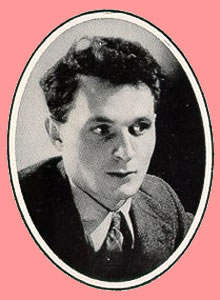
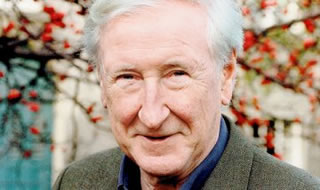
De Engelse dichter, essayist en schrijver Stephen Spender werd geboren op 28 februari 1909 in Londen. Zie ook mijn blog van 28 februari 2007 en ook mijn blog van 28 februari 2008 en ook mijn blog van 28 februari 2009.


I Think Continually Of Those Who Were Truly Great


I think continually of those who were truly great.

Who, from the womb, remembered the soul's history

Through corridors of light where the hours are suns

Endless and singing. Whose lovely ambition

Was that their lips, still touched with fire,

Should tell of the Spirit clothed from head to foot in song.

And who hoarded from the Spring branches

The desires falling across their bodies like blossoms.


What is precious is never to forget

The essential delight of the blood drawn from ageless springs

Breaking through rocks in worlds before our earth.

Never to deny its pleasure in the morning simple light

Nor its grave evening demand for love.

Never to allow gradually the traffic to smother

With noise and fog the flowering of the spirit.


Near the snow, near the sun, in the highest fields

See how these names are fŠted by the waving grass

And by the streamers of white cloud

And whispers of wind in the listening sky.

The names of those who in their lives fought for life

Who wore at their hearts the fire's center.

Born of the sun they traveled a short while towards the sun,

And left the vivid air signed with their honor.


Uit: Poems


XXX


In railway halls, on pavements near the traffic,

They beg, their eyes made big by empty staring

And only measuring Time, like the blank clock.


No, I shall weave no tracery of pen-ornament

To make them birds upon my singing-tree:

Time merely drives these lives which do not live

As tides push rotten stuff along the shore.


- There is no consolation, no, none

In the curving beauty of that line

Traced on our graphs through history, where the oppressor

Starves and deprives the poor.


Paint here no draped despairs, no saddening clouds

Where the soul rests, proclaims eternity.

But let the wrong cry out as raw as wounds

This Time forgets and never heals, far less transcends.


 584960-0557da75704500e44b2e79c7530ee86b.jpg

Stephen Spender (28 februari 1909 – 16 juli 1995)


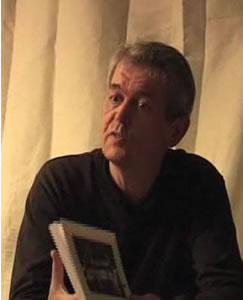
De Belgische-Franse dichter, schrijver, essayist, dramaturg en scenarioschrijver Luc Dellisse werd geboren op 28 februari 1953 in Brussel. Zie ook mijn blog van 28 februari 2009.


Uit: Le jugement dernier


“Maintenant que la partie est finie, je pense parfois que ce serait intéressant de dire la vérité.

D’avouer le secret que j’ai masqué jusqu’au bout sous le sérieux de mon apparence. Un secret que

savent, par expérience directe, quelques centaines de personnes disséminées dans deux ou trois pays. Que tous les autres ignorent.

Les autres, le reste du monde, ça ne constitue évidemment pas des foules. Je ne suis pas très sociable. Mais j’ai toujours été étonné de voir comme aux yeux de mes proches, j’étais lisse et insoupçonnable. C’était des hommes, bien sûr, des mâles, des dupes parfaites. Des amis qui connaissaient ma fièvre de lecture et d’écriture, qui m’avaient vu fonctionner en public ou dans quelques lieux plus intimes et qui ne croyaient pas qu’avec mon froid visage et mes façons penchées

de chèvre qui broute, je puisse servir d’autres dieux que la littérature.
Il faut dire que la plupart des hommes manquent d’imagination ; mais aussi je suis affligé d’un corps

tellement maladroit qu’on est déjà surpris que je parvienne à marcher et à parler ; imaginer en plus que j’ai une vie intime demanderait un effort surhumain.

Parfois j’avais des jouissances de dissimulation en pensant que depuis des années, à l’insu du monde, j’étais un agent double. Ceux qui ne connaissaient de moi que l’écorce ne pouvaient pas soupçonner que tous mes gestes, tous mes voyages, tous mes travaux, tous mes textes, tous mes emplois, toutes mes pensées, tout le long effort joyeux de mes journées, étaient sous-tendus par un secret sans fin.

Je n’ai jamais pris beaucoup de peine à le cacher, ce secret, et avec un peu d’observation ou de

psychologie, il aurait sauté aux yeux ; mais croyezmoi sur parole : personne n’est psychologue.”


584960-7c2a50a970938a19c467c5e2b5c37464.jpg
 

 Luc Dellisse (Brussel, 28 februari 1953)


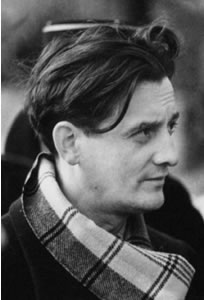
De Franse schrijver, dramaturg en regisseur
Marcel Pagnol werd geboren op 28 februari 1895 in Aubagne, Bouches-du-Rhône. Zie ook mijn blog van 28 februari 2007 en ook mijn blog van 28 februari 2009.


Uit: La gloire de mon père


„Les deux mains en avant, j’écartais les térébinthes, et les genêts, qui étaient aussi grands que moi… J’étais encore à cinquante pas du bord de la barre, lorsqu’une détonation retentit, puis, deux secondes plus tard, une autre ! Le son venait d’en bas : je m’élançai, bouleversé de joie, lorsqu’un vol de très gros oiseaux, jaillissant du vallon, piqua droit sur moi… Mais le chef de la troupe chavira soudain, ferma ses ailes et, traversant un grand genévrier, vint frapper lourdement le sol. Je me penchais pour le saisir, quand je fus à demi assommé par un choc violent qui me jeta sur les genoux : un autre oiseau venait de me tomber sur le crâne, et je fus un instant ébloui. Je frottai vigoureusement ma tête bourdonnante : je vis ma main rouge de sang. Je crus que c’était le mien, et j’allais fondre en larmes, lorsque je constatai que les volatiles étaient eux-mêmes ensanglantés, ce qui me rassura aussitôt.

Je les pris tous deux par les pattes, qui tremblaient encore du frémissement de l’agonie.

C’étaient des perdrix, mais leur poids me surprit : elles étaient aussi grandes que des coqs de basse-cour, et j’avais beau hausser les bras, leurs becs rouges touchaient encore le gravier.

Alors mon cœur sauta dans ma poitrine : des bartavelles ! Des perdrix royales ! Je les emportai vers le bord de la barre – c’était peut-être un doublé de l’oncle Jules ?

Mais, même si ce n’était pas lui, le chasseur qui devait les chercher me ferait sûrement grand accueil, et me ramènerait à la maison : j’étais sauvé !

Comme je traversais péniblement un fourré d’argéras, j’entendis une voix sonore, qui faisait rouler les R aux échos : c’était celle de l’oncle Jules, voix du salut, voix de la Providence !“


584960-fa5c68fa8850405e2ad181cb19b161fc.jpg
Marcel Pagnol (28 februari 1895 – 18 april 1974)


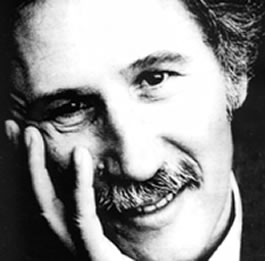
De Roemeense dichter Marin Sorescu werd geboren op 29 februari 1936 in Bulzeşti. Zie ook mijn blog van 28 februari 2009.


Passport

To cross the border
Between the sunflower
And the moonflower
Between the alphabet
Of handwritten events
And printed events.

To be friend of all atoms
Which form the light
To sing with the atoms which sing
To cry
With the atoms which die
To enter into all the days of one's life
Without restriction
No matter whether they fall on one side or the other
Of the word
Earth.

This passport
Is written in my bones
On my skull, femur, phalanges and spine
All arranged in a way
To make clear
My right to be man.


Vertaald door Constantin Roman & Timothy J.L. Cribb


584960-241ad9ef97d00e6a300a77f58fbe0889.jpg
Marin Sorescu (29 februari 1936 – 8 december 1996)


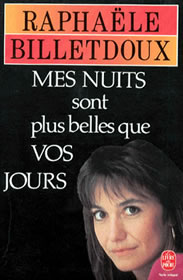
De Franse schrijfster Raphaële Billetdoux werd geboren op 28 februari 1951 in Neuilly sur Seine. Zie ook mijn blog van 28 februari 2009.


Uit: Mes nuits sont plus belles que vos jours


"Ils vivaient les heures comme mari et femme les années. Midi sonna sans que l'un et l'autre encore aient appréhendé minuit. Dans le cadre de fenêtre les voiliers lentement longeaient l'horizon du lit. Les bouillons de leurs draps finissaient aux lignes blanches de l'écume. Machoires à la renverse, cheveux épars, ils dormaient..."
Un homme, une femme, un hôtel, les draps d'un lit, la chaleur d'un mois de juillet, la lune et la mer : avec ces seuls éléments, Raphaël Billetdoux construit un roman qui a la rigueur d'une tragédie antique, où trois nuits sont toute une vie.
 

584960-4fc593e172834392b42f73a755fb0635.jpg
Raphaële Billetdoux (Neuilly sur Seine, 28 februari 1951)


Zie voor meer schrijvers van de 28e en ook de 29e februari mijn vorige drie blogs van vandaag.

Geschreven door Romenu om 21:33 Reageer op dit bericht

Daniel Handler, Bodo Morshäuser, John Montague, Bruce Dawe, Dee Brown

De Amerikaanse schrijver Daniel Handler werd geboren op 28 februari 1970 in San Francisco, Californië. Zie ook mijn blog van 28 februari 2007 en ook mijn blog van 28 februari 2009.


Uit: Adverbs


“Love was in the air, so both of us walked through love on our way to the corner. We breathed it in, particularly me: the air was also full of smells and birds, but it was the love, I was sure, that was tumbling down to my lungs, the heart's neighbors and confidants. Andrea was tall and angry. I was a little bit shorter. She smoked cigarettes. I worked in a store that sold things. We always walked to this same corner, Thirty — seventh and what's — it, Third Avenue, in New York, because it was easier to get a cab there, the entire time we were in love.

"You must be nervous," she said when we'd walked about two puffs.

"Yes," I said. "I am nervous. I've never been to a reading of a will. I didn't even know they still did things like this, read wills. I thought it was, I don't know, a movie thing. In a movie. Do you think everybody will be dressed up?"

"Who cares?" Andrea said. She threw down her cigarette and ground it out with the heel of her shoe like a new kind of halfhearted dance. "Look," she said, and shaded her eyes with her hand for a minute like she was actually looking at something. I turned my head to see. "I just mean, look," she said, cupping my head with her hand. "The expression I mean. Look, I'm trying to be nice, but I'm scatterbrained right now, if you know what I mean. I'm frightened by your behavior. I woke up this morning and you said good morning and I said good morning, what do you feel like doing today and you said well I sort of have to do this thing and I said what thing and you said go to the reading of my father's will and Isaid what are you talking about and then you told me your dad died. This morning. I mean, he died two weeks ago but that's when you told me. That's when you told me. I'm trying to think that you just must be in shock that your dad died but it's very, very, very, very, very, very difficult."


584957-51a1d3803b058a0e77a9f6581c024c92.jpg
Daniel Handler (San Francisco, 28 februari 1970)


De Duitse schrijver Bodo Morshäuser werd geboren op 28 februari 1953 in Berlijn. Zie ook mijn blog van 28 februari 2007 en ook mijn blog van 28 februari 2008 en ook mijn blog van 28 februari 2009.


Uit: Berliner Simulation


"Nur einer in diesem Ubahnzug läßt ein Rätsel bestehen. (...) Voller Gefühl sieht er finster drein. Wir haben den gleichen Weg. Er komme aus Süddeutschland, wo er arbeite, zum Wochenende nach Berlin, wo er wohne. Er macht einen militärischen Gruß und sagt: »Diesen hier! Vier Jahre freiwillig. Im Jahr verdiene ich 25 000 Mark. 6000 gebe ich für die Flüge oder Bahnfahrten aus. Am Wochenende muß ich eben zu meiner Frau!« (...)
Der Vermissende ist der Idiot. Das höchste der Gefühle anderer für ihn ist Mitgefühl - was ihn rasend macht."

(...)


"Und dann (…) gehe ich nach Hause und was sehe ich? Ich sehe das Modell eines Fernsehbeitrags über das Modell einer Demonstration. Was wirklich ist, rutscht, wie üblich, hinten weg, und in der Hauptsache wird das gesagt, was an anderer Stelle auch schon gesagt worden ist. So geht das Tag für Tag. Nicht die Ereignisse, sondern die Modelle werden wiederholt. (…) In diesen Modellen sollen wir bleiben wie in einem Hamsterrad, denn in ihnen bleibt nichts wirklich; nur die Simulation."


584957-8d96c3a446ce803e092be8cbf11933e1.jpg
Bodo Morshäuser (Berlijn, 28 februari 1953)


De Ierse dichter
John Montague werd geboren in New York op 28 februari 1929. Zie ook mijn blog van 28 februari 2007 en ook mijn blog van 28 februari 2008 en ook mijn blog van 28 februari 2009.


Uprooting


My love, while we talked

They removed the roof. Then

They started on the walls,

Panes of glass uprooting

From timber, like teeth.

But you spoke calmly on,

Your example of courtesy

Compelling me to reply.

When we reached the last

Syllable, nearly accepting

Our positions, I saw that

The floorboards were gone:

It was clay we stood upon.


The Golden Hook


Two fish float:


one slowly downstream

into the warm

currents of the known


the other tugging

against the stream,

disconsolate twin,


the golden

marriage hook

tearing its throat.


584957-d581a9e6375572b61a1c72cc93ecd6f2.jpg
John Montague (New York, 28 februari 1929)


De Australische dichter en schrijver Donald Bruce Dawe werd geboren op 28 februari 1930 in Fitzroy, Melbourne. Zie ook mijn blog van 28 februari 2009.


In the Confessional


Bless me, Father, for I have sinned.

this week for the first time in seventy-eight years

I have committed the following sin:

I watched a rugby league game from start to finish.

And what is more, Father, I enjoyed it!

Especially Israel Folau's high 'screamer'

and his two touch-downs.

Oh, and also Johnathan Thurston's

Dummy pass splitting the Blues' back-line.

Oh, and also Billy Slater's dashing subsequent touch-down!

For these, and for such other Origin-al sins

I may in future commit, I ask penance

and absolution of you, Father, and I firmly intend

with your help to sin no more, unless

as God's AFL representative of the one true Game

which we are told is played in Heaven

I have indeed committed the one unforgivable

--hullo? Are you there, Father?

Hullo?!


584957-af4d3e282ad43b3014e514a8d431acf7.jpg
Bruce Dawe (Fitzroy, 28 februari 1930)


De Amerikaanse schrijver en historicus Dee Brown werd geboren op 28 februari 1908 in Alberta, Louisiana. Zie ook mijn blog van 28 februari 2009.


Uit: Bury My Heart at Wounded Knee


„Columbus kidnapped ten of his friendly Taino hosts and carried them off to Spain, where they could be introduced to the white man’s ways. One of them died soon after arriving there, but not before he was baptized a Christian. The Spaniards were so pleased that they had made it possible for the first Indian to enter heaven that they hastened to spread the good news throughout the West Indies.

The Tainos and other Arawak people did not resist conversion to theEuropeans’ religion, but they did resist strongly when hordes of these bearded strangers began scouring their islands in search of gold and precious stones. The Spaniards looted and burned villages; they kidnapped hundreds of men, women, and children and shipped them to Europe to be sold as slaves. Arawak resistance brought on the use of guns and sabers, and whole tribes were destroyed, hundreds of thousands of people in less than a decade after Columbus set foot on the beach of San Salvador, October 12, 1492.

Communications between the tribes of the New World were slow, and news of the Europeans’ barbarities rarely overtook the rapid spread of new conquests and settlements. Long before the English-speaking white men arrived in Virginia in 1607, however, the Powhatans had heard rumors about the civilizing techniques of the Spaniards. The Englishmen used subtler methods. To ensure peace long enough to establish a settlement at Jamestown, they put a golden crown upon the head of Wahunsonacook, dubbed him King Powhatan, and convinced him that he should put his people to work supplying the white settlers with food. Wahunsonacook vacillated between loyalty to his rebellious subjects and to the English, but after John Rolfe married his daughter, Pocahontas, he apparently decided that he was more English than Indian.“


584957-202a70143938c7ee66fcd3cdd639ed40.jpg
Dee Brown (28 februari 1908 – 12 december 2002)


Geschreven door Romenu om 21:23 Reageer op dit bericht

Bart Koubaa, Berthold Auerbach, Sophie Tieck, Michel de Montaigne

De Vlaamse schrijver Bart Koubaa (pseudoniem van Bart van den Bossche) werd geboren op 28 februari 1968 in Eeklo. Zie ook mijn blog van 28 februari 2009.


Uit: De leraar


‘In feite zijn mijn lessen mijn grootste tijdverlies. Er is nog bitter weinig waarmee ik de leerlingen kan boeien. Het grootste gedeelte schrijft en spreekt gebrekkig Nederlands en kan met moeite lezen. Ik toon nooit documentaires die ondertiteld zijn. Sinds de uitbreiding van Europa hoor ik meer en meer Engels in de klas, zo'n pseudo-Hollywoodtaaltje met veel fuck en shit en asshole en Angelina Jolie.

(...)


Een paar weken geleden was er een nieuweling die zich op de speelplaats spontaan een volwaardige volzin liet ontvallen waarin het woord carjacking voorkwam; puur geluk waarschijnlijk, maar je moet ze niet altijd onderschatten. Toch krijg ik de laatste jaren meer en meer taalgevangenen in de klas. Ze zijn gefrustreerd omdat ze te oud zijn om bij mij op de banken te zitten en kennen wel degelijk het verschil tussen een werkwoord en een cirkel maar begrijpen me niet als ik hun vraag de werkwoorden in de zin te omcirkelen.’


584949-f005d9a360efef3f74f396ecf6a19e89.jpg
Bart Koubaa (Eeklo, 28 februari 1968)


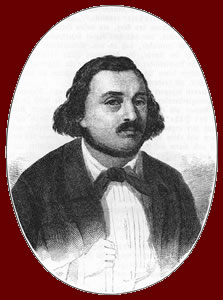
De Duitse schrijver Berthold Auerbach (eig. Moyses Baruch) werd geboren op 28 februari 1812 in Nordstetten in het Zwarte Woud. Zie ook mijn blog van 28 februari 2009.


Uit: Die feindlichen Brüder


„In der spärlich bewohnten kalten Gasse, »der Kniebis« genannt, steht ein kleines Häuschen, das außer einem Stall und einem Schuppen nur drei zum Teil mit Papier zugeklebte Fenster hat; oben am Dachfenster hängt ein Laden nur an einer Angel und droht jeden Augenblick herunterzufallen. Neben dem Hause ist ein kleines Gärtchen, das noch durch einen der Länge nach hindurchlaufenden Zaun von dürren Dornen in zwei Hälften geschieden ist. In dem Hause wohnten zwei Brüder schon seit vierzehn Jahren in unabänderlicher Feindschaft. Wie im Garten, so war auch im Hause alles geteilt, von der Dachkammer bis hinab in den kleinen Keller; die Fallthüre war offen, aber drunten hatte jeder seinen durch Latten abgeteilten verschlossenen Raum. Auch sonst waren an allen Thüren noch Hängeschlösser befestigt, als ob man stündlich den Ueberfall von Dieben fürchtete; der Stall gehörte dem einen, der Schuppen dem andern Bruder. Kein Wort wurde im Hause vernommen, wenn nicht einer bisweilen laut vor sich hinfluchte.

Michel und Koanradle, so hießen die beiden Brüder, waren beide schon sehr bei Jahren und beide unbeweibt. Dem Koanradle war seine Frau schon früh gestorben, und er lebte nun so für sich allein; der Michel war nie verheiratet gewesen.

Eine blau angestrichene, lange, sogenannte Bankkiste war die erste Ursache des Bruderhasses.“


584949-019d24591fdc52b23afa47cda213bd33.jpg

 Berthold Auerbach (28 februari 1812 - 8 februari 1882)
 Rond 1850


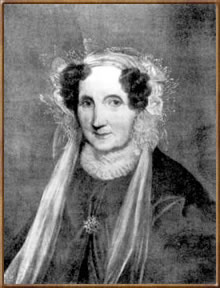
De Duitse dichteres en schrijfster
Sophie Tieck werd geboren op 28 februari 1775 in Berlijn. Zie
ook mijn blog van 28 februari 2009.


Uit: Die Stimme im Walde


„Nur noch eine Tagereise war Alfonso von seiner Heimath entfernt. Er hatte die Diener vorausgesendet, um der Mutter die frohe Bothschaft zu bringen, daß sie ihren geliebten Sohn wieder an ihren Busen drücken sollte. Er hatte die Nacht in einer einsamen Hütte, am Fuße eines Berges geruht, und die Bewohner hatten ihm wunderbare Dinge erzählt, von Geistern, die in dem Walde wohnen sollten, der jetzt vor dem Ritter lag. Er dachte an diese Erzählungen, als er hinein ritt, und die hohen Baumwipfel über ihm rauschten; eine sonderbare Empfindung beklemmte seine Brust, furchtsam schaute er um sich, und lächelte über seine eigne Thorheit. Bin ich denn noch derselbe, sprach er, der den Tod nicht [30] fürchtete, der mit Ruhm und Ehre kämpfte? Und nun erbebt mein Herz vor den Erzählungen einer leichtgläubigen Alten. Er ritt muthig weiter, und seine Augen schwärmten in den Blätterlabyrinthen, die sich über ihm durch einander bewegten. Er erreichte einen offnen Platz im Walde, und der hohe Rasen, den Alfonso nie so frisch und grün gesehen zu haben glaubte, die Bäume, die ringsum so still standen, ohne auch vom kleinsten Lüftchen bewegt zu werden, luden ihn zur Ruhe ein. Er stieg ab, und band sein Pferd an einen Baum, und setzte sich nieder. Es war ein heißer Tag, und die Kühle an diesem Plätzchen empfing ihn mit aller Lieblichkeit; er irrte mit den Augen durch die hohen Gräser, dann wieder in den Zweigen umher; kein Lüftchen regte sich. Endlich entstand in dem Baumwipfel über ihm ein Rauschen, als wenn ein sanfter Wind die Blätter durch einander kräuselt.“


584949-4db8f6a554faee8f5e3c4181a64277f7.jpg
Sophie Tieck (28 februari 1775 – 1 oktober 1833)


De Franse filosoof, schrijver en politicus Michel Eyquem de Montaigne werd geboren in Bordeaux op 28 februari 1533. Zie ook mijn blog van 28 februari 2007 en ook mijn blog van 28 februari 2008.en ook mijn blog van 28 februari 2009.


Uit: Les essais: De la force de l'imagination


J“e suis de ceux qui sentent tres-grand effort de l'imagination. Chacun en est heurté, mais aucuns en sont renversez. Son impression me perse ; et mon art est de luy eschapper, par faute de force à luy resister. Je vivroye de la seule assistance de personnes saines et gaies. La veuë des angoisses d'autruy m'angoisse materiellement : et a mon sentiment souvent usurpé le sentiment d'un tiers. Un tousseur continuel irrite mon poulmon et mon gosier. Je visite plus mal volontiers les malades, ausquels le devoir m'interesse, que ceux ausquels je m'attens moins, et que je considere moins. Je saisis le mal, que j'estudie, et le couche en moy. Je ne trouve pas estrange qu'elle donne et les fievres, et la mort, à ceux qui la laissent faire, et qui luy applaudissent. Simon Thomas estoit un grand medecin de son temps. Il me souvient que me rencontrant un jour à Thoulouse chez un riche vieillard pulmonique, et traittant avec luy des moyens de sa guarison, il luy dist, que c'en estoit l'un, de me donner occasion de me plaire en sa compagnie : et que fichant ses yeux sur la frescheur de mon visage, et sa pensée sur cette allegresse et vigueur, qui regorgeoit de mon adolescence : et remplissant tous ses sens de cet estat florissant en quoy j'estoy lors, son habitude s'en pourroit amender : Mais il oublioit à dire, que la mienne s'en pourroit empirer aussi.“


584949-d1591d9d9a14595bccf4aa6bc122bea8.jpg
Michel de Montaigne (28 februari 1533 – 13 september 1592)

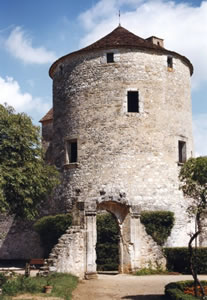
Chateaux-saint-michel-de-montaigne, de toren waar Montaigne werkte.

Geschreven door Romenu om 21:17 Reageer op dit bericht

Martin Suter, Yórgos Seféris, Howard Nemerov, Ernest Renan, José Vasconcelos

De Zwitserse schrijver Martin Suter werd geboren op 29 februari 1948 in Zürich. Zie ook mijn blog van 29 februari 2008 en ook mijn blog van 28 februari 2009.


Uit: Unter Freunden


„Das also ist Meuli, denkt Haberstich, als er Brachingers Büro betritt. Der neue Mann sitzt auf dem Besprechungs­sofa und steht jetzt auf, um ihm die Hand zu schütteln. Brachinger bleibt sitzen. Zwei leere Kaffeetassen und ein paar zerknüllte Schokopapierchen verraten, dass die beiden schon länger zusammensitzen. Aha, ich bin also nachträg­lich dazugebeten worden. Wahrscheinlich nachdem die ver­traulichen Themen besprochen waren, fährt es Haberstich durch den Kopf.
So sieht er also aus, der Mann, der ihm gefährlich werden könnte. Grösser, als er ihn sich vorgestellt hat. Und jünger. Und mit mehr Haaren. Im ersten Vergleich mit sich selbst schneidet der andere, ehrlich gesagt, etwas besser ab. Äu­sserlich. Obwohl: Auf der rechten Schulter scheinen ein paar Schuppen zu liegen. Das ist die Kehrseite von dichtem Haarwuchs - Schuppen.
Von seinem Sessel aus verfolgt Brachinger die Begrü­ssungsszene. Haberstich spürt, wie auch er vergleicht. Da­mit wird er jetzt leben müssen: Mit Meuli verglichen zu werden. Nun, ihm soll's recht sein. Er hat keine Vergleiche zu fürchten. Wenigstens keine fachlichen. Und was die äu­ssere Erscheinung angeht: So übel sieht er auch nicht aus. Er hat einfach keine Zeit für Bodyshaping und Hairstudios.  Wichtig ist einfach, dass er schon bei der ersten direkten Begegnung gut abschneidet. Er muss Brachinger alerter, re­aktionsschneller, informierter und schlagfertiger vorkom­men als der Neue. Er muss von Anfang an die Diskrepanz in allen Belangen (ausser vielleicht den äusserlichen) deutlich machen.“


584942-736f1de1f58d8248174d4f8abdc38696.jpg

Martin Suter (Zürich 29 februari 1948)


De Griekse dichter
Yórgos Seféris werd geboren in Smyrna (nu Izmir, in Turkije) op 29 februari 1900. Zie ook mijn blog van 19 februari 2007 en ook mijn blog van 29 februari 2008 en ook mijn blog van 28 februari 2009.


The Leaf of the Poplar 


It trembled so, the wind set it sailing

it trembled so, how could it not yield to the wind

far beyond

the sea

far beyond

an island in the sun

and hand gripping oars

dying the last stroke at the sighting of port

tired eyes closing

like sea anemones


It trembled so much

I sought it so much

in the shade of the eucalyptus

Spring to Autumn

bare in the close woods

my God I sought it.


Lost worlds 


How can you gather together

the thousand fragments

of each person?

What's wrong with the rudder?

The boat inscribes circles

and there's not a single gull.

The world sinks:

hang on, it'll leave you

alone in the sun.

You write:

the ink grew less,

the sea increases.

The body that hoped to flower like a branch,

to bear fruit, to become like a flute in the frost —

imagination has thrust it into a noisy bee-hive

so that musical time can come and torture it.


584942-95b4ec6f610961609ded6f16b95dd632.jpg
Yórgos Seféris (29 februari 1900 - 20 september 1971)


De Amerikaanse dichter en literatuurdocent Howard Nemerov werd geboren op 29 februari 1920 in New York. Zie ook mijn blog van 29 februari 2008. en ook mijn blog van 28 februari 2009.


Casting 


The waters deep, the waters dark,

Reflect the seekers, hide the sought,

Whether in water or in air to drown.

Between them curls the silver spark,

Barbed, baited, waiting, of a thought--

Which in the world is upside down,

The fish hook or the question mark?


Style 


Flaubert wanted to write a novel

About nothing. It was to have no subject

And be sustained upon the style alone,

Like the Holy Ghost cruising above

The abyss, or like the little animals

In Disney cartoons who stand upon a branch

That breaks, but do not fall

Till they look down. He never wrote that novel,

And neither did he write another one

That would have been called La Spirale,

Wherein the hero's fortunes were to rise

In dreams, while his walking life disintegrated.


Even so, for these two books

We thank the master. They can be read,

With difficulty, in the spirit alone,

Are not so wholly lost as certain works

Burned at Alexandria, flooded at Florence,

And are never taught at universities.

Moreover, they are not deformed by style,

That fire that eats what it illuminates. 


 584942-4a6f8c487c9c4412a9ee904078da3f20.jpg

Howard Nemerov (29 februari 1920 – 5 juli 1991)

Hier (l) met collega dichter Richard Wilbur


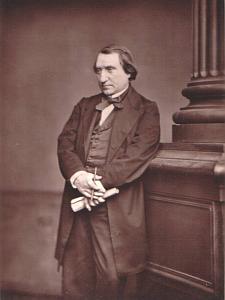
De Franse schrijver en filosoof Ernest Renan werd op 28 februari 1823 geboren in Tréguier in Bretagne uit een vissersfamilie. Zijn vader was een vurig republikein, terwijl zijn moeder uit een royalistische familie stamde. Deze tweespalt heeft Renan zijn gehele leven gevoeld. In 1838 ging Renan na succesvolle schoolresultaten studeren aan het kerkelijk college van Saint-Nicolas du Chardonnet in Parijs. Met zijn achtergrond van een streng, Bretons katholicisme vond hij hier de stijl te spitsvondig. Hij hoopte meer degelijkheid te vinden op het seminarie van Issy-les-Moulineaux waar hij in 1840 begon. Door kennis te maken met de filosofie en de taalkunde werd zijn moeite om te geloven echter steeds groter, zodat hij uiteindelijk afzag van een religieus leven en ging werken als onderwijzer. Ondertussen zette hij zijn studie voort met name van de Semitische talen. In 1847 leverde dit hem een prijs op en een positie aan het lycée van Vendôme. In 1878 werd Renan verkozen tot lid van de Académie française. Één der bekendste werken van Renan, al tijdens zijn leven, was Het leven van Jezus (Frans: 'La vie de Jésus', 1863).


Uit: La poésie des races celtiques


„Lorsqu'en voyageant dans la presqu'île armoricaine on dépasse la région, plus rapprochée du continent, où se prolonge la physionomie gaie, mais commune, de la Normandie et du Maine, et qu'on entre dans la véritable Bretagne, dans celle qui mérite ce nom par la langue et la race, le plus brusque changement se fait sentir tout à coup. Un vent froid, plein de vague et de tristesse, s'élève et transporte l'âme vers d'autres pensées ; le sommet des arbres se dépouille et se tord ; la bruyère étend au loin sa teinte uniforme ; le granit perce à chaque pas un sol trop maigre pour le revêtir ; une mer presque toujours sombre forme à l'horizon un cercle d'éternels gémissements. Même contraste dans les hommes : à la vulgarité normande, à une population grasse et plantureuse, contente de vivre, pleine de ses intérêts, égoïste comme tous ceux dont l'habitude est de jouir, succède une race timide, réservée, vivant toute au dedans, pesante en apparence, mais sentant profondément et portant dans ses instincts religieux une adorable délicatesse. Le même contraste frappe, dit-on, quand on passe de l'Angleterre au paya de Galles, de la basse Écosse, anglaise de langage et de mœurs, au paya des Gaëls du Nord, et aussi, avec une nuance sensiblement différente, quand on s'enfonce dans les parties de l'Irlande où la race est restée pure de tout mélange avec l'étranger. Il semble que l'on entre dans les couches souterraines d'un autre âge, et l'on ressent quelque chose des impressions que Dante nous fait éprouver quand il nous conduit d'un cercle à un autre de son enfer.“


 584942-e3d9d64147f83f0d210767d800e7d550.jpg

Ernest Renan (28 februari 1823 – 12 oktober 1892)


Zie voor onderstaande schrijver ook mijn blog van 28 februari 2009.


De Mexicaanse schrijver, filosoof en politicus José Vasconcelos Calderón werd geboren in Oaxaca op 28 februari 1882

Geschreven door Romenu om 21:09 Reageer op dit bericht

John Steinbeck, André Roy, Lawrence Durrell, Henry Longfellow, Elisabeth Borchers, Irwin Shaw

De Amerikaanse schrijver John Steinbeck werd geboren in Salinas, Californië, op 27 februari 1902. Zie ook mijn blog van 27 februari 2007 en ook mijn blog van 27 februari 2008 en ook mijn blog van 27 februari 2009.


Uit: Of Mice and Men


“A few miles south of Soledad, the Salinas River drops in close to the hillside bank and runs deep and green. The water is warm too, for it has slipped twinkling over the yellow sands in the sunlight before reaching the narrow pool. On one side of the river the golden foothill slopes curve up to the strong and rocky Gabilan mountains, but on the valley side the water is lined with trees—willows fresh and green with every spring, carrying in their lower leaf junctures the debris of the winter’s flooding; and sycamores with mottled, white, recumbent limbs and branches that arch over the pool. On the sandy bank under the trees the leaves lie deep and so crisp that a lizard makes a great skittering if he runs among them. Rabbits come out of the brush to sit on the sand in the evening, and the damp flats are covered with the night tracks of ’coons, and with the spread pads of dogs from the ranches, and with the split-wedge tracks of deer that come to drink in the dark.

There is a path through the willows and among the sycamores, a path beaten hard by boys coming down from the ranches to swim in the deep pool, and beaten hard by tramps who come wearily down from the highway in the evening to jungleup near water. In front of the low horizontal limb of a giant sycamore there is an ash pile made by many fires; the limb is worn smooth by men who have sat on it.

Evening of a hot day started the little wind to moving among the leaves. The shade climbed up the hills toward the top. On the sand banks the rabbits sat as quietly as little gray, sculptured stones. And then from the direction of the state highway came the sound of footsteps on crisp sycamore leaves. The rabbits hurried noiselessly for cover. A stilted heron labored up into the air and pounded down river. For a moment the place was lifeless, and then two men emerged from the path and came into the opening by the green pool.”


John_Steinbeck-Monterey

John Steinbeck (27 februari 1902 - 20 december 1968)

Standbeeld in Monterey


De Canadese dichter, schrijver en essayist André Roy werd geboren op 27 februari 1944 in Montréal. Hij studeerde Frans en is werkzaam als docent en literair criticus. Het bekendst is zijn cyclus „Passions“, bestaande uit Les passions du Samedi (1979), Petit supplément aux passions (1980); en Monsieur Désir (1981).


Un rien d'amour


Le ciel distribué dans le temps massif ;

L'oeil est un temple dans la nuit ;

L'air marche

Parce que chacun possède son propre corps.

Pourquoi je rêve comme une bête

Quand tu n'es pas là ?


Je rêvais que tu rêvais dans mes songes,

Que tu étais heureux comme en enfer.

Il existe quatre lois pour la passion :

Avant, pendant, après, jamais.


Les étoiles digérées par ton corps

Deviennent des animaux dans tes yeux.

Ta passion veux que tu saignes,

Que tu puisses te pardonner de nous aimer.


The Muscles and Body Hairs


Melted in the mouth, colour hanging

A pink tool, but for now let”s talk

Of the ripple of his muscles (see how time

Is upset at a glance, the clock in

Slow motion) attuned to his technique, I exclaim

His body hairs briefly summing them up

In those cerain young spots that make me

Abandon all discretion now I’m summing up

Since at that time I was still coming.


Pleasure and Desire, Knowing and Wanting


knowing fatal pleasure, or very chemical,

so stupendously they I don't dare write the word

they ejaculated but don't fix me foor good

in those virile snapshots

despite their nervousness and the conversation that

helped I understand this will to tenderness,

the irritated look on their gorgeous faces

("Your face is as cute as a love-word")

because that swiftness, that suavity and

because desire has already scored you, teeth sweat,

the happenings that resist or that have disappeared

too soon, but no zeal, no shame in admitting it.


Vertaald door Daniel Sloate


Roy
André Roy (Montréal, 27 februari 1944)


De Britse dichter en schrijver Lawrence George Durrell werd geboren op 27 februari 1912 in Jalandhar in India. Zie ook mijn blog van 27 februari 2007 en ook mijn blog van 27 februari 2008 en ook mijn blog van 27 februari 2009.


This Unimportant Morning 


This unimportant morning

Something goes singing where

The capes turn over on their sides

And the warm Adriatic rides

Her blue and sun washing

At the edge of the world and its brilliant cliffs.


Day rings in the higher airs

Pure with cicadas, and slowing

Like a pulse to smoke from farms,


Extinguished in the exhausted earth,

Unclenching like a fist and going.


Trees fume, cool, pour - and overflowing

Unstretch the feathers of birds and shake

Carpets from windows, brush with dew

The up-and-doing: and young lovers now

Their little resurrections make.


And now lightly to kiss all whom sleep

Stitched up - and wake, my darling, wake.

The impatient Boatman has been waiting

Under the house, his long oars folded up

Like wings in waiting on the darkling lake.


lawrence-durrell

Lawrence Durrell (27 februari 1912 – 7 november 1990)


De Amerikaanse dichter Henry Wadsworth Longfellow werd geboren in Portland, Maine, op 27 februari 1807. Zie ook mijn blog van 27 februari 2007 en ook mijn blog van 27 februari 2008 en ook mijn blog van 27 februari 2009.


Hymn to the Night 


I heard the trailing garments of the Night

Sweep through her marble halls!

I saw her sable skirts all fringed with light

From the celestial walls!


I felt her presence, by its spell of might,

Stoop o'er me from above;

The calm, majestic presence of the Night,

As of the one I love.


I heard the sounds of sorrow and delight,

The manifold, soft chimes,

That fill the haunted chambers of the Night

Like some old poet's rhymes.


From the cool cisterns of the midnight air

My spirit drank repose;

The fountain of perpetual peace flows there,--

From those deep cisterns flows.


O holy Night! from thee I learn to bear

What man has borne before!

Thou layest thy finger on the lips of Care,

And they complain no more.


Peace! Peace! Orestes-like I breathe this prayer!

Descend with broad-winged flight,

The welcome, the thrice-prayed for, the most fair,

The best-beloved Night! 


henry-longfellow

Henry Longfellow (27 februari 1807 - 24 maart 1882)


De Duitse schrijfster en dichteres Elisabeth Borchers werd geboren in Homberg op 27 februari 1926. Zie ook mijn blog van 27 februari 2007 en ook mijn blog van 27 februari 2008 en ook mijn blog van 27 februari 2009.


November


Es kommt eine Zeit,
da lassen die Bäume
ihre Blätter fallen.
Die Häuser rücken
enger zusammen.
Aus dem Schornstein
kommt ein Rauch.

Es kommt eine Zeit,
da werden die Tage klein
und die Nächte groß,
und jeder Abend
hat einen schönen Namen.

Einer heißt Hänsel und Gretel.
Einer heißt Schneewittchen.
Einer heißt Rumpelstilzchen.
Einer heißt Katherlieschen.
Einer heißt Hans im Glück.
Einer heißt Sterntaler.


Dezember

Es kommt eine Zeit
da wird es still
Da gehn die Lichter aus
da kommt ein Wind
ruft nach dem Fährmann
Der träumt den Traum
vom goldnen Schiff
Das Schiff hat eine
große Fahrt bei Nacht
Es geht von Haus zu Haus
Es fährt die Straßen auf und ab
Es kommt durch alle Länder
Es kommt durch alle Stuben
Da bleibt ein goldner Schein zurück


Borchers
Elisabeth Borchers (Homberg, 27 februari 1926)


De Amerikaanse schrijver Irwin Shaw werd geboren op 27 februari 1913 als Irwin Gilbert Shamforoff in New York. Zie ook mijn blog van 27 februari 2009.


Uit: The Girls In Their Summer Dresses


„‘Sure,’ he said. He took his eyes off the hatless girl with the dark hair, cut dancer-style, like a helmet, who was walking past him with the self-conscious strength and grace dancers have. She was walking without a coat and she looked very solid and strong and her belly was flat, like a boy’s, under her skirt, and her hips swung boldly because she was a dancer and also because she knew Michael was looking at her. She smiled a little to herself as she went past and Michael noticed all these things before he looked back at his wife. ‘Sure,’ he said, ‘we’re going to watch the Giants and we’re going to eat steak and we’re going to see a French picture. How do you like that?’
  ‘That’s it,’ Frances said flatly. ‘That’s the program for the day. Or maybe you’d just rather walk up and down Fifth Avenue.’
  ‘You always look at other women,’ Frances said. ‘At every damn woman in the city of New York.’
  ‘Oh, come now,’ Michael said, pretending to joke. ‘Only pretty ones. And, after all, how many pretty women are there in New York? Seventeen?’
  ‘More. At least you seem to think so. Wherever you go.’
  ‘Not the truth. Occasionally, maybe, I look at a woman as she passes. In the street. I admit, perhaps in the street I look at a woman once in a while....’
  ‘Everywhere,’ Frances said. ‘Every damned place we go. Restaurants, subways, theaters, lectures, concerts.’
  ‘Now, darling,’ Michael said. ‘I look at everything. God gave me eyes and I look at women and men and subway excavations and moving pictures and the little flowers of the field. I casually inspect the universe.’
  ‘You ought to see the look in your eye,’ Frances said, ‘as you casually inspect the universe on Fifth Avenue.’
  ‘I’m a happily married man.’ Michael pressed her elbow tenderly, knowing what he was doing. ‘Example for the whole twentieth century, Mr. and Mrs. Mike Loomis.’
  ‘You mean it?’
  ‘Frances, baby....’
  ‘Are you really happily married?’
  ‘Sure,’ Michael said, feeling the whole Sunday morning sinking like lead inside him.   ‘Now what the hell is the sense in talking like that?’

  ‘I would like to know.’ Frances walked faster now, looking straight ahead, her face showing nothing, which was the way she always managed it when she was arguing or feeling bad.“


IrwinShaw

Irwin Shaw (27 februari 1913 – 16 mei 1984)


Zie voor nog meer schrijvers van de 27e februari ook
mijn vorige blog van vandaag.


Geschreven door Romenu om 20:19 Reageer op dit bericht

James T. Farrell, N. Scott Momaday, Peter De Vries, Jules Lemaître, Albert Kuyle, Johannes Meinhold, Traugott Vogel

De Amerikaanse schrijver James Thomas Farrell werd geboren op 27 februari 1904 in Chicago. Zie ook mijn blog van 27 februari 2007 en ook mijn blog van 27 februari 2009.


Uit: An Honest Writer. The Life and Times of James T. Farrell (Biografie door Robert K. Landers)


„James T. Farrell was once a literary titan, mentioned in the same breath with Hemingway, Faulkner and Dos Passos; and Studs Lonigan, his trilogy of novels about a swaggering young “tough guy” from a lower-middle-class Irish family on Chicago’s South Side, was considered a modern classic. But this powerful work has fallen into neglect, and a century after his birth in 1904, Farrell is a largely forgotten figure. He and his finest achievements—Studs Lonigan and his series of five novels about the O’Neills and the O’Flahertys—deserve better.

Studs Lonigan and other vivid characters in these works were rightly declared by the pioneering critic Joseph Warren Beach in 1941 to be “among the memorable people in English fiction.” But Farrell’s naturalistic novels provide more than memorable people. They afford a richly detailed picture of life in an American city as it was actually lived by ordinary people, particularly Irish-Americans, in the early decades of the twentieth century. “You forget that you are seeing this life through the eyes of a selecting novelist,” marveled critic Carl Van Doren. “It seems merely to be there before you.”

Whether in praise or in disparagement, it was often said of Farrell’s works that they were “sociology” as much as art. And indeed they were. Novelist Gerald Green, the author of The Last Angry Man, on learning in 1976 that he and Farrell shared the same publisher and editor, asked the editor to convey his admiration to the author of Studs Lonigan and the O’Neill-O’Flaherty novels. “Nothing in modern sociology, no journalism, including [Jimmy] Breslin’s, or [Daniel Patrick] Moynihan’s ‘Beyond the Melting Pot,’” said Green, “can ever tell us anything new or enriching about the urban Irish, once we have read James T. Farrell. A giant.”


Farell

James T. Farrell (27 februari 1904 – 22 augustus 1979)


De Amerikaanse (native, Kiowa) schrijver N(avarre) Scott Momaday werd geboren op 27 februari 1934 in Lawton, Oklahoma. Zie ook mijn blog van 27 februari 2007 en ook mijn blog van 27 februari 2009.


Before an Old Painting of the Crucifixion 


I ponder how He died, despairing once.

I've heard the cry subside in vacant skies,

In clearings where no other was. Despair,

Which, in the vibrant wake of utterance,

Resides in desolate calm, preoccupies,

Though it is still. There is no solace there.


That calm inhabits wilderness, the sea,

And where no peace inheres but solitude;

Near death it most impends. It was for Him,

Absurd and public in His agony,

Inscrutably itself, nor misconstrued,

Nor metaphrased in art or pseudonym:


A vague contagion. Old, the mural fades...

Reminded of the fainter sea I scanned,

I recollect: How mute in constancy!

I could not leave the wall of palisades

Till cormorants returned my eyes on land.

The mural but implies eternity:


Not death, but silence after death is change.

Judean hills, the endless afternoon,

The farther groves and arbors seasonless

But fix the mind within the moment's range.

Where evening would obscure our sorrow soon,

There shines too much a sterile loveliness.


No imprecisions of commingled shade,

No shimmering deceptions of the sun,

Herein no semblances remark the cold

Unhindered swell of time, for time is stayed.

The Passion wanes into oblivion,

And time and timelessness confuse, I'm told.


These centuries removed from either fact

Have lain upon the critical expanse

And been of little consequence. The void

Is calendared in stone; the human act,

Outrageous, is in vain. The hours advance

Like flecks of foam borne landward and destroyed.


scottmomaday
N. Scott Momaday (Lawton, 27 februari 1934)


De Amerikaanse schrijver Peter de Vries werd geboren op 27 februari 1910 in Chicago als zoon van Nederlandse immigranten. De Vries was een zeer bekende Amerikaanse romanschrijver in de jaren ’60 en ’70, geroemd om zijn geestigheid. Hij verloor – net als Don Wanderhope in 'Het lam' uit 1961 – zijn dochtertje aan leukemie. Hij studeerde aan de Northwestern University en had een groot aantal baantjes, van karamelappelverkoper tot radioacteur enjournalist voor de New Yorker. Een aantal van zijn boeken zijn verfilmd. De Vries was een uiterst vruchtbaar schrijver. Hij publiceerde talrijke korte verhalen, essays, gedichten, toneelstukken en romans.

Uit: The Last Hurrah


“Tom had been putting aside $250 from his fortnightly pay packet over a two month period. He figured $1000 should just about cover it: his last hurrah. One afternoon/evening/night of debauchery. Living it up, trying everything he'd always meant to try.

The last hurrah. Before settling down and really doing the serious stuff.

That stuff: getting married to Kirralyn in a month's time; being there when she had their baby in three month's time; putting the deposit down on a house A.S.A.P. - as soon as they could both agree on a house.

He'd already selected the date for the last hurrah - Wednesday July 11. He had even made a booking at a hotel - a place in the centre of Kings Cross. He'd viewed it on the Internet. It looked classy. Nothing downmarket, not for the last hurrah.

The list of debauchery: room service food, drinking, drugs, and a prostitute.

Tom had experienced room service food before. Always with Kirralyn. They loved it. He also liked a drink - usually down the pub on a Friday afternoon after work. With the boys. The usual crowd. His mates.

Tom had never tried drugs. A couple of his mates had. They'd used marijuana, amphetamines, even cocaine (or so they said). Tom hadn't even smoked marijuana back at school. Back then he knew people who did smoke it, but he'd been too scared to touch it - thanks to all the anti-drug propaganda from his teachers and his parents.

Now he wanted to try marijuana. Just once. That's all. Get stoned, have a giggle.

Then there was the prostitute. He'd never been with one. In fact he'd only ever been with one girl apart from Kirralyn. Tom had never had a blow job. Kirralyn refused to perform that “act” (as she called it) on him.

He wanted one now. And he'd get one - from a professional. He didn't even think of it as cheating because he wouldn't actually be fucking, would he?

Kings Cross: debauchery capital of Sydney, of Australia. Drug and sex HOTSPOT. Tom had lived in Sydney all his life, but he'd only ever been to the Cross once. In the daytime, when the place was dead. He'd seen no drug dealers, no sex workers. Just ordinary people. But that was years ago.

Now things were different. Tom read the newspapers, he watched the current affairs shows on the TV. He knew about the place: drugs everywhere, sex everywhere. You walk down the main drag and they'd virtually shove it in your face.

So to Kings Cross Tom would go. For the last hurrah.


DeVries
Peter De Vries (27 februari 1910 – 28 september 1993)


De Franse schrijver en dichter Jules Lemaître werd geboren op 27 februari 1853 in Vennecy, Loiret. Zie ook mijn blog van 27 februari 2007 en ook mijn blog van 27 februari 2008 en ook mijn blog van 27 februari 2009.


Uit: Ernest Renan


„Par quel autre pourrais-je mieux commencer ? Nul écrivain  peut-être n'a tant occupé, hanté, troublé ou ravi les plus  délicats de ses contemporains. Qu'on cède ou qu'on résiste  à sa séduction, nul ne s'est mieux emparé de la pensée, ni  de façon plus enlaçante. Ce grand sceptique a dans la jeunesse d'aujourd'hui des fervents comme en aurait un  apôtre et un homme de doctrine. Et quand on aime les

gens, on veut les voir.

Les Parisiens excuseront l'ignorance et la naïveté d'un  provincial fraîchement débarqué de sa province, qui est   curieux de voir des hommes illustres et qui va faisant des  découvertes. Je suis un peu comme ces deux bons Espagnols  venus du fin fond de l'Ibérie pour voir Tite-Live et " cherchant dans Rome autre chose que Rome même." Le sentiment qui les amenait était naturel et touchant, enfantin si   l'on veut, c'est-à-dire doublement humain. Je suis donc  entré au Collège de France,^ dans la petite salle des langues  sémitiques.

A quoi on pourtant ? N'est-ce point par leurs livres, et par leurs livres seuls, qu'on connaît les écrivains et surtout  les philosophes et les critiques, ceux qui nous livrent directe-

ment leur pensée, leur conception du monde et, par là, tout leur esprit et toute leur âme ? Que peuvent ajouter les traits de leur visage et le son de leur voix à la connaissance que nous avons d'eux ? Qu'importe de savoir comment ils ont le nez fait ? ^ Et s'ils l'avaient mal fait par hasard ? ou seulement fait comme tout le monde ?“


jules-lemaitre
Jules Lemaître (27 februari 1853 – 5 augustus 1914)


De Nederlandse schrijver Albert Kuyle werd geboren in Utrecht op 17 februari 1904. Albert Kuyle was een pseudoniem voor Louis Maria Albertus Kuitenbrouwer. Met zijn werk droeg Kuyle volgens Hendrik Marsman en andere jonge tijdgenoten bij aan de vernieuwing van het proza in het Interbellum. De techniek van met name zijn vroege proza is bijna filmisch van aard, waardoor Kuyle kan worden gezien als vertegenwoordiger van de Nieuwe Zakelijkheid. In 1924 was Kuyle één van de oprichters van het tijdschrift De Gemeenschap waarvan hij tot zijn vertrek in 1932 redactielid was. Aan het begin van de jaren 30 ontstond binnen de redactie van De Gemeenschap, dat indertijd het brandpunt vormde van de rooms-katholieke jongeren, onenigheid over de te volgen koers. Kuyle en de zijnen scheidden zich in 1933 af van De Gemeenschap, en richtten onder de naam De Nieuwe Gemeenschap (1934-1936) een concurrerend tijdschrift op. De redactie sympathiseerde allengs met het opkomende fascisme en met name Kuyle liet zich hierbij in toenemende mate uit in antisemitische bewoordingen.


Uit: Het kleinste hoofd


„Inspecteur Fernando Hernandez heeft een nieuwe hoed noodig. Deze week is het feest van San Lazaro, en hij hoort tot de notabelen van de parochie. Hij ziet een lichte grijze in de étalage die hem zou lijken, maar hij heeft geen tijd om nu te gaan passen. Passen is voor hem vervelend. Hij heeft, zoover hij weet, het kleinste hoofd van de stad. De dienst wacht. Er zijn vrouwen die de stadsfontein hebben verontreinigd. Vergrijp tegen artikel 268. De volgende morgen plast de zon; de inspecteur staat voor de toonbank, en vraagt om de hoed die hij gisteren zag. De hoed is verkocht. Een andere van dezelfde soort? Er was er maar één. Inspecteur Hernandez zal dan naar het feest van San Lazaro gaan met zijn oude hoed, want hij kan geen keus maken.
Om 3.10 's middags rijdt de inspecteur naar San Luigi. Een lijk op een bleekveldje; het moet met grove hagel uit een oud model jachtgeweer zijn gedaan, op vier pas afstand. Het gezicht is weggeschoten. De inspecteur ondervraagt twee uur lang. Een meisje heeft een man hard zien loopen met een lichte grijze hoed; een man die niet bekend is in San Luigi. Verder niets. De inspecteur weet intuïtief dat er een veete is beëindigd. Dat gebeurt meestal met grove hagel.
Het rapport is niet lang. De lijkschouwing zal morgen plaats vinden.
De volgende morgen. Er komt een boodschap van de hoedenwinkel. Inspecteur Hernandez zal toch geholpen kunnen worden. Hij is er om elf uur; op de toonbank ligt de hoed die eergisteren in de etalage stond. De man die hem kocht is hem komen ruilen. De inspecteur past de hoed: hij is te klein. Dan ontdekt hij de reep papier die onder de leeren band is geschoven. De man die hem een dag droeg, had nog een kleiner hoofd dan hij. Als het papier er uit is, betaalt de inspecteur en gaat met de nieuwe hoed naar huis.“


kuyle

Albert Kuyle (17 februari 1904 - 4 maart 1958)


De Duitse schrijver Johannes Wilhelm Meinhold werd geboren op 27 februari 1797 in Netzelkow op Usedom. Zie ook mijn blog van 27 februari 2009.


Uit: Die Bernsteinhexe


“Unser Manuskript, in welchem die ansehnliche Zahl von sechs Kapiteln fehlt und welches auf den nächstvorhergegangenen Blättern unstreitig sich über den Ausbruch des Dreißigjährigen Krieges auf der Insel Usedom verbreitet hat, beginnt mit den Worten: »Kaiserliche gehauset« und fährt dann fort wie folgt:

... Koffer, Truhen, Schränke waren allesamt erbrochen und zerschlagen, auch mein Priesterhemd zerrissen, so daß ich in großen Ängsten und Nöten stande. Doch hatten sie mein armes Töchterlein nit gefunden, maßen ich sie in einem Stall, wo es dunkel war, verborgen, denn sonst, sorge ich, hätten sie mir noch mehr Herzeleid bereitet. Weil nun aber ich bittern Hunger litte, so schrieb an Se. Gestrengen, den Herrn Amtshauptmann Wittich von Appelmann auf Pudagla, daß er mir zukommen ließe, was Se. fürstliche Gnaden Philippus Julius mir vom Kloster zu Pudagla beigeleget, als nämlich 30 Scheffel Gerste und 25 Mark Silbers, welche Se. Gestrengen mir aber bis nunmehro geweigert, denn er war ein fast hart und unmenschlicher Mann. – Aber er antwortete mir nit, und ich wäre schier verschmachtet, wenn Hinrich Seden nicht für mich im Kapsel gebetet Almosen in der Kirchspielgemeinde eingesammelt.  Er wurde dazumalen auch schon alt und hatte viel Plage von seinem bösen Weibe Lise Kolken, angesehen sie im gemeinen Geschrei war, daß sie lange mit Wittich Appelmann in Unzucht gelebet, welcher von jeher ein rechter Erzschalk und absonderlich ein hitziger Schurzenjäger gewest, denn so etwas gesegnet der Herre nicht. Selbiger Seden nun brachte mir 5 Brote, 2 Würste und eine Gans, item eine Seite Speck. Möchte ihn aber vor seiner Frauen schützen, welche die Hälfte hätte vor ihr behalten wollen, und da er sich geweigert, hätte sie ihn vermaledeiet und die Kopfgicht angewünschet, so daß er gleich ein Ziehen in der rechten Wangen verspüret, welches jetzunder fast hart und schwer geworden.”


Meinold
Wilhelm Meinhold (27 februari 1797 – 30 november 1851)


Zie voor onderstaande schrijver ook mijn blog van 27 februari 2007.


De Zwitserse schrijver Traugott Vogel werd op 27 februari 1894 als zoon van een groentehandelaar in Zürich geboren.
Geschreven door Romenu om 20:12 Reageer op dit bericht

Meer van Romenu

↑ Terug naar de berichten