Naar de inhoud

Romenu

Over literatuur, gedichten, kunst en cultuur
akke.beakke.be

Berichten van 6 oktober 2010 tot 7 oktober 2010

Simon Carmiggelt, James Whitcomb Riley, Thomas Keneally
De Nederlandse schrijver en dichter Simon Carmiggelt werd geboren op 7 oktober 1913 in Den Haag. Zie ook mijn blog van 7 oktober 2006 en mijn blog van 7 oktober 2007 en ook mijn blog van 7 maart 2008 en ook mijn blog van 7 oktober 2009.


Uit: Brieven aan Gerard Reve


„20 mei 1971

Beste Gerard,


Deze brief, die antwoordt op de jouwe van 16 mei, begin ik met een visuele herinnering. Ik weet niet meer hoeveel jaar geleden. Maar je was pas tot het bewustzijn gekomen van je homofilie en er open voor uitgekomen in een publicatie.

Ik zat op een zomermiddag op een caféterras op het Kleine Gartmanplantsoen. Jij liep langs, met iemand. Je zag me niet. Je ging voor het Citytheater in de rij staan, naar ik meen om een film van Fellini te gaan zien. Ik keek naar je en dacht: ‘Zijn motoriek is veranderd. Hij loopt en staat anders. Onbevangener, bevrijd.’ En je praatte met de persoon die je bij je had op een vrolijke manier, geheel ontspannen. Ik dacht: ‘Hij is gelukkig, geloof ik. Wat fijn voor hem. En wat een ramp voor hem als schrijver en voor mij als lezer.’

Dit is geen ‘anecdote’, maar wat mij betreft pure ernst. En misschien een bijdrage tot het probleem van je depressies. Iedere schrijver krijgt de depressies die hij verdient. Jij krijgt ze op jouw formaat. Maar als ze je niet verhinderen ‘Gezond leven’ te schrijven, vormen ze, naar mijn mening, geen probleem van betekenis. Wel voor jou als ‘particulier’ natuurlijk en voor je omgeving. Maar niet voor jou als schrijver en voor mij als lezer. Ik ben niet bezig je ergens van te overtuigen. Dat is natuurlijk onmogelijk. Maar ik betoog alleen, als lezer, dat je wanhoop en je vertwijfeling volstrekt onmisbaar zijn voor je werk. Als je, geheel bij wijze van spreken, een - uiteraard niet alcoholische - toverdrank innam, die je wensloos gelukkig maakt, zou je als schrijver sterven. Het valt te betwijfelen of je dan nog schrijven zou. Waarom? Gelukkige mensen hoeven dat niet. Maar als je het wel zou doen, wil ik het niet lezen. Wat heb ik aan de onbeduidende mededelingen van een gelukkig mens? Jouw hele werk drijft, tot zinken bereid, op de donkere onderstroom van je wanhoop. Haal je die eronderuit, dan blijft er niets over. Vandaar mijn vrees, toen ik je zag staan voor het Citytheater. Ik bedoel: onderwaardeer je wanhoop niet. Als je niet meer wanhoopt en je ‘happy’ voelt, zal je stijl de spankracht verliezen, die deze stijl nu bezit. ‘Particulier’ is het wel vervelend voor je - toegegeven. Maar wat betekent de particulariteit van een schrijver? Niets. Lezers zijn wreed. En Hemingway had gelijk, toen hij zei: ‘Een schrijver kan niet met pensioen gaan’ en zich door zijn kop schoot toen hij dat laatste boek over Parijs niet uit zijn pen kon krijgen. Het is modieus het een rotboek te vinden. Dat is het niet, maar het staat beneden zijn peil. Maar als jij nu ‘Gezond leven’ kunt schrijven, moet je de zelfmoord echt nog wel even uitstellen. Begrijp me wel: ik wil je niet, als ‘humanist’, tegen beter weten in leven houden. Ik praat als egoïstische lezer, die alles nog niet gehad heeft.

Maar die het wel allemaal hebben wil. Als jij voortijdig uitknijpt, besteel je me. Dat is een misdrijf. Zie de arresten van de Hoge Raad.


 754535-824cea3581203fa7a1d46a0a51dc34f2.jpg

Simon Carmiggelt (7 oktober 1913 – 30 november 1987)

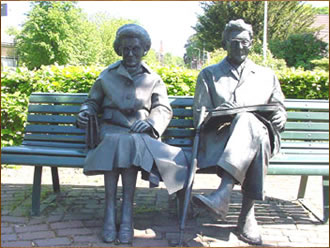
Carmiggelt met zijn vrouw Tini, brons van  Wim Kuijl in Rheden


De Amerikaanse dichter en schrijver James Whitcomb Riley werd geboren op 7 oktober 1849 in Greenfield, Indiana. Zie ook mijn blog van 7 oktober 2006 en ook mijn blog van 7 maart 2008 en ook mijn blog van 7 oktober 2009.


Dead Leaves


Dawn


As though a gipsy maiden with dim look,

Sat crooning by the roadside of the year,

So, Autumn, in thy strangeness, thou art here

To read dark fortunes for us from the book

Of fate; thou flingest in the crinkled brook

The trembling maple's gold, and frosty-clear

Thy mocking laughter thrills the atmosphere,

And drifting on its current calls the rook

To other lands. As one who wades, alone,

Deep in the dusk, and hears the minor talk

Of distant melody, and finds the tone,

In some wierd way compelling him to stalk

The paths of childhood over,--so I moan,

And like a troubled sleeper, groping, walk.


Dusk


The frightened herds of clouds across the sky

Trample the sunshine down, and chase the day

Into the dusky forest-lands of gray

And somber twilight. Far, and faint, and high

The wild goose trails his harrow, with a cry

Sad as the wail of some poor castaway

Who sees a vessel drifting far astray

Of his last hope, and lays him down to die.

The children, riotous from school, grow bold

And quarrel with the wind, whose angry gust

Plucks off the summer hat, and flaps the fold

Of many a crimson cloak, and twirls the dust

In spiral shapes grotesque, and dims the gold

Of gleaming tresses with the blur of rust.


Night


Funereal Darkness, drear and desolate,

Muffles the world. The moaning of the wind

Is piteous with sobs of saddest kind;

And laughter is a phantom at the gate

Of memory. The long-neglected grate
Within sprouts into flame and lights the mind

With hopes and wishes long ago refined

To ashes,--long departed friends await

Our words of welcome: and our lips are dumb

And powerless to greet the ones that press

Old kisses there. The baby beats its drum,

And fancy marches to the dear caress

Of mother-arms, and all the gleeful hum

Of home intrudes upon our loneliness.


754535-92b185e0237985c6b85bc283a14df601.jpg
James Whitcomb Riley (7 oktober 1849 – 22 juli 1916)

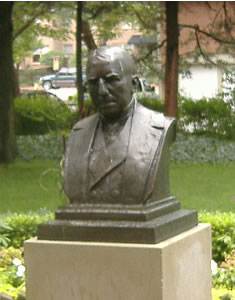
Buste van Riley in Indianapolis


De Australische schrijver Thomas Keneally werd geboren op 7 oktober 1935 in Sydney. Zie ook mijn blog van 7 maart 2008 en ook mijn blog van 7 oktober 2009.


Uit: Schindler's List


„The family Schindler was Catholic. So too was the family of young Amon Goeth, by this time also completing the Science Course and sitting for the Matura examinations in Vienna.

Oskar's mother, Louisa, practiced her faith with energy, her clothes redolent all Sunday of the incense burned in clouds at High Mass in the Church of St. Maurice. Hans Schindler was the sort of husband who drives a woman to religion. He liked cognac; he liked coffeehouses. A redolence of brandy-warm breath, good tobacco, and confirmed earthiness came from the direction of that good monarchist, Mr. Hans Schindler.

The family lived in a modern villa, set in its own gardens, across the city from the industrial section. There were two children, Oskar and his sister, Elfriede. But there are not witnesses left to the dynamics of that household, except in the most general terms. We know, for example, that it distressed Frau Schindler that her son, like his father, was a negligent Catholic.

But it cannot have been too bitter a household. From the little that Oskar would say of his childhood, there was no darkness there. Sunlight shines among the fir trees in the garden. There are ripe plums in the corner of those early summers. If he spends a part of some June morning at Mass, he does not bring back to the villa much of a sense of sin. He runs his father's car out into the sun in front of the garage and begins tinkering inside its motor. Or else he sits on a side step of the house, filing away at the carburetor of the motorcycle he is building.

Oskar had a few middle-class Jewish friends, whose parents also sent them to the German grammar school. These children were not village Ashkenazim—quirky, Yiddish-speaking, Orthodox—but multilingual and not-so-ritual sons of Jewish businessmen. Across the Hana Plain and in the Beskidy Hills, Sigmund Freud had been born of just such a Jewish family, and that not so long before Hans Schindler himself was born to solid German stock in Zwittau.

Oskar's later history seems to call out for some set piece in his childhood. The young Oskar should defend some bullied Jewish boy on the way home from school. It is a safe bet it didn't happen, and we are happier not knowing, since the event would seem too pat. Besides, one Jewish child saved from a bloody nose proves nothing. For Himmler himself would complain, in a speech to one of his Einsatzgruppen, that every German had a Jewish friend. " 'The Jewish people are'going to be annihilated,' says every Party member. 'Sure, it's in our program: elimination of the Jews, annihilation—we'll take care of it.' And then they all come trudging, eighty million worthy Germans, and each one has his one decent Jew. Sure, the others are swine, but this one is an A-One Jew."


754535-a2ac493a265a160b88a48399664c3440.jpg
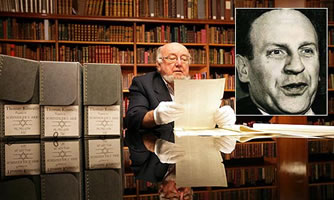
Thomas Keneally (Sydney, 7 oktober 1935)

Inzet Oskar Schindler


Zie voor nog meer schrijvers van de 7e oktober ook mijn vorige blog van vandaag.
Geschreven door Romenu om 00:00 Reageer op dit bericht

Dirkje Kuik, Steven Erikson, Wilhelm Müller

De Nederlandse schrijfster en beeldend kunstenares Dirkje Kuik werd geboren in Utrecht op 7 oktober 1929. Zie ook mijn blog van 7 maart 2008 en ook mijn blog van 7 oktober 2009.


Het museum Jo, weet je nog


Het museum Jo, weet je nog,
kleine vriendelijke doffer, wie weet.
Alle schilderkunst sloegen we
over, behalve Sinte Caecilia
en de graflegging, ons heer
in zijn glazen kastje, schilder
de mensen van pintor Scorel zegt men.
Zeer beschadigd waren we, dronken
van vroeger en wijn, venijn van de kunst,
een gunst zo maar gegeven, drie gulden,
aangeschoten doffer weet je nog, de toegang.


Metamorfose


Vandaag ben ik een lekkker dier,

eenhoorn, hoewel ten halve stier, een fabel.

Morgen wellicht Jan zonder land

Och arme kruidenier,

de kat met negen staarten.

Het boegbeeld van een schip, gestrand,

een zeemeermin gebleven na de vloed,

Krake, de leden in het vissersnet, verlaten,

Kleio, de neus in het zand.


754532-7b9f61374689972145d892aa29fe90c1.jpg 

Dirkje Kuik (7 oktober 1929 – 18 maart 2008)

Zelfportret, 1955


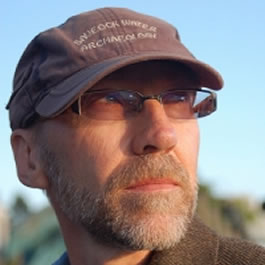
De Canadese schrijver, archeoloog, antropoloog Steven Erikson (pseudoniem van Steve Rune Lundin) werd geboren in Toronto op 7 oktober 1959. Zie ook mijn blog van 7 maart 2008 en ook mijn blog van 7 oktober 2009.


Uit: Memories Of Ice


„Swallows darted through the clouds of midges dancing over the mudflats. The sky above the marsh remained grey, but it had lost its mercurial wintry gleam, and the warm wind sighing through the air above the ravaged land held the scent of healing.

     What had once been the inland freshwater sea the Imass called Jaghra Til – born from the shattering of the Jaghut ice-fields – was now in its own death-throes. The pallid overcast was reflected in dwindling pools and stretches of knee-deep water for as far south as the eye could scan, but none the less, newly birthed land dominated the vista.

     The breaking of the sorcery that had raised the glacial age returned to the region the old, natural seasons, but the memories of mountain-high ice lingered. The exposed bedrock to the north was gouged and scraped, its basins filled with boulders. The heavy silts that had been the floor of the inland sea still bubbled with escaping gases, as the land, freed of the enormous weight with the glaciers’ passing eight years past, continued its slow ascent.

     Jaghra Til’s life had been short, yet the silts that had settled on its bottom were thick. And treacherous.

     Pran Chole, Bonecaster of Cannig Tol’s clan among the Kron Imass, sat motionless atop a mostly buried boulder along an ancient beach ridge. The descent before him was snarled in low, wiry grasses and withered driftwood. Twelve paces beyond, the land dropped slightly, then stretched out into a broad basin of mud.

     Three ranag had become trapped in a boggy sinkhole twenty paces into the basin. A bull male, his mate and their calf, ranged in a pathetic defensive circle. Mired and vulnerable, they must have seemed easy kills for the pack of ay that found them.

     But the land was treacherous indeed. The large tundra wolves had succumbed to the same fate as the ranag. Pran Chole counted six ay, including a yearling. Tracks indicated that another yearling had circled the sinkhole dozens of times before wandering westward, doomed no doubt to die in solitude.

     How long ago had this drama occurred? There was no way to tell. The mud had hardened on ranag and ay alike, forming cloaks of clay latticed with cracks. Spots of bright green showed where windborn seeds had germinated, and the Bonecaster was reminded of his visions when spiritwalking – a host of mundane details twisted into something unreal. For the beasts, the struggle had become eternal, hunter and hunted locked together for all time.“


754532-72b2eb34dbf17ed374da6867417d16f9.jpg
Steven Erikson
(Toronto, 7 oktober 1959)


De Duitse, romantische dichter Wilhelm Müller werd geboren op 7 oktober 1794 in Dessau. Zie ook mijn blog van 7 oktober 2006 en ook mijn blog van 7 maart 2008 en ook mijn blog van 7 oktober 2009.


Der Müller und der Bach


[Der Müller]


Wo ein treues Herze

In Liebe vergeht,

Da welken die Lilien

Auf jedem Beet.


Da muß in die Wolken

Der Vollmond gehn,

Damit seine Tränen

Die Menschen nicht sehn.


Da halten die Englein

Die Augen sich zu,

Und schluchzen und singen

Die Seele zu Ruh


[Der Bach]


Und wenn sich die Liebe

Dem Schmerz entringt,

Ein Sternlein, ein neues,

Am Himmel erblinkt.


Da springen drei Rosen,

Halb rot, halb weiß,

Die welken nicht wieder,

Aus Dornenreis.


Und die Engelein schneiden

Die Flügel sich ab,

Und gehn alle Morgen

Zur Erde hinab.


[Der Müller]


Ach, Bächlein, liebes Bächlein,

Du meinst es so gut:

Ach, Bächlein, aber weißt du,

Wie Liebe tut?


Ach, unten, da unten,

Die kühle Ruh!

Ach, Bächlein, liebes Bächlein,

So singe nur zu.


754532-d413cf96a98bf093786d404fc27c73fe.jpg
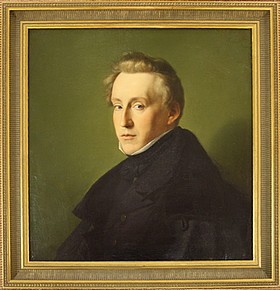
Wilhelm Müller (7 oktober 1794 – 1 oktober 1827)

Mogelijke schilders: Johann Heinrich Beck of Franz Krüger
Geschreven door Romenu om 00:00 Reageer op dit bericht

Nobelprijs literatuur voor Mario Vargas Llosa

Nobelprijs literatuur voor Mario Vargas Llosa


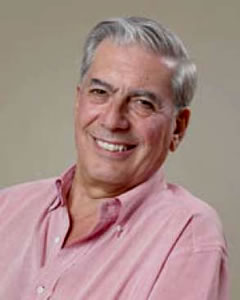
De Nobelprijs voor de Literatuur is dit jaar toegekend aan de Peruaanse schrijver en oud-politicus Mario Vargas Llosa. Dat heeft de Zweedse Academie donderdag bekendgemaakt. Hij is de eerste Peruaan die de prijs heeft gekregen. De laatste Spaanstalige schrijver aan wie de prijs werd toegekend, was in 1990 de Mexicaan Octavio Paz. De prijs, waaraan een bedrag van 10 miljoen Zweedse kronen (1,5 miljoen euro) is verbonden is aan Vargas Llosa toegekend voor ,,de manier waarop hij machtsstructuren in kaart brengt en zijn scherpzinnige beelden van het verzet, de opstandigheid en de nederlaag van het individu.'' Vargas Llosa is de elfde Spaanstalige winnaar van de Nobelprijs voor de Literatuur. De eerste was de Spanjaard José Echegaray in 1904. Andere Spaanstalige winnaars waren onder anderen Pablo Neruda (1971) en Gabriel Garcia Márquez (1982).


Mario Vargas Llosa in Arequipa werd geboren op 28 maart 1936. Zie ook mijn blog van 28 maart 2007 en ook mijn blog van 28 maart 2008.en ook mijn blog van 28 maart 2009 en eveneens mijn blog van 28 maart 2010.


Uit: The Feast of the Goat (Vertaald door Edith Grossman)


“But the colonial city has not been modernized, and neither has Gazcue, her neighborhood. And she is absolutely certain her house has hardly changed at all. It must be the same, with its small garden, old mango tree, and the flamboyán with red flowers bending over the terrace where they used to have lunch outdoors on weekends; the sloping roof and the little balcony outside her bedroom, where she would go to wait for her cousins Lucinda and Manolita, and, during that last year, 1961, spy on the boy who rode past on his bicycle, watching her out of the comer of his eye and not daring to speak. Would it be the same inside? The Austrian clock that sounded the hours had Gothic numerals and a hunting scene. Would her father be the same? No. You've seen him failing in the photos sent to you every few months or years by Aunt Adelina and other relatives who continued to write even though you never answered their letters. 

She drops into an armchair. The rising sun penetrates to the center of the city; the dome of the National Palace and its pale ocher walls sparkle gently under a curve of blue. Go now, soon the heat will be unbearable. She closes her eyes, overcome by a rare inertia, for she is accustomed to always being active and not wasting time in what, since her return to Dominican soil, has occupied her day and night: remembering. "This daughter of mine is always working, she even repeats her lessons when she's asleep" That's what Senator Agustín Cabral, Minister Cabral, Egghead Cabral used to say about you when he boasted to his friends about the girl who won all the prizes, the student the sisters always held up as an example. Did he boast to the Chief about Urania's scholarly achievements? "I'd like so much for you to know her, she has won the Prize for Excellence every year since she enrolled at Santo Domingo. It would make her so happy to meet you and shake your hand. Urania prays every night for God to protect that iron health of yours. And for Dona Julia and Dona María as well. Do us this honor. The most loyal of your dogs asks, begs, implores you. You can't refuse: receive her. Excellency! Chief!" 

Do you despise him? Do you hate him? Still? "Not anymore," she says aloud. You wouldn't have come back if the rancor were still sizzling, the wound still bleeding, the deception still crushing her, poisoning her, the way it did in your youth, when studying and working became an obsessive defense against remembering. Back then you did hate him. With every atom of your being, with all the thought and feeling your body could hold. You wanted him to suffer misfortunes, diseases, accidents. God granted your wish, Urania. Or rather, the devil did. Isn't it enough that the cerebral hemorrhage brought him a living death? A sweet revenge that he has spent the last ten years in a wheelchair, not walking or talking, depending on a nurse to eat, lie down, dress, undress, trim his nails, shave, urinate, defecate? Do you feel avenged? "No." 


 754237-66d34220af07357c3d726a2bde35880d.jpg

Mario Vargas Llosa (Arequipa, 28 maart 1936)
Geschreven door Romenu om 00:00 Reageer op dit bericht

Victor Vroomkoning, Horst Bingel, Ludwig Begley, Heinrich Federer, Maria Dąbrowska, Peter Gosse

De Nederlandse dichter Victor Vroomkoning (pseudoniem van Walter van de Laar) werd geboren op 6 oktober 1938 in Boxtel. Zie ook mijn blog van 6 oktober 2006 en ook mijn blog van 6 oktober 2007 en ook mijn blog van 6 oktober 2008 en ook mijn blog van 6 oktober 2009.


Spiegel


Ik haal mijn vader in.

De roos die als confetti
op zijn schouders sneeuwde,
de slierten lang gehouden
haar - resten serpentine
om de leegte van zijn schedel
op te sieren -, de schamele
guirlande van zijn baard
die de krachteloze kin
bewimpelde: ontluistering
die ik herken in bange ogen
blikken van zelfbespiegeling.


Overleg


Mijn zoon spant bogen
samen met mijn vader.
Zij lijken sprekend
op grote mensen die gemeen-
zaam aan het werk terloops
wijsheden verkondigen.

Terwijl mecano-onderdelen
tot een brug worden gesmeed
legt vader uit dat sommigen
na honderd jaar de over-
kant bereiken.

Zijn wij sommig?
leidt het kind hem af.
Vader geeft geen antwoord
maar een schroef terug
die niet past.

De brug vlot naar zijn einde
als de onvermijdelijke god
weer boven water komt.
Of die dan sommig is?
Sommiger dan wij,
probeert vader.


Latijn


Hoe het huis wekelijks meeleefde
als hij neerstreek, steeds hetzelfde
ritueel, zongend onderaan de trap,
flarden Latijnse mis, dronken
tenor maar helder alsof hij alleen
beschonken het hoog akkoord kon
halen, klossend naar zijn hemel-
bed, roeden uit hun klemmen wippend,
een wonder dat hij elke keer weer
boven raakte waar de halve nacht
zijn vrouw, onze moeder, waakte
die hem kapittelend ontving
maar spoedig inbond als zijn Latijn
in een onvervalste smartlap over-
ging, ze mee ging neurien met haar
gevallen engel en hij genas
aan haar borst. Dank ik mijn genese
aan zulk een lucide verbond?


753696-7fa8b355e884d6f286b1b0499d7b8005.jpg
Victor Vroomkoning (Boxtel, 6 oktober 1938)


De Duitse dichter, schrijver, graficus en uitgever Horst Bingel werd geboren in Korbach op 6 oktober 1933. Zie ook mijn blog van 6 oktober 2008 en ook mijn blog van 6 oktober 2009.


Taube

Du triffst die Taube im Flug, sie ist nicht blau, was
staunst du, sie ist nicht blau,
die Taube sitzt rot schon tief im Horizont, sie wartet mit
dir, bei Tag, nachts, sie spreizt ihr Gefieder,
sie wartet,
sie wartet doch nicht.


Du siehst die Taube so nah, sie ist jetzt dein, was
staunst du, sie ist doch dein,
die Taube spitzt ewig scharf deinen Schnabel, hinter dem
Horizont, bei Nacht, tags, sie spitzt ihn ja
dir, sie fliegt nur,
sie fliegt stets allein.


Du hörst die Taube im Flug, sie bleibt dein Schatten, was
staunst du, sie grüßt nicht,
die Taube ist nun arg bunt im Horizont, sie ist sonst gar
nichts, bei Tag, nachts, doch hinter dem Regen,
sie trägt dich,
sie trägt dich im Kopf.


Poesiealbum

Das Schreiben von Gedichten, es kann
doch keine Sünde sein, du trinkst auch
mit einer Schönen nicht immer nur
Wein, schon sitzt im Herzen
der alte, der Wurm
Vergißmeinnicht und
bleibt sitzen auf
einem, einem
Liebesgedicht.


 753696-2e848960f4cff2c2d70f43142cfab628.jpg

Horst Bingel (6 oktober 1933 – 14 april 2008)

Korbach


De Amerikaanse schrijver Louis Begley werd geboren als Ludwig Beglejter op 6 oktober 1933 in Stryj (toen Polen, tegenwoordig Oekraïne). Zie ook mijn blog van 6 oktober 2008 en ook mijn blog van 6 oktober 2009.


Uit: Mistler's Exit


“I understand, said Mistler.
Really, there was no need to rush the conversation. The waiting room was empty. Bill Hurley had become Mistler?s family doctor fifteen years earlier, succeeding to the practice of an uncle, who died on the tennis court of a ruptured aneurism upon double-faulting in the fourth game of the fourth set of his club?s senior doubles championship, when the score was forty?love. By now, he was also a friend. The secretary had specifically asked Mistler to stop by toward the end of the afternoon, when Dr. Hurley would be through with other patients. Just the same, as soon as Mistler arrived, she began to apologize, because the doctor was running late.
Don?t worry, he told her. For once, I don?t mind waiting.
That was the truth. An interval of empty time seemed vastly preferable to what would follow. In fact, if there was a reason to hurry, once Mistler had reluctantly
abandoned a two-year-old issue of Glamour and found himself in Hurley?s office, the place where Hurley interrogated and decreed, the reluctant flesh having been poked and kneaded into yielding its secrets in the adjoining cubicle that housed the examination table and a reliable scale, the only piece of Hurley?s equipment Mistler was fond of, it had to be that the place was so ugly. With its stacks of manila envelopes containing, Mistler supposed, X rays and EKG tapes, apparently untouched since the time of Hurley?s uncle (if indeed either the uncle or the nephew had ever examined their contents, which Mistler was not ready to take for granted), the fake antique desk, small enough to fit in a college dormitory room, cluttered with pharmaceutical company doodads, and, on the walls, prints of ducks alongside diplomas that traced Hurley?s progress from his New Jersey prep school through the last board certification, this room spoke of indifference and small economies. One would not have tolerated such a thing in any other high-priced service business. Did it ever occur to doctors to have discussions that broke the patient?s heart outside the office, over a cup of coffee, or a drink, if they were unwilling to spend money on furniture? One could, after all, with a minimum of skill, maneuver the patient into paying the check, or bury the disbursement in the statement as a stool test or the like. Most lawyers Mistler dealt with would have considered either a lead-pipe cinch.“


753696-55f6c5e48e6e82cb0c6ecc6a1ac5e1c7.jpg
Louis Begley (Stryj, 6 oktober 1933)


De Zwitserse schrijver en priester Heinrich Federer werd geboren op 6 oktober 1866 in Brienz. Zie ook mijn blog van 6 oktober 2009.


Uit: Der gestohlene König von Belgien


„Wie viele glänzende Fünffränkler sind mir schon durch die Finger gegangen! Rund sind sie und rollen weg und rollen zu, – und wenn einem am Abend des Lebens noch einer zur Zehrung der letzten Stunden bleibt, ist's gut und ist's auch genug. Aber ein ehrlicher muss es sein.

Springt mir – doch nein, es pressiert ihm ja nicht! – spaziert mir so ein Silbermond in die Hand, dann schaue ich flugs, was für ein thronendes Wesen er trägt. Ist es die freie Mutter Helvetia, so lacht mir mein eidgenössisches Herz im Leibe. Obwohl sie ein so rauhes und steifes Gesicht macht wie eine junge Stiefmutter, wenn sie zum erstenmal in die Stube voll Stiefbuben und Stiefmädchen blickt und merkt, dass dies Geschlecht schwer zu bändigen ist und gleich tiefe Augen macht und die Knochen hart in die Wangen springen lässt: – es muss eben doch meine richtige Frau Mama sein und wer's nicht glaubt, der sehe einmal ringsum die Urnerberge und vor allem dieses Weibes goldene Bernerzöpfe an! Ist das nicht helle, dicke Schweiz? – Die Welschlandkönige, Sohn, Vater und Grossvater lassen ihren Schnurrbart zugleich mit ihren Staatsschulden weit über die Münze hinauswachsen. Das stört mich wie alle Prahlerei.

Wogegen der dritte Napoleon mit seinem spitzen Bärtchen und Ludwig XVIII. im Behagen seines Doppelkinns mich weder kalt noch warm machen.

Aber gern seh' ich das lange, verlebte Gesicht des belgischen Leopold. Nicht als ob ich für diesen eisigen Monarchen schwärme, – da wäre ich wohl ein selten dummer Hans. – Aber an dieses Silbergeld knüpft sich ein sündiges Abenteuer meiner Jugend, das ich nie vergessen kann. Unter den Augen des belgischen Leopold habe ich meinen ersten Diebstahl verbrochen. So oft ich nun den Fürsten sehe, erröte ich, selbst heute noch, wo ich glaube, dass auch die Könige zuweilen vor uns erröten dürften. Und jedesmal wird mir doch wieder seltsam leicht. Denn es war auch mein letzter und schwer gesühnter Diebstahl.


753696-e3ac503c64874549e056455858ab1584.jpg 

Heinrich Federer (6 oktober 1866 – 29 april 1928)


De Poolse schrijfster Maria Dąbrowska werd geboren op 6 oktober 1889 in Russów bij Kalisz. Zie  ook mijn blog van 6 oktober 2009.


Uit: Nights and Days


„In the old days, the Niechcic family lived more or less like all the rest of the squirearchy. They maintained close and varied relations with their relatives – even with the most remote – who usually held estates similar to theirs or, what amounted to the same thing, suburban gardenlands supplying comparable agricultural income.

They felt themselves to be an intimate part of a powerful self-sufficient tribe, which had its own jargon of kinship and friendliness, pondered how to educate its children aloof from outside influences and, in general, conducted its business in such a way that movement outside the tribe, or even outside the local ever-expanding family structure, was rare. The grandfather of Bogumił Niechcic, Maciej, however, had begun to drift slowly out of the family world.

More and more often he received into his home friends and acquaintances from outside the clan: scientists, professors, artists, journalists, members and activists of political parties, people of doubtful origin or those who also left their own circle. The tale went out that Maciej Niechcic gave away heart, mind and, last but not least, money to perfect strangers. He acquired a reputation as a restless man and his own people began to avoid him.

What extenuated these antics in the minds of his more sympathetic relations was Maciej’s supposed ambitious desire to emulate the great nobles, magnates and celebrities who traditionally patronized science, art and politics.

Soon, however, it became evident that Niechcic was a stranger to such ambitions: it was not in the least evident that the significance and splendor of his house was increasing in any sense. On the contrary, Maciej Niechcic seemed to be doing everything to become poorer and less conspicuous. For example, after the rising of 1830, he conceived the idea of exchanging one of his hereditary estates for another which, for some reason or other, suited his purposes better.“


753696-4ae94550b9d3dff2db03f74039cc4908.jpg
Maria Dąbrowska  (6 oktober 1889 – 19 mei  1965)


De Duitse dichter, schrijver en essayist Peter Gosse werd geboren in Leipzig op 6 oktober 1938.

Zie ook mijn blog van 6 oktober 2008.


Uit: Genug. Nach Puschkin


Genug, Freund, es ist Zeit. Ich will nun Stille.

Die Jahre gehn. Wir werden Hülle.

Ich weiß nicht mehr, wer du bist, wer ich bin.

Wir möchten sein. Doch sieh: wir siechen hin.


Was ist denn sein? Gelöstsein – das ist alles.

So dacht ich einst auf Flucht: ein arbeitvolles

Gelassenes Genießen: dies der Ort!

Ihn träum ich manchmal noch. Der Traum geht fort.


753696-89ef0e34e9ff76e5216997828ddd9629.jpg
Peter Gosse (Leipzig, 6 oktober 1938)

Geschreven door Romenu om 19:38 Reageer op dit bericht

Ulrike Ulrich

De Duitse dichteres en schrijfster Ulrike Ulrich werd geboren in op 6 oktober 1968 in Düsseldorf. Zij studeerde in Münster germanistiek, kunstgeschiedenis en communicatiewetenschappen. Daarna werket zij in Bochum op het gebied van de computerlinguistiek. In 1999 trok zij naar Wenen waar zij werkte aan de Schule für Dichtung. Ulrich schrijft gedichten, proza, draaiboeken, columns en hoorspelen en is tevens werkzaam als uitgeefster van bloemlezingen. Sinds 2002 woont zij in Zwitserland. Zie ook mijn blog van 25 april 2010.


Der Hund ist tot


Der, der den Hund begraben hat, der hat vergessen, wo er liegt. Der hat kein Kreuz gemacht und keine Kerbe. Der hat von Breitengraden keine Ahnung und weiß nicht mal, in welcher Gegend. Ob er den Hund in halbgefrorner Erde, in abgesacktem Sand, in Torf, in Lehm. Er weiß es nicht.
Jetzt suchen alle nach der Leiche. Mit Wünschelruten, Satelliten, Schäfer­hunden. Mit Archäo­logen, Patho­logen, Kopf­geld­jägern, Agenten, Agenturen und Experten. Mit Boden­truppen und mit Religion.
Der, der den Hund begraben hat, der hat den Hund nicht mal gekannt. Er hat ihn bloß gefunden. Der, der den Hund begraben hat, der fürchtet sich vor Hunden, selbst vor toten. Er hat so tief gegraben, wie er konnte. Ob er vor Jahren, Tagen, vor Jahrzehnten. Er weiß es nicht. Er weiß auch nichts vom Leichengift.
Weil niemand wirklich weiß, wo er begraben liegt, gibt es an jeder Ecke Hundegräber, und jeder hält ein andres Grab für das verbürgte. Sie weinen Tränen über Maulwurfshügel, sie klagen, schreien, werfen Blumen, sich zu Boden, einander vor, am falschen Grab zu stehn und sagen: Das Grab ist leer.
Der, der den Hund begraben hat, der leidet lang schon unter Amnesie. Seit er am Grab des ungekannten Hundes stand. Er weiß nicht, wer er ist noch was er wollte. Er wird von niemandem erkannt. Er ist mit niemandem verwandt. Doch jeder fragt ihn nach dem Weg. Er weiß ihn nicht.


 900991-9556e6ba8adf52a4fa99c543adbc58e1.jpg

Ulrike Ulrich (Düsseldorf, 6 oktober 1968)
Geschreven door Romenu om 00:00 Reageer op dit bericht

Meer van Romenu

↑ Terug naar de berichten