Naar de inhoud

Romenu

Over literatuur, gedichten, kunst en cultuur
akke.beakke.be

Berichten van 12 oktober 2010 tot 13 oktober 2010

Herman Franke, Colin Channer, Edwina Currie

De Nederlandse schrijver Herman Franke werd geboren op 13 oktober 1948 in Groningen. Zie ook mijn blog van 13 oktober 2006 en ook mijn blog van 13 oktober 2007 en ook mijn blog van 13 oktober 2008 en ook mijn blog van 13 oktober 2009.  Herman Frank overleed op 14 augustus van dit jaar. Zie ook mijn blog van 16 augustus 2010.


Uit: De verbeelding


„Het oog van de liefde
Het daglicht in zijn atelier is genadeloos, maar hij ziet niets dat afbreuk doet aan haar rijpe, venusachtige schoonheid. Zelfs de opvallend grote moedervlek op haar buik siert haar. Ze ligt als een kostbaar juweel op het zwartfluwelen, met zilverdraad bestikte divankleed. Voor het eerst in zijn lange kunstenaarsleven voelt hij, kijkend naar een model, de miezerige opwinding van een voyeur. Haar hoofd steunt op de gebogen hand van haar linkerarm. Van haar gezicht straalt de gracieuze blijheid van Euphrosyne. Ze is zo onmenselijk mooi dat hij haar onwillekeurig behandelt als een stilleven van vrouwelijke schoonheden dat je vrijelijk kunt hergroeperen. Hij schuifelt met samengeknepen ogen naar haar toe en vouwt haar rechterarm als een krans rond haar hoofd waarbij de rug van zijn hand langs een van haar borsten strijkt. Nog voordat hij zich kan excuseren, schenkt ze hem de vrijgevochten lach van een bacchante die hij op tientallen schetsen en schilderijen van haar heeft vastgelegd toen ze nog Emma Hart heette. Terwijl hij verlegen teruglacht, verschijnen als bij toverslag de trekken van een meisjesachtige onschuld op haar gezicht.
'Je bent een godin,' zegt hij en reikt naar haar benen.
`Mag ik?'
Ze knikt traag zonder haar ogen van hem af te houden. Aarzelend legt hij haar linkerbeen over haar rechter en tilt haar heup iets op zodat de volle ronding van haar bil zichtbaar wordt. Hij doet enkele stappen achteruit en neemt haar keurend op.
`De mooiste godin,' zegt hij.
Ze werpt spottend een vrome blik naar de hemel voordat ze hem onweerstaanbaar verleidelijk aankijkt. Meer dan ooit voelt hij zich een oude man. De voorbije jaren drukken verwijtend op zijn schouders. Zijn zucht naar roem dreef hem in 1762 van het provinciale Kendal in Westmorland naar het wereldse Londen. Zijn vrouw Mary en zijn zoontje John zouden hem later volgen maar daar kwam het nooit van. Eerst had hij geen geld en later was hij aan de vrijheid gewend. Getrouwde kunstenaars waren geen echte kunstenaars. Ze moesten groots en meeslepend willen leven. Maar als het er bij hem op aankwam won zijn moraal het altijd van zijn hartstocht. Nu is het te laat. Een zuur gevoel van spijt speelt op in zijn maag.”


758809-b48fd8ef975994cef1c1b4dacddc9a9f.jpg 

Herman Franke (13 oktober 1946 – 14 augustus 2010)

Getekend door Peter van Dongen


De Jamaicaanse schrijver Colin Channer werd geboren op 13 oktober 1963 in Kingston. Zie ook mijn blog van 13 oktober 2008 en ook mijn blog van 13 oktober 2009. 


Uit: The Girl with the Golden Shoes


„They were sitting on old buckets, scaling fish beneath an almond tree, when someone pointed to the water and they all began to shout.

They were hardy children who'd been raised in isolation on a crescent beach below a cliff, and had experienced many horrors-drownings, stabbings, births, and storms. But when they saw a one-eyed monster rising from the deep, they dropped their tools and dashed off in a blur of skirts and faded tunics to the clump of shacks in which they lived, raising clouds of sand as white as salt.

The eldest girl, Estrella Thompson, would be fifteen soon, and thought herself mature. She'd recently begun to read, which had created an awareness of a universe beyond San Carlos. So, unlike her friends, she was interested in the war.

The war was taking place in Europe, a place she'd only heard about the year before. Poland. Antwerp. Riga. Spain. The names were sparkling gems of sound that shimmered with a range of possibilities that went beyond the dreams of all her neighbors in the cove. So on the rare occasions that she'd had the chance to travel into town, she'd steal away to loiter in the little shops in Woodley, the district of the artisans adjacent to the port. There, she'd listen to the intonations of the BBC announcer on the redifusion box and be transported like a person who'd gone to see a medium for a glimpse of life across the void into the other world.

On these nights more than others, as she curled up in the hammock she shared with other girls beneath a shed beside her old grandmother's hut, Estrella would gaze outside the window as she fingered old newspapers and her cache of stolen books, dreaming of the day when she'd be rescued from this place where nothing happened.“


758809-cb92666ceef7b779f500c010e8c08df9.jpg
Colin Channer (Kingston, 13 oktober 1963)


De Britse romanschrijfster en gewezen politica
Edwina Currie werd geboren in Liverpool op 13 oktober 1946. Currie is afkomstig uit een gelovig joods  gezin in Liverpool, maar beschouwt zichzelf als enkel cultureel Joods; ze houdt zich naar eigen zeggen niet met „religieuze onzin“ bezig. Aan de Universiteit van Oxford studeerde ze politiek, filosofie en economie, en vervolgens specialiseerde ze zich in de economische geschiedenis aan de London School of Economics. Ze werd in 1975 gemeenteraadslid in Birmingham, waar ze het district Northfield vertegenwoordigde. Deze functie bekleedde ze tot 1986, toen ze Minister van Gezondheid werd. Currie schreef zes romans, die vaak over politieke intriges gaan. In haar dagboeken van de jaren 1987 tot 1992, gepubliceerd in 2002, kwam aan het licht dat ze tussen 1984 en 1988 een affaire met John Major had gehad. Toen Major tot Chief Secretary of the Treasury  bevorderd werd, werd de liefdesrelatie te gevaarlijk, al bleef ze, zoals ze zelf zei, nog jarenlang verliefd op hem. Enkele weken na de publicatie van haar dagboeken omschreef ze Major als „een der minder bekwame premiers“, die ze tevens van seksisme en racisme betichtte. Voordien had ze de affaire echter jarenlang ontkend.


Uit: Diaries


20 March 1987:

"The real reason I wanted to write tonight was to record the end of something very special.


"I wrote to B on Thursday night saying that's it, no more; posted it Friday morning, so he won't have seen it yet, maybe not till Tuesday.

"Because it isn't quite the fun it was - he has changed.


"It was best when he was restless, hiding himself, lacked confidence; he told me about his family; his early background, about being out of work, nearly being killed in an accident, all the deep things you only tell your soul ...


"He wrote only once, back in 1984 before we started, apologising for something he'd said thoughtlessly, 'I wouldn't hurt you for the world'. Once, unguarded, he answered when prodded, 'I think you're lovely,' but that was it ...


"So why did it start? Because I was unhappy with a husband forever slumped snoring in front of the television, not helpful or interested in what I was trying to do.


"I needed a friend. The first one turned out to be a right slob, with some kinky preferences and a selfishness of such magnitude as I've never met before.


"I needed help and advice to get up from the backbenches, but the slob made it harder. 'I love you,' he said, but his real idea of women was to keep them in their place and not upstage him.


"Then B came along, and he was so nice and so attractive, and so quiet in public that it was a challenge to unearth the real person, and to seduce him - easy!


"And it was unexpectedly, spectacularly good, for such a long time."


 758809-c5bb7339edd2d3b1171a75cc276653e4.jpg

Edwina Currie (Liverpool, 13 oktober 1946)


Zie voor nog meer schrijvers van de 13e oktober ook mijn vorige blog van vandaag.

Geschreven door Romenu om 19:42 Reageer op dit bericht

Migjeni, Arna Wendell Bontemps, Conrad Richter

De Albanese dichter Migjeni (eigen. Millosh Gjergj Nikolla) werd geboren op 13 oktober 1911 in Shkodra. Zie ook mijn blog van 13 oktober 2008 en ook mijn blog van 13 oktober 2009. 


Blasphemy


The mosques and churches float through our memories,
Prayers devoid of sense or taste echo from their walls.
Never has the heart of god been touched by them,
And yet it beats on amidst the sounds of drums and bells.


Majestic mosques and churches throughout our wretched land,
Spires and minarets towering over lowly homes,
The voice of the hodja and priest in one degenerate chant,
Oh, ideal vision, a thousand years old!


The mosques and churches float through memories of the pious,
The chiming of the bell mingles with the muezzin's call,
Sanctity shines from cowls and from the beards of hodjas.
Oh, so many fair angels at the gates of hell!


On ancient citadels perch carrion ravens,
Their dejected wings drooping - the symbols of lost hopes,
In despair do they croak of an age gone by
When the ancient citadels once gleamed with hallowed joy.


Song of noble grief


Oh, noble grief of the suffering soul
That into free verse bursts out...
Would you perchance take comfort
In adorning the world with jewels?


Oh, noble grief in free verse,
Which sincerely sounds and resounds,
Will you ever move the feelings of men,
Or wither and die like the autumn leaves?


Oh, song worthy of noble grief...
Never rest! But with your twin,
Lamentation, sing out your suffering,
For time will be your consolation.


Vertaald door Robert Elsie


 758801-2e5d4db98ad5534d0306852a361bf875.jpg

Migjeni (13 oktober 1911 – 26 augustus 1938)


De Amerikaanse dichter en schrijver Arna Wendell Bontemps werd geboren op 13 oktober 1902 in Alexandria in Louisiana. Zie ook mijn blog van 13 oktober 2008 en ook mijn blog van 13 oktober 2009. 


A Black Man Talks of Reaping


I have sown beside all waters in my day.
I planted deep, within my heart the fear
that wind or fowl would take the grain away.
I planted safe against this stark, lean year.


I scattered seed enough to plant the land
in rows from Canada to Mexico
but for my reaping only what the hand
can hold at once is all that I can show.


Yet what I sowed and what the orchard yields
my brother's sons are gathering stalk and root;
small wonder then my children glean in fields
they have not sown, and feed on bitter fruit.


The Day-Breakers


We are not come to wage a strife
With swords upon this hill,
It is not wise to waste the life
Against a stubborn will.
Yet would we die as some have done.
Beating a way for the rising sun.


758801-1e4be0d2d7b0a40dd8af2921659a47aa.jpg
Arna Wendell Bontemps (13 oktober 1902 – 4 juni 1973)


De Amerikaanse schrijver
Conrad Richter werd geboren op 13 oktober 1890 in Pine Grove, Pennsylvania. Zie ook mijn blog van 13 oktober 2008 en ook mijn blog van 13 oktober 2009. 


Uit: The Light in the Forest


„All morning on the path with his father, crazy thoughts ran like squirrels in the boy's head. Never before had he know his father to be in the wrong. Could it be that he was in the right now? Had he unknowingly left a little white blood in the boy's veins and was it for this that he must be returned? Then they came in sight of the ugly log redoubts and pale tents of the white army, and the boy felt sure there was in his body not a drop of blood that knew these things. At the sight and smells of the white man, strong aversion and loathing came over him. He tried with all his young strength to get away. His father had to hold him hard. In the end he dragged him twisting and yelling over the ground to the council house of the whites and threw him on the leaves that had been spread around.
"I gave talking paper that I bring him," he told the white guards. "Now he belong to you."
It was all over then, the boy knew. He was as good as dead and lay among the other captives with his face down. He was sure that his father had stayed. He could feel his presence and smell the sweet inner bark of the red willow mixed with the dried sumach leaves of his pipe. When dusk fell, a white guard came up. The other soldiers called him Del, perhaps because he could talk Delaware, the strange name the whites gave the Lenni Lenape and their languages. True Son heard Del tell his father that all Indians must be out of the camp by nightfall. From the sounds the boy guessed his father was knocking out his pipe and putting it away. Then he knew he had risen and was standing over him.“


 758801-7068e3504633f6acb66c8abb932db91c.jpg

Conrad Richter (13 oktober 1890 – 30 oktober 1968)

Geschreven door Romenu om 19:36 Reageer op dit bericht

Booker Prize voor Howard Jacobson


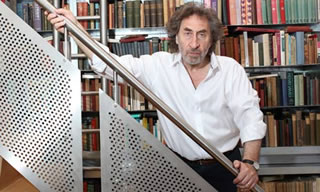
Booker Prize voor Howard Jacobson


De Britse schrijver Howard Jacobson heeft dinsdag de Man Booker Prize 2010 gekregen voor zijn roman The Finkler Question. De uitreiking werd rechtstreeks uitgezonden door de omroep BBC. Aan de prijs is een geldbedrag verbonden van 50.000 pond (ruim 56.000 euro).


Howard Jacobson werd geboren op 25 augustus 1942 in Manchester. Hij is opgegroeid in Prestwich en werd opgeleid aan Stand Grammar School in Whitefield, alvorens Engels te gaan studeren op Downing College, Cambridge. Hij doceerde gedurende drie jaar aan de Universiteit van Sydney voordat hij terugkeerde naar Engeland om les te geven aan Selwyn College in Cambridge.

Zijn fictie, met name de vijf romans die hij heeft gepubliceerd sinds 1998, wordt vooral gekenmerkt door een discursieve en humoristische stijl. Terugkerende onderwerpen in zijn werk zijn man-vrouw verhoudingen en de Joodse ervaring in Groot-Brittannië in de midden-tot laat-20e eeuw. Jacobson is wel vergeleken met vooraanstaande Joods-Amerikaanse schrijvers als Philip Roth. 

Zijn roman The Mighty Walzer uit 1999 over een tiener tafeltenniskampioen, won de Bollinger Everyman Wodehouse Prize for comic writing. Hij speelt in het Manchester van de jaren 1950 en Jacobson, zelf als tiener een ping pong fan, geeft toe dat er meer dan een autobiografisch element in zit. Zijn romans Who's Sorry Now uit 2002  en Kalooki Nights uit 2006 kwamen al eerder op de long list van de Man Booker Prize. Jacobson werkte ook als columnist voor The Independent en voor de televisie. Twee tv-programma's waren Channel 4's Howard Jacobson Takes on the Turner uit 2000 Why the Novel Matters uit 2002.


Uit: The Finkler Question


„He should have seen it coming.

His life had been one mishap after another. So he should have been prepared for this one.

He was a man who saw things coming. Not shadowy premonitions before and after sleep, but real and present dangers in the daylit world. Lamp posts and trees reared up at him, splintering his shins. Speeding cars lost control and rode on to the footpath leaving him lying in a pile of torn tissue and mangled bones. Sharp objects dropped from scaffolding and pierced his skull.

Women worst of all. When a woman of the sort Julian Treslove found beautiful crossed his path it wasn’t his body that took the force but his mind. She shattered his calm.

True, he had no calm, but she shattered whatever calm there was to look forward to in the future. She was the future.

People who see what’s coming have faulty chronology, that is all. Treslove’s clocks were all wrong. He no sooner saw the woman than he saw the aftermath of her — his marriage proposal and her acceptance, the home they would set up together, the drawn rich silk curtains leaking purple light, the bed sheets billowing like clouds, the wisp of aromatic smoke winding from the chimney — only for every wrack of it — its lattice of crimson roof tiles, its gables and dormer windows, his happiness, his future — to come crashing down on him in the moment of her walking past.

She didn’t leave him for another man, or tell him she was sick of him and of their life together, she passed away in a perfected dream of tragic love — consumptive, wet-eyelashed, and as often as not singing her goodbyes to him in phrases borrowed from popular Italian opera.

There was no child. Children spoilt the story.

Between the rearing lamp posts and the falling masonry he would sometimes catch himself rehearsing his last words to her — also as often as not borrowed from the popular Italian operas — as though time had concertinaed, his heart had smashed, and she was dying even before he had met her.

There was something exquisite to Treslove in the presentiment of a woman he loved expiring in his arms. On occasions he died in hers, but her dying in his was better. It was how he knew he was in love: no presentiment of her expiry, no proposal.

That was the poetry of his life. In reality it had all been women accusing him of stifling their creativity and walking out on him.“


 758343-755dca93073de3aa614f35ba2f7d1790.jpg

Howard Jacobson (Manchester,  25 augustus 1942)
Geschreven door Romenu om 10:08 Reageer op dit bericht

Stefaan van den Bremt, Eugenio Montale, Robert Fitzgerald

De Vlaamse dichter en essayist Stefaan van den Bremt werd geboren in Aalst op 12 oktober 1941. Zie ook mijn blog van 12 oktober 2009.


Krekellyriek op het dorpskerkhof (Fragment)


Campagnol Lucien, zeg maar Lucien Kokkerd

(zeg maar niets... Priemt daar niet zijn puntneus

achter de hoek vandaan waar hij zijn adem

inhoudt?), Lucien dus, die Lucien, ligt ook

onder de zoden. Soms steekt tussen de zerken

iets naaldscherps onder arduin of marmer uit;

dan fezelen de doden: ‘Dat is 'm, 't is Lucien!
Je weet wel: Lucien Kokkerd! Hij heeft geen rust

voor hij erachter komt wat al dat dorpsvolk

hier ligt uit te spoken. Doe of je hem niet ziet,

en geen kwaad woord over de buren!’


Trinquecoste, Romain voor wie hem beter kent,

houdt tot op het kerkhof even koppig uitverkoop:

Alles moet weg! Hij is zo ongedurig, vindt geen vrede

vóór de hele bups de deur uit is: gebreide truitjes,

van het wachten op een klant verschoten, speeltjes

waar sinds jaar en dag alleen de houtmaden mee

spelen, de roerzeef die dat hevig middaglicht moet

zeven, een knuffelbeest voor peuters uit een tijd

die mét geschiedenis en al is opgeruimd, één paar

espadrilles, weggelopen uit La Grande Vadrouille

met Bourvil, die cactusachtige waar men gerust

een blad van af mag knijpen - stop het in een pot

vol magere aarde en het spul schiet uit...


Selbstporträt


Ich, der ich von Redseligkeit den Nachgeschmack

geschmeckt habe, und sie ist unbeleckt

und pfeffert mir den Mund mit ihrem Schnack,

der beißend meine Zunge schreckt;


ich, der ich, wo es kribbelte, das Wort

gespürt habe als weißes Blatt

und schreibe so als würde ich seinen Mord

begehen, all das Weiße satt;


ich, der ich den Galopp von Hühnern ohne Kopf

gesehen habe, und wie alt war ich,

der ich das Herz, das stockend pocht,

gehört habe, so fürchterlich? –


Ich, der ich manches Buch und eine Blume

beschnuppert habe und verstumme.


Vertaald door Ard Postuma


 758024-207fcfc45310efc278497763209a862d.jpg

Stefaan van den Bremt (Aalst, 12 oktober 1941)


De Italiaanse dichter Eugenio Montale werd geboren in Genua op 12 oktober 1896. Zie ook mijn blog van 12 oktober 2007 en ook mijn blog van 12 oktober 2008 en ook mijn blog van 12 oktober 2009.


Stolpern


Stolpern, hängen bleiben
läßt sich nicht vermeiden,
um die Sprache
aus ihrer Tumbheit aufzuschrecken.
Doch mit Stottern ist es nicht getan
es mag zwar weniger geräuschvoll sein
aber verdorben ist es allemal. So
hat man sich zu beschränken
auf ein halbes Sprechen. Einmal begab es sich,
das einer ganz zu sprechen wagte
und er blieb gänzlich unverstanden. Gewiß
hielt er sich selber für den letzten
Sprecher. Doch es kam anders:
Alle sprechen, nach wie vor
und nur die Welt ist seither
stumm.


Am Meer (oder beinahe)


Es zirpt die letzte der Zykaden

auf der gelben Eukalyptusrinde

die Kinder sammeln Pinienkerne,

unverzichtbar für die Galantine

eine Dogge jault hinter dem Eisengitter

einer nunmehr unbewohnten Villa

die Väter hatten sie erbauen lassen

doch keines der Kinder hat sie gewollt

Platz gäbe es darin für hunderttausend Bebenopfer

von hier aus sieht man nicht einmal ans Ufer

sofern man das noch Ufer nennen kann, diese achtzig Prozent Strand

an die Bademeister abgetreten

und es wäre wohl vermessen, hier

auf einen halkyonischen Frieden zu pochen

das Meer ist außerdem verpestet

während all der Abfall sich zusammendrängt

zu Wellen, kleinen Hügeln, Plastiken

mit dem Schwund der Hecken hat man auch

die entzückenden Sprosse des Rosts ausquartiert

die Zaun- oder Haubenkönige wie sie

die Dichter so gerne besingen Und da ist auch so manch Magnolienknospe

das Schild des Kinderarztes, doch die Kinder

vollführen lieber ihre Fahrradflüge

und kommen gut zurecht auch ohne seine Kuren

Wer sie in vollen Zügen atmen will

die Muse unsrer Zeit, die Dürftigkeit

der sei hierher verwiesen, ohne Grund zur Eile

es ist der dumpfe Schlag, der schaudern macht

nicht etwa das schleichende Schwinden, der süße Odem des Nichts

Hic manebimus, gefällt es euch? Nicht wirklich

überwältigend, doch alles Bessere sähe schon viel zu sehr

nach Sterben aus (und das gefällt allein den Jungen).


 Vertaald door Theresia Prammer


 758024-0657a94b5b298f60916634bd161cb46c.jpg

Eugenio Montale (12 oktober 1896 - 12 september 1981)


De Amerikaanse dichter, criticus en vertaler Robert Stuart Fitzgerald werd geboren op 12 oktober 1910 in Springfield, Illinois. Zie ook mijn blog van 12 oktober 2008 en ook mijn blog van 12 oktober 2009.


The Shore of Life


I. I came then to the city of my brethren.  

Not Carthage, not Alexandria, not London.


The wide blue river cutting through the stone  

Arrowy and cool lay down beside her,  

And the hazy and shining sea lay in the offing.


Ferries, pouring the foam before them, sliding  

Into her groaning timbers, rang and rang;  

And the chains tumbled taut in the winches.


Upstream the matted tugs in the heavy water,  

Their soiling smoke unwrapped by the salt wind,  

Footed with snowy trampling and snowy sound.


On tethers, pointing the way of the tide,

The crusted freighters swung with their sides gushing.


On evening’s ship pointing northward,  

A golden sailor at sunset stood at the bow,  

As aloft in the strands a tramcar with tiny clanging

Slowly soared over, far upward and humming still.


II. Not Athens, Alexandria, Vienna or London.


And evening vast and clean above the city  

Washed the high storeys with sea-light, with a silken

Sky-tint on the planes and the embrasures:

The clump of crags and glitter sinking eastward  

With the slow world, the shadow-lipping shores,  

Pale after-conflagration of the air.


On terraces, by windows of tiredness,

The eyes dropped from that glow to the dusk atremble,

Alive with its moving atomic monotone:


There the hot taxis at the pounding corner  

Fitted their glossy flanks and shifted, waiting,  

And the girls went by with wavering tall walking,

Their combed heads nodding in the evening:


The hour of shops closing, the cocktail hour,  

Lighting desire and cigarettes and lighting  

The strange lamps on the streaming avenue.


758024-19e456e4e046e80259ae60af7b912726.jpg 

Robert Fitzgerald (12 oktober 1910 – 16 januari 1985)

Hier met collega-dichter Harvey Shapiro (rechts)


Zie voor nog meer schrijvers ook
mijn vorige blog van vandaag.

Geschreven door Romenu om 20:48 Reageer op dit bericht

Ann Petry, Paul Engle, Louis Hemon, Paula von Preradović

De Amerkaanse schrijfster Ann Petry werd geboren op 12 oktober 1908 in Old Saybrook, Connecticut. Zie ook mijn blog van 12 oktober 2009.


Uit: Harriet Tubman: Conductor on the Underground Railroad


„Chesapeake Bay forms the western boundary of the section of Maryland which is sometimes called Tidewater Maryland, sometimes called the Eastern Shore. Here there are so many coves and creeks, rivers and small streams, that the land areas are little more than heads or necks of land, almost surrounded by water.

In these streams the ebb and flow of the tide is visible for miles inland-hence the name Tidewater Maryland.

In 1820, much of the Eastern Shore was heavily wooded. The streams were filled with fish. Game birds -- wild duck and snipe -- abounded in all of the coves and marshes. It could truly be said that every plantation thereabout "at its garden gate, has an oyster-bed, a fishing-bar, and a ducking blind."

The plantation that belonged to Edward Brodas, in Dorchester County, was typical of this section of Maryland, for one of its land boundaries was a river-the Big Buckwater River. It was more or less isolated. The nearest village, Bucktown, was little more than a settlement composed of post office, church, crossroads store, and eight or ten dwelling houses.

There was an air of leisure about the planter's life here. Fishing and hunting were an integral part of it, just as it had been part of the life of the Indians, who had practically disappeared from the Eastern Shore by 1750.

The house in which Edward Brodas lived was very large. There had to be room for his friends, his relatives, as well as his family. Visitors came from long distances, and so usually stayed a month or two before undertaking the journey back home. There were extra rooms for travelers, who carried the proper letters of introduction, because inns andtaverns offered uncertain lodging for the night.

Edward Brodas was known as the Master to his Negro slaves. His house, which the slaves called the Big House, stood near a country road. The kitchen was a small detached building in the rear, known as the cookhouse. Not too far away from the Big House were the stables, where the riding horses and the carriage horses, the grooms and the hostlers were housed.“


757997-6da777278cdcb28e9201489e7b1f3e1e.jpg
Ann Petry (12 oktober 1908 – 28 april 1997)


De Amerikaanse dichter en schrijver Paul Engle werd geboren op 12 oktober 1908 in Cedar Rapids. Zie ook mijn blog van 12 oktober 2008 en ook mijn blog van 12 oktober 2009.


Return in Autumn


The land unchanged, the cattle track,

Narrow for two split hooves to meet,

Winds to walnut grove and back

As when I walked it with bare feet,


Horses with no different eye—

Brown water flowing over stone—

Watch white-maned north wind running by,

Or corn from fields that they had sown.


New mood in older things must be

An inner change, mind's bone grown longer,

Nerves less blind, more quick to see,

Blood's cry for air turned stronger.


A man's age like returning rain

Mingles with flesh it knew when younger,

Raising for him that bitter grain,

Remembered things, which ease no hunger.


Through that rain beating on my face

I see the huddled shape of days

That wandered with me in this place,

But lost their old and friendly ways.


Can I hills, horses understand,

And not past self? Yet here, I know

That one tense mind, one troubled hand,

Make present self forever go,


As frozen pond, the end of food,

Drives the southward duck to flying.
Though I return in autumn wood

I can find nothing but its crying.


 757997-214875b59734bac69ee8aad114c640bd.jpg

Paul Engle (12 oktober 1908 – 25 maart 1991)

Hier in 1957 met Writers’ Workshop studenten


De Franse schrijver Louis Hemon werd geboren op 12 oktober 1880 in Brest in Bretagne. Hemon had het voorecht onderwijs te volgen aan het Lycee Montaigne en het Lycee Louis-le-Grand in Parijs. Na zijn  licentiaat in de rechten aan de Sorbonne Hemon Louis in 1901 veranderde zijn carrière van richting en ging hij naar Engeland, waar hij werkte als tweetalig secretaris. In 1911 emigreerde hij naar Canada waar hij behalve in kantoorbanen (verzekeringen, secretaris) op landbouwbedrijven in de Frans-Canadese wildernis werkte, die op dat moment ver verwijderd was van enige modernisering en industrialisatie. Hier schreef Hemon zijn bekendste werk „Maria Chapdelaine.“


Uit: Maria Chapdelaine


„Au soir, le père Chapdelaine s’assit sur le seuil pour fumer et dit pensivement:

  -François Paradis va passer bientôt. Il a dit qu’il viendrait peut-être nous voir.

Maria répondit: « Oui » très doucement, et bénit l’ombre qui cachait son visage.

Il vint dix jours plus tard, longtemps après la nuit tombée. Les femmes restaient seules à la maison avec Tit’Bé et les enfants, le père étant allé chercher de la graine de semence à Honfleur, d’où il ne reviendrait que le lendemain.

 Télésphore et Alma-Rose étaient couchés, Tit’Bé fumait une dernière pipe avant la prière en commun, quand Chien jappa plusieurs fois et vint flairer la porte close. Presque aussitôt deux coups légers retentirent. Le visiteur attendit qu’on lui criât d’entrer et parut sur le seuil.

Il s’excusa de l’heure tardive, mais sans timidité.

-Nous avons campé au bout du portage, dit-il, en haut des chutes. Il a fallu monter la tente et installer les Belges pour la nuit. Quand je suis parti je savais bien que ce n’était quasiment plus l’heure de veiller et que les chemins à travers les bois seraient mauvais pour venir. Mais je suis venu pareil, et quand j’ai vu la lumière…

Ses grandes bottes indiennes disparaissaient sous la boue; il soufflait un peu entre ses paroles, comme un homme qui a couru; mais ses yeux clairs étaient tranquilles et pleins d’assurance.

-Il n’y a que Tit’Bé qui ait changé, fit-il encore. Quand vous avez quitté Mistassini il était haut de même…

Son geste indiquait la taille d’un enfant. La mère Chapdelaine le regardait d’un air plein d’intérêt, doublement heureuse de recevoir une visite et de pouvoir parler du passé.

-Toi non plus tu n’as pas changé dans ces sept ans-là; pas en tout; mais Maria…sûrement, tu dois trouver une différence!

Il contempla Maria avec une sorte d’étonnement.

-C’est que… je l’avais déjà vue l’autre jour à Péribonka.“


 757997-f68d402ec5bda08d5d4d8d9b4cfb2e86.jpg

Louis Hemon (12 oktober 1880 - 8 juli 1913)


Zie voor onderstaande schrijver ook mijn blog van 12 oktober 2008.


De Oostenrijkse dichteres en schrijfster Paula von Preradović werd geboren op 12 oktober 1887 in Wenen.


Geschreven door Romenu om 19:54 Reageer op dit bericht

In Memoriam Willem Breedveld

In Memoriam Willem Breedveld


De Nederlandse journalist en columnist Drs. Willem Breedveld  werd geboren in Nieuw-Lekkerland op 17 februari 1945.  Breedveld was sinds 1968 als parlementair journalist verbonden aan Trouw. Hij onderbrak die functie tussen 1973 en 1977 om ambtenaar te worden op het ministerie van Algemene Zaken als politiek adviseur van Joop den Uyl en later Dries van Agt. Bij Trouw had hij ook een vaste column. In 1988 werd aan hem de Anne Vondelingprijs uitgereikt. In 2008 werd Breedveld onderscheiden als Officier in de Orde van Oranje-Nassau. Hij was ook redacteur van het televisieprogramma Het Capitool en nam veelvuldig deel aan discussies op radio1. Hij ging in februari 2010 met pensioen en kreeg bij zijn afscheid een toespraak van de voorzitter van de Tweede Kamer Gerdi Verbeet. Breedveld was ook als docent mediacommunicatie verbonden aan de Campus Den Haag van de Universiteit Leiden. Hij overleed op 11 oktober 2010 na een kort ziekbed op vijfenzestigjarige leeftijd.


Uit: Hoe Bolkestein links in zijn zak stak


“Kortom, munitie genoeg om het Bolkestein knap lastig te maken. Maar juist daarom

 is het een belevenis om al lezend te ervaren hoe de liberale leider op nagenoeg alle punten betrekkelijk moeiteloos overeind blijft. Weliswaar werden de schrijvers in die lange gesprekken vaak beslopen door het gevoel dat ‘der Bolk’ eigenlijk thuishoorde in een ander land en vooral ook in een andere tijd: in het Griekenland van Thucydides, Pericles en Plato - toen staatslieden in de eerste plaats filosofen en debaters waren en niet de compromissmeders, technocraten en veredelde boekhouders die ze nu meestal zijn. Maar dat gevoel van vervreemding vermocht niet te verhinderen dat deze vreemde eend in de Nederlandse politieke vijver ook in hun beschrijving de politieke toon kon en mocht zetten. Had ‘links’ echt geen weerwoord, of werden Van Weezel en Ornstein gehinderd door het curieuze journalistieke principe dat je als journalist niet meer kunt doen dan de misdienaar te zijn van de persoon aan wie je de mis opdraagt?

Zo mag Bolkestein met succes ten strijde trekken tegen wat je zou kunnen noemen de ‘mythe van de goede vreemdeling’, hij heeft lak aan de angst van het correct denkende deel der natie om voor ‘racist’ uitgemaakt te worden en tot genoegen van de gewone burger hamert hij op beperking van de immigratiestromen, op de noodzaak van integratie en op een gezamenlijke acceptatie van een aantal fundamentele normen en waarden. Links knarst de tanden. Zelfs sommige christen-democraten werd het bij vlagen te dol. Zo vergeleek CDA-europarlementariër Hanja Maij-Weggen tijdens de Statenverkiezingen van 1995 Bolkestein zelfs met de De Winter van het Vlaams Blok. Tevergeefs. De CDA-leiding verontschuldigde zich voor het optreden van mevrouw Maij en ook de PvdA raakte bij die gelegenheid hopeloos verdeeld.

Tegenover de schrijvers mag Bolkestein de situatie nog eens kernachtig samenvatten: ‘Ik heb alleen maar geprobeerd te zeggen dat je de werkelijkheid in de wereld onder ogen moet zien. Als anderen daar dan zo op reageren dat ze in hun eigen voeten schieten, is dat hun probleem. Het zijn allemaal volwassen mensen. Ik heb wel eens gezegd: ik heb mijn succes bij de Statenverkiezingen vooral aan Hanja Maij-Weggen te danken gehad.’


 759087-cead3bc56b8655c7c10d8ccd671266a8.jpg

Willem Breedveld (17 februari 1945 - 11 oktober 2010)

Geschreven door Romenu om 00:00 Reageer op dit bericht

Meer van Romenu

↑ Terug naar de berichten