Naar de inhoud

Romenu

Over literatuur, gedichten, kunst en cultuur
akke.beakke.be

Berichten van 17 november 2010 tot 18 november 2010

Joost Zwagerman, Toon Tellegen, Klaus Mann, Seán Mac Falls, Richard Dehmel
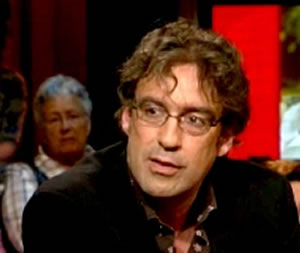
De Nederlandse dichter en schrijver Joost Zwagerman werd geboren in Alkmaar op 18 november 1963. Zie ook mijn blog van 18 november 2006 en ook mijn blog van 18 november 2007 en ook mijn blog van 18 november 2008 en ook mijn blog van 18 november 2009.


Uit: Chaos en Rumoer


„Nadat Otto Vallei zich zes maanden lang iedere dag in zijn werkkamer had opgesloten om aan een roman te werken, biechtte hij zijn vrouw Karin op dat hij nauwelijks vorderingen had gemaakt. En zelfs dat was een zonnige voorstelling van zaken. In zekere zin was hij niet eens aan die roman begonnen.
Karin reageerde tamelijk laconiek op Otto’s bekentenis, wat hem eerst verbaasde, daarna opluchtte en uiteindelijk zachtjes kwetste. Hij kon natuurlijk niet van haar verlangen dat ze net als hij diep ontgoocheld was, maar een minimum van solidaire somberheid had hij toch wel van haar verwacht. In plaats daarvan was ze alleen maar nieuwsgierig. Waarschijnlijk kon ze het zich niet goed voorstellen dat iemand in zes maanden tijd zó weinig kon uitvoeren. Zelf kon Otto
het zich achteraf ook niet goed voorstellen.
‘Heb je echt niets op papier gekregen?’ vroeg ze. ‘Niet eens één zin, zoals Jack Nicholson in
The Shining
?’
Hij gaf haar tien a-viertjes waarop hij die ochtend iets schamels had uitgeprint. Hij had de computer het aantal woorden, regels en zelfs lettertekens laten berekenen.
‘Zesduizendwoordenennogiets.Vijfhonderdeenentwintigregels. Een gruwelijke oogst na een halfjaar. Vind je niet?’
De dagen na zijn bekentenis klaagde Otto dat hij niet aan het werk kwam, omdat hij allerlei verplichtingen had: lezingen, recensies schrijven, dat soort dingen. Bovendien ging iedere dag wel een paar keer de telefoon. Hij had geen leven zo.
De telefoon was sinds jaar en dag een van zijn ergste vijanden. Niets was funester voor het heilig vuur dan het ijzingwekkende gerinkel. Iedere keer dat de telefoon ging, trof het geluid hem als een
goed doordachte poging hem in een hoek te drijvenwaaruit niet viel te ontsnappen. Niet opnemen was onmogelijk; hoe langer het gerinkel aanhield, hoe meer dwang erin doorklonk. Je moest opnemen. Je móest. Anders was je slap en laf. Slap en laf en bang. Dus nam je op.“


 786142-897a731e8dafdc4e998fb7e77718897d.jpg

Joost Zwagerman (Alkmaar, 18 november 1963)


De Nederlandse dichter Toon Tellegen werd geboren op 18 november 1941 te Brielle. Zie ook mijn blog van 18 november 2006 en ook mijn blog van 18 november 2008. en ook mijn blog van 18 november 2007 en ook mijn blog van 18 november 2009.


Dochter


Ze duwt prikkeldraad opzij,
haar vingers bloeden,
ze ziet wit, ze heeft het koud

voorbij het prikkeldraad zijn struiken
kaal nog en met doornen,
'Loop daaromheen!' stemmen jagen haar op

ze loopt erdoorheen
en rozen vangen aan met bloeien, geuren,
schuchtere rozen overal

voorbij de struiken schijnt de zon, ze gaat daar zitten,
er is daar mos en er zijn daar vlinders,
dagpauwogen, nachtpauwogen, pijlstaarten, vossen

ze leunt achterover, ze is mijn dochter,
ze kijkt niet om,
ze wil nergens in veranderen.


Een streep


Ik trok een streep;
tot hier,
nooit ga ik verder dan hier.

Toen ik verder ging
trok ik een nieuwe streep,
en nog een streep.

De zon scheen
en overal zag ik mensen,
en iedereen trok een streep
iedereen ging verder.


 786142-8903214ff8a1730e3747a23dfe52b80c.jpg

Toon Tellegen (Brielle, 18 november 1941)


De Duitse schrijver Klaus Mann werd op 18 november 1906 geboren als oudste zoon van Thomas en Katia Mann. In München. Zie ook mijn blog van 18 november 2006 en ook mijn blog van 18 november 2007. Zie ook mijn blog van 9 november 2009 en ook mijn blog van 18 november 2008 en ook mijn blog van 18 november 2009.


Uit: Mephisto


“In den ersten Wochen seines illegalen Dienstes hatte Ulrichs einmal den Versuch  gemacht, Hendrik Höfgen ins Vertrauen zu ziehen. Aber der Intendant wurde ängstlich,  nervös und gereizt. „Ich will von diesen Dingen nichts wissen“, sagte er hastig.
„Ich darf von ihnen nichts wissen – verstehst du mich? Ich mache beide Augen zu, ich sehe nicht, was du treibst. Keinesfalls aber darf ich eingeweiht sein.“
Nachdem er sich davon überzeugt hatte, daß er unbelauscht war, versicherte er  dem Freund noch mit gepreßter Stimme, wie schwierig und peinlich es für ihn sei,  sich so andauernd und konsequent verstellen zu müssen. „Aber ich habe mich nun  einmal zu dieser Taktik entschlossen, weil ich sie für die richtigste und wirkungsvollste halte“, raunte Hendrik und versuchte es noch einmal mit den Verschwörerblicken,  die jedoch von Ulrichs nicht mehr erwidert wurden. „Es ist keine bequeme Taktik,
aber ich muß sie durchhalten. Ich befinde mich mitten im Lager des Feindes. Von  innen heraus unterhöhle ich seine Macht...“
Otto Ulrichs hörte kaum noch hin. Vielleicht geschah es in diesem Augenblick, daß die Illusion von ihm wich und daß er Hendrik Höfgen erkannte.  Wie meisterhaft der Intendant sich verstellte! Diese Leistung war in der Tat eines  großen Schauspielers würdig. Man hätte ja wahrhaftig glauben können, es wäre  Hendrik Höfgen nur um Geld, Macht und Ruhm zu tun, anstatt um die Unterhöhlung
des nationalsozialistischen Regimes.
Im breiten Schatten des Ministerpräsidenten fühlte er sich so sicher und geborgen,  daß er es sich leisten zu dürfen glaubte, mit der Gefahr zu kokettieren, die Schrecken  der Katastrophe schalkhaft zu beschwören. Da er mit einem Theaterdirektor in Wien  telephonierte, von dem er sich einen Schauspieler ausleihen wollte, sagte er mit der  klagenden, singenden Stimme, die wehleidig die Vokale zerdehnte: „Tja mein Lieber - in ein paar Wochen werde ich vielleicht schon bei Ihnen in Wien auftauchen ... Ich  weiß nicht, ob ich mich hier noch vierzehn Tage halte. Meine Gesundheit – Sie verstehen  mich recht? – meine Gesundheit ist so schrecklich angegriffen ...“


 786142-10a14f2274770fb602ddca653fdae3f8.jpg

Klaus Mann (18 november 1906 – 21 mei 1949)


De Iers-Amerikaanse dichter Seán Mac Falls werd geboren op 18 november 1957 in Boston. Zie ook mijn blog van 18 november 2006 en ook mijn blog van 18 november 2008.en ook mijn blog van 18 november 2009.


Quarry


Wings beat to overtake.

Now, above you like a fire shot

In a silent film the rush begins.

Wings fold inward, the air turrents,

Streams, as a ball swirling in a tube,

Grey bullet in the barrel,

The slide to the kill and the talons,

Make their mark before the hitch.

Soft plosives bearly sounding,

Crake, blood cupped in the claws,

From the breast and the rose

Heart, now in a tail spin,


Nostrils whine in the fall.

No jury just but a sup of the faded

Heart by one raging one.

The wilted wings are stirring

To the last as the pointed

Wingman ferries, the wholly bred,

Quarry of perfection, jolts

And jilts, and His scythe of feathers

Holds sway in the whirl.

As the God-made creature

From high heaven flies

The mourning dove must die.


786142-8996e49b485d3fcf91e078d9e8803758.jpg
Seán Mac Falls (Boston, 18 november 1957)

Boston bij avond


De Duitse dichter Richard Dehmel werd geboren op 18 november 1863 in Wendisch-Hermsdorf. . Zie ook mijn blog van 18 november 2006 en ook mijn blog van 18 november 2008 en ook mijn blog van 18 november 2009.


Bekenntnis


Ich will ergründen alle Lust,
so tief ich dürsten kann;
ich will sie aus der ganzen Welt
schöpfen, und stürb´ ich dran.

Ich will´s mit all der Schöpferwut,
die in uns lechzt und brennt;
ich will nicht zähmen meiner Glut
heißhungrig Element.

Ward ich durch frommer Lippen Macht,
durch zahmer Küsse Tausch?
Ich ward erzeugt in wilder Nacht
und großem Wollustrausch!

Und will nun leben so der Lust,
wie mich die Lust erschuf.
Schreit nur den Himmel an um mich,
ihr Beter von Beruf!


Frecher Bengel


Ich bin ein kleiner Junge,
ich bin ein großer Lump.
Ich habe eine Zunge
und keinen Strump.

Ihr braucht mir keinen schenken,
dann reiß ich mir kein Loch.
Ihr könnt euch ruhig denken:
Jottedoch!

Ich denk vo euch dasselbe.
Ich kick euch durch den Lack.
Ich spuck euch aufs Gewölbe.
Pack!


 786142-8742c74ac428c8d069fc4ce0665635ee.jpg

Richard Dehmel (18 november 1863 – 9 februari 1920)


Zie voor nog meer schrijvers van de 18e november ook mijn vorige blog van vandaag.
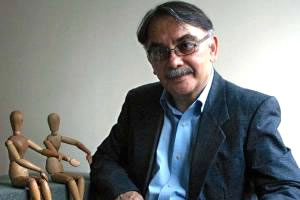
Geschreven door Romenu om 16:20 Reageer op dit bericht

Eugenio Montejo, Jaap Meijer, Margaret Atwood, William Gilbert, Hans Reimann, Mireille Cottenjé

De  Venezolaanse dichter en schrijver Eugenio Montejo werd geboren in Caracas op 18 november 1938. Zie ook mijn blog van 18 november 2008 en ook mijn blog van 18 november 2009.


The earth turned to bring us closer


The earth turned to bring us closer,
it spun on itself and within us,
and finally joined us together in this dream
as written in the Symposium.
Nights passed by, snowfalls and solstices;
time passed in minutes and millennia.
An ox cart that was on its way to Nineveh
arrived in Nebraska.
A rooster was singing some distance from the world,
in one of the thousand pre-lives of our fathers.
The earth was spinning with its music
carrying us on board;
it didn't stop turning a single moment
as if so much love, so much that's miraculous
was only an adagio written long ago
in the Symposium's score.


Life

To Vicente Gerbasi


Life boards planes and heads off into the distance;
by day, by night, at every instant
it¹s leaving for some remote airport.


Life goes away, disappears, comes back later on.
It¹s hard to follow life:
it keeps secretive unpredictable hours,
changes itinerary, sleeps right through the trip,
goes on flying.


Life could be arriving now, we don¹t know,
it might be in Nebraska or Istambul
or maybe it¹s that woman asleep opposite us
in the transit lounge.


Life¹s the unknown on the board of destinations,
the travellers who leave or return,
fear, adventure, weeping,
the clouds that wait for us beyond the good-byes
and the pure planes that lift
towards the high winds of desire.


Vertaald door Peter Boyle


786138-4771a9e846e9b927f34fa5e681c3d2a3.jpg
Eugenio Montejo (18 november 1938 - 5 juni 2008)


De dichter (pseudoniem Saul van Messel) en historicus Jakob (Jaap) Meijer werd geboren in Winschoten op 18 november 1912. Zie ook mijn blog van 18 november 2008


Op weg

glad dit papier
dat mijn geluid
verzacht

als jouw huid
die mijn rapier
verwacht

mijn toverstaf
gevuld met zoete
woordenpracht


Past–orale

wij lagen in het hooi
– wat is je mondje mooi –

wij stonden in een sloot
– wat is je degen groot –

hoe lang is het geleden
zucht mijn heden


786138-410e5ef71f4b9b66120a28554f88adb6.jpg
Jaap Meijer (18 november 1912 - 9 juli 1993)


De Canadese schrijfster Margaret Atwood werd geboren in Ottawa op 18 november 1939. Zie ook mijn blog van 18 november 2008


Uit: Oryx and Crake


„Snowman wakes before dawn. He lies unmoving, listening to the tide coming in, wave after wave sloshing over the various barricades, wish-wash, wish-wash, the rhythm of heartbeat. He would so like to believe he is still asleep.

On the eastern horizon there's a greyish haze, lit now with a rosy, deadly glow. Strange how that colour still seems tender. The offshore towers stand out in dark silhouette against it, rising improbably out of the pink and pale blue of the lagoon. The shrieks of the birds that nest out there and the distant ocean grinding against the ersatz reefs of rusted car parts and jumbled bricks and assorted rubble sound almost like holiday traffic.

Out of habit he looks at his watch — stainless-steel case, burnished aluminum band, still shiny although it no longer works. He wears it now as his only talisman. A blank face is what it shows him: zero hour. It causes a jolt of terror to run through him, this absence of official time. Nobody nowhere knows what time it is.

‘Calm down,’ he tells himself. He takes a few deep breaths, then scratches his bug bites, around but not on the itchiest places, taking care not to knock off any scabs: blood poisoning is the last thing he needs. Then he scans the ground below for wildlife: all quiet, no scales and tails. Left hand, right foot, right hand, left foot, he makes his way down from the tree. After brushing off the twigs and bark, he winds his dirty bedsheet around himself like a toga. He's hung his authentic-replica Red Sox baseball cap on a branch overnight for safekeeping; he checks inside it, flicks out a spider, puts it on.“


786138-9cd308ce53b426ddb48f6e6b1d1d624d.jpg
Margaret Atwood (Ottawa, 18 november 1939)


De Engelse toneelschrijver, librettist en illustrator Sir William Schwenck Gilbert werd geboren in Londen op 18 november 1836. Zie ook mijn blog van 18 november 2008


Ballad: The Disagreeable Man


If you give me your attention, I will tell you what I am:

I'm a genuine philanthropist - all other kinds are sham.

Each little fault of temper and each social defect

In my erring fellow-creatures, I endeavour to correct.

To all their little weaknesses I open people's eyes,

And little plans to snub the self-sufficient I devise;

I love my fellow-creatures - I do all the good I can -

Yet everybody says I'm such a disagreeable man!

And I can't think why!


To compliments inflated I've a withering reply,

And vanity I always do my best to mortify;

A charitable action I can skilfully dissect;

And interested motives I'm delighted to detect.

I know everybody's income and what everybody earns,

And I carefully compare it with the income-tax returns;

But to benefit humanity, however much I plan,

Yet everybody says I'm such a disagreeable man!

And I can't think why!


I'm sure I'm no ascetic; I'm as pleasant as can be;

You'll always find me ready with a crushing repartee;

I've an irritating chuckle, I've a celebrated sneer,

I've an entertaining snigger, I've a fascinating leer;

To everybody's prejudice I know a thing or two;

I can tell a woman's age in half a minute - and I do -

But although I try to make myself as pleasant as I can,

Yet everybody says I'm such a disagreeable man!

And I can't think why!


 786138-3f392898989e4694d0e9d2df6bb27a14.jpg

William S. Gilbert (18 november 1836 – 29 mei 1911)

Portret door Frank Hall, 1886


De Duitse schrijver en satircus Albert Johannes (Hans) Reimann werd geboren op 18 november 1889 in Leipzig. Reimann studeerde Duitse filologie en kunstgeschiedenis aan de kunstacademie in München. Na zijn dienst in het Duitse leger tijdens de Eerste Wereldoorlog publiceerde hij in Leipzig het satirische tijdschrift Der Drache en aansluitend in Frankfurt am Main Das Stachelschwein. Hij werkte ook voor de satirische tijdschriften Simplicissimus en Die Weltbühne en stichtte de cabarets "Retorte" (in Leipzig) en "Astoria" (in Frankfurt am Main.). Vanaf 1925 woonde hij in Berlijn. Hij plande een parodie op Hitler onder de titel “Mein Krampf”, maar daar zag hij uiteindelijk toch vanaf. Na 1933  had hij wat problemen om werk uitgegeven te krijgen, maar een aantal publicaties in anti-semitische tijdschriften suggereren dat hij een manier had gevonden om het met de nazi's op een akkoordje te gooien. Na de val van het Derde Rijk werd hem door de geallieerden tot 1948 verboden om te publiceren. Hij begon daarna weer met schrijven voor het satirische tijdschrift Simpl uit München. Reimann schreef ook onder de pseudoniemen Max Bunge, Hans Heinrich, Artur Sunder, Hanns Heinz Vampir, en Andreas Zeltner.


Uit: Mein blaues Wunder


"In einem Münchener Antiquariat hatte ich Ernst Ecksteins 'Besuch im Karzer', ein Reclamheftchen erstanden und während der Bahnfahrt gelesen. Dann gab ich's Hinrich, der die ganze Zeit über, mich beobachtend, vorsichtig mitlächelte. Noch bevor wir in Leoni landeten, stand für uns beide fest: es wird kein Stück geschrieben, sondern ein Film. Was dabei herauskam, wurde von mir 'Die Feuerzangenbowle' betitelt. Hinrich, der gewissenhafte Arbeiter, ging gern auf Nummer Sicher. Wir schrieben also nicht - wir entwarfen. Das dauerte etwa einen Monat. Dann brachte ich's zu Papier, Hinrich fuhr nach München und diktierte das umfangreiche Exposé in einem Büro. Den Schluss hatte er, mit aller gebotenen Zurückhaltung übermütig werdend, allein konstruiert.

Das Exposé reichten wir nirgends ein. Hinrichs Exaktheit schien auf mich übergegriffen zu haben. Jedenfalls bestand ich darauf, dass wir keinesfalls in den Stil des angestaubten Eckstein (den wir aber dennoch verwendeten) abglitten, vielmehr zeitgemäß bleiben. Darum bat ich meinen alten Freund Albrecht von Treskow, der jetzt als Landrat in Freystadt (Niederschlesien) amtete, beim Direx eines in seinem Machtbereich liegenden Gymnasiums zu veranlassen, dass ich inkognito eine Zeitlang hospitieren dürfe. Dies in die Reihe zu bringen, war für Treskow ein Kinderspiel. So schnürte ich mein Ränzel und mimte in Neusalz an der Oder einen Herrn von mittleren Jahren, welcher das Abitur nachholen will, um studieren zu können.
Frau von Treskow war eine Gruschwitztochter aus Neusalz, wo sich die Leinenzwirnfabrik befand und auch die Penne, deren ich bedurfte.“


786138-03051571e5915fab78d44fffce2f8e46.jpg
Hans Reimann (18 november 1889 – 13 juni 1969)


Zie voor onderstaande schrijvers ook mijn blog van 18 november 2008.


De Belgische schrijfster Mireille Cottenjé werd geboren in Moeskroen op 18 november 1933.

Geschreven door Romenu om 16:11 Reageer op dit bericht

Auberon Waugh, Dahlia Ravikovitch, Rebecca Walker

De Britse schrijver, journalist en polemist Auberon Alexander Waugh werd geboren op 17 november 1939 in Dulverton, Somerset. Hij is bekend geworden door zijn satirische essays en om zijn conservatieve opvattingen over politiek en religie. Met zijn provocerende snobisme keerde hij zich tegen de veramerikanisering van het Verenigd Koninkrijk en in het bijzonder tegen de gevaren van de hamburger. Auberon Waugh (bijnaam "Bron") was het tweede kind en de oudste zoon van Evelyn Waugh en zijn tweede vrouw. Hij werd opgeleid aan het Benedictijner college van Downside en aan Christ Church (Oxford), waar hij zonder diploma vertrok om zijn heil te zoeken in de journalistiek en de literatuur. Zijn eerste roman, The Foxglove Saga, verscheen in 1960, toen hij net 20 jaar was geworden. Hij begon als verslaggever van de Daily Telegraph en in de lange en vruchtbare carrière die volgde schreef hij voor The Spectator, New Statesman en andere bladen, zoals de Daily Mirror, Daily Mail, de Evening Standard en The Independent. Van 1981 tot 1990 bekleedde hij een belangrijke post in de Sunday Telegraph. Zijn vaste column in Private Eye, vanaf het begin van de jaren 1970 tot 1986, maakte van hem een beroemdheid. Van 1986 tot aan zijn dood was hij redacteur van de Literary Review en stelde hij mede de Bad Sex in Fiction Award in om elk jaar de slechtste seksscène van de hedendaagse literaire fictie te belonen.


Uit: Will This Do? An Autobiography


„On one occasion, just after the war, every child in Britain was to be allowed one banana each from the first consignment to arrive here for years.

Neither I, nor Teresa, nor my sister Margaret who was born in 1942, had ever eaten a banana but we had heard all about them as the most delicious taste in the world.

The great day arrived when my mother came home with three bananas. All three were put on my father's plate and, before the anguished eyes of his children, he poured on cream and sugar, which was heavily rationed, and ate all three.

It would be absurd to say that I never forgave him, but he was permanently marked down in my estimation from that moment in ways which no amount of sexual transgression would have achieved.

In light of our inability to amuse him, it was thought better that we should be sent away as much as possible.

My fate was to be left in a boarding school on January 28, 1946, two months after my sixth birthday.

During my first term there, when I was still very nervous, he played one of his best practical jokes on me.

He told me he proposed to change our family name and that, when he had done so, the headmaster would summon the school together and say: "Boys, the person you have hitherto called Waugh will in future be called Stinkbottom."

I understood perfectly well that he was joking, but one never knew how far he would be prepared to go with his jokes.

Every morning at school assembly, I felt a slight tightening of the chest as the headmaster came forward to make his daily announcements.

Teresa was also at boarding school and my father's undisguised glee at the prospect of getting rid of his children was apparent at the end-of-holiday dinner parties which became a rigid institution.

On these occasions, Papa would dress in white tie and tails with his military medals glittering on his chest - in a gallant war seeing action in four theatres and spending months behind enemy lines in Yugoslavia, he had acquired a fair display of them.

His speech was always some variation on the theme of how delighted he was that we were going back to school.“


785540-8ba2b767b09b9a0f41a5fb2c054dcec0.jpg
Auberon Waugh (17 november 1939 -16 januari 2001)


De Israëlische dichteres en schrijfster Dahlia Ravikovitch werd geboren op 17 november 1936 in een voorstad van Tel Aviv. Zie ook mijn blog van 17 november 2006 en ook mijn blog van 17 november 2007 en ook mijn blog van 17 november 2008 en ook mijn blog van 17 november 2009.


The Second Trying


If I could only get hold of the whole of you,  

How could I ever get hold of the whole of you,  

Even more than the most beloved idols,  

More than mountains quarried whole,  

          More than mines  

          Of burning coal,  

Let’s say mines of extinguished coal  

And the breath of day like a fiery furnace.  


If one could get hold of you for all the years,  

How could one get hold of you from all the years,  

How could one lengthen a single arm,  

Like a single branch of an African river,  

As one sees in a dream the Bay of Storms,  

As one sees in a dream a ship that went down,  

The way one imagines a cushion of clouds,  

Lily-clouds as the body’s cushion,  

But though you will it, they will not convey you,  

Do not believe that they will convey you.  


If one could get hold of all-of-the-whole-of-you,  

If one could get hold of you like metal,  

Say like pillars of copper,  

Say like a pillar of purple copper  

(That pillar I remembered last summer)—

And the bottom of the ocean I have never seen,  

And the bottom of the ocean that I can see  

With its thousand heavy thickets of air,  

A thousand and one laden breaths.  


If one could only get hold of the-whole-of-you-now,  

How could you ever be for me what I myself am?  


Vertaald door Chana Bloch en Chana Kronfeld


785540-9365dfdce62ce8d0ad746686abfeb27f.jpg
Dahlia Ravikovitch (17 november 1936 – 21 augustus 2005)


De Amerikaanse schrijfster, uitgeefster en politiek activiste
Rebecca Walker werd geboren op 17 november 1969 in Jackson, Mississippi.  Walker (eig. Rebecca Leventhal) is de dochter van Afrikaans-Amerikaanse feministe Alice Walker, auteur van de roman "The Color Purple" en de joods-Amerikaanse advocaat Melvyn Leventhal. Na de scheiding van haar ouders woonde ze tijdelijk bij haar moeder en soms bij haar vader en op 18-jarige leeftijd nam ze haar moeders naam aan. Ze studeerde cum laude af in 1992 aan de Yale University. Sinds 1989 is ze co-redacteur en schrijfster voor het tijdschrift Ms. I 1999 was zij mede-oprichter van de Third Wave Action Foundation. Het concept van de derde feministische golf wordt toegeschreven aan Walker.  Walker is de auteur van talrijke artikelen in verschillende tijdschriften, zij trad op bij CNN en MTV, en  heeft talloze onderscheidingen ontvangen voor haar werk, waaronder de Women of Distinction Award van de National Association of University Women


Uit: Black, White, and Jewish: Autobiography of a Shifting Self


„On my first birthday I am given my favorite foods: chitterlings and chocolate cake. Daddy goes to Estelle's, the soul food place on the other side of town where he is the only white customer, and brings me home a large order of the pig intestines. Mama puts me in my big wooden high chair with the smooth curved piping, and then feeds me one slimy pale gray glob after another while Daddy sits at the table, grinning.
After I have eaten all of the chitterlings, Mama has to peel my tiny fingers from the container to make me let it go. Then she sets a chocolate cake with a big number one candle sticking up from the middle down in front of me, singing "Happy Birthday" softly, so that only I can hear. For a few seconds Mama and Daddy wait, expectant and wide-eyed, to see what I'll do. I giggle, squeal, look at them, and then dig into the cake with my bare hands, smearing the sticky sweetness all over my face and pushing what's left into my mouth. I rub cake in my hair, over my eyes. I slap my hands on the high chair, putting some cake on it, too.
My parents laugh out loud for a few seconds; then my father wraps his arm around my mother's waist, patting her hip with a cupped hand. For a few seconds we are frozen in time. Then my father pushes his chair out from the table, cuts himself a piece of the chocolate cake, and goes to work.

You may want to ask about the story of your birth, and I mean down to the tiniest details. Were you born during the biggest snowstorm your town had seen in fifty years? Did your father stop at the liquor store on the way to the hospital? Did you refuse to appear, holding on to the inside of your mother's womb for days? Some sinewy thread of meaning is in there somewhere, putting a new spin on the now utterly simplistic nature-nurture debate. Your job is to listen carefully and let your imagination reconstruct the narrative, pausing on hot spots like hands over a Ouija board.“


 785540-ad8895964cd0e10534ef89f50299d5ce.jpg

Rebecca Walker (Jackson, 17 november 1969)


Zie voor nog meer schrijvers van de 17e november ook mijn vorige blog van vandaag.
Geschreven door Romenu om 19:43 Reageer op dit bericht

Joost van den Vondel, Christopher Paolini, Pierre Véry, Max Barthel

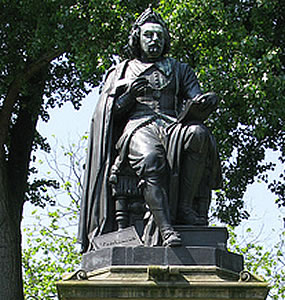
De Nederlandse dichter en schrijver Joost van den Vondel werd geboren op 17 november 1587 in Keulen. Zie ook mijn blog van 17 november 2006 en ook mijn blog van 17 november 2008 en ook mijn blog van 17 november 2009.


Uit: Lucifer


Het Tweede Bedryf


LUCIFER.

Ghy, snelle Geesten, houdt nu stant met onzen wagen:

Al hoogh genoegh in top Godts Morgenstar gedragen;

Al hoogh genoegh gevoert: ’t is tijt, dat Lucifer

Nu duicke, voor de komst van deze dubble star,

Die van beneden rijst, en zoeckt den weg naer boven,

Om met een’ aertschen glans den hemel te verdooven.

Borduurt geen kroonen meet in Lucifers gewaet;

Vergult zijn voorhooft niet met eenen dageraet

Van morgenstarre en strael, waer voor d’ Aertsenglen nijgen;

Een andre klaerheit komt in ’t licht der Godtheit stijgen,

En schijnt ons glansen doot; gelijck de zon by daegh

De starren dooft, voor ’t oogh der schepselen, om laegh.

’t Is nacht met Engelen en alle hemelzonnen:

De menschen hebben ’t hart des Oppersten gewonnen,

In ’t nieuwe Paradijs: de mensch is ’s hemels vrient:

Ons slaverny gaet in. Gaet heene, viert en dient

En eert dit nieuw geslacht, als onderdane knapen:

De menschen zijn om Godt, en wy om hen geschapen.

’t Is tijt, dat ’s Engels neck hun voeten onderschraegh’,

Dat ieder op hun passe, en op de handen draegh’,

Of op de vleugels voere, in d’ allerhooghste troonen:

Onze erfenis komt hun, als uitverkore zoonen.

Ons eerstgeboorte leit nu achter, in dit Rijck.

De zoon des zesten daghs, den Vader zoo gelijck

Geschapen, strijckt de kroon. Met recht is hem gegeven

De groote staf, waer voor alle eerstgeboornen beven

En sidderen. Hier gelt geen tegenspraeck: ghy hoort

Wat Gabriël bazuint voor ’s hemels goude poort.


 785532-52f73f6c3b0a01aa9d58b0fe0032a31e.jpg

Joost van den Vondel (17 november 1587 – 5 februari 1679)

Standbeeld in het Vondelpark, Amsterdam


De Amerikaanse schrijver Christopher Paolini werd geboren in Los Angeles County, California, op 17 november 1983. Zie ook mijn blog van 17 november 2008 en ook mijn blog van 17 november 2009.


Uit: Eragon


„Eragon knelt in a bed of trampled reed grass and scanned the tracks with a practiced eye. The prints told him that the deer had been in the meadow only a half-hour before. Soon they would bed down. His target, a small doe with a pronounced limp in her left forefoot, was still with the herd. He was amazed she had made it so far without a wolf or bear catching her.

The sky was clear and dark, and a slight breeze stirred the air. A silvery cloud drifted over the mountains that surrounded him, its edges glowing with ruddy light cast from the harvest moon cradled between two peaks. Streams flowed down the mountains from stolid glaciers and glistening snowpacks. A brooding mist crept along the valley’s floor, almost thick enough to obscure his feet.

Eragon was fifteen, less than a year from manhood. Dark eye­brows rested above his intense brown eyes. His clothes were worn from work. A hunting knife with a bone handle was sheathed at his belt, and a buckskin tube protected his yew bow from the mist. He carried a wood-frame pack.

The deer had led him deep into the Spine, a range of untamed mountains that extended up and down the land of Alagaësia. Strange tales and men often came from those mountains, usually boding ill. Despite that, Eragon did not fear the Spine—he was the only hunter near Carvahall who dared track game deep into its craggy recesses.

It was the third night of the hunt, and his food was half gone. If he did not fell the doe, he would be forced to return home empty­handed. His family needed the meat for the rapidly approaching winter and could not afford to buy it in Carvahall.“


 785532-4dec3e720b7f33d94439865cf90a5041.jpg

Christopher Paolini (Los Angeles County, 17 november 1983)


De Franse schrijver Pierre Véry werd op 17 november 1900 in Bellon geboren. Zie ook mijn blog van 17 november 2009.


Uit: L'Inconnue du terrain vague


„A l'approche de Xuan, une femme tenta de se dissimuler derrière la palissade du terrain vague. Mais, à sa taille, le cuisinier avait reconnu Mme Perchamp : elle était plus petite même que Dam-Van. Son visage pointu, ses façons vives et silencieuses faisaient songer à une  belette.
Le terrain vague vivait d'une vie sournoise, délictueuse. Il était plein de sons furtifs : chuchotements, glissements, passages d'ombre. On eût dit un lieu de complots, un rendez-vous de conjurés. Ce n'étaient que des amoureux attirés par la curiosité à cause des deux meurtres. La pensée du sang criminellement répandu là, si près, à deux reprises, devait ajouter du piment à leurs confidences, à leurs serments, à leurs caresses. Des bruits de baisers soulevaient doucement le silence...
A l'autre bout du terrain vague, Xuan croisa Mme Perchamp.
- Mademoiselle Dam-Van est-elle chez elle ?
- Oui, maître.
On dansait chez Malissart, et des rafales de rires s'échappaient de la salle de cinéma, où passait ce film comique qu'avait interdit le maire.“


785532-055f56aaa3e3cdead7b84d8febbb155d.jpg
Pierre Véry (17 november 1900  -  12 oktober 1960)


De Duitse dichter en schrijver Max Barthel werd geboren in Dresden-Loschwitz op 17 november 1893. Zie ook mijn blog van 17 november 2008.


Erwachen der Stadt


Der Traum zerschlägt sich an den Steinen

Der Groϐstatdt und wird kühne Tat

Die Stunde der Erlösung naht,

Da Schein und Leben sich vereinen.


Das Leben gilt! O wildes Ringen

Mit Schaum und Schmutz der langen Nacht!

Die Schiffen laden neue Fracht,

Das Ziel vor Abend zu bezwingen.


O Morgenschrei! O erstes Glänzen!

Erglühe, selig Morgenrot,

Die Arbeitsstrirnen zu bekränzen.

Was wir ergreifen, wird zu Brot!


785532-4983b4fbb7610602eea006275da75881.jpg
Max Barthel (17 november 1893 – 28 juni 1975)

Geschreven door Romenu om 19:24 Reageer op dit bericht

Meer van Romenu

↑ Terug naar de berichten