

Naar de inhoud

Romenu

Over literatuur, gedichten, kunst en cultuur
akke.beakke.be

Berichten van 25 november 2010 tot 26 november 2010

Eugène Ionesco, Marilynne Robinson, William Cowper, Louis Verbeeck, Luisa Valenzuela, René Becher
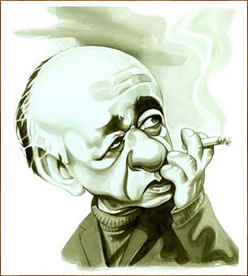
De Frans-Roemeense schrijver Eugène Ionesco werd geboren op 26 november 1912 in Slatina, Roemenië. Zie ook mijn blog van 26 november 2006 en ook mijn blog van 26 november 2007 en ook mijn blog van 26 november 2008 en ook mijn blog van 26 november 2009.


Uit: The Bold Soprano


„SCENE: A middle-class English interior, with English armchairs. An English evening. Mr. Smith, an Englishman, seated in his English armchair and wearing English slippers, is smoking his English pipe and reading an English newspaper, near an English fire. He is wearing English spectacles and a small gray English mustache. Beside him, in another English armchair, Mrs. Smith, an Englishwoman, is darning some English socks. A long moment of English silence. The English clock strikes 17 English strokes.

MRS. SMITH: There, it's nine o'clock. We've drunk the soup, and eaten the fish and chips, and the English salad. The children have drunk English water. We've eaten well this evening. That's because we live in the suburbs of London and because our name is Smith.

MR. SMITH [continues to read, clicks his toungue.]

MRS. SMITH: Potatoes are very good fried in fat; the salad oil was not rancid. The oil from the grocer at the corner is better quality than the oil from the grocer across the street. It is even better than the oil from the grocer at the bottom of the street. However, I prefer not to tell them that their oil is bad.

MR. SMITH [continues to read, clicks his tongue.]

MRS. SMITH: However, the oil from the grocer at the corner is still the best.

MR. SMITH [continues to read, clicks his tongue.]

MRS. SMITH: Mary did the potatoes very well, this evening. The last time she did not do them well. I do not like them when they are well done.

MR. SMITH [continues to read, clicks his tongue.]

MRS. SMITH: The fish was fresh. It made my mouth water. I had two helpings. No, three helpings. That made me go to the w.c. You also had three helpings. However, the third time you took less than the first two times, while as for me, I took a great deal more. I eat better than you this evening. Why is that? Usually, it is you who eats more. It is not appetite you lack.

MR. SMITH [clicks his tongue.]

MRS. SMITH: But still, the soup was perhaps a little too salt. It was saltier than you. Ha, ha, ha. It also had too many leeks and not enough onions. I regret I didn't advise Mary to add some aniseed stars. The next time I'll know better.“


 792657-1278c655fee1f362ed4309d2e8d383a4.jpg

Eugène Ionesco (26 november 1912 – 28 maart 1994)


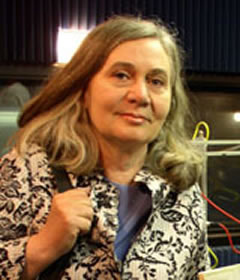
De Amerikaanse schrijfster Marilynne Robinson werd geboren in Sandpoint, Idaho op 26 november 1943. Zie ook mijn blog van 26 november 2008 en ook mijn blog van 26 november 2009.


Uit: Housekeeping


“My name is Ruth. I grew up with my youngersister, Lucille, under the care of my grandmother, Mrs.Sylvia Foster, and when she died, of her sisters-in-law,Misses Lily and Nona Foster, and when they fled, ofher daughter, Mrs. Sylvia Fisher. Through all thesegenerations of elders we lived in one house, my grandmother'shouse, built for her by her husband, EdmundFoster, an employee of the railroad, who escaped thisworld years before I entered it. It was he who put usdown in this unlikely place. He had grown up in theMiddle West, in a house dug out of the ground, withwindows just at earth level and just at eye level, so thatfrom without, the house was a mere mound, no more ahuman stronghold than a grave, and from within, theperfect horizontality of the world in that place foreshortenedthe view so severely that the horizon seemedto circumscribe the sod house and nothing more. Somy grandfather began to read what he could find oftravel literature, journals of expeditions to the mountainsof Africa, to the Alps, the Andes, the Himalayas,the Rockies. He bought a box of colors and copied amagazine lithograph of a Japanese painting of Fujiyama.He painted many more mountains, none of them identifiable,if any of them were real. They were all suavecones or mounds, single or in heaps or clusters, green,brown, or white, depending on the season, but alwayssnowcapped, these caps being pink, white, or gold, dependingon the time of day. In one large painting he hadput a bell-shaped mountain in the very foreground andcovered it with meticulously painted trees, each of whichstood out at right angles to the ground, where it grewexactly as the nap stands outon folded plush. Every treebore bright fruit, and showy birds nested in the boughs,and every fruit and bird was plumb with the warp in theearth. Oversized beasts, spotted and striped, could beseen running unimpeded up the right side and unhasteneddown the left. Whether the genius of thispainting was ignorance or fancy I never could decide.“


792657-ecfc3d54d305d975bc2288906a11ed16.jpg
Marilynne Robinson (Sandpoint, 26 november 1943)


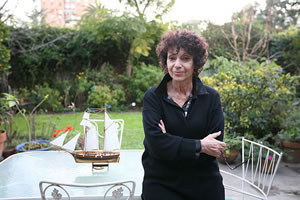
De Argentijnse schrijfster Luisa Valenzuela werd geboren op 26 november 1938 in Buenos Aires. Zie ook mijn blog van 26 november 2009.


Uit: I'm your horse in the night (Vertaald door Deborah Bonner)


„The doorbell rang: three short rings and one long one. That was the signal, and I got up, annoyed and a little frightened; it could be them, and then again, maybe not; at these ungodly hours of the night it could be a trap. I opened the door expecting anything except him, face to face, at last.

He came in quickly and locked the door behind him before embracing me. So much in character, so cautious, first and foremost checking his - our - rear guard. Then he took me in his arms without saying a word, not even holding me too tight but letting all the emotions of our new encounter overflow, telling me so much by merely holding me in his arms and kissing me slowly. I think he never had much faith in words, and there he was, as silent as ever, sending me messages in the form of caresses.

We finally stepped back to look at one another from head to foot, not eye to eye, out of focus. And I was able to say Hello showing scarcely any surprise despite all those months when I had no idea where he could have been, and I was able to say

I though you were fighting up north

I thought you'd been caught

I thought you were in hiding

I thought you'd been tortured and killed

I thought you were theorizing about the revolution in another country.

Just one of many ways to tell him I'd been thinking of him. I hadn't stopped thinking of him or felt as if I'd been betrayed. And there he was, always so goddamn cautious, so much the master of his actions.

"Quiet, Chiquita. You're much better off not knowing what I've been up to."

Then he pulled out is treasures, potential clues than at the time eluded me: a bottle of cachaca and a Gal Costa record. What had he been up to in Brazil? What was he planning to do next? What had brought him back, risking his life, knowing they were after him? Then I stopped asking myself questions (quiet, Chiquita, he'd say). Come here Chiquita, he was saying, and I chose to let myself sink into the joy of having him back again, trying not to worry. What would happen to us tomorrow, and the days that followed?“


792657-63909a250b7933a2b5dd6107442a65c8.jpg
Luisa Valenzuela (Buenos Aires, 26 november 1938)


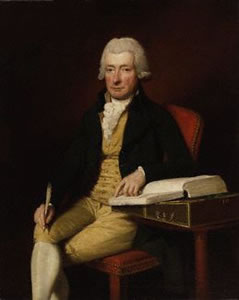
De Engelse dichter William Cowper werd geboren op 26 november 1731 in Berkhamstead, Herford. Zie ook mijn blog van 26 november 2006 en ook mijn blog van 26 november 2008 en ook mijn blog van 26 november 2009.


Retirement


Far from the world, O Lord, I flee,

From strife and tumult far;

From scenes where Satan wages still

His most successful war.


The calm retreat, the silent shade,

With prayer and praise agree;

And seem, by Thy sweet bounty made,

For those who follow Thee.


There if Thy Spirit touch the soul,

And grace her mean abode,

Oh, with what peace, and joy, and love,

She communes with her God!


There like the nightingale she pours

Her solitary lays;

Nor asks a witness of her song,

Nor thirsts for human praise.


Author and Guardian of my life,

Sweet source of light Divine,

And, -- all harmonious names in one, --

My Saviour! Thou art mine.


What thanks I owe Thee, and what love,

A boundless, endless store,

Shall echo through the realms above,

When time shall be no more.


 792657-6acd4999b57fd58181272196bfacc6d3.jpg

William Cowper (26 november 1731 – 25 april 1800)

Portret door Lemuel Francis Abbott, 1792


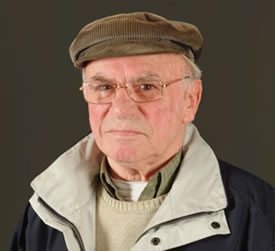
De Vlaamse dichter en schrijver Louis Verbeeck werd geboren in Tessenderlo op 26 november 1932. Zie ook mijn blog van 26 november 2009.


Opa


Er was eens een grootvader op een portret,
Die vroeger veel bloempjes had buitengezet,
hij hing aan de schouw en soms dacht hij met spijt
Nog even terug aan die heerlijke tijd. 


De heerlijke tijd van de sjarreleston,
die niemand kon dansen gelijk hij dat kon.
Soms welde er dan fluks een traan naar zijn oog,
maar hij kon niet huilen: portretten staan droog.


Soms kijkt men naar hem en men murmelt heel zoet:
“Ach ach, wat was opa toch braaf en toch goed!”
Dan heeft hij veel last om zijn lach in te houden,
want ze hebben hem nooit gekend voor hij trouwde.


 792657-da32900c97604f34f234e403c8a16aa8.jpg

Louis Verbeeck (Tessenderlo, 26 november 1932)

Foto: Theo Klerkx, Hasselt


Onafhankelijk van geboortedata:


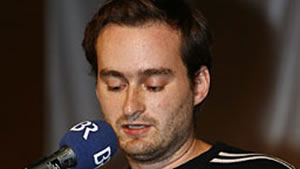
De Duitse schrijver René Becher werd geboren in 1977 in Bayreuth. Zie ook mijn blog van 26 november 2009.


Uit: Schreien


„Dann haben mir die Schweine auch noch die Elfi weggenommen. Ich saß gerade an meiner Novelle, auf meiner sandfarbenen Couch, stand vor dem tuberkulösen Spiegel im Bad, da musste es passiert sein. Diese Saftsäcke! Wo sie mir doch bereits im Juli des vorangegangenen Jahres den toten Säugling Sven von der Terrasse stibitzt hatten. Ich erinnere mich noch gut: Ich ließ die Rollläden ab, in der Ferne sah ich Leuchtraketen in den Himmel steigen, sie hatten gewonnen. Wollte schon schreien. Die Wurstigkeit hatte sich endgültig Bahn gebrochen, wie auch Bärbel jetzt sagen würde, wäre sie verdammtnochmal hier.

Und was hätte ich dem Sven nicht noch alles beibringen können? Ich hätte ihm vielleicht Geschichten vorgetragen. Die wahnwitzigen Räuberpistolen eines Wilhelm Hauff beispielsweise, als das Wünschen noch half, und Sven hätte gewiehert vor Glück und ich hätte mit ihm gelacht, hätte ihm Sprache beigebracht (vielleicht), ihm gezeigt, wie man schreibt (wohl eher nicht).

Im vergangenen Jahr beschäftigte ich mich noch mit Büchern. Ich nahm ein Buch aus dem Regal (wahrscheinlich den Pascal, den Storm, das Autorenlexikon, und ich vergewisserte mich, dass im Zeichen des Zwillings geborene Schriftsteller die allerschlimmsten sind) und stellte es wieder zurück.

Das Bücherregal in der Ecke meines Wohnzimmers. Darin Bücher, die in zweiterdritter Reihe parkten, Zettel zwischen Seite 112/113.

Zettelwirtschaft auf meinem Schreibtisch, zum Kotzen! Also verschob ich die Bücher, ordnete sie dem Alphabet nach, säuberte daraufhin meinen Schreibtisch, trat einen Schritt zurück und beguckte, was ich da eben angerichtet hatte.“


 792657-c7d69eecaa6fa12ee5d3dd9f16effa14.jpg

René Becher (Bayreuth, 1977)
Geschreven door Romenu om 00:00 Reageer op dit bericht

Maarten 't Hart, Connie Palmen, Alexis Wright, Arturo Pérez-Reverte

De Nederlandse schrijver Maarten 't Hart werd geboren op 25 november 1944 in Maassluis. Zie ook mijn blog van 25 november 2006 en ook mijn blog van 25 november 2008 en ook mijn blog van 25 november 2009.


Uit: De som van misverstanden: De wilde ganzen van Selma Lagerlöf


“Nooit kan ik in voor- of najaar wilde ganzen zien overtrekken zonder aan de wonderbare reis van Niels Holgersson te denken. Maar dat is niet altijd zo geweest. Als kind wilde ik het boek over Niels Holgersson niet lezen. Ik had gehoord dat er sprekende dieren in voorkwamen en daarvan had ik vanaf mijn prilste jeugd een grote afkeer. Hoe ik aan dat ongelukkige en eigenaardige vooroordeel kwam weet ik niet maar ik weet wel dat ook Niels Holgerssons wonderbare reis taboe voor me was om die reden. Maar omdat ik vaak, noodgedwongen, bij gebrek aan boeken die ik echt graag wilde lezen soms moest uitwijken naar boeken die ik graag had dicht gelaten (maar het verlangen om te lezen was altijd sterker dan het slechtste boek) kwam er een zondag waarop ik het boek leende van een neef die niets anders voor me had en wrevelig begon ik te lezen. Het is vreemd dat die wreveligheid op zondag zo merkwaardig harmonieerde met het begin van Niels Holgersson. Daardoor leek het wel alsof ik over mij zelf las en dat gevoel werd nog versterkt toen ik de naam Maarten (zo heet immers de tamme ganzerik) aantrof. Als kind - en ik denk dat dat voor alle kinderen geldt en het is iets omrekening mee te houden als men een kind een boek cadeau geeft - vond ik niets zo heerlijk als het feit dat een persoon uit een boek Maarten heette en ik heb het altijd maar moeilijk kunnen verkroppen dat ik niet één kinderboek kende met een Maarten als hoofdpersoon. Zelfs De Waterman van Van Schendel, later, kon dat niet meer goedmaken.

Lezend in Niels Holgersson bemerkte ik al spoedig dat de dieren zich erin gedroegen zoals zij zich in werkelijkheid, al naar hun aard gedragen. Selma Lagerlöf heeft zich bijzonder precies gehouden aan hetgeen rond 1900 bekend was over het gedrag van dieren. Daar zij uit eigen waarneming en op grond van vrij uitgebreide studies goed op de hoogte was van het gedrag van dieren, is een werk ontstaan waarin maar heel weinig feitelijke onjuistheden voorkomen.”


791690-de89f3aa34b0f1f445de20cb285870a7.jpg 

Maarten ’t Hart (Maassluis, 25 november 1944)


De Nederlandse schrijfster Connie Palmen werd op 25 november 1955 geboren in Sint Odiliënberg. Zie ook mijn blog van 25 november 2006 en ook mijn blog van 25 november 2007 en ook mijn blog van 25 november 2008 en ook mijn blog van 25 november 2009.


Uit: Luzifer (Vertaald door Hanni Ehlers)


“Das Wissen um den Tod ist ein Wissen, das mit anderen geteilt werden muss. Es ist zu schwer, als dass man es allein tragen könnte, und zu sensationell, um es zu verschweigen. So, wie sich ein Schauspieler auf die Wirkung bestimmter Passagen auf sein Publikum freut, freuen sich die Lebenden auf den Eindruck, den eine unerwartete Todesnachricht auf einen noch Unwissenden machen wird. Das ist nicht schlimm, das ist menschlich. Jemand, der sich nicht an so einer Neuigkeit weiden möchte und aus Pietät schweigt, macht sich zum Außenseiter. Nur die nächsten Angehörigen des Toten würden gerne schweigen, um mit ihrem Lieben auch im Tod innig allein zu sein, jeder andere möchte den Tod mitteilen, am liebsten als Erster. Er möchte die Bestürzung hervorrufen, die er selbst empfunden hat, als ihn die Todesbotschaft erreichte. Er möchte die Tiefe des Schauderns und der Erschütterung ausloten, um immer wieder darin einzutauchen. So oft und so lange wie möglich möchte er diesen freien Fall wiederholen. Deshalb reisen schlechte Nachrichten schnell. Das hat nichts damit zu tun, dass man sich am Leiden weidet, sondern was lockt, ist die Gemeinschaft des Schauderns, in ihr wollen sich alle zusammenfinden. Und in dieser Gemeinschaft ist der ehrfurchtgebietende Tod König, und vor diesem einsamen Herrscher verneigt man sich demütig.“

(...)


„... er schaut ängstlich und fasziniert die wilde Bekümmerung von Mica van Hoorn an. Je lauter sie weint, desto herzloser und kälter kommt er sich vor, als kühler Beobachter, der Verhalten, Bewegungen und Laute registriert, um sie irgendwann einmal in einem Theaterstück verwenden zu können. Zu Emotionen, wie er sie hier zu sehen glaubt, hält er sich selbst nicht für fähig. Weil er sich zu lauten, exaltierten Frauen hingezogen fühlt, hat sich bei ihm der Irrglaube festgesetzt, seine Ruhe und sein stummes Zusehen sprächen für seine Gefühlsarmut.“


791690-546154f7de472daa7b9ab92061826274.jpg
Connie Palmen (Sint Odiliënberg, 25 november 1955
)


De Australische (Aboriginal) schrijfster Alexis Wright werd geboren op 25 November 1950 in de Gulf of Carpentaria. Zie ook mijn blog van 25 november 2008 en ook mijn blog van 25 november 2009.


Uit : Carpentaria


„This tidal river snake of flowing mud takes in breaths of a size that is difficult to comprehend. Imagine the serpent's breathing rhythms as the tide flows inland, edging towards the spring waters nestled deeply in the gorges of an ancient limestone plateau covered with rattling grasses dried yellow from the prevailing winds. Then with the outward breath, the tide turns and the serpent flows back to its own circulating mass of shallow waters in the giant water basin in a crook of the mainland whose sides separate it from the open sea.

To catch this breath in the river you need the patience of one who can spend days doing nothing. If you wait under the rivergum where those up-to-no-good Mission-bred kids accidentallyhanged Cry-baby Sally, the tip of the dead branch points to where you will see how the serpent's breath fights its way through in a tunnel of wind, creating ripples that shimmer silver, similar to the scales of a small, nocturnal serpent, thrashing in anger whenever the light hits its slippery translucent body, making it writhe and wrench to escape back into its natural environment of darkness.

The inside knowledge about this river and coastal region is the Aboriginal Law handed down through the ages since time began. Otherwise, how would one know where to look for the hidden underwater courses in the vast flooding mud plains, full of serpents and fish in the monsoon season? Can someone who did not grow up in a place that is sometimes underwater, sometimes bone-dry, know when the trade winds blowing off the southern and northern hemispheres will merge in summer? Know the moment of climatic change better than they know themselves? Who fishes in the yellowcoloured monsoonal runoff from the drainages, with sheets of deep water pouring into the wide rivers swollen over their banks, filling vast plains with flood waters? The cyclones linger and regroup, the rain never stops pouring, but the fat fish are abundant.“


791690-dd1adcdc2d001b91047798483d839e82.jpg
Alexis Wright (Gulf of Carpentaria, 25 November 1950)


De Spaanse schrijver
Arturo Pérez-Reverte werd geboren op 25 november 1951 in Cartagena. Zie ook mijn blog van 25 november 2008 en ook mijn blog van 25 november 2009.


Uit: Purity Of Blood (Vertaald door Margaret Sayers Peden)


“That day there were bullfights in the Plaza Mayor, but constable Martín Saldaña’s festive fire had been doused. A woman had been found in a sedan chair in front of the church of San Ginés, strangled. In her hand was a pouch containing fifty escudos and a handwritten, unsigned note bearing the words, For masses for your soul.

A pious old woman on her way to early church had found the body. She advised the sacristan, and he had informed the parish priest who, after a hurried absolution, sub conditione, made a report to the authorities. By the time the chief constable showed up to make his token appearance in the small plaza of San Ginés, local residents and curious bystanders were milling around the sedan chair. The chair and its contents had become the object of a local pilgrimage, and a number of Saldaña’s catchpoles were needed to hold back the crowd while the judge and the scribe drew up their documents and Martín Saldaña made his cursory examination of the corpse.

The chief constable set about his task in the most leisurely fashion, as if he had time to burn. Perhaps it was because of his history as a former soldier—he had served in Flanders before his wife (at least it was said it had been she) obtained his present position for him. In any case, Madrid’s chief constable went about his duties at a pace that a certain satiric poet—the gifted-in-wealth-as-well-as-talent Ruiz de Villaseca—had described in a poisonous décima as paso de buey, an ox’s pace. It was a clear allusion to the lethargy with which the chief constable picked up his staff of office, or attempted to parry the staffs his wife welcomed. In any case, if it is true that Martín Saldaña was slow in certain things, he was definitely not so when it came to drawing his sword, or dagger, or poniard, or the well-oiled pistols he was wont to wear in his waistband—all of which clanged like sounds issuing from a smithy.”


791690-17b5af739b16f26c0744122beb76b4ae.jpg
Arturo Pérez-Reverte (Cartagena, 25 november 1951)


Zie voor nog meer schrijvers van de 25e november ook mijn vorige blog van vandaag.
Geschreven door Romenu om 18:04 Reageer op dit bericht

Augusta de Wit, Joseph Zoderer, Ba Jin, Isaac Rosenberg, José Eça de Queiroz, Lope de Vega

De Nederlandse schrijfster Augusta de Wit werd geboren in Sibolga (Sumatra) op 25 november 1864. Zie ook mijn blog van 25 november 2008 en ook mijn blog van 25 november 2009.


 Uit: Orpheus in de dessa


“Hij wachtte, elken voorbijtrekkenden toon naluisterend, of de vlucht van geluiden zich niet zou schikken tot een melodie. Maar éen voor éen kwamen ze nog steeds er aan scheren, elk op zich zelf in zijn eigen zuivere volheid uitklinkend. Geen die door een vorig getemperd werd, geen die in een volgend vervloeide; zonder merkbare modulatie of maat.

Als vallende droppels.

Nu! nu op dien hoogen, langaangehouden toon die trilde, of hij nog even stil wilde blijven, voor hij opschietend de hoogte invloog! Nu moest de melodie beginnen!

Maar het daalde weer, daalde, bleef een lange seconde hangen, en begon dan op en neer te wiegelen, op en neer, in langzame zwevingen.

Als het gemurmel van een beek, die voort wil over de steenen, en soms, met een iets sterkere golf, stroomt zij er overheen, en soms, weer neergezegen, vloeit zij er langs, er komt geen bruisen, er komt geen stokken, er komt geen eind aan het kabbelend geklok; zoo vloeide het fluitedeuntje voort, in effen bestendigheid, onwillekeurig, onaandoenlijk, zichzelven onbewust - een natuurgeluid kabbelend over menschelijke lippen, waar de slag in beeft van het purperen hart.

De instinctief-gevoelde tegenstelling lokte den luisteraar met de bekoring, waarmede het onbegrijpelijke ons lokt, - elk onbegrijpelijk ding, ook het schijnbaar nietigste - een duizelige schrede nader lokt tot die afgrond-diepe onbegrijpelijkheid van het eigen bestaan.

Maar hij meende dat 't slechts nieuwsgierigheid was naar den onzichtbaren fluitspeler, die hem den nacht in trok.

‘Waar mag hij wel zitten?’

Hij tuurde of hij niet ergens een donkere gedaante ontwaarde.

Het was zoo licht, dat op het tuinpad elk wit kiezelsteentje afzonderlijk blonk. Het bamboe-boschje, doorgloord van manelicht, vervloot in nevelige glanzen en doorschijnende donkerheid. Luchtig als een wolk hing het boven het nauw-beschaduwde gras.

Daarbuiten, langs het stille fabrieksplein, schemerden de woningen der employés met witte pilaren door de looverduisternis der tuintjes.

Hij ging den landweg op, die langs de rivier loopt; de tamarinden van den oever wierpen er luchtige grijze teekeningen over.”


 791687-be3a3c0dfc8ce44103bad283c38bea1d.jpg

Augusta de Wit (25 november 1864 - 9 februari 1939) 

Sibolga, Sumatra


De Duitstalige (Italiaanse) dichter en schrijver
Joseph Zoderer werd geboren op 25 november 1925 in Meran in Zuid-Tirol. Zie ook mijn blog van 25 november 2008 en ook mijn blog van 25 november 2009.


Uit: Liebe auf den Kopf gestellt


Klebt demnächst dein Atem/ von Blütenstaub/
     ist es nicht das Angstblut/ der vergangenen
Nacht/ Greif in das Gelb/ der Forsythien/ tarne
     dich/ mit der Lust des Aprils/ bald
kannst du deine Winterlügen/ mit Apfelblüten
     zudecken/ Vielleicht nimmt dich/ ein
grippekranker Kormoran mit/ in sein Krankenbett


Vor deiner nimmersatten Hingabe/ verfällt
     meine Zerstreutheit ins Hüsteln/ Ich könnte
wie du öffentlich oder geheim/ saftigen Waldklee
     kauen/ dieses Wundermittel gegen Ängstlichkeit/
und die Fichtennadeln - grün oder braun -/helfen die
   gegen das unerlaubte Gähnen/ der Phantasie?/
Was wenn jeder Kuß/ eine Narbe hinterläßt/ auf
     der Innenseite der Haut?/ Vergiß nicht
die Tiefe/ aus der das Hüsteln steigt/ Unergründlich
     das Dunkel und doch rationiert/ wie Milch
und Brot zur Kriegszeit/ Wir werden uns eindecken
     müssen/ auf dem Schwarzmarkt der Liebe


Drei oder vier Gitarrensaiten/ es sind doch meine?/
     hängen/ zwischen Lunge und Leber mir/ ich
bin nicht gar so musikalisch/ aber die Mauersegler
     wippen daran/ als hätten sie Seile/ zum Musizieren/
Ich liege auf dem Rücken/ weit weg vom letzten Sommer/
     Zwischen der einen und der anderen Gitarrensaite
schiebt sich/ ein Schiffskiel durch die Häuserwände/
     Die Mauersegler schmeicheln/ jedem Frauenmund/
in meinen Träumen/ Der letzte Sommer/ hat noch nicht begonnen


 791687-3a203fbbc8862a98f2ffde883a36026a.jpg

Joseph Zoderer (Meran, 25 november 1935)


De Chinese schrijver Ba Jin werd op 25 november 1904 geboren in Chengdu. Zie ook mijn blog van 25 november 2006 en ook mijn blog van 25 november 2008 en ook mijn blog van 25 november 2009.


Uit: A Battle For Life


“I believe that this film will be well made because I discovered that the writer of the scenario also came to love his hero. One evening when I met the writer in the hospital, both of us stood on the veranda outside the window of the isolation ward. The light was very bright in the room and the doctor was dropping a new kind of medicine on Lao Chiu's right leg. Lao Chiu lay on the bed and was in such pain that his whole body trembled. My heart was very sad indeed. As I looked at the writer I noticed that he was almost weeping. Later the doctor gave a sedative injection and Lao Chiu gradually began to fall asleep. When the writer and I were leaving the hospital we stood again outside the window of the patient's room for a while. The lights were low inside now and the patient was lying silently on the bed.

A joint consultation of medical and surgical specialists was held that evening on the roof garden outside the isolation ward and the consultation was not concluded until midnight. This was already 36 days after Lao Chiu's admission to the hospital. His condition appeared to be worse this day. His right leg had become seriously infected. The polymyxin applied hitherto could no longer control the bacillus pyocyaneus which had developed a strong resistance to polymyxin. On the same afternoon a new kind of bacteriophage had been given a trial. This kind of medicine was made experimentally by the professors and students of the No. 2 Medical College specially for Lao Chiu. It was very effective when it was tested in the tube, destroying a culture of the bacillus pyocyaneus from Lao Chiu's body. But the doctors were not certain whether it would be effective when used clinically. These twenty-four hours were a critical period for Lao Chiu. When the doctors who participated in the consultation were leaving, not a smile appeared on any face. Everybody seemed to pin his hope on "tomorrow."


 791687-bd7307a7f13f6c1cc9f24a1e2bea36e5.jpg

Ba Jin (25 november 1904 – 17 oktober 2005)


De Engelse dichter Isaac Rosenberg werd geboren in Bristol op 25 november 1890. Zie ook mijn blog van 25 november 2006 en ook mijn blog van 25 november 2008 en ook mijn blog van 25 november 2009.


Break of Day in the Trenches


The darkness crumbles away

It is the same old druid Time as ever,

Only a live thing leaps my hand,

A queer sardonic rat,

As I pull the parapet's poppy

To stick behind my ear.

Droll rat, they would shoot you if they knew

Your cosmopolitan sympathies,

Now you have touched this English hand

You will do the same to a German

Soon, no doubt, if it be your pleasure

To cross the sleeping green between.

It seems you inwardly grin as you pass

Strong eyes, fine limbs, haughty athletes,

Less chanced than you for life,

Bonds to the whims of murder,

Sprawled in the bowels of the earth,

The torn fields of France.

What do you see in our eyes

At the shrieking iron and flame

Hurled through still heavens?

What quaver -what heart aghast?

Poppies whose roots are in men's veins

Drop, and are ever dropping;

But mine in my ear is safe,

Just a little white with the dust.


791687-c4c28ac3fdb6409231c114cbe2ae9634.jpg
Isaac Rosenberg (25 november 1890 – 1 april 1918)

Zelfportret


Zie voor onderstaande schrijvers ook mijn blog van 25 november 2008.


De Portugese schrijver José Maria Eça de Queiroz werd geboren op 25 november 1845 in Póvoa de Varzim. Zie ook mijn blog van 25 november 2006.


De Spaanse dichter en schrijver
Lope de Vega werd geboren op 25 november 1562 in Madrid. Zie ook mijn blog van 25 november 2006.

Geschreven door Romenu om 17:58 Reageer op dit bericht

Meer van Romenu

↑ Terug naar de berichten