Naar de inhoud

Romenu

Over literatuur, gedichten, kunst en cultuur
akke.beakke.be

Berichten van 12 januari 2011 tot 13 januari 2011

Edmund White, Jay McInerney, Daniel Kehlmann, Lorrie Moore, Jurgis Kunčinas, Clark Ashton Smith
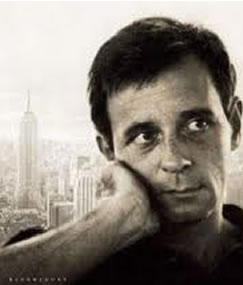
De Amerikaanse schrijver en essayist Edmund White werd geboren op 13 januari 1940 in Cincinnati. Zie ook mijn blog van 13 januari 2007 en ook mijn blog van 13 januari 2008 en ook mijn blog van 13 januari 2009 en ook mijn blog van 13 januari 2010.


Uit: The Farewell Symphony


„I'm beginning this book on All Saints' Day in Paris, six months after Brice's death. This morning I went with Brice's brother and his brother's lover to the Père Lachaise cemetery to leave some flowers before the white marble plaque that marks the niche where Brice's ashes are stored in an urn. At first there wasn't a receptacle for the flowers and we'd just leave them on the cold floor, where they'd quickly wilt. But then someone-the Spanish woman who cleaned for us once a week, perhaps-attached a little brass vase to the plaque, and that's where we put the flowers now. Today I left yellow freesias. Someone had Scotchtaped the photo of a young man to Brice's plaque and I wondered if it was a secret admirer who'd left his own portrait; retrospectively I was jealous. Maybe it was a photo of one of the other dead young men that had been taped to our plaque by mistake.

The ashes are in the columbarium, a fancy word for "dovecote." We wanted to be buried together, but since technically I'm not a Parisian, there was no way I could buy a plot or a niche at Père Lachaise, which is reserved for citizens of the capital. Brice thought of everything in his methodical way; he bought the niche for his urn but in my name. Now, legally, I can't be refused entrance when I die.

I've never liked to feel things in the appropriate way at the right moment. I know that Brice's brother is slightly puzzled that I don't visit the long, subterranean corridors of the columbarium more often. Even today I was dry-eyed, bored, more curious about the new plaques than anguished about Brice's. The day Brice was interred, there were only four other niches occupied along this whole wall. Now it's filling up quickly-at least two hundred newcomers have arrived in the last six months. Some are Vietnamese and their inscriptions are in both French and in Chinese characters. A few are young men in their twenties-I imagine they died of AIDS, too. There are Jews and Protestants as well as Catholics; Poles and Italians as well as French. There's even an American writer shelved just above Brice; he's had inscribed the words "Writer-Ecrivain" just below his name.

It's not that Brice's brother Laurent doubts my grief. He saw me six months ago, sitting on the curb just outside the funeral home, sobbing. We'd just made all the arrangements for the cremation and now I was crying like a Sicilian widow.“


 829690-2eebd4195a3bbc56fc7a6b3257a2d14b.jpg

Edmund White (Cincinnati, 13 januari 1940)


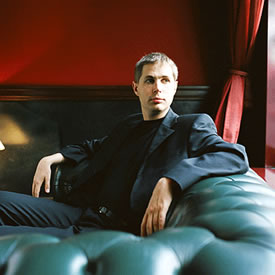
De Duitse schrijver Daniel Kehlmann werd op 13 januari 1975 in  München geboren. Zie ook mijn blog van 13 januari 2008 en ook mijn blog van 13 januari 2009 en ook mijn blog van 13 januari 2010.


Uit: Unter der Sonne


„Markus Mehring war vier- oder fünfunddreißig Jahre alt, oft wußte er das selbst nicht genau. Er lebte in einer Zweizimmerwohnung mit einer Kochecke und einem kleinen Balkon. Von seinen Nachbarn unterschied ihn, daß er keinen Fernseher hatte. Statt dessen las er Abenteuerromane. Am liebsten

Moby Dick – viermal schon –, und sehr gerne auch Joseph Conrad und Graham Greene. Er arbeitete in einem Amtsgebäude ; dort hatte er einen Schreibtisch und Stempel und viele Kugelschreiber, Telefon brauchte er keines. Er mußte Formulare durchsehen, ausgefüllt von Leuten, die Wichtigeres zu tun hatten, und darin nach Formfehlern suchen. Fand er welche, mußte er das Blatt an eine bestimmte Abteilung weiterleiten ; wenn nicht, an eine andere Abteilung. Einmal hatte er einen Mann kennengelernt, der auf einem Großbauernhof die Schweine massieren mußte, und wann immer er in seine Toilette sah, dachte er mit Schaudern an die Kanalräumer, die sich in tiefen Höhlen durch die Exkremente der Stadt wühlten. Also gab es Berufe, die noch schlimmer waren.

Einmal im Jahr bestieg er einen Zug und fuhr in eine Ferienpension in einer grünen und welligen Landschaft, wo er zwei Wochen verbrachte. Weihnachten feierte er mit seinem tauben Großonkel, einem ehemaligen Lokomotivführer. Einmal im Monat besuchte er seine Schwester und ihren Mann und brachte den Kindern Schokolade mit. Als Staatsangestellter war er unkündbar, als Mitglied des Buchklubs bekam er vierteljährlich den neuen Katalog. Einmal, mit neunzehn, hatte er ein Gedicht geschrieben ; er bewahrte es in einer Schublade auf und las es sich zuweilen laut vor. Im Lotto gewann er nie, und er hatte keine Zeitung abonniert.“


829690-bc584292f41cf074cdc796baaa25614f.jpg
Daniel Kehlmann (München, 13 januari 1975)


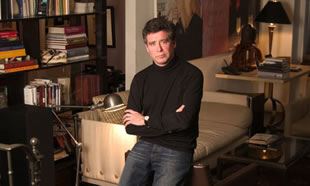
De Amerikaanse schrijver Jay McInerney werd geboren op 13 januari 1955 in Hartford, Connecticut. Zie ook mijn blog van 13 januari 2007 en ook mijn blog van 13 januari 2008 en ook mijn blog van 13 januari 2009 en ook mijn blog van 13 januari 2010.


Uit: Model Behavior


„The name of the party is the Party You Have Been to Six Hundred Times Already. Everybody is here. "All your friends," Philomena states in what can only be described as a citric tone. It seems to me that they are her friends, that she is the reason we grace this fabulous gala, which takes place in the Waiting Room of Grand Central, presumably evicting dozens of homeless people for the night. We're supposedly on hand for the benefit of a disease, but we were comped, as was everyone else we know. "I'm sick of all this pointless glamour," my glamorous girlfriend says. "I want the simple life." This has become a theme. Weariness with metropolitan life in all its colonoscopic intricacy. I wonder if this ennui is somehow related to that other unstated domestic theme: sex, infrequency thereof.
We are accosted by Belinda, the popular transvestite, whom I am nearly certain is a friend of my girlfriend's, as opposed to one of my very own. I can't exactly remember if I know him from the gossip columns or if I know him personally, from events like these. Belinda is with an actual, ageless woman with striking dark eyebrows and buzzcut white hair, a woman who is always here at the party and whom I always sort of recognize. One of those women with three names: Hi Howareyou Goodtoseeyou. All the women lately have either three names or just one. Even the impersonators.
"Oh God, hide me," says the woman whose name I always forget, "there's Tommy Kroger, I had a bad date with him about five thousand years ago."
"Did you sleep with him?" Philomena asks, raising one of her perfectly defined eyebrows, which looks like a crow in flight in the far distance of a painting by van Gogh.
"God, who can remember?"
"If you can't, then you did," says Belinda. "That's the rule."
Ah, so that's the rule.
"Hello, darlings." Who could it be but Delia McFaggen, the famous designer, streaking toward Belinda, blowing kisses all over everyone. I retreat, slaloming through the thick crowd to find beverages, the first of many trips.“


 829690-b4a17c9a92dae0246d91f9a5c5d680f0.jpg

Jay McInerney (Hartford, 13 januari 1955)


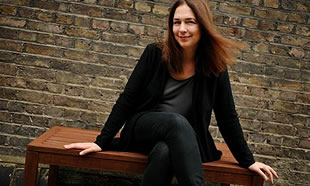
De Amerikaanse schrijfster Lorrie Moore werd geboren op 13 januari 1957 in Glens Falls, New York. Zie ook mijn blog van 13 januari 2009 en ook mijn blog van 13 januari 2010.


Uit: A Gate at the Stairs


„The cold came late that fall and the songbirds were caught off guard. By the time the snow and wind began in earnest, too many had been suckered into staying, and instead of flying south, instead of already having flown south, they were huddled in people's yards, their feathers puffed for some modicum of warmth. I was looking for a job. I was a student and needed babysitting work, and so I would walk from interview to interview in these attractive but wintry neighborhoods, the eerie multitudes of robins pecking at the frozen ground, dun-gray and stricken — though what bird in the best of circumstances does not look a little stricken — until at last, late in my search, at the end of a week, startlingly, the birds had disappeared. I did not want to think about what had happened to them. Or rather, that is an expression — of politeness, a false promise of delicacy — for in fact I wondered about them all the time: imagining them dead, in stunning heaps, in some killing cornfield outside of town, or dropped from the sky in twos and threes, for miles down along the Illinois state line.

I was looking in December for work that would begin at the start of the January term. I'd finished my exams and was answering ads from the student job board, ones for "childcare provider." I liked children — I did! — or rather, I liked them OK. They were sometimes interesting. I admired their stamina and candor. And I was good with them in that I could make funny faces at the babies and with the older children teach them card tricks and speak in the theatrically sarcastic tones that disarmed and enthralled them. But I was not especially skilled at minding children for long spells; I grew bored, perhaps like my own mother. After too much time playing their games, my mind grew peckish and longed to lose itself in some book I had in my backpack.“


 829690-004d8466dcc648bea37e3c278ca389fe.jpg

Lorrie Moore (Glens Falls, 13 januari 1957)


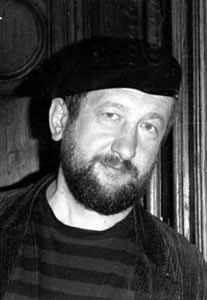
De Litouwse schrijver en vertaler Jurgis Kunčinas werd geboren op 13 januari 1947 in Alytus. Zie ook mijn blog van 13 januari 2009 en ook mijn blog van 13 januari 2010.


Uit: Tula (Vertaald door Elizabeth Novickas)


„Speak to me, Tūla, whisper to me; when the illuminated high wall of the Bernardine, as red as it already is, glows redder still; when the Vilnelė boils like lava under all of its little bridges, and most furiously of all right here, next to the Bernardine; when the sparse passersby, spotting the heavy rain cloud, hasten their steps and, looking around fearfully, scurry off to their urban burrows; when the cloud hangs now right nearby–above Bekešas and Panonietis Hill, above the dark red folds of the escarpment–speak and tell me: who now will remind us of the love that clung to us like a infectious disease, never, as it was, bellowed out in the midwinter courtyards, and so never splattered with the city’s dirt–so belated and so useless it was to anyone, useless even to this street prepared for a downpour, to the old clump of trees on the shore, even to the glow lighting up the Bernardine, or that ever approaching cloud, which has stopped now above the drab Bekešas tower–who, come on, say it, who?

Tell me, Tūla, tell me, because only you can answer these questions hanging like those clouds–only you, because nature in the city is always a bit unreal–too grand or what?–and mute. Not quite a decoration; not a model; not window-dressing; but not nature, either. I told you. Watch, Tūla, I’m coming to your humble abode over the uncovered Vilnelė bridge, under which the blackish-green water with its barely lighter foam eternally boils, I’m coming to your windows, to your eyes, which reflect nothing but the low sky and the Bernardine’s towers, I’m coming to your tissues, to the clarity of your bones, to your primeval nerves, which, when touched, tremble and sound: of the murmur of the wind, the tinkling of water, the rustling of grass; and, bumped a bit harder, they stiffen, and the sounds strengthen–I hear the squeal of a small, unexpectedly frightened animal; the stubbornly explaining voice of a nocturnal bird; I hear the fluttering of wings above my head and I see eyes–the mysterious eyes of a bird of twilight in your face as white as a sheet; your eyes, Tūla, the eyes of a bird and the eyes of a cloud; I come in the moonlight, throwing a heavy shadow on the day that has passed, on the day to come and the night of ours to come, on this city, which has sucked us into its dark womb and spat us out together with the silt, the clay, all sorts of shards and old tools, and old money, too, which has no power in either this world or the next–did we really ever live there? And I throw a broken, twisted shadow on the hill of Bekešas and his warrior Vadušas Panonietis, where that menacing cloud full of storm dust goes on hanging...“


 829690-541b6c1923edaa8a24d36edcd64e4e95.jpg

Jurgis Kunčinas (13 januari 1947 – 13 december 2002)


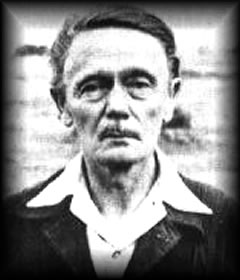
De Amerikaanse dichter, schrijver en beeldhouwer Clark Ashton Smith werd geboren in Long Valley (Californië) op 13 januari 1893. Zie ook mijn blog van 13 januari 2009 en ook mijn blog van 13 januari 2010.


Desolation


It seems to me that I have lived alone—

Alone, as one that liveth in a dream:

As light on coldest marble, or the gleam

Of moons eternal on a land of stone,
The days have been to me. I have but known

The silence of Thulean lands extreme—

A silence all-attending and supreme

As is the sea's enormous monotone.

Upon the waste no palmed mirages are,

But strange chimeras roam the steely light,

And cold parhelia hang on hilt and scaur

Where flowers of frost alone have bloomed. . . . I crave

The friendly clasp of finite arms, to save

My spirit from the ravening Infinite.


The Dream-Bridge


All drear and barren seemed the hours,

That passed rain-swept and tempest-blown.

The dead leaves fell like brownish notes

Within the rain's grey monotone.


There came a lapse between the showers:

The clouds grew rich with sunset gleams;
Then o'er the sky a rainbow sprang-

A bridge unto the Land of Dreams.


 829690-941b98d7a6cea120c84d5e1ab43a6c7c.jpg

Clark Ashton Smith (13 januari 1893 – 14 augustus 1961)


Zie voor nog meer schrijvers van de 13e januari ook mijn vorige blog van vandaag.
Geschreven door Romenu om 19:54 Reageer op dit bericht

Kostís Palamás, Karl Bleibtreu, Victor de Laprade, Jan de Bas, Eduard von Bauernfeld, Maler Müller, Mark Alexander Boyd

De Nieuwgrieks dichter Kostís Palamás werd geboren op 13 januari 1859 in Patra. Zie ook mijn blog van 13 januari 2009 en ook mijn blog van 13 januari 2010.


Rose Fragrance


This year’s harsh winter brought me to my knees,

For it found me without youth and caught me without fire,

And time and again as I walked the snowy streets,

I felt I would fall and die.

But yesterday, as I was encouraged by the laugh of march,

And I went to find again the roads to the ancient sites,

The first fragrance of a distant rose in my path

Brought tears to my eyes.


Vertaald door Alex Moskios


Ancient Eternal And Immortal Spirit 


Immortal spirit of antiquity,

Father of the true, beautiful and good,

Descend, appear, shed over us thy light

Upon this ground and under this sky

Which has first witnessed the unperishable fame.

Give life and animation to those noble games!

Throw wreaths of fadeless flowers to the victors

In the race and in the strife!

Create in our breasts, hearts of steel!

In thy light, plains, mountains and seas

Shine in a roseate hue and form a vast temple

To which all nations throng to adore thee,

Oh immortal spirit of antiquity!


 829681-e2a0635cf44159f77a4695c89eae361d.jpg

Kostís Palamás (13 januari 1859 - 27 februari 1943)

Standbeeld in Nicosia


De Duitse schrijver en criticus Karl August Bleibtreu werd geboren op 13 januari 1859 in Berlijn. Zie ook mijn blog van 13 januari 2009 en ook mijn blog van 13 januari 2010.


Uit: Bismarck


»Dominus Otto v. Bismarck!« Der Universitätsrichter putzte sorgfältig seine Brille und setzte sie feierlich wieder auf, um den Übeltäter mit besonderer Strenge ins Auge zu fassen. »Das sind ja schöne Geschichten, die ich höre. Erst 17 Jahre alt, wie ich aus der Liste ersehe, so jung und schon verdorben! Oder, um ein nicht so hartes Wort zu brauchen, so jung und schon so...«

»Kindisch!« ergänzte der hochaufgeschossene Jüngling fröhlich, schlank und spitz wie eine Nadel. Seine blauen Augen blitzten dabei unter buschigen blonden Brauen und seine rosige Gesichtsfarbe verriet eine Urgesundheit von des Gedankens Blässe und der Gymnasialluft wenig angekränkelt.

»Silentium! So unbescheiden, wollte ich sagen. Kaum sind Sie in Göttingen angelangt, erst 24 Stunden, da machen Sie schon Skandal, erregen öffentliches Ärgernis. Was ist das für ein Aufzug, in dem Sie daherkommen! Ist das vielleicht die neueste Berliner Mode?«

Der Anzug des Studiosus v. Bismarck vereinte freilich in glücklicher Weise den Zylinderhut eines Dandy mit der Jacke eines Zirkusreiters und den Kanonenstiefeln eines Kürassierleutnants. Der junge Mensch sah so phantastisch aus, als wolle er, von der dumpfen Haft des Gymnasiums befreit, sozusagen aus der Haut fahren. Aber zugleich lag etwas so Urwüchsig-Humorvolles in seiner Haltung, daß der Universitätsrichter leise schmunzelte, als er in die neckisch blinzelnden blauen Gucker dieses kaum dem Knabenalter entwachsenen Burschikosus schaute. Der spitzte unwillkürlich den Mund, als wollte er irgendeinen hauptstädtischen Gassenhauer anstimmen. Er begnügte sich aber, würdevoll zu versichern: »Jeder zieht sich an, w« er kann. Jeder nach seinem Geschmack!«


 829681-e8bb94d529b5c35523e82d46be7e7fc0.jpg

Karl Bleibtreu (13 januari 1859 – 30 januari 1928)

Bismarck monument „am Großen Stern” in Berlijn.


De Franse dichter en criticus Victor Richard de Laprade werd geboren op 13 januari 1812 in Montbrison. Zie ook mijn blog van 13 januari 2009 en ook mijn blog van 13 januari 2010.


Limpidité


Il est des sources d'eau si bleue et si limpide,
Que rien n'en peut ternir la transparence humide ;
Que sur un noir limon leurs ondes de cristal
Roulent sans altérer l'azur du flot natal ;
Qu'à travers les débris qui sur leurs bords s'amassent,
Elles savent choisir les fleurs lorsqu'elles passent,
Et que, vierges encor de toute impureté,
L'Océan les reçoit dans son immensité.
Près d'elles l'ombre est douce aux affligés ; près d'elles
Les oiseaux chantent mieux, les plantes sont plus belles ;
Près d'elles, au matin, les femmes vont s'asseoir
Pour nouer leurs cheveux devant un clair miroir.

Il est des âmes qui, dans nos sentiers de fange,
Glissent sans y tacher leur blanche robe d'ange.
Sans laisser, comme nous, se prendre à chaque pas
Une sainte croyance aux ronces d'ici-bas ;
Des coeurs qui restent purs quand l'ennui les traverse,
Qui gardent leur amour dans la fortune adverse.
L'air vicié du monde en passant autour d'eux
Se charge de parfums ; et, comme des flots bleus,
Sans entraîner un grain de nos terres infâmes,
Ils coulent en chantant vers l'océan des âmes.


 829681-66154edb3c8b8f0e34a853859a61b202.jpg

Victor de Laprade (13 januari 1812 – 13 december 1883)

Standbeeld door Jean Bonnassieux in Montbrison


De Nederlandse historicus en dichter Jan de Bas werd geboren op 13 januari 1964. Zie ook mijn blog van 13 januari 2008 en ook mijn blog van 13 januari 2009 en ook mijn blog van 13 januari 2010.


Sinterklaaspsalm


Hij komt! Hij komt!
En wat er verder volgt
uit Psalm 98 vers 4.

De dominee sprak
en de gemeenteleden zongen.
- Het was bijna 5 december!


 829681-8fd4ce112d4d0b916efe04586b6c46bc.jpg

Jan de Bas (13 januari 1964)


De Oostenrijkse dichter en schrijver Eduard von Bauernfeld werd geboren op 13 januari 1802 in Wenen. Zie ook mijn blog van 13 januari 2009 en ook mijn blog van 13 januari 2010.


Das ist ein süßer Schlummer


Die Mutter lullt den Knaben

Mit süßen Liedern ein;

Er will's nicht anders haben,

Sie muß am Bettchen sein.

Wie kann's der Schelm nur wissen,

Ob sie am Bette sitzt,

Der kaum aus seinem Kissen

Mit halbem Auge blitzt?

Und wie er ohne Kummer

Frisch atmend rosig liegt!

Das ist ein süßer Schlummer,

In den die Lieb' uns wiegt.


 829681-e613dfbfa7e6e3d0775027afd37c5675.jpg

Eduard von Bauernfeld (13 januari 1802 – 9 augustus 1890)


De Duitse dichter en schilder Maler (Friedrich) Müller werd geboren op 13 januari 1749 in Kreuznach. Zie ook mijn blog van 13 januari 2009 en ook mijn blog van 13 januari 2010.


Soldaten-Abschied


Heute scheid' ich, heute wand'r ich,

Keine Seele weint um mich.

Sind's nicht diese, sind's doch Andre,

Die da trauern, wenn ich wandre:

Holder Schatz, ich denk' an dich.


Auf dem Bachstrom hängen Weiden;

In den Thälern liegt der Schnee;

Trautes Kind, daß ich muß scheiden,

Muß nun unsre Heimath meiden,

Tief im Herzen thut mir's weh.


Hunderttausend Kugeln pfeifen

Ueber meinem Haupte hin!

Wo ich fall', scharrt man mich nieder

Ohne Klang und ohne Lieder,

Niemand fraget, wer ich bin.


Du allein wirst um mich weinen,

Siehst du meinen Todesschein.

Trautes Kind, sollt' er erscheinen,

Thu' im Stillen um mich weinen

Und gedenk' auch immer mein.


Heb' zum Himmel unsern Kleinen,

Schluchz': nun todt der Vater dein!

Lehr' ihn bethen! Gieb ihm Segen!

Reich' ihm seines Vaters Degen!

Mag die Welt sein Vater seyn.


Hörst? Die Trommel ruft, zu scheiden:

Drück' ich dir die weiße Hand!

Still' die Thränen! Laß mich scheiden!

Muß nun für die Ehre streiten,

Streiten für das Vaterland.


Sollt' ich unterm freyen Himmel

Schlafen in der Feldschlacht ein:

Soll aus meinem Grabe blühen

Soll auf meinen Grabe glühen

Blümchen süß: Vergiß nicht mein.


829681-61d7551dbd2f76739ad23a67c84f8f5b.jpg
Maler Müller (13 januari 1749 - 23 april 1825)

Ets van Ludwig E. Grimm, 1816


De Schotse dichter Mark Alexander Boyd werd geboren op 13 januarri 1562. Zie ook mijn blog van 13 januari 2007.

Unhappy is the man for evermair


Unhappy is the man for evermair
That tills the sand and sawis in the air;
But twice unhappier is he, I lairn,
That feidis in his hairt a mad desire
And follows on a woman thro the fire,
Led by a blind and teachit by a bairn


829681-2cb62c4843778225a359cf334334305c.jpg
Mark Alexander Boyd (13 januari
1562 – 10 april 1601)

Carrick in Ayrshire (Geen portret beschikbaar)

Geschreven door Romenu om 19:47 Reageer op dit bericht

Cees van der Pluijm, Jacques Hamelink, Haruki Murakami, Alain Teister, Jakob Lenz

De Nederlandse dichter, schrijver en columnist Cees van der Pluijm werd geboren op 12 januari 1954 te Radio Kootwijk (Gld.). Zie ook mijn blog van 12 januari 2007 en ook mijn blog van 12 januari 2008 en ook mijn blog van 12 januari 2009 en ook mijn blog van 12 januari 2010.


1954


Je was er pas een week of vier
De ouderwetse winterkou
Sloeg bikkelhard de kamer in

Je was de spil van het gezin
De wereld draaide nog om jou
Je leefde, gulzig als een dier

Je moeder in het kraambed lag
Te wachten op de laatste dag

Er werd gebeefd van kou en angst
Je vader was misschien het bangst
Want Oma voerde het gezag

Hij wierp wat plankjes toe naar haar:
Mijn luiers, van de vrieskou zwaar –
Zij brak haar armen bij de vangst


ST. JOZEFSSCHOOL


I

Je kunt de bel nog horen als je wilt
Hij staat nog immer in de hoge deur:
Die strenge man, driedelig in het pak
-
Hij luidt de bel, de kinderschaar verstilt


En schuifelt met een zweem van ongemak
En achting voor hem langs: hij is het Hoofd
Der School (het Hoofd, nog lang geen directeur)
In wiens gezag men moeiteloos gelooft


't Is winter en de grote kachel brandt
Met af en toe een plof. Je ruikt de geur
Van toen: van ijver, angst en kinderzweet


Zelfs nog in dit verbouwd gebouw; dit pand
Waar werd gezwoegd, gerekend, gedicteet
-
Men speelt er nu verantwoord interieur


LENTE IN 'T LAAG EN 'T HOOG


II

Van bloesem wit de oevers van de beek
Waar pas nog sneeuw de koude grond bedekte;
En waar het uit de bomen constant lekte
Ontsprong het groen terwijl je net niet keek


De specht beukt elke ochtend op de bast
Van oud kastanjehout en alles zingt
Als jij het wakker worden nog bedwingt
En slaperig je ochtendplasje plast


Het kriekend licht komt daag'lijks vroeger binnen
En al wat leeft, is spoorslags buiten zinnen
De morgenstond is ongeremd Bacchantisch


En alles bloeit en lonkt en kwinkeleert
Terwijl jij Morpheus' armen prefereert
Natuur is onverdragelijk romantisch


 828908-8893359606f4c567e48046290b25aa5a.jpg

Cees van der Pluijm (Radio Kootwijk, 12 januari 1954)


De Nederlandse dichter en schrijver Jacques Hamelink werd geboren op 12 januari 1939 in Driewegen, bij Terneuzen. Zie ook mijn blog van 12 januari 2007  en ook mijn blog van 12 januari 2008 en ook mijn blog van 12 januari 2009 en ook mijn blog van 12 januari 2010.


Zeemorgen


Terwijl in het eiwit zand kinderen alweer grijpgraag

kuilen graven en huilen om de hitte

en hun rode moeders zich openleggen

en de zon een hete man tussen hun dijen plant

komt de dag kentaurisch snuivend nog druipnat

het spierwit borsthaar glinsterend tevoorschijn

uit het water voert luidkeels nieuwe vogels aan

en fluit naar de verspreid spelende meisjes

zilvergroen geschubde meerminnen in bikini

en de duintoppen welven als borsten van een blote heidin

maar tijd hoog op de poten slaakt waarschuwend

zijn kreet die de schelpenzoeker versteent

te midden van zijn koraaleilanden hij vergaat vaag

in de ruimte het galmende water

dat kathedralen bouwt van zand

met ritselende vlaggen helm en brem bezet

en de eerste minnaars in elkaar verdronken

spoelen aan de ogen zwart van stilzwijgen

om hun ligplaats verdampen de voetsporen

van de nacht en zijn geluidloze mannen

aan de vloedlijn maken meeuwen het uur wit

met gebeden en ritueel en laten gretig

hun mossels op de stenen vallen en hese geluiden

maakt de waakzaam blijvende zee

die verder sprakeloos is en inzicht

te pijndoend om uit te spreken vergt

van de mergheldere oude vissers

zonneblind ontwaakt uit een slaap met roggen

en inktvissen spuwen zij kwaad en zwijgend

naar het wrakkenvol water en gaan de eerste borrel drinken

in de bekaaide herberg en vaarten verzinnen

naar de legendarische broedplaatsen van vroeger

een zaagvis draait zich verraderlijk als een hand om in hun verhaal.


828908-67f1209e14e805876edd610c4f54869f.jpg
Jacques Hamelink (Terneuzen, 12 januari 1939)

Doorkijkje in Terneuzen


De Japanse schrijver en vertaler Haruki Murakami werd geboren op 12 januari 1949 in Kioto. Zie ook mijn blog van 1 maart 2007  en ook mijn blog van 12 januari 2008 en ook mijn blog van 12 januari 2009 en ook mijn blog van 12 januari 2010.


Uit: South of the Border, West of the Sun (Vertaald door Philip Gabriel)


„My birthday's the fourth of January, 1951. The first week of the first month of the first year of the second half of the twentieth century. Something to commemorate, I guess, which is why my parents named me Hajime--"Beginning" in Japanese. Other than that, a 100 percent average birth. My father worked in a large brokerage firm, my mother was a typical housewife. During the war, my father was drafted as a student and sent to fight in Singapore; after the surrender he spent some time in a POW camp. My mother's house was burned down in a B-29 raid during the final year of the war. Their generation suffered most during the long war.

When I was born, though, you'd never have known there'd been a war. No more burned-out ruins, no more occupation army. We lived in a small, quiet town, in a house my father's company provided. The house was prewar, somewhat old but roomy enough. Pine trees grew in the garden, and we even had a small pond and some stone lanterns.

The town I grew up in was your typical middle-class suburb. The classmates I was friendly with all lived in neat little row houses; some might have been a bit larger than mine, but you could count on them all having similar entranceways, pine trees in the garden, the works. My friends' fathers were employed in companies or else were professionals of some sort. Hardly anyone's mother worked. And most everyone had a cat or a dog. No one I knew lived in an apartment or a condo. Later on I moved to another part of town, but it was pretty much identical. The upshot of this is that until I moved to Tokyo to go to college, I was convinced everyone in the whole world lived in a single-family home with a garden and a pet, and commuted to work decked out in a suit. I couldn't for the life of me imagine a different lifestyle.“


828908-2530bcf0502d5f4ceca7b25476874247.jpg
Haruki Murakami (Kioto, 12 januari 1949)


De Nederlandse dichter, schrijver en schilder Alain Teister (eig. Jacob Martinus Boersma werd geboren in Amsterdam op 12 januari 1932. Zie ook mijn blog van 12 januari 2009 en ook mijn blog van 12 januari 2010.


Zelfportret

Ik ben voornamelijk van geen belang.
Ik ben een zachte wang,
en ik ben mijn eigen lippen.
Meestal zonder gezang,
uitblinkend in knorgeluiden
voor enk'le fijne luiden
die mij ter harte gaan.
Ik ben meer kuiken dan haan.
En: ik ben mijn eigen lippen,
waarmee ik uit eigenbelang
mij kus op mijn eigenwang.


828908-902b3b070cc3929f4fe18c56d6ce680e.jpg
Alain Teister (12 januari 1932 – 6 februari 1979)


De Duitse dichter en schrijver Jakob Michael Reinhold Lenz werd geboren op 12 januari 1751 in Seßwegen. Zie ook mijn blog van 1 maart 2007 en ook mijn blog van 12 januari 2009 en ook mijn blog van 12 januari 2010.


Lied eines schiffbrüchigen Europäers,

auf einer wüsten Insel, von der man von Zeit zu Zeit Rauch aufsteigen sehen, aber wegen einer heftigen Brandung nicht zu Hülfe kommen konnte. Diese Insel schien Capitain Wallis als er vorbey segelte, ein völlig unwirthbarer Felsen.


Wenn ichs noch bedenke –

Auf der langen Seereis' – überall –

Wo die Luft so feucht war, gab sie Wein,

Auf Madera, an dem frohen Cap –

Wo sie scharf war, wuchsen Cokusnüsse –

Wo es kalt war, flözte sie uns Holz zu.

Riesen sahen wir, wie David,

Und bezwungen sie mit kleinen Steinchen;

Wilde Teufel sahen wir, sie sangen

Uns die kauderwelschen Friedenslieder

Daß wir ihrer Gutheit lachten –

Ach! wohlthätige Natur!

Ost- und Westwärts – Ueberall!

Sieh! dieß lezte Scheitchen Holz

Leg ich auf – Sein Rauch verschwindet

In die Luft – und Niemand meldet sich – –

Allbedenkende Natur!

Hast du mich vergessen?


828908-45cfbde9ab3226ed64a21a3d1b3874e9.jpg
Jakob Michael Reinhold Lenz (12 januari 1751- 24 mei 1792)


Zie voor nog meer schrijvers van de 12e januari ook mijn vorige blog vandaag.
Geschreven door Romenu om 19:32 Reageer op dit bericht

Fatos Kongoli, William Nicholson, Florian Havemann, Jack London, Ferenc Molnár, Charles Perrault

De Albanese schrijver Fatos Kongoli werd geboren op 12 januari 1944 in Elbasan. Zie ook mijn blog van 12 januari 2009 en ook mijn blog van 12 januari 2010.


Uit: Ein europäischer Traum (Vertaald door Joachim Roehm)


„Als ich den letzten Jahren seines Lebens einmal von ihm wissen wollte, warum er Kommunist geworden war, drückte er sich nicht um eine Antwort: Während der Jahre in Italien sei dies die beste Lösung gewesen. Er habe vor der Alternative gestanden, sich entweder für den Kommunismus eines Antonio Gramsci zu entscheiden oder für den Faschismus des Duce ... Es liegt mir fern, meinem Vater etwas vorzuwerfen, doch außer dem Faschismus des Duce und dem Kommunismus eines Antonio Gramsci wird es in Verdis Vaterland auch noch andere Alternativen gegeben haben. Die letzten Jahre seines Lebens, das tragisch endete, denn er wurde von seiner eigenen Partei geächtet und weggeworfen wie eine ausgequetschte Zitrone, verbrachte er am Klavier, Fugen von Bach spielend, bis er dann starb, verlassen selbst noch von seinen engsten Freunden. Ich, der ich endlich die Mathematik aufgegeben und mich der Literatur zugewandt hatte, begriff damals, dass ich womöglich

den gefährlichsten Fehler meines Lebens begangen hatte. Die Sprache Molières eröffnete mir die Möglichkeit, Kontakt mit den großen Autoren des 20. Jahrhunderts aufzunehmen, und ich begriff einigermaßen, was wirklich Literatur ist. In einem Land wie Albanien, wo auch noch dem unschuldigsten Dissidenten ohne lange zu fackeln der Kopf abgerissen wurde, war es verflucht schwierig, sich mit wirklicher Literatur abzugeben. Aber dieses verdrießliche Kapitel ist allgemein bekannt, und nach dem Fall der Berliner Mauer hat dies alles nichts mehr zu bedeuten. Auerdem

hätte niemand wirklich Lust, mir in den finsteren Tunnel dieser langen Jahrzehnte zu folgen, in denen meine Zähne allmählich verrotteten und zum Teil viel zu früh ausfielen, bis ich mir schließlich ziehen und durch eine Prothese ersetzen ließ, was noch übrig war, sodass ich nun nach Belieben lachen kann, wenn mir zum Weinen ist, ohne befürchten zu müssen, dass ich so schrecklich hässlich aussehe wie in der Zeit vor meiner Prothese.“


 828904-d5c6d0f0f4886b40b5484690022e8061.jpg

Fatos Kongoli (Elbasan, 12 januari 1944)


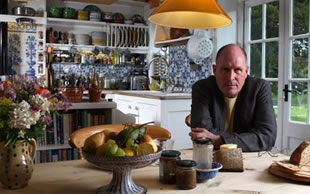
De Britse schrijver William Nicholson werd geboren op 12 januari 1948 in Tunbridge Wells, Kent. Zie ook mijn blog van 12 januari 2009 en ook mijn blog van 12 januari 2010.


Uit: The Trial of True Love


„Here where two rivers meet by an island, in the early morning, shortly after dawn, there is a mist along the valleys. The sun rises over the railway bridge, white as a moon, and everything is still. I stand before Taw pool, watching the water eddy round the island, my breath cloudy and my thoughts far away. I do not anticipate. And yet there is a moment before the moment that is both a preparation and a culmination. What is about to happen to me is long longed-for, familiar, out of reach, needed, despaired of, completely imagined, but never known: so first, and memorably, comes the intimation that it is about to happen. The light falling from an opening door onto a winter's street. The silence before a phone begins to ring. Anticipation, in the razor-cut of time before it bursts into fulfilment.

The Barnstaple train, headlamp furry in the mist, booms suddenly over the bridge. Rooks rattle out of invisible trees, cawing up into the sky. The premonitory sounds disperse into the slow tumble of the rivers, into my own quiet breaths. The smell of soaked grass and the sharp white air that makes me shiver and the silence after the train.

And then I see her.

This is a story about falling in love. The time is 1977, a generation ago. I am twenty-nine years old, and waiting for my real life to begin. I am engaged in this waiting process in the very small second bedroom of a very small flat in Cross Street in north London, owned by my friend Anna.

She comes back earlier than usual and pours herself a glass of wine, which is not like her, not at five in the afternoon, and says we must talk. So I have a glass of wine too, and we talk.“


828904-37073dd3f799f6dc590695cc89c0316a.jpg
William Nicholson (Tunbridge Wells, 12 januari 1948)


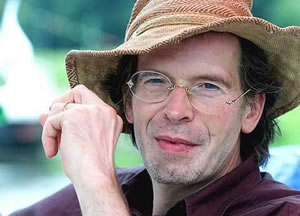
De Duitse schrijver, schilder en componist Florian Havemann werd geboren op 12 januari 1952 in Oost-Berlijn. Zie ook mijn blog van 12 januari 2009 en ook mijn blog van 12 januari 2010.


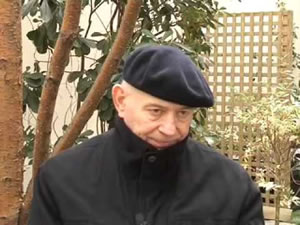
Uit: Havemann


„Havemann, das ist: ein König ohne Volk bleiben zu wollen, anstatt sich mit dem undankbaren, uneinsichtigen Volk da draußen abmühen, abgeben zu müssen. Und das können dann auch zum Beispiel Kritiker sein. Havemann, das ist: sich irgendwo festsetzen, eine häusliche Existenz führen. Grabow, Borgsdorf und Grünheide bei Berlin, mein Neukölln.

Havemann beginnt mit einem Saathändler, und der Saathändler, das ist Mittelstand, Mittelschicht, und Havemann ist das immer geblieben: Mittelstand, Mittelschicht – nur was das bedeutet, das hat sich immer wieder geändert.

Nein, Havemann beginnt nicht mit diesem Saathändler in Grabow, Havemann beginnt so wenig mit diesem Saathändler in Grabow, daß ich noch nicht mal weiß, wie dieser Havemann mit Vornamen hieß. Der Saathändler Havemann in Grabow, das ist die Vorgeschichte von Havemann, das, wo Havemann herkommt, das, woraus dann Havemann wurde, mit meinem Großvater Hans Havemann wurde, dem Sohn des Saathändlers Havemann in Grabow. Und wenn noch etwas bleibt von diesem Havemann in Grabow, bis zum heutigen Tag und in mir Havemann bleibt, dann der Atheismus, sein Atheismus, denn das einzige, was mir von diesem Saathändler Havemann übermittelt wurde, ist sein für seine Zeit so ungewöhnlicher Atheismus. Sein für eine Kleinstadt so ungewöhnlicher, so auff älliger Atheismus. Der bekennende Atheist Havemann, so die Legende, soll nur ein einziges Mal eine Kirche betreten haben, die Kirche in Grabow – Anlaß: die Konfi rmation seines Sohnes.“


 828904-d991e337eb7f023cf880260bd77ff451.jpg

Florian Havemann (Oost-Berlijn,12 januari 1952)


De Amerikaanse schrijver Jack London (eig. John Griffith Chaney) werd geboren op 12 januari 1876 in San Francisco, Californië. Zie ook mijn blog van 12 januari 2009 en ook mijn blog van 12 januari 2010.


Uit: John Barleycorn


„It all came to me one election day. It was on a warm California afternoon, and I had ridden down into the Valley of the Moon from the ranch to the little village to vote yes and no to a host of proposed amendments to the Constitution of the State of California. Because of the warmth of the day I had had several drinks before casting my ballot, and divers drinks after casting it. Then I had ridden up through the vine-clad hills and rolling pastures of the ranch and arrived at the farmhouse in time for another drink and supper.
“How did you vote on the suffrage amendment?” Charmian asked.
“I voted for it.”
She uttered an exclamation of surprise. For be it known, in my younger days, despite my ardent democracy, I had been opposed to woman suffrage. In my later and more tolerant years I had been unenthusiastic in my acceptance of it as an inevitable social phenomenon.
“Now just why did you vote for it?” Charmian asked.
I answered. I answered at length. I answered indignantly. The more I answered, the more indignant I became. (No; I was not drunk. The horse I had ridden was well-named “The Outlaw.” I ’d like to see any drunken man ride her.)
And yet—how shall I say?—I was lighted up, I was feeling “good,” I was pleasantly jingled.
“When the women get the ballot, they will vote for prohibition,” I said. “It is the wives, and sisters, and mothers, and they only, who will drive the nails into the coffin of John Barleycorn—”

“But I thought you were a friend to John Barleycorn,” Charmian interpolated.
“I am. I was. I am not. I never am. I am never less his friend than when he is with me and when I seem most his friend. He is the king of liars. He is the frankest truth-sayer. He is the august companion with whom one walks with the gods. He is also in league with the Noseless One. His way leads to truth naked, and to death. He gives clear vision, and muddy dreams. He is the enemy of life, and the teacher of wisdom beyond life’s vision. He is a red-handed killer, and he slays youth.”


828904-dc6e8bc643f9eafb80e953614e12fd01.jpg
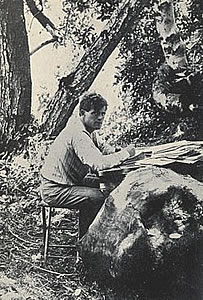
Jack London (12 januari 1876 - 22 november 1916)

In 1905


De Hongaarse schrijver Ferenc Molnár werd op 12 januari 1878 in een burgerlijk-joods gezin van Duitse afkomst geboren. Zie ook mijn blog van 12 januari 2009 en ook mijn blog van 12 januari 2010.


Uit: The Living Death


„Here is a very serious reason, my dear sisters, why at last, after an absence of twenty years in America, I am confiding to you this strange secret in the life of our beloved and lamented father, and

of the old house where we were children together.  The truth is, if I read rightly the countenances of my physicians as they whisper to each other by the window of the chamber in which I am lying, that

only a few days of this life remain to me.

It is not right that this secret should die with me, my dear sisters.  Though it will seem terrible to you, as it has to me, it will enable you to better understand our blessed father, help you to account for what must have seemed to you to be strange inconsistencies in his character.  That this secret was revealed to me was due to my indolence and childish curiosity.

For the first, and the last, time in my life I listened at a keyhole.  With shame and a hotly chiding conscience I yielded to that insatiable curiosity--and when you have read these lines you will understand why I do not regret that inexcusable, furtive act.

I was only a lad when we went to live in that odd little house. You remember it stood in the outskirts of Rakos, near the new cemetery.  It stood on a deep lot, and was roughly boarded on the side which looked on the highway.  You remember that on the first floor, next the street, were the room of our father, the dining room, and the children's room.  In the rear of the house was the sculpture studio. There we had the large white hall with big windows, where white-clothed laborers worked.  They mixed the plaster, made forms, chiseled, scratched, and sawed.  Here in this large hall had our father worked for thirty years.“


828904-2f40357d714747db3af9cf22b9549ac9.jpg
Ferenc Molnár (12 januari 1878 – 1 april 1952)


De Franse schrijver Charles Perrault werd geboren op 12 januari 1628 in Parijs. Zie ook mijn blog van 12 januari 2007 en ook mijn blog van 12 januari 2009 en ook mijn blog van 12 januari 2010.


Uit: Les Souhaits Ridicules (De dwaze wensen)


Si vous étiez moins raisonnable,

Je me garderais bien de venir vous conter

La folle et peu galante fable

Que je m'en vais vous débiter.

Une aune de Boudin en fournit la matière.

Une aune de Boudin, ma chère !

Quelle pitié ! c'est une horreur

S'écriait une Précieuse,

Qui toujours tendre et sérieuse

Ne veut ouïr parler que d'affaires de coeur.

Mais vous qui mieux qu'âme qui vive

Savez charmer en racontant,

Et dont l'expression est toujours si naïve,

Que l'on croit voir ce qu'on entend ;

Qui savez que c'est la manière

Dont quelque chose est inventé,

Qui beaucoup plus que la matière

De tout Récit fait la beauté,

Vous aimerez ma fable et sa moralité ;

J'en ai, j'ose le dire, une assurance entière.


Il était une fois un pauvre Bûcheron

Qui las de sa pénible vie,

Avait, disait-il, grande envie

De s'aller reposer aux bords de l'Achéron :

Représentant, dans sa douleur profonde,

Que depuis qu'il était au monde,

Le Ciel cruel n'avait jamais

Voulu remplir un seul de ses souhaits.


828904-1029afc8c72b86b33c39d7fd8a0f4bd1.jpg
Charles Perrault (12 januari 1628 – 16 mei 1703)

Anoniem portret in het Musée National de Versailles et des Trianons, Versailles


Geschreven door Romenu om 19:24 Reageer op dit bericht

Kamiel Verwer

De Nederlandse dichter en schrijver Kamiel Verwer werd op 12 januari 1979 in Tilburg geboren. Hij studeerde Informatica en Filosofie en behaalde twee opeenvolgende Masters diploma’s in 2002 en 2003. Na een dodelijk verkeersongeval van zijn moeder ging hij naar Berlijn en studeerde daar verder filosofie aan de Humboldt Universiteit. Deze studie sloot hij af met een Duits proefschrift over "vrijheid en verantwoordelijkheid in de filosofie van Hans Jonas". In de zomer van 2008 begon hij te reizen en tijdens deze reis kreeg hij het ​​idee van Charity Travel om de ideeën van zijn proefschrift in praktijk te brengen en om zijn passie voor reizen te combineren met gewoon iets goeds doen. Hij startte Charity Travel in 2009 en legde verbanden met kleinschalige goede doelen wereldwijd.


Entree met draaideur


Niets behalve die even aangename windvlaag

langs het tafeltje waaraan ik zat

en de kaars die even oplichtte

maar dan weer was zijn schijnsel

die onbewogen dans

als altijd in het glas van de deur


Nu draait hij weer

een meisje beweegt zich naar binnen

en die onbenullige kaars

hij verlicht haar gezichtje

als een duivel verlicht hij

de stilte naast haar mond

"deur, draai verdomme door"

dreunde keihard door me heen

het was de kaars, die

binnen in mij al vele jaren scheen.


 964534-26ef3f1d46ad6c36b34492177e50d335.jpg

Kamiel Verwer (Tilburg, 12 januari 1979)
Geschreven door Romenu om 00:00 Reageer op dit bericht

Meer van Romenu

↑ Terug naar de berichten