Naar de inhoud

Romenu

Over literatuur, gedichten, kunst en cultuur
akke.beakke.be

Berichten van 3 februari 2011 tot 4 februari 2011

Stewart O'Nan, Louis Ferron, Robert Coover, Werner Schwab, E. J. Pratt, Norman Ohler
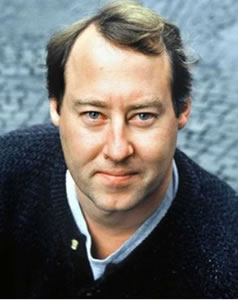
De Amerikaanse schrijver Stewart O'Nan werd geboren op 4 februari 1961 in Pittsburgh, Pennsylvania. Zie ook mijn blog van 4 februari 2007 en ook mijn blog van 4 februari 2008 en ook mijn blog van 4 februari 2009 en ook mijn blog van 4 februari 2010.


Uit: The speed queen


"I love you," he said, still gasping. He didn't even say my name.

And what was I supposed to say? That I felt sick, that I wished I hadn't let him?

I said it back.

"Are you okay?" he said.

I knew there would be blood but not so much. I wiped my thighs with the blanket and folded it over.

"I'm okay," I said. "I just need to clean up."

"I've got Kleenex," he said, and reached through the back window of the cab and handed me the box. He knelt there staring at me.

"Watch the movie," I said.

I stuffed some up there, but I still felt sick, so I put on my top and my old underwear and my shorts and found my clogs. Monty wouldn't leave me alone. "I'm okay," I kept telling him. "I just need to use the bathroom." He wanted to come with me, but I finally shouted at him, and he let me go.

I jumped down from the tailgate and almost fell. My legs were shaky and my stomach was churning like a washing machine. Everything down there stung. I stumbled over the dusty mounds toward the red flourescents outlining the snack bar. It was circular and shaped like a witches hat, the projector in the top part. You could see the movie scissoring through the air. We were in the back, like a mile away. The last hundred feet were deserted. A green light burned on each unused speaker like an eye. Halfway there, I knew I wasn't going to make it. I stopped and leaned against a speaker pole and heaved up everything I'd eaten--the Champale and the mustard fries, the nachos and the Dots--all of it splashing hot over my Dr. Scholl's. I spit to clean my mouth and kicked dust over everything and went on.

My thighs were sticky, and getting sick made me cry, so my face was a mess. I knew the bathrooms were by the front, so I walked around the outside and slipped in, hoping no one would see me.“


 845986-58724fcf0e7a7afcbc3404627d4d6358.jpg

Stewart O'Nan (Pittsburgh,  4 februari 1961)


De Nederlandse dichter en schrijver Louis Ferron werd op 4 februari 1942 geboren in Leiden. Zie ook mijn blog van 4 februari 2007 en ook mijn blog van 4 februari 2008 en ook mijn blog van 4 februari 2009 en ook mijn blog van 4 februari 2010.


Uit: Het stierenoffer


„Wir haben den Schrecken gebrochen,

Für uns wars ein großer Sieg.

Wir werden weitermarschieren,

Wenn alles in Scherben fällt,

Denn heute gehört uns Deutschland

Und morgen die ganze Welt.


Achterovervallend, de armen gelaten spreidend, keek hij me aan met een blik waarin ik dankbaarheid las. Dankbaarheid omdat één draai van mijn bajonet een einde maakte aan zijn laf en tobberig bestaan. Herkende hij in mij de verlossende engel die de al te zwaar belasten bij de hand neemt om hen op te heffen tot daar waar alles licht en gezang is? Nooit zal ik het weten. Na hem voor de loop van mijn Mauser te hebben weggetrapt – en ik deed dat echt zonder woede, zonder walging – werd ik door de luchtdruk van een achter mij exploderende granaat in de modder geworpen, vlak naast de boer die ik juist de helpende hand had gereikt. De slag verstierf en ik hoorde het zachte gepruttel van bloed dat in helrode blaasjes uit zijn buik opborrelde. Een schone offerande.

Ik werkte me overeind uit de drek, veegde mijn gezicht aan mijn mouw af en liet mijn blik op de boer rusten. Het bloed, dat eerst in vrolijke tinten had geschuimd, golfde nu in dramatische gutsen uit de wonde, die groter leek te worden naarmate het bloed zich verder over zijn kiel verspreidde. Zoals hij daar lag kon ik mij niet voorstellen dat ik een hekel aan hem zou hebben gehad. Hij was bepaald aandoenlijk met de in viltlaarzen gestoken benen half opgetrokken, de armen gestold in de laatste wiekslag en de zilverachtig glanzende baardstoppels op het nu uitdrukkingloze gelaat.“


 845986-50fd0e921ed529819bf3639437a6ac78.jpg

Louis Ferron (4 februari 1942 – 26 augustus 2005)


De Amerikaanse schrijver Robert Coover werd geboren op 4 februari 1932 in Charles City, Iowa. Zie ook mijn blog van 4 februari 2007 en ook mijn blog van 4 februari 2009 en ook mijn blog van 4 februari 2010.


Uit: Briar Rose


„He is surprised to discover how easy it is. The branches part like thighs, the silky petals caress his cheeks. His drawn sword is stained, not with blood, but with dew and pollen. Yet another inflated legend. He has undertaken this great adventure, not for the supposed reward -- what is another lonely bedridden princess? -- but in order to provoke a confrontation with the awful powers of enchantment itself. To tame mystery. To make, at last, his name. He'd have been better off trying for the runes of wisdom or the Golden Fleece. Even another bloody grail. As the briars, pillowy with a sudden extravagance of fresh blooms, their thorns decorously sheathed in the full moonlight, open up to receive him as a doting mother might, he is pricked only by chagrin. Yet he knows what it has cost others who have gone before him, he can smell their bodies caught in the thicket, can glimpse the pallor of their moon-bleached bones, rattling gently when the soft wind blows. That odor of decay is about the extent of his ordeal, and even it is assuaged by the fragrances of fresh tansy and camomile, roses, lilac and hyssop, lavander and savory, which encompass him affectionately -- perhaps he has been chosen, perhaps it is his virtue which has caused the hedge to bloom -- as he plunges deeper into the thicket, the castle turrets and battlements already visible to him, almost within reach, through its trembling branches.“


845986-ea08d0e57584c289e3303e543c61beb7.jpg
Robert Coover (Charles City,  4 februari 1932)


De Oostenrijkse toneelschrijver Werner Schwab werd geboren in Graz op 4 februari 1958. Zie ook mijn blog van 4 februari 2009 en ook mijn blog van 4 februari 2010.


Uit: Sein letzter Text


„In den siedlungsfremden Geschäften lügt die Mama manchmal noch mehr als in den Siedlungsheimischen Geschäften, weil dort die Lügen eine höhere Lebenserwartung einheimsen können, wegen der erschwerten Kontrollierbarkeit der lügenden Mama. Dort, in den siedlungsfremdländischen Geschäften, erzählt sie dann von einem Hund, der zuhause das vertraute Heim bewacht, und daß sie gerne die gesammelten Wurstzipfel überantwortet bekommen täte.

Das heißt dann freilich, daß es zuhause Wurstnudeln mit Salatabfällen geben muß..

Manchmal denke ich, daß die Mama mich meint, wenn sie einen Hund vortäuscht im auswärtigen

Wurstzipfelgeschäft. Darum muß ich vielleicht andauernd daheim bleiben, wenn ich unbedingt hinauswollen muß aus der blutunterlaufenen Wohnung. Andererseits heißt es immerzu, daß nur zuhausdaheim der gute Einfluß weht, der mich und die Wohnung aber nur dann bewachen kann, wenn die Wohnungstür verschlossen ist und die Wohnung abgefüllt darniederliegt mit mir.

Dann wäre allerdings der gute Einfluß der Hund, auf den es ankäme, aber dem überguten Einfluß täte die Mama keine Wurstzipfelnudeln mit Salatabfallsalat vor die nässende Maulhöhle setzen, da würde sie ein Schweinsschnitzel kochen, mit echten Semmelbrösel und einem ganzen Ei.“


845986-3a20e87420123f349573986b0b66f3fb.jpg
Werner Schwab (4 februari 1958 - 1 januari 1994)


De Canadese dichter E. J. Pratt werd op 4 februari 1882 geboren in Western Bay, Newfoundland. Zie ook mijn blog van 4 februari 2007 en ook mijn blog van 4 februari 2009 en ook mijn blog van 4 februari 2010.


Uit: The Titanic


MARCH 3, 1912

Completed! Waiting for her trial spin —
Levers and telegraphs and valves within
Her intercostal spaces ready to start
The power pulsing through her lungs and heart.
An ocean lifeboat in herself — so ran
The architectural comment on her plan.
No wave could sweep those upper decks — unthinkable!
No storm could hurt that hull — the papers said so.
The perfect ship at last — the first unsinkable,
Proved in advance — had not the folders read so?
Such was the steel strength of her double floors
Along the whole length of the keel, and such
The fine adjustment of the bulkhead doors
Geared to the rams, responsive to a touch,
That in collision with iceberg or rock
Or passing ship she could survive the shock,
Absorb the double impact, for despite
The bows stove in, with forward holds aleak,
Her aft compartments buoyant, watertight,
Would keep her floating steady for a week.
And this belief had reached its climax when,
Through wireless waves as yet unstaled by use,
The wonder of the ether had begun
To fold the heavens up and reinduce
That ancient hubris in the dreams of men,
Which would have slain the cattle of the sun,
And filched the lightnings from the fist of Zeus.
What mattered that her boats were but a third
Of full provision — caution was absurd:
Then let the ocean roll and the winds blow
While the risk at Lloyd's remained a record low.


845986-d7c994481cb766140ad3ac487c383cee.jpg
E. J. Pratt (4 februari 1882 – 26 april 1964)


De Duitse schrijver en journalist Norman Ohler werd geboren op 4 februari 1970 in Zweibrücken. Zie ook mijn blog van 4 februari 2007 en ook mijn blog van 4 februari 2008 en ook mijn blog van 4 februari 2009 en ook mijn blog van 4 februari 2010.


Uit: Ungleiche Schwestern (In: Die Zeit, 3 december 2008)


„Die wenigsten Antiguaner kennen das 42 Kilometer entfernte Schwestereiland Barbuda. Was auch kein Wunder ist, denn eine regelmäßige Fährverbindung zwischen den beiden einen Staat bildenden Inseln gibt es erst seit einem Jahr.

Barbuda ist eine andere Welt, es gibt dort kaum Tourismus und keine Industrie. Die Barbudaner erlauben niemandem, nicht einmal den Antiguanern, bei ihnen Land zu besitzen – und konnten sich deshalb ein kleines Paradies erhalten. Aus historischer Sicht ist ihre Skepsis gegen Fremde mehr als verständlich. Sie sind nämlich Nachkommen der Zöglinge des britischen Versuchs, hier so genannte Supersklaven zu züchten, wie es der Einheimische Devon Warner formuliert, Berater des einzigen barbudanischen Kabinettsmitglieds in der Spencer-Regierung. Nur die stärksten Afrikaner (vor allem aus Ghana, der Elfenbeinküste, dem Senegal) wurden im 17. Jahrhundert nach Barbuda verfrachtet und dort untereinander »gekreuzt«, um größere Menschen mit größeren Muskeln, größeren Händen zu schaffen – Exportsklaven für die Plantagen der Kolonien ringsum. Die Ruinen dieser Zuchtstationen sind in der Nähe von Codrington zu sehen, dem einzigen Dorf der Insel. Im Ort bestimmen noch heute Hünen das Bild. Frauen, die einen Meter neunzig groß sind und weit über hundert Kilo wiegen, sind keine Seltenheit.

Auch die Herzen der Barbudaner sind womöglich ein wenig überdimensioniert. Vielleicht erklärt das die Differenzen zum Nachbarn Antigua. Standhaft wehren sich die Barbudaner gegen alle Versuche, auch ihre Insel zu erschließen. Seit dem Ende der Sklaverei im 19. Jahrhundert gehört den Bewohnern das Land kommunal, und keinem ausländischen Investor ist es seitdem gelungen, gegen den Willen der Einheimischen zu investieren. Als im Jahre 2000 eine britische Firma die Behörden auf Antigua ausreichend schmierte und ohne Befragen der Barbudaner begann, ein Luxusresort am Spanish Point zu bauen, einem Naturschutzgebiet an der Südspitze, kamen die aufgebrachten Nachfahren der »Supersklaven« mit ihren Pick-ups angebraust und warfen mit ihren riesigen Händen alle bereits herbeigeschafften Baumaterialien ins Meer, woraufhin die Briten ihr Projekt einstellten.“


 845986-75a104168d8f71b5794d076148ba39e8.jpg

Norman Ohler (Zweibrücken,  4 februari 1970)]


Zie voor nog meer schrijvers van de 4e februari ook mijn vorige blog van vandaag.
Geschreven door Romenu om 18:55 Reageer op dit bericht

Grigore Vieru, Georg Brandes, Alfred Andersch, Jacques Prévert, Jean Richepin, Carl Michael Bellman

De Moldavische dichter en schrijver Grigore Vieru werd geboren in Pereita op 4 februari 1935. Zie ook mijn blog van 4 februari 2009 en ook mijn blog van 4 februari 2010.


When


When I die

bury me

in the light of your eyes.

The people

coming to my grave

will always bend their knees

in front of you.

Lest anyone

Should stamp their feet on my tomb,

Lest I should be laid, like my ancestors,

under grass and ground–

bury me in the light

of your eyes,

my last woman,

my first woman.


My dear one


What is falling – unperceived –

From the branches

Are our leaves.

What about the apple?

The golden apple?


What is sounding – far away –

In a song

Are our words.

What about that song?

And its celebrations?


What is running – clearly –

To the sea

Are our water springs.

What about the sea?

And its free wideness?


Whose is the sky?

And its silence?

When the stars are falling

They are our stars

In deep sorrow falling.


Broken is lying the looking-glass

Of the days when

– amazed – I discovered

Your peerless face,

The Love.


It’s your eyes and my eyes

That are in sorrow closed

Towards silence now.

Silence

Falling down on silence one can only hear.

My dear one!


Vertaald door Camelia en Constantin Manea


845982-2b3837029d91f9de2525551805c2ab81.jpg
Grigore Vieru (4 februari 1935 - 18 januari 2009)

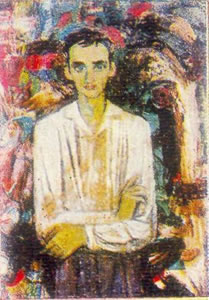
Portret door Igor Vieru


De Deense schrijver, criticus en filosoof Georg Brandes werd geboren op 4 februari 1842 in Kopenhagen. Zie ook mijn blog van 4 februari 2009 en ook mijn blog van 4 februari 2010.


Uit: Recollections Of My Childhood And Youth


„Then the man would take him round the waist, swing him over, and after a mighty somersault in the air, he would land unscathed on his feet upon the floor. It was a composite kind of treat, of three successive stages: first came the lofty and comfortable seat, then the more interesting moment, with a feeling, nevertheless, of being on the verge of a fall, and then finally the jump, during which everything was upside down to him.
But, too, he could take up attitudes down on the floor that added to his importance, as it were, and obliged the grown-up people to look at him. When they said: "Can you stand like the Emperor Napoleon?" he would draw himself up, bring one foot a little forward, and cross his arms like the
little figure on the bureau.
He knew well enough just how he had to look, for when his stout, broad- shouldered Swedish uncle, with the big beard and large hands, having asked his parents about the little fellow's accomplishments, placed himself in position with his arms crossed and asked: "Who am I like?" he replied: "You are like Napoleon's lackey." To his surprise, but no small delight, this reply elicited a loud exclamation of pleasure from his mother, usually so superior and so strict, and was rewarded by her, who
seldom caressed, with a kiss.“


845982-341df55a9ced424e9f0f701ab6278413.jpg
Georg Brandes (4 februari 1842 – 19 februari 1927)

Portret door Peder Severin Kroyer, 1883


De Duitse schrijver Alfred Andersch werd geboren op 4 februari 1914 in München. Zie ook mijn blog van 4 februari 2007 en ook mijn blog van 4 februari 2009 en ook mijn blog van 4 februari 2010.


Uit: Sansibar oder der letzte Grund


„Dann wurde er sich der Anwesenheit der Figur bewußt. Sie saß, klein, auf einem niedrigen Sockel aus Metall, zu Füßen des Pfeilers schräg gegenüber. Sie war aus Holz geschnitzt, das nicht hell und nicht dunkel war, sondern einfach braun. Gregor näherte sich ihr. Die Figur stellte einen jungen Mann dar, der in einem Buch las, das auf seinen Knien lag. Der junge Mann trug ein langes Gewand, ein Mönchsgewand, nein, ein Gewand, das noch einfacher war als das eines Mönchs: einen langen Kittel.

Unter dem Kittel kamen seine nackten Füße hervor. Seine beiden Arme hingen herab.

Auch seine Haare hingen herab, glatt, zu beiden Seiten der Stirne, die Ohren und die Schläfen verdeckend. Seine Augenbrauen mündeten wie Blätter in den Stamm der geraden Nase, die einen tiefen Schatten auf seine rechte Gesichtshälfte warf. Sein Mund war nicht zu klein und nicht zu groß; er war genau richtig, und ohne Anstrengung geschlossen. Auch die Augen schienen auf den ersten Blick geschlossen, aber sie waren es nicht, der junge Mann schlief nicht, er hatte nur die Angewohnheit, die Augendeckel fast zu schließen, während er las. Die Spalten, die seine sehr großen

Augendeckel gerade noch freiließen, waren geschwungen, zwei großzügige und ernste Kurven, in den Augenwinkeln so unmerklich gekrümmt, daß auch Witz in ihnen nistete. Sein Gesicht war ein fast reines Oval, in ein Kinn ausmündend, das fein, aber nicht schwach, sondern gelassen den Mund trug. Sein Körper unter dem Kittel mußte mager sein, mager und zart; er durfte offenbar den jungen Mann beim Lesen nicht stören. Das sind ja wir, dachte Gregor. Er beugte sich herab zu dem jungen Mann, der, kaum einen halben Meter groß, auf seinem niedrigen Sockel saß, und sah ihm ins Gesicht.“


 845982-1ffd6d5f5cef2bf4112fc419f9d5a5a7.jpg

Alfred Andersch (4 februari 1914 – 21 februari 1980)


De Franse dichter Jacques Prévert werd geboren in Neuilly-sur-Seine op 4 februari 1900. Zie ook mijn blog van 4 februari 2007 en ook mijn blog van 4 februari 2009 en ook mijn blog van 4 februari 2010.


Premier jour


Des draps blancs dans une armoire 
Des draps rouges dans un lit 
Un enfant dans sa mère 
Sa mère dans les douleurs 
Le père dans le couloir 
Le couloir dans la maison 
La maison dans la ville 
La ville dans la nuit 
La mort dans un cri 
Et l'enfant dans la vie. 


Sables mouvants
 
Démons et merveilles 
Vents et marées 
Au loin déjà la mer s'est retirée 
Démons et merveilles 
Vents et marées 
Et toi 
Comme une algue doucement carressée par le vent 
Dans les sables du lit tu remues en rêvant 
Démons et merveilles 
Vents et marées 
Au loin déjà la mer s'est retirée 
Mais dans tes yeux entrouverts 
Deux petites vagues sont restées 
Démons et merveilles 
Vents et marées 
Deux petites vagues pour me noyer. 


845982-84e475edc679455bd152c5ebadf76a54.jpg
Jacques Prévert (4 februari 1900 – 11 april 1973)


De Franse dichter en schrijver Jean Richepin werd geboren op 4 februari 1849 in Médéa, Algerije. Zie ook mijn blog van 4 februari 2007 en ook mijn blog van 4 februari 2009 en ook mijn blog van 4 februari 2010.


La neige est triste


La neige est triste. Sous la cruelle avalanche
Les gueux, les va-nu-pieds, s'en vont tout grelottants.
Oh ! le sinistre temps, oh ! l'implacable temps
Pour qui n'a point de feu, ni de pain sur la planche !

Les carreaux sont cassés, la ports se déclenche,
La neige par des trous entre avec les autans...
Des enfants, mal langés dans de pauvres tartans,
Voient au bout d'un sein bleu geler la goutte blanche.

Et par ce temps de mort, le père est au travail,
Dehors. Le givre perle aux poils de son poitrail.
Ses poumons boivent l'air glacé qui les poignarde.

Il sent son corps raidir, il râle, il tombe, las,
Cependant que le ciel ironique lui carde,
Comme pour l'inviter au somme, un matelas.


 845982-48cdd1699a7912a8517696ef32fab63b.jpg

Jean Richepin (4 februari 1849 – 12 december 1926)


De Zweedse Rokoko-dichter en componist Carl Michael Bellman werd geboren op 4 februari 1740 in Stockholm. Zie ook mijn blog van 4 februari 2007 en ook mijn blog van 4 februari 2009 en ook mijn blog van 4 februari 2010.


Uit: Tischlieder (Vertaald door Carl Zuckmayer)


So trolln wir uns ganz fromm und sacht
von Weingelag und Freudenschmaus,
wenn uns der Tod ruft: gute Nacht,
dein Stundenglas rinnt aus.
Wer heut noch frech den Schnabel wetzt
und glaubt, ein großer Herr zu sein,
paß auf, der Schreiner hobelt jetzt
schon grad an deinem Schrein!

Scheint das Grab dir tief und
dumpf sein Druck:
Alavott, so nimm noch einen Schluck,
und noch einen hinterher und rasch noch zwei, dreie mehr,
dann stirbt sichs nicht so schwer.


845982-bbcf35165b3f2de207b95561d15989a4.jpg
Carl Michael Bellman (4 februari 1740 – 11 februari 1795)

Geschreven door Romenu om 18:46 Reageer op dit bericht

Paul Auster, Johannes Kühn, Andrzej Szczypiorski, Lao She, Henning Mankell

De Amerikaanse dichter, schrijver en essayist Paul Auster werd geboren op 3 februari 1947 in Newark, New Jersey. Zie ook mijn blog van 3 februari 2008 en ook mijn blog van 3 februari 2009 en ook mijn blog van 3 februari 2010.


Uit: Sunset Park


„For almost a year now, he has been taking photographs of abandoned things. There are at least two jobs every day, sometimes as many as six or seven, and each time he and his cohorts enter another house, they are confronted by the things, the innumerable cast-off things left behind by the departed families. The absent people have all fled in haste, in shame, in confusion, and it is certain that wherever they are living now (if they have found a place to live and are not camped out in the streets) their new dwellings are smaller than the houses they have lost. Each house is a story of failure—of bankruptcy and default, of debt and foreclosure—and he has taken it upon himself to document the last, lingering traces of those scattered lives in order to prove that the vanished families were once here, that the ghosts of people he will never see and never know are still present in the discarded things strewn about their empty houses.

The work is called trashing out, and he belongs to a four-man crew employed by the Dunbar Realty Corporation, which subcontracts its "home preservation" services to the local banks that now own the properties in question. The sprawling flatlands of south Florida are filled with these orphaned structures, and because it is in the interest of the banks to resell them as quickly as possible, the vacated houses must be cleaned, repaired, and made ready to be shown to prospective buyers. In a collapsing world of economic ruin and relentless, ever-expanding hardship, trashing out is one of the few thriving businesses in the area. No doubt he is lucky to have found this job. He doesn't know how much longer he can bear it, but the pay is decent, and in a land of fewer and fewer jobs, it is nothing if not a good job.“


845331-5d12fccc9b7784c3fbaff97eeabffa99.jpg 

Paul Auster (Newark, 3 februari 1947)


De Duitse dichter en schrijver Johannes Kühn werd geboren op 3 februari 1934 in Bergweiler, gemeente Tholey in het Saarland. Zie ook mijn blog van 3 februari 2008 en ook mijn blog van 3 februari 2009 en ook mijn blog van 3 februari 2010.


Nie verließ ich gerne den Hügelring...


Nie verließ ich gerne den Hügelring

und dich,

wie in einer Wiege

liegst du an den Wäldern,

zwar tobt Wetter oft,

die Gewitter bringend

zwar lehrt der kleine Bach

Bescheidenheit,

doch sind die Tage,

die sich in Frieden gürten,

heilsam.


Spaziergang


Dem guten Gesicht der Mühle zu

geh ich am Mittag, verrätselt mir selbst

im Gefühl.


Mit weißer Fläche baut alter Teich

seinen Spiegel unter die Bäume.


Ich blase die Hand an,

der Wind schnitt sie scharf.


Horizont an Horizont

hat des Himmels geneigte Stirn

blau getaucht.


 845331-233258b3cd1276305a2d10983cdb6841.jpg

Johannes Kühn (Bergweiler, 3 februari 1934)


De Poolse schrijver Andrzej Szczypiorski werd geboren op 3 februari 1928 in Warschau. Zie ook mijn blog van 3 februari 2007 en ook mijn blog van 3 februari 2009 en ook mijn blog van 3 februari 2010.


Uit: Eine Messe für die Stadt Arras (Vertaald door Karin Wolff)


„Also, diese ganze ungeheuerliche gemeine Sünde soll sich nun als ein Nichts herausstellen und diese ganze Grausamkeit als Bagatelle? Wozu kroch denn die Stadt Arras in den stinkenden Mist ihrer Verbrechen und Ungesetzlichkeiten, wenn sich nun herausstellt, dass auch kein einziger Schritt vorwärts gemacht wurde? Haben wir dazu die Scheiterhaufen entzündet, die Juden gemartert sowie das einfache Volk, Adel und Priesterschaft, um nun von Euch zu hören, dass das alles nicht wahr, eitles Truggespinst unserer armen Sinne ist? Ihr sagt, es gibt keine Erlösung, kein besseres Teil für die Stadt Arras, für die ganze Welt? Wozu also hat der Sohn den Vater den Stadtknechten ausgeliefert, wozu hat man die jüdischen Gehöfte verbrannt, wozu die Leiber derer, die die Stadt für Abtrünnige hielt, in Fetzen gerissen? In die tiefsten Tiefen sind wir hinabgestiegen, um uns zu erhöhen – und Ihr, Fürst, sagt uns jetzt, dass ein derartiges Unrerfangen vergebliche Liebesmüh sei!"


 845331-4f9e60e7e7472968f1318ab9ddcdd671.jpg

Andrzej Szczypiorski (3 februari 1928 – 16 mei 2000)

Portret door Mariusz Kaldowski


De Chinese schrijver Lao She (pseudoniem voor Shu Qingchun) werd geboren op 3 februari 1899 in Beijing. Zie ook mijn blog van 3 februari 2007 en ook mijn blog van 3 februari 2009 en ook mijn blog van 3 februari 2010.


Uit: Le Tireur de pousse-pousse (Vertaald door François Cheng en Anne Cheng)


"Maintenant le ciel gris se diaprait de rouge, et les contours des arbres et des lointains se précisaient. Puis, peu à peu, le rouge se mêla au gris, formant des taches pourpres et violettes. L'horizon avait la couleur des raisins pas encore mûrs. Peu après, une teinte orange vif apparut et le coloris du ciel devint plus lumineux. Soudain, tout le paysage se détacha distinctement; la brume matinale qui couvrait l'orient se moira d'un rouge éclatant tandis que le zénith bleuissait. Puis la brume se dissipa et les rayons dorés du soleil apparurent enfin, tissant dans la trame des nuages une immense toile de feu: et les champs, les arbres, l'herbe passèrent alors du vert bleuté à un jade resplendissant."

(...)
   
   "Les eaux des douves du Palais étaient déjà complètement gelés, et leur brillant ruban gris longeait les anciens remparts de la Cité interdite. Aucun son ne parvenait de l'intérieur des murs. Les tours de guet aux toits finement travaillés, la voûte aux reflets d'or, les grands portails vermillon et les kiosques de la colline du Belvédère semblaient demeurer en suspens dans le clair de lune. On eût dit qu'ils attendaient que retentît l'écho de quelque voix à jamais silencieuse. Un vent léger soufflait doucement, franchissant les murailles de la Cité interdite. Il effleurait légèrement les kiosque et les palais comme s'il voulait leur raconter quelque histoire secrète d'un lointain passé."


845331-50ba2b5bc891adf7944bfe4ce1b7a004.jpg
Lao She (3 februari 1899 – 24 augustus 1966)


De Zweedse schrijver Henning Mankell werd geboren in Stockholm op 3 februari 1948. Hij woont afwisselend in Mozambique en in zijn vaderland Zweden. Zie ook mijn blog van 3 februari 2008 en ook mijn blog van 3 februari 2009 en ook mijn blog van 3 februari 2010.


Uit: Wallanders erster Fall

„Wallander setzte sich in den einzigen Sessel im Zimmer.
Er war durchgesessen und abgewetzt. Ich bilde mir etwas ein, dachte er wieder. Der Gerichtsmediziner wird feststellen, daß es Selbstmord war. Die technische Untersuchung wird bestätigen, daß die Waffe und die Kugel zusammengehören und daß der Schuß von Håléns eigener Hand abgegeben worden ist.
Wallander beschloß, die Wohnung zu verlassen. Er mußte sich waschen und umziehen, bevor er losging, um Mona zu treffen, aber etwas hielt ihn noch zurück. Er ging zur Kredenz und begann die Schubladen zu öffnen. Sofort fand er die beiden Seemannsbücher. Artur Hålén war in seiner Jugend ein flotter Mann gewesen. Helle Haare, ein offenes und breites Lächeln. Es fiel Wallander nicht leicht, sich vorzustellen, daß das Bild denselben Mann darstellte, der stumm und zurückgezogen seine letzten Tage in Rosengård verbracht hatte. Noch weniger vorstellbar war es, daß das Bild einen Mann zeigte, der sich eines Tages das Leben nehmen würde. Aber Wallander wußte, wie falsch er dachte. Selbstmörder ließen sich nicht nach starren Schablonen beurteilen.
Er fand den farbenfrohen Käfer und nahm ihn mit ans Fenster. Auf der Unterseite der Schachtel glaubte er zu erkennen, daß dort Brasil gedruckt stand. Ein Souvenir, das Hålén auf irgendeiner seiner Fahrten gekauft haben mußte.
Wallander ging die Schubläden weiter durch. Schlüssel, Münzen aus verschiedenen Ländern - nichts,
was seine Aufmerksamkeit gefangennahm. Halb unter dem schäbigen und brüchigen Regalpapier, mit dem die unterste Schublade ausgelegt war, steckte ein brauner Umschlag.“


 845331-65429ab040c42e1fb8f656e5a8d6b7ca.jpg

Henning Mankell (Stockholm, 3 februari 1948)

Geschreven door Romenu om 18:57 Reageer op dit bericht

Richard Yates, Sarah Kane, James A. Michener, Annette Kolb, Ernst von Wildenbruch

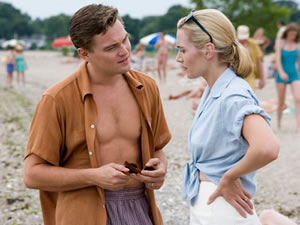
De Amerikaanse schrijver Richard Yates werd geboren op 3 februari 1926 in Yonkers, New York. Zie ook mijn blog van 3 februari 2009 en ook mijn blog van 3 februari 2010.


Uit: Revolutionary Road


"See you tomorrow!" they called, as happy as children, and riding home under the moon they found they could roll down the windows of their cars and let the air in, with its health-giving smells of loam and young flowers. It was the first time many of the Laurel Players had allowed themselves to acknowledge the coming of spring.

The year was 1955 and the place was a part of western Connecticut where three swollen villages had lately been merged by a wide and clamorous highway called Route Twelve. The Laurel Players were an amateur company, but a costly and very serious one, carefully recruited from among the younger adults of all three towns, and this was to be their maiden production. All winter, gathering in one anther's living rooms for excited talks about Ibsen and Shaw and O'Neill, and then for the show of hands in which a common-sense majority chose The Petrified Forest, and then for preliminary casting, they had felt their dedication growing stronger every week.


 845324-9282a650059c85336a6ffa9edf748200.jpg

Scene uit de film met Kate Winslet en Leonardo DiCaprio


They might privately consider their director a funny little man (and he was, in a way: he seemed incapable of any but a very earnest manner of speaking, and would often conclude his remarks with a little shake of the head that caused his cheeks to wobble) but they liked and respected him, and they fully believed in most of the things he said. "Any play deserves the best that any actor has to give," he'd told them once, and another time: "Remember this. We're not just putting on a play here. We're establishing a community theater, and that's a pretty important thing to be doing."

The trouble was that from the very beginning they had been afraid they would end by making fools of themselves, and they had compounded that fear by being afraid to admit it. At first their rehearsals had been held on Saturdays--always, it seemed, on the kind of windless February or March afternoon when the sky is white, the trees are black, and the brown fields and hummocks of the earth lie naked and tender between curds of shriveled snow.“


 845324-67e69b79e37b81fd26fcb97e813d5195.jpg

Richard Yates (3 februari 1926 – 7 november 1992)


De Britse toneelschrijftster Sarah Kane werd geboren op 3 februari 1971 in Essex. Zie ook mijn blog van 3 februari 2009 en ook mijn blog van 3 februari 2010.


Uit: 4.48 Psychosis


„I will drown in dysphoria

in the cold black pond of my self

the pit of my immaterial mind


How can I return to form

now my formal thought has gone?


Not a life that I could countenance.


They will love me for that which destroys me

the sword in my dreams

the dust of my thoughts

the sickness that breeds in the folds of my mind


Every compliment takes a piece of my soul


*       *       *       *       *       *       *       *       *

I dread the loss of her I’ve never touched

love keeps me a slave in a cage of tears

I gnaw my tongue with which to her I can never speak

I miss a woman who was never born

I kiss a woman across the years that say we shall never meet


Everything passes

Everything perishes

Everything palls


my thought walks away with a killing smile

leaving discordant anxiety

which roars my soul


No hope No hope No hope No hope No hope No hope No hope“


 845324-0820fb0f8c298c3d296d67f09912a07f.jpg

Sarah Kane (3 februari 1971 – 20 februari 1999)


De Amerikaanse schrijver James A. Michener werd geboren op 3 februari 1907 in New York. Zie ook mijn blog van 3 februari 2007 en ook mijn blog van 3 februari 2009 en ook mijn blog van 3 februari 2010.


Uit: Hawaii


„Millions upon millions of years ago, when the continents were already formed and the principal features of the earth had been decided, there existed, then as now, one aspect of the world that dwarfed all others. It was a mighty ocean, resting uneasily to the east of the largest continent, a restless ever-changing, gigantic body of water that would later be described as pacific.

Over its brooding surface immense winds swept back and forth, whipping the waters into towering waves that crashed down upon the world’s seacoasts, tearing away rocks and eroding the land. In its dark bosom, strange life was beginning to form, minute at first, then gradually of a structure now lost even to memory. Upon its farthest reaches birds with enormous wings came to rest, and then flew on.

Agitated by a moon stronger then than now, immense tides ripped across this tremendous ocean, keeping it in a state of torment. Since no great amounts of sand had yet been built, the waters where they reached shore were universally dark, black as nigh and fearful.

Scores of millions of years before man had risen from the shores of the ocean to perceive its grandeur and to venture forth upon its turbulent waves, this eternal sea existed, larger than any other of the earth’s features, vaster than the sister oceans combined, wild, terrifying in its immensity and imperative in its universal role.

How utterly vast it was! How its surges modified the very balance of the earth! How completely lonely it was, hidden in the dark ness of night or burning in the dazzling power of a younger sun than ours.“


 845324-f186eef398392d870dbeca86819ae8e2.jpg

James A.  Michener (3 februari 1907 - 16 oktober 1997)


De Duitse schrijfster Annette Kolb werd geboren op 3 februari 1870 in München. Zie ook mijn blog van 3 februari 2009 en ook mijn blog van 3 februari 2010.


Uit: Wege und Umwege


“Marie stand mit fûnf Jahren eines Morgens unter einem Baum, dessen Laub im Winde rauschte und den blauen Himmel durchblicken liess. „Das Leben ist schön!" dachte sie.

Da flog ein Blatt von den Zweigen herab in ihre Hand, und wahrend sie seine groben Adern

und Fasern langsam auseinanderrifi, wurde sie unsaglich verstimmt. Nicht der frohbewegte Wipfel in der Hohe, das einzelne langweilige Ding in ihren Hânden war die Wirklichkeitl —

Der Grundakkord ihres Wesens schlug da zum erstenmal an ihr Bewusstsein an; denn es gibt nichts Neues im Menschen. Das fin mot eines Ich's ist ein Motiv, und was hinzutritt, sind Amplifikationen.

Schon ein Jahr darauf lernte sie im Kloster die Langeweile kennen, zu der sie neigte wie

ein anderer zu Gichtschmerzen oder Rheumatismen, und die sie anwehen konnte, plötzlich, unvermittelt wie ein Wind, der um die Ecke fahrt.

In ihrem Kloster blies sie durch das ganze Haus, um allé Mauern, und durch den ganzen

Garten, die Stelle ausgenommen, an der eine reizende Brücke iiber den Wildbach bog, Libellen unklosterlich schwirrten und die Baume parkähnlich zusammenstanden. Aber allés andere war hässlich. Zwei hohe plumpe Berge versperrten wie Riesentore nach Norden hin die Welt, und die Monatsrosen standen, meist verwelkt und verweht, um ein machtiges Kreuz vor dem Haus.”


845324-5955e230e34a4982c3377c19a9e98ebe.jpg
Annette Kolb (3 februari 1870 – 3 december 1967)

Kolb in 1958


De Duitse dichter en schrijver
Ernst von Wildenbruch werd op 3 februari 1845 geboren in Beiroet. Zie ook mijn blog van 3 februari 2007 en ook mijn blog van 3 februari 2009 en ook mijn blog van 3 februari 2010.


Uit: Schwester-Seele

„War das heute wieder einmal reizend bei Benneckes! Hübsch war es ja immer bei ihnen; natürlich. In einem Hause, wo eine Wirtin war wie Frau Majorin Bennecke! Die Tante Löckchen, wie sie in der ganzen Stadt hieß, die gute Tante Löckchen.

Wenn man sie so sah, mit dem runden, freundlichen Gesicht, wie sie durch die Straßen der Stadt zog und über die große Brücke, die zu ihrem Hause jenseit des Flusses führte – den Kopf in beständig nickender Bewegung: »Guten Tag, Kindchen – liebes Kindchen, guten Tag« – und die altmodischen grauen Löckchen, die zu beiden Seiten des Gesichts wie Traubenbüschel niederhingen, nach vorn fliegend und wieder zurück – wahrhaftig, man blieb geradezu stehen und horchte, ob nicht die Löckchen, aneinanderschlagend, einen leise klingenden Ton geben würden, so ein ganz zartes Geläute, wie man es aus Rokokouhren vernimmt, die auf Rokokokaminen stehen, leise und fein wie die Stimme der alten Zeit, als die Damen noch ausgeschnittene Schuhe mit kreuzweise gelegten Bändern trugen, sich nachmittags beim Kaffee Gedichte vorlasen, und als es noch keine pfeifenden Lokomotiven gab.

Manchmal ging sie allein, manchmal auch am Arme ihres Gatten, des alten Herrn Majors a. D. Bennecke, und dann schritt hinter ihnen noch ein drittes, die braune Hühnerhündin Diana, die uralte, mit dem langen seidenweichen Fell und dem sanftmütigen Augenaufschlag.“


 845324-8e438f8b41a833c900da7e408f6daa4a.jpg

Ernst von Wildenbruch (3 februari 1845 – 15 januari 1909)

Geschreven door Romenu om 18:52 Reageer op dit bericht

Georg Trakl, Gertrude Stein, Ferdinand Schmatz, Michael Scharang

De Oostenrijkse dichter Georg Trakl werd op 3 februari 1887 in Salzburg geboren. Zie ook mijn blog van 3 februari 2007 en ook mijn blog van 3 februari 2008 en ook mijn blog van 3 februari 2009 en ook mijn blog van 3 februari 2010.


Ballade


Ein schwüler Garten stand die Nacht.
Wir verschwiegen uns, was uns grauend erfaßt.
Davon sind unsre Herzen erwacht
Und erlagen unter des Schweigens Last.


Es blühte kein Stern in jener Nacht
Und niemand war, der für uns bat.
Ein Dämon nur hat im Dunkel gelacht.
Seid alle verflucht! Da ward die Tat.


Passion


Wenn Orpheus silbern die Laute rührt,

Beklagend ein Totes im Abendgarten,

Wer bist du Ruhendes unter hohen Bäumen?

Es rauscht die Klage das herbstliche Rohr,

Der blaue Teich,

Hinsterbend unter grünenden Bäumen

Und folgend dem Schatten der Schwester;

Dunkle Liebe

Eines wilden Geschlechts,

Dem auf goldenen Rädern der Tag davonrauscht.

Stille Nacht.


Unter finsteren Tannen

Mischten zwei Wölfe ihr Blut

In steinerner Umarmung; ein Goldnes

Verlor sich die Wolke über dem Steg,

Geduld und Schweigen der Kindheit.

Wieder begegnet der zarte Leichnam

Am Tritonsteich

Schlummernd in seinem hyazinthenen Haar.

Daß endlich zerbräche das kühle Haupt!


Denn immer folgt, ein blaues Wild,

Ein Äugendes unter dämmernden Bäumen,

Dieser dunkleren Pfaden

Wachend und bewegt von nächtigem Wohllaut,

Sanftem Wahnsinn;

Oder es tönte dunkler Verzückung

Voll das Saitenspiel

Zu den kühlen Füßen der Büßerin

In der steinernen Stadt.


Elis


1


Volmaakt is de stilte van deze gouden dag.

Onder oude eiken

Verschijn jij, Elis, een rustende met ronde ogen.


Hun blauwte spiegelt de sluimer der geliefden.

Op je mond

Verstomden hun rozige vruchten.


's Avonds haalde de visser de zware netten in.

Een goede herder

Leidt zijn kudde langs de bosrand.

O! hoe rechtvaardig zijn, Elis, al je dagen.


Zachtjes zinkt

Tegen kale muren de blauwe stilte van de olijfboom,

Sterft het donkere gezang van een grijsaard weg.


Een gouden bootje

Schommelt, Elis, je hart aan de eenzame hemel.


Vertaald door Frans Roumen


845332-992f9c8f196333ab85bd5b51a1743d4d.jpg
Georg Trakl (3 februari 1887 – 4 november 1914)

Aquarel door Christoph M Frisch


De Amerikaanse schrijfster Gertrude Stein werd geboren op 3 februari 1874 in Allegheny (Pennsylvania). Zie ook mijn blog van 3 februari 2007 en ook mijn blog van 3 februari 2008 en ook mijn blog van 3 februari 2009 en ook mijn blog van 3 februari 2010.


A Mounted Umbrella


What was the use of not leaving it there where it would hang what was the use if there was no chance of ever seeing it come there and show that it was handsome and right in the way it showed it. The lesson is to learn that it does show it, that it shows it and that nothing, that there is nothing, that there is no more to do about it and just so much more is there plenty of reason for making an exchange.


A Light In The Moon


A light in the moon the only light is on Sunday. What was the sensible decision. The sensible decision was that notwithstanding many declarations and more music, not even withstanding the choice and a torch and a collection, notwithstanding the celebrating hat and a vacation and even more noise than cutting, notwithstanding Europe and Asia and being overbearing, not even notwithstanding an elephant and a strict occasion, not even withstanding more cultivation and some seasoning, not even with drowning and with the ocean being encircling, not even with more likeness and any cloud, not even with terrific sacrifice of pedestrianism and a special resolution, not even more likely to be pleasing. The care with which the rain is wrong and the green is wrong and the white is wrong, the care with which there is a chair and plenty of breathing. The care with which there is incredible justice and likeness, all this makes a magnificent asparagus, and also a fountain.


 845332-23bda128a28d2c5ae29b94117b512e4f.jpg

Gertrude Stein (3 februari 1874 – 27 juli 1946)

Portret door Andy Warhol, 1980


De Oostenrijkse dichter en schrijver Ferdinand Schmatz werd geboren op 3 februari 1953 in Korneuburg. Zie ook mijn blog van 3 februari 2007 en ook mijn blog van 3 februari 2008 en  ook mijn blog van 3 februari 2009 en ook mijn blog van 3 februari 2010.


das grosse babel,n, danach (fragment)


nicht, dass da nichts wäre -
münder genug sperren die achse - auf,
die sich um die rede ringt,
und, gebeugt, nur eine art zeugt,
keines weges harrt,
über vieles meer nach osten weist:
wo sie sich senkt ins land -
das aus erden, schwer, erröten macht,
die brenner, denen - jetzt, da durch -
zu munden weiss, der brand, nicht wein,
stein, nicht zahn, backe, sondern rohes,
zeug: backstein und pech anstatt mörtel,
so baut es dann, örtlich, genau
und wortgewandt, sportlich heisst es:
turm her! stadt her! herr her!
- haupt als sache, hoch die achse,
nichts gebeugt mehr, vielmehr gebrannt,
und, - ahnt es was? -
das stimmen und wogen wellt stärker
beständiges innen, den gruben hoch,
mit jedem spaten, jeder glut fachen und feuern
die körper namen an, werfen sich dem klang da zu,
wasser und glut, nasses und feuer,
woge an woge, ohne zerstreuung treibt die achse
hoch himmelt sie so die, wie sie in ästen treibt
aus stämmen, nämlich nichts als einen stamm,
und einzig, nur diesen, hineinrammt, hochschnellen lässt
zum turm, der sich bäumt,
jede lippe dabei längst gesprengt hat,
laut stösst nach, blick sticht zu, hand zirkelt ab -


 845332-8f41e9fdd51df9019ca246ea96549f28.jpg

Ferdinand Schmatz (Korneuburg, 3 februai 1953)


De Oostenrijkse schrijver Michael Scharang werd geboren in Kapfenberg in de provincie Steiermark op 3 februari 1943. Zie ook mijn blog van 3 februari 2009 en ook mijn blog van 3 februari 2010.


Uit: Charly Traktor


„Das linke Donauufer in Wien ist nicht verbaut. Der breite freie Streifen heißt Überschwemmungsgebiet. Es gibt ein Fremdwort dafür. Charly Traktor hat es einige Male gehört, aber nicht behalten können. Er versucht, sich an das Wort zu erinnern. Es fällt ihm nicht ein. Er greift sich an den Kopf, aber nicht, weil ihm das Wort nicht einfällt. Es gibt ein Fremdwort für das, was mit den Gefühlen zusammenhängt. Er hat es gehört und gelesen und zeitweise auch behalten. Im Augenblick fällt es ihm nicht ein.

Seine Erregung ist ihm lästig. „Ich verhaue mir den ganzen Sonntag.“ Es ist Nachmittag. Der Wind bläst stark. Das ist häufig so in dieser Gegend am Fluß. Es ist ein warmer Wind. Das Gras ist lang, es liegt in der Richtung, aus der der Wind kommt: flußabwärts. Vereinzelt stehen Sträucher. Einige Flächen eignen sich als Spielwiese. Sonst ist der Boden uneben.

Charly Traktor ist in ein Erdloch getreten und hat sich den Knöchel verstaucht. Er ging zurück auf den Pfad neben dem Ufer. Dort störten ihn nicht die vielen Leute, sondern ihr langsames Tempo. Es waren ältere Menschen und Leute mit kleinen Kindern.

Er weicht auf das holprige Gelände aus. Als er schaut, wie weit das Überschwemmungsgebiet sich noch erstreckt, bleibt er stehen, um nicht wieder in ein Erdloch zu treten. Er geht zickzack, mit gesenktem Kopf. Den Mulden weicht er nicht aus, nur den Bombentrichtern.
Charly Traktor hat es satt, nach Löchern Ausschau zu halten. Sie dienen ihm als Vorwand, um sich nicht auf etwas anderes konzentrieren zu müssen.“


 kapfenberg2.jpg

Michael Scharang (Kapfenberg, 3 februari 1943)
Kapfenberg, markt


Zie voor nog meer schrijvers van de 3e februari ook
mijn vorige blog van vandaag en eveneens mijn eerste blog van vandaag.

Geschreven door Romenu om 00:00 Reageer op dit bericht

Meer van Romenu

↑ Terug naar de berichten