Naar de inhoud

Romenu

Over literatuur, gedichten, kunst en cultuur
akke.beakke.be

Berichten van 24 april 2011 tot 25 april 2011

Willem de Mérode, James Fenton, Walter de la Mare, Ted Kooser, Ross Franklin Lockridge Jr., Richard Anders
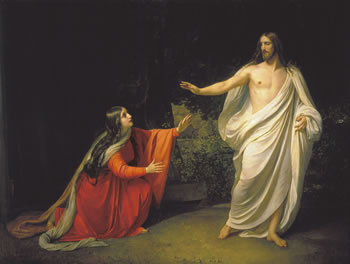


Aan alle bezoekers en mede-bloggers een Vrolijk Pasen! 


 900393-1cf60c3171caeb823a3a3eab6d1beae8.jpg

Jezus verschijnt aan Maria Magdalena, Aleksandr Ivanov (16 juli 1806 – 3 juli 1858)


Paasmorgen


Hij was het graf al uitgegaan
Vóór ik Zijn dood bezoeken kon.
Een zwarte leegte in de zon
Gaapt de spelonk mij aan.

O wát ik hoopte in mijn verdriet,
Hij kwam mijn ongeduld nog vóór.
Maar, Die ik door de dood verloor
Vind ik ook levend niet.
 
De olijven met de lichte wind
Verzilvren in de zonneschijn,
Waar 't hart niets dan zijn oude pijn
langs alle paden vindt.

Maar om de donkre nauwe bocht
Wappert een oogwenk zijn gewaad.
Mij blindt de glans van zijn gelaat.
Hij had MIJ lang gezocht.
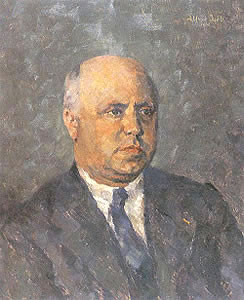


 900393-dd641904dfcdd1d5b16929a2bfbbe393.jpg

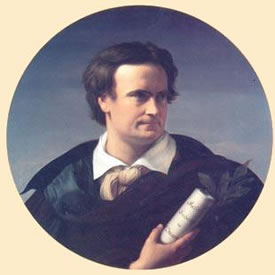
Willem de Mérode (2 september 1887 - 22 mei 1939)


De Engelse dichter, schrijver, criticus en letterkundige James Fenton werd geboren op 25 april 1949 in  Lincoln. Zie ook mijn blog van 25 april 2009 en ook mijn blog van 25 april 2010.


Jerusalem (Fragment)


6
This is the Garden Tomb.
No,
this
is the Garden Tomb.
I’m an Armenian. I am a Copt.
This is Utopia.
I came here from Ethiopia.
This hole is where the flying carpet dropped
The Prophet off to pray one night
And from here one hour later he resumed his flight.

7
Who packed your bag?
I packed my bag.
Where was your uncle’s mother’s sister born?
Have you ever met an Arab?
Yes, I am a scarab.
I am a worm. I am a thing of scorn.
I cry Impure from street to street
And see my degradation in the eyes I meet.

8
I am your enemy.
This is Gethsemane.
The broken graves look to the Temple Mount.
Tell me now, tell me when
When shall we all rise again?
Shall I be first in that great body count?
When shall the tribes be gathered in?
When, tell me, when shall the Last Things begin?

9
You are in error.
This is terror.
This is your banishment. This land is mine.
This is what you earn.
This is the Law of No Return.
This is the sour dough, this the sweet wine.
This is my history, this my race
And this unhappy man threw acid in my face.

10
Stone cries to stone,
Heart to heart, heart to stone.
These are the warrior archaeologists.
This is us and that is them.
This is Jerusalem.
These are dying men with tattooed wrists.
Do this and I’ll destroy your home.
I have destroyed your home.  You have destroyed my home.


 900393-beb4cfbf1295997d2b9e038d167f26c4.jpg

James Fenton (Lincoln, 25 april 1949)


De Engelse dichter Walter John de la Mare werd geboren op 25 april 1873 in Charlton, Kent. Zie ook mijn blog van 25 april 2007 en ook mijn blog van 25 april 2008 en ook mijn blog van 25 april 2009 en ook mijn blog van 25 april 2010.


The Keys of Morning


While at her bedroom window once,

Learning her task for school,

Little Louisa lonely sat

In the morning clear and cool,

She slanted her small bead-brown eyes

Across the empty street,

And saw Death softly watching her

In the sunshine pale and sweet.


His was a long lean sallow face;

He sat with half-shut eyes,

Like a old sailor in a ship

Becalmed 'neath tropic skies.

Beside him in the dust he had set

His staff and shady hat;

These, peeping small, Louisa saw

Quite clearly where she sat -

The thinness of his coal-black locks,

His hands so long and lean

They scarcely seemed to grasp at all

The keys that hung between:

Both were of gold, but one was small,

And with this last did he

Wag in the air, as if to say,

"Come hither, child, to me!"


Louisa laid her lesson book

On the cold window-sill;

And in the sleepy sunshine house

Went softly down, until

She stood in the half-opened door,

And peeped. But strange to say

Where Death just now had sunning sat

Only a shadow lay:

Just the tall chimney's round-topped cowl,

And the small sun behind,

Had with its shadow in the dust

Called sleepy Death to mind.

But most she thought how strange it was

Two keys that he should bear,

And that, when beckoning, he should wag

The littlest in the air.


 900393-555a8bd00dd25701e3b7547a0ca1eda7.jpg

Walter John de la Mare (25 april 1873 – 22 juni 1956)

Portret door Powys Evans


De Amerikaanse dichter Ted Kooser werd geboren op 25 april 1939 in Ames, Iowa. Zie ook mijn blog van 25 april 2007 en ook mijn blog van 25 april 2008 en ook mijn blog van 25 april 2009 en ook mijn blog van 25 april 2010.


Carrie


"There's never an end to dust
and dusting," my aunt would say
as her rag, like a thunderhead,
scudded across the yellow oak
of her little house. There she lived
seventy years with a ball
of compulsion closed in her fist,
and an elbow that creaked and popped
like a branch in a storm. Now dust
is her hands and dust her heart.
There's never an end to it.


Skater


She was all in black but for a yellow pony tail
that trailed from her cap, and bright blue gloves
that she held out wide, the feathery fingers spread,
as surely she stepped, click-clack, onto the frozen
top of the world. And there, with a clatter of blades,
she began to braid a loose path that broadened
into a meadow of curls. Across the ice she swooped
and then turned back and, halfway, bent her legs
and leapt into the air the way a crane leaps, blue gloves
lifting her lightly, and turned a snappy half-turn
there in the wind before coming down, arms wide,
skating backward right out of that moment, smiling back
at the woman she'd been just an instant before.


 900393-bae5d6d04869245fc70a6d8d8ee54653.jpg

Ted Kooser (Ames, 25 april 1939)


De Amerikaanse schrijver Ross Franklin Lockridge Jr. werd geboren op 25 april 1914 in Bloomington, Indiana. Zie ook mijn blog van 25 april 2009 en ook mijn blog van 25 april 2010.


Uit: Raintree County


„My brother and I were horsing around on our twin beds, struggling over the small lead replica of the Empire State Building our father had brought back from the East. Ernest aimed it at me as if it were a gun--"Bang! Bang! Pow!"--and on my back I deflected the bullets, kicking up at him fearlessly. Our anarchy was the better for knowing we'd have to put on Sunday School penitentials before long. The door opened and in walked our mother and Grandma Lockridge, which stopped our play. They were sleepy eyed. Ernest, aged nine, knew something was wrong. Our mother placed her hand gently on his shoulder and said, "Honey, your father is dead. He died last night."

Ernest screamed and fell sobbing on the floor and I, aged five, was puzzled and a little embarrassed, for Mom and Grandma didn't make it sound so bad. Our father had been tired, he needed a rest, he was now in a warm and sunny land, but no, he wouldn't be coming home soon.

I tried to see my father in a space above my own, walking care free amid trees and flowers, and hoped he'd soon be rested up.

Later that morning Ernest still lay on the floor. He'd stopped crying but hoped his mother would come in and find him lying there--then she would know how much he had loved his father and how dead with grief he was. But she was busy with funeral preparations, and he was tired of lying on the cold floorboards and got up and dressed.“


 900393-1635e96479f7ea054fe4ed89335774fc.jpg

Ross Franklin Lockridge Jr. (25 april 1914 – 6 maart 1948)


De Duitse dichter en schrijver Richard Anders werd geboren op 25 april 1928 in Ortelsburg, tegenwoordig Szczytno, Polen. Zie ook mijn blog van 25 april 2007 en ook mijn blog van 25 april 2008 en ook mijn blog van 25 april 2009 en ook mijn blog van 25 april 2010.


Steinbläue über dem Dolchschatten


Weil das Fleisch
mit dem Knochen schläft
rollen Augen über den Tisch
tanzt löwenbeinig
der Tisch übers Meer
öffnet das Meer Fenster
über einem Meer von Gesichtern


Anima

für Amina


Ein Leib aus Hauch
ziehst du mich
auf dein Tier
farnst zur Vogelfeder
schreibst Geäder
von Lust auf das blinde Ei
das ich bin
bis es zum Brunnen
geht und bricht
und ich als Blitz
aus der Schale schlüpfe
von der Nacht
deiner Augen gespiegelt


 900393-dd8d99ca100960ef5d8bbb245fa3d9a3.jpg

Richard Anders (Ortelsburg, 25 april 1928)


Zie voor nog meer schrijvers van de 25e april ook
mijn vorige blog van vandaag.
Geschreven door Romenu om 11:24 Reageer op dit bericht

Julius Grosse, Leopoldo Alas, Sigmund von Birken, Jindrich Horejsi, William Temple

De Duitse dichter en schrijver Julius Waldemar Grosse werd geboren op 25 april 1828 in Erfurt Zie ook mijn blog van 25 april 2009 en ook mijn blog van 25 april 2010.


Erste Liebe

So hat noch niemand mit mir getan!
An beiden Händen faßt' er mich an
Und schaute mir in die Seele,
So unwiderstehlich, so tief hinein,
Als wollt' er schaun', wo ein Fältelein
Ihm etwas noch verhehle.

So hat noch niemand mich gefragt!
Was ich gejubelt, was ich geklagt,
Das ruht nun in seinem Herzen.
Die ganze Welt ward mir zum Traum!
Bin ich es selbst noch? ich weiß es kaum,
Mich blendet's wie Weihnachtskerzen.

So hat noch niemand mich geküßt!
Nicht Vater noch Mutter beim heil'gen Christ
Nach all den bunten Geschenken!
Doch alle nun gäb' ich mit Lächeln hin,
So fröhlich ist mir, so selig zu Sinn,
Darf ich an ihn nur denken.


 900386-fd152f20840e84b2d505a35901ee2a5d.jpg

Julius Grosse (25 april 1828 – 9 mei 1902)


De Spaanse schrijver Leopoldo Alas  (wereldwijd bekend als ‘Clarín’) werd geboren op 25 april 1852 in Zamora. Zie ook mijn blog van 25 april 2009 en ook mijn blog van 25 april 2010.
 

Uit: Socrates' Rooster (El gallo de Sócrates, vertaald door Lydia Davis)


„Crito anticipated the bird’s plans to hop down into the little square so he could pursue and grab him. It had gotten into his head (for when men begin to get stuck in religious ideas and feeling which are found to be irrational he doesn’t stop until embracing the most puerile of superstitions) that that rooster and no other was what Esculapius, I mean Asclepius, wished to be sacrificed for him. Crito chocked up the coincidence of the encounter to the will of the gods.

It appeared that the rooster was not of the same mind, for as soon as he noticed that a man was chasing him, he began to run, flapping his wings and clucking which was very uncomfortable, to be sure. The biped knew perfectly well who was chasing him form having seen him not a few times in his master’s garden endlessly discussing love, eloquence, beauty etc. while the rooster himself seduced a hundred hens in five minutes without so much philosophy.

“But it’s a good thing,” the rooster was thinking as he ran and got to ready to fly as much as he were able in case the danger got worse, “it’s a good thing that those wise men I abhor should try to have me for their own against all naturals laws known to them. It would be great if after freeing myself from the unbearable slavery Gorgias kept me in I were to fall to the hand of this poor devil and second hand thinker, who is a lot less entertaining than his chatter-box of a master.”


 900386-d434360eae141a21d0ffe94d21b01f7d.jpg

Leopoldo Alas (25 april 1852 – 13 juni 1901)


De Duitse dichter en schrijver Sigmund von Birken werd geboren op 25 april 1626 in Wildstein nabij Eger. Zie ook mijn blog van 25 april 2009 en ook mijn blog van 25 april 2010. 


Morgenandacht


Frisch auf, mein Sinn, ermuntre dich,

Weil dort die Morgensonne sich

Zeigt auf vergüld'tem Hügel.

Es hüpfet ob den Büschen ümm,

Und singet Gott mit krauser Stimm'

Das leichte Luftgeflügel.

Schläfer, Schäfer,

Sind geflissen,

Zu begrüßen

Trift und Auen,

Dir und ihnen sich zu trauen.


Dir, dir, dir hier, o Gott, stimmt an,

Was schwebt, was webt, was beben kann,

Ein Loblied deiner Güte.

Auch mich soll nichts beschämen nicht,

Daß ich vergesse meine Pflicht

Und dankbares Gemüthe.

Höre, mehre

Dies Erklingen,

Laß mein Singen,

Dich jetzt preisen,

Und dir Ruhm und Ehr' erweisen.


Das Leid der Nacht ist überhin.

Wer macht, daß ich entkommen bin

Aus tausendfachen Stricken?

Da mich umfing des Todes Bild,

War deine Hand mein starker Schild,

Dein Schutz wollt' mich beglücken.

Pfeilen, Seilen

Böser Leute,

Die zur Beute

Mich erwählet,

Hat ihr Werk der Nacht gefehlet.


Du Held und Hüter unsrer Wacht,

Der du nicht schläfest in der Nacht,

Dein Gnadenaug' bleib' offen;

Beug' ferner allem Unfall für,

Und öffne meines Herzens Thür

Zu fest gefaßtem Hoffen.

Ende, wende

Meine Schmerzen

In dem Herzen

Ob den Sünden,

Laß mich deine Gnad' empfinden.


900386-3c7cd88b036f3e070d7218e145e0a53a.jpg
Sigmund von Birken (25 april 1626 – 21 juni 1681)


De Tsjechische dichter en vertaler Jindřich Hořejší werd geboren op 25 april 1886 in Praag. Zie ook mijn blog van 25 april 2008.


Uit: Jaroslav Hasek, le brave soldat Chvéïk (vertaling Jindřich Hořejší)


“Quand je faisais mon temps, un fantassin a tué un capitaine […] Le capitaine sort du bureau et colle au copain quatre jours de consigne.[….] Le copain va chercher son fusil et envoie une balle directement dans le coeur du capitaine. elle lui sort par le dos et fait encore des dégâts au bureau. Elle casse une bouteille d’encre et tache les paperasses.
-Et le soldat [….]?
-Il s’est pendu avec une paire de bretelles, répondit Chvéïk [….]. Avec des bretelles qui n’étaient pas à lui, s’il vous plaît ! il avait dû les emprunter au gardien-chef, sous prétexte que ses pantalons tombaient. Et dame ! pourquoi attendre qe le conseil de guerre vous condamne à mort, n’est-ce pas ? [….] Le gardien-chef a été dégradé et il a attrapé six mois de prison. Mais il n’a pas pourri au violon. Il a foutu le camp en Suisse où il a trouvé un poste de prédicant pour je ne sais plus quelle Eglise.”


 900386-b8f0d8b4f91a9e85eebc4725cb3c3c99.jpg

Jindřich Hořejší (25 april 1886 – 30 mei 1941)


De Engelse essayist en diplomaat Sir
William Temple werd geboren in Londen op 25 april 1628. Zie ook mijn blog van 25 april 2010.


Uit: On thoughts


I find so little ease and satisfaction by giving my thoughts full scope and liberty of rambling, that I must e’en recall them; but they are passed it already, no sooner out of hand but out of sight: besides, they take such airy paths, and are so light themselves, leaving neither impression nor scent behind them, that it is impossible to follow them by the track of either. Well, let them go, they are not worth an hue and cry. Should my memory overtake them, I question whether she would know them at a good interview; though indeed they have all my marks of folly and lightness upon them, but that is so common in one, that if I did I should be ashamed to own them. All they have robbed me of is but a little idle time, and to one that has so great comings in as I, that loss may be easily endured. I know not what it is makes me so prone to this posture of musing, which is between melancholy fits and those doting visions that use to rock men asleep whose souls or bodies are distempered with disease or passion; ’t is properly what the French call reverie, and we, in my opinion, more properly thinking I know not what. Whether it be a faintness in my mind complying with the weather, which may render it like my body disabled or unfit for any vigorous action (as indeed I find it hath most hold of me in this season), or whether it be rather a discomposure caused by a mêlée of several passions, whereof none is strong enough entirely to gain the field, and none so weak as to quit it; for if that were, the current being turned one way would confine itself to some continued channel; but this I speak of is a crowd of restless, capering, antique fancies, bounding here and there, fixing nowhere; building one half hour castles in Ireland, monasteries in France, and palaces in Virginia; dancing at a wedding, weeping at a burial; enthroned like a king, enragged like a beggar; a lover, a friend, an indifferent person; and sometimes things of as little relation one to another as the Great Turk and a red herring: to say the most, it is at least a painless posture of mind, if not something more, and why not?


 900386-931d0c24a2520c1b9d2cae26562661be.jpg

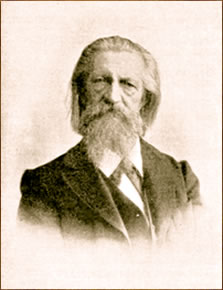
William Temple (25 april  1628  –  27 januari 1699)

Portret door Sir Peter Lely

Geschreven door Romenu om 11:15 Reageer op dit bericht

Achim von Arnim, Frans Coenen, Eric Bogosian, Michael Schaefer, Robert Penn Warren


Aan alle bezoekers en mede-bloggers een Vrolijk Pasen!


 899796-2f50f8da89d1f31242c45892e3b1196c.jpg

De opstanding van Christus, Paolo Veronese (1528 – 19 april 1588)


Ostern


Vom Erdenstaub zu reinen, blauen Lüften
Dringt weit der Blick in ersten Frühlingstagen,
Und höher steigt der mächt'ge Sonnenwagen,
Die Erde sehnt nach Blättern sich und Düften,
Und heilige Geschichten uns dann sagen
Was sich geahnet in des Herzens Klüften.
Er ist erstanden aus den Todesgrüften,
Und wie vergebens war der Menschen Zagen,
Ja so ersteht die Welt der Himmelsgaben
Mit jedem Jahre neu, die Knospen brechen,
Und nichts ist unsrer Liebe zu erhaben,
Sie giebt uns alles in den Wonnebächen,
Die nach dem Eisgang Flur und Aug' durchgraben,
Das Unsichtbarste will zum Lichte sprechen.


899796-bb965a4fbf2de3da0f935b01397ae9eb.jpg
Achim von Arnim (26 januari 1781 – 21 januari 1831)


De Nederlandse schrijver, essayist en criticus
Frans Coenen werd in Amsterdam geboren op 24 april 1866. Zie ook mijn blog van 24 april 2007 en ook mijn blog van 24 april 2008.en ook mijn blog van 24 april 2009 en ook mijn blog van 24 april 2010.


Uit: Zondagsrust


„Op een wandtafeltje begonnen flauwtjes zich de vormen te omtrekken van een keukenlampje zonder kap, het glas zwart gewalmd op de glazen peer, het blikken reflectortje zoo bevuild, dat het dofzwart zonder een enkel glimlicht dáárstond in de schemering. Flauwe stank van petroleum, van vuil vaatwater, verwaarloosde gootsteen wademde in de ruimte.

De deur naar de achterkamer stond aan en het was daarbinnen, als in de gang, dezelfde bleeke binnenhuisstilte onder de vaalwolkende schemering, waarin de meubels zich met hun vorm en kleur nuchter hervonden.

Zwaar snorken in regelmatige grommingen ontrustte de stilte van-uit de halfopen alkoof, een zwarte diepte met schimmige lichtvlekken van de lampetkan of een opbulting van wit laken in de andere hoek. Maar in de vunze bedomptheid, doortrokken van tabakswalm en verzuurde bierlucht, voelde men het vol van zwaardierlijk leven, dat daar de nacht over had gekroeld.

En al die stilteruimten in de aanbleekende morgen, met het grofwarme leven, broeiend in dat donker alkoof hok, schenen wel voor goed afgezonderd van de buitenwereld der straten, waar de trage Zondag nu eindelijk openging in sneller aanstappende voorbijgangers en vermeerderd geraas van ver gerij.

Tot ineens een schel, kort rinkelend in felle ruk, inbrak in de dompe rust.

Een moment wilde de slaap van het huis overhellen tot bewustzijn, maar daarna viel het gesnork weer in zijn geregelde dreun en niets scheen gebeurd.

Opnieuw klankte de schel, nu langduriger luidend.

Doffe mompelwoorden en zwaarkrakend beweeg ontstegen het alkoofdonker. Toen een vrouwestem, vakig-schor en smorend onder dekens:

- M'rie, doe 's open... M'rie! en, daar het stil bleef in de gang: M'rie dan!“


899796-742be602f7571787e7385e1e545340f4.jpg
Frans Coenen (24 april 1866 - 23 juni 1936)

Portret door F. Hart Nibbrig, 1894


De Amerikaanse schrijver en acteur Eric Bogosian werd geboren op 24 april 1953 in Woburn, Massachusetts. Zie ook mijn blog van 24 april 2009 en ook mijn blog van 24 april 2010.


Uit: Love's Fire: Seven New Plays Inspired by Seven Shakespearean Sonnets


„HERMAN: I think you're drunk.

RENGIN: No shit, Sherlock.

HERMAN: Why don't we go to bed? Tomorrow's a new day. C'mon.

RENGIN takes a long look at HERMAN.

RENGIN: You want some of this?

HERMAN: No. Thanks.

RENGIN: What do you want?

HERMAN: I just want to be with you, Rengin. To love you and take care of you.

RENGIN: Why?

HERMAN: Because you're you

RENGIN: Uh-huh.

HERMAN: Are we going to start this now? Again? RENGIN deflates.

RENGIN: It's not your fault. It's my fault. Everything's fucked up and it's my fault. I'm afraid, I'm afraid of you.

HERMAN: Why are you afraid of me?

RENGIN: Because you actually love me. With real love, not pornographic, catch-the-prize love.

HERMAN: And don't you love me?

RENGIN: No. No. You're right. Let's go to bed. I love you too, Herman. I really do. If we both died tonight, like Romeo and Juliet, that wouldn't be so bad, would it?

HERMAN: It would be great.

RENGIN: I really flicked up this time.

HERMAN: Hey, we all have our faults. I'm no saint.

RENGIN: You're not? I thought you were.

HERMAN: (small smile) Why don't you take the wedding gown off so it isn't all wrinkled tomorrow? They cost a lot to dry clean. And then you tell me what's bothering you.“


 899796-d1cf76f69774ea702292f1e4053fe289.jpg

Eric Bogosian (Woburn, 24 april 1953)


De Duitse schrijver Michael Schaefer werd geboren op 24 april 1976 in Bielefeld. Zie ook mijn blog van 24 april 2010.


NachtimTag


Was ist es,

was über mich fiel?

Ist nicht Nacht,

weil kein Stern zu sehen.

Ist nicht Decke,

weil zu kalt.

Ist nicht leicht,

weil es mich beugt.

Ist nicht weich,

weil es mich schmerzt.

Ich krümme mich,

der Kopf sinkt nach unten,

die Dunkelheit sinkt mit,

durch all meine Zellen

schwappt sie träge.

Das Leben verliert sich,

vergisst Licht und Farbe,

die Schultern biegen sich

unter der Last der Leere.

Doch da, dort glimmt es,

ein kleiner Funke,

in Mitten des Nichts.

Der Kopf hebt sich,

die Augen sehen,

ein Finger folgt dem Funkeln

an den Rand des Dunkel.

Der Finger stößt an,

stößt durch,

zieht sich zurück.

Licht tritt an seine Stelle,

warm flutet es ein,

das Auge gleitet sacht

auf seiner goldperlenden Spur

an den Rand,

an die Wärme,

an das Licht,

an das Leben,

durch und hinaus.


 899796-c662511cd0339894e7989417d1622676.jpg

Michael Schaefer (Bielefeld, 24 april 1976)

Boekcover (Geen portret beschikbaar)


De Amerikaanse dichter en schrijver Robert Penn Warren werd geboren op 24 april 1905 in Guthrie, Kentucky. Zie ook mijn blog van 24 april 2007 en ook mijn blog van 24 april 2008 en  ook mijn blog van 24 april 2009 en ook mijn blog van 24 april 2010.


Uit: All the King's Men


„You'll go whipping toward it, but it will always be ahead of you, that bright, flooded place, like a mirage. You'll go past the little white metal squares set on metal rods, with the skull and crossbones on them to mark the spot. For this is the country where the age of the internal combustion engine has come into its own. Where every boy is Barney Oldfield, and the girls wear organdy and batiste and eyelet embroidery and no panties on account of the climate and have smooth little faces to break your heart and when the wind of the car's speed lifts up their hair at the temples you see

the sweet little beads of perspiration nestling there, and they sit low in the seat with their little spines crooked and their bent knees high toward the dashboard and not too close together for the cool, if you could call it that, from the hood ventilator. Where the smell of gasoline and burning brake bands and red-eye is sweeter than myrrh. Where the eight-cylinder jobs come roaring around the curves in the red hills and scatter the gravel like spray, and when they ever get down in the flat country and hit the new slab, God have mercy on the mariner.

On up Number 58, and the country breaks. The flat country and the big cotton fields are gone now, and the grove of live oaks way off yonder where the big house is, and the white-washed shacks, all just alike, set in a row by the cotton fields with the cotton growing up to the doorstep, where the pickaninny sits like a black Billiken and sucks its thumb and watches you go by.“


899796-c26e5218d6a9850e6f2e6608d717b4b4.jpg
Robert Penn Warren
(24 april 1905 – 15 september 1989)


Zie voor nog meer schrijvers van de 24e april ook mijn vorige blog van vandaag en eveneens mijn eerste blog van vandaag.


Geschreven door Romenu om 08:12 Reageer op dit bericht

Carl Spitteler, Marcus Clarke, Anthony Trollope, Carl Immermann

De Zwitser dichter, schrijver, essayist en criticus Carl Friedrich Georg Spitteler (eig. Carl Felix Tandem) werd geboren op 24 april 1845 in Liestal bij Basel. Zie ook mijn blog van 24 april 2007 en ook mijn blog van 24 april 2008 en ook mijn blog van 24 april 2009en ook mijn blog van 24 april 2010.


Die Blütenfee


Maien auf den Bäumen, Sträußchen in dem Hag.
Nach der Schmiede reitet Janko früh am Tag.
Blütenschneegestöber segnet seine Fahrt,
Lilien trägt des Rößleins Mähne, Schweif und Bart,
Lacht der muntre Knabe: »Sag' mir, Rößlein traut:
Bist bekränzt zur Hochzeit, doch wo bleibt die Braut?«

Horch, ein Pferdchen trippelt hinter ihm geschwind,
auf dem Pferdchen schaukelt ein holdselig Kind.
Solche kleine Fante nimmt man auf den Schoß,
auf die Schulter wirft er's spielend: Ei! wie groß!
Zappelnd schreit die Kleine: »Böser Bube du!
Weh! ich hab verloren meinen Lilienschuh.«

Rückwärts sprengt er suchend ein geraumes Stück.
Wie er mit dem Schuhe eilends kam zurück,
an des Kindes Stelle saß die schönste Maid.
Da geschah dem Jungen süßes Herzeleid.
Flüsterte die Schöne: »Liebster Janko mein,
hab' ein kostbar Ringlein, strahlt wie Sonnenschein.
Bin dir hold gewogen, schenk' es dir zum Pfand.
Weh! ich hab's vergessen, badend an dem Strand.«

Wie er mit dem Wasser kam zum selben Ort,
war zu Staub und Asche Weib und Pferd verdorrt.


 899791-e3222ef5d5372946e7e29d9306205121.jpg

Carl Spitteler (24 april 1845 – 29 december 1924)


De Australische schrijver Marcus Clarke werd geboren op 24 april 1846 in Londen. Zie ook mijn blog van 24 april 2009en ook mijn blog van 24 april 2010.


Uit: For the Term of His Natural Life


„At a little distance from the mainland is a rock, over the rude side of which the waves dash in rough weather. On the evening of the 3rd December, 1833, as the sun was sinking behind the tree-tops on the left side of the harbour, the figure of a man appeared on the top of this rock. He was clad
in the coarse garb of a convict, and wore round his ankles two iron rings, connected by a short and heavy chain. To the middle of this chain a leathern strap was attached, which, splitting in the form of a T, buckled round his waist, and pulled the chain high enough to prevent him from stumbling over it as he walked. His head was bare, and his coarse, blue-striped shirt, open at the throat, displayed an embrowned and muscular neck. Emerging from out a sort of cell, or den, contrived by nature or art in the side of the cliff, he threw on a scanty fire, which burned between two hollowed rocks, a small log of pine wood, and then returning to his cave, and bringing from it an iron pot, which contained water, he scooped with his toil-hardened hands a resting-place for it in the ashes, and placed it on the embers.
It was evident that the cave was at once his storehouse and larder, and that the two hollowed rocks formed his kitchen.“


899791-9f48cceb4b7c4705f189ce84d66232c0.jpg
Marcus Clarke (24 april 1846 – 2 augustus 1881)


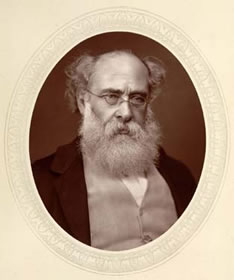
De Engelse schrijver Anthony Trollope werd geboren in Londen op 24 april 1815. Zie ook mijn blog van 24 april 2009 en ook mijn blog van 24 april 2010.


Uit: The Genius of Nathaniel Hawthorne


"The predominating quality of Puritan life was hard, good sense, a good sense which could value the realities of life while it rejected the frivolities, a good sense to which buttered cakes, water-tight boots, and a pretty wife, or a kind husband could endear themselves. Hawthorne is severe, but his severity is never of a nature to form laws for life. His is a mixture of romance and austerity, quite as far removed from the realities of Puritanism as it is from the sentimentalism of poetry. He creates a melancholy which amounts almost to remorse in the minds of his readers. There falls upon them a conviction of some unutterable woe which is not altogether dispelled till other books and other incidents have had their effects. The woe is of course fictitious, and therefore endurable, and therefore alluring. And woe itself has its charm. It is a fact that the really miserable will pity the comfortable insignificance of those who are not unhappy, and that they are apt even to boast of their own sufferings. There is a sublimity in mental and even in corporal torment which will sometimes make the position of Lucifer almost enviable. Allis not lost with him! Prometheus chained, with the bird at his liver, had wherewithal to console himself in the magnificence of his thoughts“.


 899791-26fb02196ab3a0f17cf39624ca0e9aec.jpg

Anthony Trollope (24 april 1815 - 6 december 1882)


De Duitse dichter en schrijver Carl Leberecht Immermann werd geboren op 24 april 1796 in Magdeburg. Zie ook mijn blog van 24 april 2009en ook mijn blog van 24 april 2010.


Allgemeine Vergebung


Wenn sonst mich wer gekränket hat,

Hab' ichs behalten im Gedächtniß;

Allein, deß bin ich wahrlich satt,

Zorn ist ein allzuherb Vermächtniß:

Drum, wie sie sich an mir vermessen,

Es sey vergeben und vergessen!


Viel Ehrenmänner dünkelhaft

Sich legten breit auf das Dociren,

Und wollten meine junge Kraft

Nach ihren Grillen stylisiren;

Wie die Pedanten sich vermessen,

Es sey vergeben und vergessen!


Und Freunde hatt' ich lobesan,

Bei meiner Jugend heitrem Schmause;

Doch als die große Noth begann,    .

So waren alle nicht zu Hause;

Wie sich die Freund' an mir vermessen,

Es sey vergeben und versessen.


Die Allerschönst' hat mich geliebt,

Mich ln Verzweiflung fast zu bringen;

Was es dabei für Sachen giebt,

Davon ist besser nicht zu singen;

Wie sich die Schönst' an mir vermessen,

Es sey vergeben und vergessen!


Du endlich, lieber Gott, gehörst

Zu denen auch, die mich verletzet;

Hast, ohn' einmal zu fragen erst,

Mich auf den Sündenball gesetzet;

Doch, wie du dich an mir vermessen,

Es sey vergeben und vergessen!


Sey Friede! Rein das ganze Feld!

Doch dafür bittet mein Gemüthe;

Gott, Schöne, Freunde, große Welt,

Erstattet mir die herz'ge Güte:

Wie ich mich hab' an euch vermessen,

Sey auch vergeben und vergessen!


899791-cebef603dde13091b66c5d0edb6f98a4.jpg
Carl Immermann (24 april 1796 – 25 augustus 1840)

Geschreven door Romenu om 08:01 Reageer op dit bericht

Otto Leixner von Grünberg, L. J. M. Feber, Karl Lappe, Gaston Martens

De Duitse dichter, schrijver, criticus en historicus Otto Leixner von Grünberg werd geboren op 24 april 1847 in Schloß Saar, Mähren. Zie ook mijn blog van 24 april 2010.


Wer sich in sich selbst verliebt


Wer sich in sich selbst verliebt,
Den faßt noch einmal bitt're Reue:
Das Ich nimmt alles, was man giebt,
Doch kennt's nicht Dank noch Treue.


Wer viel verlangt, der hastet viel


Wer viel verlangt, der hastet viel,
den flieht das heißbegehrte Ziel;
wer stille strebt auf graden Wegen,
dem kommt zuletzt das Ziel entgegen.


 899789-ce7ae4ff1260674f9dbf479fc5521f0e.jpg

Otto Leixner von Grünberg (24 april 1847 – 12 april 1907) 


De Nederlandse schrijver en politicus Louis Jean Marie Feber werd geboren in Bergen op Zoom op 24 april 1885. Zie ook mijn blog van 24 april 2010.


Uit: Goethe


„Voor het geslacht van den Sturm und Drang was hij een baanbreker, een bezieler, zooveel als de tastbare verwezenlijking van de hoogste mogelijkheden, die men in zijn stoutste droomen te droomen waagde. Mede van de ontstuimigsten was hij een van de weinigen, die zich in den storm beheerschten en een blijvend evenwicht verwierven. Hij wilde met minstens evenveel felheid als zijn medestrijders, maar wist bovendien wat hij wilde - wat niet van allen kon gezegd worden. Aanknoopend aan het volkslied, door het fransche naturalisme van Rousseau en het sentimentalisme beroerd, was hij een van de wegbereiders der romantiek. Tegelijkis hij een van de weinige romantici, die het avontuur van het gevoel vermochten te ontstijgen, die zich wisten te verheffen tot het plan van een bespiegelende wijsheid, tot zelfbezit.

Voor ons is Goethe echter geen profeet, zijn woorden en werken geen evangelie voor de zoekende menschheid; zijn persoonlijk leven moge gericht zijn geweest op het vinden van een harmonische verhouding tot zichzelf, aan de eenig zuivere en eenig verantwoorde relatie tot den evenmensch en tot God is hij niet toegekomen. Hij is niet het profetisch genie geweest, niet de wereldleeraar, waarvoor hij door velen wordt gehouden; zijn hoogst geroemde sententies voeren den mensch niet in het licht eener stralende wijsheid opwaarts naar zijn eeuwige bestemming.“


899789-7bfb1e65737dcdbaa87868913366dcde.jpg
L. J. M. Feber (24 april  1885 - 3 juli  1964)


De Duitse dichter en schrijver Karl Lappe werd geboren op 24 april 1773 in Wusterhusen (Pommern). Zie en ook mijn blog van 24 april 2010 


An die Tabakspfeife


O Busenfreundin, ich zuerst verkannt,

Dann liebgewonnen, die du mir nun hinfort

Gefährtin sein sollst meiner Tage,

Pfeife, dir will ich ein Loblied singen.


In diesem Nebelleben voll Hauch und Rauch,

Wo jeder Wolken haschet und Schatten greift,

Wo alles spielt mit Dunst und Brodem,

Tändeln wir mit - und wie gar unschuldig


Sind deine Düfte, die du mit gleicher Luft

Zwei Sinne nährest, Pflanze Kolumbiens,

Wann die in sanft verschlungnen Kränzen

Aus der umbänderten Pfeife wirbelst


Von dir gefördert rinnen in sanftem Fluss,

Band der Gesellschaft, froh die Gespräche hin.

Geselligkeit und Zutraun strömet

Schnell in dem Kreise dein blau Gewölk aus.


Reicht man die Pfeifen, ziehn die Gespenster fort

Von Rang und Kaste: alles wird Erdenkloß.

Vernünftig sitzt der Herr Professor,

Menschlich wie wir auch der Mann mit Sternen.


Auch, bist du einsam, zünde dein Pfeifchen dir.

Das führt aus Träumen, Missmut und Ungeduld

Alsbald zum Gleichmut dich zurücke,

und zu der Häuslichkeit stillen Freuden.


Gedankenspindel, die du am harten Pult

Des Grüblers surrest, manches gelehrte Werk

Hast du gesponnen, manches Liedes

Muße warst du, wann die Neune schliefen.


Herold des Friedens, dampfendes Kalumet,

Wie könnt' ich dein vergessen? -- Hinweg den Streit!

Rauch ist dein Leben, alles eitel.

Lasst' uns die Pfeife des Friedens rauchen.


 899789-8b7e23df497364caf2556107de426fe5.jpg

Karl Lappe (24 april 1773 – 28 oktober 1843)

Wusterhusen, gotische kerk (Geen portret beschikbaar)


De Vlaamse (toneel) schrijver
Gaston Marie Martens werd geboren in Zulte op 24 april 1883. Zie en ook mijn blog van 24 april 2010
 

Uit: Villa ‘Klaverken Vier’, Deurle a/d Leie (Ten huize van...)


Ja. Toen kwam de oorlog 14-18 en had ik ineens veel tijd om te lezen en te schrijven. Ik begon met Wereldvrede en dan kwam Kooi. Mijn eerste stuk werd opgevoerd te Deinze. Dat was De zot.

Viel het mee?

Dat ging. Na de oorlog werd dan in de Vlaamse Schouwburg te Brussel De paus van Hagendonck opgevoerd in de regie van Philomène Jansen. Het was zeer goed en de akteurs haalden er méér uit dan erin zat!

Putman vertelt daarover in een van zijn boeken.

Ja, in zijn verzamelde toneelkronieken. Ik heb samen met Putman die kreatie bijgewoond. Het feit dat een Vlaams brouwer toneelstukken schreef en die te Brussel wou laten spelen, had bij de spelers enige beroering verwekt. Na het eerste bedrijf zat ik in de foyer en dronk als gewoonlijk groseille. Teirlinck die dat zag, merkte droogjes op: de auteur zweet. Na de eerste akte van een première is de toneelschrijver altijd een beetje ongemakkelijk. Maar na het derde bedrijf dronk ik nog groseille al was de opvoering dan wel meegevallen. Toch vertelde ik in die tijd nogal eens dat mijn bier beter was dan mijn toneelstukken!“


899789-bed236bc71b168c934a688845e75a29e.jpg
Gaston Martens (24 april 1883 - 11 mei 1967)


Geschreven door Romenu om 07:57 Reageer op dit bericht

Meer van Romenu

↑ Terug naar de berichten