

Naar de inhoud

Romenu

Over literatuur, gedichten, kunst en cultuur
akke.beakke.be

Berichten van 6 juni 2011 tot 7 juni 2011

Orhan Pamuk, Monika Mann, Nikki Giovanni, Harry Crews, Louise Erdrich, Mascha Kaléko
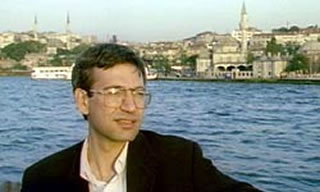
De Turkse schrijver Orhan Pamuk werd geboren op 7 juni 1952 in Istanbul. Zie ook mijn blog van 7 juni 2010 en eveneens alle tags voor Orhan Pamuk op dit blog.


Uit: Istanbul (Vertaald door Gerhard Meier)


„Durch die fortwährenden Konkurse meines Vaters und meines Onkels, die Streitereien meiner Eltern und die Zwistigkeiten, die sich immer wieder zwischen unserer Kleinfamilie und dem von meiner

Großmutter präsidierten Familiengroßverband ergaben, wurde mir allmählich beigebracht, daß das Leben nicht nur aus freudigen Ereignissen und immer neu sich auftuenden Glücksquellen (Malen,

Sexualität, Freundschaft, Schlaf, Geliebtwerden, Essen, Spielen, Beobachten) bestand, sondern auch aus einer ganzen Anzahl urplötzlich ausbrechender kleinerer und größerer Katastrophen. In meiner Kindheit wurde am Radio nach den Nachrichten und dem Wetterbericht immer mit ernster Stimme nicht nur den betroffenen Seeleuten, sondern ganz Istanbul verkündet, auf welchem Längenund

Breitengrad an der Mündung des Bosporus ins Schwarze Meer Treibminen gesichtet worden seien, und so heimtückisch wie diese Minen waren auch die Katastrophen, die den Menschen jederzeit völlig überraschend ereilen konnten. Es konnte jeden Augenblick zwischen meinen Eltern ein Streit ausbrechen, mit dem Stockwerk über uns eine finanzielle Auseinandersetzung aufflammen oder mein

Bruder über irgend etwas so in Zorn geraten, daß er mir eine gehörige Lektion erteilen wollte. Oder mein Vater kam eines Tages nach Hause und teilte uns im selben Ton, in dem er eine Reise erwähnt

hätte, seelenruhig mit, daß unsere Wohnung verpfändet worden sei und wir nun umziehen müßten. Wir zogen damals oft um. Bei jedem Umzug stieg die Spannung im Haus an, und meine Mutter, vollauf damit beschäftigt, jeden Teller und jede Schüssel einzeln in Zeitungspapier einzuwickeln, konnte auf uns Kinder nicht so achtgeben wie sonst, so daß wir nach Herzenslust spielen durften.

Wenn dann die Büfetts, Schränke und Tische, die uns als unverrückbare Elemente unserer Wohnszenerie gegolten hatten, von den Möbelpackern nach und nach abtransportiert wurden, blickte ich traurig auf die immer leerer werdenden Räume, in denen wir Jahre unseres Lebens verbracht hatten, aber ein Trost war mir, daß ich meist unter irgendeinem Möbel einen längst vergessenen Stift, eine Murmel oder ein geliebtes Spielzeugauto wiederfand.“


928153-b2707d91d90684da643982e8e42a4655.jpg
Orhan Pamuk (Istanbul, 7 juni 1952)


De Duitse schrijfster Monika Mann werd als vierde kind van Thomas Mann geboren op 7 juni 1910 in München. Zie ook mijn blog van 7 juni 2010 en eveneens alle tags voor Monika Mann op dit blog.


 Uit: Das fahrende Haus


„Die Wogen des Atlantischen Ozeans wüteten herbstlich. Mein neuer Schutzherr mit Namen Horthy – ein ausgezeichneter Admiral – paßte ins Bild. Jedoch verhinderte er samt allen Admiralen nicht das Scheitern eines Schiffes, das hundert Britenkinder und uns Jungvermählte nach Kanada evakuieren

sollte. Ein deutscher Torpedo schickte beinahe alle Kinder, beinahe die ganze Besatzung, schickte meinen Mann in den Tod.

Eigentlich war es dies größte und schrecklichste Erlebnis, das mich die Verachtung vor jeglicher Scheidung, vor schäbigen und absurden Barrieren zwischen den Nationen lehrte. Angesichts des Gewaltig-Entsetzlichen, angesichts des Unmenschlichen, das da unter Menschen geschah – ich selbst war auf dem besten Weg zum Meeresgrund –, entschied ich, daß dies alles aus lächerlichen

und wahnsinnigen Ursachen geboren sei. Wie durch ein Wunder wieder zum Leben aufgetaucht, fand ich es bei allem Verlust neu und schön. Aber Ohnmacht, Ekel, ein Drang zum Lachen befielen mich, als ich bei dem ungarischen Konsulat in London um einen neuen Paß eingab. Englisches Ausreisevisum, amerikanisches Einreisevisum, Rechenschaft stehen und Augias, formulare Aussage und Stempelplage im Zeichen der Sirenen – der Ekel tilgte ein wenig die Trauer, dafür war es mir gut: Sonst mochten doch die Walfische, mochte doch Moby Dick persönlich diesen ganzen widrigen Kram verschlingen!“


928153-301d43e48ced22cc8e2c5c9356b4ea5e.jpg
Monika Mann (7 juni 1910 – 17 maart 1992)

In 1980 op Capri


De Amerikaanse dichteres en schrijfster Nikki Giovanni werd geboren op 7 juni 1943 in Knoxville, Tennessee. Zie ook mijn blog van 7 juni 2010 en eveneens alle tags voor Nikki Giovanni op dit blog.


Knoxville Tennessee 


I always like summer

Best

you can eat fresh corn

From daddy's garden

And okra

And greens

And cabbage

And lots of

Barbeque

And buttermilk

And homemade ice-cream

At the church picnic

And listen to

Gospel music

Outside

At the church

Homecoming

And go to the mountains with

Your grandmother

And go barefooted

And be warm

All the time

Not only when you go to bed

And sleep


Balances 


in life

one is always

balancing


like we juggle our mothers

against our fathers


or one teacher

against another

(only to balance our grade average)


3 grains of salt

to one ounce truth


our sweet black essence

or the funky honkies down the street


and lately i've begun wondering

if you're trying to tell me something


we used to talk all night

and do things alone together


and i've begun


(as a reaction to a feeling)

to balance

the pleasure of loneliness

against the pain

of loving you 


 928153-96e1960f2d44e9a78b66c677bccab884.jpg

Nikki Giovanni (Knoxville, 7 juni 1943)


De Amerikaanse schrijver Harry Crews werd geboren op 7 juni 1935 in Bacon County, Georgia. Zie ook mijn blog van 7 juni 2010 en eveneens alle tags voor Harry Crews op dit blog.


Uit: A Childhood: The Biography of a Place


„I went into the long, dim, cool hallway that ran down the center of the house. Briefly I stopped at the bedroom where my parents slept and looked in at the neatly made bed and all the parts of the room, clean, with everything where it was supposed to be, just the way mama always kept it. And I thought of daddy, as I so often did because I loved him so much. If he was sitting down, I was usually in his lap. If he was standing up, I was usually holding his hand. He always said soft funny things to me and told me stories that never had an end but always continued when we met again.

He was tall and lean with flat high cheekbones and deep eyes and black thick hair which he combed straight back on his head. And under the eye on his left cheek was the scarred print of a perfect set of teeth. I knew he had taken the scar in a fight, but I never asked him about it and the teeth marks in his cheek only made him seem more powerful and stronger and special to me.“


928153-fe3c37d846ec4e553e8ba27d223c32c7.jpg
Harry Crews (Bacon County, 7 juni 1935)


De Amerikaanse schrijfster Louise Erdrich werd geboren op 7 juni 1954 in Little Falls, Minnesota. Zie ook mijn blog van 7 juni 2009 en ook mijn blog van 7 juni 2010


Uit: Shadow Tag


„I have two diaries now. The first is the hardbound red Daily Reminder of the type I have been writing in since 1994, when we had Florian. You gave me the first book in order to record my beginning year as a mother. It was very sweet of you. I have written in a book like it ever since. They are hidden in the bottom of a drawer in my office, covered with ribbons and wrapping paper. The latest, the one that interests you at present, is kept in the very back of a file cabinet containing old bank statements, checks left over from defunct accounts, the sorts of things we both vow to shred every year but end up stuffing into files. After quite a lot of searching, I expect, you have found my red diary. You have been reading it in order to discover whether I am deceiving you.

The second diary, what you might call my real diary, is the one I am writing in now.

Today I left the house and drove to the branch of the Wells Fargo Bank that is located in uptown Minneapolis beneath the Sons of Norway Hall. I parked in the customer lot and walked in, through two sets of glass doors, down a spiral staircase, to the safedepositdesk. I tapped a little bell and a woman named Janice appeared. She assisted me in the purchase of a medium-size security box. I paid cash for a year's rental and signed my name, three times for signature verification, on the deposit-box card. I took the key Janice offered.“


 928153-1dfc4ecbc6895ceca93422428c495e07.jpg

Louise Erdrich (Little Falls, 7 juni 1954)


De Duitstalige dichteres Mascha Kaléko (eig. Golda Malka Aufen) werd geboren op 7 juni 1907 in Krenau of Schidlow in Galicië in het toenmalige Oostenrijk-Hongarije, nu Polen. Zie ook mijn blog van 7 juni 2007 en ook mijn blog van 7 juni 2008 en ook mijn blog van 7 juni 2009 en ook mijn blog van 7 juni 2010


Memento

Vor meinem eigenen Tod ist mir nicht bang,
nur vor dem Tode derer, die mir nah sind.
Wie soll ich leben, wenn sie nicht mehr da sind?

Allein im Nebel tast ich todentlang
und lass mich willig in das Dunkel treiben.
Das Gehen schmerzt nicht halb so wie das Bleiben.

Der weiß es wohl, dem Gleiches widerfuhr -
und die es trugen, mögen mir vergeben.
Bedenkt: Den eignen Tod, den stirbt man nur;
doch mit dem Tod der anderen muss man leben.


 928153-7e21985c8b12958319f8245fc52c012e.jpg

Mascha Kaléko (7 juni 1907 – 21 januari 1975)


Zie voor nog meer schrijvers van de 7e juni ook mijn vorige blog van vandaag.
Geschreven door Romenu om 19:02 Reageer op dit bericht

Gwendolyn Brooks, Elizabeth Bowen, Gábor von Vaszary, Fred Endrikat, Amelia Edwards, Charlotte Niese, Geno Hartlaub, Jan Theuninck

De Amerikaanse dichteres Gwendolyn Brooks werd geboren op 7 juni 1917 in Topeka, Kansas. Zie ook mijn blog van 7 juni 2007 en ook mijn blog van 7 juni 2008 en ook mijn blog van 7 juni 2009 en ook mijn blog van 7 juni 2010


The Mother


Abortions will not let you forget.

You remember the children you got that you did not get,

The damp small pulps with a little or with no hair,

The singers and workers that never handled the air.

You will never neglect or beat

Them, or silence or buy with a sweet.

You will never wind up the sucking-thumb

Or scuttle off ghosts that come.

You will never leave them, controlling your luscious sigh,

Return for a snack of them, with gobbling mother-eye.


I have heard in the voices of the wind the voices of my dim killed

children.

I have contracted. I have eased

My dim dears at the breasts they could never suck.

I have said, Sweets, if I sinned, if I seized

Your luck

And your lives from your unfinished reach,

If I stole your births and your names,

Your straight baby tears and your games,

Your stilted or lovely loves, your tumults, your marriages, aches,

and your deaths,

If I poisoned the beginnings of your breaths,

Believe that even in my deliberateness I was not deliberate.

Though why should I whine,

Whine that the crime was other than mine?--

Since anyhow you are dead.

Or rather, or instead,

You were never made.

But that too, I am afraid,

Is faulty: oh, what shall I say, how is the truth to be said?

You were born, you had body, you died.

It is just that you never giggled or planned or cried.


Believe me, I loved you all.

Believe me, I knew you, though faintly, and I loved, I loved you

All.


 928150-de4514ddb075d08b99d0106e586c3680.jpg

Gwendolyn Brooks (7 juni 1917 – 3 december 2000)


De Ierse schrijfster Elizabeth Bowen werd geboren op 7 juni 1899 in Dublin. Zie ook mijn blog van 7 juni 2007  en ook mijn blog van 7 juni 2008 en ook mijn blog van 7 juni 2009 en ook mijn blog van 7 juni 2010


Uit: The House in Paris


„Her olive-green coat and skirt, absorbing what light there was, had looked black. She looked like a Frenchwoman with all the animation gone. Her manner had been emotional from the first; there was something emotional now about her tense way of sitting. Henrietta, nervous, tried to make evident, by looking steadily out of the window on her side, that she did not expect to be spoken to. She had been brought up to think it rude to interrupt thought.
But Miss Fisher, making an effort, now touched one of the monkey's stitched felt paws. "You must be fond of your monkey. You play with him, I expect?"
"Not nowadays much," said Henrietta politely. "I just always seem to take him about."
"For company," said Miss Fisher, turning upon the monkey a brooding, absent look.
"I like to think he enjoys things."
"Ah, then you do play with him!"
It was not in Henrietta's power to say: "We really cannot go into all that now " Re-crossing her feet, she lightly kicked the despatch case, which contained what she would want for two night journeys and during the day in Paris: washing things, reading matter, one or two things to eat. Turning away again to look at the street, she was glad to see shutters taken down from one shop: a woman in felt slippers was doing this. A paper-kiosk opened to take its stock in, a lady in deep mourning attempted to stop a bus: the frightening cardboard city was waking up at last. Violent skidding traffic foreignly hooted, and Henrietta wished there were more light.“


 928150-2b6b0fe1ea204a6cda8021160c0b8315.jpg

Elizabeth Bowen (7 juni 1899 – 22 februari 1973)


De Hongaarse schrijver en draaiboekauteur Gábor von Vaszary werd geboren op 7 juni 1897 in Boedapest. Zie ook mijn blog van 7 juni 2009 en ook mijn blog van 7 juni 2010


Uit: Monpti


„Und jetzt geschah mit mir etwas Außerordentliches.
Auf der Innenseite der Allee, im ersten Gärtlein, sitzt ein junges Mädchen, dem Rasenstreifen zugewandt. Sie liest etwas und macht sich Notizen. Gewiß eine Studentin.
Als ich an ihr vorübergehe, hebt sie den Kopf und sieht mich an.
Es ist das junge Mädchen, das ich schon einmal in diesem Park traf; damals hat ihr eine alte Frau einen Roman gezeigt.
Ein wunderbarer Zufall.
Es leben fast vier Millionen Menschen in dieser Stadt. Einem von ihnen zweimal zu begegnen: Das ist ein Wunder.
Noch dazu sitzt diese Frau gar nicht auf einer Gratisbank. Sie muß eine von den oberen Zehntausend sein.
Ich drehe mich um und bleibe vor dem Baum, der ihr am nächsten ist, stehen. Sie blickt auf und lächelt.
Ich fasse einen plötzlichen Entschluß.
»Bonjour, Mademoiselle.«
»Bonjour, Monsieur.«
Sie hat meinen Gruß erwidert.
Sie schloß die Augen und grüßte so - ich schwöre, so herzlich, als wären wir alte Bekannte. Sie lächelte sogar ein wenig bei dem Gruß: ›Bonjour, Monsieur.‹ Nebenbei: Ich habe aber auch gegrüßt wie ein absoluter Gentleman. Einer meiner Ahnen war am Hofe König Matthias' ein großes Tier.
Man müßte die Sache fortsetzen, aber sie sieht nicht mehr her. Sie liest weiter.
Ich stehe bloß und warte.
Nach einiger Zeit sieht das junge Mädchen wieder hoch und wartet.
Ich wende mich um. Vielleicht steht jemand hinter mir, dem ihr Lächeln gilt. Es ist niemand da.
Sie lächelt mich an.“


 928150-6cd8c55561f1958a7f266ae4161fc38c.jpg

Gábor von Vaszary (7 juni 1897 – 22 mei 1985)

Horst Buchholz en Romy Schneider in de verfilming van Monpti uit 1957 door Helmut Käutner


De Duitse dichter, schrijver en cabaretier Fred Endrikat werd geboren op 7 juni 1890 in Nakel an der Netze. Zie ook mijn blog van 7 juni 2009 en ook mijn blog van 7 juni 2010


Abendstimmung


Der Forst ruht still. Still ruht der Forst.
Der Adler schnarcht in seinem Horst.
Die Adlerin seufzt tief und schwer,
sie denkt an einen Ade-ler.
Die Wildsau sanft im Traume grunzt.
Der stolze Hirsch hat ausgebrunzt.
Die Eule ihr Gefieder spreizt.
Das Käuzchen sitzt im Baum und käuzt.
Der alte Förster Eduard
ging längst zu Bett, indes sein Bart
liegt sorgfältig und höchst apart
auf dem Plumeau breit aufgebahrt.
Der Mond schaut durch das Fenster zu,
und über allen Bettzipfeln herrscht Ruh.


 928150-49cf5a94d2474ba4765b58a5fe97f1c8.jpg

Fred Endrikat (7 juni 1890 – 12 augustus 1942)


De Engelse schrijfster en egyptologe Amelia Edwards werd geboren op 7 juni 1831 in Londen. Zie ook mijn blog van 7 juni 2009 en ook mijn blog van 7 juni 2010


Uit: How Ther Third Floor New The Potteries


„I am a plain man, Major, and you may not dislike to hear a plain statement of facts from me. Some of those facts lie beyond my understanding. I do not pretend to explain them. I only know that they happened as I relate them, and that I pledge myself for the truth of every word of them.

I began life roughly enough, down among the Potteries. I was an orphan; and my earliest recollections are of a great porcelain manufactory in the country of the Potteries, where I helped about the yard, picked up what halfpence fell in my way, and slept in a harness-loft over the stable. Those were hard times; but things bettered themselves as I grew older and stronger, especially after George Barnard had come to be foreman of the yard.

George Barnard was a Wesleyan — we were mostly dissenters in the Potteries — sober, clear-headed, somewhat sulky and silent, but a good fellow every inch of him, and my best friend at the time when I most needed a good friend. He took me out of the yard, and set me to the furnace-work. He entered me on the books at a fixed rate of wages. He helped me to pay for a little cheap schooling four nights a week; and he led me to go with him on Sundays to the chapel down by the river-side, where I first saw Leah Payne. She was his sweetheart, and so pretty that I used to forget the preacher and everybody else, when I looked at her. When she joined in the singing, I heard no voice but hers. If she asked me for the hymn-book, I used to blush and tremble. I believe I worshipped her, in my stupid ignorant way; and I think I worshipped Barnard almost as blindly, though after a different fashion. I felt I owed him everything. I knew that he had saved me, body and mind; and I looked up to him as a savage might look up to a missionary.“


928150-93df329b02b191124b82b45f758a0b14.jpg
Amelia Edwards (7 juni 1831 – 15 april 1892)


De Duitse schrijfster Charlotte Niese werd geboren op 7 juni 1854 in Burg auf Fehmarn. Zie ook mijn blog van 7 juni 2009 en ook mijn blog van 7 juni 2010


Uit: Reifezeit


„Die Straße hat nicht viel Änderung erfahren. An dem einen Hause steht noch die Mutter Gottes mit dem Jesuskindlein aus Porzellan auf dem Arm. Das Kindlein habe ich damals sehr bewundert und hätte so gern damit gespielt. Das aber ging nicht an. Nur aus der Ferne durfte ich es anstaunen.

Der Florian vor dem Wolladen war auch noch da, und die heilige Anna, die den Mädchen zum Manne verhilft. Vor ihrem kleinen Schrein lagen heute ganz frische Blumen. Sind sie ihr von einer dankbaren Seele gebracht worden oder von einer, die das Hoffen nicht lassen kann?

Am Ende der Straße liegt der Laden mit der goldnen Brezel davor, und in ihm hantiert eine starke Frau. Sie hat Silberfäden im Haar und ein freundlich-ruhiges Gesicht.

Ich erkannte sie gleich. Sie ist alt geworden, aber ihre gütigen Augen sind dieselben geblieben.

Es war niemand außer ihr im Laden, und ich trat ein.

Frau Bäckermeisterin, ich bin Anneli Pankow, und ich muß Ihnen die Hand drücken. Sie sind damals so gut mit mir gewesen, so sehr gut –

Die Frau ließ mir die Hand; aber ihr freundliches Gesicht wurde verlegen.

Anneli Pankow? Ich weiß doch nit!

Dann fiel es ihr ein.

Ach, das klein Dingelchen, wo die Mutter sterben mußt, und der Vater auch! Jesus Maria Josepp, so ein armes Kind. Wie gehts Ihnen denn?“


 928150-4563c572ad1cbc5af6b63f4c92d1bc95.jpg

Charlotte Niese (7 juni 1854 – 8 december 1935)

Burg auf Fehmarn


Zie voor onderstaande schrijvers ook mijn blog van 7 juni 2010.


De Duitse schrijfster Geno Hartlaub werd op 7 juni 1915 in Mannheim geboren. Zie ook mijn blog van 7 juni 2009.


De Vlaamse dichter en schilder Jan Theuninck werd geboren in Zonnebeke op 7 juni 1954. Zie ook mijn blog van 7 juni 2009.

Geschreven door Romenu om 18:55 Reageer op dit bericht

Thomas Mann, Aleksandr Poesjkin, Lesley Blanch, Sarah Dessen

De Duitse schrijver Thomas Mann werd geboren in Lübeck op 6 juni 1875. Zie ook mijn blog van 12 augustus 2009 en ook mijn blog van 6 juni 2010 en eveneens alle tags voor Thomas Mann op dit blog.


Uit: Tonio Kröger


„Die Wintersonne stand nur als ein armer Schein, mil­chig und matt hinter Wolkenschichten über der engen Stadt. Naß und zugig war's in den giebeligen Gassen, und manchmal fiel eine Art von weichem Hagel, nicht Eis, nicht Schnee.
Die Schule war aus. Ueber den gepflasterten Hof und heraus aus der Gatterpforte strömten die Scharen der Befreiten, teilten sich und enteilten nach rechts und links. Große Schüler hielten mit Würde ihr Bü­cherpäckchen hoch gegen die linke Schulter gedrückt, indem sie mit dem rechten Arm wider den Wind dem Mittagessen entgegen ruderten; kleines Volk setzte sich lustig in Trab, daß der Eisbrei umherspritzte und die Sieben Sachen der Wissenschaft in den Seehunds­ränzeln klapperten. Aber hie und da riß alles mit from­men Augen die Mützen herunter vor dem Wotanshut und dem Jupiterbart eines gemessen hinschreitenden Oberlehrers ...
»Kommst du endlich, Hans?« sagte Tonio Kröger, der lange auf dem Fahrdamm gewartet hatte; lächelnd trat er dem Freunde entgegen, der im Gespräch mit anderen Kameraden aus der Pforte kam und schon im Begriffe war, mit ihnen davon zu gehen ... »Wieso?« fragte er und sah Tonio an ... »ja, das ist wahr! Nun gehen wir noch ein bißchen.«


927475-d292943ec0af5fd3c1e8ad7447d2454c.jpg 927475-2804428dafd93b15aebcd9afa760ec81.jpg

Thomas Mann (6 juni 1875 - 12 augustus 1955)
Thomas Mann als 9-jarige in Lübeck

Armin Martens,

Het model voor Hans Hansen


Tonio verstummte, und seine Augen trübten sich. Hatte Hans es vergessen, fiel es ihm erst jetzt wieder ein, daß sie heute Mittag ein wenig zusammen spazie­ren gehen wollten? Und er selbst hatte sich seit der Verabredung beinahe unausgesetzt darauf gefreut!
»Ja, adieu, ihr! « sagte Hans Hansen zu den Kamera­den.»Dann gehe ich noch ein bißchen mit Kröger.« - Und die Beiden wandten sich nach links, indes die Anderen nach rechts schlenderten.
Hans und Tonio hatten Zeit, nach der Schule spa­zieren zu gehen, weil sie beide Häusern angehörten, in denen erst um vier Uhr zu Mittag gegessen wurde. Ihre Väter waren große Kaufleute, die öffentliche Aemter bekleideten und mächtig waren in der Stadt. Den Hansens gehörten schon seit manchem Men­schenalter die weitläufigen Holz-Lagerplätze drunten am Fluß, wo gewaltige Sägemaschinen unter Fauchen und Zischen die Stämme zerlegten. Aber Tonio war Konsul Krögers Sohn, dessen Getreidesäcke mit dem breiten schwarzen Firmendruck man Tag für Tag durch die Straßen kutschieren sah; und seiner Vorfah­ren großes altes Haus war das herrschaftlichste der ganzen Stadt ... Beständig mußten die Freunde, der vielen Bekannten wegen, die Mützen herunter neh­men, ja, von manchen Leuten wurden die Vierzehn­jährigen zuerst gegrüßt ...“


927475-5301eb91ae728e85ebe62519afc47095.jpg


927475-58639da84a855ca2212970b48d588390.JPG

Breite Straße 38 in Lübeck

Het geboortehuis

Untere Breite Straße

Rond 1880


De Russische dichter en schrijver Aleksandr Poesjkin werd geboren in Moskou op 6 juni 1799. Zie ook mijn blog van 6 juni 2007 en ook mijn blog van 6 juni 2008 en ook mijn blog van 6 juni 2009 en ook mijn blog van 6 juni 2010


Drie bronnen


In de bedroefde steppe van het leven
welt op drie plaatsen een geheime bron :
De bron der jeugd, door overmoed gedreven,
kolkend en bruisend, fonkelt in de zon.
Kastalia, de bron van de poëten,
stilt met haar stroom der bannelingen smart.
De laatste koele bron van het vergeten
lenigt het zoetst het branden van het hart.


Die Vernunft und die Liebe

Der junge Daphnis wollte Doris fangen
Und rief: "Was eilst du, holdes Kind, so sehr?
Sprich nur: ich liebe dich! und nimmermehr
Verfolg ich dich; o bleibe, laß dein Bangen!"
Laut warnte die Vernunft: "Kein Wörtchen sprich!"
Doch Eros riet: "Sag ihm: ich liebe dich!"

Und Doris sprach: "ich liebe dich!" Und glühend
Schlug beider Herz im ersten Liebesglück.
Zu Füßen sank ihr Daphnis, und der Blick
Der Hirtin irrte, leidenschaftersprühend.
Laut warnte die Vernunft: "O, flieh geschwind!"
Doch Eros sprach, der Schalk: "Bleib, süßes Kind!"

Und Doris blieb, und, zitternd vor Verlangen,
Nahm ihre Hand der Hirt: "Ich liebe dich!
Sieh, wie die Taube mit dem Täuberich
Sich mit den Flügeln im Gezweig umfangen!"
Laut warnte die Vernunft: "O, flieh geschwind!"
Doch Eros sprach: "Von ihnen lerne, Kind!"

Und Doris stand mit heißen, schamverwirrten,
Umflorten Augen da, beseligt bang,
Die Lippen flammten ihr – und plötzlich sank
Sie in die Arme des verliebten Hirten.
"Sei glücklich!" sprach Schalk Eros bei dem Sieg.
Und die Vernunft? Ei, die Vernunft – sie schwieg!


Vertaald door Friedrich Fiedler


 927475-bea61c01ef5268f009ede40262f30111.jpg

Aleksandr Poesjkin (6 juni 1799- 10 februari 1837)

Geschilderd door Valentin Serov, 1899


De Engelse schrijfster Lesley Blanch werd geboren op 6 juni 1904 in Londen geboren. Zie ook mijn blog van 6 juni 2009 en ook mijn blog van 6 juni 2010


Uit: Portrait of a Legend.


„Everything about her was extraordinary. She was a woman, dressed as a man. A European turned Arab. A Russian who transposed 'nitchevo' into 'mektoub', whose untidy mystical torments, l'âme slave, found peace in Islam's faith - and flesh. She was born on the prim, pale lakeside of Geneva. She died on the burning desert. She was an expatriate wanderer whose nomadic Slav background led her to range the desert insatiably: yet she dreamed of a petit-bourgeois haven, a grocer's shop in some obscure little Algerian town where she and her Arab husband and all his hordes of relatives could conduct a modest business. She adored her insignificant husband, but her sensual adventures were without number. Her behaviour was outrageous: she drank, she smoked hashish, but déclassée, she remained racée. She was the outcast, despised and rejected by French Administration and the colony in general. But she was General Lyautey's trusted friend. She was a writer who was almost unrecognised, and quite penniless till after her death, when, ironically, posthumous editions of her books earned a small fortune —- for others. Her death was strangest of all, for she was drowned in the desert.“


927475-a300d182820330ab4fe1219c7aede7e4.jpg
Lesley Blanch (6 juni 1904 - 6 mei 2007)


De Amerikaanse schrijfster
Sarah Dessen werd geboren op 6 juni 1970 in Evanston, Illinois. Zie ook mijn blog van 6 juni 2009 en ook mijn blog van 6 juni 2010


Uit: This Lullaby


„The name of the song is “This Lullaby.” At this point, I’ve probably heard it, oh, about a million times. Approximately.
All my life I’ve been told about how my father wrote it the day I was born. He was on the road somewhere in Texas, already split from my mom. The story goes that he got word of my birth, sat down with his guitar, and just came up with it, right there in a room at a Motel 6. An hour of his time, just a few chords, two verses and a chorus. He’d been writing music all his life, but in the end it would be the only song he was known for. Even in death, my father was a one-hit wonder. Or two, I guess,

if you count me.

Now, the song was playing overhead as I sat in a plastic chair at the car dealership, in the first week of June. It was warm, everything was blooming, and summer was practically here. Which meant, of course, that it was time for my mother to get married again.

This was her fourth time, fifth if you include my father. I chose not to. But they were, in her eyes, married—if being united in the middle of the desert by someone they’d met at a rest stop only moments before counts as married. It does to my mother. But then, she takes on husbands the way other people change their hair color: out of boredom, listlessness, or just feeling that this next one will fix everything, once and for all. Back when I was younger, when I asked about my dad and how they’d met, when I was actually still curious, she’d just sigh, waving her hand, and say, “Oh, Remy, it was the seventies. You know.”


927475-119dde709799192ef2d74f3f0a1464d8.jpg
Sarah Dessen
(Evanston, 6 juni 1970)


Zie voor nog meer schrijvers van de 6e juni ook
mijn vorige blog van vandaag en eveneens mijn eerste blog van vandaag.

Geschreven door Romenu om 19:01 Reageer op dit bericht

Jean Cayrol, Hendrik van Teylingen, V. C. Andrews, Henry Newbolt

De Franse dichter en schrijver Jean Cayrol werd geboren op 6 juni 1911 in Bordeaux. Zie ook mijn blog van 6 juni 2009 en ook mijn blog van 6 juni 2010


Chant Funèbre à la mémoire du Père Jacques (Fragment)


“Je suis tant homme que rien de plus” (Saint François de Sales)


Frère Jacques dors-tu dans ta robe de terre

d’une bure printanière, les mains fermés sur le Grain,

tous mes arbres ont le tremblement de tes mains

Frère Jacques dors-tu ?


J’entendais si bien Dieu dans ton cœur, je voyais sourire tant

de nos morts sur tes lèvres.

Irons-nous voir, ce soir, les vieilles fêtes du couchant,

ce soir où je m’avance vers toi

dans cette basilique infinie de la douleur humaine.


Entends-tu dans les sapins cruels le vent sombre de Fontainebleau

tu es mort à la fin de la tempête.


O ce printemps qui pouvait à peine se lever de la mort,

taisant ses premières feuilles dans un ciel déjà en repos

O ces oiseaux qui goûtaient d’un bec si prudent

les fruits mûrs de ton agonie


O ces premières violettes toutes pensives dans les bois :

Jacques au profil d’un crayon ancien

Jacques, mon pur feu flambant, à ton oreille

les lèvres blanches du passé murmurent le nom aimé d’Avon

et si le calme règne sur ses bois les plus profonds

c’est parce qu’il vient du silence de tes plaies, de ce pardon

comme une abeille trop lourde de son miel.


 927463-02843eb87da4b4181ecfc3a6f1843b7d.jpg

Jean Cayrol (6 juni 1911 – 10 februari 2005)


De Nederlandse dichter en vertaler Hendrik van Teylingen werd geboren op 6 juni 1938 in IJmuiden. Zie ook mijn blog van 6 juni 2007 en ook mijn blog van 6 juni 2009 en ook mijn blog van 6 juni 2010


Uit: De Surinaamse letteren


„Wat doet de Surinamer die op een - onveranderlijk bloedhete - dag het gevoel krijgt dat ook hij schrijver is? Hij wanhoopt.

Het begint er al mee dat het papier duur is. Het moet worden geïmporteerd. Een pak schrijfmachinepapier dat in Nederland negen gulden kost, kost in Suriname ook negen gulden, dat wil zeggen: negen Surinaamse guldens, dat is zeventien-en-een-halve Nederlandse piek. De Surinaamse auteur is in de regel een gesjochte jongen, hij vindt zo'n prijs vervelend, maar omdat hij Surinamer is zal hij niet gauw bekennen dat hij er moeite mee heeft het brutale bedrag te betalen. Misschien vraagt hij zich even af waarom zijn houtrijke land geen eigen papierindustrie heeft om hem wat tegemoet te komen. In elk geval stapt hij binnen bij Varekamp in de Dominéstraat, de boekhandel die ongeveer het hele land, althans ongeveer het hele overheidsapparaat, van papier voorziet en trekt de negen ‘blad’ uit zijn achterzak (hij heeft geen portemonnee).

Ook een schrijfmachine is twee keer zo duur als in Nederland. Van het bauxiet in Surinames bodem zouden er tienduizenden aluminium schrijfmachientjes 's jaars gefabriceerd kunnen worden en van de talloze gewassen die in Suriname gedijen zouden jaarlijks tienduizenden kilometers schrijfmachinelint kunnen worden geweven. Maar zo ver is het nog niet.“


 927463-e7c923144bae7449094036fc0b096d83.jpg

Hendrik van Teylingen  (6 juni 1938 – 25 december 1998)

Hendrik en Premalata van Teylingen


De Amerikaanse schrijfster V. C. Andrews (eig. Cleo Virginia Andrews) werd geboren in Portsmouth op 6 juni 1923. Zie ook mijn blog van 6 juni 2009 en ook mijn blog van 6 juni 2010


Uit: Flowers in the Attic


„When he came through the front door late on Friday afternoons—every Friday afternoon (he said he couldn't bear to be separated from us for longer than five days)—even if it were raining or snowing, the sun shone when he beamed his broad, happy smile on us.

His booming greeting rang out as soon as he put down his suitcase and briefcase: "Come greet me with kisses if you love me!"

Somewhere near the front door, my brother and I would be hiding, and after he'd called out his greeting, we'd dash out from behind a chair or the sofa to crash into his wide open arms, which seized us up at once and held us close, and he warmed our lips with his kisses. Fridays—they were the best days of all, for they brought Daddy home to us again. In his suit pockets he carried small gifts for us; in his suitcases he stored the larger ones to dole out after he greeted our mother, who would hang back and wait patiently until he had done with us.

And after we had our little gifts from his pockets, Christopher and I would back off to watch Momma drift slowly forward, her lips curved in a welcoming smile that lit up our father's eyes, and he'd take her in his arms, and stare down into her face as if he hadn't seen her for at least a year.

On Fridays, Momma spent half the day in the beauty parlor having her hair shampooed and set and her fingernails polished, and then she'd come home to take a long bath in perfumed-oiled water. I'd perch in her dressing room, and wait to watch her emerge in a filmy negligee.“


 927463-25ee41503b8ee2622aae18092338e65f.jpg

V. C. Andrews (6 juni 1923 - 19 december 1986)


De Engelse dichter en schrijver Sir Henry John Newbolt werd geboren op 6 juni 1862-04.19.1938 in Bilston, Wolverhampton. Zie ook mijn blog van 6 juni 2010


The Nightjar


We loved our nightjar, but she would not stay with us.

We had found her lying as dead, but soft and warm,

Under the apple tree beside the old thatched wall.

Two days we kept her in a basket by the fire,

Fed her, and thought she well might live – till suddenly

I the very moment of most confiding hope

She arised herself all tense, qivered and drooped and died.

Tears sprang into my eyes- why not? The heart of man

Soon sets itself to love a living companion,

The more so if by chance it asks some care of him.

And this one had the kind of loveliness that goes

Far deeper than the optic nerve- full fathom five

To the soul’socean cave, where Wonder and Reason

Tell their alternate dreams of how the world was made.

So wonderful she was-her wings the wings of night

But powdered here and therewith tiny golden clouds

And wave-line markings like sea-ripples on the sand.

O how I wish I might never forget that bird-

Never!

But even now, like all beauty of earth,

She is fading from me into the dusk of Time.


927463-9730df0c636e0b74032b78c85ab4c2f8.jpg
Henry Newbolt (6 juni 1862 – 19 april 1938)

Ets door William Strang, 1898

Geschreven door Romenu om 18:31 Reageer op dit bericht

Annie Fields, Louis Sébastien Mercier, Pierre Corneille, Eliza Orzeszkowa, Adolf Heyduk, Ignaz Vinzenz Zingerle

De Amerikaanse dichteres en schrijfster Annie Adams Fields werd geboren op 6 juni 1834 in Boston. Zie ook mijn blog van 6 juni 2009 en ook mijn blog van 6 juni 2010


Poem


Birds were singing in the trees;
Summer was abroad as now,
With her troop of murmuring bees,
And blossoms ‘round her brow,

When, seventy years ago, there came
A little child to view the land,
Who found a torch with lighted flame
Made ready to her hand.

Fearless she held the fiery tongue
Close to her white and tender breast;
When lo! the pain became a song
And prayers for the oppressed.

Mother of a new-born race,
Daughter of a race to be,
Regent through the boundless space
Of sad humanity!

Is there realm to vie with thine,
Whither mortals may aspire
Torch of love, the flame divine,
Hath called thee ever higher.

Who has taught the seer to know
Sorrow that was not her own!
Who has made her face to glow
Glad for another's crown!

But by home fires, when day is done,
Charming young and soothing old,
Dearest laurels you have won,
While hearth-stones have grown cold.

Friend, how calm your sunset days!
Your peaceful eyes are set on heaven,
For peace upon the promise stays,—
Who loves much is forgiven.


 927459-0162f2c545fa208ef8262a616118b1a1.jpg

Annie Fields (6 juni 1834 – 5 januari 1915)

Portret door John Singer Sargent, 1890


De Franse schrijver en politicus
Louis Sébastien Mercier werd geboren in Parijs op 6 juni 1740. Zie ook mijn blog van 6 juni 2007 en ook mijn blog van 6 juni 2009 en ook mijn blog van 6 juni 2010


Uit: Tableau de Paris (Martinistes)


„L'homme a perdu le séjour de sa gloire, et il n'y rentrera que quand il aura su connaître ce centre fécond où gît la vérité, qui est une et immuable. Pour toucher ces hautes vérités, il faut s'adresser mieux qu'à des hommes ; il faut converser avec les esprits. Toutes les sciences qui occupent les académies sont vaines ; et faute de s'être éloigné du principe, tous les observateurs ont erré dans les découvertes humaines. Le moindre habitant du monde idéal en sait plus que Bacon, que Boërhaave, et que tous les prétendus génies dont la terre se glorifie. Certes, le grand être nous a donné cent raisons différentes, qui n'ont aucun rapport entre elles, puisque les martinistes raisonnent paisiblement leurs idées. Ils paraissent avoir la conviction de ce qu'ils affirment. Tranquilles, modérés, ces visionnaires sont les plus doux des hommes, et n'ont point la chaleur ni l'enthousiasme tant reprochés aux autres sectes.

Le livre de leur chef est un galimatias : mais on sait que les mots ne rendent pas toujours toutes les idées que l'on peut avoir ; qu'on peut fort bien s'entendre, sans se faire entendre des autres. Il résulte de cette lecture, que les martinistes adoptent une foule d'idées métaphysiques ; qu'ils sont diamétralement opposés aux matérialistes ; qu'ils sont religieux dans toute la force du terme, et qu'ils tendent à élever l'homme autant que d'autres se sont plût à le rabaisser. Eh ! Qui ne voudrait avec eux pouvoir converser avec les habitants de l'autre monde ? Comme nos jouissances seraient doublées ! Quelle société ! Et que seraient les spectacles de la terre en comparaison !“


927459-f968d6f897ee54e2ee1d3a7b4ab0d570.jpg
Louis Sébastien Mercier (6 juni 1740 - 25 april 1814)


De Franse dichter en schrijver Pierre Corneille werd geboren in Rouen op 6 juni 1606. Zie ook mijn blog van 6 juni 2007 en ook mijn blog van 6 juni 2008 en ook mijn blog van 6 juni 2009 en ook mijn blog van 6 juni 2010


Chanson


Si je perds bien des maîtresses,
J'en fais encor plus souvent,
Et mes voeux et mes promesses
Ne sont que feintes caresses,
Et mes voeux et mes promesses
Ne sont jamais que du vent.

Quand je vois un beau visage,
Soudain je me fais de feu,
Mais longtemps lui faire hommage,
Ce n'est pas bien mon usage,
Mais longtemps lui faire hommage,
Ce n'est pas bien là mon jeu.

J'entre bien en complaisance
Tant que dure une heure ou deux,
Mais en perdant sa présence
Adieu toute souvenance,
Mais en perdant sa présence
Adieu soudain tous mes feux (...)


 927459-6196abab6c0741d0776ffc0d32fcb8fc.jpg

Pierre Corneille (6 juni 1606 – 1 oktober 1684)


Zie voor onderstaande schrijvers ook mijn blog van 6 juni 2009.


De Poolse schrijfster Eliza Orzeszkowa werd geboren op 6 juni 1842 in Hrodna in het gouvernement Grodno (tegenwoordig Belarus).


De Tsjechische dichter Adolf Heyduk werd geboren op 6 juni 1836 in Rychmburk.


De Zuidtiroolse schrijver en germanist Ignaz Vinzenz Zingerle werd geboren op 6 juni 1825 in Meran.

Geschreven door Romenu om 18:26 Reageer op dit bericht

Meer van Romenu

↑ Terug naar de berichten