Naar de inhoud

Romenu

Over literatuur, gedichten, kunst en cultuur
akke.beakke.be

Berichten van 24 juni 2011 tot 25 juni 2011

George Orwell, Ingeborg Bachmann, Larry Kramer, Ariel Gore, Michel Tremblay
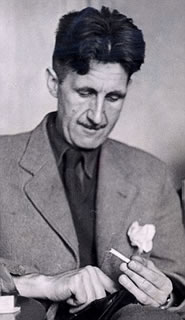
De Britse schrijver George Orwell (pseudoniem van Eric Arthur Blair) werd op 25 juni 1903 geboren in Motihari, India. Zie ook mijn blog van 25 juni 2010 en eveneens alle tags voor George Orwell op dit blog.


Uit: 1984


„As soon as Winston had dealt with each of the messages, he clipped his speakwritten corrections to the appropriate copy of the Times and pushed them into the pneumatic tube. Then, with a movement which was as nearly as possible unconscious, he crumpled up the original message and any notes that he himself had made, and dropped them into the memory hole to be devoured by the flames.

What happened in the unseen labyrinth to which the pneumatic tubes led, he did not know in detail, but he did know in general terms. As soon as all the corrections which happened to be necessary in any particular number of the Times had been assembled and collated, that number would be reprinted, the original copy destroyed, and the corrected copy placed on the files in its stead. This process of continuous alteration was applied not only to newspapers, but to books, periodicals, pamphlets, posters, leaflets, films, sound tracks, cartoons, photographs-to every kind of literature or documentation which might conceivably hold any political or ideological significance. Day by day and almost minute by minute the past was brought up to date. En this way every prediction made by the Party could be shown by documentary evidence to have been correct; nor was any item of news, or any expression of opinion, which conflicted with the needs of the moment, ever allowed to remain on record. All history was a palimpsest, scraped clean and reinscribed exactly as often as was necessary. In no case would it have been possible, once the deed was done, to prove that any falsification had taken place. The largest section of the Records Department, far larger than the one in which Winston worked, consisted simply of persons whose duty it was to track down and collect all copies of books, newspapers, and other documents which had been superseded and were due for destruction. A number of the Times which might, because of changes in political alignment, or mistaken prophecies uttered by Big Brother, have been rewritten a dozen times still stood on the files bearing its original date, and no other copy existed to contradict it. Books, also, were recalled and rewritten again and again, and were invariably reissued without any admission that any alteration had been made. Even the written instructions which Winston received, and which he invariably got rid of as soon as he had dealt with them, never stated or implied that an act of forgery was to be committed; always the reference was to slips, errors, misprints, or misquotations which it was necessary to put right in the interests of accuracy.“


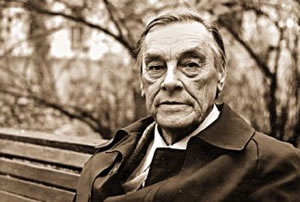
 940071-49f4d4cfc5fa3463564a0ccf533404b2.jpg

George Orwell (25 juni 1903 – 21 januari 1950)


De Oostenrijkse dichteres Ingeborg Bachmann werd geboren op 25 juni 1926 in Klagenfurt. Zie ook mijn blog van 25 juni 2010 en eveneens alle tags voor Ingeborg Bachmann op dit blog.


Nebelland


Im Winter ist meine Geliebte

unter den Tieren des Waldes.

Dass ich vor Morgen zurück muss,

weiß die Füchsin und lacht,

Wie die Wolken erzittern! Und mir

auf den Schneekragen fällt

eine Lage von brüchigem Eis.


Im Winter ist meine Geliebte

ein Baum unter Bäumen und lädt

die glückverlassenen Krähen

ein in ihr schönes Geäst. Sie weiß,

dass der Wind, wenn es dämmert,

ihr starres, mit Reif besetztes Abendkleid hebt und mich heimjagt.


Im Winter ist meine Geliebte

unter den Fischen und stumm.

Hörig den Wassern, die der Strich

ihrer Flossen von innen bewegt,

steh ich am Ufer und seh,

bis mich Schollen vertreiben,

wie sie taucht und sich wendet.


Und wieder vom Jadruf des Vogels

getroffen, der seine Schwingen

über mir steift, stürz ich

auf offenem Feld: sie entfiedert

die Hühner und wirft mir ein weißes

Schlüsselbein zu, Ich nehm's um den Hals

und geh fort duch den bitteren Flaum.


Treulos ist meine Geliebte,

ich weiß, sie schwebt manchmal

auf hohen Schuh'n nach der Stadt,

sie küßt in den Bars mir dem Strohhalm

die Gläser tief auf den Mund,

und es kommen ihr Worte für alle.

Doch diese Sprache verstehe ich nicht.


Nebelland hab ich gesehen,

Nebelherz hab ich gegessen.


Exil


Ein Toter bin ich der wandelt

gemeldet nirgends mehr

unbekannt im Reich des Präfekten

überzählig in den goldenen Städten

und im grünenden Land


abgetan lange schon

und mit nichts bedacht


Nur mit Wind mit Zeit und mit Klang


der ich unter Menschen nicht leben kann


Ich mit der deutschen Sprache

dieser Wolke um mich

die ich halte als Haus

treibe durch alle Sprachen


O wie sie sich verfinstert

die dunklen die Regentöne

nur die wenigen fallen


In hellere Zonen trägt dann sie den Toten hinauf.


Abends frag ich meine Mutter


"Abends frag ich meine Mutter
heimlich nach dem Glockenläuten,
wie ich mir die Tage deuten
und die Nacht bereiten soll.

Tief im Grund verlang ich immer
alles restlos zu erzählen,
in Akkorden auszuwählen,
was an Klängen mich umspielt.

Leise lauschen wir zusammen:
meine Mutter trämt mich wieder,
und sie trifft, wie alte Lieder,
meines Wesens Dur und Moll."


 940071-b628a71dbf59eb01591fdd6018c00741.jpg

Ingeborg Bachmann (25 juni 1926 – 17 oktober 1973)


De Amerikaanse schrijver, columnist en homoactivist Larry Kramer werd geboren in Bridgeport, Connecticut op 25 juni 1935. Zie ook mijn blog van 25 juni 2009 en ook mijn blog van 25 juni 2010


Uit: Faggots


“In a handsome apartment of English and French antiques, deftly combined with American Ward Bennett, on East 66th Street, between Madison and Park, lives the Winston Man. Yes, Virginia, there is a Winston Man.

It is unfortunate that his personality is so submerged in this nefarious product, but the fact remains that to his friends and to his fellow models as the Hans Zoroaster Agency his known, not be his given name, which is Duncan Heinz (his father is a very distant and almost as rich cousin to the pickle-soup-ketchup family, though devoted not to foodstuffs in his own financial empire but to the manufacture of rubber good for home and farm, more specifically, though naturally the family does not spread this about, the production of items of “prophylaxis” for the conduct of sexual intercourse, their Model B-12 widely used in animal husbandry, particularly suited for well-endowed bulls), but as Winnie.

Winnie’s is the true beauty of our moment in time, the fact that, years from now, when we remember, and we shall remember, will be looked back upon as representing our era. His glacially green eyes, his perfect classical nose, his hay hair, his skin of an overall perfection that could sell cream to cows or butter to Danes, all represent today’s desirability and have served to make him not only America’s highest-paid male model but also the ideal god every faggot looks up to as what he’d choose to look like if he could choose to look like anyone.

Winnie’s Philadelphia Main Line background was evident in the tweed and flannel button-downed and Shetlanded aura he had maintained ever since being expelled from the University of Virginia for disinclination to read. He still looked thirty, claimed to be forty, and still didn’t have to work, his father’s “health products” fortune more than ample to provide for him But a Master of Winnie’s at the Hill School in Pottstown had encouraged in him a lifelong desire to go his own way, be his own man, when he had taken the then thirteen-year-old lad aside after a particularly clumsy dropping of a right-field fly and told him point-blank that he was going to be a fairy when he grew up.


 940071-26a325a70ec95e32c748f373b6cb4c6d.jpg

Larry Kramer (Bridgeport, 25 juni 1935)


De Amerikaanse schrijfster en journaliste Ariel Gore werd geboren op 25 juni 1970 in  Carmel, Californië. Zie ook mijn blog van 25 juni 2009 en ook mijn blog van 25 juni 2010


Uit: Traveling Death and Resurrection Show


„The baby, riding with me today, whimpers in his car seat, rubs his sleepy eyes, reminds me of a clean-licked newborn kitten. Shock of black hair. Wide, dark eyes. "I'm hungry," he moans. Poor little fellow. This is our life: new day, new state, same show.

"The Virgin Mary herself will cast your fortune," Madre roars, undaunted by the city's silence. "Your destiny in Our Lady's hands!"

A towheaded little boy, maybe five years old, pale face blushed against the ocean wind, leaps from the doorway of the "I Buy Almost Anything" antique store. "Is it a circus?" he calls out, excited. But before Madre can answer him, a waif of a woman rushes out to the curb and pulls the boy back inside.

"It is a circus!" Madre yells to the crows perched on the roof of an old hotel. "Six p.m. tonight, the River Theater. Admission by donation. No one turned away!"

A white woman with dreadlocks stumbles out of a corner bar. "I'll be there," she promises, waving a tattooed arm before she reaches for the near cement wall to catch her balance.

"This is a show you can't miss," Madre cries with renewed enthusiasm. "One night only, ladies and gentlemen. Levitating mystics, saints performing the stigmata, Mary Magdalen flying through the air like grace itself!"

The caravan rolls to a stop in front of a little blue theater under the truss bridge. I'm driving the second hatchback, park it a few yards ahead of the others. No fans await us in handsome gray Astoria, but at least the church protesters aren't out -- the sallow-eyed men and women with their dark crucifixes and homemade picket signs assuring us all eternal damnation. You'd think we were a traveling brigade of abortionists, the reception we get in some towns. It's just a show, I always want to tell them. Isn't Satan up to anything real you can get your panties in a wad about? But I stay quiet. I understand their indignation more than I'd like to admit. And sometimes, I swear I can see my grandmother's face in those crowds. I cross myself silently, then. "It's just a show," I whisper to the heavens.

A humble mural covers the side of the theater building, pictures the river itself as a stage. Spotlights hang in the clouds. A few spectators float in black inner tubes, watching a lone performer who stands atop the water like some kind of prophet. A little marquee at the corner of the painting announces our coming:

-- Tonight Only --
The Death &
Resurrection Show „


 940071-f956db9d560d5a379ade60ffed607be2.jpg

Ariel Gore (Carmel, 25 juni 1970)


De Canadese schrijver Michel Tremblay werd geboren in Quebec op 25 juni 1942. Zie ook mijn blog van 25 juni 2009 en ook mijn blog van 25 juni 2010


Uit: Demain matin, Montréal m'attend


«LOLA LEE : C'est ça, la piasse ! Toujours la piasse ! On dirait que vous faites c'te métier-là rien que pour la piasse, vous autres !

UNE FILLE : Ben certain !

LOLA LEE : À votre âge, moé, à votre âge, j'faisais dix fois moins d'argent que vous autres pis j'travaillais dix fois plus fort !

UN GARÇON : Tiens, v'là le long playing qui recommence !

LOLA LEE : Pis mes shows, j'les faisais proprement.

UNE FILLE : Ça, on n'était pas là pour le voir…»


940071-333964edbeb4f598d78d7d87c3a555d3.jpg
Michel Tremblay (Quebec,
25 juni 1942)


Zie voor nog meer schrijvers van de 25e juni ook mijn vorige blog van vandaag en eveneens mijn eerste blog van vandaag.
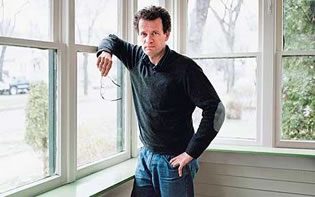
Geschreven door Romenu om 14:30 Reageer op dit bericht

Yann Martel, Arseny Tarkovsky, Heinrich Seidel, Nicholas Mosley, Claude Seignolle

De Canadese schrijver Yann Martel werd op 25 juni 1963 geboren in Salamanca. Zie ook mijn blog van 25 juni 2007 en ook mijn blog van 25 juni 2008 en ook mijn blog van 25 juni 2009 en ook mijn blog van 25 juni 2010


Uit: Life of Pi


“The sloth is at its busiest at sunset, using the word busy here in the most relaxed sense. It moves along the bough of a tree in its characteristic upside-down position at the speed of roughly 400 metres an hour. On the ground, it crawls to its next tree at the rate of 250 metres an hour, when motivated, which is 440 times slower than a motivated cheetah. Unmotivated, it covers four to five metres in an hour.

The three-toed sloth is not well informed about the outside world. On a scale of 2 to 10, where 2 represents unusual dullness and 10 extreme acuity, Beebe (1926) gave the sloth's senses of taste, touch, and its sense of smell a rating of 3. If you come upon a sleeping three-toed sloth in the wild, two or three nudges should suffice to awaken it; it will then look sleepily in every direction but yours.  Why it should look about is uncertain since the sloth sees everything in a Magoo-like blur.  Beebe reported that firing guns next to sleeping or feeding sloths elicited little reaction.  And the sloth's slightly better sense of smell should not be overestimated.  They are said to be able to sniff and avoid decayed branches, but Bullock (1968) reported that sloths fall to the ground clinging to decayed branches "often".

How does it survive you might ask.

Precisely by being so slow.   Sleepiness and slothfulness keep it out of harm's way, away from the notice of jaguars, ocelots, harpy eagles and anacondas. A sloth's hairs shelter an algae that is brown during the dry season and green during the wet season, so the animal blends in with the surrounding moss and foliage and looks like a nest of white ants or of squirrels, or like nothing at all but part of a tree.”


940068-5aaacd65d002d1af5a535ea5b73f8f65.jpg
Yann Martel (Salamanca, 25 juni  1963)


De Russische dichter en vertaler Arseny Alexandrovich Tarkovsky werd geboren op 25 juni 1907 in Elisavetgrad. Zie ook mijn blog van 25 juni 2007 en ook mijn blog van 25 juni 2008.en ook mijn blog van 25 juni 2009 en ook mijn blog van 25 juni 2010


Life, Life


1

I don't believe in omens or fear
Forebodings. I flee from neither slander
Nor from poison. Death does not exist.
Everyone's immortal. Everything is too.
No point in fearing death at seventeen,
Or seventy. There's only here and now, and light;
Neither death, nor darkness, exists.
We're all already on the seashore;
I'm one of those who'll be hauling in the nets
When a shoal of immortality swims by.


2

If you live in a house - the house will not fall.
I'll summon any of the centuries,
Then enter one and build a house in it.
That's why your children and your wives
Sit with me at one table, -
The same for ancestor and grandson:
The future is being accomplished now,
If I raise my hand a little,
All five beams of light will stay with you.
Each day I used my collar bones
For shoring up the past, as though with timber,
I measured time with geodetic chains
And marched across it, as though it were the Urals.


Vertaald door Virginia Rounding


 940068-dbfc83cf982f0e3e36b4714c2d6698f9.jpg

Arseny Tarkovsky (25 juni 1907 – 27 mei 1989)


De Duitse dichter, schrijver en ingenieur Heinrich Seidel werd geboren op 25 juni 1842 in Perlin, Mecklenburg-Schwerin. Zie ook mijn blog van 25 juni 2009 en ook mijn blog van 25 juni 2010


In der Sommerabendsonne - I.


An dem schönen Sommerabend

Saßen wir auf jenem Hügel,

Schauten in den goldnen Westen.

Breithin streckte sich die dunkle

Wolkenbank, darin die Sonne

Nun versunken - nur die Ränder

Glühten noch in goldnem Scheine.

Doch im blauen Himmel drüber

Schwebten rosig weiße Wolken

Angestrahlt von hellem Glanze.

Welch' ein Wunder sah ich droben:

Auf den Wolkenbänken saßen

Ros'ge Engel reihenweise -

Andre lauschten aus den Wolken,

Andre schwebten hin und wieder,

Spielten hier mit Wolkenflocken,

Ritten dort auf einem Wölkchen -

Und es war ein stillbewegtes

Schimmernd rosiges Getümmel.

"Sieh, wie herrlich!" sprach ich leuchtend

Freudevoll zu dem Gefährten.

Dieser nickte nur; wir schauten

Still in's Zauberspiel der Wolken:

Wie die Engel nun verschwebten,

Lauschten noch mit ros'gen Köpfen

Ueber Wolken und verschwanden.

Und der Rosenschein verblaßte,

Bis im bläulichen Gedämmer

Nur ein träumend Roth noch ruhte,

Und der Abend still sich senkte.


940068-63b0664f485cc25ce6311e6e5dd23fad.jpg
Heinrich Seidel (25. Juni 1842 – 7. November 1906)


De Engelse schrijver Nicholas Mosley werd geboren op 25 juni 1923 geboren in Londen. Zie ook mijn blog van 25 juni 2009.


Uit: Hopeful Monsters


“My father said ‘Shall I try to explain?’

I said ‘I like hearing you talk. It doesn’t matter if I don’t understand.’

This was the time – the winter of 1918-19 – when Einstein had recently published his paper concerning the General Theory of Relativity (the papers concerning the Special Theory had been published some years previously), but the conjectures put forward in the General Theory had not yet been verified. Nothing in these theories had yet much caught the public imagination: people seemed not to be ready for such images as they might evoke. But my father had become obsessed with trying to make intelligible an interpretation of the General Theory: it was this, he said, that should alter people’s ideas about the universe and about themselves.

My father said ‘All right, I’ll try to tell you. I’m not sure, anyway, just what it means to understand.’

I think my father had already tried to explain – usually more to himself in fact than to me – the Special Theory of Relativity. I remember the phrases about there being no absolute space nor absolute time: my space is my space; your time is yours; if I am travelling at a certain speed in relation to you it might as well be you who are travelling at a certain speed in relation to me; the only thing that is absolute is the speed of light. The speed of light is constant no matter if it arises from this or that travelling hither or thither: if there seem to be contradictions, these are because the measuring devices themselves get bigger or smaller and not the speed of light. I do not suppose I grasped the latter idea: but I do not think I found it difficult to see the idea of each person, each observer or group, having his or her or its own world: was not this, after all, what I had come to feel about the people in the streets, my mother’s friends, her cousins in the country? I felt sometimes that I understood even about the absoluteness of the speed of light – was not this something that my father and I felt ourselves in touch with as we looked down on all these separate worlds from the superworld of our airship?


940068-de44247860ce26b520c502053a207abf.jpg
Nicholas Mosley (Londen, 25 juni 1923)


De Franse schrijver Claude Seignolle werd geboren op 25 juni 1917 in Périgueux. Zie ook mijn blog van 25 juni 2009.


Uit: Le Retour à Tiburiac


“Embrassai ses paupières closes ; ses cheveux qui gardèrent mon souffle. Je l'avais toute à moi. Elle acceptait enfin l'échange de nos désirs. Soudain, elle eut un cri de détresse si terrible que d'un bond, je m'écartai d'elle. Effrayé, je la regardai. Elle restait allongé, mais ses yeux me fixaient, comme atteints de folie, et exprimaient le vertige d'une lutte telle, qu'un violent frisson me traversa... Ses doigts agrippèrent le drap en une prise féroce... De sa gorge sortit une plainte, un râle qui se gonfla jusqu'à l'ettoufer ... Convulsée par un spasme furieux, elle fit le geste de me saisir à la gorge, mais ses bras retombèrent, la vie brusquement coupée en elle ...

Alors... alors, je mordis mes poings jusqu'au sang afin de ne pas hurler de ce que je vis en un instant ... Elle se raidit...Sa peau se flétrit... verdit... se creva çà et là, laissant l'os apparaître dans une puanteur croissante, si fétide qu'elle m'écroula de nausées... Je vis ses traits se fondre en une infecte boule putride, son crâne surgir, puis ses vertèbres, ses côtes... Et Dieu me fut bon, qui m'avait arrêté de la dénuder completement, sinon j'aurai vu se crever son ventre pourri que sa robe virginale, de satin et de soie, garda au secret de l'horreur... Mais l'étoffe vieillit à son tour, comme de plusieurs siècles, et il n'y eut plus sur ma couche souilée que ces macabres restes d'os blanchis, enveloppés d'une sorte de sac flétri semblable à ceux du "Trou aux Huguenots "...


 940068-68fee60af50cfff396a480f68f81c8c9.jpg

Claude Seignolle (Périgueux, 25 juni 1917)

Geschreven door Romenu om 14:22 Reageer op dit bericht

Hans Marchwitza, Georges Courteline, Friederike Kempner, Adrian Kasnitz, Jan Decker

De Duitse dichter en schrijver Hans Marchwitza werd geboren in Scharley op 25 juni 1890. Zie ook mijn blog van 25 juni 2007 en ook mijn blog van 25 juni 2009.


Uit: Sturm auf Essen


„Der Junge aß die Kartoffeln, die ihm die Mutter aufnötigen musste. Sie beobachtete ihn dabei und wischte an ihren Augen. Groß und mager war er. Und der düstere, abwesende Blick schreckte sie. Sie wusste nicht, dass dieser Blick, diese sich krampfhaft faltende Stirn, die Unrast, mit der er sich umsah, Flandern, Verdun, Aisne und noch einmal Verdun und noch einmal Flandern waren. Sie wusste nicht, dass er nicht dreiundzwanzig Jahre, sondern fünfzig, hundert Jahre alt war, dass er eine Ewigkeit von Schrecken und Toden durchgehetzt hatte. Sie dachte glücklich: Er ist wieder zurückgekommen!, und sie schnaubte die Tränen in ihre Schürze.
Franz sah sich in der Wohnung um. Alles war noch wie früher, stand fast gespenstisch genau auf dem alten Fleck - aber ein Jahrhundert schien zwischen dem Früher und Heute zu liegen. „Wer ist denn von den anderen noch zurückgekommen?" fragte er.
Einige waren zurück. Von einem ganzen Dutzend vier. Ihre alte Ecke war leer geworden. Auch dieses Erinnern an die alte Ecke lag hundert Jahre zurück.
„Ja - der Freising-Bruno und der Koschewa-Edy sind wieder auf der Zeche am Arbeiten. Nur der Kahlstein rennt noch mit dem Gewehr rum", erzählte ihm die
Mutter. „Der Kahlstein-Hermann war doch bei der Marine in Kiel und ist schon vor zwei, drei Wochen zurück. Er rennt wieder mit dem Gewehr..."
Franz grübelte. Er war vorläufig zu gar nichts entschlossen, er wusste nicht, ob er noch einmal in die Grube gehen oder ob er die Arbeit wechseln solle. Vielleicht mit einer Übertagearbeit. Aber er konnte sich das kaum noch vorstellen, dass er jetzt wieder einer normalen Tagesbeschäftigung nachgehen könne; er fühlte sich noch immer draußen im Graben. Und allen, die das Glück hatten, sich zu retten, erging es wohl ebenso; alle phantasierten sie nachts dasselbe; sie waren noch immer in Flandern oder vor Verdun.
„Du wirst doch wohl auch wieder in die Grube gehn?" wagte die Mutter die schüchterne Frage.
„Das weiß ich noch nicht!" antwortete er erst nach einer Weile, und auf seiner Stirn erschien wieder diese finstere Falte, die sie so schreckte. Er wandte sich halb um und blickte sie fast feindselig an: „Wartest du so sehr darauf? Ich sag' dir, ich weiß nicht, was ich machen werde."


940067-80c8ce328c130658719632a93f7ff124.jpg
Hans Marchwitza (25 juni 1890 - 17 januari 1965)

De schrijver temidden van FDJ jeugd in 1959


De Franse schrijver en dramaturg Georges Courteline (eig. Georges Victor Marcel Moineaux ) werd geboren op 25 juni 1858 in Tours. Zie ook mijn blog van 25 juni 2009.


Uit: Le petit malade


“LE MEDECIN, le chapeau à la main. — C'est ici, madame, qu'il y a un petit malade ?

MADAME. — C'est ici, docteur; entrez donc. Docteur, c'est pour mon petit garçon. Figurez—vous, ce pauvre mignon, (je ne sais pas comment ça se fait), depuis ce matin tout le temps il tombe.

LE MEDECIN. — Il tombe !

MADAME. — Tout le temps; oui, docteur.

LE MEDECIN. — Par terre ?

MADAME. — Par terre.

LE MEDECIN. — C'est étrange, cela... Quel âge a-t-il?

MADAME. — Quatre ans et demi.

LE MEDECIN. — Quand le diable y serait, on tient sur ses jambes à cet âge-là !... — Et comment ça lui a-t-il pris ?

MADAME. — Je n'y comprends rien, je vous dis. Il était très bien hier soir et il trottait comme un lapin à travers l'appartement. Ce matin, je vais pour le lever, comme j'ai l'habitude de faire. Je lui enfile ses bas, je lui passe sa culotte, et je le mets sur ses jambes. Pouf ! il tombe !

LE MEDECIN. — Un faux pas, peut-être.

MADAME. — Attendez !... Je me précipite; je le relève... Pouf ! il tombe une seconde fois. Etonnée, je le relève encore... Pouf ! par terre ! et comme ça sept ou huit fois de suite. Bref, docteur, (je vous le répète, je ne sais comment ça se fait), depuis ce matin, tout le temps il tombe.

LE MEDECIN. — Voilà qui tient du merveilleux... Je puis voir le petit malade ?

MADAME. — Sans doute.


(Elle sort puis reparaît tenant dans ses bras le gamin.

Celui-ci arbore sur ses joues les couleurs d'une extravagante bonne santé. Il est vétu d'un pantalon et d'une blouse lâche, empesée de confitures séchées.)“


 940067-5af9cb5da37b352aa4db3421ce3d8431.jpg

Georges Courteline (25 juni 1858 – 25 juni 1929)


De Duitse dichteres Friederike Kempner werd geboren  op 25 juni 1836 te Optatow in de provincie Posen. Zie ook mijn blog van 25 juni 2009.


Es scheint der Mond so helle


Es scheint der Mond so helle,

So silbern strahlt der Mond,

Ich stehe an der Stelle,

Wo all mein Lieben wohnt!


Ich stehe still und segne

Den Platz, das Haus, die Luft,

Daß niemals drin begegne,

Was Schmerz und Tränen ruft.


Fernweh


Gold’ne Sonne mit den Strahlen,

Komm und nimm mich an Dein Herz

Und von Deinem Licht getragen,

Steige mit mir himmelwärts!


Zeige mir dort Deine Wesen,

Deinen großen Wunderraum,

Und damit ich’s nicht verrate,

Laß mich’s schauen wie im Traum!


Oder nimm mich in die Höhe

Nur ein tausend Meilen fern,

Daß ich ihn von dort aus sehe:

Unsern kleinen Erdenstern.


Zanket nicht, hetzet nicht


Motto:Der Weg zur neuen Bildung geht

Von Humanität

Durch Nationalität

Zur Bestialität.

Zanket nicht, hetzet nicht.

Friedlich scheint das Sonnenlicht,

Laßt die Juden und die Christen

Ungekränkt ihr Leben fristen.


Zanket nicht, hetzet nicht,

Jedem scheint das Sonnenlicht,

Laßt die Christen und die Juden,

Muselmänner, Botokuden;

Lasset alle ungestört,

Jede Feindlichkeit zerstört

Harmonien nah und fern!

Lobet alle Gott, den Herrn,

Dessen güt’ge Vorsicht hört

Solch Gezänke gar nicht gern!


 940067-eaff6319eac5c352e5f0c1d822f3ab22.jpg

Friederike Kempner (25 juni 1836 – 23 februari 1904)


Onafhankelijk van geboortedata:


De Duitse  dichter en schrijver.Adrian Kasnitz werd geboren in 1974 in Orneta, Polen. Kasnitz groeide op in Lüdenscheid en studeerde in Keulen en Praag (MA 2002). Hij schrijft poëzie, proza​​, essays, en richt zich op fotografie en geschiedenis. Gedichten zijn verschenen in tal van literaire tijdschriften en bloemlezingen, zoals in Der Große Conrady. Sinds 2003 runt hij zijn uitgeverij Parasitenpresse, waarin  poëzie en proza verschijnt. Kasnitz is mede-organisator van de Lesebühne am Brüsseler Platz.


Uit: Innere Sicherheit


am bankomat leuchten die augen. ein glückender glanz

der sich spiegelt im lcd. du bist jung, du siehst gut

aus, dein kleid findest du in einer hippen filiale

(wie in jeder stadt). in die city, das ist dein sinn nach

der arbeit, nach dem essen, nach der liebe. aber was dein

mann sagt, bleibt geläufig: in die city, das ist sein sinn.

aus dem bankomat fallen scheine, deine gunst & dei

ne blütenfrische. das papier ist rein, jeder mag es

wie du dich bewegst von boutique zu boutique. kauf dir was

schönes, ein kind, wie es in der werbung lacht, weil der wunsch

einfach zu begleichen war mit der goldenen karte.

ein chip, der deine daten trägt, deine maße. dein slip

wird er feucht beim anblick der flakons? bei musik die der

kaufhaus-dj auflegt für deinen privaten cash-flow?


940067-0bae594565137be064dc3f166f71e335.jpg
Adrian Kasnitz (Ometa, 1974)


De Duitse schrijver Jan Decker werd geboren in 1977 in Kassel. Jan Decker studeerde aan het Duitse Literatuur Instituut in Leipzig. Zijn toneelstukken gingen in première in het Theater Vorpommern en het Staatstheater Nürnberg. Geënsceneerde lezingen van zijn toneelstukken waren te zien in het Schauspiel Leipzig, Staatstheater Nürnberg en het Schauspielhaus in Wenen. Hij schreef talloze toneelstukken, onder andere voor de SWR en de WDR. In 2008 werd hij samen met Christoph Schwarz bekroond bij de Leipziger Hörspielwettbewerb als beste auteur. Hij publiceerde talloze artikelen in tijdschriften en bloemlezingen.


Uit: Japanische Miniaturen


„Ein weiter Himmel, grauweiß getuscht. Stetes Platschen der Wellen, das sich in der Bucht verliert. Vom Wind gerecht, liegt Sand in feinen Streifen. Ein Leuchtturm ragt hervor. An seinem Sockel liegt angeschwemmtes Treibholz. Dahinter hoher Schilf, wo ein Frosch kauert. Lautlos wartet er auf die Ankunft der Flut.
Hoch geschlossene Holzmauern umfassen den Schrein. Die Planken von gekreuzten Giebeln ragen in die Luft. Verborgen hinter alten Bäumen liegt das Schwert der Sonnengöttin. Ein Tor spannt sich über den Weg. Unter dem Balken dreht leise der Wind. Zwei Krähen strecken ihre Flügel. Sie flattern auf und fliegen davon.
Gehörntes Schiff auf dem Berg. Die Achse eines Schiffs, dreimal gedreht. Wehrhaft und stark wie der Helm eines Kriegers. Unten treibt der Fluss, lang und geschwungen. Die Blüten der Kirschbäume schwimmen. Sie legen sich auf drei steinerne Hunde, ihre Mäuler aufwärts gespannt. Ein Tempelläuten weht aus der Ferne.
Die Felsinsel ist vom Fischteich begrenzt. Flach im Wasser liegt eine kleine Brücke. Rote Brüstung, sanft zum Bogen gespannt. Ein Schrein aus rotem Holz, die Flügel zum Fischteich geöffnet. Man hat ihn mit Gaben geschmückt. Glücksboten aus Porzellan, vier Maulwürfe. Ihre Bäuche sind ein glattschwarzer Strich.“


 940067-5719971ba226ffc5c5d915bf84064237.jpg

Jan Decker (Kassel, 1977)

Geschreven door Romenu om 14:18 Reageer op dit bericht

Ernesto Sabato, Yves Bonnefoy, Scott Oden, Kurt Kusenberg, Madelon Székely-Lulofs

De Argentijnse schrijver Ernesto Sabato werd op 24 juni 1911 geboren in Rojas, een dorp in de provincie Buenos Aires.  Ernesto Sabato overleed op 30 april van dit jaar, 55 dagen voor zijn 100e verjaardag. Zie ook mijn blog van 24 juni 2007 en ook mijn blog van 24 juni 2008 en ook mijn blog van 24 juni 2009 en ook mijn blog van 24 juni 2010.


Uit: Before the End (Vertaald door Marina Harss))


How many of those immigrants continued to gaze longingly toward their own mountains and rivers, through the distance of sadness and years, from this huge, chaotic factory, this city constructed on a port, which by then had become a desert of accumulated solitudes?

As I walk through this terrible Leviathan, along the shoreline which was first beheld by thousands of immigrants, I can almost hear the melancholy plaint of Aníbal Troilo's bandoneón.

When the gloom and tumult of Buenos Aires, Make me feel even more alone, I go to the outskirts at nightfall, and Through the murky landscape of A half century, enriched and destroyed By love and disillusionment, I look back at the boy I once was. Ruefully, I recall Hearing the first drops of rain On the dried-out streets, on the Zinc roofs, "Que llueva, que llueva, la vieja está en la cueva,"3 Until the birds would begin to sing, and We ran, barefoot, To play with our boats made out of paper. That was the time of Tom Mix, Of colored playing chips, Of Tesorieri, Mutis, and Bidoglio, The time of carousels with horses, Of warm peanuts on winter afternoons, Of the toy train and its whistle. A world we can catch sight of When we are very alone, In this chaos of noise and cement, That has no place for courtyards filled with Honeysuckle and carnations.

Among that multitude of colonizers, my parents arrived on these shores with the hope of sowing their seed in this "Promised Land" that extended beyond their tears.

My father descended from a family from the mountains in Italy, people accustomed to the asperities of life. But my mother, who came from an old, established Albanian family, was forced to tolerate the deprivations of her life with dignity.

They settled down in Rojas, which, like many of the old towns on the Pampas, had been one of the many forts built by the Spaniards to mark the borderline of Christian civilization.

In this town in the Pampas my father eventually ran a small flour mill, which became the locus of my daydreams when, on Sundays, he would work in the shop, and my brother Arturo and I would climb up on the sacks of wheat, and secretly, as if committing some mysterious act, spend the afternoon eating biscuits.


 939628-bd435c8ddef1c35d228ef378195ecfd4.jpg

Ernesto Sabato (24 juni 1911 – 30 april 2011)


De Franse dichter, schrijver en vertaler Yves Bonnefoy werd in Tours geboren op 24 juni 1923. Zie ook mijn blog van 24 juni 2010 en eveneens alle tags voor Yves Bonnefoy op dit blog.


Une photographie


Quelle misère, cette photographie !

Une couleur grossière défi gure

Cette bouche, ces yeux. Moquer la vie

Par la couleur, c’était alors l’usage.


Mais j’ai connu celui dont on a pris

Dans ces rets le visage. Je crois le voir

Descendre dans la barque. Avec déjà

L’obole dans sa main, comme quand on meurt.


Qu’un vent se lève dans l’image, que sa pluie

La détrempe, l’efface ! Que se découvrent

Sous la couleur les marches ruisselantes !

Qui fut-il ? Qu’aura-t-il espéré ? Je n’entends

Que son pas qui se risque dans la nuit,

Gauchement, vers en bas, sans main qui aide.


Encore une photographie


Qui est-il, qui s’étonne, qui se demande

S’il doit se reconnaître dans cette image ?

C’est l’été, vraisemblablement, et un jardin

Où cinq ou six personnes sont réunies.


Et c’était quand, et où, et après quoi ?

Ces gens, qui furent-ils, les uns pour les autres ?

Même, s’en souciaient-ils ? Indifférents

Comme déjà leur mort leur demandait d’être.


Toutefois celui-ci, qui regarde cet autre,

Intimidé pourtant ! Étrange fl eur

Que ce débris d’une photographie !


L’être pousse au hasard des rues. Une herbe pauvre

À lutter entre les façades et le trottoir.

Et ces quelques passants, déjà des ombres.


Un souvenir


Il semblait très âgé, presque un enfant,

Il allait lentement, la main crispée

Sur un lambeau d’étoffe trempée de boue.

Ses yeux fermés, pourtant. Ah, n’est-ce pas


Que croire se souvenir est le pire leurre,

La main qui prend la nôtre pour nous perdre ?

Il me parut pourtant qu’il souriait

Lorsque bientôt l’enveloppa la nuit.


Il me parut ? Non, certes, je me trompe,

Le souvenir est une voix brisée,

On l’entend mal, même si on se penche.


Et pourtant on écoute, et si longtemps

Que parfois la vie passe. Et que la mort

Déjà dit non à toute métaphore.


939628-24d3ea6ba5e31e407588d61f1b625e78.jpg
Yves Bonnefoy (Tours, 24 juni 1923)


De Amerikaanse schrijver Scott Oden werd geboren op 24 juni 1967 in Columbus, Indiana. Zie ook mijn blog van 24 juni 2009 en ook mijn blog van 24 juni 2010.


Uit: The Lion of Cairo


“The rasp and slither of steel died away, the sound lost to a wind that howled over snow- clad ridges, pouring into the passes and sheltered valleys of the high Afghan mountains. Ruptures in the leaden sky—a sky that promised little succor from the long winter at the Roof of the World—allowed mocking glimpses of blue heavens and golden light. And a mockery it was, for the sun’s rays did nothing to allay the knife- edged cold, which cut through leather and wool and thick cloth to freeze flesh and stiff en beards.

Still, the two men who faced off on the winding trail to the crag-set village of Kurram paid little heed to wind, cold, or sunlight. Snowdrifts and naked rocks were one and the same as they slowly circled, breath steaming with each panted curse, each seeking an opportunity to bring this struggle to its bloody conclusion. Both fighters sported ragged Afghan turbans and trousers, girdled robes of striped silk and grimy wool, and belts bristling with knife hilts; they were alike in height— but where one was thick waisted with broad shoulders, a bull neck, and gray flecking his beard, the other was young and lean and as graceful as the Turkish saber he held in his scarred fist.

“Baber Khan,” said he, his Arabic punctuated by an Egyptian ac­cent. “Make peace with Allah, for your time is at an end. The blood of Kurram is a poor price for the blood of my master’s servants but it is a price that must be paid.”


939628-63ae2d82ec9b98751d02760132ceb340.jpg

Scott Oden (Columbus, 24 juni 1967)


De Duitse schrijver en criticus Kurt Kusenberg werd geboren op 24 juni 1904 in Göteborg. Zie ook mijn blog van 24 juni 2009 en ook mijn blog van 24 juni 2010.


Uit: Der m. M.


“Der magische Mensch (m.M.) empfindet die Zeit nicht als ein Kontinuum, nicht als ein Endlos-Band, das sich abspult, sondern als eine Art von Simultanbühne. Die Zukunft ist bereits da, zum Greifen nahe, sie zeigt sich bloß noch nicht.

Die Vergangenheit ist noch nicht abgetreten, sie nistet im Heute; sie wird sich ein wenig entfernen, aber nie ganz passé sein. Wenn man es unbedingt will, kann man die Zukunft sehen, sie wartet ja nebenan auf ihr Stichwort. Die Toten sind nicht tot, sie spielen bloß nicht mehr mit. Aber man kann jederzeit mit ihnen Gespräche führen.

Der m.M. hat wenig oder keinen Sinn für Geschichte, für historische Zeit, denn diese ist ja immer auf den Menschen bezogen, also auf nichts Wichtiges. Er hält es mit der biologischen Zeit, die keine meßbare Einheit ist, sondern viele Spielarten hat; jedes Lebewesen besitzt eine ihm eigene Zeit - eben eine biologische. Die Uhrzeit, eine vom Menschen erfundene Norm, kann zur Gewohnheit werden.

Wer sich jedoch beobachtet, wird feststellen, daß sein Zeitmaß, sein Zeitempfinden sehr verschiedene Tempi hat. Die Zeit vergeht einem rasch oder langsam. Da der m.M. an eine lineare "Entwicklung", an "Fortschritt" nicht glaubt, ist es nur "logisch",

daß er in Zyklen denkt und lebt. Die Lehre von den Wellen, die ewige Wiederkehr des Gleichen sind für ihn selbstverständlich. Gerade deshalb empfindet er den Augenblick als etwas Unwiederholbares. Gewiß wird der Augenblick wiederkehren, aber nicht in der

selben Gestalt, denn das Leben imitiert sich nicht. Der nächste Durchgang wird anders

sein.”


939628-6083f946f9839a7d61346942b946deff.jpg
Kurt Kusenberg (24 juni 1904 – 3 oktober 1983)

Eind jaren 1920 


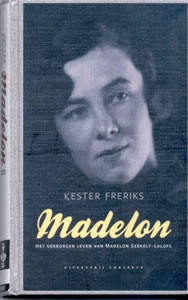
De Nederlandse schrijfster en journaliste Magdalena Hermina Székely-Lulofs werd geboren in Soerabaja op 24 juni 1899. Zie ook mijn blog van 24 juni 2009 en ook mijn blog van 24 juni 2010.

Uit: De hongertocht


“Uit den machtigen tropennacht, uit de loerende, zwarte stilte rondom het bivak spatte onverwachts een roodvonkend schot los, scherp en uitdagend: Pèk-tèkk!!

De echo verdubbelde het prompt: - pèk-tèk-tèk! herhaalde onmiddellijk, maar veel verder al, als een wegijlende, vluchtende spookstem: - èk!... èk... en bij den ingang van het bivak viel een lichaam met een smak voorover op den grond. Het doode lichaam van den inlandschen fuselier Darmo, die juist zou worden afgelost. Het zwaaide en plofte neer, loodzwaar en bijna óp den aflossenden inlandschen fuselier Toegono.

Dit alles gebeurde in dezelfde seconde. Genadeloos vlug, onherroepelijk onverwacht, adembenemend onwaarschijnlijk. Een roode ster, die vlak boven de aarde uiteen spatte, een lichaam, dat op slag dood neerviel en waaruit de ziel omhoog schoot als een plotseling bevrijde schim, die met een laatsten schreeuw wegijlde in de donkerte en verechoënd oploste in het heelal en in de eeuwigheid.

De fuselier Toegono had automatisch aangelegd, maar schoot niet, hij bleef een seconde zoo staan, de karabijn vooruit gestoken, bevangen door een voorbijflitsend moment van onzekerheid. In deze seconde begreep hij niet dadelijk wat er gebeurde, wist hij niet of hij zelf was getroffen door dat onverwachte schot, hij wist ook niet, of Darmo dood was, noch waar vandaan zich in dit oogenblik een vijand op hem kon storten. Maar het volgend oogenblik al kwamen haastige voetstappen nader en de commandant van de wacht vroeg opgewonden:

‘Wat is hier gebeurd?!’

‘Darmo...’ begon Toegono, maar de commandant bukte zich al naar het lichaam, dat voorover neergestrekt lag op den grond.

‘Angkat!’ zei hij kortaf en de twee inlandsche soldaten, die hem gevolgd waren, namen het lichaam op en droegen het weg.


 939628-9883ed1c661e61e17666d8b75ac192fd.jpg

Madelon Székely-Lulofs (24 juni 1899 – 22 mei 1958)


Zie voor nog meer schrijvers van de 24e juni ook mijn vorige blog van vandaag.
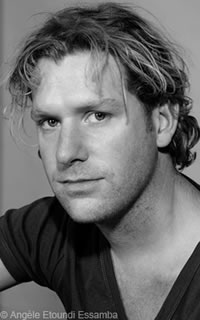
Geschreven door Romenu om 19:05 Reageer op dit bericht

Ambrose Bierce, Jean-Baptiste Boyer d'Argens, Johannes van het Kruis, Carolina Trujillo, Jurre van den Berg

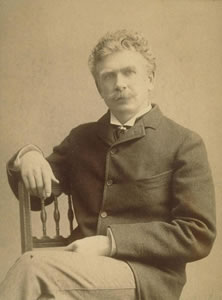
De Amerikaanse satiricus, schrijver van korte verhalen en criticus, uitgever en journalist Ambrose Gwinnett Bierce werd geboren in Meigs County, Ohio op 24 juni 1842. Zie ook mijn blog van 24 juni 2007 en ook mijn blog van 24 juni 2009 en ook mijn blog van 24 juni 2010.


 Uit: The Devil’s Dictionary 


DAMN, v. A word formerly much used by the Paphlagonians, the meaning of which is lost. By the learned Dr. Dolabelly Gak it is believed to have been a term of satisfaction, implying the highest possible degree of mental tranquillity. Professor Groke, on the contrary, thinks it expressed an emotion of tumultuous delight, because it so frequently occurs in combination with the word _jod_ or _god_, meaning "joy." It would be with great diffidence that I should advance an opinion conflicting with that of either of these formidable authorities.

DANCE, v.i. To leap about to the sound of tittering music, preferably with arms about your neighbor's wife or daughter. There are many kinds of dances, but all those requiring the participation of the two sexes have two characteristics in common: they are conspicuously innocent, and warmly loved by the vicious.


DANGER, n.

A savage beast which, when it sleeps,

 Man girds at and despises,

 But takes himself away by leaps

 And bounds when it arises.

 Ambat Delaso

DARING, n. One of the most conspicuous qualities of a man in security.

DATARY, n. A high ecclesiastic official of the Roman Catholic Church, whose important function is to brand the Pope's bulls with the words _Datum Romae_. He enjoys a princely revenue and the friendship of God.


DAWN, n. The time when men of reason go to bed. Certain old men prefer to rise at about that time, taking a cold bath and a long walk with an empty stomach, and otherwise mortifying the flesh. They then point with pride to these practices as the cause of their sturdy health and ripe years; the truth being that they are hearty and old, not because of their habits, but in spite of them. The reason we find only robust persons doing this thing is that it has killed all the others who have tried it.


 939624-048c2bf2674405021047c6c53d948e8c.jpg

Ambrose Bierce (24 juni 1842 - ? 1913/1914)


De Franse schrijver en filosoof Jean-Baptiste de Boyer, Marquis d'Argens werd geboren op 24 juni 1704 in Aix-en-Provence. Zie ook mijn blog van 24 juni 2007 en Zie ook mijn blog van 24 juni 2009 en ook mijn blog van 24 juni 2010.


Uit: Brief van Marquis d’Argens aan Abbé de Prades , Potsdam, 24 Juni 1752


[18 juillet 1752]

J'ai montré, Monsieur, votre lettre au roi, et je l'ai accompagnée de tout le bien que mes amis de Paris m'ont écrit de vous . Sa Majesté m'a ordonné de vous dire qu'elle serait charmée de vous voir. Venez donc tout de suite à Potsdam descendre chez moi. Nous avons pourvu, M. de Voltaire et moi, à vous trouver un logement qui ne vous coûtera rien; vous n'aurez pas besoin même de manger à l'auberge, et peu de jours après votre arrivée vous aurez votre pension. Il est même question d'un poste auprès du roi, utile et gracieux. Lorsque vous serez ici, je vous dirai tout cela. En attendant, soyez persuadé que votre dernière lettre vous a gagné toute mon estime, et que vous verrez en arrivant ici que j'ai travaillé à vous donner des marques de cette même estime. M. de Voltaire vous écrit par ce courrier, et si, en attendant que vos affaires soient arrangées en France, vous avez besoin d'argent pour votre voyage, il vous envoie une lettre pour en prendre . Je vous prie de faire mes compliments à M. Yvon . Vous verrez, puisque vous le voulez, quand vous serez ici, de quoi il est question, et je ne doute pas que nous ne réussissions. Partez, je vous prie, ma lettre reçue, par le chariot de poste, et donnez-moi des nouvelles de votre départ.


 939624-1c0ba3ecadb3e08d4bfea22ee455c14a.jpg

Jean-Baptiste Boyer d'Argens (24 juni 1704 – 11 januari 1771)

Bibliotheek van Marquis d'Argens in zijn woning in het Neue Palais in Potsdam.


De Spaanse heilige, mystiek dichter en kerkleraar  Johannes van het Kruis werd geboren op  24 juni 1542 in Fontiveros bij Avila. Zie ook mijn blog van 24 juni 2007 en ook mijn blog van 24 juni 2008 en Zie ook mijn blog van 24 juni 2009 en ook mijn blog van 24 juni 2010.


Uit: Geestelijk hooglied )Vertaald door H. Blommestijn)


Beurtzang tussen de ziel en de bruidegom


Bruid:
Waar heb jij je verborgen,
Beminde, en mij achtergelaten in zuchten?

Zoals het hert vluchtte jij weg
nadat jij mij verwondde;
ik liep je na, roepend, maar je was verdwenen.


Herders die uitgaat
ginds door de weiden de heuvel op,
als jullie bijgeval mochten zien
hem die ik het meest bemin,
zegt hem, dat ik wegkwijn, pijn lijd en sterf.


Zoekend naar mijn lief,
zal ik daar gaan over bergen en langs oevers;

niet zal ik plukken de bloemen,
niet duchten wilde dieren,
en nemen zal ik vestingen en grenzen.


Vraag aan de schepselen:
O bossen en struikgewas,
geplant door de hand van de Beminde
O weide van groene gewassen,
met bloemen veelkleurig gesierd
Zegt of hij door jullie is heengegaan.

Antwoord van de schepselen:
Duizend bevalligheden uitstrooiend
ging hij door deze bosjes inderhaast,
en, terloops zag hij ze aan:
door alleen zijn verschijning
gekleed liet hij ze in schoonheid.

Bruid:

Ach, wie zal mij kunnen genezen
Geef je dan ten leste waarlijk over;
wil mij niet zenden
van nu af nog andere bode:
want zij weten me niet te zeggen wat ik begeer.


En allen die daar dwalen
van jou gaan mij duizend bekoorlijkheden vertellen,

en allemaal, méér verwonden zij mij,
en mij laat achter stervend
(aan ) een ik-weet-niet-wat wat zij stamelen.


 939624-6d0889206e72ac5534a24e44453a82f5.jpg

Johannes van het Kruis (24 juni 1542 – 14 december 1591)


Onafhankelijk van geboortedata:


De Uruguayaans-Nederlandse schrijfster Carolina Trujillo werd geboren in Montevideo, Uruguay in 1970. Zij kwam op vijfjarige leeftijd naar Nederland. Na het einde van de dictatuur in Uruguay keerde ze terug. In 1991 won ze een eerste prijs voor haar eerste Spaanstalige novelle en besloot ze weer naar Amsterdam te gaan. Daar voltooide ze haar studie scenarioschrijven aan de Filmacademie.


Uit: De terugkeer van Lupe Garcia


“Ik had Lupes borsten gezien toen het nog van die kleine puntige heuveltjes waren. Onze eerste zomer samen was nog maar net begonnen en ik heb die heuveltjes nooit meer uit mijn hoofd gekregen. In Nederland was topless normaal, zei ze. Toco, mijn beste vriend, begon te gillen toen hij het hoorde, helemaal toen hij erachter kwam dat Lupe zich omkleedde waar ik bij was en soms in haar slipje in de tuin zat. Meisjes deden dat niet, niet als er jongens bij waren. De enige slipjes die wij zagen hingen aan kramen op de markt. Het langst duurde het voor ik het stukje tussen haar benen zag en toen dat gebeurde begreep ik dat zij de liefde van mijn leven was.
We waren op het strand voor mijn huis. Ik kan de rots waar ik op zat nog aanwijzen. Zij zat een stukje lager in het zand en droeg een korte broek aan en had haar benen opgetrokken. Ik kon zomaar alles zien, het hele vlezige roosje, en zij maar kletsen. Ik denk dat ik nog nooit zo’n stijve heb gehad, ik voelde me er bleek bij wegtrekken.
‘Zullen we een duik nemen?’ vroeg ze, maar als ik overeind kwam zou mijn lul me het zand in heien. Zo voelde dat op die leeftijd. Ik keek haar na terwijl ze het water in rende.
In Nederland leerden ze op de lagere school al zwemmen. Dat kwam doordat er zoveel grachten waren. Er was een kans van acht op tien dat je er ooit in zou fietsen. Daar waren onderzoeken naar gedaan. Ik geloofde haar en zei dat we hier ook vaak in het water vielen maar dat we gewoon verzopen. Ze geloofde mij niet.”


939624-06a354dd439d2c7a247462fc26d74f74.jpg
Carolina Trujillo (Montevideo, 1970)


De Nederlandse dichter Jurre van den Berg werd geboren in Thesinge in 1986. Hij debuteerde officieel als dichter in het voorjaar van 2009 met de bundel Binnenvaart.  In 2007 ontving hij het Hendrik de Vriesstipendium van de gemeente Groningen voor zijn poëzieproject ‘Ter verlichting van een naam’, een areligieuze, hedendaagse beschouwing op de taal en thematiek van het bijbelboek Job. Ook de gedichten die hier uit voortkwamen zijn in de reeks ‘Wij zijn hier pas sinds gisteren’ in Binnenvaart opgenomen. Tijdens het collegejaar 2005-2006 was Jurre van den Berg huisdichter van de Rijksuniversiteit Groningen. De gedichten die hij in deze functie schreef werden samen met andere verzen gebundeld in Avondkikkers.


HERFST

Ik was vergeten hoe de regen
de straten kon spoelen.

Naar boven kijken en grijs goud
zien eten, het land ligt reeds
begraven onder verwaaide paraplu's.

Ik was vergeten hoe de regen.

Wat geweest is, dat het terug komt
en niet los laat, storm niet uitraast.
Het land ligt reeds begraven.

Als ik denk dat het voorbij is zoals
onder herfstkastanjes na de regen.

Het is droog maar de wind
waait druppels van het blad.


939624-604b5df65376fad080749ddf27c492d5.jpg 

Jurre van den Berg (Thesinge, 1986)

Geschreven door Romenu om 18:58 Reageer op dit bericht

Matthijs Kleyn

De Nederlandse schrijver en televisiemaker Matthijs Leonard Kleyn werd geboren in Leiden op 24 juni 1979.  Kleyn was aanvankelijk achter de schermen actief als televisiemaker. Hij bedacht onderwerpen voor verschillende programma’s, schreef teksten voor voice-overs en presentatoren en groeide uit tot verslaggever en regisseur. Hij werkte voor programma’s als Hart van Nederland, In de hoofdrol en RTL Boulevard. Ook schreef Kleyn een wekelijkse column voor de website van RTL Boulevard. In 2006 vertrok Kleyn met filmproducent Rob Houwer naar Tsjechië om een documentaire te maken over de totstandkoming van Het woeden der gehele wereld, de verfilming van het boek van Maarten 't Hart. In 2011 werkte Kleyn bij BNN samen met Paul de Leeuw en Filemon Wesselink voor de MaDiWoDoVrijdagshow. In maart 2011 trad hij in dienst bij De Wereld Draait Door, waar hij werd geïntroduceerd als Jakhals Thijs. In mei 2011 verscheen Kleyns debuutroman Vita. Vita is een deels autobiografische roman die handelt over depressie en zelfmoord. Op 8 juni 2011 was Vita de hoogste binnenkomer in De Bestseller 60 van het CPNB.


Uit: Vita


„Al een uur sta ik in haar straat. Ik heb Vita nu al twee weken niet normaal gezien of gesproken, alleen een vluchtige blik op de redactie en een afhaaksms ’s avonds. Vandaag was het niet anders. Zodra

het donker werd, ben ik richting haar huis op de Govert Flinck gelopen.

Vanaf de stoep aan de overkant ben ik te ver weg om direct op te vallen, maar dichtbij genoeg om snel bij de voordeur te komen als die opengaat. Dan zal ik aan komen rennen en met een van Vita’s medebewoners het pand betreden met de smoes dat ik haar vriendje ben. Of het echt een smoes is, weet ik allang niet meer.

De deur gaat open en een vrouw met bruine krullen en een bril verlaat het pand. Ik trek een sprintje en kan nog net met m’n schouder de deur openhouden. De vrouw kijkt niet eens om, blijkbaar rennen er vaker vreemde mannen naar binnen. Met bonzend hart bestijg ik de drie trappen. Als ik voor haar deur uitkom, hoor ik vrouwenstemmen. Geconcentreerd luister ik. De vrouwen praten op hysterische toon in het Engels, maar met een Amerikaans accent. Zachtjes leg ik een hand op de deurklink en duw die naar beneden. Met succes. De kamer is verlicht door de felle kleuren van de tv, verder brandt er geen licht. Vita zit als een schim op haar bed naar de tv te staren. Ze heeft haar jas nog aan. Doordat de tv zo hard staat, heeft ze me niet in de gaten.

‘Lie!e,’ zeg ik.

Sloom draait ze haar hoofd naar me toe. Ze schrikt niet en oogt ook niet verbaasd.

‘Hé boef.’

Ik glimlach en loop naar haar toe. Vita blijft zitten waar ze zit. Ik kniel naast haar neer.

‘Gaat het wel?’ vraag ik zacht.

Ze antwoordt niet, maar geeft me een kus op m’n mond. Ze maakt geen aanstalten om de tv uit of zachter te zetten. Ze draait haar hoofd weer naar het scherm en kijkt verder. Ik volg haar ogen. America’s Next Topmodel is te zien, ik herken de donkere presentatrice die een huilende kandidate afbekt.“


1024680-370f0c491efe48cfd5f4dc4e78f5851b.jpg
Matthijs Kleyn (Leiden, 24 juni 1979)

Geschreven door Romenu om 00:00 Reageer op dit bericht

Meer van Romenu

↑ Terug naar de berichten