Naar de inhoud

Romenu

Over literatuur, gedichten, kunst en cultuur
akke.beakke.be

Berichten van 2 oktober 2011 tot 3 oktober 2011

Bernard Cooper, Gore Vidal, Stijn Streuvels, Sergej Jesenin, Alain-Fournier
De Amerikaanse schrijver Bernard Cooper werd geboren op 3 oktober 1951 in Hollywood, California. Zie ook mijn blog van 3 oktober 2009 en ook mijn blog van 3 oktober 2010.


Uit: The Bill from My Father


“He leaned close. "Let me ask you something."

I wanted to be as frank as possible. If there was a medical ordeal ahead, maybe we'd have a last chance at attachment. I looked into his eyes. "Ask me anything you want."

"Why...," he said, then hesitated.

"Go on." I urged him.

"Why are you reading the Ladies' Home Journal?"

"What?"

"Why did you pick that magazine out of all the magazines in the waiting room? There must be I don't know how many others to chose from and you picked that."

The March issue had been lying on my lap, opened to a double-page photo of the creamiest seafood bisque I've ever seen, a kind of culinary centerfold. I thought I'd cook it for Brian and was about to rip out the recipe. Even in a time of crisis, Dad found a way to goad me like a pro. "Nobody here cares if I'm reading a men's magazine or a women's magazine!" I glanced around the waiting room to see if I could spot a man reading Today's Bride or a woman reading Popular Mechanics, but where is proof when you really need it? "Ideas about masculinity and femininity are different now than they were in your day." I thought back to the hot afternoon I'd been cinched into my father's jumpsuit, drunk on rum punch and basted in my own perspiration, staggering through a backyard filled with dykes disguised as housewives who were really machines. "People today are more...flexible."

"I'll bet," he said.

The man in the wheelchair wasn't even pretending not to listen. His eyes met mine and glistened with interest. His posture improved.

I said, "You were trying to change the subject is what you were trying to do. Then we wouldn't have to talk about why you're here. Well, it's not going to work." But it had, of course, worked like a charm. Conversation between us ceased. We folded our arms and glowered straight ahead.

"Dad," I said, "I hate that one of us always has to be right."

"I'm not the one who always has to be right. You are."


 1004530-5ee37adb3e5c12b3e35bccbc187527e5.jpg

Bernard Cooper (Hollywood, 3 oktober 1951)


De Amerikaanse schrijver, dramaticus en essayist Gore Vidal werd geboren op 3 oktober 1925 in West Point, New York. Zie ook mijn blog van 3 oktober 2010 en eveneens alle tags voor Gore Vidal op dit blog.


Uit: The Golden Age


“The ceremony at the State Capitol was solemn but brief since the President was due to leave before noon. Peter and Diana were led though the surprisingly large crowd by the governor, along with a number of other officials, many of them surviving witnesses to the birth of their lively state. A north wind blew steadily across American City, so-called because the Indian tribes had finally objected to the promiscuous use by white usurpers of their languages as well as land, nations, oil. So the blank adjective “American” had been proposed by Burden. “It has an Italianate ring to it,” he used to say to the puzzlement of the Scotch-Irish settlers.

Inside the capitol rotunda it was still cold but they were, blessedly, out of the monotonous continental north wind. At the center, directly beneath the gray fluted dome, the closed coffin was set on a catafalque. Kitty stood beside it. She wore full mourning, complete with black veil.

Diana gave her a quick professional look. “She’s had her hair done,” she said to Peter, with relief. Next to Kitty was the governor’s wife; at the opposite end of the catafalque was a small platform covered with red white and blue bunting.

The inevitable television lights were also in place. Peter noted that in addition to local television both NBC and CBS were on hand. Since the assassination attempt, security was intense and state troopers guarded the entrance to the rotunda. Mourners were obliged to present tickets.

“I flew,” said Kitty. “I’ve always hated that train ride from Washington. Now I won’t ever have to make it again.” Diana embraced her mother as did Peter, whose eyes were inexplicably full of tears while Kitty, inexplicably, was cheerful. “We have a lovely lot,” she said, “at the cemetery. Quite near my father’s. We’ve also got a monument that Burden commissioned years ago. He was always prepared.”


 1004530-14d10ea3fde1d794a1f75ba5f52e32f7.jpg

Gore Vidal (West Point, 3 oktober 1925)


De Vlaamse schrijver Stijn Streuvels, pseudoniem voor Frank Lateur werd geboren in Heule op 3 oktober 1871. Zie ook mijn blog van 3 oktober 2010 en eveneens alle tags voor Stijn Streuvels op dit blog.


Uit: De blijde dag


“Die dag begon gelijk al de dagen. Met dat de helderheid opkwam gingen de slagvensters overal open en het dorp ontwaakte in hetzelfde aanschijn van gister. De menschen hernamen hun kleine bezigheid waarmede zij poenderend hun kleine profijtjes moesten bejagen, en medeen kwamen ook in ieder menschelijk gemoed, elk volgens de gebeurtenissen en toestanden van 't leven hen gelegen waren, de hartstochten wakker, herleefden de afgunsten, de begeerten en genegenheden; dat alles kriebelde in lust- of leedgevoel gedoken in de hoofden der dorpelingen. Er waren er die hunne gevoelens lieten zien of raden, anderen hielden het diep geborgen bachten de strakheid van hun gelaat; maar onverwijld hernamen zij allemaal 't geen ze gister gedaan hadden en elk hield zijn wezen gelijk hij 't gewend was. Doordat eenieder gerust aan zijn gewone werk kon gaan en zij van hun eigen en van malkaar wisten dat ze dat werk vandaag en morgen ongestoord konden voortzetten, heerschte de kalmte en de vrede over het dorp. Zonder den schijn zelfs van nijverige werkzaamheid die er binnen heerschte, stonden de huizen als doode wezens nevenseen geschaard. De samenhang van gewone geluiden die hoorden bij ieder soort van werk, vormde den eenigen levensadem van het dorp, den levensadem die altijd regelmatig voort gaat zonder dat iemand er nog acht op geeft.

Eene eigene lucht van vreedzame bezadigdheid strekte als een veiligende koepel over dat dorpskerkje en dat troepje bijeengeschaarde huizen, zoodat er geen één van al die dorpelingen 't minste besef had van 't geen er buiten dien eigenen luchtkring leefde en gebeurde, zoodat zij 't bestaan niet eens vermoedden van de duizendmalige stroomingen en veelvuldige kruisingen der groote levensmachten en evenmin de mogelijkheid vreesden dat de kleinste roering van eene dier levensmachten tot hier kon doordringen en voldoende was om heel dat stille dorpsgepoender in gruis te slaan en de schoone rust van den dag en de volgende dagen voor altijd te storen.”


 1004530-5a03efd358cccfa69e80b80ea818c030.jpg

Stijn Streuvels (3 oktober 1871 – 15 augustus 1969)

Stijn Streuvels en achterkleinkinderen


De Russische dichter Sergej Aleksandrovitsj Jesenin werd geboren op 3 oktober 1878 in het dorpje Konstantinovo, bij Rjazan. Zie ook mijn blog van 3 oktober 2008 en ook mijn blog van 3 oktober 2009 en ook mijn blog van 3 oktober 2010


Schon ist es Abend. Der Tau

Schon ist es Abend. Der Tau
Ist an den Nesseln zu sehn.
Ich stehe am Wegesrand, faul
An eine Weide gelehnt.

Des Mondes so große Laterne
Beleuchtet direkt unser Dach.
Irgendwo in weiter Ferne
Singt eine Nachtigall sacht.

Warm ist es und wunderschön,
Wie'n Ofen, der winterlich summt.
Und diese Birken, sie stehn
Wie riesige Kerzen herum.

Weit hinter Flusslauf und Lichtung,
Hinter dem Waldrand: Gerappel.
Es schlägt ein verschlafener Wächter
Seine erstorbene Klapper.


Herbst

               für R. V. Ivanov


Im Wacholder, bei des Steilhangs Gähnen
Kämmt sich Herbst als Rotfuchs still die Mähne.

Über dem, was Fluss und Ufer ziert,
Hört man, wie sein blauer Hufschlag klirrt.

Leiser Wind mit sachten Klausnerschritten
Fegt das Laub von Stufen und von Tritten

Und küsst bei den Eschen unumwunden
Eines unsichtbaren Christus Wunden.


Meine Liebe ist jetzt anders

               für Kljuev


Meine Liebe ist jetzt anders.

Ach, ich weiß, du quälst und mühst dich,

Weil des Mondes Besen wandernd

Nicht des Verses Pfützen sprühte.


Freudig trauernd um den Stern,

Der auf deine Brauen zischte,

Sangst du für Hütten raus dein Herz,

Und hast im Herz kein Haus errichtet.


Den du erwartet in der Nacht,

Ging so, wie einst, vorbei am Dache.

Für wen hat, Freund, die Sangesmacht

Vergoldet Quell und Fluss der Sprache?


Im Fenster blinkt kein Paradies,

Die Sonne kannst du nicht zersingen,

Die Mühle nicht zum Himmel schießt,

Mag sie auch eiligst Flügel schwingen.


Vertaald door Eric Boerner


1004530-acf90724f973073988748d80a3bd36f0.jpg
Sergej Jesenin
(3 oktober 1878 - 28 december 1925)


De Franse schrijver Henri Alain--Fournier werd geboren op 3 oktober 1886 in Épineuil-le-Fleuriel (Cher). Zie ook mijn blog van 3 oktober 2008 en ook mijn blog van 3 oktober 2009 en ook mijn blog van 3 oktober 2010


Uit: Le Grand Meaulnes


“C'était, dans une grande salle au plafond bas, un repas comme ceux que l'on offre, la veille des noces de campagne, aux parents qui sont venus de très loin.

Les deux enfants avaient lâché les mains de l'écolier et s'étaient précipités dans une chambre attenante où l'on entendait des voix puériles et des bruits de cuillers battant les assiettes. Meaulnes, avec audace et sans s'émouvoir, enjamba un banc et se trouva assis auprès de deux vieilles paysannes. Il se mit aussitôt à manger avec un appétit féroce; et c'est au bout d'un instant seulement qu'il leva la tête pour regarder les convives et les écouter.

On parlait peu, d'ailleurs. Ces gens semblaient à peine se connaître. Ils devaient venir, les uns, du fond de la campagne, les autres, de villes lointaines. Il y avait, épars le long des tables, quelques vieillards avec des favoris, et d'autres complètement rasés qui pouvaient être d'anciens marins. Près d'eux dînaient d'autres vieux qui leur ressemblaient: même face tannée, mêmes yeux vifs sous des sourcils en broussaille, mêmes cravates étroites comme des cordons de souliers... Mais il était aisé de voir que ceux-ci n'avaient jamais navigué plus loin que le bout du canton; et s'ils avaient tangué, roulé plus de mille fois sous les averses et dans le vent, c'était pour ce dur voyage sans péril qui consiste à creuser le sillon jusqu'au bout de son champ et à retourner ensuite la charue... On voyait peu de femmes; quelques vieilles paysannes avec de rondes figures ridées comme des pommes, sous des bonnets tuyautés.

Il n'y avait pas un seul de ces convives avec qui Meaulnes ne se sentit à l'aise et en confiance. Il

expliquait ainsi plus tard cette impression: quand on a, disait-il, commis quelque lourde faute

impardonnable, on songe parfois, au milieu d'une grande amertume: "Il y a pourtant par le monde des

gens qui me pardonneraient". On imagine de vieilles gens, des grands-parents pleins d'indulgence, qui sont persuadés à l'avance que tout ce que vous faites est bien fait. Certainement parmi ces bonnes gens-là les convives de cette salle avaient été choisis. Quant aux autres, c'étaient des adolescents et des enfants...”


1004530-dee183ca955eddb06235b977d3860d91.jpg
Alain-Fournier (3 oktober 1886 - 22 september 1914)

Borstbeeld in Saint-Amand-Montrond


Zie voor nog meer schrijvers van de 3e oktober ook mijn vorige blog van vandaag.
Geschreven door Romenu om 19:19 Reageer op dit bericht

Louis Aragon, Thomas Wolfe, James Herriot, Wolf Klaussner, Johann Peter Uz

De Franse dichter, schrijver en essayist Louis Aragon werd geboren in 1897 in Parijs. Zie ook mijn blog van 3 oktober 2007 en ook mijn blog van 3 oktober 2008 en ook mijn blog van 3 oktober 2009 en ook mijn blog van 3 oktober 2010


Que serais-je sans toi


Que serais-je sans toi qui vins à ma rencontre

Que serais-je sans toi qu'un coeur au bois dormant
Que cette heure arrêtée au cadran de la montre

Que serais-je sans toi que ce balbutiement.


J'ai tout appris de toi sur les choses humaines

Et j'ai vu désormais le monde à ta façon

J'ai tout appris de toi comme on boit aux fontaines

Comme on lit dans le ciel les étoiles lointaines

Comme au passant qui chante on reprend sa chanson

J'ai tout appris de toi jusqu'au sens du frisson.


Que serais-je sans toi qui vins à ma rencontre

Que serais-je sans toi qu'un coeur au bois dormant

Que cette heure arrêtée au cadran de la montre

Que serais-je sans toi que ce balbutiement.


J'ai tout appris de toi pour ce qui me concerne

Qu'il fait jour à midi, qu'un ciel peut être bleu

Que Le bonheur n'est pas un quinquet de taverne

Tu m'as pris par la main dans cet enfer moderne

Où l'Homme ne sait plus ce que c'est qu'être deux

Tu m'as pris par la main comme un amant heureux.


Que serais-je sans toi qui vins à ma rencontre

Que serais-je sans toi qu'un coeur au bois dormant

Que cette heure arrêtée au cadran de la montre

Que serais-je sans toi que ce balbutiement.


Qui parle de Bonheur a souvent les yeux tristes

N'est-ce pas un sanglot que la déconvenue

Une corde brisée aux doigts du guitariste

Et pourtant je vous dis que le bonheur existe

Ailleurs que dans le rêve, ailleurs que dans les nues.

Terre, terre, voici ses rades inconnues.


Que serais-je sans toi qui vins à ma rencontre

Que serais-je sans toi qu'un coeur au bois dormant

Que cette heure arrêtée au cadran de la montre

Que serais-je sans toi que ce balbutiement.


Je sais je sais Tout est à faire

Dans ce siècle où la mort campait

Et va voir dans la stratosphère


Si c'est la paix


Éteint ici là-bas qui couve

Le feu court on voit bien comment

Quelqu'un toujours donne à la louve


Un logement


Quelqu'un toujours quelque part rêve

Sur la table d'être le poing

Et sous le manteau de la trêve


Il fait le point


[...]


C'est la paix qui force le crime

À s'agenouiller dans l'aveu

Et qui crie avec les victimes


Cessez le feu


 1004526-6c64d2c78e8a8e364646a7ed1a6502d8.jpg

Louis Aragon (3 oktober 1897 – 24 december 1982)


De  Engelse schrijver en dierenarts James Herriot (pseudoniem van James Alfred Wight) werd geboren op 3 oktober 1916 in Sunderland. Zie ook mijn blog van 3 oktober 2009 en ook mijn blog van 3 oktober 2010


Uit: All Things Wise and Wonderful


„Andrew laughed when he saw me. He had put on weight and looked a different person. Digger knows every inch of this walk, he said. I think it's just about his favorite spot-you can see how he's enjoying himself.

I nodded. He certainly looks a happy little dog.

Yes, he's happy all right. He has a good life and honestly I often forget that he can't see. He paused. You were right, that day in your surgery. You said this would happen.

Well that's great, Andrew, I said. And you're happy, too, aren't you?

I am, Mr. Herriot. Thank God, I am. A shadow crossed his face. When I think how it was then, I can't believe my luck. It was like being in a dark valley, and bit by bit I've climbed into the sunshine.

I can see that. You're as good as new, now.

He smiled. I'm better than that-better than I was before. That terrible experience did me good.

When I look back on the whole episode my feeling is of thankfulness. All sorts of things help people to pull out of a depression. Mostly it is their family-the knowledge that wife and children are dependent on them-sometimes it is a cause to work for, but in Andrew Vine's case it was a dog.

I often think of the dark valley which closed around him at that time and I am convinced he came out of it on the end of Digger's lead.“


 1004526-145fbb44b6998743d73fe065b0f53a5a.jpg

James Herriot (3 oktober 1916 - 23 februari 1995)

Christopher Timothy als James Herriot in de tv-serie "All Creatures Great And Small"


De Amerikaanse schrijver Thomas Wolfe werd geboren op 3 oktober 1900 in Asheville, North Carolina. Zie ook mijn blog van 3 oktober 2010 en eveneens alle tags voor Thomas Wolfe op dit blog.


Uit: The Lost Boy


„Light came and went and came again, the booming strokes of three o'clock beat out across the town in thronging bronze from the courthouse bell, light winds of April blew the fountain out in rainbow sheets, until the plume returned and pulsed, as Grover turned into the Square. He was a child, dark-eyed and grave, birthmarked upon his neck-- a berry of warm brown-and with a gentle face, too quiet and too listening for his years. The scuffed boy's shoes, the thick-ribbed stockings gartered at the knees, the short knee pants cut straight with three small useless buttons at the side, the sailor blouse, the old cap battered out of shape, perched sideways up on top of the raven head, the old soiled canvas bag slung from the shoulder, empty now, but waiting for the crisp sheets of the afternoon-these friendly, shabby garments, shaped by Grover, uttered him. He turned and passed along the north side of the Square and in that moment saw the union of Forever and of Now.

Light came and went and came again, the great plume of the fountain pulsed and winds of April sheeted it across the Square in a rainbow gossamer of spray. The fire department horses drummed on the floors with wooden stomp, most casually, and with dry whiskings of their clean, coarse tails. The street cars ground into the Square from every portion of the compass and halted briefly like wound toys in their familiar quarter-hourly formula. A dray, hauled by a boneyard nag, rattled across the cobbles on the other side before his father's shop. The courthouse bell boomed out its solemn warning of immediate three, and everything was just the same as it had always been.

He saw that haggis of vexed shapes with quiet eyes-- that hodgepodge of ill-sorted architectures that made up the Square, and he did not feel lost. For "Here," thought Grover, "here is the Square as it has always been-and papa's shop, the fire department and the City Hall, the fountain pulsing with its plume, the street cars coming in and halting at the quarter hour, the hardware store on the corner there, the row of old brick buildings oil this side of the street, the people passing and the light that comes and changes and that always will come back again, and everything that comes and goes and changes in the Square, and yet will be the same again.“


 1004526-12ceef4ac468d4501e2347312dabadd4.jpg

Thomas Wolfe (3 oktober 1900 - 15 september 1938)


De Duitse schrijver Wolf Klaußner werd geboren op 3 oktober 1930 in Lichtenau. Zie ook mijn blog van 3 oktober 2009 en ook mijn blog van 3 oktober 2010


Uit: Lebensläufe


„— Wieso?, Konrad war überrumpelt (— Hast du?), — ja so zwei oder drei, aber nur als Berater im Hintergrund.

— Gewonnen?

— Natürlich. Ist eine gute Sozietät. Gewiefte Burschen.

— Ich brauch dich. Im Hintergrund. Als Berater, in Rohrbach sieht es wüst aus.

— Gritli trat näher zu ihnen, heiter mit tränenglänzenden Augen.

— Konrad, sagte sie, — mehr bleibt hier nicht zu tun. Fahren wir heim.

Er sah sie an und legte den Arm um ihre Schulter und die andere Hand an ihre volltönende Brust. Sie schrie leise, verhauchte, richtete sich wieder auf, lächelte, schlug sich den Rock glatt, an dem doch nicht ein Fältchen war. Und das ältere Paar begab sich auf Hochzeitsreise nach Rohrbach.

Immerhin hatte die Bücherkammer Zeitläufe überlebt, und das Bett, schmal und karg desgleichen. Am ersten Morgen sahen sie sich verwirrt an, zumal es draußen wie aus Kannen goß. Der Dachschlauch schluchzte, an den Scheiben herab rann das Wasser. Sie warf plötzlich die Arme um ihn und sagte: — Ich liebe Dich. Er zog sie an sich und fing an zu weinen, sie herzte ihn wie ein Kind und wehrte die jähe Angst ab, die sie befallen hatte. Was war mit ihm? Ihr schien, als bräche das innere Traggerüst eines Turmes zusammen, wie sie ihn immer gesehen hatte, und langsam, Stück für Stück, als donnerten schwere Balken von der Helmspitze bis ins Fundament.

— Wir müssen tätig werden, flüsterte sie, — du liebst doch deine Heimat?

Er schüttelte den Kopf.

— Ich liebe außer dir und der Kleinen nichts. Ich weiß jetzt auch, daß ich nirgendwo zu Hause bin und alles, was ich getan habe, ist eitel Haschen nach Wind. Wenn du nicht wärst, der ich damit Schmerzen zufügte, würde ich gerne sterben. Ich will dich sogar überleben, daß du den Schmerz nicht fühlst, der dann meiner ist.

Gritli küßte ihn lange und schlang ihre Beine um seine Hüften: — Du bist der, den mir das Fatum geschickt hat. Ich gehe nie von dir, nicht lebendig, und der Tod soll uns nicht kümmern. Weine nicht mehr.“


1004526-fc89c4bea814300d6d37868b517097ce.jpg
Wolf Klaußner (3 oktober 1930 – 3 april 2005)


De Duitse dichter en schrijver Johann Peter Uz werd geboren op 3 oktober 1720 in Ansbach. Zie ook mijn blog van 3 oktober 2009 en ook mijn blog van 3 oktober 2010


Ein Traum

O Traum, der mich entzücket!
Was hab ich nicht erblicket!
Ich warf die müden Glieder
In einem Thale nieder,
Wo einen Teich, der silbern floß,
Ein schattigtes Gebüsch umschloß.

Da sah ich durch die Sträuche
Mein Mädchen bey dem Teiche.
Das hatte sich, zum Baden,
Der Kleider meist entladen,
Bis auf ein untreu weiß Gewand,
Das keinem Lüftgen widerstand.

Der freye Busen lachte,
Den Jugend reizend machte.
Mein Blick blieb sehnend stehen
Bey diesen regen Höhen,
Wo Zephyr unter Lilien blies
Und sich die Wollust greifen ließ.

Sie fieng nun an, o Freuden!
Sich vollends auszukleiden;
Doch, ach! indems geschiehet,
Erwach ich und sie fliehet.
O schlief ich doch von neuem ein!
Nun wird sie wohl im Wasser seyn.


 1004526-ba5bc79a74e8e453c911260fa349f075.jpg

Johann Peter Uz (3 oktober 1720 – 12 mei 1796)

Geschreven door Romenu om 19:10 1 reactie Reageer op dit bericht

Dimitri Verhulst, Graham Greene, Wallace Stevens, Andreas Gryphius

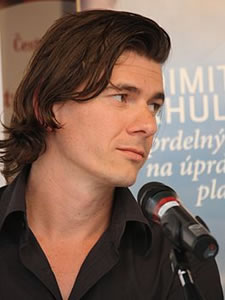
De Vlaamse dichter en schrijver Dimitri Verhulst werd op 2 oktober 1972 geboren in Aalst. Zie ook mijn blog van 2 oktober 2010 en eveneens alle tags voor Dimitri Verhulst op dit blog.


Uit: Godverdomse dagen op een godverdomse bol


„’t Kan vruchten  plukken en in zijn neus peuteren zonder daarvoor zijn stap te moeten onderbreken. Hoe  koddig.
Honderd en twintig centimeter groot is ’t daarmee, genoeg om over de grassen der savannen te kijken.
In zijn halvelings kokende kop schuilt, behalve hier en daar wat snot, een 650 kubieke  centimeter metende drek: hersenen, beveelheren van het neuken en het vreten. 650 kubieke centimeter pure levensvreugd, dat volume zou, jawel, zelfs nog wat groter  mogen worden.
Gaat dat?
Maar er is niks om te bikken en de teven zitten vol of hebben kleintjes aan hun spenen  hangen, hetgeen hen lusteloos en onvruchtbaar maakt. Als de melkproductie van de wijfjes niet wordt afgebroken laten ze zich niet bespringen, zo simpel zit het. En dus zit er  maar één ding op: de kleintjes de kop in slaan. Infanticide!
Zie de uitgelatenheid waarmee het paar dagen oude, nog onder de baarmoederslijmen  zittende schepsel bij de achterpoten wordt gepakt en met zijn hoofd tegen de stenen gesmakt. Het bloed gutst alle kanten op, de stront pruttelt eruit bij wijze van overlijdensact.

Kindje dood. Eindelijk kan ’t zijn achtentwintig kilogrammen op de moeder smijten, zijn putlucht in haar tronie hijgen naast het lijk waar zij maar blíjft naar kijken.
Maar, als dat een troost mag zijn, lang hoeft de teef niet op haar tanden te bijten: ’t kreeg reeds een stijve van het moorden en ’t bezit geen woorden om zijn smeerlapperijen eerst nog wat te verpakken in hofmakerij.
Erin en eruit en gedaan. Dat is vooral veel tijd bespaard. Veel tijd, en veel gezeik.  En dan nu: eten! Maar wat? Er is niks te rapen in deze gore droogte en de honger is te  groot om geduldig wat te scharten in de aarde naar een wortel. Het gras is rost en wordt  meteen weer uitgekotst. ’t Heeft daar de maag niet voor. Ziet ’t er soms uit als een herkauwer, misschien? Vlees moet ’t hebben, er is geen andere keus! En ’t staart naar de lucht, zijn ogen doen er zeer van, en ziet de gieren schietvizieren cirkelen in het blauw dat zij beheersen. Dáár zou ’t moeten zijn.
Maar ’t komt te laat. De karkassen zijn verwerkt, de vetten van de dode reeds door de vogels in vlieguren omgezet, en ’t moet zich tevreden stellen met het afval dat in de borstkas overblijft. Vuiligheid. ’t Grabbelt een stuk maag uit het karkas van wat daarnet nog een gnoe was, en zuigt het leeg. Het is vunzig maar het smaakt, als vele vunzigheden, naar meer“


.

 1003805-254be332f80073b25e26d09a068775a7.jpg

Dimitri Verhulst (Aalst, 2 oktober 1972)


De Engelse schrijver
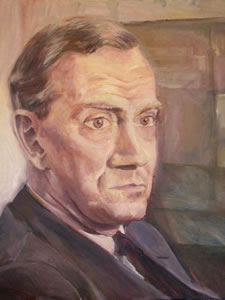
Graham Greene werd geboren op 2 oktober 1904 in Berkhamsted, Hertfordshire. Zie ook mijn blog van 2 oktober 2010 en eveneens alle tags voor Graham Greene op dit blog.


Uit: The Power And The Glory


"Whose cradle's that?" the sick woman's thin querulous tones arrested the man at the threshold.

"Onie Dillard's," he replied hollowly from the depths of the crib which he carried upside down upon his head, like some curious kind of overgrown helmet.

"Now, why in the name o' common sense would ye go and borry a broken cradle?" came the wail from the bed. "I 'lowed you'd git Billy Spinner's, an' hit's as good as new."

Uncle Pros set the small article of furniture down gently.

"Don't you worry yo'se'f, Laurelly," he said enthusiastically. Pros Passmore, uncle of the sick woman and mainstay of the forlorn little Consadine household, was always full of enthusiasm. "Just a few nails and a little wrappin' of twine'll make it all right," he informed his niece. "I stopped a-past and borried the nails and the hammer from Jeff Dawes; I mighty nigh pounded my thumb off knockin' in nails with a rock an' a sad-iron last week."

"Looks like nobody ain't got no sense," returned Laurella Consadine ungratefully. "Even you, Unc' Pros — while you borryin' why cain't ye borry whole things that don't need mendin'?"

Out of the shadows that hoarded the further end of the room came a woman with a little bundle in her arm which had evidently created the necessity for the borrowed cradle.

"Laurelly," the nurse hesitated, "I wouldn't name it to ye whilst ye was a-sufferin,' but I jest cain't find the baby's clothes nowhars. I've done washed the little trick and wrapped her in my flannen petticoat. I do despise to put anything on 'em that anybody else has wore ... hit don't seem right. But I've been plumb through everything, an' cain't find none of her coats. Whar did you put 'em?"

"I didn't have no luck borryin' for this one," complained the sick woman fretfully. "Looks like everybody's got that mean that they wouldn't lend me a rag ... an' the Lord knows I only ast a wearin' of the clothes for my chillen. Folks can make shore that I return what I borry — ef the Lord lets me."

"Ain't they nothin' to put on the baby?" asked Mavity Bence, aghast.


 1003805-b86b246320811f979e72efa1c37fc819.jpg

Graham Greene (2 oktober 1904 – 3 april 1991)


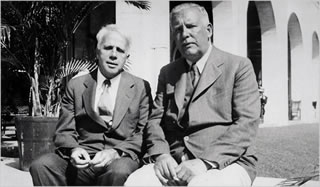
De Amerikaanse dichter en essayist Wallace Stevens werd geboren op 2 oktober 1879 in Reading, Pennsylvania. Zie ook mijn blog van 2 oktober 2008 en ook mijn blog van 2 oktober 2009 en ook mijn blog van 2 oktober 2010


A Postcard From The Volcano


Children picking up our bones

Will never know that these were once

As quick as foxes on the hill;


And that in autumn, when the grapes

Made sharp air sharper by their smell

These had a being, breathing frost;


And least will guess that with our bones

We left much more, left what still is

The look of things, left what we felt


At what we saw. The spring clouds blow

Above the shuttered mansion house,

Beyond our gate and the windy sky


Cries out a literate despair.

We knew for long the mansion's look

And what we said of it became


A part of what it is ... Children,

Still weaving budded aureoles,

Will speak our speech and never know,


Will say of the mansion that it seems
As if he that lived there left behind

A spirit storming in blank walls,


A dirty house in a gutted world,

A tatter of shadows peaked to white,

Smeared with the gold of the opulent sun.


Table Talk


Granted, we die for good.

Life, then, is largely a thing

Of happens to like, not should.


And that, too, granted, why

Do I happen to like red bush,

Grey grass and green-gray sky?


What else remains? But red,

Gray, green, why those of all?

That is not what I said:


Not those of all. But those.

One likes what one happens to like.

One likes the way red grows.


It cannot matter at all.

Happens to like is one

Of the ways things happen to fall.


 1003805-e85d4895df75bf23bc1aee10bfa4e876.jpg

Wallace Stevens (2 oktober – 1879 – 2 augustus 1955)

Stevens (rechts) en Robert Frost in Key West, circa 1940


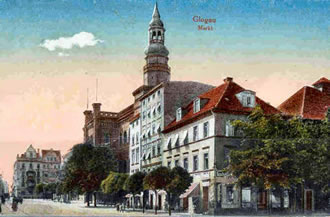
De Duitse dichter en schrijver Andreas Gryphius (gelatiniseerde naam van Andreas Greif) werd geboren op 2 oktober 1616 in Glogau (Silezië). Zie ook mijn blog van 2 oktober 2010 en eveneens alle tags voor Andreas Gryphius op dit blog.


Morgen Sonnet


Die ewig helle schar wil nun jhr licht verschlissen/

Diane steht erblaßt; die Morgenrötte lacht

Den grawen Himmel an/ der sanffte Wind erwacht/

Vnd reitzt das Federvolck/ den newen Tag zu grüssen.

Das leben dieser welt/ eilt schon die welt zu küssen/

Vnd steckt sein Haupt empor/ man siht der Stralẽ pracht
Nun blinckern auf der See: O dreymal höchste Macht

Erleuchte den/ der sich jtzt beugt vor deinen Füssen.

Vertreib die dicke Nacht/ die meine Seel vmbgibt/
Die Schmertzen Finsternüß die Hertz vnd geist betrübt/

Erquicke mein gemüt/ vnd stärcke mein vertrawen.

Gib/ daß ich diesen Tag/ in deinem dinst allein

Zubring; vnd wenn mein End' vnd jener Tag bricht ein

Daß ich dich meine Sonn/ mein Licht mög ewig schawen.


1003805-5541f479b41753ffbd601dfdded039e0.jpg
Andreas Gryphius (2 oktober 1616 - 16 juli 1664)

Glogau, Markt, oude ansichtkaart


Zie voor nog meer schrijvers van de 2e oktober ook mijn vorige blog van vandaag.

Geschreven door Romenu om 16:14 Reageer op dit bericht

Göran Sonnevi, Waltraud Anna Mitgutsch, Jan Morris

De Zweedse dichter en vertaler Göran Sonnevi werd geboren in Lund op 2 oktober 1939. Zie ook mijn blog van 2 oktober 2010 en eveneens alle tags voor Göran Sonnevi op dit blog.


Uit: Mozart's Third Brain (Vertaald door Rika Lesser)


LXIV

another bird, that flew upward, in the Forum Romanum
up toward the Rostra    Maybe a serin, but
I don't know    Flowers were in bloom, flowers I don't recognize
What may have been acanthus, growing like lupins
And a red flower, close to the ground    White butterflies
At the house of the Vestals roses bloomed    Up above
the palace and the ruins of villas a falcon flew
Sudden silence of birds    At what sort of rostrum do what sorts
of speakers appear    I listen to the voices of Europe
I feel no confidence; not even in my own distrust
STEER! We all carry the sparkling diamond oar
Hard; like the gates of Hades    Shadows full of unrest
The Curia, restored in the '30s, in the face of new imperial power
Which senate meets there; which tribunes of the people, if they would now
have audience, even in Hades    We move through the centuries
Faced with destitution's images    The blood of the martyrs is clasped, cradled
As if Agave were clutching the head of Pentheus; the blood runs
down into a bowl; a grail    The Etruscan votive sculptures
are thin as sticks; are by Giacometti    What do the dead
see? What do they see that even the dying do not see? What
Hesperian fruits, shining    Pomegranates; golden fruits?
By the Baths of Diocletian are orange trees    Hidden
inside there, Michelangelo's basilica, is full
of power, stone-dead, of the living    Small flames burn for believers
Policemen stand in groups, some with bulletproof vests, submachine guns
The door to a bordello stands open    Private health clubs
with sauna, massage    At Stazione Termini are all kinds of people;
from all over the planet    Everything stands wide open, glowing poverty
A beggar woman, emaciated, a shawl over her head, a half-
grown child in her arms, also sleeping, does not wake when you give
her money    Which ones listen    Which hear the invisible voice    The one
with no platform, no altar, who is not even heard at the sacrificial spring in the under-
world, welling up from the rock; clear green water    You want
to touch the water, but I stop you    Maybe it is also
polluted? We go to the Colosseum, sit there together
on a marble bench, the fragment of one, behold the endless stream
of tourists    Shadows in the planetary Hades; we among them
On the Palatine there's a wedding; we talk to the cats a while    Look at
more flowers, butterflies    One wholly ordinary sparrow, but a little different
In our hotel room afterwards we make love; fiercely, with great intensity


1003803-91ae89fdaeeec93ce2852a5bae23c3a4.jpg
Göran Sonnevi (Lund, 2 oktober 1939)


De Oostenrijkse schrijfster en literatuurwetenschapster Waltraud Anna Mitgutsch werd geboren in Linz op 2 oktober 1948. Zie ook mijn blog van 2 oktober 2008 en ook mijn blog van 2 oktober 2009 en ook mijn blog van 2 oktober 2010


Uit: Ausgrenzung


„Und jetzt überlegen wir einmal, wo es begonnen haben könnte, sagte die Ärztin. Marta saß zusammengekauert in einem ledernen Armstuhl vor einem sauber ausgeräumten Kamin, und es fror sie, obwohl die Aprilsonne durchs hohe Fenster schien. Vielleicht war es gar nicht die Kälte des Raums mit den grob verputzten Wänden, die dieses Zittern hervorrief. Sie zitterte schon seit Tagen, seit dem Augenblick, als die Psychiatrin ihr Testmaterial, ihre Würfel, Kugeln und Steckbretter wegräumte und Martas angstvoll gespanntem Blick nur kurz standhielt. Haben Sie nicht vorhin selbst Autismus gesagt? fragte sie jetzt, nickte, seufzte. Nein, ich habe nicht Autismus gesagt, rief Marta flehend, ich habe gesagt, Autismus kann es nicht sein, ich habe Jakob nie abgelehnt, nicht so, nicht, wie es in den Büchern steht, ich habe ihm nie meine Zuwendung verweigert! Sie schämte sich, Liebe zu sagen. Feilschen wollte sie mit dieser Ärztin um eine Diagnose, die nicht sein konnte, weil sie sich nicht schuldig fühlte, nicht so ausweglos und ohne Milderungsgründe, wie das Gesicht der Expertin es von ihr verlangte.

Aber die Ärztin war unerbittlich. Sehen Sie, sagte sie und zeigte auf ein Regal voller Bücher, lauter Literatur zu diesem Thema. Marta verstummte angesichts der Beweise. Immer von neuem, in nicht mehr gezählten Therapiezimmern, Spitälern und Kliniken, in die sie ihr Kind zunächst mit noch frischer Verzweiflung und unverbrauchter Hoffnung gebracht hatte, bemächtigte man sich zuerst ihrer eigenen Kindheit, nötigte sie, Schuld zu bekennen, bis sie bereit war, alles, was sie nie verschuldet hatte, auf

sich zu nehmen.“


 1003803-85d1572c5c853bd75a4e879e3b0d71be.jpg

Waltraud Anna Mitgutsch (Linz, 2 oktober 1948)


De Britse (reis)schrijfster en historica Jan Morris werd als James Humphrey Morris geboren op 2 oktober 1926 in Clevedon, Somerset. Zie ook mijn blog van 2 oktober 2008 en ook mijn blog van 2 oktober 2009 en ook mijn blog van 2 oktober 2010


Uit: Confessions of a hoteloholic


„There are some psychological disorders that one prefers to keep to oneself, but after decades of concealment I have decided to make a public confession of my own deviant condition: I am a lifelong hoteloholic — one who suffers from an uncontrollable and incurable craving for expensive hotels. Of course my friends have noticed odd symptoms down the years — Why do I never accept invitations to stay with them on my travels? Why are my bathroom drawers full of unwrapped soap cakes from Mandarins, Regents and Palaces around the world? — but nobody except a fellow sufferer can appreciate the depth and complexity of the neurosis.

Like most addictions, it is full of pleasure — and like most neurotics, I feel I have it in hand. I consider it a branch of art appreciation, but of a particularly subtle, interactive kind, for in my view a hotel and its guests are engaged in a kind of minuet of mutual inference, each responding to the other’s vibes and gestures — a little like the mating dances of exotic birds, as they strut and preen about one another, lasciviously grunting.

Before he takes a sip, the alcoholic sniffs the bouquet of his claret or eyes the color of his malt whiskey. I get my preliminary frisson simply by walking through the revolving door of a hotel. It may be the sort of hotel where a young woman in a tailored blouse offers a sickly training-school smile and says in a phony accent, “Good evening, how may I assist you?”


1003803-b7dd8d49c932870ff754f23b1d323e61.jpg
Jan Morris (Clevedon, 2 oktober 1926)

Geschreven door Romenu om 16:08 Reageer op dit bericht

Meer van Romenu

↑ Terug naar de berichten