Naar de inhoud

Romenu

Over literatuur, gedichten, kunst en cultuur
akke.beakke.be

Berichten van 13 oktober 2011 tot 14 oktober 2011

E. E. Cummings, Péter Nádas, Katha Pollitt, Daniël Rovers
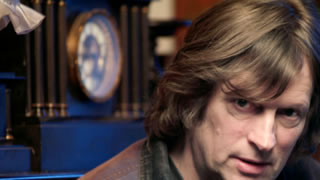
De Amerikaanse dichter en schrijver Edward Estlin Cummings werd geboren in Cambridge, Massachusetts op 14 oktober 1894. Zie ook mijn blog van 14 oktober 2008 en ook mijn blog van 14 oktober 2009 en ook mijn blog van 14 oktober 2010.


"Gay" is the captivating cognomen


 "Gay" is the captivating cognomen of a Young Woman of cambridge,

mass.

to whom nobody seems to have mentioned ye olde freudian wish;

when i contemplate her uneyes safely ensconced in thick glass

you try if we are a gentleman not to think of(sh)


the world renowned investigator of paper sailors--argonauta argo

harmoniously being with his probably most brilliant pupil mated,

let us not deem it miraculous if their(so to speak)offspring has that largo

appearance of somebody who was hectocotyliferously propagated


when Miss G touched n.y. our skeleton stepped from his cupboard

gallantly offering to demonstrate the biggest best busiest city

and presently found himself rattling for that well known suburb

the bronx(enlivening an otherwise dead silence with harmless quips, out

of Briggs by Kitty)


arriving in an exhausted condition, i purchased two bags of lukewarm

peanuts

with the dime which her mama had generously provided(despite courte-

ous protestations)

and offering Miss Gay one(which she politely refused)set out gaily for

the hyenas

suppressing my frank qualms in deference to her not inobvious perturba-

tions


unhappily, the denizens of the zoo were that day inclined to be uncouthly

erotic

more particularly the primates--from which with dignity square feet

turned abruptly Miss Gay away:

"on the whole"(if you will permit a metaphor savouring slightly of the

demotic)

Miss Gay had nothing to say to the animals and the animals had nothing

to say to Miss Gay


during our return voyage, my pensive companion dimly remarlted some-

thing about "stuffed

fauna" being "very interesting" . . . we also discussed the possibility of

rain. . .

E distant proximity to a Y.W.c.a. she suddenly luffed

--thanking me; and(stating that she hoped we might "meet again

sometime")vanished, gunwale awash. I thereupon loosened my collar

and dove for the nearest l; surreptitiously cogitating

the dictum of a new england sculptor(well on in life)re the helen moller

dancers, whom he considered "elevating--that is, if dancing CAN be ele-

vating"


Miss(believe it or)Gay is a certain Young Woman unacquainted with the

libido

and pursuing a course of instruction at radcliffe college, cambridge, mass.

i try if you are a gentleman not to sense something un poco putrido

when we contemplate her uneyes safely ensconced in thick glass


1011821-d438fb9cc1bfb0a28bb7f65be5c7f53d.jpg
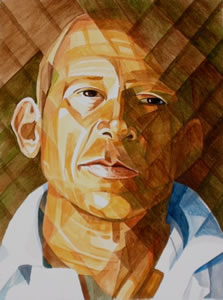
E. E. Cummings (14 oktober 1894 - 3 september 1962)

Portret door John Bedford


De Hongaarse schrijver Péter Nádas werd geboren op 14 oktober 1942 in Boedapest. Zie ook mijn blog van 14 oktober 2008 en ook mijn blog van 14 oktober 2009 en ook mijn blog van 14 oktober 2010.


Uit: Parallel Stories  (Vertaald door Imre Goldstein)


„They quietly blamed themselves, knowing that every word they now spoke was only making things worse, and that if it was so, it was better to be silent or to be blatantly conversational. Every word came to have a curious, sharp edge. Yet they were thinking about two different things and were genuinely not blaming the other. They could not mention what was preoccupying them, as they did not want to make things even worse. They were looking at each other. There was no trace of love or affection left in those faces. Motionless water. They both felt they had behaved scandalously in the last hours, their frivolity was scandalous and it made no sense to add to the scandal. Neither could account for the way they had behaved.
It is no wonder that each had scared off the other, pointlessly and unforgivably. They had talked too much, been too clever. Exposed themselves and betrayed the other they had loved.
What had made them so vulgar and shameless?
Yet, the people sitting and dancing around them had the impression that these two, sitting in the pool of light around the piano, had now irrevocably broken with each other. Inwardly they were examining the history of their relationship and savoured its scandalous nature.
Not only did they look at each other with indifference – accompanied by the sounds of the drums and the piano –, their entire emotional life underwent a change. Outside, in the wind, they had still felt the devastating power of their freedom, but indoors, under each other’s gaze they lost their independent personal existence.

They suffered no lapse of self-discipline, that was all right, they kept everything properly under control, but leaning over their neutralised gazes and indifferent expressions all the flavours and signals of their being were reserved for each other.“


1011821-8ba52a7fb91cbad8d28a543210a76b1f.jpg
Péter Nádas (Boedapest,14 oktober 1942)


De Amerikaanse dichteres, essayiste, critica en feministe
Katha Pollitt werd geboren op 14 oktober 1949 in New York. Zie ook mijn blog van 14 oktober 2008 en ook mijn blog van 14 oktober 2009 en ook mijn blog van 14 oktober 2010.


Uit: Talk the Talk, Walk the SlutWalk


„And what do older feminists say? Frankly, I expected a lot more griping. Naturally, there was some, most vigorously from the antiporn scholar Gail Dines (Pornland), who sees SlutWalkers as man-pleasers embracing a false Girls Gone Wild “empowerment.” But mostly, feminists of all ages are cheering from the sidelines. Apparently feminists have a sense of humor after all and grasp the concepts of irony, parody and appropriation. Further proof that the evergreen narrative about feminist generation wars tends to fade away whenever feminists actually get out and do something.

Much of the media criticism of SlutWalk centers around the notion that its central purpose is to reclaim the word “slut.” I have my doubts that “slut” is ever going to be a compliment, since its history has always been negative and associated with uncleanness, whether literal or figurative (originally, a slut was a dirty kitchen maid). But who knows? Political struggles have affected language in unexpected ways before: “queer” and “gay,” once slang, are now standard; “black” used to be crude and “negro” and “colored” polite; “redneck,” once dismissive, is now a badge of pride; “kike” may be unredeemable, but there’s a Jewish magazine called Heeb. Maybe someday people will get it through their heads that sexually active females are not demons, morons, destroyers of men or fair game for rapists, and “slut” will either fade from the language or mean something else, like “woman who sleeps with people she wants to sleep with, and only those people.”


 1011821-ffa0c2716b487d53c9e2e760f77bfcf9.jpg

Katha Pollitt (New York,14 oktober 1949)


De Nederlandse schrijver Daniël Rovers werd geboren in Zelhem op 14 oktober 1975. Zie ook mijn blog van 14 oktober 2010.


Uit: Walter


“Het licht viel van boven op de gestuukte witte muur van de gang. Stappen tellen terwijl de druppels drogen met elke pas die je doet. De buitendeur klemde op de drempel, het hout kuchte waar het tegen steen werd gedrukt. Buitenlucht. Walter ademde in, hij rook het gras, een zweem kalverenmest, de wol van het grijze vest.
Het erf liep hij af tot aan de Hespelaar. Daar stond Bertus van Leijsen, met voor hem Bertus Junior, die de melkkar trok. Het beest liet de kop hangen, zijn tong droop uit zijn bek. De vacht van de hond was sleets geworden op de plekken waar de tuigriemen om zijn nek spanden. Junior kwijlde, Van Leijsen sprak: ‘Goeiemorge Walter, gaode gij zo vroeg al nar de kerk?’
Walter zette een hand in zijn zij en antwoordde: ‘De vroegmis vandaag, Van Leijsen.’
Van Leijsen haalde zijn neus op. ‘Jaja, nog efkes is ’t hard werke, mar dan kunde ’t er laoter ook goe van nemen.’
Waarvan zou hij het goed moeten nemen? Van Leijsen legde een hand op zijn schouder, als om hem in de aarde langs de rand van de weg te poten. ‘Ge wit wel wa da’k bedoel. Het goeie Roomse leven. Over een tien jaor is ’t al zover. Elken avend wijn uit Frankrijk drinken in de salon van de pastorie. En de bedienden die schenken ’t in vor zulliejen herder.’
Hij beaamde: ‘Dat is het goede leven, Van Leijsen.’
‘Da is ’t beste leven, jongen. Maar eerst op studie hé, en da zal nie gemakkelik zin. Da witte gij wel, hè?’
Dit wist Walter wel: dat Van Leijsen in de oorlog te veel aardappelschillen had gegeten en daarom ook de huid van een aardappel had gekregen, en dat hij in de zomer zijn zoon Krist, die er vier dagen over had gedaan om geboren te worden, aan een touw in de voortuin vastbond zodat het menneke niet de straat op kon.
Buurman Van Leijsen bleef aandringen op zijn aanwezigheid: ‘Een zoon aon ’t altaor en land aon d’Moerdaik, da is ’t beste wa d’r is.’ Hij knikte van ja, ja en nogmaals ja, haalde zijn neus op, verzamelde het slijm in zijn mond en tufte de fluim op de klinkers. Er zat groen en een zweem van roze in.
Walter deed een pas opzij, ging bijna op de voorpoot van Junior staan. De hond hapte naar het scheenbeen van zijn belager. Kaakgeklak. Uit de bek van het beest kwam putlucht zetten.”


 1011821-058c7a1bd47669b4deff1289e591a8d9.jpg

Daniël Rovers (Zelhem, 14 oktober 1975)


Zie voor nog meer schrijvers van de 14e oktober ook mijn vorige blog van vandaag.
Geschreven door Romenu om 19:25 Reageer op dit bericht

Katherine Mansfield, Margarete Susman, Stefan Żeromski

De Nieuw-Zeelandse schrijfster Katherine Mansfield werd geboren op 14 oktober 1888 in Wellington. Zie ook mijn blog van 14 oktober 2010 en eveneens alle tags voor Katherine Mansfield op dit blog.


Uit: The Storyteller (Biografie door Kathleen Jones)


„The first thing you notice in Wellington is the wind. A full southerly buster was blowing as I drove in around the bays of the harbour, hurling the waves onto the rocks. At the hotel on Tinakori Road, shutters slapped and banged in a crazy percussion, just as Katherine described in one of her earliest stories, ‘The Wind Blows’. I recognised the way it blew the stinging dust in waves, in clouds, in big round whirls, heard the ‘loud roaring sound’ from the tree ferns and the pohutukawa trees in the botanic garden, the clanking of the overhead cables for the trolley buses. Clinging to the car door to steady myself, the street map levitating from my grasp, I experienced the exactness of Katherine’s images – ‘a newspaper wagged in the air like a lost kite’ before spiking itself onto a pine tree; sentences blew away ‘like little narrow ribbons’.

Tinakori Road, where Katherine was born and where her father occupied progressively larger houses as his status rose, runs along a steep hillside with spectacular views of the city. Above it, a tree- clad slope climbs upwards towards the ridge and below it, houses stagger downhill towards the brief fringe of level ground that edges the circular bay, enclosed by hills. The street follows a major fault line in an area that remains seismically active, and tremors were part of Katherine’s childhood experience.

Katherine loved the view from Tinakori Road, writing in her youthful notebook how ‘all in a fever myself I rushed out of the stifling house . . . on to the gorse golden hills. A white road round the hills – there I walked. And below me, like a beautiful Pre- Raphaelite picture, lay the sea and the violet mountains. The sky all a riot of rose and yellow – amethyst and purple. At the foot of the hill – the city – but all curtained by a blue mist that hung over it in pale wreaths of Beauty. Though engulfed by the expanding capital, the old houses renumbered to accommodate the new, Tinakori Road has changed little in a hundred and twenty years. It is still lined by brightly painted wooden houses, and you can have a drink in the local working men’s pub, where Katherine’s inscrutable face looks down from the wall.“


 1011812-188a3f041564e2f3615003b5f0d553d9.jpg

Katherine Mansfield (14 oktober 1888 – 9 januari 1923)


De Duitse dichteres, schrijfster en filosofe Margarete Susman werd geboren op  14 oktober 1872 in Hamburg. Zie ook mijn blog van 14 oktober 2009 en ook mijn blog van 14 oktober 2010.


Uit: Die Geistige Gestalt Georg Simmels


„Wenn wir aus unserer erregten Zeit auf die Spanne zurückblicken, in der eine Persönlichkeit und eine Philosophie wie die Simmels möglich waren, wenn wir bedenken, was alles an Katastrophen, Entdeckungen, Erkenntnissen zwischen seiner Zeit und der unseren liegt, wenn wir die heutigen Biographien bedeutender Menschen mit denen aus der Zeit Simmels vergleichen, so begreifen wir, wie schwer es ist, dem heutigen Menschen noch ein zugängliches Bild seiner geistigen Persönlichkeit zu geben. Immer kann ja die geistige Persönlichkeit, die Verbindung von äußerem Schicksal und innerem Sein, nur innerhalb ihrer geschichtlichen Stunde begriffen werden, und ihre Bedeutung wird sich daran erweisen, wie weit sie, zwar immer in ihr haftend, doch diese Stunde überschreitet.

            Simmel ist uns durch eine Fülle reifer Einsichten, Einblicke in seine eigene und auch schon Voraussichten in unsere Zeit ein lebendig Gegenwärtiger und doch auch durch jene ungeheure Entwicklung einer veränderten Epoche schon wieder weit von uns entfernt. Freilich ist auch von der Denkergeneration, der er angehörte, der philosophischen Renaissance, an der er mitgewirkt hat, wohl keiner so schwer in seiner gesamten Problemstellung zu verstehen. Dies liegt sowohl an der großen Vielfalt seiner Probleme, den zahlreichen, ganz divergenten Punkten, an denen er ansetzt, wie an der Eigentümlichkeit seines denkerischen Wesens überhaupt. Er erscheint, trotz seiner Beziehung zu zahlreichen Menschen, als der Einsamste unter all jenen Denkern.

            Wenn ich ein Bild von ihm entwerfen soll, so sehe ich ihn in zwei verschiedenen Gestalten: Die eine ist das Bild eines antiken Weisen, wie es aus Simmels Spätzeit vorliegt. Ein zeitloses Bild, das sehr deutlich seine geistige Persönlichkeit widerspiegelt. Die andere ist die von Zeit und Raum bedingte biographische, wie sie uns aus seinem Leben und Werk entgegentritt.

            Ihm selbst ist das Biographische dem Werk gegenüber immer als unwichtig erschienen. Die Geschichte der Philosophie ist ihm die Geschichte großer philosophischer Persönlichkeiten, wobei das Biographische derart ins Gedankliche umgeschmolzen sein muß, „daß es von seiner ursprünglichen Qualität als Erlebtes nichts mehr erkennen läßt“. Das Biographische als Rohstoff ist nach ihm für die Darstellung der Philosophie ohne Wert.“


1011812-6cf2f152fe6e23cb98ec80e97ae70490.jpg
Margarete Susman (14 oktober 1872  - 16 januari 1966)


De Poolse schrijver Stefan Żeromski werd geboren op 14 oktober 1864 in Strawczyn in de buurt van Kielce. Zie ook mijn blog van 14 oktober 2006 en ook mijn blog van 14 oktober 2010.


Uit: Forebodings (Vertaald door Marie Busch)


„In the carriage were a number of poor people, Jews, women with enormously wide cloaks, who had elbowed their way to their seats, and sat chattering or smoking.
The student stood up and looked out of the window without seeing. Lines of sparks like living fire passed by the grimy window-pane, and balls of vapour and smoke, resembling large tufts of wool, were dashed to pieces and hurried to the ground by the wind. The smoke curled round the small shrubs growing close to the ground, moistened by the rain in the valley. The dusk of the autumn day spread a dim light over the landscape, and produced an effect of indescribable melancholy. Poor
boy! Poor boy!
The loneliness of boundless sorrow was expressed in his weary look as he gazed out of the window. I knew that the pivot on which all his emotions turned was the anxiety of uncertainty, and that beyond the bounds of conscious thought an unknown loom was weaving for him a shadowy thread of hope. He saw, he heard nothing, while his vacant eyes followed the balls of smoke. As the train travelled along, I knew that he was miserable, tired out, that he would have liked to cry quietly.
The thread of hope wound itself round his heart: Who could tell? perhaps his father was recovering, perhaps all would be well?
Suddenly (I knew it would come), the blood rushed from his face, his lips went pale and tightened; he was gazing into the far distance with wide-open eyes. It was as if a threatening hand, piercing the grief, loneliness and dread that weighed on him, was pointing at him, as if the wind were rousing him with the cry: 'Beware!' His thread of hope was strained to breaking-point, and the naked truth, which he had not quite faced till that minute, struck him through the heart like a sword.
Had I approached him at that instant, and told him I was an omniscient spirit and knew his village well, and that his father was not lying dead, he would have fallen at my feet and believed, and I should have
done him an infinite kindness.
But I did not speak to him, and I did not take his hand. All I wished to do was merely to watch him with the interest and insatiable curiosity which the human heart ever arouses in me.“


 1011812-3463cbf831f8eea0afce481840af6224.jpg

Stefan Żeromski (14 oktober 1864 - 20 november 1925)

Geschreven door Romenu om 19:24 Reageer op dit bericht

Herman Franke, Colin Channer, Migjeni, Arna Wendell Bontemps, Conrad Richter, Edwina Currie, Peter Buwalda

De Nederlandse schrijver Herman Franke werd geboren op 13 oktober 1948 in Groningen. Zie ook mijn blog van 13 oktober 2010 en eveneens alle tags voor Herman Franke op dit blog.


Uit: De ironie van de romantiek (Kellendonk lezing 2000)

`Er waren eens een vader en een zoon'. Zo begint een van de ontroeren­dste verhalen die ik ken. Het gaat over de dagelijkse omgang tussen een vader en een zoon. Zij voeren opgewekte, leven­dige gesprekken met elkaar, hoewel ze erg zwaarmoedig zijn. Beiden geloven dat ze schuld dragen aan het verdriet van de ander, zonder dit ooit uit te spreken. Maar heel af en toe blijft de vader voor de zoon staan, laat een bekom­mer­de blik op hem rusten en zegt: arm kind, jij leeft in een stille ver­twijfe­ling. Dan sterft de vader. En de zoon ziet veel, hoort veel, beleeft veel en wordt be­proefd in velerlei verzoe­kingen, maar er is maar één ding waar hij naar verlangt, maar één ding dat hem zou kunnen ontroeren: dat zijn die woor­den, en de stem van zijn vader die ze spreekt. En de enige troost die hij op zijn eigen oude dag heeft is dat zijn stem zo sterk op die van zijn vader is gaan lijken, dat hij tot zich­zelf kan zeg­gen: arm kind, jij leeft in een stille vertwijfe­ling. De schrij­ver van dit verhaal is de Deense filosoof Soren Kierkegaard die leefde in de eerste helft van de negentiende eeuw. Hij zag eruit als Jannes van der Wal, was zeker zo excentriek, werd op straat in Kopenhagen uitgelachen om zijn spillebenen en bouwde een bizar maar indruk­wekkend oeuvre op zijn existen­tieel getob over de verbreking van zijn verlo­ving met de 18-jarige Regine Olsen. Dat was in 1841 nog iets waar­van iedereen schande sprak. Op internet zijn portret­jes van Regine te vinden. Het is een wreedheid van de tech­nische voor­uit­gang dat honderden mil­joe­nen mensen nu kunnen zien hoe lief het meisje eruit zag dat hij hardhandig maar ook vol rijk gescha­keerd schuldge­voel van zich afstootte, nadat genade­loos zelfon­derzoek hem tot de conclusie had ge­bracht dat hij niet voor het huwe­lijk geschikt was en een andere taak had te volbren­gen, te weten het eenzaam leren leven met ver­twij­feling en angst en het zoeken naar een reli­gieuze uitweg, zeg maar troost.

Het verhaal over die vader en zoon is opgenomen in zijn Stadia op de levensweg dat in 1845 verscheen. In mijn herinne­ring was het veel langer dan de ene bladzijde die het in werke­lijkheid beslaat. Het is zo'n verhaal dat pas in de ver­beelding van de lezer een echt verhaal wordt, wat misschien wel de mooiste verhalen zijn. Ik las het bijna tien jaar geleden. Het was een zomerse dag en ik zat drie hoog achter op mijn balkon onder een bont­ge­kleurde para­sol.“


 1011204-3754d556d77584ba192d275672d42ee3.jpg

Herman Franke (13 oktober 1946 – 14 augustus 2010)


De Jamaicaanse schrijver Colin Channer werd geboren op 13 oktober 1963 in Kingston. Zie ook mijn blog van 13 oktober 2008 en ook mijn blog van 13 oktober 2009 en ook mijn blog van 13 oktober 2010


Uit: Waiting in Vain


„He didn't know where he'd take it. He didn't understand poetry really. He'd never studied it. He believed in it as an act of faith.

Bird. He began to think of Ian now. They used to call him Bird for his hawkish nose and pelican legs. What will it be like to see him again? He checked his watch. It was eleven. Air Jamaica was leaving at three; they were always on time. He would be in New York at seven.

Blanche came out and joined him. She was wearing one of his shirts. It was a soft tangerine with a broad camp collar and flaps on the pleated pockets. A few months short of fifty, she moved with the angular vim of a teenager. She leaned against the banister, a Rothman's between her lips.

Age had refined her beauty, streaking her hair silver and adding lines and accents to the poetry of her face--commas that made him pause at her eyes, dashes that framed her mouth. She had brows like Frida Kahlo, and lips like Chaka Khan.

"New York," she began. "How long are you going to be there?"

"Just the weekend," he said.

"Then you go to London. And you're coming back when?"

"The end o' August."

"Three months."

As she watched him pick up the mango, she marveled anew at his face. Like reggae, it was a New World hybrid, a genetic melange of bloods that carried in their DNA memories of the tribes that fought and fucked on the shores of the Americas--Chinese and Arab, English and Scotch from his father's side; Dutch and Portuguese Sephardic Jew from his mother's. But the final combination--brown like sun-fired clay; cheeks high and spread apart; nose narrow with a rounded tip; lips wide and fluted--was a vibrant African presence, Yoruba and Akan.

Last night was wrong, she said to herself. But she'd been holding back for months now . . . had even thought she would get through it. But last night, knowing he'd be leaving today just made her desperate. Or was it angry? Three months is a long time for a woman, she thought, especially with a man like this, one who makes love from the inside out--from the core of her soul where she hides her fears, to the taut muscles on the back of her neck. And the way he was eating that mango--the flesh becoming slush and dripping down his arm.“


 1011204-27fc32b37f965c121fea8f1ac0c75260.jpg

Colin Channer (Kingston, 13 oktober 1963)


De Albanese dichter Migjeni (eigen. Millosh Gjergj Nikolla) werd geboren op 13 oktober 1911 in Shkodra. Zie ook mijn blog van 13 oktober 2008 en ook mijn blog van 13 oktober 2009 en ook mijn blog van 13 oktober 2010


The themes


Is there the theme of a poem among fading memories,
Among the happy memories of childhood innocence,
When the heart was full of worldly pleasures,
Desires, hopes and ever-sweet dreams?
Is there the fiery theme of a poem of love
Among the lingering memories of eager youth,
With sonorous rhymes and ardent vows,
Full of the lust for life and shouts of mirth?


On the pallid faces of fallen women
Loitering in doorways to sell themselves,
On their faces a tragic poem is carved
In tears and grief that rise to the heavens,


In dark corners where derision reigns
In disgust, and the insane jeer
At their wives and children,
There in revolt great themes await creation.


In hidden corners where fear dwells
And passivity lurks to smother life,
There in betrayal does the theme take its source
And with it, the poet pens his verse.


Throughout man's life do themes of all kinds
Come and go. Now the ultimate of themes has come,
Frightening in our fantasy - the paling of the face,
An ominous shadow, and the death knell tolls.


Vertaald door Robert Elsie


 1011204-f8d06f12e821c886b2505d092aa04da8.jpg

Migjeni (13 oktober 1911 – 26 augustus 1938)

In 1932 


De Amerikaanse dichter en schrijver Arna Wendell Bontemps werd geboren op 13 oktober 1902 in Alexandria in Louisiana. Zie ook mijn blog van 13 oktober 2008 en ook mijn blog van 13 oktober 2009 en ook mijn blog van 13 oktober 2010


God Give to Men


God give the yellow man
an easy breeze at blossom time.
Grant his eager, slanting eyes to cover
every land and dream
of afterwhile.


Give blue-eyed men their swivel chairs
to whirl in tall buildings.
Allow them many ships at sea,
and on land, soldiers
and policemen.


For black man, God,
no need to bother more
but only fill afresh his meed
of laughter,
his cup of tears.


God suffer little men
the taste of soul's desire.


 1011204-815b8e2731b11acb8f04d4edfb763a60.jpg

Arna Wendell Bontemps (13 oktober 1902 – 4 juni 1973)


De Amerikaanse schrijver Conrad Richter werd geboren op 13 oktober 1890 in Pine Grove, Pennsylvania. Zie ook mijn blog van 13 oktober 2008 en ook mijn blog van 13 oktober 2009 en ook mijn blog van 13 oktober 2010


Uit: The Light in the Forest


"Now go like an Indian, True Son," he said in a low, stern voice. "Give me no more shame."

He left almost at once and the boy heard his footsteps in the leaves. The rustling sound grew farther and farther away. When he sat up, his father was gone. But never before or since was the place his father was going back to so clear and beautiful in the boy's mind. He could see the great oaks and shiver-bark hickories standing over the village in the autumn dusk, the smoke rising from the double row of cabins with the street between, and the shining, white reflection of the sky in the Tuscarawas beyond. Fallen red, brown and golden leaves lay over roofs and bushes, street and forest floor. Tramping through them could be made out the friendly forms of those he knew, warriors and hunters, squaws, and the boys, dogs and girls he had played with. Through the open door of his father's cabin shone the warm red fire with his mother and sisters over it, for this was the beginning of the Month of the First Snow, November. Near the fire heavy bark had been strewn on the ground, and on it lay his familiar bed and the old worn half-grown bearskin he pulled over himself at night. Homesickness overwhelmed him, and he sat there and wept“.


1011204-0e00eaeb225890c809f31d6392e82a47.jpg
Conrad Richter (13 oktober 1890 – 30 oktober 1968)

In 1912


Zie voor onderstaande schrijvers ook mijn blog van 13 oktober 2010.


De Britse romanschrijfster en gewezen politica Edwina Currie werd geboren in Liverpool op 13 oktober 1946.


Onafhankelijk van geboortedata:


De Nederlandse schrijver, journalis en redacteur Peter Buwalda werd geboren in Blerick in 1971. Hij was medeoprichter van het tijdschrift WAH WAH. Daarnaast schreef hij essays en verhalen voor tijdschriften als Bunker Hill, De Gids, Hollands Maandblad en Vrij Nederland. In september 2010 debuteerde hij met de roman Bonita Avenue, uitgegeven door De Bezige Bij. Het boek kreeg een nominatie voor de Libris Literatuur Prijs 2011. Ook is hij in de race om de Gouden Strop. Op 22 september 2011 werd bekend dat hij de Academica Debutantenprijs heeft gewonnen.


Uit: Bonita Avenue


“Toen Joni Sigerius hem op een zondagmiddag in 1996 meenam naar de woonboerderij van haar ouders om hem officieel voor te stellen, gaf haar vader hem een hand die hem aan de stevige kant leek. ‘Jij hebt die foto gemaakt,’ zei de man. Of was het een vraag?

    Siem Sigerius was een gedrongen, donkerbehaarde kerel met een stel oren waarnaar je meteen moest kijken; ze waren kroppig, ze leken gefrituurd, en omdat Aaron gejudood had wist hij dat het bloemkooloren waren. Je kreeg ze van stugge mouwen van ruig katoen die er almaar langs schuurden, door de schelpen steeds weer te laten opfrommelen tussen harde lichamen en ruwe matten, er hoopte zich bloed en pus op tussen het kraakbeen en de babyzachte huid. Wie daar niets aan deed bleef zitten met verharde zwellingen en bulten. Aan Aarons eigen hoofd zaten twee doodgewone, ongeschonden perzikoortjes; bloemkooloren waren voorbehouden aan kampioenen, aan monomane kerels die avond aan avond over de tatami schoven. Je moest zo’n kropoor verdienen, er verdwenen manjaren in. Het leed geen twijfel dat Joni’s vader ze als eretekens droeg, als een bewijs van werklust en mannelijkheid. Wanneer Aaron vroeger tijdens toernooien tegenover zo’n geoormerkt dier kwam te staan, sloeg de angst hem om het hart; voor hem was een bloemkooloor aan de einder slecht nieuws, hij was een waardeloze wedstrijdjudoka. Om te verbergen dat hij onder de indruk was, antwoordde hij: ‘Ik maak aan de lopende band foto’s.’

    Sigerius’ oren bewogen kort. Zijn kroezende haar zat viltig kortgeknipt op zijn platte, brede hoofd. Hoewel hij gekleed ging in kostuums of corduroy broeken en poloshirts van Ralph Lauren, de tuniek van de werkgever, van de arrivé, zou je hem op grond van die oren en dat buffelachtige lichaam niet inschalen als iemand die leiding gaf aan een universiteit, laat staan dat je zou geloven dat hij gold als de grootste Nederlandse wiskundige sinds Luitzen Brouwer. Een man met zijn fysiek verwachtte je in de bouw, of ’s nachts aan de snelweg in een fluorescerend hesje achter een bak met teer. ‘Je weet best welke foto ik bedoel,’ zei hij.”


 1011204-8068b911a586c11f1dc893836de800d6.jpg

Peter Buwalda (Blerick, 1971)
Geschreven door Romenu om 18:52 Reageer op dit bericht

Meer van Romenu

↑ Terug naar de berichten