

Naar de inhoud

Romenu

Over literatuur, gedichten, kunst en cultuur
akke.beakke.be

Berichten van 18 oktober 2011 tot 19 oktober 2011

Miguel Ángel Asturias, Leigh Hunt, Adam Lindsay Gordon, Nardo Aluman

De Guatemalteekse schrijver Miguel Ángel Asturias werd geboren op 19 oktober 1899 in Guatemala-Stad.  Zie ook mijn blog van 19 oktober 2010 en eveneens alle tags voor Miguel Ángel Asturias op dit blog.


Navels of Sun and Precious Copals

The little bones of the echo
on the tongue of the Forgetful Emissary.

On the tongue of the Forgetful Emissary,
the message of the Goldthinking-star-gods.

"May the mist rise early,
fragrant with tamarind, poplar, suquinay ,
may it spread its cloths over the words
and may the Four Magicians of the Sky be created
with navels of sun and precious copals.

"May they be of black maize,
maize coiled with sexes and snakes,
their hair, their pupils and their dreams.

"May they be of white maize,
maize coiled with sperm and the moon,
their teeth, the quicklime of their corneas,
their bones and their nails.

"And may their flesh be of yellow maize,
moistened in water sweet
with the night of the star
and skinned with quicklime
in blind boil,
the lime of the eyes
of the Twohanded Tattooer,
the one who was destroyed
along with his raisers of worlds of dream
by the man of mud
who in his turn was annihilated
by fire, the laughter of the stones."

And so was created
the Man-of-Four-Magics,
the one who wears bluegreen feathers
of quetzals and flowers covered with dew,
who illuminates and burns like resinous pine,
who sets things alight
in my country forged of honey.

All was visible, except for the moment
of healing the navels
with webs of tobacco smoke
and placing in their folds,
along with the copals of splendor
and dust of worn-out words,
the magic of the three halves.

By the magic of the three halves,
the half which holds things within
becomes magnetized by the sole presence
of the Man-of-the-Four-Magics,
issues from things and penetrates
the interior of that which completes it,
before restoring it, with an unknown half.

By the magic of the three halves,
there is a half that remains in things,
another that leaves and returns to things
and the unknown half, the one that magic adds.


Vertaald door Robert W. Lebling


 1014890-614928e35ec8e88b28b10625b44d50b7.jpg

Miguel Ángel Asturias (19 oktober 1899 – 9 juni 1974)


De Engelse dichter, schrijver en essayist
James Leigh Hunt werd geboren op 19 oktober 1784 in Southgate, Middlesex. Zie ook mijn blog van 19 oktober 2010 en eveneens alle tags voor Leigh Hunt op dit blog.


A Thought of the Nile


It flows through old hushed Egypt and its sands,

Like some grave mighty thought threading a dream,
And times and things, as in that vision, seem

Keeping along it their eternal stands,--

Caves, pillars, pyramids, the shepherd bands

That roamed through the young world, the glory extreme

Of high Sesostris, and that southern beam,

The laughing queen that caught the world's great hands.


Then comes a mightier silence, stern and strong,

As of a world left empty of its throng,

And the void weighs on us; and then we wake,

And hear the fruitful stream lapsing along

Twixt villages, and think how we shall take

Our own calm journey on for human sake.


Abou Ben Adhem


Abou Ben Adhem (may his tribe increase!)

Awoke one night from a deep dream of peace,

And saw, within the moonlight in his room,

Making it rich, and like a lily in bloom,

An angel writing in a book of gold:—

Exceeding peace had made Ben Adhem bold,

And to the Presence in the room he said

"What writest thou?"—The vision raised its head,

And with a look made of all sweet accord,

Answered "The names of those who love the Lord."

"And is mine one?" said Abou. "Nay, not so,"

Replied the angel. Abou spoke more low,

But cheerly still, and said "I pray thee, then,

Write me as one that loves his fellow men."


The angel wrote, and vanished. The next night

It came again with a great wakening light,

And showed the names whom love of God had blessed,

And lo! Ben Adhem's name led all the rest.


 1014890-0bdfaa36f29d7c24a6834cf85876992c.jpg

Leigh Hunt (19 oktober 1784 – 28 augustus 1859)

Portret door Robert Haydon, National Portrait Gallery, Londen


De Australische dichter Adam Lindsay Gordon werd geboren op 19 oktober 1833 op de Azoren. Zie ook mijn blog van 19 oktober 2008 en ook mijn blog van 18 oktober 2009 en ook mijn blog van 19 oktober 2010


Ars Longa


Our hopes are wild imaginings,

Our schemes are airy castles,

Yet these, on earth, are lords and kings,

And we their slaves and vassals ;

Yon dream, forsooth, of buoyant youth,

Most ready to deceive is,

But age will own the bitter truth,

'Ars longa, vita brevis.'


The hill of life with eager feet

We climbed in merry morning,

But on the downward track we meet

The shades of twilight warning ;

The shadows gaunt they fall aslant ;

And those who scaled Ben Nevis,

Against the mole-hills toil and pant,

'Ars longa, vita brevis.'


The obstacles that barr'd our path

We seldom quail'd to dash on

In youth , for youth one motto hath,

'The will, the way must fashion.'

Those words, I wot, blood thick and hot,

Too ready to believe is,

But thin and cold our blood hath got,

'Ars longa, vita brevis.'


And 'art is long', and 'life is short',

And man is slow at learning ;

And yet by divers dealings taught,

For divers follies yearning,

He owns at last, with grief downcast

(For man disposed to grieve is)—

One adage old stands true and fast,

'Ars longa, vita brevis.'


We journey, manhood, youth, and age,

The matron, and the maiden,

Like pilgrims on a pilgrimage,

Loins girded, heavy laden :—

Each pilgrim strong, who joins our throng,

Most eager to achieve is,

Foredoom'd ere long to swell the song,

'Ars longa, vita brevis.'


At morn, with staff and sandal-shoon,

We travel brisk and cheery,

But some have laid them down ere noon,

And all at eve are weary ;

The noontide glows with no repose,

And bitter chill the eve is,

The grasshopper a burden grows,

'Ars longa, vita brevis.'


The staff is snapp'd, the sandal fray'd,

The flint-stone galls and blisters,

Our brother's steps we cannot aid,

Ah me ! nor aid our sister's :

The pit prepares its hidden snares,

The rock prepared to cleave is,

We cry, in falling unawares,

'Ars longa, vita brevis.'


Oh ! Wisdom, which we sought to win !

Oh ! Strength in which we trusted !

Oh ! Glory, which we gloried in !

Oh ! puppets we adjusted !

On barren land our seed is sand,

And torn the web we weave is,

The bruised reed hath pierced the hand,

'Ars longa, vita brevis.'


We, too, 'Job's comforters' have met,

With steps, like ours, unsteady,

They could not help themselves, and yet

To judge us they were ready ;

Life's path is trod at last, and God

More ready to reprieve is,

They know,who rest beneath the sod,

'Mors grata, vita brevis.'


 1014890-64ff20c50d00e22b830e951af8759674.jpg

Adam Lindsay Gordon (19 oktober 1833 – 24 juni 1870)

Beeld in Melbourne


De Surinaamse schrijver Nardo Aluman (eig. Ronald Renardo Aloema) werd geboren in Christiaankondre op 19 oktober 1946. Zie ook mijn blog van 19 oktober 2008 en ook mijn blog van 18 oktober 2009 en ook mijn blog van 19 oktober 2010


Uit: Julawai / De strijd tussen goed en kwaad


„Op een dag gingen Julawai, zijn vrouw en hun kinderen voor een paar dagen naar familie en vrienden verder de rivier op. Volgens zeggen woonden Julawai en zijn gezin even voorbij het dorp Bigiston aan de Marowijnerivier.

Vroeger was het de gewoonte dat men van zulke tochten gebruik maakte om voedsel te vergaren voor de komende tijd. Julawai nam dus zijn pijl en boog en hengelstokken mee.

In een opgewekte stemming voeren zij in hun korjaal de rivier op. Toen ze bij een kreek aankwamen, besloot Julawai daar een paar dagen te blijven om te vissen en te jagen. Twee dagen waren genoeg om een mutete (draagmand) vol vlees en vis te hebben.

Hierna werd de tocht voortgezet. Rustig pagaaiend bezong Julawai zijn successen bij het jagen en vissen. Zijn mooie gezang weerkaatste tegen het gordijn van het oerwoud en het wateroppervlak. Hij zong dat de successen van het leven afhangen van de wil van de natuur. Zijn vrouw en kinderen waren net als hij blij en gelukkig.

Het dorp waar ze naar toe gingen heette Tolenga. Het was een bekend dorpje van goudzoekers en balatableeders (rubbertappers). Het was ook bekend door de bijzondere gaven van enkele oudere bewoners. Naar men zegt, waren de mensen van Tolenga afkomstig uit Brazilië en hadden de ouderen hun kennis vandaar meegenomen.

Een van hen, een vrouwelijke pyjai (geestelijk leider), was beroemd als vroedvrouw. Een ongeboren kind dat moeilijk lag, kon door deze vrouw in de baarmoeder elastisch gemaakt worden, door middel van medicinale kruiden.

Een andere pyjai, een oude man die Byjai (leermeester) werd genoemd, kon urenlang onder water wandelingen maken. Als hij naar een ander dorp wilde reizen, deed hij dit onder water. Hij zei altijd tegen zijn vrouw en kinderen dat hij veel vrienden had in het water, in de rivier, die hem met raad en daad bijstonden. Van heinde en ver kwamen zieke mensen voor genezing bij hem. In moeilijke gevallen zei hij tegen zijn patiënten dat ze een paar dagen bij hem thuis moesten wachten om hem de tijd te geven zijn vrienden van de rivier te raadplegen. Als hij terugkwam, was de patiënt meestal al genezen, wat zijn vrienden van de rivier hadden bewerkstelligd.“


 1014890-6c1b2570d0cd008ff9f82671c5ac8507.jpg

Nardo Aluman (Christiaankondre, 19 oktober 1946)
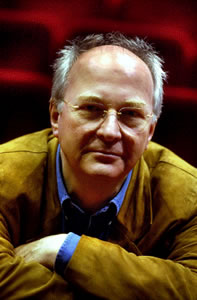


Zie voor nog meer schrijvers van de 19e oktober ook mijn vorige blog van vandaag.
Geschreven door Romenu om 18:49 Reageer op dit bericht

Philip Pullman, Andrew Vachss, Fannie Hurst, John le Carré

De Britse schrijver Philip Pullman werd geboren op 19 oktober 1946 in Norwich als zoon van een luchtmachtofficier. Zie ook mijn blog van 19 oktober 2008 en ook mijn blog van 18 oktober 2009 en ook mijn blog van 19 oktober 2010


Uit: The Amber Spyglass


„Ama climbed the path to the cave, as she'd done for many days now, bread and milk in the bag on her back, a heavy puzzlement in her heart. How in the world could she ever manage to reach the sleeping girl? Would the woman never leave the cave for more than a few minutes?
Ama came to the rock where the woman had told her to leave the food since she wasn't allowed in the cave anymore. She put down the bag, but she didn't go straight home; she climbed a little farther, up past the cave and through the thick rhododendrons, and farther up still to where the trees thinned out and the rainbows began.
This part of the valley was where the streams and cascades ran most confusingly: shafts of green-white water would sink into potholes and emerge a little lower down, or gush upward in splintered fountains, or divide into myriad streamlets, or swirl round and round trapped in a whirlpool. When the world was frozen, spears and shelves and columns of glassy ice grew over every surface, and under it all, the water could still be heard gushing and tinkling, and spray still escaped to the air for the rainbows to form.
Ama and her daemon climbed up over the rock shelves and around the little cataracts, past the whirlpools and through the spectrum-tinted spray, until her hair and her eyelids and his squirrel fur were beaded all over with a million tiny pearls of moisture. The game was to get to the top without wiping your eyes, despite the temptation, and the sunlight sparkled and fractured into red, yellow, green, blue, and every color between right in front of Ama's eyes, but she mustn't wipe her hand across to see better until she got right to the top, or the game would be lost.
Kulang, her daemon, sprang to a rock near the top of the little waterfall, and she knew he would turn at once to watch and make sure she didn't brush the moisture off her eyelashes - except that he didn't.”


1014887-658ff4d923b5eb2f8c3a8781e4f41dc4.jpg
Philip Pullman
(Norwich, 19 oktober 1946)


De Amerikaanse schrijfster Fannie Hurst werd geboren op 19 oktober 1889 in Hamilton, Ohio. Zie ook mijn blog van 19 oktober 2008 en ook mijn blog van 18 oktober 2009 en ook mijn blog van 19 oktober 2010


Uit: The Vertical City


„By that same architectural gesture of grief which caused Jehan at Agra to erect the Taj Mahal in memory of a dead wife and a cold hearthstone, so the Bon Ton hotel, even to the pillars with red-freckled monoliths and peacock-backed lobby chairs, making the analogy rather absurdly complete, reared its fourteen stories of “elegantly furnished suites, all the comforts and none of the discomforts of home.”

A mausoleum to the hearth. And as true to form as any that ever mourned the dynastic bones of an Augustus or a Hadrian.

An Indiana-limestone and Vermont-marble tomb to Hestia.

All ye who enter here, at sixty dollars a week and up, leave behind the lingo of the fireside chair, parsley bed, servant problem, cretonne shoe bags, hose nozzle, striped awnings, attic trunks, bird houses, ice-cream salt, spare-room matting, bungalow aprons, mayonnaise receipt, fruit jars, spring painting, summer covers, fall cleaning, winter apples.

The mosaic tablet of the family hotel is nailed to the room side of each door and its commandments read something like this:

One ring: Bell Boy.

Two rings: Chambermaid.

Three rings: Valet.

Under no conditions are guests permitted to use electric irons in
rooms.

Cooking in rooms not permitted.

No dogs allowed.

Management not responsible for loss or theft of jewels. Same can be
deposited for safe-keeping in the safe at office.

Our famous two-dollar Table d’Hote dinner is served in the Red
Dining Room from six-thirty to eight. Music.

It is doubtful if in all its hothouse garden of women the Hotel Bon Ton boasted a broken finger nail or that little brash place along the forefinger that tattles so of potato peeling or asparagus scraping.“


 1014887-fc83d45ca2ef5e2fffb3b668d522ec93.jpg

Fannie Hurst (19 oktober 1889 – 23 februari 1968)


De Amerikaanse schrijver Andrew Vachss werd geboren op 19 oktober 1942 in New York. Zie ook mijn blog van 19 oktober 2008 en ook mijn blog van 18 oktober 2009 en ook mijn blog van 19 oktober 2010


Uit: Flood


„The outside of Flood's studio was deserted, no action in the halls. I rang for the freight elevator and went to the stairs when I heard it start to move. Checked the elevator entrance, nobody around. The Plymouth was sitting untouched where I'd left it. I didn't expect anything else—any fool who tried to take off the tires would have to be wearing razor-proof gloves, for openers.

I got back to the office just as the sun was breaking over the Hudson. A few solitary men were standing on the piers with fishing tackle, setting up for the day. The fish in the Hudson aren't much to look at, never grow too big or have bright colors. But the guys who fish down there tell me they put up a hell of a fight. I figured that any fish who could survive the Hudson River would have to be tough, like a dog raised in the pound. Or a kid raised by the State.

I put the car away, making a mental note to do some cosmetic surgery on it before this case with Flood made it too visible. Went upstairs, deactivated everything, and let myself in. Pansy gave me a halfhearted growl just to let me know she was on the job, then charged over, wagging her stump of a tail. Even without the security systems I knew there hadn't been any visitors. Pansy was cut from the same cloth as my old Doberman, Devil, and nobody would get in here without war breaking loose.

That had happened once, and it gave Blumberg his big chance to act like a real lawyer. I was hiding a certain gentleman in my old apartment. He told me people were looking for him, but said nothing about those people wearing blue coats and badges instead of business suits. Anyway, while I was out trying to square some other beef, the cops arrived and decided to serve a Smith and Wesson warrant on my premises. They smashed in the door, and Devil met them head on.“


1014887-f52ac532e80709998d3846cdb75c3598.jpg
Andrew Vachss (New York, 19 oktober 1942)


De Britse schrijver John le Carré werd geboren op 19 oktober 1931 in Poole, Dorset, Engeland. Zie ook mijn blog van 19 oktober 2006 en ook mijn blog van 18 oktober 2009 en ook mijn blog van 19 oktober 2010


Uit: Our Kind of Traitor


„The stadium is erupting.

First Robin Soderling, then Roger Federer looking as becomingly modest and self-assured as only God can. Perry is craning forward, lips pressed tensely together. He’s in the presence.

Warm-up time. Federer mis-hits a couple of backhands; Soderling’s forehand returns are a little too waspish for a friendly exchange. Federer practises a couple of serves, alone. Soderling does the same, alone.

Practice over. Their jackets fall off them like sheaths from swords. In the pale blue corner, Federer, with a flash of red inside his collar and a matching red tick on his headband. In the white corner, Soderling, with phosphorescent yellow flashes on his sleeves and shorts.

Perry’s gaze strays back to the smoked windows, so Gail’s does too. Is that a cream-coloured blazer she sees with a gold anchor on the pocket, floating in the brown mist behind the glass? If ever there was a man not to get into the back of a taxi with, it’s Signor Emilio dell Oro, she wants to tell Perry.

But quiet: the match has begun and to the joy of the crowd, but too suddenly for Gail, Federer has broken Soderling’s serve and won his own. Now it’s Soderling to serve again. A pretty blonde ballgirl with a ponytail hands him a ball, drops a bob, and canters off again. The linesman howls as if he’s been stung. The rain’s coming on again.

Soderling has double-faulted; Federer’s triumphal march to victory has begun. Perry’s face is lit with simple awe and Gail discovers she is loving him all over again from scratch: his unaffected courage, his determination to do the right thing even if it’s wrong, his need to be loyal and his refusal to be sorry for himself. She’s his sister, friend, protector. A similar feeling must have overtaken Perry, for he grasps her hand and keeps it. Soderling is going for the French Open. Federer is going for history and Perry is going with him. Federer has won the first set 6-1. It took him just under half an hour.“


 1014887-193aa23684e0443403ba7516f209a9b4.jpg

John le Carré (Poole, 19 oktober 1931)

Geschreven door Romenu om 18:42 Reageer op dit bericht

Man Booker Prize voor Julian Barnes

Man Booker Prize voor Julian Barnes


De Engelse schrijver Julian Barnes heeft de Britse literatuurprijs Man Booker Prize 2011 gewonnen. Hij kreeg de prijs voor zijn boek 'The Sense of an Ending'. De Man Booker Prize is een van de belangrijkste onderscheidingen in de Engelstalige literatuur. De prijs wordt toegekend aan het beste Engelstalige fictiewerk uit het Gemenebest, Ierland en Zimbabwe. Julian Barnes werd geboren op 19 januari 1946 in Leicester. Zie ook alle tags voor Julian Barnes op dit blog.


Uit: The Sense of an Ending


„I remember, in no particular order:

– a shiny inner wrist;

– steam rising from a wet sink as a hot frying pan is laughingly tossed into it;

– gouts of sperm circling a plughole, before being sluiced down the full length of a tall house;

– a river rushing nonsensically upstream, its wave and wash lit by half a dozen chasing torchbeams;

– another river, broad and grey, the direction of its flow disguised by a stiff wind exciting the surface;

– bathwater long gone cold behind a locked door. This last isn’t something I actually saw, but what you end up remembering isn’t always the same as what you have witnessed.
 
We live in time – it holds us and moulds us – but I’ve never felt I understood it very well. And I’m not referring to theories about how it bends and doubles back, or may exist elsewhere in parallel versions. No, I mean ordinary, everyday time, which clocks and watches assure us passes regularly: tick-tock, click-clock. Is there anything more plausible than a second hand? And yet it takes only the smallest pleasure or pain to teach us time’s malleability. Some emotions speed it up, others slow it down; occasionally, it seems to go missing – until the eventual point when it really does go missing, never to return.

• *
•

I’m not very interested in my schooldays, and don’t feel any nostalgia for them. But school is where it all began, so I need to return briefly to a few incidents that have grown into anecdotes, to some approximate memories which time has deformed into certainty. If I can’t be sure of the actual events any more, I can at least be true to the impressions those facts left. That’s the best I can manage.

There were three of us, and he now made the fourth. We hadn’t expected to add to our tight number: cliques and pairings had happened long before, and we were already beginning to imagine our escape from school into life. His name was Adrian Finn, a tall, shy boy who initially kept his eyes down and his mind to himself. For the first day or two, we took little notice of him: at our school there was no welcoming ceremony, let alone its opposite, the punitive induction. We just registered his presence and waited.“


1014696-09e8f20215c75e4c9eb0b643f174653c.jpg
Julian Barnes (
Leicester,  19 januari 1946)

Geschreven door Romenu om 13:07 Reageer op dit bericht

Kees Fens, Jan Erik Vold, Terry McMillan, Wendy Wasserstein, Ntozake Shange

 De Nederlandse literatuurcriticus, essayist en letterkundige Kees Fens werd geboren in Amsterdam op 18 oktober 1929. Zie ook mijn blog van 18 oktober 2009 en ook mijn blog van 18 oktober 2010.


Uit: Simon Vestdijk: Eenheid in de verscheidenheid


„Wanneer ooit eens iemand gaat uitrekenen hoeveel uitgewerkte portretten van historische en fiktieve personen te vinden zijn in het hele oeuvre van Vestdijk, en hoeveel landschappen, steden en tijdperken er het dekor van vormen, zal dat een ogenblik van grote schrik onder lezers en critici worden. En toch, groter verschil dan tussen al die personages en hun omstandigheden, is niet denkbaar, althans uiterlijk.

Kijk bijvoorbeeld eens naar de onderwerpen die in de vijf jaar na 1960 ter sprake zijn gekomen: allemaal verschillend, al kan een Nurks opmerken dat het een en ander erin hem toch niet onbekend voorkomt. De Griekse kultuur in De held van Temesa bijvoorbeeld (maar het is een andere periode en zelfs een ander deel van Europa dan tot nu toe, dit Magna Graecia van de vijfde eeuw voor Christus), het Lahringenachtige stadje van Zo de ouden zongen ... (maar op de keper beschouwd heeft wát er in dat stadje gebeurt toch heel weinig te maken met Anton Wachter), en de Alpen, tweemaal, namelijk in Een alpenroman en in Het genadeschot. Juffrouw Lot, De filosoof en de sluipmoordenaar en Bericht uit het hiernamaals heb ik dan nog niet eens genoemd, evenmin als de essays, over muziek (ik zeg er verder niets meer over omdat ik Vestdijk op dit terrein voortdurend uit het oog verlies), over ‘literatuur en leven’ in De leugen is onze moeder, en dan nog de memoires van Gestalten tegenover mij en het afzonderlijke lange opstel De zieke mens in de romanliteratuur. Het is duidelijk, dat Vestdijk eerder de onderwerpen en dekors attaqueert waar hij het nog nooit over gehad heeft dan dat hij nauwe aansluiting bij zijn vroegere werk zoekt. Het is al verschillende malen opgemerkt: het heeft er veel van weg dat hij de hele schepping persoonlijk nog eens over wil doen.

Deze veelvoudigheid en veelvormigheid van Vestdijks werk is het eerst opvallende feit dat men over hem kan vaststellen, en het signaleren ervan is dus noodgedwongen een banaliteit, maar niemand ontkomt er aan bij een overzicht van zijn hele werk of zelfs van de produktie van enkele jaren. Hier ligt namelijk voor mijn gevoel de oorzaak van de terughoudendheid van vele lezers, meer eigenlijk dan die van de bewondering van anderen. Deze reserve komt niet zozeer voort uit argwaan tegen de kwaliteit bij een zo overstelpende kwantiteit (al wordt dat argument vaak gebruikt), als wel uit protest tegen een Sisyphusarbeid die de lektuur van gemiddeld twee volkomen verschillende boeken van één auteur per jaar betekent: net als je er bent, kun je opnieuw beginnen.“


 1014211-5e93704ef24e8ed7f6e6e1eac131207b.jpg

Kees Fens (18 oktober 1929 - 14 juni 2008)


De Noorse dichter, vertaler en musicus Jan Erik Vold werd geboren op 18 oktober 1939 in Oslo. Zie ook mijn blog van 18 oktober 2008 en ook mijn blog van 18 oktober 2009 en ook mijn blog van 18 oktober 2010.


Uit: Twelve Meditations


why is there a pale

moon

in

the sky, when the autumn sun


is still shining? Do we need

two? Do we

need to be reminded of

darkness to come, cluster bombs


exploding

200 yards above the earth, slashing

all living

flesh?


all living flesh that can

will hide

in caves. How many mouths can be fed

by one


cluster?

Can peace be won

by carpet

bombing? Can


food bombing a people

make them

swap

ancestors?


when the freighters arrive

with artificial

limbs

the onelegged


can get up

and leave. The sky was a lake

in navy

blue. He who shoves


his boat from the shore, will soon

be

rowing

in a CNN report.


Vertaald door de dichter


1014211-f1f00e067aa57ad0b1a8e222f31e8f66.jpg
Jan Erik Vold (Oslo, 18 oktober 1939)


De Afrikaans - Amerikaanse schrijfster Terry McMillan werd geboren op 18 oktober 1951 in Port Huron, Michigan. Zie ook mijn blog van 18 oktober 2008 en ook mijn blog van 18 oktober 2009 en ook mijn blog van 18 oktober 2010.


Uit: Getting to Happy


„I'm not crazy about cruises. I went on one with Mama and my sister, Sheila, and those long narrow hallways gave me the creeps because I've seen too many horror movies where the killer jumps out of a doorway and pulls you inside. After two or three days of being out in the middle of the ocean with no land in sight until you wake up not knowing what country you might be in front of, by day four I was ready to jump off our balcony and backstroke home.
And then there are those obligatory convention dinners. I'd sit there in one of the hotel ballrooms at a table full of contractors and their now-gussied-up wives, trying to be sociable, but I was basically making small talk since they never discussed anything that might be going on in the world. Call me elitist, but this often made me feel like an alien who'd been dragged to another planet by my husband because he, as well as they, didn't seem to think producing television shows about cultural and social issues was as interesting as all the things they could build out of lumber.
It truly irks Isaac that people don't respect or appreciate the role wood plays in our lives. That we aren't aware of how much we take it for granted—as if it'll always be here—and how much we rely on it yet overlook its value to the point we ignore it and its beauty. It would be nice if he still saw me the same way. For about eight of the past ten years it felt like he did.“


 1014211-17042adf320eec16ced8b4449cbb8985.jpg

Terry McMillan (Port Huron, 18 oktober 1951)


De Amerikaanse schrijfster Wendy Wasserstein werd geboren op 18 oktober 1950 in New York. Zie ook mijn blog van 18 oktober 2008 en ook mijn blog van 18 oktober 2009 en ook mijn blog van 18 oktober 2010.


Uit: Elements of Style


„The multiple shades of beige continued into the living room. Even Frankie, who had virtually no sense of décor, couldn't miss the deliberately understated eggshell and dusted cocoa linen couches, the bleached floors, the faded Gustave Lefèvre and Eugene Atget photographs on the walls, and the contemporary Cindy Shermans and Clifford Rosses in the corner. She decided that a speck of dust would never have the chutzpah to rear its head here.

Samantha walked into the room arm in arm with an elegant older-looking man. As far as Frankie could make out, Samantha was wearing Prada, or maybe it was Gucci, sheer silver-spangled bell-bottom pants and a sleeveless silver lamé tank top. Her shoes were at least four-inch-high Manolo, or maybe Jimmy Choo, silver sandals, with lace ties around the ankle. For a moment, Frankie was flummoxed why Samantha and her friend were permitted to wear shoes and she wasn't. As she turned her head to acknowledge her host, Frankie noticed a small Giacometti sculpture inconspicuously placed on the bookshelf.

"Welcome. I'm so happy you're here." Samantha leaned down and kissed both of Frankie's cheeks. "Do you know my dear friend Jil Taillou?"

"No, I don't think so," Frankie replied.

"Jil worked for years at Sotheby's, and I was just showing him our renovations."

"It's a wonderful apartment. So calm. And I love the view," Frankie said, looking out at the Sixty-sixth Street transverse and the lights of Central Park South. "Did Pippa Rose design it?"

Jil put down his Grey Goose on the rocks. "Pippa Rose! You must be joking!" he said with a slight European accent. "She couldn't do anything as elegant as this. She’s a chintzaholic!“


 1014211-e14dd3830e3317e543473478e979d32a.jpg

Wendy Wasserstein (18 oktober 1950 – 30 januari 2006)


De Amerikaanse dichteres en schrijfster Ntozake Shange werd geboren als Paulette Williams op 18 oktober 1948 in Trenton, New Jersey. Zie ook mijn blog van 18 oktober 2008 en ook mijn blog van 18 oktober 2009 en ook mijn blog van 18 oktober 2010.


i live in music


i live in music
is this where you live?
i live here in music
i live on c# street
my friend lives on b-flat avenue
do you live here in music
sound
falls round me like rain on other folks
saxophones wet my face
cold as winter in st. louis
hot like peppers i rub on my lips
thinkin they waz lilies
i got 15 trumpets where other women got hips
& a upright bass for both sides of my heart
i walk round in a piano like somebody
else be walkin on the earth
i live in music
live in it
wash in it
i cd even smell it
wear sound on my fingers
sound falls so fulla music
ya cd make a river where yr arm is &
hold yrself
hold yrself in a music


senses of heritage


my grandpa waz a doughboy from carolina
the other a garveyite from lakewood
I got talked to abt the race & achievement
bout color & propriety/
nobody spoke to me about the moon


daddy talked abt music & mama bout christians
my sisters/ we
always talked & talked
there waz never quiet
trees were status symbols


I've taken to fog/
the moon still surprisin me


 1014211-df1780ec721f086fa8b38a1fcd2c52b7.jpg

Ntozake Shange (Trenton, 18 oktober 1948)


Zie voor nog meer schrijvers van de 18e oktober ook mijn vorige blog van vandaag.

 
Geschreven door Romenu om 19:32 Reageer op dit bericht

Heinrich von Kleist, Rick Moody, Raymond Brulez, Pierre Choderlos de Laclos, Koos Dalstra

De Duitse dichter en schrijver Heinrich von Kleist werd geboren op 18 oktober 1777 in Frankfurt an der Oder. Zie ook mijn blog van 18 oktober 2010  en eveneens alle tags voor Heinrich von Kleist op dit blog.


Das letzte Lied

Nach dem Griechischen, aus dem Zeitalter Philipps von Mazedonien


Fern ab am Horizont, auf Felsenrissen,

Liegt der gewitterschwarze Krieg getürmt.

Die Blitze zucken schon, die ungewissen,

Der Wandrer sucht das Laubdach, das ihn schirmt.

Und wie ein Strom, geschwellt von Regengüssen,

Aus seines Ufers Bette heulend stürmt,

Kommt das Verderben, mit entbundnen Wogen,

Auf alles, was besteht, herangezogen.


Der alten Staaten graues Prachtgerüste

Sinkt donnernd ein, von ihm hinweggespült,

Wie, auf der Heide Grund, ein Wurmgeniste,

Von einem Knaben scharrend weggewühlt;

Und wo das Leben, um der Menschen Brüste,

In tausend Lichtern jauchzend hat gespielt,

Ist es so lautlos jetzt, wie in den Reichen,

Durch die die Wellen des Kozytus schleichen.


Und ein Geschlecht, von düsterm Haar umflogen,

Tritt aus der Nacht, das keinen Namen führt,

Das, wie ein Hirngespinst der Mythologen,

Hervor aus der Erschlagnen Knochen stiert;

Das ist geboren nicht und nicht erzogen

Vom alten, das im deutschen Land regiert:

Das läßt in Tönen, wie der Nord an Strömen,

Wenn er im Schilfrohr seufzet, sich vernehmen.


Und du, o Lied, voll unnennbarer Wonnen,

Das das Gefühl so wunderbar erhebt,

Das, einer Himmelsurne wie entronnen,

Zu den entzückten Ohren niederschwebt,

Bei dessen Klang, empor ins Reich der Sonnen,

Von allen Banden frei die Seele strebt;

Dich trifft der Todespfeil; die Parzen winken,

Und stumm ins Grab mußt du daniedersinken.


Erschienen, festlich, in der Völker Reigen,

Wird dir kein Beifall mehr entgegen blühn,

Kein Herz dir klopfen, keine Brust dir steigen,

Dir keine Träne mehr zur Erde glühn,

Und nur wo einsam, unter Tannenzweigen,

Zu Leichensteinen stille Pfade fliehn,

Wird Wanderern, die bei den Toten leben,

Ein Schatten deiner Schön' entgegenschweben.


Und stärker rauscht der Sänger in die Saiten,

Der Töne ganze Macht lockt er hervor,

Er singt die Lust, fürs Vaterland zu streiten,

Und machtlos schlägt sein Ruf an jedes Ohr, –

Und da sein Blick das Blutpanier der Zeiten

Stets weiter flattern sieht, von Tor zu Tor,

Schließt er sein Lied, er wünscht mit ihm zu enden,

Und legt die Leier weinend aus den Händen.


 1014206-d05a9d5d046f79a09d6f1d06881d20c5.jpg

Heinrich von Kleist (18 oktober 1777 - 21 november 1811)

Miniatur van Peter Friedel, 1801


De Amerikaanse schrijver Rick Moody werd geboren op 18 oktober 1961 in New York. Zie ook mijn blog van 18 oktober 2008 en ook mijn blog van 18 oktober 2009 en ook mijn blog van 18 oktober 2010 


Uit: The Diviners


„Consider the formidable Rosa Elisabetta of the past. Consider the archaeology of her phases. Kingmaker in the civic politics of the Fourth Ward, parader with infant ghouls and vampires on Halloween, soup kitchen volunteer; Rosa Elisabetta, institution. Dignified mother of the block, guardian of the parking spaces of longtime residents of the neighborhood, protector of the community, of local parishes, registrar of voters. Once she was all these things. A lover of families. As she enumerates them, however, Rosa Elisabetta can feel the sweat pooling in the folds of her abdomen; she can feel cramps beckoning from south of her equator.What was it that Emilia surely wanted to say about her bad breath? Maybe nothing. Her father had bad breath. Foul breath. It was his guts. She was there with the priest, such a nice priest, and the breath of her father smelled like a gizzard. She won't talk to Emilia anymore. How can anyone think such a thing? The cupping-hands experiment does not bear out results. Nothing at all like the smell of death.

She held the little children in the day care center while their mothers worked in Manhattan. She sang songs to these children, songs by important American singers from the age of big bands. Not one of these little children said to her: Your breath smells like something died in your mouth. She liked to present the boys with chocolates; she liked to warn them about the dangers of amorous contact. She told the little boys and girls: Avoid becoming in- flamed.“


 1014206-cc010a838d34e394fefb662fd359a1b7.jpg

Rick Moody (New York, 18 oktober 1961)


De Belgische schrijver Raymond Brulez werd geboren te Blankenberge op 18 oktober 1895. Zie ook mijn blog van 18 oktober 2010  en eveneens alle tags voor Raymond Brulez op dit blog.


Uit: De fatsoenlijke faun


„Te St. Laurentius in Vlaanderen staat, omringd van een welverpleegd park dat zich uitstrekt ten zoome van een wild, schier onontgonnen woud, het kasteel ‘Nieuw Kareol’. In voorspoedige wagneriaansche tijden liet een edelman het bouwen. Het ongegrond vertrouwen dat hij stelde in de finantieële degelijkheid der staatsfondsen noodzaakte hem, na den wereldoorlog, dit te verkoopen aan den handelaar Janssens, die met meer schranderheid en minder scrupules de oeconomische mogelijkheden van die beroerde tijden gesnapt had. De fortuinlijke handelaar besloot tot dezen koop, deels omdat het een degelijke geldbelegging was en hoofdzakelijk omdat de arts een langdurig verblijf op den buiten voor zijn dochter Lydie dringend aangeraden had.

Het kasteel zelve wil ik u niet uitvoerig beschrijven. Den gemakkelijken spot over de wansmakelijke vergissingen van den oorlogswoekeraar die zich niet terecht vindt in de stijlen der verschillende ‘Louis’, laten we aan anderen over. Doch één enkele barokke bijzonderheid zijn wij wèl verplicht hier aan te halen, daar deze van belang is voor het verloop van dit verhaal. In den boomgaard van ‘Nieuw Kareol’ stond een zeer eigenaardige vogelschrik. Gewoonlijk wordt deze behangen met het plunje van een baarlijken landlooper - net alsof de vogelen dezelfde psyche zouden hebben als kinderen en bange eenzame landmeisjes. Doch meneer Janssens vond dat in zijn rijken eigendom niets aan armoede en sociale ellende mocht herinneren en had daarom een keurig uitgedoste modepop uit de elegantste tailorshop van de hoofdstad aangekocht.“


 1014206-767349d1821ba134c99b2976a62399b4.jpg

Raymond Brulez (18 oktober 1895 – 17 augustus 1972)


De Franse schrijver Pierre Choderlos de Laclos werd geboren in Amiens op 18 oktober 1741. Zie ook mijn blog van 18 oktober 2010  en eveneens alle tags voor Pierre Choderlos de Laclos  en voor Choderlos de Laclos op dit blog.


Uit: Gefährliche Liebschaften (Vertaald door Wolfgang Tschöke)


„Erster Brief

Cecile Volanges an Sophie Carnay bei den Ursulinerinnen von . . .


Du siehst, liebe Freundin, ich halte Wort, und die Haubenund der Kopfputz beanspruchen nicht meine ganze Zeit, es bleibt mir immer noch etwas fur Dich. Und doch habe ich heute an diesem einzigen Tag mehr Putz gesehen als in den vier Jahren, die wir zusammen verbracht haben; und ich glaube, die hochnasige Tanville*wird bei meinem ersten Besuch, wo ich gewis gedenke, sie rufen zu lassen, mehr Arger ausstehen, als sie glaubte uns anzutun, jedesmal wenn sie uns in fiocchi besuchte. Mama hat mich bei allem zu Rate gezogen; sie behandelt mich gar nicht mehr so sehr als Schulmadchen wie fruher. Ich habe meine eigene Kammerfrau; ich habe eine Schlafstube und ein Studierzimmer fur mich allein, und ich schreibe dir an einem sehr hubschen Sekretar, zu dem man mir den Schlussel ausgehandigt hat und in dem ich verschliesen kann, was immer ich will. Mama hat mir gesagt, ich durfe jeden Tag bei ihrem Aufstehen dabei sein; es reiche aus, wenn ich bis zum Diner frisiert bin, weil wir immer allein waren, und sie wurde mir dann jeden Tag die Stunde sagen, zu der ich mich am Nachmittag bei ihr einzufinden habe. Den Rest der Zeit habe ich zu meiner Verfugung, und ich habe meine Harfe, meine Zeichensachen und Bucher wie im Kloster; blos das Mutter Perpetua nicht da ist, um mich auszuschelten, und das es nur bei mir liegt, immerfort gar nichts zu tun: aber da ich nicht meine Sophie zum Plaudern und zum Lachen habe, mag ich mich ebenso gern anders beschaftigen.

Es ist noch nicht funf Uhr, ich mus erst um sieben bei Mama sein: da ware ja nun genugend Zeit, wenn ich Dir nur etwas zu erzahlen hatte! Aber man hat mit mir noch uber gar nichts gesprochen; und ohne die Zurichtungen, die ich um mich sehe und die Anzahl der Putzmacherinnen, die alle fur mich kommen, wurde ich glauben, das man mich gar nicht zu verheiraten gedenkt und das alles wieder einmal nur albernes Geschwatz von der guten Josephine ist. Indes hat Mama mir so oft gesagt, eine

junge Dame musse so lange im Kloster bleiben, bis sie heiratet, das, da sie mich nun mal herausgenommen hat, Josephine ja wohl recht haben mus.“


1014206-87c7e8268b0527a52a756266cb6a4e0b.jpg
Pierre Choderlos de Laclos (18 oktober 1741 – 5 september 1803)

Portret door Jean-Baptiste Perronneau, 1770


Zie voor onderstaande schrijver ook mijn blog van 18 oktober 2010.


De Nederlandse dichter en beeldend kunstenaar Koos Dalstra werd geboren in Leeuwarden op 18 oktober 1950.

Geschreven door Romenu om 19:31 Reageer op dit bericht

Meer van Romenu

↑ Terug naar de berichten