Naar de inhoud

Romenu

Over literatuur, gedichten, kunst en cultuur
akke.beakke.be

Berichten van 20 februari 2012 tot 21 februari 2012

Herman de Coninck, Chuck Palahniuk, Hans Andreus, Wystan Hugh Auden, Laure Limongi
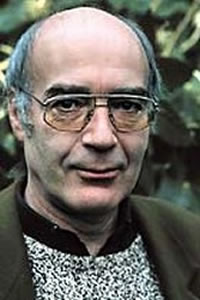
De Vlaamse dichter, essayist, journalist en tijdschriftuitgever Herman de Coninck werd geboren in Mechelen op 21 februari 1944. Zie ook alle tags voor Herman de Coninck op dit blog.


Zoals dit eiland van de meeuwen


Zoals dit eiland van de meeuwen
is en de meeuwen van hun krijsen
en hun krijsen van de wind
en de wind van niemand,

zo is dit eiland van de meeuwen
en de meeuwen van hun krijsen
en hun krijsen van de wind
en de wind van niemand. 


De lenige liefde (6)


Zoals je binnenkwam en dag zei,
en uit je kleren en je woorden stapte


(het voorlaatste wat je voor me uit-
deed was het woord “lieveling”
en het laatste een glimlach; toen
opende je dehaakjes en ik kwam erin
en je sloot ze)


zo ging je ook weer weg, trok
enkel veel te dunne woorden
van afscheid om je heen en rilde.


Parabel van de verloren vader


Zoon wil wereld veranderen.
Vader eigenlijk liever zoon.
Maar hij kan alleen een zin veranderen
tot die niet meer anders wil.

Je zal maar jong zijn en meningen hebben
van anderen, en verder niks,
niet eens een dode vader.

'Dat eigen leven, begin daar gvd. eens mee,
en kom over tien jaar eens terug met verdriet
in plaats van gelijk, bijvoorbeeld na een vrouw of twee.
Dat ik kan zeggen: je bent dezelfde gebleven.'

Het bovenstaande is tien jaar geleden geschreven.
En aldus is tien jaar later geschied.


 1098690-075e00ce5ecc1553fe783ed974dc2623.jpg

Herman de Coninck (21 februari 1944 - 22 mei 1997)


De Amerikaanse schrijver en journalist Chuck Palahniuk werd geboren op 21 februari 1962 in Pasco, Washington. Zie ook alle tags voor Chuck Palahniuk op dit blog.


Uit: Lullaby


“At first, the new owner pretends he never looked at the living room floor. Never really looked. Not the first time they toured the house. Not when the inspector showed them through it. They'd measured rooms and told the movers where to set the couch and piano, hauled in everything they owned, and never really stopped to look at the living room floor.
They pretend. Then on the first morning they come downstairs, there it is, scratched in the white-oak floor:
GET OUT
Some new owners pretend a friend has done it as a joke. Others are sure it's because they didn't tip the movers. A couple of nights later, a baby starts to cry from inside the north wall of the master bedroom.
This is when they usually call. And this new owner on the phone is not what our hero, Helen Hoover Boyle, needs this morning. This stammering and whining. What she needs is a new cup of coffee and a seven-letter word for "poultry." She needs to hear what's happening on the police scanner. Helen Boyle snaps her fingers until her secretary looks in from the outer office. Our hero wraps both hands around the mouthpiece and points the telephone receiver at the scanner, saying, "It's a code nine-eleven." And her secretary, Mona, shrugs and says, "So?"
So she needs to look it up in the codebook.
And Mona says, "Relax. It's a shoplifter."
Murders, suicides, serial killers, accidental overdoses, you can't wait until this stuff is on the front page of the newspaper. You can't let another agent beat you to the next rainmaker.
Helen needs the new owner at 325 Crestwood Terrace to shut up a minute. Of course, the message appeared in the living room floor. What's odd is the baby doesn't usually start until the third night. First the phantom message, then the baby cries all night. If the owners last long enough, they'll be calling in another week about the face that appears, reflected in the water when you fill the bathtub. A wadded-up face of wrinkles, the eyes hollowed-out dark holes.”


 1098690-7d62bdd56e2d3ef99a62354bbd35188a.jpg

Chuck Palahniuk (Pasco, 21 februari 1962)


De Nederlandse dichter en prozaschrijver Hans Andreus werd geboren in Amsterdam op 21 februari 1926. Zie ook alle tags voor Hans Andreus
op dit blog.


Bloemen leven licht-zinnig


Bloemen leven licht-zinnig in hun bladen.
Dieren lopen vanzelfsprekend; ze zwijgen
van wat ze zouden kunnen zijn; hun daden
gebeuren altijd nu; dieren zijn eigen.

Mensen doen alsof. Bestaan in ijskouden,
denken, denken, denken dat ze bestaan.
Geen mens kènt een mens. Men wil zich vasthouden.
Angst laat niet los. Men kijkt zijn spiegel aan.

En hangt zich op aan winterse systemen
of takken van geloof. Maar dood is dood.
Men neemt zich mee en is niet mee te nemen.

En ik ben eenzelfde. Maar leg mij bloot,
omdat ik zien wil wie ik toch nog ben.
Ik moet toch een mens zijn die ik herken.


Decemberbrief


Ik wilde dat je dichter bij me was.
Het jaar is oud en heeft niets meer te zeggen.
Het weer is somber. Alle dagen staat er
een haveloze regen voor de ramen
lam zwaaiend als een dronkelap. Ik loop
door 't huis, de kamers waarin jij niet bent
en die dus leeg zijn. Of ik zit maar ergens
en kijk naar buiten tot het donker is.
De televisie 's avonds een meest trieste
vertoning in een eenmansbioskoop,
zoek ik maar vroeg mijn bed op, slaap pas laat
en word weer vroeg uit boze dromen wakker
omdat ik jou ook in de slaap niet vinden kan.
Ik wilde dat het jaar nu over was
en jij weer dichter bij me, bij me was.


Mol


Dat ik woon in de aarde,
woel door de grote moeder,
kind aan huis blijf bij haar,

en dat ik het gevaar
schuw van alles onder de zon -
goed, maar moet ik niet leven

zoals ik ben, blind
en met de onrust in de poten
van een grond doordrenkt van doden?


 1098690-0c33e1e0e230f21fa5504bec7116ff9d.jpg

Hans Andreus (21 februari 1926 – 9 juni 1977)


De Engelse dichter, essayist en criticus
Wystan Hugh Auden werd geboren in York op 21 februari 1907. Zie ook alle tags voor Wystan Hugh Auden op dit blog.


On the Circuit


Among pelagian travelers,

Lost on their lewd conceited way

To Massachusetts, Michigan,

Miami or L.A.,


An airborne instrument I sit,

Predestined nightly to fulfill

Columbia-Giesen-Management's

Unfathomable will,


By whose election justified,

I bring my gospel of the Muse

To fundamentalists, to nuns,

to Gentiles and to Jews,


And daily, seven days a week,

Before a local sense has jelled,

From talking-site to talking-site

Am jet-or-prop-propelled.


Though warm my welcome everywhere,

I shift so frequently, so fast,

I cannot now say where I was

The evening before last,


Unless some singular event

Should intervene to save the place,

A truly asinine remark,

A soul-bewitching face,


Or blessed encounter, full of joy,

Unscheduled on the Giesen Plan,

With, here, an addict of Tolkien,

There, a Charles Williams fan.


Since Merit but a dunghill is,

I mount the rostrum unafraid:

Indeed, 'twere damnable to ask

If I am overpaid.


Spirit is willing to repeat

Without a qualm the same old talk,

But Flesh is homesick for our snug

Apartment in New York.


A sulky fifty-six, he finds

A change of mealtime utter hell,

Grown far too crotchety to like

A luxury hotel.


The Bible is a goodly book

I always can peruse with zest,

But really cannot say the same

For Hilton's Be My Guest.


Nor bear with equanimity

The radio in students' cars,

Muzak at breakfast, or--dear God!--

Girl-organists in bars.


Then, worst of all, the anxious thought,

Each time my plane begins to sink

And the No Smoking sign comes on:

What will there be to drink?


Is this my milieu where I must

How grahamgreeneish!  How infra dig!

Snatch from the bottle in my bag

An analeptic swig?


Another morning comes: I see,

Dwindling below me on the plane,

The roofs of one more audience

I shall not see again.


God bless the lot of them, although

I don't remember which was which:

God bless the U.S.A., so large,

So friendly, and so rich.


 1098690-6f56bf20cd63d6106239e0301929f817.jpg

W. H. Auden (21 februari 1907 – 29 september 1973)

Hier met Christopher Isherwood (links) in de trein, 1938


De Franse schrijfster Laure Limongi werd geboren op 21 februari 1976 in Bastia (Corsica). Zie ook mijn blog van 21 februari 2009 en ook mijn blog van 21 februari 2010 en ook mijn blog van 21 februari 2011.


Uit: Le travail de rivière


« Je suis accrochée à cette vie comme à un poumon gris. Pourtant je souris. Mes pieds avancent l’un après l’autre, bien docilement, qu’il vente ou qu’il neige. Personne ne pourrait imaginer la voix qui hurle en moi et qui recouvre tout. La peur de la mort, le fracas des machines. Personne ne pourrait l’imaginer derrière le chignon peigné et les yeux qui reflètent les arbres. Derrière les liens soigneusement dessinés, pleins et déliés. Je m’éloigne bien docilement de ce que j’ai été. De ce que j’ai cru être. Et ce pas crée une écorce fendue d’un grand rire. Un point arrêté sur une image au ralenti, tout est flou autour car c’est la Grande Histoire qui passe, son train sinuant. Seul mon regard pourra vous y assurer un chemin net avec de vrais visages, presque de chair. J’ai dit presque. Des gestes, des dimensions, des angles. Où se cogner. Je suis accrochée à cette vie comme aussi bien pas. C’est arbitraire, je le sais. Qu’est-ce qui ne l’est pas ? C’est versatile une femme, tous les proverbes le disent et mon père aussi. Ainsi que ses amis. C’est versatile un homme qui court après sa mort en croyant la fuir. Ça, personne ne le dit. La répétition des gestes aide. On le croit. Le souvenir, les traditions. La monotonie est douce comme un matin pluvieux, l’intérieur de mes bras. Fade comme les repas quotidiens, l’odeur du savon noir. Et si je pleurais, qu’est-ce que ça changerait ? Et si je criais aussi fort que le loup du bois ? Le cou tendu à se briser, crocs à l’air, bavant ma vie ? Cela n’effraierait sans doute que les enfants et les curés. »


1098690-f7227daca0f7f00aedef0726a7572001.jpg
Laure Limongi (Bastia 21, februari 1976)


Zie voor nog meer schrijvers van de 21e februari ook mijn vorige blog van vandaag.
Geschreven door Romenu om 19:10 Reageer op dit bericht

Ha Jin, Anaïs Nin, Raymond Queneau, David Foster Wallace, Justus van Effen

De Chinees-Amerikaanse schrijver Ha Jin werd geboren op 21 februari 1956 in Jinzhou, China. Zie ook mijn blog van 21 februari 2009 en ook mijn blog van 21 februari 2010 en ook mijn blog van 21 februari 2011.


Uit: War Trash


„Before the Communists came to power in 1949, I was a sophomore at the Huangpu Military Academy, majoring in political education. The school, at that time based in Chengdu, the capital of Szechuan Province, had played a vital part in the Nationalist regime. Chiang Kai-shek had once been its principal, and many of his generals had graduated from it. In some ways, the role of the Huangpu in the Nationalist army was like that of West Point in the American military.
The cadets at the Huangpu had been disgusted with the corruption of the Nationalists, so they readily surrendered to the People's Liberation Army when the Communists arrived. The new government disbanded our academy and turned it into a part of the Southwestern University of Military and Political Sciences. We were encouraged to continue our studies and prepare ourselves to serve the new China. The Communists promised to treat us fairly, without any discrimination. Unlike most of my fellow students who specialized in military science, however, I dared not raise my hopes very high, because the political courses I had taken in the old academy were of no use to the People's Liberation Army. I was more likely to be viewed as a backward case, if not a reactionary. At the university, established mainly for reindoctrinating the former Nationalist officers and cadets, we were taught the basic ideas of Marx, Lenin, Stalin, and Mao Zedong, and we had to write out our personal histories, confess our wrongdoings, and engage in self- and mutual criticism. A few stubborn officers from the old army wouldn't relinquish their former outlook and were punished in the reeducation program-they were imprisoned in a small house at the northeastern corner of our campus. But since I had never resisted the Communists, I felt relatively safe. I didn't learn much in the new school except for some principles of the proletarian revolution.“


 1098689-8323b3e4ff56af8130e44d237de578ee.jpg

Ha Jin (Jinzhou, 21 februari 1956)


De Franse schrijfster Anaïs Nin werd geboren op 21 februari 1903 in Neuilly. Zie ook alle tags voor Anaïs Nin op dit blog.


Uit: The Diaries


„August 11, 1914.~~~"Impressions of Arrival In New York"

We were all dressed and on deck. It was 2 o'clock and one could vaguely see a city, but very far away. The sea was gray and heavy. How different from the beautiful sea of Spain! I was anxious to arrive, but I was sad.

I felt a chill around my heart and I was seeing things all wrong.

Suddenly we were wrapped in a thick fog. A torrential rain began to fall, thunder rumbled, lightning flashes lit the heavy black sky. The people promptly took refuge in the lounge. None of the Spanish passengers had ever seen weather like that, so the frightened women wept,the men prayed in low tones. We were not afraid.

Maman had seen many storms and her calmness reassured us. We were the first to go back up on the wet deck. But the fog continued and we waited.

It was 4 o'clock when the ship began to move again, slowly, as though she approached the great city with fear. Now, leaning on the railing, I couldn't hear anything. My eyes were fixed on the lights that drew closer, I saw the tall buildings, I heard the whistling of the engine, I saw a great deal of movement. Huge buildings went by in front of me. I hated those buildings in advance because they hid what I love most--flowers, birds, fields, liberty.

Maman came up to me and took me for a walk, whispering in my ear the wonderful things I was going to see. But although I admire New York for its progress, I hate it, I find it superficial. I saw it as an ugly prison. Maman was still walking, but seeing that I wasn't paying the slightest attention, she didn't talk to me anymore, but her eyes looked worried. my head felt heavy, my heart seemed full enough to burst, I felt sad and unhappy.“


 1098689-5df519011a9f92e164ff4d5d7decdfc8.jpg

Anaïs Nin (21 februari 1903 – 14 januari 1977)


De Franse schrijver Raymond Queneau werd geboren op 21 februari 1903 in Le Havre.
Zie ook alle tags voor Raymond Queneau op dit blog.


L’iinspiration


De son juchoir
la poule laisse choir
un oeuf
c’est une imprudence
un moment d’absence
mais il tombe pouf
dans la paille :
la fermière était prévoyante
combien de poèmes brisés
que ne recueille aucun recueil.


La leçon de choses


Venez, poussins,
Asseyez-vous
Je vais vous instruire sur l’œuf
Dont tous vous venez, poussins.
L’œuf est rond
Mais pas tout à fait
Il serait plutôt ovoïde
Avec une carapace
Et vous en venez tous, poussins
Il est blanc
Pour votre race
Crème ou même orangé
Avec parfois collé
Un brin de paille
Mais ça,
C’est un supplément
A l’intérieur, il y a…
Mais pour y voir
Faut le casser
Et alors d’où - vous poussins - sortirez ?


 1098689-3a6d1094e91818ed20a7af66e84ca70f.jpg

Raymond Queneau (21 februari 1903 – 25 oktober 1976)


De Amerikaanse schrijver David Foster Wallace werd geboren op 21 februari 1962 in New York. Zie ook mijn blog van 21 februari 2009 en ook mijn blog van 21 februari 2010 en ook mijn blog van 21 februari 2011.


Uit: Infinite Jest


„The Dean at left, a lean yellowish man whose fixed smile nevertheless has the impermanent quality of something stamped into uncooperative material, is a personality-type I've come lately to appreciate, the type who delays need of any response from me by relating my side of the story for me, to me. Passed a packet of computer-sheets by the shaggy lion of a dean at center, he is speaking more or less to these pages, smiling down.

'You are Harold Incandenza, eighteen, date of secondary-school graduation approximately one month from now, attending the Enfield Tennis Academy, Enfield, Massachusetts,a boarding school where you reside.' His reading glasses are rectangular, court-shaped, the sidelines at top and bottom. 'You are, according to Coach White and Dean [unintelligible], a regionally, nationally and continentally ranked junior tennis player, a potential O.N.A.N.C.A.A. athlete of substantial promise, recruited by Coach White via correspondence with Dr. Tavis here commencing . . . February of this year.' The top page is removed and brought around neatly to the bottom of the sheaf, at intervals. 'You have been in residence at the Enfield Academy since age seven.'

I am debating whether to risk scratching the right side of my jaw, where there is a wen.“


 1098689-d8284a4891efb80272be1da6cc747f34.jpg

David Foster Wallace (21 februari 1962 – 12 september 2008)


De Nederlandse schrijver Justus van Effen werd geboren in Utrecht op 21 februari 1684. Zie ook alle tags voor Justus van Effen op dit blog.


Uit: No. 2. Den 27. Augusty 1731. De Hollandsche Spectator.


„OM tot de styl te komen, waar van ik voorneemens ben my te bedienen, heb ik iets te verhandelen met de Heeren Puristen of Taal-zuiveraars. Eertyds ben ik van hunne bende geweest, en niet alleen een verwonderend liefhebber van hunne gelukkige poogingen, maar zelfs een ieverig navolger, en mede-dinger. Zelf heb ik, zonder roem gesprooken, reeds in myn kindsche jaaren Koppelwoorden t'zamen gesteld, die, in uitgestrektheid en hardigheid, voor niemant hunner trotze en opgeblazene broederen behoefden te wyken, dewelke, indien ik raadzaam hadde gedagt, den zelve het ligt te doen zien, zonder twyfel hun fortuin in de wereld zoude gemaakt hebben. Zommigen van deze myne treffelyke uitvindingen is dit geluk al te beurt gevallen. Dewyl ik onbekend ben, durf ik zeggen, dat ik de man ben, die de eer heb, op de leest van 't woord Jufferdom, dat van Dichterdom geschoeit te hebben, zoo dat aan my, en aan niemand anders verschuldigt zy, dat men met zoo veel destigheid en zoetluidendheid in verscheidene van onze vaderlandsche dichten hoort brommen: Het Neerduitsch Dichterdom &c. Ik verwonderde my zelfs, dat dit maakzel myns vernufts aan andere fraije geesten, die meer als ik, haar werk van in onze moedertaal te schryven maakten, geen aanleiding gaf, om met die bevallige uitgang van dom, andere woorden, en wel voornamentlyk koppel-woorden op te pronken; waarom dagt ik, wanneer men in 't gemeen spreeken wil van Kleermaakers of Hairsnyers, ook niet gezegt, 't Kleermaakerdom, 't Hairsnyerdom.


 1098689-e0838d497d6d54dd0707a9efd64c011f.jpg

Justus van Effen (21 februari 1684 - 18 september 1735)


Zie voor nog meer schrijvers van de 21e februari ook mijn blog van 21 februari 2011.

Geschreven door Romenu om 19:01 Reageer op dit bericht

P. C. Boutens, Ellen Gilchrist, Julia Franck, David Nolens, Georges Bernanos, William Carleton

De Nederlandse dichter Pieter Cornelis Boutens werd geboren in Middelburg op 20 februari 1870. Zie ook alle tags voor P. C. Boutens op dit blog.


Uit: Strofen en andere verzen uit de nalatenschap van Andries de Hoghe


Tweede strofe


Onze vaders hebben ons niet geweten,

wij bleven voor hen als verstooknen;

alleen de blindheid onzer moeders

heeft ons vermoed en liefgehad.


De broêrs en zusters die daar waren,

onze aangewezene gelijken,

zij sloten rond ons donker heimwee

een bond van levenlicht verzet.


Uit onze weêrstandlooze handen

grepen ze ons deel van 't blinkend speelgoed

eerst met begeertes weiflen glimlach,

dan met het kort gebaar van recht.


Wrevel om deernis niet-te-deren

versmeet het waardeloos begeerde

als onzer oogen roerlooze aandacht

geen schaduw leed van spijt of wrok.


De kussen hunner korte liefden

bestierven op ons koele wangen;

de hartstocht onzer bleeke lippen

ontweek de rozen van hun mond.


Als die niet zijn bestemd te leven,

planten die in den dag verkwijnen,

zoo bloemeloos en bladerdonker

rees onze schaduw naast hun bloei...


O siddrend leed der ver bewusten,

o bitter hachelijke keuze

van ademloos te moeten wachten

op onberekenbaar geluk!:


zich liefdes eigen kindren weten,

en haren vollen dag verbeiden

in donkren schijn van liefdeloozen,

die nimmer zich verraden mag.


Sonnet XXVI


Het stolpend maanlicht huift den winternacht

In wazen plooien van doorzichtigheid.

Geen ster weet helder van de heerlijkheid

Waarin ik treed naar heerlijkheid die wacht...


Hoe ligt de lichte weg naar U gedacht

Recht door den stillen glansverstarden tijd...

Elk oogenblik is kort als eeuwigheid...

Wanneer heb ik deze' oogst van heil gepacht?


Gij zijt het kloppen van mijn hart, het licht

Dat in mijn oogen is, de boovne maan,

Gij zegent de aarde in mijner voeten val...

De wereld breekt doorzichtig als kristal:

'k Zie in bevrozen grond het gouden graan,

Ooglampen branden alom uit huizen dicht.


 1097953-d628783875694accc51aa7f9acd51db2.jpg

Pieter Cornelis Boutens (20 februari 1870 – 14 maart 1943)


De Amerikaanse schrijfster Ellen Gilchrist werd geboren op 20 februari 1935 in Vicksburg, Mississippi. Zie ook mijn blog van 20 februari 2009 en ook mijn blog van 20 februari 2010 en ook mijn blog van 20 februari 2011.


Uit: Nora Jane: A Life in Stories


„She put on her shorts and shirt and found her sandals and wandered out into the backyard to pick the mirlitons from the mirliton vines.

A neighbor was in the yard next door. Mr. Edison Angelo. He leaned over the fence. "How's everything going, Nora Jane?" he asked. "How's your grandmother?"

"She's feeling fine," Nora Jane said. "She's fine now. She's out of bed. She can do anything she likes."

Nora Jane bent over the mirliton vines. They were beautiful, sticky and fragrant, climbing their trellis of chicken wire. The rich burgundy red fruit hung on its fragile stems, fell off into Nora Jane's hands at the slightest touch. She gathered a basketful, placing them carefully on top of each other so as not to bruise them. Mirlitons are a delicacy in New Orleans. The dark red rind is half an inch thick, to protect the pulp and seeds from the swarming insects of the tropics, for mirlitons are a tropical fruit, brought to New Orleans two hundred years ago by sailors from the Caribbean. Some winters in New Orleans are too cold for mirlitons and the fruit is small and scanty. This had been a warm winter, however, and the mirliton vines were thick with fruit. Nora Jane bent over her work. Her head of curly dark black hair caught the morning sun, the sun caressed her. She was a beautiful child who looked so much like her dead father that it broke her mother's heart and made her drink. It made her grandmother glad. Nora Jane's father had been her oldest son. She thought God had given Nora Jane to her to make up for losing him. Nora Jane's grandmother was a deeply religious woman who had been given to ecstatic states when she was young. It never occurred to her to rail at God or blame him for things. She thought of God as a fallback position in times of trouble. She thought of God as solace, patience, wisdom, forgiveness, compensation.“


 1097953-349387d6dd825524ff16dbbff5c36a06.jpg

Ellen Gilchrist (Vicksburg, 20 februari 1935)


De Duitse schrijfster Julia Franck werd geboren op 20 februari 1970 in Oost-Berlijn. Zie ook alle tags voor Julia Frank op dit blog.


Uit: Die Mittagsfrau


“Auf dem Fensterbrett stand eine Möwe, sie schrie, es klang, als habe sie die Ostsee im Hals, hoch, die Schaumkronen ihrer Wellen, spitz, die Farbe des Himmels, ihr Ruf verhallte über dem Königsplatz, still war es da, wo jetzt das Theater in Trümmern lag. Peter blinzelte, er hoffte, die Möwe werde allein vom Flattern seiner Augenlider aufgescheucht und flöge davon. Seit der Krieg zu Ende war, genoss Peter die Stille am Morgen. Vor einigen Tagen hatte ihm die Mutter ein Bett auf dem Boden der Küche gemacht. Er sei jetzt ein großer Junge, er könne nicht mehr in ihrem Bett schlafen. Ein Sonnenstrahl traf ihn, er zog sich das Laken über das Gesicht und lauschte der sanften Stimme von Frau Kozinska. Sie kam aus den Rissen im Steinboden, aus der Wohnung unter ihm. Die Nachbarin sang. Ach Liebster, könntest du schwimmen, so schwimm doch herüber zu mir. Peter liebte diese Melodie, die Wehmut in ihrer Stimme, das Wünschen und die Traurigkeit. Diese Gefühle waren so viel größer als er, und er wollte wachsen, nichts lieber als das. Die Sonne wärmte das Laken auf Peters Gesicht, bis der die Schritte seiner Mutter hörte, die sich wie aus großer Ferne näherten. Plötzlich wurde das Laken weggezogen. Los, los, aufstehen, ermahnte sie ihn. Der Lehrer warte, behauptete die Mutter. Aber der Lehrer Fuchs erfragte schon seit langer Zeit nicht mehr die Anwesenheit der einzelnen Kinder, die wenigsten konnten noch jeden Tag kommen. Seit Tagen gingen seine Mutter und er jeden Nachmittag mit einem kleinen Koffer zum Bahnhof und versuchten, einen Zug in Richtung Berlin zu bekommen.”


 1097953-b85d1ed6304e002b57d6258db984ad56.jpg

Julia Franck (Oost-Berlijn, 20 februari 1970)


De Vlaamse schrijver David Nolens werd geboren in Antwerpen op 20 februari 1973. Zie ook alle tags voor David Nolens op dit blog.


Uit: Fifty ways to become a famous artist


„5.     Hermitage. Maak van duizenden juweelkevers een fuik en noem het werk Hermitage. De symboliek zal snel door een gewillige recensent als volgt verklaard worden: Een fuik is een langwerpig gevlochten vistuig met verschillende, door hoepels gescheiden, steeds nauwer wordende afdelingen, waarvan de laatste in een gesloten punt uitloopt. De kluizenaar is er vrijwillig ingekropen. Elke afdeling symboliseert een verdere onthechting. De kevers staan voor het krioelende en onrustige leven buiten, voor de schittering van de schijn. In een interview voeg je daar zelf nog aan toe: Ook de kluizenaar is niet vrij. Ook hij wil worden bevestigd in wat hij doet. Daarom heeft hij zijn fuik uitgezet. De fuik staat derhalve ook voor de ijdelheid, waaraan geen mens kan ontkomen.

6.     Grotesque. Je beeldhouwt uit was een miezerige, kleine man. Hij is tergend gewoon. Zijn ogen zijn dof, zijn huid is schraal. Hij gaat gekleed in een onopvallend, goedkoop kostuum. Ter hoogte van zijn navel is uit de kledij een gat gesneden. In zijn navel prijkt een juweelkever. Grotesk? Ja, zeg je, ik vind het veel grotesker om bescheiden te zijn, om niemand te willen zijn, om je op de achtergrond te houden. Had deze man zijn navel ontdekt, dan had hij kunnen uitstijgen boven zichzelf. De interviewer vraagt: Zoals u hebt gedaan? Je zegt lachend: Dat hebt u gezegd. En dan wandel je weg.

7.     Flesh double. Enkele jaren later knoop je uit stevig ijzerdraad de gestalte van een drie meter grote man.  Je laat een bekend couturier een patroon uittekenen van een modieus gesneden maatpak. Dat kostuum vervaardig je door plakken ham op het ijzeren geraamte aan te brengen. Het vlees moet lijken op mensenvlees. Je legt uit: De mens wordt naakt geboren. Meteen na zijn geboorte wordt hij gekleed. Nooit zal hij nog kunnen teruggrijpen op de ideeële zuiverheid van het naakte vlees. De mens is immers bij voorbaat een gekleed mens. Hij moet zijn eigen vlees derhalve heruitvinden. Dat is de ware missie van de kunstenaar. -- Flesh double ziet er heel indrukwekkend uit. »


 1097953-a50d4cd4916cec1cb73ab74cf827dea5.jpg

David Nolens (Antwerpen, 20 februari 1973)


De Franse schrijver Georges Bernanos werd geboren in Parijs op 20 februari 1888. Zie ook alle tags voor Georges Bernanos op dit blog.


Uit: La France des robots


“Nos ancêtres se sont servis d'une pierre tenue au creux de la main en guise de marteau, jusqu'au jour où, de perfectionnement en perfectionnement, l'un d'entre eux imagina de fixer la pierre au bout d'un bâton. Il est certain que cet homme de génie, dont le nom n'est malheureusement pas venu jusqu'à nous, inventa le marteau pour s'en servir lui-même, et non pour en vendre le brevet à quelque société anonyme. Ne prenez pas ce distinguo à la légère. Car vos futures mécaniques fabriqueront ceci ou cela, mais elles seront d'abord et avant tout, elles seront naturellement, essentiellement, des mécaniques à faire de l'or. Bien avant d'être au service de l'Humanité, elles serviront les vendeurs et les revendeurs d'or, c'est-à-dire les spéculateurs, elles seront des instruments de spéculation. Or, il est beaucoup moins avantageux de spéculer sur les besoins de l'homme que sur ses vices, et, parmi ces vices, la cupidité n'est-elle pas le plus impitoyable? L'argent tient plus étroitement à nous que notre propre chair. Combien donnent volontiers leurs fils au Prince et tirent honneur du trépas de leur enfant, qui refuseraient à l'Etat leur fortune tout entière, ou même une part de leur fortune. Je prédis que la multiplication des machines développera d une manière presque inimaginable l'esprit de cupidité. De quoi cet esprit ne sera-t-il pas capable? Pour nous parler d'une république pacifique composée de commerçants, il faut vraiment que vous vous croyiez le droit de vous payer nos têtes? Si les boutiquiers d'aujourd'hui sont plus experts à manier l'aune que l'épée c'est qu'ils n'ont point d'intérêt dans les guerres. Que leur importe une province de plus ou de moins dans le Royaume? Lorsqu'ils trouveront devant eux des concurrents, vous les verrez contempler d un œil sec les plus effroyables carnages ; l'odeur des charniers ne les empêchera pas de dormir. Bref, le jour ou la superproduction menacera d'étouffer la spéculation sous le poids sans cesse accru des marchandises invendables vos machines à fabriquer deviendront des machines à tuer voilà ce qu'il est très facile de prévoir”.


 1097953-6edb144c25bb003b767e6d430ef22605.jpg

Georges Bernanos (20 februari 1888  - 5 juli 1948)


De Ierse schrijver William Carleton werd geboren op 20 februari 1794 in Glogher, in het graafschap Tyrone. Zie ook alle tags voor William Carleton op dit blog.


Uit: The Midnight Mass


“Frank M'Kenna was a snug farmer, frugal and industrious in his habits, and, what is rare amongst most men of his class, addicted to neither drink nor quarrelling. He lived at the skirt of a mountain, which ran up in long successive undulations, until it ended in a dark, abrupt peak, very perpendicular on one side, and always, except on a bright day, capped with clouds. Before his door lay a hard plain, covered only with a kind of bent, and studded with round gray rocks, protruding somewhat above its surface. Through this plain, over a craggy channel, ran a mountain torrent, that issued to the right of M'Kenna's house, from a rocky and precipitous valley which twisted itself round the base of the mountain until it reached the perpendicular side, where the peak actually overhung it. On looking either from the bottom of the valley or the top of the peak, the depth appeared immense; and, on a summer's day, when the black thorns and other hardy shrubs that in some placas clothed its rocky sides were green, to view the river sparkling below you in the sun, as it flung itself over two or three cataracts of great depth and boldness, filled the mind with those undefinable sensations of pleasure inseparable from a contemplation of the sublimities of nature. Nor did it possess less interest when beheld in the winter storm. Well do we remember, though then ignorant of our own motives, when we have, in the turmoil of the elements, climbed its steep, shaggy sides, disappearing like a speck, or something not of earth, among the dark clouds that rolled over its summit, for no other purpose than to stand upon its brow, and look down on the red torrent, dashing with impetuosity from crag to crag, whilst the winds roared, and the clouds flew in dark columns around us, giving to the natural wildness of the place an air of wilder desolation.--Beyond this glen the mountains stretched away for eight or ten miles in swelling masses, between which lay many extensive sweeps, well sheltered and abundantly stocked with game, particularly with hares and grouse.”


1097953-0cfa9c08e8816cc4ba4b09b989ce6a97.jpg
William Carleton (20 februari 1794 – 30 januari 1869)


Zie voor nog meer schrijvers van de 20e februari ook mijn vorige blog van vandaag.
Geschreven door Romenu om 19:20 Reageer op dit bericht

Pierre Boulle, Ludwig Steub, Johann Heinrich Voß, Johann Fr. Riederer, Cornelis Sweerts

De Franse schrijver Pierre Boulle werd geboren op 20 februari 1912 in Avignon. Zie ook mijn blog van 20 februari 2009 en ook mijn blog van 20 februari 2010 en ook mijn blog van 20 februari 2011.


Uit: Le Pont de la rivière Kwaï


“-Voyons, celui-là, par exemple, dit-il s’arrêtant et en s’adressant à un malade. Qu’est ce qui ne va pas, mon garçon ? […]
-Ulcères tropicaux. Je lui ai creusé la jambe, hier..., avec un couteau ; je n’ai pas d’autre instrument. J’ai fait un trou assez gros pour y enfoncer une balle de golf, sir.
- C’est donc cela ; j’ai entendu crier hier soir, marmonna me colonel Nicholson.
- C’était cela. J’espère sauver la jambe…, mais j’en suis pas sur, ajouta-t-il à vois basse. Vous voudriez vraiment que je l’envoie sur le pont, sir ?

(…)


- Ecoutez-moi tous. Vous savez en quoi consiste l’œuvre à laquelle Sa Majesté impériale a bien voulu associer les prisonniers britanniques. Il s’agit de relier les capitales de Thaïlande et de Birmanie, à travers quatre cents milles de jungle, pour permettre le passage des convois nippons et ouvrir la route du Bengale à l’armée qui a libéré ces deux pays de la tyrannie européenne. Le nippon a besoin de cette voie ferrée pour continuer la série de ses victoires, conquérir les Indes et terminer rapidement cette guerre.”


 1097948-e4e47b83d2266b52a1364581d9b228a1.jpg

Pierre Boulle (20 februari 1912 – 30 januari 1994)


De Duitse schrijver Ludwig Steub werd geboren op 20 februari 1812 in Aichach. Zie ook mijn blog van 20 februari 2009 en ook mijn blog van 20 februari 2010 en ook mijn blog van 20 februari 2011


Uit: Drei Sommer in Tirol


“Im Westen der Grafschaft Tirol zwischen dem Arlberg und dem jungen Rhein liegt ein kleines, bergiges Gebiet, das jetzt den Namen Vorarlberg führt. In den ältesten Zeiten war diese Landschaft frei, später mit den übrigen Alpenländern den Römern unterthan. Von den Orten, die während ihrer Herrschaft auf vorarlbergischem Boden genannt wurden, kennen wir wenigstens zwei, Brigantium nämlich und Clunia. Ersteres ist das heutige Bregenz am Ufer des Bodensees, letzteres will man bei Gösis in der Nähe von Feldkirch gefunden haben. Gewiß ist, daß damals die eingebornen Rhätier ihre angestammte Sprache aufgaben und die der Römer annahmen; daher das Romansch in Graubündten, welches jetzt zwar auf Hohenrhätien beschränkt ist, aber noch vor wenigen Jahrhunderten auch die Landessprache des südlichen Vorarlbergs war. Als das alte römische Reich den Germanen unterlag, brachen vom Bodensee herauf die Alemannen in das Land. Lange darnach unter den deutschen Kaisern that sich im Rheinthale ein alemannisches Herrengeschlecht, die von Starkenfels oder Montfort auf. Sie waren reich begütert um Werdenberg und Sargans auf der helvetischen Seite und geboten mit der Zeit in mehreren Zweigen auch fast über alles Land zwischen dem Arlberge und dem See. Von ihnen werden wir an verschiedenen Orten noch mehr zu erzählen haben. Innerer Verfall und äußere Nöthen zwangen die Montforte allmählig ihre schönen Herrschaften aufzugeben, und die habsburgischen Grafen von Tirol waren um so mehr geneigt, ihre Nachfolger zu werden, als sie über den Arlberg [4] und den Bodensee auf eigenem Grunde einen Zugang[WS 1] begehrten zu den vorderösterreichischen Gebieten in Schwaben, welche von den Herzogthümern und Grafschaften, die Kaiser Rudolphs Nachkommen im Ostreiche und im Gebirge erworben, völlig abgeschnitten waren.”


 1097948-264baf324eb6b84067ce3dfc1def468c.jpg

Ludwig Steub (20 februari 1812 – 16 maart 1888)

Vorarlberg


De Duitse dichter, schrijver en vertaler Johann Heinrich Voß werd geboren op 20 februari 1751 in Sommersdorf / Mecklenburg. Zie ook mijn blog van 20 februari 2009 en ook mijn blog van 20 februari 2010 en ook mijn blog van 20 februari 2011


Trinklied


Wir, Brüder, sind noch Zecher

Von altem Schrot und Korn!

Wir leeren frisch die Becher

Ohn Eifersucht und Zorn!

Uns klinget silbertönig

Der Gläser Melodei!

Und unser Ehrenkönig

Hält gute Polizei!


Behauptung und Bestreitung

Hat nie uns aufgebläht!

Wir wissen aus der Zeitung

Nur, ob der Wein gerät.

In Ruhe mein und glaube

Sogar der Muselmann!

Die Lästrung nur der Traube

Entstellt den Alkoran.


Friedselig ohne Grübeln

Sitzt man am vollen Glas;

Auch Übel läßt man Übeln,

Nur messe gleiches Maß.

Oh, Frankreichs armer König,

Woher dein Volksgewühl?

Der eine trank zuwenig.

Der andre trank zuviel!


Der Maiabend


Umweht von Maiduft,
unter des Blütenbaums Helldunkel
sehn wir Abendgewölk' verglüh'n,
des vollen Mond's Aufgang erwartend
und Philomelengesäng' im Talbusch.


Lau war die Dämm'rung,
traulicher scherzten wir,
mit nachgeahmter Fröhlichkeit bald verstummt,
in holdem Tiefsinn saß das Mägdlein,
flüsterte wollen wir gehn, und ging nicht.


 1097948-90cd101d5d5f4c440793b36347b73afa.jpg

Johann Heinrich Voß  (20 februari 1751 – 29 maart 1826)

Buste in Otterndorf


De Duitse dichter en schrijver Johann Friedrich Riederer werd geboren op 20 februari 1678 in Neurenberg. Zie ook mijn blog van 20 februari 2009 en ook mijn blog van 20 februari 2010 en ook mijn blog van 20 februari 2011.


Die schöne Gertraud


Die schöne Gertraud / so sich jüngst vermählt / wollt wissen

wann wohl die beste Zeit der Lieb zu pflegen wär /

ein Doctor saß bei ihr / der war so gleich beflissen

bedacht sich auf die Frag / und sagt ihr ungefähr:

Wann man des Morgens früh die Rosen denkt zu pflücken /

ist´s das gesund´ste Spiel / und für die Lenden gut /

die aber bei der Nacht sich zu der Arbeit schicken /

genießen tiefre Lust / um weil es süßer tut.
Wohl / sagt die junge Frau / dann will ich künftig sorgen

zu plücken in dem Bett die Frücht der jungen Zeit

vor erst : Weil es gesund / zu früh am hellen Morgen /

und wann es Abend wird / dann um die Süßigkeit.


 1097948-b3c747006370cd511e138cc3f77d988e.jpg

Johann Friedrich Riederer (20 februari 1678 – 25 juni 1734)

Neurenberg, ansichtkaart rond 1900 (Geen portert beschikbaar)


De Nederlandse dichter, liedtekstschrijver, toneelschrijver en boekhandelaar Cornelis Sweerts werd geboren in Amsterdam op 20 februari 1669. Zie ook alle tags voor Cornelis Sweerts op dit blog.


Lof van de liefde ende wyn.

Op de zelve wyze als hier vooren.


1.


VRinden laat ons vrolyk wezen

By de Liefde, by de wyn,

Want zy kunnen elk geneezen,

Van verdriet, van smart en pyn.

Nooit een beter artseny,

Wilt gy die slechs wel gebruiken;

Gy zult als een bloem ontluiken,

Want geen kruidje haalter by.


2.

Liefde maakt ons bly van harte,

En ook dapper van gemoed;

En de wyn verdryft de smarte,

En verdunt het zwaare bloet:

En maakt voort den blooden stout.

Laat de krygstrompetten klinken.

Helden minnen, helden drinken,

Daar de Kryg veel onlust brout.


1097948-e44dea16818da964b83db75809c835af.jpg
Cornelis Sweerts (20 februari 1669 - 23 maart 1749)
Amsterdam - Gezicht op de Schreierstoren en de St. Nicolaaskerk, Cornelis de Bruin (1870-1940)

Geschreven door Romenu om 19:14 Reageer op dit bericht

Meer van Romenu

↑ Terug naar de berichten