Naar de inhoud

Romenu

Over literatuur, gedichten, kunst en cultuur
akke.beakke.be

Berichten van 1 maart 2012 tot 2 maart 2012

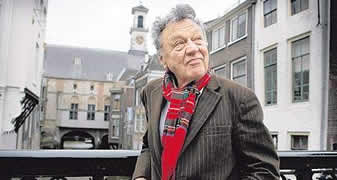
Godfried Bomans, Multatuli, John Irving, Thom Wolfe, Michael Salinger

De Nederlandse schrijver Godfried Bomans werd geboren in Den Haag op 2 maart 1913. Zie ook alle tags voor Godfried Bomans op dit blog.


Uit: De dood van de sprookjesverteller


“Er was eens een sprookjesverteller en die ging dood. Hij had zijn hele leven lang over kabouters verteld en nu wilde hij, voor zijn dood, nog een kabouter zien, een werkelijke kabouter. Hij zocht in de provisiekast, in de ontbijttrommel, onder het buffet, maar er was nergens een kabouter te vinden. Nu begon de sprookjesverteller te wenen: 'Ach, lieve God,' sprak hij, 'ze zijn op. Er is er geen eentje meer! Ik heb mijn hele leven vast geloofd dat er kabouters waren, maar nu zie je wat je er van denken moet. Hij heeft toch gelijk gehad, de kruidenier van hiernaast die mij altijd zo uitlachte. Nu heb ik niets meer van het leven te verwachten.'

En de sprookjesverteller kroop in bed, blies de kaars uit en wachtte op de dood.

Doch de dood kwam niet; hij was de verkeerde weg ingeslagen en liep nu te mopperen om het huis heen. 'Woont hier de sprookjesverteller?' riep hij door het raam. 'Ja, Dood!' antwoordde de sprookjesverteller van uit de bedstee, 'kom er maar in! Maak het kort! Alle aar digheid is er toch voor mij af. Pas op voor de drempel, daar zit een plank los.'

'Je bent een rare.' hernam de Dood, zich over het bed buigend, 'verlang je naar mij? De mensen zijn altijd bang als ik binnenkom. Vind je het prettig, dat ik er ben?'

Jawel,' antwoordde de sprookjesverteller glimlachend, 'ik vind het heel prettig, Dood, de kabouter wil niet komen en daarom ben ik blij dat jij komt. Of het een, of het ander.'

'Wat zit je nu toch te praten van een kabouter?' sprak de Dood verbaasd, 'je bent toch een echte sprookjes verteller, waarlijk. Onderzoek liever je geweten, denk eens aan je zonden en aan de eeuwigheid. Dat zijn nut tige gedachten. Ik zal zo lang wat in de tuin rondlopen. Je roept wel als je klaar bent.'


1106073-0bdbe21cf016f6c1fc66aeec3379ff24.jpg
Godfried Bomans (2 maart 1913 - 22 december 1971)


De Nederlandse schrijver
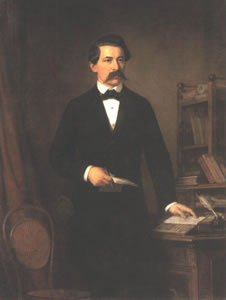
Multatuli (pseudoniem van Eduard Douwes Dekker werd geboren in Amsterdam op 2 maart 1820. Zie ook alle tags voor Multatuli op dit blog.


Uit:
De geschiedenis van Woutertje Pieterse


„De opdracht om 'n vers te maken, streelde Wouter. Jufvrouw Pieterse en Stoffel hadden zich vergeefs beyverd hun goede meening omtrent zyn talent, te omzwachtelen met geringschatting. De arme jongen schrikte van genoegen, by de ontdekking dat men hem ‘voor iets aanzag.’ Hy had zóó vaak gehoord dat-i eigenlyk niemendal was, en nooit iets worden zou... dat hy nu ter-nauwernood lette op al de pogingen die z'n moeder en broêr in 't werk stelden, om hem te doen gelooven dat de heele commissie eigenlyk een straf was voor z'n onkunde in de namen van bergen. ‘Ja, zei Stoffel:

- Ja, ik kan je verzekeren dat het by my op school niet gebeuren moest... maar nu moet je letten op behoorlyke afwisseling van liggende en staande regels...

- Hè? vroeg Wouter.

- Wel zeker... weet je dat nog niet eens? Heeft meester Pennewip je dat niet geleerd? Of heb je weêr niet opgelet? Kyk... zoo!

En Stoffel wilde voorbeelden bedenken. Maar 't lukte niet.

- Trui, geef me je gezangboek. Kyk, Wouter: hoog, omhoog, het hart naar boven... dat 's liggend, zieje. En: hier beneden is het niet... dat staat, weetje? En dan moet je er wat inbrengen van God...

- Ja, en dat-i wewenaar is, voegde de moeder er by.

- Haar oom... verbeterde Stoffel. En alle regels moeten even lang wezen.

- En je krygt ulevellen... en als je 'r niet meê terecht kunt, zei de moeder, vraag dan maar aan Stoffel.

- Wel zeker, ik zal je telkens zeggen wat rymt. 't Is heel makkelyk...

Wouter had er wel zin in. Hy ging naar de achterkamer, nam een lei, en schreef er op. Maar mooi was 't niet. Ook kon-i maar niet verder komen dan: Een weduwnaar van God... O God, een weduwnaar...“


1106073-3f6a07744893b3cc04fcae2383cdae82.jpg
Multatuli (2 maart 1820 - 19 februari 1887)

Geboortehuis en museum in de Korsjespoortsteeg in Amsterdam


De Amerikaanse schrijver
John Irving werd geboren op 2 maart 1942 in Exeter, New Hampshire.
Zie ook alle tags voor John Irving op dit blog.


Uit:
The World According to Garp


„Garp's mother Jenny Fields, was arrested in Boston in 1942 for wounding a man in a movie theater. This was shortly after the Japanese had bombed Pearl Harbor and people were being tolerant of soldiers, because suddenly everyone was a soldier, but jenny Fields was quite firm in her intolerance of the behavior of men in general and soldiers in particular. In the movie theater she had to move three times, but each time the soldier moved closer to her until she was sitting against the musty wall, her view of the newsreel almost blocked by some silly colonnade, and she resolved she would not get up and move again. The soldier moved once more and sat beside her.
Jenny was twenty-two. She had dropped out of college almost as soon as she'd begun, but she had finished her nursing-school program at the head of her class and she enjoyed being a nurse. She was an athletic-looking young woman who always had high color in her cheeks; she had dark, glossy hair and what her mother called a mannish way of walking (she swung her arms), and her rump and hips were so slender and hard that, from behind, she resembled a young boy. In jenny's opinion, her breasts were too large; she thought the ostentation of her bust made her look "cheap and easy."
She was nothing of the kind. In fact, she had dropped out of college when she suspected that the chief purpose of her parents' sending her to Wellesley had been to have her dated by and eventually mated to some well-bred man. The recommendation of Wellesley had come from her older brothers, who had assured her parents that Wellesley women were not thought of loosely and were considered high in marriage potential. jenny felt that her education was merely a polite way to bide time, as if she were really a cow, being prepared only for the insertion of the device for artificial insemination.“


1106073-0d48f73622b972b017148c69b55cd0eb.jpg
John Irving (Exeter, 2 maart 1942)


De Amerikaanse schrijver en journalist
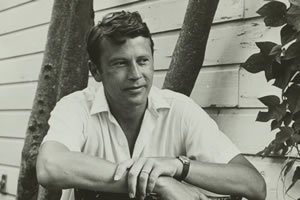
Thom Wolfe werd geboren op 2 maart 1930 in Richmond, Virginia.
Zie ook alle tags voor Thomas Wolfe op dit blog.


Uit:
The Electric Kool-Aid Acid Test


„The things he would somehow suddenly remember about the old home town--over here, for example, is the old white clapboard house they used to live in, and behind it, back a ways, is the radio tower of station KORE with a red light blinking on top--and at night he used to get down on his knees to say his prayers and there would be the sky and the light blinking--and he always kind of thought he was praying to that red light. And the old highway used to take a bend right about here, and it seemed like there was always somebody driving through about three or four in the morning, half asleep, and they would see the lights over there in town where it was getting built up and they'd think the road headed straight for the lights and they'd run off the bend and Kesey and his dad would go out to see if they could help the guy draggle himself out of the muck--chasing street lights!--praying to the red beacon light of KORE!--and a little run-in at Gregg's Drive-In, as it used to be called, it is now Speck's, at Franklin Boulevard at the bridge over the river. That was the big high-school drive-in, with the huge streamlined sculpted pastel display sign with streaming streamlined super-slick A-22 italic script, floodlights, clamp-on trays, car-hop girls in floppy blue slacks, hamburgers in some kind of tissuey wax paper steaming with onions pressed down and fried on the grill and mustard and catsup to squirt all over it from out plastic squirt cylinders. Saturday nights when everybody is out cruising--some guy was in his car in the lot at Gregg's going the wrong way, so nobody could move. The more everybody blew the horns, the more determined the guy got. Like
this was the test. He rolls up the windows and locks the doors so they can't get at him and keeps boring in. This guy vs. Kesey. So Kesey goes inside and gets a potato they make the french fries with and comes out and jams it over the guy's exhaust pipe, which causes the motor to conk out and you ain't going any which way now, bub.“


1106073-12ceef4ac468d4501e2347312dabadd4.jpg
Thom Wolfe (Richmond, 2 maart 1930)


De Amerikaanse dichter en performer
Michael Salinger werd geboren op 2 maart 1962 in Cleveland, Ohio. Zie ook alle tags voor Michael Salinger op dit blog.


Nietzsche's Horse


At thirteen
my son,
his body a coat hanger
jutting from a tank top
and baggy shorts,
wants to comprehend
only one thing-
that being,
everything

His mother speaks of gardening
and seeds
because that is what she knows

I lecture on trajectory
the speed of sound sluicing liquid
baseball analogies
economics
Newton's third law of physics
and plumbing fixtures
because I know nothing
all the time swearing
that what I know
is best

He sits
back against checkered tile wall,
in an armless wooden kitchen chair
part of the set
that his mother and I bought
before we split
I think it is made from maple,

waiting for the answers
to the questions
that keep me awake

I do not say
that truth comes as a dream
details fading with sunrise
or that the miracle of life
is that we survive
I say
that in time he will understand
hoping
that'll hold him
for awhile


1106073-dfb5fe9076e31c9acb797b59a12281fb.jpg
Michael Salinger (Cleveland, 2 maart 1962)


Zie voor nog meer schrijvers van de 2e maart ook
mijn vorige blog van vandaag.
Geschreven door Romenu om 19:25 Reageer op dit bericht

János Arany, Jevgeni Baratynski, Sholom Aleichem, Olivia Manning, Gerhard von Halem, Pascal Rannou

De Hongaarse dichter János Arany werd geboren op 2 maart 1817 in Nagyszalonta. Zie ook alle tags voor János Arany op dit blog.


Cosmopolitan poetry


I have no shame, no regret
That born Hungarian, I write
As one, that I can never let
My words beyond this soil take flight.
No ‘Wonder of two worlds,’ my song
If charm it has, is due to them,
My people; I am theirs, belong
To one land wholly, root and stem.


Let tongues of the mighty propagate
Their own language, sovereignty
Their god, a roaring flood in spate
That washes all, destructively.
But let the poet of a small nation
Placed in destruction’s very path,
Find at home his true station,
Death, else, the aftermath.


Or is our glory here so small
It needs must sink into the grave
Along with the nation? Do you call
Us inferior, that neighbours gave
No heed to us? Is there no test
Worthy of our strength at home,
Subject for song, no native quest?
Must we crave Albion’s loan?


Be a „world poet;” if you can,
Stir up the whole lazy west.
The cradle that rocked me Hungarian
Is one that I must still call blessed.
A thousand threads bind me - I deal
With motherland, with this one spot.
I sing of no abstract ideal,
Voice such, I’d rather not.


And what becomes of this sad mistake?
His race, his nationality
Have left a mark he cannot shake:
Will the great poet despise them, he?
I have scanned the pages of the best,
Contemporaries of mine as well;
All were mirrors, each confessed
People and land he alone could tell.


Pray do not think that a people stricken
Are extinguished, blotted out suddenly,
While poet and homeland in harmony quicken
With a national, endless melody.
And were you to picture some future danger,
Or should its semblance in fact appear,
Would you desert like any stranger
The holy flag, its peril near?


Oh, with a worthier lute to sing
As Homer did, a land reborn,
No longer a poet sorrowing
For a land of griefs now left forlorn.
But should its fate indeed be death,
Then let me be an Ossian dwelling
In a place that fades, no mongrel breath
Intoning, but a live song swelling. 


Vertaald door Madeline Mason


 1106062-a595d7b15f0c40e24d4527cbc99ca67b.jpg

János Arany (2 maart 1817 – 22 oktober 1882) 

Portret door Miklós Barabás, 1894


De Russische dichter Jevgeni Baratynski werd geboren op 2 maart 1800 in Sint Petersburg. Zie ook alle tags voor Jevgeni Baratynski op dit blog.


Thoughts and more thoughts!...


Just thought and thought! Poor artist of the word!

High priest of thought! You cannot flee;

The word holds all: the world and man,

Death, life, and ever-unveiled truth.

Brush, chisel, organ! Lucky is the man

Who's sensitive to them, and does not go beyond them!

He may indulge himself in worldly feasts!

Yet mortal life is pale beneath your cutting rays,

Before your naked sword, O thought!


Muse

I am not dazzled by my muse:

One could not call her beautiful.

Nor would the sight of her dispatch

Young men in throngs to chase her down.

To charm with cultivated dress,

To fascinate with playful glance or sparkling wit

These aren't her talents or desires;

And yet betimes the world is struck

By her uncommon countenance,

Her speech's calm simplicity.

And then it spares her cutting blame,

And honors her instead with backhand praise.


 1106062-14fd9c3ef976b25fbb25ec721f7d824c.jpg

Jevgeni Baratynski (2 maart 1800 – 11 juli 1844)


De Russisch-joodse schrijver Sholom Aleichem werd geboren in Pereyslav bij Kiev op 2 maart 1859. Zie ook alle tags voor Sholom Aleichem op dit blog.


Uit: Fiedler auf dem Dach


“Gendarm: "Oh, Tewje, ich habe eine kleine Neuigkeit für dich. Und ich glaube, ich sollte sie dir sagen - als ein Freund."

Tewje: "Ja, Euer Ehren?"

Gendarm: "Und ich sage es dir, weil ich dich mag. Du bist ein bescheidener, ehrlicher Kerl - auch wenn du ein Jude bist."

Tewje: "Wie oft nur erhält man ein derartiges Kompliment. Und die Neuigkeiten?"

Gendarm: "Wir haben Anweisung erhalten, dass in nächster Zeit in diesem Bezirk eine kleine inoffizielle Belästigung stattfinden muss."

Tewje: "Wie klein?"

Gendarm: "Nicht zu ernstlich. Nur damit man sehen kann, dass wir unsere Pflicht getan haben. Was mich betrifft, ich weiß auch nicht, warum immer diese Unruhe zwischen den Menschen sein muss, aber ich dachte, ich sage es dir - und du kannst es den anderen sagen."

Tewje: "Danke, Euer Ehren. Sie sind ein guter Mensch. Wenn ich es mir erlauben darf: Schade, dass Sie kein Jude sind."

Gendarm: "Siehst du, dass mag ich an dir, Tewje: Immer zu einem kleinen Spaß aufgelegt."

Tewje: "Danke, Euer Ehren. Auf Wiedersehen. Lieber Gott, musste eine solche Nachricht kommen, ausgerechnet heute? Es heißt, wir sind das auserwählte Volk. Aber könntest Du Dir nicht ab und zu ein anderes Volk auserwählen?"


 1106062-e9443dcdf6a2d9361653baefeac53e77.jpg

Sholom Aleichem (2 maart 1859 - 13 mei 1916)

Scene uit de musical in het Stadttheater in Hagen, 2005 


De Britse schrijfster Olivia Manning werd geboren op 2 maart 1908 in Portsmouth. Zie ook alle tags voor Olivia Manning op dit blog.


Uit: The Balkan Trilogy (The spoilt city)


“When Harriet did not look as alarmed as he felt she should be, he said on a peevish note: “Don’t you see what it means? Rumania will be cut off from the sea. The Legation plan is to evacuate British subjects from Constanza. You’ll be one of the ones to suffer. There’ll be no escape route.”

“We can go to Belgrade.”

“My dear child, when the Germans march this way, they’ll take Yugoslavia en route.”

“Well, we can go by air.”

“What, the whole blessed British colony? I’d like to see it. And anyway, when there’s trouble the air service is the first thing to pack up. I’ve seen it time and again. Well, I’m taking no risk. When I get wind of the invasion, I’m into the flivver and off.”

“Ah, well,” said Harriet, attempting to lighten the situation, “perhaps you’ll take us with you?”

Galpin’s eyes bulged. “I don’t know about that. I’ve got baggage. I’ve got Wanda. The Austin’s old. The road over the Balkans is bad. If we broke a spring, we’d be done for.” Looking as though she had attempted to take an unfair advantage, he got into the car, slammed the door and drove away.


 1106062-03efbeda78cd693046e118256c8f398d.jpg

Olivia Manning (2 maart 1908 - 23 juli 1980)

Omslag biografie


De Duitse dichter en schrijver Gerhard Anton von Halem werd geboren op 2 maart 1752 in Oldenburg. Zie ook alle tags voor Gerhard von Halem op dit blog.


Das Leben gleichet der Blume


 1106062-2339e7f14dfa3fba151bc323d745728e.jpg

Gerhard von Halem (2 maart 1752 – 4 januari 1819)

Oldenburg, slot


De Franse schrijver en letterkundige Pascal Rannou werd geboren op 2 maart 1958 in Laval. Zie ook mijn blog van 2 maart 2009 en ook mijn blog van 2 maart 2010.


Uit: Inventaire d'un héritage


„Cette obsession du mutisme, on en trouve peut-être les raisons dans les pages du Quêteur de Mémoire où le collecteur Hélias rappelle que la première convention à respecter avant d'aborder des informateurs était de les aborder par le silence, car l'apostrophe immédiate aurait pu être considérée comme une agression et avoir pour conséquence un refus de collaborer. C'est possible, mais cela me laisse sceptique. J'ai parcouru des années durant les Monts d'Arrée quand je remplaçais, l'été, les facteurs de Saint Thégonnec. C'est le moyen idéal pour dénicher les villages les plus éloignés, les bretonnants les plus authentiques. Je me suis toujours exprimé immédiatement en breton avec eux, et cela n'a jamais engendré la moindre défiance, bien au contraire! Aussi ai-je du mal à croire que ce qu'un jeune néo-bretonnant comme moi a pu obtenir de Plonéour-Menez à Guiclan, n'a pu l'être sans difficulté par Hélias, breton enraciné s'il en fut... Mais ce mutisme est peut-être propre au Pays Bigouden.“


1106062-e9883752d4bce28690302314d1ff37fb.jpg
Pascal Rannou (Laval, 2 maart 1958)

Geschreven door Romenu om 19:18 Reageer op dit bericht

Jan Eijkelboom, Franzobel, Jim Crace, Franz Hohler, Jacques Chessex

De Nederlandse dichter, vertaler en journalist Jan Eijkelboom werd op 1 maart 1926 in Ridderkerk geboren. Zie ook alle tags voor Jan Eijkelboom op dit blog.


Non omnis moriar*


Soms, als een distel door dik asfalt,
barst er een regel poëzie
de taal van mensen in.

Zo werd de Dapperstraat een plek
van hoge adel en duurt de Mei
al meer dan honderd jaar.

Zo wijs ik soms mijn kleine zoon
des avonds op een fonkelend verschijnsel
en roep: O Venus, felle star.

Hij corrigeert mij wel, maar geeft
het later toch misschien weer door.
Het lijkt zo'n magere troost,

te bedenken dat lang na je dood
een jonge vrouw een woord van jou
nog op de tong kan nemen.

Het is ook wel een weelderig genoegen,
niet geheel dood te hoeven.

* niet geheel zal ik sterven


O


O, dat ik ooit nog eens
een vers met o beginnen mocht,
dat het dan ongezocht een ode
werd waarin zeg maar een dode
dichteres tot leven kwam
ofwel een warm lief lijf
tot marmer werd waardoor
voor wie daarvoor gevoelig is
een adem ging als was het
leven nu voorgoed betrapt.

Maar nee, wat bij mij ingaat
moet bezinken,
verdicht zich tot een sprake-
loos substraat
dat roerig wordt en uit wil breken
en soms vermomd de mond verlaat.

0, klonk het nog eens ongehinderd.


 1105302-2e225982eaf2d69f720d8d53a8e71bb2.jpg

Jan Eijkelboom (1 maart 1926 – 28 februari 2008)


De Oostenrijkse schrijver, dichter en schilder Franzobel werd geboren op 1 maart 1967 in Vöcklabruck. Zie ook alle tags voor Franznobel op dit blog.


Österreich ist schön


Österreich? Ist das schön. Und hundertmal

& überhaupt. Österreich ist schön, und

schon schön ist Österreich. Ich bin hundertmal

verliebt in Österreich. Und Österreich

ist sehr schön, das lernen wir, hundertmal, daß

Österreich richtig schön ist, und das ist

das Schöne an Österreich, daß hundertmal

schon die österreichischen Schulkinder lernen,

wie schön und überall dieses Österreich nun ist,

damit sie es nur ja nie mehr vergessen. Ist

das schön. Und überhaupt. Die Sonne. Und

damit sie es nur ja nie mehr vergessen, wie schön,

schön Österreich ist, müssen schon die

österreichischen Schulkinder hundertmal,

hundertmal schreiben, Österreich ist schön.

Ist das schön. So schön ist Österreich, daß

schon die Schulkinder es aufschreiben müssen.

Müssen schreiben: Österreich fängt schön an, und

schön hört Österreich auch auf. Ja. So ist das

mit Österreich. Durch und durch schön. Hundertmal.


Blunzengröstl


Blunzengröstl essen, Kistlbrunzen müssen,

Brunzengröstl essen, Blunzenkistl müssen,

Blunzen brunzen, Gröstlkistl essen müssen,

Brunzen blunzen, Kistl müssen Gröstl essen,

Blunzen essen, brunzen müssen, Köstl. Köstl.


1105302-2987584f5247afb1089397fe54220bb4.jpg 

Franzobel (Vöcklabruck, 1 maart 1967)


De Engelse schrijver Jim Crace werd geboren op 1 maart 1946 in St. Albans, Hertfordshire. Zie ook alle tags voor Jim Crace op dit blog.


Uit: The Devil's Larder


„One night when there are guests and all the wine has gone, they put the can into the candlelight amongst the debris of their meal and play the guessing game. An aphrodisiac, perhaps; "Let's try." A plague. Should they open up and spoon it out? A tune, canned music, something never heard before that would rise from the open can, evaporate, and not be heard again. The elixir of youth. The human soup of DNA. A devil or a god?

It's tempting just to stab it with a knife. Wound it. See how it bleeds. What is the colour of the blood? What is its taste?

We all should have a can like this. Let it rust. Let the rims turn rough and brown. Lift it up and shake it if you want. Shake its sweetness or its bitterness. Agitate the juicy heaviness within. The gravy heaviness. The brine, the soup, the oil, the sauce. The heaviness. The choice is wounding it with knives, or never touching it again.

---------------------

"This is for the angel," Grandma used to say, tearing off a strip of dough for me to take into the yard. "Leave it somewhere he can see." Sometimes I left the strip on the street wall. Sometimes I draped it on the washing line. Sometimes I put it on the outside windowsill and hid behind the kitchen curtain beads to spot the angel in the yard.“


 1105302-8754248bd37dad2a2674fbc22bb0196f.jpg

Jim Crace (St. Albans, 1 maart 1946)


De Zwitserse dichter, schrijver, cabaretier en liedjesmaker Franz Hohler werd geboren op 1 maart 1943 in Biel. Zie ook  Zie ook alle tags voor Franz Hohler op dit blog.


Ein Fall


Jemand, nämlich ich, ging zielbewusst über einen Platz in Basel, nur noch wenige Minuten von der Lokalität entfernt, die er aufzusuchen gedachte, da er dort verabredet war, sein Schritt war nicht hastig, aber doch vorwärts orientiert, nicht schlendernd wie etwa derjenige der bemerkenswert schönen jungen Frau, die er überholte. Der Jemand war beschwingt, denn er war dort, wo er hinging, ein freudig Erwarteter, und es muss wohl sein in die Ferne gerichteter, seinerseits erwartungsvoller Blick gewesen sein, der ihn die kleine Kante übersehen ließ, die er nun mit seinem rechten Fuß übertrat. Er hatte sie übersehen, weil er sich auf einem gepflästerten Platz wähnte und nicht auf einem Trottoir, und nun wurden die Gesetze der Physik sekundenschnell und erbarmungslos auf ihn angewendet, Zentrifugal- und Zentripetalkraft stritten sich um ihn, zerrten ihn vor und zurück und auf und ab, sein eben noch gelassener und ebenmäßiger Gang verwandelte sich in ein Zucken und Krümmen seines Körpers, einen gnomenhaften Tanz, durch den ihm die Mütze vom Kopf geschleudert wurde, und er selbst wurde schließlich durch die wild ausscherenden Kräfte in die Knie gezwungen, und während er sich mit Mühe wieder zu erheben und seiner verlorenen Würde zu bemächtigen suchte, bückte sich die schöne junge Frau nach seiner Mütze und überreichte sie ihm lächelnd, so wie man einem Invaliden etwas zuliebe tut, bevor sie, die Handtasche an der Schulter, lässig weiter bummelte und ihn, diesen Jemand, mich also, mit einem scharfen Schmerz im Knöchel als plötzlichen Greis zurückließ, der sofort spürte, dass ihn dieser Misstritt um Kilometer von seiner Abmachung trennte und auch alle seine andern Abmachungen in eine ungewisse, bedrohliche Ferne rückte, dass dadurch auch ein Verb wie „gehen“ sofort aus seinem Vokabular verbannt wurde, mehr noch, dass es niedergeschlagen wurde durch eine Bande von Substantiven, deren lümmelhafte Anführer „Unfall“ und „Notfall“ hießen, ein dritter, der blöde grinste, nannte sich „Zufall“, und sie alle kamen nun auf Jemand zu und sagten zu ihm, als sie ihn links und rechts unter dem Arm fassten, sie hätten schon lange auf ihn gewartet.


 1105302-e33125a1963630bab869e62c62306bd1.jpg

Franz Hohler (Biel, 1 maart 1943)


De Franstalige, Zwitserse schrijver Jacques Chessex werd geboren op 1 maart 1934 in Payerne. Zie ook alle tags voor Jacques Chessex op dit blog.


Uit: Le dernier crâne de M. de Sade


“Quand cette histoire commence, en été 1814, Donatien Alphonse François, marquis de Sade, est enfermé depuis onze ans à Charenton, dans le Val-de-Marne, à la limite sud-est de Paris, un hospice d'aliénés placé sous la surveillance vétilleuse du ministère de l'Intérieur. M. de Sade est gros, accablé de toutes sortes de maux qu'une vie d'aventure, d'emprisonnement, d'obscénité et d'imagination scandaleuse a accumulés dans son corps vicié, en même temps brûlé dedans et dehors.
On ne s'étonnera pas, connaissant l'existence infâme de ce monstre, que sa fin fût aussi laide que sa vie. Et l'on voudra que la férocité qu'il y manifesta serve d'exemple, voire d'avertissement, tant aux gens de police et de coercition, à l'encontre de leurs administrés souvent trop doucement traités, qu'aux personnes vertueuses, qui trouveront là matière à méditer sur la menace toujours possible de l'indécence, et de la déchéance des âmes.
On s'indignera, ou on craindra. Mais quelque réaction que l'on manifeste, réprobation, horreur, et même trouble chez ceux que le mal hante (ou pire, a déjà gagnés), on reconnaîtra que les derniers mois du marquis de Sade, que d'aucuns ont sans honte nommé "le divin", sont de la même trempe dégoûtante que toute sa déplorable course. Et souvent qu'ils la surpassent dans la concentration du vice. Un vieux fou est plus fou qu'un jeune fou, cela est admis, quoi dire alors du fou qui nous intéresse, lorsque l'enfermement comprime sa fureur jusqu'à la faire éclater en scènes sales ?“


 chessex-4.jpg

Jacques Chessex (1 maart 1934 – 9 oktober 2009)


Zie voor nog meer schrijvers van de 1e maart ook mijn vorige blog van vandaag en eveneens mijn eerste blog van vandaag.

Geschreven door Romenu om 19:47 Reageer op dit bericht

Lytton Strachey,Ryūnosuke Akutagawa, Sabina Lorenz, Robert Lowell

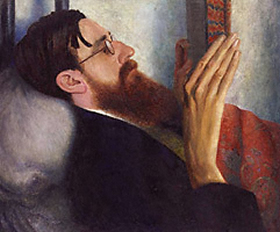
De Britse schrijver Giles Lytton Strachey werd geboren op 1 maart 1880 in Londen. Zie ook alle tags voor Lytton Strachey op dit blog.


Uit: Landmarks In French Literature


„When the French nation gradually came into existence among the ruins of the Roman civilization in Gaul, a new language was at the same time slowly evolved. This language, in spite of the complex influences which went to the making of the nationality of France, was of a simple origin.

With a very few exceptions, every word in the French vocabulary comes straight from the Latin. The influence of the pre-Roman Celts is almost imperceptible; while the number of words introduced by the Frankish conquerors amounts to no more than a few hundreds. Thus the French tongue presents a curious contrast to that of England. With us, the Saxon invaders obliterated nearly every trace of the Roman occupation; but though their language triumphed at first, it was eventually affected in the profoundest way by Latin influences; and the result has been that English literature bears in all its phases the imprint of a double origin. French literature, on the other hand, is absolutely homogeneous.

How far this is an advantage or the reverse it would be difficult to say; but the important fact for the English reader to notice is that this great difference does exist between the French language and his

own. The complex origin of the English tongue has enabled English writers to obtain those effects of diversity, of contrast, of imaginative strangeness, which have played such a dominating part in our

literature. The genius of the French language, descended from its single Latin stock, has triumphed most in the contrary direction—in simplicity, in unity, in clarity, and in restraint.“


 1105292-5d6cc28583db30b69ba3478fef775039.jpg

Lytton Strachey (1 maart 1880 – 21 januari 1932)

Portret door Dora Carrington, 1916


De Japanse dichter en schrijver
Ryūnosuke Akutagawa werd geboren op 1 maart 1892 in Tokio. . Zie ook alle tags voor Ryūnosuke Akutagawa
op dit blog.


Haiku


In the storm,
the color of sea
remains in dried fish


Vertaald door Nori Matsui


Green frog,

Is your body also

freshly painted?


Sick and feverish

Glimpse of cherry blossoms

Still shivering.


Harvest moon:

Around the pond I wander

And the night is gone.


 1105292-7c04534f6100917fd91806dd006e8472.jpg

Ryūnosuke Akutagawa (1 maart 1892 – 24 juli 1927)


De Duitse schrijfster en dichteres
Sabina Lorenz werd geboren op 1 maart 1967 in München. Zie ook mijn blog van 1 maart 2010 en ook mijn blog van 1 maart 2011.


Unheim beträumt


Stummtage, Liebstes, wie immer
zu spät, der Zug schon fort, ich bleibe.
Ankunftszeiten Abfahrtszeiten, dazwischen
ein kurzes Gespräch mit der Klofrau. Sie
bietet mir Gummibärchen an, ich antworte
geschwätzig wie eine Elster. Nachhaltig
arbeitende Midlife-Crisis, dieser Hunger
wenn die Worte sich verkanten, nicht
Null, nicht Eins, Madam
what is your definition of soul. Surrende
Fliege in der rechten Gehirnhälfte, das
ist alles: Sentiment, mathematische
Rätsel, Lautsprecherdurchsagen eine Form
von Landgang. Einstieg, Umstieg, your ticket
please, wohin, ich habs vermerkt, Liebstes, wann
geht der verdammte Zug.


 1105292-bf65006fc7f14367f50bba64c80e57a0.jpg

Sabina Lorenz (München, 1 maart 1967)


De Amerikaanse dichter Robert Traill Spence Lowell werd geboren op 1 maart 1917 in Boston. Zie ook alle tags voor Robert Lowell op dit blog.


Skunk Hour


(for Elizabeth Bishop)


Nautilus Island's hermit

heiress still lives through winter in her Spartan cottage;

her sheep still graze above the sea.

Her son's a bishop. Her farmer is first selectman in our village;

she's in her dotage.


Thirsting for

the hierarchic privacy

of Queen Victoria's century

she buys up all

the eyesores facing her shore,

and lets them fall.


The season's ill--

we've lost our summer millionaire,

who seemed to leap from an L. L. Bean

catalogue. His nine-knot yawl

was auctioned off to lobstermen.

A red fox stain covers Blue Hill.


And now our fairy

decorator brightens his shop for fall;

his fishnet's filled with orange cork,

orange, his cobbler's bench and awl;

there is no money in his work,

he'd rather marry.


One dark night,

my Tudor Ford climbed the hill's skull;

I watched for love-cars. Lights turned down,

they lay together, hull to hull,

where the graveyard shelves on the town....

My mind's not right.


A car radio bleats,

"Love, O careless Love...." I hear

my ill-spirit sob in each blood cell,

as if my hand were at its throat...

I myself am hell;

nobody's here--


only skunks, that search

in the moonlight for a bite to eat.

They march on their solves up Main Street:

white stripes, moonstruck eyes' red fire

under the chalk-dry and spar spire

of the Trinitarian Church.


I stand on top

of our back steps and breathe the rich air--

a mother skunk with her column of kittens swills the garbage pail.

She jabs her wedge-head in a cup

of sour cream, drops her ostrich tail,

and will not scare.


 1105292-aad1fc6a9ba663a63ec4810aba73b9d7.jpg

Robert Lowell (1 maart 1917 - 12 September 1977)

Geschreven door Romenu om 19:37 Reageer op dit bericht

Richard Wilbur, Ralph Ellison, Steven Barnes, Jean-Edern Hallier

De Amerikaanse dichter Richard Wilbur werd geboren op 1 maart 1921 in New York. Zie ook alle tags voor Richard Wilbur op dit blog.


Orchard Trees, January


It's not the case, though some might wish it so

Who from a window watch the blizzard blow


White riot through their branches vague and stark,

That they keep snug beneath their pelted bark.


They take affliction in until it jells

To crystal ice between their frozen cells,


And each of them is inwardly a vault

Of jewels rigorous and free of fault,


Unglimpsed until in May it gently bears

A sudden crop of green-pronged solitaires.


Exeunt


Piecemeal the summer dies;

At the field's edge a daisy lives alone;

A last shawl of burning lies

On a gray field-stone.


All cries are thin and terse;

The field has droned the summer's final mass;

A cricket like a dwindled hearse

Crawls from the dry grass.


1105280-5aa2aa1134f9264d77f86a88cdd2137d.jpg
Richard Wilbur (New York, 1 maart 1921)

Eind jaren 1940


De Afro-Amerikaanse schrijver Ralph (Waldo) Ellison werd geboren in Oklahoma City op 1 maart 1913. Zie ook alle tags voor Ralph Ellison op dit blog.


Uit: Invisible Man


“I spoke automatically and with such fervor that I did not realize that the men were still talking and laughing until my dry mouth, filling up with blood from the cut, almost strangled me. I coughed, wanting to stop and go to one of the tall brass, sand-filled spittoons to relieve myself, but a few of the men, especially the superintendent, were listening and I was afraid. So I gulped it down, blood, saliva and all, and continued. (What powers of endurance I had during those days! What enthusiasm! What a belief in the rightness of things!) I spoke even louder in spite of the pain. But still they talked and still they laughed, as though deaf with cotton in dirty ears. So I spoke with greater emotional emphasis. I closed my ears and swallowed blood until I was nauseated. The speech seemed a hundred times as long as before, but I could not leave out a single word. All had to be said, each memorized nuance considered, rendered. Nor was that all. Whenever I uttered a word of three or more syllables a group of voices would yell for me to repeat it. I used the phrase "social responsibility" and they yelled:

"What's that word you say, boy?"

"Social responsibility," I said.

"What?"

"Social..."

"Louder."

"... responsibility."

"More!"

"Respon-"

"Repeat!"

"-sibility."

The room filled with the uproar of laughter until, no doubt distracted by having to gulp down my blood, I made a mistake and yelled a phrase I had often seen denounced in newspaper editorials, heard debated in private.

"Social..."

"What?" they yelled.

"... equality-"


 1105280-f24da7ac39421c7abdd6f7411b2dd4ae.jpg

Ralph Ellison (1 maart 1913 –  16 april 1994)


De Amerikaanse schrijver Steven Barnes werd geboren op 1 maart 1952 in Los Angeles. Zie ook alle tags voor Steven Barnes op dit blog.


Uit: Lion's Blood


„The sun was a molten eye, gazing down from the heavens without malice or mercy, unfettered by clouds. It baked against Aidan's skin. In a few minutes he would dip beneath the Lady's waves again, seeking the shelter of her embrace.
Mahon lifted his flute to his lips and coaxed it softly, gently, as if afraid of scaring away the fish. His eyes glowed with humor.
"What have you, boyo?" his father asked, taking his pipe from his lips. Aidan leaned farther out, pressing his thin arms against the coracle's rim. He peered more carefully now, straining to see through the chop. "Something shining in the water, Da."
The Lute River, usually referred to as the Lady, was clear as glass here. Upstream a bit, clouds of silt from an inland mudslide darkened her depths. Here, fed by a thousand eastern tributaries, the waters had healed themselves, as if loathing the idea of gifting the distant ocean with less than her best. The Lady's blue ribbon had fed and nurtured the O'Deres for three hundred years.
Mahon gazed up at the sky, shielding his eyes with one broad hand. "Well, it's a hot one. Maybe time for another dip?" Aidan needed no further encouragement. He slipped off his rough wool shirt and clambered over the side, careful not to tip the boat.
The water parted to receive him then closed over his head, sealing away the music of air and bird and flute, replacing them with the Lady's eternal rushing murmur. She was cool and bracing.
Aidan was a strong swimmer—half eel and half boy, his mother claimed—and oriented himself quickly in the water. Avoiding the nets was easy if you kept your eyes open. It would be humiliating to be caught in them; his father might be forced to draw him up and free him by knife, possibly endangering the day's catch.“


 1105280-09e8f20215c75e4c9eb0b643f174653c.jpg

Steven Barnes (Los Angeles, 1 maart 1952)


De Franse schrijver Jean-Edern Hallier werd geboren op 1 maart 1936 in Saint-Germain-en-Laye. Zie ook alle tags voor Jean-Edern Hallier op dit blog.


Uit: Le Refus ou la leçon des ténèbres


“«… J’avoue ici ma faiblesse. A la fondation Rothschild où j’étais soigné, sous perfusion, quand mes visiteurs me quittaient je me retrouvais seul, le visage baigné de larmes. J’ai pleuré pendant quinze jours. Mon œuvre romanesque était arrivée à maturité. J’avais encore des dizaines de livres à écrire que je n’écrirais plus jamais. J’ai songé à me suicider, et une nuit, je suis resté plusieurs heures sur le rebord de la fenêtre, prêt à me jeter dans le vide. Je ne suis pas mort. Je suis ici. Grâce à de fidèles compagnons qui m’ont aidé, qui m’assistent tous les jours, je peux m’habiller, trouver les quelques objets dont j’ai besoin, ou dicter quelques pages. Je ne peux plus traverser une rue, les couleurs du ciel et la » verdure se sont définitivement éteintes. Pour combattre l’adversité, je me suis mis à peindre dans la nuit…


 1105280-0ea9b9a18f137ae5988f02778952fe96.jpg

Jean-Edern Hallier (1 maart 1936 – 12 januari 1997)

Hier in 1991 met Fidel Castro


Zie voor nog meer schrijvers van de 1e maart ook mijn blog van 1 maart 2011 deel 3.

Geschreven door Romenu om 19:32 Reageer op dit bericht

Meer van Romenu

↑ Terug naar de berichten