Naar de inhoud

Romenu

Over literatuur, gedichten, kunst en cultuur
akke.beakke.be

Berichten van 4 maart 2012 tot 5 maart 2012

Pier Paolo Pasolini, Arthur van Schendel, Koos van Zomeren, Jurre van den Berg
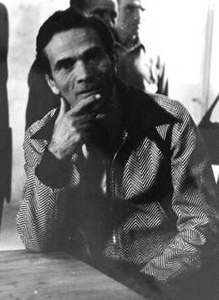
De Italiaans filmregisseur, dichter en schrijver Pier Paolo Pasolini werd geboren in Bologna op 5 maart 1922. Zie ook alle tags voor Pier Paolo Pasolini op dit blog.


Nineteen Forty-four

The rats no longer crawl, the swallows are screeching
Pigeons won't fly, chickens are scratching the ground.
No warning bells for tempests, only for Avemaria.
The garden gate swings open and a pale child
Comes out running , he sits on a pile of stones
And plays all alone with a shiny tin can.
His mom is in the kitchen, with shaky hands
she chops kindling sticks, her knee on the worn floor.
Then lighting a match she hangs the milk pot
Over the fire while blowing to kindle the flame.
Outside again bells ring everywhere Avemaria,
in every poor town filled with melancholy.
At fifteen, at nineteen years! Buttoning their pants
the young men come around, they pull her pony tail:
Mom, we're really hungry, get our breakfast ready!
Half-naked they run outside underneath the down spout
and from the rain barrel, laughing, one washes up
while the other combs his hair, like two poplar trees.
O dear God, don't forget what has happened to us
protect our passions, look upon us and have pity.
Our lands are in the hands of total strangers,
they made us prisoners in their own homeland.
The children and the old they hung in the square,
our unmarried women they raped and abused.
Our happiness and joy has dried up in our hearts,
our smiling and our laughter have flown so far away.
Along the railroad tracks, along those endless roads
we jeopardize our lives to find a piece of bread.
Call us to you, O Lord and we will call on you,
bring back our days of old as they were once before.


Vertaald door Adeodato Piazza Nicolai 


 1108275-24c09fb6da328a3d5d80bc0445255b2e.jpg

Pier Paolo Pasolini (5 maart 1922 – 2 november 1975)


De Nederlandse schrijver Arthur van Schendel werd geboren op 5 maart 1874 in Batavia. Zie ook alle tags voor Arthur van Schendel op dit blog. 


De Nederlanden (fragment)

Aanschouw den grond gerezen uit het water
Door ongestuim der stroomen aangeslibd,
Teruggeworpen door de macht der baren,
In regens kil van grauwe kim tot kim,
Maar groenend reeds van het ontkiemend leven
En witte vogels staan er aan den rand
Der wijde vlakte onder wolkgevaarten.
De golven spoelden voort in wilde vlagen
Zandbank na zandbank op, het wakke strand,
De duinen smetteloos in hun gedaante,
De wolken voeren voort over moeras,
Verzinkend duister drasland, bar en schamel,
Getijden door van storm en stapels schots,
De vlakte bleef, herrezen uit het water,
En groende weer in stralen van de zon.
Een bot, een kikvorsch en een ooievaar,
Dat waren de eerste schepsels hier geschapen,
Wat wier en kroos en rusch, een dotterbloem
De voorboden van bloei die in de gaarden
En weiden eens vol weligheid zou staan,
Zoo lag die lage grond, eenzaam in nevel,
Geluidloos dag na nacht en jaar na jaar.


 1108275-f25119a7a1f441621045748abace78f2.jpg

Arthur van Schendel (5 maart 1874 – 11 september 1946)

Met Pam, fotoportret door Willem Witsen


De Nederlandse schrijver, columnist en dichter Koos van Zomeren werd geboren in Velp op 5 maart 1946. Zie ook alle tags voor Koos van Zomeren op dit blog.


Uit: Het mooiste van juli


“Het mooiste van juli was een everzwijn, een doodgewoon, springlevend everzwijn op de Veluwe. Een paar keer was het in juli zo warm dat je zelfs op een korte wandeling water moest meenemen voor de hond. Ik pakte net zijn fles en zijn beker, toen we hem gewaarwerden: een smalle, zwarte, borstelige rug in een wat hogere vegetatie. Stanley keek me vragend aan – gaan we nou eerst rennen of eerst drinken?

Hij heeft ervaring met everzwijnen, maar ik weet niet exact welke. Een jaar of vier terug, in datzelfde stuk bos. Eerst zag ik van links naar rechts een everzwijn rennen met mijn blaffende hond op zijn hielen, en even daarna van rechts naar links mijn hond met een daverend everzwijn op zijn hielen. Ik dacht: als hij, Stanley, nou maar niet zo dom is om bescherming bij mij te komen zoeken  -  want wat je met een daverend everzwijn aanmoest, dat wist ik ook niet.

Na een tijdje kwam hij terug, alleen. Hij stond te rillen, kromp in elkaar en zeeg neer op het pad. Hij zou zijn rug toch niet gebroken hebben? Tsja, wat kon je doen? Een beetje aaien, een beetje praten, afwachten maar. Tien minuten later liep hij weer achter me aan, en nog eens tien minuten later weer voor me uit.

Een of twee winters hierna liepen we samen langs de rand van de Imbosch. Toen stoof er in volle vaart een hele sliert everzwijnen de hei op: een stuk of drie zeugen met een stuk of elf halfwas biggen. De achterste, amechtig hijgend, moest lossen. Die redt het niet, denk je dan. Zielig.

Maar het punt is: ik stond hier, de hond stond daar, die sliert everzwijnen rende tussen ons door en Stanley wachtte net als ik tot ze voorbij waren – als aan de grond genageld. Zo, zei ik tevreden, jij hebt toen toch wat geleerd!“


 1108275-942795a862da223d2b462a2861a77364.jpg

Koos van Zomeren (Velp,  5 maart 1946)


De Nederlandse dichter Jurre van den Berg werd geboren in Thesinge op 5 maart 1986. Zie ook mijn blog van 5 maart 2011.


Landmeters


De nacht vertrok en landmeters kwamen

om na te gaan of alles inderdaad zo was

als het leek: de loop van het kanaal


de heling van het pad en de passen

van het wiel langs de heg tot de weg

in door komma’s verdeelde getallen


hoe de kavels het water van dieren

de dieren van mensen en de mensen

van mensen scheidden


hoe de punten zich tot elkaar

en de gebogen aarde verhielden.


1108275-8662ad9d40840833470473996923ecfd.jpg
Jurre van den Berg (Thesinge, 5 maart 1986)


Zie voor nog meer schrijvers van de 5e maart ook mijn vorige blog van vandaag.
Geschreven door Romenu om 18:53 Reageer op dit bericht

Danny King, Nelly Arcan, Jean Orizet, Leslie Marmon Silko

De Britse schrijver Danny King werd geboren op 5 maart 1969 in Slough, Berkshire. Zie ook alle tags voor Danny King op dit blog.


Uit: The Pornographer Diaries 


„Real, no joking naked ladies nudey mag. And it was amazing. Big round boobs and big hairy fannies that were so real I didn't need to use my imagination any more. Whole glossy pages of pink, bare flesh with just a hint of bird shit and mildew that was suddenly more fascinating and exhilarating than hunting Christmas presents or finding my big sister's diary. See, just lately I'd been finding women's bodies fascinating - not girls, not the little girls in my class, I still didn't care about them, I was talking about women - my friends' mums or even some of my mum's friend and I had a recurring fantasy about my form tutor Miss Jenkins keeping me behind after school to sit on my head, but I was still in the process of putting all the pieces together. Nudey mags seemed to hold some interesting clues. I'd heard all about these magazines before of course. Gary Allison had told us that he'd seen one his dad's stashed away in the shed and it was stacked full of pictures of ladies that had to take all their clothes off and stand in front of the camera while people took pictures of them. Barry had asked if they were covering themselves up with their hands or standing sideways or something and Gary had reassured us all that they were 'standing facing the camera and you can see everything.' At this point someone might as well have told me that the universe went on forever for all the ability I had to comprehend this. 'Everything!' David Tinnings exclaimed and normally we would've told him to fuck off and go and play with his flute but most of us were suddenly far to busy rearranging our trousers at this point. 'Bring it in,' Barry urged him. 'No I can't, it's my dad's, he'd kill me,' Gary replied. 'Yeah, Jimmy Hill. Your pants are on fire,' Neil Barratt responded, then added, 'He's lying,' for those of us who didn't know what the fuck he was going on about. 'I'm not,' he insisted. 'Then bring it in,' the whole of the first year waded in.“


 1108271-1615d833a1f8f53922fd9c3dda707b4d.jpg

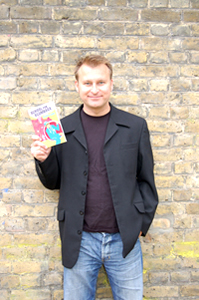
Danny King (Slough, 5 maart 1969)


De Canadese (Franstalige) schrijfster Nelly Arcan - pseudoniem van Isabelle Fortier – werd geboren in Lac-Mégantic op 5 maart 1973. Zie ook mijn blog van 5 maart 2011.


Uit: Whore


„Sometimes at night I dream about that elementary school, go back there again and again for my piano exams, and it’s always the same thing, I can’t find my piano and my sheet music is missing a page, I go back there knowing that I haven’t played a note for years and that being there again at my age as if it were no big deal is ridiculous, and something tells me that it would be better to turn back and avoid the humiliation of no longer knowing how to play in front of the Mother Superior, that anyway she couldn’t care less whether I play since it’s no big news that I’ll never be a pianist, that I’ll never do anything but tinkle, and in that little redbrick schoolhouse where every clearing of a throat thundered in the corners, you had to form lines to go from one class to another, with the smallest first and the tallest last, and I had to be the smallest, I don’t know why but that was what we had to do, the smallest took the lead and wasn’t squeezed in between the smaller ones and the taller ones, and when school started and it was time for the sister to set up the marching order for the year, I’d bend my knees under my dress just to be sure, because yes, I was small, but it wasn’t absolutely certain that I was the smallest, I needed to put a little more into it, scrunch down to make sure I got first place, and then I disliked grown-ups, one word from them was enough to make me cry, which explains why I didn’t want to have anything to do with any part of them but their bellies, since bellies can’t speak or ask for anything, especially the sisters’ perfect round balloons that you had the impulse to bounce with your fist. Though today I’m way past this need to be small, for several years I’ve even worn platform shoes to make me taller, not too tall, just enough to look my clients in the face.“


 1108271-daa039eea21e2374c0cd928c62f7a32b.jpg

Nelly Arcan (5 maart 1973 –24 september 2009)


De Franse dichter en schrijver Jean Orizet werd geboren in Marseille op 5 maart 1937. Zie ook mijn blog van 5 maart 2011.


Adieu au siècle


Héritier d’un siècle épuisé
Je livre ici quelques images
Qui me pèseront sur le cœur
Pour le millénaire à venir


J’ai vu tout près de Bethléem
De très jeunes Palestiniens
se battre à coups de lance-pierres
contre les fusils des soldats


Sur les trottoirs de Calcutta
J’ai croisé des enfants sans mains
Qui mendient par le seul regard
Ils n’ont ni maison ni parents


Au Cambodge, en Afghanistan
Encore et toujours des enfants
Au pied broyé sur une mine
Laissée par des soldats enfuis


En Afrique ils meurent de faim
En Algérie on les égorge
Partout ils sont martyrisés
Les enfants de notre planète


Dans les bas-quartiers de Rio
Le monde est pour chaque habitant
Peur, saleté, misère et boue
Voir cela est désespérant


Faut-il toujours aller si loin
Chercher d’aussi tristes spectacles ?
À Paris, Bruxelles ou Saint-Ouen
J’assiste à la même débâcle


Je n’aime pas beaucoup l’odeur
Du siècle moisi dont j’hérite
Il sent la mort et la terreur
Il est trop lent ou va trop vite


Enfant des années à venir
Essaye d’être un peu plus sage
Que nous ne l’étions avant toi
Oublie la colère et la rage


Avec tous les ordinateurs
Et leurs écrans bleus de contrôle
Peut-être dénicheras-tu
Des réponses à ces questions-là :


Pourquoi tant de sauvagerie
Dans un monde aussi policé ?
Pourquoi ces misères criantes
Dans un monde aussi équipé ?


Héritier d’un siècle cruel
Je vous lègue, enfants, mes révoltes :
De simples mots sur du papier
Mais ils sont ma seule récolte.


 1108271-94d16c81ba05e5cff207eb51c5e74d2a.jpg

Jean Orizet (Marseille, 5 maart 1937)


De Indiaans-Amerikaanse schrijfster Leslie Marmon Silko werd geboren op 5 maart 1948 in Albuquerque, New Mexico. Zie ook alle tags voor Leslie Marmon Silko op dit blog.


Uit; Ceremony


„The dreams had been terror at loss, at something lost forever; but nothing was lost; all was retained between the sky and the earth, and within himself. He had lost nothing. The snow-covered mountain remained, without regard to titles of ownership or the white ranchers who thought they possessed it. They logged the trees, they killed the deer, bear, and mountain lions, they built their fences high; but the mountain was greater than any or all of these things. The mountain outdistanced their destruction, just as love had outdistanced death. The mountain could not be lost to them, because it was in their bones; Josiah and Rocky were not far away. They were close; they had always been close. And he loved them then as he had always loved them, the feeling pulsing over him as strong as it had ever been. . . . The damage that had been done had never reached this feeling. This feeling was their life, vitality locked deep in blood memory, and the people were strong, and the fifth world endured, and nothing was ever lost as long as the love remained.“


 1108271-9be5b893d97d55dde17d2b9809996ec2.jpg

Leslie Marmon Silko (Albuquerque, 5 maart 1948)


Zie voor nog meer schrijvers van de 5e maart ook mijn blog van 5 maart 2011 deel 2.

Geschreven door Romenu om 18:49 Reageer op dit bericht

Kristof Magnusson, Khaled Hosseini, Robert Kleindienst, Irina Ratushinskaya, J. Rabearivelo

De Oostenrijkse dichter en schrijver Robert Kleindienst werd geboren op 4 maart 1975 in Salzburg. Hij studeerde germanistiek, pedagogie en politicologie. Kleindienst schrijft gedichten, proza en drama. Zie ook mijn blog van 4 maart 2009 en ook mijn blog van 4 maart 2010 en ook mijn blog van 4 maart 2011.


Uit: Beim Tode! Lebendig!


"Diese Lyriker! Letzten Endes muß man ihnen denn doch wünschen, daß sie eines Tages einen richtigen Roman zu Papier bringen", pointierte Celan 1958 als Antwort auf eine Umfrage der Pariser Librairie Flinker. Zweifellos ist es hinsichtlich seines Œuvres unumgänglich, nicht von seinen Gedichten Abstand zu nehmen, in die er ein "Äußerstes an menschlicher Erfahrung in dieser unserer Welt und dieser unserer Zeit" einbrachte.

Gedichte sah Celan als "Geschenke an die Aufmerksamen", als "Schicksal mitführende Geschenke." Im Gegensatz zum literaturtheoretischen Verständnis Roland Barthes', dass es nichts außerhalb des Textes gebe und das Verhältnis jeder historischen Darstellung zur Wirklichkeit dem Verhältnis eines rein literarischen Textes zur Wirklichkeit ähnlich sei, weist Celans Sprache einen hohen Wirklichkeitsbezug auf, wie er selbst immer wieder betonte - so auch in Zusammenhang mit seinem Band Ausgewählte Gedichte: "Mein letztes Buch wird überall für verschlüsselt gehalten. Glauben Sie mir - jedes Wort ist mit direktem Wirklichkeitsbezug geschrieben. Aber nein, das wollen und wollen sie nicht verstehen"

Als Schlüssel zum Verständnis werden in der literarischen Öffentlichkeit bei Celan - der selbst "kein Freund der Vergesellschaftung des Innenlebens" war - Teile seiner Privatsphäre wie Briefe und Notizen aus der Nachlassbibliothek betrachtet. "Nein", widersprach er Bedenken Franz Wurms während der Zusammenstellung einer Auswahl aus Kafkas Briefen an Felice Bauer, "ich finde die Veröffentlichung dieser Briefe keine Indiskretion, die Indiskretionen kommen erst, wenn die Leute darüber schreiben. "

In der Herangehensweise an sein eigenes Werk wird die Privatsphäre häufig stärker in den Vordergrund gestellt als das Geschriebene selbst, wobei dem öffentlichen Umgang mit der Person Celan insofern Gewicht zukommt, als dass dieser als mitverantwortlich für seine schwere Krise und Depression, die letztendlich zu seinem Tod führte, betrachtet werden kann.

Womit wieder Barthes' These vom Verschwinden im Raum steht. Zugegeben, wäre der Tod des Autors bereits konsequent in der literaturwissenschaftlichen Praxis umgesetzt und würde er den Bereich Lyrik nicht ausschließen, wäre das Schreiben dieses Buches ungemein schwerer gefallen: Celans Texte müssten als auf Sprache Reduziertes gelesen werden, hinter der man einen Autor mit seiner einzigartigen Lebensgeschichte allenfalls vermuten dürfte.“


1107454-d393802d3ff5f3189216dafbcefda9e5.jpg 

Robert Kleindienst (Salzburg, 4 maart 1975)


De Duitse schrijver Kristof Magnusson werd geboren op 4 maart 1976 in Hamburg. Zie ook alle tags voor Kristof Magnusson op dit blog.


Uit: Zuhause.


“Träume, Trabanten
Erst der schwarze Nordatlantik, dann schwarze Steinbrocken, eine schmale Rasenspur, dann die vierspurige schwarze Sæbraut, auf der der Berufsverkehr aus der Innenstadt von Reykjavik in die Trabantenstädte floss. Kaffee las ich vor dem Drive-in-Supermarkt am Rande der Schnellstraße auf Fahnen, die fast unbewegt in dem Orkan standen, der vom zugefrorenen Hochland über den Wal-Fjord in die Stadt fegte. Drinnen gab es ein paar Tische, an denen man auch essen konnte, was fast nie jemand tat. Ein einziger Taxifahrer saß da, vom Neonlicht ausgeleuchtet. Er kaute einen frittierten Teigring und sah an dem in den Flaschen erstarrten Ketchup und der aus dem Serviettenspender halb heraushängenden Serviette vorbei über die schwarze Schnellstraße, den Rasen, die schwarzen Steine hinaus in die Richtung, aus der der Sturm kam. Vor der Eingangstür klammerte sich ein zerzaustes Zierbäumchen an seinen Betonfuß. Es war der Freitag vor dem ersten Advent. Langsam begann ich mir einzugestehen, dass auch dieses Jahr, das bisher schönste in meinem Leben, zu Ende gehen würde.
     Wir waren direkt vom Flughafen hierher gefahren. Wie schon so oft saßen wir in Matildas altem Saab auf dem Parkplatz vor dem Drive-in-Supermarkt und sahen zu, wie die Innenstadt kurz vor den Sieben-Uhr-Nachrichten ausblutete. Der Schneeregen hatte das Isolierband aufgeweicht, das ein Loch im Dach verkleben sollte, und die Kälte kroch ins Auto, verwischte die Grenze zwischen Atemluft und Zigarettenrauch. Die kurzatmige Heizung keuchte mit dem einen noch funktionierenden Lautsprecher um die Wette, aus dem Ian Curtis von Joy Division gelegentlich ein Wort stammelte, 'Dance' zum Beispiel oder 'Radio'. Zwanzig Jahre war es her, dass er sich in seinem Wohnzimmer erhängt hatte. Damals waren Matilda und ich gerade Freunde geworden.”


 1107454-4e402d34a41778a8d5455ee7792ec249.jpg

Kristof Magnusson (Hamburg, 4 maart 1976)


De Afghaanse schrijver Khaled Hosseini is geboren op 4 maart 1965 in Kabul. Zie ook alle tags voor Khaled Hosseini op dit blog.


Uit: Drachenläufer (Vertaald door Angelika Naujokat)


„Der frisch gefallene Schnee glitzerte auf den Straßen, und der Himmel war makellos blau. Der Schnee bedeckte jedes Dach und lastete auf den Zweigen der verkümmerten Maulbeerbäume, die unsere Straße säumten. Über Nacht war der Schnee in alle Ritzen und Spalten gedrungen. Ich schaute blinzelnd in das blendende Weiß, als Hassan und ich durch das schmiedeeiserne Tor traten. Ali schloss das Tor hinter uns. Ich hörte, wie er leise ein Gebet sprach - das tat er immer, wenn sein Sohn das Haus verließ.
Ich hatte noch nie so viele Menschen in unserer Straße gesehen. Kinder warfen Schneebälle, zankten sich, jagten hintereinander her, kicherten. Drachenkämpfer und ihre Helfer steckten die Köpfe zusammen, trafen letzte Vorbereitungen. Aus angrenzenden Straßen vernahm ich Lachen und Geplapper. Die Dächer waren schon voller Zuschauer, die es sich auf Gartenstühlen bequem gemacht hatten. Heißer Tee dampfte aus Thermoskannen, und die Musik von Ahmad Zahir plärrte aus den Kassettenrecordern. Der unglaublich populäre Ahmad Zahir hatte die afghanische Musik revolutioniert und die Puristen empört, weil er den traditionellen Musikinstrumenten tabla und Harmonium elektrische Gitarren, Schlagzeug und Bläser hinzugefügt hatte; auf der Bühne oder auf Partys setzte er sich über die vorgeschriebene strenge, ja abweisende Haltung der älteren Sänger hinweg und lächelte doch tatsächlich beim Singen - lächelte manchmal sogar Frauen zu. Ich wandte meinen Blick zu unserem Dach und entdeckte dort oben Baba und Rahim Khan, die in dicke Wollpullover gekleidet auf einer Bank saßen und Tee tranken. Baba winkte. Ich konnte nicht erkennen, ob es mir oder Hassan galt.
»Wir sollten uns bereitmachen«, sagte Hassan. Er trug schwarze Schneestiefel aus Gummi, einen leuchtend grünen chapan-Umhang über einem dicken Pullover und abgewetzte Cordhosen. Sonnenlicht ergoss sich über sein Gesicht, und ich sah, wie gut die rosafarbene Narbe über seiner Lippe verheilt war.“


 1107454-f0b663207b8bd96bafdd627b250296ec.jpg

Khaled Hosseini (Kabul, 4 maart 1965)


De Russische dichteres en dissidente Irina Ratushinskaya werd geboren op 4 maart 1954 in Odessa. Zie ook alle tags voor Irina Ratushinskaya op dit blog.


Pencil Letter

I know it won’t be received
Or sent. The page will be
In shreds as soon as I have scribbled it.
Later. Sometime. You’ve grown used to it,
Reading between the lines that never reached you,
Understanding everything. On the tiny sheet,
Not making haste, I find room for the night.
What’s the hurry, I find room for the night.
What’s the hurry, when the hour that’s passed
Is all part of the same time, the same unknown term.
The word stirs under my hand
Like a starling, a rustle, a movement of eyelashes.
Everything’s fine. But don’t come into my dream yet.
In a little while i will tie my sadness into a knot,
Throw my head back and on my lips there’ll be a seal,
A smile, my prince, although from afar.
Can you feel the warmth of my hand
Passing through your hair, over your hollow cheek.
December winds have blown on your face…
How thin you are.. Stay in my dream.
Open the window. The pillow is hot.
Footsteps at the door, and a bell tolling in the tower:
Two, three… Remember, you and I never said
Goodbye. It doesn’t matter.
Four o’clock… That’s it. How heavily it tolls.


 1107454-51de33c6f1f10d1a5bff8876e56256ee.jpg

Irina Ratushinskaya (Odessa, 4 maart 1954)


De Madagassische dichter en schrijver Jean-Joseph Rabearivelo werd geboren op 4 maart 1901 in Antananarivo. Zie ook alle tags voor Jean-Joseph Rabearivelo op dit blog.


The Three Birds


The bird of iron, the bird of steel
who slashed the morning clouds
and tried to gouge the stars
out beyond the day
is hiding as if ashamed
in an unreal cave.


The bird of flesh, the bird of feathers
who tunnels through the wind
to reach a moon he saw in a dream
hanging in the branches
falls in tandem with the night
into a maze of brambles.


But the bird that has no body
enchants the warden of the mind
with his stammering aria,
then opens his echoing wings
and rushes away to pacify all space
and only returns immortal.


Vertaald door Kelli Boyles


 1107454-7b16353670ba8a067bed26e6434c9300.jpg
Jean-Joseph Rabearivelo (4 maart 1901 – 22 juni 1937)


Zie voor nog meer schrijvers van de 4e maart ook
mijn vorige blog van vandaag en eveneens mijn eerste blog van vandaag
.
Geschreven door Romenu om 18:43 Reageer op dit bericht

Alan Sillitoe, Annette Seemann, F. W. Bernstein, Giorgio Bassani, Bernardo Ashetu

De Engelse schrijver Alan Sillitoe werd geboren op 4 maart 1928 in Nottingham. Zie ook alle tags voor Alan Sillitoe op dit blog.


Uit: The Loneliness of the Long-Distance Runner


„And even when I jog-trot on behind a wood and they can't see me anymore they know my sweeping-brush head will bob along that hedge-top in an hour's time and that I'll report to the bloke on the gate. Because when on a raw and frosty morning I get up at five 0'clock and stand shivering my belly off on the stone floor and all the rest still have another hour to snooze before the bells go, I slink downstairs through all the corridors to the big outside door with a permit running-card in my :fist, I feel like the first and last man on the world, both at once, if you can believe what I'm trying to say. I feel like the first man because I've hardly got a stitch on and am sent against the frozen fields in a shimmy and shorts-even the first poor bastard dropped on to the earth in midwinter knew how to make a suit of leaves, or how to skin a pterodactyl for a topcoat. But there I am, frozen stiff, with nothing to get me warm except a couple of hours' long-distance running before breakfast, not even a slice of bread-and-sheepdip. They're training me up fine for the big sports day when all the pig-faced snotty-nosed dukes and ladies-who can't add two and two together and would mess themselves like loonies if they didn't have slavies to beck-and-call--come and make speeches to us about sports being just the thing to get us leading an honest life and keep our itching finger-ends off them shop locks and safe handles and hairgrips to open gas meters. They give us a bit of blue ribbon and a cup for a prize after we've shagged ourselves out running or jumping, like race horses, only we don't get so well looked-after as race horses, that's the only thing.

So there I am, standing in the doorway in shimmy and shorts, not even a dry crust in my guts, looking out at frosty flowers on the ground. I suppose you think this is enough to make me cry? Not likely. Just because I feel like the first bloke in the world wouldn't make me bawl. It makes me feel fifty times better than when I'm cooped up in that dormitory with three hundred others.“


 1107445-5b1eb02270b1273faeece3b797ec2563.jpg

Alan Sillitoe (4 maart 1928 - 25 april 2010)


De Duitse schrijfster en vertaalster Annette Seemann werd geboren op 4 maart 1959 in Frankfurt am Main. Zie ook mijn blog van 4 maart 2009 en ook mijn blog van 4 maart 2010 en ook mijn blog van 4 maart 2011.


Uit: Das falsche Kind


“Noch bevor ich den heißen Tee in die Tassen gießen konnte, platzte sie mit der Nachricht heraus: "Halt dich fest, Clärchen, ich bin schwanger!" Vor Schreck goß ich mir den Tee über die Hand.
Vera erzählte. Sie ging in die Einzelheiten, begründete, wägte ab, fragte und gab sich selbst die Antworten. Ich hörte zu. Zwei Stunden lang. Mindestens. Das Ergebnis hatte bereits am Anfang festgestanden: Sie, Vera Jakob, neununddreißig Jahre, alleinstehend, klaren Geistes, wollte das Kind.
"Die Arbeit kann ich mir sowieso einteilen, wie ich will. Anrufbeantworter, Fax, der ganze Kram. Und das andere muß ich eben abends machen, wenn das Kind schläft." Die erste Frage, die mir auf der Zunge lag, hatte sie wie lästigen Staub elegant fortgewischt.
Das andere. Das andere war das Eigentliche für Vera. Sie schrieb Artikel über Reisen, Ausstellungen und kulturelle Ereignisse. Sie besprach Bücher und lektorierte auch gelegentlich für verschiedene Verlage. Aber zur finanziellen Absicherung führte sie in Nachfolge ihrer verstorbenen Mutter schon seit längerem die kleine Niederlassung einer Schweizer Uhrenfirma. "Mein Standbein", nannte sie diese Beschäftigung immer.
Vera war aus dem grünen Korbsessel aufgestanden und an das Fenster getreten, das fast die Hälfte der Wand einnahm. Im Haus gegenüber beugte sich gerade eine Frau im Kittel über die Balkonbrüstung, um ein Tuch auszuschütteln.”


 1107445-39d205c8d3dc5bdd16e7f7a8e9bf7aed.jpg

Annette Seemann (Frankfurt am Main, 4 maart 1959)


De Duitse dichter, graficus, karikaturist en satiricus F. W. Bernstein (eig. Fritz Weigle) werd geboren op 4 maart 1938 in Göppingen. Zie ook mijn blog van 4 maart 2009 en ook mijn blog van 4 maart 2010 en ook mijn blog van 4 maart 2011..


Die Schalfsolistin


Ich mach’ es gern auf einem Lindenbaum,

im Klassenzimmer und im Kofferraum,

ich tu’s, wenn’s sein muß, auf der Straße und

in Chefetagen und im Untergrund –

an jedem Orte will ich’s treiben;

doch nachts im Bett möchte’ alleine bleiben.


Ich mach’ es oft auf einem Kirchenturm,

ich tu’ es leidenschaftlich gern im Sturm,

im engen Taubenschlag, im Krönungssaal,

im Pförtnerhäuschen möcht’ ich auch einmal –

an jedem Orte will ich’s treiben;

doch nachts im Bett möcht’ ich alleine bleiben.


Im Nebenzimmer, in der Eisenbahn,

im Kino hab’ ich’s öfter schon getan,

und auf dem Friedhof auch im offnen Grab,

wobei vor Lust ich mich gegruselt hab; –

auf Deinem Sofa werden wir’s noch treiben;

doch nachts im Bett möcht’ ich alleine bleiben.


Ich macht’ es auch vor jeder Kamera

und im Konzert bei der Eroica,

im Beichtstuhl gar und selbst im Besenschrank,

vorm Kassenschalter in der Deutschen Bank,

der Lustgewinn laß ich aufs Konto schreiben;

doch nachts im Bett möchte’ ich alleine bleiben.


Auf Bahnsteig sieben mach’ ich’s liebend gern,

im Buch lieb’ ich den Blauen Kammerhern,

in echt tu’ ich’s auf dem Dreimeterbrett,

ich geige auch mit einem Streichquartett.

Am liebsten würd’ ich’s allerorten treiben.

Nur nachts! Im Bett! Möchte’ ich alleine bleiben.

Also raus!


 1107445-69818c32feffa480bb01eb1456d4eece.jpg

F. W. Bernstein (Göppingen, 4 maart 1938)


De Italiaanse schrijver Giorgio Bassani werd geboren op 4 maart 1916 in Bologna. Zie ook alle tags voor Giorgio Bassani op dit blog.


Uit: The Garden of the Finzi-Continis (Vertaald door Jamie McKendrick)


„Thus we found ourselves driving along the smooth little paved road that quickly takes you to a small cluster of houses, mostly recent, and from there, proceeding tortuously towards the inland hills, to the famous Etruscan necropolis. Nobody asked for explanations, and I also remained silent.

After the village, the road began to climb slightly, forcing the car to slow down. We were now passing, at a few yards' distance, the so-called montarozzi, or mounds, which as far as Tarquinia, and even beyond, are scattered throughout that stretch of Latium north of Rome, more towards the hills than towards the sea. The area, really, is nothing but an immense, almost uninterrupted cemetery. Here the grass is greener, thicker, darker than that of the plain below, between the Aurelia and the Tyrrhenian: a sign that the ternal sirocco, blowing obliquely from the sea, when it arrives up here, has lost much of its brine along the way, and the moisture of the nearby mountains begins to exercise its beneficial influence on the vegetation.

'Where are we going?" Giannini asked.

Husband and wife were both sitting on the front seat, the child between them. The father took his hand off the wheel and placed it on his daughter's dark curls.

'We're going to take a look at some tombs that date back four or five thousand years,' he answered, in the tone of somebody beginning to tell a fairy tale, who therefore has no hesitation about exaggerating numbers. 'Etruscan tombs.'

'How sad!' Giannini sighed, pressing her neck against the back of the seat.

'Sad? Why? In school haven't they told you about the Etruscans?'

'In our history book the Etruscans are at the beginning, next to the Egyptians and the Jews. Tell me Papà: who do you think were more ancient, the Etruscans or the Jews?'

Her father burst out laughing.“


 1107445-a3bc4c39ecd3ae857ea776062fe12b32.jpg

Giorgio Bassani (4 maart 1916 – 13 april 2000)


De Surinaamse dichter Bernardo Ashetu (Eig. Hendrik George van Ommeren) werd geboren in Kasabaholo op 4 maart 1929. Zie ook alle tags voor Bernardo Ashetu op dit blog.


Dorst


Zoekend naar water zagen wij opeens recht voor ons uit een kermisland

waar blauwe en gele vlaggetjes wapperden in de wind. Dat is het nieuwe

land, zei Ariwara. Ik zei: dat is het schone land waarin wij zullen drinken

en feest zullen vieren omdat wij op onze tocht goede mensen geworden

zijn met een zuiver hart. En als we gedronken hebben en feest gevierd

dan zullen we vele, lange nachten kunnen slapen, zei Ariwara, ik ben zo

blij dat dit voorbij is want ik versmacht van de dorst. Ik zei, ik ook, ik

versmacht ook van de dorst en we zullen kunnen slapen vele, lange nachten

in dat mooie land.

Zo liepen we verder naar dat kermisland. -

Aan onze tocht is geen einde gekomen. Er was geen kermisland maar

God zijn eeuwig vuur en zijn zand in het rond en overal. En dorst in die

hel, enkel dorst.


 1107445-82f2e9ccd74134143d64733ffc2682e7.jpg

Bernardo Ashetu (4 maart 1929  - 3 augustus 1982)

Geschreven door Romenu om 18:37 Reageer op dit bericht

Ryszard Kapuściński, Léon-Paul Fargue, Kito Lorenc, Jacques Dupin, Thomas S. Stribling

De Poolse schrijver dichter en journalist Ryszard Kapuściński werd geboren in Pinsk, Polen (thans Wit-Rusland), op 4 maart 1932. Zie ook alle tags voor Ryszard Kapuściński op dit blog.


Uit: The Shadow of the Sun (Vertaald door Klara Glowczewska) 


„It is the smell of a sweating body and drying fish, of spoiling meat and roasting cassava, of fresh flowers and putrid algae--in short, of everything that is at once pleasant and irritating, that attracts and repels, seduces and disgusts. This odor will reach us from nearby palm groves, will escape from the hot soil, will waft above stagnant city sewers. It will not leave us; it is integral to the tropics.
And finally, the most important discovery--the people. The locals. How they fit this landscape, this light, these smells. How they are as one with them. How man and environment are bound in an indissoluble, complementary, and harmonious whole. I am struck by how firmly each race is grounded in the terrain in which it lives, in its climate. We shape our landscape, and it, in turn, molds our physiognomy. Among these palm trees and vines, in this bush and jungle, the white man is a sort of outlandish and unseemly intruder. Pale, weak, his shirt drenched with sweat, his hair pasted down on his head, he is continually tormented by thirst, and feels impotent, melancholic. He is ever afraid: of mosquitoes, amoebas, scorpions, snakes--everything that moves fills him with fear, terror, panic.
With their strength, grace, and endurance, the indiginous move about naturally, freely, at a tempo determined by climate and tradition, somewhat languid, unhurried, knowing one can never achieve everything in life anyway, and besides, if one did, what would be left over for others?
I've been here for a week. I am trying to get to know Accra. It is like an overgrown small town that has reproduced itself many times over, crawled out of the bush, out of the jungle, and come to a halt at the shores of the Gulf of Guinea. Accra is flat, single-storied, humble, though there are some buildings with two or more floors. No sophisticated architecture, no excess or pomp. Ordinary plaster, pastel-colored walls--pale yellow, pale green. The walls have numerous water stains. Fresh ones. After the rainy season, entire constellations of stains appear, collages, mosaics, fantastical maps, flowery flourishes. The downtown is densely built-up. Traffic, crowds, bustle--life takes place out in the street.“


 1107443-84ffdfc4f3852eb8f1056ec933f7b8b8.jpg

Ryszard Kapuściński (4 maart 1932 - 23 januari 2007)


De Franse dichter en essayist Léon-Paul Fargue werd geboren op 4 maart 1876 in Parijs. Zie ook alle tags voor Léon-Paul Fargue op dit blog.


Uit: Silhouette


L'INTRUS

...Elle dort. Elle s'est repliée avec soin. Elle subit l'empire de ses formes rondes et place
ses bras sous sa nuque comme pour soutenir son fragile et précieux sommeil. La
bouche est légèrement ouverte, la paupière frémit sous des atomes de fard qui la
chatouillent encore. Pareil au courant électrique, le rêve, parfois, traverse ce chef-d'œuvre
courbe dont la seule vue me comble et me déchire. J'ai dû bouger, enfreindre une loi, car
le visage s'émeut et glisse, sans s'animer pourtant, sans reprendre contact avec le réel.
Le sommeil, simplement, a manifesté quelque contrariété devant l'audace pesante de
l'intrus. J'admire le soin avec lequel ce repos a été dessiné, inscrit sur le drap fin,
combien la pose est réussie, tentante, en dépit de la sécurité qui a présidé au ravissant
évanouissement. Une femme qui dort est un tableau. Rien n'a été fait à la légère, et
même ce livre, qui a été posé à terre au dernier moment, attire le regard comme un objet
précieux, fier de sa place. Cette fleur qui se penche hors de son vase impose à sa tige
une rondeur polie, distinguée. La boite à cigarette, le flacon, le bâton de rouge, le
mouchoir mince et vaporeux, tous les objets épars sur la table de chevet sont pour moi
les accessoires d'un ballet interrompu, que la Belle au Bois Dormant prolonge dans un
rêve, et que je quitte à pas de loup pour ne pas le déchirer...


 1107443-8788d2ac34e90a6747368dd36d91471c.jpg

Léon-Paul Fargue (4 maart 1876 – 24 november 1947)

In 1907


De Duits-sorbische dichter, schrijver en vertaler Kito Lorenc werd geboren op 4 maart 1938 in Schleife (Oost-Sachsen). Zie ook alle tags voor Kito Lorenc op dit blog.


Ostereiermalen


Zum Beispiel können wir ewig lange
dasitzen und Eier bemalen zu Ostern.
Feder, Wachs und Flamme - mythisches
Requisit, Tönung der Zwiebel, Farbe
des Grases, der Rinden verschieden
gefiltertes Schwarz, gekeltertes Grün -
wir zaubern, behende in Händen
wendend das Urei elementar, punktieren
mit Impulsen den Ei-Äquator,
ketten die Serien der Wolfszahnreihen
meridional, blendende Kompaßnadeln,
am magischen Kraftfeld gerichtet
hin zu den Blickpolen, wo die Rosetten
der Sonnen uns zweisam verstrahlen
unter den Augen, bezaubert vom Mysterium
der federführend Zeichnenden, der
Ackerbauer-Ahnen Myriaden. So
bannen wir die Wiederkehr der Zeiten,
die Symmetrie der Ereignisse,
das Gleichgewicht der Generationen,
die Proportionalität der Geschichte,
die starre Harmonie der Welt
(die Wölfe sollen nicht kommen,
die Sonnen sollen scheinen) –


und tun dann das einzig Vernünftige:
Wir haun ihn auf zu Ostern, diesen
steinzeitlichen Dämonenkult-Fetisch,
entkleiden ihn seiner schönen Schale
und verdauen den Inhalt.


Nun geschieht die erstaunliche Verwandlung -
es kommt zur Auferstehung des Eies:
Ungestümer pickt uns das Herz gegen die Rippen,
in unsern Hälsen hockt ein lockrer Hahnenschrei,
fröhlicher brechen wir aus den Eierschalen
hinter den Ohren, wir brechen aus
in das berühmte Ostergelächter:
Sehn wir nicht aus wie aus dem Ei gepellt -
wir, der einzig göttliche Hahnentritt
am Sonnendotter, raketenschnäblig schon
zerhacken wir die Schalen des Himmels,
Menschheit kriecht aus dem Ei.


 1107443-77540eeddb609c9768e310f666239fba.jpg

Kito Lorenc (Schleife, 4 maart 1938)


De Franse dichter Jacques Dupin werd geboren in Privas, Ardèche, op 4 maart 1927. Zie ook mijn blog van 4 maart 2009 en ook mijn blog van 4 maart 2010 en ook mijn blog van 4 maart 2011.


Saccades (fragment)


Langue de pain noir et d'eau pure,

Lorsqu'une bêche te retourne

Le ciel entre en activité.


Nos bras amoureux noircissent,

Nos bras ouvriers se nouent.


Juste la force

De basculer dans le ravin

Notre cadavre successif


Et ma bibliothèque de cailloux.


 1107443-154f743ae7fdfd252c7f6619d74b2ba7.jpg

Jacques Dupin (Privas, 4 maart 1927)


De Amerikaanse schrijver Thomas S. Stribling werd geboren op 4 maart 1881 in Clifton, Tennessee. Zie ook mijn blog van 4 maart 2009 en ook mijn blog van 4 maart 2010 en ook mijn blog van 4 maart 2011.


Uit: Birthright


„At Cairo, Illinois, the Pullman-car conductor asked Peter Siner to take his suitcase and traveling-bag and pass forward into the Jim Crow car. The request came as a sort of surprise to the negro. During Peter Siner's four years in Harvard the segregation of black folk on Southern railroads had become blurred and reminiscent in his mind; now it was fetched back into the sharp distinction of the present instant. With a certain sense of strangeness, Siner picked up his bags, and saw his own form, in the car mirrors, walking down the length of the sleeper. He moved on through the dining-car, where a few hours before he had had dinner and talked with two white men, one an Oregon apple-grower, the

other a Wisconsin paper-manufacturer. The Wisconsin man had furnished cigars, and the three had sat and smoked in the drawing-room, indeed, had discussed this very point; and now it was upon him.

At the door of the dining-car stood the porter of his Pullman, a negro like himself, and Peter mechanically gave him fifty cents. The porter accepted it silently, without offering the amenities of his whisk-broom and shoe-brush, and Peter passed on forward.

Beyond the dining-car and Pullmans stretched twelve day-coaches filled with less-opulent white travelers in all degrees of sleepiness and dishabille from having sat up all night. The thirteenth coach was the Jim Crow car. Framed in a conspicuous place beside the entrance of the car was a copy of the Kentucky state ordinance setting this coach apart from the remainder of the train for the purposes therein provided.“


1107443-5eec9ee28e334426593095dc30bd63a9.jpg
Thomas S. Stribling (4 maart 1881 – 8 juli 1965)

Geschreven door Romenu om 18:30 Reageer op dit bericht

Meer van Romenu

↑ Terug naar de berichten