Naar de inhoud

Romenu

Over literatuur, gedichten, kunst en cultuur
akke.beakke.be

Berichten van 3 mei 2012 tot 4 mei 2012

Willem Wilmink, Amos Oz, Christiaan Weijts, Monika van Paemel


Bij 4 mei


 1150318-a10a89d4d6361451c5c00bc7f25e9ca9.jpg

'Channel Crossing to life’ in Hoek van Holland

Monument door Frank Meisler


Een foto


Van die razzia's zijn foto's

Jonas Daniël Meijerplein

waar de Duitse militairen

joden aan het treiteren zijn


Een bange man met keurige schoenen

lange jas en vlinderdas

wordt over het plein gedreven

of het daar een veemarkt was


Kijk, daar staan drie Duitse soldaten

met een spottend lachje bij

en daar kijkt een vierde Duitser

misschien toch beschaamd, opzij


Stel je voor je zag die foto

van de man met vlinderdas

en je zou opeens ontdekken

dat het je eigen vader was


Soms moet ik er ook aan denken

hoe het die andere zoon vergaat

die ontdekte, kijk mijn vader

is die lachende soldaat


 1150318-b2f3c1e34e465d828b6a40c7391926ed.jpg

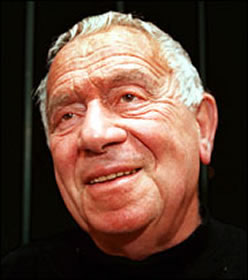
Willem Wilmink (25 oktober 1936 – 2 augustus 2003)


De Israëlische schrijver Amos Oz, (eig. Amos Klausner) werd geboren in Jeruzalem op 4 mei 1939. Zie ook alle tags voor Amos Oz op dit blog.


Uit: Scenes From Village Life


“The stranger was not quite a stranger. Something in his appearance repelled and yet fascinated Arieh Zelnik from first glance, if it really was the first glance: he felt he remembered that face, the arms that came down nearly to the knees, but vaguely, as though from a lifetime ago.   The man parked his car right in front of the gate. It was a dusty, beige car, with a motley patchwork of stickers on the rear window and even on the side windows: a varied collection of declarations, warnings, slogans and exclamation marks. He locked the car, rattling each door vigorously to make sure they were all properly shut. Then he patted the hood lightly once or twice, as though the car were an old horse that you tethered to the gatepost and patted affectionately to let him know he wouldn’t have long to wait. Then the man pushed the gate open and strode toward the vine-shaded front veranda. He moved in a jerky, almost painful way, as if walking on hot sand.   From his swing seat in a corner of the veranda Arieh Zelnik could watch without being seen. He observed the uninvited guest from the moment he parked his car. But try as he might, he could not remember where or when he had come across him before. Was it on a foreign trip? In the army? At work? At university? Or even at school? The man’s face had a sly, jubilant expression, as if he had just pulled off a practical joke at someone else’s expense. Somewhere behind or beneath the stranger’s features there lurked the elusive suggestion of a familiar, disturbing face: was it someone who once harmed you, or someone to whom you yourself once did some forgotten wrong?   Like a dream of which nine-tenths had vanished and only the tail was still visible.   Arieh Zelnik decided not to get up to greet the newcomer but to wait for him here, on his swing seat on the front veranda.   As the stranger hurriedly bounced and wound his way along the path that led from the gate to the veranda steps, his little eyes darted this way and that as though he were afraid of being discovered too soon, or of being attacked by some ferocious dog that might suddenly leap out at him from the spiny bougainvillea bushes growing on either side of the path.   The thinning flaxen hair, the turkey-wattle neck, the watery, inquisitively darting eyes, the dangling chimpanzee arms, all evoked a certain vague unease.”  


 1150318-bee5c7a3bb001d58c8132e9b3ea6fd14.jpg

Amos Oz (Jeruzalem, 4 mei 1939)


De Nederlandse schrijver Christiaan Weijts werd geboren in Leiden op 4 mei 1976. Zie ook alle tags voor Christiaan Weijts op dit blog.


Uit: De laatste enclave voor de geest. Een dag in het NIAS


“13.00 De reden voor het Limburgs zuurvlees wordt duidelijk: er valt een delegatie van een man of twintig binnen, bijna allemaal met een rugzakje op, merkwaardigerwijs. Navraag leert dat het om een afvaardiging gaat van het P.J. Meertensinstituut, die in onze conference building een workshop over ‘lokale identiteiten’ volgt, en de Limburgse in het bijzonder.
Een cultureel-antropoloog naast me aan tafel, Erik Bähre, is zelf Limburger van geboorte. ‘Zuurvlees wordt traditioneel van paardenvlees gemaakt,’ weet hij. Bij voorkeur van een witte schimmel, antwoord ik.     Erik was gisteravond namelijk op de rug van zo’n dier het terrein op komen rijden, met een mijter, baard en staf, geflankeerd door Jo Spaans (theologe aan de Universiteit Utrecht) als hoofdpiet. Het was voor het eerst in mijn leven dat het er allemaal exact uitzag als in de prentenboeken, compleet met sikkelmaan die door de kale boomtakken scheen.
Gistermiddag had er een lezing over Zwarte Piet op het programma gestaan, die wegens ziekte verviel. Ik vermoed dat anders de jaarlijkse discussie over het racistische karakter van het Sinterklaasfeest aan de orde was gekomen.
We hebben nogal wat fellows uit Nigeria en Kameroen, en dat mijn zoon (2) ze abusievelijk voor Zwarte Piet aanzag, is gênant maar vergoelijkbaar. Toen we echter collectief het ‘Daar wordt aan de deur geklopt’ inzetten, murmelen we wat ongemakkelijk bij de frase: Ook al ben ik zwart als roet, ‘k meen het toch goed.
Voor die Afrikaanse jongens is het hier trouwens al helemaal het paradijs op aarde. Ayo Ojebode (van de universiteit van Ibadan, Nigeria) schrijft er een vermakelijke serie over op de site van de Wereldomroep – ‘Africans going Dutch’. Verbaasd staart hij naar onze fietspaden en trottoirs: ‘We don’t have walkways in most cities and so, animals, beggars, pedestrians, cyclists (okada), car drivers, bus drivers, tanker drivers struggle over the same piece of poor road. (…) In Holland students ask each other, “How’s study?” In Nigeria, students ask “How are you surviving?” As if life is warfare or a plague.’


 1150318-fa895e14e6b3740eb77a1c877f885c8a.jpg

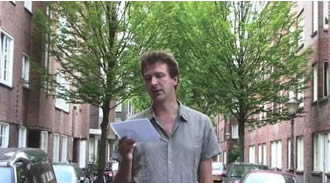
Christiaan Weijts (Leiden, 4 mei 1976)


De Vlaamse schrijfster
Monika van Paemel werd geboren op 4 mei 1945 in Poesele in Oost-Vlaanderen. Zie ook alle tags Monika van Paemel op dit blog.


Uit: De mens in de stroom van de tijd. Het vrouwbeeld in het werk van Hella Haasse


„Toen de leden van het bestuur van de Maatschappij der Nederlandse Letterkunde mij vroegen om ‘het vrouwbeeld’ in het werk van Hella Haasse te bespreken: dat is driemaal vrouwelijk, heb ik overwogen de heren in dit gezelschap te vragen de zaal te verlaten, zodat wij dit onderwerp onder deskundigen konden afhandelen. Ik doe dit niet omdat seksisme mij vreemd is, en vooral omdat noch de persoon noch het werk van Hella Haasse zich voor een dergelijke eenzijdige interpretatie leent.

In de eerste romans van Hella Haasse zijn de hoofdpersonages mannen. Net zoals in het werk van mannelijke auteurs vrouwelijke hoofdpersonages voorkomen. Dat is bij schrijvers, vrouwelijk of mannelijk, niet onnatuurlijk.

Wat bij Hella Haasse meteen opvalt is dat zij ook in haar mannelijke personages de mens, of het menselijke, vóór het seksgebondene stelt. Dit in tegenstelling met het vrouwbeeld zoals wij dat uit het werk van veel schrijvers kennen, waar de stereotiepen, of datgene wat als typisch vrouwelijk geldt, vóór het persoonlijke of het menselijke komt.

In Oeroeg, het prozadebuut van Hella Haasse, staat de ambivalente verhouding tussen het Indische en het Hollandse kind centraal. Is het toeval dat Oeroeg en zijn vriend jongens zijn, of is de ontwikkeling van de hoofdpersonages - de vrienden staan niet alleen emotioneel, maar ook politiek-maatschappelijk tegenover elkaar, in de historische context - eerder een, tussen aanhalingstekens, ‘mannelijk gebeuren’? Oeroeg is tevens het afscheid van het land van herkomst, een afscheid dat ook een breuk is, waardoor een bewustzijnsproces op gang komt dat veelzijdig is, en naast het persoonlijke ook een historische dimensie heeft. Het standpunt van de schrijfster, het omvatten van het algemene in het persoonlijke, waarbij de menselijke verhoudingen belangrijker zijn dan de geslachtelijke, zonder die te miskennen of te onderschatten, is vanaf het eerste werk betekenisvol voor deze auteur.“


 1150318-7652413b856bd680ce3455ca68631d21.jpg

Monika van Paemel (Poesele, 4 mei 1945)


Zie voor nog meer schrijvers van de 4e mei ook mijn vorige blog van vandaag.
Geschreven door Romenu om 18:20 Reageer op dit bericht

Graham Swift, David Guterson, Jan Mulder

De Engelse schrijver Graham Swift werd geboren op 4 mei 1949 in Londen. Zie ook alle tags voor Graham Swift op dit blog.


Uit: Wish You Were Here


“There is no end to madness, Jack thinks, once it takes hold. Hadn’t those experts said it could take years before it flared up in human beings? So, it had flared up now in him and Ellie.

Sixty-five head of healthy-seeming cattle that finally succumbed to the rushed-through culling order, leaving a silence and emptiness as hollow as the morning Mum died, and the small angry wisp of a thought floating in it: Well, they’d better be right, those experts, it had better damn well flare up some day or this will have been a whole load of grief for nothing.
So then.
Healthy cattle. Sound of limb and udder and hoof—and mind. “Not one of them mad as far as I ever saw,” Dad had said, as if it was the start of one of his rare jokes and his face would crack into a smile to prove it. But his face had looked like simply cracking anyway and staying cracked, and the words he might have said, by way of a punchline, never left his lips, though Jack thinks now that he heard them. Or it was his own silent joke to himself. Or it’s the joke he’s only arrived at now; “We must be the mad ones.”
And if ever there was a time when Jack’s dad might have put his two arms round his two sons, that was it. His arms were certainly long enough, even for his sons’ big shoulders—both brothers out of the same large Luxton mould, though with all of eight years between them. Tom would have been fifteen then, but growing fast. And Jack, though it was a fact he sometimes wished to hide, even to reverse, already had a clear inch over his father.
The three of them had stood there, like the only life left, in the yard at Jebb Farm.
But Michael Luxton hadn’t put his arms round his two sons. He’d done what he’d begun to do, occasionally, only after his wife’s death. He’d looked hard at his feet, at the ground he was standing on, and spat.”


 1150315-1c25a2b0d546e94309536bbd2798ea7c.jpg

Graham Swift (Londen, 4 mei 1949)


De Amerikaanse schrijver David Guterson werd geboren op 4 mei 1956 in Seattle. Zie ook alle tags voor David Guterson op dit blog.


Uit: Ed King


How wonderful it was – wonderful and surprising – to be attracted to a guy, to want sex. Diane found, once she was naked with him, that there were things she really liked in his performance, including, foremost, that he was relentlessly, acutely, even obsessively servile. It was fine with Ed to spend a half-hour massaging her feet and squeezing her ankles, followed by nearly equal devoted caressing of her shins and calves; next, moving up, he gave substantial attention to her knees and thighs, and when, in her massage trance, she hoped and believed that his hands would surely go where they would do the most good, Ed didn't go there, he flipped her over instead and massaged, kneaded, stretched, rubbed, pinched, flicked, feathered, licked, kissed, and gently bit her shoulders, neck, back, and butt. Again she believed that he was on the verge of getting a hand between her legs, especially when, while massaging the small of her back, he found the tip of her tailbone. How long was he going to go on with the erotic massage and general body worship without getting to her quim? Would he please just go ahead and do something not frustrating? But she knew, before long, what he had to be waiting for. He was waiting for a display of need. So she took him by the wrist and moved the base of his hand into her pubic hair until his middle fingertip settled on the no-man's-land between her 'front parlor' and 'back door' (those were the quaint, prudish terms of her girlhood), she got him on the node between neighbouring needs (both of which had been explored by johns who almost never tarried). She gave him this particular sign, this clear permission, and he began a careful prodding of her perineum, which was as good a starting place as any for Diane, because it instigated those processes of memory her sexuality required. It triggered memories with the uncanny force of déjà vu, and what she thought of, as Ed slaved away, was a boy from her village who had fingered her adroitly in a greenhouse thick with green tomatoes.”


 1150315-079530f846b238bc9257c4d4b5043b7e.jpg

David Guterson (Seattle, 4 mei 1956)


De Nederlandse columnist, schrijver, ex-voetballer, en televisiepersoonlijkheid Jan Mulder werd geboren in Bellingwolde op 4 mei 1945. Zie ook alle tags voor Jan Mulder op dit blog.


Uit: Tom Boonen (Column in Humo, 17 juni 2008)


“Wat zou Tom Boonen hebben bezield toen hij die coke snoof? Je weet toch dat er vliegende controles bestaan? Je weet toch dat het minste of geringste verkeerde tabletje dodelijk kan zijn voor je carrière?

Spelers in de Bundesliga bijvoorbeeld, draaien elk onschuldig dropje voor een verkoudheid of officieel bij de Duitse voetbalbond aangemelde zalfje tegen een eczeemallergie drie keer om en laten het daarna nog eens testen door een onafhankelijke arts voordat ze het inslikken.

Boonen snuift op een dag tussen twee voorjaarsklassiekers in een gram coke.

Niet wegens het gebruik van doping of drugs (zo zwaar was de dosis niet), maar om de ergerlijke, aan onnozelheid en brutaliteit grenzende slordigheid van deze toprenner zou Quick-Step hem op staande voet moeten ontslaan.

Op de persconferentie las Tom Boonen een door een advocatenteam opgestelde verklaring voor. Hij zei nog altijd het vertrouwen van Quick-Step te genieten, maar voorlopig op 'low-profile' te gaan. Ploegleider Lefevre maakte bekend dat ontslag niet aan de orde was geweest, en: 'Tom gaat nu toch even in de wachtstand.'

In de wachtstand.

Het einde van een wielrenner kon niet treffender onder woorden worden gebracht.

Maar is het het einde?

Nee.“


1150315-566caab3edb3ff11ef33b5de39c93320.jpg
Jan Mulder (Bellingwolde, 4 mei 1945)


Zie voor nog meer schrijvers van de 4e mei ook mijn blog van 4 mei 2011 deel 2 en eveneens deel 3.

Geschreven door Romenu om 18:14 Reageer op dit bericht

Jehuda Amichai, Erik Lindner, Ben Elton, Johan de Boose, Jens Wonneberger

De Duits-Israëlische dichter en schrijver Jehuda Amichai werd op 3 mei 1924 geboren in Würzburg. Zie ook alle tags voor Jehuda Amichai op dit blog.


Great Serenity: Questions and Answers


People in a hall that’s lit so brightly
It hurts
Spoke of religion
In the lives of contemporary people
And on the place of God

People spoke in excited voices
Like in an airport
I left them
I opened an iron door that had written on it
“Emergency and I entered within.
Great serenity: Questions and answers


My Father


The memory of my father is wrapped up in
white paper, like sandwiches taken for a day at work.

Just as a magician takes towers and rabbits
out of his hat, he drew love from his small body,

and the rivers of his hands
overflowed with good deeds.


My Child Wafts Peace


My child wafts peace.
When I lean over him,
It is not just the smell of soap.

All the people were children wafting peace.
(And in the whole land, not even one
Millstone remained that still turned).

Oh, the land torn like clothes
That can't be mended.
Hard, lonely fathers even in the cave of the Makhpela*
Childless silence.

My child wafts peace.
His mother's womb promised him
What God cannot
Promise us.


* The traditional burial place in Hebron of Abraham
and the other Patriarchs and Matriarchs of Israel.


Vertaald door Benjamin en Barbara Harshav


 1149500-0de7ab273aa516c63a5abfa039b04c76.jpg

Jehuda Amichai (3 mei 1924 – 22 september 2000)

Foto: Rina Castelnuovo


De Nederlandse dichter Erik Lindner werd geboren op 3 mei 1968 in Den Haag. Zie ook alle tags voor Erik Lindner op dit blog.


Wandeling


Om het Onland, heide met jeneverbesstruik.

Ik kroop onder de struik en vond een kind, een baby nog,
met wit gezicht. De armpjes opgericht alsof ze iets of iemand
wegduwden, afweerden, weerhielden. De handen daarop horizontaal, voetstukken op pilaren. De blik van het kind zei dat het gevaar voorlopig niet was geweken.

Kon ik het oppakken? Kon ik het in mijn armen nemen en
voorovergebogen de geur van het hoofd, de lichte haarinplan-
ting waarnemen? Het kind bezag me met minachting. Ik
inspecteerde het lichaam op kneuzingen, wondjes, schrammen.
Het kind keek mee. Het kind keek waar ik keek.

Verder op de weg staken we een rivier over.


Bomen buigen weg van de kust


Bomen buigen weg van de kust
voor het huis schuift een steiger

de rechte gevel en rechte steiger
zijn bomen die naar je wuiven

het huis vanuit een rijdende tram
helt in de wind die van zee komt

je buigt je hoofd onder de steiger
kijkt naar buiten als je thuis bent.


 1149500-9898f84387b4c34eef4931d69a086107.jpg

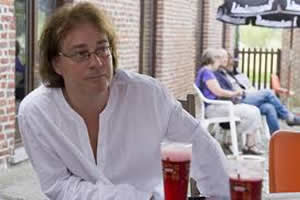
Erik Lindner (Den Haag, 3 mei 1968)


De Belgische dichter en schrijver Johan de Boose werd geboren in Gent op 3 mei 1962. Zie ook alle tags voor Johan de Boose op dit blog.


Uit: De vrijheid van zwijgen


Na elke bocht verandert wat ik wist.
Ik dacht, ik ken het landschap maar
Hoe het zich verwijdert. (Er is iets met het licht.)

*

Ik weet, het zijn de groeven in mijn lichaam.
Het zijn verwensingen van lieverlee
Niet te vermijden. (Afzien van schoonheid.)

*

Reizend heb ik een geduldig lijnenlabyrint
Getekend. Het is de schets van een gezicht,
Mij welbekend. (Een spiegelschrift.)

*

Ik blijf vertrekken en verdwalen. Het is
Nooit af. Sta toe dat anderen gaan baden
In de volgelopen holten. (Waken in liefde.)


 1149500-0736ab44ea50ad2e2a1ba292987b174d.jpg

Johan de Boose (Gent, 3 mei 1962)


De Britse schrijver en komiek Ben Elton werd geboren in Londen op 3 mei 1959. Zie ook alle tags voor Ben Elton op dit blog.


Uit: Chart Throb


'I just want this so much,' she repeated. 'I really, really do. I want it so much. It's all I ever wanted. Since I was a little girl . . . It's my . . . It's my . . .'
At the very last linguistic hurdle, emotion defeated Shaiana and words failed her.
'Dream?' Keely coaxed. 'Is it your dream? Is that what you're trying to tell us? That it's your dream?'
'That's right, Keely,' Shaiana sniffed. 'That is so right. It's my dream.'
Keely's bronzed, cadaverously muscular arms enfolded Shaiana's shoulders. Momentarily entwined, they made quite a contrast: the golden girl and the girl with the dream. It all looked slightly uncomfortable as Shaiana's arm (the one which she had raised to wipe away the famous tear) became trapped in Keely's skeletal embrace. Briefly Shaiana's hand rested in the hollow of Keely's armpit and Keely's teeth rattled against Shaiana's big hoop earrings. Neither woman seemed to notice the awkwardness or if they did, they did not care. Emotions were running too high. It was all too much.
'You go, girl,' Keely whispered. 'Just you go, girl.'
'Yeah,' Shaiana sniffed, raising her eyes towards what would have been the stars had it not been daytime and had she not been indoors. 'God gave me this chance and I'm going to rock their asses!'


 1149500-cae12d80ca65da871424a4b034a19e45.jpg

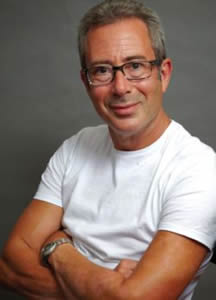
Ben Elton (Londen, 3 mei 1959)


De Duitse schrijver
Jens Wonneberger werd in Großröhrsdorf geboren op 3 mei 1960. Zie ook alle tags voor Jens Wonneberger op dit blog.


Uit: P. Dienemann Nachf.


„P. Dienemann Nachf., Buchhandlung und Antiquariat, befindet sich in der Nähe vom Bahnhof Neustadt in einem alten Haus, dessen Eingang man nur über den Hof erreicht.
Vor der Haustür liegt ein Gitterrost aus Stahl. Bitte die Füße abtreten, steht auf einem Schild an der Haustür.
Vor der Zwischentür liegt ein Fußabtreter aus Bürsten. Bitte die Füße abstreichen, steht auf einem Schild an der Zwischentür.
Vor der Ladentür liegt eine Fußmatte aus Kokos. Auf dem Schild an der Ladentür steht, Bitte die Füße sorgfältig abstreichen.
P. Dienemann Nachf. ist privat. Privat heißt, daß am Montag geschlossen ist. Hier gehen die Uhren anders, sagt Fräulein Leukroth. Fräulein Leukroth ist die Tochter des Nachfolgers und in einem Alter, in dem das Wort Fräulein eine Offenbarung ist. Sie kommt jeden Morgen mit gesenktem Kopf und kleinen, schnellen Schritten in das Geschäft. Jeden Morgen trägt sie ein anderes Kleid. Die Kleider sehen alle gleich aus. Jeden Morgen trägt Fräulein Leukroth einen Stoffbeutel ins Geschäft, der aussieht wie ihr Kleid. Wenn sie kommt, hat sie einen steifen Arm, der beim Gehen fast den Boden berührt. Bevor sie das Geschäft betritt, hat sie sich zweimal normal und einmal sorgfältig die Schuhe abgetreten. Das Linoleum im Laden ist so oft gebohnert worden, daß es kein Muster mehr hat, nur auf den vier kleinen Kreisen um die Füße eines Tisches ist es noch zu erkennen.“


 1149500-8ba4c24655808427d49a528434c2b22e.jpg

Jens Wonneberger (Großröhrsdorf, 3 mei 1960)


Zie voor nog meer schrijvers van de 3e mei ook mijn vorige blog van vandaag.
Geschreven door Romenu om 18:08 Reageer op dit bericht

Klaus Modick, Tatjana Tolstaja, Agnès Desarthe, Paul Bogaert, Juan Gelman

De Duitse schrijver Klaus Modick werd geboren in Oldenburg op 3 mei 1951. Zie ook alle tags voor Klaus Modick op dit blog.


Uit: Vatertagebuch


“Freitag, 2. Januar
Emily und Marlene sind auf dem Land aufgewachsen, haben ihregesamte Kindheit bis in die Pubertät zwischen Feld, Wald,Wiesen und See im Mollberger Haus verbracht.
Dennoch wissensie nicht recht, wie mit der umständlichen und antiquierten Technikdes Hauses umzugehen ist. Die Wasserversorgung an- undabzustellen, die Heizungen und Öfen zu bedienen, haben sienicht gelernt, weil das immer von den Erwachsenen erledigt wurde.Jetzt, da sie das Haus nutzen wollen, wächst ihnen mit derleipraktischen Mühen auch Selbständigkeit und Verantwortung zu.Erwachsensein ist eine lästige Angelegenheit.
Ich fahre nach Mollberg, um nachzusehen, ob Marlene nachder Party dort das Haus aufgeräumt und winterfest hinterlassenhat; etwas schlechtes Gewissen dabei, weil's so nach Kontrolettiaussieht, rechne zwar nicht mit Chaos, aber doch mit geöffnetenFenstern oder/und laufenden Heizungen. Es ist aber alles tadellosin Ordnung. Das Haus, das immer freundliche Geborgenheitausgestrahlt hat, deprimiert mich in seiner verlassenen Kälte undklammen Unbewohntheit. Seit unserem Umzug vor dreieinhalbJahren haben wir dort kaum einen Handschlag investiert. SchleichenderVerfall macht sich breit, den man spüren, sehen und riechenkann, und sobald die Haustür von außen verschlossen ist,tanzen wieder die Mäuse auf dem Tisch. Wir müssen das Hauswohl verkaufen; die Doppelbelastung können wir uns langfristignicht leisten, und die kommenden Jahre werden finanziell nichtleichter. Als Idylle ihrer Kindheit bleibt das Haus den Mädchenvermutlich sogar besser im Gedächtnis, wenn es ihnen real nichtmehr zugänglich ist.”


 1149499-533acc071ada039889b4fb1ba39e6b07.jpg

Klaus Modick (Oldenburg, 3 mei 1951)


De Russische schrijfster Tatjana Tolstaja werd geboren op 3 mei 1951 in Leningrad. Zie ook alle tags voor Tatjana Tolstaja op dit blog.


Uit: The Tragedy Of Tolstoy


“First Memories of Yasnaya Polyana

     We are playing lotto. Father enters, his hands behind his leather belt, and looks at us smiling. I feel a great desire to make him like me.

     I cannot read yet, but know by heart the inscriptions under all the pictures in my book and pretend to read aloud -- "The spruce is always green," and "The June bug is brown" -- at the same time looking sideways to see what impression it makes on him. He is laughing.

     Everything that surrounded father seemed especially important: his study with the vaulted ceiling into which big rings were screwed; [Footnote: It was said that in the days when Prince N. S. Volkonskiy owned the house this had been a storeroom and hams were hung on those rings in the ceiling.] the desk, the big, old- fashioned armchair -- so long that one could stretch out in it as if in a bed; and the peculiar smell, perhaps of leather and perhaps of old paper, which emanated from all his things. It could not possibly occur to me to take a pencil away from his desk or to draw a smiling or a melancholy pig on one of the scraps of paper that littered it.

     What a joyous event it was when father played with us! All of a sudden, after dinner, he would call, "Little ones, come along!" We excitedly run and skip after him to his study. In the corner, near grandfather's old-fashioned red washstand, stands a laundry basket. Father throws some rags out of it. "Get in! Who's first?" Vanichka goes in first, because he is the younger. The lid is closed and the basket is carried by father with the help of one of the family or a house guest. Usually this is the task of Aleksandr Nikiforovich Dunayev -- Nikiforych as we call him -- a friend of the family who is very fond of Vanichka and me. Vanichka in the laundry basket is being carried all over the house, I am running after. Finally the basket is deposited in some unusual place -- under the table or on the dresser or in some dark corner. "Vanichka, now guess where you are!" But Vanichka cannot guess, he is too little for that; he only likes to have a ride.“


 1149499-a926629362d3c4c2c260b20618577784.jpg

Tatjana Tolstaja (Leningrad, 3 mei 1951)


De Franse dichteres en schrijfster Agnès Desarthe werd geboren op 3 mei 1966 in Parijs. Zie ook alle tags voor Agnès Desarthe op dit blog.


Uit: La légende du Baron Hachem


„Quand il lui arrivait d'apercevoir son reflet dans un miroir, il songeait qu'une douche serait la bienvenue, mais son cerveau reprenait aussitôt le dessus. Cela peut encore attendre, se disait-il, inutile d e gaspiller du bon savon et de la bonne eau. Il se servait un bol de soupe, dans lequel il avait jeté un flan à la vanille, histoire de faire d'une pierre deux coups, et se rassurait en se répétant que le bien le plus précieux était la faculté de penser et qu'aucune de ses nouvelles manières ne venait l'entraver. Au contraire, il gagnait un temps fou; ce qui le confortait dans l'idée qu'il avait découvert un système de vie tout à fait mirobolant.
Le seul ennui, c'était la solitude, chaque jour grandissante. Les commerçants eux-mêmes refusaient de le servir et sa famille se détachait de lui. Les visites, se firent, puis inexistantes. Les habitants du village ne lui parlaient plus, il parlaient de lui et c'était même un de leurs sujets favoris. Celui qui, autrefois avait porté le surnom de grand sage, se faisait maintenant appeler le grand sale et les gens riaient, ils riaient et se vengeaient, de quoi? C'est un mystère qui en vaut un autre. Toujours est-il que la réputation du Baron Hachem était épouvantable.
Dans ce désert, une seule personne se tourna vers lui. C'était Malki, le voyou.
- Vous et moi, on est pareils, lui dit-il un jour.
- Comment ça, demanda le Baron Hachem, tout étonné qu'on lui adresse la parole.
- Personne ne nous aime, mais on s'en fiche. On se fiche de tout et surtout des autres.
- Jeune homme, dit le Baron Hachem, tu te méprises. J'aime mes semblables et je fais tout ce qui est en mon pouvoir pour améliorer leur quotidien en mettant à l'épreuve la sagesse de mon grand âge.“


 1149499-0f2cc968e5b0d8f3783c961d9adee79e.jpg

Agnès Desarthe (Parijs, 3 mei 1966)


De Vlaamse dichter en schrijver Paul Bogaert werd geboren in Brussel op 3 mei 1968. Zie ook alle tags voor Paul Bogaert op dit blog.


WELCOME HYGIENE


Wat je zei was onverdund.
En het bleek ook efficiënt:
ik zie niks meer. Mijn hoofd is proper
nu en wit. Het is gedaan.

Ik duwde eerst mijn ogen in
en hield mijn hoofd naar achteren.
Dan goot ik de gaten vol
met eau de javel en white spirit.

Dat alles weggaat is een waan.
Het is de lucht die ijlig is.
Geef me tijd om bij te komen.

Begraaf me waar ik water
vroeg en laat me zijn - buiten bereik -
van vis.


Dit is de eeuw van de knoppen


Dit is de eeuw van de knoppen.
Elke foto wordt sceptisch bekeken,
ook al toont ze de realiteit.
Flatteus verlicht en charmant gekadreerd
lijkt elk zwembad de moeite (privé).


Dit is de eeuw van de weldoeners
en de doorligwond. Echte schapenvacht
vermindert de schuifkrachten.
Synthetische schapenvacht wordt afgeraden.
Dit is de eeuw van de moeilijk te sluiten peignoir.


Dit is de eeuw ook van medleys helaas,
van spierwitte luxe en voodoo en stocks.
Elke dag sterven er mensenvrienden.
We zijn zeker van bijkans niks.
Maar we tonen ons lichaam zoals het is.


 1149499-ca86ef81a91ece6d8b06be163e62e33a.jpg

Paul Bogaert (Brussel, 3 mei 1968)


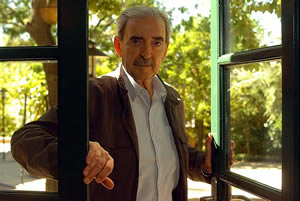
De Argentijnse dichter Juan Gelman werd geboren op 3 mei 1930 in Buenos Aires. Zie ook alle tags voor Juan Gelman op dit blog.


Gotan

The woman was like the word never,
a special charm rose up from her neck,
a kind of forgetfulness where her eyes were safe,
the woman settled in my left side.

Watch out watch out I'd scream watch out
but she possessed me like love, like the night,
and the last signals I made that autumn
settled down quietly under the surf of her hands.

Sharp sounds exploded inside me,
rage, sadness, fell down in shreds,
the woman came down like a sweet rain
on my bones standing in the solitude.

She left me shivering like someone condemned
and I killed myself with a quick knife-thrust,
I'll spend all my death laid out with her name,
it will be the last thing to move my lips.


He was born on the edge of a disastrous day

he was born on the brink of a disastrous day
face to face with another just like it but
in the split or opening between the two
he had a kind of warm feeling so

he saw happiness
as a sudden break
in the heart of those identical
doomed barren painful times

when his life was snuffed out
his eyes were soft with subdued anger
or were falling like autumn leaves
in hard transparent sheets

that toured the world
and toured the heart
yet no one breathed a word
to sergeant MacIntire about this


Vertaald door Hardie St. Martin


 1149499-8e7d5724b1f606eaa69cc724f9b747f3.jpg

Juan Gelman (Buenos Aires, 3 mei 1930)


Zie voor nog meer schrijvers van de 3e mei ook mijn blog van 3 mei 2001 deel 3.

Geschreven door Romenu om 18:02 Reageer op dit bericht

Meer van Romenu

↑ Terug naar de berichten