

Naar de inhoud

Romenu

Over literatuur, gedichten, kunst en cultuur
akke.beakke.be

Berichten van 25 mei 2012 tot 26 mei 2012

Alan Hollinghurst, Radwa Ashour, Hugo Raes, Maxwell Bodenheim
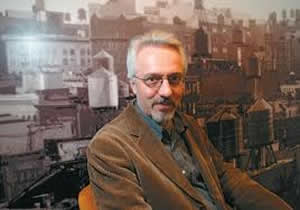
De Britse schrijver Alan Hollinghurst werd geboren op 26 mei 1954 in Stoud, Gloucestershire. Zie ook alle tags voor Alan Hollinghurst op dit blog.


Uit: The Stranger’s Child


„She’d been lying in the hammock reading poetry for over an hour. It wasn’t easy: she was thinking all the while about George coming back with Cecil, and she kept sliding down, in small half-willing surrenders, till she was in a heap, with the book held tiringly above her face. Now the light was going, and the words began to hide among themselves on the page. She wanted to get a look at Cecil, to drink him in for a minute before he saw her, and was introduced, and asked her what she was reading. But he must have missed his train, or at least his connection: she saw him pacing the long platform at Harrow and Wealdstone, and rather regretting he’d come. Five minutes later, as the sunset sky turned pink above the rockery, it began to seem possible that something worse had happened. With sudden grave excitement she pictured the arrival of a telegram, and the news being passed round; imagined weeping pretty wildly; then saw herself describing the occasion to someone, many years later, though still without quite deciding what the news had been.
In the sitting-room the lamps were being lit, and through the open window she could hear her mother talking to Mrs. Kalbeck, who had come to tea, and who tended to stay, having no one to get back for. The glow across the path made the garden suddenly lonelier. Daphne slipped out of the hammock, put on her shoes, and forgot about her books. She started towards the house, but something in the time of day held her, with its hint of a mystery she had so far overlooked: it drew her down the lawn, past the rockery, where the pond that reflected the trees in silhouette had grown as deep as the white sky. It was the long still moment when the hedges and borders turned dusky and vague, but anything she looked at closely, a rose, a begonia, a glossy laurel leaf, seemed to give itself back to the day with a secret throb of colour.“


 1165048-0a9db8a1eb9beeecc97f0d6d1767b653.jpg

Alan Hollinghurst (Stoud, 26 mei 1954)


De Egyptische schrijfster en literatuurwetenschapster Radwa Ashour werd geboren op 26 mei 1946 in Caïro. Zie ook alle tags voor Radwa Ashour op dit blog.


Uit: Spectres (Vertaald door Barbara Romaine)


„The valley was full of ghosts. Silent ghosts that tilted with the setting sun to settle in their turn into the depths of the earth, where the shrouded river carried them on boats in its headlong course toward the east. Silence. Then a sound—faint at first and then rising, it would still be echoing in the valley years hence.

She heard only the three that particularly concerned her: her husband and her two brothers. They had gone, and would not return. The door was closed upon their voices, closed tightly and locked with a key secured within her breast. She carried on. She was twenty-five years old, she had two children and a third still in her belly. Six months later she gave birth to a girl.

"I will tend the little ones and my bit of land, and it is no one's business but my own."

Her cousins hated her independence, hated her refusal to marry any of them, and then they hated her capability in managing her own affairs day by day, as if she were not a woman. Even when their anger subsided—the open and the covert hostility—still they kept watching her, waiting out the test of time, to prove to her and to themselves that it was futile to try to break with the customs established by their fathers and grandfathers. She disappointed them. She raised the children, and their needs were met. Still the men's eyes followed her. She was beautiful, and her inaccessibility only made her more appealing. She did not miss out on participating in celebrations and lamentations: she sang at weddings, and at funerals she surpassed the professional mourners, no matter how much they improvised.

"Shagar is stubborn and arrogant!"

"Shagar is strong, above shame!"

They calmed down, and once again made a place for her among them; she accompanied the women carrying jars of water from the river or going to it with their tubs for the washing. Those men who had desired her, or loved her regardless, concealed their desire, pretending to forget it until it seemed, in fact, forgotten.“


1165048-db3b0d45e009a6b3dc2a7e0be1db4c95.jpg 

Radwa Ashour (Caïro, 26 mei 1946)


De Belgische schrijver Hugo Raes werd geboren in Antwerpen op 26 mei 1929. Zie ook alle tags voor Hugo Raes op dit blog.


van A naar M loopt de rechte  (fragment)


Het trapeziumvormig vlak boven een rechte verdwijnt langzaam, wordt

zacht onmerkbaar.

Het blijft zichtbaar onmerkbaar.

Een punt zet zich in beweging bij S en schuift zichzelf zijnde vooruit.

Tot het vertraagt.

Tot het vertraagt en stilhoudt.

En plots zich splitst.

Twee uiterst kleine prisma's zijn het nu, die zich van mekaar verwijde-

 ren, het ene steil omhoogstijgend, het andere loodrecht naar beneden

de diepte in.

Het vacuum schijnt nu te beginnen daveren als de lucht in een wind-

tunnel, te wapperen tegen enorme snelheid, windgolven.

Maar alles is rustig stil.

En geen gerucht geen beweging meer. De tegenover elkaar liggende

pieken reiken tot in het niet, zijn volledig verdwenen.

Een concave welving ontstaat en verdwijnt links, terwijl ze later vol-

tooid wordt.

En herbegint.

En verdwijnt.

En aldus een bewegende welving.

Het net der lijnen ligt tegen veranderde achterruimte, overalruimte,

zwarte ruimte geworden.


Met grote open lichtplekken nabij of in de omgeving van john.

Een ribbeltracé gaat over in een kam, een rug, in andere dimensie.

Een grote berg van niets verrijst.

Soort klotsen, golven, kabbelen van water?


En plots is het daar, is het daar is Er iets het komt nader, rennend,

snellend het schiet vooruit naderend tegen onvoorstelbare snelheid, het

wervelt gloeiend het is er

de lijn in de nabijheid van ontbrandt en brandende lijn schiet recht

naar H’, verdwijnend van B weg naar F toe

Nu is de brandende weg.

Het schemer neemt andere eivorm aan.

Een grote, tot kleiner afmetingen krimpende schaal groeit tot een verte,

gelijktijdig, mindert tot een ander niets gelijktijdig.

De ovaal van tussenlicht neemt inhoud, al de lijnen beginnen te be-

wegen in zichzelf, op te rukken in zichzelf, zijn bewegend tussen hun

plaatspunten.

Zijn snellend zichzelf onbewogen snellend.

Het schemeren versterkt donkerend.

Een lichtpuntje ontstaat, zwelt, omvat.

Het lichtpunt is het net, de lijnen de niveaus

de gloeiing, de parabool, de kruisende hyperbolen, het

eischemer


GOD


 1165048-ec58582529fa1c1dd5e0e2a0ff817eb2.jpg

Hugo Raes (Antwerpen, 26 mei 1929)


De Amerikaanse dichter en schrijver Maxwell Bodenheim werd geboren op 26 mei 1892 in Hermanville, Mississippi. Zie ook alle tags voor Maxwell Bodenheim op dit blog


Advice To a Butterfly


Aimless petal of the wind,

Spinning gently weird circles,

To the flowers underneath

You are a drunken king of motion;

To the plunging winds above

You are momentary indecision.


Aimless petal of the wind,

Waver carelessly against this June.

The universe, like you, is but

The drowsy arm of stillness

Spinning gently weird circles in his sleep.


Advice To a Forest


O trees, to whom the darkness is a child

Scampering in and out of your long, green beards;

O trees, to whom sunlight is a tattered pilgrim

Counting his dreams within your hermitage

And slipping down the road, in twilight robes;

O trees, whose leaves make an incense of sound

Reeling with the beat of your caught feet,

Do not mingle your tips in startled hatred,

When little men come to fell you.

These men will saw you into strips

Of pointed brooding, blind with paint,

But underneath you men will chase

The grey staccato of their lives

Down a glaring maze of walls

Much harder than your own.

And when, at last, the deep brown gaze

Of stolidly amorous time steals over you,

The little men who bit into your hearts

Will stray off in a patter of rabbits' feet.

Look down upon these children then

With the aloof and weary tolerance

That all still things possess,

O trees, to whom the darkness was a child

Scampering in and out of your long, green beards.


 1165048-e750e1161eda14e79a959e51bab78a96.jpg

Maxwell Bodenheim (26 mei 1892 – 6 februari 1954)


Zie voor nog meer schrijvers van de 26 mei ook mijn blog van 26 mei 2011 deel 1 en eveneens deel 2.
Geschreven door Romenu om 13:08 Reageer op dit bericht

Eve Ensler, Friedrich Dieckmann, Egyd Gstättner, Claire Castillon, Raymond Carver

De Amerikaanse schrijfster en feminste Eve Ensler werd op 25 mei 1953 in New York geboren. Zie ook alle tags voor Eve Ensler op dit blog.


Uit: Insecure at Last


„All this striving for security has in fact made you much more insecure. Because now you have to watch out all the time. There are people not like you, people you now call enemies. You have places you cannot go, thoughts you cannot think, worlds you can no longer inhabit. So you spend your days fighting things off, defending your territory, and becoming more entrenched in your narrow thinking. Your days become devoted to protecting yourself. This becomes your mission. This is all you do. You collect canned goods or bottles of water. You ?nd ways to get as much money as you can, and food and oil, in spite of how much you have to take from other people or the methods you have to devise in order to take it. You submit to security systems to check your pockets and IDs and bags. Every object becomes a potential weapon. One week it’s tweezers, the next week it’s rubber bands.

Of course you can no longer feel what another person feels because that might shatter your heart, contradict your stereotype, destroy the whole structure. Ideas get shorter—they become sound bites. There are evildoers and saviors. Criminals and victims. There are those who, if they are not with us, are against us.

It gets easier to hurt people because you do not feel what’s inside them. It gets easier to lock them up, force them to be naked, humiliate them, occupy them, invade them, kill them—because they do not exist. They are merely obstacles to your security.

How did we, as Americans, come to be completely obsessed with our individual security and comfort above all else? What do we think we mean when we talk about security, and what do we really mean? Whose security are we talking about? Is it possible to live surrendering to the reality of insecurity, embracing it, allowing it to open us and transform us and be our teacher? What would we need in order to stop panicking, clinging, consuming, and start opening, giving— becoming more ourselves the less secure we realize we actually are? How has the so-called war on terrorism given rise to this mad national obsession for homeland security, which has actually made us much more insecure at home and in the world?“


 1164736-4435358d1058c1b89a3a35fa5a52e680.jpg

Eve Ensler (New York, 25 mei 1953)


De Duitse schrijver Friedrich Dieckmann werd geboren op 25 mei 1937 in Landsberg an der Warthe. Zie ook alle tags voor Friedrich Dieckmann op dit blog.


Uit: Freiheit ist nur in dem Reich der Träume (Schillers Jahrhundertwende)


„Aber was hätte er sonst tun sollen, er, der Ehrenbürger einer Republik, mit der ganz Deutschland im Kriege lag! Philosophie hatte er getrieben und sein Lager hinter den Fronten aufgeschlagen, sein Marketenderzelt – er mußte lachen, als ihm das einfiel –,das er als den dritten Weg angepriesen hatte, das rettende Dritte zwischen dem Vernunft- und dem Naturstaat, womit er höflicherweise diesen verrotteten alten Ständestaat bezeichnet hatte, in dem er sich mit seiner Frau eingerichtet hatte, so gut es ging. Er gab immerhin einen gewissen Spielraum für seinen Staat, für den Kunststaat, und war Weimar nicht selbst solch ein Kunststaat, trotz der Generalsambitionen des Herzogs, der nicht vergessen konnte, daß er der Großneffe des großen Friedrich war! Sein Land war zu klein für kriegerische Allüren, Carl August hatte bei den Preußen in Dienste treten müssen, um ein Kommando zu bekommen, das war lästig für die einheimischen Finanzen, aber es legte die Kunst

nicht lahm, erst recht nicht, seit die Preußen Frieden mit Frankreich gemacht hatten, hinter Österreichs Rücken – nicht aus plötzlich erwachter Liebe zu der fränkischen Republik, sondern um nicht aufgerieben zu werden zwischen Ost und West. Dieser Frieden hatte nicht nur Weimar Luft verschafft, sondern vor allem ihm selbst, die Dichtung war ihm wiedergekehrt, im Bund mit dem, der so lange einen Bogen um ihn gemacht hatte. Es war wie ein Wunder gewesen, dem er selbst, versteht sich, ein Stück weit nachgeholfen hatte.“


 1164736-c0752aac0ca458993ffb349ce36a0e35.jpg

Friedrich Dieckmann (Landsberg an der Warthe, 25 mei 1937)


De Oostenrijkse schrijver en essayist Egyd Gstättner werd geboren op 25 mei 1962 in Klagenfurt. Zie ook alle tags voor Egyd Gstättner op dit blog.


Uit: Schreckliches Kind


„Am 25. Juni 1952 hat, wie meine familienhistorischen Recherchen ergeben haben, die Hauptschullehrerin Gelautz meiner Großmutter mütterlicherseits bei einer sogenannten pädagogischen Unterredung mitgeteilt, daß ihre Tochter unmusikalisch sei und ein schlechtes Gehör habe. Dieses fachkundige Urteil der Frau Gelautz war insofern schicksalshaft und hatte für meine Mutter und für mich insofern fatale Konsequenzen, als meine Mutter eigentlich von ganzem Herzen Volksschullehrerin werden wollte, und wäre es ihr tatsächlich gelungen, Volksschullehrerin zu werden oder wenigstens die Volksschullehrerinnenausbildung zu beginnen, hätte sie sich nicht um eine Stelle im Geschäft meiner Großmutter väterlicherseits beworben, hätte also aller Wahrscheinlichkeit nach meinen Vater nicht kennengelernt, und ihr Leben hätte als angehende Volksschullehrerin vermutlich eine völlig andere, jedenfalls nicht zu mir führende Bahn genommen. Eine Volksschullehrerin mußte aber zwei Instrumente beherrschen und durfte daher nicht unmusikalisch sein oder ein schlechtes Gehör haben. [...]
Meine Mutter sagt immer: Die Zeiten waren strenger. Eine Respektsperson duldete keine Widerrede. Und die Gesellschaft war offenbar ganz genau in Respektspersonen und Respektspersonen respektierende Personen eingeteilt. Wenn die Frau Gelautz der Großmutter verkündet, daß ihre Tochter unmusikalisch ist, dann ist die Tochter unmusikalisch, und die Großmutter und die Tochter haben sich mit dieser diagnostischen Tatsache gefälligst abzufinden, und sie haben sich auch gefälligst damit abgefunden. Wenn die Tochter unmusikalisch und daher für die Volksschullehrerinnenausbildung ungeeignet und untauglich ist, muß sie eben einen anderen Beruf erlernen, in dem man keine Instrumente spielen können muß, wenn sie schon partout einen Beruf erlernen will. Die Tochter hat überaus froh und dankbar und überglücklich sein müssen, daß sie überhaupt in eine Lehr gehen darf, denn die Großmutter hat sich die Lehre vom Mund absparen müssen.“


1164736-1d8e5852a01d32f83aaebd47cfa3c9f4.jpg 

Egyd Gstättner (Klagenfurt, 25 mei 1962)


De Franse schrijfster Claire Castillon werd geboren op 25 mei 1975 in Neuilly-sur-Seine. Zie ook alle tags voor Claire Castillon op dit blog.


Uit: Dessous, C'Est l'Enfer


"J'ai demandé du temps pour répondre oui ou non. L'âne a décrit sa flamme, profondeur, poids, mesure, mariage, si ça me plaît. Il veut s'occuper de moi. Tout en commun, dit-il, ensemble et pour la vie, la route et les chemins, même l'univers intime, on le cultive sous le nez de l'autre, même la question du chat à offrir à sa mère. Il faudra que je pense à décrire la tête de l'âne, endive, enfant de choeur, poire cuite, à ce moment-là. Un bébé chat, tu parles, un chaton pour sa mère, une formidable surprise, dans un panier ou pas, noeud rouge, noeud blanc ? Mariage donc, tout ensemble, il le jure. Je garde juste ma mort et mes souvenirs, enfance, adolescence, adulte et adultère. Une belle fête, promet-il, une robe de princesse, un buffet, un orchestre, des bougies, des roses pompon, et des casseroles fixées au cul de la voiture pour crever mes tympans. Je dois pourtant reconnaître que ces klaxons aussi me rappellent quelque chose. Et, parfois, je pense que l'âne sait très bien où je voyage dans les textes que je lui cache. Délicat, il ne touche pas aux feuilles que je pose sur le piano, il les déplace seulement pour jouer, il sait que nos deux musiques ne peuvent pas s'accorder. Tant que tu n'as pas fini, je ne te demande rien, écris et oublie-moi, dit l'âne à mon oreille, juste avant que les klaxons ne reprennent."


1164736-0f31b9566558ea7eda5f7926dd54eb7f.jpg
Claire Castillon (Neuilly-sur-Seine, 25 mei 1975)


De Amerikaanse dichter en schrijver Raymond Carver werd geboren op 25 mei 1938 in Port Angeles. . Zie ook alle tags voor Raymond Carver op dit blog.


The Cobweb


A few minutes ago, I stepped onto the deck
of the house. From there I could see and hear the water,
and everything that's happened to me all these years.
It was hot and still. The tide was out.
No birds sang. As I leaned against the railing
a cobweb touched my forehead.
It caught in my hair. No one can blame me that I turned
and went inside. There was no wind. The sea
was dead calm. I hung the cobweb from the lampshade.
Where I watch it shudder now and then when my breath
touches it. A fine thread. Intricate.
Before long, before anyone realizes,
I'll be gone from here.


 1164736-0516769278aa0ac3c8dbb3399ef26b74.jpg

Raymond Carver (25 mei 1938 – 2 augustus 1988)


Zie voor nog meer schrijvers van de 25e mei ook mijn blog van 25 mei 2011 deel 1 en eveneens deel 2 en ook deel 3.
Geschreven door Romenu om 20:56 Reageer op dit bericht

Meer van Romenu

↑ Terug naar de berichten