Naar de inhoud

Romenu

Over literatuur, gedichten, kunst en cultuur
akke.beakke.be

Berichten van 3 september 2012 tot 4 september 2012

Helga Ruebsamen, Antonin Artaud, René de Chateaubriand, Constantijn Huygens

De Nederlandse schrijfster Helga Ruebsamen is op 4 september 1934 geboren in Batavia, in Nederlands lndië. Zie ook mijn blog van 4 september 2010 en eveneens alle tags voor Helga Ruebsamen op dit blog.


Uit: De Indische kamer


„Mijn moeder had bijna haar hele leven in Nederlands-Indië gewoond, ik had er slechts mijn eerste zes jaren doorgebracht. We waren in 1939 voor een jaartje naar Nederland toe gegaan en toen brak de Tweede Wereldoorlog uit en konden we niet meer terug. Ondertussen werd het 1959 en zij zat daar maar, zich nog altijd van alles te herinneren.
De herinneringen van mijn moeder begonnen als verhalen die ze als het ware uit de lucht greep. Ze had er niet eens een boek of een atlas en zelfs geen foto’s voor nodig om vlot te beginnen met bijvoorbeeld de kleine geschiedenis van mijn speelgoedolifant. Die had mijn lievelingsoom voor mij op de pasar gambir gewonnen, met een welgemikt schot, maar we konden hem eigenlijk niet meenemen omdat hij veel te groot was. Toen had mijn oom de olifant in mijn wandelwagentje gezet en hij duwde dit voort terwijl hij mij op zijn arm torste. Dat was een grappig gezicht, een speelgoedolifant in een wagentje, het had op de pasar voor grote hilariteit gezorgd. Langzaamaan had zich een giechelende, fluisterende stoet achter ons gevormd, het leek wel of oom de Rattenvanger van Hamelen was.
Ik vroeg me af hoe groot die olifant dan wel was en welke kleur hij had en waarom ik me zijn naam niet kon herinneren. Al mijn speelgoeddieren had ik namen gegeven en volgens mij wist ik die nog allemaal. Maar ik moest oppassen met zulke vragen hardop te stellen, want een vraag die in verkeerde aarde viel kon een heel verhaal torpederen.
‘En waar is de olifant gebleven?’
‘Die staat gewoon nog thuis, hoor, in je kamertje.’

Ze bedoelde mijn kamertje in Bandoeng. Dat had ik ook nog altijd, al was het 1959 en zou ik het nooit meer zien. Ik wist zeker dat het niet meer bestond, maar het bleef ongerept aanwezig in de verhalen van mijn moeder, zoals ons hele huis telkens opnieuw verrees en niet stuk was te krijgen. De weelderige tuin van vroeger evenmin. En het zwembad van villa Isola niet te vergeten.


1230278-7bfba71b9a958beca0723d8f6238a438.jpg
Helga Ruebsamen (Batavia, 4 september 1934)

Hier met Abdelkader Benali (l)


De Franse schrijver Antonin Artaud werd geboren op 4 september 1896 in Marseille. Zie ook mijn blog van 4 september 2010 en eveneens alle tags voor Antonin Artaud op dit blog.


Invocation à la Momie


Ces narines d’os et de peau
par où commencent les ténèbres
de l’absolu, et la peinture de ces lèvres
que tu fermes comme un rideau


Et cet or que te glisse en rêve
la vie qui te dépouille d’os,
et les fleurs de ce regard faux
par où tu rejoins la lumière


Momie, et ces mains de fuseaux
pour te retourner les entrailles,
ces mains où l’ombre épouvantable
prend la figure d’un oiseau


Tout cela dont s’orne la mort
comme d’un rite aléatoire,
ce papotage d’ombres, et l’or
où nagent tes entrailles noires


C’est par là que je te rejoins,
par la route calcinée des veines,
et ton or est comme ma peine
le pire et le plus sûr témoin.


Qui suis-je ?


Qui suis-je ?
D’où je viens ?
Je suis Antonin Artaud
et que je le dise
comme je sais le dire
immédiatement
vous verrez mon corps actuel
voler en éclats
et se ramasser
sous dix mille aspects
notoires
un corps neuf
où vous ne pourrez
plus jamais
m’oublier.


 1230278-c39d90ad9a65fd796414fa8d5a34e9dc.jpg

Antonin Artaud (4 september 1896 - 4 maart 1948)


De Franse schrijver François René de Chateaubriand werd geboren op 4 september 1768 in Saint Malo. Zie ook mijn blog van 4 september 2010 en eveneens alle tags voor René de Chateaubriand op dit blog.


La mer


Des vastes mers tableau philosophique,
Tu plais au coeur de chagrins agité :
Quand de ton sein par les vents tourmenté,
Quand des écueils et des grèves antiques
Sortent des bruits, des voix mélancoliques,
L'âme attendrie en ses rêves se perd,
Et, s'égarant de penser en penser,
Comme les flots de murmure en murmure,
Elle se mêle à toute la nature :
Avec les vents, dans le fond des déserts,
Elle gémit le long des bois sauvages,
Sur l'Océan vole avec les orages,
Gronde en la foudre, et tonne dans les mers.

Mais quand le jour sur les vagues tremblantes
S'en va mourir ; quand, souriant encor,
Le vieux soleil glace de pourpre et d'or
Le vert changeant des mers étincelantes,
Dans des lointains fuyants et veloutés,
En enfonçant ma pensée et ma vue,
J'aime à créer des mondes enchantés
Baignés des eaux d'une mer inconnue.
L'ardent désir, des obstacles vainqueur,
Trouve, embellit des rives bocagères,
Des lieux de paix, des îles de bonheur,
Où, transporté par les douces chimères,
Je m'abandonne aux songes de mon coeur.


 1230278-4515adf06602daeba92865a91fbd5356.jpg

René de Chateaubriand (4 september 1768 – 4 juli 1848)

Portret door Anne-Louis Girodet de Roussy-Trioson


De Nederlandse dichter en schrijver Constantijn Huygens werd geboren op 4 september 1596 in Den Haag. Zie ook mijn blog van 4 september 2010 en eveneens alle tags voor Constantijn Huygens op dit blog.


Enchuysen


Van enckel’-Huysen is groot Roomen opgegroeyt,
En ick van enckele. Groot Roomen heeft gegloeyt,
En ick ben platt gebrandt: groot Roomen is herboren,
En ick van niews herbouwt, bey beter dan te voren:
Groot Roomen heeft sijn jock den Spagnart opgedruckt,
En ick mijn’ vrijen hals het Spaensche jock ontruckt.
Noordholland, hebt uw deel in d’eere van uw’ vrijheit,
Maer weet dat d’eerste steen van ’tgroote werck in mij leit,
En, quam de heele buert te deinsen tot den vall
Weet dat ick daer toe noyt den laesten leggen sal.


Sondagh


IS ’t Sabbath-dagh, mijn Ziel, of Sondagh? geen van tween.
De Sabbath is voorby met zijne dienstbaerheden:
En de Son die ick sie scheen gisteren als heden.
    Maer die ick niet en sie en schijnt niet soo se scheen.
    Son, die ick niet en sie als door mijn’ sonden heen.
Soon Gods, die desen dagh het aerdrijck weer betreedden,
Fier als een Bruydegom ter loop-baen ingereden,
    ’k Sie Sondagh sonder eynd door dijne wonden heen.
’t Zy dan oock Sondagh nu, men magh ’t Gods Soon-dagh noemen,
Ia, en Gods Soen-dagh toe. Maer, laet ick ons verdoemen,
    Waer ick van dryen gae, ick vind ons inde schuld.
    God Son, God Soon, God Soen, hoe langh duert dijn geduld?
Hoe langhe lijdt ghy, Heer, dijn’ Soon-dagh, Soen-dagh, Sondagh
Ondanckbaerlick verspilt, verspeelt, verspelt in Sond-dagh?


 1230278-354b8c7e5b2df56bbb64072244a73fec.jpg

Constantijn Huygens (4 september 1596 — 28 maart 1687)

Enkhuizen, de Drommedaris


Zie voor nog meer schrijvers van de 4e september ook mijn blog van 4 september 2011.
Geschreven door Romenu om 21:49 Reageer op dit bericht

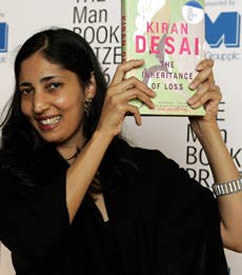
Kiran Desai, Eduardo Galeano, Alison Lurie, Sergej Dovlatov, Lino Wirag

De Indische schrijfster Kiran Desai werd geboren op 3 september 1971 in New Dehli. Zie ook mijn blog van 3 september 2010 en eveneens alle tags voor Kiran Desai op dit blog.


Uit: The Inheritance of Loss

“She shut the magazine and walked out into the garden. The forest was old and thick at the edge of the lawn; the bamboo thickets rose thirty feet into the gloom; the trees were moss-slung giants, bunioned and misshapen, tentacled with the roots of orchids. The caress of the mist through her hair seemed human, and when she held her fingers out, the vapor took them gently into its mouth. She thought of Gyan, the mathematics tutor, who should have arrived an hour ago with his algebra book.
But it was 4:30 already and she excused him with the thickening mist.
When she looked back, the house was gone; when she climbed the steps back to the veranda, the garden vanished. The judge had fallen asleep and gravity acting upon the slack muscles, pulling on the line of his mouth, dragging on his cheeks, showed Sai exactly what he would look like if he were dead.
“Where is the tea?” he woke and demanded of her. “He’s late,” said the judge, meaning the cook with the tea, not Gyan.
“I’ll get it,” she offered.
The gray had permeated inside, as well, settling on the silverware, nosing the corners, turning the mirror in the passageway to cloud. Sai, walking to the kitchen, caught a glimpse of herself being smothered and reached forward to imprint her lips upon the surface, a perfectly formed film star kiss. “Hello,” she said, half to herself and half to someone else.
No human had ever seen an adult giant squid alive, and though they had eyes as big as apples to scope the dark of the ocean, theirs was a solitude so profound they might never encounter another of their tribe. The melancholy of this situation washed over Sai.
Could fulfillment ever be felt as deeply as loss? Romantically she decided that love must surely reside in the gap between desire and fulfillment, in the lack, not the contentment. Love was the ache, the anticipation, the retreat, everything around it but the emotion itself.”


 1229648-f72ba9fbb9cca0d1a82b63e00f1082fb.jpg

Kiran Desai (New Dehli, 3 september 1971)


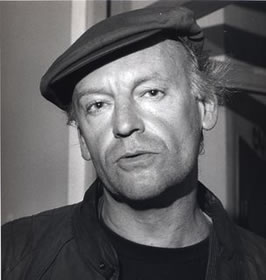
De Uruguayaanse schrijver, essayist en journalist Eduardo Hughes Galeano werd geboren op 3 september 1940 in Montevideo. Zie ook mijn blog van 3 september 2010 en eveneens alle tags voor Eduardo Galeano op dit blog.


Uit: Voices Of Time (Vertaald door Mark Fried)


Witnesses
The professor and the journalist walk in the garden.
The professor, Jean-Marie Pelt, stops, points, and says, "Allow me to introduce you to our grandparents."
The journalist, Jacques Girardon, crouches down and finds a ball of foam peeking out from the blades of grass.
The ball is a town of microscopic blue algae. On very humiddays, the blue algae allow themselves to be seen. They look like a wad of spit. The French journalist wrinkles his nose; the origin of life isn't what we might call attractive, but from that spittle, from that mess, come all of us who have legs or roots or wings.
Before there was a before, when the world was barely a baby, without color or sound, there was blue algae. Streaming oxygen, they gave color to the sea and the sky. Then one fine day, a day that lasted millions of years, some blue algae decided to turn green. And bit by tiny bit, the green algae begat lichens, mushrooms, mold, medusas, and all the color and sound that came later, as did we, to unsettle the sea and the land.
Other blue algae preferred to carry on as they were.
And still are.
From the distant world that was, they observe the world that is.
What they think of it we do not know.

Greeneries
When the sea became the sea, the land was still nothing but naked rock.
Then lichens, born of the sea, made meadows. They invaded the kingdom of stone, conquered it, turned it green.
That happened in the yesterday of yesterdays, and it is still going on. Lichens live where no one lives: on the frozen steppe, in the burning desert, on the peaks of the highest mountains.
Lichens live only as long as the marriage lasts between an alga and her son, the mushroom. If the marriage breaks up, the lichens break down.
Sometimes, fighting and disagreements lead the alga and mushroom to part. She complains that he keeps her hidden from the light. He says she makes him sick, feeding him sugar day and night.


 1229648-ad96c27c2adac588305b085d3e67407e.jpg

Eduardo Galeano (Montevideo, 3 september 1940)


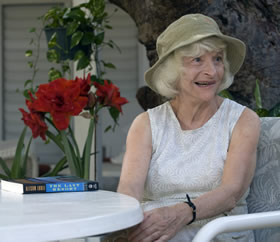
De Amerikaanse schrijfster en literatuurwetenschapster
Alison Lurie werd geboren op 3 september 1926 in Chicago, Illinois. Zie
ook mijn blog van 3 september 2010 en eveneens alle tags voor Alison Lurie op dit blog.


Uit: Familiar Spirits


„Jimmy and I might never have met again if we hadn't both found ourselves in Amherst, Massachusetts, five years later. I came in September 1954, as part of the baggage of my first husband, an Amherst College instructor in English. Jimmy, who had graduated from the college in 1947, arrived the following fall as a visiting writer, accompanied by his new friend David Jackson.

In 1955 Jimmy, though less nervous, was still thin and pale, with flat dark hair and something of the air of a clever, inquisitive bird. Later, when I learned that the name "Merrill" could be traced back to the French merle, or "blackbird," this seemed appropriate. He no longer casually paraded his superior learning and sophistication; he had become more sensitive to social situations and able to employ the perfect good manners he had learned as a child from his mother and governess. These good manners were one of his most striking qualities, and they carried over into his work. As he told an interviewer in 1967:

Manners for me are the touch of nature,... Someone who does not take them seriously is making a serious mistake....

The real triumph of manners in Proust is the extreme courtesy towards the reader, the voice explaining at once formally and intimately.

By 1955 Jimmy had also become something of a dandy. Though he wore conventional suits and shirts and neckties to official academic occasions, his everyday clothes were elegant but odd, sometimes slightly comic. He had a subtle, rather Art Nouveau color sense: he liked mauve and purple and apricot and turquoise silk or Egyptian-cotton shirts, and bright flowered ties. At home he often cooked breakfast in a Japanese kimono and sandals. I remember especially some red straw and silk sandals and a gray-striped silk kimono with deep sleeves cuffed in black.“


 1229648-dbd64e6b53c685d8762988ddba1eccbf.jpg

Alison Lurie (Chigaco, 3 september 1926)


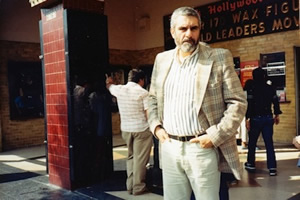
De Russische schrijver Sergej Dovlatov werd geboren op 3 september 1941 in Ufa, in het zuiden van Rusland. Zie ook mijn blog van 3 september 2010 en eveneens alle tags voor Sergej Dovlatov op dit blog.


Uit: Ours (Vertaald door Anne Frydman)


“Once Lena was at work while I was held up at home. I was looking for some necessary papers, as usual - a copy of an editorial contract, if I’m not mistaken. I dug around in the chests. Yanked drawers out of the desk. I even looked in the night table.

Then, under a pole of books, magazines, and old letters, I found an album. A small, almost pocket-sized photograph album - about fifteen sheets of thick cardboard with a dove embossed on the cover.

I opened it. The early photographs were yellowed and cracked. Some were missing corners. In one, a round-faced little girl cautiously petted a shaggy dog with its ears back. In another, a girl of about six hugged a homemade doll. Both looked sad and lost.

Next was a family photo - mother, father, and daughter. The father was wearing a long raincoat and a straw hat. Just the tips of his fingers showed below the sleeves. His wife wore a heavy sweater with puffed sleeves, and she had curls tucked into a sheer kerchief. The girl had turned sharply making her short fall coat fly open. Something had caught her attention outside the frame - maybe a stray dog. Behind them, through the trees, was the facade of Pushkin’s lycee in Tsarskoe Selo.

Later came relatives with tense, artificial smiles: an elderly, mustachioed railroad man in uniform, a lady beside a bust of Lenin, a youth on a motorcycle. Then came a sailor, or a student. Even in the picture you could see how carefully he had shaved. A girl holding a bouquet of lilies of the valley was peering into his face.

One whole page was taken up by a glossy school photo, four rows of frightened, tense, frozen faces. Not a single cheerful child. In the center was a group of teachers, who with medals - veterans, probably - and the class matron. She was easy to spot. The old woman was embracing two schoolgirls who had forced smiles. On the left in the third row was my wife - the only one not looking at the camera.“


 1229648-e48e2cacbcf8a0cda93a7ce7c2770107.jpg

Sergej Dovlatov (3 september 1941 - 24 augustus 1990)


Onafhankelijk van geboortedata:


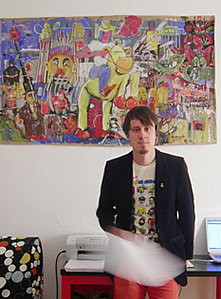
De Duitse dichter, schrijver en striptekenaar Lino Wirag werd geboren in 1983 in Pforzheim. Zie ook mijn blog van 3 september 2010 en eveneens alle tags voor Lino Wirag op dit blog.


Uit: Angel


“Sie sieht schlecht aus, trotzdem erkennst du sie sofort, wer kennt sie nicht,

hier im Adlon? Sicher kommt sie aus einem ihrer Meetings mit faltigen Bürokraten, wo sie den Sozialstaat neu formen oder die Rasenmäher-Abgasbestimmungen. Sie ist reich, sie hat Erfolg, jeder kriecht ihr in den Arsch. Du willst nicht mit ihr tauschen.

Vor ihr steht ein Glas Milch, goldfarbener Alkohol schimmert durchs Weiß. Sie ist schnell gealtert, das tun alle in ihrem Job. Sie sah schon vor fünfzehn Jahren aus wie 55. Doch da sind immer noch die Lachfältchen um die Augen, die du charmant findest, und für die Mundwinkel kann sie nichts. Du denkst an diese Geste, die sie immer macht, wenn sie spricht, sie heißt „der kleine Zeigefinger“, es sieht immer ein wenig so aus, als wolle sie sich melden, wie die Thälmann-Pionierin aus der Polytechnischen Oberschule in Templin, die sie nie ganz abschütteln konnte. Jetzt bestellt sie mit dem kleinen Zeigefinger noch eine Milch mit Schuss.

Udo Walz hat ihre Haare im Stich gelassen, wie eine ertrunkene Katze hängen sie auf ihre Schultern. Du denkst an die Bilder, die alle von ihr gesehen haben, hässliche Bilder, schlimmer, schmerzhafter als das Rumgerutsche der unzähligen Gina Lisas. Du denkst an die Schweißflecken von Bayreuth

2005, an die Brüste von Oslo 2008, du hast im Sommer sogar die Bruno-Banani-Plakate gesehen, riesig den ganzen Kudamm hinab, auf denen sie in einem blauen Photoshop-Dessous zu sehen war.

Damals hast du geschmunzelt, hast gedacht: Warum nicht? Ihre Gefühle waren dir egal. Sie war nur ein Körper für dich, ein Volkskörper. Doch ihre Seele hat gelitten, denkst du jetzt. Das Gewicht einer Nation hängt an diesen Tränensäcken. Unter ihrer vertrockneten Schale verbirgt sich ein weicher

Kern, das erkennst du sofort.”


 1229648-aa44f9a2d674373cd744cd0abb90e281.jpg

Lino Wirag (Pforzheim, 1983)
Geschreven door Romenu om 19:33 Reageer op dit bericht

Meer van Romenu

↑ Terug naar de berichten