Naar de inhoud

Romenu

Over literatuur, gedichten, kunst en cultuur
akke.beakke.be

Berichten van 25 september 2012 tot 26 september 2012

Thomas van Aalten, Christoph W. Bauer, T. S. Eliot

De Nederlandse schrijver Thomas van Aalten werd geboren in Huissen bij Arnhem op 26 september 1978. Zie ook mijn blog van 26 september 2010 en eveneens alle tags voor Thomas van Aalten op dit blog.


Uit: De schuldigen


“De motor van de bestelbus maakt een ratelend geluid. Je hoort hem al van ver komen. Als de bus aan het begin van de straat is, blijft hij stilstaan. De bestuurder draait zijn raampje open en kijkt verwilderd om zich heen. Hij claxonneert eenmaal en rijdt stapvoets verder. Mijn vader steekt zijn hand op, om aan te geven dat de man hier moet zijn. aquarama, onderhoud en reiniging van zwembad en spa staat er in blauwe letters op de zijkant van de bus.
De bestuurder heeft een rode, schilferige huid. Roosvlokken bedekken de schouders van zijn overall. Hij kreunt getergd als hij zijn apparatuur uit de bestelbus laadt. Het enige aan zijn lichaam dat niet lijkt getroffen door een ziekte of infectie is een zwart snorretje, dat als een strakke streep het centrum van zijn gezicht markeert. Ondanks de geïrriteerde huid en gewrichtspijn tijdens het tillen, heeft de man een vrolijk voorkomen. Hij stelt zich voor als Cornald. Mijn vader zegt dat Cornald zijn bus gewoon op de oprit kan zetten. ‘Daar is-ie voor gemaakt, niet waar.’

We nemen plaats op het terras. Cornald bladert door zijn multomap, die beplakt is met stickers. Behalve een sticker met het logo van Aquarama zie ik ook stickers met teksten als ‘Effe wachten... Pizza!’ en ‘I Love Natte Keek’ en afbeeldingen van cartooneske vrouwen in bikini.
‘Mijn collega was hier drie jaar geleden voor het laatst. In mei 2007, lees ik hier.’
Mijn vader knikt. ‘Toen heetten jullie nog anders.’
‘Dat klopt. Ik werkte er toen nog niet.’ Cornald concentreert zich op het handschrift van deze collega uit het verleden. ‘Ik zie dat hij hier twee keer per jaar kwam.’
‘Aan het einde en aan het begin van de zomer, ja.’
Ik kijk naar mijn vader en vraag me af of hij nog ooit in zijn leven gaat zwemmen.
‘Ik zal het zo eens even uitzoeken, maar het is gebruikelijk dat bij drie jaar slecht onderhoud de inlaatstraalbuizen en skimmers vervangen moeten worden.”


 1244109-a9af37e17f3c46e9cbd64a5bbbd01b9f.jpg

Thomas van Aalten (Huissen, 26 september 1978)


De Oostenrijkse dichter, schrijver en vertaler Christoph W. Bauer werd geboren in Kolbnitz op 26 september 1968. Zie ook mijn blog van 8 juni 2009 en ook mijn blog van 26 september 2010 en eveneens alle tags voor Christoph W. Bauer op dit blog.


krach ist ein anfang glück ein simpler akkord
im rücken der augen rollen bässe wuchten
uns ineinander jahrelang bin ich gelaufen für
dieses konzert du kamst aus der gleichen
richtung und den rest könnt ich mir denken


sagst du so leis dass ichs kaum versteh und
vielleicht nur annehmen will weil deine
hände den meinen die reisen ablesen als
wären es ihre eignen und der himmel rockt
und lärmt und bleibt in allem ein punk der


sich seinen irokesen in regenbogenfarben
lackiert metaphorisch gesehen tanzen wir auf
dünnem seil hören die wellenreiter lästern
keinen cent wert ist uns ihr geblöke vivamus
atque amemus campino krakeelt was zählt


Supersonic

XLVII


abgehängt was sie rahmte wurden ränder zur
meute und verbissen sich in ihren augen als
wollten sie beweisen dass die form den
inhalt schafft kehrten bilder wieder standen
sie vor mauern durchbellt von aporien und
erhöhten die schrittzahl im tanz mit fee
morgane lösten grenzen sich auf wie
tabletten im glas zerging die ahnung sich
akzeptieren zu wollen in so manchem
gehts schlechter gerede der bodensatz indes
blieb passepartout in ihrem schauen und aus
welchen wänden auch immer hechelte Fix
einem helden ihrer kindheit auf der spur


 1244109-4029661e549d14239ed3c5b96a101f56.jpg

Christoph W. Bauer (Kolbnitz, 26 september 1968)


De Engels-Amerikaanse dichter en schrijver T. S. Eliot werd op 26 september 1888 geboren in St.Louis, Missouri. Zie ook mijn blog van 26 september 2010 en eveneens alle tags voor T. S. Eliot op dit blog.


THE HIPPOPOTAMUS


THE broad-backed hippopotamus

Rests on his belly in the mud;

Although he seems so firm to us

He is merely flesh and blood.


Flesh-and-blood is weak and frail,

Susceptible to nervous shock;

While the True Church can never fail

For it is based upon a rock.


The hippo's feeble steps may err

In compassing material ends,

While the True Church need never stir

To gather in its dividends.


The 'potamus can never reach

The mango on the mango-tree;

But fruits of pomegranate and peach

Refresh the Church from over sea.


At mating time the hippo's voice

Betrays inflexions hoarse and odd,

But every week we hear rejoice

The Church, at being one with God.


The hippopotamus's day

Is passed in sleep; at night he hunts;

God works in a mysterious way--

The Church can sleep and feed at once.


I saw the 'potamus take wing

Ascending from the damp savannas,

And quiring angels round him sing

The praise of God, in loud hosannas.


Blood of the Lamb shall wash him clean

And him shall heavenly arms enfold,

Among the saints he shall be seen

Performing on a harp of gold.


He shall be washed as white as snow,

By all the martyr'd virgins kist,

While the True Church remains below

Wrapt in the old miasmal mist.


HYSTERIA


AS she laughed I was aware of becoming involved

in her laughter and being part of it, until her

teeth were only accidental stars with a talent

for squad-drill. I was drawn in by short gasps,

inhaled at each momentary recovery, lost finally

in the dark caverns of her throat, bruised by

the ripple of unseen muscles. An elderly waiter

with trembling hands was hurriedly spreading

a pink and white checked cloth over the rusty

green iron table, saying: "If the lady and

gentleman wish to take their tea in the garden,

if the lady and gentleman wish to take their

tea in the garden ..." I decided that if the

shaking of her breasts could be stopped, some of

the fragments of the afternoon might be collected,

and I concentrated my attention with careful

subtlety to this end.


 1244109-84cf33ee10f48dddce3a605f70e7189f.jpg

T. S. Eliot (26 september 1888 – 4 januari 1965)


Zie voor nog meer schrijvers van de 26e september ook mijn vorige blog van vandaag.

Geschreven door Romenu om 19:46 Reageer op dit bericht

Bart Chabot, Luís Fernando Veríssimo

De Nederlandse dichter en schrijver Bart Chabot werd geboren in Den Haag op 26 september 1954. Zie ook mijn blog van 26 september 2010 en eveneens alle tags voor Bart Chabot op dit blog.


Uit: Broodje gezond


„‘Dinsdag, 14 januari 1992
We zitten in een café. Eentje van 'alle tijden'. Bruin, kleedjes op tafel, nieuwerwetse lampenkappen en een dor biljart. Zo hebben we in honderden cafés gezeten. We zijn niet de enigen, maar het is er ook niet druk. Amsterdammers. De bekkies staan niet stil. Het is vroeg in de ochtend. We hebben de nacht overgeslagen.
'Wat ik me altijd heb afgevraagd, Herman,' zeg ik. 'Je vader en je moeder, je zussen, je broer?'
'Voor mijn geboorte,' antwoordt hij, 'bestond er niets.'

Met hoge snelheid rijdt de taxi, als besmet door Broods gejaagdheid, via de trambaan de Overtoom af.
'Ik heb een verrassing voor je,' zegt Herman. Hij gebaart de chauffeur te stoppen op de hoek van een zijstraat. Brood springt uit de wagen en belt aan bij een deur waar met glimmende letters HUIZE RIA op staat.
Ik wil uitstappen, maar de taxichauffeur draait zich om en zegt met Amsterdamse tongval: 'Ik heb Herman al heel wat keren in de wagen gehad. Ik vind 't wel een aardige gozer, hoor. Ik mag 'm ergens wel. Maar toch, ik weet het niet. Laatst had ik 'm ook in mijn wagen, zat-ie achterin, ik kijk in mijn spiegel, had-ie een colbertjasje aan en een stropdas, met verder niks d'ronder. Moest ik hem ook naar een seksclub brengen. Hij lulde wel met me en hij gaf me ook een slokkie uit de fles die hij bij zich had, daar niet van, maar? Weet je wat 't is? Je ken geen hoogte van hem krijgen.'

Als ik me bij Brood voeg, valt mijn oog op een klein goudkleurig bordje naast de deur met de tekst: Huize Ria. Discrete Ingang Om De Hoek.
'Het mooie van het leven, vind ik,' zegt Herman,'dat je, terwijl je midden in je zoektocht maar Jezus zit, toch nog goed terecht kunt komen.'
Daarop wijkt de deur.
Ria zelve doet ons open. Iggy, Broods hond, die vanmiddag meemag van zijn baas, is het eerste binnen. Terwijl madam Ria ons voorgaat de smalle gang in en ons uit onze jassen helpt, drukt Iggy met zijn snuit de tussendeur open en meldt zich bij de meisjes. Iggy is geen onbekende hier, Iggy weet de weg.
Ik tel acht meisjes, die op en om een halvemaanvormige bank zitten of hangen. We zijn de enige klanten.”


 1244104-32075452cea7bff51564a66839dd928e.jpg

Bart Chabot (Den Haag, 26 september 1954)

DVD Cover van Herman Brood, Bart Chabot en Jules Deelder


De Braziliaanse schrijver Luís Fernando Veríssimo werd geboren op 26 september 1936 in Porto Alegre, Rio Grande do Sul. Zie ook mijn blog van 26 september 2010 en eveneens alle tags voor Luís Fernando Veríssimo op dit blog.


Uit: The Club of Angels: (Vertaald door Margaret Jull Costa)


“After the funeral, we went back to my apartment, where we gathered in the study. The full complement of the surviving Beef Stew Club membership: all five of us. At the funeral, Lívia kept saying: "This is madness, Zi, madness. You must stop holding these suppers." The matter to be discussed was, should we stop holding the suppers or not? The next host would be Pedro. In alphabetical order—Since Saulo had chosen to die out of order—Paulo should be the next to die.

"So, do we cancel the supper?" I asked.

"No," said Paulo without a moment's hesitation.

"I think we should take a vote," said Samuel.

"I'm the main interested party," said Paulo. "The supper will go ahead."

Pedro suggested that he, rather than Lucídio, should choose the menu. Paulo disagreed. Lucídio would decide what to make. I suggested that we supervise the making of the meal, especially the last fateful portion. Paulo vetoed that too. Lucídio must have full freedom in which to do his work.

"Be honest," said Paulo, "the deaths aside, have you ever eaten so well in your entire life as at Lucídio's suppers?"

"No, but…"

"And there's another thing. If we start interfering in his work, he'll disappear. He'll go away. He'll leave us."

"We're the ones who are disappearing," said Tiago. "One by one. One a month. The Beef Stew Club will come to an end not for lack of a cook, but for lack of members. We're all dying!"

And then Paulo leaned back on the sofa—beneath one of Marcos' paintings which, according to the artist, depicted the struggle of the One Being to free itself from the duality of body and spirit—and said:

"Well, I don't know about you, but I don't really care."


 1244104-d0c0f2bb07638c681cfff950252578bc.jpg

Luís Fernando Veríssimo (Porto Alegre, 26 september 1936)


Zie voor nog meer schrijvers van de 26e september ook mijn blog van 26 september 2011 deel 2.

Geschreven door Romenu om 19:41 Reageer op dit bericht

Carlos Ruiz Zafón, Andrzej Stasiuk, William Faulkner, Rebecca Gablé

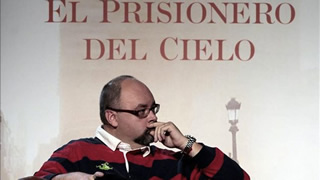
De Spaanse schrijver Carlos Ruiz Zafón werd geboren op 25 september 1964 in Barcelona. Zie ook mijn blog van 25 september 2010 en eveneens alle tags voor Carlos Ruiz Zafón op dit blog.


Uit: The Prisoner Of Heaven (Vertaald door Lucia Graves)


“That year at Christmas time, every morning dawned laced with frost under leaden skies. A bluish hue tinged the city and people walked by, wrapped up to their ears and drawing lines of vapour with their breath in the cold air. Very few stopped to gaze at the shop window of Sempere & Sons; fewer still ventured inside to ask for that lost book that had been waiting for them all their lives and whose sale, poetic fancies aside, would have contributed to shoring up the bookshop’s ailing finances.

‘I think today will be the day. Today our luck will change,’ I proclaimed on the wings of the first coffee of the day, pure optimism in a liquid state.

My father, who had been battling with the ledger since eight o’clock that morning, twiddling his pencil and rubber, looked up from the counter and eyed the procession of elusive clients disappearing down the street.

‘May heaven hear you, Daniel, because at this rate, if we don’t make up our losses over the Christmas season, we won’t even be able to pay the electricity bill in January. We’re going to have to do something.’

‘Fermín had an idea yesterday,’ I offered. ‘He thinks it’s a briljant plan that’ll save the bookshop from imminent bankruptcy.’

‘Lord help us.’

I quoted Fermín, word for word:

‘Perhaps if by chance I was seen arranging the shop window in my underpants, some lady in need of strong literary emotions would be drawn in and inspired to part with a bit of hard cash. According to expert opinion, the future of literature depends on women and as God is my witness the female is yet to be born who can resist the primal allure of this stupendous physique,’ I recited.

I heard my father’s pencil fall to the floor behind me and I turned round.

‘So saith Fermín,’ I added.”


 1243408-90286704659736c80de76db7d72e9d6e.jpg

Carlos Ruiz Zafón (Barcelona, 25 september 1964)


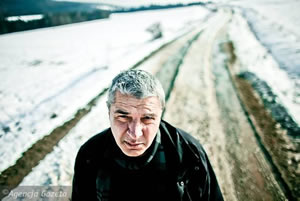
De Poolse schrijver en letterkundige Andrzej Stasiuk werd geboren op 25 september 1960 in Warschau. Zie ook mijn blog van 25 september 2010 en eveneens alle tags voor Andrzei Stasiuk op dit blog.


Uit: Nine (Vertaald door Bill Johnston)


„Snow had fallen in the night.

           Pawel got out of bed and went into the bathroom. The light was on, the mirror was broken. Tubes and brushes and bottles had been swept off the shelf, were all over the floor. A stream of white toothpaste had shot out and dried on the willow-green wall. Disposable razors had been snapped in two and stepped on into a torn box of soap powder. The cracked toilet seat lay in the corner. It occurred to him there was a lot of glass, so he went back to the hallway for his shoes.

           He picked up one of the toothbrushes, rinsed it under the faucet, scraped some toothpaste off the wall. Then he squatted and chose a razor with a cracked handle. He found the can of shaving cream under the bathtub. It was dented but something still swished inside it. He shaved in what was left of the mirror. He splashed water on his face. The Old Spice had been crushed, but there was still something left in the white plastic cover. He shook the crumpled container. It made a grating sound like a deaf-and-dumb version of a childs rattle. A few drops splashed onto his palm. He rubbed them on his cheeks. It hardly stung, so this time he must have managed not to cut himself. He took a leak and went back into the living room.

           Things were no better here. More smashed stuff. The cracked silver casing of the cassette player emptied its colorful guts onto the floor. He flicked the light switch. The lamp was in pieces. The light of early morning hung like dust in the air. Something white poked from the ripped upholstery of the sofa. He smoothed it with his hand and went to the pile of clothes spilling out of the wardrobe. He sniffed a few things to find something clean in the semidarkness. He put on a shirt and sweater. By the bed he found his pants; he dug out some socks from an untouched drawer and pulled them on, and at last stopped shivering.

He sipped at his coffee and gazed through the window. Snow lay on the roofs and on the sidewalk; the black trees were white now, and everything resembled a distant Christmas. A red bus cautiously made a turn. Sleepily and soundlessly it straightened, receded down the avenue of lime trees. The treetops faded into the low sky. He listened for the patter of drops in the gutters. There was no sound. “Itll lie for a while,” he thought.”


 1243408-ff6f5838fd6a25a202ad1e7df58f5fdc.jpg

Andrzej Stasiuk (Warschau, 25 september 1960)


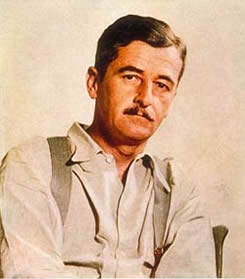
De Amerikaanse schrijver William Faulkner werd geboren op 25 september 1897 in New Albany, Mississippi. Zie ook mijn blog van 25 september 2010 en eveneens alle tags voor William Faulkner op dit blog.


Uit: A Fable


“Wednesday

Long before the first bugles sounded from the barracks within the city and the cantonments surrounding it, most of the city was already awake. These did not need to rise from the straw mattresses and thin pallet beds of their hive-dense tenements, because few of them save the children had ever lain down. Instead, they had huddled all night in one vast tongueless brotherhood of dread and anxiety, about the thin fires of braziers and meagre hearths, until the night wore at last away and a new day of anxiety and dread had begun.

Because the original regiment had been raised in this district, raised in person, in fact, by one of the glorious blackguards who later became Napoleon's marshals, who delivered the regiment into the Emperor's own hand, and along with it became one of the fiercest stars in that constellation which filled half the sky with its portent and blasted half the earth with its lightning. And most of its subsequent replacements had been drawn from this same district, so that most of these old men were not only veterans of it in their time, and these male children already dedicated to it when their time should come, but all these people were parents and kin, not only the actual old parents and kin of the doomed men, but fathers and mothers and sisters and wives and sweethearts whose sons and brothers and husbands and fathers and lovers might have been among the doomed men except for sheer blind chance and luck.

Even before the bugles' echoes died away, the warrened purlieus were already disgorging them. A French or British or American aviator (or a German either for that matter, if he had had the temerity and the luck) could have watched it best: hovel and tenement voiding into lane and alley and nameless cul-de-sac, and lane and alley and cul-de-sac compounding into streets as the trickles became streams and the streams became rivers, until the whole city seemed to be pouring down the broad boulevards converging like wheelspokes into the Place de Ville, filling the Place and then, pressed on by the weight of its own converging mass, flowing like an unrecoiling wave up to the blank gates of the Hôtel where the three sentries of the three co-embattled nations flanked the three empty flagstaffs awaiting the three concordant flags”.


 1243408-8dac44275c36a12cabc6bb0ad98b4f18.jpg

William Faulkner (25 september 1897 - 6 juli 1962)


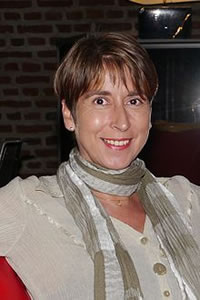
De Duitse schrijfster Rebecca Gablé (pseudoniem van Ingrid Krane-Müschen) werd geboren op 25 september 1964 in Wickrath / Mönchengladbach. Zie ook mijn blog van 25 september 2010 en eveneens alle tags voor Rebecca Gablé op dit blog.


Uit: Von Ratlosen und Löwenherzen


“Am 28. Juni 1461 wurde Edward of March mit nicht einmal zwanzig Jahren zu Edward IV. von England gekrönt – der erste König aus dem Hause York. Die meisten Engländer waren erleichtert. Den einfachen Leuten war nämlich völlig egal, wie ihr König mit Nachnamen hieß. Sie wollten nur, dass nach 116 Jahren Krieg gegen Frankreich und den sich nahtlos anschließenden sechs Jahren Bürgerkrieg endlich mal Ruhe herrschte und niemand in ihre Dörfer kam, um ihre Scheunen zur Versorgung der Truppen zu plündern oder ihre Väter, Ehemänner und Söhne als Bogenschützen anzuwerben, die dann entweder gar nicht oder mit einem Arm, Bein oder Auge weniger nach Hause kamen. Und König Edward machte seine Sache hervorragend. Nach dem jämmerlichen Henry VI. (den seine Königin mitsamt ihrem Sohn in Schottland in Sicherheit gebracht hatte), war es doch irgendwie sehr beruhigend, einen König auf dem Thron zu haben, der auch wie ein König aussah, redete und handelte.
Edward IV. hatte in vieler Hinsicht Ähnlichkeit mit seinen strahlenden Vorgängern Edward III. und Henry V. Genau wie sie legte er keinen Wert auf Rachefeldzüge gegen die besiegten politischen Gegner, sondern setzte auf Aussöhnung. Genau wie sie war er ein König, dem Recht und Rechtsprechung sehr am Herzen lagen, der aber auf dem Schlachtfeld ordentlich hinlangen konnte, wenn es sein musste. Und genau wie sie sah er – so wird berichtet – unverschämt gut aus und ließ nichts, aber auch gar nichts anbrennen. Und genau das wurde sein größtes Problem. Während sein wichtigster Ratgeber, sein Cousin Richard Earl of Warwick, ihn zu einer Ehe mit einer französischen Prinzessin drängte, der kaum weniger einflussreiche Earl of Pembroke auf eine Verbindung mit Burgund setzte, hatte der König sich rettungslos in die Witwe eines unbedeutenden Landritters verliebt, Elizabeth Woodville.”


 1243408-28b2681d699565f1458c5cdbd632403b.jpg

Rebecca Gablé (Wickrath, 25 september 1964)


Zie voor nog meer schrijvers van de 25e september ook nog mijn blog van 25 september 2011 deel 2 en eveneens deel 3.

Geschreven door Romenu om 19:26 Reageer op dit bericht

David Benioff

De Amerikaanse schrijver David Benioff (pseudoniem van David Friedman) werd geboren in New York City op 25 september 1970. Zie ook alle tags voor David Benioff op dit blog.


Uit: City of Thieves


“Off we go, then, on a tour into the haunted theme park of modern European history. It is January 1942, the first winter of what would become a 900-day siege, and David's grandfather, Lev Beniov, at that time a skinny 17-year-old, is trying to survive on his own. Lev's mother and sister left Leningrad before the Germans closed in; his father, a Jewish poet, had been arrested by the Soviet secret police four years earlier and was never heard from again. After looting the corpse of a German soldier, Lev himself is arrested and thrown into the city's huge and silent prison, where he expects to be killed. His cellmate, Kolya, is an insouciant Cossack full of literary pretensions and braggadocio who is in jail for deserting his regiment.
To their infinite surprise, the two young men are sent on a mission instead of being executed. A local army colonel whose daughter is getting married surmises that Lev and Kolya are schooled enough in petty thievery to procure a dozen eggs for the wedding cake. No matter that eggs have not been seen anywhere in Leningrad in months. The lads are given five days, a curfew waiver, and 400 rubles and told that if they fail to deliver the goods, they will be shot.
Talk about your wild goose chase. There are no animals of any kind here; even the pigeons have long since been eaten. In the outdoor food stalls, what's for sale are pricey glasses of dirt mixed with melted sugar and something called "library candy," made by boiling the binding glue from books: "[T]here was protein in the glue, protein kept you alive, and the city's books were disappearing like the pigeons."


 1420354-13507b4a552c3d097310820b91b7cab1.jpg

David Benioff (New York, 25 september 1970)

Geschreven door Romenu om 00:00 Reageer op dit bericht

Meer van Romenu

↑ Terug naar de berichten