

Naar de inhoud

Romenu

Over literatuur, gedichten, kunst en cultuur
akke.beakke.be

Berichten van 6 oktober 2012 tot 7 oktober 2012

Simon Carmiggelt, James Whitcomb Riley, Thomas Keneally
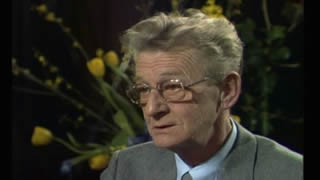
De Nederlandse schrijver en dichter Simon Carmiggelt werd geboren op 7 oktober 1913 in Den Haag. Zie ook mijn blog van 7 oktober 2010 en eveneens alle tags voor Simon Carmiggelt op dit blog.

Uit:  Denkend aan A. Roland Holst


"Na de broodjes kaas reden we weer terug.

Ik vroeg hem:

‘Vrouwen hebben altijd een grote rol gespeeld in je leven en in je werk. Maar waarom ben je nooit getrouwd?’

Hij keek me met pretoogjes aan en antwoordde:

‘Je weet wat ik vaak gezegd heb. Vóór mijn vijftigste ben ik niet getrouwd uit egoïsme en na mijn vijftigste uit altruïsme. En dan - er is maar één vrouw die ik trouw kan zijn en dat is de Muze en zij sprak telkens: och, ga maar naar al die aardse vrouwen, want je komt toch weer bij me terug.’

Ondanks de eeuwige concurrentie van de Muze is Roland Holst, zijn leven lang, door vrouwen verwend. Maar hij had ook wel eens tegenslag. Daarover vertelde hij meer dan eens, met grote zelfspot. Op een middag kwam ik bij hem toen hij net weer eens een kroon-jaar achter de rug had. Hij wees mij op een tafel, die geheel vol hoog opgestapelde brieven lag en zei met een zucht:

‘Felicitaties. Die ik allemaal beantwoorden moet. Ik voel mij door weldaden gesloopt. En het zal bij elk kroonjaar in de toekomst wéér gebeuren. Onvermijdelijk. Weet jij een manier om 81 te worden zonder 80 te zijn geweest? In zulke omstandigheden helpen mij maar twee dingen: drankzucht en ontucht.’

Nu was - zo vertelde hij mij - een der brieven afkomstig van een hem onbekende vrouw in Den Haag. Zij bewonderde niet alleen zijn werk, maar gaf ook, in bewogen proza, uiting aan haar liefde voor zijn persoon. De apotheose van de brief was een invitatie, haar eens te komen bezoeken.

‘Dus ik dacht: och, waarom niet?’ zei hij tegen me. ‘Ontucht, nietwaar? Ik schreef haar terug en ik reisde naar Den Haag. Bij het station nam ik een tram die mij in de buurt van haar woning zou brengen. Maar toen ik, na toch deugdelijk te hebben geïnformeerd bij de conducteur, aan de halte in de nabijheid was uitgestapt, kon ik de straat niet vinden. En het huisnummer was mij, eerlijk gezegd, ook ontschoten. Nogal doelloos liep ik daar rond. Een vrouw met een klein meisje aan de hand zag die doelloosheid blijkbaar aan mij, want ze vroeg of ze me soms kon helpen. Ik legde haar mijn situatie uit en zij inviteerde mij binnen te komen. Het adres van de dame in kwestie zou ze dan in de telefoongids even voor mij opzoeken. Terwijl ze daarmee bezig was, keek ik aandachtig naar haar. Een aardige vrouw, met een helder gezicht. Zij schreef het adres voor mij op een papiertje en legde mij uit hoe ik lopen moest. Ik bedankte haar en nam afscheid. Daarop wandelde ik naar mijn bewogen briefschrijfster en belde aan. De deur werd geopend en daar stond ze. Ze was tamelijk bejaard en corpulent en ze had van die blote, dof-witte armen. Ze zei: Kom maar. Ik dacht: ik had liever gewild dat het die vrouw met dat heldere gezicht was geweest.’

‘En wat deed je?’ vroeg ik.

Hij keek me aan met zijn pretoogjes en antwoordde:

‘Ik heb met haar de Couperus-tentoonstelling bezocht.’


1251300-08e0c7c30c9e75e0720950e604caae16.jpg 

Simon Carmiggelt (7 oktober 1913 – 30 november 1987)


De Amerikaanse dichter en schrijver James Whitcomb Riley werd geboren op 7 oktober 1849 in Greenfield, Indiana. Zie ook mijn blog van 7 oktober 2010 en eveneens alle tags voor James Whitcomb Riley op dit blog.


June


Queenly month of indolent repose!
I drink thy breath in sips of rare perfume,
As in thy downy lap of clover-bloom
I nestle like a drowsy child and doze
The lazy hours away. The zephyr throws
The shifting shuttle of the Summer's loom
And weaves a damask-work of gleam and gloom
Before thy listless feet. The lily blows
A bugle-call of fragrance o'er the glade;
And, wheeling into ranks, with plume and spear,
Thy harvest-armies gather on parade;
While, faint and far away, yet pure and clear,
A voice calls out of alien lands of shade:--
All hail the Peerless Goddess of the Year!


The Boys


Where are they?--the friends of my childhood enchanted--
The clear, laughing eyes looking back in my own,
And the warm, chubby fingers my palms have so wanted,
As when we raced over
Pink pastures of clover,
And mocked the quail's whir and the bumblebee's drone?

Have the breezes of time blown their blossomy faces
Forever adrift down the years that are flown?
Am I never to see them romp back to their places,
Where over the meadow,
In sunshine and shadow,
The meadow-larks trill, and the bumblebees drone?

Where are they? Ah! dim in the dust lies the clover;
The whippoorwill's call has a sorrowful tone,
And the dove's--I have wept at it over and over;--
I want the glad luster
Of youth, and the cluster
Of faces asleep where the bumblebees drone!


September Dark


1
The air falls chill;
The whippoorwill
Pipes lonesomely behind the Hill:
The dusk grows dense,
The silence tense;
And lo, the katydids commence.

2
Through shadowy rifts
Of woodland lifts
The low, slow moon, and upward drifts,
While left and right
The fireflies' light
Swirls eddying in the skirts of Night.

3
O Cloudland gray
And level lay
Thy mists across the face of Day!
At foot and head,
Above the dead
O Dews, weep on uncomforted!


 1251300-37e8b503bf650573cc30b425120b9c78.jpg

James Whitcomb Riley (7 oktober 1849 – 22 juli 1916)

 Portret door T. C. Steele, 1891, Indianapolis-Museum-of-Art


De Australische schrijver Thomas Keneally werd geboren op 7 oktober 1935 in Sydney. Zie ook mijn blog van 7 oktober 2010 eveneens alle tags voor Thomas Keneally op dit blog.


Uit: The Grate Shame


“Unlike the humble criminal with whom I begin this book, internationally renowned Irish figures serving time in Australia would sometimes be pardoned or, in more graphic cases, participate in highly organised escapes, arriving again in the northern hemisphere, above all in the United States. There they would exploit in various ways their lustre, and marshal for 'the Irish cause' the sympathy of America and of liberal thought everywhere.
In the twentieth century the reputation of the better known of these prisoners has remained stronger in Ireland and America than in Australia. The famed and tragic Kennedy boys of Boston, for example, would be pointed by the Boston Irish political culture to the speeches of former Tasmanian life-sentenced convict and US general, Thomas Francis Meagher. John Mitchel's Jail Journal remains a classic of penal experience, particularly in Ireland. In Glasnevin Cemetery in Dublin, the grave of Terence Bellew McManus, whose funeral procession--from San Francisco down to the Central American isthmus and across the Atlantic to Dublin--must have been one of the longest funerary events in history, is still honoured and a place for pilgrimage.

But the document which made it inevitable that I should write this book is an obscure one--far more so than any attaching to the spectacular careers of General Thomas Francis Meagher and of John Mitchel, famous friends in Australian exile, famous opponents in the American Civil War”

.


 1251300-f2b975ff42634075b923f468348a58fd.jpg

Thomas Keneally (Sydney, 7 oktober 1935)


Zie voor nog meer schrijvers van de 7e oktober ook mijn vorige blog van vandaag.

Geschreven door Romenu om 19:50 Reageer op dit bericht

Dirkje Kuik, Steven Erikson, Wilhelm Müller

De Nederlandse schrijfster en beeldend kunstenares Dirkje Kuik werd geboren in Utrecht op 7 oktober 1929. Zie ook mijn blog van 7 oktober 2010 en eveneens alle tags voor Dirkje Kuik op dit blog.


1251289-fecaebbfe24bc990e78553483c907598.jpg
Dirkje Kuik: Oude huizen aan de Nieuwe Gracht


Uit: Huishoudboekje met rozijnen


„'Wanneer ik 's morgens in mijn huis aan Oude Kamp opsta, een bloes en een rok aanschiet, het haar glad op een pinnetje, een gebloemde hoofddoek om, gebit nog niet in -- wat ga rommelen in de keuken -- o hoe mis ik dan een tuin -- mijn kat te eten geef, dan weet ik waar ik op lijk. Het is een belegen boerenvrouw uit Jutland, die in dat keukentje rondloopt, zij met haar lange gebogen neus, haar grote oren, haar fletse blauwe ogen, zij met het dunne haar op een speldje.'


1251289-13c1a5bfa78d097d72cb44fc12719afe.jpg 

Dirkje Kuik (7 oktober 1929 – 18 maart 2008)


De Canadese schrijver, archeoloog, antropoloog Steven Erikson (pseudoniem van Steve Rune Lundin) werd geboren in Toronto op 7 oktober 1959. Zie ook mijn blog van 7 oktober 2010 en eveneens alle tags voor Steven Erikson op dit blog.


Uit: Forge of Darkness


„. . . so you have found me and would know the tale. When a poet speaks of truth to another poet, what hope has truth? Let me ask this, then. Does one find memory in invention? Or will you find invention in memory? Which bows in servitude before the other? Will the measure of greatness be weighed solely in the details? Perhaps so, if details make up the full weft of the world, if themes are nothing more than the composite of lists perfectly ordered and unerringly rendered; and if I should kneel before invention, as if it were memory made perfect.

Do I look like a man who would kneel?

There are no singular tales. Nothing that stands alone is worth looking at. You and me, we know this. We could fill a thousand scrolls recounting the lives of those who believe they are each both beginning and end, those who fit the totality of the universe into small wooden boxes which they then tuck under one arm – you have seen them marching past, I’m sure. They have somewhere to go, and wherever that place is, why, it needs them, and failing their dramatic arrival it would surely cease to exist.

Is my laughter cynical? Derisive? Do I sigh and remind myself yet again that truths are like seeds hidden in the ground, and should you tend to them who may say what wild life will spring into view? Prediction is folly, belligerent assertion pathetic. But all such arguments are past us now. If we ever spat them out it was long ago, in another age, when we both were younger than we thought we were.

This tale shall be like Tiam herself, a creature of many heads. It is in my nature to wear masks, and to speak in a multitude of voices through lips not my own. Even when I had sight, to see through a single pair of eyes was a kind of torture, for I knew – I could feel in my soul – that we with our single visions miss most of the world. We cannot help it. It is our barrier to understanding. Perhaps it is only the poets who truly resent this way of being. No matter; what I do not recall I shall invent.”


.

 1251289-db3e390a79ac05a7269e81f723dbb293.jpg

Steven Erikson (Toronto, 7 oktober 1959)


De Duitse, romantische dichter Wilhelm Müller werd geboren op 7 oktober 1794 in Dessau. Zie ook mijn blog van 7 oktober 2010 en eveneens alle tags voor Wilhelm Müller op dit blog.


Uit: Winterreise


Gute Nacht

Fremd bin ich eingezogen,
Fremd zieh ich wieder aus.
Der Mai war mir gewogen
Mit manchem Blumenstrauß.
Das Mädchen sprach von Liebe,
Die Mutter gar von Eh' -
Nun ist die Welt so trübe,
Der Weg gehüllt in Schnee.

Ich kann zu meiner Reisen
Nicht wählen mit der Zeit:
Muß selbst den Weg mir weisen
In dieser Dunkelheit.
Es zieht ein Mondenschatten
Als mein Gefährte mit,
Und auf den weißen Matten
Such ich des Wildes Tritt.

Was soll ich länger weilen,
Daß man mich trieb' hinaus?
Laß irre Hunde heulen
Vor ihres Herren Haus!
Die Liebe liebt das Wandern,
Gott hat sie so gemacht -
Von einem zu dem andern -
Fein Liebchen, gute Nacht!
Will dich im Traum nicht stören,
Wär' schad' um deine Ruh',
Sollst meinen Tritt nicht hören -
Sacht, sacht die Türe zu!
Ich schreibe nur im Gehen
An's Tor dir gute Nacht,
Damit du mögest sehen,
Ich hab' an dich gedacht.


1251289-4926047b153727a7838a5083aabad7b0.jpg
Wilhelm Müller (7 oktober 1794 – 1 oktober 1827)

Cover

Geschreven door Romenu om 19:42 Reageer op dit bericht

Victor Vroomkoning, Ulrike Ulric, Heinrich Federer, Maria Dąbrowska, Louis Begley

De Nederlandse dichter Victor Vroomkoning (pseudoniem van Walter van de Laar) werd geboren op 6 oktober 1938 in Boxtel. Zie ook mijn blog van 6 oktober 2010 en eveneens alle tags voor Victor Vroomkoning op dit blog.


Overpeinzing

Vanmorgen was ik nog een spelend kind
in een tuin vol beelden, vanmiddag een
jongleur met toverballen op een marktplein,
in de schemering een hemellichaam aan een
trapeze zonder net, maar met de avond viel
ik uit mijn luchtig leven in het vlees terug
van een schouwer, zijn twee handen om mijn
kop gevouwen, overdenkend hoe het kind
dat in mij opstond zoveel nog te denken gaf.


Icoon


Ik kwam aan een oase, een vrouw
stond blootsvoets in zichzelf geschaard
lege ogen boven een mond vol krijt
levende afwezigheid. Zij strekte zich

tot in de verten uit, eindeloze
bruid. Lemen voeten kreeg ik, veren
van de vogels die haar omhalsden
ik voelde mij zo wijd als zij.

Zij openbaarde mij een glimp van
heiligheid, mijn afgeleefde kleren
gingen glanzen in het eigeel licht
dat zich uit alle hoeken repte
de barsten in mijn kop en leden
beelden, mijn wonden werden vlees.


Iets


De grot waarin ik ben
maakt me mijn hart bewust
mijn zinnen zijn verlamd de lust
is dood niets wat ik nog ken.

Een zacht geruis bezingt mijn oor
mijn mond is droog mijn ogen blind
geen oorsprong die ik zoek of vinden
moet de duisternis is door en door.

Een klank is het die tot me komt
geen woord geen lettergreep
een toon die niets betekent.

Er komt iets in me om
iets wat ik nooit begreep
licht op nu mij het donker heeft.


 1250472-7fa8b355e884d6f286b1b0499d7b8005.jpg

Victor Vroomkoning (Boxtel, 6 oktober 1938)


De Duitse dichteres en schrijfster Ulrike Ulrich werd geboren in op 6 oktober 1968 in Düsseldorf. Zie ook mijn blog van 6 oktober 2010 en eveneens alle tags voor Ulrike Ulrich op dit blog.


Uit: Totale Phase


“Wir gehen den Mond unter der Brücke suchen. Viel haben wir noch nicht gemeinsam. Nur die Zukunft und eine Verabredung zum Mond. Du kannst mit ihm tanzen. Ich seh dir zu, an den Pfeiler gelehnt. Der Mond spiegelt sich in der Schneedecke, sage ich und du nimmst mir nicht übel, dass ich ohne Not lüge. Hinter meinem Rücken steigt der Mond in den Fluss. Ich kann dein Lied sehen.

Ich tanze so gern mit dir im Schnee, werde ich Wochen später sagen. Du wirst mir Lieder schenken, damit ich sie trage. Zwischen uns fallen flach die Kristalle. Du darfst mich vertonen, werde ich sagen, obwohl du so viel Entfernung brauchst und ich so viel Rot.

Wie lange noch, frage ich, als du mich in den Kreis holst. Wir haben noch nie eine Uhr gehabt. Nicht mal am Anfang. Wir raten. Wir laufen. Wir tanzen. Manchmal sind wir uns Mond. Der lacht hinter halb vorgehaltener Hand. Es ist so weit, sagst du, und wir tanzen den Kopf im Nacken. Bis wir unter der Brücke stehen. Über meinen Kopf hinweg siehst du, wie der Mond in Deckung geht, mein Rücken warm.”


 1250472-0adccb6fb56b4f84f07b34072e728322.jpg

Ulrike Ulrich (Düsseldorf, 6 oktober 1968)

Düsseldorf 


De Zwitserse schrijver en priester
Heinrich Federer werd geboren op 6 oktober 1866 in Brienz. Zie ook mijn blog van 6 oktober 2009 en ook mijn blog van 6 oktober 2010 en eveneens alle tags voor Heinrich Federer op dit blog.


Uit: Umbrische Reisegeschichtlein


“Wenn nichts mehr aus der alten Zeit des Romulus und Remus redete und die letzten Jungen jener milden Wölfin von einem der vielen Abbruzzenjäger erschossen sind, und wenn die mittelalterlichen Städtekriege und die napoleonischen Feldzüge und die Amerikaner und die Museen alle Dokumente beiseite geschafft hätten, ein unbestechlicher Zeuge aus jenen Tagen bleibt: der Tiber. Und er redet noch aus der gleichen Lunge wie vor dreitausend Jahren, und er hat noch das gleiche graubraune dunkle Auge und führt noch die gleiche Hirtensprache und atmet noch den gleichen sagenschweren Duft wie damals, als Ennius von den ersten Etruskern und Volskern ein Kapitel seiner Annalen begann.

Einmal bin ich nachts bei offenem Fenster in Orvieto hoch oben auf dem Berg erwacht... vielleicht vom Glockenschlag, der so silberig dünn hinter dem Riesendom hervor eine Stunde nach Mitternacht anschlug. Der große italienische Himmel sah durchs Fenster. Nicht so blitzend klar und zündend frisch wie unser nordischer Meer- und Gebirgshimmel, der, von grauen Wogen oder von dunkeln Tannen oder von hellem Schnee umrahmt, oft eine fast eisige Bläue und eine metallene Sternenkraft besitzt. Nein, der leise, weiche, wohlige italienische Himmel, wie Sammet mit feinen goldenen Nadelstichen darin. Dieser Himmel, der so schwärmerisch macht, der voll Liebesabenteuer ist, der das in such a night des »Kaufmanns von Venedig«, die Petrarka-Sonette und die Tasso-Schwermütigkeit auf dem Gewissen hat. Dantes Himmel liegt viel, viel nördlicher.

In such a night bin ich erwacht. Es war totenstill um mich. Aber ein um diese Zeit selten warmes Lüftchen rann leise in die Kammer und machte mir auf einmal das Bett unerträglich. Ich sprang ans Gesimse. Wie ein Märchen aus alten Zeiten sah ich die leuchtende Kathedrale, diesen schönsten Dom der Welt, mit ihren bunten Marmorgliedern gleichsam aus dem Sternenhimmel heruntersteigen und im Dunkel der breiten, schlafenden Stadtmassen versinken. Es war unsäglich feierlich und bedrückend zugleich.”


1250472-e3ac503c64874549e056455858ab1584.jpg
Heinrich Federer (6 oktober 1866 – 29 april 1928)


De Poolse schrijfster Maria Dąbrowska werd geboren op 6 oktober 1889 in Russów bij Kalisz. Zie  ook mijn blog van 6 oktober 2009 en eveneens alle tags voor Maria Dąbrowska op dit blog.


Uit: Nights and Days


“Conducting the negotiations connected with the transfer, he showed more faith in his fellow men than prudence in seeing to his interests - as a result of which he bought an estate mortgaged to such an extent that his purchase led to the loss, not only of the newly bought estate, but also of one of the remaining family villages. So it was that the son of Maciej Niechcic, Michal, inherited from his father the family estate Jarosty considerably trimmed down, as well as his father's restless disposition. He also tried to wrench himself out of the family world and began his grownup life with a scandalous deed. He married a Dominican novice Florentyna Klicki. This Miss Klicki was the pretty and very poor bearer of a prominent name, who entered the convent in order to avoid being at the mercy of her rich relations. The story went out that Micha Niechcic had been seeing her secretly in the cloister, and that, if the truth were known, he had simply stolen her away. And even though, later on, everything was done according to law and custom - the lady repented according to all propriety, was released from her novitiate, and both received absolution and the sacrament of marriage - the noble houses, great and small, would not forgive Niechcic his behavior for a long time. He, however, did not make much of it, for, even though he was kind to everyone, he resembled his father in seeking for the associations to which he aspired: respect, friendship, closeness - not in the neighboring mansions, but in the world at large, with people busy with intellectual work or with public affairs. As for Lady Florentyna, she felt happy in her new circumstances, partly because having tasted many humiliations in her youth from people of her own circle, she considered the society of anyone else a great blessing, and partly because to be happy was consistent with her truly affectionate nature.”


 1250472-4ae94550b9d3dff2db03f74039cc4908.jpg

Maria Dąbrowska (6 oktober 1889 – 19 mei  1965)


De Amerikaanse schrijver Louis Begley werd geboren als Ludwig Beglejter op 6 oktober 1933 in Stryj (toen Polen, tegenwoordig Oekraïne). Zie ook mijn blog van 6 oktober 2009 en eveneens alle tags voor Louis Begley op dit blog.


Uit: Shipwreck


“I was smoking a cigarette at the bar, an empty glass before me, wondering whether I should have another or leave, when I felt a hand on my shoulder. A rather deep, pleasant voice said, Let me treat you to a whiskey. I don't like drinking alone. I bet you don't either.
There was no reason to refuse. It wasn't as though I were expected elsewhere. I nodded and followed him to a table. Seeing a waiter lounge unoccupied within hailing distance, he ordered a bottle of whiskey, ice, and soda water. We were served with surly efficiency. With a sigh of what I took to be satisfaction, he crossed and recrossed the ankles of the long, thin legs stretched out before him, and looked about. I too once more took in the flickering lights, the grouping of shadows at other tables, and the murmur of voices. After a moment, he broke the silence: I should introduce myself. North. I am John North.
I bowed slightly and reciprocated the politeness.
Abruptly, he spoke again, this man so like me in appearance and demeanor, from the crown of his neatly barbered head to the tips of his brogues, well worn but beautifully polished.
Listen, he said. Listen. I will tell you a story I have never told before. If you hear me out, you will see why. I would have been a fool to tell it. With you, somehow I feel secure. Call it instinct or impulse or fate--your choice. Besides, could it possibly matter what I say to you over a pleasant drink here, at L'Entre Deux Mondes?
Something in what he had said or had failed to say must have amused him hugely. He laughed to the point of tears. It was a moment before he got hold of himself and was able to continue. Is not this benighted place the perfect no-man's-land? he asked.”


 1250472-73b4a14990fcfa2bc83d065ffa08f3c4.jpg

Louis Begley (Stryj, 6 oktober 1933)


Zie voor nog meer schrijvers van de 6e oktober ook mijn blog van 6 oktober 2011 en eveneens mijn blog van 6 oktober 2010.

Geschreven door Romenu om 15:13 Reageer op dit bericht

Meer van Romenu

↑ Terug naar de berichten