Naar de inhoud

Romenu

Over literatuur, gedichten, kunst en cultuur
akke.beakke.be

Berichten van 15 oktober 2012 tot 16 oktober 2012

85 Jaar Günter Grass, Oscar Wilde, Guðbergur Bergsson, Eugene O’Neill, Gustaaf Peek
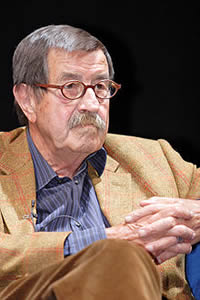

85 Jaar Günther Grass


De Duitse dichter en schrijver Günter Grass werd geboren in Danzig (tegenwoordig Gdansk, Polen) op 16 oktober 1927. Günther Grass viert vandaag zijn 85e verjaardag. Zie ook mijn blog van 16 oktober 2010 en eveneens alle tags voor Günter Grass op dit blog.


Uit: Die Blechtrommel


“Zugegeben: ich bin Insasse einer Heil- und Pflegeanstalt, mein Pfleger beobachtet mich, läßt mich kaum aus dem Auge; denn in der Tür ist ein Guckloch, und meines Pflegers Auge ist von jenem Braun, welches mich, den Blauäugigen, nicht durchschauen kann.

Mein Pfleger kann also gar nicht mein Feind sein. Liebgewonnen habe ich ihn, erzähle dem Gucker hinter der Tür, sobald er mein Zimmer betritt, Begebenheiten aus meinem Leben damit er mich trotz des ihn hindernden Guckloches kennenlernt. Der Gute scheint meine Erzählungen zu schätzen, denn sobald ich ihm etwas vorgelegen habe, zeigt er mir, um sich erkenntlich zu geben, sein neuestes Knotengebilde. Ob er ein Künstler ist, bleibe dahingestellt. Eine Ausstellung seiner Kreationen würde

jedoch von der Presse gut aufgenommen werden, auch einige Käufer herbeilocken. Er knotet ordinäre Bindfäden, die er nach den Besuchsstunden in den Zimmern seiner Patienten sammelt und entwirrt, zu vielschichtig verknorpelten Gespenstern, taucht diese dann in Gips, läßt sie erstarren und spießt

sie mit Stricknadeln, die auf Holzsöckelchen befestigt sind.

Oft spielt er mit dem Gedanken, seine Werke farbig zu gestalten. Ich rate davon ab, weise auf mein weißlackiertes Metallbett hin und bitte ihn, sich dieses vollkommenste Bett bunt bemalt vorzustellen. Entsetzt schlägt er dann seine Pflegerhände über dem Kopf zusammen, versucht in etwas zu starrem Gesicht allen Schrecken gleichzeitig Ausdruck zu geben und nimmt Abstand von seinen farbigen Plänen.

Mein weißlackiertes metallenes Anstaltsbett ist also ein Maßstab. Mir ist es sogar mehr: mein Bett ist das endlich erreichte Ziel, mein Trost ist es und könnte mein Glaube werden, wenn mir die Anstaltsleitung erlaubte, einige Änderungen vorzunehmen: das Bettgitter möchte ich erhöhen lassen,

damit mir niemand mehr zu nahe tritt...”


 1257109-becd352ba4c8f7b732350de10825445f.jpg

Günter Grass (Danzig, 16 oktober 1927)


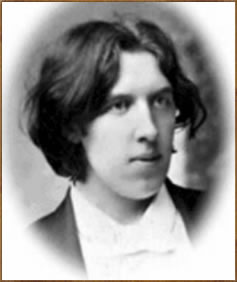
De Iers-Engelse schrijver Oscar Wilde werd geboren op 16 oktober 1854 in Dublin. Zie ook mijn blog van 16 oktober 2010 en eveneens alle tags voor Oscar Wilde op dit blog.


Ballad of Reading Gaol - I  (Fragment)


Some love too little, some too long,
Some sell, and others buy;
Some do the deed with many tears,
And some without a sigh:
For each man kills the thing he loves,
Yet each man does not die.


He does not die a death of shame
On a day of dark disgrace,
Nor have a noose about his neck,
Nor a cloth upon his face,
Nor drop feet foremost through the floor
Into an empty space.


He does not sit with silent men
Who watch him night and day;
Who watch him when he tries to weep,
And when he tries to pray;
Who watch him lest himself should rob
The prison of its prey.


He does not wake at dawn to see
Dread figures throng his room,
The shivering Chaplain robed in white,
The Sheriff stern with gloom,
And the Governor all in shiny black,
With the yellow face of Doom.


He does not rise in piteous haste
To put on convict-clothes,
While some coarse-mouthed Doctor gloats, and notes
Each new and nerve-twitched pose,
Fingering a watch whose little ticks
Are like horrible hammer-blows.


He does not feel that sickening thirst
That sands one's throat, before
The hangman with his gardener's gloves
Comes through the padded door,
And binds one with three leathern thongs,
That the throat may thirst no more.


He does not bend his head to hear
The Burial Office read,
Nor, while the anguish of his soul
Tells him he is not dead,
Cross his own coffin, as he moves
Into the hideous shed.


He does not stare upon the air
Through a little roof of glass:
He does not pray with lips of clay
For his agony to pass;
Nor feel upon his shuddering cheek
The kiss of Caiaphas.


 1257109-7ed412bd21207acbc04254700d2a170e.jpg

Oscar Wilde (16 oktober 1854 – 30 november 1900)


De IJslandse schrijver
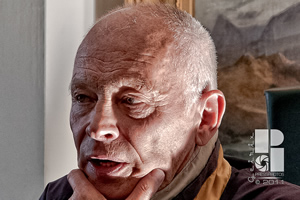
Guðbergur Bergsson werd geboren op 16 oktober 1932 in Grindavik. Zie ook mijn blog van 16 oktober 2010 en eveneens alle tags voor Guðbergur Bergsson op dit blog.


Uit: Blue Eyes in a Pool of Sharks


“But in reality nature was damaged and many Russian cities became because of that ghost dwellings like American radio stations in this country left by the so called NATO defence force. They were not only in Keflavik but all over Iceland. And something similar might happen to places now willingly accepting Alcoa factories. Their directors and owners only aim at making benefits. That is their nature and aim they defend better than we protect ours. Having done what they can and having emptied their possibilities they simply move to another region that has quickly entered the competition offering still better conditions and facilities concerning taxes and prices of electricity. Capitalism in America is that way and it is too well known in all the United States.
To me this is felt as a question of knowledge. I have not suffered it in the flesh. In reality it is remote, something like a sad memory, a frustration, a sign of lack of believe in human dignity. It is like a feeling that a tourist might have, a tourist entering Human history. But to see in the future similar destruction in my fatherland where my hands can feel things and my feet walk brings anger, even in the vain of hateful sense of justice when it is absurd and based on frustration.”


 1257109-60fa1639583cb2321fbc9d4088550bd9.jpg

Guðbergur Bergsson (Grindavik, 16 oktober 1932)


De Amerikaanse schrijver
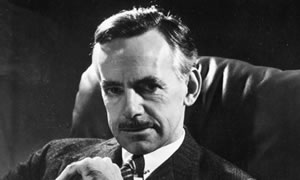
Eugene Gladstone O’Neill werd op 16 oktober 1888 in New York City geboren. Zie en ook mijn blog van 16 oktober 2010 en eveneens alle tags voor Eugene O’Neill op dit blog.


Uit: The Iceman Cometh


“LARRY--(grins) Yes, it's my bad luck to be cursed with an iron constitution that even Harry's booze can't corrode.

ROCKY--De old anarchist wise guy dat knows all de answers! Dat's you, huh?

LARRY--(frowns) Forget the anarchist part of it. I'm through with the Movement long since. I saw men didn't want to be saved from themselves, for that would mean they'd have to give up greed, and they'll never pay that price for liberty. So I said to the world, God bless all here, and may the best man win and die of gluttony! And I took a seat in the grandstand of philosophical detachment to fall asleep observing the cannibals do their death dance. (He chuckles at his own fancy--reaches over and shakes Hugo's shoulder.) Ain't I telling him the truth, Comrade Hugo?

ROCKY--Aw, fer Chris' sake, don't get dat bughouse bum started!

HUGO--(raises his head and peers at Rocky blearily through his thick spectacles--in a guttural declamatory tone) Capitalist swine! Bourgeois stool pigeons! Have the slaves no right to sleep even? (Then he grins at Rocky and his manner changes to a giggling, wheedling playfulness, as though he were talking to a child.) Hello, leedle Rocky! Leedle monkey-face! Vere is your leedle slave girls? (with an abrupt change to a bullying tone) Don't be a fool! Loan me a dollar! Damned bourgeois Wop! The great Malatesta is my good friend! Buy me a trink! (He seems to run down, and is overcome by drowsiness. His head sinks to the table again and he is at once fast asleep.)

ROCKY--He's out again. (more exasperated than angry) He's lucky no one don't take his cracks serious or he'd wake up every mornin' in a hospital.

LARRY--(regarding Hugo with pity) No. No one takes him seriously. That's his epitaph. Not even the comrades any more. If I've been through with the Movement long since, it's been through with him, and, thanks to whiskey, he's the only one doesn't know it.

ROCKY--I've let him get by wid too much. He's goin' to pull dat slave-girl stuff on me once too often. (His manner changes to defensive argument.) Hell, yuh'd tink I wuz a pimp or somethin'. Everybody knows me knows I ain't. A pimp don't hold no job. I'm a bartender. Dem tarts, Margie and Poil, dey're just a side line to pick up some extra dough. Strictly business, like dey was fighters and I was deir manager, see? I fix the cops for dem so's dey can hustle widout gettin' pinched. Hell, dey'd be on de Island most of de time if it wasn't fer me. And I don't beat dem up like a pimp would. I treat dem fine. Dey like me. We're pals, see? What if I do take deir dough? Dey'd on'y trow it away. Tarts can't hang on to dough. But I'm a bartender and I work hard for my livin' in dis dump. You know dat, Larry”.


 1257109-817094c971a9ffd5b383beff249ec775.jpg

Eugene O’Neill (16 oktober 1888 – 27 november 1953)


Onafhankelijk van geboortedata:

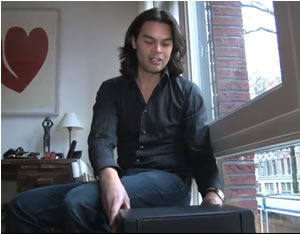
De Nederlandse schrijver Gustaaf Peek werd geboren in Haarlem in 1975. Peek studeerde Engelse Taal- en Letterkunde aan de Universiteit Leiden. Zie ook alle tags voor Gustaaf Peek op dit blog.


Uit: Dover (Vertaald door Davbid Colmer)


“In the second town he couldn’t find a parking space. He’d found the right street, but there were cars wedged in on both sides. Tony drove round and round waiting for someone to leave. He felt cold and clammy and realised it was a long time since he’d had anything to eat or drink. He ran out of patience and stopped right in front of the building. He jumped out, rushed up to the door, rang the bell. Nothing happened, so he banged on the door. Back to the van. Key in the lock, doors open – a car stopped behind him – he slammed them shut. The driver, a man, made a show of looking at his watch. The door of the house opened. A woman, drying her hands on what looked like a tea towel. Tony waited for some kind of signal. The woman said something he didn’t understand, but just stood there, the tea towel in her hands. Tony opened the doors and saw startled faces.

– Everything OK. Who’s next? Go, go!

Another three stood up, holding their bin bags, and got out. The car behind started hooting. Tony kept his back to it. The woman said something, the men answered. Doors shut. The clutch slipped, the van lurched, but didn’t stall. Two left. Rotterdam. Home.

He’d been driving non-stop for almost five hours. The old man and the fat guy would probably have done it faster. He was starting to feel faint. Five hours without food or drink. No breaks. Bladder about to burst. His city was close now. He had to get to the centre. Thuds from the back. He looked over his shoulder and saw fingers pressed against the window. A flushed face made Tony jump. Suddenly the man threw up against the glass. Tony’s hands stumbled over the wheel and the van swerved. Tony looked back at the road and regained control. A quick glance over his shoulder. The retching man’s face against the vomit-smeared window, the other man stretched out on the floor. He had to stop. Three hundred metres further on: clattering flags, garish signs advertising petrol and fast food. Tony took the exit.”
 

 1257109-aa11e98aeaede9ea078a9615d3539d65.jpg

Gustaaf Peek (Haarlem, 1975)


Zie voor nog meer schrijvers van de 16e oktober ook mijn blog van 16 oktober 2011 deel 1 en eveneens deel 2.
Geschreven door Romenu om 19:21 Reageer op dit bericht

A. F.Th. van der Heijden, Boualem Sansal, Friedrich Nietzsche

De Nederlandse schrijver A. F. Th. van der Heijden werd geboren in Geldrop op 15 oktober 1951. Zie ook mijn blog van 15 oktober 2010 en eveneens alle tags voor A. F.Th. van der Heijden op dit blog.


Uit: Tonio


“Er was die keer dat hii voor me uit de trap afdaalde, terwijl hij lachend iets over zijn schouder zei. Halverwege stond hij opeens stil, zodat ik tegen hem op botste.

'Dat ik dat toch ooit geweest ben.'

Op ooghoogte hing tegen de muur van de overloop zrjn portret als kaalhoofdige zuigeling, in een gestreept rompertje dwars in

zijn ledikant liggend, met boven zich kleurige houten ringen waaraan hij zich nog moest leren optrekken. Hij keek schuins in

de camera, happend in het dons.

Tonio schudde zijn hoofcl, alsof het een onbezonnen keuze betrof 'dat daar ooit te zqn geweest'. Jaren eerder had ik in mijn dagboek

genoteerd dat hij, net zo ongelovig zijn hoofd schuddend, had gezegd: 'Dat ik toch ooit dood zaI gaan.'

(…)


Soms wil ik hem heel dicht tegen me aan houden. De gedachte doet zich meestal voor als ik in bed lig te lezen, en zomaar opeens mijn boek ter zijde leg. Kom maar, zeg ik dan geluidloos. Kom maar, Tonio, onder het dek. Ik zal je warm houden.
Zijn lichaam is willoos, slap, maar niet koud. Het is de Tonio die na de aanrijding op het plaveisel heeft gelegen, een half etmaal voor zijn dood. De inzittenden van de rode Suzuki Swift staan buiten de auto, en durven niet naar het verderop neergekwakte lijf te kijken. De sirenes van politie en ambulance zijn nog niet hoorbaar. Het blauwe geflakker van de zwaailichten moet nog komen. Het is dan dat ik hem opraap en naar mijn bed draag, waarvan ik het dek opensla.
Kom maar. Dicht tegen me aan. Dat zal je warm houden. Ze komen zo om je beter te maken.”


1256369-e418f9ae1bd8b82a90412ece858db4f3.jpg 

A. F.Th. van der Heijden (Geldrop, 15 oktober 1951)


De Franstalige Algerijnse schrijver Boualem Sansal werd geboren op 15 oktober 1949 in El Teniente-Had. Zie ook alle tags voor Boualem Sansal op dit blog.


Uit: Das Dorf des Deutschen (Vertaald door Ulrich Zieger)


Malrichs Tagebuch
Oktober 1996
Es sind jetzt sechs Monate, dass Rachel tot ist. Er war dreiunddreißig Jahre alt. Eines Tages, das ist zwei Jahre her, ist irgendwas in seinem Kopf kaputtgegangen, er fing plötzlich damit an, zwischen Frankreich, Algerien, Deutschland, Österreich, Polen, der Türkei und Ägypten hin- und herzujagen. War er nicht auf Reisen, dann las er, hockte grübelnd in seiner Ecke, er schrieb, er delirierte. Er büßte die Gesundheit ein. Dann seine Arbeit. Dann den Verstand. Ophelia hat ihn sitzen lassen. Eines Abends hat er sich umgebracht. Das war am 24. April dieses Jahres 1996, gegen 23 Uhr.
Ich wusste nichts von seinen Problemen. Ich war jung, ich war siebzehn, als dieses Irgendwas in seinem Kopf zerbrach, ich war auf der schiefen Bahn. Rachel sah ich selten, ich mied ihn, er ging mir mit seinem Gewäsch auf den Wecker. Ich bedaure es, das zu sagen, er ist mein Bruder, aber dermaßen angepasst, da kriegst du die Krise. Er hatte sein Leben, ich hatte meins. Er war leitender Angestellter in einem amerikanischen Riesenkonzern, er hatte seine Tussi, sein kleines Häuschen, seinen Schlitten, seine Kreditkarte, sein Tagesablauf war geregelt, ich schlich rund um die Uhr mit den Abgebrannten aus der Siedlung um die Ecken. Sie ist als ZUS-1, empfindliche urbane Zone erster Kategorie eingestuft. Keine Zeit zum Ausruhen, man kommt aus dem einen Crash und schlittert in den nächsten. Eines Morgens hat Ophelia angerufen, um uns das Drama zu verkünden. Sie hatte bei ihrem Ex im Pavillon vorbeigeschaut, um zu sehen, was es Neues gibt. Ich ahnte etwas, hat sie gesagt. Ich sprang auf das Moped von Momo, dem Sohn des Schächters, und gab Gas. Da waren Leute vor dem Häuschen, die Polizei, der Rettungswagen, die Nachbarn, die Schaulustigen. Rachel war in der Garage, auf dem Fußboden sitzend, Rücken gegen die Wand, Beine ausgestreckt, das Kinn auf der Brust, den Mund offen.”


 1256369-5730fb244d36a4c6b6d38435af9ce74b.jpg

Boualem Sansal (El Teniente-Had, 15 oktober 1949)


De Duitse dichter, filosoof, filoloog en schrijver Friedrich Nietzsche werd geboren op 15 oktober 1844 in Röcken ten zuidwesten van Leipzig. Zie ook mijn blog van 15 oktober 2010 en eveneens alle tags voor Friedrich Nietzsche op dit blog.


Uit: Der Antichrist


„-Sehen wir uns ins Gesicht. Wir sind Hyperboreer, - wir wissen gut genug, wie abseits wir leben. "Weder zu Lande, noch zu Wasser wirst du den Weg zu den Hyperboreern finden": das hat schon Pindar von uns gewusst. Jenseits des Nordens, des Eises, des Todes - unser Leben, unser Glück ... Wir haben das Glück entdeckt, wir wissen den Weg, wir fanden den Ausgang aus ganzen Jahrtausenden des Labyrinths. Wer fand ihn sonst? - Der moderne Mensch etwa? "Ich weiss nicht aus, noch ein; ich bin Alles, was nicht aus noch ein weiss" - seufzt der moderne Mensch ... An dieser Modernität waren wir krank, - am faulen Frieden, am feigen Compromiss, an der ganzen tugendhaften Unsauberkeit des modernen ja und Nein. Diese Toleranz und largeur des Herzens, die Alles "verzeiht", weil sie Alles "begreift", ist Scirocco für uns. Lieber im Eise leben als unter modernen Tugenden und andren Südwinden! ... Wir waren tapfer genug, wir schonten weder uns, noch Andere: aber wir wussten lange nicht, wohin mit unsrer Tapferkeit. Wir wurden düster, man hiess uns Fatalisten. Unser Fatum - das war die Fülle, die Spannung, die Stauung der Kräfte. Wir dürsteten nach Blitz und Thaten, wir blieben am fernsten vom Glück der Schwächlinge, von der "Ergebung" ... Ein Gewitter war in unsrer Luft, die Natur, die wir sind, verfinsterte sich - denn wir hatten keinen Weg. Formel unsres Glücks: ein Ja, ein Nein, eine gerade Linie, ein Ziel ...”


 1256369-e70ce39e964e2f274382563678274e31.jpg

Friedrich Nietzsche (15 oktober 1844 – 25 augustus 1900)

Monument in Naumburg


Zie voor meer schrijvers van de 15e oktober ook mijn vorige blog van vandaag.

Geschreven door Romenu om 19:26 Reageer op dit bericht

Michail Lermontov, Italo Calvino, Tessa de Loo

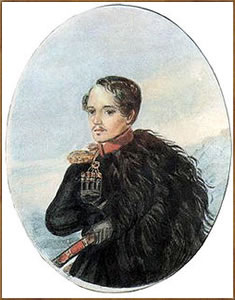
De Russische dichter en schrijver Michail Joerjevitsj Lermontov werd geboren op 15 oktober 1814 in Moskou. Zie ook mijn blog van 15 oktober 2010 en eveneens alle tags voor Michail Lermontov op dit blog.


The Cross On the Rock


I know a rock in a highland's ravine,

On which only eagles might ever be seen,

But a black wooden cross o'er a precipice reigns,

It rots and it ages from tempests and rains.


And many years have gone without any hints,

From times when it was seen from faraway hills.

And its every arm is raised up to the sky,

As if catching clouds or going to fly.


Oh, if I were able to rise there and stay,

Then how I'd cry there and how I'd pray;

And then I would throw off real life's chains

And live as a brother of tempests and rains!


Requiem

1831


There is a blest place: by the trace

In wilderness, in a little glade’s middle,

Where in the eve, mists twine and bristle

In moony silver’s easy lace…

My friend! You know that glade, fair;  

There dig a pit and let me rest,

When I will cease to breathe in air.


Give to that grave a good regard --

Let all be legally there settled

Raise on the grave a cross of maple,

And place a stone, wild and hard.

When thunderstorms will shake the forest,

The traveler will see my cross;

Maybe, the stone and the moss

Will give to him a rest at most. 


Vertaald door Yevgeny Bomver


1256366-7b9dc24429841ee5464fb9c97dd09792.jpg
Michail Lermontov (15 oktober 1814 - 27 juli 1841)

Zelfportret, 1837


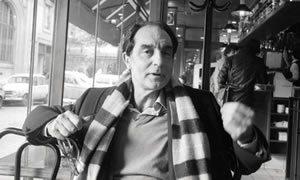
De Italiaanse schrijver Italo Calvino werd geboren in Santiago de las Vegas op Cuba op 15 oktober 1923. Zie ook mijn blog van 15 oktober 2010 en eveneens alle tags voor Italo Calvino op dit blog.


Uit: Invisible Cities (Vertaald door William Weaver)


“The city of Leonia refashions itself every day: every morning the people wake between fresh sheets, wash with just-unwrapped cakes of soap, wear brand-new clothing, take from the latest model refrigerator still unopened tins, listening to the last-minute jingles from the most up-to-date radio.

     On the sidewalks, encased in spotless plastic bags, the remains of yesterday's Leonia await the garbage truck.   Not only squeezed rubes of toothpaste, blown-out light bulbes, newspapers, containers, wrappings, but also boilers, encyclopedias, pianos, porcelain dinner services. It is not so much by the things that each day are manufactured, sold, bought that you can measure Leonia's opulence, but rather by the things that each day are thrown out to make room for the new.   So you begin to wonder if Leonia's true passion is really, as they say, the enjoyment of new and different things, and not, instead, the joy of expelling, discarding, cleansing itself of a recurrent impurity.   The fact is that street cleaners are welcomed like angels, and their task of removing the residue of yesterday's existence is surrounded by a respectful silence, like a ritual that inspires devotion, perhaps only because once things have been cast off nobody wants to have to think about them further.

     Nobody wonders where, each day, they carry their load of refuse.   Outside the city, surely; but each year the city expands, and the street cleaners have to fall farther back.   The bulk of the outflow increases and the piles rise higher, become stratified, extend over a wider perimeter.   Besides, the more Leonia's talent for making new materials excels, the more the rubbish improves in quality, resists time, the elements, fermentations, combustions.   A fortress of indestructible leftovers surrounds Leonia, dominating it on every side, like a chain of mountains.”


 1256366-979cd497fa5af813e0aee8ba3075c062.jpg

Italo Calvino (15 oktober 1923 - 19 november 1985)


De Nederlandse schrijfster Tessa de Loo (pseudoniem van Tineke Duyvené de Wit) werd op 15 oktober 1946 in Bussum geboren. Zie ook mijn blog van 15 oktober 2010 en eveneens alle tags voor Tessa de Loo op dit blog.


Uit: Het rookoffer


„Op een avond lag hij vermoeid naast haar, beroofd van zijn vitaliteit. Ze spraken over 'La Nausée' van Sartre, dat hij kort daarvoor gelezen had. Hij had veel herkend, zei hij, het gevoel van walging en zinloosheid week haast nooit van zijn zijde. Barbara was verontwaardigd. Dit was een belediging van haar en het leven zelf! Deze bekentenis moest voortkomen uit jeugdige dweepzucht, uit zijn neiging tot romantiek met een nihilistisch tintje. 'Het bestaan is niet zinloos,' zei ze fel, 'de liefde is de rechtvaardiging ervan.' Guido haalde zijn schouders op. 'We worden geboren om te sterven,' zei hij mat, 'meer is er niet. Daarom spelen we het leven. We spelen het alsof we erin geloven.' Barbara zweeg. Wat betekende zij dan voor hem?'”

(…)


' 'En wat doen we met haar?' vroeg de beul. Hij wees op de prinses die handenwringend naar het zacht heen en weer bungelende lichaam van haar minnaar keek. Samen met de galg tekende het zich zwart af tegen de hemel. 'Haar straf,' sprak de koning, 'zal zwaarder zijn: wij laten haar in leven.'


 1256366-cd8418968c1c0f460c64a32a283c0ef7.jpg

Tessa de Loo (Bussum, 15 oktober 1946)


Zie voor nog meer schrijvers van de 15e oktober ook
mijn blog van 15 oktober 2011 deel 1 en eveneens deel 2.

Geschreven door Romenu om 19:13 Reageer op dit bericht

Friedenspreis des Deutschen Buchhandels 2012 voor Liao Yiwu

Friedenspreis des Deutschen Buchhandels 2012 voor Liao Yiwu

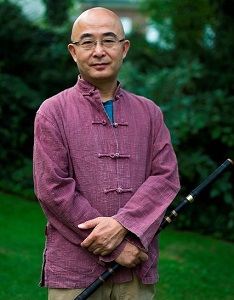
Aan de Chinese dichter en schrijver Liao Yiwu werd gisteren in de Frankfurter Paulskerk de Friedenspreis des Deutschen Buchhandels uitgereikt. Liao Yiwu (ook bekend als Lao Wei) werd geboren op 4 augustus 1958 in Yanting, Sichuan Zie ook alle tags voor Liao Yiwu op dit blog.

Uit: For a Song and a Hundred Songs (Vertaald door Wenguang Huang)

“I have written this book three times, thanks to the relentless obstructions of the Chinese security police.
I first started writing it on the backs of envelopes and on scraps of paper that my family smuggled into the prison where I was serving a four-year sentence from 1990 to 1994 for writing and distributing a poem that condemned the infamous, bloody government crackdown on the 1989 student prodemocracy movement in Tiananmen Square.
Even after my release in 1994, the police continued to monitor and harass me. On October 10, 1995, police raided my apartment in Chengdu, Sichuan Province, confiscating the handwritten manuscript of For a Song and a Hundred Songs. As a punishment for what they called “attacking the government’s penitentiary system” with my writings, I was placed under house arrest for twenty days.
I started on my book again from scratch. It took me three years to finish a new version, which was seized in 2001, along with my other unpublished literary works. This time, the police also absconded with my computer.
Writers like to wax poetic and brag about their works in an attempt to secure a berth in the history of literature. Unfortunately, I no longer possess many physical products of my years of toil. Instead, I have become an author who writes for the pleasure of the police. Most of my past memories—the manuscripts that I have painstakingly created about my life, and my poems—are now locked away at the Public Security Bureau. In a grimly humorous twist, the police used to peruse my writings more meticulously than even the most conscientious editors.
Chinese career spies have amazing memories. A director of a local public security branch could memorize many of my poems and imbue them with more complicated ideas than I had originally intended. So in a sense, my writing found a way to the minds and lips of at least one eager audience.
Indeed, the police proved to have an insatiable need for more of my work. So after each successive raid, I dug more holes like a rat, and I hid my manuscripts in deeper and deeper crevices across the city, in the homes of family and friends. My furtive efforts to conceal my work called to mind those of the Nobelist Aleksandr Solzhenitsyn, whose handwritten manuscript of The Gulag Archipelago had famously faced similar threats from the KGB. The only way to preserve his writings was to get them published.
In early 2011, after this book was finally smuggled out of China and scheduled to be published in Taiwan and in Germany, I again met resistance from the Chinese authorities.”.


 2083121-5fdd3fbb84e96c3555fd6615ebc4f92c.jpg
Liao Yiwu (Sichuan, 4 augustus 1958)

Geschreven door Romenu om 00:00 Reageer op dit bericht

Meer van Romenu

↑ Terug naar de berichten