Naar de inhoud

Romenu

Over literatuur, gedichten, kunst en cultuur
akke.beakke.be

Berichten van 31 oktober 2012 tot 1 november 2012

Allerheiligen, Gaston Burssens, Job Degenaar, Stefaan van Laere, Rudy Kousbroek

Bij Allerheiligen


 1267065-e004da25e52de2304524ec88402778bd.jpg

Allerheiligen, Frau Angelico, 15e eeuw, National Gallery, Londen


Allerheiligen


De rosse blaren van de najaarsbomen

beleggen ’t macadam met gouden zomen.

Er dwaalt een blijde stemming in de stad

van wemelende mensen, weeldezat.

De zon met gouden draden, fijn als rag

spint haar kleed voor allerheiligendag.

Ach kind er hangt

een waas van weemoed over!

zie jij ’t dan niet?

De glans van zon en lover

is niet zo helder als je meisjeslach;

‘t is immers morgen allerzielendag!

Voel jij niet dat in elke vreugde trilt

het leed om ‘t niet bezit van wat je wilt?

Het leed om ’t niet-bezit van je verlangen,

Zo dat de zon half

in de mist blijft hangen.


 1267065-c8cd11ffce9f799733a4e074c852860c.jpg

Gaston Burssens (18 februari 1896 – 29 januari 1965)


De Nederlandse dichter Job Degenaar werd geboren in Dubbeldam op 1 november 1952.Zie ook alle tags voor Job Degenaar op dit blog.


De vrouw die in mij woont


De vrouw die in mij woont
kijkt uit het raam van een stil huis
en laaft zich aan de fado
de weemoed van de cello
het vuur van de gitaar
de waaierende zang


minstens één vergeefse liefde
kent ze, een val die haar deed
wankelen en misschien
een vijand in haar vlees

mooier is ze dan haar leven
zachter haar strelen dan haar handen
dieper haar kussen dan haar mond

De vrouw die in mij woont
werd onvermijdelijk poëzie


Wat avond met een haven doet


Gewichtloos glinsterwater

de havenlichten wiegen

vissersboten liggen

in blauw verankerd


Een man, roerloze reiger

zit in brons gegoten

in z’n hand een schepnet

waaruit geolied daglicht lekt


hij verroert, slaat toe

een plons, maar niets

dan zijn silhouet met net

en het fronsen van de rivier


Zo leeg is het nu geworden

dat iemand sterren strooit

en het intiem rumoer me wenkt

dat uit verre bars bij vlagen aanwaait


 1267065-6edf3e243524f0fd3d489b8d11ac9e56.jpg

Job Degenaar (Dubbeldam, 1 november 1952)


De Belgische dichter en schrijver Stefaan van Laere werd geboren op 1 november 1963 in Wetteren. Zie ook mijn blog van 1 november 2010 en eveneens alle tags voor Stefaan van Laere op dit blog.


Terug thuis


Puur als een broze tango zonder muziek in de ochtendsneeuw,

zo kon ik in de klaarte van je groene ogen verhalen lezen.

Verhalen die ik mee had geschreven, je co-auteur.

Soms een dartele liefdesgod, soms nu al een ouwe zeur.

Hoe roze toch die karteling van haar plooien

het vuur van de tatoeage op haar lies glimt je toe

je bent nu voor eeuwig deelgenoot van haar geheim

en wil niets meer dan in haar schoot gaan rusten.

en met dit gedicht heb je, inderdaad, de kloof gedicht

plots draagt ze enkel nog haar lach.

Kom nader nu, krolt ze. Sust ze. Kust ze.

Echt waar. Miauw. Het mag.


Fata morgana


Streelzuchtig, vaak te luchtig

met de weeë smaak van zurige zomers

en het gemaaide hooi op de oppers,

een machtig staketsel.

Voor hun lusten geen beletsel.

Verhuld door zwierige bruidsluiers

zingt ze voor hem, Grace Jones à la Piazzolla

Hij denkt ongeduldig al aan de kruiers

en ziet zich pronken in La Boca.

Na het dansen genietend van het panorama.

Ze weten nu nog niet dat ze nooit

een echte twee-eenheid zullen zijn.

Geen nood, dat ontdekken ze wel

op elkaar aangewezen in de milonga.

Hun huwelijk verdort tot een fata morgana.


 1267065-2e7a01d1e372cefcbd878a2e5f97e845.jpg

Stefaan van Laere (Wetteren, 1 november 1963)


De Nederlandse dichter, schrijver en essayist Rudy Kousbroek werd op 1 november 1929 in Pematang Siantar in Indonesië geboren. Zie ook mijn blog van 1 november 2010 en eveneens alle tags voor Rudy Kousbroek op dit blog.


Uit: Tempat Soetji of de Geheime Tuin


„Alles was min of meer zoals in de beschrijving: de omlijsting van donkere bomen, het uitzicht op iets in het licht; wat de aandacht trok was alleen niet het huis - dat was een overgroeide ruïne - maar iets heel anders: een grote stenen vijver, een badplaats, een zwembad. En toch was het 't zelfde, een ‘tempat soetji’, een heilige plek. Iedereen stond doodstil, je hoorde alleen de vogels. Aan één kant, aan de donkere kant, was een stenen trap, groen van algen en mos, maar het water was zwart en helder, je zag er de wolken in voorbijdrijven; er groeiden lotussen in en soms zag je iets bewegen, een vis. - Hoe komen die daar, mandoer? Door de lucht, gebracht door de vogels, sinjo.

Een huis, een vijver, een zwembad - iedereen die uit Indië komt heeft wel een herinnering aan zo'n magische plek, een geheime tuin, soms letterlijk, zoals in deze passage van Maria Dermoût uit het verhaal ‘De kwade slang’ in De sirenen (1963): ‘Op de suikerplantage diep in het binnenland van Java stond nog altijd het oude huis in de oude tuin, “het grote huis” zoals het genoemd werd. Iedere familie die er woonde, de een na de nader, had aan het huis laten verbouwen, of bijbouwen. Ook de tuin was veranderd: een gemetselde vijver voor lotusbloemen was erbij gekomen, een orchideenhuisje, een logeerpaviljoen, de paden waren verlegd tussen bloemperken en bloeiende struiken. Er was op het laatst niet veel over van het oude, behalve sommige bomen, de twee waringins links en rechts van het huis, de oprijlaan van de kenaribomen. En dan nog een grote stenen tuinvaas op een voetstuk, in het midden van de moestuin op de plaats van de vroegere rozentuin. Maar links van het huis, achter de hertenkamp, in het stuk van de tuin dat glooiend naar de rivier toeliep, was niets veranderd. De tuin was daar niet meer aangelegd met grasvelden en paden en perken, er stonden alleen kokospalmen in rijen naast elkaar, als in een boomgaard. En in plaats van de tuinmuur was er een meer dan manshoge doornen bamboehaag.“


 1267065-e73f284dfadeb55b8f31246955db2a14.jpg

Rudy Kousbroek (1 november 1929 - 4 april 2010)


Zie voor nog meer schrijvers van de 1e november ook mijn blog van 1 november 2011 deel 1 en eveneens  deel 2.
Geschreven door Romenu om 17:56 Reageer op dit bericht

Joseph Boyden, Bruce Bawer, John Keats, Nick Stone

De Canadese schrijver Joseph Boyden werd geboren op 31 oktober 1966 in Willowdale, Ontario. Zie ook mijn blog van 31 oktober 2010 en eveneens alle tags voor Joseph Boyden op dit blog.


Uit: Three Day Road


“I went alone.

I watch the beast pull up and give one last great sigh, as if it is very tired from the long journey, smoke pouring from its sides. People wave from the windows and people on the ground wave back, just as I have watched them do for days. Then men and women and children who have arrived start stepping down into the arms of others. I see a few soldiers and search among them for Elijah's face with his sly grin. The crowd begins to thin, and once again I do not see an Indian soldier with one leg.

I am turning to leave when I see through one of the windows the silhouette of a man inside. He walks slowly along the aisle, on crutches, in a uniform, a small bag slung over his shoulder. I step away from the shadow of the wall.

He wears a hat, just like the wemistikoshiw do, but this one is of their army and I cannot see his face for his looking down as he slowly makes his way down the steps on his crutches. He is an old man, I think. So skinny. This cannot be the Elijah I know. One leg of his pants is pinned up and hangs down a little way, empty.

When he is off the steps I begin to back away, thinking it is not him. He looks up and I see his face, thin and pale, high cheekbones, and ears sticking out from beneath his hat. I stumble a little, the blood rushing away from my head. The ghost of my nephew Xavier looks at me.

He sees me at the same moment, and I watch as his eyes take a long time to register what they see, but when they do he begins to rock back and forth on his crutches. He falls to the ground. I rush up to him, kneel beside him, grab his warm hands. He is no ghost. I hold him to me. His heart beats weakly. I am struck suddenly that he is very ill.

"Nephew," I whisper. "You are home. You are home."

I hug him, and when he opens his eyes, I look into them. They are glassy. Even in the shadows of the station his pupils are pinpricks.

"I was told you were dead, Auntie," he whispers.

"And I was told you were, too," I say.

We sit on the ground for a while, both of us too weak for the moment to get up. We are crying, looking at one another. A small group of wemistikoshiw gathers and stares at us. I help Nephew up so that we can get away, get to the river where he can drink water and I can better protect him.

We do not stay in the town long. It makes me too nervous. Automobiles, they are everywhere. We must cross the dusty road that they travel upon before we can get to the river where I keep my canoe. Nephew walks slowly on his crutches, his eyes cast down. People stare at us, at him.”


 1266406-0b88455ad5d288e617c2f11473759ca5.jpg

Joseph Boyden (Willowdale, 31 oktober 1966)


De Amerikaanse dichter, schrijver en literatuurcriticus Bruce Bawer werd geboren op 31 oktober 1956 in New York. Zie ook mijn blog van 31 oktober 2010 en eveneens alle tags voor Bruce Bawer op dit blog.


Uit: The New Quislings: How the International Left Used the Oslo Massacre to Silence Debate About Islam.


“It did not take long for Norway’s New Quislings to rally around a new label for their enemies: “Eurabia writers,” “Eurabia conspiracists,” “Eurabia propagandists,” or some variation thereupon. One of the first to employ this label was Sindre Bangstad, a social anthropologist at the University of Oslo, who in the Danish newspaper Politiken used Breivik’s atrocities as a club with which to beat a wide range of adversaries. He went, for example, after Walid al-Kubaisi, an Iraqi Norwegian writer whose website is called Opplyste Muslimer (Enlightened Muslims). Walid is one of the bravest people in Norway and one of its most fervent defenders of individual liberty—yet Bangstad smeared him as a “Eurabia literature propagandist” and mocked him for having assumed, in the first moments after the explosions in Oslo, that they were the work of Islamic terrorists.

What is “Eurabia”? The word refers to the book of that title by the scholar Bat Ye’or, who describes how various obscure European commissions, committees, and such have smoothed the way for the Islamization of Europe. Since July 22, the book Eurabia has repeatedly been characterized in the Norwegian media as pure fantasy; on the contrary, it is a sober work of solid documentation, and anyone who wishes to try to refute it should do so by resorting to facts, not by smearing it as baseless propaganda. Ye’or has studied a small library of obscure agreements produced by diplomat meetings, conferences, conventions, and the like over recent decades, and has found what she considers an unsettling pattern of “informal alliances” between European officials and their Mediterranean Arab counterparts that take place under the umbrella of something called the Euro-Arab Dialogue, which dates back to 1974. Bat Ye’or considers these alliances to be characterized by a European deference toward Muslim values, sensibilities, and sensitivities, a pattern she likens to the historical subordination of non-Muslims in Islamic countries.”


 1266406-5ea61057245c41a8dc93185c07ca526c.jpg

Bruce Bawer (New York, 31 oktober 1956)


De Engelse dichter John Keats werd geboren op 31 oktober 1795 in Finsbury Pavement in London. Zie ook mijn blog van 31 oktober 2010 en eveneens alle tags voor John Keats op dit blog.


Asleep! O Sleep A Little While, White Pearl!


Asleep! O sleep a little while, white pearl!
And let me kneel, and let me pray to thee,
And let me call Heaven’s blessing on thine eyes,
And let me breathe into the happy air,
That doth enfold and touch thee all about,
Vows of my slavery, my giving up,
My sudden adoration, my great love!


On A Dream


As Hermes once took to his feathers light
When lulled Argus, baffled, swoon'd and slept,
So on a Delphic reed my idle spright
So play'd, so charm'd, so conquer'd, so bereft
The dragon-world of all its hundred eyes,
And, seeing it asleep, so fled away:
Not to pure Ida with its snow-cold skies,
Nor unto Tempe where Jove griev'd a day;
But to that second circle of sad hell,
Where 'mid the gust, the whirlwind, and the flaw
Of rain and hail-stones, lovers need not tell
Their sorrows. Pale were the sweet lips I saw,
Pale were the lips I kiss'd, and fair the form
I floated with, about that melancholy storm.


Sonnet To Byron


Byron! how sweetly sad thy melody!

Attuning still the soul to tenderness,

As if soft Pity, with unusual stress,

Had touch'd her plaintive lute, and thou, being by,

Hadst caught the tones, nor suffer'd them to die.

O'ershadowing sorrow doth not make thee less

Delightful: thou thy griefs dost dress

With a bright halo, shining beamily,

As when a cloud the golden moon doth veil,

Its sides are ting'd with a resplendent glow,

Through the dark robe oft amber rays prevail,

And like fair veins in sable marble flow;

Still warble, dying swan! still tell the tale,

The enchanting tale, the tale of pleasing woe.


1266406-1d7f37514660c8102cde87c15300bc1c.jpg 

John Keats (31 oktober 1795 – 23 februari 1821)

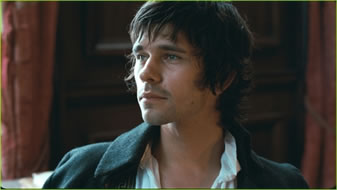
Ben Whishaw als John Keats in de film Bright Star uit 2009


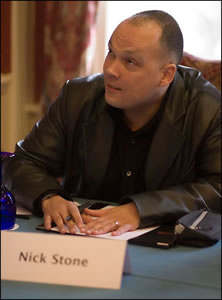
De Engelse schrijver Nick Stone werd geboren op 31 oktober 1966 in Cambridge. Zie ook mijn blog van 31 oktober 2009 en ook mijn blog van 31 oktober 2010 en eveneens alle tags voor Nick Stone op dit blog.


Uit: Mr. Clarinet

“Honesty and straightforwardness weren't always the best options, but Max chose them over bullshit as often as he could. It helped him sleep at night.

"I can't," he told Carver.

"Can't or won't?"

"I won't because I can't. I can't do it. You're asking me to look for a kid who went missing two years ago, in a country that went back to the Stone Age about the same time."

Carver managed a smile so faint it barely registered on his lips yet let Max know he was being considered unsophisticated. It also told Max what kind of rich he was dealing with. Not rich, riche—old money, the worst; connections plugged in at every socket, all the lights on, everybody home—multistory bank vaults, fuck-off stockholdings, high-interest offshore accounts; first-name terms with everybody who's anybody in every walk of life, power to crush you to oblivion. These were people you never said no to, people you never failed.

"You've succeeded at far tougher assignments. You've performed—miracles," Carver said.

"I never raised the dead, Mr. Carver. I only dug 'em up."

"I'm ready for the worst."

"Not if you're talking to me," Max said. He regretted his bluntness. Prison had reformed his erstwhile tact and replaced it with coarseness. "In a way you're right. I've looked for ghosts in hellholes in my time, but they were American hellholes and there was always a bus out. I don't know your country. I've never been there and—no disrespect meant—I've never wanted to go there. Hell, they don't even speak English."

Then Carver told him about the money.”


 1266406-814e914aaea2b514eeac20e31f04cba7.jpg

Nick Stone (Cambridge, 31 oktober 1966)


Zie voor nog meer schrijvers van de 31e oktober ook mijn blog van 31 oktober 2011 deel 2.

Geschreven door Romenu om 17:33 Reageer op dit bericht

Meer van Romenu

↑ Terug naar de berichten