

Naar de inhoud

Romenu

Over literatuur, gedichten, kunst en cultuur
akke.beakke.be

Berichten van 19 december 2012 tot 20 december 2012

Sky Gilbert, Friederike Mayröcker, Sandra Cisneros, Hortense Calisher, Aziz Nesin

De Canadese dichter, schrijver en acteur Sky Gilbert werd geboren op 20 december 1952 Norwich, Connecticut. Zie ook alle tags voor Sky Gilbert op dit blog.


Montreal Soir


Peter had invited me for coffee, first,
at that restaurant with the unpronouncable name
and of course he was sitting there with James.
I was impressed, as well I should be.
(Isn't it interesting the way people introduce the ones they love? "Sky this
is James", and of course, I tripped and almost fell into him and then he
wanted to know about my tattoo. It's important not to be too fascinating-
result: jealousy, or too disinterested- result: hurt)
James asked about the various forms of neuroses and Peter was in his
element- father, teacher, pedant, wit:
"Well Gestalt describes three types of neurosis: projection, introjection
and retrogression."
Peter and I agree that we have all three. James is confused and interested,
and goes home, almost stealing Peter's hat.
As Peter and I make our trek to the strip bar I realize that the poets are
wrong; one-sided love is not hopeless - it's the other way around. Peter and
James are clearly in love with each other equally, and that of course is why
they will never be happy together. The obsession is too equal. Neither is
crying and sighing hopelessly. Neither is telling the other what to do
(I.E.: MARRIAGE). Two people equally in love? That's a stalemate, a prison,
two pairs of eyes endlessly staring fearfully into the void. Dare I know
that soul (it loves me as I love it)? Why no, I dare not.
And we're at the strip bar and the boys whirl perilously around us. One boy
has made pants out of ripped jeans and a pair of chaps. Another surprises us
with his long cock. Another sits, pouting, by the slot machine, but every
time he moves, Peter and I gasp.
And of course these boys make me think about death. As they always do.
For those who are obsessed with the body are obsessed with death. We are all
too aware of how the body changes. Each pimple, each wrinkle, announces
death's imminence. And you can lock yourself in your house and roll up your windows
and make dinner.
Or you can throw yourself into the body of that young man, with every ounce
of fury you have left.
Death will come either way. But we imagine that watching it's inevitable
approach is a kind of cheat, is beating the game.
And we are always running, with our back to the moon, and hiding, with our
face in the sun, and yelling, with the music in our ears.
Our desperate escapes! How we love them, as we love our boys, and though we
are reluctant to admit it, they love us too.
Or then again, perhaps we're just two old queens sipping beer at the Adonis,
and it needn't be any more important than that.


 1300477-deeb59b41c1719737852e669a409f596.jpg

Sky Gilbert (Norwich, 20 december 1952)


De Oostenrijkse dichteres en schrijfster Friederike Mayröcker werd op 20 december 1924 in Wenen geboren. Zie ook alle tags voor Friederike Mayröcker op dit blog.


lieber in Gedanken reisen, Hokusai


auf dem Rücken, oder unter der Lampe,

laufen zu Füßen des Fuji und blicken hinauf

zu verschneiter Spitze, die Schürstiefel

feucht und kalt, die Halskrause welk.

Wie, frage ich, Erkundungen einer Ferne

mit den eigenen Füßen, wie, frage ich, Erfahrungen einer Ferne

mit den eigenen Augen. Wie Sehnsucht nach Ferne

mit Seßhaftigkeit vereinen. Wie, Fuß und Auge,

Träne und Lust.


eines Lebensabschnittes Bestandaufnahme


in meinem Tornister

ein Thymianstämmchen

zwei Münzen

ein stumpfer Bleistift

zerknitterte Notizen

Keksbrösel

eine grüne Wäscheklammer

die Visitkarte einer japanischen Germanistin

ein zerbrochener kleiner Kamm

Dalís Ameisen auf einem verschatteten Notenblatt


für Emi Neckamm



1300477-273c917242cc4aa4ed0bf57b6f480a39.jpg 

Friederike Mayröcker (Wenen, 20 december 1924)

De kerstmarkt bij het Weense Raadhuis 


De Amerikaanse dichteres en schrijfster Sandra Cisneros werd geboren op 20 december 1954 in Chicago. Zie ook alle tags voor Sandra Cisneros op dit blog.


Uit: Caramelo (Vertaald door Liliana Valenzuela)


„We're all little in the photograph above Father's bed. We were little in Acapulco. We will always be little. For him we are just as we were then.

Here are the Acapulco waters lapping just behind us, and here we are sitting on the lip of land and water. The little kids, Lolo and Memo, making devil horns behind each other's heads; the Awful Grandmother holding them even though she never held them in real life. Mother seated as far from her as politely possible; Toto slouched beside her. The big boys, Rafa, Ito, and Tikis, stand under the roof of Father's skinny arms. Aunty Light-Skin hugging Antonieta Araceli to her belly. Aunty shutting her eyes when the shutter clicks, as if she chooses not to remember the future, the house on Destiny Street sold, the move north to Monterrey.

Here is Father squinting that same squint I always make when I'm photographed. He isn't acabado yet. He isn't finished, worn from working, from worrying, from smoking too many packs of cigarettes. There isn't anything on his face but his face, and a tidy, thin mustache, like Pedro Infante, like Clark Gable. Father's skin pulpy and soft, pale as the belly side of a shark.

The Awful Grandmother has the same light skin as Father, but in elephant folds, stuffed into a bathing suit the color of an old umbrella with an amber handle.

I'm not here. They've forgotten about me when the photographer walking along the beach proposes a portrait, un recuerdo, a remembrance literally. No one notices I'm off by myself building sand houses. They won't realize I'm missing until the photographer delivers the portrait to Catita's house, and I look at it for the first time and ask, - When was this taken? Where?

Then everyone realizes the portrait is incomplete. It's as if I didn't exist. It's as if I'm the photographer walking along the beach with the tripod camera on my shoulder asking, -¿Un recuerdo? A souvenir? A memory?“



1300477-e230b1808b127171929e6bd45124f9fd.jpg
Sandra Cisneros (Chicago, 20 december 1954)


De Amerikaanse schrijfster Hortense Calisher werd geboren in New York op 20 december 1911. Zie ook alle tags voor Hortense Calisher op dit blog.


Uit: The Beautiful and Damned


“Anthony Patch In 1913, when Anthony Patch was twenty-five, two years were already gone since irony, the Holy Ghost of this later day, had, theoretically at least, descended upon him. Irony was the final polish of the shoe, the ultimate dab of the clothes-brush, a sort of intellectual “There!”—yet at the brink of this story he has as yet gone no further than the conscious stage. As you first see him he wonders frequently whether he is not without honor and slightly mad, a shameful and obscene thinness glistening on the surface of the world like oil on a clean pond, these occasions being varied, of course, with those in which he thinks himself rather an exceptional young man, thoroughly sophisticated, well adjusted to his environment, and somewhat more significant than any one else he knows.

This was his healthy state and it made him cheerful, pleasant, and very attractive to intelligent men and to all women. In this state he considered that he would one day accomplish some quiet subtle thing that the elect would deem worthy and, passing on, would join the dimmer stars in a nebulous, indeterminate heaven half-way between death and immortality. Until the time came for this effort he would be Anthony Patch—not a portrait of a man but a distinct and dynamic personality, opinionated, contemptuous, functioning from within outward—a man who was aware that there could be no honor and yet had honor, who knew the sophistry of courage and yet was brave.

a worthy man and his gifted son

Anthony drew as much consciousness of social security from being the grandson of Adam J. Patch as he would have had from tracing his line over the sea to the crusaders. This is inevitable; Virginians and Bostonians to the contrary notwithstanding, an aristocracy founded sheerly on money postulates wealth in the particular.
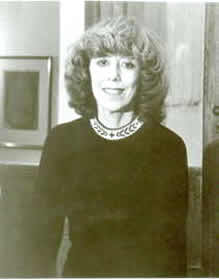


 1300477-1d32d3bd03d31e117cd048c1b6b570f3.jpg

Hortense Calisher (20 december 1911 – 15 januari 2009)


De Turkse dichter en schrijver Aziz Nesin werd geboren op 20 december 1915 in Istanbul. Zie ook alle tags voor Aziz Nesin op dit blog.


Uit: Memoirs of an exile (Vertaald door Joseph S. Jacobson)


“My father, like every good father who gives thought to his son's future, advised, forget this silly idea of writing and take a good honest job, one you can make a living at! I was beyong listening to him.

My obstinacy didn't stop there. Although I wished to be a writer, yearned to take a pen in hand, I entered a school where they would thrust a rifle in my hand. During my early years I couldn't do what I liked, and didn't like what I did do. I wanted to become a writer, but became a soldier. At that time, the only schools where poor, penniless children could study free, were military schools; therefore I was forced to enter a military boarding school.

In 1933 when the surname law was passed, which directed every Turk to select a last name, people's secret feelings of inferiority surfaced: Some of the world's stingiest became known as Eliacik (Openhanded) the greatest cowards named themsleves Yurekli (Stouthearted) and many of the laziest took the name Calishkan (Industrious).

One of our teachers chose the surname of Ceviker (Dexterous) when he could barely sign his name to a letter. The rampant racism present caused people with mixed blood to grab for surnames which signified they were Turks.

Invariably I came last in any kind of scramble; I was no different in this one for nice surnames. No surname remained that I could take pride in, so I assumed the name of Nesin (What-are-you?). I wanted to think of what I was and pull myself together whenever anyone called, What-are-you! In 1937 I became an officer, you know, a Napoleon. Well really, I was merely one of the Napoleons. Every new officer thinks himself Napoleon. Some of them never recover from this sickness; it lasts a whole lifetime. Others are cured after a while. 'Napoleonitis' is a dangerous and contagious disease. The symptoms are these: The victims think only of Napoleon's victories, never of his defeats; they are prone to tuck a right hand between jacket buttons; they stand before a map of the world, drawing with a red crayon and, after subjugating and occupying the entire world in five minutes, regret that the world is so small. Victims of this disease rave as in a high fever. There are other dangers. In later stages, they may fancy themselves Tamerlane, Ghengis Khan, Attila, Hannibal, Moltke, even Hitler or others such as these..."
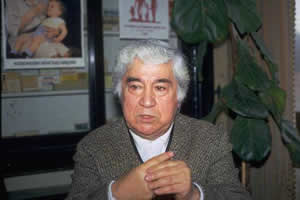


 1300477-f3ba0ac5ea08d49f91dfce175ae7c4cf.jpg

Aziz Nesin (20 december 1915 – 6 juli 1995)


Zie voor nog meer schrijvers van de 20e december ook mijn blog van 20 december 2011 deel 1 en eveneens deel 2 en ook deel 3.
Geschreven door Romenu om 19:16 Reageer op dit bericht

Jean Genet, Michelangelo Signorile, Tristan Egolf, Jens Fink-Jensen, Hanny Michaelis, Italo Svevo

De Franse dichter en schrijver Jean Genet werd geboren op 19 december 1910 in Parijs. Zie ook alle tags voor Jean Genet op mijn blog.


Uit: Querelle de Brest


“Pour la première fois Querelle embrassait un homme sur la bouche. Il lui semblait se cogner le visage contre un miroir réfléchissant sa propre image, fouiller de la langue l’intérieur figé d’une tête de granit. Cependant, cela étant un acte d’amour, et d’amour coupable, il sur qu’il commettait le mal. […] Les deux bouches restèrent soudées, les langues en contact aigu ou écrasé, ni l’une ni l’autre n’osant se poser sur les joues rugueuses où le baiser eût été signe de tendresse.

(…)


 1299810-d4ab076cedfee94bcf7a7738f4a7993c.jpg

Scene uit de film Querelle van R. W. Fassbinder, 1982


"L’idée de meurtre évoque souvent l’idée de mer, de marins. Mer et marins ne se présentent pas alors avec la précision d’une image, le meurtre plutôt fait en nous l’émotion déferler par vagues. Si les ports sont le théâtre répété de crimes l’explication en est facile que nous n’entreprendrons pas, mais nombreuses sont les chroniques où l'on apprend que l'assassin était un navigateur, faux ou vrai et s'il est faux le crime en a de plus étroits rapports avec la mer. L'homme qui revêt l'uniforme de matelot n'obéit pas à la seule prudence. Son déguisement relève du cérémonial présidant toujours à l'exécution des crimes concertés. Nous pouvons d'abord dire ceci : qu'il enveloppe de nuées le criminel ; il le fait se détacher d'une ligne d'horizon où la mer touchait au ciel ; à longues foulées onduleuses et musclées il le fait s'avancer sur les eaux, personnifier la Grande-Ourse, l'Etoile Polaire ou la Croix du Sud ; il (nous parlons toujours de ce déguisement et du criminel) il le fait remonter de continents ténébreux où le soleil se lève et se couche, où la lune permet le meurtre sous des cases de bambous, près des fleuves immobiles chargés d'alligators ; il lui accorde d'agir sous l'effet d'un mirage, de lancer son arme alors qu'un de ses pieds repose encore sur une plage océanienne si l'autre déroule son mouvement au-dessus des eaux vers l'Europe ; il lui donne d'avance l'oubli puisque le marin "revient de loin" ; il le laisse considérer les terriens comme des plantes. Il berce le criminel. Il l'enveloppe dans le plis, étroits du maillot, amples du pantalon. Il l'endort. Il endort la victime déjà fascinée.”


1299810-622d66bb4c2750481bc246529c01de3c.jpg
Jean Genet (19 december 1910 – 15 april 1986)

Jean Genet in 1939


De Amerikaanse schrijver en radiopresentator Michelangelo Signorile werd geboren op 19 december 1960 in Jersey Brooklyn, New York. Zie ook alle tags voor Michelangelo Signorile op dit blog.


Uit: Hitting Hard (Rome’s Sex Summit)


“Who’d have thought that the Pope would ever call an emergency meeting in Rome of the American cardinals to discuss the topic of sex? Sure, the issues that have forced the Vatican to make this extraordinary move, we’ve been told through much of the media, are pedophilia and sexual abuse. But under the surface it’s also–if not more so–about consensual sex: sex by supposedly celibate priests, and yes, often of the homosexual variety. By now everyone’s heard about the swinging Father Shanley, a priest with a sexually abusive past who was shuffled around from archdiocese to= archdiocese with Boston’s Cardinal Law’s blessings, left the Boston archdiocese with Cardinal Law’s blessings, only to head out to Palm Springs, where he opened up a clothing-optional gay resort spa, all while he got a check from the church. (Church officials thought he was out there in the desert tending to his allergies.) Turns out he’s been living for some time now with what appears to be a much younger boyfriend.


The Shanley case shines a bright light on an uncomfortable aspect of the crisis. The vast majority of the cases of abuse we’ve seen in the media over the past several months have been male-on-male, and not between priests and little boys but between priests and teenagers; often the abuser has been gay-identified. Some conservatives–yes, admittedly, even including some among that loathsome bunch at the National Review–have been right when they have pointed out that many of these men thus are not pedophiles as much as they are simply gay men in the priesthood (which some observers have speculated could be up to 50 percent gay) who struggle like their straight counterparts to keep the celibacy vow, and who wind up looking for the easiest venue for sex. And defensive liberal and openly gay pundits have been too quick to dismiss that observation, fearful of where it might lead.”


 1299810-daf045e26ae6d50115ac655b169f3a0a.jpg

Michelangelo Signorile (New York, 19 december 1960)


De Amerikaanse schrijver en musicus Tristan Egolf werd geboren op 19 december 1971 in San Lorenzo del Escorial in Spanje. Zie ook alle tags voor Tristan Egolf op dit blog..


Uit: Skirt and the Fiddle


A beat-up Timberland stomped into view. I jolted.

My rivulet died underfoot.

The Timberland shifted, edged into profile. Stricken, I locked to its gravel-torn shank and panned up from there, imploring Jesus-over an ankle chain, stonewashed pant cuffs, a windburned kneecap, a nickel-plated Harley buckle, ring around the armpit, an undersize wife-beater, airbrushed, reading: speak english or die-to a Bryl-maned, acne-pitted, craven-pallored bristle-snout with Ecto-mullet, dagger ring and service-station cap included. From there, back, for the overall picture: Postcard from Honky Town, 1984.

Sneering, he made his way to a seat and flopped down, akimbo-package on parade ... He sucked down four long gulps of Schlitz, pitched the can and swiveled around-belching through foam-lined catfish lip growth, cussing to himself, glaring at the rail map, lighting a smoke with his butane knuckle bar, scowling at the tramp, plugging one nostril, craning his neck, snapping it, groaning, hawking phlegm, then cussing some more ...

I gazed in wide wonder the whole way through.

What came next, Krishnas in Kevlar?

Set to write him off as a fluke when the doors slid open and three more appeared. Two males, one otherwise. Slamming a bottle of Old Crow. All a decade out of element-foul, mean, tough and nasty ...

I shot to attention, concerned by now.

Okay, go easy-no cause for alarm. Hessians in Philth Town. Not unheard of ...

Yet the next station brought four more of them. Soon to be joined by a pair at Elkins. Then a whole crowd farther on. Inexplicable: Keystone Dutch retrogression en masse. The car began to stink like a tractor pull in a heat wave ... I kept wondering what kind of hole in time had spat forth on the sly. But more importantly-and this with a growing sense of dread-where these people were going? No one had gotten off the train yet, and there were only five more stops on the line. There was really nothing cooking in this part of town; after a certain point on the southbound, the area was no longer even residential-just storage lots and warehouse facilities. The only public venue was the Civic Center, and that's where I was going. So where did that leave these freaks? My agent wouldn't have let this happen. He wouldn't have dared, not with my record. Surely it had to be something else-some aberrant, regional faction in transit ...


 1299810-794b9662c727689e097a9d616e25b2f7.jpg

Tristan Egolf (19 december 1971 – 7 mei 2005)


De Deense schrijver, dichter, fotograaf en componist Jens Fink-Jensen werd geboren op 19 december 1956 in Kopenhagen. Zie ook alle tags voor Jens Fink-Jensen op dit blog..


The Sea of Dreams


1
The sea has caught fire
Floating gold washing up on the beach
The sunshades stretching to cover this miracle
As best they can


Soon the sun will disappear in the waves
The fire will die out
And the gold will be found
In the dreams of thousands


2
The sea gnawing at the coast
Sand tumbling down the cliff
Encapsulated time atomised
Petrifaction broken


A glimpse of eternity
So short
That all I’ve time to say
Is


I’m here


Vertaald door Sheema Kalbasi


1299810-d6c2e7aa575899a962551299a0209d6c.jpg 

Jens Fink-Jensen (Kopenhagen, 19 december 1956)


De Nederlands dichteres Hanny Michaelis werd geboren in Amsterdam op 19 december 1922. Zie ook alle tags voor Hanny Michaelis op dit blog.


Ergens in huis


Ergens in huis
slaat hard een deur dicht
en even wankelt
de kleine giraffe
van vrolijk oranje plastic.
Geschenk van een 6-jarig
jongetje dat pendelend
tussen ontredderde ouders
zijn lot onbegrijpelijk
blijmoedig draagt.


Op een weg tussen de weiden


Op een weg tussen de weiden
- geen mens te zien, alleen
wat eenden slapend weggedoken
in het gras, en de lichten
van verspreide boerderijen
wedijverend met de avondster -
raakt vrede mijn ogen aan.

Maar in mijn binnenste
wroet heimwee rusteloos
naar resten van een vroeger
leven toen iemand mij
in zijn armen terugdroeg
naar de stilte van voor
het begin, onvoorzien
overgegaan in de stilte
van na het einde.


 1299810-b22cb5a8f4eaca89b646a102f107802c.jpg

Hanny Michaelis (19 december 1922 - 11 juni 2007)


De Italiaanse schrijver Italo Svevo (pseudoniem van Aron Hector Schmitz) werd geboren op 19 december 1861 in Triëst. Zie ook alle tags voor Italo Svevo op mijn blog.


Uit: Zeno's Conscience (Vertaald door Berye de Zoete)


“For several weeks I suffered from a violent sore throat accompanied by fever. The doctor ordered me to stay in bed and to give up smoking entirely. I remember being struck by that word entirely, which the fever made more vivid. I saw a great void and no means of resisting the fearful oppression which emptiness always produces.

When the doctor had left, my father, who was smoking a cigar, stayed on a little while to keep me company (my mother had already been dead some years). As he was going away he passed his hand gently over my feverish brow and said:
“No more smoking, mind!”
I was in a state of fearful agitation. I thought: “As it’s so bad for me I won’t smoke any more, but first I must have just one last smoke.” I lit a cigarette and at once all my excitement died down, though the fever seemed to get worse, and with every puff at the cigarette, my tonsils burned as if a firebrand had touched them. I smoked my cigarette solemnly to the end as if I were fulfilling a vow. And though it caused me agony, I smoked many more during that illness. My father would always come and go, always with a cigar in his mouth, and say from time to time: “Bravo! A few days more of no smoking and you will be cured!”


1299810-74fd0604f6ecc151cbd5c2f91a374659.jpg
Italo Svevo (19 december 1861 – 13 september 1928)

Borstbeeld in Triëst


Zie voor nog meer schrijvers van de 19e december ook mijn blog van 19 december 2011 deel 2.

Geschreven door Romenu om 20:11 Reageer op dit bericht

Meer van Romenu

↑ Terug naar de berichten