Naar de inhoud

Romenu

Over literatuur, gedichten, kunst en cultuur
akke.beakke.be

Berichten van 19 februari 2013 tot 20 februari 2013

P. C. Boutens, Ellen Gilchrist, Julia Franck, David Nolens, Georges Bernanos, William Carleton

De Nederlandse dichter Pieter Cornelis Boutens werd geboren in Middelburg op 20 februari 1870. Zie ook alle tags voor P. C. Boutens op dit blog.


In de mist


De zon wordt onverbeeldbaar schoon
Boven de mist die houdt omhangen
Der wereld windestille woon
In dit vertederd dagenlang verlangen.

Weer blankt de boskamp, een besloten zaal,
Een witte kamer die de bruid verwacht,
In smetteloze glanzeloze praal
Op uit de zwarte nacht.

't Berijpte hout van alle kanten
In gaasgeplooide wand verscholen
Reikt diepe tuilen van chrysanten,
Asters en gladiolen.

Daar daalt langs wolkentreê uit hoge toren
Van naakte voetjes luideloze tred:
Leden omsluierd overgloren
Het sneeuwen statiebed.


In de manteling bij Domburg


In de spanne luwe stilte
In de wieg van ’t glooiend mos
Lig ik: boven vaart de zilte
Zeewind over ’t neigend bos.

Al de toppen wuiveblinken
In der zonne gouden lust,
Wijl de dorre bladers zinken
Om mij heen tot rosse rust.

IJle vogelvluchten rissen
Achter weemlend twijgenweb:
’t Zijn de meeuwen die gaan vissen
Met de wederkeer der eb...

Ieder jaar wordt sneller ouder,
Vroeger avondt elke dag,–
Maar mijn hoofd ligt aan uw schouder
En ik hoor uw harteslag.

Boven drijft het leven over,
En geen schijn of schaûw ontgaat:
Elke siddering in ’t lover
Spiegelt over uw gelaat.

Als een god die zou beluistren
Aards gerucht uit hemels vreê,
Hoor ik uwe adem fluistren
Door de stem van wind en zee.


Uit: Strofen en andere verzen uit de nalatenschap van Andries de Hoghe


Vijfde strofe


Traag tot beminnen werd ik... Niet tot deze rijke wonden,

de scherpe weeën van dit staâg zichzelf herbarend leven,

die trouw in schemerwindselen van eenzaamheid genezen

tot zoeter wondbaarheid... Een andere rondomme deernis

houdt elken aandrift tegen in dees strakke onuitgesproken

beslotenheid, een onverdringbaar voorgevoel, een dreigend weten

dat nooit de bleeke geestdrift dezer onvolgroeide kindren

meêkomen kan door de verrukkingen van liefdes wegen,

en 't hard besef van 't lot van hen die achter zijn gebleven,

zoo droeven voordood en zoo wreed bewuste ballingschappen

in vaders nauwe huizing waar hun moeheid wel moet keeren,

maar nooit meer uitslaapt tot verlangens nieuwe morgenonrust...

Traag tot beminnen werd ik...


 1340256-dd931a7096e319e9d37a10ccb8a572c1.jpg

Pieter Cornelis Boutens (20 februari 1870 – 14 maart 1943)


De Amerikaanse schrijfster Ellen Gilchrist werd geboren op 20 februari 1935 in Vicksburg, Mississippi. Zie ook alle tags voor Ellen Gilchrist op dit blog.


Uit: Nora Jane: A Life in Stories


“Nora Jane's mother had a darker meaner view. She thought God and other people were to blame for everything that went wrong. She thought they had gotten together to kill her beautiful black-haired husband and she was paying them back by st aying inside and drinking herself to death. Still, it wasn't her fault she was weak. Her mother had been weak before her and her mother before that. It was their habit to be weak.

Nora Jane's grandmother came from a line of women who had a habit of being strong. One of them had come to New Orleans from France as a casket girl, had sailed across the Atlantic Ocean when she was only sixteen years old, carrying all her possessions in a little casket and when she arrived had refused to marry the man to whom she was assigned. She had married a Welshman instead, a man who had been on the boat as a steward. Each generation of women was told this story in Nora Jane's grandmother's family and so they believed they were strong women with strong genes and acted accordingly. When she was about four years old Nora Jane had looked at the strong story and the weak story and decided to be strong. It was the year her father died and her grandmother sat in the swing on her porch and watched the morning glory vines open and close and the sun rise and fall and believed that God did not hate her even if he had allowed her son to die in a stupid war. Many of the men who fought with him had written her letters and she read them out loud to Nora Jane. One young man, whose name was Fraser, came and stayed for five weeks and painted the outside of the house a fresher, brighter blue and put a new floor in the kitchen of the house. Every day he sat on the porch with Nora Jane's grandmother as the sun went down and talked about the place where he lived. A place called Nebraska. When all the painting was done and the furniture put back in the kitchen, he kissed Nora Jane and her grandmother good-bye and went off to see his own family. After he was gone Nora Jane and her grandmother would talk about him. "Where's Fraser gone?" Nora Jane would ask.”


 1340256-b326011da73ec75b5ea054a5ea057fdd.jpg

Ellen Gilchrist (Vicksburg, 20 februari 1935)


De Duitse schrijfster Julia Franck werd geboren op 20 februari 1970 in Oost-Berlijn. Zie ook alle tags voor Julia Frank op dit blog.


Uit: Streuselschnecke


“Der Anruf kam, als ich vierzehn war. Ich wohnte seit einem Jahr nicht mehr bei meiner Mutter und meinen Schwestern, sondern bei Freunden in Berlin. Eine fremde Stimme meldete sich, der Mann nannte seinen Namen, sagte mir, er lebe in Berlin, und fragte, ob ich ihn kennen lernen wolle. Ich zögerte, ich war mir nicht sicher. Zwar hatte ich schon viel über solche Treffen gehört und mir oft vorgestellt, wie so etwas wäre, aber als es soweit war, empfand ich eher Unbehagen.

Wir verabredeten uns. Er trug Jeans, Jacke und Hose. Ich hatte mich geschminkt. Er führte mich ins Café Richter am Hindemithplatz und wir gingen ins Kino, ein Film von Rohmer. Unsympathisch war er nicht, eher schüchtern. Er nahm mich mit ins Restaurant und stellte mich seinen Freunden vor. Ein feines, ironisches Lächeln zog er zwischen sich und die anderen Menschen. Ich ahnte, was das Lächeln verriet. Einige Male durfte ich ihn bei seiner Arbeit besuchen. Er schrieb Drehbücher und führte Regie bei Filmen.

Ich fragte mich, ob er mir Geld geben würde, wenn wir uns treffen, aber er gab mir keins, und ich traute mich nicht, danach zu fragen. Schlimm war das nicht, schließlich kannte ich ihn kaum, was sollte ich da schon verlangen? Außerdem konnte ich für mich selbst sorgen, ich ging zur Schule und putzen und arbeitete als Kindermädchen. Bald würde ich alt genug sein, um als Kellnerin zu arbeiten, und vielleicht würde ja auch noch eines Tages etwas Richtiges aus mir. Zwei Jahre später, der Mann und ich waren uns noch immer etwas fremd, sagte er mir, er sei krank. Er starb ein Jahr lang, ich besuchte ihn im Krankenhaus und fragte, was er sich wünsche. Er sagte mir, er habe Angst vor dem Tod und wolle es so schnell wie möglich hinter sich bringen.”


 1340256-6cbd2821fee33b145973d556778b9a3e.jpg

Julia Franck (Oost-Berlijn, 20 februari 1970)

Oost Berlijn, Palast der Republik, begin jaren ‘80 


De Vlaamse schrijver David Nolens werd geboren in Antwerpen op 20 februari 1973. Zie ook alle tags voor David Nolens op dit blog.


Uit: De kunst van het wachten


“Hij was inmiddels midden dertig en wat had hij bereikt? Hij was partner in een succesvol reclamebureau. Hij woonde in een mooi en ruim appartement in het centrum van Brussel. Hij was vrijgezel en werd begeerd. Als hij zijn aandeel in het agentschap zou verkopen, zou hij op voorwaarde van een sobere levensstijl kunnen rentenieren. Dit korte lijstje was de mantra waarmee hij zich steeds weer het geluk aanpraatte. Een soort rationeel geluk, louter gebaseerd op de feiten van zijn comfort.

(…)


"Het jarenlange bedenken van slogans deed iets met het eigen denkpatroon, dat in steeds kortere en gevattere boodschappen de eigen werkelijkheid trachtte te vatten. Tot er uiteindelijk, bedacht hij soms spottend, slechts een uitroepteken zou overblijven."

(…)


‘Van de weeromstuit zag Jack nu bij heel wat mannen een pronte bips, zodat hij vermoedde dat de push-up-slip, waarmee zijn bestemmingsvlucht was begonnen, ingang had gevonden. Maar waren de klassieke pantalons wel aangepast aan de iets dikkere siliconen van de nieuwe broekjes? Het leek toch of heel wat van de zich altijd voortbewegenden moeilijker liepen, of ze een luier droegen. Hun billen schuurden, hun kont stak te veel omhoog, de kont van een loopse baviaan.’


 1340256-5023c6a84ee6ff59baa45c928fa651d7.jpg

David Nolens (Antwerpen, 20 februari 1973)

Antwerpen, Grote Markt 


De Franse schrijver Georges Bernanos werd geboren in Parijs op 20 februari 1888. Zie ook alle tags voor Georges Bernanos op dit blog.


Uit: Sous le soleil de Satan


« - Vraiment ? tu n’as jamais senti … comment dire ? Cela nous vient comme une idée … comme un vertige … de se laisser tomber, glisser … d’aller jusqu’en bas, - tout à fait- jusqu’au fond, - où le mépris des imbéciles ne viendrait même pas vous chercher … Et puis, mon vieux, là encore, rien ne vous contente … quelque chose vous manque encore … Ah ! jadis … que j’avais peur ! d’une parole … d’un regard … de rien. Tiens ! cette veille dame Sangner …m’a-t-elle fait du mal, un jour ! – un jour que je passais sur le pont de Planques – en écartant de moi, bien vite, sa petite nièce Laure … Hé quoi ! suis-je donc la peste, je me disais … Ah ! maintenant ! Maintenant … maintenant … maintenant son mépris : je voudrais aller au-devant ! Quel sang ont-elles dans mes veines, ces femmes qu’un regard fait hésiter – oui – dont un regard empoisonnerait le plaisir, et qui se donnent l’illusion d’être d’honnêtes nitouches jusque dans les bras de leur amant … On a honte ? Bien sûr, si tu veux, on a honte ! Mais, entre nous, depuis le premier jour, est-ce qu’on cherche autre chose ? »

(…)


“Qu’elle est longue la route du retour, la longue route ! Celle des armées battues, la route du soir, qui ne mène à rien, dans la poussière vaine !… Il faut aller, cependant, il faut marcher, tant que bat ce pauvre vieux cœur – pour rien, pour user la vie – parce qu’il n’y a pas de repos tant que dure le jour tant que l’astre cruel nous regarde, de son œil unique, au-dessus de l’horizon. Tant que bat le pauvre vieux cœur.”


 1340256-3f9c9905f40110d86218876dfd0eb1e7.jpg

Georges Bernanos (20 februari 1888 - 5 juli 1948)

In 1946 


De Ierse schrijver William Carleton werd geboren op 20 februari 1794 in Glogher, in het graafschap Tyrone. Zie ook alle tags voor William Carleton op dit blog.


Uit: Wildgoose Lodge


“I had read the anonymous summons, but from its general import I believed it to be one of those special meetings convened for some purpose affecting the usual objects and proceedings of the body; at least the terms in which it was conveyed to me had nothing extraordinary or mysterious in them, beyond the simple fact, that it was not to be a general but a select meeting: this mark of confidence flattered me, and I determined to attend punctually. I was, it is true, desired to keep the circumstances entirely to myself, but there was nothing startling in this, for I had often received summonses of a similar nature. I therefore resolved to attend, according to the letter of my instructions, "on the next night, at the solemn hour of midnight, to deliberate and act upon such matters as should then and there be submitted to my consideration." The morning after I received this message, I arose and resumed my usual occupations; but, from whatever cause it may have proceeded, I felt a sense of approaching evil hang heavily upon me; the beats of my pulse were languid, and an undefinable feeling of anxiety pervaded my whole spirit; even my face was pale, and my eye so heavy, that my father and brothers concluded me to be ill; an opinion which I thought at the time to be correct, for I felt exactly that kind of depression which precedes a severe fever. I could not understand what I experienced, nor can I yet, except by supposing that there is in human nature some mysterious faculty, by which, in coming calamities, the dread of some fearful evil is anticipated, and that it is possible to catch a dark presentiment of the sensations which they subsequently produce. For my part I can neither analyze nor define it; but on that day I knew it by painful experience, and so have a thousand others in similar circumstances.”


 1340256-0ab8acaff572770a364aa63f80e74147.jpg

William Carleton (20 februari 1794 – 30 januari 1869)
Illustratie uit “Wildgoose Lodge”


Zie voor nog meer schrijvers van de 20e februari ook mijn blog van 20 februari 2012 deel 2.
Geschreven door Romenu om 19:25 Reageer op dit bericht

Björn Kuhligk, Amy Tan, Dmitri Lipskerov, Thomas Brasch

De Duitse dichter en schrijver Björn Kuhligk werd geboren op 19 februari 1975 in Berlijn. Zie ook alle tags voor Björn Kuhligk op dit blog.


Während des Freitagsgebetes

(für Katja Krauß)


WÄHREND DES FREITAGSGEBETES

die kopftuchgebückten Frauen

auf den Feldern, von den Minaretten

fallen die Worte wie Ringe um die Häuser, abends

stellen sich Sprenger an, die zerfallenen

Gewächshäuser, eine Ansammlung

Zelte, vor denen zwei Kinder am Feuer

bei Nacht der Swimmingpool, pauschal-beleuchtet

bis ins Hellblau, das Anschlagen der Zikaden

in den Dörfern stehen Häuser leer, auf den Dächern

rostende Wassertonnen, LADIES

AND GENTLEMEN: MR. GERMANY, dann

der Clubtanz, Hände hoch und rechts und links

und Beine breit, IHR NAME AUF EINEM REISKORN

die Sonne seilt sich, das kennt man hier, wie jeden Abend

hinter den Bergen ab, SIE WERDEN ES NICHT VERGESSEN

die Fotoserie, in der ein Pärchen am Meer

und freundlich auf das Wasser blickt

über den nackten Oberkörpern am Morgen

drei Kampfjets Richtung Osten

dann der Clubtanz, Hände hoch und rechts

und links, irgendjemand macht das Foto


Horizontbetrachter

Hier ist ein Wald

da sind die Bäume

darin sind die Ringe

darin schläft die Angst

du schlägst zu mit der Axt

und trinkst den Harzstein mit

und das Lieblingstier

das ist der Affe im Zoo

den kannst du besuchen

und er dich nicht


1339625-bc46e0b5bf3ac9e7365c82457eb282eb.jpg
Björn Kuhligk (Berlijn, 19 februari 1975)


De Amerikaanse schrijfster

Amy Tan werd geboren in Oakland, Ohio, op 19 februari 1952. Zie ook alle tags voor Amy Tan op dit blog.


Uit: The Hundred Secret Senses


“My sister Kwan believes she has yin eyes. She sees those who have died and now dwell in the World of Yin, ghosts who leave the mists just to visit her kitchen on Balboa Street in San Francisco.
"Libby-ah," she'll say to me. "Guess who I see yesterday, you guess." And I don't have to guess that she's talking about someone dead.
Actually, Kwan is my half sister, but I'm not supposed to mention that publicly. That would be an insult, as if she deserved only fifty percent of the love from our family. But just to set the genetic record straight, Kwan and I share a father, only that. She was born in China. My brothers, Kevin and Tommy, and I were born in San Francisco after my father, Jack Yee, immigrated here and married our mother, Louise Kenfield.
Mom calls herself "American mixed grill, a bit of everything white, fatty, and fried." She was born in Moscow, Idaho, where she was a champion baton twirler and once won a county fair prize for growing a deformed potato that had the profile of Jimmy Durante. She told me she dreamed she'd one day grow up to be different -- thin, exotic, and noble like Luise Rainer, who won an Oscar playing O-lan in The Good Earth. When Mom moved to San Francisco and became a Kelly girl instead, she did the next-best thing. She married our father. Mom thinks that her marrying out of the Anglo race makes her a liberal. "When Jack and I met," she still tells people, "there were laws against mixed marriages. We broke the law for love." She neglects to mention that those laws didn't apply in California.”


 1339625-6ef14c05904d73677e5414be9faf5351.jpg

Amy Tan (Oakland, 19 februari 1952)


De Russische schrijver Dmitri Lipskerov werd geboren op 19 februari 1964 in Moskou. Zie ook alle tags voor Dmitri Lipskerov op dit blog.


Uit: The Last Sleep of Reason (Vertaald door Dmitri Priven)


"My legs glow in the dark!"

"Send him away to the psychiatric ward!"

"I'm ready for discharge!" Volodya instantly came to his senses…

Later that day he was discharged and his sick leave was over.

Anna Karlovna brought her husband home in a taxi and nursed him like a baby, heedless of her husband's malicious taunts about her barren German belly and Nazi relatives.

That night Volodya's legs got frozen over like a river in winter, and he was already grateful to his wife for bandaging his sore thighs with angora wool. A forgiving woman, she was stroking her husband's hair till the morning; he was crying bitterly, bidding farewell to his hopes for international recognition and generalship. Of all his fantasies only one remained: that Zubov would give him some of his pumpkin seeds, but then only if Major Pogosian commanded so.

The following morning Anna Karlovna found her husband's legs absolutely recovered, at least exactly the same as they were before the relapse - just slightly swollen at thighs. Tenderly she rubbed grandma's live cell ointment into them and helped her husband into the boots.

The police department welcomed Sinichkin back with mixed feelings. Major Pogosian patted him on the shoulder, but then lifted up his hands with typical Armenian sadness and talked at length that fame can spoil you and it is all good that the record did not happen.”


 1339625-d01e15b21a079897377f76b107d1bbf0.jpg

Dmitri Lipskerov (Moskou, 19 februari 1964)


De Duitse dichter en schrijver Thomas Brasch werd geboren in Westow,Yorkshire (Engeland) op 19 februari 1945. Zie ook alle tags voor Thomas Brasch op dit blog.


Schlaflied für K.


Nacht oder Tag oder jetzt
Will ich bei dir liegen
Vom schlimmsten Frieden gehetzt
Zwischen zwei Kriegen


Ich oder wir oder du
Denken ohne Gedanken
Schließ deine Augen zu
Siehst du die Städte schwanken


In den Traum oder Tod oder Schlaf
Komm in den Steingarten
wo ich dich nie traf
will ich jetzt auf dich warten


WENN ICH DICH BEGEHRE GEGEN JEDE VERNUNFT

wenn ich in dir suche meine Unterkunft

wenn ich das Sehnen und die Sucht benenn mit deinem Namen

und denke, es war gestern, als wir zu uns kamen

wenn ich inmeiner Liebe ganz verfangen bin

und alle meine Wünsche wandern zu dir hin

was kann denn daran unvernünftig sein,

wenn wir nicht uns, nur der Vernunft jetzt sagen:

Bleib allein.


 1339625-7d965bb19e2d254c17515ea1a1dff527.jpg

Thomas Brasch (19 februari 1945 – 3 november 2001)


Zie voor nog meer schrijvers van de 19e februari ook mijn blog van 19 februari 2011 deel 2 en eveneens deel 3.

Geschreven door Romenu om 19:48 Reageer op dit bericht

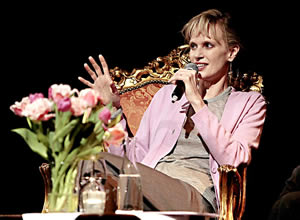
Siri Hustvedt, Helen Fielding, Jaan Kross, Herbert Rosendorfer

De Amerikaanse schrijfster en essayiste Siri Hustvedt werd geboren op 19 februari 1955 in Northfield, Minnesota. Zie ook alle tags voor Siri Hustvedt op dit blog.


Uit: Living, Thinking, Looking


“DESIRE APPEARS AS A FEELING, a flicker or a bomb in the body, but it’s always a hunger for something, and it always propels us somewhere else, toward the thing that is missing. Even when this motion takes place on the inner terrain of fantasy, it has a quickening effect on the daydreamer. The object of desire—whether it’s a good meal, a beautiful dress or car, another person, or something abstract, such as fame, learning, or happiness—exists outside of us and at a distance. Whatever it is, we don’t have it now. Although they often overlap, desires and needs are semantically distinct. I need to eat, but I may not have much desire for what is placed in front of me. While a need is urgent for bodily comfort or even survival, a desire exists at another level of experience. It may be sensible or irrational, healthy or dangerous, fleeting or obsessive, weak or strong, but it isn’t essential to life and limb. The difference between need and desire may be behind the fact that I’ve never heard anyone talk of a rat’s “desire”—instincts, drives, behaviors, yes, but never desires. The word seems to imply an imaginative subject, someone who thinks and speaks. In Webster’s, the second definition for the noun desire is: “an expressed wish, a request.” One could argue about whether animals have “desires.” They certainly have preferences. Dogs bark to signal they wish to go outside, ravenously consume one food but leave another untouched, and make it known that the vet’s door is anathema. Monkeys express their wishes in forms sophisticated enough to rival those of their cousins, the Homo sapiens. Nevertheless, human desire is shaped and articulated in symbolic terms not available to animals.
When my sister Asti was three years old, her heart’s desire, repeatedly expressed, was a Mickey Mouse telephone, a Christmas wish that sent my parents on a multi-city search for a toy that had sold out everywhere.”


 1339630-01c864c9ab067be7d920162801b7ee9c.jpg

Siri Hustvedt (Northfield, 19 februari 1955)


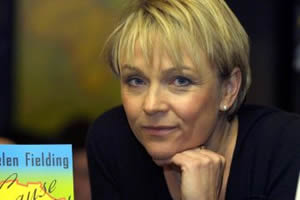
De Engelse schrijfster Helen Fielding werd geboren in Morley, Yorkshire op 19 februari 1958. Zie ook alle tags voor Helen Fielding op dit blog.


Uit: Bridget Jones's Diary


"Sorry. I got lost."
"Lost? Durr! What are we going to do with you? Come on in!"
She led me through the frosted-glass doors into the lounge, shouting, "She got lost, everyone!"
"Bridget! Happy New Year!" said Geoffrey Alconbury, clad in a yellow diamond-patterned sweater. He did a jokey Bob Hope step then gave me the sort of hug which Boots would send straight to the police station.
"Hahumph," he said, going red in the face and pulling his trousers up by the waistband. "Which junction did you come off at?"
"Junction nineteen, but there was a diversion ..."
"Junction nineteen! Una, she came off at Junction nineteen! You've added an hour to your journey before you even started. Come on, let's get you a drink. How's your love life, anyway?"
Oh God. Why can't married people understand that this is no longer a polite question to ask? We wouldn't rush up to them and roar, "How's your marriage going? Still having sex?" Everyone knows that dating in your thirties is not the happy-go-lucky free-for-all it was when you were twenty-two and that the honest answer is more likely to be, "Actually, last night my married lover appeared wearing suspenders and a darling little Angora crop-top, told me he was gay/a sex addict/a narcotic addict/a commitment phobic and beat me up with a dildo," than, "Super, thanks."
Not being a natural liar, I ended up mumbling shamefacedly to Geoffrey, "Fine," at which point he boomed, "So you still haven't got a feller!"
"Bridget! What are we going to do with you!" said Una. "You career girls! I don't know! Can't put it off forever, you know. Tick-tock-tick-tock."


1339630-a4f58e9df98a7290d53f7d9d3b8fc983.jpg 

Helen Fielding (Morley, 19 februari 1958)


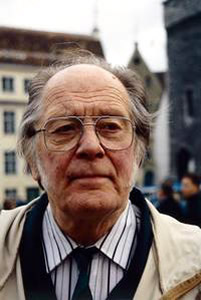
De Estlandse schrijver Jaan Kross werd geboren op 19 februari 1920 in Tallin. Zie ook alle tags voor Jaan Kross op dit blog.


Uit: Uncle (Vertaald door Eric Dickens)


“Why should the most valuable items be packed in the first place? To save them from air raids? All well and good. But not only for that reason. To also send them out of Estonia at the first opportunity! And why the hell should they have any interest in that? To rescue them from the impending battles in Tartu. Fine. But encouraging their theft?! No! The order the librarians had received was a monolithic order from a monolithic robot. Like the majority of orders at the time. Any attempt to sabotage it could in itself prove deadly. But a deadliness which may, in fact have spurred on rather than scared off. Lord knows. The order came from Berlin to Tallinn and Tallinn to Tartu like a vehicle speeding along on caterpillar tracks. Armoured, targeted and utterly merciless. Like most orders at that time. Resistance to the order shot up like so much grass (weeds, they would have said in the other camp). Victorious grass. Whose existence always presented the risk of a thickening of the blood, but which thrives and grow rank over everything. The result: the contents, numbers and addresses of the crates became all of a jumble.
Where what ended up, whether in Germany, Tallinn, Haapsalu or in the manor houses of the Province of Tartumaa, no one there ever found out for sure. Even now, in August '45, no one had a complete overview. But one thing was clear: some of the crates, about two or three lorry loads, had ended up at Mardimäe Manor in the cellars of the present schoolhouse. And now that the order had been given to return evacuated books to Tartu, these too had to be returned. Lorries drove out, to that end, from locations in Tartu, including the University, to seven or eight places that week. So the chain split off in seven or eight different directions. It was therefore pretty unlikely that anything had been left to chance.”


 1339630-38b2627777e9d0a99e09da79b2fa360b.jpg

Jaan Kross (19 februari 1920 – 27 december 2007)


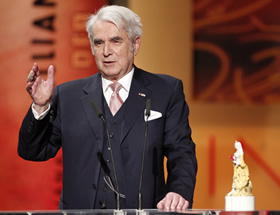
De Duitse schrijver
Herbert Rosendorfer werd op 19 februari 1934 in Gries geboren. Zie ook alle tags voor Herbert Rosendorfer op dit blog.


Uit: Deutsche Geschichte. Ein Versuch (Das Jahrhundert des Prinzen Eugen)


“Nach dem Ende des Dreißigjährigen Krieges war in Deutschland, und nicht nur in Deutschland,

nichts mehr so, wie es vorher gewesen war.

Die katholische Seite hatte den Krieg verloren, die protestantische Seite ihn nicht gewonnen. Das Deutsche Reich gab es noch, stark angeschlagen und verwundet, vor allem wirtschaftlich geschwächt. Der einzige Vorteil aus dem Frieden von Münster und Osnabrück für das Reich war, daß in gewisser Weise der verbleibende Rest, geographisch und institutionell gesehen, festgeschrieben und umrissen war. Die Regeln der Diplomatie, die in den folgenden Jahrhunderten das Scharnier aller Politik zumindest in Friedenszeiten bilden sollten, beruhten auf den mühsamen Errungenschaften des Westfälischen Friedensinstruments. Daß die Reichsgewalt, die Macht des Kaisers, in rasantem Sinken

begriffen war, konnte davon allerdings nicht aufgehalten werden. Vermutlich bewirkte nur das immer

zu beobachtende politische Beharrungsvermögen, daß das Reich die Katastrophe von 1618/48 um eineinhalb Jahrhunderte überdauerte.

Die kleinen oder sogar winzigen Territorialherrschaften wurstelten recht und schlecht vor sich hin. Sie waren, sofern nicht Reichsstädte oder geistliche Fürstentümer, Aufsplitterungen von ehemals größeren Gebieten.”


 1339630-5133760814ae0cecb85ae26464e99429.jpg

Herbert Rosendorfer (Gries, 19 februari 1934)


Zie voor nog meer schrijvers van de 19e februari ook mijn vorige blog van vandaag

Geschreven door Romenu om 19:30 Reageer op dit bericht

Helene Hegemann

De Duitse schrijfster, regisseuse en actrice Helene Hegemann werd geboren in Freiburg im Breisgau op 19 februari 1992. Hegemann groeide bij haar gescheiden moeder in Bochum op, die echter overleed toen Helene veertien jaar oud was. Daarop trok ze bij haar vader in, regisseur Carl Hegemann in Berlijn. Hegemanns theaterstuk Ariel 15 ging in december 2007 in het Ballhaus Ost in première en werd in 2008 door de Deutschlandradio tot luisterspel bewerkt. Het draaiboek voor de film Torpedo, dat ze reeds als veertienjarige geschreven had, werd in 2008 met ondersteuning van de Kulturstiftung des Bundes verfilmd en leverde haar in 2008 de Max Ophüls-prijs op. Als actrice trad Hegemann op in de film Deutschland 09, in de bijdrage Die Unvollendete van Nicolette Krebitz. In 2010 bereikte Helene Hegemann nationale bekendheid met haar roman “Axolotl Roadkill”, verschenen bij de Ullstein Verlag. Begin februari 2010 merkte een blogger op dat de roman sterke gelijkenissen met het boek Strobo van de blogger Airen uit 2009 vertoonde, evenwel zonder dat de roman enige bronvermelding bezat. Hegemann gaf toe dat ze tekstpassages uit dit werk gekopieerd had en Airen niet gecontacteerd. Hegemann verklaarde dat deze vorm van sampling een corollarium van de hedendaagse mediacultuur is, waarin de herkomst van materiaal onduidelijk wordt. Dit ontlokte een verregaand debat in de media omtrent intertekstualiteit en het auteursrecht. Uitgeverij Ullstein voegde in de tweede editie van het werk verschillende bronnen toe, die in de vierde nog gedetailleerd werden uitgebreid. Zo bevat Axolotl Roadkill onder andere fragmenten van Kathy Acker, David Foster Wallace, Rainald Goetz en Valérie Valère. Het Thalia Theater uit Hamburg heeft in 2010 een theaterversie op de planken gebracht en beklemtoonde dat de keuze voor Axolotl Roadkill alreeds vóór de plagiaataffaire gemaakt was.

Uit: Axolotl Roadkill

 „Wenn ich lüge, dann neurotisch und zwanghaft. Meine Lügen ergeben sich aus einer Abhängigkeit von metaphysischen Begebenheiten. Wenn Annika lügt, sollen ihre Lügen dem Wohl der Belogenen dienen oder der Harmonie der Gruppe oder zumindest ihrer Leistungsmotivation. Davon ist sie fest überzeugt.
Lars: „Ja, das tut mir jetzt natürlich auch total leid dass wir euch stören hier, aber das ist echt scheiße ohne Playstation an so einem Scheißtag.“
Mifti (wirft mit einer lässigen Geste die Haare zurück): „Kein Ding, Lars! Ich bin aber auch nicht durchgekommen durch dieses Spiel da, ich weiß nicht, zuerst habe ich dann sechshundert Zombies pro Minute abgeballert, aber das Schlimme war dann später, dass da irgendwann dieses Seeungeheuer kam mit dem Ding im Rücken, und ich habe das mit dem Anker nicht getroffen.“
Lars: „Das ist kein Anker, sondern eine Harpune!“
Mifti: „Ich glaube, das ist ein Anker, weil der Typ ja spontan war und gerade keine Harpune zur Hand hatte auf dem Ruderboot und dann diesen Anker in die zu Flossen umgestalteten Vorderextremitäten des großen Fisches rammen sollte, aber das hab ich dann halt nicht hingekriegt.“
Lars: „Wahrscheinlich, weil man da am Anfang den Hund befreien musste aus dieser Bärenfalle und du das nicht gemacht hast. Mir ist der Hund bei der Geschichte mit dem großen Raubfisch später zu Hilfe gekommen, weil ich ihn da im ersten Level gerettet habe.“
Mifti: „Dieser Scheißhund? Scheiße!“
Lars: „Ja, scheiße.“
Mifti: „Wie scheiße. Was für eine Scheiße das ist, oder? Dass man da mit gedrückter B-Taste Menschen abknallt, und sich im Endeffekt alles nur noch um einen weißen Bernhardiner-Grönlandhund-Mischling dreht.“
Annika: „Was führt ihr hier gerade für einen außerirdischen Dialog, Kinder?“


1509470-06231eefe07c98e47e70ea8dacdae771.jpg
Helene Hegemann (Freiburg im Breisgau, 19 februari 1992)

Geschreven door Romenu om 00:00 Reageer op dit bericht

Meer van Romenu

↑ Terug naar de berichten