Naar de inhoud

Romenu

Over literatuur, gedichten, kunst en cultuur
akke.beakke.be

Berichten van 6 maart 2013 tot 7 maart 2013

Bret Easton Ellis, Jürgen Theobaldy, Georges Perec, Milo Dor, Jan Frederik Helmers
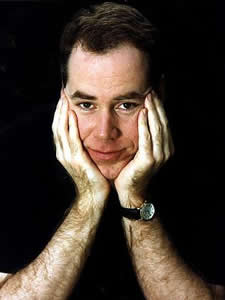
De Amerikaanse schrijver Bret Easton Ellis werd geboren op 7 maart 1964 in Los Angeles. Zie ook alle tags voor Bret Easton Ellis op dit blog.


Uit: Imperial Bedrooms


“The scenes from the novel that hurt the most chronicled my relationship with Blair, especially in a scene near the novel's end when I broke it off with her on a restaurant patio overlooking Sunset Boulevard and where a billboard that read disappear here kept distracting me (the author added that I was wearing sunglasses when I told Blair that I never loved her). I hadn't mentioned that painful afternoon to the author but it appeared verbatim in the book and that's when I stopped talking to Blair and couldn't listen to the Elvis Costello songs we knew by heart ("You Little Fool," "Man Out of Time," "Watch Your Step") and yes, she had given me a scarf at a Christmas party, and yes, she had danced over to me mouthing Culture Club's "Do You Really Want to Hurt Me?"and yes, she had called me "a fox," and yes, she found out I had slept with a girl I picked up on a rainy night at the Whisky, and yes, the author had informed her of that. He wasn't, I realized when I read those scenes concerning Blair and myself, close to any of us — except of course to Blair, and really not even to her. He was simply someone who floated through our lives and didn't seem to care how flatly he perceived everyone or that he'd shared our secret failures with the world, showcasing the youthful indifference, the gleaming nihilism, glamorizing the horror of it all.

But there was no point in being angry with him. When the book was published in the spring of 1985, the author had already left Los Angeles. In 1982 he attended the same small college in New Hampshire that I'd tried to disappear into, and where we had little or no contact. (There's a chapter in his second novel, which takes place at Camden, where he parodies Clay — just another gesture, another cruel reminder of how he felt about me. Careless and not particularly biting, it was easier to shrug off than anything in the first book which depicted me as an inarticulate zombie confused by the irony of Randy Newman's "I Love L.A.") Because of his presence I stayed at Camden only one year and then transferred to Brown in 1983 though in the second novel I'm still in New Hampshire during the fall term of 1985.”


 1349831-f0ad4e9d23762325efbf91e1be1c994e.jpg

Bret Easton Ellis (Los Angeles, 7 maart 1964)


De Duitse dichter en schrijver Jürgen Theobaldy werd geboren op 7 maart 1944 in Straatsburg. Zie ook alle tags voor Jürgen Theobaldy op dit blog


Schnee im Büro


Eine gewisse Sehnsucht nach Palmen. Hier
ist es kalt, aber nicht nur. Deine Küsse
am Morgen sind wenig, später sitze ich
acht Stunden hier im Büro. Auch du
bist eingesperrt, und wir dürfen nicht
miteinander telefonieren. Den Hörer abnehmen
und lauschen? Telefon, warum schlägt
dein Puls nur für andere? Jemand fragt:
„Wie geht’s?“, wartet die Antwort nicht ab
und ist aus dem Zimmer.
Was kann Liebe bewegen? Ich berechne
Preise und werde berechnet. All die Ersatzteile,
die Kesselglieder, Ölbrenner, sie gehen
durch meinen Kopf als Zahlen, weiter nichts.
Und ich gehe durch jemand hindurch
als Zahl. Aber am Abend komme ich zu dir
mit allem, was ich bin. Lese von
Wissenschaftlern: auch die Liebe ist
ein Produktionsverhältnis. Und wo sind
die Palmen? Die Palmen zeigen sich am Strand
einer Ansichtskarte, wir liegen auf dem Rücken
und betrachten sie. Am Morgen kehren wir
ins Büro zurück, jeder an seinen Platz.
Er hat eine Nummer, wie das Telefon.


1349831-1c44b5b73351e1b0b6c183a15234274e.jpg 

Jürgen Theobaldy (Straatsburg, 7 maart 1944)


De Franse schrijver Georges Perec werd geboren op 7 maart 1936 in Parijs. Zie ook alle tags voor Georges Perec op dit blog.


Uit: Notes sur ce que je cherche


“Si je tente de définir ce que j'ai cherché à faire depuis que j'ai commencé à écrire, la première idée qui me vient à l'esprit est que je n'ai jamais écrit deux livres semblables, que je n'ai jamais eu envie de répéter dans un livre une formule, un système ou une manière élaborés dans un livre précédent.

Cette versatilité systématique a plusieurs fois dérouté certains critiques soucieux de retrouver d'un livre à l'autre la " patte " de l'écrivain; et sans doute a-t-elle aussi décontenancé quelques-uns de mes lecteurs. Elle m'a valu la réputation d'être une sorte d'ordinateur, une machine à produire des textes. Pour ma part, je me comparerais plutôt à un paysan qui cultiverait plusieurs champs; dans l'un il ferait des betteraves, dans un autre de la luzerne, dans un troisième du maïs, etc. De la même manière, les livres que j'ai écrits se rattachent à quatre champs différents, quatre modes d'interrogation qui posent peut-être en fin de compte la même question, mais la posent selon des perspectives particulières correspondant chaque fois pour moi à un autre type de travail littéraire.

La première de ces interrogations peut être qualifiée de " sociologique ": comme de regarder le quotidien; elle est au départ de textes comme Les Choses, Espèces d'espaces, Tentative de description de quelques lieux parisiens, et du travail accompli avec l'équipe de Cause commune autour de Jean Duvignaud et de Paul Virilio; la seconde est d'ordre autobiographique: W ou le souvenir d'enfance, La Boutique obscure, le me souviens, Lieux où j'ai dormi, etc.; la troisième, ludique, renvoie à mon goût pour les contraintes, les prouesses, les " gammes ", à tous les travaux dont les recherches de l'OuLiPo m'one donné l'idée et les moyens: palindromes, lipogrammes, pangrammes, anagrammes, isogrammes, acrostiches, mots croisés, etc.; la quatrième, enfin, concerne le romanesque, le goût des histoires et des péripéties, l'envie d'écrire des livres qui se dévorent à plat ventre sur son lit; La Vie mode d'emploi en est l'exemple type.”


 1349831-883209b1d26b00dceb25cb61c49fdcbe.jpg

Georges Perec (7 maart 1936 – 3 maart 1982)


De Oostenrijkse schrijver Milo Dor werd als Milutin Doroslovac geboren op 7 maart 1923 in Boedapest. Zie ook alle tags voor Milo Dor op dit blog.


Uit: Und wenn sie nicht gestorben sind...  (Samen met Reinhard Federmann)


»Sie werden mich lange nicht sehen«, sagte Rafaeljan. Er hatte fünf oder sechs Pernod getrunken und sah melancholisch auf die mattgraue Scheibe hinter der Bar, in der sich undeutlich und aufgedunsen sein blasses Gesicht spiegelte; es hätte seinem Gesicht kaum ähnlich gesehen, wenn nicht die beginnende Glatze, die randlose Brille mit den goldenen Bügeln und das schwarze Schnurrbärtchen es gekennzeichnet hätten. Ich sehe müde aus, dachte er. Kein Wunder, wenn man nicht schlafen kann. »Sie verreisen, Herr Eduard?« fragte Kennedy mit professionellem Interesse. »Wieder nach Tanger?« Sein vernarbtes Gesicht mit der traurig herunterhängenden Nase schwebte irgendwo im grauen Rauch, aber dann beugte er sich vertraulich über die Bar, und Rafaeljan betrachtete mit Unbehagen und Mitleid den Höcker, den er vom vielen Bücken bekommen hatte. Kennedy mußte sich immer bücken, wenn er mit jemandem sprechen wollte; er war fast zwei Meter lang.

»Nein. Ich fahre nach Dazien.«

»Dazien?« Kennedy hob seine kaum vorhandenen Brauen und sah nun mehr denn je aus wie ein gerupfter Vogel. »Ist das nicht Ihre Heimat?« »Es war einmal meine Heimat«, sagte Rafaeljan schnell und ärgerte sich gleichzeitig darüber, daß in seiner Stimme ein bitterer Unterton mitschwang. »Aber jetzt kehren Sie zurück? Oder fahren Sie nur auf Besuch?«

»Ja, eine Art Besuch, das heißt, eigentlich geschäftlich. Aber es kann länger dauern. Unter Umständen sehr lange.«


 1349831-96c8c3c3c3e0ef0e0f5202cd3f6bc8a6.jpg

Milo Dor (7 maart 1923 – 5 december 2005)


De Nederlandse dichter en schrijver Jan Frederik Helmers werd geboren op 7 maart 1767 in Amsterdam. Zie ook alle tags voor Jan Frederik Helmers op dit blog.


De Dichter (Fragment)


Maar wie zal ’t beeld eens Dichters treffen?
Wie waagt die vlugt, en siddert niet?
Wie kan zich tot het standpunt heffen,
Waar op hij ’t godlijk beeld in voile schoonheid zier?
Vergeefsche poging! Wie zal ’t wagen
Den God des dags op zijnen wagen
Te volgen langs zijn eeuwig pad?
Zult gij langs ’t gloeijend spoor hem eenmaal achterhalen?

Vergeefs! bedwelmd, verzengd, gebliksemd door zijn stralen
Stort, sneeft gij in ’t Egeesche nat.


’k Wil pogen: grootsch is ’t dus te sneven.
De God der dichtkunst geeft mij kracht.
Het beeld, dat thans mijn geest zier leven,
Hebt gij, ô Phebus! zelf voor mijn gezigt gebragt.
Daar staat hij; ziet, met fonklende oogen,
De schepping aan zijn’ voet gebogen.
Hij spreekt, als meester van ’t heelal.
’t Geen nimmer aanzijn had, het ongekend verleden
Bezielt hij; ’t moet, hij wil ’t, terstond te voorschijn treden;
En ’t geen eenmaal gebeuren zal.


Nu zweeft zijn geest door lucht en wolken,
Schept wezens nooit voorheen gedacht,
Of daalt in ’s afgronds naarste kolken,
Verschopt, gelijk een God, vandaar den jammernacht.
Nu zal hij werelden bezielen,
Dan zonnestelselen vernielen,
En breekt de wetten der natuur.
Hij wil; de wereld stort in eenen warklomp neder.
Hij wil; en orde en wet en schoonheid keeren weder,
Als bij het eerste scheppingsuur.


 1349831-466370f4185ba4c7434f05ede889acf3.jpg

Jan Frederik Helmers (7 maart 1767 – 26 februari 1813)

Derde Helmersstraat, Amsterdam 


Zie voor nog meer schrijvers van de 7e maart ook mijn blog van 7 maart 2012 deel 2 en ook mijn blog van 7 maart 2011 deel 2.
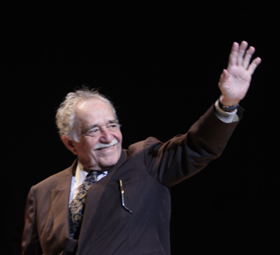
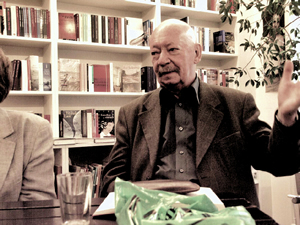
Geschreven door Romenu om 18:54 Reageer op dit bericht

Gabriel García Márquez, Günter Kunert, Clark Accord, Elizabeth Barrett Browning, Stéphane Hoffmann, Michelangelo

De Colombiaanse schrijver Gabriel García Márquez werd op 6 maart 1928 in de kustplaats Aracataca geboren. Zie ook alle tags voor Gabriel García Márquez op dit blog.


Uit: One Hundred Years of Solitude (Vertaald door Gregory Rabassa)


“When José Arcadio Buendía and the four men of his expedition managed to take the armour apart, they found inside a calcified skeleton with a copper locket containing a woman's hair around its neck.

In March the gypsies returned. This time they brought a telescope and a magnifying glass the size of a drum, which they exhibited as the latest discovery of the Jews of Amsterdam. They placed a gypsy woman at one end of the village and set up the telescope at the entrance to the tent. For the price of five reales, people could look into the telescope and see the gypsy woman an arm's length away. 'Science has eliminated distance,' Melquíades proclaimed. 'In a short time, man will be able to see what is happening in any place in the world without leaving his own house.' A burning noonday sun brought out a startling demonstration with the gigantic magnifying glass: they put a pile of dry hay in the middle of the street and set it on fire by concentrating the sun's rays. José Arcadio Buendía, who had still not been consoled for the failure of his magnets, conceived the idea of using that invention as a weapon of war. Again Melquíades tried to dissuade him, but he finally accepted the two magnetized ingots and three colonial coins in exchange for the magnifying glass. Úrsula wept in consternation. That money was from a chest of gold coins that her father had put together over an entire life of privation and that she had buried underneath her bed in hopes of a proper occasion to make use of it. José Arcadio Buendía made no attempt to console her, completely absorbed in his tactical experiments with the abnegation of a scientist and even at the risk of his own life. In an attempt to show the effects of the glass on enemy troops, he exposed himself to the concentration of the sun's rays and suffered burns which turned into sores that took a long time to heal. Over the protests of his wife, who was alarmed at such a dangerous invention, at one point he was ready to set the house on fire. He would spend hours on end in his room, calculating the strategic possibilities of his novel weapon until he succeeded in putting together a manual of startling instructional clarity and an irresistible power of conviction. He sent it to the government, accompanied by numerous descriptions of his experiments and several pages of explanatory sketches, by a messenger who crossed the mountains, got lost in measureless swamps, forded stormy rivers, and was on the point of perishing under the lash of despair, plague, and wild beasts until he found a route that joined the one used by the mules that carried the mail.”


 1349248-0f91d3692e4f6d59d953b6cb912ebc76.jpg

Gabriel García Márquez (Aracataca, 6 maart 1928)


De Duitse dichter en schrijver Günter Kunert werd geboren op 6 maart 1929 in Berlijn. Zie ook alle tags voor Günter Kunert op dit blog.


Ins Morgenland


Der Boden jedem Schritte unbekannter.

Du spürst die Wahrheit: Nichts als Grauen.

Schon Deportierter, nicht mehr Abgesandter.

Verloren Weg und Steg und das Vertrauen

an jede gute Heimkunft unterdessen.

Was dich erwartet, mußt du täglich lesen

und mühst dich ab, es zu vergessen:

Daß du zur Zukunft unterwegs gewesen.


Diagnose

Bei dir bin ich ein Weißnichtwer.

Die Spiegel täuschen und es lügt

die eigne Stimme. Was mich betrügt,

ist gar mein Selbst, von Inhalt leer.

Bin süchtig nach der Sicherheit

verleibter Stunden, nach gewohnter Hand,

nach einem Vatermutterliebesland,

nach einem Dasein ohne Zeit,

nach etwas Glück aus reinem Leid.


Zur Nacht


Die Toten hängen in den Bäumen

wie Blätter und sie schwanken sacht

in vielen ungezählten Träumen,

aus denen das Gedenken schwer erwacht.


Nur nächtlings kehren ihre Wesen

zurück aus einem unbegriffnen Irgendwo.

Allein die Träume können sie erlösen,

denn in den Träumen sind sie wieder froh


und jung und ungeängstet: wohlgemut.

In Träumen wachen sie im Schläfer auf,

indessen der bei Todes Bruder ruht,

dem Leben fern wie ihrem Lebenslauf.


 1349248-298ca62190ebb2f52a8b01c440da2351.jpg

Günter Kunert (Berlijn, 6 maart 1929)


De Surinaamse schrijver Clark Accord werd op 6 maart 1961 geboren in de Surinaamse hoofdstad Paramaribo. Zie ook alle tags voor Clark Accord op dit blog.


Uit: Bingo


“"De rook van de sigaretten waarmee de zenuwen in bedwang worden gehouden, hangt als een ijl wolkendek onder het plafond. Achter in de zaal prijkt op een wit papier in zwierige, handgeschreven letters de tekst VERBODEN TE ROKEN. De door dampen omgeven vermaning werkt op Leanda's lachspieren. Het wordt tijd dat ze zich weer eens beklaagt bij René, de eigenaar van de Suikertuin. Ze vindt het storend dat ze ongewild blootgesteld wordt aan de kankerverwekkende uitstoot van mensen die hun leven en dat van anderen op het spel zetten, louter en alleen omdat ze te zwak zijn om zich te bevrijden van het kwaad dat hen regeert. Nee, zo niet Leanda! Zij gaat er prat op zich door niets en niemand de wet te laten voorschrijven."

(…)


"Leanda reikt naar de hand van haar dochter. Ze legt hem boven op de doos met de magnetron. Zonder iets te zeggen houdt ze haar vast. Woorden schieten te kort om de puinzooi die ze van haar leven en dat van haar dochter heeft gemaakt uit te drukken. Voor Aisa moeten ze een uitweg vinden uit deze ellende.

In stilte staren moeder en dochter voor zich uit. Ronkend zoekt de bus zijn weg in het donker. Buiten is het opgehouden met regenen."


 1349248-31b3c696b6de3ac4d17e525f3d395fcc.jpg

Clark Accord (6 maart 1961 – 11 mei 2011)


De Engelse dichteres Elizabeth Barrett Browning werd op 6 maart 1806 geboren in Durham, Engeland. Zie ook alle tags voor Elizabeth Barrett Browning op dit blog.


Sonnet IV


Thou hast thy calling to some palace-floor,
Most gracious singer of high poems ! where
The dancers will break footing, from the care
Of watching up thy pregnant lips for more.
And dost thou lift this house's latch too poor
For hand of thine ? and canst thou think and bear
To let thy music drop here unaware
In folds of golden fulness at my door ?
Look up and see the casement broken in,
The bats and owlets builders in the roof !
My cricket chirps against thy mandolin.
Hush, call no echo up in further proof
Of desolation ! there 's a voice within
That weeps . . . as thou must sing . . . alone, aloof


Sonnet V


I lift my heavy heart up solemnly,
As once Electra her sepulchral urn,
And, looking in thine eyes, I overturn
The ashes at thy feet. Behold and see
What a great heap of grief lay hid in me,
And how the red wild sparkles dimly burn
Through the ashen greyness. If thy foot in scorn
Could tread them out to darkness utterly,
It might be well perhaps. But if instead
Thou wait beside me for the wind to blow
The grey dust up,...those laurels on thine head,
O my Belovèd, will not shield thee so,
That none of all the fires shall scorch and shred
The hair beneath. Stand farther off then! go.


 1349248-59ef602198107733ceaae1d9dd089307.jpg

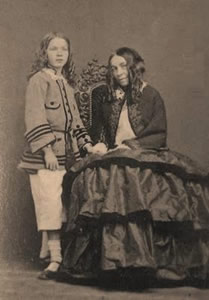
Elizabeth Barrett Browning (6 maart 1806 – 29 juni 1861)

Hier met haar zoon Robert, bijgenaamd „Pen“


De Franse schrijver Stéphane Hoffmann werd geboren op 6 maart 1958 in Saint-Nazaire. Zie ook alle tags voor Stéphane Hoffmann op dit blog.


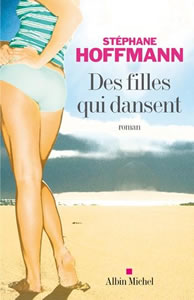
Uit:  Des filles qui dansent


“Si on voulait choquer les filles des roseaux, il fallait leur parler d’amour. ça les bloquait. Toujours prêtes à vous sucer, jamais à vous aimer. Conter fleurette, c’était pere de temps. L’amour était juste un truc dont elles avaient entendu parler. Un truc pas net. Le solide, pour elles : la baise et le mariage, leurs deux passions. Malheureusement, je suis un sentimental. Comme disait l’autre : je ne donne pas mon âme sans mon corps ni mon corps sans mon âme.”

(…)


“Je l’aime cette plage. Elle varie tout le temps et ne change jamais. C’est un miroir sur lequel se reflètent les humeurs du ciel et des nuages, du soleil et du vent. La plage, seule, est imperturbable, elle s’en fout et reste là. Elle a bien raison, c’est une leçon pour la vie, et c’est ma devise : il faut s’en foutre et rester là.”

(…)


“Ce que mon frère a vécu, Balzac l’avait raconté. Il faut choisir entre l’amour et le mariage.  L’amour est un sentiment, le mariage un contrat. L’amour est un feu, le mariage un seau d’eau. Le mariage, c’est l’amour mis en prison par la société.”


 1349248-b66b11d2d45e9e71eaaf2f518dc84756.jpg

Stéphane Hoffmann (Saint-Nazaire, 6 maart 1958)

Cover


De Italiaanse beeldhouwer, schilder, architect en dichter Michelangelo werd geboren op 6 maart 1475 in Caprese. Zie ook alle tags voor Michelangelo op dit blog.


To The Supreme Being


The prayers I make will then be sweet indeed,

If Thou the spirit give by which I pray:

My unassisted heart is barren clay,

Which of its native self can nothing feed:

Of good and pious works Thou art the seed,

Which quickens only where Thou say'st it may;

Unless Thou show to us Thine own true way,

No man can find it: Father! Thou must lead.

Do Thou, then, breathe those thoughts into my mind

By which such virtue may in me be bred

That in Thy holy footsteps I may tread;

The fetters of my tongue do Thou unbind,

That I may have the power to sing of Thee,

And sound Thy praises everlastingly.


Vertaald door William Wordsworth


 1349248-ff2dceb22c9fe5d1c0af62d4a742f8d6.jpg

Michelangelo (6 maart 1475 – 18 februari 1564)

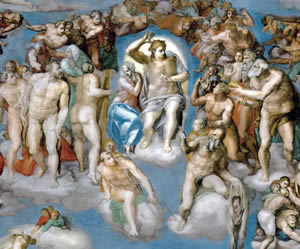
Michelangelo; Het laatste oordeel, Fresco, Sixtijnse kapel


Zie voor nog meer schrijvers van de 6e maart ook mijn blog van 6 maart 2012 deel 2.

Geschreven door Romenu om 19:26 Reageer op dit bericht

Meer van Romenu

↑ Terug naar de berichten