Naar de inhoud

Romenu

Over literatuur, gedichten, kunst en cultuur
akke.beakke.be

Berichten van 17 maart 2013 tot 18 maart 2013

John Updike, Christa Wolf, Charlotte Roche, Wilfred Owen, Stéphane Mallarmé, Héctor Bianciotti, Hellema

De Amerikaanse schrijver John Updike werd geboren in Shillington, Pennsylvania, op 18 maart 1932. Zie ook alle tags voor John Updike op dit blog.


Uit: Gertrude and Claudius


“Gertrude did not like to think that Claudius had, like his brother, sought the throne. She preferred to think it had fallen to him by unhappy accident. True, he had shown initiative and singleness of purpose in seeking endorsement from the råd and election from the four provincial things, and had by swift letter elicited allegiance from the bishops of Roskilde, Lund, and Ribe; but she ascribed all this to the good cause of stifling chaos in the wake of calamity. In those stunned days after Hamlet was found dead, and not only dead but hideously transfigured, like a long-buried statue disintegrating in shining flakes, Gertrude had been directing her attention elsewhere, inward, to her ancient task of mourning, of shouldering bereavement. For almost the first time in her life since the onset of menses she had felt transformed by illness, unable to leave the bed, as if her proper place were beside Hamlet in his clay grave, in the loathsome burial ground outside the walls of Elsinore, where mist clung to the tufted soil and the shovels of chattering gravediggers were always pecking away at the underworld of bone. Thus isolated, visited only by Herda, who had her own reasons for grief, for Sandro was gone and her belly was swollen, and by her whispering ladies-in-waiting, whose faces were rapt with the thrill of the recent horrific event, and the castle physician, with his dropsical bagcap and bucket of writhing leeches, Gertrude played doctor to her own spiritual symptoms, wondering why her grief felt shallow and tainted by relief. The King's weight had been rolled off her. He had never seen her as she was, fitting her instead into a hasty preconception, his queen. It did occur to her, later, that in this interval some other queen might have been forwarding her son's claim to the throne. But Hamlet had attended his father's burial and disappeared again.”


1356625-60e0f2f5edefd4264bd8a1ffa3769b3d.jpg 

John Updike (18 maart 1932 – 27 januari 2009)


De Duitse schrijfster Christa Wolf werd geboren op 18 maart 1929 in het huidige Poolse Gorzów Wielkopolski  Zie ook alle tags voor Christa Wolf op dit blog.


Uit: Der geteilte Himmel


“In jenen letzten Augusttagen des Jahres 1961 erwacht in einem kleinen Krankenhauszimmer das Mädchen Rita Seidel. Sie hat nicht geschlafen, sie war ohnmächtig. Wie sie die Augen aufschlägt, ist es Abend, und die saubere weiße Wand, auf die sie zuerst sieht, ist nur noch wenig hell. Hier ist sie zum ersten Mal, aber sie weiß gleich wieder, was mit ihr, heute und vorher, geschehen ist. Sie kommt von weit her. Sie hat noch undeutlich ein Gefühl von großer Weite, auch Tiefe. Aber man steigt rasend schnell aus der unendlichen Finsternis in die sehr begrenzte Helligkeit. Ach ja, die Stadt. Enger noch: das Werk, die Montagehalle. Jener

Punkt auf den Schienen, wo ich umkippte. Also hat irgendeiner die beiden Waggons noch angehalten, die da von rechts und links auf mich zukamen. Die zielten genau auf mich. Das war das Letzte.

Die Krankenschwester tritt an das Bett, sie hat beobachtet, wie das Mädchen wach geworden ist und sich mit eigentümlich stillen Augen im Zimmer umsieht, sie spricht sie leise und freundlich an. »Sie sind gesund«, sagt sie munter. Da dreht Rita das Gesicht zur Wand und beginnt zu weinen, hört auch die Nacht über nicht mehr auf, und als morgens der Arzt nach ihr sieht, ist sie nicht fähig, zu antworten.

Aber der Arzt braucht nicht zu fragen, er weiß ja alles, es steht auf dem Unfallblatt. Diese Rita Seidel, eine Studentin, arbeitet nur während der Ferien im Betrieb. Sie ist manches nicht gewohnt, zum Beispiel die Hitze in den Waggons nicht, wenn sie aus der Trockenzelle kommen. Sowieso ist es verboten, bei hohen Temperaturen im Wagen zu arbeiten, aber niemand kann bestreiten, daß die Arbeit drängt. Die Werkzeugkiste ist schwer, sechzig bis

siebzig Pfund, sie hat sie noch bis zu den Schienen geschleppt, wo gerade rangiert wurde, und dann kippte sie um — kein Wunder, zart wie sie ist. Nun heult sie, auch das kennen wir.”


1356625-23196b3152cf024b999aeb0149c06c0e.jpg 

Christa Wolf (Gorzów Wielkopolski, 18. März 1929)


De Duitse schrijfser, televisiepresentatrice, actrice en zangeres Charlotte Roche werd geboren in High Wycombe, Engeland, op 18 maart 1978. Zie ook alle tags voor Charlotte Roche op dit blog.


Uit: Schoßgebete


“Wie immer vor dem Sex haben wir beide Heizdecken im Bett eine halbe Stunde vorher angemacht. Mein Mann hat ganz hochwertige Heizdecken gekauft, die reichen auf beiden Seiten vom Scheitel bis zur Sohle. Für mich muss man da etwas mehr investieren.

Ich habe wahnsinnige Angst, dass so ein Ding anfängt zu glühen und ich nach dem Einschlafen bei lebendigem Leibe verbrenne oder am Rauch ersticke. Unsere Heizdecken schalten sich angeblich nach einer Stunde automatisch ab. Wir legen uns in das vierzig Grad warme Bett nebeneinander hin und starren an die Decke. Der Körper entspannt sich in der Wärme. Ich fange da schon an, tief zu atmen, und grinse in mich rein, in erregter Vorfreude. Dann drehe ich mich um und küsse ihn, meine Hand fährt sofort in seine XXL-Yogahose. Kein Reißverschluss oder so, wo sich Haare oder Vorhaut verfangen könnten. Erst fasse ich seinen Schwanz nicht an, sondern rutsche weiter in die Hose zu den Eiern. Die halte ich wie einen Beutel voll Gold und wiege sie leicht in der Hand. Ab hier betrüge ich meine männerhassende

Mutter. Die hat versucht mir beizubringen, dass Seks etwas Schlechtes ist. Hat bei mir aber nicht gewirkt.

Tief einatmen und ausatmen. Das ist der einzige Moment am Tag, wo ich richtig durchatme. Sonst hab ich nur flache Schnappatmung. Immer auf der Lauer, immer kontrolliert, immer

aufs Schlimmste gefasst. Beim Sex verändere ich komplett meine Persönlichkeit. Meine Therapeutin Frau Drescher meint, ich würde mich unbewusst abspalten, weil meine feministische Mutter mich zum asexuellen Wesen erziehen wollte.”


1356625-94966c2fd6b1663340ca61f4bd95b1da.jpg 

Charlotte Roche (High Wycombe, 18 maart 1978)


De Engelse dichter en schrijver Wilfred Owen werd op 18 maart 1893 geboren in Oswestry in Shropshire. Zie ook alle tags voor Wilfred Owen op dit blog.


Arms and the Boy


Let the boy try along this bayonet-blade
How cold steel is, and keen with hunger of blood;
Blue with all malice, like a madman's flash;
And thinly drawn with famishing for flesh.

Lend him to stroke these blind, blunt bullet-heads
Which long to muzzle in the hearts of lads.
Or give him cartridges of fine zinc teeth,
Sharp with the sharpness of grief and death.

For his teeth seem for laughing round an apple.
There lurk no claws behind his fingers supple;
And God will grow no talons at his heels,
Nor antlers through the thickness of his curls.


Sonnet To My Friend - With An Identity Disc


If ever I had dreamed of my dead name
High in the heart of London, unsurpassed
By Time for ever, and the Fugitive, Fame,
There seeking a long sanctuary at last, -

Or if I onetime hoped to hide its shame,
- Shame of success, and sorrow of defeats, -
Under those holy cypresses, the same
That shade always the quiet place of Keats,

Now rather thank I God there is no risk
Of gravers scoring it with florid screed.
Let my inscription be this soldier's disc.
Wear it, sweet friend. Inscribe no date nor deed.
But may thy heart-beat kiss it, night and day,
Until the name grow blurred and fade away.


1356625-2287461b477a411c71d2833c5a631379.jpg 

Wilfred Owen (18 maart 1893 – 4 november 1918)


De Franse dichter Stéphane Mallarmé werd geboren in Parijs op 18 maart 1842. Zie ook alle tags voor Stéphane Mallarmé op dit blog.


Les fenêtres


Las du triste hôpital, et de l'encens fétide
Qui monte en la blancheur banale des rideaux
Vers le grand crucifix ennuyé du mur vide,
Le moribond sournois y redresse un vieux dos,

Se traîne et va, moins pour chauffer sa pourriture
Que pour voir du soleil sur les pierres, coller
Les poils blancs et les os de la maigre figure
Aux fenêtres qu'un beau rayon clair veut hâler,

Et la bouche, fiévreuse et d'azur bleu vorace,
Telle, jeune, elle alla respirer son trésor,
Une peau virginale et de jadis ! encrasse
D'un long baiser amer les tièdes carreaux d'or.

Ivre, il vit, oubliant l'horreur des saintes huiles,
Les tisanes, l'horloge et le lit infligé,
La toux; et quand le soir saigne parmi les tuiles,
Son oeil, à l'horizon de lumière gorgé,

Voit des galères d'or, belles comme des cygnes,
Sur un fleuve de pourpre et de parfums dormir
En berçant l'éclair fauve et riche de leurs lignes
Dans un grand nonchaloir chargé de souvenir !

Ainsi, pris du dégoût de l'homme à l'âme dure
Vautré dans le bonheur, où ses seuls appétits
Mangent, et qui s'entête à chercher cette ordure
Pour l'offrir à la femme allaitant ses petits,

Je fuis et je m'accroche à toutes les croisées
D'où l'on tourne l'épaule à la vie, et, béni,
Dans leur verre, lavé d'éternelles rosées
Que dore le matin chaste de l'Infini

Je me mire et me vois ange ! et je meurs, et j'aime
- Que la vitre soit l'art, soit la mysticité
A renaître, portant mon rêve en diadème,
Au ciel antérieur où fleurit la Beauté !

Mais, hélas ! Ici-bas est maître : sa hantise
Vient m'écoeurer parfois jusqu'en cet abri sûr,
Et le vomissement impur de la Bêtise
Me force à me boucher le nez devant l'azur.

Est-il moyen, ô Moi qui connais l'amertume,
D'enfoncer le cristal par le monstre insulté
Et de m'enfuir, avec mes deux ailes sans plume
- Au risque de tomber pendant l'éternité ?


Sonnet: ‘Pour votre chère morte, son ami…’

(For your dear departed wife, his friend) 


– ‘Over the lost woods when dark winter lowers

You moan, O solitary captive of the threshold,

That this double tomb which our pride should hold’s

Cluttered, alas, only with absent weight of flowers.


Midnight counts out his empty number,

Wakefulness urges you never to close an eye,

Before in the ancient armchair’s embrace my

Shade is illuminated by the dying embers.


Who wishes to receive visitations often,

Mustn’t load with too many flowers the stone

My finger raises with a dead power’s boredom.


A soul trembling to sit by a hearth so bright,

To exist again, it’s enough if I borrow from

Your lips the breath of my name you murmur all night.’


Vertaald door A. S. Kline


1356625-72900decb0ec2b248660210ac9de25cd.jpg
Stéphane Mallarmé (18 maart 1842 - 9 september 1898)


De Argentijnse schrijver Héctor Bianciotti werd geboren op 18 maart 1930 in Córdoba. Zie ook alle tags voor Héctor Bianciotti op dit blog.


Uit: L'amour n'est pas aimé


“Je ne sens rien - je sens que je ne sens rien. Comme la mort ressemble peu à la mort !
Je crois que le jour est en train de se lever. La nuit a emporté l'empire vers la poussière d'une étoile future. Je perçois une clarté incertaine. La nuit s'est réfugiée dans mon corps.
J'ai froid. Je voudrais m'envelopper dans un drapeau brûlé au soleil des frontières.
Meeta m'a raconté l'histoire de la princesse mais il n'a pas bien rugi. Ma nourrice chante dans le jardin mais elle s'éloigne. Je crois que je me suis endormi. Il faut que je dorme mais je ne veux pas dormir. Les yeux de la panthère brillent sur le mur. Il faut que je lui trouve un nom.”

(…)


« Le scribe sait qu’il s’égare, comme l’artiste qui fait le portrait d’un être aimé s’attarde obstinément sur des détails vestimentaires ou sur le paysage qui sert de fond à son tableau parce qu’il craint que ses pinceaux ne rendent la vérité de ce visage aimé. Il n’y aura aucune vérité, il n’y aura que cette crise de larmes dans son enfance, et, plusieurs années après, dans son adolescence, ces pleurs inattendus au moment de son départ. Ensuite, l’éloignement, la distance, le remords du silence, des lettres indéfiniment remises au lendemain, des élans retenus : les conséquences de ce que nous avons omis de faire sont les plus graves. »


1356625-e0b4f70e53f1a042c24f2e8b94e3e718.jpg
Héctor Bianciotti (18 maart 1930 – 11 juni 2012)


De Nederlandse schrijver Hellema (pseudoniem voor Alexander Bernard (Lex) van Praag) werd geboren in Amsterdam op 18 maart 1921. Zie ook alle tags voor Hellema op dit blog.


Uit: Enige reizen dienden niet ter zake


“Ik [...] reis door het mijnenveld van mijn herinneringen. Het verleden reist mee als torenspitsen aan de einder. Ik ben een handelsreiziger in verleden tijd.’

(…)


“Ik stond hulpeloos om mij heen te kijken. Een wachtpost had mijn schep afgepakt. Een Unterscharführer kwam tierend op me af. “Wat sta je daar de wereld aan te kijken?” “Mijn schep...” zei ik zwak. “Zijn schep! Kijk me zo'n zwijn eens aan! Wat leef je nog, als je geen schep hebt!” Hij begon me in elkaar te slaan. De wachtpost keek lachend toe en slingerde de schep in mijn richting.’

(…)


“De ober deelde weliswaar menu's uit, maar hij noteerde alleen de drank, verder zei hij op elke bestelling “wollen wir sehen”, nam de menu's weer mee en zo begon ik om tien uur aan een maaltijd die ik niet besteld had, maar waarvoor ik mij niettemin dankbaar voelde als voor een bak voer in een concentratiekamp.”


1356625-d97c24c55084966ea8463a6a2bcf1786.jpg
Hellema (18 maart 1921 – 19 maart 2005)


Zie voor nog meer schrijvers van de 18e maart ook mijn blog van 18 maart 2011 deel 2.

Geschreven door Romenu om 07:34 Reageer op dit bericht

Hafid Aggoune, Rense Sinkgraven, William Gibson, Siegfried Lenz, Urmuz

De Franse schrijver Hafid Aggoune werd geboren op 17 maart 1973 in Saint-Etienne. Zie ook alle tags voor Hafid Aggoune op dit blog.


Uit: Les avenirs


“Les années sont passées comme un seul jour. Je n’avais plus rien à faire sur l’île de ma mélancolie. Je suis sorti par le trou qu’un papillon aux ailes féeriques m’avait montré comme dans un conte.

(…)


Le temps remuait et s'avançait vers moi. Il était là depuis le début, sur la main du peintre, dans sa main tracée sur l'air, sans matière, flottante.
Quelque chose en moi suivait des couleurs invisibles.
Dans ce silence, c'est la vie qui, de l'infini le plus lointain, s'approchait de moi et, au passage, dérobait à la nuit des lambeaux d'étoiles comme des peaux mortes à la surface du soleil, comme l'amour et la douleur arrachent des copeaux de corps fossilisés par l'érosion durable de la mélancolie.
En secret, une part qui m'était étrangère me guidait vers le point de lumière, au-delà des pierres, la faille qui, un jour, s'ouvrirait pour ne plus se refermer. Au bord de la vie, elle sauvegardait mon dedans disponible à l'éveil.
Jour après jour, année après année, les décennies ont passé et je continuais de disparaître dans l'image du monde. Je m'engouffrais dans un reflet orphelin.
Je m'étais laissé tombé dans l'attente, livré à elle, donné à elle.”


1356367-9042461b4cec3da1167b4087a9765327.jpg 

Hafid Aggoune (Saint-Etienne, 17 maart 1973)


De Nederlandse dichter
Rense Sinkgraven werd op 17 maart 1965 geboren in het Friese Sint Jacobiparochie. Zie ook alle tags voor Rense Sinkgraven op dit blog.


Witte madonna

Onze-Lieve-Vrouw van Lewenborg


Langs velden, de kamilleweg,
voorbij de smulhoek op de loef,
wacht de witte madonna.

In haar contouren zie ik de maker
die uit steen een engel halen wilde,
witte madonna, klein van stuk.
Je rug draagt diepe sporen.

Een gebed is een dood gedicht.
Je slaat je vleugels uit, verlaat
je man en gaat je eigen weg.
Keer terug. Hoer.

Ik smeek u. Geef haar kracht.
Geef haar een kranig kind dat
wakker wordt in steen.


Koudvuur

Vannacht was
ik weer daar.
Ik zag je
man na man.
Ontspiegeld glas.
Je tors
een raam.
Lakens verkrampt.
Ver
van gestelde tijd –
snijdende wind,
fonkelende straat-
tel ik
de uren kwijt.


1356367-fa2d58ef1c56e4b3671250719a461e85.jpg 

Rense Sinkgraven (Sint Jacobiparochie, 17 maart 1965)


De Amerikaanse schrijver
William Ford Gibson werd geboren in Conway (South Carolina) op 17 maart 1948. Zie ook alle tags voor William Gibson op dit blog.


Uit: Pattern Recognition


“Numb here in the semi-dark, in Damien's bedroom, beneath a silvery thing the color of oven mitts, probably never intended by its makers to actually be slept under. She'd been too tired to find a blanket. The sheets between her skin and the weight of this industrial coverlet are silky, some luxurious thread count, and they smell faintly of, she guesses, Damien. Not badly, though. Actually it's not unpleasant; any physical linkage to a fellow mammal seems a plus at this point.
Damien is a friend.
Their boy-girl Lego doesn't click, he would say.
Damien is thirty, Cayce two years older, but there is some carefully insulated module of immaturity in him, some shy and stubborn thing that frightened the money people. Both have been very good at what they've done, neither seeming to have the least idea of why.
Google Damien and you will find a director of music videos and commercials. Google Cayce and you will find "coolhunter," and if you look closely you may see it suggested that she is a "sensitive" of some kind, a dowser in the world of global marketing.
Though the truth, Damien would say, is closer to allergy, a morbid and sometimes violent reactivity to the semiotics of the marketplace.
Damien's in Russia now, avoiding renovation and claiming to be shooting a documentary. Whatever faintly lived-in feel the place now has, Cayce knows, is the work of a production assistant.
She rolls over, abandoning this pointless parody of sleep. Gropes for her clothes. A small boy's black Fruit Of The Loom T-shirt, thoroughly shrunken, a thin gray V-necked pullover purchased by the half-dozen from a supplier to New England prep schools, and a new and oversized pair of black 501's, every trademark carefully removed. Even the buttons on these have been ground flat, featureless, by a puzzled Korean locksmith, in the Village, a week ago.


1356367-759f2702378f238f57dc789de30f8ead.jpg 

William Gibson (Conway, 17 maart 1948)


De Duitse schrijver
Siegfried Lenz werd op 17 maart 1926 in Lyck, in de landstreek Masuren in Oostpruisen geboren. Zie ook alle tags voor Siegfried Lenz op dit blog.


Uit: So zärtlich war Suleyken


“Jeder Mann, jedes Wesen in Suleyken war von Schrecken und Angst geschlagen, nur Hamilkar Schoß, mein Großvater, zeigte sich von der Bedrohung nicht berührt; sein Auge leuchtete, die Lippen fabrizierten Wort um Wort, dieweil sein riesiger Zeigefinger über die Zeilen des Masuren-Kalenders glitt, die Form einer Girlande nachzeichnend, zitternd vor Glück. Da kam, während er so las, ein magerer, aufgescheuchter Mensch herein, Adolf Abromeit mit Namen, der zeit seines Lebens nicht mehr gezeigt hatte als zwei große rosa Ohren. Er trug eine ungeheure Flinte bei sich, trat, damit fuchtelnd, an Hamilkar Schaß heran und sprach folgendermaßen: "Du tätest", sprach er, "Hamilkar Schaß, gut daran, deine Studien zu verschieben. Es könnte sonst, wie die Dinge stehen, leicht sein, daß der Wawrila mit dir seine Studien treibt. Nur, glaube ich, wirst du nachher zersplieserter aussehen als dieses Buch." Hamilkar Schaß, mein Großvater, blickte zuerst erstaunt, dann ärgerlich auf seinen Besucher; er war, da die Lektüre ihn stets völlig benommen machte, eine ganze Weile unfähig zu einer Antwort. Aber dann, nachdem er sich gefaßt hatte, erhob er sich, massierte seine Zehen und sprach so: "Mir scheint", sprach er, "Adolf Abromeit, als ob du auch die Höflichkeit verlernt hättest. Wie könntest du mich sonst, bitte schön, während des Lesens stören." - "Es ist", sagte Abromeit, "nur von wegen Krieg. Ehrenwort. Wawrila, dem Berüchtigten, ist es in den Sümpfen zu langweilig geworden. Er nähert sich unter gewöhnlichsten Grausamkeiten diesem Dorf. Und weil er, der schwitzende Säufer, schon nah genug ist, haben wir beschlossen, ihn mit unseren Flinten nüchtern zu machen. Dazu aber, Hamilkar Schaß, brauchen wir jede Flinte, die deine sogar besonders." "Das ändert", sagte Hamilkar Schaß, "überhaupt nichts. Selbst ein Krieg, Adolf Abromeit, ist keine Entschuldigung für Unhöflichkeit. Aber wenn die Sache, wie du sagst, arg steht, könnt ihr mit meiner Flinte rechnen. Ich komme."


1356367-3825a9e9334be35df90ce97bc39b1900.jpg 

Siegfried Lenz (Lyck, 17 maart 1926)

Lyck (Pools: Ełk) in 1905


De Roemeense schrijver en avantgardist
Urmuz werd geboren op 17 maart 1883 in Curtea de Argeş. Zie ook alle tags voor Urmuz op dit blog.


Uit: ALGAZY & GRUMMER (Vertaald door Julian Semilian)


“He throws it up on Algazy’s arms... But the old geezer, in whose gut the gobbled bubble’s fermentation kindled the quiverings of forthcoming literature, discerns that all that is submitted to him is far too puny and much too obsolete...

Maddened by hunger and unable to locate in the dark the ideal nourishment which they both so craved, they quickened to the battle anew with redoubled vigor, and under the pretense of merely tasting each other so as to achieve improved integration and get better acquainted, they set about taking bites off of one another with ever flourishing fury, and, gradually consuming each other off, they come to the very last bone... Algazy is the first to finish...

EPILOGUE
The next day, at the foot of the mountain, passers-by could spot in a ditch, hurled by the rain, a gridiron with barbed wire and a scented wooden beak... The authorities were contacted, but before they could arrive on the scene, one of Algazy’s spouses, who was shaped as a broom, showed up unexpectedly and... swinging right and swinging left two or three times, swept everything she found into the garbage...”


1356367-acf9d78246e0a1e6b8ae1fa1bb7607f1.jpg 

Urmuz (17 maart 1883 – 23 novemmber 1923)

Curtea de Argeş, de kathedraal


Zie voor nog meer schrijvers van de 17e maart ook mijn vorige blog van vandaag.

Geschreven door Romenu om 18:22 Reageer op dit bericht

Patrick Hamilton, Hans Wollschläger, Jean Ingelow, Karl Gutzkow, Ebenezer Elliott, Paul Green

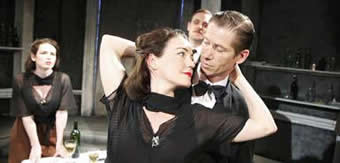
De Engelse schrijver Patrick Hamilton werd geboren op 17 maart 1904 in Hassocks, Sussex. Zie ook alle tags voor Patrick Hamilton op dit blog.


Uit: Hangover Square


“For two or three minutes he walked along in a dream, barely conscious of anything. The motion of his body caused his raincoat to make a small thundering noise: his big sports shoes creaked and rustled on the grass of the cliff-top. On his left, down below, lay the vast grey sweep of the Wash under the sombre sky of Christmas afternoon; on his right the scrappy villas in the unfinished muddy roads. A few couples were about, cold, despairing, bowed down by the hopeless emptiness and misery of the season and time of day. He passed a shelter, around which some children were running, firing toy pistols at each other. Then he remembered, without any difficulty, what it was he had to do: he had to kill Netta Longdon.

He was going to kill her, and then he was going to Maidenhead, where he would be happy.

It was a relief to him to have remembered, for now he could think it all out. He liked thinking it out: the opportunity to do so was like lighting up a pipe, something to get at, to get his teeth into.


1356362-e965418f1d284ed6dc19c24857bce9d0.jpg
Scene uit het gelijknamige toneelstuk, Finborough Theatre, Londen, 2008


Why must he kill Netta? Because things had been going on too long, and he must get to Maidenhead and be peaceful and contented again. And why Maidenhead? Because he had been happy there with his sister, Ellen. They had had a splendid fortnight, and she had died a year or so later. He would go on the river again, and be at peace. He liked the High Street, too. He would not drink any more-or only an occasional beer. But first of all he had to kill Netta.

This Netta business had been going on too long. When was he going to kill her? Soon-this year certainly. At once would be best-as soon as he got back to London-he was going back tomorrow, Boxing Day. But these things had to be planned: he had so many plans: too many. The thing was so incredibly, absurdly easy. That was why it was so difficult to choose the right plan. You had only to hit her over the head when she was not looking. You had only to ask her to turn her back to you because you had a surprise for her, and then strike her down. You had only to invite her to a window, to ask her to look down at something, and then throw her out. You had only to put a scarf playfully round her neck, and fondle it admiringly, and then strangle her. You had only to surprise her in her bath, lift up her legs and hold her head down.


1356362-0da67ee936416f8e35257f8bfb4a5b46.jpg 

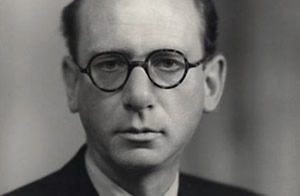
Patrick Hamilton (17 maart 1904 – 23 september 1962)


De Duitse schrijver, essayist, vertaler, uitgever, historicus, organist en muziekwetenschapper Hans Wollschläger werd geboren op 17 maart 1935 in Minden. Zie ook alle tags voor Hans Wolfschläger op dit blog.


Uit: Leitfaden a priori. Karlheinz Deschners Kriminalgeschichte des Christentums


„Es scheint zweierlei zu sein, was erlebt – und was dem Erlebten dann nachgesagt wird, post-

hum, wenn es bücherreif geworden ist –: sind unsere Informationen über den vitiosen Semper-idem-Kreis vielleicht generell schlecht assortiert? Wir haben eine reiche

Geschichtsschreibung – für die älteren wie für die neueren Zeiten; sie hat selber ihre

Geschichte, und ihre Tradition hat sogar eine ganze Philosophie ausgebildet –: läge die Crux der vergeblichen Lehre bei ihr?

Zumindest auf sie trifft zu, was sich aus dem endlosen politischen Fortsetzungsroman als allgemeiner Verdacht aufdrängt: daß die Lebenslehrerin Geschichte immer auffallend ungelehrige Schüler hatte. Die Zeiten ändern sich, doch sie mit ihnen nicht; sie sind sitzen geblieben, wo sie immer saßen. Das Phänomen ist um so erstaunlicher, als es am Fleiß nicht liegt; es hat mit dem »Betragen« zu tun, mit dem Charakter, und tatsächlich bezeichnet »der

Historiker« eine Gemein-Konstitution, die nicht nur die verschiedensten Persönlichkeiten einbindet, sondern auch die verschiedensten Erlebnisepochen unerschütterlich übergreift, und das mit einer derart zwanghaften Verbindlichkeit, daß niemand, der sich ihr nicht assimiliert, auf zünftigen Applaus rechnen kann. Ihr Zentrum ist der herrenmoralische Blick auf die  Taten – in einem Maß, das die Grenze zur Komplizenschaft mit den Tätern, zur »Beihilfe nach der Tat« nur allzu oft überwallt.


1356362-b35ed8b4217593468ee469dbe839db76.jpg 

Hans Wollschläger (17 maart 1935 – 19 mei 2007)

Minden, markt met raadhuis


De Engelse dichteres en schrijfster Jean Ingelow werd geboren op 17 maart 1820 in Boston, Lincolnshire. Zie ook alle tags voor Jean Ingelow op dit blog.


Sweet are His ways who rules above

'Though I take the wings of the morning.'

Sweet are His ways who rules above,
He gives from wrath a sheltering place;
But covert none is found from grace,
Man shall not hide himself from love.

What though I take to me the wide
Wings of the morning and forth fly,
Faster He goes, whoso care on high
Shepherds the stars and doth them guide.

What though the tents foregone, I roam
Till day wax dim lamenting me;
He wills that I shall sleep to see
The great gold stairs to His sweet home.

What though the press I pass before,
And climb the branch, He lifts his face;
I am not secret from His grace
Lost in the leafy sycamore.

What though denied with murmuring deep
I shame my Lord,—it shall not be;
For He will turn and look on me,
Then must I think thereon and weep.

The nether depth, the heights above,
Nor alleys pleach'd of Paradise,
Nor Herod's judgment-halls suffice:
Man shall not hide himself from love.


1356362-53fcfe6e73a2f02be1819a89782e224e.jpg 

Jean Ingelow (17 maart 1820 – 20 juli 1897)


De Duitse schrijver en journalist Karl Gutzkow werd geboren op 17 maart 1811 in Berlijn. Zie ook alle tags voor Karl Gutzkow op dit blog.


Uit: Der Sadducäer von Amsterdam


“Glückliche Juden, die ihr zwischen Hollands Poldern und Deichen euer Asyl suchtet! Habt ihr je in der Fremde euer Passahlamm in solcher Ruhe genossen und zu den Laubhütten so viel Zweige von den Bäumen brechen dürfen, als an dem Meerbusen IJ? So lustig rauchten nirgends eure Schornsteine bei der Paraskeue am Vorabende des Sabbaths; so reich verbrämte Talare durften die Männer, so schwere goldene Ketten und Ohrgehänge eure Weiber nur in Amsterdam tragen. Die Holländer fürchteten sich weder vor eurem Gelde, noch vor euren Bärten, noch vor euren schönen Töchtern, noch vor Jehova, der sich prächtige Tempel in ihrem Lande baute und mit Wachskerzen, unartikulirten Tönen, ja selbst mit recht unduldsamen, ketzersüchtigen und orthodoxen Priestern und Leviten verehrt wurde.

Es war in der ersten Hälfte des siebzehnten Jahrhunderts, in einer der Straßen, die von dem großen Kai zu Amsterdam auslaufen, in einem stattlichen Hause, das sich vor Niemanden versteckte, aber schon spät, bei eingebrochener Nacht, daß vielleicht die sorgsamste und ehrwürdigste der jüdischen Mütter mit dreien von ihren Söhnen zusammensaß. Welch prachtvolle Umgebung! Welche sonderbare Verbindung des orientalischen und holländischen Geschmacks: in Vorhängen, Sophas, Rauchpfannen, der weitfaltige, elastische, sinnliche Orientalismus, in allem übrigen Zubehör eines großartigen Gesellschaftszimmers die nette, barocke, chinesische Eleganz des Holländers. Esther aber wechselte mit ihren Söhnen jene zärtlichen, sorglichen Reden und Blicke, welche nirgends so treu gemeint sind und wie vom beklommenen Herzen kommen, als im Schooß einer Judenfamilie. Sie ist egoistisch, grausam gegen andere, gewissenlos, die Familienzärtlichkeit der Juden, aber sie ist voller Hingebung und Aufopferung für die Ihrigen.”


1356362-95d4b429cacd694ed43640d004b55a01.jpg 

Karl Gutzkow (17 maart 1811 – 16 december 1878)

Rond 1860 


De Engelse dichter Ebenezer Elliott werd geboren op 17 maart 1781 in Masborough, Yorkshire. Zie ook alle tags voor Ebenezer Elliott op dit blog.


A Poet’s Prayer


Almighty Father! let thy lowly child,

Strong in his love of truth, be wisely bold -

A patriot bard, by sycophants revil'd,

Let him live usefully, and not to die old!

Let poor men's children, pleas'd to read his lays,

Love, for his sake, the scenes where he has been

And, when he ends his pilgrimage of days,

Let him be buried where the grass is green;

Where daisies, blooming earliest, linger late

To hear the bee his busy note prolong -

There let him slumber, and in peace await

The dawning morn, far from the sensual throng,

Who scorn the windflower's blush, the redbreast's lonely song.


1356362-ab49a264a158066d8084baa3df37a574.jpg
Ebenezer Elliott (17 maart 1781 – 1 december 1849)

Anoniem portret, rond 1800 


De Amerikaanse toneelschrijver
Paul Green werd geboren op 17 maart 1894 in Lillington, North Carolina. Zie ook alle tags voor Paul Green op dit blog.


Uit: A Daughter’s Biography (Door Janet Green)


„Perhaps you never heard of my father. I can understand that. One of the things that made him less famous nationally than he should have been was his great age when he died. People stereotyped him with his earlier achievements, but he was a practicing writer until the day he died. In fact, he used to complain that recent interviewers acted as if he were already dead; that their tasks were to gather information from a defunct creature about dinosaur matters. Also, Paul Green, for much of his career, was not in the mainstream of the American theatre. That is, he avoided gratuitous violence, loveless sex, miserable introspection, ironic ambiguity, sophisticated banter, and fearful despair, as subjects for the stage. Still another reason you may never have heard of him is because he was in his beginning a regionalist. As the first white playwright to write about blacks, he created plays dripping in dialect, which are heavy going to urban northern people. I am thinking of some production very early in my father's career of his Negro plays, done by northern white actors in blackface, attempting to mimic the deep North Carolina rural dialect. They did this because the theatre was not then open to black actors. But, as you can imagine, their efforts were not usually what the playwright had in mind.”


1356362-e6df7dc403ff6f7466ebdaec4e3999f4.jpg 

Paul Green (17 maart 1894 – 4 mei 1981)


Geschreven door Romenu om 18:14 Reageer op dit bericht

Meer van Romenu

↑ Terug naar de berichten