Naar de inhoud

Romenu

Over literatuur, gedichten, kunst en cultuur
akke.beakke.be

Berichten van 26 mei 2013 tot 27 mei 2013

Louis-Ferdinand Céline, Jan Blokker, Niels 't Hooft, Kaur Kender, Georges Eekhoud
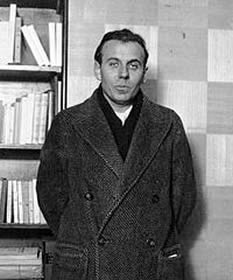
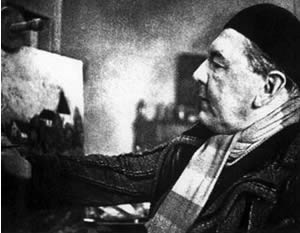
De Franse schrijver Louis-Ferdinand Céline (pseudoniem van Louis Ferdinand Destouches) werd geboren in Courbevoie op 27 mei 1894. Zie ook alle tags voor Louis-Ferdinand Céline op dit blog.


Uit: Journey To The End Of The Night (Vertaald door Ralph Manheim)


“Lola had a genuine official uniform, and it was really natty, decorated with little crosses all over, on the sleeves and on the tiny cap that she perched at a rakish angle on her wavy hair. She'd come to help us save France, as she told the hotel manager, to the best of her humble ability but with all her heart! We understood each other right away, but not completely, because the transports of the heart were beginning to give me a pain, I was more interested in the transports of the body. You can't trust the heart, not at all. I'd learned that in the war, and I wasn't going to forget it in a hurry.

Lola's heart was tender, weak, and enthusiastic. Her body was sweet, it was adorable, so what could I do but take her all together as she was? Lola was a good kid all right, but between us stood the war, the monstrous frenzy that was driving half of humanity, lovers or not, to send the other half to the slaughterhouse. Naturally this interfered with our relationship. 

To me her body was a joy without end. I never wearied of exploring that American body. I have to admit that I was a terrible lecher. I still am. And I formed the pleasant and fortifying conviction that a country capable of producing bodies so daringly graceful, so tempting in their spiritual flights, must have countless other vital revelations to offer, of a biological nature, it goes without saying.

I made up my mind, while feeling and fondling Lola, that sooner or later I'd take a trip, or call it a pilgrimage, to the United States, the sooner the better. And the fact is that I knew neither peace nor rest (in an implacably adverse and harassed life) until I managed to go through with that profound and mystically anatomical adventure.

So it was in the immediate vicinity of Lola's rear end that I received the message of a new world. Of course Lola wasn't all body, she also had a wee little face that was adorable and just a bit cruel because of her gray-blue eyes that slanted slightly upward at the corners like a wildcat's.”


 1399768-20db2b665155d1f3c7dbc90763f05006.jpg

Louis-Ferdinand Céline (27 mei 1894 - 1 juli 1961)


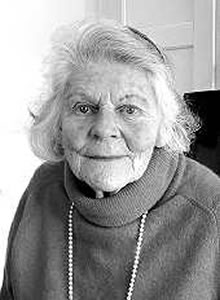
De Nederlandse schrijver, journalist en columnist Jan Blokker werd geboren in Amsterdam op 27 mei 1927. Zie ook alle tags voor Jan Blokker op dit blog.


Uit: Satire na de dood van Satire


“Bij wijze van tussenvraag: is satire per definitie ‘links’, en zo nee, waarom schijnt zelfs geen poging te worden ondernomen om tot een rechts satirisch programma te komen, dat bij de Tros toch zo onder dak zou zijn? (Van Tros-hoofd mr J.M. Landré heb ik thuis nog een briefkaart liggen waarop hij dankbaar schrijft zich tranen te hebben gelachen om de Zo-is-het-aflevering van 11 februari 1966 waarin drie nummers en een stuk of acht losse grappen voorkwamen rondom het huwelijk van Beatrix en twee ‘items’ tegen De Telegraaf. Ga zo door, smeekte Landré. Drie maanden later beloofde hij in De Telegraaf dat de Tros-programma's de huiskamer zouden ‘respecteren’ en dat niemand bang hoefde zijn voor ontsporingen à la Zo is het. Een bewegelijke man.)

Ik zie mogelijkheden genoeg - of hebben mensen als Jacques de Kadt, Jacques Gans, Godfried Bomans, Frits Behrendt, schoutbij-nacht Moorman en G.B.J. Hiltermann geen idealen meer op het gebied van Vietnam, Israel, de zuiverheid der moederkerk, de vernietiging van Sowjet-Rusland, Zuid-Afrika en Elsevier die in de werkelijkheid van onze samenleving worden ondermijnd door uiterst rode weg-met-onzers? Van Riel heeft er een tijdje geleden antwoord op gegeven. In tegenstelling tot linkse intellectuelen, zei hij, zijn rechts geaarde intellectuelen tevreden met hun werkelijkheid. Rechtse intellectuelen immers zijn aangepast aan de maatschappij: ze hebben hun academische studie tot het laatste toe volbracht, ze hebben een passende sociale functie in de samenleving gevonden en zien geen enkel belang in de wijziging van hun status quo, integendeel. Kijk daarentegen naar intellectueel links, grotendeels te vinden in de hoek van kunstenaars, journalisten en televisiemakers: dat zijn voor 80% gesjeesde studenten die tot op hoge leeftijd onvrede blijven koesteren over de status die ze niet bereikt hebben. De ene groep is gebaat bij stilstand. De andere kan van beweging nooit minder worden. Van Riel heeft gelijk. Rechtse intellectuelen houden er geen idealen op na. Satire - het genre waarin de tegenstelling tussen werkelijkheid en ideaal wordt gehekeld - is per definitie links.”


 1399768-c58c3e3eda6a47bd3e44ae5fadb27939.jpg

Jan Blokker (27 mei 1927 - 6 juli 2010)


De Nederlandse schrijver, journalist, blogger en gamedeskundige
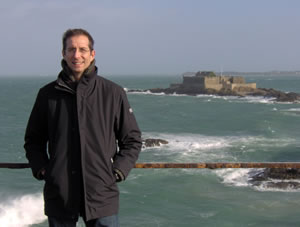
Niels 't Hooft werd geboren in Leiderdorp op 27 mei 1980. Zie ook alle tags voor Niels ‘t Hooft op dit blog.


Uit: Gamen met Mondriaan


“Games kunnen tal van vormen aannemen. Ik doe nu mee aan Your Daily Victory Boogie Woogie, volgens de initiatiefnemers van literair tijdschrift De Gids en gamebureau Hubbub een “experimentele literaire game”. Als je naar de site gaat, Gidsgame.nl, zie je een verzameling illustraties en proza- en poëziefragmenten. Neem je de moeite om erin te duiken, dan blijken die samen een verhaal vormen, rond een nieuw ontdekte versie van Piet Mondriaans omstreden schilderij.

Het spel begint zodra je je inschrijft en er een schrijfopdracht in je inbox landt. De game vraagt je om voort te borduren op eerdere bijdrages in een bepaalde categorie, maar laat je verder vrij. Door te schrijven ga je in feite een improviserende interactie aan met de andere spelers en de schrijversredactie, speel je met hen, en beïnvloed je uiteindelijk het verhaal.

Zelf ‘beheer’ ik Godfried de Ridder, een kunstenaar van een jaar of vijftig die in zijn laatste poging relevant te worden steeds meer op het randje van de waanzin balanceert. Wekelijks schrijf ik over zijn avonturen. Maar andere spelers zijn vrij om Godfried op te voeren. Laatst nam een oud-klasgenoot Godfried ineens mee uit eten, en kwam ik nieuwe dingen te weten over het verleden van mijn personage. Mijn voorafbedachte plan viel in de soep, maar de nieuwe richting was minstens zo interessant.”


 1399768-6d8b3ff4e8a8c4be8a173ddb69d84545.jpg

Niels 't Hooft (Leiderdorp, 27 mei 1980)


De Estse schrijver Kaur Kender werd geboren op 27 mei 1971 in Estland. Zie ook alle tags voor Kaur Kender op dit blog.


Uit: Through Peaceful Eyes (Vertaald door Jurgen Kaljuvee)


“She does not expect my calls anymore. She invited me for a quick cup of coffee. To the “No Name” bar. It was close by. I ran there. I lied: “I have no money.” She paid for me. I lied that I was falling in love with a strip dancer. She made a sad expression. Then I jumped in the car. I almost collided with a BMW (5th series, a few years old, about 500 000, monthly leasing payment about 12 000). I drove home. Rent apartment (with a cleaning lady and everything else about 7000 a month). I put on new clothes. I drove by a flower shop. I bough a lot of roses (20 crowns each, 33 flowers). And I drove to get Maria. She lives in Kallavere. She was wearing a beautiful pink shirt and pink pants with embroidery. She was sincerely happy to see me. I gave her the pink roses and the sports bag. We drove to a clothing boutique in the Old Town. Maria picked up beige pants (1800), shoes (2450), shirt (890) and a top (690). I paid with a credit card. I wanted that we would look a little alike so that everyone would understand that we are together. From the next store I bought us Police sunglasses (2400 and 2300).

We then went to eat. To the “Noku” club. It’s a closed club for young artistic people. I am a member of the club. We ordered chicken and bacon salad, ice cream with whip cream and strawberries, a pack of Camel Lights, a pack of blue Barclays, and an ice cream cocktail (a little over 300 in total).

“I want,” she said.

“What?” I asked.

“Drive your car!” I nodded. We went outside. A woman accosted Maria on the street.

“Maria, I have been looking for you! I want to take you to London and New York!”


 1399768-200af030f4ce7c9509e6a4c0b41af40b.jpg

Kaur Kender (Estland, 27 mei 1971)


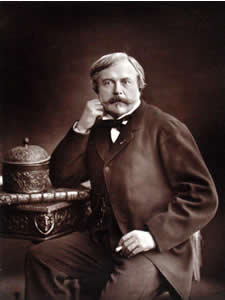
De Belgische Franstalige schrijver Georges Eekhoud werd in Antwerpen geboren op 27 mei 1854. Zie ook alle tags voor Georges Eekhoud op dit blog.


Uit: La faneuse d'amour


“Ses tabliers et ses bonnets très blancs alléchaient, dès qu’elle se montrait, le manœuvre le plus absorbé. La coquette résista aux cajoleries de Nikkel, crut le maintenir parmi ses soupirants ordinaires ; le luron ne l’entendait pas ainsi. Il commença par l’amuser, il finit par l’émouvoir. Ce falot mal nippé, à la dégaine de casseur, trouva pour la séduire d’irrésistibles suppliques de gestes et de regards. Un soir de kermesse qu’il l’avait énervée et pétrie à point aux spirales érotiques de la valse, il l’entraîna dans les fours à briques, en partie éteints et déserts les dimanches, et posséda goulûment cette femme déjà rendue et pâmée.

Cinq mois après, Mme de Dhose, prude et rigoriste, pas mal prévenue contre les airs évaporés et les toilettes claires de la pupille des bonnes sœurs, constatait son embonpoint anormal et la chassait ignominieusement. La maladroite ne songea pas un instant à retourner chez ses premières protectrices. Par bonheur Nikkel Mortsel restait absolument féru de sa conquête. Le coureur de guilledou se doublait chez lui d’un esprit pratique, il devinait en Rikka des qualités de ménagère qui le déterminèrent à l’épouser. La pauvresse ne s’estima que trop heureuse de s’unir chrétiennement à ce gaillard dégourdi qu’elle avait cru leurrer sans jamais faire la culbute.

Elle le suivit à Niel où naquît la petite Clara.”


 1399768-edb21c87a09453e3f261115c61dc6d92.jpg

Georges Eekhoud (27 mei 1854 - 29 mei 1927)


Zie voor nog meer schrijvers van de 27e mei ook mijn blog van 27 mei 2011 deel 1 en eveneens deel 2 en ook deel 3.

Geschreven door Romenu om 19:10 Reageer op dit bericht

Alan Hollinghurst, Radwa Ashour, Hugo Raes, Maxwell Bodenheim, Isabella Nadolny

De Britse schrijver Alan Hollinghurst werd geboren op 26 mei 1954 in Stoud, Gloucestershire. Zie ook alle tags voor Alan Hollinghurst op dit blog.


Uit: The Line of Beauty


“When Gerald had won Barwick, which was Nick's home constituency, the arrangement was jovially hailed as having the logic of poetry, or fate.

Gerald and Rachel were still in France, and Nick found himself almost resenting their return at the end of the month. The housekeeper came in early each morning, to prepare the day's meals, and Gerald's secretary, with sunglasses on top of her head, looked in to deal with the imposing volume of post. The gardener announced himself by the roar of the mower outside an open window. Mr Duke, the handyman (His Grace, as the family called him), was at work on various bits of maintenance. And Nick was in residence, and almost, he felt, in possession. He loved coming home to Kensington Park Gardens in the early evening, when the wide treeless street was raked by the sun, and the two white terraces stared at each other with the glazed tolerance of rich neighbours. He loved letting himself in at the three-locked green front door, and locking it again behind him, and feeling the still security of the house as he looked into the red-walled dining room, or climbed the stairs to the double drawing room, and up again past the half-open doors of the white bedrooms. The first flight of stairs, fanning out into the hall, was made of stone; the upper flights had the confidential creak of oak. He saw himself leading someone up them, showing the house to a new friend, to Leo perhaps, as if it was really his own, or would be one day: the pictures, the porcelain, the curvy French furniture so different from what he'd been brought up with. In the dark polished wood he was partnered by reflections as dim as shadows. He'd taken the chance to explore the whole house, from the wedge-shaped attic cupboards to the basement junk room, a dim museum in itself, referred to by Gerald as the trou de gloire. Above the drawingroom fireplace there was a painting by Guardi, a capriccio of Venice in a gilt rococo frame; on the facing wall were two large gilt-framed mirrors. Like his hero Henry James, Nick felt that he could 'stand a great deal of gilt'.


1399224-fbfdfe434e5223942ab500e0697b545f.jpg
Scene uit de tv-serie „The Line of Beauty“ uit 2006


Sometimes Toby would have come back, and there would be loud music in the drawing room; or he was in his father's study at the back of the house making international phone calls and having a gin-and-tonic - all this done not in defiance of his parents but in rightful imitation of their own freedoms in the place. He would go into the garden and pull his shirt off impatiently and sprawl in a deckchair reading the sport in the Telegraph. Nick would see him from the balcony and go down to join him, slightly breathless, knowing Toby quite liked his rower's body to be looked at. It was the easy charity of beauty. They would have a beer and Toby would say, 'My sis all right? Not too mad, I hope,' and Nick would say, 'She's fine, she's fine,' shielding his eyes from the dropping August sun, and smiling back at him with reassurance, among other unguessed emotions.”


1399224-0a9db8a1eb9beeecc97f0d6d1767b653.jpg 

Alan Hollinghurst (Stoud, 26 mei 1954)


De Egyptische schrijfster en literatuurwetenschapster Radwa Ashour werd geboren op 26 mei 1946 in Caïro. Zie ook alle tags voor Radwa Ashour op dit blog.


Uit: A Clean Kill (Vertaald door Gretchen Head)


“In Death in the Afternoon, Hemingway says: "The only place where you could see life and death, i.e., violent death now that the wars were over, was in the bull ring and I wanted very much to go to Spain where I could study it. I was trying to learn to write, commencing with the simplest things, and one of the simplest things of all and the most fundamental is violent death."

R. hadn't yet read Hemingway's book that exhausting afternoon when she’d lost her way and ended up at the hotel Sultan, a different hotel than the one in which she had made a reservation earlier, before her arrival in the city. She secured a room for the night, dropped off her suitcase, then left the hotel and headed for her destination. She returned at six in the evening. She took off her clothes, bathed, settled down in front of the television, and watched a live broadcast of a bullfight on its screen. That was in the beginning of the nineties. R. watched the bull as it charged into the ring. She took note of its weight, its power, the arch of the taut muscles swelling behind its neck. She followed the team of bullfighters as they overcame it: The picador on the back of his horse pushing, with force, his spear into the bull's upper back. The three banderilleros leaping one after the other, each of them embedding colored arrows in its neck. The bull's repeated attempts to injure the bullfighters while they provoke it, tricking it with their bicolored capes. And finally the matador and the red cape, he plunges the sword deep into the bull's neck. She turned off the television and held her pen; she wrote "maqam 'iraq," then crossed it out and replaced it with "maqama 'iraqiyya." She wrote several lines. She read them. She muttered: "Bad writing, incomprehensible!" She tore up the paper.

She noticed that the air-conditioned room, virtually sealed shut, was filled with smoke. She put out her cigarette and carried the ashtray to the wastebasket. She emptied the cigarette butts in it and cleaned the ashtray. She walked to the window and opened it. The air was hot and thick in the summer evening, without the slightest breeze.”


 1399224-d7a6bef0191c02747b37503e6ba8661e.jpg

Radwa Ashour (Caïro, 26 mei 1946)


De Belgische schrijver Hugo Raes werd geboren in Antwerpen op 26 mei 1929. Zie ook alle tags voor Hugo Raes op dit blog.


Uit: Hemel en dier


‘Mijn prooi, mijn godin die ik koningin maak en slachtoffer. Zo is het: slachtoffer maken of slachtoffer zijn. En als je je ooit wegrukt van mij, dan onderga ik de aanval waaruit ik slechts half zal herrijzen, zoals een die verlamd is van de heupen tot de voeten toe, of met een hart dat nog slechts onregelmatig klopt, en zwakjes, en het niet lang meer zal kunnen volhouden.’ In de laatste bladzijden van het boek is een dergelijke toestand werkelijk ingetreden, en als een wanhoopskreet klinkt het dan: ‘En ik moet voort en moe en leeg ben ik maar ik wil blijven leven ...’ Ik meen daarom dat de twee polen van het boek inderdaad wel de mogelijkheid en onmogelijkheid van de liefde zijn, maar dan met een sterk accent op enerzijds de energieverwekkende kracht van de liefde en anderzijds de noodzaak van de energie om de liefde te kunnen beleven. In het laatste deel van de roman gaat het teloorgaan van de liefde essentieel gepaard met een totaal verlies van de energie, en één van de onloochenbare symptomen van dit teloorgaan is precies een angstige bedenking over het ouder worden.”

(…)


‘Want ik heb niet gewild dat je wegging. En jou treft geen schuld. Het was een tijdelijke verslapping, en die zijn altijd gevaarlijk, een verraderlijke vermoeidheid, de slijtage, die vanzelf, zelfstandig de splitsing van onze eenheid, van ons samenzijn bewerkt, zonder dat wij het wilden, maar de moeheid, de verminderde belangstelling, is een dekmantel, een kunstmatig mistgordijn dat dit verhult.’


1399224-ec58582529fa1c1dd5e0e2a0ff817eb2.jpg 

Hugo Raes (Antwerpen, 26 mei 1929)

Hier met zijn familie op jongere leeftijd


De Amerikaanse dichter en schrijver
Maxwell Bodenheim werd geboren op 26 mei 1892 in Hermanville, Mississippi. Zie ook alle tags voor Maxwell Bodenheim op dit blog


Broadway


With sardonic futility

The multi-coloured crowd,

Hurried by fervent sensuality,

Flees from something carried on its back.

Endlessly subdued, a sound

Pours up from the crowd,

Like some one ever gasping for breath

to utter releasing words.

Through the artificial valley

Made by gaudy evasions,

The stifled crowd files up and down,

Stabbing thought with rapid noises.

Women strutting dulcetly,

Embroider their unappeased hungers,

And men stumble toward a flitting opiate.

Sometimes a moment breaks apart

And one can hear the knuckles

Of children rapping on towering doors:

Rapping on the highway

Where civilization parades

Its frozen amiabilities!


The Child Meditates


The oak-tree in front of my house

Smells different every morning.

Sometimes it smells fresh and wise

Like my mother's hair.

Sometimes it stands ashamed

Because it doesn't own the smell

It borrowed from our flower-garden.

Sometimes it has a windy smell,

As though it had come back from a long walk.

The oak-tree in front of my house

Has different smells, like grown up people.


My doll hides behind her pink cheeks,

So that you can't see when she moves,

But it doesn't matter because

She always moves when no one is looking,

And that is why people think she is still.

People laugh when I say that my doll is alive,

But if she were dead, my fingers

Wouldn't know that they were touching her.

She lives inside a little house.

And laughs because I cannot find the door.


The colours in my room

Meet each other and hesitate.

Is that what people call shape?

Nobody seems to think so,

But I believe that lines are dead shapes

Unless they fall against each other

And look surprised, like the colours in my room!


 1399224-f9e562b72a4e4eb6f080efba2fd0c9a4.jpg

Maxwell Bodenheim (26 mei 1892 – 6 februari 1954)

Hier in de jaren 1930


De Duitse schrijfster Isabella Nadolny (eig. Isabella Peltzer) werd geboren op 26 mei 1917 in München. Zie ook alle tags voor Isabella Nadolny op dit blog.


Uit: Ein Baum wächst übers Dach


„Mama nicht. Sie war nicht einmal verblüfft, sondern packte ihre Koffer, nahm den kleinen Leo,

die russische Kinderfrau, fuhr nach Bayern und suchte sich mit Papa eine Wohnung in Schwabing.

Eine hochherrschaftliche Wohnung mit Stuckdekken. Papa lernte malen, Mama, die bildschön war, wurde gemalt, und beide besuchten mit Erfolg die legendären Künstlerfeste jener Zeit, die man im ›Simplicissimus‹ älterer Jahrgänge abgebildet findet.

Als der Weltkrieg vorüber war und die all- jährlichen Rußlandreisen zur Familie für immer

aufhörten, kam ich zur Welt. Und just um diese Zeit begannen auch die ersten Vermögensschwierigkeiten und die ersten Sorgen. Papa malte weiter, ihm genügte es, von den leidigen Geldangelegenheiten nicht zu sprechen und alles damit Zusammenhängende zu ignorieren. Von Mamas Gefühlen und Erwägungen ist nichts bekannt, sie war eine echte Dame und ließ sich nichts anmerken. Nun zum erstenmal seit Jahren sahen wir die Hoffnung auf einen Hund zugleich mit dem Gedanken an ein Sommerhaus in ihrem Auge aufleuchten.

Bruder Leo zeichnete noch immer. Jetzt ergriff er ein Lineal und zog eine Linie.

»Wie viele Zimmer brauchen wir denn?« fragte er.

»Bloß nicht zu viele«, sagte Mama, die sich seit langem in der Wohnung mit einem Mädchen behelfen mußte.

Papa saß Papa saß am Schreibtisch und legte eine Patience. Er hatte noch den Malmantel an, mit dem er aus dem Atelier gekommen war, und an seinem Hosenbein klebte ein wenig Preußischblau. Er hatte Schwierigkeiten beim Durchzeichnen einer Birkengruppe in einem Abendhimmel und durfte sich eine Pause gönnen. Rein zufällig geriet er in das allgemeine Sinnen und Trachten.“


1399224-670880d6e1b06358e48ed3bd252e2b13.jpg 

Isabella Nadolny (26 mei 1917 – 31 juli 2004)


Zie voor nog meer schrijvers van de 26 mei ook mijn vorige blog van vandaag.

Geschreven door Romenu om 19:04 Reageer op dit bericht

Vítězslav Nezval, Ivan O. Godfroid, Edmond De Goncourt, Mary Wortley Montagu, Machteld Brands

De Tsjechische dichter en vertaler Vítezslav Nezval werd geboren op 26 mei 1900 in Biskoupky. Zie ook alle tags voor Vítězslav Nezval op dit blog.


Fireworks 1924, A Cinemagenic Poem (Fragment)


the detective while choosing a magazine stares deep into the lady’s eyes (medium close shot)
the lady getting up (full shot)
the detective grabs his heart & sinks down to the floor (fade out)
a crowd of guests & waiters
the lady puts a handkerchief on the detective’s head
(close-up) the detective’s hand picking a photo & 2 tram tickets from the lady’s bag
in the fields the hare is pricking up its ears
a railway station where a train is being boarded
a gentleman with monocle at ticket counter
a hand plugging lines in at the phone exchange
the detective makes a call while staring at the tram ticket
index finger in the book
the tram ticket held in two hands as it grows in size till it dissolves into
the image of the tram (interior)
the dispatcher in his office struggling to recall something (medium close shot)
presses his index finger to his forehead (full shot)
& gives a smile (medium close shot)
giving a large banknote to the gentleman with the monocle seated beside the lady in the tram
a maze of telegraph wires
a postal clerk pondering a telegram
a lookout post in front of which there stands a yardman
the yardman runs into the lookout
a corridor inside the train down which the man with monocle is passing
he is entering the toilet
dumping his revolver
his pocket watch
(fade out) in the dark a sign HOTEL


Vertaald door Jerome Rothenberg en Milos Sovak


1399220-2c7b8e05c1f9088a5f66ffb6056e505b.jpg
Vítězslav Nezval (26 mei 1900 – 6 april 1958)


De Belgische, Franstalige, schrijver en essayist Ivan O. Godfroid werd geboren in Boussu op 26 mei 1971. Zie ook alle tags voor Ivan O. Godfroid op dit blog.


Uit: Pacte de contrition - Essai sur la folie


“La « folie » (le mot fait peur, mais ce n’est que l’ancien nom des troubles psychologiques) est non seulement peu connue du public, mais aussi mal comprise par les professionnels, et traitée de manière insatisfaisante. Que la santé mentale soit une utopie n’y arrange rien. Dans un style séduisant, Godfroid met en cause l’incapacité de la science à expliquer les liens qui unissent le cerveau et la pensée. C’est tout un pan de la médecine qui se voit affaibli par cette lacune fondamentale, et ceci explique également l’incompréhension profonde du rôle du « psy » dans la société contemporaine, qui le traite tour à tour en sorcier moderne, en régulateur social, voire en philosophe domestique. Il faut sans cesse nourrir le développement de ce domaine en explorant de nouvelles voies, comme le rôle du sexe du patient, ou encore les implications de l’effet placebo. Godfroid nous propose dès lors la théorie de la psychiagénie comme une solution inédite au problème cerveau-esprit, et nous révèle comment celle-ci bouleverse la conception du monde dans lequel nous vivons. Cet essai, qui tente de susciter la réflexion non seulement par la raison mais aussi par l’émotion, se termine par un plaidoyer sur la nécessaire émergence d’un nouveau traitement : la psychothérapie unifiée. À la fois surprenant et passionnant, cet ouvrage inclassable s’adresse tant au grand public qu’aux professionnels.”


 1399220-f5125f69907412acc9261550ee5d9b61.jpg

Ivan O. Godfroid (Boussu, 26 mei 1971)


De Franse schrijver
Edmond de Goncourt  werd geboren op 26 mei 1822. Zie ook alle tags voor Edmond de Goncourt op dit blog.


Uit: Histoire de Marie-Antoinette Samen met Jules de Goncourt)


“Au milieu du dix-huitième siècle, la France avait perdu l'héritage de gloire de Louis XIV, le meilleur de son sang, la moitié de son argent, l'audace même et la fortune du désespoir. Ses armées reculant de défaites en défaites, ses drapeaux en fuite, sa marine balayée, cachée

dans les ports, et n'osant tenter la Méditerranée, son commerce anéanti, son cabotage ruiné, la France, épuisée et honteuse, voyait l'Angleterre lui enlever un jour Louisbourg, un jour le Sénégal, un jour Gorée, un jour Pondichéry, et le Coromandel, et Malabar, hier la Guadeloupe, aujourd'hui Saint-Domingue, demain Cayenne. La France détournait-elle ses yeux de son empire au delà des mers, la patrie, en écoutant à ses frontières, entendait la marche des troupes prusso-anglaises. Sa jeunesse était restée sur les champs de bataille de Dettingen et de Rosbach; ses vingt-sept vaisseaux de ligne étaient pris; six mille de ses matelots étaient prisonniers; et l'Angleterre, maîtresse de Belle-Isle, pouvait promener impunément l'incendie et la terreur le long de ses côtes, de Cherbourg à Toulon. Un traité venait consacrer le déshonneur et l'abaissement de la France. Le traité de Paris cédait en toute propriété au roi d'Angleterre, le Canada et Louisbourg, qui avaient coûté à la France tant d'hommes et tant d'argent, l'île du Cap-Breton, toutes les îles du golfe et du fleuve Saint-Laurent. Du banc

de Terre-Neuve, le traité de Paris ne laissait à la France, pour sa pêche à la morue, que les îlots de Saint-Pierre et de Miquelon, avec une garnison qui ne pouvait pas excéder cinquante hommes. Le traité de Paris enfermait et resserrait la France dans sa possession de la Louisiane par une ligne tracée au milieu du Mississipi. Il chassait la France de ses

établissements sur le Gange. Il enlevait à la France les plus riches et les plus fertiles des Antilles, la portion la plus avantageuse du Sénégal, la plus salubre de l'île de Gorée. Il punissait l'Espagne d'avoir soutenu la France, en enlevant la Floride à l'Espagne. Mais

l'Angleterre n'était point satisfaite encore de l'imposition de ces conditions, qui lui donnaient presque tout le continent américain, depuis le 25e degré jusque sous le pôle.”


1399220-c5118d4a878411f5295e59fba153a157.jpg 

Edmond De Goncourt (26 mei 1822  -  16 juli 1896) 

In 1822 


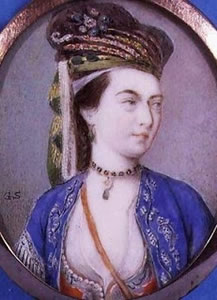
De Engelse schrijfster Lady Mary Wortley Montagu werd geboren in Thoresby Hall, Nottinghamshire, op 26 mei 1689. Zie ook alle tags voor Mary Wortley Montagu op dit blog.


Uit: Letters


“Nuremberg, Aug. 22. O. S. 1716.

After five days travelling post, I could not sit down to write on any other occasion, than to tell my dear lady, that I have not forgot her obliging command, of sending her some account of my travels. I have already passed a large part of Germany, have seen all that is remarkable in Cologn, Frankfort, Wurtsburg, and this place. 'Tis impossible not to observe the difference between the free towns and those under the government of absolute princes, as all the little sovereigns of Germany are. In the first, there appears an air of commerce and plenty. The streets are well-built, and full of people, neatly and plainly dressed. The shops are loaded with merchandise, and the commonalty are clean and cheerful. In the other you see a sort of shabby finery, a number of dirty people of quality tawdered out; narrow nasty streets out of repair, wretchedly thin of inhabitants, and above half of the common sort asking alms. I cannot help fancying one under the figure of a clean Dutch citizen's wife, and the other like a poor town lady of pleasure, painted and ribboned out in her head-dress, with tarnished silver-laced shoes, a ragged under-petticoat, a miserable mixture of vice and poverty. — They have sumptuary laws in this town, which distinguish their rank by their dress, prevent the excess which ruins so many other cities, and has a more agreeable effect to the eye of a stranger, than our fashions. I need not be ashamed to own, that I wish these laws were in force in other parts of the world. When one considers impartially, the merit of a rich suit of clothes in most places, the respect and the smiles of favour it procures, not to speak of the envy and the sighs it occasions (which is very often the principal charm to the wearer), one is forced to confess, that there is need of an uncommon understanding to resist the temptation of pleasing friends and mortifying rivals; and that it is natural to young people to fall into a folly, which betrays them to that want of money which is the source of a thousand basenesses.”


 1399220-740f2054c1754314b353bcd1a912f31f.jpg

Mary Wortley Montagu (26 mei 1689 – 21 augustus 1762)

Portret door Gervase Spencer


Onafhankelijk van geboortedata:


De Nederlandse dichteres Machteld Brands werd geboren in 1986 in Kampen. Zie ook alle tags voor Machteld Brands op dit blog.


Kees


Als een bolletje wol
netjes opgerold
onder donzen dekens

lig je zacht knorrend
van hemels geluk
en genoegzame gedachten

dromend van
bakken vol brokjes
en een kusje op je kop

glanst je vacht mooi
en hoef je toch
nooit in bad.

O, lieve kat
kon ik maar jouw garen
spinnen.


1399220-86cd9ee0168046e463143d764098c31e.jpg 

Machteld Brands (Kampen, 1986)

Geschreven door Romenu om 18:59 Reageer op dit bericht

Meer van Romenu

↑ Terug naar de berichten