

Naar de inhoud

Romenu

Over literatuur, gedichten, kunst en cultuur
akke.beakke.be

Berichten van 18 oktober 2013 tot 19 oktober 2013

David Vann, Philip Pullman, Miguel Ángel Asturias, Fannie Hurst, Leigh Hunt
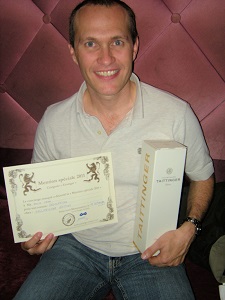
 

De Amerikaanse schrijver David Vann werd geboren op 19 oktober 1966 op Adak Island,  Alaska. Zie ook alle tags voor David Vann op dit blog.


Uit: Caribou Island


„My mother was not real. She was an early dream, a hope. She  was a place. Snowy, like here, and cold. A wooden house on a  hill above a river. An overcast day, the old white paint of the
buildings made brighter somehow by the trapped light, and I  was coming home from school. Ten years old, walking by myself,  walking through dirty patches of snow in the yard, walking up to  the narrow porch. I can't remember how my thoughts went then,  can't remember who I was or what I felt like. All of that is gone,  erased. I opened our front door and found my mother hanging  from the rafters. I'm sorry, I said, and I stepped back and closed  the door. I was outside on the porch again.
You said that? Rhoda asked. You said you were sorry?
Yes.
Oh, Mom.
It was long ago, Irene said. And it was something I couldn't  see even at the time, so I can't see it now. I don't know what she  looked like hanging there. I don't remember any of it, only that it was.
Rhoda scooted closer on the couch and put her arm around  her mother, pulled her close. They both looked at the fire. A  metal screen in front, small hexagons, and the longer Rhoda  looked, the more these hexagons seemed like the back wall of  the fireplace, made golden by flame. As if the back wall, black  with soot, could be revealed or transmuted by fire. Then her eyes  would shift and it would be only a screen again. I wish I had  known her, Rhoda said.
Me too, Irene said. She patted Rhoda's knee. I need to get to  sleep. Busy day tomorrow.
I'll miss this place.
It was a good home. But your father wants to leave me, and the  first step is to make us move out to that island. To make it seem  he gave it a try.
That's not true, Mom.
We all have rules, Rhoda. And your father's main rule is that  he can never seem like the bad guy.
He loves you, Mom.
Irene stood and hugged her daughter. Goodnight, Rhoda.”


1479012-b63f32aa43c34186be506c48c3179968.jpg
David Vann (Adak Island, 19 oktober 1966)


De Britse schrijver Philip Pullman werd geboren op 19 oktober 1946 in Norwich als zoon van een luchtmachtofficier. Zie ook mijn blog van 19 oktober 2010 en eveneens alle tags voor Philip Pullman op dit blog.


Uit: The Subtle Knife


“Will, still watching, saw the cat behave curiously.

She reached out a paw to pat something in the air in front of her, something quite invisible to Will. Then she leapt backwards, back arched and fur on end, tail held out stiffly. Will knew cat-behaviour. He watched more alertly as the cat approached the spot again, just an empty patch of grass between the hornbeams and the bushes of a garden hedge, and patted the air once more.

Again she leapt back, but less far and with less alarm this time. After another few seconds of sniffing, touching, whisker-twitching, curiosity overcame wariness.

The cat stepped forward, and vanished.

Will blinked. Then he stood still, close to the trunk of the nearest tree, as a truck came round the circle and swept its lights over him. When it had gone past he crossed the road, keeping his eyes on the spot where the cat had been investigating. It wasn't easy, because there was nothing to fix on, but when he came to the place and cast about to look closely, he saw it.

At least, he saw it from some angles. It looked as if someone had cut a patch out of the air, about two metres from the edge of the road, a patch roughly square in shape and less than a metre across. If you were level with the patch so that it was edge-on, it was nearly invisible, and it was completely invisible from behind. You could only see it from the side nearest the road, and you couldn't see it easily even from there, because all you could see through it was exactly the same kind of thing that lay in front of it on this side: a patch of grass lit by a street light.“
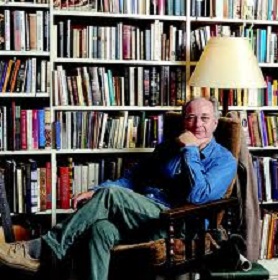


1479012-f8c4556a80f32b47eb0aba440c91a9f3.jpg 

Philip Pullman (Norwich, 19 oktober 1946)


De Guatemalteekse schrijver Miguel Ángel Asturias werd geboren op 19 oktober 1899 in Guatemala-Stad. Zie ook mijn blog van 19 oktober 2010 en eveneens alle tags voor Miguel Ángel Asturias op dit blog.


Uit: The President (Vertaald door Frances Partridge)


“Nothing was visible ahead. Behind them crept the track like a long silent snake unrolling its fluid, smooth, frozen coils. The ribs of the earth could be counted in the meagre dried-up marshlands, untouched by winter. The trees raised themselves to the full height of their thick, sappy branches in order to breathe. The bonfires dazzled the eyes of the tired horses. A man turned his back to urinate. His legs were invisible. The time had come for his companions to take stock of their situation, but they were too busy cleaning their rifles with grease and bits of cotton that still smelt of woman. Death had been carrying them off one by one, withering them as they lay in their beds, with no advantage to their children  or anyone else. It was better to risk their lives and see what would come of that. Bullets feel nothing when they pierce a man’s body; to them flesh is like sweet warm air—air with a certain substance. And they whistle like birds. the time had come to take stock, but they were too busy sharpening the machetes the leaders of the revolution had brought from an ironmonger whose shop had been burned down. The sharpened edge was like the smile on a negro’s face.”
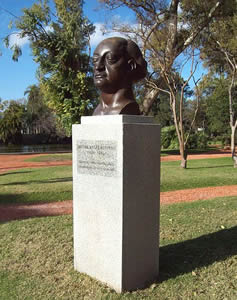


 1479012-e9acccee8a4dbb9b46f86ed1f7fc7f07.jpg

Miguel Ángel Asturias (19 oktober 1899 – 9 juni 1974)

Monument in Buenos Aires


De Amerikaanse schrijfster Fannie Hurst werd geboren op 19 oktober 1889 in Hamilton, Ohio. Zie ook mijn blog van 19 oktober 2010 en eveneens alle tags voor Fanny Hurst op dit blog.


Uit: Every Soul Hath Its Song


“In this age of prose, when men's hearts turn point-blank from blank verse to the business of chaining two worlds by cable and of daring to fly with birds; when scholars, ever busy with the dead, are suffering crick in the neck from looking backward to the good old days when Romance wore a tin helmet on his head or lace in his sleeves--in such an age Simon Binswanger first beheld the high-flung torch of Goddess Liberty from the fore of the steerage deck of a wooden ship, his small body huddled in the sag of calico skirt between his mother's knees, and the sky-line and clothes-lines of the lower East Side dawning upon his uncomprehending eyes.

Some decades later, and with an endurance stroke that far outclassed classic Leander's, Simon Binswanger had swum the great Hellespont that surged between the Lower East Side and the Upper West Side, and, trolling his family after, landed them in one of those stucco-fronted, elevator-service apartment-houses where home life is lived on the layer, and the sins of the extension sole and the self-playing piano are visited upon the neighbor below. Landed them four stories high and dry

in a strictly modern apartment of three dark, square bedrooms, a square dining-room ventilated by an airshaft, and a square pocket of a kitchen that looked out upon a zigzag of fire-escape. And last a square front-room-de-resistance, with a bay of four windows overlooking a distant segment of Hudson River, an imitation stucco mantelpiece, a crystal chandelier, and an air of complete detachment from its curtailed rear.

But even among the false creations of exterior architects and interior decorators, home can find a way. Despite the square dining-room with the stag-and-tree wall-paper design above the plate-rack and a gilded radiator that hissed loudest at mealtime, when Simon Binswanger and his family relaxed round their after-dinner table, the invisible cricket on the visible hearth fell to whirring.”
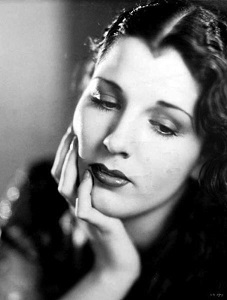


 1479012-41c181fff66f24ead3463237176546f5.jpg

Fannie Hurst (19 oktober 1889 – 23 februari 1968)


De Engelse dichter, schrijver en essayist James Leigh Hunt werd geboren op 19 oktober 1784 in Southgate, Middlesex. Zie ook mijn blog van 19 oktober 2010 en eveneens alle tags voor Leigh Hunt op dit blog.


May and the Poets


There is May in books forever;
May will part from Spenser never;
May's in Milton, May's in Prior,
May's in Chaucer, Thomson, Dyer;
May's in all the Italian books:--
She has old and modern nooks,
Where she sleeps with nymphs and elves,
In happy places they call shelves,
And will rise and dress your rooms
With a drapery thick with blooms.
Come, ye rains, then if ye will,
May's at home, and with me still;
But come rather, thou, good weather,
And find us in the fields together.


On Receiving a Crown of Ivy from John Keats


It is a lofty feeling, yet a kind,
Thus to be topped with leaves;--to have a sense
Of honour-shaded thought,--an influence
As from great nature's fingers, and be twined
With her old, sacred, verdurous ivy-bind,
As though she hallowed with that sylvan fence
A head that bows to her benevolence,
Midst pomp of fancied trumpets in the wind.

It is what's within us crowned. And kind and great
Are all the conquering wishes it inspires,
Love of things lasting, love of the tall woods,
Love of love's self, and ardour for a state
Of natural good befitting such desires,
Towns without gain, and hunted solitudes.



1479012-e5c744bbbae713b9b60fdbe7a280726f.jpg
Leigh Hunt (19 oktober 1784 – 28 augustus 1859)

Cover biografie


Zie voor nog meer schrijvers van de 19e oktober ook
mijn vorige blog van vandaag.

Geschreven door Romenu om 15:40 Reageer op dit bericht

Nardo Aluman, Andrew Vachss, John le Carré, Adam Lindsay Gordon

De Surinaamse schrijver Nardo Aluman (eig. Ronald Renardo Aloema) werd geboren in Christiaankondre op 19 oktober 1946. Zie ook alle tags voor Nardo Aluman op dit blog en eveneens mijn blog van 19 oktober 2010


Uit: Epakano Jakonombo/Tijdens de opstanding


“Heel, heel lang voor de witte man kwam, bestond er een welvarend en vreugdevol dorpje aan de bovenloop van de Amana-rivier in het huidige Frans-Guyana. De naam Amana (Mana) is ontleend aan een soort klei. Het is een roodgele klei en komt veel voor aan de oevers van deze rivier. Van deze klei vervaardigen de Caraïbische vrouwen van de dorpen Awara en Galibi nog altijd hun aardewerk. Het dorp was gevestigd bij een grote Ulemari-boom en heette daarom Ulemari-undy (de stam van de Ulemari).

De rivier Amana leverde tal van middelen van bestaan. Aan vis en vlees had men in het dorp dan ook nooit gebrek. De bevolking van Ulemari-undy deed ook aan landbouw en het dorp was volbeplant met allerlei soorten vruchtbomen. De bewoners vormden een grote familie die onder leiding stond van een pyjai. Deze man was één van de grootste pyjai's in de Guyana's. Iedereen in de Guyana's kende hem en men had veel eerbied voor hem. Zijn onderdanen durfden hem niet bij zijn naam te noemen en daarom wist niemand hoe hij heette. Zijn aanspreektitel was ‘Byjai’, dat betekent leermeester. Zoals het overal in de wereld toegaat, had deze Byjai ook tegenstanders in de andere dorpen; mensen die niet van hem hielden, omdat zij jaloers op hem waren. Maar waarom was men eigenlijk jaloers op hem? Wel, deze man bezat een aantal bijzondere gaven. Zo kon hij zich op bepaalde momenten één maken met de natuur. De vogels en andere dieren, dus ook de wilde poema, gehoorzaamden hem. Hij kon met ze spelen en hun opdrachten geven. Hij alleen kon met de totale natuur communiceren, zelfs met het kleinste levende wezen, zoals de krekel. Soms, als hij zin had, ging hij met de vogels op pad. Geen wonder dat deze man nooit problemen had met het vergaren van voedsel voor zijn gezin. Natuurlijk waren er mannen in het dorp die erachter wilden komen hoe hij dat allemaal deed.”


 1479010-45d700fd22efd2bdac31f0f88ad6a712.jpg

Nardo Aluman (Christiaankondre, 19 oktober 1946)


De Amerikaanse schrijver Andrew Vachss werd geboren op 19 oktober 1942 in New York. Zie ook alle tags voor Andrew Vachss op dit  blog en eveneens mijn blog van 19 oktober 2010


Uit: Mask Market


“The night man sitting across from me calls himself Charlie Jones—the kind of motel-register name you hear a lot down where I live. A long time ago, I'd done a few jobs he'd brought to me. The way Charlie works it; he makes his living from finder' s fees. Kind of a felonious matchmaker—you tell him the problem you need solved, he finds you a pro that specializes in it.

Charlie pointedly looked down at my hands. I kept them flat on the chipped blue Formica tabletop, palms down. He placed his own hands in the same position, showing me his ID.

The backs of his frail-looking hands were incongruously cabled with thick veins. The skin around his fingernails was beta-carotene orange. The tip of the little finger on his right hand was missing. I nodded my confirmation. Yeah, he was the man I remembered.

Charlie looked at my own hands for a minute, then up at me. The Burke he knew never had a tattoo, but he nodded, just as I had. Charlie was a tightrope dancer—perfect balance was his survival tool. His nod told me not to worry about whether he believed the story that I was Burke's brother. By him, it was true enough. Where we live, that's the same as good enough.

"It's a nice story," I said, watching as he lit his third cigarette of the meet. Burke was a heavy smoker. Me, I don't smoke … except when I need to convince someone out of my past that I'm still me.

"It's not my story," Charlie reminded me. "Your brother, he was an ace at finding people. Best tracker in the city. I figure he must have taught you some things."

Charlie never invested himself emotionally in any matches he made. He was way past indifferent, as colorless as the ice storm that grayed the window of the no-name diner where we were meeting. But Charlie had something besides balance going for him. He was a pure specialist, a middleman who never got middled. What that means is, Charlie wouldn' t do anything except make his matches.”


 1479010-f52ac532e80709998d3846cdb75c3598.jpg

Andrew Vachss (New York, 19 oktober 1942)


De Britse schrijver John le Carré werd geboren op 19 oktober 1931 in Poole, Dorset, Engeland. Zie ook alle tags voor John le Carré op dit blog en eveneens mijn blog van 19 oktober 2010


Uit : A Delicate Truth


« On a sunny Sunday early in that same spring, a 31-year-old British foreign servant earmarked for great things sat alone at the pavement table of a humble Italian cafe in London's Soho, steeling himself to perform an act of espionage so outrageous that, if detected, it would cost him his career and his freedom: namely, recovering a tape recording, illicitly made by himself, from the Private Office of a Minister of the Crown whom it was his duty to serve and advise to the best of his considerable ability.

His name was Toby Bell and he was entirely alone in his criminal contemplations. No evil genius controlled him, no paymaster, provocateur or sinister manipulator armed with an attache case stuffed with hundred-dollar bills was waiting round the corner, no activist in a ski mask. He was in that sense the most feared creature of our contemporary world: a solitary decider. Of a forthcoming clandestine operation on the Crown Colony of Gibraltar he knew nothing: rather, it was this tantalising ignorance that had brought him to his present pass.

Neither was he in appearance or by nature cut out to be a felon. Even now, premeditating his criminal design, he remained the decent, diligent, tousled, compulsively ambitious, intelligent-looking fellow that his colleagues and employers took him for. He was stocky in build, not particularly handsome, with a shock of unruly brown hair that went haywire as soon as it was brushed. That there was gravitas in him was undeniable. »


1479010-8e8c4464d9ef8911164911bf4d208ac1.jpg 

John le Carré (Poole, 19 oktober 1931)


De Australische dichter Adam Lindsay Gordon werd geboren op 19 oktober 1833 op de Azoren. Zie ook alle tags voor Adam Lindsay Gordon op dit blog en eveneens mijn blog van 19 oktober 2010


To A Proud Beauty ('A Valentine')


Though I have loved you well, I ween,
And you, too, fancied me,
Your heart hath too divided been
A constant heart to be.
And like the gay and youthful knight,
Who loved and rode away,
Your fleeting fancy takes a flight
With every fleeting day.

So let it be as you propose,
Tho' hard the struggle be ;
'Tis fitter far—that goodness knows !—
Since we cannot agree.
Let's quarrel once for all, my sweet,
Forget the past—and then
I'll kiss each pretty girl I meet,
While you'll flirt with the men.


Potters' Clay


Though the pitcher that goes to the sparkling rill
Too oft gets broken at last,
There are scores of others its place to fill
When its earth to the earth is cast ;
Keep that pitcher at home, let it never roam,
But lie like a useless clod,
Yet sooner or later the hour will come
When its chips are thrown to the sod.

Is it wise, then, say, in the waning day,
When the vessel is crack'd and old,
To cherish the battered potter's clay,
As though it were virgin gold ?
Take care of yourself, dull, boorish elf,
Though prudent and safe you seem,
Your pitcher will break on the musty shelf,
And mine by the dazzling stream.


1479010-32b5545a901b49c9f43067aca5811cea.jpg
Adam Lindsay Gordon (19 oktober 1833 – 24 juni 1870)

Borstbeeld in Ballarat

Geschreven door Romenu om 15:31 Reageer op dit bericht

Ntozake Shange , Kees Fens, Heinrich von Kleist, Raymond Brulez, Jan Erik Vold

De Amerikaanse dichteres en schrijfster Ntozake Shange werd geboren als Paulette Williams op 18 oktober 1948 in Trenton, New Jersey. Zie ook mijn blog van 18 oktober 2008 ook mijn blog van 18 oktober 2009.


People of Watts


where we come from, sometimes, beauty
floats around us like clouds
the way leaves rustle in the breeze
and cornbread and barbecue swing out the backdoor
and tease all our senses as the sun goes down.

dreams and memories rest by fences
Texas accents rev up like our engines
customized sparkling powerful as the arms
that hold us tightly black n fragrant
reminding us that once we slept and loved
to the scents of magnolia and frangipani
once when we looked toward the skies
we could see something as lovely as our children's
smiles white n glistenin' clear of fear or shame
young girls in braids as precious as gold
find out that sex is not just bein' touched
but in the swing of their hips the light fallin cross
a softbrown cheek or the movement of a mere finger
to a lip many lips inviting kisses southern
and hip as any one lanky brother in the heat
of a laid back sunday rich as a big mama still
in love with the idea of love how we play at lovin'
even riskin' all common sense cause we are as fantastical
as any chimera or magical flowers where breasts entice
and disguise the racing pounding of our hearts
as the music that we are
hard core blues low bass voices crooning
straight outta Compton melodies so pretty
they nasty cruising the Harbor Freeway
blowin' kisses to strangers who won't be for long
singing ourselves to ourselves Mamie Khalid Sharita
Bessie Jock Tookie MaiMai Cosmic Man Mr. Man
Keemah and all the rest seriously courtin'
rappin' a English we make up as we go along
turnin' nouns into verbs braids into crowns
and always fetchin' dreams from a horizon
strewn with bones and flesh of those of us
who didn't make it whose smiles and deep
dark eyes help us to continue to see
there's so much life here.


1478571-856a880f7de77bcae1d54ce706046e27.jpg 

Ntozake Shange (Trenton, 18 oktober 1948)


De Nederlandse literatuurcriticus, essayist en letterkundige Kees Fens werd geboren in Amsterdam op 18 oktober 1929. Zie ook mijn blog van 18 oktober 2010 en eveneens alle tags voor Kees Fens op dit

blog.


Uit: In het voorbijgaan


“Het woord column is reddeloos; het drijft, steeds weker wordend, weg over de wijde wateren van de betekenisloosheid. Voor het weekdier dat het woord columnist is, geldt hetzelfde. Krijgt u wel eens van iemand een slappe hand? De gever moet een columnist zijn.
Eens was ‘column’ een mooi, stevig woord, geharnast, gewapend, een wat gevreesd woord ook. Een woord zelfs met prikkeldraad eromheen. Niet of nauwelijks aan te pakken. Alles in de wereld is scheef en de kranten handhaven in de objectiviteit die zij een heer toedenken die scheefheid. Maar in de laatste kolom van een pagina werd de scheefheid zo mogelijk dagelijks rechtgezet; alle zachte meningen gingen in spot en hoon ten onder.
Daar werd even de waarheid gezegd, die de krant zelf niet aandurfde. En dat in de beste taal die er is en dat is de taal zonder nuances, hoewellen, ofschonen, misschien en maren.
De schrijver van de column ging het om ideeën, om denkwijzen en om alle mensen die de lafheid van de zachte krachten vertegenwoordigen. Over al die meningen en mensen schreef hij. Over zichzelf nooit. Zo hoort het ook. Bloed aan de paal – dat was een column, het scheermes dat de redactie zelf niet durfde te gebruiken.
Lange tijd waren er in Nederland twee columnisten: Jan Blokker en Piet Grijs, de een in een dagblad, de ander in een weekblad. Meer dan twee (en die uitstekend, natuurlijk) zijn er ook niet nodig. Hun columns hadden de directheid van de eenzijdige opinie en een heel goede taalstevigte, woorden die je aanpakken en vasthouden en die niet onder je ogen wegglijden. (Piet Grijs schreef als Stoker een tijd ook dagelijks in hetzelfde dagblad; de derde columnist dus).
Ik gebruik de verleden tijd, hoewel de twee nog schrijven. Maar als tweetal zijn ze geschiedenis geworden. Ze zijn nu omringd door ontelbare stukjesschrijvers, die hun belevenissen en meninkjes columns noemen en zichzelf ‘columnist’.


1478571-11da1a5516086d419ac60c7af221a411.jpg 

Kees Fens (18 oktober 1929 - 14 juni 2008)


De Duitse dichter en schrijver Heinrich von Kleist werd geboren op 18 oktober 1777 in Frankfurt an der Oder. Zie ook mijn blog van 18 oktober 2010 en eveneens alle tags voor Heinrich von Kleist op dit blog.


Jünglingsklage


Winter, so weichst du,
      Lieblicher Greis,
Der die Gefühle
      Ruhigt zu Eis.
Nun unter Frühlings
      Ueppigem Hauch
Schmelzen die Ströme –
      Busen, du auch!


Mädchenrätsel


Träumt er zur Erde, wen,
      Sagt mir, wen meint er?
Schwillt ihm die Träne, was
      Götter, was weint er?
Bebt er, ihr Schwestern, was,
      Redet, erschrickt ihn?
Jauchzt er, o Himmel, was
      Ist's, was beglückt ihn?


Der höhere Friede


Wenn sich auf des Krieges Donnerwagen
Menschen waffnen, auf der Zwietracht Ruf,
Menschen, die im Busen Herzen tragen,
Herzen, die der Gott der Liebe schuf:

Denk´ich, können sie doch mir nichts rauben,
Nicht den Frieden, der sich selbst bewährt,
Nicht die Unschuld, nicht an Gott den Glauben,
Der dem Hasse wie dem Schrecken wehrt;

Nicht des Ahorns dunkelm Schatten wehren,
Daß er mich im Weizenfeld erquickt,
Und das Lied der Nachtigall nicht stören,
Die den stillen Busen mir entzückt.


 1478571-d05a9d5d046f79a09d6f1d06881d20c5.jpg

Heinrich von Kleist (18 oktober 1777 - 21 november 1811)

Standbeeld in Berlijn, Kreuzberg


De Belgische schrijver Raymond Brulez werd geboren te Blankenberge op 18 oktober 1895. Zie ook mijn blog van 18 oktober 2010 en eveneens alle tags voor Raymond Brulez op dit blog.


Uit: Mémoires van een Borgenaar


“Maar eens had ik in het stadspark, in het schemeruur, een schaamteloos heerschap gezien met grijnzend gelaat en wanstaltig gekromde houding: monsterachtige hippokamp!... Dit boezemde mij een duurzamen afkeer in, dien de moreele traktaatjes te dien tijde ‘heilzaam’ noemden, maar waarover de moderne psychoanalytische school, naar het schijnt, een andere, zeer verbluffende theorie verkondigt. Uit overbodige zielszorg stuurde mijn moeder mij nochtans vaak ter biecht. Ik ging gaarne naar de kerk; niet uit innige godsvrucht, maar om deze reden:

Te Borgen volgde men niet meer de patriarchale tucht die de mishoorenden naar der kunne scheidt: de mannen rechts, de vrouwen links. De parochianen mochten ad libitum hun plaats uitkiezen - al werd hierbij toch een soort sociale klasseering gevolgd: zoodat de ‘werkende’ stand het breede middenschip vulde, terwijl de ‘goede’ burgerij in voorname afzondering in de twee zijbeuken knielde. Moeder had onze stoelen zoo ver mogelijk van het tochtend portaal doen plaatsen, onder het brandraam alwaar in levensgrootte Philippus van den Elzas en Margareta van Beieren prijkten.

Van hieruit kon men echter moeilijk het Heilig Sacrificie volgen. Mijn aandacht bleef dan ook steeds gericht naar deze kleurige verbeeldingen. Philippus' bronzen gelaat staarde ernstig van onder de klare kroon. Zijn roode mantel plooide open aan den gepantserden knie die manhaftig vooruitdrong. De handen steunden op het kruis van het slagzwaard dat zijn punt in een graszode stak, waarnevens een trouw leeuwtje met half geloken oogen sluimerde. Zooals een anatomische plaat kon 's hertogen romp openklappen, maar in stede van het heldenhart werd dan slechts een vierkantje leege lucht zichtbaar.”


 1478571-bf3d0c97e52a2a317fdc9d154601d3cf.jpg

Raymond Brulez (18 oktober 1895 – 17 augustus 1972)


De Noorse dichter, vertaler en musicus Jan Erik Vold werd geboren op 18 oktober 1939 in Oslo. Zie ook mijn blog van 18 oktober 2010 en eveneens alle tags voor Jan Erik Vold op dit blog.


A New Meeting


A new meeting – and all
the pain

bound
to follow. Even so

we’re happy about it, pulling at
all the

handles, levers and sticks
of joy, jackpot

upon jackpot!
while the coins gush out

so fast
and so many that we cannot

collect them – never mind about
that, never mind.

Cashing in
these chips, that’s where

the real work
begins.


The Fact that No Birds Sing


When sorrow comes, there is no
language

for it. Sorrow
is blackness, is absence, is yearning – many names

can be used, none of which
equals sorrow. To bear sorrow

is not to want to get up
in the morning, not to manage to lift your foot

from the sidewalk, not to be able to escape
the same stab in your heart that you felt

yesterday, the day before yesterday, two days
before yesterday, every time

you pass those spots in town, those landscapes
of mind, those names

for what you lost: a body, a laughter, a lightness – a pair
of eyes to meet your own. Do those eyes

have a name? Are they called Oscar? Are they called
Kathinka? The fact that O or K is gone

is incomprehensible, incomprehensible, incomprehensible
– is there a name for it? The fact

that K or O shall never place a calming hand
on your forehead brings pain

beyond words – is there a name for it? The fact
that no birds

sing. A blackness
called sorrow. Lasts seldom more than seven years.


 1478571-5193481d34da8d889ef9365902cdbf6f.jpg

Jan Erik Vold (Oslo, 18 oktober 1939)


Zie voor nog meer schrijvers van de 18e oktober ook mijn blog van 18 oktober 2011 deel 1 en eveneens deel 2.

Geschreven door Romenu om 18:14 Reageer op dit bericht

Meer van Romenu

↑ Terug naar de berichten