Naar de inhoud

Romenu

Over literatuur, gedichten, kunst en cultuur
akke.beakke.be

Berichten van 25 oktober 2013 tot 26 oktober 2013

Jan Wolkers, Marja Pruis, Andrew Motion, Maartje Wortel Stephen L. Carter, Karin Boye
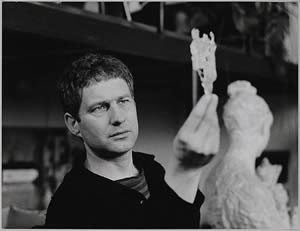
De Nederlandse dichter, schrijver en beeldend kunstenaar Jan Wolkers werd geboren in Oegstgeest op 26 oktober 1925. Zie ook mijn blog van 26 oktober 2010 en eveneens alle tags voor Jan Wolkers op dit blog.


Uit: Kort Amerikaans


‘Ik hoef niet langer alleen te zijn. Eindelijk heb ik een vrouw gevonden voor wie ik mijn hoofd niet af hoef te wenden uit angst dat ze mijn geschonden gelaat zal zien, die me niet zal verlaten omdat ik haar van te voren gezegd heb dat het onmogelijk is. Dat je met zo iemand als ik ben niet getrouwd kan zijn.’ En, doelend op het schilderij waarop het litteken was aangebracht, denkt hij verder: ‘Voordat we elkaar gezien hadden hebben ze al geprobeerd het onmogelijk te maken tussen ons. Ze hebben je voor mij gewaarschuwd, je laten zien, hoe ik getekend ben.’

(…)


‘Als jij aan je ouders en je broers en je zusters evenveel liefde gaf als aan die koudbloedige dieren, dan zou het nog niet zo slecht met je aflopen. Die beesten zit je maar te knuffelen en te bevingeren en ons doe je niets dan het leven zuur maken. Als jij ooit nog een vrouw krijgt mag ze wel Jobs geduld en Salomo's wijsheid hebben.’ De getekende is de vervloekte. Op bladzijde 50 voegt de vader Erik toe: ‘Jij gaat naar het gesticht, ik zal je morgen weg laten halen! Van de duivel ben je bezeten! Jou wacht het eeuwig vuur. Ontaard kind! Laag en gemeen ben je!’

(…)


‘Gesteld dat u zo'n sigaret had en die aan mij verkocht. Goed, ik stop hem bij mij en thuis geef ik hem aan mijn broer. Die is daar heel blij mee en gaat hem meteen op roken. Maar de volgende dag heeft hij een dikke keel. Hij kan zijn mond niet meer opendoen want taaie slijmdraden zitten aan de binnenkant over zijn mond geplakt. Dan moet hij naar het ziekenhuis waar hij op een afschuwelijke manier sterft. Maar voor hij doodgaat zie ik hem voor het laatst. Ik mag niet bij hem komen want het is erg besmettelijk. Ik kan hem alleen achter glas zien als een vis in een aquarium. Voor hij sterft steekt hij zijn arm naar mij omhoog en balt zijn vuist. Dan spreidt hij twee vingers, zoals je doet om er een sigaret tussen te houden en maakt een gebaar van roken. Daarna valt hij terug in het kussen en is dood. Maar ik weet het, ik heb het teken verstaan. Ik ben zijn moordenaar op het spoor.Terwijl hij sprak brak het zweet door zijn huid naar buiten.’


 1483150-6daa69c5a9df240a47969fde06b5f444.jpg

Jan Wolkers (26 oktober 1925 – 19 oktober 2007)


De Nederlandse schrijfster en journaliste Marja Pruis werd geboren in Amsterdam op 26 oktober 1959. Zie ook alle tags voor Marja Pruis op dit blog.


Uit: Wandelaar en zwartziener Het debuut van Martinus Nijhoff


“Nijhoffs poëzie, met haar eigen idioom, klassieke vorm en suggestieve symboliek, nodigt uit tot dooddenken. ‘Een gedicht bestaat uit woorden, niet uit gedachten,’ waarschuwt de dichter in een voordracht over eigen werk, in 1935 (afgedrukt als inleiding op de bloemlezing Lees maar, er staat niet wat er staat, 1959). Hij vond dat je een gedicht moest ondergaan, zonder te proberen het in gedachten over te brengen. ‘Het verdraagt de overheveling niet.’ Om onmiddellijk hieraan toe te voegen: ‘Ik was me bewust dat ik dit uit een soort gemakzucht zei.’ Vervolgens gaat hij op zoek naar wat kenmerkend zou kunnen zijn voor de poëzie van zijn tijd, misschien zelfs voor die van hemzelf. En hij constateert dat de moderne dichters raadselachtiger zijn dan hun voorgangers, omdat zij niet meer bezig zijn hun gevoel direct op papier te storten. In tegendeel: zij construeren en componeren ‘korte stukjes geobjectiveerd leven’, en stellen daarbij hoge eisen aan de taal die, aldus Nijhoff, zuiverder en onderzoekender dan ooit wordt ingezet.

Met het oog op dat zuivere en onderzoekende helpt het om ‘De wandelaar’ een keer hardop te lezen. Het strakke rijmschema te proeven op de tong (Carolingen - zingen, Baudelaire - misère), langzaam mee te lopen met de archaische wendingen (‘Stil heeft mijn hart de daden sterven laten’, ‘Toen zich mijn handen tot geen daad meer hieven’), andermaal de raadselachtige openingsregel te beschouwen (‘Mijn eenzaam leven wandelt in de straten’) en de even raadselachtige slotregel (‘Stil mozaïkspel zonder perspectieven’). Niet een gedicht om ontmoedigend eerbiedig over te doen, maar wel één om je blijvend over te verbazen. Omdat het zonder een lyrische gevoelsuitstorting te zijn, een desolate indruk wekt.”


1483150-dc29058ce2012c87241b496809f96540.jpg 

Marja Pruis (Amsterdam, 26 oktober 1959)


De Engelse dichter, schrijver en biograaf Andrew Motion werd geboren op 26 oktober 1952 in Braintree in Essex. Zie ook alle tags voor Andrew Motion op dit blog en ook mijn blog van 26 oktober 2010


Uit: Silver


“My Father’s Orders
In those days I did my father’s bidding. I would leave my bed at six o’clock every morning, tiptoe past his door so as not to disturb his slumber, then set to work as quietly as possible among the foul tank­ards, glasses, plates, knives, gobs of tobacco, broken pipe-­stems and other signs of interrupted pleasure that awaited me in the taproom below. Only after an hour or so—­when everything had been made straight and the air was fresh again—­could my father be trusted to appear, cursing me for having made such an intolerable racket.
“Good Lord, boy” was his reliable greeting. “Must you dole out headaches to the entire county?” He did not look in my direction as he asked this, but slouched from the doorway to a freshly wiped table, and collapsed there with both hands pressed to his temples. What followed was also always the same: I must look sharp and fetch him a reviving shot of grog, then cook some rashers of bacon and present them to him with a good thick slice of brown bread.
My father gulped his rum without so much as blinking, and chewed his meal in silence. I see him now as clearly as I did then—­almost forty years distant. The flushed face, the tuft of sandy hair, the red-­rimmed eyes—­and melancholy engulfing him as palpably as smoke surrounds a fire. At the time I thought he must be annoyed by the world in general and me in particular. Now I suppose he was chiefly frustrated with himself. His life had begun with adventure and excitement, but was ending in the banality of repetition. His consolation—­which might even have been a positive pleasure—­was to finish his breakfast by issuing me with instructions he thought might keep me as unhappy as he felt himself.“


 1483150-46f83f3e5b4b5728669c087b09bb13d0.jpg

Andrew Motion (Braintree, 26 oktober 1952)


De Nederlandse schrijfster Maartje Wortel werd geboren in Eemnes op 26 oktober 1982. Zie ook alle tags voor Maartje Wortel op dit blog.


Uit: Half mens


“Hij dacht aan het meisje, haar huis, de rolstoel, dokter Manzini en aan zijn vele mislukte pogingen. Hij dacht aan papegaaien die net als mensen logisch kunnen redeneren. Hij dacht opnieuw aan alle mislukte pogingen en toen kwam hij klaar, spuitend over de badkamervloer en het gereedschap in de badkuip. Het gereedschap hielp niets, het masturberen hielp niet, alles was  zoals het was en zo bleef het. Met zijn broek nog op zijn enkels liep hij naar de woonkamer, dat ging verdomde moeilijk en dat kon hem niet schelen. Hij pakte de luchtbuks, overwoog dat hele ding leeg te schieten op zijn muur, de bank, alle planten. Maar de buren, dan had je de buren. Ze zouden denken dat hij gek was. hij was niet gek. hier stond hij; een man die reclame maakte voor anderen, die wist hoe zijn dagen gingen, iemand die steeds verder weg was gevlucht van wie hij zelf was. Hier stond hij dan op de derde verdieping in zijn ruimte woonkamer bij het raam met zijn broek op zijn enkeles en zijn lul in half stijve toestand. Je leeft, je werkt, je vertrekt iedere ochtend met een taxi naar de Summer Factory, waar je typt, knikt, lacht lunch en de lift pakt, je werk zit erop, je gaat naar huis, je leest, je kijkt documentaires over de natuur, de mens, het leven, technologie, je verhuist steeds opnieuw wanneer je uitgevlucht bent, en alles wat er van je wordt is een man met zijn broek op zijn enkels.”


 1483150-e836c8b3bb63778584a83701bd23b103.jpg

Maartje Wortel (Eemnes, 26 oktober 1982)


De Amerikaanse schrijver Stephen L. Carter werd geboren op 26 oktober 1954 in Washington, D.C. Zie ook alle tags voor Stephen L. Carter op dit en ook mijn blog van 26 oktober 2010


Uit: The Violence of Peace


“The election of Barack Obama, according to critics and admirers alike, ushered in a new era in American foreign policy. Perhaps. But it did not usher in a new era in American warfare. Under Obama, we fight in much the same way that we did under his predecessor—for similar reasons, with similar justifications. Strip away the soaring rhetoric and you begin to discover what probably we should have known from the start: When it comes to war, presidents do what they think they must.

Obama might have run in 2008 as the peace candidate, but next time around he will be running as a war president. This simple truth cannot be avoided. Although the next presidential election will doubtless feature bitter disputes over domestic policy, it will also be a referendum on Obama as commander in chief of the mightiest armed forces on the face of the globe.

Surely a degree of Barack Obama’s electoral victory was due to his successful effort to persuade voters that he was a builder of bridges. It even looks as if he has; not in domestic policy, which remains as polarized as ever, but in his approach to war. True, there were people on the left and right alike who thought that America had elected an antiwar president, but that simply turned out not to be true. Rather, the nation elected a president in the tradition of American wartime leaders: a man ultimately willing, whether or not it was his original intention, to sacrifice idealism for pragmatism in pursuit of his primary duty of keeping the nation safe.”


 1483150-ba9b95ae25768bf3dd29ee3af0ce5869.jpg

Stephen L. Carter (Washington, 26 oktober 1954)


De Zweedse dichteres en schrijfster Karin Maria Boye werd geboren op 26 oktober 1900 in Göteborg. Zie ook alle tags voor Karin Boye op dit en ook mijn blog van 26 oktober 2010


WALPURGIS NIGHT


At last I stand near the mountain of the fates.
All around like stormclouds crowd formless beings, creatures of the twilight,
black-winged,
phosphorous-eyed.
Shall I stay? Shall I go? The road lies dark.
If I stay peacefully here at the foot of the mountain,
then no one will touch me.
Calmly I can see their struggle like a play of the mist in the air, myself merely a lost eye.
But if I go, if I go, then I shall know nothing more.
For the one who takes those steps
life becomes legend.


Myself fire
I shall ride on coiling snakes of fire.
Myself wind
I shall fly on winged wind-dragons.
Myself nothing,
myself lost in the storm
I shall fling myself forth dead or living, a fate future-heavy.


Vertaald door David McDuff


The tree under the earth


There grows a tree under the earth;

a mirage pursues me,

a song of living glass, of burning silver.

Like darkness before light

all weight must melt

when only one drop falls fom the song of the leaves.


An anguish pursues me.

It trickles out of the earth.

A tree suffers agonies in the heavy stratum of the earth.

Oh wind! Sunlight!

Feel that agony:

the promise of scent of paradise wonders.


Where are you wandering, feet, that trample

so soft or hard,

that the crust fragments and gives up its booty?

For the tree's sake, have pity!

For the tree's sake, have pity!

For the tree's sake I'm calling you from the four points of the compass!

Or must we wait for a god - and which?


Vertaald door Michael Peverett


 1483150-325691e3bb2bd5eebe9bbc0cded09873.jpg

Karin Boye (26 oktober 1900 – 24 april 1941)

Standbeeld in Huddinge


Zie voor nog meer schrijvers van de 26e oktober ook mijn vorige blog van vandaag.
Geschreven door Romenu om 14:51 Reageer op dit bericht

Trevor Joyce, Pat Conroy, Ulrich Plenzdorf, Sorley MacLean, Andrej Bely

De Ierse dichter Trevor Joyce werd geboren op 26 oktober 1947 in Dublin. Zie ook alle tags voor Trevor Joyce op dit blog en ook mijn blog van 26 oktober 2010


Elegy Of The Shut Mirror


Inside rooms I’ve never seen
an old man beats himself
at chess, the moon recurs
as a white dove in a child’s dream,
a virgin leaves the glass
and, turning the light, retires;
as the mirror broods on itself.
 
Though the sun burns still through a vacant sky
frost thickens on the gates
and the moon grows up in the poplar's shade.
 
A girl waits, lonely, on the bridge.
can I tell her of remote roads
where love, not knowing the shock of loss,
has atrophied, and no-one sees
how, at the desolate junctions
the monuments of the old dead bleed
with the green ichors of bronze;
 
or there are streets,
icy now where pools contract,
where I have heard the ringing footfalls of a child
who will remember evenings
charged with light, fever
of strange games played
in the falling of the oblique sun;
the private hurt of times and words
not uttered yet.
 
And shall I tell the destitute
how I have found their misery
like the wardrobe of a suicide, where I
the living, recognize
only the faded linens, the frayed cloth,
the torn letters in an inside pocket,
extracts from an unintelligible
and unfinished history;
 
or tell the old of aging
and the inevitable death.
with dusk the rain comes;
the ice loosens and the expanding locks
respond and open. such time impedes
the passage of another fall
that drags through lengthening nights
into the season of its bitter end.


1483147-48e749341fa0cdc8d7c188ba66e10549.jpg 

Trevor Joyce (Dublin, 26 oktober 1947)


De Amerikaanse schrijver Pat Conroy werd geboren op 26 oktober 1945 in Atlanta, Georgia. Zie ook alle tags voor Pat Conroy op dit blog en ook mijn blog van 26 oktober 2010


Uit: The Prince of Tides


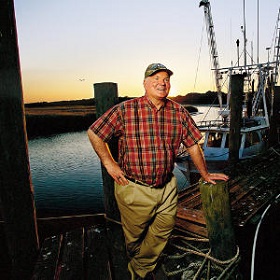
“But, as I watch this film, I often think that the boy did not know what he was really running toward, that it was not the end zone which awaited him. Somewhere in that ten second dash the running boy turned to metaphor and the older man could see it where the boy couldn not. He would be good at running, always good at it, and he would always run away from the things that hurt him, from the people who loved him, and from the friends empowered to save him. But where do we run when there are no crowds, no lights, no end zones? Where does a man run? the coach said, studying the films of himself as a boy. Where can a man run when he has lost the excuse of games? Where can a man run or where can he hide when he looks behind him and sees that he is only pursued by himself?”

(…)


“It was growing dark on this long southern evening, and suddenly, at the exact point her finger had indicated, the moon lifted a forehead of stunning gold above the horizon, lifted straight out of filigreed, light-intoxicated clouds that lay on the skyline in attendant veils.
Behind us, the sun was setting in a simultaneous congruent withdrawal and the river turned to flame in a quiet duel of gold....The new gold of moon astonishing and ascendant, he depleted gold of sunset extinguishing itself in the long westward slide, it was the old dance of days in the Carolina marshes, the breathtaking death of days before the eyes of children, until the sun vanished, its final signature a ribbon of bullion strung across the tops of water oaks.”


1483147-9d3ddef3f925f206d2bb7b605937ba76.jpg
Pat Conroy (Atlanta, 26 oktober 1945)


De Duitse schrijver Ulrich Plenzdorf werd geboren op 26 oktober 1934 in Berlijn. Zie ook alle tags voor Ulrich Plenzdorf op dit blog en ook mijn blog van 26 oktober 2010


Uit: Die neuen Leiden des jungen W.


„Wenn Sie mich fragen - Ed ging weg, weil er Maler werden wollte. Das war der Grund. Mist war bloß, daß sie ihn an der Kunsthochschule ablehnten in Berlin.«

»Warum?«

»Ed sagte: Unbegabt. Phantasielos. Er war ziemlich sauer.«

War ich! Aber Fakt war, daß meine gesammelten Werke nicht die Bohne was taugten.

Weshalb malten wir denn die ganze Zeit abstrakt? - Weil ich Idiot nie im Leben was

Echtes malen konnte, daß man es wiedererkannt hätte, einen ollen Hund oder was. Ich

glaube, das mit der ganzen Malerei war eine echte Idiotie von mir. Trotzdem war die

Szene an sich nicht schlecht, wie ich da in diese Hochschule klotzte und gleich rein in das Zimmer von diesem Professor und wie ich ihm meine gesammelten Werke knallhart auf den Tisch blätterte.

Er fragte erst mal: Wie lange machen Sie das schon?

Ich: Weiß nicht! Schon lange. Ich sah ihn nicht mal an dabei. Er: Haben Sie einen Beruf? Ich: Nicht daß ich wüßte. Wozu auch? Mindestens da hätte er mich rausschmeißen müssen! Aber der Mann war hart. Er blieb bei der Stange!

Er: Hat das irgendeine Ordnung? Was ist das letzte, was das erste?

Er meinte meine Ausstellung auf seinem Tisch. Ich: Die frühen Sachen liegen links.

Die frühen Sachen! Leute! Das hatte ich gut drauf. Das war ein Tiefschlag. Er: Wie alt sind Sie? Der Kerl war wirklich hart! Ich nuschelte: Neunzehn! Ich weiß nicht, ob er mir das glaubte. Er: Phantasie haben Sie. Das ist keine Frage, überhaupt keine, und zeichnen können Sie auch.

Wenn Sie einen Beruf hätten, würde ich sagen: technischer Zeichner.

Ich fing an, meine Blätter einzupacken.


 1483147-66950ede0cdacd7bf0f831cb3c45eab7.jpg

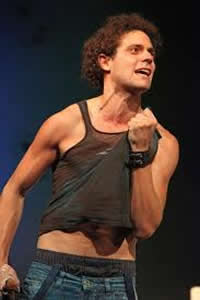
Ulrich Plenzdorf (26 oktober 1934 – 9 augustus 2007)

Scene uit een opvoering in Aschaffenburg, 2011


De Schotse dichter Sorley MacLean (Schots Gaelic: Somhairle MacGill-Eain) werd geboren op 26 oktober 1911 Osgaig op het eiland Raasay. Zie ook alle tags voor Sorley MacLean op dit blog en ook mijn blog van 26 oktober 2010


Hallaig


Time, the deer, is in Hallaig Wood


There's a board nailed across the window
I looked through to see the west
And my love is a birch forever
By Hallaig Stream, at her tryst


Between Inver and Milk Hollow,
somewhere around Baile-chuirn,
A flickering birch, a hazel,
A trim, straight sapling rowan.


In Screapadal, where my people
Hail from, the seed and breed
Of Hector Mor and Norman
By the banks of the stream are a wood.


To-night the pine-cocks crowing
On Cnoc an Ra, there above,
And the trees standing tall in moonlight -
They are not the wood I love.


I will wait for the birches to move,
The wood to come up past the cairn
Until it has veiled the mountain
Down from Beinn na Lice in shade.


If it doesn't, I'll go to Hallaig,
To the sabbath of the dead,
Down to where each departed
Generation has gathered.


Hallaig is where they survive,
All the MacLeans and MacLeads
Who were there in the time of Mac Gille Chaluim:
The dead have been seen alive,


The men at their length on the grass
At the gable of every house,
The girls a wood of birch trees
Standing tall, with their heads bowed.


Between The Leac and Fearns
The road is plush with moss
And the girls in a noiseless procession
Going to Clachan as always


And coming boack from Clachan
And Suisnish, their land of the living,
Still lightsome and unheartbroken,
Their stories only beginning.


From Fearns Burn to the raised beach
Showing clear in the shrouded hills
There are only girls congregating,
Endlessly walking along


Back through the gloaming to Hallaig
Through the vivid speechless air,
Pouring down the steep slopes,
Their laughter misting my ear


And their beauty a glaze on my heart.
Then as the kyles go dim
And the sun sets behind Dun Cana
Love's loaded gun will take aim.


It will bring down the lightheaded deer
As he sniffs the grass round the wallsteads
And his eye will freeze: while I live,
His blood won't be traced in the woods.


Vertaald door Seamus Heaney


 1483147-9dd011df095bcc2bcc176a15a3a3a392.jpg

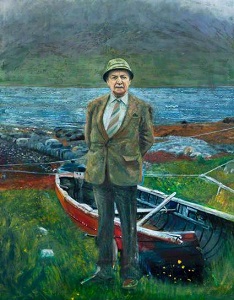
Sorley MacLean (26 october 1911 - 24 november 1996)

Portret door Peter Douglas Edwards, 1990


De Russische schrijver en theoreticus van het symbolisme Andrej Bely werd geboren op 26 oktober 1880 in Moskou. Zie ook alle tags voor Andrej Bely op dit blog en ook mijn blog van 26 oktober 2010


Uit: Petersburg (Vertaald door Robert A. Maguire en John E. Malmstad)


“Why has Petersburg not been given the attention and respect it deserves in the English speaking literary world? A large part of the reason is surely historical. Petersburg was one of the victims of the Soviet devastation of Russian culture; in the land of Leningrad, Bely’s words died: “there is no Petersburg. It only appears to exist.” But neither did Bely’s book benefit from the aura of dissidence that made Solzenitsyn or Pasternak such celebrities. As Maguire and Malmstad say: “Those writers of real talent whom the Soviets have simply neglected tend to suffer the same fate here.”

But this isn’t the whole story. I’m pretty sure that at least part of the reason for Petersburg’s comparative neglect is more literary: Petersburg is not easily assimilable to the ‘great tradition’ of English literature. Bely’s book does different things, in different ways, from the novels we are used to reading and studying. In some ways, perhaps, Petersburg is just too strange for the Anglo-Saxon literary imagination to get much of a bearing on it.

The comparison may be invidious, but I’m going to run with it anyway. Compare Petersburg and Ulysses. The comparison is often made. Both novels give a starring role to their cities – which serve as prisms through which to view the spirit of a nation; both follow the peregrinations of two men – older and younger, practical and intellectual. Though Petersburg doesn’t have Ulysses’ restricted time-scale, it very nearly does: once the assassins’ bomb starts ticking, we know that the story will reach its climax within twenty four hours. (Has anyone thought of pitching Ulysses to the makers of 24?). Both books are packed with the minutiae of everyday life; both use old newspapers to provide the detail of their characters’ habitats; and both are, of course, extraordinary masterpieces.”


 1483147-8ea925a94dcaee8b05ec411ea517d445.jpg

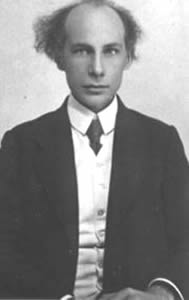
Andrej Bely (26 oktober 1880 – 8 januari 1934)

Geschreven door Romenu om 14:43 Reageer op dit bericht

Willem Wilmink, Anne Tyler, Daniel Mark Epstein, Peter Rühmkorf, Jakob Hein

De Nederlandse dichter, schrijver en zanger Willem Andries Wilmink werd geboren in Enschede op 25 oktober 1936. Zie ook mijn blog van 25 oktober 2010 en eveneens alle tags voor Willem Wilmink op dit blog.


Huilen is gezond


Leg nu die krant maar even neer,
echt lezen doe je toch niet meer,
huil nou maar even.
Ja, tegen iemands lichaam aan
zou dat natuurlijk beter gaan,
maar huil nou even.

Dat jij de enige niet bent,
dat is een troost die je al kent,
dus huil maar even.
Een ander troosten voor verdriet
dat kan ook niet, dat kan ook niet,
maar huil toch even.

Altijd maar flink zijn is niet goed:
als je niet weet hoe 't verder moet,
huil dan toch even.
Straks, met nog tranen langs je kin
denk je ineens: ik heb weer zin,
om door te leven.


Huizen in de binnenstad


Die huizen in de binnenstad,
waarvan je eens de sleutel had.

Elk wonen voel je als voorgoed,
totdat je toch verhuizen moet.

Je naambord bij een andere bel
en na wat weken went het wel.

Je treft je oude huizen aan
en kunt er niet naar binnen gaan.

Ze staan er nog precies als toen
hun huiselijke plicht te doen.

Ondanks de reuma in hun hout
worden ze heel erg langzaam oud

en halen 't jaar 3000 wel
als 't goed blijft gaan met Stadsherstel.

Die huizen in de binnenstad,
waarvan je eens een sleutel had,

waar nu een ander slaapt en eet,
die nog van geen verhuizen weet.


 1482630-9929d6a2c5ede701ccfb777c8c2eeaf8.jpg

Willem Wilmink (25 oktober 1936 – 2 augustus 2003)


De Amerikaanse schrijfster Anne Tyler werd geboren op 25 oktober 1941 in Minneapolis, Minnesota. Zie ook mijn blog van 25 oktober 2010 en eveneens alle tags voor Anne Tyler op dit blog.


Uit: The Beginner's Goodbye


“It was August. Early August of 2007, oppressively hot and muggy. I happened to have a cold. Summer is the very worst time for a cold, I always think. You can't just pile on the blankets and sweat it out the way you would in winter. You're already sweating, only not in any way that's beneficial.

I went in to work as usual, but the air conditioning made my teeth start chattering as soon as I got settled. I hunched over my desk shivering and shaking, sneezing and coughing and blowing my nose and heaping used tissues in my wastebasket, till Irene ordered me home. That was Irene for you. She claimed I was contaminating the office. The others—Nandina and the rest—had been urging me to leave for my own sake. "You look miserable, poor thing," our secretary said. But Irene took a more self-centered approach. "I refuse to sacrifice my health to your misguided work ethic," she told me.

So I said, "Fine. I'll go." Since she put it that way.

Nandina said, "Shall I drive you?" but I said, "I'm still able to function, thank you very much." Then I gathered my things and stalked out, mad at all of them and madder still at myself, for falling ill in the first place. I hate to look like an invalid.

Alone in the car, though, I allowed myself some moaning and groaning. I sneezed and gave a long drawn-out "Aaah," as if I were a good deal sicker than I was. I glanced in the rearview mirror and saw that my eyes were streaming with tears. My face was flushed and my hair had a damp and matted look.”


1482630-9152a47727164931aa35f1ea348a75d3.jpg
Anne Tyler (Minneapolis, 25 oktober 1941)


De Amerikaanse dichter, schrijver en biograaf Daniel Mark Epstein werd geboren op 25 October 1948 in Washington, D.C. Zie ook mijn blog van 25 oktober 2010 en eveneens alle tags voor Daniel Mark Epstein op dit blog.


Uit: Lincoln and Whitman


“Abraham Lincoln's law partner William "Billy" Herndon, thirty-nine, loved the birds and wildflowers of the prairie, pretty women, and corn liquor. He also had an immoderate passion for new books, and for the transcendental philosophizing of pastor Theodore Parker and poet Ralph Waldo Emerson. By his own accounting he had spent four thousand dollars on his collection of poetry, philosophy, and belles lettres-a fortune in those days, when a good wood-frame house in Springfield, Illinois, cost half as much. Journalist George Alfred Townsend called Herndon's library the finest in the West.
Herndon's narrow, earnest-looking face was fringed with whiskers in the Scots manner, and his eyes were close-set, intense. His favorite philosopher-poet was Emerson. Herndon so admired the Sage of Concord that he purchased Emerson's books by the carton and gave them away to friends and strangers with the zeal of an evangelist. A backwoods philosopher, Herndon even solicited Emerson's endorsement for his tract "Some Hints on the Mind," in which he claimed to have discovered the mind's fundamental principle, "if not its law."
So when Emerson espoused a new book of poetry, calling it "the most extraordinary piece of wit and wisdom that America has yet contributed," Herndon wasted no time in locating a copy, which could be found on the shelves of R. Blanchard's, Booksellers, in Chicago, where he frequently traveled on business.
Having held the olive-green book, its cover blind-stamped with leaves and berries; having regarded with a twinge of envy the salutation "I Greet You at the / Beginning of A / Great Career / R W Emerson," gold-stamped on the spine, the bibliophile-lawyer plunked down his golden dollar for the second edition of Whitman's Leaves of Grass.”


 1482630-f661394333a490a59ee1d08bbc442275.jpg

Daniel Mark Epstein (Washington, 25 oktober 1948)


De Duitse dichter en schrijver Peter Rühmkorf  werd geboren op 25 oktober 1929 in Dortmund. Zie ook mijn blog van 25 oktober 2010 en eveneens alle tags voor Peter Rühmkorf op dit blog.


Sybillinisch


Ab mit Bruch, sic transit gloria mundi:
Fortschritt wälzt sich nicht wie Lava fort;
atmet lautlos wie ein Pflanzendarm…
Weimar, sicher, war erlebnisarm;
aber nehmen wir Botswanaland, Burundi,
was ist dort?


Abends, wenn die Sternemänner starten,
und die Glotze sprüht von Himmelsgischt,
hebt sich deiner Augen Doppellauf −
Komm, klapp zu, steck auf!
Aus sehr winzigen verstreuten Eigenarten
ist ein Individuum gemischt.


Wer das mitkriegt, wie du übertourig
ewig haltlos durch die Räume gurkst,
sieht nur gerade die Gestalt zerfließen −−−
Richtig Stil braucht Zeit, sich zu entschließen:
r o t f i g u r i g  -  s c h w a r z f i g u r i g:
welche Ruh! und kaum ein Strich vermurkst.


Wer du wirklich bist, ist gar noch nicht entdeckt:
etwas zwischen Einzelstern und Rude,
bißchen Kunstgeschmack und bißchen Hundsgeruch;
nicht mal klassisch-klarer Widerspruch.
A b e r   m a n c h m a l
i n   d e s   R e g e n s   W a h r g e s p r u d e l
strafft sich – unnachahmlich – dein Subjekt.


1482630-4d1f5128f6a037b951776965a1ca209a.jpg 

Peter Rühmkorf (25 oktober 1929 – 8 juni 2008)


De Duitse schrijver en arts Jakob Hein werd geboren op 25 oktober 1971 in Leipzig. Zie ook alle tags voor Jakob Hein op dit blog en ook mijn blog van 25 oktober 2010


Uit: Mein erstes T-Shirt


"Es begann bei mir wie bei den meisten, es begann mit einer Gitarre. Christian aus meiner Klasse hatte im Keller eine E-Gitarre gefunden und mußte uns allen davon erzählen. Er war der Typ, der immer jedem etwas echt Wertvolles borgen oder etwas weniger Wertvolles schenken wollte. Seit dem Kindergarten hatte er nicht gelernt, daß man so keine Freunde gewinnen konnte.Jetzt glaubte er wieder einen Grund gefunden zu haben, uns in der Raucherecke zu belästigen. Eigentlich rauchte er auch und hatte immer Zigaretten dabei, aber ob man in der Raucherecke stehen durfte oder nicht, hatte ja nichts mit Rauchen zu tun. Sogar manche Mädchen durften dabeisein, wenn sie zum Beispiel schwarz gefärbte Haare hatten, total auf diesen ganzen Schönheitskult schissen und außerdem nicht gerade stockhäßlich waren. Jedenfalls kam Christian in die Raucherecke und tönte groß herum, er habe eine Stromgitarre von seinem Vater gefunden. Wir sagten, daß er sich verpissen so ll.Nach der Schule ging ich immer ein Stück gemeinsamen Weg mit ihm. Wenn niemand anders mit war, vor allem keins von den Mädchen, die sich total nicht für Jungs und den ganzen Scheiß interessierten, unterhielt ich mich dann auch mit Christian. Ich fragte ihn, was das mit der Gitarre heute denn eigentlich gesollt habe. Sofort fing er an, die Gitarre zu beschreiben und wie er die seinem "Alten" klauen könnte und daß er so was schon öfter gemacht hat usw. Er war wirklich nicht besonders cool. Dann sagte ich ein paar Sätze, die ganz klarmachten, daß ich mich total gut mit E-Gitarren auskannte. Ich flocht Worte wie "Stratocaster" und "Plektron" in meine Sätze und sagte zum Beispiel: "Hat das Gerät zwei oder drei Tonabnehmer?" "Du kennst dich ja gut mit den Dingern aus, fast so wie Florian", sagte Christian.“


 1482630-970f5d2fa3c8db8b69d2d824727dae3b.jpg

Jakob Hein (Leipzig, 25 oktober 1971)


Zie voor nog meer schrijvers van de 25e oktober ook mijn blog van 25 oktober 2011 deel 1 en eveneens deel 2.

Geschreven door Romenu om 19:10 Reageer op dit bericht

Elif Shafak

De Turkse schrijfster Elif Shafak (eigenlijk Elif Şafak) werd geboren in Straatsburg op 25 oktober 1971 en bleef na de scheiding van haar ouders bij haar moeder. Ze bracht haar tienerjaren door in Madrid en Amman (Jordanië), en keerde vervolgens terug naar Turkije. Ze studeerde Internationale Relaties aan de Technische Universiteit Midden-Oosten in Ankara. Ze heeft een diploma in Gender- en Vrouwenstudies en schreef een thesis getiteld The Deconstruction of Femininity Along the Cyclical Understanding of Heterodox Dervishes in Islam. Ze behaalde een doctoraat aan het departement Politieke Wetenschappen van dezelfde universiteit, met een thesis getiteld An Analysis of Turkish Modernity Through Discourses of Masculinities. Shafak werkte een jaar als onderzoeker aan Mount Holyoke Women's College in South Hadley, Massachusetts in de Verenigde Staten. Daar schreef ze haar eerste roman in het Engels. De Nederlandse vertaling van het boek, “De heilige van de beginnende waanzin” (The Saint of Incipient Insanities), werd uitgegeven door De Geus.
Şafak was gastprofessor aan de University of Michigan in Ann Arbor, Michigan en aan het Near Eastern Studies Department van de University of Arizona in Tucson, Arizona. Daarna keerde ze terug naar Istanbul, een stad die ze een bron van liefde en inspiratie noemt. Ze verdeelt haar tijd tussen de Verenigde Staten en Istanbul. Şafak maakte haar literair debuut met het verhaal Kem Gözlere Anadolu, gepubliceerd in 1994. Haar eerste roman, Pinhan ("De Soefi") kreeg de "Mevlana Prize" in 1998, die wordt toegekend aan het beste mystiek-literair werk in Turkije. Haar tweede roman, “Şehrin Aynaları” ("Spiegels van de stad"), verenigt joodse en islamitische mystiek tegen de achtergrond van de mediterrane 17de eeuw. Haar derde roman”Mahrem” ("De blik") leverde haar de "Union of Turkish Writers' Prize" op in 2000. “Bit Palas” (Het luizenpaleis) was een bestseller in Turkije. Shafak gebruikt de narratieve structuur van een verhaal van Duizend-en-één-nacht om een verhaal in het verhaal te vertellen. Op dit boek volgde “Med-Cezir”, een non-fictiewerk over gender, seksualiteit, mentale getto's en literatuur. Ze schreef het voorwoord van “Türkçe Sevmek”, de vertaling van de bloemlezing van emigrantenliteratuur “Tales from the Expat Harem: Foreign Women in Modern Turkey”, over vrouw-zijn, nationale identiteit en het gevoel nergens bij te horen.
Şafaks boek “De Bastaard van Istanbul” leidde tot haar vervolging in Turkije op grond van "belediging van de Turksheid" onder Artikel 31 van de Turkse Strafwet.De vervolging was het gevolg van een uitspraak van één van de personages, die de moorden op Armeniërs tijdens de Eerste Wereldoorlog als genocide bestempelde. Shafak werd vrijgesproken.

Uit: The Bastard of Istanbul

„Whatever falls from the sky above, thou shall not curse it. That includes the rain.
No matter what might pour down, no matter how heavy the cloudburst or how icy the sleet, you should never ever utter profanities against whatever the heavens might have in store for us. Everybody knows this. And that includes Zeliha.
Yet, there she was on this first Friday of July, walking on a sidewalk that flowed next to hopelessly clogged traffic; rushing to an appointment she was now late for, swearing like a trooper, hissing one profanity after another at the broken pavement stones, at her high heels, at the man stalking her, at each and every driver who honked frantically when it was an urban fact that clamor had no effect on unclogging traffic, at the whole Ottoman dynasty for once upon a time conquering the city of Constantinople, and then sticking by its mistake, and yes, at the rain . . . this damn summer rain.
Rain is an agony here. In other parts of the world, a downpour will in all likelihood come as a boon for nearly everyone and everything—good for the crops, good for the fauna and the flora, and with an extra splash of romanticism, good for lovers. Not so in Istanbul though. Rain, for us, isn’t necessarily about getting wet. It’s not about getting dirty even. If anything, it’s about getting angry. It’s mud and chaos and rage, as if we didn’t have enough of each already. And struggle. It’s always about struggle. Like kittens thrown into a bucketful of water, all ten million of us put up a futile fight against the drops. It can’t be said that we are completely alone in this scuffle, for the streets too are in on it, with their antediluvian names stenciled on tin placards, and the tombstones of so many saints scattered in all directions, the piles of garbage that wait on almost every corner, the hideously huge construction pits soon to be turned into glitzy, modern buildings, and the seagulls. . . . It angers us all when the sky opens and spits on our heads.
But then, as the final drops reach the ground and many more perch unsteadily on the now dustless leaves, at that unprotected moment, when you are not quite sure that it has finally ceased raining, and neither is the rain itself, in that very interstice, everything becomes serene. For one long minute, the sky seems to apologize for the mess she has left us in. And we, with driblets still in our hair, slush in our cuffs, and dreariness in our gaze, stare back at the sky, now a lighter shade of cerulean and clearer than ever. We look up and can’t help smiling back. We forgive her; we always do.”


 1638410-8d16f6de8b68b3de44640bf45fe4274d.jpg
Elif Shafak (Straatsburg, 25 oktober 1971)

Geschreven door Romenu om 00:00 Reageer op dit bericht

Meer van Romenu

↑ Terug naar de berichten