

Naar de inhoud

Romenu

Over literatuur, gedichten, kunst en cultuur
akke.beakke.be

Berichten van 25 november 2013 tot 26 november 2013

Eugène Ionesco, Marilynne Robinson, Luisa Valenzuela, Louis Verbeeck, William Cowper
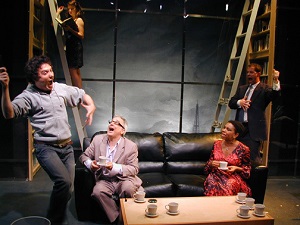
De Frans-Roemeense schrijver Eugène Ionesco werd geboren op 26 november 1912 in Slatina, Roemenië. Zie ook alle tags voor Eugène Ionesco op dit blog.

Uit: Victims of Duty

«A petit bourgeois interior. CHOUBERT is sitting inan armchair near the table reading a newspaper. MADELEINE, his wife, is sitting at the table darningsocks. Silence
MADELEINE: [ pausing in her work ] Any news in the paper?
CHOUBERT: Nothing ever happens. A few comets and a cosmicdisturbance somewhere in the universe. Nothing to speak of.The neighbors have been fined for letting their dogs make amess on the pavement...
MADELEINE: Serve them right. It’s horrible when you step onit.
CHOUBERT: And think of the people on the ground floor,opening their windows in the morning to see that ! Enough toput them in a bad mood for the rest of the day.
MADELEINE: They’re too sensitive.
CHOUBERT: It’s the times we live in; all nerves. Nowadaysmen have lost the peace of mind they had in the past. [Silence]Oh, and here’s an official announcement.
MADELEINE: What’s it say?
CHOUBERT: It’s quite interesting. The Government’s urging allthe citizens of the big towns to cultivate detachment.Accord-ing to this, it’s our last hope of finding an answer to theeco-nomic crisis, the confusion of the spirit and the problemsof existence.
MADELEINE: We’ve tried everything else, and it hasn’t doneany good, but I don’t suppose it’s anyone’s fault.
CHOUBERT: For the time being the Government’s merelyrecom-mending this ultimate solution in a friendly manner.They can’t fool us; we know how a recommendation has a wayof turning into an order.
MADELEINE: You’re always so anxious to generalize!
CHOUBERT: We know how suggestions suddenly come to look like rules, like strict laws.» 

 
1501913-1278c655fee1f362ed4309d2e8d383a4.jpg

Eugène Ionesco (26 november 1912 – 28 maart 1994)
Scene uit ‘Victims of Duty’, Cutting Ball Theater, San Francisco, 2008


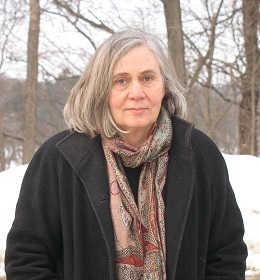
De Amerikaanse schrijfster Marilynne Robinson werd geboren in Sandpoint, Idaho op 26 november 1943. Zie ook alle tags voor Marilynne Robonson op dit blog.

Uit: Home

“And there was Ames, her father’s alter ego, in whom he had confided so long and so utterly that he was a second father to them all, not least in the fact of knowing more about them than was entirely consistent with their comfort. Sometimes they made their father promise not to tell anyone, by which he knew they meant Reverend Ames, since he was far too discreet to repeat any confidence, except in the confessional of Ames’s stark bachelor kitchen, where, they suspected, such considerations were forgotten. And what was their father not to tell? How they informed on Jack, telling him what Jack had said, what Jack had done or seemed inclined to do.
"I have to know," their father said. "For his sake." So they told on their poor scoundrel brother, who knew it, and was irritated and darkly amused, and who kept them informed or misinformed and inspired urgent suspicions among them which they felt they had to pass on, whatever their misgivings, to spare their father having to deal with the sheriff again. They were not the kind of children to carry tales. They observed a strict code against it among themselves, in fact, and they made an exception of Jack only because they were afraid to do otherwise. "Will they put him in jail?" they asked one another miserably when the mayor’s son found his hunting rifle in their barn. If they had only known, they could have returned it and spared their father surprise and humiliation. At least with a little warning he could have composed himself, persuaded himself to feel something less provocative than pure alarm.
But no, they did not put him in jail. Jack, standing beside his father, made yet another apology and agreed to sweep the steps of the city hall every morning for a week. And he did leave the house early every morning. Leaves and maple wings accumulated at city hall until the week was over and the mayor swept them up. No. His father would always intercede for him. The fact that his father was his father usually made intercession unnecessary. And that boy could apologize as fluently as any of the rest of the Boughtons could say the Apostles’ Creed.”.
 

 1501913-c382cc3a18fed348175133115f434624.jpg
Marilynne Robinson (Sandpoint, 26 november 1943)


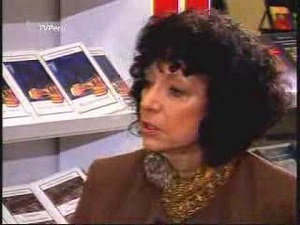
De Argentijnse schrijfster Luisa Valenzuela werd geboren op 26 november 1938 in Buenos Aires. Zie ook alle tags voor Luisa Valenzuela op dit blog.

Uit:The Censors (Vertaald door Frank Thomas Smith)

« It's true that on the third day a letter blew a fellow-worker's hand off and disfigured his face, but the bureau chief claimed it had been mere negligence on the victim's part and Juan and the other employees could continue working as before, although with much less assurance. At quitting time another fellow worker tried to organize a strike to demand more pay for hazardous work, but Juan didn't participate and after thinking it over a while he denounced him to the authorities in order to be promoted.
Once doesn't form a habit, Juan thought as he left the chief's office, and when they transferred him to Section J where they unfold the letters with infinite care to see if they contain poisonous powder, he felt that he had ascended a step and could therefore return to his healthy habit of not getting involved in external affairs.
From J, thanks to his merits, he rose rapidly until reaching E, where the work became more interesting, for there begins the reading and analysis of the letters. In that Section he could even cherish hopes of coming across his own missive written to Mariana which, judging by the time elapsed, should have reached this level after a very long procession through the other departments.»
 

 1501913-b69a6bb0986f914307b3c1c1bed3c336.jpg
Luisa Valenzuela (Buenos Aires, 26 november 1938)


De Vlaamse dichter en schrijver Louis Verbeeck werd geboren in Tessenderlo op 26 november 1932. Zie ook alle tags voor Louis Verbeeck op dit blog.


GRAFSCHRIFT VAN MIJN VOETEN

Wanneer ik dood en ver van hier
Zal liggen onder groene grassen
Zet dan geen bloemen op mijn zerk
Stouw geen fanfare naar de kerk
Maar zorg dan dat mijn schoenen passen.

Want ver zal ik nog moeten gaan
Om in het paradijs te mogen…
Lees dus geen rede op mijn graf
Al schrijft ge ze waarschijnlijk af,
Maar denk eens aan mijn eksterogen.


1501913-4f7fec706472bbe21e6086f8e1af0af5.JPG 
Louis Verbeeck (Tessenderlo, 26 november 1932)


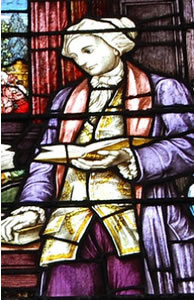
De Engelse dichter William Cowper werd geboren op 26 november 1731 in Berkhamstead, Herford. Zie ook alle tags voor William Cowper op dit blog.

Happy Solitude--Unhappy Men

My heart is easy, and my burden light;
I smile, though sad, when thou art in my sight:
The more my woes in secret I deplore,
I taste thy goodness, and I love thee more.
There, while a solemn stillness reigns around,
Faith, love, and hope within my soul abound;
And, while the world suppose me lost in care,
The joys of angels, unperceived, I share.
Thy creatures wrong thee, O thou sovereign good!
Thou art not loved, because not understood;
This grieves me most, that vain pursuits beguile
Ungrateful men, regardless of thy smile.
Frail beauty and false honour are adored;
While Thee they scorn, and trifle with thy Word;
Pass, unconcerned, a Saviour's sorrows by;
And hunt their ruin with a zeal to die.

1501913-80b089659ed94e6eed1983506e844301.jpg

William Cowper (26 november 1731 – 25 april 1800)
Dedail uit glas-in-loodraam, St. Nicholas' Church, Dereham


Zie voor nog meer schrijvers van de 26e november ook mijn blog van 26 november 2011.
Geschreven door Romenu om 18:12 1 reactie Reageer op dit bericht

Maarten ’t Hart, Connie Palmen, Alexis Wright, Arturo Pérez-Reverte, Ba Jin, Augusta de Wit

De Nederlandse schrijver Maarten 't Hart werd geboren op 25 november 1944 in Maassluis. Zie ook alle tags voor Maarten ’t Hart op dit blog.

Uit: De som van misverstanden: Theodor Fontane

“De meest bijzondere eigenschap van Fontane's romans is stellig dat zij van de hand zijn van een schrijver die de zestig al gepasseerd was. Weliswaar had Fontane, toen zijn eerste roman Vor dem Sturm in 1878 (Fontane was toen achtenvijftig jaar) uitkwam, al ruim tien jaar aan dit boek gewerkt en men zou dus kunnen zeggen dat Fontane al voor zijn vijftigste levensjaar als romanschrijver is begonnen. Maar Vor dem Sturm is niet karakteristiek voor Fontane; het heeft, afgezien van de laatste honderdvijftig bladzijden van de in totaal zevenhonderd bladzijden, niet die eigenaardige, jeugdige frisheid die zo kenmerkend is voor het latere werk, het is een te lange, saaie roman van een oud schrijver, een werk waarmee men een schrijversloopbaan afsluit, niet een debuut. Het lijkt het meest op Der Stechlin, Fontane's laatste werk. Hubert Ohl heeft aangetoond dat in beide romans een vergelijkbaar soort symboliek te vinden is en hij klopt die symboliek op tot iets heel bijzonders maar in feite zijn het twee niet geheel geslaagde pogingen om via een symbool de geschiedenis en het leven van een individu te vervlechten.
De echte Fontane is de Fontane van de in 1882 verschenen novellen L'Adultera en Schach von Wuthenow. Om het eigenaardige verschijnsel te verklaren van een schrijver die na zijn zestigste begint en op zijn vijfenzeventigste zijn meesterwerk schrijft hebben zowel Thomas Mann als Georg Lukács het woord ‘rijping’ gebruikt, Thomas Mann in de zin van persoonlijke rijping, Georg Lukács in de zin van maatschappelijke rijping. Mij kunnen deze twee varianten van de rijpingstheorie niet bekoren; als iemand met het schrijven van romans begint na zijn vijfendertigste zou men kunnen spreken van rijping, van een late bloei juist zoals men in de muziek in het geval van Bruckner van een late bloei spreekt. Maar als iemand begint na zijn zestigste moeten er andere oorzaken zijn. “

 1501297-382d6c2934301ddcc2da1a492d043768.jpg
Maarten ’t Hart (Maassluis, 25 november 1944)


De Nederlandse schrijfster Connie Palmen werd op 25 november 1955 geboren in Sint Odiliënberg. Zie ook alle tags voor Connie Palmen op dit blog.

Uit: De vriendschap

“Iedereen die voor abnormaal wil doorgaan en er hard aan werkt om excentriek en uitzonderlijk te zijn, heeft een grotere voorspelbaarheid dan wie normaal, gewoon, alledaags en onopvallend heet te zijn. Zodra bijzonderheid gewild is, is het meest bijzondere er vanaf. Echt uitzonderlijke mensen weten zelden van zichzelf dat ze uitzonderlijk zijn en als ze er door de jaren heen achter beginnen te komen dat iets hen van anderen onderscheidt, kost het ze meestal hun verdere leven om zich er bij neer te leggen.”
(…)

“Ik denk dat wij onszelf verminken, omdat we ons onbruikbaar willen maken voor een verlangen, voor een ideaal, voor een verhaal. We ontzeggen ons het recht, en ontnemen ons bij voorbaat de kans, op een beloofd geluk, waarvan wij denken dat het niet voor ons is weggelegd. Door ons ongeschikt te maken, helpen wij het lot een handje en nemen het zelf op ons. We maken ons liever eigenhandig onaantrekkelijk, dan dat we dat oordeel over onze aantrekkingskracht, waarde en betekenis aan anderen overlaten. We worden liever dik, dronken, ontrouw en ongelukkig, dan dat we het angstaanjagend grotere aanpakken, een ideaal waarmaken dat we koesteren en daarvoor erkenning zoeken bij anderen.”

 1501297-546154f7de472daa7b9ab92061826274.jpg
Connie Palmen (Sint Odiliënberg, 25 november 1955)


De Spaanse schrijver Arturo Pérez-Reverte werd geboren op 25 november 1951 in Cartagena. Zie ook alle tags voor Arturo Pérez-Reverte op dit blog.

Uit: The Club Dumas (Vertaald door Sonia Soto)

“My name is Boris Balkan and I once translated The Charterhouse of Parma. Apart from that, I've edited a few books on the nineteenth-century popular novel, my reviews and articles appear in supplements and journals throughout Europe, and I organize summer-school courses on contemporary writers. Nothing spectacular, I'm afraid. Particularly these days, when suicide disguises itself as homicide, novels are written by Roger Ackroyd's doctor, and far too many people insist on publishing two hundred pages on the fascinating emotions they experience when they look in the mirror.
But let's stick to the story.
I first met Lucas Corso when he came to see me; he was carrying "The Anjou Wine" under his arm. Corso was a mercenary of the book world, hunting down books for other people. That meant talking fast and getting his hands dirty. He needed good reflexes, patience, and a lot of luck-and a prodigious memory to recall the exact dusty corner of an old man's shop where a book now worth a fortune lay forgotten. His clientele was small and select: a couple of dozen book dealers in Milan, Paris, London, Barcelona, and Lausanne, the kind that sell through catalogues, make only safe investments, and never handle more than fifty or so titles at any one time. High-class dealers in early printed books, for whom thousands of dollars depend on whether something is parchment or vellum or three centimeters wider in the margin. Jackals on the scent of the Gutenberg Bible, antique-fair sharks, auction-room leeches, they would sell their grandmothers for a firstedition. But they receive their clients in rooms with leather sofas, views of the Duomo or Lake Constance, and they never get their hands-or their consciences-dirty. That's what men like Corso are for.
He took his canvas bag off his shoulder and put it on the floor by his scuffed oxfords. He stared at the framed portrait of Rafael Sabatini that stands on my desk next to the fountain pen I use for correcting articles and proofs.”

 1501297-7320fb0c866ef5c7fd774fe13c491256.jpg
Arturo Pérez-Reverte (Cartagena, 25 november 1951)


De Australische (Aboriginal) schrijfster Alexis Wright werd geboren op 25 November 1950 in de Gulf of Carpentaria. Zie ook alle tags voor Alexis Wright op dit blog.

Uit : Carpentaria

“Normal Phantom was an old tribal man, who lived all of his life in the dense Pricklebush scrub on the edge of town. He lived amidst thickets of closely growing slender plants with barely anything for leaves, which never gave an ant an inch of shelter under a thousand thorny branches. This foreign infestation on the edge of Desperance grew out of an era long before anyone in the Phantom family could remember. They had lived in a human dumping ground next to the town tip since the day Normal Phantom was born. All choked up, living piled up together in trash humpies made of tin, cloth, and plastic too, salvaged from the rubbish dump. The descendants of the pioneer families, who claimed ownership of the town, said the Aboriginal was really not part of the town at all. Sure, they worked the dunny cart in the old days, carted the rubbish, and swept the street. Furthermore, they said, the Aboriginal was dumped here by the pastoralists, because they refused to pay the blackfella equal wages, even when it came in. Right on the edge of somebody else's town, didn't they? Dumped the lot of them without any sign of lock, stock, or barrel.
No, the Pricklebush was from the time before the motor car, when goods and chattels came up by camel train until Abdul and Abdullah, the old Afghan brothers, disappeared along the track called the "lifeline," connecting north to south. After much time had passed the jokes came about Afghans being shifty dogs, dodgy dogs, murdering dogs, and unreliable. When the cupboards turned bare, the town talk finally turned to the realisation that very likely the camel men were never coming back -- then everyone in town assumed they had died.”

 1501297-806ef8a266b94bc99c30ec3f7dd9397e.jpg
Alexis Wright (Gulf of Carpentaria, 25 November 1950)


De Chinese schrijver Ba Jin werd op 25 november 1904 geboren in Chengdu. Zie ook alle tags voor Ba Jin op dit blog.

Uit: When the Snow Melted (Vertaald door Tang Sheng)

“Separation was of course one way to solve the problem. But things must be pretty serious if such a drastic solution was contemplated. I was worried. To tell the truth I would hate to see this young couple separate, though I didn't like to see them quarrel all the time either.
"Separate?" I knitted my brows and then smiled to ease the tension. "Come, don't get excited. Squabbles between husband and wife are really nothing unusual. If only both sides will compromise a little it's quite easy to settle them amicably. To my mind, you two ought to make an ideal couple." "I used to think so too," she said wistfully. Then she sighed softly and a slight pause ensued before she continued, "But it hasn't worked out that way. Just why, I don"t know. At any rate there is a barrier between us."
"Barrier? What barrier?" I asked, as if the idea were quite incongruous.
"I don't know either," she replied in despair. "It's something invisible and intangible, yet I feel it's there . . ." She stopped and bit her lips. A look of grief, seemingly faint but in fact profound, clouded her pretty girlish face. And there was anguish in the depth of her eyes. When I saw the expression in them my own heart sank.
"Zisheng, you must find a way out for me!" she begged. "I haven't the courage to go on living with him."
I found myself in a most awkward position. I sympathized with her and was eager to help her - but her husband, Bohe, was my friend. Besides, I could see no good reason why they should split up. I was not ingenious enough to suggest a solution.
"But tell me, do you still love him?" was all I could think of asking after some thought. I only hoped that they would be reconciled.
"Yes, I do," she answered positively after only a little pause. Her face glowed and I knew she was telling the truth. I was delighted, thinking that now the problem would not be difficult to solve.“

1501297-68025d53b322892ab4a8d453921354f1.jpg
Ba Jin (25 november 1904 – 17 oktober 2005)
Standbeeld in Shangaï.


De Nederlandse schrijfster Augusta de Wit werd geboren in Sibolga (Sumatra) op 25 november 1864. Zie ook alle tags voor Augusta de Wit op dit blog.

Uit:Orpheus in de dessa

 “De dag was gloeiend geweest; nu met zonsondergang begon het af te koelen.
Een nauw bemerkbare windtocht ging in donkerten en bleekheden door het geboomte en deed den daglang opgezamelden bloesemgeur uit neigende kelken uitvloeien op de lucht; gedragen daalden de doorschijnendwitte bloemblaadjes der njamploengs neder in het stof en het vaal-oranje geschroeide gras van den berm.
In de modderige rivier was het dessa-volk aan het baden: als pasgegoten brons glansden de bruine gestalten in den schuinschen rooden zonnegloed. Een naakte jongen, dien twee andere nazetten, kwam den weg afgerend en vloog met een sprong van de oeverhoogte af in het water, dat schitterend rond hem opspatte; een eind verder dook hij weer op en keek om, lachend, met oogen die tintelden onder het in het gezicht druipende haar. - Aan den kant stond een jonge vrouw, slank in haar rooden sarong, die, donker-gedrenkt, haar in waterige plooien van boezem tot knie omvloeide. Het hoofd een weinig neigend, hief zij beide armen op om haar zwarte haarwrong wat hooger te schikken. Haar schouders en haar gebogen nek glansden goudachtig boven het purperen gewaad.”

 1501297-7e1853467c6fb652131146ac10741f7d.jpg
Augusta de Wit (25 november 1864 - 9 februari 1939)
Standdbeeld van Orpheus naar de roman van Augusta de Wit in het Zuiderpark in Den Haag,
Gemaakt door de beeldhouwster Lidi van Mourik Broekman


Zie voor nog meer schrijvers van de 25e november ook mijn vorige blog van vandaag.

Geschreven door Romenu om 19:02 Reageer op dit bericht

In Memoriam Gerrit Krol


In Memoriam Gerrit Krol

De Nederlandse dichter en schrijver Gerrit Krol is zondag in zijn woonplaats Groningen op 79-jarige leeftijd overleden. Zie ook mijn blog van 1 augustus 2010 en eveneens alle tags voor Gerrit Krol op dit blog.


Uit het tekenboek van Rauh
 
Voorop de vleermuis die in vallende staat
het verstand doorsteekt met een speld
en de bedoelingen van ons hart
met een potlood uit elkaar legt.
Dan Jonas, die met schubjes op zijn rug
- etiketten waar hij is geweest -
zoekt langs het water naar een brug
die hem verbinden moet met Kanaän
dat hij niet mag betreden.
Er staat dat hij op het einde nog
in laatste tweespraak met het Kruis
zijn ziel beveelt in handen van de Geest -
het kruis dat diep beneden hem
rechtop gezet is in een kluitje klei,
het kruis, in dierbare verhoudingen
gesneden, maar in een kluit. Een traan
zakt van zijn oog af op het hout
als hij zijn offer brengt: een kleine bips en koud.
Hij schreit en houdt in vlinderslag
zich aan de takken vast.
 
Het blinde echtpaar waarvan de man
in het vuur zijn handen houdt
dat knettert en als radium straalt,
terwijl zijn vrouw een beeltenis,
een foto rondgeknipt als medaillon,
van liefde heeft in haar oog gespeld -
zij wachten zij aan zij,
totdat Hij, die ons allen bijhoudt,
naderkomt met geheven handen
en helpt ze pijnloos uit hun vel.
 
De dieren zoeken in volle draf het licht,
het schijnsel dat de mensen dragen:
er zit een oude man gehurkt
met op zijn hoofd een druppel vet
waarin een kaarsje is gezet.
Hij kijkt verbeten over 't veld
of het in deze omstandigheden geldt.
De hond schuift in het rond; de mug
die trillend heeft verdeeld de lucht
gaat onder, en nog kleinere dieren.
 
Nauwkeurig heb ik de plaat bekeken
waarop, volgens de tekst door anderen geschreven
en doorgestreept maar geschreven dus toch,
de monsters zich een einde bereiden,
zich in het leven snijden op de elleboog -
zo een die tussen de benen met een zaag omhoog
als brood zijn eigen zak te snijden staat.
 
Tevergeefs kruipt op de einder toe
een vrouw van wie de geitjes drinken.
Waarom, als haar die functie is gegeven,
waarom dan niet en wél het stukje deeg
dat eeuwen hangt reeds eeuwen
boven een bek die niet meer leeft?
 
En die grote troela dan
die, boeketten bloemen wringend,
denkt dat nu alles voorbij is?
 
De Christus hangt in donkere nacht
in stukken aan het kruis; zijn macht
is afgevallen als een kleed,
maar zolang Hij onder een theemuts
bijeenhoudt wat ons allen aangaat,
te Zijner tijd onthuld,
zolang zwemt er een vis
voor het wachthuis heen en weer.
 
Aan het einde van zijn leven,
innig vergroeid met boom en struik,
zo deelt de tekenaar ons mede,
heeft de oude man de kracht,
in afwachting van de dood,
nog een vogel op zijn hoofd te laten nestelen.
 
Zo ijlt dan door de ruimte een holle scherf
voort naar de snelheid van het licht,
het duizendjarig rijk der doden,
waar vrede is en dunne bomen
op een middag als het lente is,
het uur waarop bezoekers komen. 

 
 1500996-f3a6e44cd57a49ce5b34145e6459cc63.jpg
Gerrit Krol (1 augustus 1934 – 24 november 2013)

Geschreven door Romenu om 10:31 Reageer op dit bericht

Meer van Romenu

↑ Terug naar de berichten