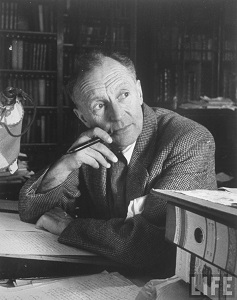
Tatamkhulu Afrika, Johann Nestroy, Gabriel Marcel, Friedrich Schlögl, Noam Chomsky, Willa Cather, Samuel Gottlieb Bürde
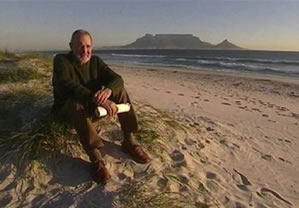
De Zuid-Afrikaanse dichter en schrijver Tatamkhulu Afrika werd geboren op 7 december 1920 in Egypte. Zie ook alle tags voor Tatamkhulu Afrika op dit blog.
Uit: Bitter Eden
“I touch the scar on my cheek and it flinches as though the long-dead tissue had a Lazarus-life of its own.
Uneasily, I stare at the two letters and accompanying neat package which are still where I put them earlier in the day. Within easy reach of my hand, they are a constant and unsettling focus for my mind and eye.
The single envelope in which the letters were posted is also still there. Airmail and drably English in its design, its difference from its local kin both fascinates and disturbs. I am not accustomed any more to receiving mail from abroad.
The one letter, typed under the logo of a firm of lawyers, is a covering letter which starts off by describing how they have only managed to trace me after much trouble and expense, which expense is to be defrayed by the ‘deceased’s estate’. Then comes the bald statement that it is he that has ‘passed on’ – how I hate that phrase! – after a long illness whose nature they do not disclose and that I have been named in his will as one of the heirs. My legacy, they add, is very small but will no doubt be of some significance to me and it is being forwarded under separate cover per registered mail.
The other letter is from him and I knew that straight away. After fifty years of silence, there was still no mistaking the rounded, bold and generously sprawling hand. Closer inspection betrayed the slight shakiness that is beginning to taint my own hand, and I noted this with an unwilling tenderness and a resurgence – as unwilling – of a love that time, it seems, has too lightly overlaid.
After reading the letters – but not yet opening the package – I had sat for a long time, staring out of the window and watching gulls and papers whirling up out of the southeaster-ridden street, but not knowing which were papers and which were gulls. Reaching for an expected pain, I had found only a numbness transcending pain and, later, Carina had come in and laid her hands on my shoulders and asked, her voice as pale and anxious as her hands, ‘Anything wrong?’
I do not mean to be disparaging when I refer to Carina in these terms. I am, after all, not much darker than her and although my hair is fair turned white and hers is white-blonde turned white, my body hair is as colourless and (as far as I am concerned) unflatteringly rare. I, too, can be nervy although not as pathologically so as Carina whose twitchiness sometimes reminds me of the dainty tremblings of a mouse – and that despite the fact that she moves her long, rather heavy bones in a manner that is unsettlingly male.”
Tatamkhulu Afrika (7 december 1920 – 23 december 2002)
De Oostenrijkse schrijver Johann Nepomuk Eduard Ambrosius Nestroy werd geboren in Wenen op 7 december 1801. Zie ook alle tags voor Johann Nestroy op dit blog.
Uit: Der Zerrissene
„Lips (tritt zur Mitte rechts während dem Ritornell des folgenden Liedes aus der Türe des Speisesalons auf)
(…)
Armut is ohne Zweifel das Schrecklichste. Mir dürft' einer zehn Millionen herlegen und sagen, ich soll arm sein dafür, ich nehmet s' nicht. Und was schaut anderseits beim Reichtum heraus? Auch wieder ein ödes, abgeschmacktes Leben. Langweile heißt die enorm horrible Göttin, die gerade die Reichen zu ihrem Priestertum verdammt, Palais heißt ihr Tempel, Salon ihr Opferaltar, das laute Gamezen und das unterdrückte Gähnen ganzer Gesellschaften ist der Choral und die stille Andacht, mit der man sie verehrt. – Wenn einem kleinen Buben nix fehlt und er is grantig, so gibt man ihm a paar Braker, und 's is gut. Vielleicht helfet das bei mir auch, aber bei einem Bub'n in meinem Alter müßten die Schläg' vom Schicksal ausgehn, und von da hab' ich nix zu riskier'n; meine Gelder liegen sicher, meine Häuser sind assekuriert, meine Realitäten sind nicht zum Stehlen – ich bin der einzige in meiner Familie, folglich kann mir kein teurer Angehöriger sterben, außer ich selber, und um mich werd' ich mir auch die Haar' nicht ausreißen, wenn ich einmal weg bin – für mich is also keine Hoffnung auf Aufrieglung, auf Impuls. – Jetzt hab' ich Tafel g'habt – wenn ich nur wüßt', wie ich bis zu der nächsten Tafel die Zeit verbring'! – Mit Liebesabenteuer? – Mit Spiel –? Das Spielen is nix für einen Reichen; wem 's Verlier'n nicht mehr weh tut, dem macht 's Gewinnen auch ka Freud'! – Abenteuer –? Da muß ich lachen! Für einen Reichen existieren keine Liebesabenteuer. Können wir wo einsteigen? Nein, sie machen uns so überall Tür und Tor auf! – Werden wir über a Stieg'n g'worfen? Nein, Stubenmädl und Bediente leuchten uns respektvoll hinab. Werden auf uns Sulteln gehetzt? Wird was hinabg'schütt't auf uns? Nein, Papa und Mama bitten uns, daß wir ihr Haus bald wieder beehren. – Und selbst die Eh'männer – sind auch meistens gute Leut'. Wie selten kommt eine Spanische-Rohr-Rache ins Spiel? Die korsische Blutrache liegt gar ganz in Talon. Wann hört man denn, daß ein Eh'mann einen Kugelstutzen nimmt und unsereinem nachschießt? Ja, anreden tun s' ein', daß man ihnen was vorschießt. (Deutet Geldgeben.) Das is die ganze Rache! Wo sollen da die Abenteuer herkommen? Man is und bleibt schon auf fade Alletagsgenüsse reduziert, die man mit Hilfe der Freundschaft hinunterwürgt. Das is noch das Schönste, über Mangel an Freunden darf sich der Reiche nicht beklagen. Freunde hab' ich und das, was für Freunde! Den warmen Anteil, den sie nehmen, wenn s' bei mir essen, das heiße Mitgefühl, wenn s' mit mir z'gleich einen Punschdusel kriegen, und die treue Anhänglichkeit! Ob einer zum Losbringen wär'! – Keine Möglichkeit! Ich bin wirklich ein beneidenswerter Kerl, nur schad', daß ich mich selber gar nicht beneid'! –„

Johann Nestroy (7 december 1801 - 25 mei 1862)
Helmuth Lohner als Herr von Lips, Salzburger Festspiele, 1984
De Franse filosoof en toneelauteur Gabriel Marcel werd geboren op 7 december 1889 in Parijs. Zie ook alle tags voor Gabriel Marcel op dit blog.
Uit:The mystery of being
« Contemplation is a mode of participation in which the oppositions before (in front of) me and within me, outside and inside, are transcended. This being so, recollection is implicit in participation.
Recollection (which is not a mode of abstracting one s self) is an act by means of which I over- pass (go beyond) these oppositions, and in which the " turning inward to myself " and " the stretching outward from myself" meet.
But recollection is not abstraction of one s self (from one s spatio- temporal situation); the conditions of recollection are the very conditions of the existence of the being whose circumstantial data cannot appear as contingent.
My situation, my life, are not indeed an ensemble of things existing in themselves, to which I am foreign or exterior, though neither can I merge into them and consider them as a fatality or a destiny. In this order the opposition of contingence and necessity must be over-passed (gone beyond), as is shown in the examples of encounter (which is not the objective intercrossing of casual series and which supposes inferiority ) and vocation (which is not a constraint but a call) ; the circumstantial data therefore only intervenes in connection with free activity called upon to recognize (know) itself in this free activity, that is to say, open, permeable (without being strictly speaking influencible), and for which the non-contingence of the empirical given is a call to creative development.”

Gabriel Marcel (7 december 1889 - 8 oktober 1973)
De Oostenrijkse schrijver en columnist Friedrich Kilian Schlögl werd geboren op 7 december 1821 in de Weense voorstad Laimgrube (nu Wenen). Zie ook alle tags voor Friedrich Schlögl op dit blog en ook mijn blog van 7 december 2010.
Uit: Wiener Blut (Ein paar alte Leute)
„Es war zu Ende der Neunziger Jahre. Ein junger Mediciner, der sich vorerst ein Weibchen nahm, ehe er Patienten hatte, war über diesen Einfall ganz außer sich und in dulci jubilo und lobte Gott den Herrn allstündlich ob des Glückes, das er gemacht. Sie hatten zwar nichts zu nagen und zu beißen, aber sie waren jung und liebten sich – und für das Andere werde schon der Himmel sorgen.
Und des Himmels Segen blieb auch nicht aus. Nach Jahresfrist gab's in dem Kämmerlein, welches das Pärchen in einer der südlichen Vorstädte Wiens bewohnte, plötzlich großes Geschrei. Ein Mägdlein lag an der Mutter Brust, und obwohl an Linnen und sonstigem Aufputz für das herzige Ding nicht allzuviel in Vorrath war, der glückliche Vater sprang dennoch deckenhoch und jubelte und bedeckte die selig lächelnde Mutter mit tausend heißen Küssen.
Nun kamen aber auch der Sorgen eine ernsthafte Zahl. Für Drei galt es zu schaffen und nebstbei gab's noch zu studiren: eine schwere Menge Bücher und Schriften lagen vor dem Lämpchen, das recht kümmerlich stuckerte und dem eifrigen Leser das Geschäft mühselig genug machte. Dann und wann entrang sich wohl ein leiser Seufzer der Brust des Vielgeplagten, aber ein Blick nach den beiden Schlummernden gab ihm neuen Muth und ließ ihn die Qual überdauern. Und endlich fanden sich sogar die ersten Patienten: Geld, wenn auch nur in kleinen Dosen, kam in's Haus, man konnte Holz kaufen und das Stübchen tagüber warm halten; ja ein paar glückliche Curen verschafften dem Namen des bisher Unbekannten in der ganzen Gasse einen Ruf – die Zukunft war geebnet ... Da starb ihm sein gutes Weibchen. –“

Friedrich Schlögl (7 december 1821 - 7 oktober 1892)
De Amerikaanse taalkundige, mediacriticus en anarchistisch denker Noam Chomsky werd geboren in Philadelphia op 7 december 1928. Zie ook alle tags voor Noam Chomsky op dit blog en ook mijn blog van 7 december 2010.
Uit: Chronicles of Dissent, 1992
“The only realistic political settlement, for the time being, in the past ten or twelve years, that would satisfy the right of self-determination for both national groups is a two-state settlement. Everybody knows what it would have to be: Israel within approximately the pre-June 1967 borders and a Palestinian state in the West Bank and the Gaza Strip, and a return of the Golan Heights to Syria, or maybe some other arrangement. This would be associated with maybe demilitarized zones and international guarantees of some sort or another, but that's the framework of a possible political settlement. As I say, I don't think it's the best one, but that's the realistic one, very realistic. It's supported by most of the world. It's supported by Europe, by the Soviet Union, has been for a long time, by almost all the non-aligned countries, it's supported by all the major Arab states and has been for a long time, supported by the mainstream of the PLO and, again, has been for a long time, it's supported even by the American population, by about two to one according to the polls. But there are also people who oppose it. It's opposed by the rejection front in the Arab world, the minority elements of the PLO, Libya, a few others, minority rejectionist elements, but crucially it's opposed by the leaders of the rejection front, namely the United States and Israel. The United States and Israel adamantly oppose it. The United States will not consider it. Both political groupings in Israel reject it totally. They reject any right of national self-determination for the indigenous popula- tion in the former Palestine. They can have Jordan if they want, or the former Syria, or something, but not the area that they now hold under military occupation. In fact they're explicit about it. There are carefully fostered illusions here that the Labor Party is interested in compromise over the issue. But if you look closely, there's no meaningful compromise.”

Noam Chomsky (Philadelphia, 7 december 1928)
De Amerikaanse schrijfster Willa Cather werd geboren op 7 december 1873 in de buurt van Winchester, Virginia. Zie ook alle tags voor Willa Cather op dit blog en ook mijn blog van 7 december 2010.
Uit: The Selected Letters of Willa Cather
“The greatest thing we saw from that mill tower was the coming of a storm. The moon did not show herself at all, there was a long black bank of clouds in the west, and the lightening kept playing along it as steady as the fire of a battery. The world seemed to get ready for a storm; the cattle all huddled together in one end of the corall, the corn leaves got restless and began to toss their long blades up as if to reach for rain. In a moment the big wind struck us, just such a wind as struck Roscoe and the girls out by the brick kiln, and we fifty feet up in the air on a four-foot platform! Roscoe howled, “Off with your skirts, Willie or we’ll never get down” you bet I peeled them off, all but a little light one. The descent was something awful, the tower shook and we shook, the wind hummed and sang and whirled all about us, if it had not been for Rosses grip on me I believe I should have fallen.”

Willa Cather (7 december 1873 – 24 april 1947)
Cover
De Duitse dichter Samuel Gottlieb Bürde werd geboren op 7 december 1753 in Breslau. Zie ook alle tags voor Samuel Gottlieb Bürde op dit blog en ook mijn blog van 7 december 2010.
Der Frühling ist erschienen
Der Frühling ist erschienen;
Der Winter dünkt uns nun ein Traum,
Nun liegt die Welt im Grünen
Und schneeweiß schimmert Heck und Baum.
Hört, wie so froh die Lerche ihr Lied erschallen läßt!
Die Schwalben und die Störche beziehn ihr altes Nest.
Mit fröhlicher Gebärde geht nun der Mensch und streut
Den Samen in die Erde, den er auf Wucher leiht.
Freut euch des Herrn, ihr Frommen,
Und heißt mit lautem Jubelruf
Das junge Jahr willkommen
Und preist ihn, der den Frühling schuf.
Seht, wie im Blumenkleide, die Wiese lieblich prangt!
Nur der fühlt wahre Freude, der Gott von Herzen dankt.
Auf, jeder pflüg und säe und singe froh dazu:
Ehr sei Gott in der Höhe, auf Erden Fried und Ruh!

Samuel Gottlieb Bürde (7 december 1753 - 28 april 1831)
Breslau, in kerstsfeer (Geen portret beschikbaar)