Naar de inhoud

Romenu

Over literatuur, gedichten, kunst en cultuur
akke.beakke.be

Berichten van 7 december 2013 tot 8 december 2013

Bij de tweede zondag van de Advent (Mariae Verkündigung, Rainer Maria Rilke)


Bij de tweede zondag van de Advent


 1509020-bbca0d618c226145d98e0025da42b05f.jpg
Adriaen van de Velde, De boodschap aan Maria, 1667


Mariae Verkündigung

Nicht dass ein Engel eintrat (das erkenn),
erschreckte sie. Sowenig andre, wenn
ein Sonnenstrahl oder der Mond bei Nacht
in ihrem Zimmer sich zu schaffen macht,
auffahren -, pflegte sie an der Gestalt,
in der ein Engel ging, sich zu entrüsten;
sie ahnte kaum, dass dieser Aufenthalt
mühsam für Engel ist. (O wenn wir wüssten,
wie rein sie war. Hat eine Hirschkuh nicht,
die, liegend, einmal sie im Wald eräugte,
sich so in sie versehn, dass sich in ihr,
ganz ohne Paarigen, das Einhorn zeugte,
das Tier aus Licht, das reine Tier -.)
Nicht, dass er eintrat, aber dass er dicht,
der Engel, eines Jünglings Angesicht
so zu ihr neigte; dass sein Blick und der,
mit dem sie aufsah, so zusammenschlugen
als wäre draußen plötzlich alles leer
und, was Millionen schauten, trieben, trugen,
hineingedrängt in sie: nur sie und er;
Schaun und Geschautes, Aug und Augenweide
sonst nirgends als an dieser Stelle -: sieh,
dieses erschreckt. Und sie erschraken beide.
Dann sang der Engel seine Melodie.


 1509020-30cd94a99c49352da672055eac66bfd5.jpg
Rainer Maria Rilke (4 december 1875 – 29 december 1926)
Praag in de Advent (Rilke werd geboren in Praag)


Zie voor de schrijvers van de 8e december ook mijn vorige twee blogs van vandaag.

Geschreven door Romenu om 13:40 Reageer op dit bericht

Louis de Bernières, Bill Bryson, Mary Gordon, Delmore Schwartz, Jim Morrison, James Thurber, Hervey Allen

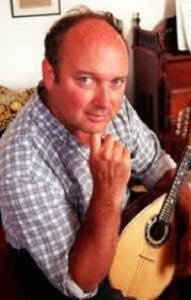
De Britse schrijver Louis de Bernières werd geboren in Londen op 8 december 1954. Zie ook alle tags voor Louis de Bernières op dit blog.

Uit: Corelli's Mandolin

'Only my finger,' replied Stamatis.
'And how long have you been deaf in this ear?'
'Since as long as I can remember.'
Dr Iannis found an absurd picture rising up before his imagination. It was Stamatis as a toddler, with the same gnarled face, the same stoop, the same overmeasure of aural hair, reaching up to the kitchen table and taking a dried pea from a wooden bowl. He stuck it into his mouth, found it too hard to bite, and crammed it into his ear. The doctor chuckled, 'You must have been a very annoying little boy.'
'He was a devil.'
'Be quiet, woman, you didn't even know me in those days.'
'I have your mother's word, God rest her soul,' replied the old woman, pursing her lips and folding her arms, 'and I have the word of your sisters.'
Dr Iannis considered the problem. It was undoubtedly an obdurate and recalcitrant pea, and it was too tightly packed to lever it out. 'Do you have a fishhook, about the right size for a mullet, with a long shank? And do you have a light hammer?'
The couple looked at each other with the single thought that their doctor must have lost his mind. 'What does this have to do with my earache?' asked Stamatis suspiciously.
'You have an exorbitant auditory impediment,' replied the doctor, ever conscious of the necessity for maintaining a certain iatric mystique, and fully aware that 'a pea in the ear' was unlikely to earn him any kudos. 'I can remove it with a fishhook and a small hammer; it's...”
 

 1509011-03901be348079e23aa3297f3a627279e.jpg
Louis de Bernières (Londen, 8 december 1954)


De Amerikaanse schrijfster Mary Catherine Gordon werd geboren op 8 december 1949 in Far Rockaway, New York. Zie ook alle tags voor Mary Gordon op dit blog.

Uit: Circling My Mother

“Am I purposely creating difficulties for myself, a situation of false conflict, so that I can be tested and emerge a hero? There is the chance that I will not be able to leave the dazzle of the first room, to resist the intoxication of these paintings, so absorbing, so saturating, so suggestive of a world of intense color, of prosperous involvement, of the flow of good life and good fortune. There's the chance that I will forget to call the therapist. I do not forget, but my experience of the first paintings is poisoned by the fear that I will.
My mother has no idea that her ninetieth birthday is coming up. She has no notion of the time of day, the day of the week, the season of the year, the year of the century. No notion of the approaching millennium. And no idea, any longer, who I am. Her forgetting of me happened just a few months ago, after I had been traveling for more than a month and hadn't been to see her. When I came back, she asked me if I was her niece. I said no, I was her daughter. "Does that mean I had you?" she asked. I said yes. "Where was I when I had you?" she asked me. I told her she was in a hospital in Far Rockaway, New York. "So much has happened to me in my life," she said. "You can't expect me to remember everything."
My mother has erased me from the book of the living. She is denying the significance of my birth. I do not take this personally. It is impossible for me to believe any longer that anything she says refers to me. As long as I remember this, I can still, sometimes, enjoy her company.
The day before I go to the Bonnard show, I visit my mother. It is not a good visit. It is one of her fearful days. I say I'll take her out to the roof garden for some air. She says, "But what if I fall off?" I bring her flowers, which I put in a vase near her bed. She says, "But what if they steal them or yell at me for having them?"


 1509011-f55ccf3cf467f39d965ac2db6e6bdb18.jpg
Mary Gordon (Far Rockaway, 8 december 1949)


De Amerikaanse schrijver Bill Bryson werd geboren in Des Moines (Iowa) op 8 december 1951. Zie ook alle tags voor Bill Bryson op dit blog.

Uit: African Diary

“I can't say it actively preyed on me that my impressions of Africa were based so heavily on a series of B-movies made in California more than half a century ago, but when a personable young man named Dan McLean from the London office of CARE International, the venerable and worthy charity, asked me if I would be willing to go to Kenya to visit some of their projects and write a few words on their behalf, it occurred to me that there were some gaps in my familiarity with the Dark Continent that I might usefully fill in. So I agreed.
Some weeks later, I was summoned to CARE's London offices for a meeting with Dan, his boss Will Day and a rugged and amiable fellow named Nick Southern, CARE's regional manager for Kenya, who happened to be in London at the time. We sat around a big table spread with maps of Kenya, while they outlined what they had in mind for me.
"Of course, you'll have to fly to the refugee camp at Dadaab," Will observed thoughtfully at one point. He glanced at me. "To avoid the bandits," he explained.
Dan and Nick nodded gravely.
"I beg your pardon?" I said, taking a sudden interest.
"It's bandit country all round there," Will said.
"Where?" I asked, peering at the map for the first time.
"Oh, just there," Will said, waving a hand vaguely across most of east Africa. "But you'll be fine in a plane."
"They only rarely shoot at planes," Nick explained.
This wasn't at all what I had had in mind, frankly. By way of homework, I had dutifully watched Out of Africa, from which I derived the impression that this trip would mostly take place on a verandah somewhere while turbaned servants brought me lots of coffee.”


 1509011-dd88b926312a4a1372a7c665f8c5792f.jpg
Bill Bryson (Des Moines, 8 december 1951)


De Amerikaanse dichter en schrijver Delmore Schwartz werd geboren op 8 december 1913 in New York. Zie ook alle tags voor Delmore Schwarz op dit blog.


Old man in the crystal morning after snow

Old man in the crystal morning after snow,
Your throat swathed in a muffler, your bent
Figure building the snow man which is meant
For the grandchild's target,
do you know
This fat cartoon, his eyes pocked in with coal
Nears you each time your breath smokes the air,
Lewdly grinning out of a private nightmare?
He is the white cold shadow of your soul.

You build his comic head, you place his comic hat;
Old age is not so serious, and I
By the window sad and watchful as a cat,
Build to this poem of old age and of snow,
And weep: you are my snow man and I know
I near you, you near him, all of us must die.


The Spring
(After Rilke)

Spring has returned! Everything has returned!
The earth, just like a schoolgirl, memorizes
Poems, so many poems. ... Look, she has learned
So many famous poems, she has earned so many prizes!

Teacher was strict. We delighted in the white
Of the old man's beard, bright like the snow's:
Now we may ask which names are wrong, or right
For "blue," for "apple," for "ripe." She knows, she knows!

Lucky earth, let out of school, now you must play
Hide-and-seek with all the children every day:
You must hide that we may seek you: we will!
We will!

The happiest child will hold you. She knows all the things
You taught her: the word for "hope," and for "believe,"
Are still upon her tongue. She sings and sings and sings.


 1509011-15cb02c78567ff0c82f85f99c1e4a5e9.jpg
Delmore Schwartz (8 december 1913 – 11 juli 1966)


De Amerikaanse zanger, dichter en tekstschrijver James Douglas (Jim) Morrison werd geboren in Melbourne (Florida) op 8 december 1943.Zie ook alle tags voor Jim Morrison op dit blog.


A man rakes leaves into
a heap in his yard, a pile,
& leans on his rake &
burns them utterly.
The fragrance fills the forest
children pause & heed the
smell, which will become
nostalgia in several years
 

                *

 
"Have you ever seen God?"
-a mandala. A symmetrical angel.
Felt? yes. Fucking. The Sun.
Heard? Music. Voices.
Touched? an animal. your hand.
Tasted? Rare meat, corn, water,
& wine.
 

                *

 
An angel runs
Thru the sudden light
Thru the room
A ghost precedes us
A shadow follows us
And each time we stop
We fall


 1509011-aa6e226d4a92877f46eaededacf39490.jpg
Jim Morrison (8 december 1943 – 3 juli 1971)


De Amerikaanse schrijver James Thurber werd geboren op 8 december 1894 in Columbus, Ohio. Zie ook alle tags voor James Thurber op dit blog.

Uit: My Life and Hard Times

“Old Aunt Clarissa Beall (who could whistle like a man, with two fingers in her mouth) suffered under the premonition that she was destined to die on South High Street, because she had been born on South High Street and married on South High Street. Then there was Aunt Sarah Shoaf, who never went to bed at night without the fear that a burglar was going to get in and blow chloroform under her door through a tube. To avert this calamity—for she was in greater dread of anesthetics than of losing her household goods—she always piled her money, silverware, and other valuables in a neat stack just outside her bedroom, with a note reading: "This is all I have. Please take it and do not use your chloroform, as this is all I have." Aunt Gracie Shoaf also had a burglar phobia, but she met it with more fortitude. She was confident that burglars had been getting into her house every night for forty years. The fact that she never missed anything was to her no proof to the contrary. She always claimed that she scared them off before they could take anything, by throwing shoes down the hallway. When she went to bed she piled, where she could get at them handily, all the shoes there were about her house. Five minutes after she had turned off the light, she would sit up in bed and say "Hark!" Her husband, who had learned to ignore the whole situation as long ago as 1903, would either be sound asleep or pretend to be sound asleep. In either case he would not respond to her tugging and pulling, so that presently she would arise, tiptoe to the door, open it slightly and heave a shoe down the hall in one direction and its mate down the hall in the other direction. Some nights she threw them all, some nights only a couple of pairs.”


 1509011-85ae5caf6c26f1c40f01d56af40b5b5f.jpeg
James Thurber (8 december 1894 – 2 november 1961)


De Amerikaanse dichter en schrijver William Hervey Allen werd geboren op 8 december 1889 in Pittsburgh. Zie ook alle tags voor Hervey Allen op dit blog.


Upstairs Downstairs

The judge, who lives impeccably upstairs
With dull decorum and its implication,
Has all his servants in to family prayers,
And edifies _his_ soul with exhortation.

Meanwhile his blacks live wastefully downstairs;
Not always chaste, they manage to exist
With less decorum than the judge upstairs,
And find withal a something that he missed.

This painful fact a Swede philosopher,
Who tarried for a fortnight in our city,
Remarked, one evening at the meal, before
We paralyzed him silent with our pity--

Saying the black man living with the white
Had given more than white men could requite.


Dead Men To a Metaphysician

If they were shadows walking to and fro
Upon a screen you call reality,
Then, when the light fails, where do shadows go?
This boy enigma rapes philosophy.
But if they really occupied three-square,
And now are only shadows on a screen,
How can the light still cast a shadow there
From shades of shadows that have never been?

Such questions are a mimic pantomime
Of ghosts to utter nothings in dream chairs,
Myopia squinting in a mist of time,
An eye that sees the eye with which it stares.
Your light too clearly shows the ancient stigma
Of questions solved by posing an enigma.


 1509011-4a857823ca578e350d8ec4e0845d2737.jpg
Hervey Allen (8 december 1889 – 28 december 1949)
Light Up Night in Pittsburgh

Zie voor nog meer schrijvers van de 8e december ook mijn vorige blog van vandaag.

Geschreven door Romenu om 13:32 Reageer op dit bericht

Georges Feydeau, Horatius, Carmen Martín Gaite, Nikos Gatsos, Jura Soyfer, Bjørnstjerne Bjørnson, Joel Chandler Harris

De Franse theaterauteur Georges Feydeau werd geboren op 8 december 1862 in Parijs. Zie ook alle tags voor George Feydeau op dit blog.

Uit: Par la fenêtre

“Scène II
Hector, Emma
Emma, très agitée. — Ah ça ! vous n’entendiez donc pas ?
Hector, gracieusement. — Parfaitement, madame, mais...
Emma, l’imitant. — Parfaitement, madame, mais... Imbécile, va !
Elle passe devant lui, va à la fenêtre et regarde à travers les carreaux.
Hector. — Hein ! (A part.) Eh bien, si c’est pour me dire des choses comme celles-là qu’elle vient me voir !
(Haut.) Pardon, madame, mais...
Emma, sans se déranger. — Allons, vite ! Votre maître !
Hector. — Mon maître ? c’est moi, madame.
Emma, de même, et haussant les épaules. — Comment c’est vous ! Ah ! ça, vous êtes fou !
Hector, ôtant son tablier et remettant sa redingote. — Non, madame, je suis avocat !
Emma, se retournant. — Avocat !
Hector. — Oui, madame.
Emma, descendant. — Comment, c’est vous qui...
Hector. — Oui madame.
Emma. — Oh ! Monsieur ! que d’excuses ! Et moi qui vous ai traité d’imbécile !
Hector, gracieusement. — Oh ! mon Dieu, quand on ne connaît pas les gens !
Emma. — Recevez toutes mes excuses !
Hector, saluant. — Oh ! madame !... tout à votre service. Mais pourrais-je savoir ce qui me vaut l’honneur ?
Emma. — Voilà, monsieur.
Elle ôte son chapeau et son manteau qu’elle pose sur une chaise, à gauche.
Hector, à part. — Hein !... Eh ! bien, elle s’installe ? Sapristi !... et moi qui n’ai pas déjeuné !
Emma, très agitée. — Monsieur !...”


 1508998-14511cb1e20b353bb8ff3abdf46c3827.jpg
Georges Feydeau (8 december 1862 - 5 juni 1921)
Portret door Carolus-Duran, z.j.


De Romeinse dichter en schrijver Quintus Horatius Flaccus werd geboren op 8 december 65 v. Chr. Zie ook alle tags voor Horatius op dit blog.


Oden III.30

Daar staat mijn monument en tart het duurzaam brons,
de koninklijke rust der hooge pyramiden,
veilig voor regenvlaag en bulderenden storm,
voor eindelooze reeks van snelgewiekte jaren.
Nu leeft iets van mij voort, dat nimmer sterven zal.
Het koele graf ten spijt zal jonge roem mij bloeien,
zoolang een bedevaart opgaat ten Capitool.

Daar, waar de Aufidus bruist langs de dorre velden,
waar Daunus koning was in overouden tijd,
daar, zal men zeggen, werd in needrigheid geboren,
wie, machtig opgegroeid, het Oud-Aeolisch lied
in Italiaansche taal het eerst heeft nagezongen.

Muze, aanvaard een trots, waarvoor geworsteld is,
en kroon uw trouwen knecht met onverwelkbren krans!

 
Vertaald door Dr. A. Rutgers van der Loeff


1508998-75c249575e546be2d153ca568fcc1a2e.jpg
Horatius (8 december 65 v. Chr. - 27 november 8 v. Chr.)
In het huis van Maecenas: v.l.n.r. Vergilius, Horatius, Varius en Maecenas
Geschilderd door Charles François Jalabert, ca. 1846


De Spaanse schrijfster, vertaalster en journaliste Carmen Martín Gaite werd geboren op 8 december 1925 in Salamanca. Zie ook alle tags voor Carmen Martín Gaite op dit blog.

Uit: Drôle de vie la vie (Vertaald doorClaude Bleton)

“Drôle de vie la vie. Être assis ici, à nous parler et nous écouter, enfiler les phrases les unes à la suite des autres sans regarder aucun livre, ne pas en souffrir, avaler une boisson qui sache emprunter le chemin voulu et bifurquer au bon moment, être nourris par l'air quand d'autres ne le sont plus, avoir envie d'une chose et de son contraire et permettre que cette envie détermine notre destin, cela fait beaucoup à la fois non ? C'est trop, et le plus drôle c'est que nous trouvions cela normal.

(…)

Parfois je pense, dis-je comme si je réfléchissais à haute voix, que l'ont ment parce que l'on est incapable de supplier les autres de vous accepter tel que vous êtes. Quand on refuse d'avouer le désarroi de sa vie, on se déguise en autre chose, on trouve le truc pour inventer et on passe à la chimère pure, on n'arrête pas de brinquebaler avec un masque sur le nez, en s'éloignant du chemin au bout duquel on aurait pu découvrir qui on est.”


 1508998-ad681f3bd22d6341f0c04502f3060019.jpg
Carmen Martín Gaite (8 december 1925 – 22 juli 2000)  


De Griekse dichter en schrijver Nikos Gatsos werd geboren op 8 december 1911 in Kato Asea in Arcadië. Zie ook alle tags voor Nikos Gatsos op dit blog.


Amorgos (Fragment)

With their country tangled up in their sails, and their oars hanging
              in the wind
The shipwrecked sailors slept like stunned dead beasts amid sheets
              of sponges
But the eyes of the seaweed are twisted towards the sea
Hoping the south wind will bring them back to life again
              with newly-dyed sails
For one lost elephant is always worth more than the trembling breasts
              of a girl
May the roofs of the deserted mountain chapels light up
              with desire for the evening star
May birds come in waves to the masts of the lemon trees
With a new way of walking, a steady white breathing
Only then shall come the small-winded bodies of swans
              who have been waiting immaculate, motionless and tender
Amid the steam-rollers of commerce and the cyclones of market-gardens
When the eyes of the women turned to coal and the hearts of the
              chestnut-sellers were broken
When the harvest was stopped and the hopes of crickets began.


Vertaald door Anita Sullivan


 1508998-a43f0908f87b5f5de8cdf3ef030079e5.jpg
Nikos Gatsos (8 december 1911 – 12 mei 1992) 


De Oostenrijkse schrijver Jura Soyfer werd op 8 december 1912 in Charkov, Oekraïne, geboren. Zie ook alle tags voor Jura Soyfer op dit blog.


Lied vom einfachen Menschen

Menschen sind wir einst vielleicht gewesen
Oder werden's eines Tages sein,
Wenn wir gründlich von all dem genesen.
Aber sind wir heute Menschen? Nein!
Wir sind der Name auf dem Reisepaß,
Wir sind das stumme Bild im Spiegelglas,
Wir sind das Echo eines Phrasenschwalls
Und Widerhall des toten Widerhalls.

Längst ist alle Menschlichkeit zertreten,
Wahren wir doch nicht den leeren Schein!
Wir, in unsern tief entmenschten Städten,
Sollen uns noch Menschen nennen? Nein!
Wir sind der Straßenstaub der großen Stadt,
Wir sind die Nummer im Katasterblatt,
Wir sind die Schlange vor dem Stempelamt
Und unsre eignen Schatten allesamt.

Soll der Mensch in uns sich einst befreien,
Gibt's dafür ein Mittel nur allein:
Stündlich fragen, ob wir Menschen seien?
Stündlich uns die Antwort geben: Nein!
Wir sind das schlecht entworfne Skizzenbild
Des Menschen, den es erst zu zeichnen gilt.
Ein armer Vorklang nur zum großen Lied.
Ihr nennt uns Menschen? Wartet noch damit!


 1508998-e4a5cce0ad7deb62622066541876c119.jpg
Jura Soyfer (8 december 1912 – 16 februari 1939) 


De Noorse dichter, schrijver, journalist en politicus Bjørnstjerne Bjørnson werd geboren op 8 december 1832 in Kvikne bij Tynset. Zie ook alle tags voor Bjørnstjerne Bjørnson op dit blog.


Alone And Repentant

A friend I possess, whose whispers just said,
"God's peace!" to my night-watching mind.
When daylight is gone and darkness brings dread,
He ever the way can find.

He utters no word to smite and to score;
He, too, has known sin and its grief.
He heals with his look the place that is sore,
And stays till I have relief.

He takes for his own the deed that is such
That sorrows of heart increase.
He cleanses the wound with so gentle a touch,
The pain must give way to peace.

He followed each hope the heights that would scale
Reproached not a hapless descent.
He stands here just now, so mild, but so pale; --
In time he shall know what it meant.


Choice

April for me I choose!
In it the old things tumble,
In it things new refresh us;
It makes a mighty rumble,-
But peace is not so precious
As that his will man shows.

April for me I choose,
Because it storms and scourges,
Because it smiles and blesses,
Because its power purges,
Because it strength possesses,-


 1508998-4df9a280342e81d9f79187778dbbd630.jpg
Bjørnstjerne Bjørnson (8 december 1832 – 26 april 1910)
In 1908 


De Amerikaanse schrijver Joel Chandler Harris werd geboren op 8 december 1848 in Eatonton, Georgia.Zie ook alle tags voor Joel Chandler Harris op dit blog.


When you've got a thing to say

“When you've got a thing to say,
Say it! Don't take half a day.
When your tale's got little in it
Crowd the whole thing in a minute!
Life is short--a fleeting vapor--
Don't you fill the whole blamed paper
With a tale which, at a pinch,
Could be cornered in an inch!
Boil her down until she simmers,
Polish her until she glimmers.”


Now on this bobbin I wind a hair

"'Now on this bobbin I wind a hair,
White, and silken, and long;
I wind it slow, I wind it fair,
Glossy, and white, and strong.

"'I wind it here in shade and sun,
For one, one, one are three--
Three and no more where the stag shall run,
Close by the chestnut-tree.

"'And one shall catch, and two shall hold,
And three shall clamp and kill;
Just say to your hand, Be steady and bold;
And say to your heart, I will.'


1508998-f82a83a872f8071d15e6cb68474caa69.jpg
Joel Chandler Harris (8 december 1848 – 3 juli 1908)

Geschreven door Romenu om 13:09 Reageer op dit bericht

Jamal Ouariachi

De Nederlandse schrijver Jamal Ouariachi werd geboren in Amsterdam op 8 december 1978. Ouariachi heeft een Nederlandse moeder en een Marokkaanse vader. Hij doorliep het Barlaeus Gymnasium, tot hij daar halverwege de vijfde klas van verwijderd werd. Tussen 2000 en 2008 studeerde hij psychologie aan de Universiteit van Amsterdam. Een tijd lang was hij werkzaam als (online) therapeut. Tegenwoordig is hij fulltime schrijver. In augustus 2010 debuteerde Ouariachi bij uitgeverij Querido met de roman “De vernietiging van Prosper Morèl”. Een verhaal van zijn hand, “Zopor”, verscheen in de bloemlezing “Agents-Provocateurs: 20 onder 35” (2011), een selectie van de origineelste jonge schrijvers van nu. Verder schreef hij verhalen, artikelen en polemieken voor onder meer nrc.next, HP/De Tijd, De Revisor en Knack.

Uit: De Vernietiging van Prosper Morèl

“Hooghartig rees het gebouw boven de oude stad uit, met een vanzelf- sprekendheid, alsof het daar altijd gestaan had, alsof niet eerst de stad, maar eerst het gebouw er was geweest.
‘Dames en heren,’ zei de gids in Nederlands gekleurd Engels, ‘soms groeit een bouwwerk uit tot het logo van de stad waar het zich bevindt. Ik noem een Eiffeltoren... een Brandenburger Tor... de Akropolis, het Kremlin... of voor de Amerikanen onder u: het Empire State Building, of het Capitool.’
Wij knikten, ja, die namen kenden we wel. Ons, fervente stedenreizigers, veelal gepensioneerd – ons hoefde je niets te vertellen, we waren mensen van de wereld, we hadden heel wat gezien.
‘Stuk voor stuk iconen,’ zei de gids. ‘Bouwwerken die méér zijn dan een cliché op een ansichtkaart. Ze zijn synoniem geworden aan hun thuishaven. Denk je aan het bouwwerk, dan denk je aan de stad, en omgekeerd.’
Wij kregen een ogenblik de tijd om dit filosofische inzicht te ver- werken. Achter ons op de kade raasde het verkeer voorbij, terwijl van voren een stevige wind ons in het gezicht blies.
‘But!’ ging hij verder, met een dreigende vinger in de lucht. ‘Hoe zit het met Amsterdam? Wat is dat ene unieke bouwwerk dat wij met Amsterdam vereenzelvigen?’ Zijn retorische blik ging als een zoeklicht de kring rond.
Een Amerikaanse dame van minstens tachtig waagde het om haar hand op te steken en te vragen: ‘Well, how about the canals?’
Ja, daar had ze een punt. Alle blikken richtten zich nu verwachtingsvol op de gids. Die plukte met een smalende glimlach aan zijn opzichtige, gele vlinderdasje en antwoordde kalmpjes: ‘Of course... de grachten zijn wereldberoemd... Wie kent ze niet? Maar wat zijn het?”


 1537555-28f38b87134488a010791ec15358d8fa.jpg
Jamal Ouariachi (Amsterdam, 8 december 1978)

Geschreven door Romenu om 00:00 Reageer op dit bericht

Tatamkhulu Afrika, Johann Nestroy, Gabriel Marcel, Friedrich Schlögl, Noam Chomsky, Willa Cather, Samuel Gottlieb Bürde

De Zuid-Afrikaanse dichter en schrijver Tatamkhulu Afrika werd geboren op 7 december 1920 in Egypte. Zie ook alle tags voor Tatamkhulu Afrika op dit blog.

Uit: Bitter Eden

“I touch the scar on my cheek and it flinches as though the long-dead tissue had a Lazarus-life of its own.
Uneasily, I stare at the two letters and accompanying neat package which are still where I put them earlier in the day. Within easy reach of my hand, they are a constant and unsettling focus for my mind and eye.
The single envelope in which the letters were posted is also still there. Airmail and drably English in its design, its difference from its local kin both fascinates and disturbs. I am not accustomed any more to receiving mail from abroad.
The one letter, typed under the logo of a firm of lawyers, is a covering letter which starts off by describing how they have only managed to trace me after much trouble and expense, which expense is to be defrayed by the ‘deceased’s estate’. Then comes the bald statement that it is he that has ‘passed on’ – how I hate that phrase! – after a long illness whose nature they do not disclose and that I have been named in his will as one of the heirs. My legacy, they add, is very small but will no doubt be of some significance to me and it is being forwarded under separate cover per registered mail.
The other letter is from him and I knew that straight away. After fifty years of silence, there was still no mistaking the rounded, bold and generously sprawling hand. Closer inspection betrayed the slight shakiness that is beginning to taint my own hand, and I noted this with an unwilling tenderness and a resurgence – as unwilling – of a love that time, it seems, has too lightly overlaid.
After reading the letters – but not yet opening the package – I had sat for a long time, staring out of the window and watching gulls and papers whirling up out of the southeaster-ridden street, but not knowing which were papers and which were gulls. Reaching for an expected pain, I had found only a numbness transcending pain and, later, Carina had come in and laid her hands on my shoulders and asked, her voice as pale and anxious as her hands, ‘Anything wrong?’
I do not mean to be disparaging when I refer to Carina in these terms. I am, after all, not much darker than her and although my hair is fair turned white and hers is white-blonde turned white, my body hair is as colourless and (as far as I am concerned) unflatteringly rare. I, too, can be nervy although not as pathologically so as Carina whose twitchiness sometimes reminds me of the dainty tremblings of a mouse – and that despite the fact that she moves her long, rather heavy bones in a manner that is unsettlingly male.”


 1508542-43c45be3b150132a30c00f7d78ffc0f3.jpg
Tatamkhulu Afrika (7 december 1920 – 23 december 2002)


De Oostenrijkse schrijver Johann Nepomuk Eduard Ambrosius Nestroy werd geboren in Wenen op 7 december 1801. Zie ook alle tags voor Johann Nestroy op dit blog.

Uit: Der Zerrissene

„Lips (tritt zur Mitte rechts während dem Ritornell des folgenden Liedes aus der Türe des Speisesalons auf)

(…)

Armut is ohne Zweifel das Schrecklichste. Mir dürft' einer zehn Millionen herlegen und sagen, ich soll arm sein dafür, ich nehmet s' nicht. Und was schaut anderseits beim Reichtum heraus? Auch wieder ein ödes, abgeschmacktes Leben. Langweile heißt die enorm horrible Göttin, die gerade die Reichen zu ihrem Priestertum verdammt, Palais heißt ihr Tempel, Salon ihr Opferaltar, das laute Gamezen und das unterdrückte Gähnen ganzer Gesellschaften ist der Choral und die stille Andacht, mit der man sie verehrt. – Wenn einem kleinen Buben nix fehlt und er is grantig, so gibt man ihm a paar Braker, und 's is gut. Vielleicht helfet das bei mir auch, aber bei einem Bub'n in meinem Alter müßten die Schläg' vom Schicksal ausgehn, und von da hab' ich nix zu riskier'n; meine Gelder liegen sicher, meine Häuser sind assekuriert, meine Realitäten sind nicht zum Stehlen – ich bin der einzige in meiner Familie, folglich kann mir kein teurer Angehöriger sterben, außer ich selber, und um mich werd' ich mir auch die Haar' nicht ausreißen, wenn ich einmal weg bin – für mich is also keine Hoffnung auf Aufrieglung, auf Impuls. – Jetzt hab' ich Tafel g'habt – wenn ich nur wüßt', wie ich bis zu der nächsten Tafel die Zeit verbring'! – Mit Liebesabenteuer? – Mit Spiel –? Das Spielen is nix für einen Reichen; wem 's Verlier'n nicht mehr weh tut, dem macht 's Gewinnen auch ka Freud'! – Abenteuer –? Da muß ich lachen! Für einen Reichen existieren keine Liebesabenteuer. Können wir wo einsteigen? Nein, sie machen uns so überall Tür und Tor auf! – Werden wir über a Stieg'n g'worfen? Nein, Stubenmädl und Bediente leuchten uns respektvoll hinab. Werden auf uns Sulteln gehetzt? Wird was hinabg'schütt't auf uns? Nein, Papa und Mama bitten uns, daß wir ihr Haus bald wieder beehren. – Und selbst die Eh'männer – sind auch meistens gute Leut'. Wie selten kommt eine Spanische-Rohr-Rache ins Spiel? Die korsische Blutrache liegt gar ganz in Talon. Wann hört man denn, daß ein Eh'mann einen Kugelstutzen nimmt und unsereinem nachschießt? Ja, anreden tun s' ein', daß man ihnen was vorschießt. (Deutet Geldgeben.) Das is die ganze Rache! Wo sollen da die Abenteuer herkommen? Man is und bleibt schon auf fade Alletagsgenüsse reduziert, die man mit Hilfe der Freundschaft hinunterwürgt. Das is noch das Schönste, über Mangel an Freunden darf sich der Reiche nicht beklagen. Freunde hab' ich und das, was für Freunde! Den warmen Anteil, den sie nehmen, wenn s' bei mir essen, das heiße Mitgefühl, wenn s' mit mir z'gleich einen Punschdusel kriegen, und die treue Anhänglichkeit! Ob einer zum Losbringen wär'! – Keine Möglichkeit! Ich bin wirklich ein beneidenswerter Kerl, nur schad', daß ich mich selber gar nicht beneid'! –„


 1508542-3ee48c0aa6ea21363a5cef0a183f6ebc.jpg
Johann Nestroy (7 december 1801 - 25 mei 1862)
Helmuth Lohner als Herr von Lips, Salzburger Festspiele, 1984


De Franse filosoof en toneelauteur Gabriel Marcel werd geboren op 7 december 1889 in Parijs. Zie ook alle tags voor Gabriel Marcel op dit blog.

Uit:The mystery of being

« Contemplation is a mode of participation in which the oppositions before (in front of) me and within me, outside and inside, are transcended. This being so, recollection is implicit in participation.
Recollection (which is not a mode of abstracting one s self) is an act by means of which I over- pass (go beyond) these oppositions, and in which the " turning inward to myself " and " the stretching outward from myself" meet.
But recollection is not abstraction of one s self (from one s spatio- temporal situation); the conditions of recollection are the very conditions of the existence of the being whose circumstantial data cannot appear as contingent.
My situation, my life, are not indeed an ensemble of things existing in themselves, to which I am foreign or exterior, though neither can I merge into them and consider them as a fatality or a destiny. In this order the opposition of contingence and necessity must be over-passed (gone beyond), as is shown in the examples of encounter (which is not the objective intercrossing of casual series and which supposes inferiority ) and vocation (which is not a constraint but a call) ; the circumstantial data therefore only intervenes in connection with free activity called upon to recognize (know) itself in this free activity, that is to say, open, permeable (without being strictly speaking influencible), and for which the non-contingence of the empirical given is a call to creative development.”


 1508542-2df984edd4cb51a4ca2a87670df1e1a3.jpg
Gabriel Marcel (7 december 1889 - 8 oktober 1973)


De Oostenrijkse schrijver en columnist Friedrich Kilian Schlögl werd geboren op 7 december 1821 in de Weense voorstad Laimgrube (nu Wenen). Zie ook alle tags voor Friedrich Schlögl op dit blog en ook mijn blog van 7 december 2010.

Uit: Wiener Blut (Ein paar alte Leute)

„Es war zu Ende der Neunziger Jahre. Ein junger Mediciner, der sich vorerst ein Weibchen nahm, ehe er Patienten hatte, war über diesen Einfall ganz außer sich und in dulci jubilo und lobte Gott den Herrn allstündlich ob des Glückes, das er gemacht. Sie hatten zwar nichts zu nagen und zu beißen, aber sie waren jung und liebten sich – und für das Andere werde schon der Himmel sorgen.
Und des Himmels Segen blieb auch nicht aus. Nach Jahresfrist gab's in dem Kämmerlein, welches das Pärchen in einer der südlichen Vorstädte Wiens bewohnte, plötzlich großes Geschrei. Ein Mägdlein lag an der Mutter Brust, und obwohl an Linnen und sonstigem Aufputz für das herzige Ding nicht allzuviel in Vorrath war, der glückliche Vater sprang dennoch deckenhoch und jubelte und bedeckte die selig lächelnde Mutter mit tausend heißen Küssen.
Nun kamen aber auch der Sorgen eine ernsthafte Zahl. Für Drei galt es zu schaffen und nebstbei gab's noch zu studiren: eine schwere Menge Bücher und Schriften lagen vor dem Lämpchen, das recht kümmerlich stuckerte und dem eifrigen Leser das Geschäft mühselig genug machte. Dann und wann entrang sich wohl ein leiser Seufzer der Brust des Vielgeplagten, aber ein Blick nach den beiden Schlummernden gab ihm neuen Muth und ließ ihn die Qual überdauern. Und endlich fanden sich sogar die ersten Patienten: Geld, wenn auch nur in kleinen Dosen, kam in's Haus, man konnte Holz kaufen und das Stübchen tagüber warm halten; ja ein paar glückliche Curen verschafften dem Namen des bisher Unbekannten in der ganzen Gasse einen Ruf – die Zukunft war geebnet ... Da starb ihm sein gutes Weibchen. –“


 1508544-3f4d3175fd5d204a300a4a92c14364d5.jpg
Friedrich Schlögl (7 december 1821 - 7 oktober 1892)


De Amerikaanse taalkundige, mediacriticus en anarchistisch denker Noam Chomsky werd geboren in Philadelphia op 7 december 1928. Zie ook alle tags voor Noam Chomsky op dit blog en ook mijn blog van 7 december 2010.

Uit: Chronicles of Dissent, 1992

“The only realistic political settlement, for the time being, in the past ten or twelve years, that would satisfy the right of self-determination for both national groups is a two-state settlement. Everybody knows what it would have to be: Israel within approximately the pre-June 1967 borders and a Palestinian state in the West Bank and the Gaza Strip, and a return of the Golan Heights to Syria, or maybe some other arrangement. This would be associated with maybe demilitarized zones and international guarantees of some sort or another, but that's the framework of a possible political settlement. As I say, I don't think it's the best one, but that's the realistic one, very realistic. It's supported by most of the world. It's supported by Europe, by the Soviet Union, has been for a long time, by almost all the non-aligned countries, it's supported by all the major Arab states and has been for a long time, supported by the mainstream of the PLO and, again, has been for a long time, it's supported even by the American population, by about two to one according to the polls. But there are also people who oppose it. It's opposed by the rejection front in the Arab world, the minority elements of the PLO, Libya, a few others, minority rejectionist elements, but crucially it's opposed by the leaders of the rejection front, namely the United States and Israel. The United States and Israel adamantly oppose it. The United States will not consider it. Both political groupings in Israel reject it totally. They reject any right of national self-determination for the indigenous popula- tion in the former Palestine. They can have Jordan if they want, or the former Syria, or something, but not the area that they now hold under military occupation. In fact they're explicit about it. There are carefully fostered illusions here that the Labor Party is interested in compromise over the issue. But if you look closely, there's no meaningful compromise.”


 1508542-6ee0f54239822dc92530369858e9c782.jpg
Noam Chomsky (Philadelphia, 7 december 1928)


De Amerikaanse schrijfster Willa Cather werd geboren op 7 december 1873 in de buurt van Winchester, Virginia. Zie ook alle tags voor Willa Cather op dit blog en ook mijn blog van 7 december 2010.

Uit: The Selected Letters of Willa Cather

“The greatest thing we saw from that mill tower was the coming of a storm. The moon did not show herself at all, there was a long black bank of clouds in the west, and the lightening kept playing along it as steady as the fire of a battery. The world seemed to get ready for a storm; the cattle all huddled together in one end of the corall, the corn leaves got restless and began to toss their long blades up as if to reach for rain. In a moment the big wind struck us, just such a wind as struck Roscoe and the girls out by the brick kiln, and we fifty feet up in the air on a four-foot platform! Roscoe howled, “Off with your skirts, Willie or we’ll never get down” you bet I peeled them off, all but a little light one. The descent was something awful, the tower shook and we shook, the wind hummed and sang and whirled all about us, if it had not been for Rosses grip on me I believe I should have fallen.”


 1508542-b736c8888392f3941f482dd54edf267a.jpg
Willa Cather (7 december 1873 – 24 april 1947)
Cover 


De Duitse dichter Samuel Gottlieb Bürde werd geboren op 7 december 1753 in Breslau. Zie ook alle tags voor Samuel Gottlieb Bürde op dit blog en ook mijn blog van 7 december 2010.


Der Frühling ist erschienen

Der Frühling ist erschienen;
Der Winter dünkt uns nun ein Traum,
Nun liegt die Welt im Grünen
Und schneeweiß schimmert Heck und Baum.
Hört, wie so froh die Lerche ihr Lied erschallen läßt!
Die Schwalben und die Störche beziehn ihr altes Nest.
Mit fröhlicher Gebärde geht nun der Mensch und streut
Den Samen in die Erde, den er auf Wucher leiht.

Freut euch des Herrn, ihr Frommen,
Und heißt mit lautem Jubelruf
Das junge Jahr willkommen
Und preist ihn, der den Frühling schuf.
Seht, wie im Blumenkleide, die Wiese lieblich prangt!
Nur der fühlt wahre Freude, der Gott von Herzen dankt.
Auf, jeder pflüg und säe und singe froh dazu:
Ehr sei Gott in der Höhe, auf Erden Fried und Ruh!


 1508542-b9367bdf2cccbf551a12b92940162763.jpg
Samuel Gottlieb Bürde (7 december 1753 - 28 april 1831)
Breslau, in kerstsfeer (Geen portret beschikbaar)

Geschreven door Romenu om 14:20 Reageer op dit bericht

Joyce Cary

De Brits - Ierse schrijver Arthur Joyce Lunel Cary werd geboren op 7 december 1888 in Derry, Ierland. Cary ging naar school in Clifton en bezocht het College in Oxford. Hij ging daarna naar de universiteit van Edinburgh om kunstgeschiedenis te studeren. Hij zette de studie gedurende drie jaar voort in Parijs, maar toen realiseerde hij zich dat hij niet meer zou worden dan een 3e rangs schilder. In 1912 , meldde hij zich voor de militaire dienst en hij was van 1913 tot 1920 als ambtenaar van de politieke dienst in Nigeria actief. Om gezondheidsredenen keerde hij in 1920 naar Engeland terug en werkte als freelance schrijver. Onder invloed van de tijd in Afrika schreef Cary verschillende romans over Afrika , zoals “Mister Johnson”, waarin hij de confrontatie van een enkele Afrikaan met de beschaafde samenleving beschrijft. In latere werken vormt de samenleving van Groot-Brittannië de achtergrond. In 1941 werd hij bekroond met de James Tait Black Memorial Prize voor “A House of Children”. Hij leed op het einde van zijn leven aan een motorische stoornis, zodat hij alleen kon schrijven met hulpmiddelen en uiteindelijk alleen kon dicteren. Zijn laatste roman “The Captive and the Free” (gepubliceerd in 1959 ) bleef onvoltooid. Cary was getrouwd en had vier zonen, waaronder de componist Tristram Cary.

Uit: The Horse's Mouth

“Nothing is a masterpiece - a real masterpiece - till it's about two hundred years old. A picture is like a tree or a church, you've got to let it grow into a masterpiece. Same with a poem or a new religion. They begin as a lot of funny words. Nobody knows whether they're all nonsense or a gift from heaven. And the only people who think anything of 'em are a lot of cranks or crackpots, or poor devils who don't know enough to know anything. Look at Christianity. Just a lot of floating seeds to start with, all sorts of seeds. It was a long time before one of them grew into a tree big enough to kill the rest and keep the rain off. And it's only when the tree has been cut into planks and built into a house and the house has got pretty old and about fifty generations of ordinary lumpheads who don't know a work of art from a public convenience, have been knocking nails in the kitchen beams to hang hams on, and screwing hooks in the walls for whips and guns and photographs and calendars and measuring the children on the window frames and chopping out a new cupboard under the stairs to keep the cheese and murdering their wives in the back room and burying them under the cellar flags, that it begins even to feel like a religion. And when the whole place is full of dry rot and ghosts and old bones and the shelves are breaking down with old wormy books that no one could read if they tried, and the attic floors are bulging through the servants' ceilings with old trunks and top-boots and gasoliers and dressmaker's dummies and ball frocks and dolls-houses and pony saddles and blunderbusses and parrot cages and uniforms and love letters and jugs without handles and bridal pots decorated with forget-me-nots and a piece out at the bottom, that it grows into a real old faith, a masterpiece which people can really get something out of, each for himself. And then, of course, everybody keeps on saying that it ought to be pulled down at once, because it's an insanitary nuisance.”


 1603613-ba6f4ccd75658d75bf05d19758ddac90.jpeg
Joyce Cary (7 december 1888 - 29 maart 1957)

Geschreven door Romenu om 00:00 Reageer op dit bericht

Meer van Romenu

↑ Terug naar de berichten