Naar de inhoud

Romenu

Over literatuur, gedichten, kunst en cultuur
akke.beakke.be

Berichten van 1 januari 2014 tot 2 januari 2014

Jimmy Santiago Baca, Christopher Durang, David Shapiro, André Aciman, Nyk de Vries, Hans Herbjørnsrud, Anton van Duinkerken
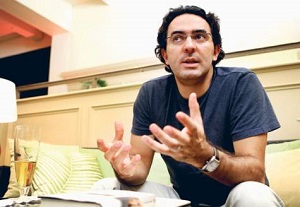
De Amerikaanse dichter en schrijver Jimmy Santiago Baca werd geboren in Santa Fe, New Mexico, op 2 januari 1952. Zie ook alle tags voor Jimmy Santiago Baca op dit blog.


Cloudy Day

It is windy today. A wall of wind crashes against,
windows clunk against, iron frames
as wind swings past broken glass
and seethes, like a frightened cat
in empty spaces of the cellblock.

In the exercise yard
we sat huddled in our prison jackets,
on our haunches against the fence,
and the wind carried our words
over the fences,
while the vigilant guard on the tower
held his cap at the sudden gust.

I could see the main tower from where I sat,
and the wind in my face
gave me the feeling I could grasp
the tower like a cornstalk,
and snap it from its roots of rock.

The wind plays it like a flute,
this hollow shoot of rock.
The brim girded with barbwire
with a guard sitting there also,
listening intently to the sounds
as clouds cover the sun.

I thought of the day I was coming to prison,
in the back seat of a police car,
hands and ankles chained, the policeman pointed,
“See that big water tank? The big
silver one out there, sticking up?
That’s the prison.”

And here I am, I cannot believe it.
Sometimes it is such a dream, a dream,
where I stand up in the face of the wind,
like now, it blows at my jacket,
and my eyelids flick a little bit,
while I stare disbelieving. . . .

The third day of spring,
and four years later, I can tell you,
how a man can endure, how a man
can become so cruel, how he can die
or become so cold. I can tell you this,
I have seen it every day, every day,
and still I am strong enough to love you,
love myself and feel good;
even as the earth shakes and trembles,
and I have not a thing to my name,
I feel as if I have everything, everything.


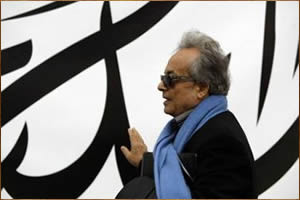
 1523871-57b28b181d6c6014b309c97647abc50f.jpg
Jimmy Santiago Baca (Santa Fe, 2 januari 1952)


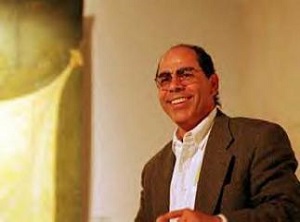
De Amerikaanse toneelschrijver Christopher Durang werd geboren op 2 januari 1949 in Montclair, New Jersey. Zie ook alle tags voor Christopher Durang op dit blog.

Uit: 'denity crisis

“When I was eight years old, someone brought me to this... theatre. Full of lots of other children. We were supposed to be watching a production of "Peter Pan." And I remember that something seemed terribly wrong with the whole production. Odd things kept happening. For instance, when the children would fly, the ropes they were on would just keep breaking ... and the actors would come thumping to the ground and they had to be carried off by stagehands. And there seemed to be an unlimited supply of understudies, to take their places, and then they'd just fall to the ground. And then the crocodile that chases Captain Hook, seemed to be a real crocodile, it wasn't an actor. And at one point it fell off the stage and crushed a couple of kids in the front row. And then some of the understudies came and took their places in the audience. And from scene to scene, Wendy just seemed to get fatter and fatter until finally by the end of act one she was completely immobile and they had to move her off stage with a cart.”


 1523871-ad933db2d776bf4a6c800aee1d29f036.jpg
Christopher Durang (Montclair, 2 januari 1949)


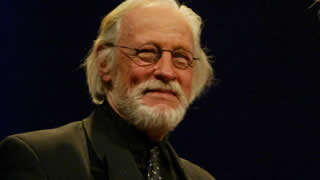
De Amerikaanse dichter, criticus en historicus David Shapiro werd geboren op 2 januari 1947 in Newark, New Jersey. Zie ook alle tags voor David Shapiro op dit blog.


A Poet Named Open
We make mistakes

For example, I’m reading
The NYC Poetry Calendar
for April on this
metropolitan spring afternoon

And I read that today Cookie Mueller
whom I slightly know from an
argument with another poet
and also a review she did of
my Melancholy show
and Bernadette and Phillip Good
plus Open will be reading
I don’t know Open
I think it’s not Oppen who’s dead
and unfairly objectified
I guess it’s a young graffiti
Poet, perhaps taking a single
name, in 19th Century excess
They’re reading at the Anarchist Cellar
It’s a perfect name for a young
perhaps slightly jejune ethical anarchist
Then I see on the 16th Open is reading
again, this time with my friend Joe
Ceravolo and my former student Joe
Lewis

Now I’m really intrigued
It seems like a blitz, an Open blitz
perhaps he’s publishing his first
fundamentally daring volume
I think of my translation of
Baudelaire’s Luxe, calme et volupté
Rich calm and open
Why haven’t I thought of a decent
nom de plume like Open
Why settle down with four David
Shapiros
another living just a few blocks away
another painting in a style not mine
Perhaps this Open is the new
Rimbaud and uses my poems for
toilet paper, or perhaps we could
be friends, friends with Open

Again he appears at the Manhattan Public
Library
this time in lower case letters
and than again at Maxwell’s for $3
But my brain adjusts itself to the light

It’s simply an open reading that’s implied
This poet does not exist, though he should
Open a young poet I should have invented
as when I thought all of conceptual art
would have been decent as one short story
by B

Oh, Open, you whom I would have read,
and you who would have read me!


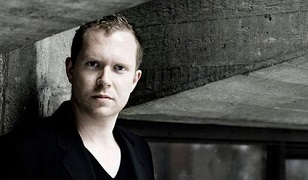
 1523871-73b145355a09d4a1164558775824e749.jpg
David Shapiro (Newark, 2 januari 1947)


De Amerikaanse schrijver, essayist en literatuurwetenschapper André Aciman werd geboren op 2 januari 1951 in Alexandrië in Egypte. Zie ook alle tags voor André Aciman op dit blog.

Uit: Alibis

„What was so threatening to a German, to an Austrian, to a Frenchman or an Englishman in this cigar posture was not just that Jews had made it into mainstream German, Austrian, French, or British society. What was really threatening about such Jews was that they were also the very first to have accessed pan-European culture. In fact, they didn’t just tap into such a culture; they built it.
They were enamored of cosmopolitan European civilization not only because, unlike national venues, it flung open far wider doors to them but also because, all the while not being properly speaking theirs, it was more theirs than any other nation’s. Their romance with the Christian or pagan culture was irresistible precisely because it allowed them to draw much closer than they had ever been to those cultures that only a few generations before had been barred to them. Moreover, it allowed them to realize that being Jewish did not mean they couldn’t get at the center of the Christian universe and understand it, perhaps, even better than did Christians. Benjamin’s unfinished doctoral dissertation was on the theater of the post-Reformation; he was one of the very few modern thinkers to appreciate the genius of Paolo Sarpi, the 16th- and 17th-century Venetian friar who remains today the most lucid historian of the Council of Trent.
Hannah Arendt wrote her dissertation on Saint Augustine under Karl Jaspers, the existential Christian philosopher. Freud, a font of encyclopedic knowledge, was fascinated by classical antiquity. And Ettore Schmitz, who changed his name to Italo Svevo to reflect both his Italian and Swabian roots, had intentionally or inadvertently forgotten to make up a third name to reflect his Jewish origins.”


 1523871-48702886abfbe598dd2033c6ba4f1b87.jpg
André Aciman (Alexandrië, 2 januari 1951)


De Nederlandse dichter Nyk de Vries werd geboren in Noordbergum op 2 januari 1971. Zie ook alle tags voor Nyk de Vries op dit blog.


Carnaval


Een donkere wagen kwam aangereden en een klein meisje stapte uit. Ze kreeg een tasje aangereikt en vrolijk verkleed als clowntje liep ze over het schoolplein. In de school bleek echter dat carnaval pas volgende week was. Het meisje was als enige geschminkt en de hele ochtend moest ze ontroostbaar huilen. Tegen drieën haalde haar moeder haar weer op. Die schrok hevig toen ze het verhaal hoorde en uitvoerig en met tranen in haar ogen vertelde ze wat er die ochtend allemaal mis was gegaan. Ze had misschien maar beter kunnen zwijgen. Dingen uitleggen, daar zijn we allemaal erg goed in.


Krullenbol


Er was een foto van mij in omloop. Maar ik was het niet. Steeds als ik met het beeld werd geconfronteerd, sloeg ik snel de pagina om, ongemakkelijk door die vreemde onbekende ogen. Jaren gingen voorbij. We oefenden zomers in de omgebouwde boerderij van Ursula. We speelden onder leiding van Jan Switters in het voormalig Oostblok. Ik sprak voor het laatst met mijn schoolvriendin tijdens het afscheidsconcert. Ruim een decennium later, in een klein café, niet ver van het pontje, bladerde ik door een stel oude knipsels en stuitte opnieuw op het portret. En pas daar zag ik het. Die jongen met die onbekende ogen. Die krullenbol. Ik was het wel.


 1523871-5502bd2fc681f638103043edf28390da.jpg
Nyk de Vries (Noordbergum, 2 januari 1971)


De Nederlandse dichter, tekstschrijver en uitgever Look J. Boden werd geboren in Vlaardingen op 2 januari 1974. Zie ook alle tags voor Look J. Boden op dit blog.


Onbeslist

Onhandig scheurt het zakje
dat zijn koffie doet verkleuren.
Een junkie kijkt aandachtig
of er handel in hem zit.

Hij zucht: op al-Jazeera
heeft het noodlot toegeslagen.
Farouk van bijna tachtig
zag in jaren niet zo wit.

Hun zaterdag gaat op
aan het bespreken van de wereld:
Samira gaat studeren
en Naomi krijgt een kind.

Geen woord over de oorlog
die op grond van hun verleden
is gezaaid, maar niet zal oogsten
tot de rede zich hervindt.

In Trudy's warme lunchroom
zijn de buren goede vrienden,
waartussen onbeslist blijft
wie verliest of wie er wint.


1523884-99d01d75fa0cb2be2a04081302c88230.jpg
Look J. Boden (Vlaardingen, 2 januari 1974)


De Noorse schrijver Hans Herbjørnsrud werd geboren op 2 januari 1938 in Heddal, Telemark. Zie ook alle tags voor Hans Herbjørnsrud op dit blog.

Uit: Das Skelett und das Anatomiebuch (Vertaald door Ulrich Sonnenberg)

„Die Arbeit ging rasch von der Hand, da die Objekte mit Etiketten nummeriert und bezeichnet waren, wie man sie auch für Einmachgläser verwendet, und die Sammlung nach den einzelnen Fächern sortiert war: Physik, Chemie, Geographie, Biologie und Geologie. In einem Glasschrank fand sich eine in Spiritus eingelegte stockbesoffene Kreuzotter, eine ausgestopfte Riesenralle, ein ausgesprochen lebendig wirkendes Hermelin und einige andere präparierte Tiere und Vögel, an die ich mich nicht mehr erinnere. Aber ich entsinne mich, dass auf einem der Regale der Schädel eines Vielfraßes und das Skelett eines größeren Fisches lagen, dem man den vertrockneten Kopf offenbar wieder aufgesetzt hatte, damit sein glühender, quellender Blick wie aus gehämmertem Kupfer der Nachwelt erhalten blieb. Die nackte Gräte des Fisches verzweigte sich in haarfeine Knochen und glich einer Bonsaibirke, die man mit ihrem bleichrindigen Stamm und den ebenso weißen Zweigen gerade an einem Berghang gefällt hatte.
Ein Biber, der keinen Platz mehr in den Regalen gefunden hatte, saß auf dem Schrank und nagte an einem Espenzweig, unbeirrbar. Die Schnurrhaare des Hermelins zitterten hellwach, und ich hatte den Eindruck, dass seine Augen in kristalliner Furcht glasig schimmerten, wenn ich auf den nachgebenden Bodenbrettern auf und ab ging, die unter meinen Stiefeln mit einem warnenden Klatschen krachten, als würde der Biber auf dem Schrank mit dem Schwanz auf die Wasseroberfläche eines Gebirgsbaches einschlagen.“


 1523871-37431282ac9ff5e61089e1bb365da26b.jpg
Hans Herbjørnsrud (Heddal, 2 januari 1938)


De Nederlandse dichter, essayist, redenaar en literair-historicus Anton van Duinkerken werd op 2 januari 1903 geboren in Bergen op Zoom. Zie ook alle tags voor Anton van Duinkerken op dit blog.


Voorbijgang

Ruiter en paard zijn voorbij.
De hoefslag dreunt in mijn oor.
De hoefslag herinnert mij
Aan al wat ik was en verloor.

Nu welhaast onhoorbaar vergaat
In de stervende dag het geluid.
Wat is van mijn vroegere staat
Mijn eigen, mij blijvende buit?

Bestaat er alleen voor de geest
Een samenhang? Of is dit schijn?
Is iemand wel één uur geweest
Wat hij altijd had willen zijn?

Lucht, die verduistert tot nacht,
Een tikkende klok op de schouw:
Het gebeurde, vergeefs overdacht,
Verbittert, wat komt, met berouw.

Een hoefslag, een ijdel gerucht,
Is voorbij. En voorbij is het lied.
Het wezen der dingen is vlucht.
Het wezen der ziel is verdriet.


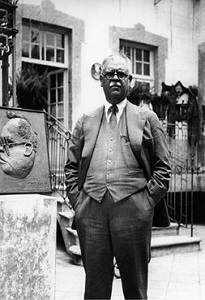
 1523871-743a71ca68a0a217649cb44706b931b6.JPG
Anton van Duinkerken (2 januari 1903 - 27 juli 1968)
Borstbeeld door Arthur Spronken in Hilvarenbeek 


Zie voor nog meer schrijvers van de 2e januari ook mijn blog van 2 januari 2012 deel 1 en eveneens deel2.
Geschreven door Romenu om 18:49 Reageer op dit bericht

In Memoriam Herman Pieter de Boer

In Memoriam Herman Pieter de Boer

De Nederlandse dichter, schrijver, liedjesschrijver en journalist Herman Pieter de Boer is gisteren kort na middernacht in Eindhoven overleden. Dat heeft zijn familie bekendgemaakt. Herman Pieter de Boer werd geboren op 9 februari 1928 in Rotterdam. Zie ook alle tags voor Herman Pieter de Boer op dit blog.


Thuis ben

Als ’s morgensvroeg d’r haar nog in een waaier ligt
Ze rekt zich uit, d’r huid is zacht en bezweet
Als ’s morgenvroeg haar dag begint, gordijnen dicht
De eerste uren nog niet aangekleed

Dan weet ik dat ik thuis ben
Dan weet ik dat ik thuis, thuis ben

Als ’s middags de wielen van mijn auto gonzen
En mijn zonnebril begint te gloeien
Als ’s middags mijn hoofd begint te bonzen
En ik d’r adem in mijn hals al haast kan voelen

Dan weet ik dat ik bijna thuis ben

Als ’s avonds de lichten dan langzaam aangaan
En de verliefden samen drinken uit één glas
Als ze tegen mij aanleunt, zacht, versleten jeans aan
Zij houdt van mij en ik hou haar vast

Dan weet ik dat ik thuis ben
Dan weet ik dat ik thuis, thuis ben

Ja, dan weet ik dat ik thuis ben
Dan weet ik dat ik thuis ben


De thuiskomst

Ik ben naar oost en west geweest,
zoveel gezien, zoveel genoten,
Ik vloog. Ik voer op witte boten.
Ik was te gast op ieders feest.

Ik ben naar noord en zuid gegaan,
zo mooi gegeten en gedronken,
terwijl muziek en stemmen klonken
bij teder schijnsel van de maan.

Nu sta ik voor mijn eigen huis,
de ogen peinzende geloken,
de sleutel in het slot gestoken.

Dit is mijn gang! Dit zijn mijn deuren!
Dit zijn die zo vertrouwde geuren…
Goddank, ik ben weer thuis.


 1523705-28251c92f0b696f3c64ffa392ca5c13c.jpg
Herman Pieter de Boer (9 februari 1928 – 1 januari 2014)

Geschreven door Romenu om 12:09 Reageer op dit bericht

The Garden Year (Sara Coleridge)


Aan alle bezoekers en mede-bloggers een gelukkig Nieuwjaar!


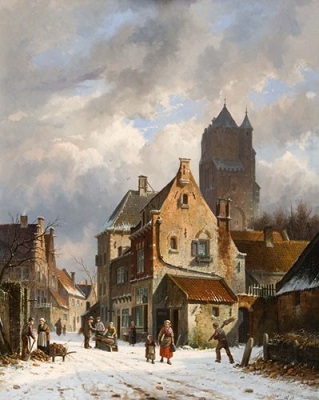
 1522703-5b7b86b2a2a573c71a6957c787b71e75.jpg
Stadsgezicht van Haarlem bij winter door Adrianus Eversen, 19e eeuw


The Garden Year

January brings the snow,
Makes our feet and fingers glow.

February brings the rain,
Thaws the frozen lake again.

March brings breezes, loud and shrill,
To stir the dancing daffodil.

April brings the primrose sweet,
Scatters daisies at our feet.

May brings flocks of pretty lambs
Skipping by their fleecy dams.

June brings tulips, lilies, roses,
Fills the children's hands with posies.

Hot July brings cooling showers,
Apricots, and gillyflowers.

August brings the sheaves of corn,
Then the harvest home is borne.

Warm September brings the fruit;
Sportsmen then begin to shoot.

Fresh October brings the pheasant;
Then to gather nuts is pleasant.

Dull November brings the blast;
Then the leaves are whirling fast.

Chill December brings the sleet,
Blazing fire, and Christmas treat.


 1522703-6d01223990e54cf98408ae885a93dbe2.jpg
Sara Coleridge (23 december 1802 - 3 mei 1852)
Greta Hall, waar Coleridge werd geboren.


Zie voor de schrijvers van de 1e januari ook mijn vorige drie blogs van vandaag.

Geschreven door Romenu om 16:47 Reageer op dit bericht

Jonas T. Bengtsson, Adonis, Chantal van Gastel

De Deense schrijver Jonas T. Bengtsson werd geboren op 1 januari 1976 in Kopenhagen. Zie ook alle tags voor Jonas T. Bengtsson op dit blog.

Uit: A Fairy Tale (Vertaald door Charlotte Barslund)

„The television shows images of a dark street, road signs, and snow. Stockholm. A sidewalk has been cordoned off with red-and-white plastic tape, people have gathered behind it. They, too, are standing very still. Some are clasping their mouths. The woman on the television speaks very slowly as if she has just woken up. She says that Olof Palme came out of a cinema not far from there. That he was with his wife, that they had been to see the film The Mozart Brothers and were on their way home.
On the gray sidewalk are dark stains that look like paint. The camera zooms in on them. “It’s blood,” my dad says, never once taking his eyes off the screen.
We’re back on the street. We walk quickly as if rushing away from the images on the television.
I think we’re heading home until we turn right by the closed-down butcher’s. Toward the harbor, down a narrow, cobbled street.
My dad sits down on an iron girder; I sit down beside him, as close to him as I can get. The water in front of us is black. A couple of fishing boats are sailing into the harbor; there’s a huge crane to our right, its hook hangs just above the surface of the water. The sky is gray.
My dad hides his face in his coat sleeve. I hear loud sobs through the thick fabric. He squeezes my hand so hard that it hurts.
“So they got him,” he says. “The bastards finally got him.”
I don’t remember ever seeing my dad cry. I ask him if Palme was someone he knew, but he makes no reply. He holds me tight. My feet are freezing in the rain boots.
“They got him,” he says again.
The wind whips the sea into foam.
“I think we’re going to have to move again.”


 1522699-ead03859b1d2247250ee3bc7b7b54f57.jpeg
Jonas T. Bengtsson (Kopenhagen, 1 januari 1976)


De Syrische schrijver Adonis (pseudoniem van Ali Ahmad Sa'id) werd geboren op 1 januari 1930 in Qassabin in het noorden van Syrië.


The Beginning of Speech

The child I was came to me
once,
a strange face
          He said nothing         We walked
each of us glancing at the other in silence, our steps
a strange river running in between
We were brought together by good manners
and these sheets now flying in the wind
then we split,
a forest written by earth
watered by the seasons’ change.
Child who once was, come forth—
What brings us together now,
and what do we have to say?


The Wound

1.
The leaves asleep under the wind
are the wounds’ ship,
and the ages collapsed on top of each other
are the wound’s glory,
and the trees rising out of our eyelashes
are the wound’s lake.
The wound is to be found on bridges
where the grave lengthens
and patience goes on to no end
between the shores of our love and death.
The wound is a sign,
and the wound is a crossing too.


Vertaald door Khaled Mattawa


 1522699-06235daefb38092ac45c448fcd0f3833.jpg
Adonis (Qassabin, 1 januari 1930)


De Nederlandse schrijfster Chantal van Gastel werd geboren op 1 januari 1980 in Breda. Zie ook alle tags voor Chantal van Gastel op dit blog.

Uit: Zwaar verguld!

“Hij past precies,’ fluister ik tegen mezelf. Ik sta achter de gesloten deur van het toilethokje in skai Lite waar mijn beste vriendin Floor haar bruiloft viert. Ik staar naar mijn verlovingsring, die Ruben vanmiddag aan mijn vinger geschoven heeft. Mijn verloofde Ruben. Niet te geloven. Sinds hij me gevraagd heeft, heb ik geen seconde aan iets anders kunnen denken. Ik speel het moment steeds opnieuw in gedachten af.
Ik kijk nog eens naar mijn hand. Draai de ring een paar keer rond mijn vinger. Die perfecte, prachtige ring, met het blinkende diamantje. Mijn verlovingsring. Ik vind hem zó mooi. Ik zou hier gewoon kunnen blijven staan, in het krappe wc-hokje, starend naar de ring, denkend aan Ruben die hem met zorg voor me uitkiest. Ik zou het dagenlang kunnen volhouden. En het kan me niets schelen dat dat best een beetje raar is.
‘Isa?’ hoor ik aan de andere kant van de deur. Het is mijn andere beste vriendin Daphne. ‘Schiet eens op, ik moet ook, hoor!’
Ik zucht. Kan een meisje niet even rustig van haar huwelijksaan- zoek nagenieten? Er zijn toch toiletten genoeg? Vlug haal ik de ring van mijn vinger en ik stop hem in het aparte vakje van mijn kleine avondtasje. Daar gaan we weer. Pokerface op, alsof er niets bijzonders met mij aan de hand is. Ik ben nu eenmaal gelukkig voor Floor. Dat ze haar grote liefde Mas gevonden heeft, dat ze bijna hun eerste kindje krijgen. Verder is er niets aan de hand. Ik straal alleen voor hen. Ik open de deur en stap naar buiten.
‘Hè, hè,’ zegt Daphne en ze glipt het hokje in, terwijl ik naar de wasbakken loop. ‘Blijf je even voor de deur staan, zodat die niet op slot hoeft?’
‘Ja hoor,’ antwoord ik boven het geluid van het stromende water uit. Als ik mijn handen droog aan een papieren handdoekje, blijf ik een moment lang naar mijn eigen gezicht in de spiegel staren.”


 1522699-4c7b62529275f1098815f93fc47d136e.jpg
Chantal van Gastel (Breda, 1 januari 1980)


Zie voor nog meer schrijvers van de 1e januari ook mijn vorige blog van vandaag.

Geschreven door Romenu om 16:46 Reageer op dit bericht

J.D. Salinger, E. M. Forster, Douglas Kennedy, Rascha Peper, Rüdiger Safranski

De Amerikaanse schrijver Jerome David Salinger werd in New York geboren op 1 januari 1919. Zie ook alle tags voor J. D. Salinger op dit blog.

Uit: The Catcher in the Rye

"I'm not tired."
When I got out in front of Ernie's and paid the fare, old Horwitz brought up the fish again. He certainly had it on his mind. "Listen," he said. "If you was a fish, Mother Nature'd take care of you, wouldn't she? Right? You don't think them fish just die when it gets to be winter, do ya?"
"No, but―"
"You're goddam right they don't," Horwitz said, and drove off like a bat out of hell. He was about the touchiest guy I ever met. Everything you said made him sore.
Even though it was so late, old Ernie's was jam-packed. Mostly with prep school jerks and college jerks. Almost every damn school in the world gets out earlier for Christmas vacation than the schools I go to. You could hardly check your coat, it was so crowded. It was pretty quiet, though, because Ernie was playing the piano. It was supposed to be something holy, for God's sake, when he sat down at the piano. Nobody's that good. About three couples, besides me, were waiting for tables, and they were all shoving and standing on tiptoes to get a look at old Ernie while he played. He had a big damn mirror in front of the piano, with this big spotlight on him, so that everybody could watch his face while he played. You couldn't see his fingers while he played―just his big old face. Big deal. I'm not too sure what the name of the song was that he was playing when I came in, but whatever it was, he was really stinking it up. He was putting all these dumb, show-offy ripples in the high notes, and a lot of other very tricky stuff that gives me a pain in the ass. You should've heard the crowd, though, when he was finished.


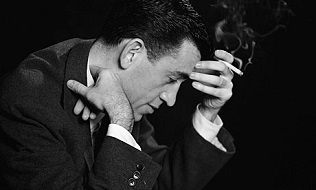
 1522692-f68f4f8435e21ae41d6f2209d16de263.jpg
J.D. Salinger (1 januari 1919 – 27 januari 2010)


De Engelse romanschrijver en essayist Edward Morgan Forster werd geboren op 1 januari 1879 in Londen. Zie ook alle tags voor Edward Morgan Forster op dit blog.

Uit:A Passage to India

“Abandoning his bicycle, which fell before a servant could catch it, the young man sprang up on to the verandah. He was all animation. "Hamidullah, Hamidullah! am I late?" he cried.
"Do not apologize," said his host. "You are always late."
"Kindly answer my question. Am I late? Has Mahmoud Ali eaten all the food? If so I go elsewhere. Mr. Mahmoud Ali, how are you?"
"Thank you. Dr. Aziz, I am dying."
"Dying before your dinner? Oh, poor Malimoud Ali!"
"Hamidullah here is actually dead. He passed away just as you rode up on your bike."
"Yes, that is so," said the other. "Imagine us both as addressing you from another and a
happier world."
"Does there happen to be such a thing as a hookah in that happier world of yours?"
"Aziz, don't chatter. We are having a very sad talk."
The hookah had been packed too tight, as was usual in his friend's house, and bubbled sulkily. He coaxed it. Yielding at last, the tobacco jetted up into his lungs and nostrils, driving out the smoke of burning cow dung that had filled them as he rode through the bazaar. It was delicious. He lay in a trance, sensuous but healthy, through which the talk of the two others did not seem particularly sad—they were discussing as to whether or no it is possible to be friends with an Englishman. Mahmoud Ali argued that it was not, Hamidullah disagreed, but with so many reservations that there was no friction between them. Delicious indeed to lie on the broad verandah with the moon rising in front and the servants preparing dinner behind, and no trouble happening.”


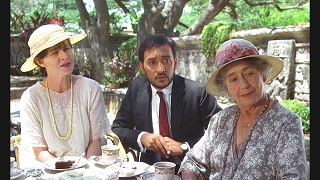
 1522692-bfdbec3d8e529da25569a22d5ced4f37.jpg
Edward Morgan Forster (1 januari 1879 - 7 juni 1970)
Scene uit de film van David Lean uit 1984 met Judy Davis, Victor Banerjee and Peggy Ashcroft


De Amerikaanse schrijver Douglas Kennedy werd geboren op 1 januari 1955 in New York. Zie ook alle tags voor Douglas Kennedy op dit blog.

Uit: Leaving the World

“On the night of my thirteenth birthday, I made an announcement.
“I am never getting married and I am never having children.”
I can remember exactly the time and the place where this proclamation was delivered. It was around six p.m. in a restaurant on West 63rd Street and Broadway. The day in question was January 1, 1987, and I blurted out this statement shortly after my parents had started fighting with each other. Fueled by alcohol and an impressive array of deeply held resentments, it was a dispute that ended with my mother shouting out loud that my dad was a shit and storming off in tears to what she always called “the little girls’ room.” Though the other patrons in the restaurant gawked at this loud scene of marital discontent, their fight came as no great shock to me. My parents were always fighting—and they had this habit of really combusting at those junctures in the calendar (Christmas, Thanksgiving, the anniversary of their only child’s arrival in the world) when family values allegedly ruled supreme and we were supposed to feel “all warm and cuddly” toward each other.
But my parents never did warm and cuddly. They needed shared belligerence the way a certain kind of drunk needs his daily eye-opening shot of whiskey. Without it they felt destabilized, isolated, even a little lost. Once they started baiting and taunting each other, they were in a place they called home. Unhappiness isn’t simply a state of mind; it is also a habit . . . and one that my parents could never shake.
But I digress. New Year’s Day, 1987. We’d driven in from our home in Old Greenwich, Connecticut, for my birthday. We’d gone to see the New York City Ballet perform the famous Balanchine production of The Nutcracker. After the matinee we adjourned to a restaurant called O’Neals’, opposite Lincoln Center. My dad had ordered a vodka martini, then downed a second, then raised his hand for a third.”


 1522692-10c9c4f8b167e07354c107d44517d214.jpg
Douglas Kennedy (New York, 1 januari 1955)


De Nederlandse schrijfster Rascha Peper (pseudoniem van Jenneke Strijland) werd geboren op 1 januari 1949 in Driebergen. Zie ook alle tags voor Rascha Peper op dit blog.

Uit: Handel in veren

“De vochtigheid vond Henk Bronkhorst erger dan de hitte. Niet alleen tikten aan alle kanten druppels van de bomen en klimplanten en moest je na iedere stap je schoenen uit het soppende slik trekken, maar de van zweet en water doordrenkte kleren en schoenen kreeg je ook niet meer droog. Er stond geen zuchtje wind en nergens was open gebied.
Na anderhalf uur stijgen door rottende en schimmelende vegetatie bracht de Ambonese bediende van de zendeling bij wie ze overnacht hadden – een lenige jongen in lendendoek die speciaal voor het ‘even meelopen’ een paar tot op de draad versleten hoge soldatenschoenen had aangetrokken – hen bij een pasanggrahan, waar hun gids vlakbij zou wonen. In de hut, onder het breed afhangende dak van palmbladeren, waren Papoea-vrouwen in de weer rond een houtvuur, waarvan de rook uit een gat in het dak opsteeg. De Ambonees riep iets naar hen, waarop twee jonge vrouwen verlegen lachend aan de rand van de hoge plankenvloer kwamen staan, terwijl een tiental kinderen tussen de palen onder de vloer opdook en de vreemdelingen binnen een mum van tijd omringde.
Ze namen uitvoerig alle begroetingsrituelen in acht. Voor zulke gelegenheden
had Bronkhorsts jonge collega Rijk zijn broekzak vol karamels, die hij meteen begon uit te delen. Deze kinderen hadden echter nog zelden of nooit blanken gezien en wisten niet wat snoepjes waren; ze pakten ze wel aan, maar stonden ze onwennig rond te draaien, alsof de knisperende pakketjes in hun hand plotseling zouden kunnen wegvliegen als kevers.”


 1522692-7d125cc2c6d6ce898aa3baeaf15f4205.jpg
Rascha Peper (Driebergen, 1 januari 1949)


De Duitse schrijver en filosoof Rüdiger Safranski werd geboren op 1 januari 1945 in Rottweil. Zie ook alle tags voor Rüdiger Safranski op dit blog.

Uit: Goethe - Kunstwerk des Lebens

„Goethe ist ein Ereignis in der Geschichte des deutschen Geistes – Nietzsche meinte, ein folgenloses. Doch Goethe war nicht folgenlos. Zwar hat die deutsche Geschichte seinetwegen keinen günstigeren Verlauf genommen, aber in anderer Hinsicht ist er überaus folgenreich, und zwar als Beispiel für ein gelungenes Leben, das geistigen Reichtum, schöpferische Kraft und Lebensklugheit in sich vereint. Ein spannungsreiches Leben, dem einiges in die Wiege gelegt war, das aber auch um sich kämpfen mußte, bedroht von inneren und äußeren Gefahren und Anfechtungen. Was immer wieder fasziniert, ist die individuelle Gestalt dieses Lebens. Das ist keine Selbstverständlichkeit.
Heute sind die Zeiten nicht günstig für die Entstehung von Individualität. Die Vernetzung aller mit allen ist die große Stunde des Konformismus. Goethe war mit dem gesellschaftlichen und kulturellen Leben seiner Zeit aufs innigste verbunden, aber er verstand es, ein Einzelner zu bleiben. Er machte es sich zum Grundsatz, nur so viel Welt in sich aufzunehmen, wie er auch verarbeiten konnte. Worauf er nicht irgendwie produktiv antworten konnte, das ging ihn nichts an, mit anderen Worten: Er konnte auch wunderbar ignorieren. Selbstverständlich mußte auch er an vielem Anteil nehmen, das er sich lieber erspart hätte.“


 1522692-9f8a5cb1aeaf7ef40e9e75277885589c.jpg
Rüdiger Safranski (Rottweil, 1 januari 1945)


Zie voor nog meer schrijvers van de 1e januari ook mijn vorige blog van vandaag.


Geschreven door Romenu om 16:46 Reageer op dit bericht

Carry van Bruggen, Joe Orton, Mariano Azuela, René de Ceccatty, Sven Regener

De Nederlandse schrijfster Carry van Bruggen (eig. Caroline Lea de Haan) werd geboren in Smilde op 1 januari 1881. Zie ook alle tags voor Carry van Bruggen op dit blog.

Uit: Om de kinderen

“Mevrouw Van der Wal keek met een zwelling van trotsche vreugde in de borst naar het nieuwe toilet, dat Annie juist had neergespreid op de grijs-fluweelen rustbank in haar kleedkamer; het meisje, slank, in zwart japonnetje, wit schortje, hooggehakte schoentjes, stond op een afstand en wachtte bevelen - haar scherp, zelfbewust gezicht van jonge blondine, die zich bekoorlijk weet, drukte geen goedkeuring en geen afkeuring uit; de oogen hield ze bijna neergeslagen, als dicht, toch voelde de ander, dat ze de laag-uitgesneden, overrijk gegarneerde japon te jeugdig voor haar vond; dit onuitgesproken oordeel ergerde haar, meer nog ergerde haar de eigen ergernis er over, - met een kort woord zond ze Annie de kamer uit, tersluiks kijkend, of geen spottrekje iets van haar gevoelens verried - achter het meisje de deur onhoorbaar in het slot draaiend, kon ze zich nu op haar gemak overgeven aan het genot van het nieuwe ongerepte bezit, het kostbare toilet, waarin ze zich over enkele dagen aan een groot diner vertoonen zou.
De gedachte aan dat diner hield haar al de heele week in nerveuze spanning. Er kon zooveel van afhangen, want het zou haar eerste diner in de werkelijke groote wereld, in den moeilijk te betreden kring der echte aristocraten wezen. En het was aan Robert, haar oudsten zoon, haar trots, dat ze die uitnoodiging te danken hadden. Hij had den gastheer in het ouderlijk huis geintroduceerd. Bewonderenswaardig, zooals die jongen er slag van had de menschen te kiezen, met wie hij omgang wilde en dan, wat meer beduidde, van hen te verkrijgen, dat zij dan het eerst zijn omgang zochten. Ze voelde zoo goed wat het aan hem was.”


 1522686-42ab2e3efeae27a4bf00f952db5f872b.jpg
Carry van Bruggen (1 januari 1881 - 16 november 1932)

Portret door Annie de Meester


De Britse schrijver Joe Kingsley Orton werd geboren in Leicester op 1 januari 1933. Zie ook alle tags voor Joe Orten op dit blog.

Uit: Fred And Marge / The Visitors

“SPP: You seem to have a really worthwhile job here
Fred: We have our coats off, sir. Work is recognised as a virtue.
SPP: You push this stone -
Fred: Up the hill, sir.
SPP: And what happens then?
Fred: It all depends. It should roll down again. But accidents will happen. Sometimes it topples over the other side.”
(…)

“Kemp: I shall be here till they carry me out.
Mrs Platt: We'll have you skipping about in no time.
Kemp: I won't bother you much longer.
Mrs Platt: I won't have that kind of talk, do you hear? You've got years ahead of you. What do you want to die for?
Kemp: I don't want to.
Mrs Platt: Well?
Kemp: But I'm going to”.


 1522686-bdf528f76fb1f4209bf64fc7bc3239b6.jpg
Joe Orton (1 januari 1933 - 9 augustus 1967)


De Mexicaanse schrijver en medicus Mariano Azuela González werd geboren in Lagos de Moreno op 1 januari 1873. Zie ook alle tags voor Mariano Azuela op dit blog.

Uit: Ceux d'en bas (Vertaald door Jeanne en Joaquin Maurin)

„Sur son cheval zain, Demetrio se sent rajeunir. Ses yeux recouvrent leur éclat métallique particulier, et sous ses joues cuivrées d’indigène de race pure coule à nouveau un sang rouge et ardent. Tous les hommes dilatent leurs poumons, comme pour respirer les vastes horizons, l’immensité du ciel, le bleu des montagnes et l’air frais, embaumé par les arômes de la sierra. Et ils font galoper leurs chevaux, comme s’ils voulaient, dans cette course effrénée, s’emparer de la terre entière.
(…)

C'était une véritable matinée nuptiale. Il avait plu la veille toute la soirée, le ciel se levait couvert de blanches nuées. Sur la cime de la sierra trottaient des poulains sauvages aux hautes crinières, gracieux, élégants comme les pics qui dressent leurs têtes jusqu'à embrasser les nuages."


 1522686-9ae4f1971c7d781058a7ad45e1d42141.jpg
Mariano Azuela (1 januari 1873 - 1 maart 1952)


De Franse schrijver, essayist en vertaler René de Ceccatty werd geboren op 1 januari 1952 in Tunis. Zie ook alle tags voor René de Ceccatty op dit blog.

Uit: Raphaël et Raphaël

“Mais, en évoquant ce chemin que j'ai accompli sous cette sorte de galerie miroitante de feuilles par instants traversées de lumière, puis plongées dans l'ombre chaude, étouffante des après-midi du coeur mourant de l'été méridional, je constate que cet épisode que je décris minutieusement appartient déjà à ce passé d'où j'aurais voulu extraire la réminiscence qui l'aurait alourdi de sensations riches, frémissantes de cette vie restituée par la mémoire involontaire. Or je mentirais en prétendant qu'en marchant après l'ondée, mon parapluie embarrassant une de mes mains que j'aurais voulue libre comme l'autre, j'éprouvais la moindre émotion provenant du passé : j'étais trop décidé à visiter mon enfance pour qu'elle me fasse le cadeau d'une visite inopinée, elle-même.
M'aurait-on observé en train d'avancer sous la voûte feuillue, le long de ces façades autrefois bourgeoises et maintenant si négligées qu'elles pouvaient, derrière les volets écaillés et les fers forgés rouilles des balcons, sous la croûte tavelée des vieux crépis, paraître cacher des occupations abusives d'appartements abandonnés ou oubliés par leurs propriétaires, toute une population de locataires intrusifs, dans une accumulation de meubles récupérés, volés, sales, inutiles, inutilisables - un cauchemar de la pauvreté et de ses solutions de fortune -, on m'aurait cru dépourvu de la moindre incertitude sur ma destination, sur mes intentions.”


 1522686-f5f406aeae5258a5c78280d9d2fd48a9.jpg
René de Ceccatty (Tunis, 1 januari 1952)


De Duitse schrijver en musicus Sven Regener werd geboren op 1 januari 1961 in Bremen. Zie alle tags voor Sven Regener op dit blog.

Uit: Der Hund

„Der Mensch ist ein Wesen mit freiem Willen, dachte Herr Lehmann, als er sich der anderen Seite des Lausitzer Platzes näherte, jeder muß selber wissen, was er tut und was nicht, und nur weil Erwin ein Depp ist und einen zum Schnapstrinken überredet, heißt das noch lange nicht, daß Erwin schuld ist, dachte er, aber er dachte auch mit Genugtuung an die Flasche Whisky, die er heimlich hatte mitgehen lassen und die in der großen Innentasche seines langen, für einen Septembertag im Grunde viel zu warmen Mantels steckte. Er selbst hatte zwar keine Verwendung für Whisky, denn er trank ja im Prinzip schon lange keinen Schnaps mehr, aber Erwin mußte immer mal wieder bestraft werden, und Herr Lehmann konnte die Flasche zur Not seinem besten Freund Karl schenken.
Dann sah er den Hund. Herr Lehmann, wie sie ihn neuerdings nannten, obwohl die, die das taten, auch nicht viel jünger waren, obwohl tatsächlich einige von ihnen, sein bester Freund Karl und auch Erwin zum Beispiel, sogar älter waren als er, kannte sich mit Hunderassen nicht aus, aber er konnte sich beim besten Willen nicht vorstellen, daß man so ein Tier mit Absicht züchtete. Der Hund hatte einen großen Kopf mit einer mächtigen, sabbernden Schnauze und zwei großen, lappigen Ohren, die links und rechts davon herunterhingen wie zwei welke Salatblätter. Sein Rumpf war fett, und sein Rücken so breit, daß man darauf eine Flasche Whisky hätte abstellen können, seine Beine waren dagegen unverhältnismäßig dünn, sie ragten aus dem Körper heraus wie abgebrochene Bleistifte. Herr Lehmann, der es nicht übermäßig witzig fand, daß man ihn jetzt so nannte, hatte noch nie ein so häßliches Tier gesehen. Er erschrak und blieb stehen. Er traute Hunden nicht. Und der Hund knurrte ihn an.“


 1522686-6729b165f8e880bb5ab02f3615d3a818.jpg
Sven Regener (Bremen, 1 januari 1961)

Geschreven door Romenu om 16:45 Reageer op dit bericht

Ashfaq Hussain, Kristijonas Donelaitis, Johannes Kinker, Sándor Petőfi, Anne Duden

De Canadess-Pakistaanse (Urdu) Ashfaq Hussain werd geboren op 1 januari 1951 in Karachi, Pakistan. Zie ook alle tags voor Ashfaq Hussain op dit blog.


A Love Poem For My Son

With your eyes, I
will see those days
which have yet to come.
With your feet, I
will run very fast
on dream pathways
which are still obscure
With your hands , I
will touch those mountains
whose very thought
makes me breathless

Those mountains and those roads
on which you walk,
a new era
that is yours.
I will not even see
this new era
but my eyes will kiss
its every moment,
with these bright eyes
that are your eyes.
In your eyes
like light I shine
like love I abide
like a dream I am alive
In your beautiful eyes
all my dreams
hide in a special corner;
and if perchance these dreams
bloom with fragrance of flowers
in their sweet scent
you should keep
all the letters of my name
with care.


 1522773-1e5640f0423267aa1c836593c785542d.jpg
Ashfaq Hussain (Karachi, 1 januari 1951)


De Pruisische-Litouwse dichter Kristijonas Donelaitis werd geboren op 1 januari 1714 in Lasdinehlen bij Gumbinnen in het oostelijk deel van Oost-Pruisen. Zie ook alle tags voor Kristijonas Donelaitis op dit blog.

Winter Cares (Fragment)

Ye animals and birds, it falls on you and us;
The all-pervading cold torments us all alike.
The winter blasts chased you into your dreary dens,
And drove us from the fields into our cheerless homes
To seek welcome warmth at the blazing stove of clay.
You sleep and snore in your wide open winter homes,
Without protection from the rigors of the frosts.
We, when the northern winds assail us angrily,
At once cunningly crawl beneath the windtight roof.
There, in seclusion, we hide from the winter's wrath,
And daily warm ourselves with savory hot soup.
But you, unlucky things, unceasing wanderers,
Be it most hot or cold, bright sunshine or grim rain,
Selfsame attire you wear through the entire long year.
We, when the sun begins to burn our weary backs,
Put on light linen garb, or other lightweight clothes;
And when the raging winds whiplash our loins too much,
We wear our woolen frocks or e'en our sheepskin coats,
Or, to be well warmed up, we climb into our beds.


 1522773-92fe495c5b33b0e4bdb36bd25afcfc05.jpg
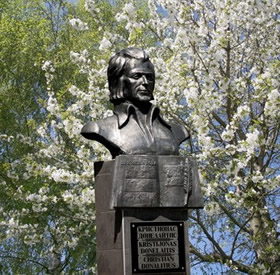
Kristijonas Donelaitis (1 januari 1714 – 18 februari 1780)
Borstbeeld in Klaipėda


De Nederlandse dichter, filosoof en advocaat Johannes Kinker werd geboren in Nieuwer-Amstel op 1 januari 1764. Zie ook alle tags voor Johannes Kinker op dit blog.


De Toekomst (Fragment)

Ziet gij dat Landschap niet, kortziende stervelingen!
Dat weemlend voor uw zweeft in 't wijkende verschiet?
Ziet gij dat tafereel van uit den voorgrond niet;
Is 't magtloos, zich aan uw verbeelding op te dringen?
Of houden neevlen van den tijd, waar in gij leeft,
Gestadig nog verdikt door dagelijksche zorgen,
Dit treffend schilderij voor uwen geest verborgen;
En blijft ge aan d' afgrond van 't verleedne vastgekleefd?
Uwe oogen, achterwaards gekeerd, zien naar beneden
In 't donker schimmenrijk, dat eenmaal heeft bestaan.
Ontwerpen daar, versuft, een schrale schets van 't heden,
Maar wagen 't niet het oog naar de uitkomst op te slaan.
Lafhartigen! - houdt u 't belang zoo zeer gekluisterd?
Ziet ge in 't vooroordeel, mits het heersche, een bron van heil?
Voor zijn belofte hebt ge, omkoopbren! alles veil:
Gij mint den nacht; zoo slechts uw licht niet werd verduisterd.
Gij mint den nacht, op dat alleen uw schemering
Te meerder afsteek', bij het zwart dier kleine zielen,
Die voor de magtspreuk, die gij nabaauwt, nederknielen;
Maar beeft te rug voor al wat daalt uit hooger' kring.


 1522773-f9828ae6406a109174a802144b5e6713.jpg
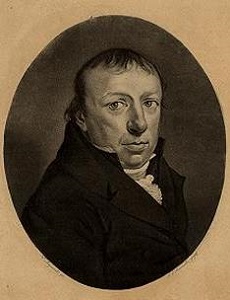
Johannes Kinker (1 januari 1764 – 16 september 1845)
Portret door H. Langerveld / F.C. Bierweiler


De Hongaarse dichter Sándor Petőfi werd geboren in Kiskőrös op 1 januari 1823. Zie ook alle tags voor Sándor Petőfi op dit blog.


The Shepherd Rides On A Donkey

The shepherd rides in donkey-back
The shepherd rides in donkey-back,
His feet are dangling wide,
The lad is big, but bigger still
His bitterness inside.

He played his flute, he grazed his flock
Upon a grassy hill
When he was told his sweetheart girl
Was desperately ill.

He rides his donkey in a flash
And races to her bed,
But by the time he reached the house
His precious one was dead.

The lad was bitter, hoped to die,
But what he did instead:
He took a stick and struck a blow
Upon the donkey's head.


 1522773-bd2df3e05f323cb89c5c27e0dcae27bb.JPG
Sándor Petőfi (1 januari 1823 - 31 juli 1849)
Borstbeeld in Makó


De Duitse dichteres en schrijfster Anne Duden werd geboren op 1 januari 1942 in Oldenburg. Zie ook alle tags voor Anne Duden op dit blog.


Kammerherz

Herzaufgänge
als stünde die Welt
nur einmal im Laub
pro Leben.
Dunstvergötterte
Silberschrift
englisch
über alle Anzeichen
hinweggeschmiegt
grasige Weite.
Mitten im Totschlag
betritt Geißblatt das Haus
säugt die Zimmer
flurwärts
Schädel und Nebenhöhlen
ankert in der Schwebe
ausrißbereit.

Mundgewölbe und Ohrmuschel
geborsten
zerschallt
von Pennergebissen.
Hinter Vorhängen
jetzt noch das Kammerherz.
Genickfänger
fest im Griff.


 1522773-a12619f0bee38d80456885a97fe9bb88.jpg
Anne Duden (Oldenburg, 1 januari 1942)

Geschreven door Romenu om 16:43 Reageer op dit bericht

Paul Hamilton Hayne

De Amerikaanse dichter Paul Hamilton Hayne werd geboren in Charleston, South Carolina, op 1 januari 1830. Nadat hij als jong kind zijn vader verloor werd Hayne opgevoed door zijn moeder in het huis van zijn welvarende en prominente oom Robert Y. Hayne, die een bekend redenaar en politicus was en lid van de Amerikaanse senaat. Hayne studeerde af aan de Universiteit van Charleston in 1852 . Hij begon een praktijk als jurist, maar stopte daarmee al snel om zijn literaire interesses en ambities na te streven. Hayne diende in 1861 in de Confederate army en bleef in het leger totdat zijn gezondheid verslechterde. Hij verloor al zijn bezittingen - met inbegrip van zijn huis en een uitgebreide bibliotheek - toen Charleston werd gebombardeerd in 1862. In 1863 verhuisde Hayne met zijn familie naar Grovetown, Georgia. Hier Hayne woonde en werkte hij tot zijn dood in 1886. Grovetown was ook de plaats waar zijn carrière als literair criticus en tijdschriftredacteur begon. Hij heeft bijgedragen aan belangrijke tijdschriften van het Zuiden in zijn tijd, zoals de Charleston Literary Gazette, de Southern Literary Messenger, de Home Journal en Southern Bivouac. Van belang is ook Haynes vriendschap met collega-dichter Henry Timrod. Timrod was zwak en ziek en Hayne ondersteunde hem financieel. Timrod heeft nu de grotere reputatie als dichter, terwijl Hayne meer bekend is geworden door zijn rol als redacteur en literair criticus dan als dichter. Hayne stierf in zijn huis in Grovetown op 6 juli 1886. Hayne publiceerde verschillende dichtbundels, waaronder een volledige uitgave in 1882. In zijn poëzie ligt de nadruk op het romantische vers, lange verhalende gedichten en ballads. Net als bij andere collega- dichters uit het zuiden was zijn werk zeer beschrijvend van aard. Hayne 's sonnetten worden beschouwd als zijn beste werk. Hij werd ook in het noorden gewaardeerd en werd in het hele land bekend als de officieuze poet laureate van het Zuiden.


The True Heaven

THE bliss for which our spirits pine,
That bliss we feel shall yet be given,
Somehow, in some far realm divine,
Some marvellous state we call a heaven.

Is not the bliss of languorous hours
A glory of calm, measured range,
But life which feeds our noblest powers
On wonders of eternal change?

A heaven of action, freed from strife,
With ampler ether for the scope
Of all immeasurable life
And an unbaffled, boundless hope.

A heaven wherein all discords cease,
Self-torment, doubt, distress, turmoil,
The core of whose majestic peace
Is godlike power of tireless toil.

Toil, without tumult, strain or jar,
With grandest reach of range endued,
Unchecked by even the farthest star
That trembles thro' infinitude;

In which to soar to higher heights
Through widening ethers stretched abroad,
Till in our onward, upward flights
We touch at last the feet of God.

Time swallowed in eternity!
No future evermore; no past,
But one unending NOW, to be
A boundless circle round us cast!


October

The passionate summer's dead! the sky's aglow
With roseate flushes of matured desire,
The winds at eve are musical and low,
As sweeping chords of a lamenting lyre,
Far up among the pillared clouds of fire,
Whose pomp of strange procession upward rolls,
With gorgeous blazonry of pictured scrolls,
To celebrate the summer's past renown;
Ah, me! how regally the heavens look down
O'ershadowing beautiful autumnal woods
And harvest fields with hoarded increase brown
And deep-toned majesty of golden floods
That raise their solemn dirges to the sky,
To swell the purple pomp that floateth by.


 1564750-312cd9f8cbad880b7d6b6bcb2e754ae1.jpg
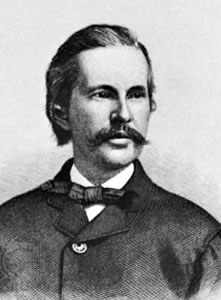
Paul Hamilton Hayne (1 januari 1830 – 6 juli 1886)
Gravure door J.J. Cade

Geschreven door Romenu om 00:00 Reageer op dit bericht

Juan Gabriel Vásquez

De Colombiaanse schrijver Juan Gabriel Vásquez werd geboren in Bogotá op 1 januari 1973. Zie ook alle tags voor Juan Gabriel Vásquez op dit blog.

Uit: The Sound of Things Falling (Vertaald door Anne McLean)

“The marksmen who finally caught up with him shot him once in the head and again in the heart (with .375-caliber bullets, since hippopotamus skin is thick); they posed with the dead body, the great dark, wrinkled mass, a recently fallen meteorite; and there, in front of the first cameras and onlookers, beneath a ceiba tree that protected them from the harsh sun, explained that the weight of the animal would prevent them from transporting him whole, and they immediately began carving him up. I was in my apartment in Bogota, two hundred fifty or so kilometers south, when I saw the image for the first time, printed across half a page of a national news magazine. That's how I learned that the entrails had been buried where the animal had fallen, and the head and legs had ended up in a biology laboratory in my city. I also learned that the hippopotamus had not escaped alone: at the time of his flight he'd been accompanied by his mate and their baby — or what, in the sentimental version of the less scrupulous newspapers, were his mate and their baby — whose whereabouts were now unknown, and the search for whom immediately took on a flavor of media tragedy, the persecution of innocent creatures by a heartless system. And on one of those days, while following the hunt in the papers, I found myself remembering a man who'd been out of my thoughts for a long while, in spite of the fact that there had been a time when nothing interested me as much as the mystery of his life.
During the weeks that followed, the memory of Ricardo Laverde went from being a minor coincidence, one of those dirty tricks our minds play on us, to becoming a faithful and devoted, ever-present ghost, standing by my bed while I slept, watching from afar in the daylight hours.
On the morning radio programs and the evening news, in the opinion columns that everybody read and on the blogs that nobody read, everyone was asking if it was necessary to kill the lost hippos, if they couldn't round them up, anesthetize them, and send them back to Africa; in my apartment, far from the debate but following it with a mixture of fascination and repugnance, I was thinking more and more intensely about Ricardo Laverde, about the days when we'd known each other, about the brevity of our acquaintance and the longevity of its consequences.”


 1561314-b70e9459af4c0abed9f2d651112bd8a2.jpg
Juan Gabriel Vásquez (Bogotá, 1 januari 1973)

Geschreven door Romenu om 00:00 Reageer op dit bericht

Meer van Romenu

↑ Terug naar de berichten