Naar de inhoud

Romenu

Over literatuur, gedichten, kunst en cultuur
akke.beakke.be

Berichten van 1 juni 2014 tot 2 juni 2014

Jim Knipfel, Marcel Reich-Ranicki, Sibylle Berg, Carol Shields, Jean Nelissen, Thomas Hardy, Markies De Sade
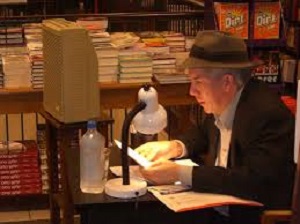
De Amerikaanse schrijver Jim Knipfel werd geboren op 2 juni 1965 in Green Bay, Wisconsin. Zie ook alle tags voor Jim Knipfel op dit blog.

Uit: Unplugging Philco

"As furtively as possible he checked the three of them again. Still chatting. If they began moving his way he' d need a new plan, and quick. If only there was another pedestrian to draw their attention away from him -- but there never was. Nobody else was out at this hour. It would be simple enough to change his own schedule, he sometimes thought, but he knew it would never happen.
He flexed his legs and his toes, checked the sidewalk directly below him again, then took a deep breath and willed himself into action.
As he scrambled down the stairs like a convulsive heron, Wally told himself for the thirtieth time in as many days that it was about time he picked himself up a new pair of shoes. This old pair he was wearing was simply not made for scrambling of any kind. Not with soles worn that smooth and thin.
Without pausing at the bottom to see if they'd caught sight of him, he dashed across the sidewalk, staying as low as he could manage, and ducked between two parked cars. He was breathing heavy and sweating despite the cool breeze, but at least he had some decent cover here.
Holding on to the rear bumper of a cherry red Chrysler Xanax for support, he pushed himself up just enough to peer over the trunk and down the street.
They still hadn't seen him, too engrossed as they were in their little chat.
Probably exchanging diapering tips and murder stories, he thought. He checked the street again.
There was someone at the stoplight two blocks away. He was driving one of those Dodge Dipsomatic GX Mini Forts, an enormous vehicle, almost a full lane and a half wide. It was little more than a street-modified tank, really, but they'd become quite popular lately." 


 1606527-7365af001fea2be245e03c6eba643400.jpg
Jim Knipfel (Green Bay, 2 juni 1965)


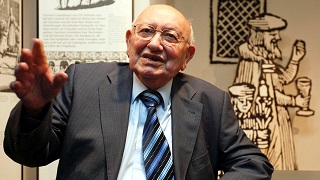
De Duitse schrijver en literatuurcriticus Marcel Reich-Ranicki werd geboren op 2 juni 1920 in Włocławek, Polen. Zie ook alle tags voor Marcel Reich-Ranicki op dit blog.

Uit: Thomas Mann und die Seinen

"Wen immer er in den Mittelpunkt seiner Bücher stellte – Alexander den Großen oder König Ludwig II. von Bayern, Peter Tschaikowski oder einen jungen emigrierten Poeten, der Selbstmord begeht -, er hatte offenbar nie Hemmungen, seine eigenen Sorgen und Komplexe  ganz ohne Umschweife in die Figuren seiner Helden zu projizieren. Daher sind es stets in außergewöhnlichem Maße persönliche, private, - intime Bücher. Sie enthüllen des Autors Leidenschaft für menschliche und allzumenschliche Schwächen, für das Abgründige und Pathologische, für die Randbezirke der Existenz. Todessehnsucht und Homoerotik sind die beiden dominierenden Motive.
Daß sich die Literatur, die einen gewissen Anspruch erhebt, dem Exhibitionismus nähern darf, ja nähern muß, ist wohl ebenso sicher wie der Umstand, daß immer dann, wenn das Talent des Schriftstellers versagt und er anstatt der literarischen Leistung nur die nackte Mitteilung über heikle Phänomene bietet, der fatale Eindruck einer Schamlosigkeit entsteht, die sich nicht rechtfertigen läßt: Denn sie zeugt nicht etwa vom Mut zur Erkenntnis und zur Vergegenwärtigung, sondern vom Mangel an Takt und Geschmack.
Klaus Mann hat den Vorwurf des Exhibitionismus offenbar nie gefürchtet. Er war in vielen Büchern um den Ausdruck für seine Qualen bemüht. Gefunden hat er ihn nie. In keinem einzigen seiner Werke vermochte er die Diskrepanz zwischen seinen literarischen Möglichkeiten und seinen Absichten zu beseitigen. Und niemals war diese Kluft tiefer als in dem Roman 'Mephisto' “.
 

 1606527-fe0df3d6afdd900b7f16d18be506a29c.jpg
Marcel Reich-Ranicki (2 juni 1920 – 18 september 2013)


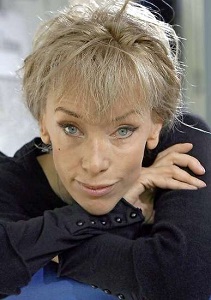
De Duitse schrijfster Sibylle Berg werd geboren in Weimar op 2 juni 1962. Zie ook alle tags voor Sibylle Berg op dit blog.

Uit: Der Mann schläft

„Als ich auf dem Rückweg vom Kiosk erneut an dem Café vorbeikam, waren beide verschwunden.
Da man sich, wie ich an diesem kleinen Schattenspiel meiner Erinnerung merkte, der Realität nie allzu sicher sein durfte, betrat ich wenig später unser Haus mit Sorge.
Man konnte nicht oft genug überprüfen, ob all das, was einen froh machte, noch an seinem Platz war.
Mir war schwindelig geworden vor Erleichterung, denn der Mann war da.
Er lag und schlief und sah wunderbar dabei aus, doch, anders als bei den meisten seiner Spezies, die nur im Schlaf entspannt und reizend wirken, kannte sein Ausdruck keine Veränderungen; auch nach dem Erwachen würde er wie benommen bleiben und seinen schweren Körper bewegen, als wäre er in einem anderen Element zu Hause als in der Luft. Vielleicht nähme sich der Mann unter Wasser gewandt aus; doch ich hatte ihn noch nie tauchen sehen, denn er war zu träge für die meisten Aktivitäten, mit denen Menschen, die keiner körperlichen Arbeit nachgehen, ihr Leben verstreichen lassen.
Da alles an seinem Platz war und es nicht aussah, als wäre das, was ich für mein Leben hielt, nur Phantasie, konnte ich weiter meinem Tagesplan folgen.
Fast alle Menschen lieben geregelte Abläufe, da muss man sich nichts vormachen. Routine macht, dass wir nicht ins All abgetrieben werden, ohne Verbindung zur Raumstation. Nach der Zeitung, dem Gebäck folgte der Kaffee. Ich beobachtete, wie im Nachbarhaus, in das ich durch die Palmen hindurch sehen konnte, Menschen an Küchentische schlurften, verschwommen von der Nacht, das Licht kaum vorhanden, sodass es sich durchaus auch um großgewachsene Insekten handeln konnte, die von der Stadt Besitz ergriffen hatten.
Jeden Morgen stand ich vor der Tür und freute mich, dass ich die Nacht überlebt hatte, dass alle Häuser sich noch am Ort befanden und der Mann im Bett lag. Vielleicht war ich der einzige Mensch, der daran ein Vergnügen hatte, denn der Mann entsprach kaum dem, was man gemeinhin als Kleinod bezeichnete.“
 

 1606527-c610de18c079b5cd02d1197cc6233cc2.jpg
Sibylle Berg (Weimar, 2 juni 1962)


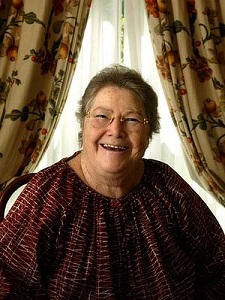
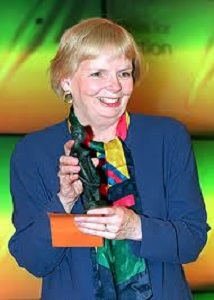
De Canadese schrijfster Carol Shields werd op 2 juni 1935 in Oak Park, Chicago, geboren als Carol Warner. Zie ook alle tags voor Carol Shields op dit blog.

Uit: Small Ceremonies

"We had that last Sunday," Meredith says, helping herself to butter. Always methodical, she keeps track of small ceremonies.
For us, Sunday high tea is a fairly recent ceremony, a ritual brought back from England where we spent Martin's sabbatical year. We are infected, all four of us, with a surrealistic nostalgia for our cold, filthy flat in Birmingham, actually homesick for fog and made edgy by the thought of swerving red buses.
And high tea. A strange hybrid meal, a curiosity at first,it was what we were most often invited out to during our year in England. We visited Martin's colleagues far out in the endless bricked-up suburbs, and drank cups and cups of milky tea and ate ham and cold beef, so thin on the platter it looked almost spiritual. the chirpy wives and their tranquil pipe-sucking husbands, acting out of some irrational good will, drew us into cozy sitting rooms hung with water colours, rows of Penguins framing the gasfires, night pressing in at the windows, so that snugness made us peaceful and generous. Always afterward, driving back to the flat in our little green Austin, we spoke to each other with unaccustomed charity, Martin humming and Meredith exclaiming again and again from the back seat how lovely the Blackstones were and wasn't she, Mrs. Blackstone, a pet.
So we carry on the high tea ritual. But we've never managed to capture that essential shut-in coziness, that safe-from-the-storm solidarity. We fly off in midair. Our house, perhaps, is too open, too airy, and then again we are not the same people we were then; but still we persist.”


 1606527-8b9554c9422a99f0025ddb4330744eab.jpg
Carol Shields (Chicago, 2 juni 1935 – 16 juli 2003)


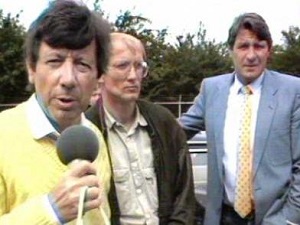
De Nederlandse sportjournalist en schrijver Jean Nelissen werd geboren in Geleen op 2 juni 1936. Zie ook alle tags voor Jean Nelissen op dit blog.

Uit:De Bijbel Van De Tour De France

“Een ronde waarin sommige renners tot idolen worden verheven, wierfaam zelfs hun dood overleeft. Zoals Fausto Coppi, die op een bergtop in het gehucht Castellania ligt begraven, omringd door aarde van de beruchte col Izoard. Een Tour waarvan de geschiedenis is doordrenkt met dramatiek van de relatief talrijke winnaars die vermoord werden of zelfde dood zochten, zoals René Pottier, Ottavio Bottecchia, Henri Pélissier, Hugo Koblet en Luis Ocana. Van oorsprong eenvoudige mannen met een aanvankelijk bescheiden verwachtingspatroon, die echter door hun sportieve successen in een andere wereld werden gekatapulteerd en er hun geestelijk evenwicht verloren. Dat is één van de gevaren van deelname aan de Tour. De verleiding om een sportheld te worden, de massa te ontstijgen, roem en rijkdom te vergaren, zal echter altijd sterker blijven.”
 

 1606527-5cf48dfbfb092d4ed711196d510fc9b2.jpg
Jean Nelissen (2 juni 1936 - 1 september 2010)
Hier links naast Jan Raas en Peter Post 


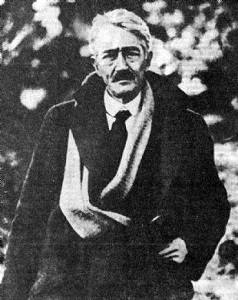
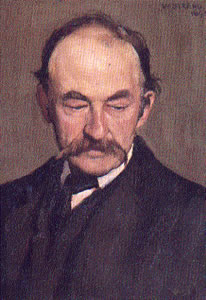
De Engels romanschrijver en dichter Thomas Hardy werd op 2 juni 1840 geboren in Higher Bockhampton, bij Dorchester. Zie ook alle tags voor Thomas Hardy op dit blog.


A Confession To A Friend in Trouble

Your troubles shrink not, though I feel them less
Here, far away, than when I tarried near;
I even smile old smiles--with listlessness--
Yet smiles they are, not ghastly mockeries mere.

A thought too strange to house within my brain
Haunting its outer precincts I discern:
--That I will not show zeal again to learn
Your griefs, and, sharing them, renew my pain....

It goes, like murky bird or buccaneer
That shapes its lawless figure on the main,
And each new impulse tends to make outflee
The unseemly instinct that had lodgment here;
Yet, comrade old, can bitterer knowledge be
Than that, though banned, such instinct was in me!
 

 1606527-6b7d07c6f802a860291d1fc18a36708c.jpg
Thomas Hardy (2 juni 1840 – 11 januari 1928)
Portret door Hardy by William Strang, 1893


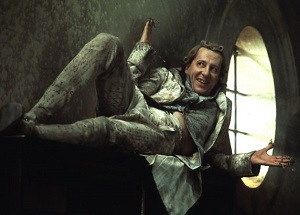
De Franse schrijver Donatien Alphonse François, Markies de Sade werd geboren op 2 juni 1740 in Parijs. Zie ook alle tags voor Markies de Sade op dit blog.

Uit: Justine (Vertaald door Austryn Wainhouse)

“Form flecked his lips as he spoke these words interspersed with revolting oaths and blasphemies. The hand, which had been prying open the shrine he seemed to want to attack, now strayed over all the adjacent parts; he scratched them, he did as much to my breast, he clawed me so badly I was not to get over the pain for a forthnight. Next, he placed me on the edge of the couch, rubbed alcohol upon that mossy tonsure with which Nature ornaments the altar wherein our species finds regeneration; he set it afire and burned it. His fingers closed upon the fleshy protuberance which surmounts this same altar, he snatched at it and scraped roughly, then he inserted his fingers within and his nails ripped the membrane which lines it. Losing all control over himself, he told me that, since he had me in his lair, I might just as well not leave it, for that would spare him the nuisance of bringing me back down again; I fell to my knees and dared remind him again of what I had done in his behalf…. I observed I but further excited him by harping again upon the rights to his pity I fancies were mine; he told me to be silent, bringing up his knee and giving me a tremendous blow in the pit of the stomach which sent me sprawling on the flagstones. He seize a handful of my hair and jerked me erect. “Very well!” he said, “come now! prepare yourself; it is a certainty, I am going to kill you….”
 

 1606527-ea3ee939e78da86d5ddc1151bed31326.jpg
Markies De Sade (2 juni 1740 – 2 december 1814)
Geoffrey Rush als de markies in de Amerikaanse film „Quills“ uit 2000


Zie voor nog meer schrijvers van de 2e juni ook mijn blog van 2 juni 2013 deel 2.
Geschreven door Romenu om 14:10 Reageer op dit bericht

Patrick Besson, John Masefield, Ferdinand Raimund, Peter de Mendelssohn

De Franse schrijver en journalist Patrick Besson werd geboren op 1 juni 1956 in Montreuil. Zie ook mijn blog van 1 juni 2009 en alle tags voor Patrick Besson op dit blog.

Uit: Les Frères de la consolation

« Le soleil lui fracassait le crâne à lents et lourds coups de massue. La sueur qui coulait sur ses tempes et ses joues était douce, tiède et rapide comme du sang. La chaleur était si forte qu'elle le faisait frissonner. S'il se trouvait là, c'était à cause de Macropoulos, car les Turcs attaquaient de préférence la nuit, peut-être parce que ça leur rappelait la prise de Constantinople, mais d'abord parce qu'à la guerre, au contraire de la paix, on choisit ses heures de travail, et que la nuit il fait frais, c'est plus agréable pour se battre. Les Turcs aimaient leurs aises. Milo ne les haïssait plus : il en avait trop tué. Trente ? Cinquante ? Cent ? Au moins cinquante. En moyenne : un par mois. Il aurait dû faire la liste. Après la guerre, c'est-à-dire hier, il l'aurait déposée, avec un petit bouquet de coquelicots, sur la tombe de sa femme Theodora, violée, égorgée et violée de nouveau par l'émir Ben Kouri le 27 janvier 1825 à Dafnio, dans le sud du Péloponnèse. Il se serait peut-être autorisé un léger sourire et aurait chuchoté : « Voilà, ma chérie, cinquante Turcs tués de ma main. Avant-hier, j'ai eu l'occasion d'en tuer encore un mais je ne l'ai pas fait car je préférais un compte rond, et la paix était signée. » Non, plus de haine, c'était fini. Une vague gêne dans la main droite, oui. « La crampe de l'assassin », lui avait écrit, de Belgrade, son frère Srdjan, qui prétendait avoir un jour assez d'esprit pour être capable de régner sur les salons parisiens de la Restauration.
Ce qu'aimait Macropoulos - « le général Macropoulos », comme l'appelaient les journaux étrangers, alors que dans le campement on lui donnait plutôt du Mikis ou du Mike quand c'était Hamilton qui lui parlait -, c'étaient les belles et franches attaques au milieu du jour, dans la torpeur de la canicule.Il disait que les Turcs étaient furieux qu'on les dérangeât pendant la sieste et que pour bien se battre il ne fallait pas être furieux mais en colère. Au-delà de la colère, on ne voit rien ? et en deçà, on en voit trop. C'était dans Homère.”


 1606079-b40c7d567c5894c8010d0c7f41db4f91.jpg
Patrick Besson (Montreuil, 1 juni 1956)


De Engelse dichter en schrijver John Edward Masefield werd geboren op 1 juni 1878 in Ledbury, in Herefordshire. Zie ook mijn blog van 1 juni 2009 en eveneens alle tags voor John Masefield op dit blog.


A Wanderer’s Song

A wind’s in the heart of me, a fire's in my heels,
I am tired of brick and stone and rumbling wagon-wheels;
I hunger for the sea's edge, the limit of the land,
Where the wild old Atlantic is shouting on the sand.

Oh I'll be going, leaving the noises of the street,
To where a lifting foresail-foot is yanking at the sheet;
To a windy, tossing anchorage where yawls and ketches ride,
Oh I'l be going, going, until I meet the tide.

And first I'll hear the sea-wind, the mewing of the gulls,
The clucking, sucking of the sea about the rusty hulls,
The songs at the capstan at the hooker warping out,
And then the heart of me'll know I'm there or thereabout.

Oh I am sick of brick and stone, the heart of me is sick,
For windy green, unquiet sea, the realm of Moby Dick;
And I'll be going, going, from the roaring of the wheels,
For a wind's in the heart of me, a fire's in my heels.


On Eastnor Knoll

Silent are the woods, and the dim green boughs are
Hushed in the twilight: yonder, in the path through
The apple orchard, is a tired plough-boy
Calling the cows home.

A bright white star blinks, the pale moon rounds, but
Still the red, lurid wreckage of the sunset
Smoulders in smoky fire, and burns on
The misty hill-tops.

Ghostly it grows, and darker, the burning
Fades into smoke, and now the gusty oaks are
A silent army of phantoms thronging
A land of shadows.


 1606079-14262c0dd5e4fb4bd7668683d96663e1.jpg
John Edward Masefield (1 juni 1878 – 12 mei 1967)
Cover biografie


De Oostenrijkse schrijver Ferdinand Raimund werd geboren op 1 juni 1790 in Wenen. Zie ook mijn blog van 1 juni 2009 en eveneens alle tags voor Ferdinand Raimund op dit blog.

Uit: Die unheilbringende Krone

„Phalarius und Hades.
(Hades grinst Phalarius an, der ihn mit Entsetzen betrachtet.)
Phalarius. Welch ekliche Gestalt, wer bist du?
Hades (mit etwas hohler Stimme, lauernd und gezogen). Ich?
Phalarius. Bist du der Rachefurien eine? (Starr.) Sprich!
Hades (langsam aufstehend, er geht gebeugt und spricht langsam im hohlen Tone).
Bin keine von den Rachefurien,
Kann selbst kaum mehr auf morschen Knochen stehn;
Bin nicht Tisiphone, Megär', Alecto,
Nein, nein, ich bin, – vergib, – mich schauert so.
Phalarius. Du kannst nicht ganz der Erde angehören,
Du könntest sonst den schönen Glauben stören,
Daß nach dem hohen Götterbild des Zeus
Der Mensch geformet sei durch Prometheus.
Hades. Nicht ganz ist mehr die Erd' mein Vaterland,
Tief unten ruft es mich am styg'schen Strand;
Harpyen, die wie Nachtigallen klagen,
Verkünden, daß die Furien um mich fragen.
Phalarius. Hast du so bös gehaust in dieser Welt,
Daß dir im Enden jeder Trost nun fehlt?
Bist du so arm, daß dich Verzweiflung faßt,
Und hast wohl einst im Übermut gepraßt?
Hades. So ist es, du hast furchtbar wahr gesprochen,
Doch jetzt ist meines Glückes Stab gebrochen;
Viel hab' ich einst auf dieser Erd' besessen,
Geliebt ward ich, ich werd' es nie vergessen,
Doch jetzt bin ich gehaßt, bin unbeweibt,
    (Weinend.)
So arm, daß mir nichts mehr, als eine Krone bleibt.
Phalarius (nach einer Pause des Erstaunens).
Was sprichst du, eine Kron'? Wahnwitzig Tier!“


 1606079-e7a8d8b46db89322a7dec5358175a414.JPG
Ferdinand Raimund (1 juni 1790 - 5 september 1836)
Raimund monument in Wenen


De Duitse schrijver, essayist, journalist, biograaf en uitgever Peter de Mendelssohn werd op 1 juni 1908 in München geboren. Zie ook mijn blog van 1 juni 2009 en eveneens alle tags voor Peter de Mendelssohn op dit blog.

Uit: Thomas Mann: Tagebücher (Uitgegeven door Peter de Mendelssohn)

„Dienstag den 24. XII. 35. Weihnachtsabend,
Der dritte, den wir im „Exil“ verbringen – welches mich eigentlich völlig gleichgültig läßt, da ich nur meine Möbel, Lüster, Bücher entbehre, aber auch diese nicht sehr, und ich das Vaterland viel lieber nicht um mich habe. Im Übrigen fehlt mir nichts, was ich brauche, um mein Leben und Werk zu Ende zu führen. Im Grunde decken die Außengeschehnisse wieder meine Arbeit, wie der Krieg es tat, an den der Zustand von heute sehr erinnert.
Stand früh auf, bei Lichtern im Ort, und schrieb etwas Schwieriges an der „Keuschheit“ weiter. – Es kam die ungarische Ausgabe der „Meister“; Brief von Albert Einstein, Glückwunsch zu dem Brief nach Oslo. – Ging allein mit dem Hund über Johannisburg. Milderung der Luft, dünne Bläue, der Schnee stumpfer und weniger beschwerlich. – K. in der Stadt, ihre Besorgungen zu beenden und zur Abholung Erikas. Deren Zug kam mit stundenlanger Verspätung. Außerdem Verfehlung. Wir warteten lange mit dem Lunch, aßen um ½3 ohne die Frauen, die später glücklich gleichzeitig eintrafen. Erika mit leichter Grippe. – Tennenbaum schickte 12 Flaschen Bordeaux. – Orchideen von Kahler. – Wiedererscheinen des von Landshoff lädierten Radio-Apparates. Las Vorschläge zur Herausgabe eines Buches. Die Bilanz der deutschen Republik.“


 1606079-b2fd34a34ab0f6f7674dd4b4fb3dfcea.jpg
Peter de Mendelssohn (1 juni 1908 – 10 augustus 1982)


Zie voor nog meer schrijvers van de 1e juni ook mijn vorige blog van vandaag.

Geschreven door Romenu om 13:33 Reageer op dit bericht

Colleen McCullough, Macedonio Fernández, Dennis Gaens, Rhidian Brook

De Australische schrijfster Colleen McCullough werd geboren op 1 juni 1937 in Wellington. Zie ook mijn blog van 1 juni 2009 en eveneens alle tags voor Colleen McCullough op dit blog.

Uit: The Thorn Birds

“The house lay on top of a small hill about one hundred feet higher than the barn and stables. Like all New Zealand houses, it was wooden, rambling over many squares and of one story only, on the theory that if an earthquake struck, some of it might be left standing. Around it gorse grew everywhere, at the moment smothered in rich yellow flowers; the grass was green and luxuriant, like all New Zealand grass. Not even in the middle of winter, when the frost sometimes lay unmelted all day in the shade, did the grass turn brown, and the long, mild summer only tinted it an even richer green. The rains fell gently without bruising the tender sweetness of all growing things, there was no snow, and the sun had just enough strength to cherish, never enough to sap. New Zealand’s scourges thundered up out of the bowels of the earth rather than descended from the skies. There was always a suffocated sense of waiting, an intangible shuddering and thumping that actually transmitted itself through the feet. For beneath the ground lay awesome power, power of such magnitude that thirty years before a whole towering mountain had disappeared; steam gushed howling out of cracks in the sides of innocent hills, volcanoes spumed smoke into the sky and the alpine streams ran warm. Huge lakes of mud boiled oilily, the seas lapped uncertainly at cliffs which might not be there to greet the next incoming tide, and in places the earth’s crust was only nine hundred feet thick.
    Yet it was a gentle, gracious land. Beyond the house stretched an undulating plain as green as the emerald in Fiona Cleary’s engagement ring, dotted with thousands of creamy bundles close proximity revealed as sheep. Where the curving hills scalloped the edge of the light-blue sky Mount Egmont soared ten thousand feet, sloping into the clouds, its sides still white with snow, its symmetry so perfect that even those like Frank who saw it every day of their lives never ceased to marvel.
    It was quite a pull from the barn to the house, but Frank hurried because he knew he ought not to be going; his father’s orders were explicit. Then as he rounded the corner of the house he saw the little group by the gorse bush.”


 1606075-72cca2f0d4c83add41dd969fcdc26d17.jpg
Colleen McCullough (Wellington, 1 juni 1937)


De Argentijnse schrijver Macedonio Fernández werd geboren op 1 juni 1874 in Buenos Aires. Zie ook mijn blog van 1 juni 2009 en ook mijn blog van 1 juni 2010.

Uit: From The Museum of Eterna’s Novel (Vertaald door Margaret Schwartz)

“With this I’m publishing a prologue of such a novel, since I hope to guarantee that in special rehearsals its characters, events, and jokes will all prove its utter seriousness; and even publishing it is a rehearsal, anterior to the reader. But only the prologues after this one!
I’ll rehearse the upcoming prologue instead. Also, there’s a new German word in Spanish that I consulted with Xul Solar about in his workshop: “Languages in repair.” It’s an amended adjective, but new, not like mended boots.
The Prologue to:
The “for-all-of-us-artists-gifted-with-daydreams” Reader
The “often-dreamed-of” Reader; The “who the author dreams is reading his dreams” Reader.
The “who-the-art-of-writing-wants-to-be-real-more-than-merely-real-reader-of-dreams” Reader.
The “only-real-that-art-recognizes” reader of dreams.
The “less-real, he-who-dreams-the-dreams-of-the-other,-and-stronger-in-reality,-since-he-does-not-lose-
it-although-they-won’t-let-him-dream-them-but-only-re-dream” Reader.
I believe I have identified the reader who addresses himself to me, and I have obtained the proper adjectivalization of his entire being, after so much fragmentation and some false adjectives. “Dear” reader does not modify the reader but the author, et cetera.
»


 1606075-d41c2e04197682cd2e18d5177cb48193.jpg
Macedonio Fernández (1 juni 1874 – 10 februari 1952)


Onafhankelijk van geboortedata:

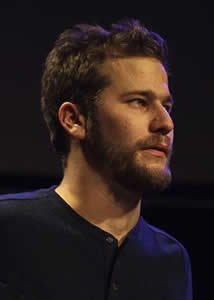
De Nederlandse dichter Dennis Gaens werd geboren in Susteren in 1982. Zie ook alle tags voor Dennis Gaens op dit blog.


Dani

Dani danst omdat ze niets ander kan; lenig klinkt alleen opwindend, in het
echt is het best eng. Haar is nooit iets gevraagd, alles aan haar is aanname.
Als iemand meent dat ze goed is, dan is dat zo. Ze draagt wat jij denkt dat
haar staat, gaat langs routes die aangegeven staan.

Ze houdt een pakje sigaretten bij zich voor het geval ze een bolle spiegel
vindt. Ze doet graag alsof ze een dik meisje is dat rookt.

Ze hoest, maar houdt niemand voor de gek. Sommige mensen doen niet
anders dan doodgaan, maar niet Dani. Die is geboren om – of ze wil of
niet – te bewegen.

En met publiek is het anders. Dan is het niet zijzelf die terugkijkt.


 1606075-f5042431a5cf6875c31bd4a7bb0487ce.jpg
Dennis Gaens (Susteren, 1982)


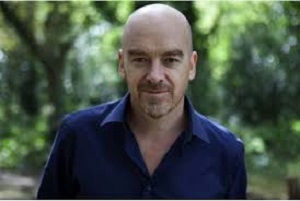
De Britse schrijver Rhidian Brook werd geboren in 1964 in Tenby. Zie ook alle tags voor Rhidian Brook op dit blog.

Uit: The Aftermath

“The Beast is here. I’ve seen him. Berti’s seen him. Dietmar’s seen him. With his black fur like a fancy lady’s coat. Andthose teeth like piano keys. We have to kill him. If we don’t, who will? The Tommies? The Yankees? The Russkies? The French? None of them will, because they’re too busy looking for other things. They want this and they want that.
They’re like dogs fighting over a bone that’s got no meat on it. We have to do it ourselves. Get the Beast before he gets us. Then everything will be better.’
The boy Ozi readjusted his headgear as he led the others through the pulverized landscape of the Tommy-bombed city. He wore the English hard-helmet he’d stolen from the back of a truck near the Alster. Although it was not as stylish as the American or even the Russian helmets he had in his collection, it fitted him the best and helped him swear in English when he wore it, just like the Tommy sergeant he’d seen shouting at the prisoners at Hamburg’s Dammtor station: ‘Oi! Put your fucking hands up. Fucking up, I said!
Where I can see them! Dumb bloody fucking Huns.’ Just for a moment those men had failed to raise their hands; not because they didn’t understand, but because they were too weak from lack of food. Dumb-Bloody-Fucking-Huns! Below the neck, Ozi’s clothes were a hybrid fashion of make-do invention where rags and riches jumbled together: the dressing gown of a dandy; the cardigan of an old maid; the collarless shirt of a grandfather; the rolled-up trousers of a storm trooper tied with the belt of a clerk’s necktie; and the shoes, shredded at the toe, of a long-gone station-master.”


 1606075-53b4131ad9606fd5cffb60968ba78868.jpg
Rhidian Brook (Tenby, 1964)

Geschreven door Romenu om 13:20 Reageer op dit bericht

Meer van Romenu

↑ Terug naar de berichten