Naar de inhoud

Romenu

Over literatuur, gedichten, kunst en cultuur
akke.beakke.be

Berichten van 19 juni 2014 tot 20 juni 2014

Vikram Seth, Paul Muldoon, Kurt Schwitters, Jean-Claude Izzo, Silke Andrea Schuemmer, Carel van Nievelt

De Indische schrijver Vikram Seth werd geboren op 20 juni 1952 in Kolkata. Zie ook alle tags voor Vikram Seth op dit blog.

Uit: An Equal Music

„I stared at her with such incredulity that she looked down.
"You're always humming," she said in a much quieter voice, feeling perhaps that she had to explain.
"It's my work," I said, ashamed of my bitterness. Another customer entered the shop, and I left.
As I put my week's croissants--all except one--in the freezer, I noticed I was humming the same half-tuneless tune of one of Schubert's last songs:
I see a man who stares upwards
And wrings his hands from the force of his pain.
I shudder when I see his face.
The moon reveals myself to me.
I put the water on for coffee, and look out of the window. From the eighth floor I can see as far as St Paul's, Croydon, Highgate. I can look across the brown-branched park to spires and towers and chimneys beyond. London unsettles me--even from such a height there is no clear countryside to view.
But it is not Vienna. It is not Venice. It is not, for that matter, my hometown in the North, in clear reach of the moors.
It wasn't my work, though, that made me hum that song. I have not played Schubert for more than a month. My violin misses him more than I do. I tune it, and we enter my soundproof cell. No light, no sound comes in from the world. Electrons along copper, horsehair across acrylic create my impressions of sense.
I will play nothing of what we have played in our quartet, nothing that reminds me of my recent music-making with any human being. I will play his songs.”


 1614650-2f1f3559b927989920ce7585f5e193ac.jpg
Vikram Seth (Kolkata, 20 juni 1952)


De Ierse dichter en schrijver Paul Muldoon werd geboren in Portadown, County Armagh, in Noord-Ierland op 20 juni 1951, Zie ook alle tags voor Paul Muldoon op dit blog.


Extraordinary Rendition

1.
I gave you back my claim on the mining town
and the rich vein we once worked,
the tumble down
from a sluice box that irked

you so much, the narrow gauge
that opened up to one and all
when it ran out at the landing stage
beyond the falls.

I gave you back oak ties,
bully flitches, the hand-hewn crossbeams
from which hung hardtack

in a burlap bag that, I'd surmise,
had burst its seams
the last night we lay by the old spur track.


2.
You gave me back your frown
and the most recent responsibility you'd shirked
along with something of your renown
for having jumped from a cage just before it jerked

to a standstill, your wild rampage
shot through with silver falderals,
the speed of that falling cage
and the staidness of our canyon walls.

You gave me back lake skies,
pulley glitches, gully pitches, the reflected gleams
of two tin plates and mugs in the shack,

the echoes of love sighs
and love screams
our canyon walls had already given back.


 1614650-551ada35903351b2075ff0b5cf386bcd.jpg
Paul Muldoon (Portadown, 20 juni 1951)


De Duitse schrijver, dichter en kunstenaar Kurt Schwitters werd geboren op 20 juni 1887 in Hannover. Zie ook alle tags voor Kurt Schwitters op dit blog.


Sie puppt mit Puppen

Die Puppen puppen mit kleinen Puppen,
Die kleinen Puppen puppen mit winzigen Puppen,
Die winzigen Puppen puppen mit Püppchen,
Die Püppchen puppen mit kleinen Püppchen,
Die kleinen Püppchen puppen mit winzigen Püppchen,
Die winzigen Püppchen puppen,
Keiner puppt mit ihr.
Ah, Du meine Puppe,
Meine süße Puppe;
Mir ist alles schnuppe,
Wenn ich meine Schnauze
Auf die Deine - bauze.
Püppchen Schnüppchen
Puppe Schnuppe
Schnuppe bauze.
Die bäuzchen, Püppchen, Puppenfraun
Sie machen nur noch schnauze bauze.


Unsittliches i-Gedicht

Dames-Hemden . . . . . . . . .
Dames-Pantalons, fransch model
Dames-Pantalons . . . . . . . .
Prima Dames Nachtponnen . . . .
Dames-Combinations . . . . . .
Heeren Hemden, zwaar graslinnen


 1614650-2aef41c37facf42db8fb63ace12923bd.jpg
Kurt Schwitters (20 juni 1887 – 8 januari 1948)
Das Bumerbild door Kurt Schwitters, 1920


De Franse dichter en schrijver Jean-Claude Izzo werd geboren op 20 juni 1945 in Marseille. Zie ook alle tags voor Jean-Claude Izzo op dit blog.


Soif d'avoir soif

Et l'eau bue jusqu'à la cécité bleue
des océans érigés en écritoire.

Et l'abondance des mots, à blanc,
jusqu'à l'à-pic dérisoire des pages nues.

Ne rien écrire qui ne soit vu.
Ne rien dire qui n'ait été écrit.

Alors, dans ce silence à couper au regard,
s'abreuver
aux seuls chemins qui se refusent
et s'insoumettre
à l'ordre des choses.

Alors encore, d'immobilisme
renverser le paysage,
se hisser à l'écume des houles annonciatrices
des jours mourants.

La chute d'une hirondelle
n'empêchera pas le retour du printemps.


Uit : Braises de la mémoire, IV

Terre.
Gisent les hommes dans les villages défaits.
Cimetières.
Aux fenêtres des maisons tombent les pierres d'angle.
Larmes.
Larmes, et pierres sur pierres, les ruines s'érigent.
Cri – trou que font mes lèvres dans l'opacité bleue pour rompre le silence, pour
rendre la parole à ces heurs dans le plain-chant du soleil. Et les coquelicots enfin
rendus à leur éphémère splendeur.
Terre.
Là.


 1614650-398816b7d554379bd509b9969b4267da.jpg
Jean-Claude Izzo (20 juni 1945 – 26 januari 2000)


De Duitse dichteres, schrijfster en kunsthistorica Silke Andrea Schuemmer werd geboren op 20 juni 1973 in Aken. Zie ook alle tags voor Silke Andrea Schuemmer op dit blog.


Amourellen

I

Wenn du aus meinen Händen Schwalben faltest,
zieht ihr Flug die Himmel lakentief
drin gehn wir als vergessne Blinde um
Mit einem Seufzen setz ich dir mein Auge in die Stirn
und seh mich tastend gegenüber stehn
Die Luft wird knapp bei deinem Kuss
denn ein Insekt hab ich verschluckt
das flirrt und flattert mit vier Flügeln
bis zum Bersten in der Brust


Wind

III

Vom blassen Kleid aus Sturm und Luft
hängt noch ein Zipfel im Geäst
ob Nixenschwanz ob Mirtenschmuck
und verdunstet wie der Mond
im allerersten Licht
Der Windsbrautklang und der Gesang
nach wilder Jagd und Menschenfleisch
heult durch den hohlen Stamm
Der Schritt der Weiterhetzenden ist
nur ein Alpdruckgruß im Morgenschlaf
Doch oben hoch im grad erwachten Baum
loben gefiederte Fische das Meer


 1614650-808b3fbfafc19283ff4d91be09678570.jpg
Silke Andrea Schuemmer (Aken, 20 juni 1973)
Jean-François Millet, Le coup de vent, nationaal museum, Cardiff, 1871-73


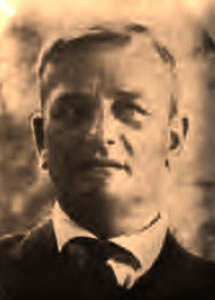
De Nederlandse schrijver Carel van Nievelt werd op 20 juni 1843 geboren in Delfshaven, als zoon van een boekhandelaar. Zie ook mijn blog van 20 juni 2007.

Uit: Mijn Angelo. Herinneringen van het Garda-meer

“Wanneer ik u thans in dit dorp Nago iets langer doe verwijlen, dan misschien voor uwe reuk- en gezichtsorganen aangenaam kan zijn, zoo moet gij dit beschouwen als een soort van afdoener. Al deze Italiaansch-Tiroleesche dorpen immers, op weinige gezegende uitzonderingen na, zijn in eenzelfden vorm gebakken, met eenzelfde sop van grauwheid en groezeligheid overgoten, met eeuzelfden geest van ontiegheid en onhuislijkheid doortrokken. Kent gij er één, zoo kent gij er honderd.
Stel u voor een brok van eene achterbuurt uit eene groote Italiaansche stad, neergeploft ergens midden tusschen de bergen - dan hebt gij een begrip van een dorp in Italiaansch Tirol, of Tiroleesch Italië, naar het met meer juistheid te noemen ware. Zulk een dorp heeft in zijnen houwtrant geen zweem van dorpschheid. Flank tegen flank geplakt, staan om de onvermijdelijke piazza en aan de enge straat de berookte, drie of vier verdiepingen hooge huizen. Meest vensterloos, ontdaan van alle sieraad en behang, maken zij den indruk alsof zij kort geleden door een brand bezocht werden, die slechts de naakte muren overliet. Werpt gij door de zwarte openingen eenen blik naar binnen, dan griezelt gij bij de gedachte aan het leven der bewoners van die donkere, schier van alle huisraad verstokene spelonken - en het verwondert u niet, dat de menschen op de morsige straat zoo schuw en lusteloos daar heenschuifelen; dat menig fijn kindergezichtje zoo flets, menig donker meisjesoog zoo lijdend staat; dat mannen en vrouwen zoo iets misnoegde of kwaadaardigs in hunne trekken hebben; dat in het algemeen op het gelaat van oud en jong het stempel gedrukt is, niet zoozeer van de armoede waarmede men worstelt, als wel van de doffe vreugdeloosheid eener existentie aan welke de fleur en de geur van het menschzijn ontbreken: een opgewekt gemoedsleven, een zin voor reinheid, schoonheid en huislijke gezelligheid.”


 1614650-fb9ce19cded259522a25db141caef2ed.jpg
Carel van Nievelt (20 juni 1843 – 2 augustus 1913)
Nago-Torbole aan het Gardameer


Zie voor nog meer schrijvers van de 20e juni ook mijn blog van 20 juni 2011 deel 2.

Geschreven door Romenu om 18:30 Reageer op dit bericht

Salman Rushdie, Sybren Polet, Josef Nesvadba, Osamu Dazai, José Rizal, Friedrich Huch, Gustav Schwab

De Indisch-Britse schrijver en essayist Salman Rushdie werd geboren in Bombay op 19 juni 1947. Zie ook alle tags voor Salman Rushdie op dit blog.

Uit: Joseph Anton: A Memoir

“Afterwards, when the world was exploding around him and the lethal blackbirds were massing on the climbing frame in the school playground, he felt annoyed with himself for forgetting the name of the BBC reporter, a woman, who had told him that his old life was over and a new, darker existence was about to begin. She had called him at home on his private line without explaining how she got the number. “How does it feel,” she asked him, “to know that you have just been sentenced to death by the Ayatollah Khomeini?” It was a sunny Tuesday in London but the question shut out the light. This is what he said, without really knowing what he was saying: “It doesn’t feel good.” This is what he thought: I’m a dead man. He wondered how many days he had left to live and thought the answer was probably a single- digit number. He put down the telephone and ran down the stairs from his workroom at the top of the narrow Islington row house where he lived. The living room windows had wooden shutters and, absurdly, he closed and barred them. Then he locked the front door.
It was Valentine’s Day but he hadn’t been getting on with his wife, the American novelist Marianne Wiggins. Six days earlier she had told him she was unhappy in the marriage, that she “ didn’t feel good around him anymore,” even though they had been married for little more than a year, and he, too, already knew it had been a mistake. Now she was staring at him as he moved nervously around the house, drawing curtains, checking window bolts, his body galvanized by the news as if an electric current were passing through it, and he had to explain to her what was happening. She reacted well, beginning to discuss what they should do next. She used the word “we.” That was courageous.
A car arrived at the house, sent by CBS television. He had an appointment at the American network’s studios in Bowater House, Knightsbridge, to appear live, by satellite link, on its morning show. “I should go,” he said. “It’s live television. I can’t just not show up.” Later that morning the memorial service for his friend Bruce Chatwin was to be held at the Orthodox church on Moscow Road in Bayswater”.


 1614256-3583029bf484cfebbd20fce29330eecd.jpg
Salman Rushdie (Bombay, 19 juni 1947)


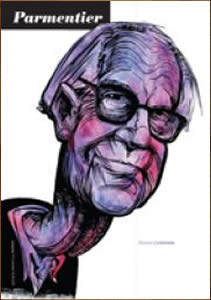
De Nederlandse dichter en schrijver Sybren Polet (pseudoniem van Sybe Minnema) werd geboren in Kampen op 19 juni 1924. Zie ook alle tags voor Sybren Polet op dit blog.


Overleven

Elke dag minstens één koude-oorlog.
De hele aardbevolking
even bevroren. IJspoppen met rode ogen.

Ontdooid. En daar lopen wij weer,
in een landschap
vredig als zeegras in de landwind,
wind
als een zegen uit het nihil.

Windmolens als gebedsmolens:
de wind komt op tijd
als ademstoten van inspiratie
uit rondwervelende windstreken.

Begeleid door de laatste vrije geluiden
waaien wij mee.
Zeer mooi
zoals wij de laatste koude oorlog doorstaan
en weten waar te gaan:
wij,
spelingen van de natuur:
ónze verspeelde natuur.


Eén minuut stilte 1

De stad
rilt
onder zijn asfalt.

Ik steek al je lampen aan bij daglicht
om naar de stilte te luisteren.

Oorsuizingen van asters
narcissen
bloemen voor mijn broer -

Ik heb een voor een mijn bloemen gedoofd
om naar je oren te luisteren. - Luister maar;

je leeft,

zo zachtjes als de duif die men kan horen koeren
op het Weteringcircuit
de éne voet die schuifelt,
de éne nek

die zich omdraait

en knarst


 1614256-1b8179433a2cd825f1e1e936a029c4ad.jpg
Sybren Polet (Kampen, 19 juni 1924)
Op de cover van het tijdschrift Parmentier, 2008


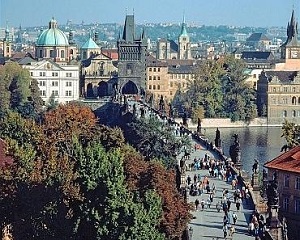
De Tsjechische schrijver Josef Nesvadba werd geboren op 19 juni 1926 in Praag. Zie ook alle tags voor Josef Nesvadba op dit blog.

Uit: Horribly Beautiful, Beautifully Horrible

“We had to pass through the Iron Curtain, about which we had heard so much from previous expeditions. It was not a literal curtain of iron, but a system of holorays that wouldn't permit anything metallic to pass through: no equipment, no computers and, of course, no weapons. We found ourselves becalmed within it, unable to take a single step forward; the only solution was to take off our clothes and continue our journey naked. Once on the other side, though, we all felt cold and had difficulty breathing the planet's smog-filled atmosphere.
We walked across a fouled desert plain from which strange and stunted hills emerged here and there, like the finger-bones of a huge skeleton. Only the crest of these finger-like hills were inhabited by living beings; the natives had evidently abandoned the cities and villages of the plain because of the smog. We found many of these abandoned settlements, all in ruins, as though they had suffered some long and bloody conflict. In some of the derelict dwellings we found coats and dirty suits to cover our nakedness. We felt warmer then, but we looked rather silly, like the retreating soldiers of a beaten army.
At least, we thought, they won't be afraid of us.
Thus clad, we undertook the arduous climb to the summit of one of the digital hills, and eventually arrived at the gate of the natives' new abode. It looked like a medieval town. The towns in the plain had been much more advanced. A queue had formed before the gate, made up of suspicious characters like ourselves. They were being examined one by one by guards who were armed with swords and shields. Our commander decided that someone should be sent ahead to find out exactly what was going on. "Someone" turned out to be me.“


 1614256-ce04e7d3518ba1c67ca8c992a9c147ea.jpg
Josef Nesvadba (19 juni 1926 – 26 april 2005)
Praag 


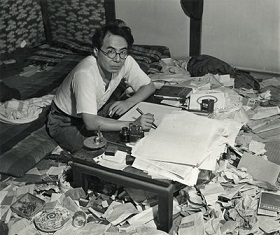
De Japanse schrijver Osamu Dazai (eig.Shūji Tsushima) werd geboren op 19 juni 1909 in Tsugaru. Zie ook alle tags voor Osamu Dazai op dit blog.

Uit: No Longer Human (Vertaald door Donald Keene)

“Though I have always made it my practice to be pleasant to everybody, I have not once actually experienced friendship. I have only the most painful recollections of my various acquaintances with the exception of such companions in pleasure as Horiki. I have frantically played the clown in order to disentangle myself from these painful relationships, only to wear myself out as a result. Even now it comes as a shock if by chance I notice in the street a face resembling someone I know however slightly, and I am at once seized by a shivering violent enough to make me dizzy. I know that I am liked by other people, but I seem to be deficient in the faculty to love others. (I should add that I have very strong doubts as to whether even human beings really possess this faculty.) It was hardly to be expected that someone like myself could ever develop any close friends—besides, I lacked even the ability to pay visits. The front door of another person’s house terrified me more than the gate of Inferno in the Divine Comedy, and I am not exaggerating when I say that I really felt I could detect within the door the presence of a horrible dragon-like monster writhing there with a dank, raw smell.”
(…)

“Unhappiness. There are all kinds of unhappy people in the world. I suppose it would be no exaggeration to say that the world is composed entirely of unhappy people. But those people can fight their unhappiness with society fairly and squarly, and society for its part easily understands and sympathizes with such struggles. My unhappiness stemmed entirely from my own vices, and I had no way of fighting anybody.”


 1614256-ab6db8662cf281f7a6a4d6924e07ba81.jpg
Osamu Dazai (19 juni 1909 – 13 juni 1948)


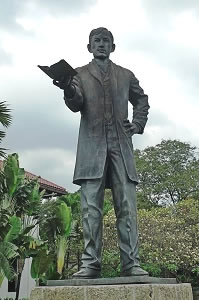
De Filippijnse dichter en schrijver José Rizal (eig. José Protacio Rizal Mercado y Alonso Realonda) werd geboren op 19 juni 1861 in Calamba. Zie ook alle tags voor José Rizal op dit blog.


First Inspiration


Why falls so rich a spray
of fragrance from the bowers
of the balmy flowers
upon this festive day?

Why from woods and vales
do we hear sweet measures ringing
that seem to be the singing
of a choir of nightingales?

Why in the grass below
do birds start at the wind's noises,
unleashing their honeyed voices
as they hop from bough to bough?

Why should the spring that glows
its crystalline murmur be tuning
to the zephyr's mellow crooning
as among the flowers it flows?

Why seems to me more endearing,
more fair than on other days,
the dawn's enchanting face
among red clouds appearing?

The reason, dear mother, is
they feast your day of bloom:
the rose with its perfume,
the bird with its harmonies.

And the spring that rings with laughter
upon this joyful day
with its murmur seems to say:
'Live happily ever after!'

And from that spring in the grove
now turn to hear the first note
that from my lute I emote
to the impulse of my love.


 1614256-4544f39df275d090df9cd2227da72477.jpg
José Rizal (19 juni 1861 - 30 december 1896)
Standbeeld in Manilla


De Duitse dichter en schrijver Friedrich Huch werd geboren op 19 juni 1873 in Braunschweig. Zie ook alle tags voor Friedrich Huch op dit blog.

Uit: Peter Michel

„Peter Michels Vater war Schuhmacher in einem Dorfe. Er hatte träumerische Augen, die sich nie mit Bewußtsein dauernd auf eine Stelle konzentrieren konnten, und einen Geist, der fortwährend grübelte, ohne an etwas Festem zu haften. Er dachte über die abenteuerlichsten Fragen nach, ohne aber je zu einem Resultate oder zur Annäherung an ein solches zu gelangen. Er hatte eine unbegrenzte Hochachtung für andere; vor allem für seine Frau, welche gar keinen Maßstab an sich legte, sondern sich unbesehen für etwas ganz Bedeutendes hielt. – Beobachtung fehlte Herrn Michel beinahe gänzlich; doch hatte er ein gutes Auge für die Füße anderer: er maß einem jeden sogleich in Gedanken Stiefel an. Einmal ereignete es sich, daß eine fremde, durchreisende Dame ihm ihr Schuhwerk zur Ausbesserung bringen ließ, kleine Stiefelchen aus feinem gelbem Leder. Er, der gewöhnt war, pfundschwere Ware unter den Händen zu haben, fühlte sich einer so zierlichen Aufgabe nicht gewachsen. Da war es aber seine Frau, die ihre ganze Energie einsetzte, der fremden Dame zu zeigen, daß es auch in ihrem Dorfe Leute gäbe, »welche mit der Welt in Verbindung ständen«. Sie fuhr persönlich in das nächste größere Städtchen, kaufte feines Leder, feine Stifte, Glanzwichse, und die Schuhe wurden repariert. Diese Dame machte auf den kleinen Peter einen großen Eindruck. Wenn er später etwas von Prinzessinnen las, dachte er stets sogleich an gelbe Schuhe, eine Ideenverbindung, die sich erst in seinem weiteren Leben verlor.
Sein Vater war sehr beliebt im Dörfchen. Er verdarb es mit niemandem, hörte jeden an und stimmte jedem bei, in aufrichtiger Bewunderung der fremden Größe. Er glaubte alles, was man ihm sagte. Der Schulze und der Pastor erprobten zuweilen die Tragfähigkeit dieses Glaubens, indem sie sich gegenseitig überboten in den plumpsten Lügenbauten.“


 1614256-51ebef968fe7ff7df9d8b9920fc4a847.jpg
Friedrich Huch (19 juni 1873 – 12 mei 1913)


De Duitse dichter, schrijver en pastor Gustav Schwab werd geboren op 19 juni 1792 in Stuttgart. Zie ook alle tags voor Gustav Schwab op dit blog.

Uit: Wanderungen durch Schwaben

„Das Neckartal von Cannstatt bis Heidelberg.

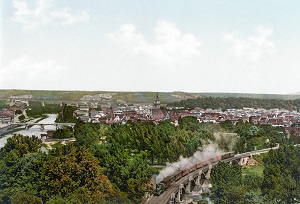
Unsre Galerie malerischer Gegenden aus Schwaben eröffnet sich mit einem Tale, über welches eine südlichere Natur das Füllhorn ihres Segens ausgegossen zu haben scheint. Schon der alte Hübner in seinem jetzt hundertjährigen Zeitungslexikon sagt: »Cannstatt ist nach Stuttgart und Tübingen eine der feinesten Städte im Württembergischen.« Er konnte mit diesem rühmlichen Prädikate keineswegs unmittelbar das Städtchen Cannstatt selbst bezeichnen wollen, denn dieses ist ein unansehnliches, in seinem Innern nichts weniger als »feines« Landstädtchen, von dessen Einrichtung zu Hübners und zu unsrer Zeit galt und gilt, was schon zu Ende des sechzehnten Jahrhunderts Martin Crusius in seiner Chronik vorgemerkt hat: »Die Häuser von Cannstatt sind nicht zur Pracht, sondern zum Gebrauch gebaut.« Jenes Lob kann also nur der Umgegend gelten, und diese verdient es auch in vollem Maße. Der Teil des Neckartals, in dessen Schoße Cannstatt liegt, gehört nicht zu den großartigeren, wohl aber zu den freundlichsten und fruchtbarsten von ganz Schwaben. Das üppigste Rebenlaub kleidet seine sonnigen Hügel, deren Höhen und tiefere Taleinschnitte wuchernde Obstgärten oder vielmehr Obstwälder bedecken und ausfüllen; breite Weidenpflanzungen auf frischen grünen Wiesen ziehen sich zu beiden Seiten der Flußufer hin und machen, in der Nähe zahlreicher und lachender Ortschaften, Gärten und Äckern, wohl auch Weinpflanzungen Platz; einzeln auf Hügeln stehende Kirchen, zu welchen nur die letzten Häuser der Dörfer sich emporziehen, erinnern, mitten im protestantischen Lande, an die alte katholische Zeit, aus der wohl auch einmal die einsame Kapelle eines verschwundenen Dorfes übrig geblieben ist; einige Dörfer sind, wie die Städte Italiens, ganz auf Hügeln gelagert; die neueste Zeit hat diesem lachenden Gemälde Landhäuser, Tempel, Badehallen und Pavillons hinzugefügt, und das unscheinbare Cannstatt selbst verschwindet unter einer Umkleidung von schmucken Vorwerken, Gasthöfen, Badehäusern, Fabriken und vor einer gewerbreichen, an Bauten von Jahr zu Jahr wachsenden Vorstadt jenseits des Neckars, die binnen Jahresfrist mit der Stadt selbst durch die massivste und schönste Steinbrücke des Landes verbunden sein wird.“


 1614256-7466d518c235e398e77ed71ad18fb327.jpg
Gustav Schwab (19 juni 1792 – 4 november 1850)
Cannstatt, rond 1900

Geschreven door Romenu om 19:02 Reageer op dit bericht

Meer van Romenu

↑ Terug naar de berichten