Naar de inhoud

Romenu

Over literatuur, gedichten, kunst en cultuur
akke.beakke.be

Berichten van 16 augustus 2014 tot 17 augustus 2014

V. S. Naipaul, Jonathan Franzen, Ted Hughes, Theodor Däubler, Herta Müller, Tsegaye Gabre-Medhin, Roger Peyrefitte
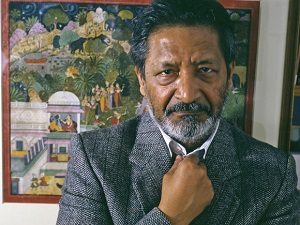
De Britse schrijver Sir Vidiadhar Surajprasad Naipaul werd geboren op 17 augustus 1932 in Chaguanas, Trinidad en Tobago. Zie ook alle tags voor V. S. Naipaul op dit blog en ook mijn blog van 17 augustus 2010.

Uit: A Bend In the River

“At certain times in some civilizations great leaders can bring out the manhood in the people they lead.  It is different with slaves.  Don’t blame the leaders.  It is just part of the dreadfulness of the situation.  It is better to withdraw from the whole business, if you can.  And I could.  You may say -- and I know, Salim, that you have thought it -- that I have turned my back on my community and sold out.  I day: ‘Sold out to what and from what? What do you have to offer me? What is your own contribution?  And can you give me back my manhood?’ Anyway, that was what I decided that morning, beside the river of London, between the dolphins and the camels, the work of some dead artist who had been adding to the beauty of their city.
“That was five years ago.  I often wonder what would have happened to me if I hadn’t made that decision.  I suppose I would have sunk.  I suppose I would have found some kind of hole and tried to hide or pass.  After all, we make ourselves according to the ideas we have of our possibilities.  I would have hidden in my hole and been crippled by my sentimentality, doing what I doing, and doing it well, but always looking for the wailing wall.  And I would never have seen the world as the rich place that it is.  You wouldn’t have seen me here in Africa , doing what I do.  I wouldn’t have wanted to do it, and no one would have wanted me to do it.  I would have said: ‘It’s all over for me, so why should I let myself be used by anybody? The Americans want to win the world.  It’s their fight, not mine.’ And that would have been stupid.  It is stupid to talk of the Americans.  They are not a tribe, as you might think from the outside.  They’re all individuals fighting to make their way, trying as hard as you or me not to sink.
“It wasn’t easy after I left the university.  I still had to get a job, and the only thing I knew now was what I didn’t want to do.  I didn’t want to exchange one prison for another.  People like me have to make their own jobs.  It isn’t something that’s going to come to you in a brown envelope. The job is there, waiting.  But it doesn’t exist for you or anyone else until you discover it, and you discover it because it’s for you and you alone.”


 1640268-866829ef1195a0460ab99aa7ba8dcad2.jpg
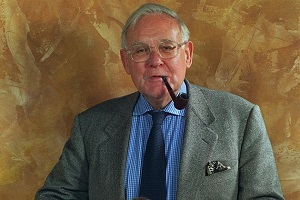
V. S. Naipaul (Chaganuas, 17 augustus 1932)


De Amerikaanse schrijver en essayist Jonathan Franzen werd geboren op 17 augustus 1959 in Western Springs, Illinois. Zie ook alle tags voor Jonathan Franzen op dit blog en ook mijn blog van 17 augustus 2010.

Uit: Vrijheid (Vertaald door Peter Abelsen)

"Hij had geen flauw benul van wie hij was en wat hij met zijn leven aan moest. Alles wat op zijn weg kwam, dwong hem in een richting die hem de enig juiste leek, maar zodra zich dan weer iets nieuws aandiende, dwong dat hem in een heel andere richting die óók de enig juiste leek. Er was geen ordenende structuur, geen perspectief waarbinnen hij zich kon oriënteren – hij kwam zichzelf voor als een balletje in een flipperkast dat maar voort bleef rollen om het rollen zelf. Het idee om zijn huwelijk eraan te geven en opnieuw te beginnen met Lalitha had onweerstaanbaar geleken tot hij zich herkende in die oudere collega uit Jessica’s verhaal, een van die talloze blanke Amerikaanse mannen die recht meenden te hebben op meer en meer en meer. Dat maakte er opeens een romantische vorm van Amerikaans imperialisme van: iets jongs en exotisch willen hebben omdat het artikel van eigen bodem niet langer voldeed. [...] Wie was hij en wat moest hij met zijn leven aanvangen?'
(…)

“Het nieuws over Walter Berglund kwam niet van iemand uit Ramsey Hill (Patty en hij waren twee jaar geleden naar Washington verhuisd en vormden allang geen gespreksstof meer in de buurt), maar in dit deel van St. Paul was de verbondenheid met de eigen stad niet zo sterk dat er voorbij werd gegaan aan de New York Times, en volgens een uitgebreid en verre van lovend stuk in die krant was Walter behoorlijk in de fout gegaan, daar in de hoofdstad van het land. Zijn vroegere buren vonden de quotes over hem  ('arrogant', 'achterbaks', 'kwalijk') maar moeilijk te rijmen met hun herinnering aan de immer vriendelijke, opgewekte en snel blozende 3M-employé die vroeger als fietsforens de februarisneeuw op Summit Avenue had getrotseerd. Het wekte bevreemding dat Walter, die altijd groener dan Greenpeace was geweest en zijn wortels op het platteland had, in opspraak was omdat hij met de steenkoolindustrie zou hebben samengespannen om de plattelandsgemeenschap te benadelen. Maar aan de andere kant, de Berglunds hadden wél altijd iets eigenaardigs over zich gehad...”


 1640268-a827e36e5d8438ca7485db01383f6c95.jpg
Jonathan Franzen (Western Springs, 17 augustus 1959)


De Amerikaanse dichter en schrijver Ted Hughes werd geboren op 17 augustus 1930 in Mytholmroyd, Yorkshire. Zie ook mijn blog van 17 augustus 2010 en eveneens alle tags voor Ted Hughes op dit blog.


Hawk Roosting

I sit in the top of the wood, my eyes closed.
Inaction, no falsifying dream
Between my hooked head and hooked feet:
Or in sleep rehearse perfect kills and eat.

The convenience of the high trees!
The air's buoyancy and the sun's ray
Are of advantage to me;
And the earth's face upward for my inspection.

My feet are locked upon the rough bark.
It took the whole of Creation
To produce my foot, my each feather:
Now I hold Creation in my foot

Or fly up, and revolve it all slowly -
I kill where I please because it is all mine.
There is no sophistry in my body:
My manners are tearing off heads –

The allotment of death.
For the one path of my flight is direct
Through the bones of the living.
No arguments assert my right:

The sun is behind me.
Nothing has changed since I began.
My eye has permitted no change.
I am going to keep things like this.


The Owl

I saw my world again through your eyes
As I would see it again through your children's eyes.
Through your eyes it was foreign.
Plain hedge hawthorns were peculiar aliens,
A mystery of peculiar lore and doings.
Anything wild, on legs, in your eyes
Emerged at a point of exclamation
As if it had appeared to dinner guests
In the middle of the table. Common mallards
Were artefacts of some unearthliness,
Their wooings were a hypnagogic film
Unreeled by the river. Impossible
To comprehend the comfort of their feet
In the freezing water. You were a camera
Recording reflections you could not fathom.
I made my world perform its utmost for you.
You took it all in with an incredulous joy
Like a mother handed her new baby
By the midwife. Your frenzy made me giddy.
It woke up my dumb, ecstatic boyhood
Of fifteen years before. My masterpiece
Came that black night on the Grantchester road.
I sucked the throaty thin woe of a rabbit
Out of my wetted knuckle, by a copse
Where a tawny owl was enquiring.
Suddenly it swooped up, splaying its pinions
Into my face, taking me for a post.


 1640268-824eb8c47350d78bc627b384ffff86b3.JPG
Ted Hughes (17 augustus 1930 – 28 oktober 1998)
;Homage to Ted Hughes door Reginald Gray, 2007


De Duitse dichter en schrijver Theodor Däubler werd geboren op 17 augustus 1876 in Triëst. Zie ook alle tags voor Theodor Däubler op dit blog en ook mijn blog van 17 augustus 2010.


Mir ist es oft, als sehnten sich die Blumenwiesen

Mir ist es oft, als sehnten sich die Blumenwiesen,
In heitrem Lenzesschmuck, nach einem Fernenflug,
Als wähnten sie, als hofften sie, die Winde bliesen
Sie munter fort, als traumhaftbunten Flatterzug.

Nun plötzlich seh ich, wie sich einige regen,
Befreite sie und trägt sie gar ein Lenzgeruch!
Narzissenfelder können ihren Flug erwägen –
Denn Liebenden gelingt der erste Fluchtversuch! –

Nein, weiße Tauben sind es, die mich deutlich täuschen,
Dort weiß ich, daß ich Blüthensehnsucht wahr empfand,
Nun lausche ich der Vögel wirren Fluggeräuschen,
Die erst im Steilgesang ihr Urgewicht erkannt!

Ich selber bin ein Wunsch nach Liebe und Entfaltung,
Der mühsam erst aus Irrgespinnsten bricht;
Mein Weib, wann gebe ich dir lichte Wahrgestaltung,
Wo bist du Kind, das wieder kindlich zu mir spricht?

Ich weiß genau, daß tausend weiße Himmelswiesen
In uns sich suchen, weil sie gleicher Duft beseelt,
Sie wollen sich aus Liebe ferneher erkiesen,
Und keusches Glück hält sie einst sommertreu vermählt.

Ja, keusch ist die Natur, die liebend sich befruchtet,
Denn Reinheit weht vom Mittagsmeer, vom Schneegefild,
Dir gilt mein Lied, oh Gischtsee, die im Felsland buchtet
Und tiefverschluchtet Lebensdurst und Ruhbrunst stillt.


 1640268-bd41e42d00ec200eba89924dc04bd1a8.jpg
Theodor Däubler (17 augustus 1876 – 13 juni 1934)
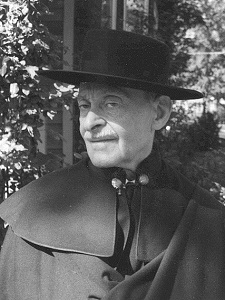
Rustende Däubler door Ernst Barlach, 1910/11


De Duitse schrijfster Herta Müller werd geboren op 17 augustus 1953 in Nitzkydorf, Roemenië. Zie ook alle tags voor Herta Müller op dit blog en ook mijn blog van 17 augustus 2010.

Uit: Herztier

“Und während die Mutter das Kind mit den Gürteln der Kleider an den Stuhl bindet, während der Frisör dem Großvater die Haare schneidet, während der Vater dem Kind sagt, grüne Pflaumen darf man nicht essen, während all dieser Jahre steht eine Großmutter in der Zimmerecke. Sie schaut so abwesend auf das Gehen und Reden im Haus, als hätte sich schon am Morgen draußen der Wind gelegt, als wäre am Himmel der Tag eingeschlafen. Die Großmutter summt sich während all dieser Jahre ein Lied im Kopf.
Das Kind hat zwei Großmütter. Die eine kommt am Abend mit ihrer Liebe ans Bett, und das Kind sieht zur weißen Zimmerdecke, weil sie gleich beten wird. Die andere kommt am Abend mit ihrer Liebe ans Bett, und das Kind schaut ihre dunklen Augen an, weil sie gleich singen wird.
Wenn das Kind die Zimmerdecke und die dunklen Augen nicht mehr sehen kann, stellt es sich schlafend. Die eine Großmutter betet nicht zu Ende. Sie steht mitten im Gebet auf und geht. Die andere Großmutter singt das Lied zu Ende, ihr Gesicht ist schief, weil sie so gerne singt.
Wenn das Lied zu Ende ist, glaubt sie, das Kind liegt tief im Schlaf. Sie sagt: Ruh dein Herztier aus, du hast heute so viel gespielt.
Die singende Großmutter lebt neun Jahre länger als die betende Großmutter. Und sechs Jahre lebt die singende Großmutter länger als ihr Verstand. Sie erkennt keinen mehr im Haus. Sie kennt nur noch ihre Lieder.
An einem Abend geht sie aus der Zimmerecke an den Tisch und sagt im Schein des Lichts: Ich bin so froh, dass ihr alle bei mir im Himmel seid. Sie weiß nicht mehr, dass sie lebt und muss sich zu Tode singen. An sie kommt keine Krankheit, die ihr beim Sterben helfen kann.“


 1640268-4926047b153727a7838a5083aabad7b0.jpg
Herta Müller (Nitzkydorf, 17 augustus 1953) 


De Ethiopische dichter en schrijver Tsegaye Gabre-Medhin werd geboren op 17 augustus 1936 in Boda bij Ambo. Zie ook alle tags voor Tsegaye Gabre-Medhin op dit blog en ook mijn blog van 17 augustus 2010.


Nile (Fragment)

My name is Africa I am the mother of the Nile.
O Nile, my prodigal daughter on the wilderness of the desert
Bringing God's harmony to all brothers and sisters
And calming down their noises of br
ass in their endless nakednesses
O Nile, you are music that restore the rhythm of existence
Into the awkward stampeding of
these Middle Eastern blindnesses
You are the irrigator that cultivate peace
From my Ethiopian sacred mountains of the sun
Across to nod on the East of Aden and across Sinai
Beyond Gibraltar into the heights of Mount Moriah
O Nile, my chosen sacrifice for universal peace offering
Upon whose gift the heritages of Meroe and Egypt
Still survive for the benefit of our lone World

You are the proud daughter O Nile, who taught
The ancient world how to walk in upright grace
You are my prodigal daughter who saved and breast fed
Little lost Jacob whose brothers sold for food
You, who nurtured, fed and raised
The child prophet called Moses on your cradle,
You, who stretched out your helping hand and protected
The baby Christ from the slaughte
ring swords of their Herods,
O Nile, my infinite prodigal daughter
At whose feet mountains like Alexander bent
Their unbendable heads to drink from your life giving milk,
O Nile, at whose feet giants like Caesar Knelt
Conquerors like Napoleon bowed
Their unbowable heads to partake from your immortal bounty.


 1640268-1ddc067079ae521a08557850d7817851.jpg
Tsegaye Gabre-Medhin (17 augustus 1936 – 25 februari 2006)


De Franse schrijver en diplomaat Roger Peyrefitte werd geboren op 17 augustus 1907 in  Castres. Zie ook alle tags voor Roger Peyrefitte op dit blog en ook mijn blog van 17 augustus 2010.

Uit:Special Friendships(Vertaald door Edward Hyams)

"I'm going to try to think what we had better do," Georges said, "and I'll let you know by leaving a note for you in the refectory as usual. At all events, you can rely on me: whatever I decide, trust me. It may be that we shall not be able to see each other for some time; never mind -- remember that I have uttered -- here and now and in your presence -- the words used by the young men of Athens: 'I shall never abandon my comrade in battle.'"
Alexandre leaned his head on Georges' shoulder, and, assuming a wheedling tone which was not at all his normal way, said, "You haven't asked me what I'd written in my note, and I nearly forgot to tell you:
If your words were caresses, my glances were kisses..."
He smiled, as if he had said something malicious; and fled.
(…)

“His memory now revealed omens which he had noted, unconsciously, but without understanding. He thought of the most recent: the palmistry business; the blond lock of hair, cut off by the barber; the scar which had disappeared; the Virgilian Lots on the eve of the holidays; and, on the first day of the holidays, the cloud of steam which had hidden Alexander as he walked away. All very silly, very trifling, but it had a meaning.
Georges got up and took the lily out of the vase and set it on one side. He had picked the flower because he saw in it a symbol of Alexander, but at the time he had done so, Alexander was already dead. Now he recalled Lucien's figure of speech: the boy had faded like a lily, leaving nothing but a ghost of perfume.”


 1640268-0b16dcc4d9dfba0d71f23662960f1333.jpg
Roger Peyrefitte (17 augustus 1907 – 5 november 2000) 
Scene uit de film "Les amitiés particulières” uit 1964


Zie voor nog meer schrijvers van de 17e augustus ook mijn vorige blog van vandaag.

Geschreven door Romenu om 20:58 Reageer op dit bericht

Nicola Kraus, Oliver St. John Gogarty, Robert Sabatier, Anton Delvig, Jozef Wittlin, Fredrika Bremer

De Amerikaanse schrijfster Nicola Kraus werd geboren op 17 augustus 1974 in New York. Zie ook alle tags voor Nicola Kraus op dit blog en ook mijn blog van 17 augustus 2010.

Uit: Over you Samen met Emma McLaughlin)

“Bridget drops her head to Max’s shoulder.
“Fifteen?”
Bridget nods.
“Okay, now let’s start with a shower. You’ll feel better.”
But beyond the shower is dressed, beyond dressed is breakfast, beyond breakfast is leaving and that’s when Taylor won’t be waiting downstairs for his morning kiss and Poptart before he heads south to his school and she heads north to hers. Bridget buries her face in her raised knees, the idea of taking a single step unbearable. “I won’t.”
Max pats her sweaty back. “But I will.” She stands and claps her hands. “Okay! You have homeroom at eight-twenty and we have a ton of ground to cover. Being late today of all days is OUT of the question—in fact, for the next month I don’t care if you get wombat flu—you will be at school every day looking awesome because that will get back to him and that will be the first chink in his ego. Okay, time to wash off the last twelve hours! Here we go! The rest of your spectacular life awaits!”
Bridget stares at Max, salty tear-crusts in the corner of her eyes and mouth. “Sorry. So you’re Shannon’s friend? I’m just not really following how you—”
“We’ll get to that. Take the coffee in with you. Right in under the water. Here.” She pulls Bridget to her feet, hands her the lid and holds the edge of the floral comforter as Bridget walks right out from under it. It trails off her shoulders like a queen’s cape as she shuffles to the bathroom.
While Bridget showers Max does an informed sweep of the room, removing the sweatshirt, stuffed duck and dangly earrings Zach’s electronic espionage revealed were gifts from Taylor. She then returns the hacked laptop to Bridget’s desk. Lastly Max whips out her sterling tape measure, another flea market score, and sizes up the windows.”


 1640247-d3c52cb0910c670938d80150a9cd3aa1.jpg
Nicola Kraus (New York, 17 augustus 1974)
Emma McLaughlin en Nicola Kraus (rechts)


De Ierse dichter en schrijver Oliver St. John Gogarty 17 augustus 1878 in Dublin. Hij werkte ook als arts, piloot. Zie ook alle tags voor Oliver St. John Gogarty op dit blog en ook mijn blog van 17 augustus 2009 en ook mijn blog van 17 augustus 2010.


Song of Medical Dick and Medical Davy

The first was Medical Dick
The second was Medical Davy
The first had a Bloody Big Prick
The second had Buckets of Gravy
To show-- to show-- to show what medicals are.

Then out spoke Medical Dick
To his comrade Medical Davy
'I'd swap my Bloody Big Prick
For you with your buckets of Gravy'
To show etc.

'Steady Medical Dick'
Said Sturdy Medical Davy
'There's very little value in a prick
When you haven't got the passage of the gravy.'
To show etc.

'Every bullock were a bull
But for the little matter of a ballocks
If your prick can keep the women full
You'll find they never grumble at its small looks.'
To show etc.


 1640247-c875e30cf69be01918d57ba998f6ad5d.jpg
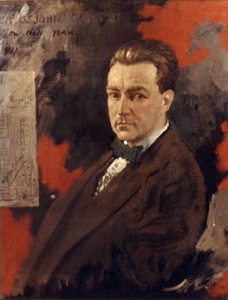
Oliver St. John Gogarty (17 augustus 1878 – 22 september 1957)
Portret door William Orpen, 1911


De Franse dichter en schrijver Robert Sabatier werd geboren op 17 augustus 1923 in Parijs. Zie ook alle tags voor Robert Sabatier op dit blog en ook mijn blog van 17 augustus 2010.

Uit: Le roman d'Olivier

« Depuis le petit matin, il pleuvait, mais ce n'était pas une eau triste : elle préparait la voie du soleil. On percevait la complicité des éléments, les jeux subtils de la brume et de la clarté. Le dos bombé des pavés se réjouissait, et aussi les herbes, les mousses qui les cernaient. La pierre vivante souriait, le gris s'argentait, apprivoisait de nouvelles nuances, vert, bleu, or. L'eau dans les ruisseaux chantonnait doucement.
Une rue ordinaire sur le flanc de la colline montmartroise, la rue Labat se terminant au milieu de la rue Bachelet formant la barre horizontale d'un T. Sur la hauteur, gravies cinq marches de pierre, d'un espace en demi-lune s'élevait un raidillon semé de demeures, cabanes plus que logis, territoire délimité par une palissade plissée et tordue comme un soufflet d'accordéon. En bordure, la boucherie kascher de M. Aaron faisait face à l'échoppe du rempailleur de chaises, M. Léopold. La rue Bachelet prise à main gauche, passé le drapeau tricolore en métal du lavoir, on aboutissait à la rue Nicolet où se trouvait un pavillon habité naguère par le poète Paul Verlaine et sa belle-famille. Toujours en haut de la rue Labat, en tournant à droite, on atteignait la rue Caulaincourt et ses immeubles bourgeois, tout de suite après l'interminable escalier Becquerel bordé de hauts édifices.
Au pied de cet escalier séparé en deux parties par une rampe de fer propice aux glissades, sur le côté gauche, derrière la porte d'une grille entrouverte se trouvaient des poubelles de métal, une lessiveuse retraitée, des cageots écrasés d'où s'échappait un remugle de chat et de chou.
Lorsque le soleil apparut, une vapeur s'éleva du goudron luisant. Une vieille femme, les épaules protégées par un fichu noir à franges nouées, descendait l'escalier, sans hâte, une main serrée sur la rampe humide.»


 1640247-c4a93f631405c52567338719ccf67fc2.jpg
Robert Sabatier (17 augustus 1923 – 28 juni 2012)


De Russische dichter Anton Delvig werd geboren op 17 augustus 1798 in Moskou. Zie ook alle tags voor Anton Delvig op dit blog en ook mijn blog van 17 augustus 2010.


Ah, You Night...

Ah, you night, you little night!
Ah, you night, you stormy night!
Why from early evening tide
Even to the midnight late
Twinkle not your little stars,
Shineth not your full-orbed moon?
You are veiled with darkling clouds!
'T is with you, I think, O night,
Even as with me, young man,
Villain grief has called on us!
When the dire one takes abode
Somewhere deep within the heart,
You forget the lasses fair,
Dances and obeisances;
You forget from evening tide
Even to the midnight late,
Singing songs, to take delight
In the chorus and the dance.
No, you sob, you weep aloud,
And, a sad and lonely lad,
You upon your coarse straw bed


Vertaald door Leo Wiener


 1640247-1292fcd1cfd3638a60580a75d809cea3.jpg
Anton Delvig (17 augustus 1798 – 26 januari 1831)
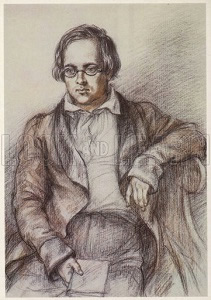
Portret door Aleksander Ivanov, z.j.


De Poolse dichter en schrijver Józef Wittlin werd geborern in Podolien op 17 augustus 1896 in het toenmalige Oostenrijk-Hongarije. Zie ook alle tags voor Józef Wittlin op dit blog en ook mijn blog van 17 augustus 2010.


Hymn of Hatred (Fragment)

As she comes upon a pasture
with a girl who tends her cattle
and plays a song
and sings a bit
on a so-called "field of glory,"
only ten years old--
she whispers words into her ear: and the girl flings off her wreath
and drives the cows into the rye.
And the landlord sees this sight,
flogs her with a willow switch
that she'd weave no more
any garland for her sweetheart, not from pansy, nor from cornflower,
nor from wild
rose...
And if you have a friend, a friend with faithful eyes,
(he'd follow you to death)--
hatred's just crept up beside him,
showing him her mug--
something grabs him from the side,
then he wants your reputation, all your money and your wife,
and sets your house on fire--
A house
Built with heavy labor.
And when in school a teacher
recites to children truths from books
and puts pious substance
with noble words into the hearts
of different fathers', mothers' children--,
hatred through the schoolroom window
from the little alley sprays in
doubting dust:
it makes the children's heads turn round


 1640247-1539df7e063dba8aa8dd2b825fdb41fb.jpg
Józef Wittlin (17 augustus 1896 – 28 februari 1976)


De Zweedse schrijfster Fredrika Bremer werd geboren op 17 augustus 1801 in Tuorla bij Piikkiö. Zie ook alle tags voor Frederika Bremer op dit blog en ook mijn blog van 17 augustus 2010.

Uit: Hertha or the Story of a Soul (Vertaald door Mary Howitt)

«They cannot even think or choose for themselves a profession or a way of life. Ah, I would so gladly have lived upon bread and water, and have been superlatively happy, if I might but have studied as young men study at universities, and by my own efforts have made my own way. The arts, the sciences—oh, how happy are men who are able to study them; to penetrate the mysteries of the beautiful and the sublime, and then go forth into the world and communicate to others the wisdom they learned, the good they have found. How glorious to live and labor day by day, for that which makes the world better, more beautiful, lighter. How happy should one feel, how good, how mild; how different that life must be to what it is, where there seems to be no other question in the world but, 'What shall we eat and drink, and what shall we put on?' and where all life's solicitude seems to resolve itself into this. Oh, Alma, are we not born into this world for something else? How wretched!" and as if overwhelmed by the thought, Hertha buried her face in her hands. Presently she became calmer, and continued, looking steadily upwards:
"How dissimilar are objects in the world, as well as in nature as among mankind. The Creator has given to each and all their different impulse and destination, which they cannot violate without becoming unnatural, or perishing. This is allowed to be an unquestioned law as regards the children of nature. People do not require from the oak that it shall be like a birch, nor from the lily that it shall resemble the creeping cistus. With men it is the same; they are allowed each one to grow according to his bent and his nature, and to beome that which the Creator has called them to be; but women, precisely they who should improve every power to the utmost, they must become unnatural, thoughtless, submissive tools of that lot to which men have destined them.»


 1640247-396f39284283c65df74fd4d95f8934b3.jpg
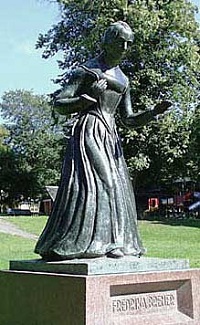
Fredrika Bremer (17 augustus 1801 – 31 december 1865)
Stanbeeld in Stockholm

Geschreven door Romenu om 20:38 Reageer op dit bericht

Hendrik de Vries

De Nederlandse dichter en schilder Hendrik de Vries werd geboren in Groningen op 17 augustus 1896. De gedichten van Hendrik de Vries werden in het literaire tijdschrift Het Getij gepubliceerd. Hendrik de Vries was een vroege surrealist. Hij was antiburgerlijk ingesteld en predikte vitaliteit. Het onderbewuste speelt een cruciale rol in zijn poëzie. Veel van zijn inspiratie vond De Vries in de Spaanse wereld. Hij was zo in die Spaanse cultuur verdiept geraakt, dat hij heel wat gedichten (met name copla's) in het Spaans heeft geschreven. Ter gelegenheid van zijn vijftigste verjaardag werd door de gemeente Groningen de Hendrik de Vriesprijs ingesteld, en in 1986 het Hendrik de Vriesstipendium. De Vries was de eerste die de prijs in ontvangst mocht nemen. De Vries' gedicht “Een schatrijke tuin” werd in 2000 (en in een nieuwe versie in 2006) op een muur in de Aloëlaan in Leiden aangebracht als één van de meer dan honderd muurgedichten in Leiden.


Gevangenisliederen van het Spaansche Volk

In de woning van mijn beminde
Hebben ze 's nachts mij gevonden,
En, tot nog meerder ellende,
Mij met kaar zakdoek gebonden.
 
De koning in zijn paleis
Weet niet wat gevangenen lijden,
Anders ging hij vandaag nog op reis,
Ons een voor een te bevrijden.
 
Bewaakster, bewaakster, kom,
Red mij van dit somber graf -
Ik doe je de goudring om
Die mijn geliefde mij gaf.
 
Wat kon ik, heel het jaar
Dat ik heb vastgezeten?
Ik telde en telde maar:
De schakels van mijn keten.


Copla

De dokter, bij mijn geboorte,
Voelde mijn pols en besloot:
'Zolang dit kind maar blijft leven,
Gaat het in geen geval dood.'


Mijn broer

Mijn broer, gij leed
Een einde, waar geen mens van weet.
Vaak ligt gij naast mij, vaag, en ik
Begrijp het slecht, en tast en schrik.

De weg met iepen liep gij langs.
De vogels riepen laat. Iets bangs
Vervolgde ons beiden. Toch wou gij
Alleen gaan door de woestenij.

Wij sliepen deze nacht weer saam.
Uw hart sloeg naast mij. 'k Sprak uw naam
En vroeg, waarheen gij ging.
Het antwoord was:

'Te vreselijk om zich in te verdiepen.
Zie: 't gras
Ligt weder dicht met iepen
Omkringd.'


 1773021-f83e9d0bdfeb12806fb661fd6f8fa172.jpg
Hendrik de Vries (17 augustus 1896 – 18 november 1989)
In 1923

Geschreven door Romenu om 00:00 Reageer op dit bericht

Charles Bukowski, Reiner Kunze, Moritz Rinke, Alice Nahon

De Amerikaanse dichter en fictieschrijver Charles Bukowski werd geboren op 16 augustus 1920 in Andernach, Duitsland. Zie ook alle tags voor Charles Bukowski op dit blog en ook mijn blog van 16 augustus 2010.


Friends Within The Darkness

I can remember starving in a
small room in a strange city
shades pulled down, listening to
classical music
I was young I was so young it hurt like a knife
inside
because there was no alternative except to hide as long
as possible--
not in self-pity but with dismay at my limited chance:
trying to connect.

the old composers -- Mozart, Bach, Beethoven,
Brahms were the only ones who spoke to me and
they were dead.

finally, starved and beaten, I had to go into
the streets to be interviewed for low-paying and
monotonous
jobs
by strange men behind desks
men without eyes men without faces
who would take away my hours
break them
piss on them.

now I work for the editors the readers the
critics

but still hang around and drink with
Mozart, Bach, Brahms and the
Bee
some buddies
some men
sometimes all we need to be able to continue alone
are the dead
rattling the walls
that close us in.


Hooray Say The Roses

hooray say the roses, today is blamesday
and we are red as blood.

hooray say the roses, today is Wednesday
and we bloom wher soldiers fell
and lovers too,
and the snake at the word.

hooray say the roses, darkness comes
all at once, like lights gone out,
the sun leaves dark continents
and rows of stone.

hooray say the roses, cannons and spires,
birds, bees, bombers, today is Friday
the hand holding a medal out the window,
a moth going by, half a mile an hour,
hooray hooray
hooray say the roses
we have empires on our stems,
the sun moves the mouth:
hooray hooray hooray
and that is why you like us.


 1639291-fa67f240598332d38407093ebaad3908.jpg
Charles Bukowski (16 augustus 1920 – 9 maart 1994)


De Duitse dichter en schrijver Reiner Kunze werd geboren op 16 augustus 1933 in Oelsnitz, Erzgebirge. Zie ook alle tags voor Reiner Kunze op dit blog en ook mijn blog van 16 augustus 2010.


Rudern zwei in einem Boot

Rudern zwei ein Boot, der eine kundig der Sterne,
der andere kundig der Stürme,
wird der eine
führn durch die Sterne,
wird der andere
führn durch die Stürme,
und am ende ganz am Ende
wird das Meer in der Erinnerung blau sein.


Unwirklicher Maitag

So sehr blühten die kirsch-und mostbirnbäume,
daß sie sich verwandelten
in weißes gewölk

Das dorf, eingeblüht,
schwebte davon

Mit unserem weißen haar
täuschten wir vor dazuzugehören
und wurden schwerelos


Der Vogel Schmerz

Nun bin ich dreißig jahre alt
und kenne Deutschland nicht:
Die grenzaxt fällt in Deutschland wald
O land, das auseinanderbricht
im menschen

Und alle brücken treiben pfeilerlos

Gedicht, steig auf, flieg himmelwärts!
Steig auf, gedicht, und sei
der vogel Schmerz


 1639291-029eff55270e4ff7bc6eb935a74653a3.jpg
Reiner Kunze (Oelsnitz, 16 augustus 1933)


De Duitse (toneel)schrijver Moritz Rinke werd geboren op 16 augustus 1967 in Worpswede bij Bremen. Zie ook alle tags voor Moritz Rinke op dit blog en ook mijn blog van 16 augustus 2010.

Uit: Wir lieben und wissen nichts

„Ein großer, leerer Raum mit Fenster zur Straße. Es ist das Zimmer von Sebastian in Hannahs Wohnung. Bücher stapeln sich. Auf dem einzigen Möbelstück, einem antiken Stuhl:
Sebastian, er starrt vor sich hin. Hannah betritt den Raum, einen Koffer tragend. Sie starrt Sebastian an.

Sebastian
Trio...Quartett...Oktett, so nannten die das damals, man sprach sogar vom Kammerorchester ...
Hannah
Du sitzt ja immer noch da! Es kann jeden Moment losgehen ...
Sebastian
Papst Alexander der Sechste ließ am Vorabend von Allerheiligen fünfzig ausgewählte Kurtisanen auftreten, splitternackt ... Im Vatikan!
Hannah
Sebastian, bitte ... Hast du die Liste fertig?
Sebastian
Die sollten erst Kastanien aufsammeln, die ihnen von Männern zugeworfen wurden, und dann ging es kreuz und quer ... Symphonieorchester ! ... Das musst du dir mal vorstellen, beim Papst! Da wundert einen doch gar nichts mehr ...
Hannah
Schreib bitte auf, in welche Richtung sie laufen müssen, damit sie den Bäcker finden ...
(Stellt ihm einen Umzugs- karton hin und geht ab)“


 1639291-129f8837580a070b5413919a0fdf997f.jpg
Moritz Rinke (Worpswede, 16 augustus 1967)
Cover


De Vlaamse dichteres Alice Nahon werd te Antwerpen geboren op 16 augustus 1896.  Zie ook alle tags voor Alice Nahon op dit blog en ook mijn blog van 16 augustus 2010.


Maskers

De mensen doen hun maskers af,
ze kijken vreemd elkander aan
verwonderd dat ze naast elkaar
lijk vreemden staan.

Nochtans ze stonden zij aan zij
in zelfde strijd voor zelfde brood;
sleepten zij niet dezelfde sleur
van zorg en nood?

Viel niet dezelfde klacht en scherts
van uit hun bitter blije mond?
Was ’t niet of men de hele dag
elkaar verstond?

De mensen gaan zover vaneen
wanneer de schemering is nabij;
ze worden er niet triestig om
of ook niet blij.

Ze speelden immers maar een spel
waarin de ziel geen teken gaf;
ze deden enkel met elkaar
wat lief, wat laf.

En met een gauw-vergeten groet
een scheiding zonder lach of leed,
gaat ieder naar zijn eigen huis
dat stilte heet.

Daar zijn er die te dromen gaan
langs paden mul van schemering,
naar ’t land dat ’s avonds schoner wordt,
herinnering.

En velen worden stil-devoot
om rein profiel van lief gelaat
dat in de voorhal van hun ziel
gebeeldhouwd staat.

Ik weet er ook die sprakeloos
en moede van d’ondankbare strijd
de avond danken om zijn uur
van eenzaamheid.

De mensen doen hun masker af,
hun mooie-spelen moe-gedaan
och arme, zij die levenslang
gemaskerd gaan.

Gemaskerd door hun eigen trots,
vergulde lach of kranke lust.
Zij krijgen van geen enkle dag
wat avondrust.

Ze gaan, ‘lijk zwervers, altijd door
langs dageraad, en avondrood;
ze vinden nergens ’t eigen huis
dan in de dood.


 1639291-8fc669c710fea7ed371c9e472eb9cedd.jpg
Alice Nahon (16 augustus 1896 -  21 mei 1933)


Zie voor nog meer schrijvers van de 16e augustus ook mijn vorige blog van vandaag.
Geschreven door Romenu om 12:33 Reageer op dit bericht

Jules Laforgue, T. E. Lawrence, Pierre Henri Ritter jr., Max Schuchart

De Franse dichter Jules Laforgue werd geboren in Montevideo op 16 augustus 1860. Zie ook alle tags voor Jules Laforgue op dit blog en ook mijn blog van 16 augustus 2010.


Dimanches (I)

Le ciel pleut sans but, sans que rien l'émeuve,
Il pleut, il pleut, bergère ! sur le fleuve...

Le fleuve a son repos dominical ;
Pas un chaland, en amont, en aval.

Les Vêpres carillonnent sur la ville,
Les berges sont désertes, sans idylles.

Passe un pensionnat (ô pauvres chairs ! )
Plusieurs ont déjà leurs manchons d'hiver

Une qui n'a ni manchon, ni fourrures
Fait, tout en gris, une pauvre figure.

Et la voilà qui s'échappe des rangs,
Et court ! Ô mon Dieu, qu'est-ce qu'il lui prend

Et elle va se jeter dans le fleuve.
Pas un batelier, pas un chien Terr' Neuve.

Le crépuscule vient ; le petit port
Allume ses feux. (Ah ! connu, l'décor ! )

La pluie continue à mouiller le fleuve,
Le ciel pleut sans but, sans que rien l'émeuve.


Locutions des Pierrots, I

Les mares de vos yeux aux joncs de cils,
Ô vaillante oisive femme,
Quand donc me renverront-ils
La Lune-levante de ma belle âme ?

Voilà tantôt une heure qu'en langueur
Mon coeur si simple s'abreuve
De vos vilaines rigueurs,
Avec le regard bon d'un terre-neuve.

Ah ! madame, ce n'est vraiment pas bien,
Quand on n'est pas la Joconde,
D'en adopter le maintien
Pour induire en spleens tout bleus le pauv' monde !


 1639286-94e345b3f0b12bf9a825ff1705017d0e.JPG
Jules Laforgue (16 augustus 1860 - 20 augustus 1887)
Foto uit 1885


De Britse prozaschrijver, archeoloog en militair Thomas Edward Lawrence werd geboren op 16 augustus 1888. Hij staat beter bekend als Lawrence of Arabia. Zie ook alle tags voor T. E. Lawrence op dit blog en ook mijn blog van 16 augustus 2010.

Uit:Seven Pillars of Wisdom

“In consequence the novelty of this change was severe, since time had not been given me gradually to accustom myself to the pestilent beating of the Arabian sun, and the long monotony of camel pacing. There was to be another stage tonight, and a long day to-morrow before Feisal’s camp would be reached.
So I was grateful for the cooking and the marketing, which spent one hour, and for the second hour of rest after it which we took by common consent; and sorry when it ended, and we re-mounted, and rode in pitch darkness up valleys and down valleys, passing in and out of bands of air, which were hot in the confined hollows, but fresh and stirring in the open places. The ground under foot must have been sandy, because the silence of our passage hurt my straining ears, and smooth, for I was always falling asleep in the saddle, to wake a few seconds later suddenly and sickeningly, as I clutched by instinct at the saddle post to recover my balance which had been thrown out by some irregular stride of the animal. It was too dark, and the forms of the country were too neutral, to hold my heavy-lashed, peering eyes. At length we stopped for good, long after midnight; and I was rolled up in my cloak and asleep in a most comfortable little sand-grave before Tafas had done knee-haltering my camel.
Three hours later we were on the move again, helped now by the last shining of the moon. We marched down Wadi Mared, the night of it dead, hot, silent, and on each side sharp-pointed hills standing up black and white in the exhausted air. There were many trees. Dawn finally came to us as we passed out of the narrows into a broad place, over whose flat floor an uneasy wind span circles, capriciously in the dust. The day strengthened always, and now showed Bir ibn Hassani just to our right. The trim settlement of absurd little houses, brown and white, holding together for security’s sake, looked doll-like and more lonely than the desert, in the immense shadow of the dark precipice of Subh, behind. While we watched it, hoping to see life at its doors, the sun was rushing up, and the fretted cliffs, those thousands of feet above our heads, became outlined in hard refracted shafts of white light against a sky still sallow with the transient dawn.”


 1639286-bc11e75d0fcbe65c4fb4aef97b5a379a.jpg
T. E. Lawrence (16 augustus 1888 – 19 mei 1935)
Miranshah, december 1928


De Nederlandse journalist, letterkundige, criticus en publicist Pierre Henri Ritter jr. werd geboren in Utrecht op 16 augustus 1882. Zie ook alle tags voor Pierre Henri Ritter jr. op dit blog en ook mijn blog van 16 augustus 2010.

Uit:Het Kindeken Jezus in Vlaanderen, door Felix Timmermans

„In de kader van de landschappen van zijn schoon en goed Vlaanderen’, heeft de schrijver van Pallieter zich ‘het goddelijk verhaal van het Kindeken Jezus, zijne zoete moeder en zijn goeden voedstervader verbeeld en met wat letterkunde in groot genoegen omcierd’. Op deze wijze kenmerkt Timmermans zelf den aard van zijn verhaal in zijne opdracht aan Maria Viola. De woorden dier opdracht moeten onbewust en argeloos uit hem zijn gevloeid, zoo ongedwongen als al zijn proza, - dat niet anders is dan een niet binnen te houden liefde voor de natuur en voor de menschen, - ze geven niettemin een zeldzaam juiste kenschetsing van het boek. Ik dacht, toen ik ze las, aan een klein gedicht van Leopold, waarin gezegd wordt, dat de Engelen die verschenen aan de kribbe, ‘heur voeten inhielden’, omdat het Kindeke sliep. Deze stemming van uiterste, voorzichtige vroomheid, dàt is het ciersel, waarmede het, ongerept gelaten, goddelijk verhaal door Timmermans wordt omgeven. Hij heeft het goddelijk Kindeke niet gestoord, maar ongestoord leeft ook in ons hart het Maagd-moedertje Maria en de trouwe, gebaarde jongen, die Jozeph heet. Een spheer van muziek en van gebeden-als-van-Kinderen verreint onze aandacht, en ons geestesoog ziet de bruinbezonde of blankbesneeuwde velden en heuvelen van Vlaanderen, waarover de enkele figuren zich stil glimlachend bewegen.
Ik geloof dat Timmermans zoo kan schrijven als hij doet, omdat hij de ziel van Vlaanderen in zich heeft. Van dat kinderlijke, intuïtieve, niet problematizeerende maar met groote open oogen levende Vlaamsche volk, dat door zijn natuurlijk gemoed zichzelf te blijven wist, ondanks den eeuwenlangen druk van overheerschers. Het Vlaamsche volk verschijnt ons bij Timmermans als een volk van simpele vrome natuurkinderen, en daardoor ervaren wij zijn verhaal als niet in wezen verschillend van de geschiedenis die ons wordt medegedeeld in het nieuwe testament. Want zooals de schrijver voor ons zijn Vlaamsche herders en boeren doet verschijnen, zijn ze dezelfden die eenmaal optrokken naar den stal van Bethlehem in het bijbelsche land.”


 1639286-541315b245e8f59f78283b1a0c2641be.jpg
Pierre Henri Ritter jr. (16 augustus 1882 – 13 april 1962)
In 1957


De Nederlandse dichter, journalist en vertaler Max Schuchart werd geboren in Rotterdam op 16 augustus 1920. Zie ook alle tags voor Max Schuchart op dit blog en ook mijn blog van 16 augustus 2010.


Rings of Power

Three Rings for the Elven-kings under the sky,
Seven for the Dwarf-lords in their halls of stone,
Nine for Mortal Men doomed to die,
One for the Dark Lord on his dark throne,
In the land of Mordor where the shadows lie.
One Ring to rule them all, One Ring to find them,
One Ring to bring them all, and in the darkness bind them,
In the land of Mordor where the shadows lie.


J.R.R. Tolkien


Ringen van Macht

Drie Ringen voor de elfenkoningen op aard',
Zeven voor de dwergvorsten in hun zalen schoon,
Negen voor de mensen, die de dood niet spaart,
Eén voor de Zwarte Heerser op zijn zwarte troon
In Mordor, waar de schimmen zijn.
Eén Ring om allen te regeren, Eén Ring om hen te vinden,
Eén Ring die hen brengen zal en in duisternis binden,
In Mordor, waar de schimmen zijn.

Vertaald door Max Schuchart


 1639286-77f70cf726c45eb7930f458ad3014f6d.jpg
Max Schuchart (16 augustus 1920 - 25 februari 2005)

Geschreven door Romenu om 12:17 Reageer op dit bericht

Ferenc Juhász

De Hongaarse dichter Ferenc Juhász werd geboren op 16 augustus 1928 in Biatorbágy, een dorp in de buurt van Boedapest. Ferenc Juhász publiceerde zijn eerste gedicht in 1946. In 1949 werd zijn eerste bundel, Het Gevleugelde Veulen, gepubliceerd. Verdere bundels verschenen in 1954, 1955 en 1956. Juhász's reputatie als een grote 20e eeuwse dichter rust op de bundel “Harc a fehér báránnyal” (Engels:Struggle with The White Lamb) uit 1964, met daarin het lange gedicht “The Boy Changed into a Stag Cries Out at the Gates of Morning”. WH Auden, een heel ander soort dichter, noemde dit een van de grote gedichten van onze tijd. Selecties van Juhász werk werden bijna gelijktijdig in 1970 gepubliceerd in het Engels door Penguin en Oxford University Press. De grote ambitie van Juhász is om een moderne epische dichter te zijn, om boeken van het universum te schrijven. Hij heeft verschillende Hongaarse en internationale prijzen ontvangen, waaronder de Kossuth-prijs.

Uit: The boy changed into a stag clamors at the gate of secrets

The mother called to her own son,
cried from far away,
the mother called to her own son,
cried from far away,
went to the front of the house: from there she cried,
unwound her heavy knot of hair
dusk wove to a shimmering bride’s veil
that flowed down to her ankles
a flag, tassled, black, for the wind
the firedamp dust that smelled of blood.
She knotted her fingers to tendrils of stars,
the moon-froth covered her face,
and like this she cried to her child—
stood in front of the house and spoke to the wind
spoke to the song-birds
to the love-cries of the wild geese
shouted across to the wind-fingered reeds
to the luminous sprawled potato-flowers
to the stocky, cluster-balled bulls
to the sumach tree, shade of the well,
she called to the jumping fish
to the welding rings of water—
Hush! you birds and branches
hush, because I’m calling
be still, fishes and flowers
be still, I want to speak
be quiet, breath of the soil
fin-quiver, leafy parasols
be still, deep humming of sap
rumors that seep from the atoms’ depths
bronze-chaste virgins, wool-breasted flock
be quiet, because I’m calling,
I’m crying out to my own son!


Vertaald door David Wevill


 1664518-565cbc973f86b3327b37e58916d67f73.JPG
Ferenc Juhász (Biatorbágy, 16 augustus 1928)

Geschreven door Romenu om 00:00 Reageer op dit bericht

Meer van Romenu

↑ Terug naar de berichten