Naar de inhoud

Romenu

Over literatuur, gedichten, kunst en cultuur
akke.beakke.be

Berichten van 24 augustus 2014 tot 25 augustus 2014

Martin Amis, Charles Wright, Maxim Biller, Frederick Forsyth, Jògvan Isaksen, Johann Gottfried von Herder
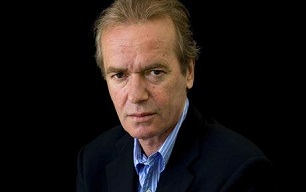
De Engelse schrijver Martin Amis werd geboren op 25 augustus 1949 in Cardiff, South Wales. Zie ook alle tags voor Martin Amis op dit blog en ook mijn blog van 25 augustus 2010.

Uit: Money

“I’d better give you the lowdown on Selina — and quick. That hot bitch, what am I letting her do to me?
Like many girls (I reckon), and especially those of the small, supple, swervy, bendy, bed-smart variety, Selina lives her life in hardened fear of assault, molestation and rape. The world has ravished her often enough in the past, and she thinks the world wants to ravish her again. Lying between the sheets, or propped at my side during long and anxious journeys in the Fiasco, or seated across the table in the deep lees of high-tab dinners, Selina has frequently refreshed me with tales of insult and violation from her childhood and teenage years — a musk-breathing, toffee-offering sicko on the common, the toolshed interrogations of sweat-soaked parkies, some lumbering retard in the alley or the lane, right up to the narcissist photographers and priapic prop-boys who used to cruise her at work, and now the scowling punks, soccer trogs and bus-stop boogies malevolently lining the streets and more or less constantly pinching her ass or flicking her tits and generally making no bones about the things they need to do… It must be tiring knowledge, the realization that half the members of the planet, one on one, can do what the hell they like with you.
And it must be extra tough on a girl like Selina, whose appearance, after many hours at the mirror, is a fifty—fifty compromise between the primly juvenile and the grossly provocative. Her tastes are strictly High Street too, with frank promise of brothelly knowhow and top-dollar underwear. I’ve followed Selina down the strip, when we’re shopping, say, and she strolls on ahead, wearing sawn-off jeans and a wash-withered T-shirt, or a frilly frock measuring the brink of her russety thighs, or a transparent coating of gossamer, like a condom, or an abbreviated school uniform … The men wince and watch, wince and watch. They buckle and half turn away. They shut their eyes and clutch their nuts. And sometimes, when they see me cruise up behind my little friend and slip an arm around her trim and muscular waist, they look at me as if to say — Do something about it, will you ? Don’t let her go about the place looking like that. Come on, it’s your responsibility.»


1643749-c50550490304fdefec3674a830f6805c.jpg
Martin Amis (Cardiff, 25 augustus 1949)


De Amerikaanse dichter Charles Wright werd geboren op 25 augustus 1935 in Pickwick Dam, Tennessee. Zie ook alle tags voor Charles Wright op dit blog en ook mijn blog van 25 augustus 2010.


The Gospel According to Somebody Else

Comfort them all, Lord, comfort their odd shapes                                       
                                                and their standard hair.
They seem so hand-haunted, so hymn-hewn,
In their slow drift toward received form.
Comfort them standing there,
                                                then comfort them sitting down—

God knows his own, the old have no tears,
The thickness of winter clouds is the thickness of what’s to come.


Down in the Mines

For I am one who exists from the undivided,
He said, and am filled with light.
And darkness is over there,
                                             where the divided stand.

Tough words, Ace, tough words.
White clouds grow big along the ridge line.
Under the earth we’re far away from home,
                                                                      or closer to it.


 1643749-22d837a22c34ccbff5744196fe6be9f1.jpg
Charles Wright (Pickwick Dam, 25 augustus 1935)


De Duitse schrijver Maxim Biller werd geboren op 25 augustus 1960 in Praag. Zie ook alle tags voor Maxim Biller op dit blog en ook mijn blog van 25 augustus 2010.

Uit: Liebe heute

„Große, grüne, wogende Blätter.
Er wartete auf sie drei Monate lang. Er sortierte seine Fotos, brachte Ordnung in seine Bücher und räumte ein paar Möbel um, und dann wartete er weiter. Dann las er alle Briefe, die er jemals bekommen hatte, und warf die meisten weg, und er kaufte eine große Karte von Indien und hängte sie über sein Bett. Nein, er kaufte keine Karte von Indien, aber er wollte es wirklich tun, während er wartete.
Er wartete und wartete und fing an, eine Geschichte darüber zu schreiben, wie er auf sie wartete, aber erwußte nicht, wie sie endete, und dann hörte er wieder auf damit. Zum Schluß machte er gar nichts mehr; er wartete nicht einmal mehr. Er schlief immer weniger, eraß nur noch Brot und Tomaten und gelben Supermarktkäse, und dann kam sie endlich, sie saßen zusammen bei ihm auf der Couch, und sie sagte: »Es war eine lange Zeit.« »Ja«, sagte er, obwohl er sich fest vorgenommen hatte, so wenig wie möglich zu sagen, »es war eine sehr lange Zeit.« Sie hatte abgenommen auf ihrer Reise, und er fand nicht, daß sie besser aussah  als vorher. Sie war müde, aber sie war immer müde, deshalb war sie weggefahren, um nicht mehr müde zu sein, und jetzt kam sie noch müder zurück. Und sie war älter geworden. Älter oder ernster oder härter, das wußte er nicht so genau. Ein grauer Schimmer lag auf ihrer sonnengegerbten Haut, wie ihn sonst nur ältere Frauen hatten, ihr Lächeln war viel zu ernst und überlegen, und ihre Wangenknochen traten noch stärker hervor als früher. Sie stand auf und ging raus, und als sie zurückkam, hatte sie eine bunte Tüte in der Hand.
»Das ist für dich«, sagte sie.
»Danke, meine Liebe«, sagte er. Er machte die Tüte auf. Es war ein kleiner, schwarzer, dicker Elefant aus Mahagoni drin.“


 1643749-733903ab5d56842915e23a32538f9d6b.jpg
Maxim Biller (Praag, 25 augustus 1960)


De Engelse schrijver Frederick Forsyth werd geboren in Ashford, Kent, op 25 augustus 1938. Zie ook alle tags voor Frederick Forsyth op dit blog en ook mijn blog van 25 augustus 2010.

Uit: Icon

“It was just before noon on the same day, July 16, that Igor Komarov, sitting in his office on the first floor of the dacha off Kiselny Boulevard, contacted his chief personal assistant by intercom.
"The document I lent you yesterday, you have had a chance to read it?" he asked.
"I have indeed, Mr. President. Quite brilliant, if I may say so," Akopov replied. All of Komarov's staff referred to him as Mr. President, meaning president of the executive committee of the Union of Patriotic Forces. They were in any case convinced that within twelve months he would still be Mr. President but for a different reason.
"Thank you," said Komarov. "Then please return it to me."
The intercom went dead. Akopov rose and went to his wall safe. He knew the combination by heart and spun the central dial the required six times. When the door swung open he looked inside for the black-bound file. It was not there.
Puzzled, he emptied the safe, paper by paper and file by file. A cold fear, part panic and part disbelief, gripped him. Taking a hold on himself, he began again. The files on the carpet around his knees were sorted out and examined, sheet by sheet and one by one. No black file. A light sweat beaded his forehead. He had worked contentedly in the office all morning, convinced that before leaving the previous evening he had put every confidential document safely away. He always did; he was a creature of habit.
After the safe, he began on the drawers of his desk. Nothing. He searched the floor under the desk, then every cupboard and closet. Just before one he knocked on Igor Komarov's door, was admitted, and confessed he could not find it.
The man who most of the world presumed would be the next president of Russia was a highly complex personality who, behind his public persona, preferred to keep much of himself intensely private.  He could not have been a greater contrast to his predecessor, the ousted Zhirinovsky, whom he now openly referred to as a buffoon”.


 1643749-496048fd548fc363bde00e2c3118826a.jpg
Frederick Forsyth (Ashford, 25 augustus 1938)


De Faeröerse schrijver Jógvan Isaksen werd geboren op 25 augustus 1950 in 25/08/1950 in Tórshavn, Faröer Eilanden. Zie ook alle tags voor Jógvan Isaksen op dit blog en ook mijn blog van 25 augustus 2010.

Uit: Option Färöer (Vertaald door Christel Hildebrandt)

“Gegen elf ging ich auf den Landavegur hinaus. Die Abstände zwischen den Straßenlaternen waren so groß, dass ich abwechselnd im Dunkeln und im Licht ging. Als würde ich eine Theaterbühne betreten, um sie gleich wieder zu verlassen.
Auf dem letzten Kilometer vor Velbastaðvegur begegnete ich keinem Menschen. Das Fernsehen demonstrierte wieder einmal sein Talent als Babysitter.
In den letzten Jahren war an der Straße einiges gebaut worden, aber bei Weitem nicht so viel wie an anderen Stellen von Tórshavn. An so einem bedeckten Oktoberabend konnte man immer noch das Gefühl haben, in unbebautem Gelände herumzulaufen. Oder waren das nur Reminiszenzen an die Kindheit, als es überhaupt nicht witzig war, im Stockfinstern den Landavegur entlangzugehen, während Trolle und andere Geschöpfe der Nacht hinter Steinen und in Senken lauerten?
Die Quelle war ein altes, geteertes Haus auf weißem Steinsockel. Es sah aus wie ein ganz gewöhnliches färöisches Haus aus einer Zeit, als der Beton noch nicht seinen Siegeszug gehalten hatte. Aber der Zustand im Haus schien alles andere als gewöhnlich zu sein. Die Lichter aus den Fenstern sahen aus wie Scheinwerfer und der Rolling-Stones-Song Satisfaction dröhnte in den Abend hinaus. Ich konnte gut verstehen, dass die Quelle keine Nachbarn hatte und allein in ihrer majestätischen Haltung stehen durfte. Ich ging die Treppe hinauf und fasste an die Türklinke. Es war abgeschlossen. Ich klopfte an.
Nichts geschah.”


 1643749-753b05a70fc176f36e47ae27b54dc00f.jpg
Jógvan Isaksen (Tórshavn, 25. augustus 1950)


De Duitse dichter, schrijver, theoloog en cultuur-filosoof Johann Gottfried von Herder werd geboren in Mohrungen op 25 augustus 1744. Zie ook alle tags voor Johann Gottfried von Herder op dit blog en ook mijn blog van 25 augustus 2010.


Ein Traum ist unser Leben...

Ein Traum, ein Traum ist unser Leben
Auf Erden hier;
Wie Schatten auf den Wogen schweben
Und schwinden wir
Und messen unsere trägen Schritte
Nach Raum und Zeit
Und sind, wir wissen´s nicht, in Mitte
Der Ewigkeit.


Die Sonne blickt...

Die Sonne blickt mit hellem Schein
So freundlich in die Welt hinein.
Mach´s ebenso! Sei heiter froh!
Der Baum streckt seine Äste vor;
Zur Höhe strebt er kühl empor.
Mach´s wie der Baum - Im sonnigen Raum!
Die Quelle springt und rieselt fort,
Zieht rasch und leicht von Ort zu Ort.
Mach´s wie die Quell - Und rege Dich schnell!
Der Vogel singt sein Liedchen schnell,
Freut sich an Sonne, Baum und Quell.
Mach´s ebenso! Sei rüstig froh!


Und grämt dich...

Und grämt dich, Edler, noch ein Wort
Der kleinen Neidgesellen?
Der hohe Mond, er leuchtet dort,
Und läßt die Hunde bellen,
Und schweigt und wandelt ruhig fort,
Was Nacht ist, aufzuhellen.


 1643749-d54c505a13249ad99af218e45e62f168.jpg
Johann Gottfried von Herder (25 augustus 1744 – 18 december 1803)
Portret door Anton Graff, rond 1800


De Australische schrijfster Thea Astley werd geboren op 25 augustus 1925 in Brisbane. Zie ook alle tags voor Thea Astley op dit blog en ook mijn blog van 25 augustus 2010.

Uit: The Slow Natives

“He’d first begun to steal when he was eleven.
No, they had both said, surprisingly in agreement,no, you may not have a six-stitcher.
He’d got a bit sick of arguing that October. The heat was terrible; The Terrace was a dried-up strip of sticky tar-paper.
Okay, he had said. And he had gone into town and taken one from a city counter. It was so easy there wasn’t even much fun in it. And of course he couldn’t even use the ball but had to keep it hidden at the bottom of his play-box.
Fondling it in bed after his light was out, once he had dropped off to sleep with it against the pillow and when it had been discovered in the morning he became involved in a series of lies he was unable to sustain. They kept on hoping for a long time that he had borrowed it from a schoolmate as he had insisted, but each knew that glossy red globe was bright with its own guilt, and he became so tired of their upset and accusing eyes he had walked down to the park near the ferry one afternoon and chucked it straight back into the river where it went bobbing off down the tide. ‘I gave it back’, he announced at tea. ‘Satisfied?’


 1643749-092bbcce030c26ccd8cd86e7158dcc68.jpg
Thea Astley (25 augustus 1925 – 17 augustus 2004)


Zie voor nog meerschrijvers van de 25e augustus ook mijn blog van 25 augustus 2013 deel 2.

Geschreven door Romenu om 18:55 Reageer op dit bericht

Howard Jacobson

De Britse dvhrijver en journalist Howard Jacobson werd geboren op 25 augustus 1942 in Manchester, Lancashire, opgevoed in Prestwich, en hij bezocht de Stand Grammar School in Whitefield, alvorens d Engels te gaan studeren aan Downing College, Cambridge. Hij doceerde gedurende drie jaar aan de Universiteit van Sydney alvorens terug te keren naar Groot-Brittannië om les te geven aan Selwyn College, Cambridge. Zijn latere onderwijsfuncties omvatte een periode bij Wolverhampton Polytechnic van 1974 tot 1980. Jacobson is drie keer getrouwd. In 2005 trouwde Jacobson voor de derde keer, met de documentairemaakster Jenny De Yong. In augustus 2014 Jacobson was één van de 200 bekende ondertekenaars van een brief aan The Guardian tegen de Schotse onafhankelijkheid. Zijn tijd bij Wolverhampton vormde de basis voor zijn eerste roman“Coming from Behind”. Voor zijn in 1999 roman verschenen roman “The Mighty Walzer” ontving hij de Bollinger Everyman Wodehouse Prize for comic writing. Zijn romans “Who's Sorry Now?” (2002) en “Kalooki Nights”(2006) haalden de longlist voor de Man Booker Prize. Voor de laatste kreeg hij in 2007 de JQ Wingate Prize. In oktober 2010 kreeg Jacobson de Man Booker Prize voor zijn roman “The Finkler Question”. In het boek onderzoekt hij wat het betekent om vandaag de dag joods te zijn en het gaat ook over "liefde, verlies en mannelijke vriendschap" Zijn roman “Zoo Time” won de Bollinger Everyman Wodehouse Prize (2013), tweede keer Jacobson's winnen van de prijs (de eerste in 1999 voor The Mighty Walzer). In september 2014 werd Jacobson's roman “J” genomineerd voor de 2014 Man Booker Prize. Jacobson schreef ook scripts voor televisieprogramma's. Van zijn twee non-fictie boeken “Roots Schmoots: Journeys Among Jews” (1993) en “Seriously Funny: From the Ridiculous to the Sublime” (1997) werd een tv-serie gemaakt. In 2010 presenteerde Jacobson “Creation”, het eerste deel van de Channel 4-serie The Bible: A History. Hij schreef en presenteerde ook de Australische biografische serie Brilliant Creatures (2014).

Uit: The Finkler Question

“He should have seen it coming.
His life had been one mishap after another. So he should have been prepared for this one.
He was a man who saw things coming. Not shadowy premonitions before and after sleep, but real and present dangers in the daylit world. Lamp posts and trees reared up at him, splintering his shins. Speeding cars lost control and rode on to the footpath leaving him lying in a pile of torn tissue and mangled bones. Sharp objects dropped from scaffolding and pierced his skull.
Women worst of all. When a woman of the sort Julian Treslove found beautiful crossed his path it wasn’t his body that took the force but his mind. She shattered his calm.
True, he had no calm, but she shattered whatever calm there was to look forward to in the future. She was the future.
People who see what’s coming have faulty chronology, that is all. Treslove’s clocks were all wrong. He no sooner saw the woman than he saw the aftermath of her — his marriage proposal and her acceptance, the home they would set up together, the drawn rich silk curtains leaking purple light, the bed sheets billowing like clouds, the wisp of aromatic smoke winding from the chimney — only for every wrack of it — its lattice of crimson roof tiles, its gables and dormer windows, his happiness, his future — to come crashing down on him in the moment of her walking past.
She didn’t leave him for another man, or tell him she was sick of him and of their life together, she passed away in a perfected dream of tragic love — consumptive, wet-eyelashed, and as often as not singing her goodbyes to him in phrases borrowed from popular Italian opera.
There was no child. Children spoilt the story.
Between the rearing lamp posts and the falling masonry he would sometimes catch himself rehearsing his last words to her — also as often as not borrowed from the popular Italian operas — as though time had concertinaed, his heart had smashed, and she was dying even before he had met her.”


 1732146-f123dfab8029270a43455410d6608e43.jpg
Howard Jacobson (Manchester, 25 augustus 1942)

Geschreven door Romenu om 00:00 Reageer op dit bericht

Howard Jacobson

De Britse schrijver Howard Jacobson werd geboren op 25 augustus 1942 in Manchester. Hij is opgegroeid in Prestwich en werd opgeleid aan Stand Grammar School in Whitefield, alvorens Engels te gaan studeren op Downing College, Cambridge. Hij doceerde gedurende drie jaar aan de Universiteit van Sydney voordat hij terugkeerde naar Engeland om les te geven aan Selwyn College in Cambridge. Zijn fictie, met name de vijf romans die hij heeft gepubliceerd sinds 1998, wordt vooral gekenmerkt door een discursieve en humoristische stijl. Terugkerende onderwerpen in zijn werk zijn man-vrouw verhoudingen en de Joodse ervaring in Groot-Brittannië in de midden-tot laat-20e eeuw. Jacobson is wel vergeleken met vooraanstaande Joods-Amerikaanse schrijvers als Philip Roth. Zijn roman The Mighty Walzer uit 1999 over een tiener tafeltenniskampioen, won de Bollinger Everyman Wodehouse Prize for comic writing. Hij speelt in het Manchester van de jaren 1950 en Jacobson, zelf als tiener een ping pong fan, geeft toe dat er meer dan een autobiografisch element in zit. Zijn romans Who's Sorry Now uit 2002 en Kalooki Nights uit 2006 kwamen al eerder op de long list van de Man Booker Prize. Jacobson werkte ook als columnist voor The Independent en voor de televisie. Twee tv-programma's waren Channel 4's Howard Jacobson Takes on the Turner uit 2000 Why the Novel Matters uit 2002. Zie ook alle tags voor Howard Jacobson op dit blog.

Uit: Zoo Time

“Vanessa hated it when I started a new book. She saw it as me getting one over her who hadn't started a new book because she hadn't finished, or indeed started, the old one. But she also hated it when I hadn't started a new book, because not starting a new book made me querulous and sexually unreliable. At least when I was writing a new book she knew where I was. The downside of that being that as soon as she knew where I was she wished I were somewhere else.
In fact, my question hid a lie; I hadn't started a new book, not in the sense of starting writing a new book. I had mouth-written a hundred new books, I just didn't believe in any of them. It wasn't personal, it wasn't only my books I didn't believe in, it was books full stop. If I was over, it was because the book was over. But Vanessa wasn't aware of the full extent of the crisis. She saw me trudge off to my study, heard the keys of my computer making their dead click and assumed I was still pouring forth my soul abroad like Keats's logorrhoeic nightingale.
I even affected high spirits. 'I'm sitting on top of the world,' I sang, breaking for tea.
'No you're not,' she shouted from her room.
She was contradictory to her soul. 'I did it my way,' I sang the morning after our wedding. 'No you didn't,' she said, not even looking up from her newspaper.
If my singing irritated her, the sound of my writing drove her to the edge of madness. But so did the sound of my not writing. This was part of the problem of our marriage. The other part was me. Not what I did, what I was. The fact of me. The manness of me.
'You, you, you,' she said for the umpteenth time that night. It was like a spell; if she said the word often enough maybe I, I, I would vanish in a vapour of red wine.
We were out to dinner. We were always out to dinner. Along with everybody else. Dinner was all there was left to do.”


 1665724-6bd6a7eec37412e39f4b25b37c17278c.jpg
Howard Jacobson (Manchester, 25 augustus 1942)

Geschreven door Romenu om 00:00 Reageer op dit bericht

John Green, Drs. P, Marion Bloem, Stephen Fry, Jorge Luis Borges, A. S. Byatt

De Amerikaanse schrijver John Green werd geboren in Indianapolis, Indiana, op 24 augustus 1977. Zie ook alle tags voor John Green op dit blog.

Uit: An Abundance of Katherines

“The morning after noted child prodigy Colin Singleton graduated from high school and got dumped for the 19th time by a girl named Katherine, he took a bath. Colin had always preferred baths; one of his general policies in life was never to do anything standing up that could just as easily be done lying down. He climbed into the tub as soon as the water got hot, and he sat and watched with a curiously blank look on his face as the water overtook him. The water inched up his legs, which were crossed and folded into the tub. He did recognize, albeit faintly, that he was too long, and too big, for this bathtub—he looked like a mostly grown person playing at being a kid.
As the water began to splash over his skinny but unmuscled stomach, he thought of Archimedes. When Colin was about four, he read a book about Archimedes, the Greek philosopher who’d discovered you could measure volume by water displacement when he sat down in the bathtub. Upon making this discovery, Archimedes supposedly shouted “Eureka! ” and then ran naked through the streets. The book said that many important discoveries contained a “Eureka moment.” And even then, Colin very much wanted to have some important discoveries, so he asked his mom about it when she got home that evening.
“Mommy, am I ever going to have a Eureka moment?”
“Oh, sweetie,” she said, taking his hand. “What’s wrong?”
“I wanna have a Eureka Moment,” he said, the way another kid might have expressed longing for a teenage mutant ninja turtle.
She pressed the back of her hand to his cheek and smiled, her face so close to his that he could smell coffee and make-up. “Of course, Colin baby. Of course you will.” But mothers lie. It’s in the job description.
Colin took a deep breath and slid down, immersing his head. I am crying, he thought, opening his eyes to stare through the soapy, stinging water. I feel like crying so I must be crying, but it’s impossible to tell because I’m underwater. But he wasn’t crying. Curiously, he felt too depressed to cry. Too hurt. It felt as if she’d taken the part that cried from him.”


 1643314-b24935410cf3e608632d8935d56fd506.jpg
John Green (Indianapolis, 24 augustus 1977)


De Nederlands-Zwitserse schrijver, tekstschrijver, componist, zanger en pianist Drs. P (eig. Heinz Hermann Polzer werd geboren in het Zwitserse Thun op  24 augustus 1919. Zie ook mijn blog van 24 augustus 2010 en eveneens alle tags voor Drs. P. op dit blog.


Arminius, Varus, Teutenburgerwoud

Woorden doen wonderen
Hermann (Arminius)
Werd de legioenen
Van Varus gewaar

Teut niet, o burgers, de
Urbodenständige
Deutschtumsverwirklichung
Is in gevaar!


1984

Voor George Orwell

Toen 't Koude Oorlog was:
IJselijk toekomstbeeld
In 't algemeen nochtans
Blijft het gewis

Dat een regering op
Ideologische
Grondslag gewoonlijk
Een schrikbewind is


Credo

Ik waarschuw u op goede gronden
Veel dichters zijn te licht bevonden
Light verse (plezierdicht, zeggen wij)
Is speels, maar geenszins ongebonden

Dus (zij het dan qua inhoud vrij)
Qua vorm van hechte makelij!
En dat men ’t puntig af moet ronden –
Die noodzaak komt er ook nog bij

’t Gaat niet om kolder, niet om grap
Ook niet om rederijkerskuren
Het is geen zwelgen in de taal

Maar wel berust het allemaal
Op innerlijke avonturen
En onvermoeibaar vakmanschap


 1643310-8c9853a1aade6bb123e3fc3c088ab049.jpg
Drs. P (Thun, 24 augustus 1919)


De Nederlandse dichteres en schrijfster Marion Bloem werd op 24 augustus 1952 geboren in Arnhem. Zie ook mijn blog van 24 augustus 2010 en eveneens alle tags voor Marion Bloem op dit blog.


Vrijheid

Als vrij zijn is: hou jij je mond
want ik heb iets te zeggen

Als vrij zijn is: jij achter tralies, want
dan hoeven wij niet bang te zijn
voor al jouw anders zijn en doen en anders
laten

Als vrij zijn is: de dag van morgen
strak bepalen door de dag vandaag
iets minder dag te laten zijn

Als vrij zijn is: de deuren sluiten
en op het beeldscherm vrij bekijken
wat veilig uit de buurt moet zijn

Als vrij zijn is: steeds rustig slapen
omdat de anderen hun tong moedwillig
is ontnomen

Als vrij zijn is: eten wat en wanneer je wilt
maar de schillen laten vallen in de kranten
waar de honger wordt verzwegen

Als vrij zijn is: niet hoeven weten wat mij
heeft vrijgemaakt, mij vrij houdt, mij
in vrijheid elke dag gevangen neemt

Als vrijheid is: wachten tot de ander
mij bevrijdt van angsten waar ik
heilig op vertrouw

Als vrijheid mijn gedachten pleistert
Als vrijheid om mij heen overal rondom
en in mij waait,
maar voor jou niet is te vangen

Als vrijheid mij beschermt
tegen jouw ideeën die voor mij te
anders zijn

Als vrijheid voor mij vandaag zo
vanzelfsprekend lijkt, en jij niet
weet wat dat betekent

Dan is vrijheid munt voor mij
en kop eraf voor jou
Dan is vrijheid lucht en willekeurig

Maar staat het mij misschien wel vrij
om iets van mijn riante vrijheid -met
wederzijds goedvinden natuurlijktijdelijk
of voor langere duur
af te staan om jou
van mijn verstikkende vrijheid
te bevrijden


 1643310-d8b4761c0b50914406a1c7e95e4bda89.jpg
Marion Bloem (Arnhem, 24 augustus 1952)


De Engelse komiek, schrijver, acteur en presentator Stephen John Fry werd geboren in Londen op 24 augustus 1957. Zie ook mijn blog van 24 augustus 2010 en eveneens alle tags voor Stephen Fry op dit blog.

Uit: The Fry Chronicles

“But just as we can all agree on what is red, even if we will never know if we each see it in the same way, so we can all agree - can’t we? - that no matter how confident we may appear to others, inside we are all sobbing, scared and uncertain for much of the time. Or perhaps it’s just me.
Oh God, perhaps it really is just me.
Actually it doesn’t really matter, when you come to think of it. If it is just me, then you are reading the story of some weird freak. You are free to treat this book like science fiction, fantasy or exotic travel literature. Are there really men like Stephen Fry on this planet? Goodness, how alien some people are. And if I am not alone, then neither are you, and hand in hand we can marvel together at the strangeness of the human condition.”
(…)

“There are young men and women up and down the land who happily (or unhappily) tell anyone who will listen that they don’t have an academic turn of mind, or that they aren’t lucky enough to have been blessed with a good memory, and yet can recite hundreds of pop lyrics and reel off any amount of information about footballers. Why? Because they are interested in those things. They are curious. If you are hungry for food, you are prepared to hunt high and low for it. If you are hungry for information it is the same. Information is all around us, now more than ever before in human history. You barely have to stir or incommode yourself to find things out. The only reason people do not know much is because they do not care to know. They are incurious. Incuriosity is the oddest and most foolish failing there is.”


 1643310-89522fd6627aa4456c2bee7af2efdaf5.JPG
Stephen Fry (Londen, 24 augustus 1957)


De Argentijnse schrijver Jorge Luis Borges werd geboren op 24 augustus 1899  in Buenos Aires. Zie ook mijn blog van 24 augustus 2010 en eveneens alle tags voor Jorge Luis Borges op dit blog.

Uit: The Cruel Redeemer Lazarus Morell (Vertaald door Andrew Hurley)

„THE CATASTROPHE
Manned by trustworthy fellows, the business was bound to prosper. By early 1834, some seventy Negro slaves had been "emancipated" by Morell, and others were ready to follow their fortunate forerunners. The zone of operations was larger now, and new members had to be admitted to the gang. Among those who took the oath, there was one young man, Virgil Stewart, from Arkansas, who very soon distinguished himself by his cruelty. This boy was the nephew of a gentleman who had lost a great number of slaves. In August of 1834, he broke his vow and denounced Morell and the others. Morell's house in New Orleans was surrounded by the authorities, but Morell somehow (owing to some oversight--or a bribe in the right quarters) managed to escape.
Three days passed. Morell hid for that period in an old house with vine-covered courtyards and statues, on Toulouse Street. Apparently he had almost nothing to eat and spent his days roaming barefoot through the large, dark rooms, smoking a thoughtful cheroot. Through a slave in the house, he sent two letters to Natchez and another to Red River. On the fourth day, three men entered the house; they sat talking things over with Morell until almost daybreak. On the fifth day, Morell got out of bed at nightfall, borrowed a razor, and carefully shaved off his beard. He then dressed and left the house. Slowly and calmly he made his way through the northern outskirts of the city. When be reached open country, out in the bottomlands of the Mississippi, he breathed easier.
His plan was one of drunken courage. He proposed to exploit the last men that still owed him respect: the accommodating Negroes of the Southland themselves. These men had seen their comrades run away, and had not seen them brought back.”


 1643310-439f366949a517d4e5c3fe921c0989ea.jpg
Jorge Luis Borges (24 augustus 1899 – 14 juni 1986)


De Engelse schrijfster A. S. Byatt werd geboren als Antonia Susan Drabble op 24 augustus 1936 in Sheffield. Zie ook mijn blog van 24 augustus 2010 en eveneens alle tags voor A. S. Byatt op dit blog.

Uit: Babel Tower

“Or it might begin with Hugh Pink, walking in Laidley Woods in Herefordshire in the autumn of 1964. The woods are mostly virgin woodland, crowded between mountainsides, but Hugh Pink is walking along an avenue of ancient yews, stretched darkly over hills and across valleys.
His thoughts buzz round him like a cloud of insects, of varying colours, sizes and liveliness. He thinks about the poem he is writing, a rich red honeycomb of a poem about a pomegranate, and he thinks about how to make a living. He does not like teaching in schools, but that is how he has recently made some sort of living, and he reconstructs the smells of chalk and ink and boys, the noise of corridors and tumult, amongst the dark trees. The wood floor smells pungent and rotting. He thinks of Rupert Parrott, the publisher, who might pay him to read manuscripts.
He does not think he will pay much, but it might be enough. He thinks of the blooded pink jelly of pomegranates, of the word "pomegranate," round and spicy. He thinks of Persephone and is moved by the automatic power of the myth and then repelled by caution. The myth is too big, too easy, too much for his pomegranate. He must be oblique. Why is there this necessity, now, to be oblique? He thinks of Persephone as he used to imagine her when he was a boy, a young white girl in a dark cavern, before a black table, with a gold plate containing a heap of seeds. He had supposed the six seeds she ate were dry seeds, when he was a boy and had never seen a pomegranate. Her head is bowed, her hair is pale gold. She knows she should not eat, and eats. Why? It is not a question you can ask. The story compels her to eat. As he thinks, his eyes take in the woods, brambles and saplings, flaming spindle-berries and gleaming holly leaves.”


 1643310-636bec0f3ec4ae898ba5a7f8b7ac080f.jpg
A. S. Byatt (Sheffield, 24 augustus 1936)


Zie voor nog meer schrijvers van de 24e augustus ook mijn vorige blog van vandaag.

Geschreven door Romenu om 19:24 Reageer op dit bericht

Sascha Anderson, Linton Kwesi Johnson, Johan Fabricius, Paulo Coelho, Arthur West, Alexander McCall Smith

De Duitse dichter en schrijver Sascha Anderson werd geboren op 24 augustus 1953 in WeimarZie ook mijn blog van 24 augustus 2010 en eveneens alle tags voor Sascha Anderson op dit blog.


Eine Harzreise

gebettet in bulgarische tanzmusik
durchraste ich acht tode
floh nackt und leicht und pass pardon

für ungestellte fragen
erfand ich salomon nochmal
und leerte meinen magen
am nächsten morgen im zugigen klo
kotzte ich pfefferminz pur

unter die harzbahn auf die gleise
in die deutsche natur
was treibt mich immer wieder fort
aus mir und an die grenzen
das denken ist ein schwarzes loch

in meinen existenzen
so halt ich das thema und dieses den leib
am orte dem provinziellen
komposthaufen für das glück
das idiomaterielle

saatgut für den grossen vergleich
wer ist der schönste im grab
wer hat nach dieser nabelschnur
den endlich sichersten sarg
in eiche ulme stahlbeton

als asche in die vier winde
ein abdruck deiner 3. zähne
in einer verschimmelten rinde
ein fingerabdruck in der kartei
der kaffeesatz in der tasse

das bleibt ach ach ich geh komm mit
wenn ich uns jetzt verlasse
zwischen den dörfern elend und sorge
vergällts mir die dichterei ganz
die wirklichen grenzen bewirken nur

einen hängenden schwanz
erhebend ist die deutsche geschichte
so ineinandergekrallt
die grenze ein erleuchtendes zeichen
für den fliehenden wald

die da paarweise im sperrgebiet hocken
sich belauern beschützen bewahren
den heiligen familien winken
die sonntags harzquerbahn fahren
Was ist der Mensch? ein dudelsack

für den dialektischen marsch
der mit dem kopf nur wackeln kann
und brüllen mit dem arsch
die gleise fliehen südwärts den harz
da flieh ich mit ganz vorn

in nordhausen gibts einen guten schnaps
nordhäuser doppelkorn


 1643306-875038b2516f6c136a62e535e621c974.jpg
Sascha Anderson (Weimar, 24 augustus 1953)


De Britse dichter en musicus Linton Kwesi Johnson werd geboren in Chapelton (Jamaica) op 24 augustus 1952. Zie ook mijn blog van 24 augustus 2010 en eveneens alle tags voor Linton Kwesi Johnson op dit blog.


Bass Culture

Muzik of blood
Black reared
Pain rooted
Heart geared;

All tensed up
In the bubble and the bounce
An the leap an the weight-drop.

It is the beat of the heart,
This pulsing of blood
That is a bublin bass,
A bad bad beat
Pushin gainst the wall
Whey bar black blood

An is a whole heappa
Passion a gather
Like a frightful form
Like a righteous harm
Giving off wild like is madness


 1643306-4e1519020b927d88fc91ff18a2a42ce8.jpg
Linton Kwesi Johnson (Chapelton, 24 augustus 1952)


De Nederlandse schrijver Johan Johannes Fabricius werd op 24 augustus 1899 in Bandoeng in Nederlands-Indië geboren. Zie ook mijn blog van 24 augustus 2010 en eveneens alle tags voor Johan Fabricius op dit blog.

Uit: De scheepsjongens van Bontekoe

“En dan was Padde er ook bij, die goeiige dikzak die altijd met z'n oogjes knipte en nu natuurlijk weer de netten en de emmer dragen moest.
Padde was Hajo's schaduw; volgde hem bij al zijn schelmenstreken op de voet. Hij was het, die Hajo's heldendaden ruchtbaar maakte en hem tegenover iedereen verdedigde wanneer Hajo er zelf niet was om dat te doen. Honderdmaal was het gebeurd dat Padde, die niet zo hard kon lopen als de omstandigheden soms vereisten, in de vingers van een nijdige boer of nachtwacht was terechtgekomen en Hajo de volgende dag met bitter verwijt op zijn builen, schrammen en blauwe plekken wees.
Maar als Hajo weer appelen ging ‘rapen’ in de tuin van het Sinte Clarens-klooster, was Padde bij hem en kroop hijgend en blazend over muurtjes en heggen, tot groot ongenoegen van zijn moeder, die hem daarna met haar grote harde handen bont en blauw sloeg, - wanneer ze er niet te moe voor was. Want Padde had zeven jongere broertjes en zusjes...
‘Hajo!’ riep Padde verheugd, toen hij zijn held zag aankomen. ‘Ik dacht dat je in “De IJzeren Man” stond!’
‘'t Werd me er te warm!’ zei Hajo. ‘En Wouter was zo aan het hameren dat ik al maar door aan botkloppen moest denken. Waar gaan jullie het doen?’
‘In de Karperkuil,’ zei er een.
‘Zou je 't niet liever eens in je moeders wastobbe proberen? Weet je wáár bot zit? Tegen de Italiaanse zeedijk aan!’
‘Juist!’ zei Padde, ‘daar zit de bot.’
‘Wel,’ zei Lange Leen, ‘gaan jullie dan naar de Italiaanse zeedijk. Geef die bijl hier, Padde. Wij gaan naar de Karperkuil.’


 1643306-b61f69370cbcab0452928f92dd9569fe.jpg
Johan Fabricius (24 augustus 1899 – 21 juni 1981)
Scene uit de gelijknamige film uit 2007 


De Braziliaanse schrijver Paulo Coelho werd geboren in Rio de Janeiro op 24 augustus 1947. Zie ook mijn blog van 24 augustus 2010 en eveneens alle tags voor Paulo Coelho op dit blog.

Uit: The Alchemist

“The alchemist picked up a book that someone in the caravan had brought. Leafing through the pages, he found a story about Narcissus.
The alchemist knew the legend of Narcissus, a youth who knelt daily beside a lake to contemplate his own beauty. He was so fascinated by himself that, one morning, he fell into the lake and drowned. At the spot where he fell, a flower was born, which was called the narcissus.
But this was not how the author of the book ended the story.
He said that when Narcissus died, the goddesses of the forest appeared and found the lake, which had been fresh water, transformed into a lake of salty tears.
'Why do you weep?' the goddesses asked.
'I weep for Narcissus," the lake replied.
'Ah, it is no surprise that you weep for Narcissus,' they said, 'for though we always pursued him in the forest, you alone could contemplate his beauty close at hand.'
'But... was Narcissus beautiful?' the lake asked.
'Who better than you to know that?' the goddesses asked in wonder. 'After all, it was by your banks that he knelt each day to contemplate himself!'
The lake was silent for some time. Finally, it said:
'I weep for Narcissus, but I never noticed that Narcissus was beautiful. I weep because, each time he knelt beside my banks, I could see, in the depths of his eyes, my own beauty reflected.'
'What a lovely story,' the alchemist thought.”


 1643306-502fbd30472f14e09121426819793ddd.jpg
Paulo Coelho (Rio de Janeiro, 24 augustus 1947)


De Oostenrijkse dichter, schrijver en politiek journalist Arthur West werd geboren op 24 augustus 1922 in Wenen. Zie ook mijn blog van 24 augustus 2010 en eveneens alle tags voor Arthur West op dit blog.

Kreislauf

Weil ich dich liebe,
suche ich dich.

Weil ich dich suche,
finde ich mich.

Weil ich mich finde,
liebe ich dich.


Erziehung

»Ich habe Kinder großgezogen!«
So mancher hat sich's vorgelogen,
verhüllend, woran's einzig liegt:
Er hat sie halt nicht kleingekriegt.


Freie Bahn

»Freie Bahn dem Tüchtigen!«,
und recht gut hört es sich an.
Doch freie Bahn auch dem Vater, dem Mann,
schön tüchtig zu züchtigen?


 1643306-b0033a60cf599318a3617bf40ff0eaa6.jpg
Arthur West (24 augustus 1922 - 16 augustus 2000)


De Schotse schrijver en jurist Alexander McCall Smith werd geboren in Bulayawo in het toenmalige Rhodesië (nu Zimbabwe) op 24 augustus 1948. Zie ook mijn blog van 24 augustus 2010 en eveneens alle tags voor Alexander McCall Smith op dit blog.

Uit: The Dog Who Came In From The Cold

“There was a lot wrong with it, he decided, just as he felt there was a lot that was not quite right with his life in general. Sorting out one’s flat, though, is often easier than sorting out oneself, and there is a great deal to be said for first getting one’s flat in order before attempting the same thing with one’s life. Perhaps there was an adage for this – a pithy Latin expression akin to mens sana in corpore sano. Which made him think … Everybody knew that particular expression, of course; everybody, that is, except William’s twenty-eight-year-old son, Eddie, who had once rendered it within his father’s hearing as “men’s saunas lead to a healthy body”. William had been about to laugh at this ingenious translation, redolent, as it was, of the cod Latin he had found so achingly funny as a twelve-year-old boy: Caesar adsum iam forte, Pompey ad erat. Pompey sic in omnibus, Caesar sic in at. Caesar had some jam for tea, Pompey had a rat … and so on. But then he realised that Eddie was serious.
The discovery that Eddie had no knowledge of Latin had depressed him. He knew, of course, that the overwhelming majority of people had no Latin and did not feel the lack of it. The problem with Eddie, though, was that not only did he not have Latin, he had virtually nothing else either: no mathematics worthy of the name, no geography beyond a knowledge of the location of various London pubs, no knowledge of biology or any of the other natural sciences, no grasp of history. When it came to making an inventory of what Eddie knew, there was really very little to list.
He walked slowly about his flat, moving from room to room, thinking of what would be necessary to reform his flat completely. Starting in the drawing room, he looked at the large oriental carpet that dominated the centre of the room. It was said that some such carpets gained in value as the years went past, but he could not see this happening to his red Baluch carpet, which was beginning to look distinctly tattered at the edges”.


 1643306-8983ed6a256648e0eb85003f878973d7.jpg
Alexander McCall Smith (Bulayawo, 24 augustus 1948)

Geschreven door Romenu om 18:58 Reageer op dit bericht

Meer van Romenu

↑ Terug naar de berichten