Naar de inhoud

Romenu

Over literatuur, gedichten, kunst en cultuur
akke.beakke.be

Berichten van 25 augustus 2014 tot 26 augustus 2014

Christopher Isherwood, Joachim Helfer, Guillaume Apollinaire, Jules Romains, Julio Cortázar
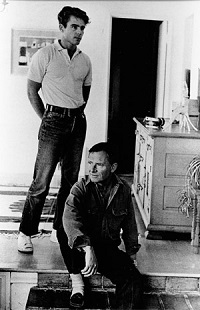
De Brits-Amerikaanse schrijver Christopher Isherwood werd geboren op 26 augustus 1904 in Disley in het graafschap Cheshire in Engeland. Zie ook mijn blog van 26 augustus 2010 en eveneens alle tags voor Christopher Isherwood op dit blog.

Uit: Mr Norris Changes Trains

“Mr Norris had two front doors to his flat. They stood side by side. Both had little round peep-holes in the centre panel and brightly polished knobs and brass nameplates. On the left-hand plate was engraved: Arthur Norris . Private. And on the right hand: Arthur Norris . Export and Import . [...] I noticed immediately I was inside, [that] the Private side of the entrance hall was divided from the Export side only by a thick hanging curtain. “
(…)

“’Do you know what time we arrive at the frontier?’Looking back on the conversation, this question does not seem to me to have been particularly unusual. It is true that I had no interest in the answer; I wanted merely to ask something which might start us chatting, and which wasn’t, at the same time, inquisitive or impertinent. Its effect on the stranger was remarkable. I had certainly succeeded in arousing his interest. He gave me a long, odd glance, his features seemed to stiffen a little. It was the glance of a poker-player who guesses suddenly that his opponent hold a straight flush and that he had better be careful. At length he answered, speaking slowly and with caution:‘I’m afraid I couldn’t tell you exactly. In about an hour’s time, I believe. ‘His glance, now vacant for a moment, was clouded again. An unpleasant thought seemed to tease him like a wasp; he moved his head slightly to avoid it."
(…)

“I must say that I have always felt that, in the deepest sense, we are all brothers. Class distinctions have never meant anything to me; and hatred of tyranny is in my blood. Even as a small child I could never bear injustice of any kind. It offends my sense of the beautiful. It is so stupid and unaesthetic. I remember my feelings when I was first unjustly punished by my nurse. It wasn't the punishment itself which I resented; it was the clumsiness, the lack of imagination behind it. That, I remember, pained me very deeply.”


 1644198-d47720f6ed983ca1f64ad213a0515be9.jpg
Christopher Isherwood (26 augustus 1904 – 4 januari 1986)
Hier met partner Don Bachardy (l) in 1962


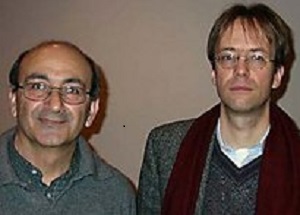
De Duitse schrijver Joachim Helfer werd geboren in Bonn op 26 augustus 1964. Zie ook mijn blog van 26 augustus 2010 en eveneens alle tags voor Joachim Helfer op dit blog.

Uit: Die Verschwulung der Welt (Samen met Raschid ad-Daʿif)

"Rashid al-Daif ist ein arabischer Christ. Ich glaube, das ist einer der wichtigsten Aspekte dieses Buches, dass ein arabischer Christ Dinge schreibt, die bei uns in Europa manchmal so klingen, als würde ein gemäßigter Islamist sprechen, kein Fanatiker, aber doch jemand der bestimmte Vorstellungen des politischen Islam jedenfalls nicht völlig ablehnt, obwohl er das politisch absolut tut. Er ist weit entfernt in irgendeiner Weise Islamist zu sein."
(…)

"Was Raschid gar nicht auffällt ist, wie stark manche Bereiche der Öffentlichkeit von Männern beherrscht werden, also beispielsweise, in seinem Stammcafé, das Café de Paris, das ist das ehrwürdige Intellektuellencafé des Landes, sind eben nur Männer und auf unseren Veranstaltungen in einigen Universitäten des Landes und an anderen Orten hat eben nur ein einziges Mal eine Frau das Wort ergriffen und ansonsten 60 oder 70 Männer, und diese eine Frau hat dann auch eine ganz spezifische Frage zur Ermutigung von arabisch weiblichen Emanzipationsbestrebungen durch den Westen gestellt."
(…)

"Ich habe nicht aus ideologischen, politischen oder anderen Gründen ein Kind in die Welt gesetzt, sondern weil ich das tiefe innere Bedürfnis hatte Vater zu werden und weil ich - mein Text kann ja auch gelesen werden als eine kritische Bestandsaufnahme des bisherigen Emanzipationsweges der Homosexuellen -, und weil ich den erreichten Zustand, dass wir eine anerkannte ethnische Minderheit der Schwulen und Lesben haben, die ihr anerkanntes und unangetastetes gesellschaftliches Getto bewohnen darf für oder gegen dass man sich um es mal etwas überspitzt zu formulieren, dass man sich mit 18 entscheiden muss, also diese weitere Segmentierung der Gesellschaft auch nicht für das Erstrebenswerteste halte. Dieses homosexuelle Getto ist als Schutzraum eine wichtige Zwischenetappe. Eine emanzipierte Gesellschaft würde aber ohne ein solches Getto auskommen und würde sich über die Frage. ob jemand eine Frau oder ein Mann im Augenblick liebt, ob jemand ein Kind hat oder kein Kind hat oder mehrere Kinder hat, nicht in solchen Kategorisierungen den Kopf zerbrechen."
 

 1644198-1a713138c65cbe470c4e55d3bc3dc7ae.jpg
Joachim Helfer (Bonn, 26 augustus 1964)
Hier met Raschid ad-Daʿif (links)


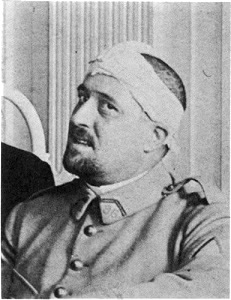
De Franstalige schrijver en dichter Guillaume Apollinaire werd in Parijs geboren op 26 augustus 1880. Zie ook mijn blog van 26 augustus 2010 en eveneens alle tags voor Guillaume Apollinaire op dit blog.


Si je mourais là-bas...

Si je mourais là-bas sur le front de l'armée
Tu pleurerais un jour ô Lou ma bien-aimée
Et puis mon souvenir s'éteindrait comme meurt
Un obus éclatant sur le front de l'armée
Un bel obus semblable aux mimosas en fleur

Et puis ce souvenir éclaté dans l'espace
Couvrirait de mon sang le monde tout entier
La mer les monts les vals et l'étoile qui passe
Les soleils merveilleux mûrissant dans l'espace
Comme font les fruits d'or autour de Baratier

Souvenir oublié vivant dans toutes choses
Je rougirais le bout de tes jolis seins roses
Je rougirais ta bouche et tes cheveux sanglants
Tu ne vieillirais point toutes ces belles choses
Rajeuniraient toujours pour leurs destins galants

Le fatal giclement de mon sang sur le monde
Donnerait au soleil plus de vive clarté
Aux fleurs plus de couleur plus de vitesse à l'onde
Un amour inouï descendrait sur le monde
L'amant serait plus fort dans ton corps écarté

Lou si je meurs là-bas souvenir qu'on oublie
- Souviens-t'en quelquefois aux instants de folie
De jeunesse et d'amour et d'éclatante ardeur -
Mon sang c'est la fontaine ardente du bonheur
Et sois la plus heureuse étant la plus jolie

Ô mon unique amour et ma grande folie


30 janv. 1915, Nîmes.


Refus de la colombe

Mensonge de l'Annonciade
La Noël fut la Passion
Et qu'elle était charmante et sade
Cette renonciation

Si la colombe poignardée
Saigne encore de ses refus
J'en plume les ailes l'idée
Et le poème que tu fus


La tranchée

Ô jeunes gens je m'offre à vous comme une épouse
Mon amour est puissant j'aime jusqu'à la mort
Tapie au fond du sol je vous guette jalouse
Et mon corps n'est en tout qu'un long baiser qui mord
 

 1644198-5439bc3430fc33cfed7bd81083856024.jpg
Guillaume Apollinaire (26 augustus 1880 – 9 november 1918)
Apolinaire raakte tijdens WO I gewond door grantaatscherven 


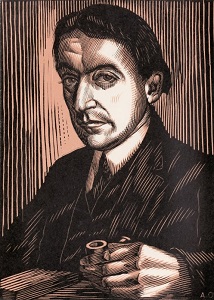
De Franse schrijver Jules Romains, pseudoniem van Louis Henri Farigoule, werd geboren op 26 augustus 1885 inLa Chapuze in het kanton Saint-Julien-Chapteuil. Zie ook mijn blog van 26 augustus 2010 en eveneens alle tags voor Jules Romain op dit blog.

Uit: Prélude à Verdun

«Puisqu’il n’était plus question d’hésiter ni de choisir, l’on remerciait presque le sort de vous avoir forcé la main. Peut-être allait-on bientôt s’apercevoir qu’avec ces rudes façons il vous avait rendu service, comme le maître-nageur au débutant qu’il pousse à l’eau. 348 »’ ‘_ « (…)chez les uns comme chez les autres, il y avait encore l’excitation de partir pour des vacances bruyantes, brutales, tumultueuses ; de vraies vacances de garçons. (C’était d’ailleurs la bonne époque de l’année. )On allait se reposer de la paix. La paix comporte des milliers de soucis(…)On allait s’offrir une période d’insouciance et de sans-gêne, une orgie de mouvements brusques, sans aucun égard pour les choses fragiles ; une cure de grossièreté primitive, de tout à fait mauvaises manières, d’impolitesse radicale. Cette débauche vous souriait d’avance d’autant plus qu’on était plus jeune, qu’on se portait mieux ; et qu’on savait qu’elle serait courte. »
(…)

« La peine est sans précédent, les sacrifices, démesurés. Mais le but, lui aussi, est le plus sublime qui se soit jamais offert à des hommes. La fin de la guerre dans le monde ? Depuis que le monde existe, il n’y aura pas eu de date plus importante. Autant dire que la vraie civilisation commence.

Mais cette brave pensée était suivie d’une autre, comme de son ombre : ‘‘Il faut en tout cas que ça finisse cette année.’’
(…)

« On sait, hélas ! ce qu’on peut faire et ce qu’on peut endurer. On sait que le courage est sans aucun effet sur le danger et que la plus merveilleuse tension de l’âme n’a jamais détourné d’un millimètre un projectile. On a même perdu tout respect mystique du danger, dont on s’est convaincu à l’usage qu’il est une affaire toute bête de volume, de densité, de répétition ; et que ce n’est pas à force de s’y frotter qu’on y devient moins vulnérable ; qu’on ne fait au contraire qu’accroître les chances d’y laisser sa peau. Bref, les impostures intérieures se sont évanouies. Reste, bien étalée au fond, réduite à sa plus simple expression, sans développement, ni variations, ni fioritures, cette remarquable espèce de peur.»
 

 1644198-a58f3c4b5836d404cafa375c68f1ba01.jpg
Jules Romains (26 augustus 1885 – 14 augustus 1972)


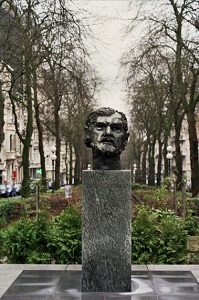
De Argentijnse schrijver Julio Cortázar werd geboren op 26 augustus 1914 in Brussel. Zie ook mijn blog van 26 augustus 2010 en eveneens alle tags voor Julio Cortázar op dit blog.

Uit: Graffiti (Vertaald door Gregory Rabassa)

“So many things begin and perhaps end as a game, I suppose that it amused you to find the sketch beside yours, you attributed it to change or whim and only the second time did you realize that it was intentional and then you looked at it slowly, you even came back later to look at it again, taking the usual precautions: the street at its most solitary moment, no patrol wagon on neighboring corners, approaching with indifference and never looking at the graffiti face-on but from the other sidewalk or diagonally, feigning interest in the shop window alongside, going away immediately.
Your own game had begun out of boredom, it wasn’t really a protest against the state of things in the city, the curfew, the menacing prohibition against putting up posters or writing on walls. It simply amused you to make sketches with colored chalk (you didn’t like the term graffiti, so art critic-like) and from time to time to come and look at them and even, with a little luck, to be a spectator to the arrival of the municipal truck and the useless insults of the workers as they erased the sketches. It didn’t matter to them that they weren’t political sketches, the prohibition covered everything, and if some child had dared draw a house or a dog it would have been erased in just the same way in the midst of curses and threats. In the city people no longer knew too well which side fear was really on; maybe that’s why you overcame yours and every so often picked the time and place just right for making a sketch.
You never ran any risk because you knew how to choose well, and in the time that passed until the cleaning trucks arrived something opening up for you like a very clean space where there was almost room for hope.
 

 1644198-cfae365be2a9ffb888ad7335c5c18bad.jpg
Julio Cortázar (26 augustus 1914 - 12 februari 1984)
Borstbeeld in Elsene, Brussel


Zie voor nog meer schrijvers van de 26e augustus mijn blog van 26 augustus 2012 en ook mijn blog van 26 augustus 2011 deel 1 en eveneens deel 2.
Geschreven door Romenu om 19:05 Reageer op dit bericht

Rashid Al-Daif

Onafhankelijk van geboortedata:

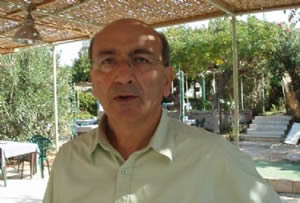
De Libanese schrijver Rashid Al-Daif werd in 1945 geboren in Ehden bij Zgharta in het noorden van Libanon in een christelijke maronitische familie. Hij studeerde Arabisch aan de Libanese Universiteit in Beiroet. In 1974 ontving hij zijn doctoraat in Parijs (Sorbonne). Van 1972-1974 doceerde hij Arabisch   als vreemde taal aan de Universiteit van Parijs. Van 1974 tot 2008 was hij hoogleraar Arabisch en letterkunde aan de Libanese Universiteit van Beiroet. In het zomersemester 1999 was hij visiting professor in Toulouse. Het boek “Die Verschwulung der Welt..Rede gegen Rede. Beirut-Berlin” van Rashid Al-Daif en Joachim Helfer baarde in de herfst van 2006 nogal wat opzien. Onder de titel “Audat al-almani ila ruschdih”i ("De terugkeer van de Duitsers tot de rede" of "Hoe de Duitser weer tot bezinning kwam") had Rashid Al-Daif tevoren in Beiroet een verslag gepubliceerd over het privéleven van Joachim Helfer, zonder diens medeweten of toestemming. De vorm van de Duitse editie, waarin de tekst van Al-DaÏf onderbroken werd door ingevoegde commentaren en correcties van Helfer, leidde omgekeerd tot protest van Al-Daif, die meende dat het resultaat afbreuk deed aan de integriteit van zijn werk. Al-Daifs romans behandelen op humoristische wijze de tegenstellingen van de Libanese samenleving, die tussen traditie en moderniteit verscheurd wordt. Tegelijk wordt een gedifferentieerde reflectie op de sociale spanningen en het lijden, veroorzaakt door de burgeroorlog, ontwikkeld. Al- Da'ifs romans worden gerekend tot de stroming van de nouveau roman. Zij doen afstand van psychologische karakterisering en van een referentiekader. Een selectie van zijn poëtische werk werd in het Duits gepubliceerd in 2008 onder de titel „Ich werde die Dinge bei ihrem Namen nennen“. Rashid Al-Daif is een van de meest bekende Arabischtalige romanschrijvers van het heden. Zijn werk werd in vele talen vertaald. 

Uit: Ich werde die Dinge bei ihrem Namen nennen (Vertaald door Leslie Tramontini)

„Ich träumte, dass ein Fisch mit einer Tüte auf seinem Rücken, die ihn mit Wasser versorgt, aus dem Wasser an Land gekommen sei und lief und lief, bis er das Bett meines Sohnes erreichte. Mein Sohn schlief gerade, und so flüsterte der Fisch ihm etwas ins Ohr, woraufhin mein Sohn aufstand, seine Hand ergriff und mit dem Fisch zum Meer ging. Schreiend folgte ich ihnen, doch me)in Schrei verließ meine Kehle nicht – so wie es einem manchmal in einem Alptraum ergeht. Der Fisch hörte mich trotzdem und eilte schneller, bis er das Meer erreicht hatte und darin untertauchte. Mein Sohn tauchte hinter ihm unter. Mein Sohn konnte gut schwimmen und folgte ihm mit der Geschwindigkeit eines Fisches.
... Immer mehr entfernte er sich aus meinem Blickfeld, und noch immer verließ der Schrei meine Kehle nicht. Da erinnerte ich mich plötzlich, dass er einmal völlig erschreckt aufgewacht war und gerufen hatte. Ich war zu ihm gegangen und er hatte mir gesagt: Wer hat mir das Schwimmen beigebracht? Ich hatte ihm geantwortet, keiner habe ihm das Schwimmen beigebracht und er könne gar nicht gut schwimmen. Er meinte: Doch, ich bin doch gerade vom anderen Ufer geschwommen, wie ein Aal. Ich hatte gelächelt, ihn umarmt und den Duft seines Körpers tief eingeatmet, bis in die Lungenspitzen, und ihm gesagt: Schlaf,
mein Junge, du hast nur geträumt.

****

Kein einziges Mal, wenn mein Blick irgendwo auf den Globus fällt, sei es zuhause, in der Schule oder im Büro der Fluggesellschaft, kann ich es vermeiden, laut loszulachen, so wie einer, der unter den Achseln gekitzelt wird.“


 1644199-bb9b59dc43e10935e426a49a7a918672.jpg
(Rashid Al-Daif, Ehden, 1945)

Geschreven door Romenu om 18:56 Reageer op dit bericht

Martin Amis, Charles Wright, Maxim Biller, Frederick Forsyth, Jògvan Isaksen, Johann Gottfried von Herder

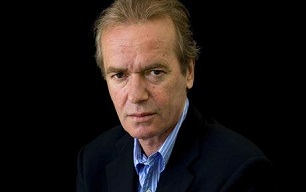
De Engelse schrijver Martin Amis werd geboren op 25 augustus 1949 in Cardiff, South Wales. Zie ook alle tags voor Martin Amis op dit blog en ook mijn blog van 25 augustus 2010.

Uit: Money

“I’d better give you the lowdown on Selina — and quick. That hot bitch, what am I letting her do to me?
Like many girls (I reckon), and especially those of the small, supple, swervy, bendy, bed-smart variety, Selina lives her life in hardened fear of assault, molestation and rape. The world has ravished her often enough in the past, and she thinks the world wants to ravish her again. Lying between the sheets, or propped at my side during long and anxious journeys in the Fiasco, or seated across the table in the deep lees of high-tab dinners, Selina has frequently refreshed me with tales of insult and violation from her childhood and teenage years — a musk-breathing, toffee-offering sicko on the common, the toolshed interrogations of sweat-soaked parkies, some lumbering retard in the alley or the lane, right up to the narcissist photographers and priapic prop-boys who used to cruise her at work, and now the scowling punks, soccer trogs and bus-stop boogies malevolently lining the streets and more or less constantly pinching her ass or flicking her tits and generally making no bones about the things they need to do… It must be tiring knowledge, the realization that half the members of the planet, one on one, can do what the hell they like with you.
And it must be extra tough on a girl like Selina, whose appearance, after many hours at the mirror, is a fifty—fifty compromise between the primly juvenile and the grossly provocative. Her tastes are strictly High Street too, with frank promise of brothelly knowhow and top-dollar underwear. I’ve followed Selina down the strip, when we’re shopping, say, and she strolls on ahead, wearing sawn-off jeans and a wash-withered T-shirt, or a frilly frock measuring the brink of her russety thighs, or a transparent coating of gossamer, like a condom, or an abbreviated school uniform … The men wince and watch, wince and watch. They buckle and half turn away. They shut their eyes and clutch their nuts. And sometimes, when they see me cruise up behind my little friend and slip an arm around her trim and muscular waist, they look at me as if to say — Do something about it, will you ? Don’t let her go about the place looking like that. Come on, it’s your responsibility.»


1643749-c50550490304fdefec3674a830f6805c.jpg
Martin Amis (Cardiff, 25 augustus 1949)


De Amerikaanse dichter Charles Wright werd geboren op 25 augustus 1935 in Pickwick Dam, Tennessee. Zie ook alle tags voor Charles Wright op dit blog en ook mijn blog van 25 augustus 2010.


The Gospel According to Somebody Else

Comfort them all, Lord, comfort their odd shapes                                       
                                                and their standard hair.
They seem so hand-haunted, so hymn-hewn,
In their slow drift toward received form.
Comfort them standing there,
                                                then comfort them sitting down—

God knows his own, the old have no tears,
The thickness of winter clouds is the thickness of what’s to come.


Down in the Mines

For I am one who exists from the undivided,
He said, and am filled with light.
And darkness is over there,
                                             where the divided stand.

Tough words, Ace, tough words.
White clouds grow big along the ridge line.
Under the earth we’re far away from home,
                                                                      or closer to it.


 1643749-22d837a22c34ccbff5744196fe6be9f1.jpg
Charles Wright (Pickwick Dam, 25 augustus 1935)


De Duitse schrijver Maxim Biller werd geboren op 25 augustus 1960 in Praag. Zie ook alle tags voor Maxim Biller op dit blog en ook mijn blog van 25 augustus 2010.

Uit: Liebe heute

„Große, grüne, wogende Blätter.
Er wartete auf sie drei Monate lang. Er sortierte seine Fotos, brachte Ordnung in seine Bücher und räumte ein paar Möbel um, und dann wartete er weiter. Dann las er alle Briefe, die er jemals bekommen hatte, und warf die meisten weg, und er kaufte eine große Karte von Indien und hängte sie über sein Bett. Nein, er kaufte keine Karte von Indien, aber er wollte es wirklich tun, während er wartete.
Er wartete und wartete und fing an, eine Geschichte darüber zu schreiben, wie er auf sie wartete, aber erwußte nicht, wie sie endete, und dann hörte er wieder auf damit. Zum Schluß machte er gar nichts mehr; er wartete nicht einmal mehr. Er schlief immer weniger, eraß nur noch Brot und Tomaten und gelben Supermarktkäse, und dann kam sie endlich, sie saßen zusammen bei ihm auf der Couch, und sie sagte: »Es war eine lange Zeit.« »Ja«, sagte er, obwohl er sich fest vorgenommen hatte, so wenig wie möglich zu sagen, »es war eine sehr lange Zeit.« Sie hatte abgenommen auf ihrer Reise, und er fand nicht, daß sie besser aussah  als vorher. Sie war müde, aber sie war immer müde, deshalb war sie weggefahren, um nicht mehr müde zu sein, und jetzt kam sie noch müder zurück. Und sie war älter geworden. Älter oder ernster oder härter, das wußte er nicht so genau. Ein grauer Schimmer lag auf ihrer sonnengegerbten Haut, wie ihn sonst nur ältere Frauen hatten, ihr Lächeln war viel zu ernst und überlegen, und ihre Wangenknochen traten noch stärker hervor als früher. Sie stand auf und ging raus, und als sie zurückkam, hatte sie eine bunte Tüte in der Hand.
»Das ist für dich«, sagte sie.
»Danke, meine Liebe«, sagte er. Er machte die Tüte auf. Es war ein kleiner, schwarzer, dicker Elefant aus Mahagoni drin.“


 1643749-733903ab5d56842915e23a32538f9d6b.jpg
Maxim Biller (Praag, 25 augustus 1960)


De Engelse schrijver Frederick Forsyth werd geboren in Ashford, Kent, op 25 augustus 1938. Zie ook alle tags voor Frederick Forsyth op dit blog en ook mijn blog van 25 augustus 2010.

Uit: Icon

“It was just before noon on the same day, July 16, that Igor Komarov, sitting in his office on the first floor of the dacha off Kiselny Boulevard, contacted his chief personal assistant by intercom.
"The document I lent you yesterday, you have had a chance to read it?" he asked.
"I have indeed, Mr. President. Quite brilliant, if I may say so," Akopov replied. All of Komarov's staff referred to him as Mr. President, meaning president of the executive committee of the Union of Patriotic Forces. They were in any case convinced that within twelve months he would still be Mr. President but for a different reason.
"Thank you," said Komarov. "Then please return it to me."
The intercom went dead. Akopov rose and went to his wall safe. He knew the combination by heart and spun the central dial the required six times. When the door swung open he looked inside for the black-bound file. It was not there.
Puzzled, he emptied the safe, paper by paper and file by file. A cold fear, part panic and part disbelief, gripped him. Taking a hold on himself, he began again. The files on the carpet around his knees were sorted out and examined, sheet by sheet and one by one. No black file. A light sweat beaded his forehead. He had worked contentedly in the office all morning, convinced that before leaving the previous evening he had put every confidential document safely away. He always did; he was a creature of habit.
After the safe, he began on the drawers of his desk. Nothing. He searched the floor under the desk, then every cupboard and closet. Just before one he knocked on Igor Komarov's door, was admitted, and confessed he could not find it.
The man who most of the world presumed would be the next president of Russia was a highly complex personality who, behind his public persona, preferred to keep much of himself intensely private.  He could not have been a greater contrast to his predecessor, the ousted Zhirinovsky, whom he now openly referred to as a buffoon”.


 1643749-496048fd548fc363bde00e2c3118826a.jpg
Frederick Forsyth (Ashford, 25 augustus 1938)


De Faeröerse schrijver Jógvan Isaksen werd geboren op 25 augustus 1950 in 25/08/1950 in Tórshavn, Faröer Eilanden. Zie ook alle tags voor Jógvan Isaksen op dit blog en ook mijn blog van 25 augustus 2010.

Uit: Option Färöer (Vertaald door Christel Hildebrandt)

“Gegen elf ging ich auf den Landavegur hinaus. Die Abstände zwischen den Straßenlaternen waren so groß, dass ich abwechselnd im Dunkeln und im Licht ging. Als würde ich eine Theaterbühne betreten, um sie gleich wieder zu verlassen.
Auf dem letzten Kilometer vor Velbastaðvegur begegnete ich keinem Menschen. Das Fernsehen demonstrierte wieder einmal sein Talent als Babysitter.
In den letzten Jahren war an der Straße einiges gebaut worden, aber bei Weitem nicht so viel wie an anderen Stellen von Tórshavn. An so einem bedeckten Oktoberabend konnte man immer noch das Gefühl haben, in unbebautem Gelände herumzulaufen. Oder waren das nur Reminiszenzen an die Kindheit, als es überhaupt nicht witzig war, im Stockfinstern den Landavegur entlangzugehen, während Trolle und andere Geschöpfe der Nacht hinter Steinen und in Senken lauerten?
Die Quelle war ein altes, geteertes Haus auf weißem Steinsockel. Es sah aus wie ein ganz gewöhnliches färöisches Haus aus einer Zeit, als der Beton noch nicht seinen Siegeszug gehalten hatte. Aber der Zustand im Haus schien alles andere als gewöhnlich zu sein. Die Lichter aus den Fenstern sahen aus wie Scheinwerfer und der Rolling-Stones-Song Satisfaction dröhnte in den Abend hinaus. Ich konnte gut verstehen, dass die Quelle keine Nachbarn hatte und allein in ihrer majestätischen Haltung stehen durfte. Ich ging die Treppe hinauf und fasste an die Türklinke. Es war abgeschlossen. Ich klopfte an.
Nichts geschah.”


 1643749-753b05a70fc176f36e47ae27b54dc00f.jpg
Jógvan Isaksen (Tórshavn, 25. augustus 1950)


De Duitse dichter, schrijver, theoloog en cultuur-filosoof Johann Gottfried von Herder werd geboren in Mohrungen op 25 augustus 1744. Zie ook alle tags voor Johann Gottfried von Herder op dit blog en ook mijn blog van 25 augustus 2010.


Ein Traum ist unser Leben...

Ein Traum, ein Traum ist unser Leben
Auf Erden hier;
Wie Schatten auf den Wogen schweben
Und schwinden wir
Und messen unsere trägen Schritte
Nach Raum und Zeit
Und sind, wir wissen´s nicht, in Mitte
Der Ewigkeit.


Die Sonne blickt...

Die Sonne blickt mit hellem Schein
So freundlich in die Welt hinein.
Mach´s ebenso! Sei heiter froh!
Der Baum streckt seine Äste vor;
Zur Höhe strebt er kühl empor.
Mach´s wie der Baum - Im sonnigen Raum!
Die Quelle springt und rieselt fort,
Zieht rasch und leicht von Ort zu Ort.
Mach´s wie die Quell - Und rege Dich schnell!
Der Vogel singt sein Liedchen schnell,
Freut sich an Sonne, Baum und Quell.
Mach´s ebenso! Sei rüstig froh!


Und grämt dich...

Und grämt dich, Edler, noch ein Wort
Der kleinen Neidgesellen?
Der hohe Mond, er leuchtet dort,
Und läßt die Hunde bellen,
Und schweigt und wandelt ruhig fort,
Was Nacht ist, aufzuhellen.


 1643749-d54c505a13249ad99af218e45e62f168.jpg
Johann Gottfried von Herder (25 augustus 1744 – 18 december 1803)
Portret door Anton Graff, rond 1800


De Australische schrijfster Thea Astley werd geboren op 25 augustus 1925 in Brisbane. Zie ook alle tags voor Thea Astley op dit blog en ook mijn blog van 25 augustus 2010.

Uit: The Slow Natives

“He’d first begun to steal when he was eleven.
No, they had both said, surprisingly in agreement,no, you may not have a six-stitcher.
He’d got a bit sick of arguing that October. The heat was terrible; The Terrace was a dried-up strip of sticky tar-paper.
Okay, he had said. And he had gone into town and taken one from a city counter. It was so easy there wasn’t even much fun in it. And of course he couldn’t even use the ball but had to keep it hidden at the bottom of his play-box.
Fondling it in bed after his light was out, once he had dropped off to sleep with it against the pillow and when it had been discovered in the morning he became involved in a series of lies he was unable to sustain. They kept on hoping for a long time that he had borrowed it from a schoolmate as he had insisted, but each knew that glossy red globe was bright with its own guilt, and he became so tired of their upset and accusing eyes he had walked down to the park near the ferry one afternoon and chucked it straight back into the river where it went bobbing off down the tide. ‘I gave it back’, he announced at tea. ‘Satisfied?’


 1643749-092bbcce030c26ccd8cd86e7158dcc68.jpg
Thea Astley (25 augustus 1925 – 17 augustus 2004)


Zie voor nog meerschrijvers van de 25e augustus ook mijn blog van 25 augustus 2013 deel 2.

Geschreven door Romenu om 18:55 Reageer op dit bericht

Howard Jacobson

De Britse dvhrijver en journalist Howard Jacobson werd geboren op 25 augustus 1942 in Manchester, Lancashire, opgevoed in Prestwich, en hij bezocht de Stand Grammar School in Whitefield, alvorens d Engels te gaan studeren aan Downing College, Cambridge. Hij doceerde gedurende drie jaar aan de Universiteit van Sydney alvorens terug te keren naar Groot-Brittannië om les te geven aan Selwyn College, Cambridge. Zijn latere onderwijsfuncties omvatte een periode bij Wolverhampton Polytechnic van 1974 tot 1980. Jacobson is drie keer getrouwd. In 2005 trouwde Jacobson voor de derde keer, met de documentairemaakster Jenny De Yong. In augustus 2014 Jacobson was één van de 200 bekende ondertekenaars van een brief aan The Guardian tegen de Schotse onafhankelijkheid. Zijn tijd bij Wolverhampton vormde de basis voor zijn eerste roman“Coming from Behind”. Voor zijn in 1999 roman verschenen roman “The Mighty Walzer” ontving hij de Bollinger Everyman Wodehouse Prize for comic writing. Zijn romans “Who's Sorry Now?” (2002) en “Kalooki Nights”(2006) haalden de longlist voor de Man Booker Prize. Voor de laatste kreeg hij in 2007 de JQ Wingate Prize. In oktober 2010 kreeg Jacobson de Man Booker Prize voor zijn roman “The Finkler Question”. In het boek onderzoekt hij wat het betekent om vandaag de dag joods te zijn en het gaat ook over "liefde, verlies en mannelijke vriendschap" Zijn roman “Zoo Time” won de Bollinger Everyman Wodehouse Prize (2013), tweede keer Jacobson's winnen van de prijs (de eerste in 1999 voor The Mighty Walzer). In september 2014 werd Jacobson's roman “J” genomineerd voor de 2014 Man Booker Prize. Jacobson schreef ook scripts voor televisieprogramma's. Van zijn twee non-fictie boeken “Roots Schmoots: Journeys Among Jews” (1993) en “Seriously Funny: From the Ridiculous to the Sublime” (1997) werd een tv-serie gemaakt. In 2010 presenteerde Jacobson “Creation”, het eerste deel van de Channel 4-serie The Bible: A History. Hij schreef en presenteerde ook de Australische biografische serie Brilliant Creatures (2014).

Uit: The Finkler Question

“He should have seen it coming.
His life had been one mishap after another. So he should have been prepared for this one.
He was a man who saw things coming. Not shadowy premonitions before and after sleep, but real and present dangers in the daylit world. Lamp posts and trees reared up at him, splintering his shins. Speeding cars lost control and rode on to the footpath leaving him lying in a pile of torn tissue and mangled bones. Sharp objects dropped from scaffolding and pierced his skull.
Women worst of all. When a woman of the sort Julian Treslove found beautiful crossed his path it wasn’t his body that took the force but his mind. She shattered his calm.
True, he had no calm, but she shattered whatever calm there was to look forward to in the future. She was the future.
People who see what’s coming have faulty chronology, that is all. Treslove’s clocks were all wrong. He no sooner saw the woman than he saw the aftermath of her — his marriage proposal and her acceptance, the home they would set up together, the drawn rich silk curtains leaking purple light, the bed sheets billowing like clouds, the wisp of aromatic smoke winding from the chimney — only for every wrack of it — its lattice of crimson roof tiles, its gables and dormer windows, his happiness, his future — to come crashing down on him in the moment of her walking past.
She didn’t leave him for another man, or tell him she was sick of him and of their life together, she passed away in a perfected dream of tragic love — consumptive, wet-eyelashed, and as often as not singing her goodbyes to him in phrases borrowed from popular Italian opera.
There was no child. Children spoilt the story.
Between the rearing lamp posts and the falling masonry he would sometimes catch himself rehearsing his last words to her — also as often as not borrowed from the popular Italian operas — as though time had concertinaed, his heart had smashed, and she was dying even before he had met her.”


 1732146-f123dfab8029270a43455410d6608e43.jpg
Howard Jacobson (Manchester, 25 augustus 1942)

Geschreven door Romenu om 00:00 Reageer op dit bericht

Howard Jacobson

De Britse schrijver Howard Jacobson werd geboren op 25 augustus 1942 in Manchester. Hij is opgegroeid in Prestwich en werd opgeleid aan Stand Grammar School in Whitefield, alvorens Engels te gaan studeren op Downing College, Cambridge. Hij doceerde gedurende drie jaar aan de Universiteit van Sydney voordat hij terugkeerde naar Engeland om les te geven aan Selwyn College in Cambridge. Zijn fictie, met name de vijf romans die hij heeft gepubliceerd sinds 1998, wordt vooral gekenmerkt door een discursieve en humoristische stijl. Terugkerende onderwerpen in zijn werk zijn man-vrouw verhoudingen en de Joodse ervaring in Groot-Brittannië in de midden-tot laat-20e eeuw. Jacobson is wel vergeleken met vooraanstaande Joods-Amerikaanse schrijvers als Philip Roth. Zijn roman The Mighty Walzer uit 1999 over een tiener tafeltenniskampioen, won de Bollinger Everyman Wodehouse Prize for comic writing. Hij speelt in het Manchester van de jaren 1950 en Jacobson, zelf als tiener een ping pong fan, geeft toe dat er meer dan een autobiografisch element in zit. Zijn romans Who's Sorry Now uit 2002 en Kalooki Nights uit 2006 kwamen al eerder op de long list van de Man Booker Prize. Jacobson werkte ook als columnist voor The Independent en voor de televisie. Twee tv-programma's waren Channel 4's Howard Jacobson Takes on the Turner uit 2000 Why the Novel Matters uit 2002. Zie ook alle tags voor Howard Jacobson op dit blog.

Uit: Zoo Time

“Vanessa hated it when I started a new book. She saw it as me getting one over her who hadn't started a new book because she hadn't finished, or indeed started, the old one. But she also hated it when I hadn't started a new book, because not starting a new book made me querulous and sexually unreliable. At least when I was writing a new book she knew where I was. The downside of that being that as soon as she knew where I was she wished I were somewhere else.
In fact, my question hid a lie; I hadn't started a new book, not in the sense of starting writing a new book. I had mouth-written a hundred new books, I just didn't believe in any of them. It wasn't personal, it wasn't only my books I didn't believe in, it was books full stop. If I was over, it was because the book was over. But Vanessa wasn't aware of the full extent of the crisis. She saw me trudge off to my study, heard the keys of my computer making their dead click and assumed I was still pouring forth my soul abroad like Keats's logorrhoeic nightingale.
I even affected high spirits. 'I'm sitting on top of the world,' I sang, breaking for tea.
'No you're not,' she shouted from her room.
She was contradictory to her soul. 'I did it my way,' I sang the morning after our wedding. 'No you didn't,' she said, not even looking up from her newspaper.
If my singing irritated her, the sound of my writing drove her to the edge of madness. But so did the sound of my not writing. This was part of the problem of our marriage. The other part was me. Not what I did, what I was. The fact of me. The manness of me.
'You, you, you,' she said for the umpteenth time that night. It was like a spell; if she said the word often enough maybe I, I, I would vanish in a vapour of red wine.
We were out to dinner. We were always out to dinner. Along with everybody else. Dinner was all there was left to do.”


 1665724-6bd6a7eec37412e39f4b25b37c17278c.jpg
Howard Jacobson (Manchester, 25 augustus 1942)

Geschreven door Romenu om 00:00 Reageer op dit bericht

Meer van Romenu

↑ Terug naar de berichten