Naar de inhoud

Romenu

Over literatuur, gedichten, kunst en cultuur
akke.beakke.be

Berichten van 26 augustus 2014 tot 27 augustus 2014

Tom Lanoye, Jeanette Winterson, Lolita Pille, Lernert Engelberts, Kristien Hemmerechts, David Rowbotham
De Belgische dichter en schrijver Tom Lanoye werd geboren te Sint-Niklaas op 27 augustus 1958. Zie ook mijn blog van 27 augustus 2010 en eveneens alle tags voor Tom Lanoye op dit blog.


Het is een magere troost

Het is een magere troost
dat alles moet verdwijnen

en ik je hoe dan ook op een keer
toch zou moeten missen, bij voorbeeld

door de dood. Ik hou van je, al
kunnen we waarschijnlijk niet meer
worden wat we vroeger waren of dachten
te zijn. Geen verhalen over afkeer,

over waanzin of grote trouw: ik
verlang naar toen terwijl
ik ouder word. Ik denk
nog veel aan jou.


In the mood

Daarnet, twee uur in de nacht alweer,
floepte de TV aan en daar stond ik,
in Madison Square Garden, tien jaar
jonger en goochelend als geeneen.

Door een onzichtbare massa opgezweept,
cirkelzaagde ik mijn assistente rats
in twee, de wekker die ik stuksloeg
werd niet heel en de konijnen vluchtten
naar de concurrentie. Het werd ze allemaal
teveel.

'Kop op, ouwe jongen!' Mijn hoofd
schoot door het scherm. 'Zo zie je maar:
tien jaar geleden ging je ook al naar
de kloten. Encore, mijn beste, het kan er
alleen maar op verbeteren. Encore!'

Showmuziek werd ingezet, warm applaus, en
goedgebouwde vrienden die ik lang vergeten was,
dansten en swingden on the floor, als gek.

'Welcome back, crazy Jack.
Welcome back.'


Kurma (schildpad)

Hoewel er geen bewijzen zijn. Misschien
als ik slaap, maar bij het minste geluid
verdwijnen zijn geschubde pootjes langs mijn
oren en mijn ogen, ze worden als het ware

in een schild gezogen. Zijn magere kop
raspt soms over mijn tong, en praat maar
zo vertraagd dat men het nauwelijks

verstaat: hij noemt mijn klieren
liefde en ik hou van hem. Ik ben

blij dat hij bestaat.


 1644601-e8a5090cfa3e7449154b4d8c78609cd5.jpg
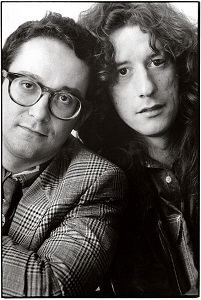
Tom Lanoye (Sint-Niklaas, 27 augustus 1958)
Hier met Herman Brusselmans (rechts) in 1989


De Britse schrijfster Jeanette Winterson werd geboren in Manchester op 27 augustus 1959. Zie ook mijn blog van 27 augustus 2010 en eveneens alle tags voor Jeanette Winterson op dit blog.

Uit: Oranges Are Not The Only Fruit 

‘The Lord is good’ (steely-eyed into the back yard).
‘What sort of tea is this?’ (steely-eyed at me).
‘Who was the oldest man in the Bible?’
No. 3 of course, had a number of variations, but it was always a Bible quiz question. We had a lot of Bible quizzes at church and my mother liked me to win. If I knew the answer she asked me another, if I didn’t she got cross, but luckily not for long, because we had to listen to the World Service. It was always the same; we sat down on either side of the radiogram, she with her tea, me with a pad and pencil; in front of us, the Missionary Map. The faraway voice in the middle of the set gave news of activities, converts and problems. At the end there was an appeal for YOUR PRAYERS. I had to write it all down so that my mother could deliver her church report that night. She was the Missionary Secretary. The Missionary Report was a great trial to me because our mid-day meal depended upon it. If it went well, no deaths and lots of converts, my mother cooked a joint. If the Godless had proved not only stubborn, but murderous, my mother spent the rest of the morning listening to the Jim Reeves Devotional Selection, and we had to have boiled eggs and toast soldiers. Her husband was an easy-going man, but I knew it depressed him. He would have cooked it himself but for my mother’s complete conviction that she was the only person in our house who would tell a saucepan from a piano. She was wrong, as far as we were concerned, but right as far as she was concerned, and really, that’s what mattered.
Somehow we got through those mornings, and in the afternoon she and I took the dog for a walk, while my father cleaned all the shoes. ‘You can tell someone by their shoes.’ My mother said. ‘Look at Next Door.’
‘Drink,’ said my mother grimly as we stepped out past the house. ‘That’s why they buy everything from Maxi Ball’s Catalogue Seconds. The Devil himself is a drunk’ (sometimes my mother invented theology).”


 1644601-bf3004b67398988ca320cc975515f206.jpg
Jeanette Winterson (Manchester, 27 augustus 1959)
Scene uit de tv-serie “Oranges Are Not The Only Fruit” uit 1990 


De Franse schrijfster Lolita Pille werd geboren op 27 augustus 1982 in Sèvres. Zie ook mijn blog van 27 augustus 2010 en eveneens alle tags voor Lolita Pille op dit blog.

Uit: Crépuscule Ville

« Le cerveau et le cœur sont des organes passés de mode. Espérons pour les générations à venir, qu'on s'en débarrassera comme d'une pilosité superflue. Je vais m'offrir des jambes d'un mètre, un nouveau visage et des yeux violets. je vais atteindre le poids d'une ombre en me laissant crever de faim grâce à cette drogue merveilleuse. J'espère qu'elle liquidera chez moi autant de neurones que de graisse. je serai en très mauvaise santé, abominablement frustrée et complètement abrutie. Je serai épargnée par la puberté. je serai esthétique et impitoyable. J'aurai les yeux vitreux et on prendra ça pour du mystère. Je n'aurai plus à rougir de mes élans envers les autres comme d'une maladie honteuse puisque je n'aurai plus la force, ni la faculté d'en éprouver. Je serai un objet de désir. Le néant dans une cosse magnifique. Et je serai heureuse comme seuls les imbéciles et les salauds savent l'être.
(…)

out le monde a droit à la jeunesse, tout le monde à droit à la beauté."C" pour confessionnal, dites-nous votre présent, nous vous dirons votre futur. Banque de la cité, faites la sieste, votre argent travail. Urbaine des jeux, ici on fabrique des milliardaires. Cokatril, nourrissez-vous par le nez. Panhôtel, le bout du monde au coin de la rue. Préventive-routière, roulez vite, mourez vieux. Préventive-agression, sortez nue. Immo écran, vous êtes nos invités. Whisky light, la boisson qui manquait aux femmes. Lexo junior, les moins de six ans ont enfin trouvés leur marchand de sable. Préventive-suicide, sautez dans le filet. "H" comme hologramme, le héros, c'est vous. Clair-news, la vérité, rien que la vérité, toute la vérité. "S" pour Sentimental, avec Clair-Monde l'amour est à quelques mètres. Avec Clair-Monde, votre bonheur n'est plus une utopie.”


 1644601-3373b819b58f91623e3fef8982089ab1.jpg
Lolita Pille (Sèvres, 27 augustus 1982)


De Nederlandse dichter en schrijver Lernert Engelberts werd geboren op 27 augustus 1977 in Leerdam. Zie ook mijn blog van 27 augustus 2010 en eveneens alle tags voor Lernert Engelbert op dit blog.


Mijn moeder zegt:

'Die boeken van anderen
brengen je niet dichter bij
het antwoord op de vraag
wie je bent, maar duwen je
er steeds verder van weg.

Die boeken formuleren je gedachten
voordat je ze zelf formuleert.
Hun kennis vertroebelt je blik.
Het is onnodige bagage.

En daarbij:
De waarheid van een ander
kan in geen geval jouw waarheid zijn
dus staar maar een tijdje naar buiten
ga fietsen over de dijk
of zwemmen in de Waal

maar schuif in godsnaam
dat boek van een ander opzij.'


 1644601-d7f4254d722de817f0ee3c3ab0b19397.jpg
Lernert Engelberts (Leerdam, 27 augustus 1977)


De Belgische schrijfster Kristien Hemmerechts werd geboren in Brussel op 27 augustus 1955. Zie ook mijn blog van 27 augustus 2010 en eveneens alle tags voor Kristien Hemmerechts op dit blog.

Uit:Gitte

“Ik sloeg mijn armen om zijn hals en probeerde hem te omhelzen.
‘Ik ben moe’, zei Woud.
Zijn ogen lagen diep in hun kassen. Hij droeg kleren waarin ik hem nooit eerder had gezien.
Mama en papa stonden links en rechts van hem met zijn spullen en tassen.
‘Wil je even rusten op je kamer?’ vroeg mama.
Hij knikte.
‘Je hebt een nieuwe matras’, zei Onno. ‘Door ons voor jou getest!’
‘Laat jullie broer met rust’, zei mama. ‘Ik wil niet dat jullie hem storen. Heb je het gehoord?’
Onno en ik keken naar elkaar. Bijna tegelijkertijd haalden we onze schouders op.
Hij was zwaarder geworden en zijn gezicht leek opgeblazen. Dat kwam door de medicatie, zei mama, en door het gebrek aan lichaamsbeweging. Blijkbaar had hij koppig geweigerd om met de andere patiënten te gaan zwemmen. Dat was het enige minpuntje op zijn palmares.
Ik sloop naar zijn kamer en keek door een kiertje naar het logge lichaam op de nieuwe matras. Je bent een potvis, dacht ik. Een aangespoelde potvis.
In de garage zat hij voor de televisie te roken. Mama had een asbak opgediept die ik nooit eerder had gezien. Het was een oranje plastic ding waarin peukjes harder leken te stinken dan in een gewone asbak. Sigaretten die er ooit in waren uitgedoofd, hadden er bruine afdrukken in gebrand. Voorzover ik wist, was nooit eerder in ons huis een sigaret opgestoken.
‘Tja,’ zei mama gelaten, ‘dat is een slechte gewoonte die ze in zo’n ziekenhuis oppikken.’


 1644601-3907b3dd4c4fe3d09ae4c7e7247ee698.jpg
Kristien Hemmerechts (Brussel, 27 augustus 1955)


De Australische dichter, schrijver en journalist David Rowbotham werd geboren in Toowoomba.in de Darling Downs van Queensland op 27 augustus 1924. Zie ook mijn blog van 27 augustus 2010 en eveneens alle tags voor David Rowbotham op dit blog.


The Revenge Of Carthage

Come back to Carthage in the summertime.
I plead, reading again my plundering letter
that gives a makeshift town a classic name.
All history is only down a country road;
why not stand by Carthage where Carthage stood?

The figs are ripe and the wine is red and flowing,
and my lovers of rich relics are approaching,
the Arab from the sands, the Roman from the seas.
I hear their horns of onset and plenty blowing;
I receive their smiling, swordless messengers.
But the Carthage of summertime is spoiling for blood.

My makeshift town mutters beside its waters.
I have put away my instrumental letters.
My archenemy rests where my plundered Carthage stood.


Running

I saw a lame man running down a hill
of snipers and as he ran he stumbled and fell
but would grab at a tree to haul himself up again,
and keep running till he reached the armoured plain
where the rest waited and shot him just the same.
He stood, then stumbled and fell for the last time,
where the running strongest were the turreted ones
among helmets that could have done with them as friends.
The day was a sound of tanks and running guns,
and sputtering fire from the remnants that mark ends.
In the blaze of a shot-down heaven, the day was a hell
scorching an armoured plain and a snipers’ hill;
and the day was full of running; the day was full
of men running nowhere into the muzzles of guns.


 1644601-1228ae8b741d0374836376c9788a95c1.jpg
David Rowbotham (27 augustus 1924 – 6 oktober 2010)
Cover biografie 


Zie voor nog meer schrijvers van de 27e augustus ook mijn blog van 27 augustus 2011 deel 2.
Geschreven door Romenu om 18:58 Reageer op dit bericht

Christopher Isherwood, Joachim Helfer, Guillaume Apollinaire, Jules Romains, Julio Cortázar

De Brits-Amerikaanse schrijver Christopher Isherwood werd geboren op 26 augustus 1904 in Disley in het graafschap Cheshire in Engeland. Zie ook mijn blog van 26 augustus 2010 en eveneens alle tags voor Christopher Isherwood op dit blog.

Uit: Mr Norris Changes Trains

“Mr Norris had two front doors to his flat. They stood side by side. Both had little round peep-holes in the centre panel and brightly polished knobs and brass nameplates. On the left-hand plate was engraved: Arthur Norris . Private. And on the right hand: Arthur Norris . Export and Import . [...] I noticed immediately I was inside, [that] the Private side of the entrance hall was divided from the Export side only by a thick hanging curtain. “
(…)

“’Do you know what time we arrive at the frontier?’Looking back on the conversation, this question does not seem to me to have been particularly unusual. It is true that I had no interest in the answer; I wanted merely to ask something which might start us chatting, and which wasn’t, at the same time, inquisitive or impertinent. Its effect on the stranger was remarkable. I had certainly succeeded in arousing his interest. He gave me a long, odd glance, his features seemed to stiffen a little. It was the glance of a poker-player who guesses suddenly that his opponent hold a straight flush and that he had better be careful. At length he answered, speaking slowly and with caution:‘I’m afraid I couldn’t tell you exactly. In about an hour’s time, I believe. ‘His glance, now vacant for a moment, was clouded again. An unpleasant thought seemed to tease him like a wasp; he moved his head slightly to avoid it."
(…)

“I must say that I have always felt that, in the deepest sense, we are all brothers. Class distinctions have never meant anything to me; and hatred of tyranny is in my blood. Even as a small child I could never bear injustice of any kind. It offends my sense of the beautiful. It is so stupid and unaesthetic. I remember my feelings when I was first unjustly punished by my nurse. It wasn't the punishment itself which I resented; it was the clumsiness, the lack of imagination behind it. That, I remember, pained me very deeply.”


 1644198-d47720f6ed983ca1f64ad213a0515be9.jpg
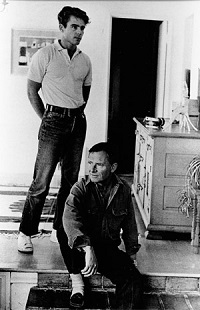
Christopher Isherwood (26 augustus 1904 – 4 januari 1986)
Hier met partner Don Bachardy (l) in 1962


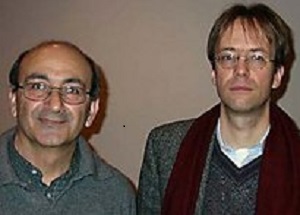
De Duitse schrijver Joachim Helfer werd geboren in Bonn op 26 augustus 1964. Zie ook mijn blog van 26 augustus 2010 en eveneens alle tags voor Joachim Helfer op dit blog.

Uit: Die Verschwulung der Welt (Samen met Raschid ad-Daʿif)

"Rashid al-Daif ist ein arabischer Christ. Ich glaube, das ist einer der wichtigsten Aspekte dieses Buches, dass ein arabischer Christ Dinge schreibt, die bei uns in Europa manchmal so klingen, als würde ein gemäßigter Islamist sprechen, kein Fanatiker, aber doch jemand der bestimmte Vorstellungen des politischen Islam jedenfalls nicht völlig ablehnt, obwohl er das politisch absolut tut. Er ist weit entfernt in irgendeiner Weise Islamist zu sein."
(…)

"Was Raschid gar nicht auffällt ist, wie stark manche Bereiche der Öffentlichkeit von Männern beherrscht werden, also beispielsweise, in seinem Stammcafé, das Café de Paris, das ist das ehrwürdige Intellektuellencafé des Landes, sind eben nur Männer und auf unseren Veranstaltungen in einigen Universitäten des Landes und an anderen Orten hat eben nur ein einziges Mal eine Frau das Wort ergriffen und ansonsten 60 oder 70 Männer, und diese eine Frau hat dann auch eine ganz spezifische Frage zur Ermutigung von arabisch weiblichen Emanzipationsbestrebungen durch den Westen gestellt."
(…)

"Ich habe nicht aus ideologischen, politischen oder anderen Gründen ein Kind in die Welt gesetzt, sondern weil ich das tiefe innere Bedürfnis hatte Vater zu werden und weil ich - mein Text kann ja auch gelesen werden als eine kritische Bestandsaufnahme des bisherigen Emanzipationsweges der Homosexuellen -, und weil ich den erreichten Zustand, dass wir eine anerkannte ethnische Minderheit der Schwulen und Lesben haben, die ihr anerkanntes und unangetastetes gesellschaftliches Getto bewohnen darf für oder gegen dass man sich um es mal etwas überspitzt zu formulieren, dass man sich mit 18 entscheiden muss, also diese weitere Segmentierung der Gesellschaft auch nicht für das Erstrebenswerteste halte. Dieses homosexuelle Getto ist als Schutzraum eine wichtige Zwischenetappe. Eine emanzipierte Gesellschaft würde aber ohne ein solches Getto auskommen und würde sich über die Frage. ob jemand eine Frau oder ein Mann im Augenblick liebt, ob jemand ein Kind hat oder kein Kind hat oder mehrere Kinder hat, nicht in solchen Kategorisierungen den Kopf zerbrechen."


 1644198-1a713138c65cbe470c4e55d3bc3dc7ae.jpg
Joachim Helfer (Bonn, 26 augustus 1964)
Hier met Raschid ad-Daʿif (links)


De Franstalige schrijver en dichter Guillaume Apollinaire werd in Parijs geboren op 26 augustus 1880. Zie ook mijn blog van 26 augustus 2010 en eveneens alle tags voor Guillaume Apollinaire op dit blog.


Si je mourais là-bas...

Si je mourais là-bas sur le front de l'armée
Tu pleurerais un jour ô Lou ma bien-aimée
Et puis mon souvenir s'éteindrait comme meurt
Un obus éclatant sur le front de l'armée
Un bel obus semblable aux mimosas en fleur

Et puis ce souvenir éclaté dans l'espace
Couvrirait de mon sang le monde tout entier
La mer les monts les vals et l'étoile qui passe
Les soleils merveilleux mûrissant dans l'espace
Comme font les fruits d'or autour de Baratier

Souvenir oublié vivant dans toutes choses
Je rougirais le bout de tes jolis seins roses
Je rougirais ta bouche et tes cheveux sanglants
Tu ne vieillirais point toutes ces belles choses
Rajeuniraient toujours pour leurs destins galants

Le fatal giclement de mon sang sur le monde
Donnerait au soleil plus de vive clarté
Aux fleurs plus de couleur plus de vitesse à l'onde
Un amour inouï descendrait sur le monde
L'amant serait plus fort dans ton corps écarté

Lou si je meurs là-bas souvenir qu'on oublie
- Souviens-t'en quelquefois aux instants de folie
De jeunesse et d'amour et d'éclatante ardeur -
Mon sang c'est la fontaine ardente du bonheur
Et sois la plus heureuse étant la plus jolie

Ô mon unique amour et ma grande folie


30 janv. 1915, Nîmes.


Refus de la colombe

Mensonge de l'Annonciade
La Noël fut la Passion
Et qu'elle était charmante et sade
Cette renonciation

Si la colombe poignardée
Saigne encore de ses refus
J'en plume les ailes l'idée
Et le poème que tu fus


La tranchée

Ô jeunes gens je m'offre à vous comme une épouse
Mon amour est puissant j'aime jusqu'à la mort
Tapie au fond du sol je vous guette jalouse
Et mon corps n'est en tout qu'un long baiser qui mord


 1644198-5439bc3430fc33cfed7bd81083856024.jpg
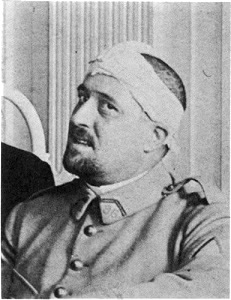
Guillaume Apollinaire (26 augustus 1880 – 9 november 1918)
Apolinaire raakte tijdens WO I gewond door grantaatscherven 


De Franse schrijver Jules Romains, pseudoniem van Louis Henri Farigoule, werd geboren op 26 augustus 1885 inLa Chapuze in het kanton Saint-Julien-Chapteuil. Zie ook mijn blog van 26 augustus 2010 en eveneens alle tags voor Jules Romain op dit blog.

Uit: Prélude à Verdun

«Puisqu’il n’était plus question d’hésiter ni de choisir, l’on remerciait presque le sort de vous avoir forcé la main. Peut-être allait-on bientôt s’apercevoir qu’avec ces rudes façons il vous avait rendu service, comme le maître-nageur au débutant qu’il pousse à l’eau. 348 »’ ‘_ « (…)chez les uns comme chez les autres, il y avait encore l’excitation de partir pour des vacances bruyantes, brutales, tumultueuses ; de vraies vacances de garçons. (C’était d’ailleurs la bonne époque de l’année. )On allait se reposer de la paix. La paix comporte des milliers de soucis(…)On allait s’offrir une période d’insouciance et de sans-gêne, une orgie de mouvements brusques, sans aucun égard pour les choses fragiles ; une cure de grossièreté primitive, de tout à fait mauvaises manières, d’impolitesse radicale. Cette débauche vous souriait d’avance d’autant plus qu’on était plus jeune, qu’on se portait mieux ; et qu’on savait qu’elle serait courte. »
(…)

« La peine est sans précédent, les sacrifices, démesurés. Mais le but, lui aussi, est le plus sublime qui se soit jamais offert à des hommes. La fin de la guerre dans le monde ? Depuis que le monde existe, il n’y aura pas eu de date plus importante. Autant dire que la vraie civilisation commence.

Mais cette brave pensée était suivie d’une autre, comme de son ombre : ‘‘Il faut en tout cas que ça finisse cette année.’’
(…)

« On sait, hélas ! ce qu’on peut faire et ce qu’on peut endurer. On sait que le courage est sans aucun effet sur le danger et que la plus merveilleuse tension de l’âme n’a jamais détourné d’un millimètre un projectile. On a même perdu tout respect mystique du danger, dont on s’est convaincu à l’usage qu’il est une affaire toute bête de volume, de densité, de répétition ; et que ce n’est pas à force de s’y frotter qu’on y devient moins vulnérable ; qu’on ne fait au contraire qu’accroître les chances d’y laisser sa peau. Bref, les impostures intérieures se sont évanouies. Reste, bien étalée au fond, réduite à sa plus simple expression, sans développement, ni variations, ni fioritures, cette remarquable espèce de peur.»


 1644198-a58f3c4b5836d404cafa375c68f1ba01.jpg
Jules Romains (26 augustus 1885 – 14 augustus 1972)


De Argentijnse schrijver Julio Cortázar werd geboren op 26 augustus 1914 in Brussel. Zie ook mijn blog van 26 augustus 2010 en eveneens alle tags voor Julio Cortázar op dit blog.

Uit: Graffiti (Vertaald door Gregory Rabassa)

“So many things begin and perhaps end as a game, I suppose that it amused you to find the sketch beside yours, you attributed it to change or whim and only the second time did you realize that it was intentional and then you looked at it slowly, you even came back later to look at it again, taking the usual precautions: the street at its most solitary moment, no patrol wagon on neighboring corners, approaching with indifference and never looking at the graffiti face-on but from the other sidewalk or diagonally, feigning interest in the shop window alongside, going away immediately.
Your own game had begun out of boredom, it wasn’t really a protest against the state of things in the city, the curfew, the menacing prohibition against putting up posters or writing on walls. It simply amused you to make sketches with colored chalk (you didn’t like the term graffiti, so art critic-like) and from time to time to come and look at them and even, with a little luck, to be a spectator to the arrival of the municipal truck and the useless insults of the workers as they erased the sketches. It didn’t matter to them that they weren’t political sketches, the prohibition covered everything, and if some child had dared draw a house or a dog it would have been erased in just the same way in the midst of curses and threats. In the city people no longer knew too well which side fear was really on; maybe that’s why you overcame yours and every so often picked the time and place just right for making a sketch.
You never ran any risk because you knew how to choose well, and in the time that passed until the cleaning trucks arrived something opening up for you like a very clean space where there was almost room for hope.


 1644198-cfae365be2a9ffb888ad7335c5c18bad.jpg
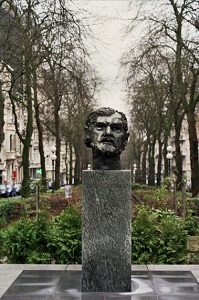
Julio Cortázar (26 augustus 1914 - 12 februari 1984)
Borstbeeld in Elsene, Brussel


Zie voor nog meer schrijvers van de 26e augustus mijn blog van 26 augustus 2012 en ook mijn blog van 26 augustus 2011 deel 1 en eveneens deel 2.

Geschreven door Romenu om 19:05 Reageer op dit bericht

Rashid Al-Daif

Onafhankelijk van geboortedata:

De Libanese schrijver Rashid Al-Daif werd in 1945 geboren in Ehden bij Zgharta in het noorden van Libanon in een christelijke maronitische familie. Hij studeerde Arabisch aan de Libanese Universiteit in Beiroet. In 1974 ontving hij zijn doctoraat in Parijs (Sorbonne). Van 1972-1974 doceerde hij Arabisch   als vreemde taal aan de Universiteit van Parijs. Van 1974 tot 2008 was hij hoogleraar Arabisch en letterkunde aan de Libanese Universiteit van Beiroet. In het zomersemester 1999 was hij visiting professor in Toulouse. Het boek “Die Verschwulung der Welt..Rede gegen Rede. Beirut-Berlin” van Rashid Al-Daif en Joachim Helfer baarde in de herfst van 2006 nogal wat opzien. Onder de titel “Audat al-almani ila ruschdih”i ("De terugkeer van de Duitsers tot de rede" of "Hoe de Duitser weer tot bezinning kwam") had Rashid Al-Daif tevoren in Beiroet een verslag gepubliceerd over het privéleven van Joachim Helfer, zonder diens medeweten of toestemming. De vorm van de Duitse editie, waarin de tekst van Al-DaÏf onderbroken werd door ingevoegde commentaren en correcties van Helfer, leidde omgekeerd tot protest van Al-Daif, die meende dat het resultaat afbreuk deed aan de integriteit van zijn werk. Al-Daifs romans behandelen op humoristische wijze de tegenstellingen van de Libanese samenleving, die tussen traditie en moderniteit verscheurd wordt. Tegelijk wordt een gedifferentieerde reflectie op de sociale spanningen en het lijden, veroorzaakt door de burgeroorlog, ontwikkeld. Al- Da'ifs romans worden gerekend tot de stroming van de nouveau roman. Zij doen afstand van psychologische karakterisering en van een referentiekader. Een selectie van zijn poëtische werk werd in het Duits gepubliceerd in 2008 onder de titel „Ich werde die Dinge bei ihrem Namen nennen“. Rashid Al-Daif is een van de meest bekende Arabischtalige romanschrijvers van het heden. Zijn werk werd in vele talen vertaald. 

Uit: Ich werde die Dinge bei ihrem Namen nennen (Vertaald door Leslie Tramontini)

„Ich träumte, dass ein Fisch mit einer Tüte auf seinem Rücken, die ihn mit Wasser versorgt, aus dem Wasser an Land gekommen sei und lief und lief, bis er das Bett meines Sohnes erreichte. Mein Sohn schlief gerade, und so flüsterte der Fisch ihm etwas ins Ohr, woraufhin mein Sohn aufstand, seine Hand ergriff und mit dem Fisch zum Meer ging. Schreiend folgte ich ihnen, doch me)in Schrei verließ meine Kehle nicht – so wie es einem manchmal in einem Alptraum ergeht. Der Fisch hörte mich trotzdem und eilte schneller, bis er das Meer erreicht hatte und darin untertauchte. Mein Sohn tauchte hinter ihm unter. Mein Sohn konnte gut schwimmen und folgte ihm mit der Geschwindigkeit eines Fisches.
... Immer mehr entfernte er sich aus meinem Blickfeld, und noch immer verließ der Schrei meine Kehle nicht. Da erinnerte ich mich plötzlich, dass er einmal völlig erschreckt aufgewacht war und gerufen hatte. Ich war zu ihm gegangen und er hatte mir gesagt: Wer hat mir das Schwimmen beigebracht? Ich hatte ihm geantwortet, keiner habe ihm das Schwimmen beigebracht und er könne gar nicht gut schwimmen. Er meinte: Doch, ich bin doch gerade vom anderen Ufer geschwommen, wie ein Aal. Ich hatte gelächelt, ihn umarmt und den Duft seines Körpers tief eingeatmet, bis in die Lungenspitzen, und ihm gesagt: Schlaf,
mein Junge, du hast nur geträumt.

****

Kein einziges Mal, wenn mein Blick irgendwo auf den Globus fällt, sei es zuhause, in der Schule oder im Büro der Fluggesellschaft, kann ich es vermeiden, laut loszulachen, so wie einer, der unter den Achseln gekitzelt wird.“


 1644199-bb9b59dc43e10935e426a49a7a918672.jpg
(Rashid Al-Daif, Ehden, 1945)

Geschreven door Romenu om 18:56 Reageer op dit bericht

Meer van Romenu

↑ Terug naar de berichten