

Naar de inhoud

Romenu

Over literatuur, gedichten, kunst en cultuur
akke.beakke.be

Berichten van 14 oktober 2014 tot 15 oktober 2014

A. F.Th. van der Heijden, Heinz Helle, Boualem Sansal, Friedrich Nietzsche, Michail Lermontov, Italo Calvino
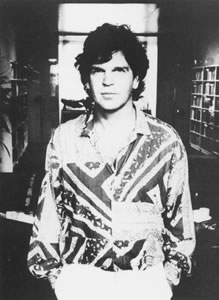
De Nederlandse schrijver A. F. Th. van der Heijden werd geboren in Geldrop op 15 oktober 1951. Zie ook mijn blog van 15 oktober 2010 en eveneens alle tags voor A. F.Th. van der Heijden op dit blog.

Uit: Vallende ouders

“Waar ik het aan verdiend had, wist ik 't, maar juni was schitterend dat jaar. Ik voerde geen bal uit en elke nieuwe dag leek in zijn volmaaktheid zo sprekend op de vorige, dat de dagen vanzelf over elkaar heen schoven en op elkaar bleken te passen en ik me die maand ben gaan herinneren als één perfecte zomerdag. Een dag die zelfs langer dan een maand duurde, want hij strekte zich uit tot diep in juli. Onverstoorbaar sliep de ene maand een gat in de volgende. Zo'n veertig dagen telde juni en elke dag was een Wiederkehr des Gleichen. Zelfs dat de eerste twintig dagen lengden, en het tweede twintigtal kromp, viel niet op. De junimaand was in zijn geheel een ‘langste dag’.
Behalve diep in die dag kijken, deed ik eigenlijk niets. In plaats van snelle indrukken in zich op te nemen hebben mijn zinnen veertig dagen lang als een camera naar die ene junidag opengestaan en het resultaat, zie ik nu, is verbluffend. De schaduwen van de tuin waarin ik zat zijn scherper dan ze in werkelijkheid ooit geweest kunnen zijn. Het zonlicht is onwaarachtig fel en het zand van de bloemperkjes schittert als suiker. Niets beweegt. Geen blaadje, niets. De kleine witte vlinders hangen roerloos als bloesems tussen de struiken. De coniferen zijn massieve rotskegels. Aan de lijn drie of vier vereeuwigde wasknijpers... Een gaaf daguerrotype.
Het lijkt wel of ik mijn eigen bewegingloosheid op die veertigvoudige dag heb overgedragen.
Maar ook akoestisch manifesteert die dag zich als geen andere. Op het aanrecht in de keuken achter me worden kopjes neegezet... in de zachte stem van mijn moeder is haar hele geschiedenis te beluisteren... een hond gromt... en boven dat alles uit is de pneumatische boor van een bij in een bloem hoorbaar... Zo'n dag die zich dertig, veertig keer herhaalt is uit het geheugen niet meer weg te branden.
En schamen deed ik me tegenover al dat moois: de tuin, de dag, de zon, en de zomer die er al was terwijl hij nog moest komen... Schamen voor de dingen die ik gedaan had, maar meer nog voor wat ik verzuimd had te doen.”


 1665848-309118d662c5dc2b1705814f44f59c07.jpg
A. F.Th. van der Heijden (Geldrop, 15 oktober 1951)


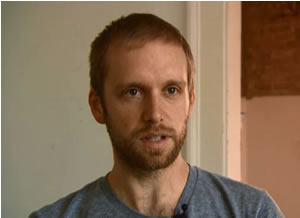
De Duitse schrijver Heinz Helle werd geboren op 15 oktober 1978 in München. Zie ook alle tags voor Heinz Helle op dit blog.

Uit: Der beruhigende Klang von explodierendem Kerosin

„Der Platz liegt irgendwo in der Vorstadt, die Eckfahnen sind gelb, sie sind überall gelb, und neben dem Eingang zum Vereinsheim hängt das Wappen einer unbekannten Brauerei. Sie kommen raus, sie kommen die Kellertreppe hoch in ihren gelbblauen und grünweißen Trikots, die Jungs, sie sind acht oder neun Jahre alt, und du siehst ihnen zu, weil es dich freut, wenn Angehörige deiner Spezies etwas haben, das ihnen viel bedeutet, wenn es etwas gibt in ihrem Leben, wofür sie kämpfen, ohne Waffen oder Gewalt.
Du stehst in der Nähe der Mittellinie, genau da, wo sie einlaufen werden, und du klatschst in die Hände und freust dich. Einer von ihnen lächelt dir zu.
Er ist noch ein kleiner Junge. Er steht im Tor. Es ist das erste Mal, dass er im Tor steht, und er denkt sich, gut, wenn ihr wollt, dass ich ins Tor gehe, gehe ich ins Tor, mir egal.
Zuerst passiert nichts. Als dann irgendwann dieser grünweiße Stürmer auf ihn zugelaufen kommt, allein mit dem Ball, denkt er nichts, und der Grünweiße schießt nicht, er kommt näher und näher, und er denkt sich immer noch nichts, und der Grünweiße kommt noch etwas näher, und dann denkt er plötzlich, Scheiße, ich muss diesen Ball halten, und er denkt, ich werde ihn halten, denn es geht mir gut, meine Eltern sind auch da, sie sind extra gekommen, um mir zuzusehen, und wir haben vorhin noch bei McDonald’s 20 Chicken McNuggets geholt, die kriege ich in der Halbzeitpause, mit süßsaurer Sauce, aber wieso haben sie mich heute ins Tor gestellt, ich bin doch eigentlich Verteidiger und zwar ein guter Verteidiger, aber wahrscheinlich eben auch ein guter Torwart, aber woher wollen die das denn wissen, ich war doch in meinem ganzen Leben noch nie im Tor, nicht mal im Training, ich krieg doch immer Anschiss, weil ich mich unter den Flanken wegducke, aber jetzt habe ich keine Angst, jetzt werde ich mich nicht ducken, da kommt dieser Grünweiße, schieß ruhig, Mann, schieß endlich, ich habe keine Angst, komm nur her, du Grünweißer.“
 

 1665848-3b134f260f584d777dec13c78c3175d3.jpg
Heinz Helle (München, 15 oktober 1978)


De Franstalige Algerijnse schrijver Boualem Sansal werd geboren op 15 oktober 1949 in El Teniente-Had. Zie ook alle tags voor Boualem Sansal op dit blog.

Uit: Rue Darwin (Darwin Street)

“From everything he said, which we used to know by heart, Palestine, Arab honor, the great revolution, the victory inscribed in History, imperialo-Zionism, neo-colonialism, international reaction, the treason of the Arab leaders, their legendary failure to foresee, I have retained fragments of phrases that more than thirty years later still make me shudder: “... the dead do not count ... a hundred thousand dead, two hundred thousand dead, what is that? ... it is nothing, we have given a million and a half to our country, and we were ready to sacrifice double, triple, quadruple ... unto the last ... wars are won with the dead, not with the living and never with the survivors, the more dead there are, the more beautiful the victory ... the Arab land is thirsty for blood and the Muslim people want martyrs.”
(…)

In my eyes the problem was in Islam itself, which pushes its partisans into pride, into exclusivity, which designates its partisans as judges and supreme protectors of the universe even when having trouble feeding their children or getting rid of people who are starving. Too much is too much. Perhaps Islam and the Muslims are simply not compatible.”


 1665848-3ac3cb6fb165840a8e1f584a8104b18e.jpg
Boualem Sansal (El Teniente-Had, 15 oktober 1949)


De Duitse dichter, filosoof, filoloog en schrijver Friedrich Nietzsche werd geboren op 15 oktober 1844 in Röcken ten zuidwesten van Leipzig. Zie ook mijn blog van 15 oktober 2010 en eveneens alle tags voor Friedrich Nietzsche op dit blog.


Im deutschen November

Dies ist der Herbst: der bricht dir noch das Herz!
Fliege fort! fliege fort!
Die Sonne schleicht zum Berg
Und steigt und steigt
und ruht bei jedem Schritt.

Was ward die Welt so welk!
Auf müd gespannten Fäden spielt
Der Wind sein Lied.
Die Hoffnung floh
Er klagt ihr nach.

Dies ist der Herbst: der bricht dir noch das Herz.
Fliege fort! fliege fort!
Oh Frucht des Baums,
Du zitterst, fällst?
Welch ein Geheimnis lehrte dich
Die Nacht,
Daß eis'ger Schauder deine Wange,
Die purpur-Wange deckt?

Du schweigst, antwortest nicht?
Wer redet noch?

Dies ist der Herbst: der bricht dir noch das Herz.
Fliege fort! fliege fort!
"Ich bin nicht schön"
- so spricht die Sternenblume
"Doch Menschen lieb' ich
Und Menschen tröst' ich
sie sollen jetzt noch Blumen sehn,
nach mir sich bücken
ach! und mich brechen -
in ihrem Auge glänzet dann
Erinnerung auf,
Erinnerung an Schöneres als ich:
- ich seh's, ich seh's - und sterbe so".

Dies ist der Herbst: der bricht dir noch das Herz!
Fliege fort! fliege fort!


 1665848-e70ce39e964e2f274382563678274e31.jpg
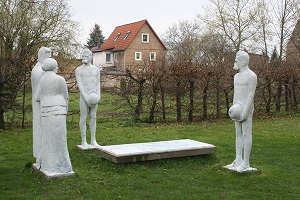
Friedrich Nietzsche (15 oktober 1844 – 25 augustus 1900)
Monument in Röcken


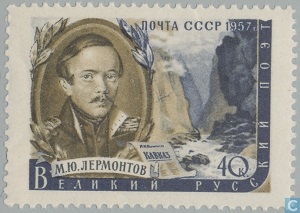
De Russische dichter en schrijver Michail Joerjevitsj Lermontov werd geboren op 15 oktober 1814 in Moskou. Zie ook mijn blog van 15 oktober 2010 en eveneens alle tags voor Michail Lermontov op dit blog.


Loneliness

It's Hell for us to draw the fetters
Of life in alienation, stiff.
All people prefer to share gladness,
And nobody - to share grief.

As a king of air, I'm lone here,
The pain lives in my heart, so grim,
And I can see that, to the fear
Of fate, years pass me by like dreams;

And comes again with, touched by gold,
The same dream, gloomy one and old.
I see a coffin, black and sole,
It waits: why to detain the world?

There will be not a sad reflection,
There will be (I am betting on)
Much more gaily celebration
When I am dead, than - born.


When, in the Cornfield...

When, in the cornfield, yellow waves are rising,
The wood is rustling at the sound of soft wind,
And, in the garden, crimson plums are hiding
In pleasant shade of leaves, so shining ones and green;

When, spilled with fragrant dew in calmness of the alley,
In morning of a gold or evening of a red,
Under the bush, the lily of a valley,
Is gladly nodding me with silver of her head;

When the icy brook in the ravine is playing,
And, sinking thoughts in somewhat misty dreams,
In bubbling tones secretly tale-telling
Of those peaceful lands from which it gaily streams  --

Then wrinkles are smoothing on my knitted brow,
My heart is losing troubles and distress  --
And I can apprehend the happiness on earth,
And see Almighty in the heavens now...

Vertaald door Yevgeny Bomver
 

 1665848-4facace1301306878062872deacf6156.jpg
Michail Lermontov (15 oktober 1814 - 27 juli 1841)


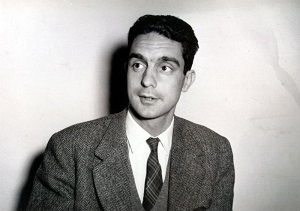
De Italiaanse schrijver Italo Calvino werd geboren in Santiago de las Vegas op Cuba op 15 oktober 1923. Zie ook mijn blog van 15 oktober 2010 en eveneens alle tags voor Italo Calvino op dit blog.

Uit: Invisible Cities (Vertaald door William Weaver)

“This is the result: the more Leonia expels goods, the more it accumulates them; the scales of its past are soldered into a cuirass that cannot be removed.   As the city is renewed each day, it preserves all of itself in its only definitive form: yesterday's sweepings piled up on the sweepings of the day before yesterday and of all its days and years and decades.
Leonia's rubbish little by little would invade the world, if, from beyond the final crest of its boundless rubbish heap, the street cleaners of other cities were not pressing, also pushing mountains of refuse in front of themselves.   Perhaps the whole world, beyond Leonia's boundaries, is covered by craters of rubbish, each surrounding a metropolis in constant eruption.   The boundaries between the alien, hostile cities are infected ramparts where the detritus of both support each other, overlap, mingle.
The greater its height grows, the more the danger of a landslide looms: a tin can, an old tire, an unraveled wine flask, if it rolls toward Leonia, is enough to bring with it an avalanche of unmated shoes, calendars of bygone years, withered flowers, submerging the city in its own past, which it had tried in vain to reject, mingling with the past of the neighboring cities, finally clean.   A cataclysm will flatten the sordid mountain range, canceling every trace of the metropolis always dressed in new clothes.   In the nearby cities they are all ready, waiting with bulldozers to flatten the terrain, to push into the new territory, expand, and drive the new street cleaners still farther out. »
 

 1665848-424b59978dad9a82d6a8d8078fa6cb43.jpg
Italo Calvino (15 oktober 1923 - 19 november 1985)


Zie voor nog meer schrijvers van de 15e oktober ook mijn blog van 15 oktober 2013 en ook mijn blog van 15 oktober 2011 deel 1 en eveneens deel 2.
Geschreven door Romenu om 18:45 Reageer op dit bericht

Man Booker Prize voor Richard Flanagan


Man Booker Prize voor Richard Flanagan

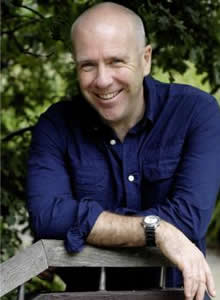
De Australische schrijver Richard Flanagan heeft de Man Booker Prize 2014 gewonnen met zijn boek “The Narrow Road to the Deep North”. Dat is dinsdagavond in Londen door de jury bekendgemaakt.

De Australische schrijver Richard Flanagan werd geboren in Longford, Tasmanië, in 1961, als vijfde van zes kinderen. Hij groeide op in het afgelegen mijnstadje Rosebery aan de westkust. Flanagan verliet de school op 16-jarige leeftijd, maar ging later toch studeren aan de universiteit van Tasmanië. Hij behaalde zijn Bachelor of Arts en verwierf het daarop volgende jaar een Rhodes Scholarship aan het Worcester College, Oxford. Flanagan schreef vier non-fictie werken voordat hij overstapte op fictie. In 1994 verscheen zijn eerste roman “Death of a River Guide”, die hem beroemd maakte en in 1997 zijn tweede roman “The Sound of One Hand Clapping” , winnaar van de Australian Booksellers Book of the Year Award en de Vance Palmer Prize voor fictie. Het boek was een groot succes. Er werden meer dan 150.000 exemplaren van verkocht in Australië.  Dit succes werd gecontinueerd met de uitstekende receptie van zijn derde roman “Gould's Book of Fish”, gepubliceerd in 2001.  Zijn roman “The unknown terrorist”,  gepubliceerd in 2007, werd zelfs wereldwijd goed ontvangen. Zijn meest recente roman “The Narrow Road to the Deep North” uit 2013 vertelt het levensverhaal van Dorrigo Evans, een gehandicapte oorlogsheld en overlevende van de Death Railway. Een verfilming van “The Sound of One Hand Clapping” werd  geselecteerd voor het Filmfestival van Berlijn in 1998. Richard Flanagan heeft eveneens artikelen geschreven over literatuur, milieu, kunst en politiek voor de Australische en internationale pers, waaronder Le Monde, The Daily Telegraph (Londen), Süddeutsche Zeitung, de New York Times en de New Yorker. Enkele van zijn artikelen waren omstreden. "De Selling-out of Tasmania", gepubliceerd na de dood van de voormalige premier Jim Bacon in 2004, was kritisch over de relatie van Bacons regering met het bedrijfsleven.

Uit: The Narrow Road to the Deep North

“He felt more soft raindrops, saw bright-red oil against the brown mud, heard his mother calling again, but it was unclear what she was saying, was she calling him home or was it the sea? There was a world and there was him and the thread joining the two was stretching and stretching, he was trying to pull himself up that thread, he was desperately trying to haul himself back home to where his mother was calling. He tried calling to her but his mind was running out of his mouth in a long, long river towards the sea.”
(…)

“He felt the withering of something, the way risk was increasingly eliminated, replaced with a bland new world where the viewing of food preparation would be felt to be more than the reading of poetry; where excitement would come from paying for a soup made out of foraged grass. He had eaten soup made out of foraged grass in the camps; he preferred food.”
(…)

““He pulled out a book here and there, but what kept catching his attention were the diagonal tunnels of sunlight rolling in through the dormer windows. All around him dust motes rose and fell, shimmering, quivering in those shafts of roiling light. He found several shelves full of old editions of classical writers and began vaguely browsing, hoping to find a cheap edition of Virgil's Aeneid, which he had only ever read in a borrowed copy. It wasn't really the great poem of antiquity that Dorrigo Evans wanted though, but the aura he felt around such books--an aura that both radiated outwards and took him inwards to another world that said to him that he was not alone.
And this sense, this feeling of communion, would at moments overwhelm him. At such times he had the sensation that there was only one book in the universe, and that all books were simply portals into this greater ongoing work--an inexhaustible, beautiful world that was not imaginary but the world as it truly was, a book without beginning or end.”


1665703-24fcb2e32098b51b3e1287ef9569f68a.jpg
Richard Flanagan (Longford, Tasmanië, 1961)

Geschreven door Romenu om 10:35 Reageer op dit bericht

E. E. Cummings, Maarten van der Graaff, Péter Nádas, Katha Pollitt, Daniël Rovers, Katherine Mansfield

De Amerikaanse dichter en schrijver Edward Estlin Cummings werd geboren in Cambridge, Massachusetts op 14 oktober 1894. Zie ook mijn blog van 14 oktober 2010 en eveneens alle tags voor E. E. Cummings op dit blog.


As Is The Sea Marvelous

as is the sea marvelous
from god’s
hands which sent her forth
to sleep upon the world

and the earth withers
the moon crumbles
one by one
stars flutter into dust

but the sea
does not change
and she goes forth out of hands and
she returns into hands

and is with sleep….

love,
    the breaking

of your
        soul
        upon
my lips


somewhere i have never travelled, gladly beyond

somewhere i have never travelled, gladly beyond
any experience,your eyes have their silence:
in your most frail gesture are things which enclose me,
or which i cannot touch because they are too near

your slightest look easily will unclose me
though i have closed myself as fingers,
you open always petal by petal myself as Spring opens
(touching skilfully,mysteriously)her first rose

or if your wish be to close me, i and
my life will shut very beautifully ,suddenly,
as when the heart of this flower imagines
the snow carefully everywhere descending;

nothing which we are to perceive in this world equals
the power of your intense fragility:whose texture
compels me with the color of its countries,
rendering death and forever with each breathing

(i do not know what it is about you that closes
and opens;only something in me understands
the voice of your eyes is deeper than all roses)
nobody,not even the rain,has such small hands


My Mind Is

my mind is
a big hunk of irrevocable nothing which touch and
taste and smell and hearing and sight keep hitting and
chipping with sharp fatal tools
in an agony of sensual chisels i perform squirms of
chrome and execute strides of cobalt
nevertheless i
feel that i cleverly am being altered that i slightly am
becoming something a little different, in fact
myself
Hereupon helpless i utter lilac shrieks and scarlet
bellowings.


 1665439-d438fb9cc1bfb0a28bb7f65be5c7f53d.jpg
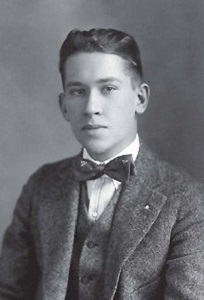
E. E. Cummings (14 oktober 1894 - 3 september 1962)
Als student in Harvard, 1915


De Nederlandse dichter en schrijver Maarten van der Graaff werd geboren op 14 oktober 1987 in Dirksland. Zie ook alle tags voor Maarten van der Graaf op dit blog.


Najaren van vettig Europa

Ik doe het loopje van de dood na.

Vanaf de canapé zie ik het grofvuil met mijn
leesstrategieën vertrekken.
Ik zwaai niet.

De ochtend is een verslinder, zeker,
maar zo tergend traag.
Ik doe het loopje van de ochtend na.
Ik zak weg. Ik loer.

Vanaf de canapé zie ik het grofvuil de straat inrijden
en mijn leesstrategieën, verregend, haast onherkenbaar,
op de stoep terugzetten.


Fluitconcert

Dunne bundels zijn voor dichters
zoals de lullige astmatische dood
hoe klinkt dat?
maak dat eens zintuiglijk
hoe ruikt dat?
                              
een vrucht in de jeugd gegeten wordt op de tong van de lezer
gematerialiseerd
hocus pocus wij zijn allemaal mensen
neem en eet
wij zijn allemaal droef
in essentie
de rest zijn accidenten
natie en humeur


 1665439-a5616f3f6a54bf607a5a45b61ce347b5.jpg
Maarten van der Graaff (Dirksland, 14 oktober 1987)


De Hongaarse schrijver Péter Nádas werd geboren op 14 oktober 1942 in Boedapest. Zie ook mijn blog van 14 oktober 2010 en eveneens alle tags voor Péter Nádas op dit blog.

Uit: Parallel Stories (Vertaald door Imre Goldstein)

“The ever-present moment proved more powerful and, under its weight, stories that had been told blissfully lost importance. As though they could simply be forgotten, so many backdrops of sound to be drawn to one side, small noises from the passage of history.
True, there was nowhere for them to put the champagne flutes. They stared into the piano, the hammers working away on the strings, the reflections on the black lacquer of the open top.
Anything but having to look at each other.
The first sign they noticed was that Kristóf’s knee touched Klára’s knee even though he would do anything but move and he really had not meant this to happen.
He said sorry and seemed genuinely contrite about being ill-mannered. If this had only been the first time this happened between them it might have been alright but it was not. The vacuum that emerged between the two knees, once he had rapidly withdrawn his, was powerful enough to suck up the totality of bodily sensation and eat up their bodily being, clothes and all.
Their pitiable separateness was over. Or they could only have traced along the surface of each other’s body that which had already happened in their soul, which their conscious minds had not accepted – all of this they could not know.
It is quite probably the soul first, then the sensation and finally the decision.
After some period of time, the length of which they could not have accounted for, but it was not the first stretch of time that filled itself with them, now Klára’s knee touched Kristóf’s knee and it was her turn to apologise quickly. It was mainly her breeding that spoke. In all honesty they might have laughed, but they did not. Immersed in earnest silence they continued to skim and scan, to weigh and to explore one another, pushing well beyond the realm of reason.
They seemed to be trying to gauge what is invisible to the naked eye, what the naked hand cannot avert. There was no chance of coming to an end, a succession of small surprises, they marvelled with their pupils wide open. »


 1665439-27122f4834e53729c19fe29ea7c67cb8.jpg
Péter Nádas (Boedapest,14 oktober 1942)


De Amerikaanse dichteres, essayiste, critica en feministe Katha Pollitt werd geboren op 14 oktober 1949 in New York. Zie ook mijn blog van 14 oktober 2010 en eveneens alle tags voor Katha Pollit op dit blog.


Turning Thirty

This spring, you’d swear it actually gets dark earlier.
At the elegant new restaurants downtown
your married friends lock glances over the walnut torte:
it’s ten o’clock. The have important jobs
and go to bed before midnight. Only you
walking alone up the dazzling avenue
still feel a girl’s excitement, for the thousandth time
you enter your life as though for the first time,
as an immigrant enters a huge, mysterious capital:
Paris, New York. So many wide plazas, so many marble addresses!
Home, you write feverishly
in all five notebooks at once, then faint into bed
dazed with ambition and too many cigarettes.

Well, what’s wrong with that? Nothing, except
really you don’t believe wrinkles mean character
and know it’s an ominous note
that the Indian skirts flapping on the sidewalk racks
last summer looked so gay you wanted them all
but now are marked clearer than price tags: not for you.
Oh, what were you doing, why weren’t you paying attention
that piercingly blue day, not a cloud in the sky,
when suddenly “choices”
ceased to mean “infinite possibilities”
and became instead “deciding what to do without”?
No wonder you’re happiest now
riding on trains from one lover to the next.
In those black, night-mirrored windows
a wild white face, operatic, still enthralls you:
a romantic heroine,
suspended between lives, suspended between destinations.


 1665439-a817b3eac9aff8d9d71348434b3f3f4a.jpg
Katha Pollitt (New York,14 oktober 1949)


De Nederlandse schrijver Daniël Rovers werd geboren in Zelhem op 14 oktober 1975. Zie ook mijn blog van 14 oktober 2010 en eveneens alle tags voot Daniël Rovers op dit blog.

Uit: Walter

“Sarah kon geen kinderen meer krijgen. Ze had een houten been omdat haar rechter een jaar geleden was afgezet. Het was K., had moeder gezegd. Nu mankte ze iedere ochtend over de klinkers van de Vrachelsestraat naar de kerk. Ze had haar man Sjef op zijn sterfbed beloofd dat ze vijf jaar lang voor de gesloten kerkdeuren zou wachten totdat ze naar binnen kon, om boete voor zijn zonden te doen. De koster had het gezegd met het gezicht van een ongelovige. Voortaan was er één parochiaan die precies wist op welk uur koster Bastiaans de dag aanving.
Er was nog een schim aanwezig, niet ver van hem vandaan, op een van de achterste banken. Walter zag een vurige gloed in het halfduister schijnen. Een rossige kat, de tijgerin Tigra. Slagersvrouw Huijben had geweigerd zich na de geboorte van haar tweede zoon te laten zuiveren bij het doopvont. De weken daarna waren de achterhammen groen uitgeslagen bij slagerij Huijben in de Achterstraat, zo weinig volk kwam er nog over de vloer. Ze werd erop aangekeken, het waren de manieren van een losgeslagen vrouw.
Walter ging de sacristie binnen. Op de gelakte eikenhouten tafel lagen zijn toog en superplie klaar, en daarnaast de amict, de albe, de stool, de manipel en het kazuifel van pastoor Peeters. Aan de rand blonken het koperen wierookscheepje en de belstok, de attributen van de acolieten. Zeger zat op zijn hurken naast de deur, alsof hij heel hard niet aan poepen probeerde te denken. Zeger de neger die de ogen had van een gans.
Walter hoorde hakkengeklak, het naderde over de plavuizen. Dat was pastoor Peeters. De deur ging open, de priester metselde met zijn lijf de opening meteen weer dicht. ‘Goedemorgen jongens.’
‘Goedemorgen meneer pastoor.’
 

 1665439-058c7a1bd47669b4deff1289e591a8d9.jpg
Daniël Rovers (Zelhem, 14 oktober 1975)


De Nieuw-Zeelandse schrijfster Katherine Mansfield werd geboren op 14 oktober 1888 in Wellington. Zie ook mijn blog van 14 oktober 2010 en eveneens alle tags voor Katherine Mansfield op dit blog.

Uit: The Journey To Bruges

“You got three-quarters of an hour,” said the porter. “You got an hour mostly. Put it in the cloak-room, lady.”
A German family, their luggage neatly buttoned into what appeared to be odd canvas trouser legs, filled the entire clergyman, his black dicky flapping over his shirt, stood at my elbow. We waited and waited, for the cloakroom porter could not get rid of the German family, who appeared by their enthusiasm and gestures to be explaining to him the virtue of so many buttons.
At last the wife of the party seized her particular packet and started to undo it. Shrugging his shoulders, the porter turned to me. “Where for?” he asked.
“Ostend.”
“Wot are you putting it in here for I said?“ “Because I've a long time to wait.”
He shouted, “Train's in 2.20. No good bringing it here. Hi, you there, lump it off!”
My porter lumped it. The young clergyman, who had listened and remarked, smiled at me radiantly. “The train is in,” he said,“really in. You've only a few moments, you know.”
My sensitiveness glimpsed a symbol in his eye. I ran to the book-stall. When I returned I had lost my porter. In the teasing heat I ran up and down the platform. The whole travelling world seemed to posses a porter and glory in him except me. Savage and wretched I saw them watch me with that delighted relish of the hot in the very much hotter. “One could have a fit running in weather like this,” said a stout lady, eating a farewell present of grapes. Then running up and down the Folkstone express. On a higher platform I found my porter sitting on the suit case."


 1665439-665f6fe34619c2f06c91aca2ddd6984d.jpg
Katherine Mansfield (14 oktober 1888 – 9 januari 1923)


Zie voor nog meer schrijvers van de 14e oktober ook mijn blog van 14 oktober 2013.

Geschreven door Romenu om 18:34 Reageer op dit bericht

Meer van Romenu

↑ Terug naar de berichten