

Naar de inhoud

Romenu

Over literatuur, gedichten, kunst en cultuur
akke.beakke.be

Berichten van 21 november 2014 tot 22 november 2014

André Gide, George Eliot, Dirk van Weelden, Suresh en Jyoti Guptara, Viktor Pelevi

De Franse schrijver André Gide werd geboren op 22 november 1869 in Parijs. Zie ook alle tags voor André Gide op dit blog.

Uit: Si le grain ne meur

“Roger Martin du Gard, à qui je donne à lire ces Mémoires leur reproche de ne jamais dire assez et de laisser le lecteur sur sa soif. Mon intention pourtant a toujours été de tout dire. Mais il est un degré dans la confidence que l'on ne peut dépasser sans artifice, sans se forcer ; et je cherche surtout le naturel. Sans doute un besoin de mon esprit m'amène, pour tracer plus purement chaque trait, à simplifier tout à l'excès ; on ne dessine pas sans choisir ; mais le plus gênant c'est de devoir présenter comme successifs des états de simultanéité confuse. je suis un être de dialogue ; tout en moi combat et se contredit. Les Mémoires ne sont jamais qu'à demi sincères, si grand que soit le souci de vérité : tout est toujours plus compliqué qu'on ne le dit. Peut-être même approche-t-on de plus près la vérité dans le roman.
(…)

Nos actes les plus sincères sont aussi les moins calculés ; l'explication qu'on en cherche après coup reste vaine. Une fatalité me menait ; peut-être aussi le secret besoin de mettre au défi ma nature ; car, en Emmanuèle, n'était-ce pas la vertu même que j'aimais ? C'était le ciel, que mon insatiable enfer épousait ; mais cet enfer je l'omettais à l'instant même : les larmes de mon deuil en avaient éteint tous les feux ; j'étais comme ébloui d'azur, et ce que je ne consentais plus à voir avait cessé pour moi d'exister. Je crus que tout entier je pouvais me donner à elle, et le fis sans réserve de rien. A quelque temps de là nous nous fiançâmes.”


 1683308-12fc66f02e0eeb57ea67fc8aaca2fa69.jpg
André Gide (22 november 1869 – 19 februari 1951)
Op ongeveer 20-jarige leeftijd


De Engelse dichteres en schrijfster George Eliot werd geboren op 22 november 1819 in Nuneaton in Warwickshire. Zie ook alle tags voor George Eliot op dit blog.

Uit: Silas Marner

“In the early years of this century, such a linen-weaver, named Silas Marner, worked at his vocation in a stone cottage that stood among the nutty hedgerows near the village of Raveloe, and not far from the edge of a deserted stone-pit. The questionable sound of Silas's loom, so unlike the natural cheerful trotting of the winnowing-machine, or the simpler rhythm of the flail, had a half-fearful fascination for the Raveloe boys, who would often leave off their nutting or birds'-nesting to peep in at the window of the stone cottage, counterbalancing a certain awe at the mysterious action of the loom, by a pleasant sense of scornful superiority, drawn from the mockery of its alternating noises, along with the bent, tread-mill attitude of the weaver. But sometimes it happened that Marner, pausing to adjust an irregularity in his thread, became aware of the small scoundrels, and, though chary of his time, he liked their intrusion so ill that he would descend from his loom, and, opening the door, would fix on them a gaze that was always enough to make them take to their legs in terror. For how was it possible to believe that those large brown protuberant eyes in Silas Marner's pale face really saw nothing very distinctly that was not close to them, and not rather that their dreadful stare could dart cramp, or rickets, or a wry mouth at any boy who happened to be in the rear? They had, perhaps, heard their fathers and mothers hint that Silas Marner could cure folks' rheumatism if he had a mind, and add, still more darkly, that if you could only speak the devil fair enough, he might save you the cost of the doctor. Such strange lingering echoes of the old demon-worship might perhaps even now be caught by the diligent listener among the grey-haired peasantry; for the rude mind with difficulty associates the ideas of power and benignity. A shadowy conception of power that by much persuasion can be induced to refrain from inflicting harm, is the shape most easily taken by the sense of the Invisible in the minds of men who have always been pressed close by primitive wants, and to whom a life of hard toil has never been illuminated by any enthusiastic religious faith.”


1683308-347476254b434198b9234a938c661ea7.jpg
George Eliot (22 november 1819 – 22 december 1880)
Ben Kingsley (Silas) en Elizabeth Hoyle (Eppie) in een verfilming uit 1985


De Nederlandse schrijver Dirk van Weelden werd geboren in Zeist op 22 november 1957. Zie ook alle tags voor Dirk van Weelden op dit blog.

Uit: Het laatste jaar

“David en Brent kwamen elkaar tegen in de late jaren zeventig. Twee slimme, nerveuze jongens, onzeker over hun verblijf op de universiteit (waar moest dat toe leiden?), maar gelijkgestemd in hun liefde voor literatuur, muziek en film. En hoe verschillend ze ook waren, ze hadden een gemeenschappelijk droombeeld, dat ze liever niet hardop benoemden: een schrijvend leven leiden. Hun vriendschap en samenwerking ontstonden in mijn geest, zou je kunnen zeggen. In de geest van de Olivetti Studio 44.
Dus als ik die kop van David zie, zo gretig als hij de beelden in zich opneemt waarin de kampioen ten onder gaat, dan weet ik dat hij denkt aan de luidruchtige pret die hij met Brent maakte als ze samen naar voetbal- en wielerwedstrijden keken. Aan hun liefde voor de vreemde schoonheid en mallotige tragiek die sport kan bieden, en natuurlijk aan Brent, zijn vriend, die op deze drukkende juniavond al meer dan een jaar onder een dikke grijze steen en een paar meter vochtige zwarte aarde ligt te vergaan.
Niet lang nadat ze elkaar hadden leren kennen, begonnen David en Brent elkaar regelmatig te zien. Een paar keer per week en altijd bij Brent thuis. David woonde in een studentenflat aan de rand van de stad, waar hij zich alleen 's nachts en 's avonds, verdiept in zijn boeken en schriften prettig voelde. De rest van de dag was hij in de stad. Brents kamer bevond zich boven een modelbouwwinkel in de binnenstad, aan het A-Kerkhof. Je liep vanaf de straat in een overdekte gang met aan weerszijden etalages. Alpendorpjes en zandwoestijnen, waarin goederentreintjes rondraasden en tanks van het Afrikakorps roerloos op Montgomery stonden te wachten. Boven dit alles bungelden plastic Spitfires en Heinkel-jachtbommenwerpers aan visdraad. Aan het eind van de gang was de ingang van de winkel. Haaks erop de brede deur van donker gelakt hardhout. Daarachter leidde een hoge steile trap naar een paar kamers, een keuken en een badkamer.”


 1683308-025c0861900094d4d98646d6aca4bbe8.jpg
Dirk van Weelden (Zeist, 22 november 1957) 


De Brits-Indische schrijverstweeling Suresh en Jyoti Guptara werd geboren op 22 november 1988 in Frimley, Hants in het zuidoosten van Engeland. Zie ook alle tags voor Suresh en Jyoti Guptara op dit blog.

Uit: Conspiracy of Calaspia

“Suddenly Galar realised what must have happened. Poison! With a roar he cut down the nearest foe, before retreating to higher ground. He brought his shoulder to his mouth and desperately sucked at the wound. Along with the blood he drew into his mouth he thought he tasted something bitter. Galar spat in disgust and looked up in time to parry a downward blow. He kicked the beast in the stomach, briefly feeling coarse fur beneath his foot as it stumbled down the incline, and quickly removed throwing-axes from straps on his back. These had small heads, many times lighter than his golden axe, but with long handles. Before the Nurgor could get back to its feet, its skull was split with one swing of Galar's arm. The Dwarf's muscles knotted as he threw the other two axes at the nearest of his opponents, both of which hit the dust.
Sensing their victim's weakening power, the Nurgor surged up the rise in a triumphant assault. Galar struggled to fight off the first few blows before a heavy stave found its way through his defences and knocked him into darkness.
*
'Master, your humble servant reports: we have the Dwarf.'
It was a triumphant call, even if the figure who proclaimed this news looked in no condition to be happy. Though battered and bruised, he walked upright, without the least sign of pain, a grim smile twitching at the sides of his mouth. As the man drew nearer the hulking figure before him, the smile faded and he knelt humbly with outstretched arms.”


1683308-4f5c7b45691c53373623a5eec4376a2d.jpg
Suresh en Jyoti Guptara (Frimley, 22 november 1988)


De Russische schrijver Viktor Pelevin werd geboren op 22 november 1962 in Moskou. Zie ook alle tags voor Viktor Pelevin op dit blog.

Uit: Buddha's Little Finger (Vertaald door Andrew Bromfield)

“I did not feel any fear of death. Perhaps, I thought, it had already happened, and this icy boulevard along which I was walking was merely the threshold of the world of shadows. I had realized long before that Russian souls must be fated to cross the Styx when it is frozen, with their fare collected not by a ferryman, but by a figure garbed in grey who hires out a pair of skates — the same spiritual essence, naturally.
Suddenly I could picture the scene in the finest of detail: Count Tolstoy in black tights, waving his arms about, skates over the ice towards the distant horizon — his movements are slow and solemn, but he makes rapid progress, and the three-headed dog barking soundlessly in pursuit has no chance of overtaking him. I laughed quietly, and at that very moment a hand slapped me on the shoulder.
I stepped to one side and swung round sharply, feeling for the handle of the revolver in my pocket, when to my amazement I saw before me the face of Grigory Vorblei, an aquaintance from childhood. But, my God, his appearance! He was dressed from head to toe in black leather, a holster with a Mauser dangled at his hip, and in his hand he was clutching a ridiculous kind of obstetrician's travelling bag.
`I'm glad you're still capable of laughter,' he said.
`Hello, Grisha,' I said, `how strange to see you.'
`Why strange?'
`It just is strange.'
`Where have you come from?' he asked in a cheerful voice. `And where are you going?'


 1683308-d15f4982510edb573a415a94b3500c90.jpg
Viktor Pelevin (Moskou, 22 november 1962)


Zie voor nog meer schrijvers van de 22e november ook mijn vorige blog van vandaag.
Geschreven door Romenu om 13:22 Reageer op dit bericht

Endre Ady, William Kotzwinkle, George Robert Gissing, Elisabeth Maria Post

De Hongaarse dichter Endre Ady werd geboren op 22 november 1877 in het huidige Adyfalva. Zie ook alle tags voor Endre Ady op dit blog en ook mijn blog van 22november 2010.


I Should Love To Be Loved

I am neither infant nor happy grandfather
Nor parent, nor lover
Of anyone, of anyone.
I am, as every man is, Majesty,
The North Pole, the Secret, the Stranger,
The will-o'-the-wisp in the distance, the will-o'-the-wisp in the distance.
But alas! I cannot remain this way.
I should like to show myself to the world,
So that someone sees me, so that someone sees me.

This is why I sing and I torment myself.
I should love to be loved.
I wish to be of someone, I wish to be of someone.


The Magyar Messiahs

More bitter is our weeping,
different the griefs that try us.
A thousand times Messiahs
are the Magyar Messiahs.
A thousand times they perish,
unblest their crucifixition,
for vain was their affliction,
oh, vain was their affliction.


 1683307-3c50163632d7e088a124e43f59cea24e.jpg
Endre Ady (22 november 1877 – 27 januari 1919)
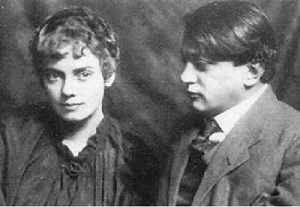
Hier met zijn vrouw Csinszka (Berta Boncza)


De Amerikaanse schrijver William Kotzwinkle werd geboren op 22 november 1943 in Scranton, Pennsylvania. Zie ook alle tags voor William Kotzwinkle op dit blog en ook mijn blog van 22 november 2009 en ook mijn blog van 22 november 2010.

Uit:The Fan Man

“I am all alone in my pad, man, my piled-up-to-the-ceiling-with-junk pad. Piled with sheet music, piled with. garbage bags bursting with rubbish, piled with unnameable flecks of putrified wretchedness in grease. My pad, my own little Lower East Side Horse Badorties pad.
I just woke up, man. Horse Badorties just woke up and is crawling around in the sea of abominated filth, man, which he calls home. Walking through the rooms of my pad. man, from which. I shall select my wardrobe for the day. Here, stuffed in a trash basket, is a pair of incredibly wrinkled-up muck-pants. And here, man, beneath a pile of wet newspapers is a shirt, man, with one sleeve. All I need now, man, is a tie, and here is a perfectly good rubber Japanese toy snake, man, which I can easily form into an acceptable knot.
SPAGHETTI! MAN! Now I remember. That is why I have arisen from my cesspool bed, man, because of the growlings of my stomach. It is time for breakfast, man. But first I rnust make a telephone call to Alaska,
Must find telephone. Important deal in the making. Looking around for telephone, man. And here is án electric extension cord, man, which will serve perfectly as a belt to hold up my falling-down Horse Badorties pants, simply by running the cord through the belt loops and plugging it together.”


 1683307-7680a4f5f21bdbc9eb656e390ba9892b.jpg
William Kotzwinkle (Scranton 22 november 1943)


De Engelse schrijver George Robert Gissing werd geboren op 22 november 1857 in Wakefield, Yorkshire. Zie ook alle tags voor Georg Robert Gissing op dit blog en ook mijn blog van 22 november 2009 en ook mijn blog van 22 november 2010.

Uit: By The Ionian Sea (From Naples)

“The harbour, whence one used to start for Capri, is filled up; the sea has been driven to a hopeless distance beyond a wilderness of dust-heaps. They are going to make a long, straight embankment from the Castel dell'Ovo to the Great Port, and before long the Santa Lucia will be an ordinary street, shut in among huge houses, with no view at all. Ah, the nights that one lingered here, watching the crimson glow upon Vesuvius, tracing the dark line of the Sorrento promontory, or waiting for moonlight to cast its magic upon floating Capri! The odours remain; the stalls of sea-fruit are as yet undisturbed, and the jars of the water-sellers; women still comb and bind each other's hair by the wayside, and meals are cooked and eaten al fresco as of old. But one can see these things elsewhere, and Santa Lucia was unique. It has become squalid. In the grey light of this sad billowy sky, only its ancient foulness is manifest; there needs the golden sunlight to bring out a suggestion of its ancient charm.
Has Naples grown less noisy, or does it only seem so to me? The men with bullock carts are strangely quiet; their shouts have nothing like the frequency and spirit of former days. In the narrow and thronged Strada di Chiaia I find little tumult; it used to be deafening. Ten years ago a foreigner could not walk here without being assailed by the clamour of cocchieri; nay, he was pursued from street to street, until the driver had spent every phrase of importunate invitation; now, one may saunter as one will, with little disturbance. Down on the Piliero, whither I have been to take my passage for Paola, I catch but an echo of the jubilant uproar which used to amaze me. Is Naples really so much quieter? If I had time I would go out to Fuorigrotta, once, it seemed to me, the noisiest village on earth, and see if there also I observed a change. It would not be surprising if the modernization of the city, together with the state of things throughout Italy, had a subduing effect upon Neapolitan manners. In one respect the streets are assuredly less gay.”


 1683307-999b310547e47d1d19cd7f65f69befcc.jpg
George Robert Gissing (22 november 1857 – 28 december 1903)


De Nederlands dichteres en schrijfster Elisabeth Maria Post werd geboren in Utrecht op 22 november 1755. Zie ook alle tags voor Elisabeth Maria Post op dit blog en ook mijn blog van 22 november 2009 en ook mijn blog van 22 november 2010.

Uit: Het land, in brieven

“Ontijdige beschroomdheid - kwalijk geplaatste tederheid, - schoonschijnende hoogmoed, - zal ons dan niet moeten hinderen in het mededeelen en ontfangen van vermaningen, afkeuringen, of raadgevingen, waar toe het hart zig verbonden voelt. - Laat ons in onze vriendschap deze grondregelen altijd volgen! - Laat derzelver tederheid en vastigheid de dwaling vernietigen, dat de vriendschap onder onze sex geene duurzaamheid kent.
Maar, lieve Emilia! daar ik thans van u afgescheiden leef, en nochtans mijn geest met u werkzaam wil houden - verwagt ik telkens brieven van u, die mij zoo wel uwe gedagten mededeelen, - als ze mij verzekeren, dat gij in de vriendschap van Eufrozyne, gelukkiger zijt dan te voren.
Och Emilia! dat gij ook het Landleven in dit akelig saizoen verkiest, daar ge, onder de schaduw van het vriendendak, zulk een gerust leven, naar uwe verkiezing kont leiden! - Mijn moeder zou zig gelukkig rekenen met zulk eene huisgenote! - Ik heb medelijden met uwen smaak; niet om dat ik dien laag vind, maar om dat die u, naar mijn oordeel, ongenoegens oplegt, die ik u ontnemen wilde. Of heeft de winter op het Land aangenaamheid? Verveelt u die doodelijke stilte niet? Behoeft gij geen menschen tot uw geluk? Hoe slijt gij de winterdagen? Door de beantwoording dezer vragen zult gij het hart verligten van uwe

Eufrozime."

 1683307-eeef5517e9b478f49feb56d19752375a.jpg
Elisabeth Maria Post (22 november 1755 - 3 juli 1812)
Illustratie uit “Het land, in brieven”

Geschreven door Romenu om 13:22 Reageer op dit bericht

Wouter Steyaert, Isaac Bashevis Singer, Margriet de Moor, Gerard Koolschijn, Marilyn French, Freya North, Voltaire

De Vlaamse dichter Wouter Steyaert werd geboren in Gent op 21 november 1982. Zie ook alle tags voor Wouter Steyaert op dit blog.


het wordt wettelijk geregeld

er kruipen mieren door me heen
maar niet als kogels - als hele kleine
dames die daar niets te zoeken hebben

het is echter niet verboden - niet van mij
noch van hen - mij te betreden

zonder sleutel of slot - zelfs een kijkgat
is hen te veel - en dat mag allemaal

er kruipen mieren door mijn hoofd
en ik word er wit van
ik word er ovaal en theatraal van

anderzijds kruip ik ook als een mier
dus als een hele grote dame
met een wit hoofd, ovaal en theatraal

die niets te zoeken heeft dan kogels
en dat mag ook


Kassa

Ik kocht zeep in Delhaize.
Aan de kassa struikelde ik
over mijn schoenveters.

Ik probeerde mij
vast te klampen
aan de knieën
van de dame voor mij.

Zij schrok hevig
en vond dat ik stonk.
Zij reed met haar karretje over mij.

Ik had pijn en riep om hulp.

Nadien raapte een kassierster
mij op. Zij was lief.

Zij had geen diploma.
Daarom weigerde ik
verder contact.


 1683005-f6bb2ade4bc71ce73361c74ee7b82e20.jpg
Wouter Steyaert (Gent, 21 november 1982)


De Amerikaans-Poolse schrijver Isaac Bashevis Singer werd geboren op 21 november 1904 als Isaac Hertz Singer in Radzymin, Polen. Zie ook alle tags voor Isaac Bashevis Singer op dit blog.

Uit: Fool's Paradise

“In despair, Kadish went to consult a great specialist, celebrated for his knowledge and wisdom. His name was Dr. Yoetz. After listening to a description of Atzel's illness, he said to Kadish, "I promise to cure your son in eight days, on one condition. You must do whatever I tell you to, no matter how strange it may seem."
Kadish agreed, and Dr. Yoetz said he would visit Atzel that same day. Kadish went home and told his wife, Aksah and the servants that all were to follow the doctor's orders without question.
When Dr. Yoetz arrived, he was taken to Atzel's room. The boy lay on his bed, pale and thin from fasting.
The doctor took one look at Atzel and called out, "Why do you keep a dead body in the house? Why don't you make a funeral?"
On hearing these words the parents became terribly frightened, but Atzel's face lit up with a smile and he said, "You see, I was right."
Although Kadish and his wife were bewildered by the doctor's words, they remembered Kadish's promise, and went immediately to make arrangements for the funeral.
The doctor requested that a room be prepared to look like paradise. The walls were hung with white satin. The windows were shuttered, and draperies tightly drawn. Candles burned day and night. The servants were dressed in white with wings on their backs and were to play angels.
Atzel was placed in an open coffin, and a funeral ceremony was held. Atzel was so exhausted with happiness that he slept right through it. When he awoke, he found himself in a room he didn't recognize. "Where am I?" he asked.
"In paradise, my lord," a winged servant replied.
"I'm terribly hungry," Atzel said. "I'd like some whale flesh and sacred wine."
The chief servant clapped his hands and in came men servants and maids, all with wings on their backs, bearing golden trays laden with meat, fish, pomegranates and persimmons, pineapples and peaches. A tall servant with a long white beard carried a golden goblet full of wine. Atzel ate ravenously. When he had finished, he declared he wanted to rest. Two angels undressed and bathed him, and carried him to a bed with silken sheets and a purple velvet canopy. Atzel immediately fell into a deep and happy sleep.”


 1683005-fb24358445485a2c116aa0160dda3865.jpg
Isaac Bashevis Singer (21 november 1904 – 24 juli 1991)


De Nederlandse schrijfster Margriet de Moor werd als Margaretha Maria Antonetta Neefjes op 21 november 1941 in Noordwijk geboren. Zie ook alle tags voor Margriet de Moor op dit blog.

Uit: Mélodie d'amour

“Een meter of vijftig verderop had je in die tijd nog een stukje binnenstad dat niet alleen de bommen had overleefd, maar ook de bouwrazernij van de eerste decennia na de oorlog. Het is dinsdag 10 november 1970. Niets in dat wijkje daarginds is verbrand, ingestort of zelfs maar dichtgetimmerd geweest. In een van die koppige huisjes, met als verdieping een vliering waar je netaan kon staan – maar zij kón toen al niet meer staan – heeft Atie na de scheiding haar intrek genomen. Eergisteren is ze gestorven. Gustaaf Doesburg legt het laatste stuk te voet af, nieuwsgierig, vastbesloten, bang, en slaat rechtsaf de steeg in die naar de binnenplaatsjes achter de huizen voert. Uitgerekend Luuk, haar lieveling, heeft het gebod van de moeder overtreden en de vader bericht dat het voorbij is. Gebeurd.
Het clandestiene telefoontje heeft hem de dag tevoren bereikt toen hij alleen thuis was, net gedoucht en op slippers na het werk. Het trof hem als een fysieke opdoffer, een dreun in zijn maag, maar hij reageerde nog voor de dreun uit hem wegtrok, naar zijn aard, drastisch.
Hij zei tegen zijn zoon dat hij haar nog één keer wilde zien. ‘Dat kan niet, pappa.’
Ze wisten dat. Ze wisten dat allebei drommels goed. Toch voerden Gustaaf en Luuk dit dialoogje van niks waarin een hun volledig bekend miserabel feit nog eens werd aangehaald en beklonken. Dialoogje van niks of niet, het hoort wél thuis in het script van hun familiegeschiedenis, in de lotgevallen van Atie en Gustaaf Doesburg-Maas en hun zoons Kaspar, Wijnand, Jan en Luuk. (Dat de vier broers ook nog een halfzusje hebben, Dittie, is een verhaal apart.)
Atie dood… was het mogelijk?”


 1683005-b28e7ff6a4e9250a15f3933184e2a3a7.jpg
Margriet de Moor (Noordwijk, 21 november 1941)


De Nederlandse schrijver en vertaler Gerard Koolschijn werd op 21 november 1945 in Den Haag geboren. Zie ook alle tags voor Gerard Koolschijn op dit blog.

Uit: Geen sterveling weet

“Mijn zonen lagen nog in bed. Ik wachtte al meer dan een uur.
Intussen werd geteld per tien minuten, de spanning steeg.
In de wedstrijdkooi werd gedrongen en gescholden.
Ik herkende gezichten om me heen. Nu werden de minuten afgeteld.
En van de laatste halve minuut de seconden.
Met nog tien seconden te gaan klonken overal uit de kooien schorre uitroepen, niet van aanmoediging, niet van vreugde, maar akelige, losse kreten.
Bij zes, vijf, vier seconden zwollen ze aan, kreten van ontzetting leken het.
En toen het schot door de hal barstte kwam uit die duizenden kelen één woeste schreeuw, rauw, monotoon, diep uit de lijven, vol bitterheid en woede op de tijd, een grimmige triomfkreet
over leven dat de dood versloeg, want de tocht was gekomen, de tocht was begonnen, nog was alles niet verloren. De wedstrijdrijders braken uit.


 1683005-9c3fcd23a2f0d761f3b8e3a323d53f81.jpg
Gerard Koolschijn (Den Haag, 21 november 1945)
Den Haag, Gravenstraat


De Amerikaanse schrijfster en literatuurwetenschapster Marilyn French werd geboren op 21 november 1929 in New York. Zie ook alle tags voor Marilyn French op dit blog.

Uit: The Women's Room

“She could envision Shakespeare's sister. But she imagined a violent, an apocalyptic end for Shakespeare's sister, whereas I know that isn't what happened. You see, it isn't necessary. I know that lots of Chinese women, given in marriage to men they abhorred and lives they despised, killed themselves by throwing themselves down the family well. I'm not saying it doesn't happen. I'm only saying that isn't what usually happens. It it were, we wouldn't be having a population problem. And there are so much easier ways to destroy a woman. You don't have to rape or kill her; you don't even have to beat her. You can just marry her. You don't even have to do that. You can just let her work in your office for thirty-five dollars a week. Shakespeare's sister did...follow her brother to London, but she never got there. She was raped the first night out, and bleeding and inwardly wounded, she stumbled for shelter into the next village she found. Realizing before too long that she was pregnant, she sought a way to keep herself and her child safe. She found some guy with the hots for her, realized he was credulous, and screwed him. When she announced her pregnancy to him, a couple months later, he dutifully married her. The child, born a bit early, makes him suspicious: they fight, he beats her, but in the end he submits. Because there is something in the situation that pleases him: he has all the comforts of home including something Mother didn't provide, and if he has to put up with a screaming kid he isn't sure is his, he feels now like one of the boys down at the village pub, none of whom is sure they are the children of the fathers or the fathers of their children. But Shakespeare's sister has learned the lesson all women learn: men are the ultimate enemy. At the same time she knows she cannot get along in the world without one. So she uses her genius, the genius she might have used to make plays and poems with, in speaking, not writing. She handles the man with language: she carps, cajoles, teases, seduces, calculates, and controls this creature to whom God saw fit to give power over her, this hulking idiot whom she despises because he is dense and fears because he can do her harm.”
 

 1683005-4f0a1dd9fa77c953205a722a5ec7bd9f.JPG
Marilyn French (New York, 21 november 1929 – 2 mei 2009)
Cover 


De Britse schrijfster Freya North werd geboren op 21 november 1967 in Londen. Zie ook alle tags voor Freya North op dit blog en ook mijn blog van 21 november 2010.

Uit: Ontbijt op bed (Vertaald door Nellie Keukelaar-van Rijsbergen)

"Onder de douche dacht Petra na. Was dit alles wat ze nodig had? Had een vlugge injectie van North Yorkshire haar ingeënt tegen hartzeer? Als ik mijn spullen zou inpakken en zou teruggaan, zou alles dan weer in orde zijn? Misschien. Wie weet trakteer ik mezelf op een welverdiende vakantie, want het is lang geleden dat ik vrij heb gehad. Wat liefde en aandacht schijnen wonderen te doen, maar misschien moest je daar eerst een eind voor reizen.
Na het ontbijt liep ze door de ommuurde tuin en ging een kijkje nemen in het kleine, maar goed uitgeruste atelier. Petra had besloten nog geen vertrekdatum vast te stellen. Aanvankelijk was dit uitstapje bedoeld om weg te rennen en aan te sterken, Londen te ontvluchten en Rob te ontlopen. Ze had nu al het gevoel dat het hier beter lukte om uit te rusten en te ontspannen. Ze zou er geen drama van maken en dit als een werkvakantie beschouwen die precies op het juiste moment kwam."


 1683005-5b4de2ae1a769bfc74b38b3b8b44a842.jpg
Freya North (Londen, 21 november 1967)


De Franse schrijver Voltaire, (pseudoniem van François-Marie Arouet)werd werd op 21 november 1694 geboren in Parijs. Zie ook alle tags voor Voltaire op dit blog.

Uit: Candide, of het optimisme (Vertaald door Hans van Pinxteren)

“ Maar met welk doel is deze wereld dan geschapen?’ vroeg Candide.
‘Om ons hoorndol te maken,’ antwoordde Martin.
(…)

‘Denkt u dat de mensen elkaar altijd hebben afgeslacht, zoals dat nu gebeurt?’ vroeg Candide. ‘Dat het altijd leugenaars, schurken, verraders, ondankbaren, rovers, zwakkelingen, losbollen, lafaards, jaloerse krengen, vreetzakken, dronkelappen, vrekken, strebers, sadisten, kwaadsprekers, wellustelingen, fanaten, hypocrieten en dwazen zijn geweest?’
‘Denkt u,’ zei Martin, ‘dat sperwers altijd duiven hebben opgegeten als ze die te pakken kregen?’
‘O, vast en zeker,’ zei Candide.
‘Nou dan,’ zei Martin, ‘als sperwers altijd dezelfde aard hebben gehad, waarom zouden de mensen dan veranderd zijn?’
‘Och,’ zei Candide, ‘er is toch wel een verschil, want de vrije wil…’


 1683005-8ec29da2d2d2a0c960f4bb746dead737.jpg
Voltaire (21 november 1694 – 30 mei 1778)
Standbeeld in Parijs 


Zie voor nog meer schrijvers van de 21e november ook mijn blog van 21 november 2011 deel 1 en eveneens deel 2.

Geschreven door Romenu om 18:22 Reageer op dit bericht

Ada Cambridge

De Australische dichteres en schrijfster Ada Cambridge werd geboren op 21 november 1844 in St Germans, Norfolk als tweede kind van Thomasine en Henry Cambridge, een herenboer. Zij werd opgeleid door gouvernantes, een ervaring die zij verafschuwde. Het was in feite een ongetrouwde tante die het meest heeft bijgedragen aan haar intellectuele ontwikkeling. Op 25 april 1870 trouwde zij met dominee George Frederick Cross en een paar weken later vertrok zij met haar man naar Australië, waar zij 30 jaar zouden blijven. Zij beschrijft hun ervaringen in “Thirty Years in Australia”. Cambridge leidde in eerste instantie het typische leven van een hardwerkende vrouw van een geestelijke op het platteland, maar haar gezondheid ging achteruit, om een aantal redenen, waaronder een bijna-fatale miskraam en ernstig ongeluk, maar zij bleef wel schrijven. In 1893 verhuisden zij en haar man verhuisde naar hun laatste parochie, Williamstown, in de buurt van Melbourne, en bleven daar tot 1909. In 1913 keerden zij terug naar Engeland, waar Cambridge bleef wonen tot zijn dood op 27 februari 1917. Daarna keerde zij naar Australië terug. Terwijl Cambridge begon te schrijven in de jaren 1870 om geld te verdienen waarmee zij haar kinderen kon ondersteunen, omspant haar carrière een periode vanaf 1865 toen “Hymns on the Litany” verscheen tot 1922, met het artikel 'Nightfall' in Atlantic Monthly. In 1875 verscheen haar eerste roman “Up the Murray” verscheen in de “Australasian” maar pas in 1890 met de publicatie van “A Marked Man”vestigde zij haar naam als schrijfster. Ondanks regelmatige goede recensies, waren er velen die haar bekritiseerden omdat zij niet schreef in de literaire traditie van die tijd. Zij was de eerste president van de Women Writers Club en had veel vrienden in de literaire wereld, waaronder Grace 'Jennings' Carmichael, Rolf Boldrewood, Ethel Turner en George Robertson. In 2005 werd de Ada Cambridge Prize in het leven geroepen die wordt toegekend voor het beste biografische verhaal van een lokale volwassen schrijver.


Faith

And is the great cause lost beyond recall?
Have all the hopes of ages come to naught?
Is life no more with noble meaning fraught?
Is life but death, and love its funeral pall?
Maybe. And still on bended knees I fall,
Filled with a faith no preacher ever taught.
O God -- MY God -- by no false prophet wrought --
I believe still, in despite of it all!

Let go the myths and creeds of groping men.
This clay knows naught -- the Potter understands.
I own that Power divine beyond my ken,
And still can leave me in His shaping hands.
But, O my God, that madest me to feel,
Forgive the anguish of the turning wheel!


The Dawn Of God's Sabbath

The dawn of God’s dear Sabbath
Breaks o’er the earth again,
As some sweet summer morning
After a night of pain;
It comes as cooling showers
To some exhausted land,
As shade of clustered palm trees
’Mid weary wastes of sand.

Lord, we would bring for offering
Though marred with earthly soil,
Our week of earnest labor,
Of useful daily toil;
Fair fruits of self denial,
Of strong, deep love to Thee,
Fostered by Thine own Spirit
In our humility.

And, we would bring our burden
Of sinful thought and deed,
In Thy pure presence kneeling,
From bondage to be freed;
Our heart’s most bitter sorrow
For all Thy work undone;
So many talents wasted!
So few bright laurels won!

And with that sorrow mingling,
A steadfast faith, and sure,
And love so deep and fervent,
That tries to make it pure;
In His dear presence finding
The pardon that we need;
And then the peace so lasting,
Celestial peace indeed!


 1833475-f519b90ecac34e9357b33eea9b3f2731.jpg
Ada Cambridge (21 november 1844 - 19 juli 1926)

Geschreven door Romenu om 00:00 Reageer op dit bericht

Meer van Romenu

↑ Terug naar de berichten