

Naar de inhoud

Romenu

Over literatuur, gedichten, kunst en cultuur
akke.beakke.be

Berichten van 7 januari 2015 tot 8 januari 2015

Juan Marsé, Waldtraut Lewin, Gaston Miron, Leonardo Sciascia, Alfred Tomlinson, Vasyl Stus
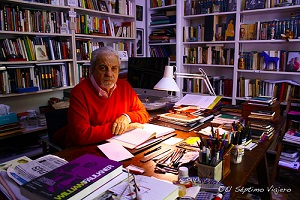
De Catalaanse schrijver Juan Marsé werd geboren op 8 januari 1933 in Barcelona. Zie ook alle tags voor Juan Marsé op mijn blog.

Uit: De laatste middagen met Teresa (Vertaald door Mariolein Sabarte Belacortu)

‘Ze had zo’n kleine persoonlijke chaos om zich heen, als bevestiging van het bestaan van de ware, solide luxe – de ceintuur van haar jas viel er bijna helemaal uit en sleepte met de gesp over de grond, uit haar ene jaszak piepte een roodzijden hoofddoek, haar blonde haar hing voor haar gezicht, en ze probeerde haar ene schoen, die tijdens het hollen was uitgegaan, met nerveuze bewegingen weer aan haar voet te krijgen -, een charmante slordigheid in de details die duidelijk aangeeft dat ze zich geen zorgen hoeft te maken over geld, vertrouwen heeft in haar eigen schoonheid en een intens, gepassioneerd en veelbelovend innerlijk leven heeft; een extra charme bij mensen die al door de natuur en de fortuin worden verwend.’
(…)

De feestelijke sfeer van de avond, met zijn vrolijke opwinding en drukte, gaf weinig aanleiding tot angst, en al helemaal niet in die buurt, maar toch kon een groepje elegant geklede paren dat toevallig langs de jongeman liep, een licht gevoel van onbehagen niet onderdrukken dat soms ontstaat door een amper waarneembare breuk in de orde: wat opviel aan de jongen was de serieuze schoonheid van zijn zuidelijke trekken en een zekere onrustbarende onbeweeglijkheid die op een merkwaardige manier in verband – liever gezegd in een verdacht evenwicht – stond met de prachtige auto."


 1705145-78dcb53bf3f75b0cf7d9ce3a551efbcf.jpg
Juan Marsé (Barcelona, 8 januari 1933)


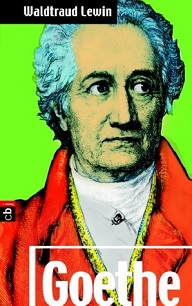
De Duitse schrijfster Waldtraut Lewin werd geboren op 8 januari 1937 in Wernigerode. Zie ook alle tags voor Waldtraut Lewin op dit blog.

Uit: Goethe

»Eure Wehen waren zu schwach, Madame, das Kind hat zu lange gebraucht – es bekommt keine Luft in die Lungen!«
»Bemühe Sie sich weiter, um Himmels willen!«
»Warmen Wein!«, ordnet Margarethe Textor an. »Schnell, hinein mit dem Kind. Und eine Herzmassage!«
Da ihr die Hebamme zu langsam und zu ungeschickt vorgeht, greift sie selbst mit zu.
»Gnädige Frau Rätin, lasst einen Priester kommen! Ich werde dem Kind die Nottaufe geben und …«
»Nichts ist mit Nottaufe! Wenn wir überhaupt jemanden holen, so ist es ein Arzt!«
»Das Kind ist tot!«
»Versteht Ihr Euer Handwerk so schlecht, Müllern, oder was ist los? Bemüht Euch!«
Anna Textor nimmt sich jetzt selbst des blassen Knaben an, drückt ihren Mund auf den seinen, bläst ihm Atem ein, packt ihn bei den Beinen, schüttelt ihn. Schon will sie aufgeben, da sagt die alte Frau Goethe leise: »Aber sieh doch, er atmet ja!«
Ein erster Atemzug hebt die Brust des Kindes. Und dann – der erste quäkende Schrei.
»Rätin, er lebt!« Die Hebamme ist in Tränen aufgelöst. »Das Kind lebt. Ein Wunder des Herrn!«
Elisabeth lässt sich in den hohen Kissenberg zurücksinken, gegen den sie sich bei der Entbindung, halb sitzend, gelehnt hatte. »Bringt ihn mir«, sagt sie schwach. »Bringt mir den Kleinen. Johann Wolfgang. Nach meinem Vater.«
Ihre Mutter mustert die Hebamme mit ihren schwarzen Augen. Es ist kein freundlicher Blick. »Pfuscherin«, murmelt sie vor sich hin.“
 

 1705145-ed6975c5acd9fcb95bf32c7c0de93dd5.jpg
Waldtraut Lewin (Wernigerode, 8 januari 1937)
Cover 


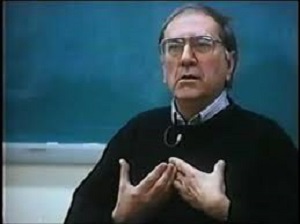
De Franstalige, Canadese dichter, schrijver en uitgever Gaston Miron werd geboren op 8 januari 1928 in Sainte-Agathe-des-Monts. Zie ook alle tags voor Gaston Miron op dit blog.


Jeune fille

Jeune fille plus belle que toutes nos légendes
de retour à la maison que protègent les mères
secrète et enjouée parmi les êtres de l'été
elle aimait bien celui qui cache son visage

sur mon corps il ne reste que bruine d'amour
au loin les songes se rassemblent à sa taille
pour les bouquets d'eau de ses yeux trop beaux
les yeux qu'elle a lui font trop mal à l'âme

jeune fille plus perdue que toute la neige
les ans s'encordent sur mes longueurs de solitude
et toujours à l'orée de ta distance lointaine
tes mille essaims de sourires encore m'escortent

j'en parle à cause d'un village de montagnes
d'où s'envolent des rubans de route fragiles
toi et moi nous y fûmes plusieurs fois la vie
avec les bonheurs qui d'habitude arrivent

je parle de ces choses qui nous furent volées
mais les voudra la mort plus que l'ombre légère
nous serons tous deux allongés comme un couple
enfin heureux dans la mémoire de mes poèmes


Ma désolée sereine

Ma désolée sereine
ma barricadée lointaine
ma poésie les yeux brûlés
tous les matins tu te lèves à cinq heures et demie
dans ma ville et les autres
avec nous par la main d'exister
tu es la reconnue de notre lancinance
ma méconnue à la cime
tu nous coules d'un monde à l'autre
toi aussi tu es une amante avec des bras
non n'aie pas peur petite avec nous
nous te protégeons dans nos puretés fangeuses
avec nos corps revendiqués beaux
et t'aime Olivier
l'ami des jours qu'il nous faut espérer
et même après le temps de l'amer
quand tout ne sera que mémento à la lisière des ciels
tu renaîtras toi petite
parmi les cendres
le long des gares nouvelles
dans notre petit destin
ma poésie le coeur heurté
ma poésie de cailloux chahutés
 

 1705145-0f5c61aedc946aee58374d9bfe60e0d6.jpg
Gaston Miron (8 januari 1928 – 14 december 1996)


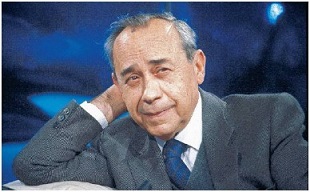
De Italiaanse schrijver en politicus Leonardo Sciascia werd geboren in Racalmuto, Agrigento op 8 januari 1921. Zie ook alle tags voor Leonardo Sciascia op dit blog.


Uit: A Simple Story (Vertaald door Howard Curtis)

“[St. Joseph the carpenter], who seemed to have inspired the bonfires of old furniture which were lit in the working-class neighborhoods almost as a promise to the few carpenters still in business that there would be no lack of work for them. The offices were almost deserted, even more so than on other evenings at that hour, but they were still lit, the way the offices of the police were usually kept lit in the evening and during the night, by tacit agreement, to give the townspeople the impression that the police were ever alert to the safety of the public."
(…)

"But as the commissioner's attitude had annoyed him, and as he was almost entirely devoid of what is usually called esprit de corps — which meant regarding the body to which he belonged as the most important thing of all, considering it infallible, or, if it was not infallible, untouchable, overwhelmingly right, especially when it was wrong — he had a mischievous idea."
 

 1705145-3558ff7028e6172ed2db126731e212de.jpg
Leonardo Sciascia (8 januari 1921 - 20 november 1989)


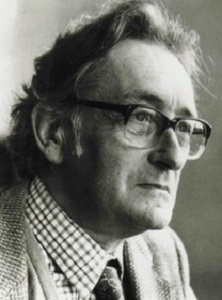
De Engelse dichter, vertaler en graficus Alfred Charles Tomlinson werd geboren op 8 januari 1927 in Stoke-on-Trent, Staffordshire. Zie ook alle tags voor Alfred Tomlinson op dit blog.


Skywriting

Three jets are streaking west:
   Trails are beginning to fray already:
The third, the last set out,
   Climbs parallel a March sky
Paying out a ruled white line:
   Skywriting like an incision,
Such surgical precision defines
   The mile between it and the others
Who have disappeared leaving behind
   Only their now ghostly tracks
That still hold to the height and map
   Their direction with a failing clarity:
The sky is higher for their passing
   Where the third plane scans its breadth.
The mere bare blue would never have shown
   That vaultlike curvature overhead,
Already evading the mathematics of the spot,
   As it blooms back, a cool canopy,
A celestial meadow, needing no measure
   But a reconnaissant eye, an ear
Aware suddenly that as they passed
   No sound accompanied arrival or vanishing
So high were their flight-paths on a sky
   That has gone on expunging them since,
Leaving a clean page there for chance
   To spread wide its unravelling hieroglyphs.
 

 1705145-6ba402f3f9df82d662733e72446b56ba.jpg
Alfred Tomlinson (Stoke-on-Trent, 8 januari 1927)


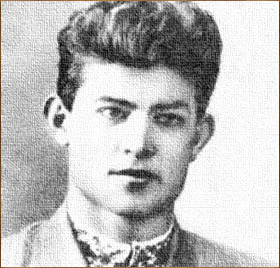
De Oekraïense dichter en schrijver Vasyl Stus werd geboren op 8 januari 1938 in Rakhnivka, in de provincie Vinnytsia Oblast. Zie ook alle tags voor Vasyl Stus op dit blog.


Untitled

I cross the edge. This conquering the circle,
this forward motion of a foot,
this lived experience, this naked emptiness,
this salty water, like an oily sludge,
this hopelessness of  first beginning,
they terrify me! Better to
forget
this land of hesitation, and to extinguish the flame
and embers from memory. I cross the edge.
As leopards leap through burning rings
carrying the impulse of bewildered souls,
So you must aim at the center of death’s eye,
And be reborn in death. Do not disturb
the old despondency. Begin beyond it,
well past the barrow, out there on the brink,
Where sacred tablets
seemingly appear,
(but do not mention them to others).
Where the sea of humanity swims and step by step
a proud continent grows out into
the sea,
like an ossified mirror of eternity,
like a prophetic word or a prophetic scream.
Go, cross the edge! Your birth will follow death.
Strive headlong for the path,
as bright as blood,
That favors honest and repentant souls
who live as such,
expecting in their end
a new beginning. Yearning for the stars
as adversity spreads its wings and turns its energy toward
eternity.


Vertaald door Artem Pulemotov
 

 1705145-c6447fae8b373f64aa7593a9d57b9b60.jpg
Vasyl Stus (8 januari 1938 – 4 september 1985)


Zie voor nog meer schrijvers van de 8e januari ook mijn blog van 8 januari 2014 en ook mijn blog van 8 januari 2011 deel 1 en eveneens deel 2.
Geschreven door Romenu om 18:09 Reageer op dit bericht

Frans Kellendonk, Dionne Brand, Sofi Oskanen, Henk van Zuiden, Shobhaa Dé, Marie Desplechin

De Nederlandse schrijver en vertaler Frans Kellendonk werd geboren in Nijmegen op 7 januari 1951. Zie ook alle tags voor Frans Kellendonk op dit blog.

Uit: Mystiek Lichaam

“‘De medische ziekte sloeg een tweespalt in de jongen. Hij verhield zich tot zijn lichaam alsof hij het delen moest met een Siamese tweelingjongen die ziek was. Die ander moest maar verstandig zijn, vond hij, en het ervan nemen in het jaar dat hem restte, een wereldreis gaan maken of gaan vissen in Canada. Zelf wenste hij aan de ziekte geen concessies te doen.
Op één punt moest hij toch toegeven. Elke twee weken legde hij tegen heug en meug een bezoek af aan Klein-Transsylvanië, zoals hij de bloedkankerkliniek noemde. De deernis had bij de behandelende geneesheer het veld geruimd voor solidariteit met de zieke tweelingjongen, voor verraad dus. Wie door zijn eigen lichaam is verraden heeft geen medestanders meer. De arts geloofde even halsstarrig in de sterfelijkheid van zijn patiënt als de patiënt er zelf aan twijfelde. De controles waren veldslagen in een geloofsstrijd, waarbij de arts de werkelijkheid van de ziekte en de jongen die van de gezondheid verdedigde. Hij kwam elke keer deerlijk geblutst van het slagveld.’ (...) ‘Hij lag op bed in een pyjama, kledingstuk dat hij bij welzijn nooit had gedragen, uniform der moribunden. De dekens waren teruggeslagen en er was veel pyjama, weinig jongen.’


 1704655-25714294b4b0c9cf12500eabf22a6ad6.jpg
Frans Kellendonk (7 januari 1951 – 15 februari 1990)


De Canadese dichteres en schrijfster Dionne Brand werd geboren op 7 januari 1953 op Trinidad. Zie ook alle tags voor Dionne Brand op dit blog.


Old Pictures of the New World (Fragment)

They show american medical students
coming back to Grenada
now it is safe for them to do their practicals
in imperialism
and to spit on the population.

They show grenadian market vendors
and taxi drivers
call Reagan “daddy”
now we understand the class war
and patriarchy.

They show george shultz
celebrating the day columbus discovered Grenada
he shades his eyes with his hands
at Queen’s Park
he sees colonies and slaves
like the celebrity of 1498
now we know our place.

In the end
I suppose one knows that Eugenia and Adams
and Seaga are compradors,
one knows that they are enemies of the people
and the future,
one knows these saprophytes
will eat on colonialism’s corpse until it dries
one knows that they are our class
enemies
but one cannot part with the sense of shame
at their voraciousness and our current defeat.

now I am frightened
to be alone,
not because of strangers,
not thieves or psychopaths
but, the state,

they think that I’ll forget it
but I won’t
and when they think that I’ve forgotten
they will find a note in the rubble
of the statue of liberty.


 1704655-d15871becf100970a9dec3852658ca8b.jpg
Dionne Brand (Trinidad, 7 januari 1953)


De Finse schrijfster Sofi Oskanen werd geboren in Jyväskylä op 7 januari 1977. Zie ook alle tags voor Sofi Oskanen op dit blog.

Uit: Purge (Vertaald door Lola Rogers)

“Hans started to have quiet, somber discussions with Father. Maybe they didn’t want to worry the women of the family, so they didn’t talk about the troubling signs when the women could hear, or maybe they did talk about it, but neither one of the sisters attached any significance to what they said. Father’s wrinkled brow didn’t worry them, because he was an old man, from the old world, afraid of war. The Free Estonia students didn’t worry about that sort of thing. They hadn’t committed any crimes—what harm could come to them? It was only after the Soviet squads had spread out around the country that they started to fear that their future might be in danger. As she rocked her baby, Ingel whispered to Aliide that Hans had started to hold her tighter, that he slept beside her holding her hand all night long, and his grip didn’t loosen even after he fell asleep, which she thought was strange; he squeezed her as if he were afraid she would disappear from his arms during the night. Aliide listened to Ingel’s worries, although every syllable was like a dagger thrust in her heart. At the same time, she felt that the thing which possessed her was loosening its grip a little, and something else was replacing it—fear for Hans.
Neither woman could avoid the truth any longer when they went to the small square in town and heard the Red Army orchestra playing Soviet marches. Hans wasn’t with them, because he no longer dared to come into town, and he didn’t want the girls to go, either. First he started sleeping in the little room behind the kitchen, then he spent his days there, too, and in the end, he went into the woods and stayed there.”


1704655-96a5a85723fe576a654d0057a1e740f9.jpg
Sofi Oskanen (Jyväskylä, 7 januari 1977)


De Nederlandse dichter, bloemlezer Henk van Zuiden werd geboren in Apeldoorn op 7 januari 1951. Zie ook alle tags voor Henk van Zuiden op dit blog.


Mariniersbroer

Onze vader zou doodgaan.
Door de ijlbrief van dokter mocht mijn broer
uit oorlog worden gehaald. Na ansichtkaarten
waarop Papoea’s met peniskokers en spannende
berichten over piranha’s en klapperratten
was hij er heel bruin zelf weer.
Hij had giftige pijlen bij zich en voor mij een schild-
paddenarmband.
In de klas vertelde ik over mijn broer en zijn luchtreis.
Nog nooit had iemand van ons gevlogen, dat was
voor dure mensen en arme soldaten.

Soms sliep ik bij hem. Langs gordijneinden
tekenden koplampen van nachtauto’s
figuren op de muur. Ze vinden ons, godverdomme,
ze vinden ons! Met ingehouden adem bleef ik liggen.
Hij sloeg de dekens weg en kroop onder bed,
maakte daar kssst kssst geluiden.
Het is weer veilig, fluisterde ik, ze zijn weg.
Klam kwam hij terug, keek meteen of de veldfles
nog onder matras lag.
Bij het rinkelen van de wekker liep de oorlog af.


 1704655-b9e8179c50f48b582e9ae8709a9eda6f.jpg
Henk van Zuiden (Apeldoorn, 7 januari 1951)


De Indiase schrijfster en columniste Shobhaa Dé werd geboren op 7 januari 1947 in Maharashtra. Zie ook alle tags voorShobhaa Dé op dit blog.

Uit: Verhängnisvolle Schönheit (Vertaald door Uschi Gnade)

“Mrs Aggarwal, Sie verziehen Ihre Tochter. Was für ein Unsinn! Wie können Sie einem so jungen Mädchen erlauben, allein nach Bombay zu gehen?«
Amritas Mutter lächelte nachsichtig. Sie teilte ihrer Nachbarin höflich, aber entschieden mit, Amrita sei kein Kind mehr. Sie sei zwanzig Jahre alt und eine sehr verantwortungsbewusste junge Dame. Und außerdem, was für eine Zukunft hätte sie in Delhi schon zu erwarten? Die Nachbarin ließ sich nicht so leicht überzeugen. Die beiden Frauen saßen gesellig strickend auf dem kleinen Rasen hinter dem Bungalow der Aggarwals in Vasant Vihar. Eine blasse Sonne stieg hoch in den winterlichen Himmel auf, und der Duft von Paranthas, die vor Ghee nur so trieften, wehte zu ihnen heraus.
»Es ist ja schließlich nicht so, als gäbe es in Delhi keine Models«, fuhr Mrs Sethia fort.
Amrita schnappte diese Bemerkung auf und fauchte:
»Ja, allerdings . . . drittklassige Models, die sich für die Textilfabriken von Ludhiana in Pose werfen. Das ist nicht mein Stil.«
Ihre Mutter betrachtete voller Stolz ihre schöne Tochter und brachte die Nachbarin mit einem Finger auf den Lippen behutsam zum Schweigen. Amritas Koffer stand auf der Veranda und war bereits randvoll mit Kleidern gefüllt.
Ihre Mutter fragte sich, was sie sonst noch hineinstopfen würde. Amrita war verrückt nach schönen Kleidern und konnte nicht genug davon bekommen. Aber war es nicht ganz natürlich, sagte sich Mrs Aggarwal, dass ein attraktives, ehrgeiziges Model nur das Beste wollte? Außerdem war das Glück Amrita schon immer hold gewesen, vom Tag ihrer Geburt an.“


 1704655-9670e484eb1a633673f26aef6ce5d2ee.jpg
Shobhaa Dé (Maharashtra, 7 januari 1947)


De Franse schrijfster Marie Desplechin werd geboren op 7 januari 1959 in Roubaix. Zie ook alle tags voor Marie Desplechin op dit blog.

Uit: Le journal d'Aurore

« 12 février.
On peut ruiner sa vie en moins de dix secondes. Je le sais. Je viens de le faire. Là, juste à l'instant. J'arrive à la porte de l'immeuble, une modeste baguette dans la main et la modeste monnaie dans l'autre, quand Merveille-Sans-Nom surgit devant moi. Inopinément. A moins de cinq centimètres (il est en train de sortir et je m'apprête à entrer, pour un peu on s'explose le crâne, front contre front). Il pose sereinement sur moi ses yeux sublimes. Je baisse les miens illico, autant dire que je les jette quasiment sous terre, bien profond, entre la conduite d'égout et le tuyau du gaz. Sa voix amicale résonne dans l'air du soir :
- Tiens ! Aurore ! Tu vas bien ?
Je reste la bouche ouverte pendant environ deux
millions de secondes, avant de me décider et de lui hurler à la figure :
- Voua ! Merdi !
(…)

5 octobre
Si quelqu'un n'avait pas remarqué le cadenas qu'il vient d'ouvrir en traître, je rappelle que ceci est mon journal intimement intime. Et que je maudis par avance toute personne qui y jettera les yeux. Qu'elle soit maudite jusqu'à la fin de sa vie, qu'elle ait des allergies, des pellicules et des appareils dentaires à élastiques.
7 octobre
Bon sang, j'ai une quantité industrielle de trucs à raconter. Mes journées sont bourrées d'événements. Quelquefois, j'ai l'impression qu'elles vont exploser. En plus, je ne sais jamais si je suis hyper excitée ou hyper malheureuse. Ma vie est un Himalaya d'hyper hésitations.”

 1704655-22bfab9f2894b6cde1e3868aa37a8b84.jpg
Marie Desplechin (Roubaix, 7 januari 1959) 


Zie voor nog meer schrijvers van de 7e januari ook mijn blog van 7 januari 2011 deel 1 en ook deel 2 en eveneens deel 3.

Geschreven door Romenu om 18:44 Reageer op dit bericht

Reginald Gibbons

De Amerikaanse dichter, redacteur en hoogleraar Reginald Gibbons werd geboren in Houston op 7 januari 1947. Zijn moeder was Pools en zijn vader had deels Iers, deels Choctaw bloed. Gibbons studeerde magna cum laude af aan Princeton University in 1969 met een graad in Spaans en Portugees en ontving de Morris Croll Prize voor Poëzie. Vervolgens ging hij naar Stanford, waar hij zijn MA in Engels en Creatief Schrijven behaalde en in 1971 promoveerde in Vergelijkende Literatuurwetenschap Gibbons is de auteur van meer dan een half dozijn dichtbundels, waaronder “Sparrow”n New and Selected Poems“ (1997), winnaar van de Balcones Poëzieprijs en “Creatures of a Day” (2008), finalist voor de National Book Award. Hij is bekroond met de John Masefield Award van de Poetry Society of America. Hij heeft beurzen ontvangen van de Guggenheim Foundation, het Fulbright Program en de National Endowment for the Arts. Gibbons was redacteur van het tijdschrift TriQuarterly in de periode 1981-1997, gedurende welke tijd hij mede-oprichter en redacteur was van TriQuarterly Books. Hij werkte ook als columnist voor The American Poetry Review. Gibbons publiceerde ook korte verhalen en kritische essays, alsmede vertalingen van Spaanse en Mexicaanse poëzie en oude Griekse tragedies. Zijn eerste roman, “Sweetbitter” (1994), won de Anisfield-Wolf Book Award. Gibbons heeft gedoceerd aan de Princeton University, Northwestern University, en aan Warren Wilson College.


Luckies

The loop of rusty cable incises  
its shadow on the stucco wall.  
My father smiles shyly and takes  
one of my cigarettes, holding it

awkwardly at first, as if it were
a dart, while the yard slowly
swings across the wide sill of daylight.  
Then it is a young man’s quick hand

that rises to his lips, he leans against the wall,  
his white shirt open at the throat,
where the skin is weathered, and he chats  
and daydreams, something he never does.

Smoking his cigarette, he is even  
younger than I am, a brother who  
begins to guess, amazed, that what  
he will do will turn out to be this.

He recalls the house he had
when I was born, leaning against it  
now after work, the pale stucco
of memory, 1947.

Baby bottles stand near the sink inside.  
The new wire of the telephone, dozing  
in a coil, waits for the first call.
The years are smoke.


 1785640-d9e4c1bc2f26d428b98a3851e6044e82.jpg
Reginald Gibbons (Houston, 7 januari 1947)

Geschreven door Romenu om 00:00 Reageer op dit bericht

Meer van Romenu

↑ Terug naar de berichten